25 Waldorf Playroom Ideas for Warm, Imaginative Spaces
A Waldorf playroom should leave room for the unfinished. A wooden block doesn’t have to look like a house to become one, and a piece of fabric can be a royal cape one afternoon and an ocean the next. That freedom is what makes these spaces so appealing. Instead of entertaining children at every turn, the room gives them materials they can turn into something entirely their own.
Waldorf-inspired spaces have a softness, but the philosophy goes deeper than wooden toys and gentle colors. Where a Montessori playroom emphasizes independence and purposeful activities, Waldorf design makes room for storytelling, movement, and imaginative play. Thoughtful playroom organization keeps materials accessible without making the room feel overly structured, while small playroom ideas help preserve the open floor space children need to build, move, and invent.
These Waldorf playroom ideas show how to create that imaginative atmosphere without replacing everything your family already owns. You’ll find ways to use natural materials, softer lighting, flexible play areas, and handmade details to make an ordinary room feel more inviting. The aim is a space that encourages children to come up with their own ideas, rather than one that tells them exactly how to play.
DISCLOSURE: Some of the links provided on this page are affiliate links. This means if you choose to make a purchase through these links, we may receive a small commission at no extra cost to you.
A Warm Foundation for Everyday Play
Color, texture, lighting, and visual breathing room set the atmosphere before you arrange a single toy. A modern Waldorf playroom feels softly layered rather than bare, with natural wood and warm neutrals carrying most of the visual weight. These foundational choices can stay in place as children grow, interests change, and new materials rotate through the room.
The Best Colors for a Waldorf Play Space
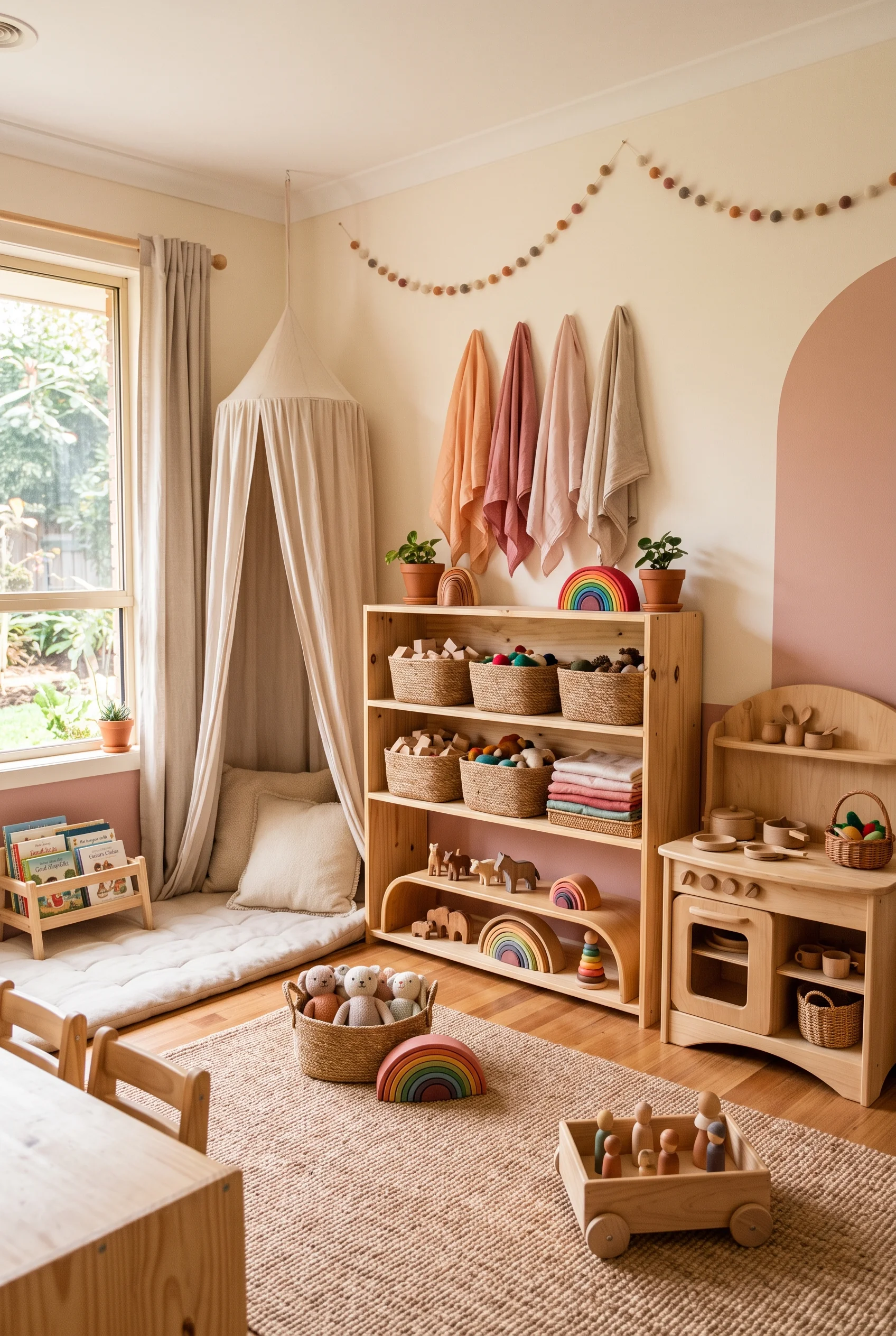
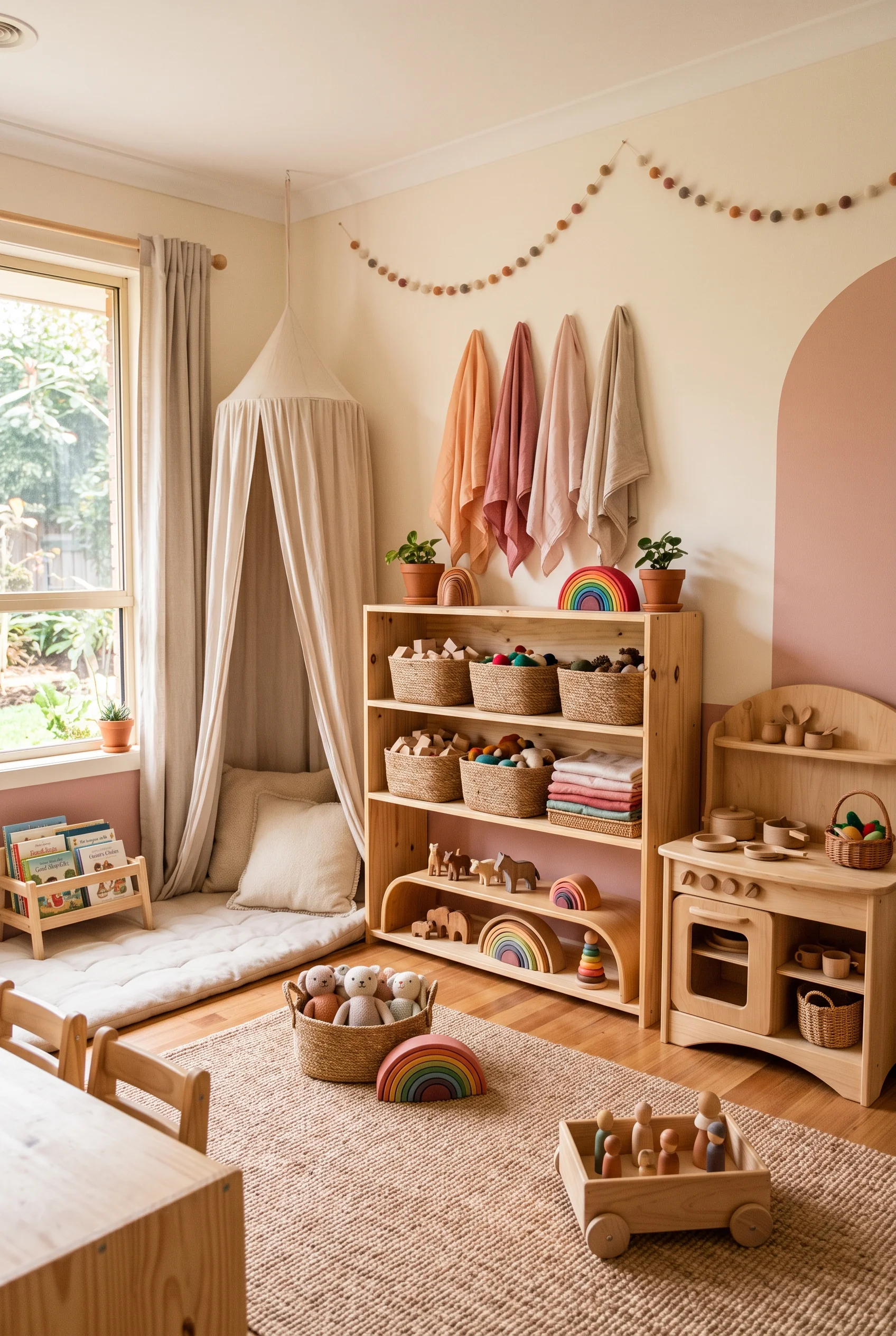
Warm cream makes a gentle backdrop for muted peach, soft rose, or golden yellow. Let one wall color lead, then repeat two or three supporting shades through a rug, baskets, and play silks. The layers should feel subtle, not overly matched.
Waldorf rooms often lean into enveloping color, while Montessori settings commonly feel more neutral and visually structured. Neither needs to dictate your entire home. Paint sample boards first, then view them during bright mornings and lamplit evenings. A shade that feels quiet throughout the day will be easier to live with for years.
Natural Wood With a Light Visual Footprint
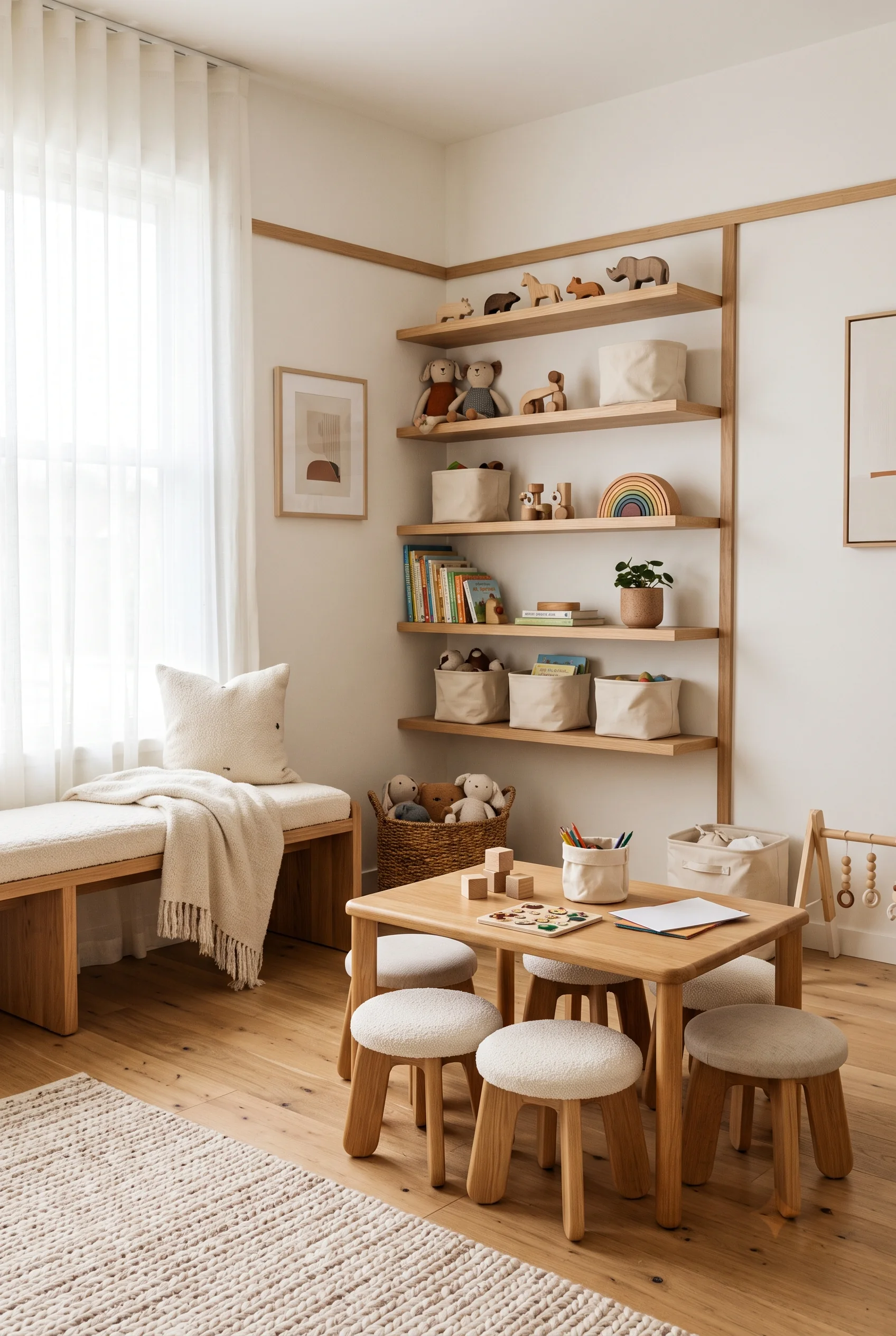
A low wood shelf or child-sized table brings warmth without asking the room to hold more decoration. Streamlined shapes work especially well in a contemporary Waldorf playroom because the grain offers softness while the silhouette stays clean.
Smooth edges, sturdy joinery, and a wipeable finish matter more than a perfectly matched set. A pale shelf can sit comfortably beside a slightly deeper-toned bench or stool. Begin with the piece your family needs most, then let future furniture coordinate loosely. That collected mix feels relaxed and leaves room for practical changes.
Shop this pick: Natural Wood Low Playroom Shelf
A Soft Landing for Floor-Level Play
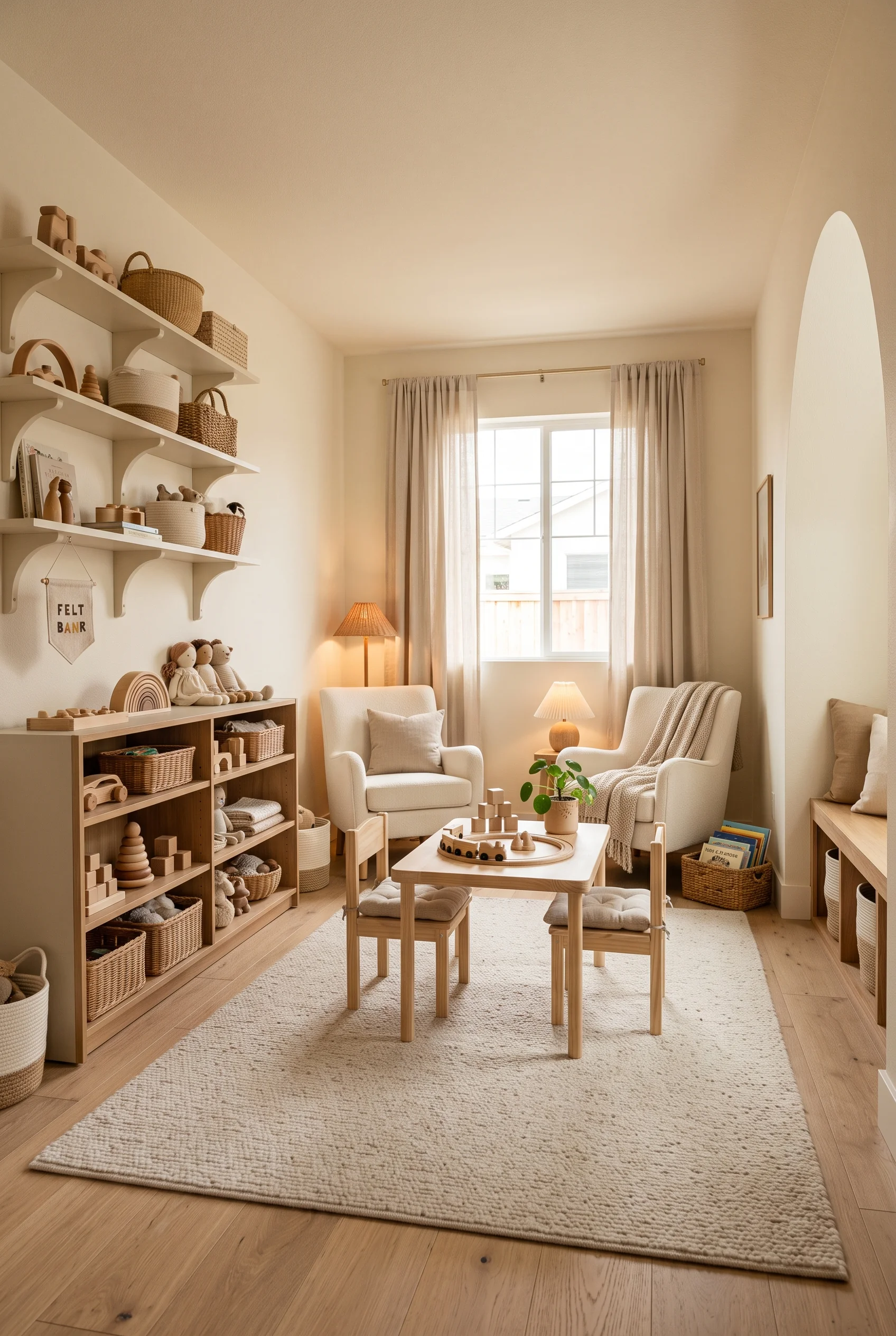
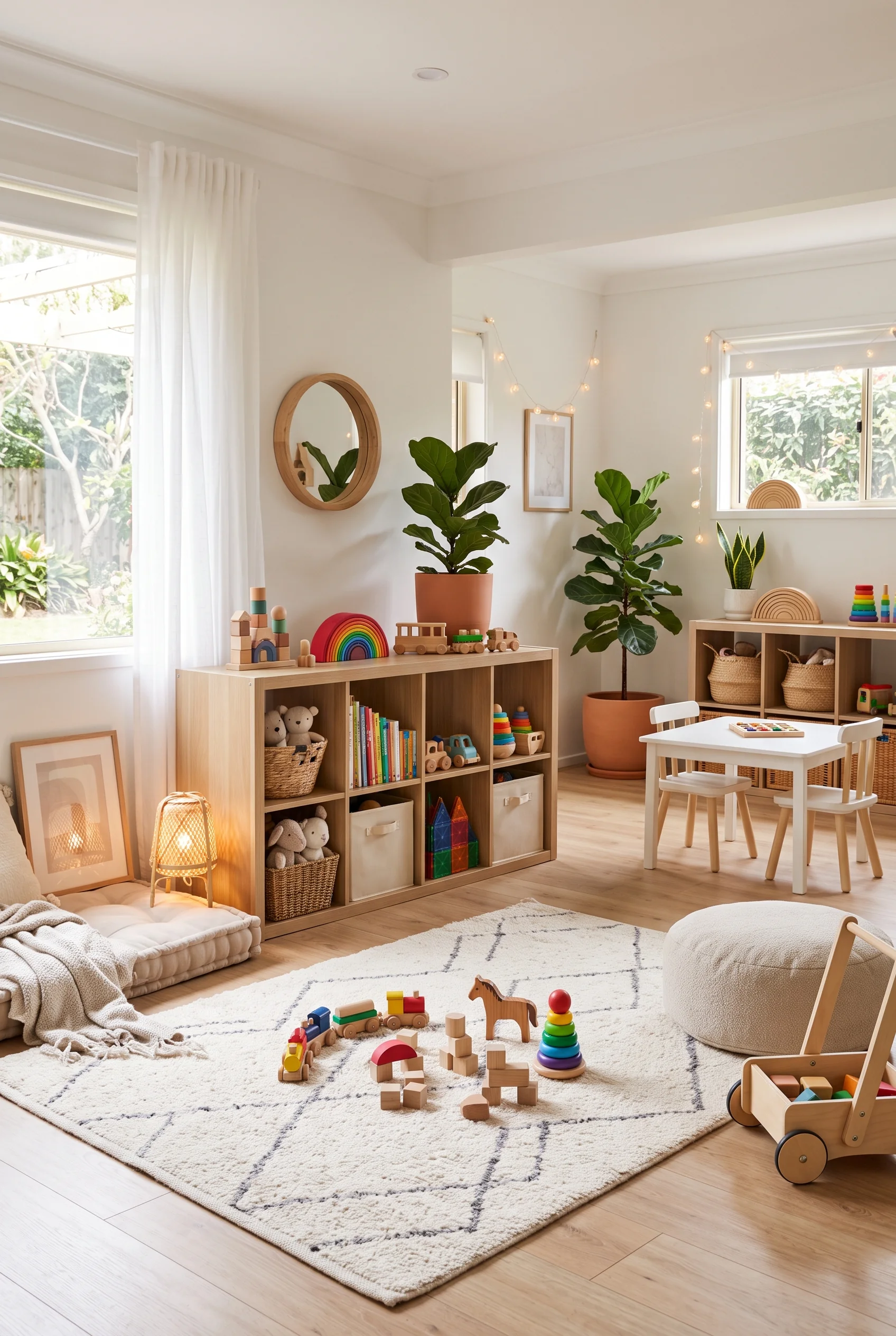
A warm neutral rug gives building, reading, and pretend play a comfortable center. Wool adds softness and helps absorb sound, which can make a busy family room feel noticeably calmer. A low pile or flat weave also keeps block towers steady and allows small figures to stand upright.
Choose a forgiving tone that can live with changing toys and seasonal colors. The rug should be large enough to define the play area without catching awkwardly beneath furniture. A non-slip pad keeps the surface secure, particularly when children move quickly between activities.
Lighting That Softens the End of the Day
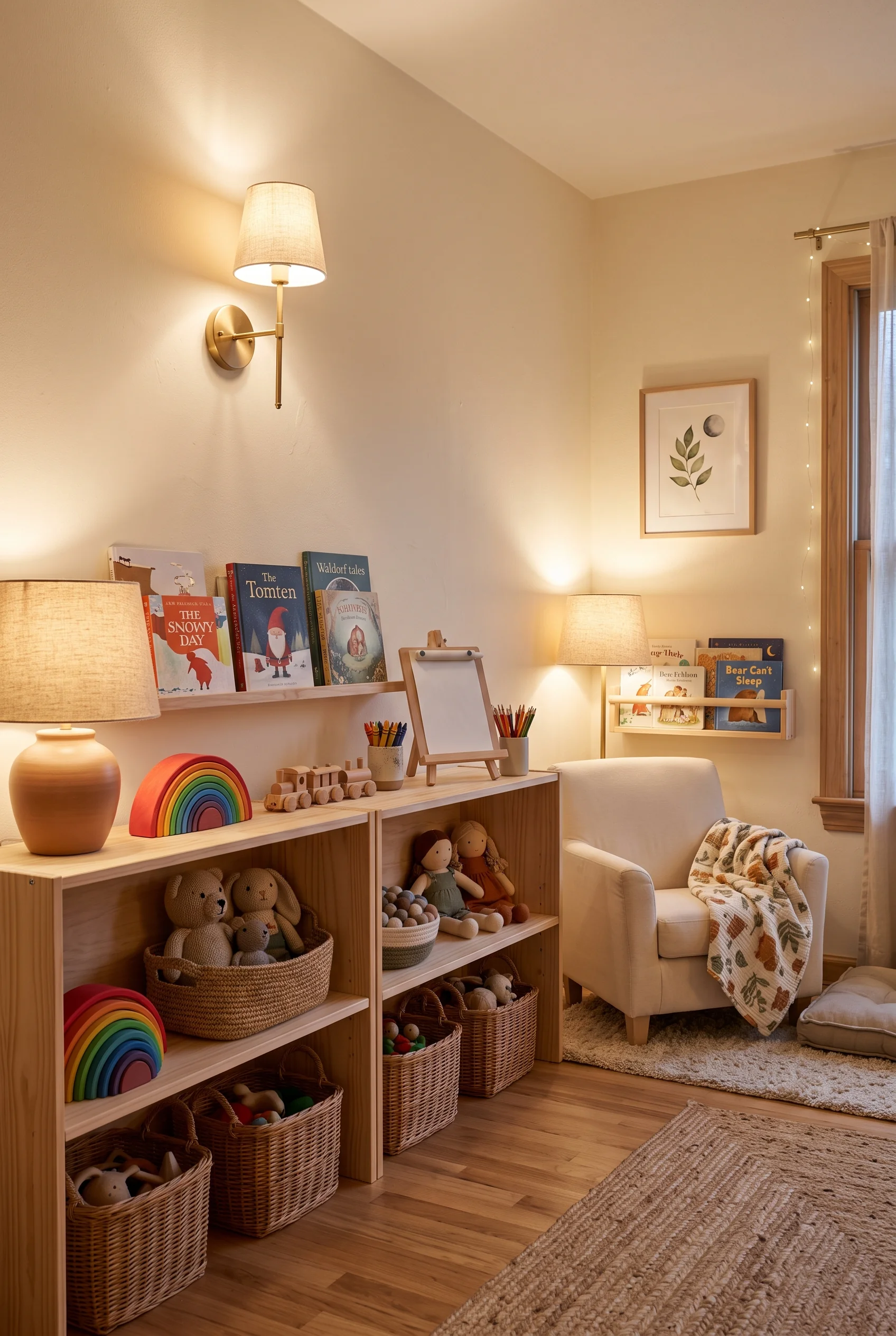
Warm lamplight can change the pace of a playroom as afternoon gives way to evening. Place a shaded lamp or securely installed wall light near a reading corner, then use it during puzzles, books, or other quiet activities. Warm-toned bulbs feel gentler than relying on a bright ceiling fixture alone.
Safety should shape the arrangement. Anchor tall lamps, secure cords, and keep breakable fixtures out of reach. Paired with daylight during active hours, one softer light source gives the room an easy rhythm from energetic mornings to slower bedtime routines.
Shop this pick: Warm White Wall Sconce, A securely installed wall sconce adds calming layered light without taking up valuable floor or shelf space.
Calm Shelves With Room to Breathe
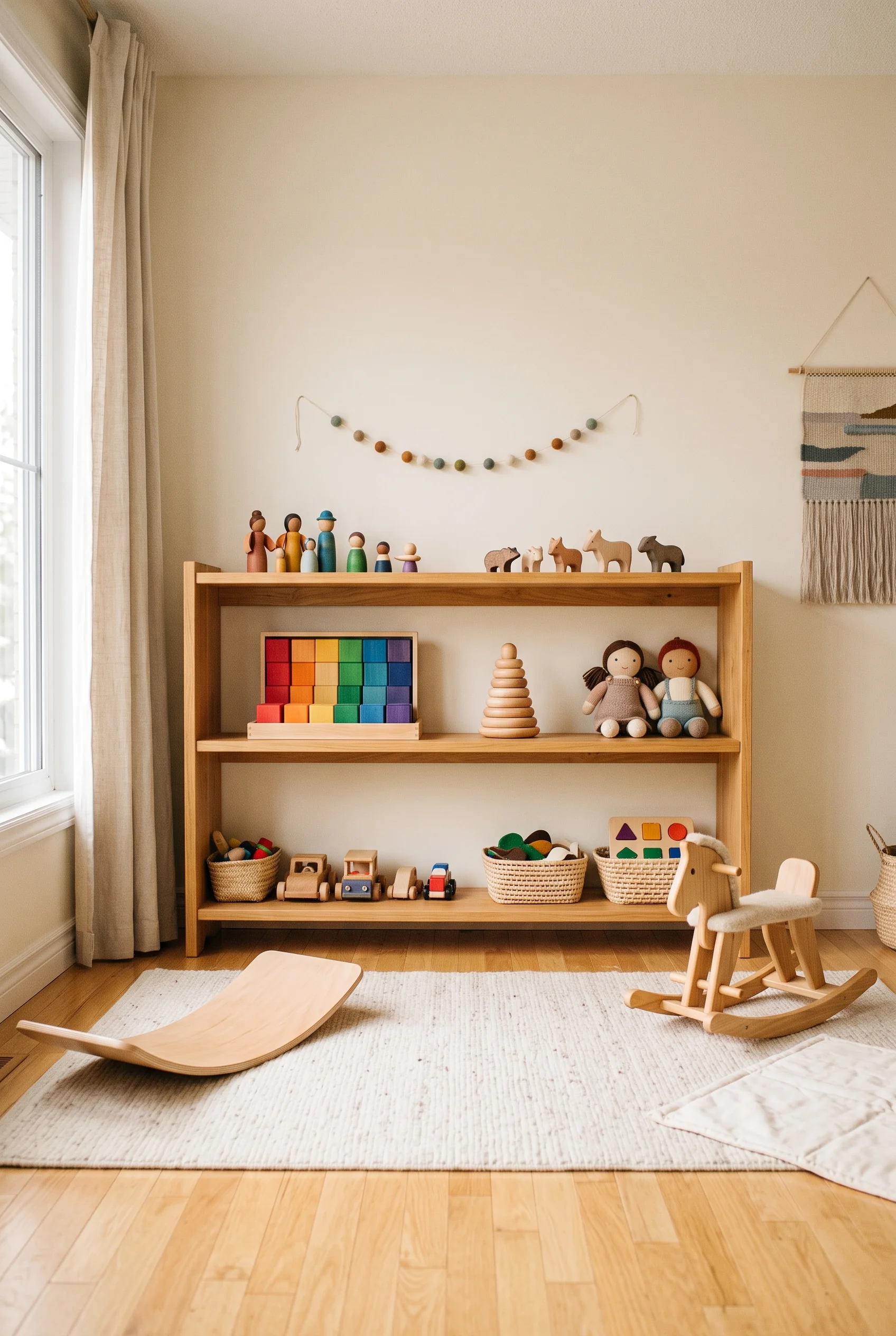
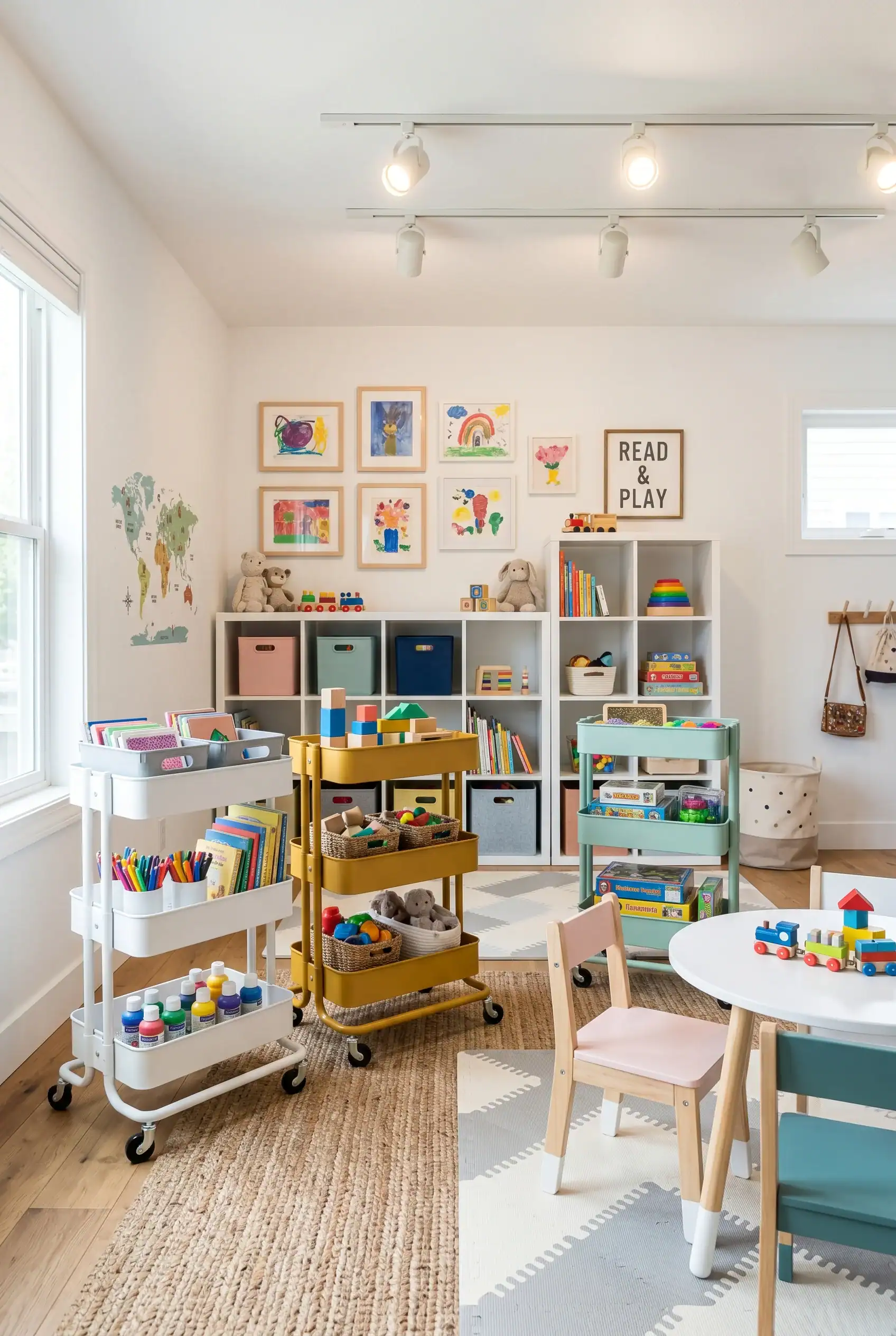
Open shelf space is as important as the toys themselves. When each item has a visible home, children can find what they need and help return it later. Clearing broken pieces and outgrown materials first is often more useful than buying another storage unit.
A Waldorf playroom usually centers warmth, imagination, natural materials, and seasonal rhythms. Montessori rooms more often arrange materials around particular skills and self-correcting activities. For either approach, a brief family reset before dinner or bedtime keeps the room welcoming without demanding perfection. A few open surfaces bring a welcome sense of quiet.
Storage Children Can Understand at a Glance
Accessible storage supports independence while protecting the room’s calm mood. Low shelves, broad categories, and a small visible collection are easier for young children to navigate than tightly packed bins. The goal isn’t a showroom display. It is a dependable setup that makes choosing a toy and putting it away feel natural.
Low Shelves for Independent Choices
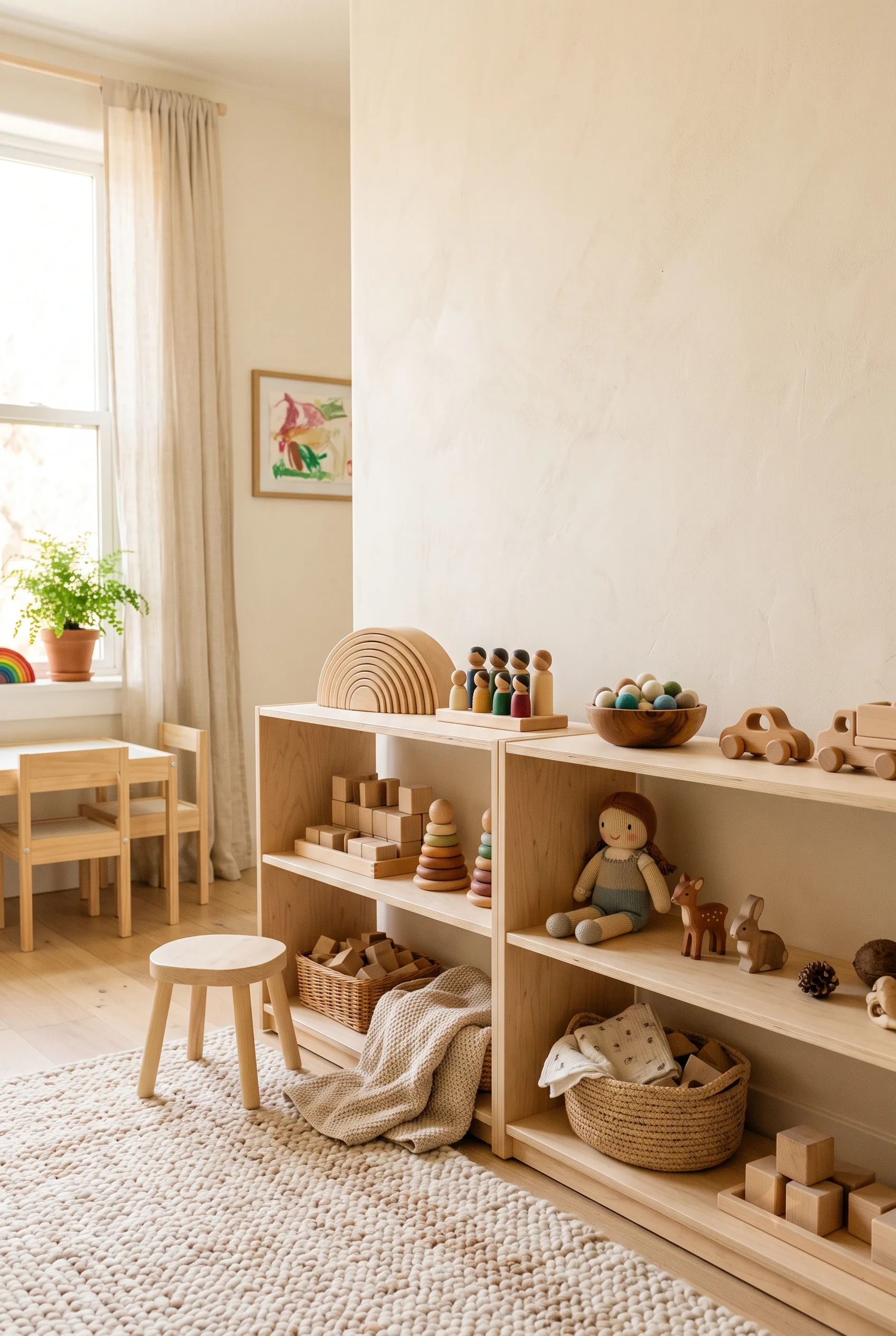
Low wooden shelves let children notice their options without emptying a deep toy box onto the floor. Arrange materials in small groups, leaving open space between them. A basket of figures, one puzzle, and a block set will feel more inviting when each has a clear boundary.
Place heavier objects on the lowest level and secure the shelving firmly to the wall. If the unit currently looks crowded, remove half of its contents before reorganizing anything else. The remaining toys gain presence, and cleanup becomes a much smaller task for little hands.
Soft Baskets for the Pieces That Wander
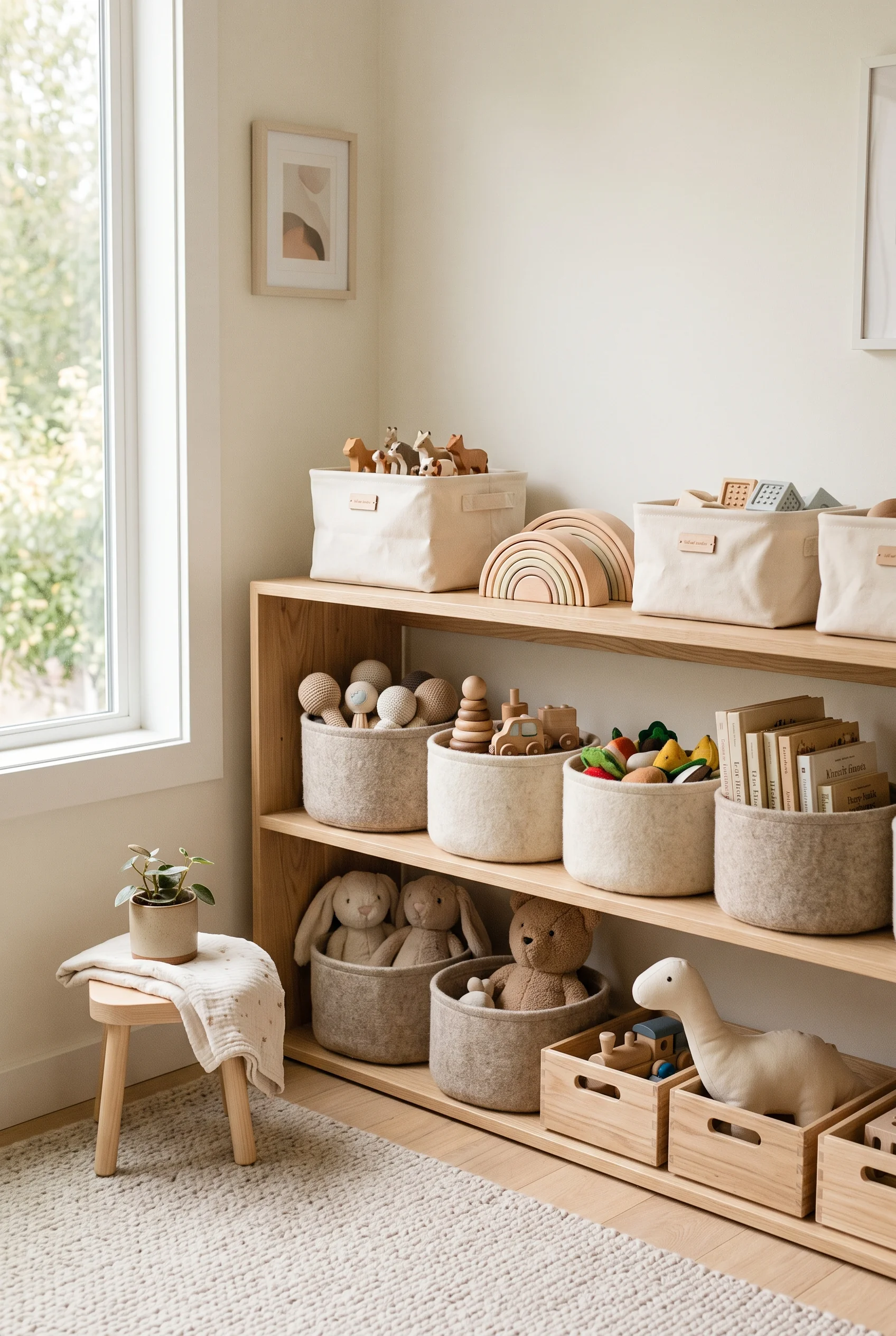
Blocks, dolls, scarves, and small figures rarely stay in one place for long. Soft baskets made from cotton, felt, wool, or smooth woven fibers keep those pieces together while maintaining a cozy kids’ playroom mood. Open styles suit daily favorites, while handled baskets are easy to carry into another room.
Broad categories are more realistic than detailed sorting systems. One basket for building toys, one for pretend-play pieces, and one for soft toys may be all a young child needs. Natural toy storage works best when everyone understands it without labels or complicated rules.
Book Covers That Invite a Closer Look
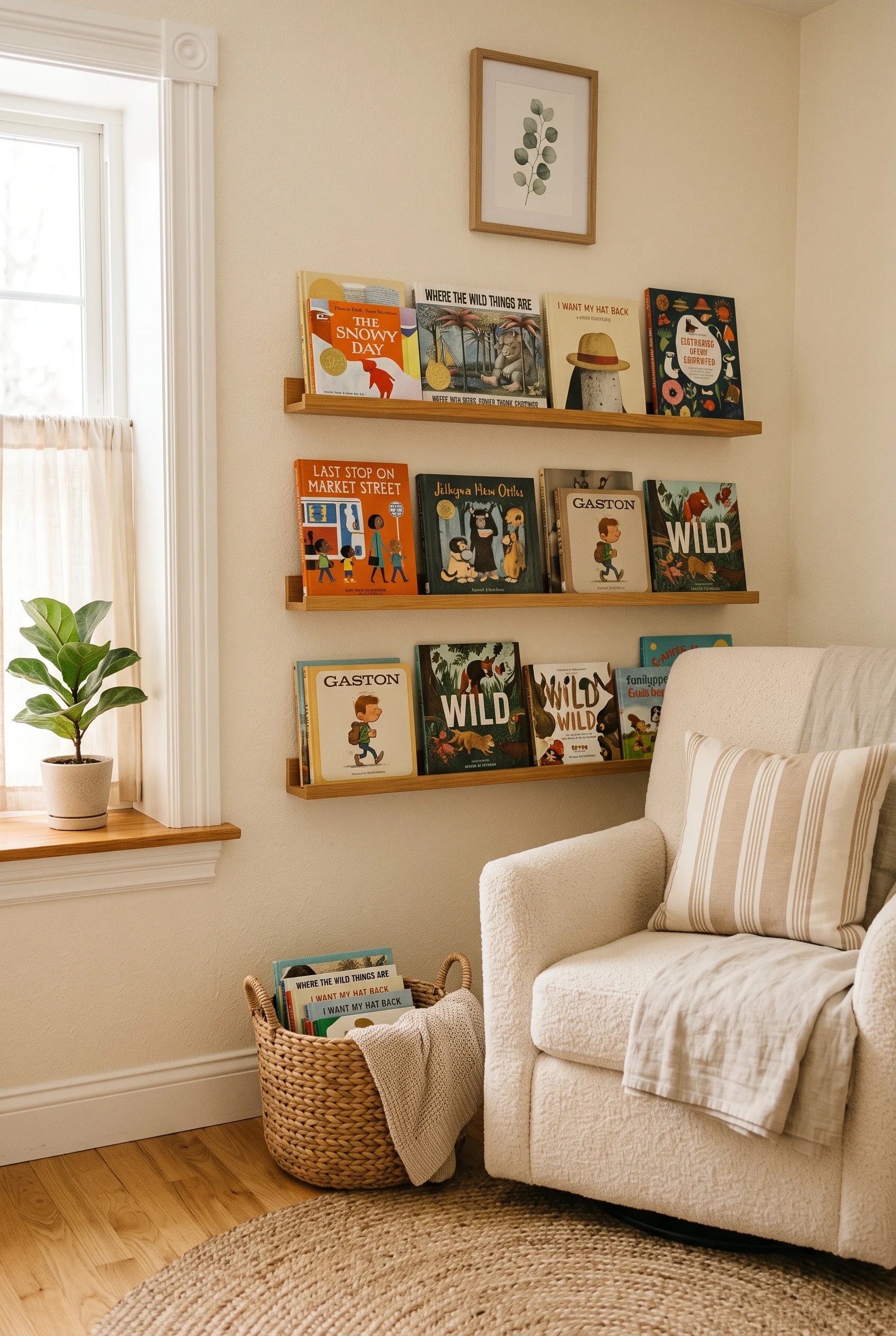
Front-facing books are easier for young readers to recognize than rows of narrow spines. Slim picture ledges or a compact display rack can hold nature stories, folk tales, seasonal books, and familiar family favorites without taking over the wall.
Six to ten titles are usually enough to provide real choice. Store the rest of the collection in a nearby cabinet, then rotate books when attention begins to fade. A changing display gives beloved stories fresh appeal while keeping the reading area visually quiet. Position the lowest ledge within comfortable reach so browsing does not require adult help.
A Toy Rotation With a Gentler Rhythm
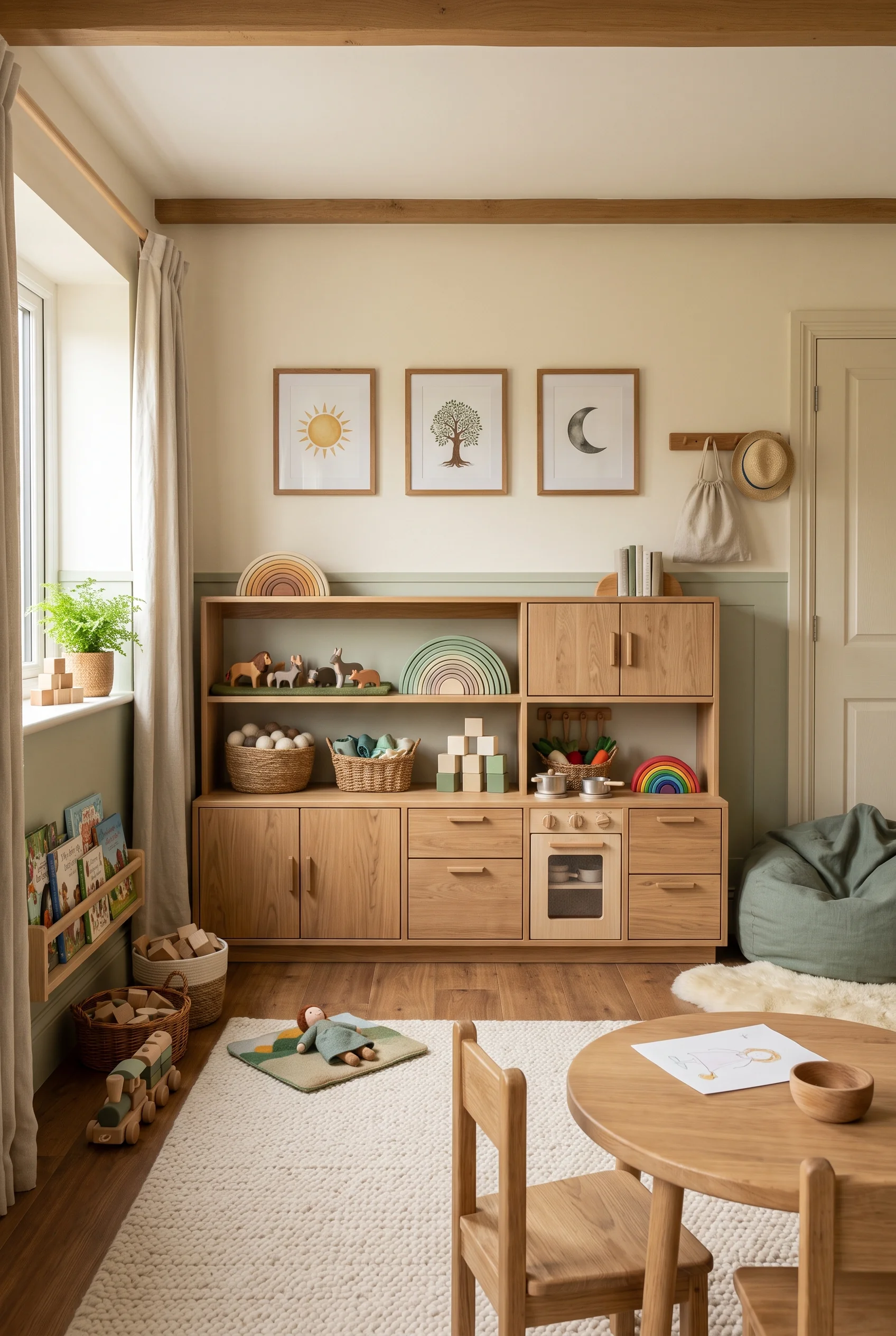
A smaller selection of visible toys can support longer, more focused play. Aim for a balanced mix that includes building, pretend play, art, movement, reading, and nurturing materials. The rest can wait in a closet or concealed cabinet.
Rotation does not need a strict weekly schedule. Follow your child’s interests and bring back stored items when the current collection feels overlooked. Packing away roughly half the toys is a useful starting point, especially if shelves are crowded. Rediscovered materials often feel exciting again without adding anything new to the house.
Waldorf Playroom Ideas for Small Spaces
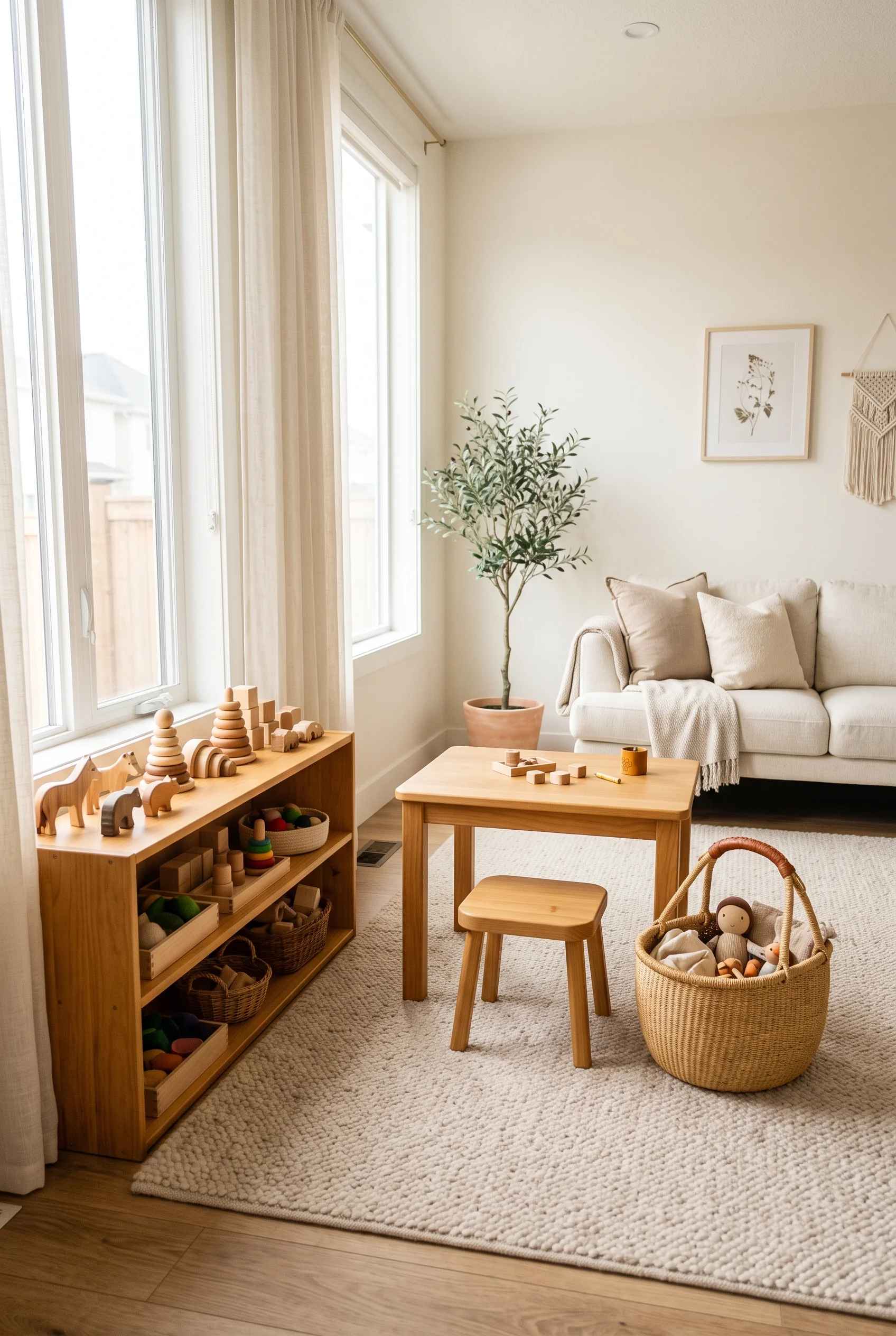
A bedroom corner, hallway nook, or shared family room can hold a meaningful Waldorf play space. A low shelf defines the zone without closing it off, while a small rug gives floor play a clear boundary. Limit the setup to three activity choices so it stays visually connected to the surrounding room.
Multifunctional furniture earns its place here. A compact play table with hidden storage can support art, building, and snacks. Pair it with one basket of open-ended toys and a modest reading spot. These 31 Kids Room Ideas for Small Spaces That Make Every Inch Count offer further layout inspiration for compact family homes.
Shop this pick: Compact Play Table With Hidden Storage, A compact table with concealed storage is especially valuable in shared or small spaces because it supports play while containing supplies.
Open-Ended Pieces With Many Possible Stories
Imaginative materials do not prescribe a single way to play. A silk becomes a river, a block becomes a bed, and a simple figure can belong to countless stories. Keeping these pieces together near an open patch of floor gives children freedom to combine them. Their purpose changes from one afternoon to the next.
Floor Space Reserved for Big Imaginations
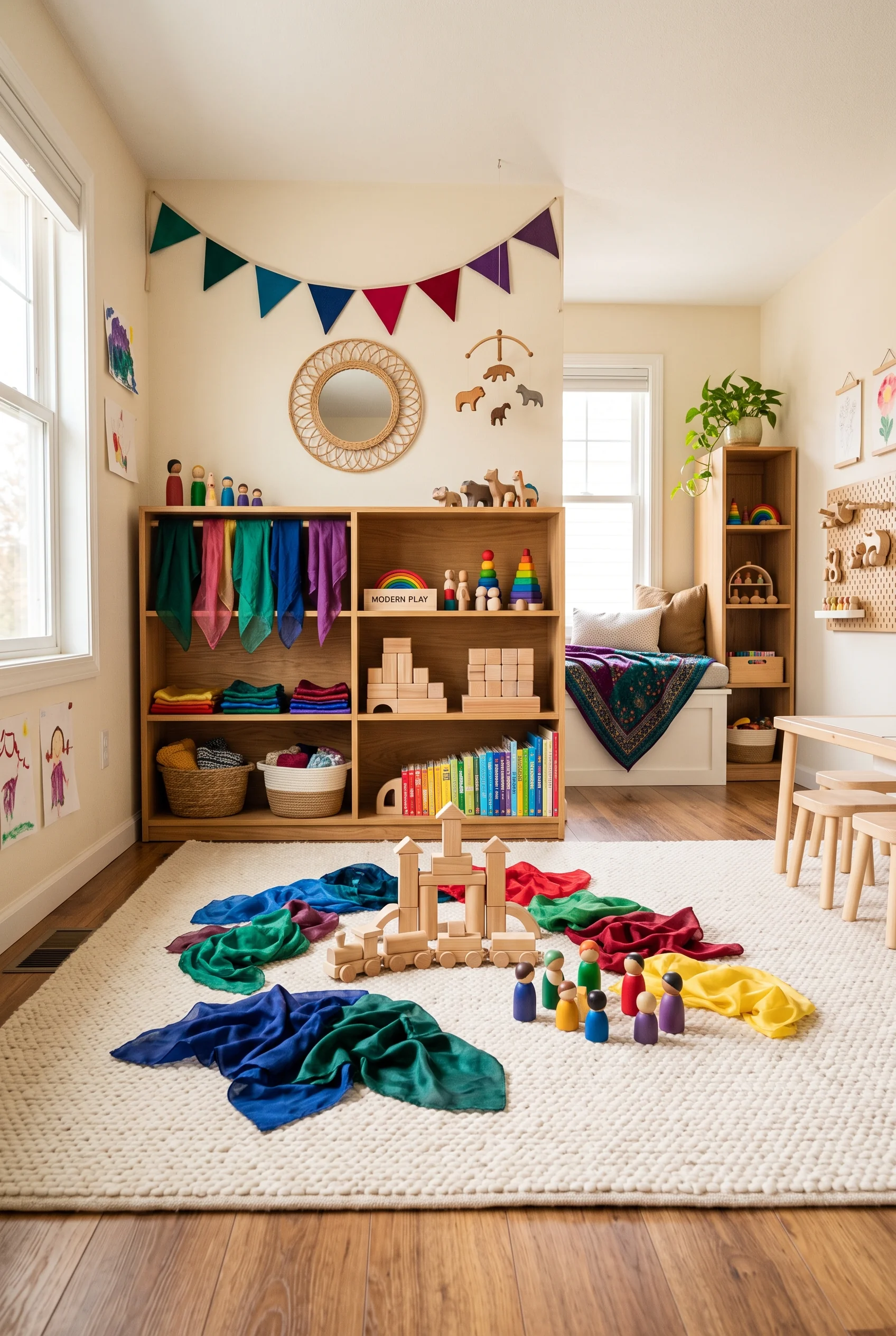
An open floor area may be the most valuable feature in an imaginative playroom. It gives children room to build, move, spread fabric landscapes, and change direction without navigating around too much furniture. A rug-sized clearing is often enough.
Keep only two or three versatile materials nearby, such as blocks, play silks, and a basket of figures. Avoid assigning every corner a fixed activity. When part of the room remains undefined, it can become a house in the morning and a forest by afternoon. The emptiness is part of the invitation.
Play Silks Beyond the Dress-Up Basket
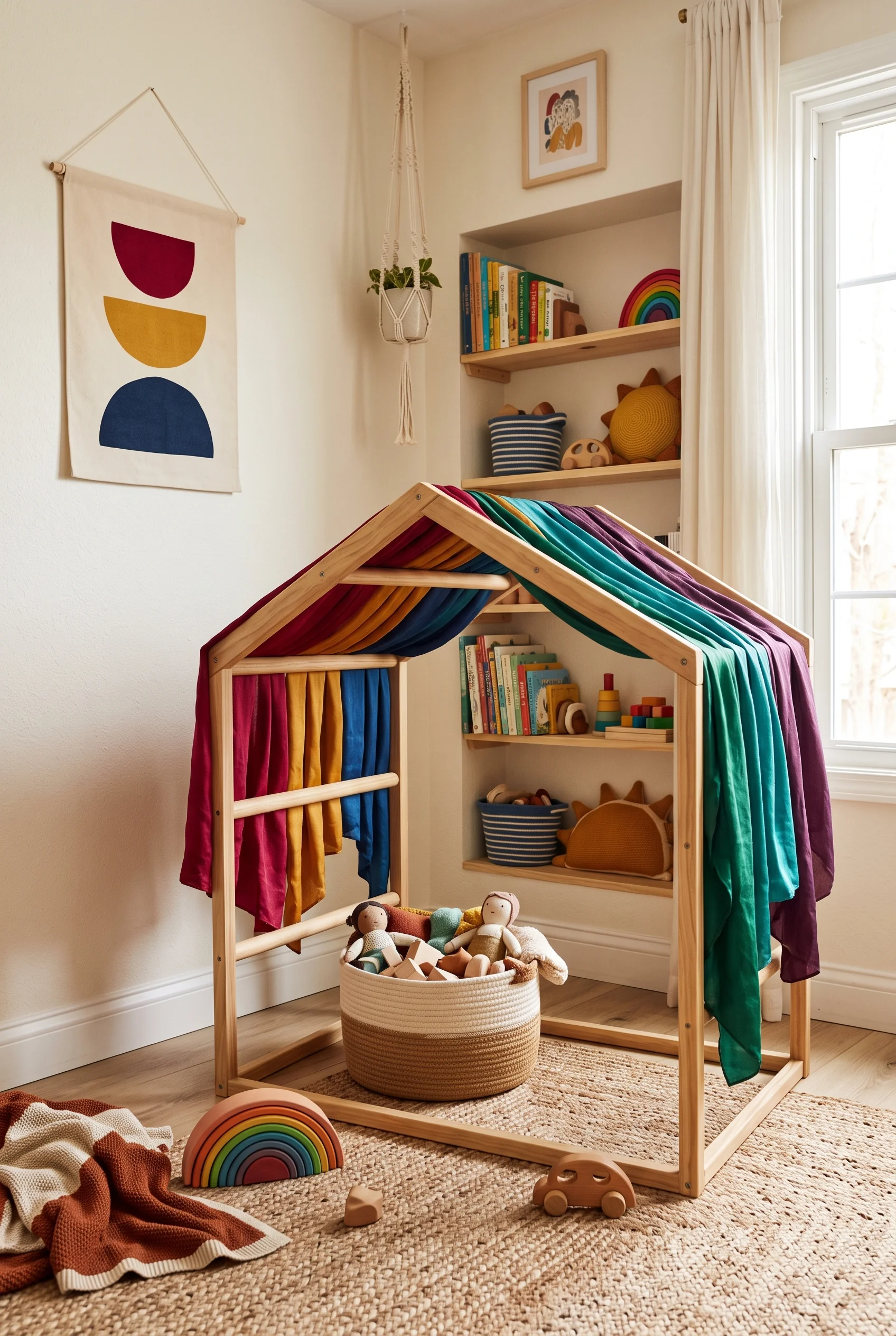
Three or four play silks can take on more roles than a large collection of highly specific toys. Children may tie them as capes, drape them over a wooden frame, or spread them across the floor as water and fields. Jewel tones bring a lively note to warm neutral walls.
Store the silks loosely in an open basket or on low hooks where their colors remain visible. Select shades that relate to the room without worrying about an exact match. Their softness introduces movement, and the changing folds make every arrangement feel a little different.
Shop this pick: Jewel-Tone Play Silk Set, Play silks are a recognizable Waldorf-inspired favorite that can support dress-up, fort building, storytelling, and seasonal play.
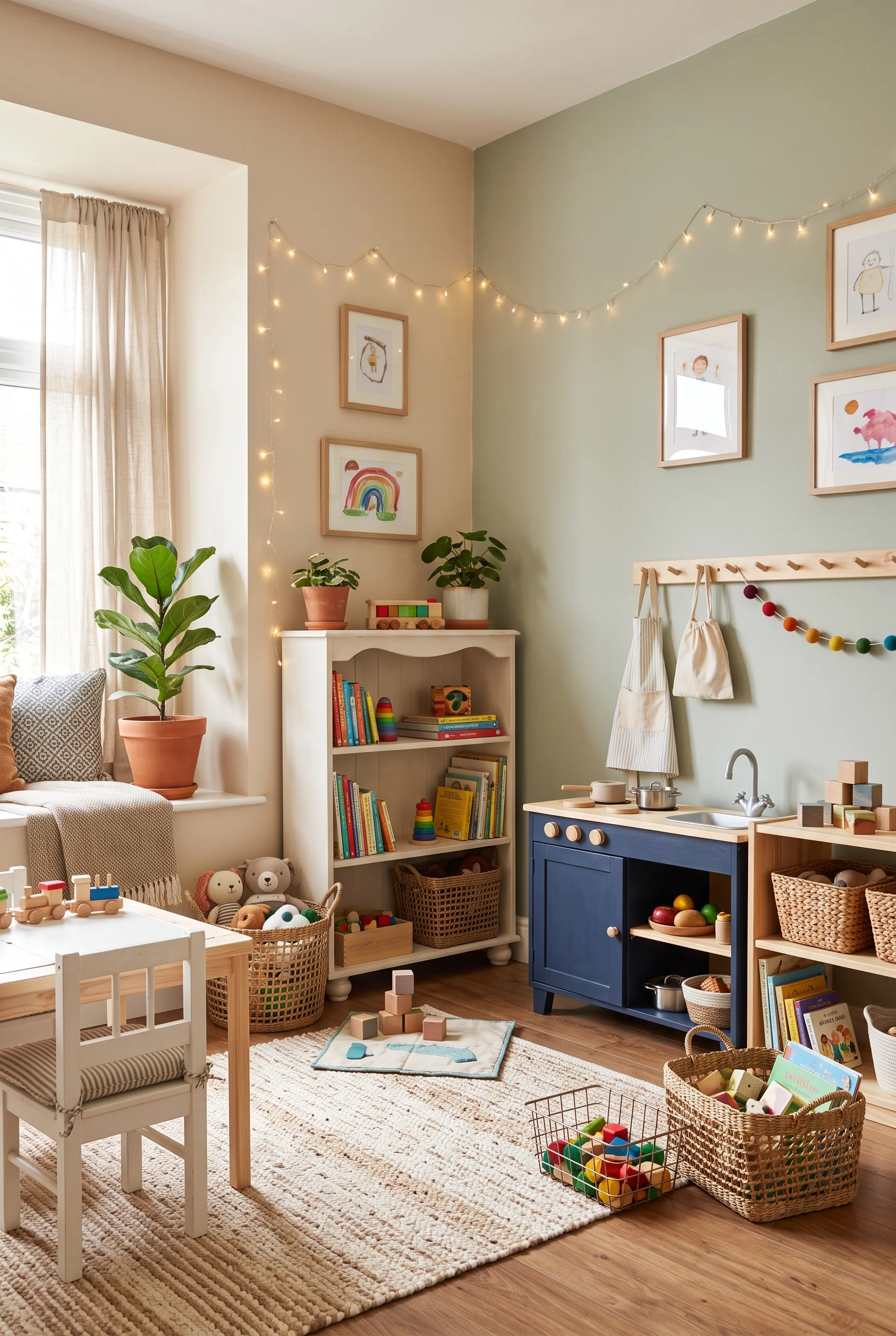
A Play Kitchen With Room for Reinvention
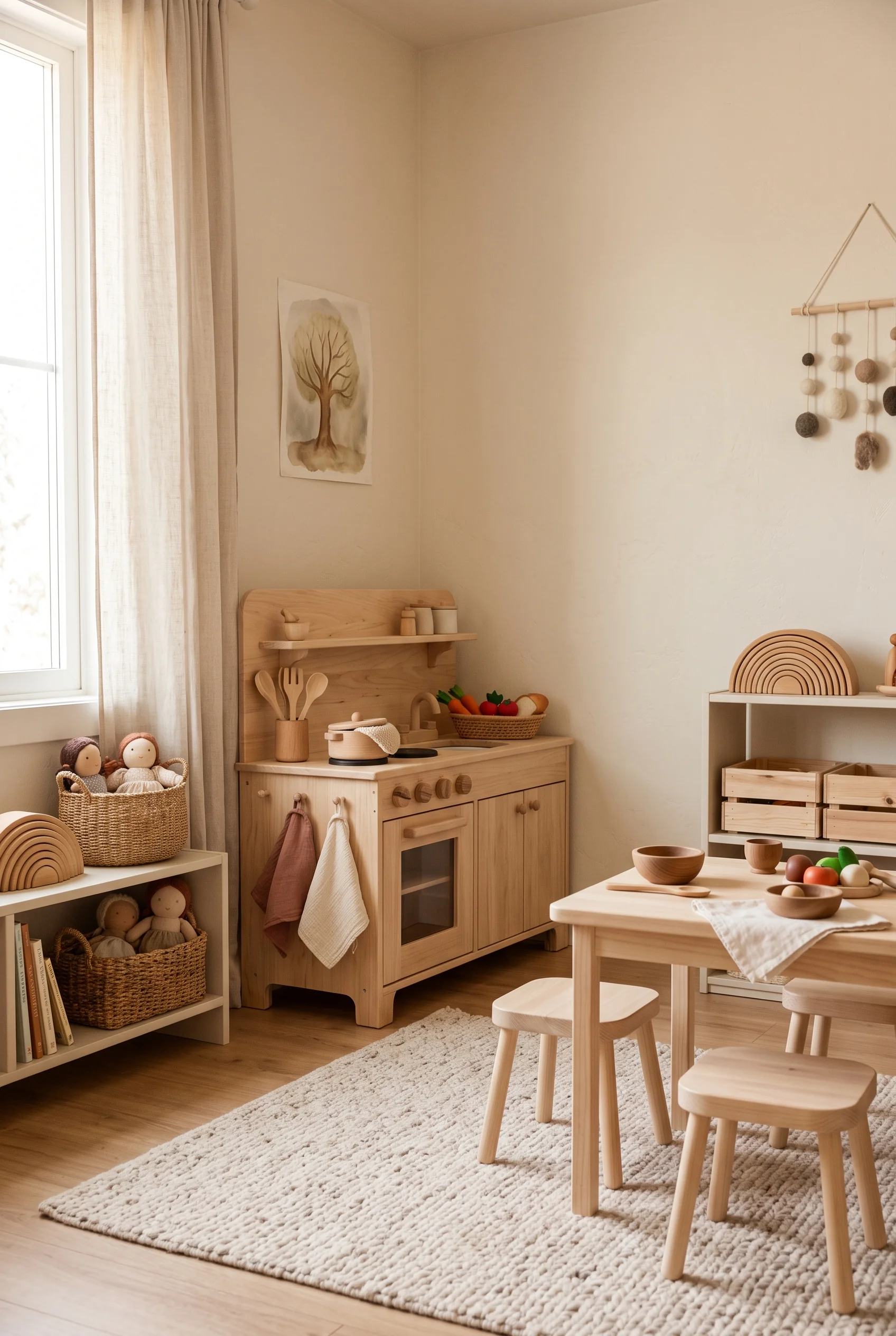
A compact wooden kitchen offers just enough structure for children to begin a story. Simple lines allow it to become a bakery, café, family kitchen, or market stall. Position it near a child-sized table so pretend meals can expand naturally into serving and shared play.
Keep the accessories restrained. One basket containing wooden food, bowls, small cloths, and child-safe utensils is plenty for daily use. Rotate in extra pieces when interest fades. With less to sort through, children spend more time shaping the story and less time scattering a crowded collection.
Shop this pick: Modern Wooden Play Kitchen, A streamlined wooden play kitchen is a high-interest focal piece with strong visual appeal and years of pretend-play potential.
Dolls With Gentle, Open Expressions
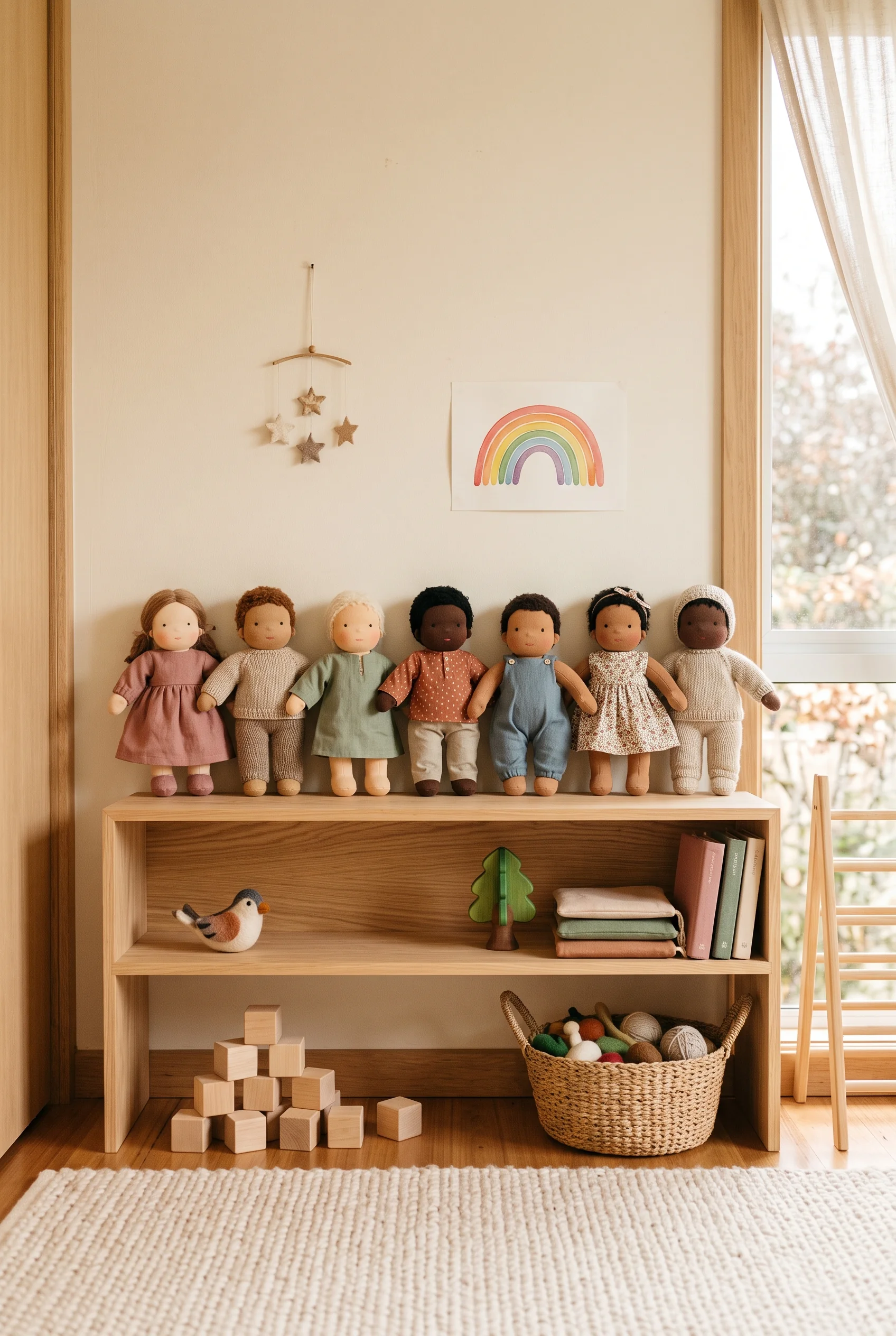
Soft dolls with understated features leave emotional details open to the child. The same doll can feel sleepy, worried, joyful, or brave depending on the story being told. Natural fabrics add a comforting tactile quality that suits nurturing play.
A small group can reflect varied skin tones, family structures, and familiar experiences without becoming an oversized themed collection. One well-made doll with a few simple clothing pieces is a lovely place to begin. Keep garments and accessories in a single basket so dressing remains enjoyable and the tiny pieces return to one dependable home.
Small Figures for Expansive Storytelling
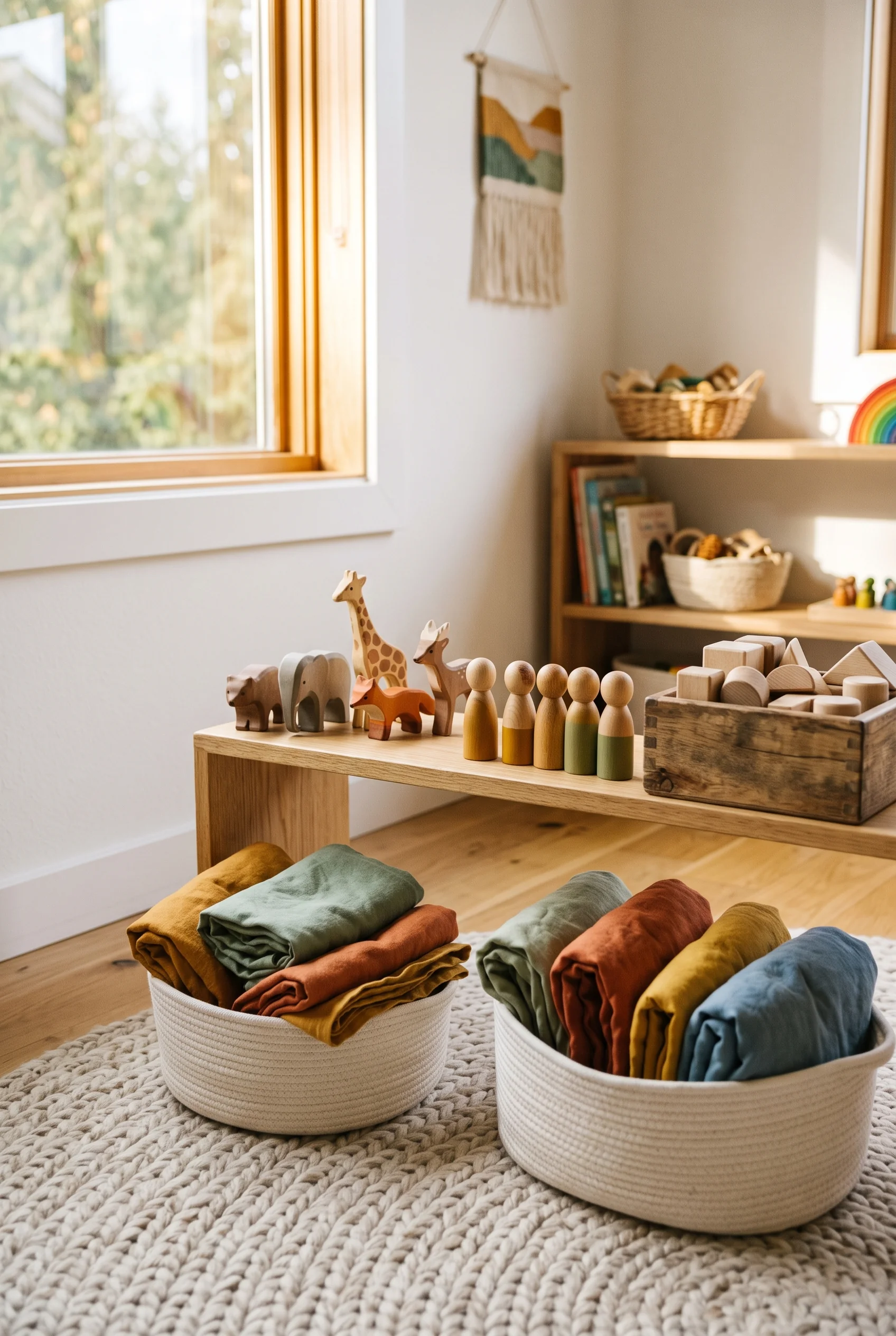
Smooth wooden animals and simple people move easily between block cities, fabric landscapes, and nature scenes. Uncomplicated shapes do not tie them to one character or plot. A fox may live in a forest one day and visit a carefully built house the next.
Begin with a small family of figures and several animals your child recognizes. Place them beside blocks or play silks rather than isolating them in a separate activity bin. The proximity encourages materials to mingle. Add new pieces gradually, guided by the stories that return most often.
Creative Zones Made for Real Family Life
Children benefit from places where ideas can take physical form, whether they are stacking a bridge, painting a wash of color, or becoming a character. Simple furniture and restrained supplies keep these creative zones usable rather than precious. Each setup can support several kinds of play while remaining straightforward to reset at the end of the day.
A Building Zone Where Projects Can Stay
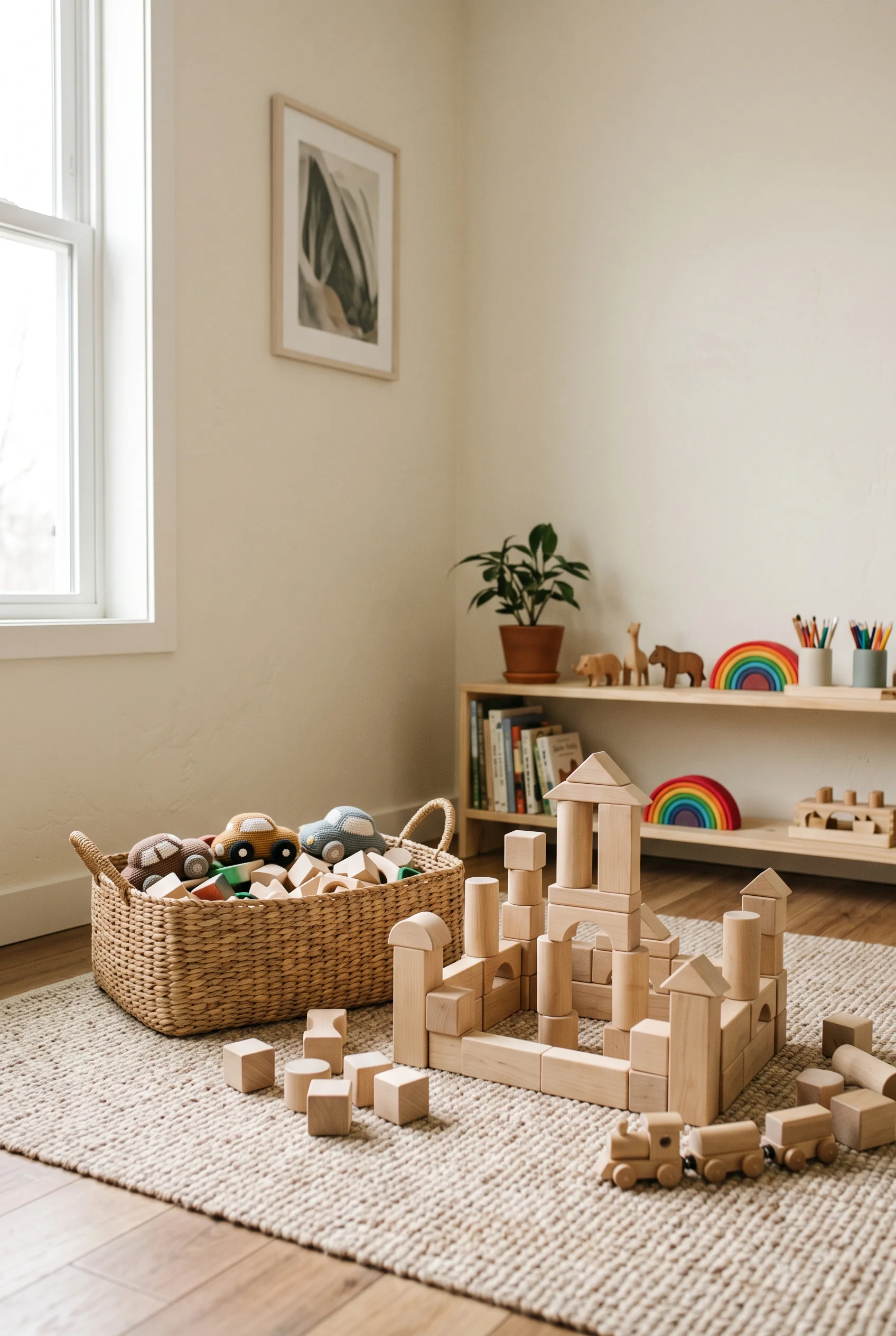
Blocks need a firm surface and enough quiet floor space for structures to grow. Keep one complete set together in a low basket, divided crate, or bottom shelf. Varied shapes invite towers, bridges, homes, and landscapes without requiring several separate collections.
Remove unrelated toys from the immediate building area so the materials are easy to see. When possible, allow a carefully constructed project to remain overnight. That continuity gives children time to return with new ideas rather than rebuilding from the beginning at every play session.
Shop this pick: Natural Wooden Building Block Set, A complete wooden block set is durable, versatile, and central to the open-ended building play many families want from a Waldorf playroom.
Furniture Fitted to Growing Bodies
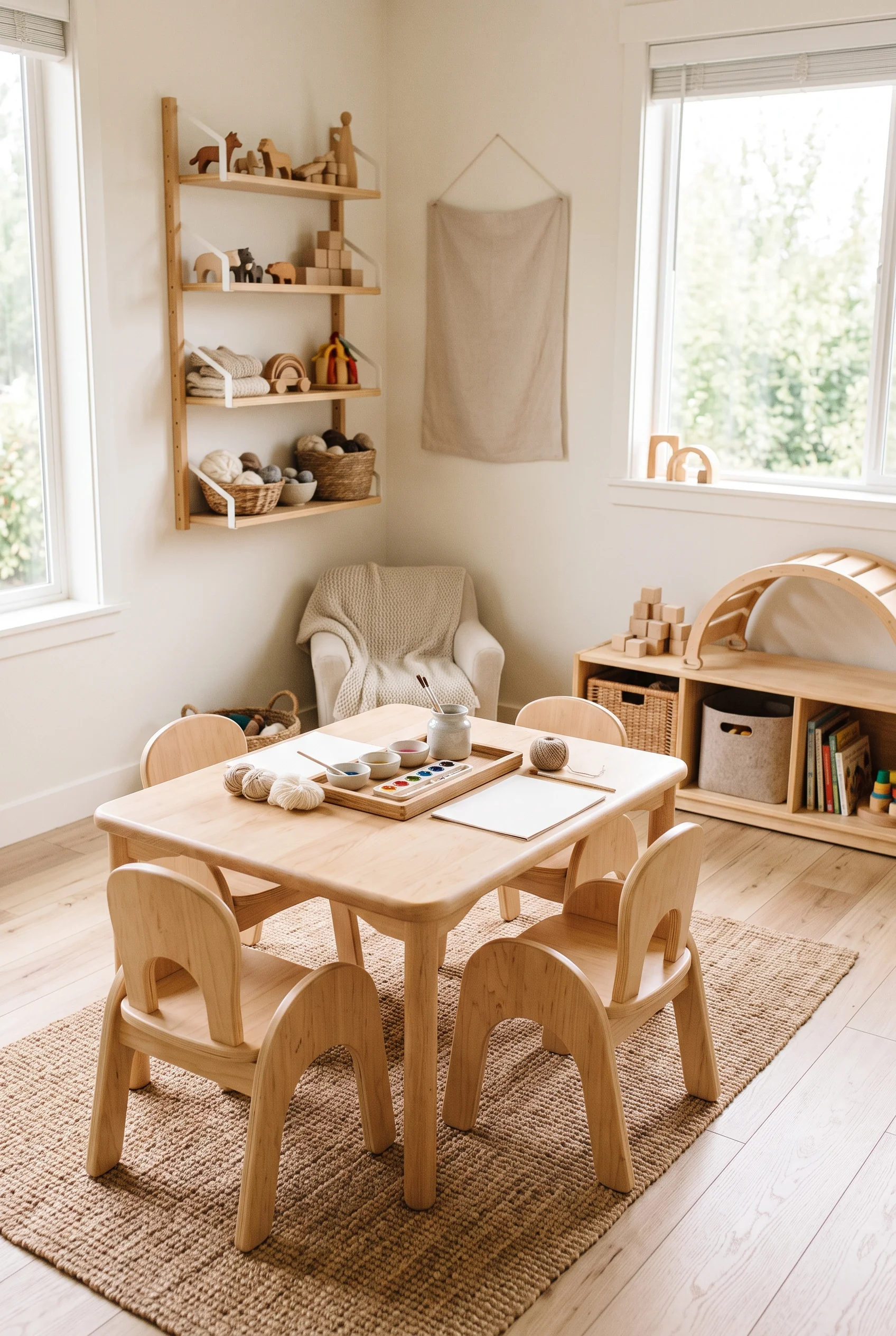
A child-sized table can host drawing, building, snacks, and quiet projects throughout the day. Comfortable proportions matter. Feet should rest securely rather than dangle, and the tabletop should be easy to reach without leaning or kneeling.
Measure your child’s seated height before selecting a set. Lightweight chairs allow children to reposition themselves, but stability and rounded edges remain essential. Natural wood keeps the setup visually calm and coordinates easily with future furniture. A well-scaled table often becomes one of the room’s hardest-working pieces.
An Art Station Ready in One Tray
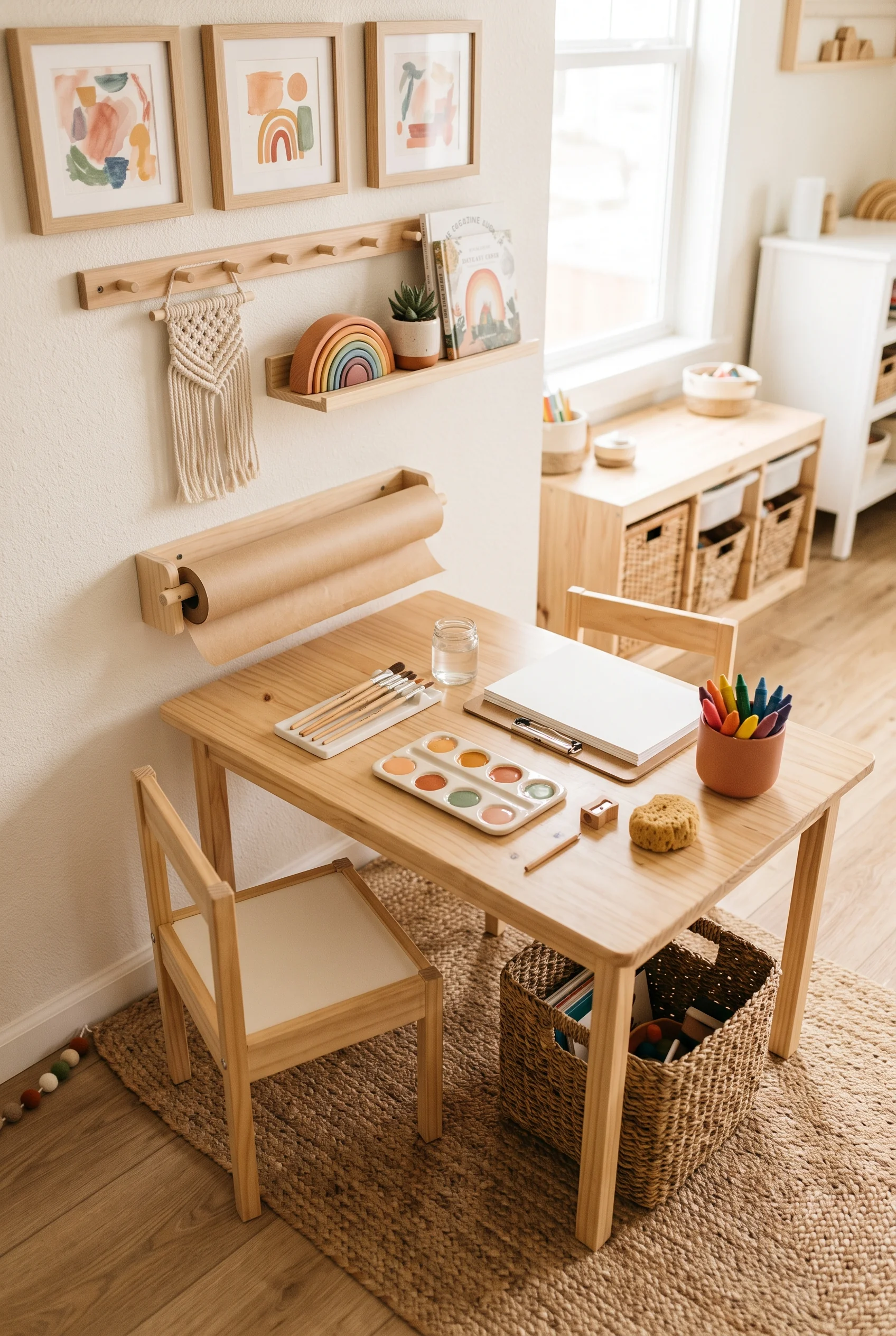
A ready-to-use tray removes the friction between an idea and beginning. Stock it with a restrained selection of crayons, paper, natural brushes, or modeling wax. Add watercolor paints to the tray when an adult is available to help.
Shallow containers keep supplies visible without crowding the work surface. Keep age-appropriate basics within reach, and store messier materials on a higher shelf. The tray can travel from storage to the child-sized table, then return as one unit. Even a small playroom can support regular creative work without maintaining a large permanent studio.
Handmade Art at a Child’s Eye Level
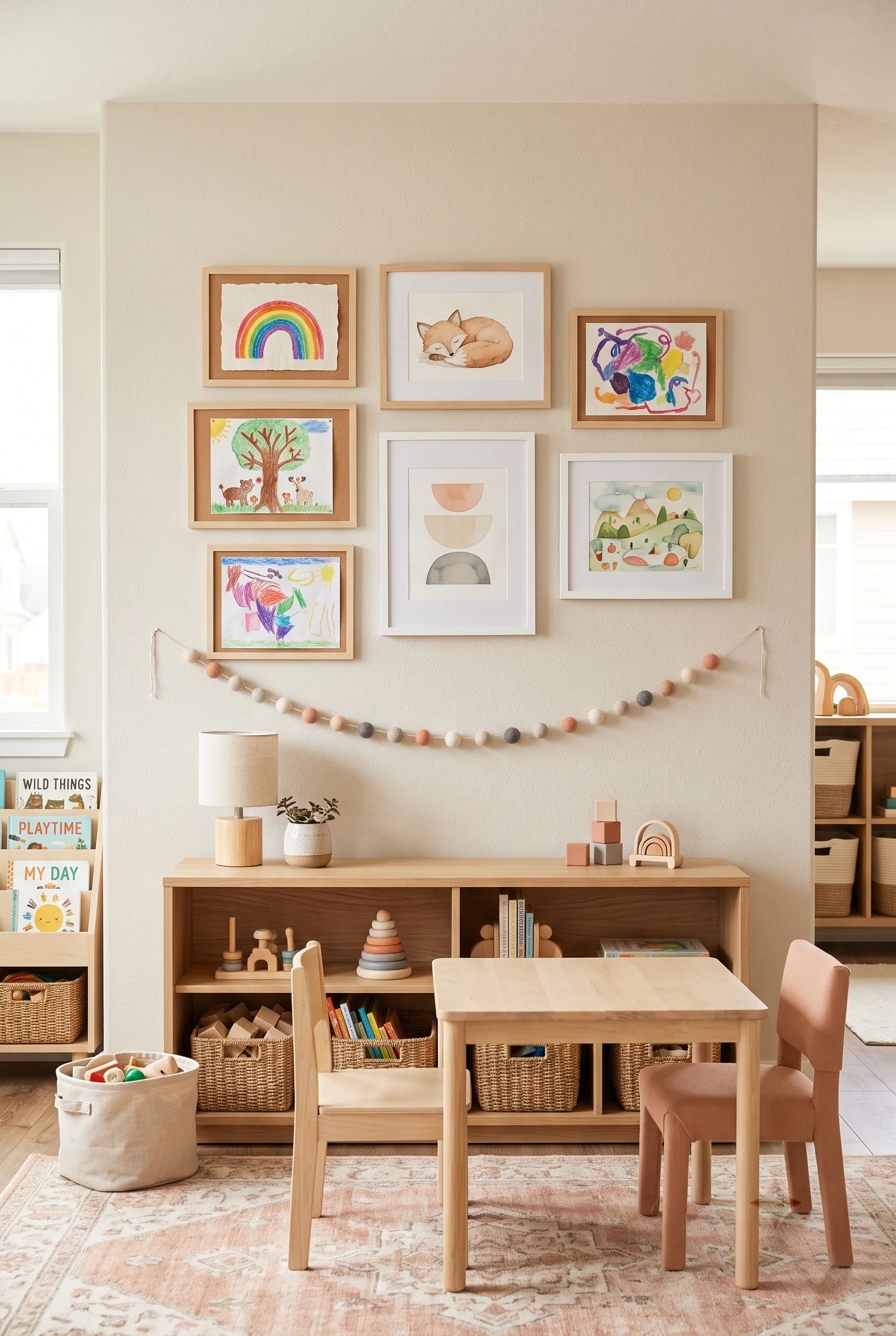
Watercolor washes, felt garlands, fiber pieces, and children’s paintings soften contemporary walls. A limited palette helps handmade work sit comfortably beside warm neutrals and natural wood. One framed painting can carry more presence than a wall filled edge to edge.
Place selected pieces at a height children can notice. Seeing their own work treated with care adds a quiet sense of belonging. A short seasonal garland can shift through the year without requiring a full decorative update. The display feels personal, polished, and connected to family life.
A Dress-Up Corner With Flexible Roles
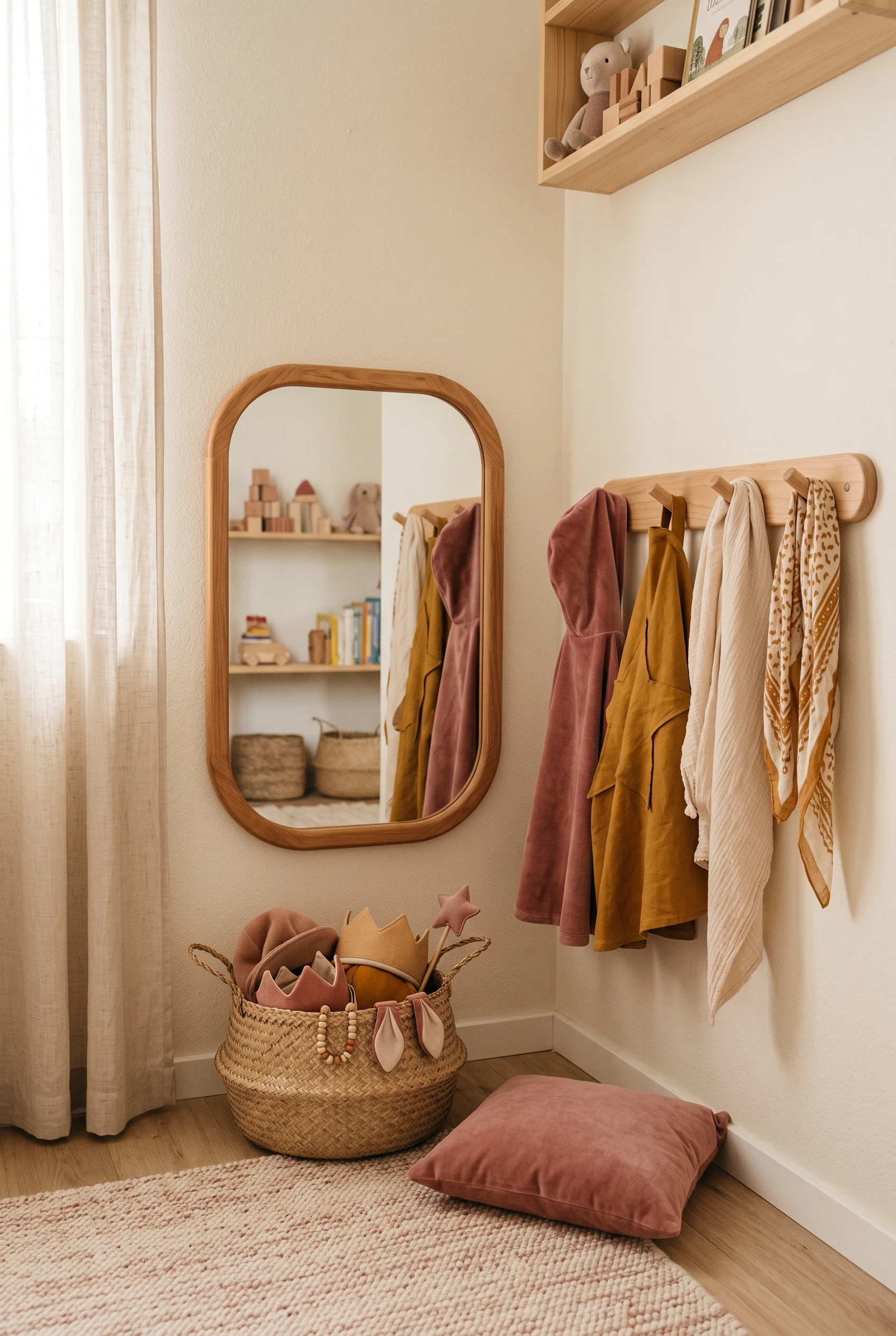
Low hooks turn a narrow wall into a useful dress-up corner. Capes, hats, scarves, and simple fabric pieces can become many characters, unlike complete costumes tied to one familiar role. Five or six choices keep the area exciting without covering the floor.
Add one basket for accessories and securely mount a child-safe mirror nearby. Keep the surrounding floor open so dressing can flow into movement and pretend play. When the same pieces begin producing the same story, rotate one or two. A small change is often enough to send the play in a new direction.
Quiet Corners and Seasonal Connections
Not every part of a playroom needs to encourage busy activity. A soft reading corner, a protected canopy, and a small nature display offer gentler moments within the day. These ideas also invite children to notice seasonal changes and familiar objects. Each can begin with a few things already found at home.
A Reading Nook That Feels Tucked Away
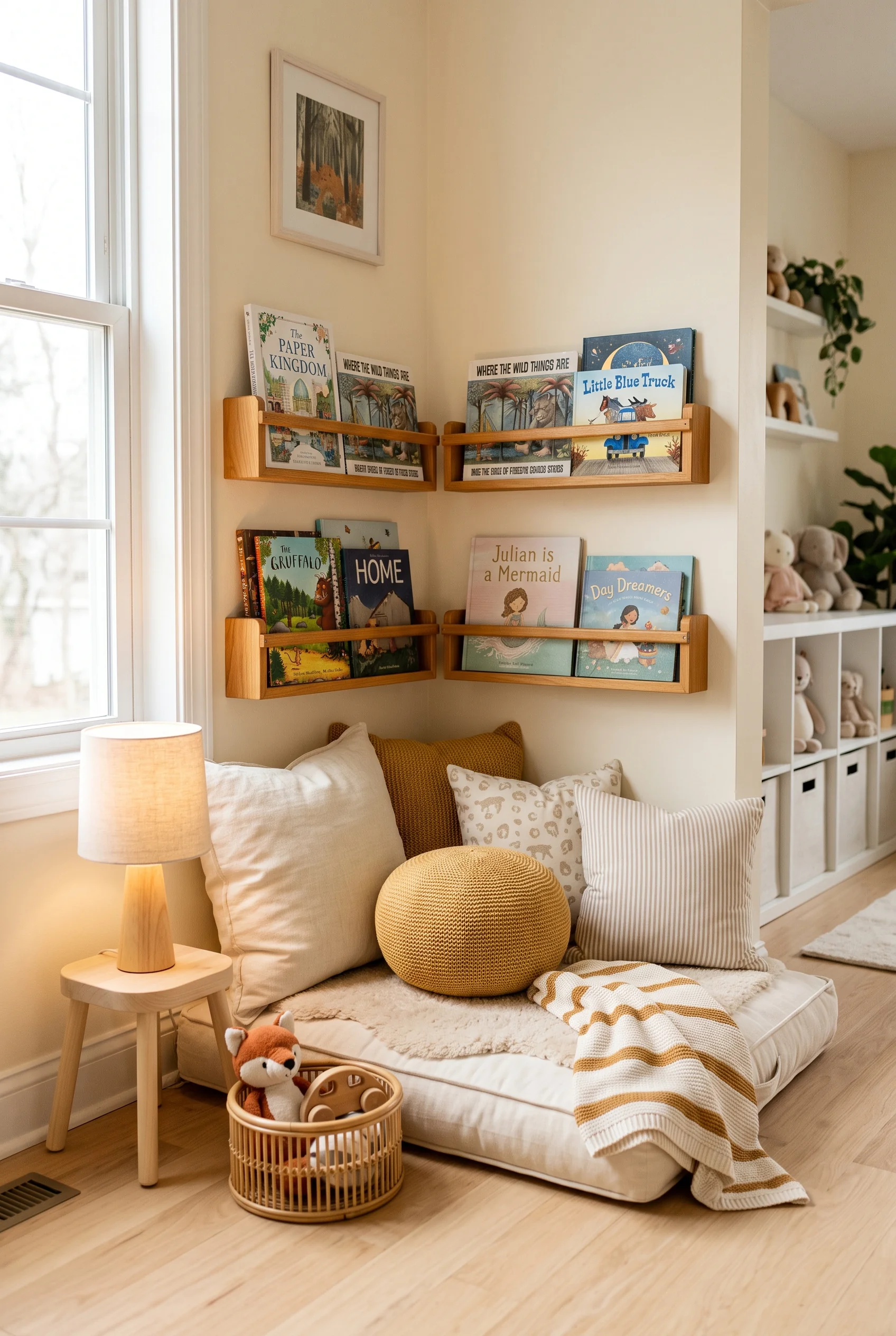
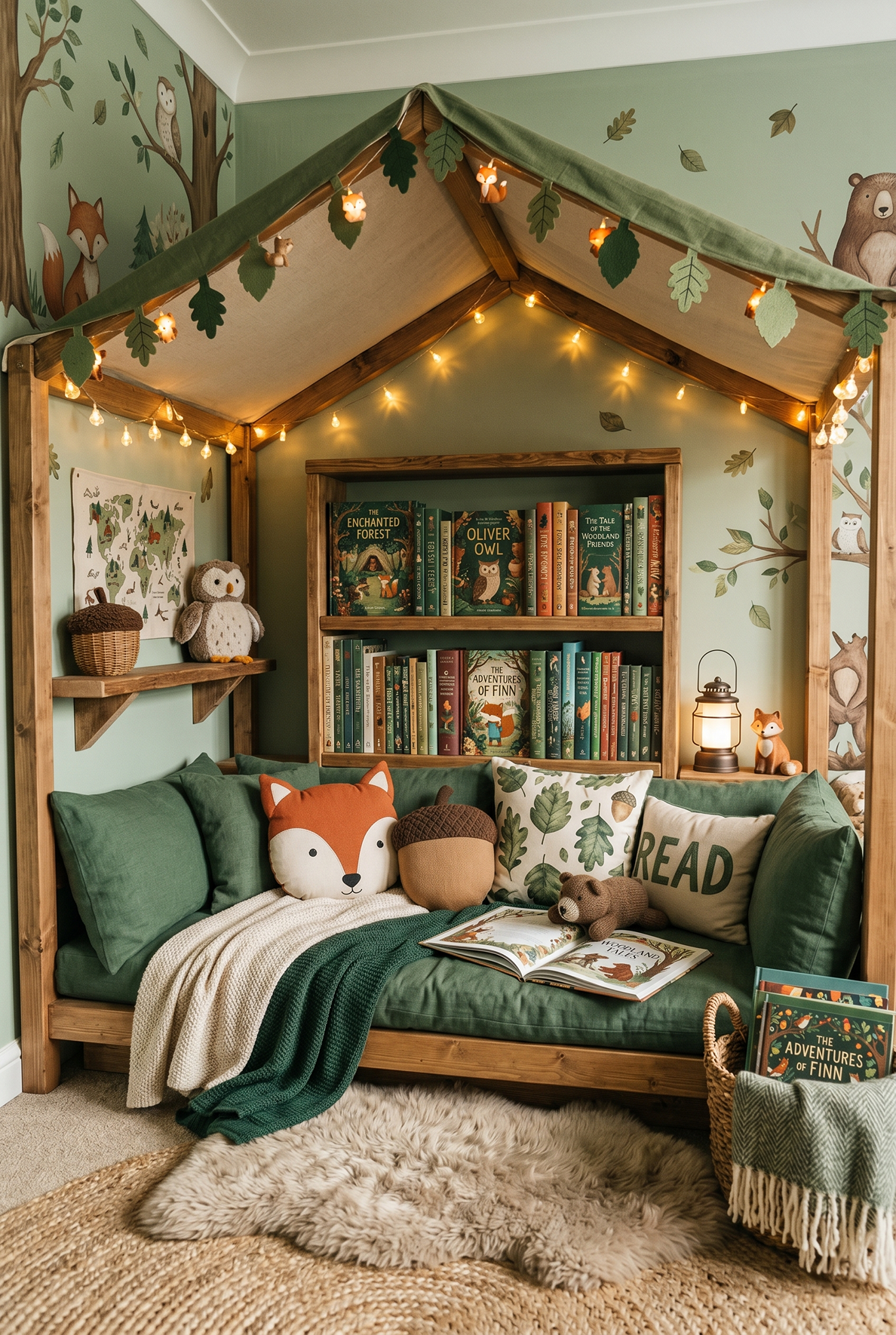
An unused corner can become a comforting retreat with a floor cushion, small mattress, or supportive child-sized chair. Keep six favorite books within reach on a short ledge or in a basket. One washable pillow and a light blanket add softness without complicating cleanup.
A nearby lamp makes the nook inviting on cloudy afternoons and during calmer evening routines. This arrangement doesn’t need a large footprint or elaborate styling. A clear boundary and comfortable seat are enough to make reading feel separate from active floor play.
Shop this pick: Oversized Kids Floor Cushion, A supportive floor cushion instantly defines a cozy reading nook and offers an approachable upgrade for playrooms of nearly any size.
A Canopy for Slower Moments
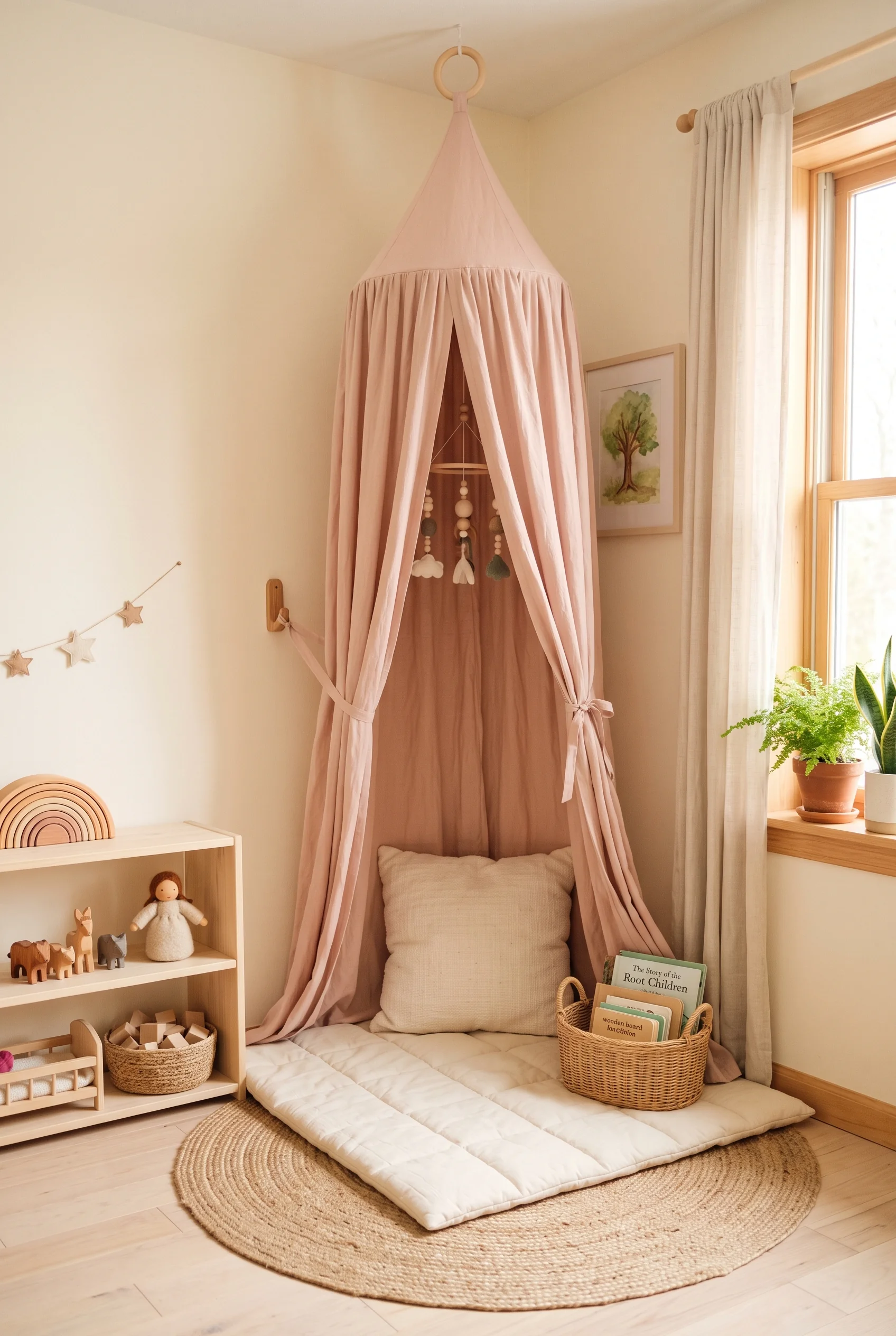
A simple fabric canopy gives reading, resting, and gentle pretend play a sense of protection. Breathable cloth in blush, warm cream, or another muted tone keeps the corner airy while connecting it to the wider palette.
Secure installation is essential. Keep cords, heavy objects, and piles of cushions out of reach. A washable mat, one pillow, a blanket, and a small book basket are enough. With the setup kept spare, the canopy remains peaceful rather than becoming another place where loose toys collect.
A Nature Table for Everyday Discoveries
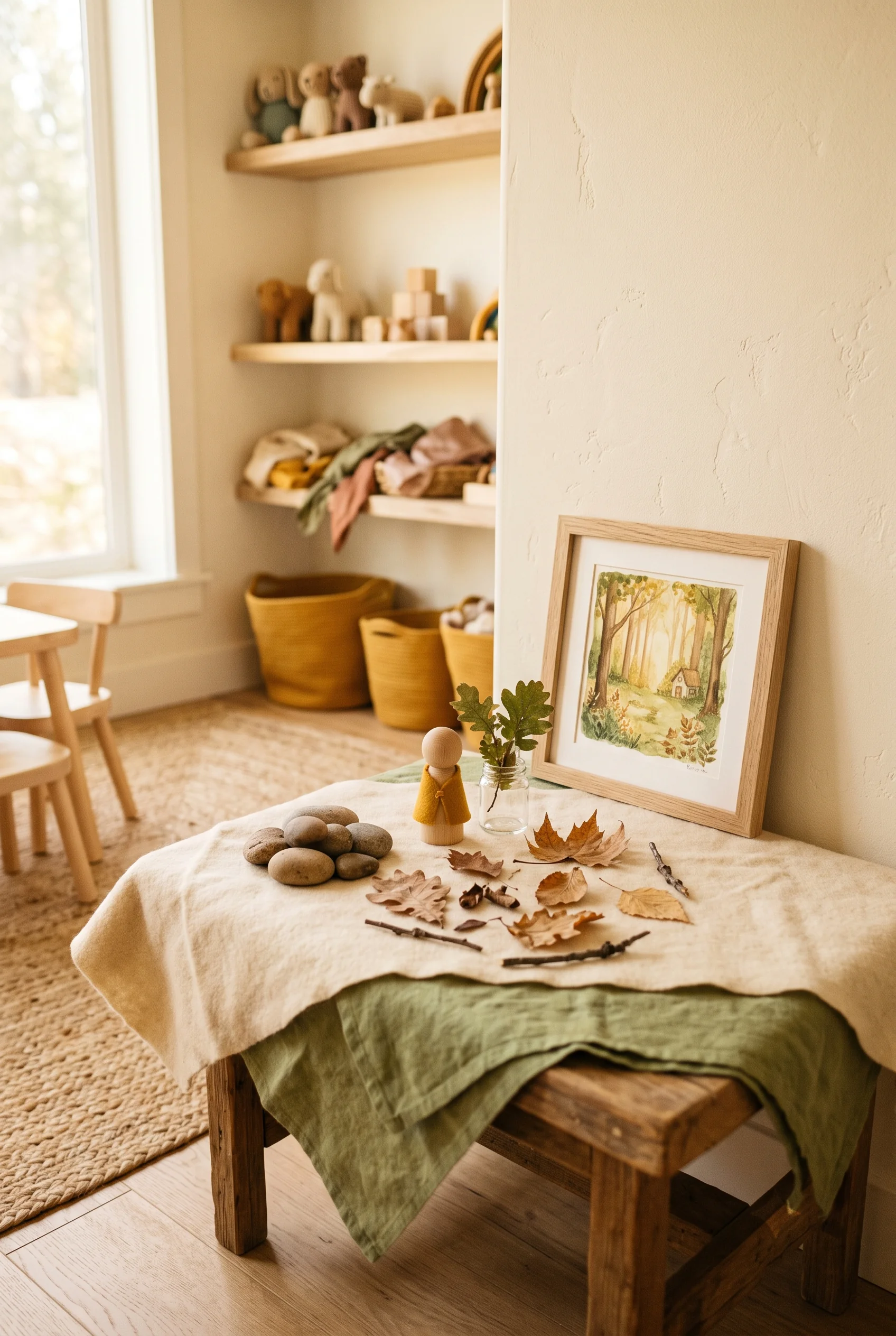
A low table, shelf, or simple tray can hold the small treasures children notice outdoors. Three objects are plenty to begin. Smooth stones, leaves, shells, flowers, or a sculptural branch invite close observation without crowding the surface.
Place a cloth, simple figure, or watercolor card beneath the collection to give it a quiet focal point. Child-found objects make the display feel connected to real walks and backyard discoveries. Leave enough open surface around them so you can handle, study, and return each item with care.
Seasonal Details in a Smaller Scale
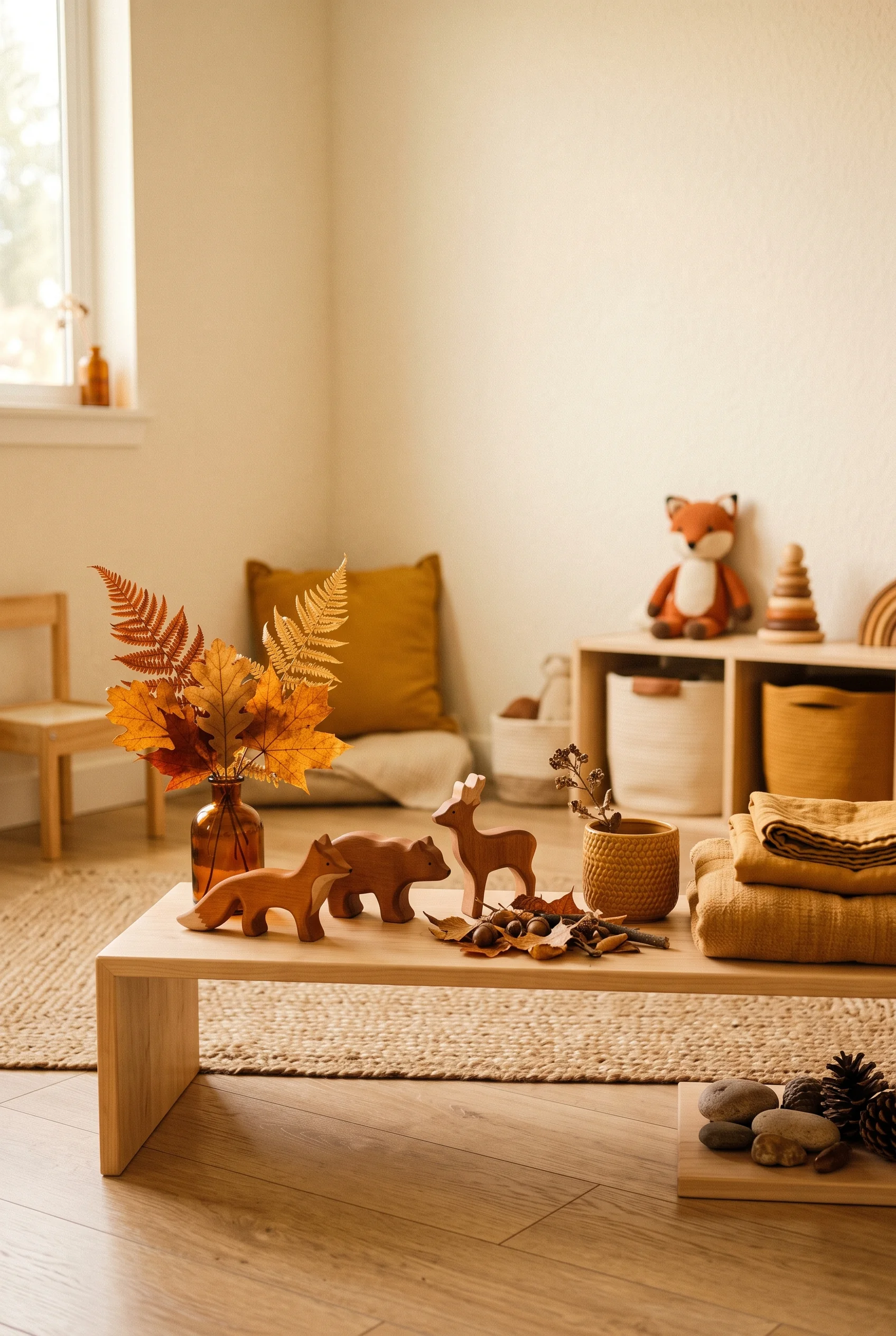
Seasonal displays feel most meaningful when they remain small. Change one cloth color and two natural objects as spring, summer, autumn, and winter arrive. Children can contribute drawings or safe discoveries gathered outdoors.
Amber leaves and golden textiles bring warmth to an autumn arrangement, while fresh green or pale blue can quietly signal a new season. A measured edit keeps the display noticeable without introducing more clutter.
A Thoughtful Playroom Built Slowly
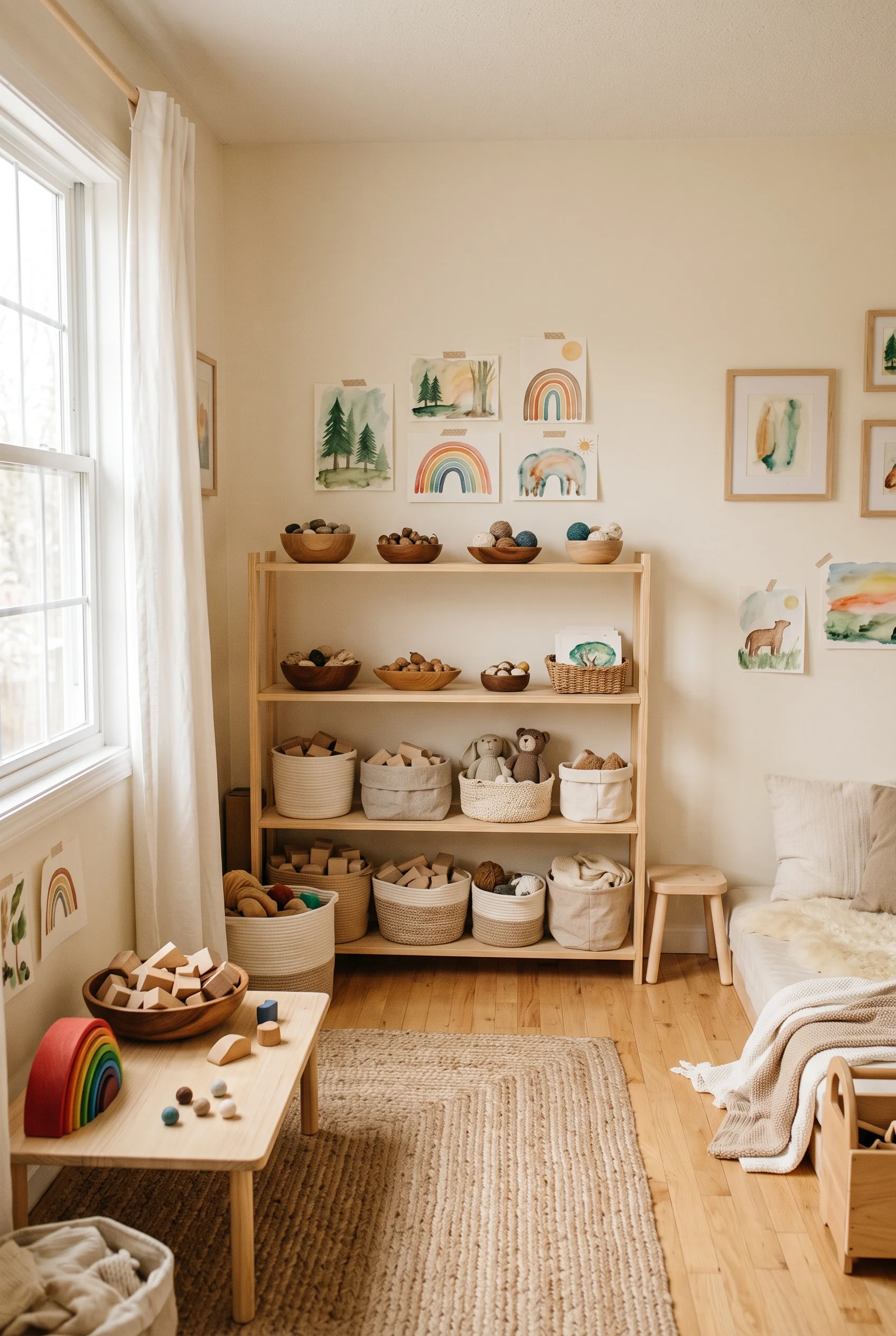
A Waldorf-inspired playroom on a budget can begin with baskets, scarves, books, and blocks already in the house. Wooden bowls, fabric remnants, sturdy trays, and small containers may also support supervised play. You don’t need to buy a complete matching collection.
Set a modest monthly budget and add one durable piece at a time. A solid wood shelf may come first, followed later by a rug or lamp. Handmade artwork and simple garlands add personality for very little cost. Slow decisions allow the room to reflect your children rather than a single shopping trip.
A Playroom Shaped Around Your Family
A warm playroom grows from the rhythms already present in your home. Perhaps your child spends hours building on the floor, carries books from room to room, or turns every blanket into a costume. Those habits are useful clues. They can guide the layout more thoughtfully than any perfectly styled photograph.
You do not need a large room, an expensive toy collection, or matching furniture to begin. Clear one rug-sized area for open play. Place a few play silks in a basket, move favorite books within reach, or arrange three outdoor treasures on a tray. One small change can make familiar materials easier to notice and enjoy.
The most lasting Waldorf playroom ideas share a gentle sense of intention. Natural materials feel good in small hands. Accessible storage gives children more independence. Warm colors and softer lighting make the room comfortable for adults too. None of these choices require the house to remain spotless or the shelves to look untouched.
Pick the ideas that suit your available space, your budget, and your child’s current interests. Let the rest wait. As play changes, the room can change with it through a simple toy rotation or a new seasonal detail. A meaningful Waldorf playroom is not finished all at once. It becomes more personal through ordinary days of building, reading, drawing, and imagining together.