31 Kitchen Decor Ideas That Make the Heart of the Home Feel Finished
A kitchen can have beautiful cabinets, expensive countertops, and perfectly coordinated appliances and still feel unfinished. Those larger elements define the room, but they don’t always add personality. It’s often the smaller decisions, from the artwork on a wall to the objects you leave on display, that make a kitchen feel like part of a home rather than simply a place to prepare meals.
There’s a difference between decorating a kitchen and filling it with decorations. Natural materials and classic finishes in beautiful kitchen ideas provide a strong foundation, while a collected approach to neutral home decor shows how everyday dishes and useful objects can add character. Even the changing details in fall kitchen decor demonstrate how much personality a kitchen can gain without changing its permanent finishes.
These kitchen decor ideas focus on the details that make a room feel complete, whether you’re working with a newly renovated kitchen or one that hasn’t changed in years. You’ll find ways to bring more character to counters, shelves, walls, and overlooked corners, with ideas that respect the space you need for cooking and everyday family life.
DISCLOSURE: Some of the links provided on this page are affiliate links. This means if you choose to make a purchase through these links, we may receive a small commission at no extra cost to you.
Warmth Built Into the Visual Foundation
Color, texture, and light shape the mood before any smaller accessory enters the room. A limited palette keeps modern kitchen decor calm, while wood and textiles soften stone, metal, and straight cabinet lines. These foundational details carry more visual weight than a collection of small objects. They also make later decorating decisions much simpler because every addition has a clear place within the room.
A Warm Palette That Quietly Connects the Kitchen
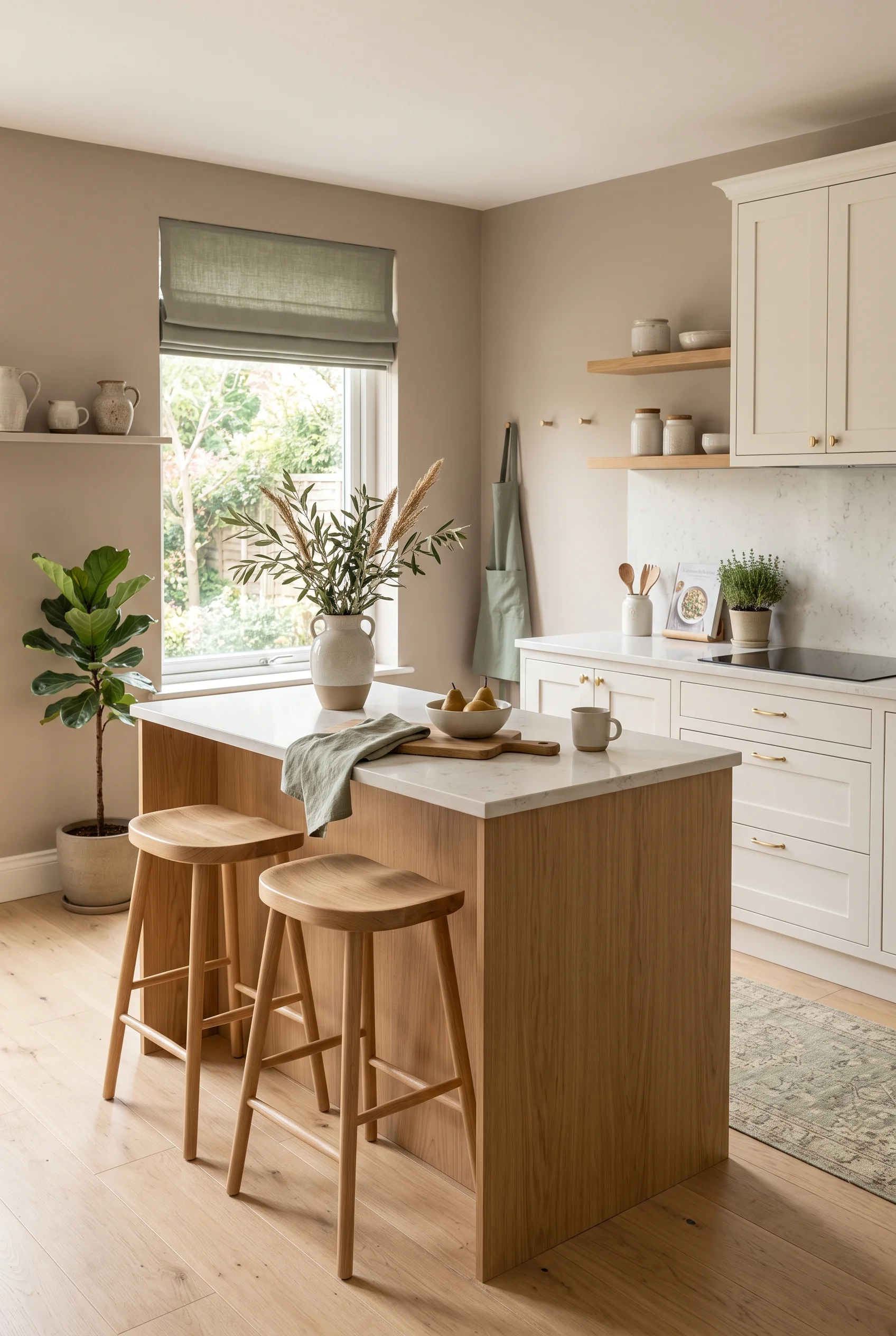
Warm white, soft taupe, muted green, and gentle clay bring a relaxed quality to hard kitchen surfaces. Begin with the undertones already present in the cabinets, counters, and flooring. A creamy stone counter, for example, usually feels more settled beside warm neutrals than a crisp blue-white.
Repeat two or three shades through towels, cookware, and framed art rather than changing every permanent finish. The repetition can be subtle. A muted green towel and a leafy branch may be enough to connect opposite sides of the room. The palette feels considered, but never overly matched.
Natural Wood Against Sleek, Cool Surfaces
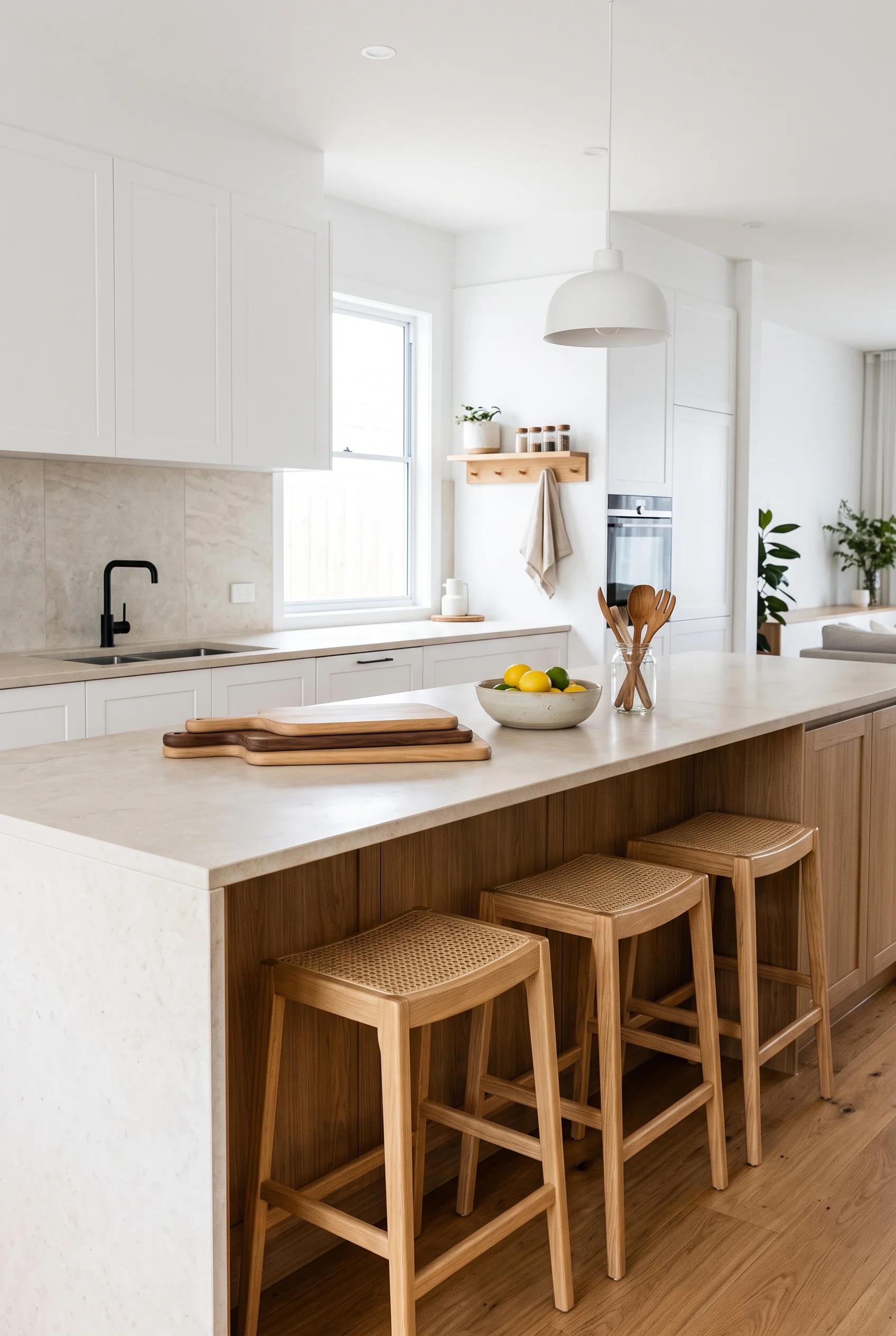
Natural wood gives pale stone and stainless steel an immediate sense of warmth. Oak stools, smooth cutting boards, or a simple serving bowl can soften a contemporary kitchen without changing its clean character.
One or two wood tones are usually enough. Repeat each tone somewhere else so it feels connected, perhaps through stool legs and a bowl or shelving and a tray. Clean silhouettes keep the material looking current. This approach is especially useful when the cabinetry and floors are staying exactly as they are.
A Runner That Softens the Work Aisle
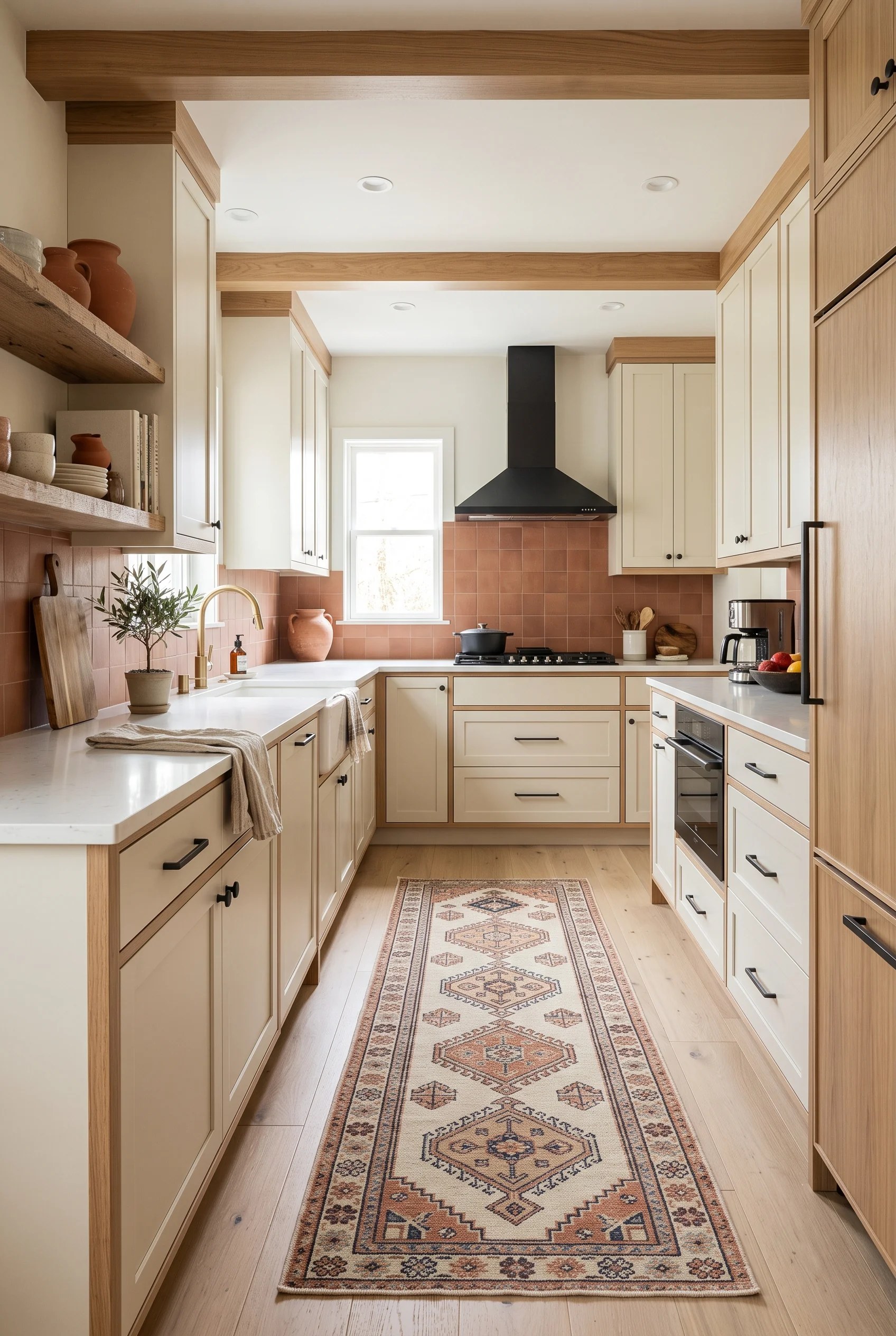
A patterned runner brings color and comfort to a long galley or the working side of an island. Muted terracotta, charcoal, and cream are forgiving choices for a busy family kitchen. They offer interest without competing with cabinetry or counters.
Low-pile construction matters near cabinet doors and active cooking zones. A washable finish handles crumbs and small spills more gracefully, while a non-slip pad keeps the rug secure underfoot. The floor gains a soft visual layer, and the entire work aisle feels more welcoming.
Soft Privacy at the Kitchen Window
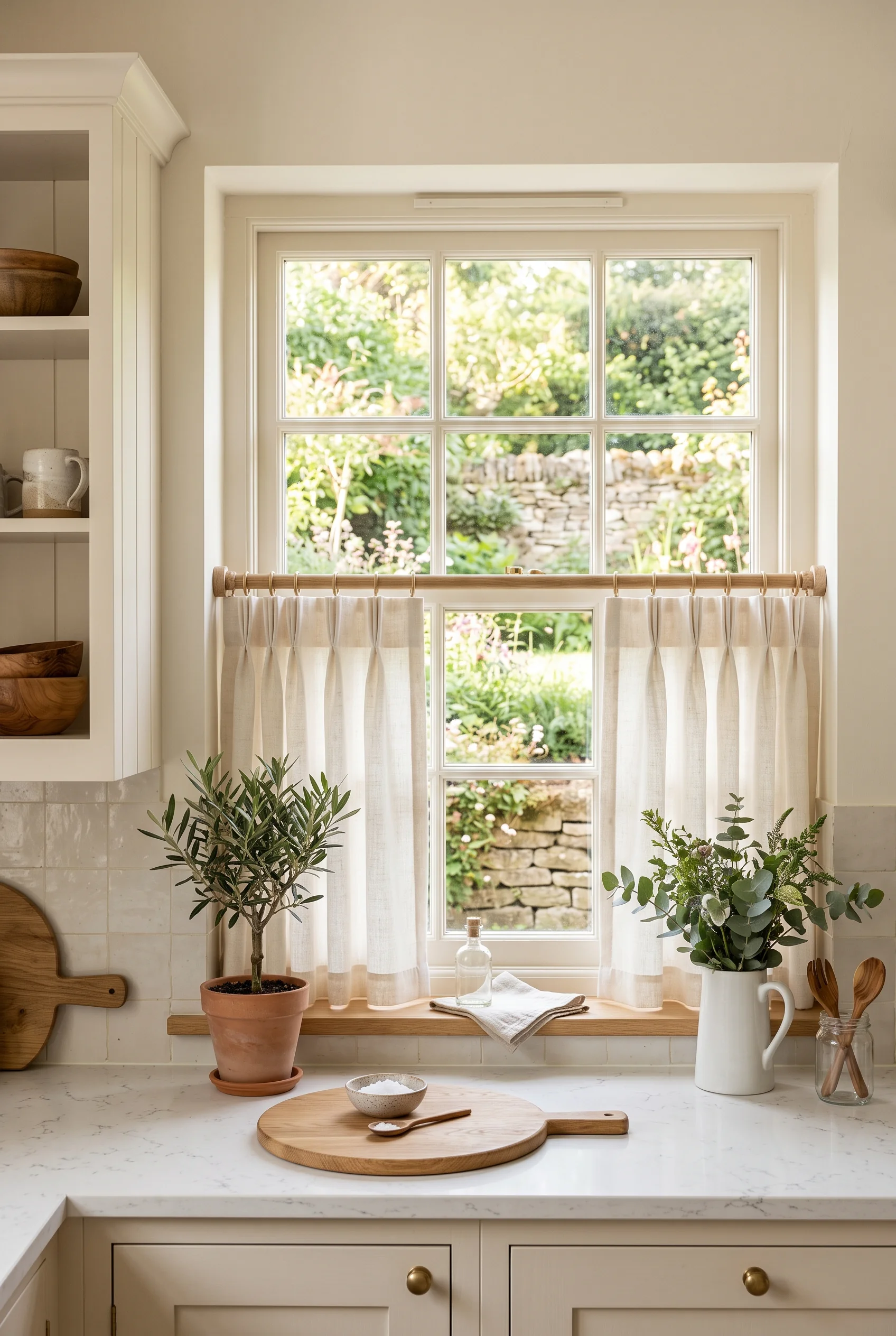
Café curtains soften a kitchen window while preserving the daylight that makes the room feel open. Covering only the lower glass offers privacy without turning the window into a heavy focal point. A neat inside-mounted rod keeps the treatment tailored in a compact kitchen.
Washable cotton or linen-blend fabric suits a room exposed to cooking moisture and everyday dust. Soft white feels airy, while a restrained pattern can echo the colors in a runner or nearby artwork. Morning light filtering through the fabric gives even a practical sink area a gentler mood.
Black Details With a Softer Edge
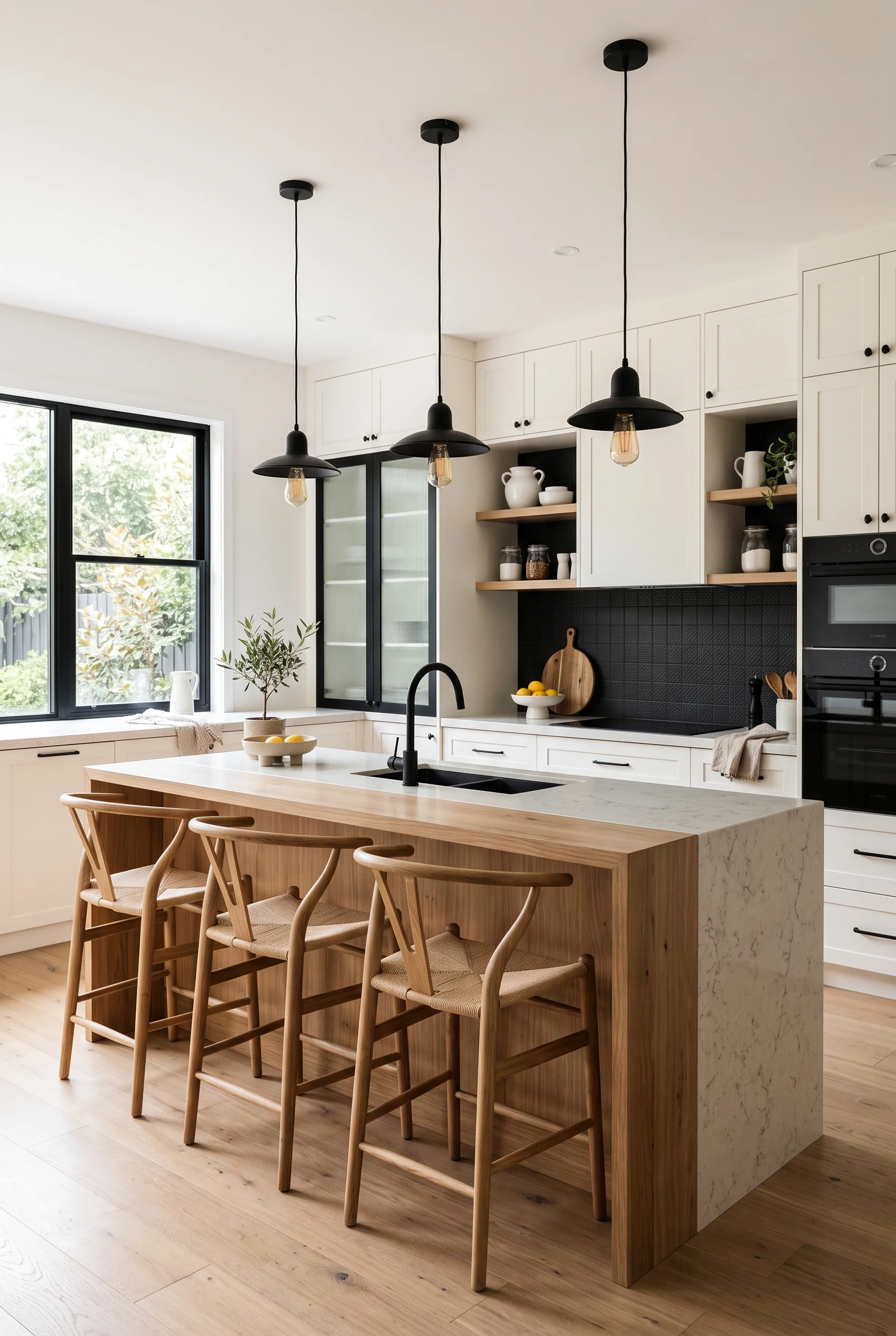
Small black accents bring definition to a pale kitchen. Slim frames, matte pendants, or dark stool legs outline the room without making it feel severe. Repeating the color in two or three places keeps each piece from feeling isolated.
Matte finishes tend to feel quieter than glossy ones, especially beside warm wood and creamy surfaces. The contrast does not need to be perfectly distributed. A black light overhead and two narrow frames near the breakfast table can be enough to sharpen the overall composition.
Pattern Framed Neatly Inside the Window
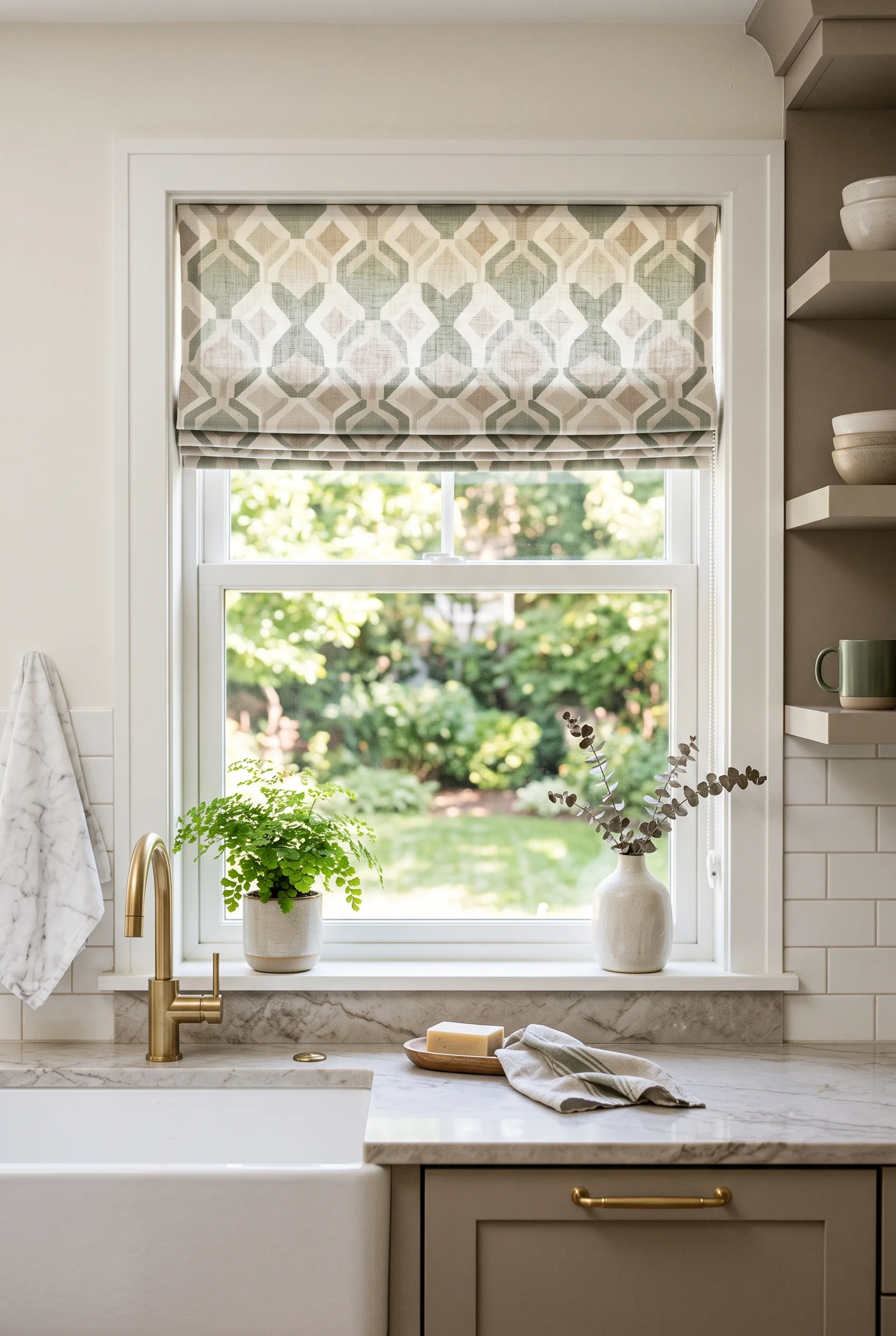
A Roman shade adds pattern without taking up valuable wall, shelf, or counter space. It is particularly useful in a kitchen that needs softness but has little room for extra decor. A geometric or botanical print can repeat colors already present in the cabinets and textiles.
Scale makes the difference. Smaller windows suit a restrained motif, while a wider window can carry a broader pattern. Easy-care fabric is the practical choice near a sink or preparation zone. When raised, tailored folds stay tidy and let natural light fill the room.
Layered Light for a Kitchen That Feels Cozy
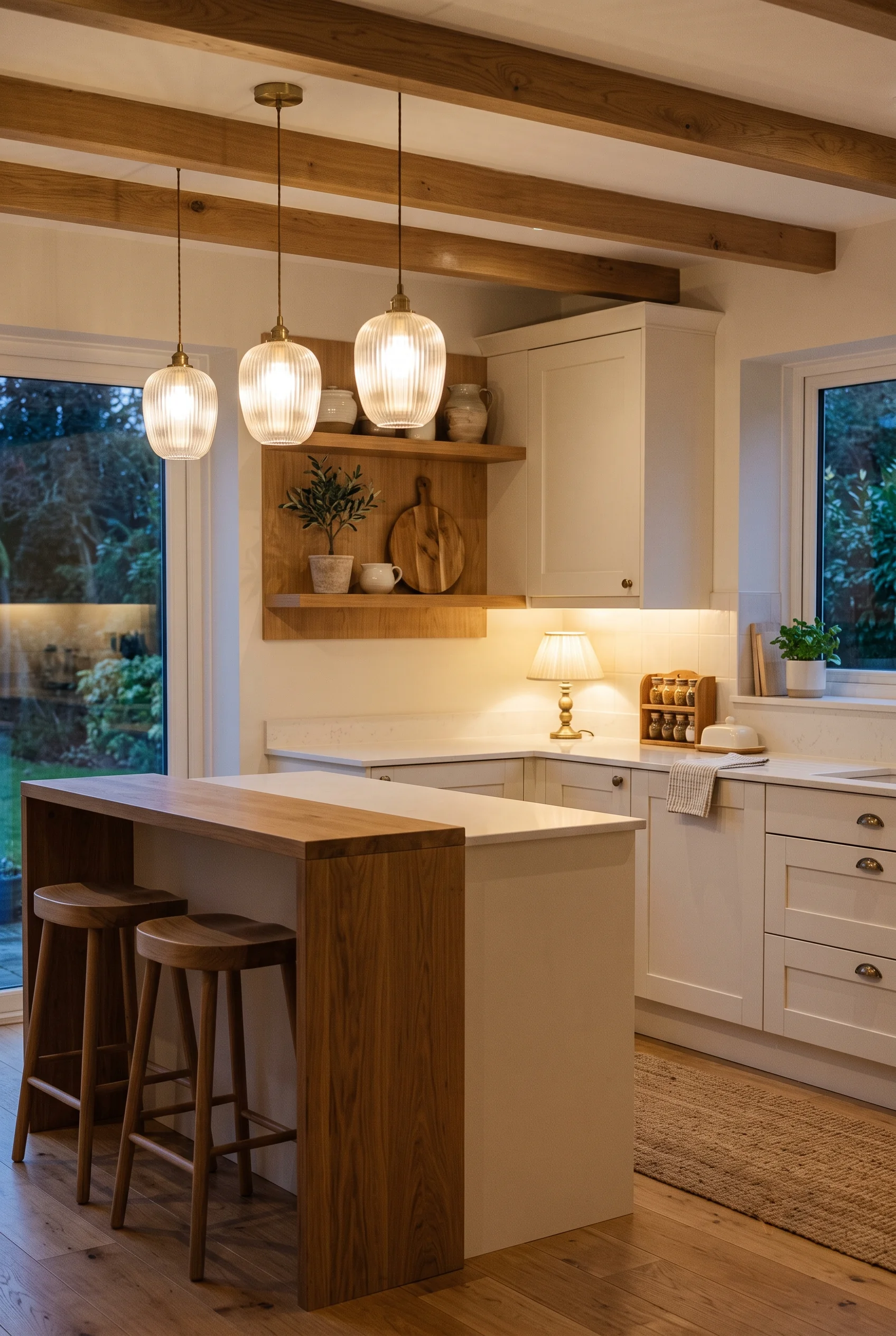
Cozy kitchen ideas often begin with lighting rather than decor. Ceiling fixtures provide general illumination, pendants focus on the island, and under-cabinet strips brighten prep areas. Together, they keep the room from relying on one harsh source after sunset.
Warm white bulbs with a consistent color temperature give each layer the same gentle glow. Dimmers make the kitchen adaptable for cooking, homework, or a quiet evening. A compact shaded lamp can sit in a dry, unused corner away from heat and water, adding living-room softness to the counter.
Countertop Moments That Still Leave Room to Cook
The most successful kitchen counter decor respects the work happening around it. A small arrangement can make the room feel polished, but open surface area remains the real luxury. Grouping useful pieces by routine keeps necessities from drifting across the counter. Each zone gains a little character while staying easy to wipe down, reset, and use during the busiest parts of the day.
Kitchen Decor Ideas for Calm, Open Countertops
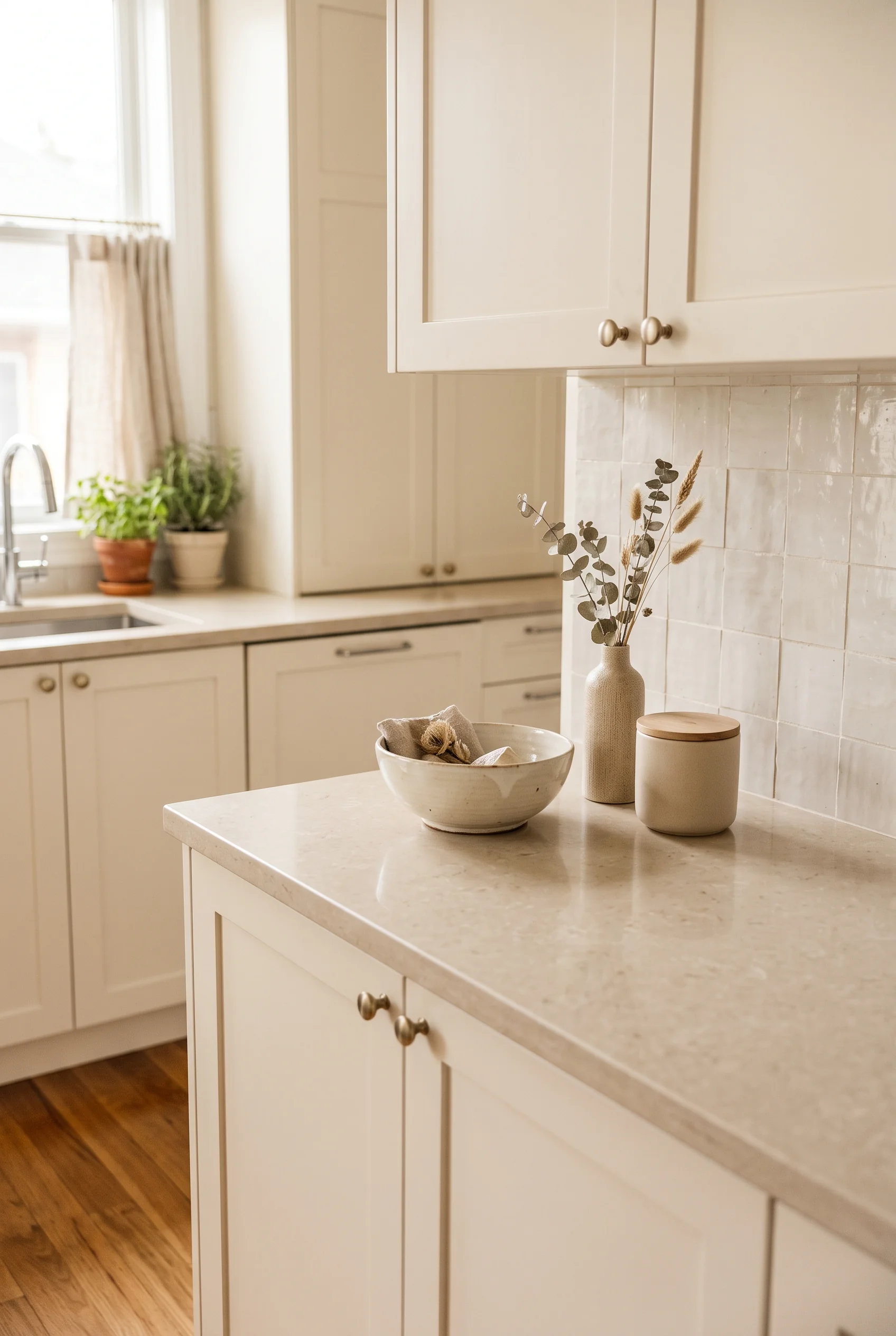
Groups of two or three give kitchen decor ideas for countertops a sense of intention. Pair a low bowl with a medium canister and one slim vase, then leave generous space around them. Varying the height adds rhythm without requiring a long line of accessories.
A shared material or color helps the pieces read as one quiet moment. Cream ceramics, for instance, can differ in shape while still feeling related. Keep the grouping away from the main preparation zone. Clear stone around the arrangement is part of the composition, not space waiting to be filled.
A Coffee Station Made for Busy Mornings
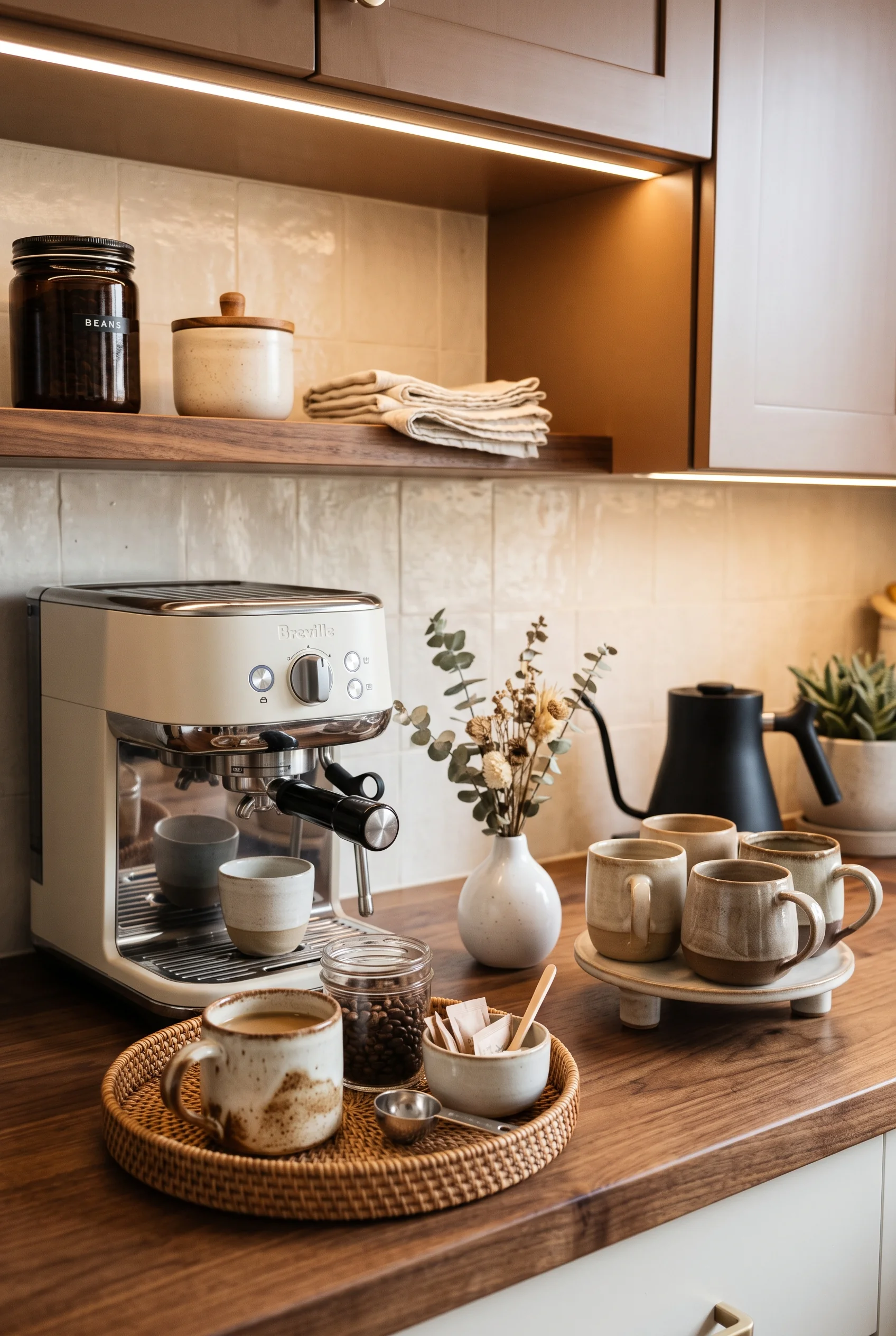
Bringing the coffee maker, beans, and sweeteners into one defined area makes mornings move more smoothly. A compact tray marks the boundary and prevents smaller supplies from spreading across the counter. Mugs and refills can live in the drawer or cabinet directly above.
One decorative detail is plenty beside an appliance. A bud vase or small framed print adds warmth without slowing down the routine. Under-cabinet lighting gives the station a welcoming glow before the rest of the household wakes up, and everything stays within easy reach.
Cutting Boards With Everyday Presence
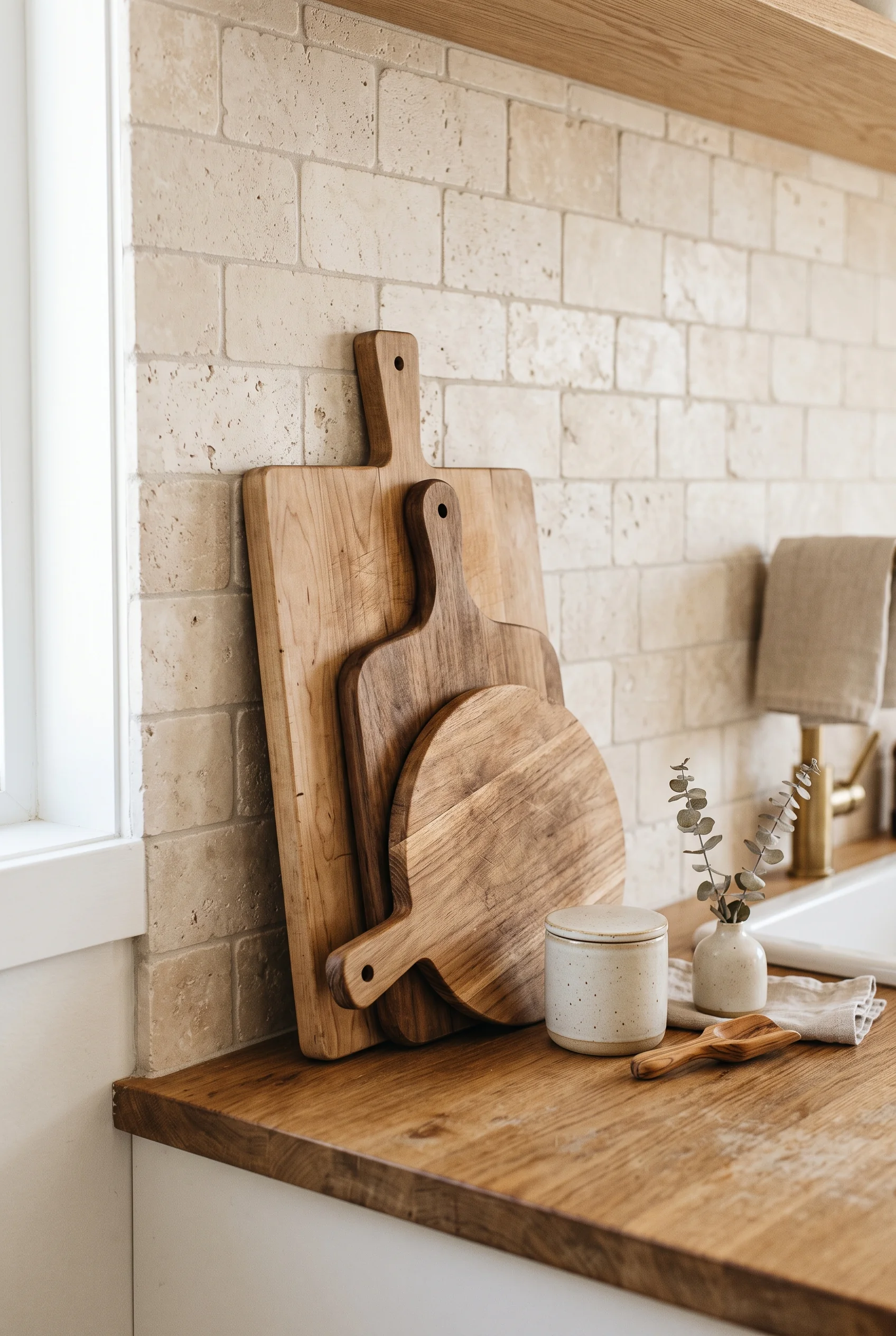
Two or three cutting boards leaned against the backsplash bring height and natural texture to a plain counter. Different shapes feel collected, while a similar wood tone keeps the arrangement quiet. Boards used throughout the week are especially fitting because the display never becomes purely decorative.
Keep them away from direct heat and areas where water regularly splashes. After use, wash each board and dry it fully before returning it to the counter. Layer the tallest board at the back, then let a rounded or handled board sit slightly forward for an easy, relaxed composition.
Cooking Essentials Gathered on One Tray
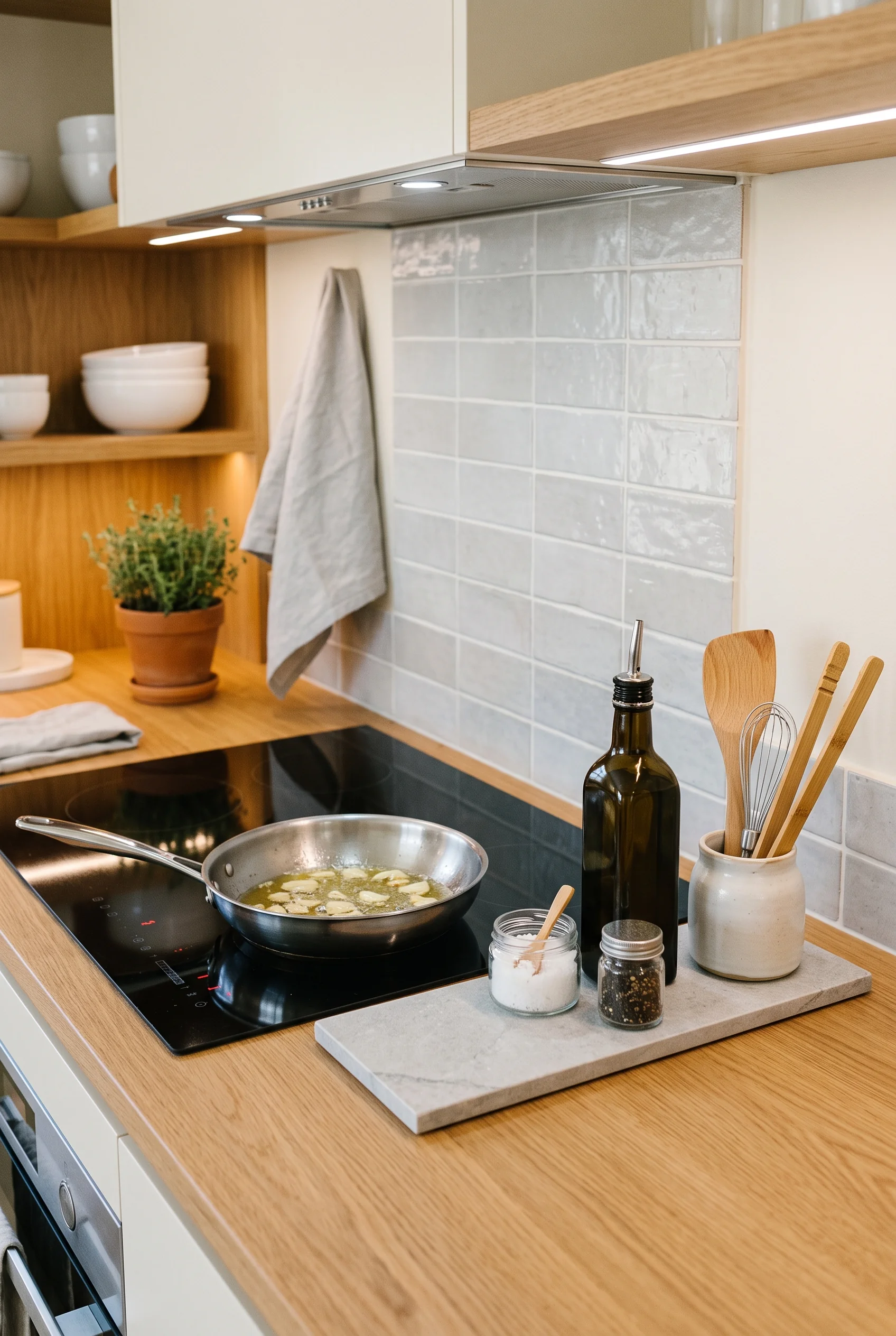
A slim tray beside the cooktop gives oils, salt, and frequently used seasonings a defined home. The tray should fit the contents closely rather than becoming another broad surface to decorate. Stone, sealed wood, or washable metal handles the inevitable drips with less fuss.
Keep only the ingredients used at least once a week. Specialty bottles can return to a cabinet until you need them. A small utensil vessel may join the grouping if there is enough room, but the arrangement should remain easy to lift when the counter needs a thorough clean.
One Centerpiece With Room Around It
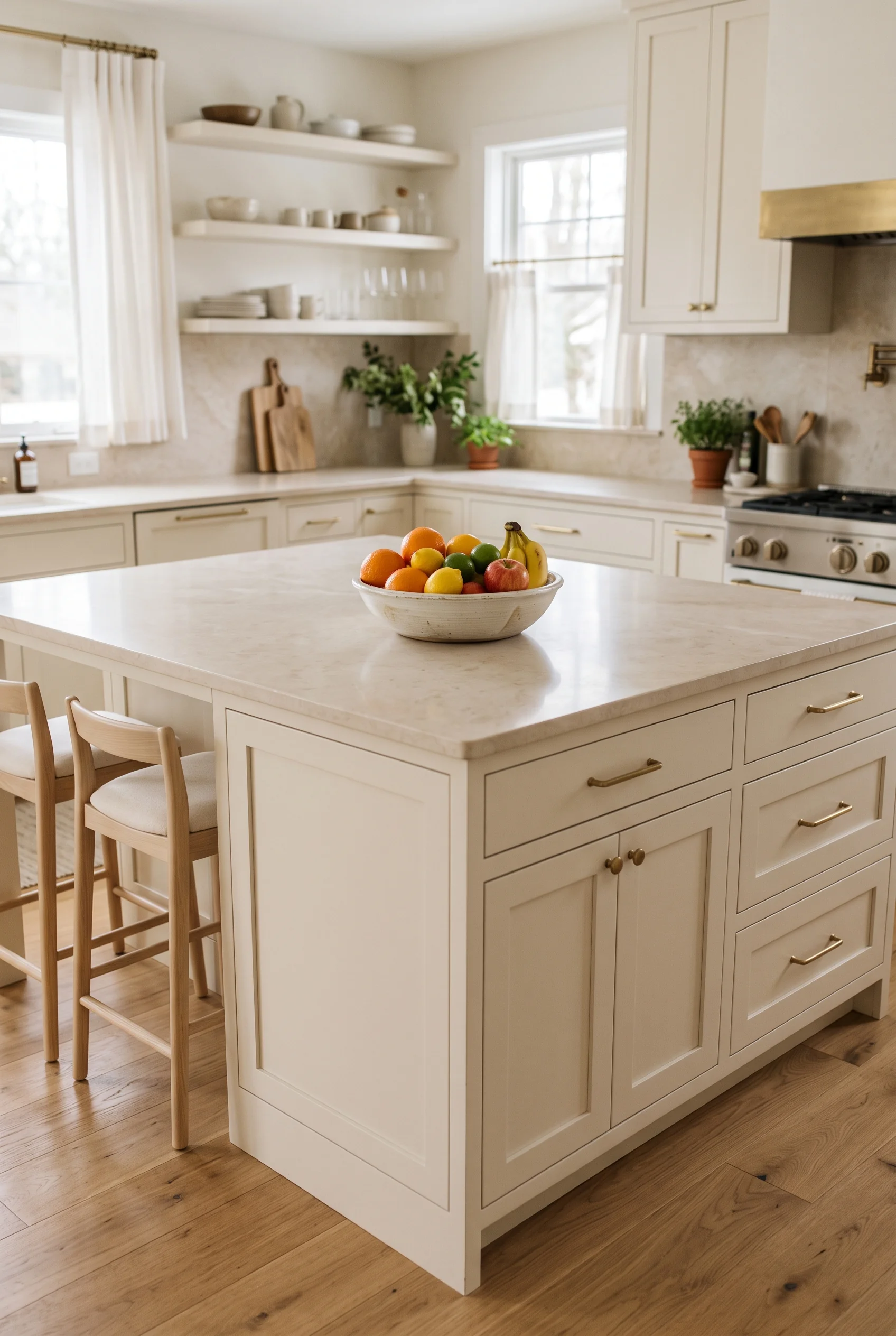
A single substantial centerpiece gives a kitchen island a focal point without scattering small accessories across the stone. A low ceramic bowl filled with fruit feels useful and relaxed. Greenery or a sculptural vessel can offer the same presence when the island is not used for serving.
Keep the height low enough for conversation across the room. Scale matters too, since a tiny bowl can look lost on a long island. The ideal piece feels generous but lifts away easily when baking, homework, or a family meal requires the entire surface.
An Edited Utensil Crock Beside the Cooktop
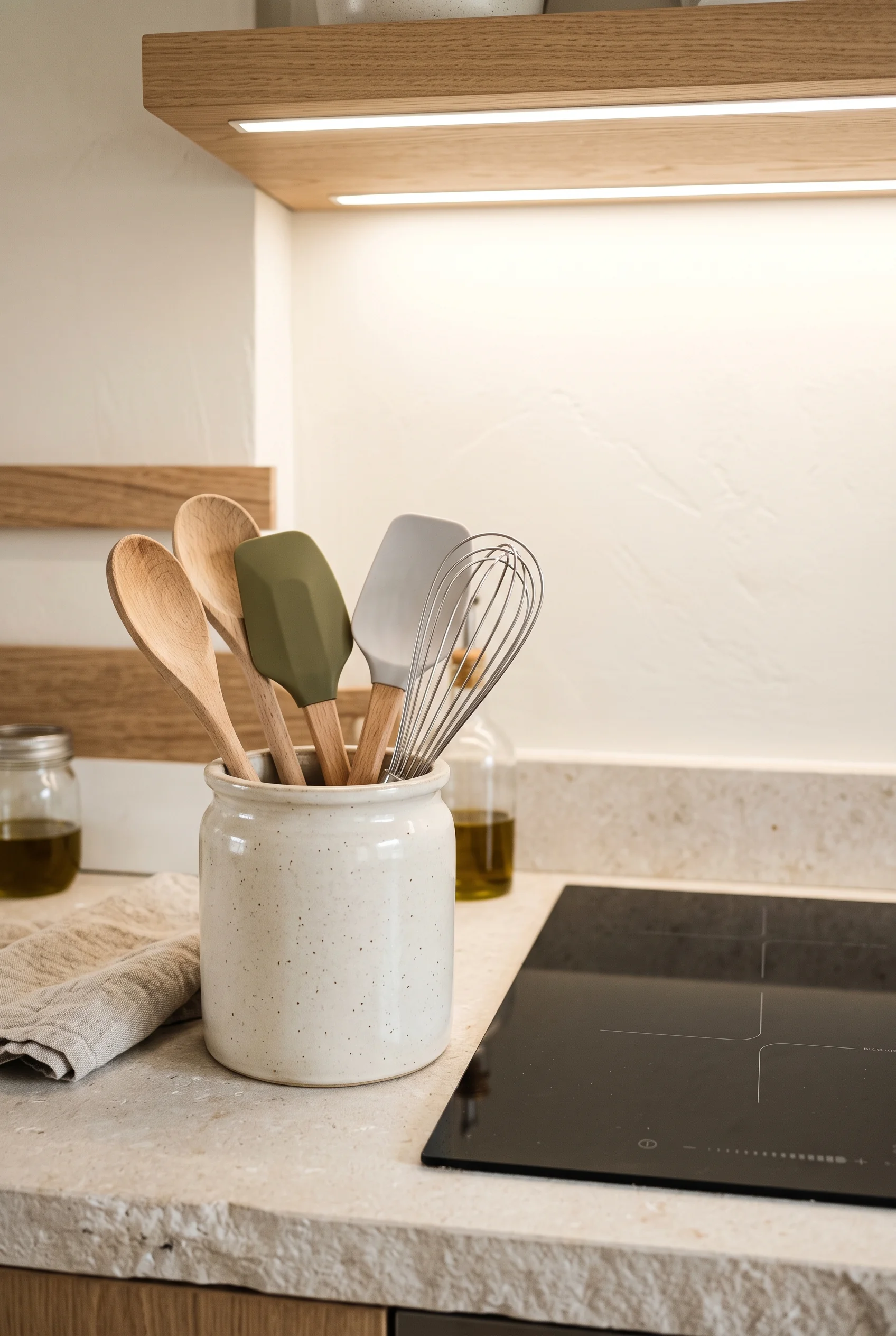
Wooden spoons, whisks, and spatulas earn their counter space when you reach for them several times a week. Gather the hardest-working tools in one sturdy crock near the cooktop. Specialty utensils can stay in a drawer, leaving the visible collection easy to sort through.
A wide, weighted vessel is less likely to tip when you pull a tool out quickly. Matte ceramic brings a soft texture to a sleek cooking zone and can echo a nearby bowl or tray. The arrangement reads as kitchen decor because every object has been thoughtfully edited.
Personal Details Beyond the Work Surfaces
Walls and shelves offer personality without taking space away from cooking. Art, cookbooks, and meaningful serving pieces can connect a kitchen to the rest of the home. The key is generous spacing and a limited palette. Rather than filling every open area, a few pieces with real presence allow the cabinetry and useful objects to share the visual story.
Kitchen Wall Decor With a Personal Point of View
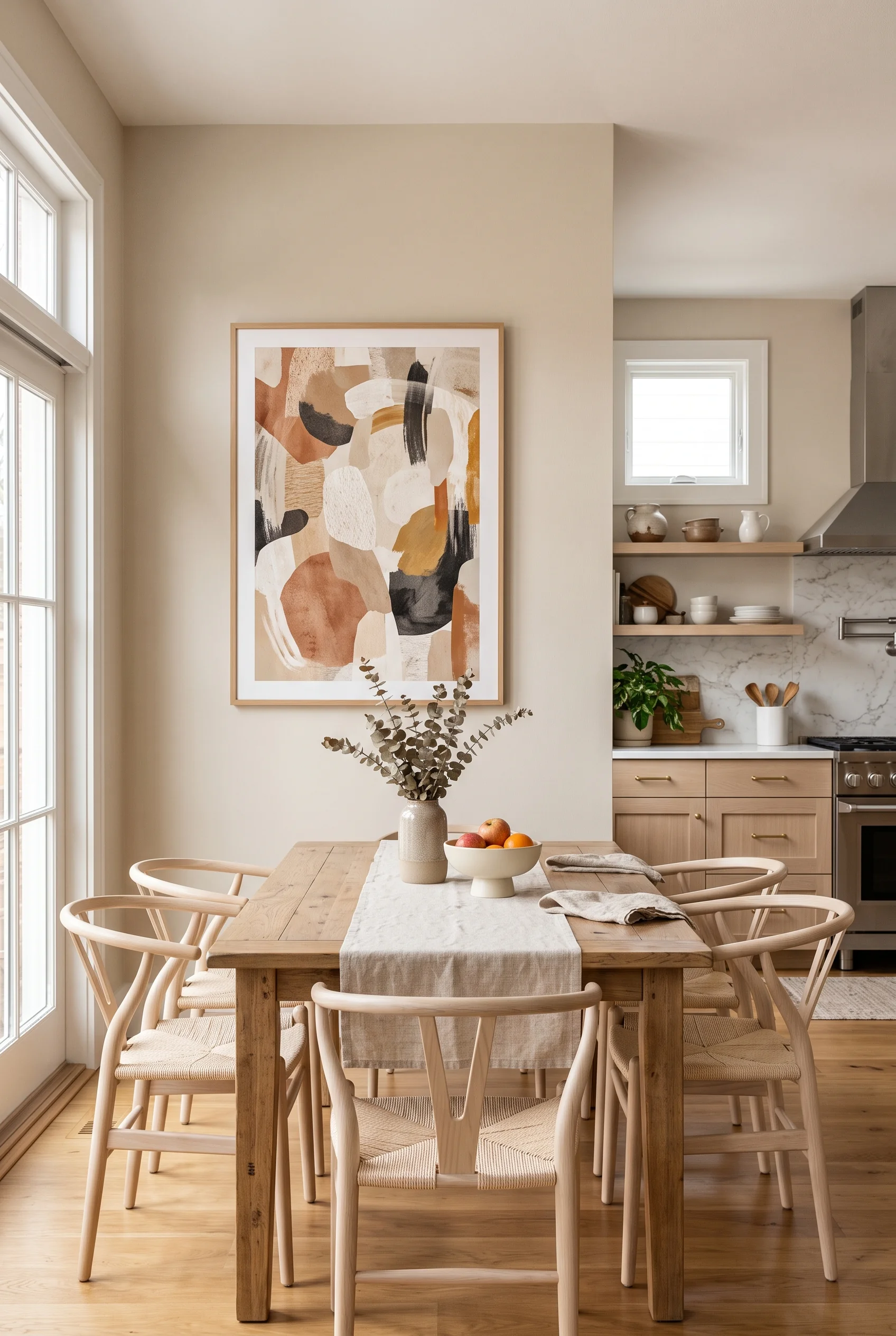
A blank kitchen wall can carry one generous artwork, a coordinated pair, or a compact gallery. Larger pieces often feel calmer because they fill the visual gap without introducing many small frames. Choose artwork that picks up one or two colors already present in the room.
Standard-size frames make downloadable prints, food photography, or family recipes an affordable option. Glass-fronted framing is easier to wipe clean in an active kitchen. Position valuable pieces away from steam and splashes. The best kitchen wall decor feels personal enough to belong there, not selected simply to fill an empty wall.
Open Shelves Reserved for Useful Favorites
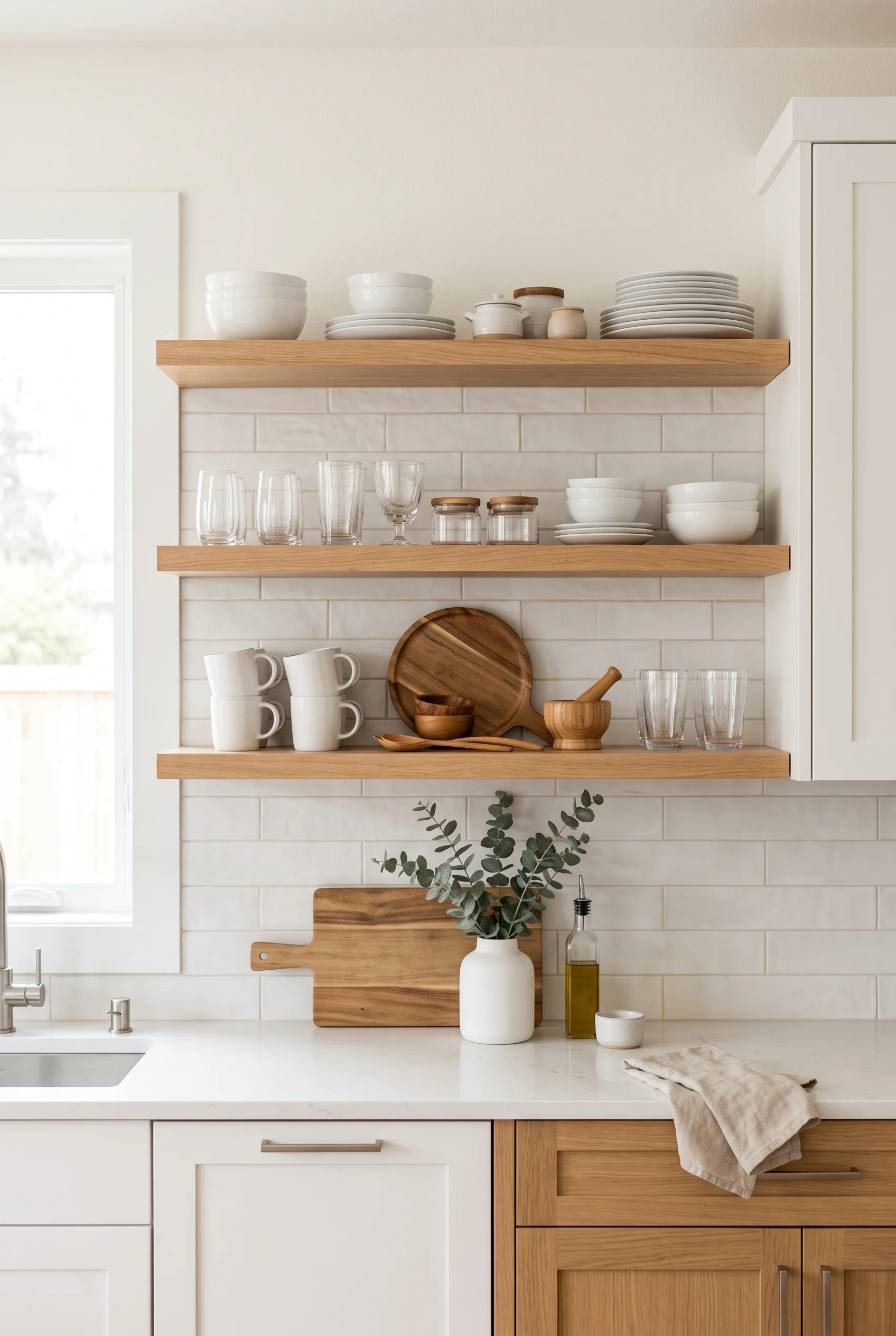
Open shelving works best when it holds dishes and glasses that move through the kitchen regularly. White bowls, clear tumblers, and natural wood serving pieces form an easy palette. Frequent use also prevents the shelves from becoming a dusty display that feels separate from daily life.
Place heavier stacks on lower shelves and lighter objects above. A little space between groups keeps every item accessible and gives the eye a place to rest. The arrangement can remain practical while still looking composed, especially when similar shapes appear more than once.
Cookbooks as a Changing Layer of Color
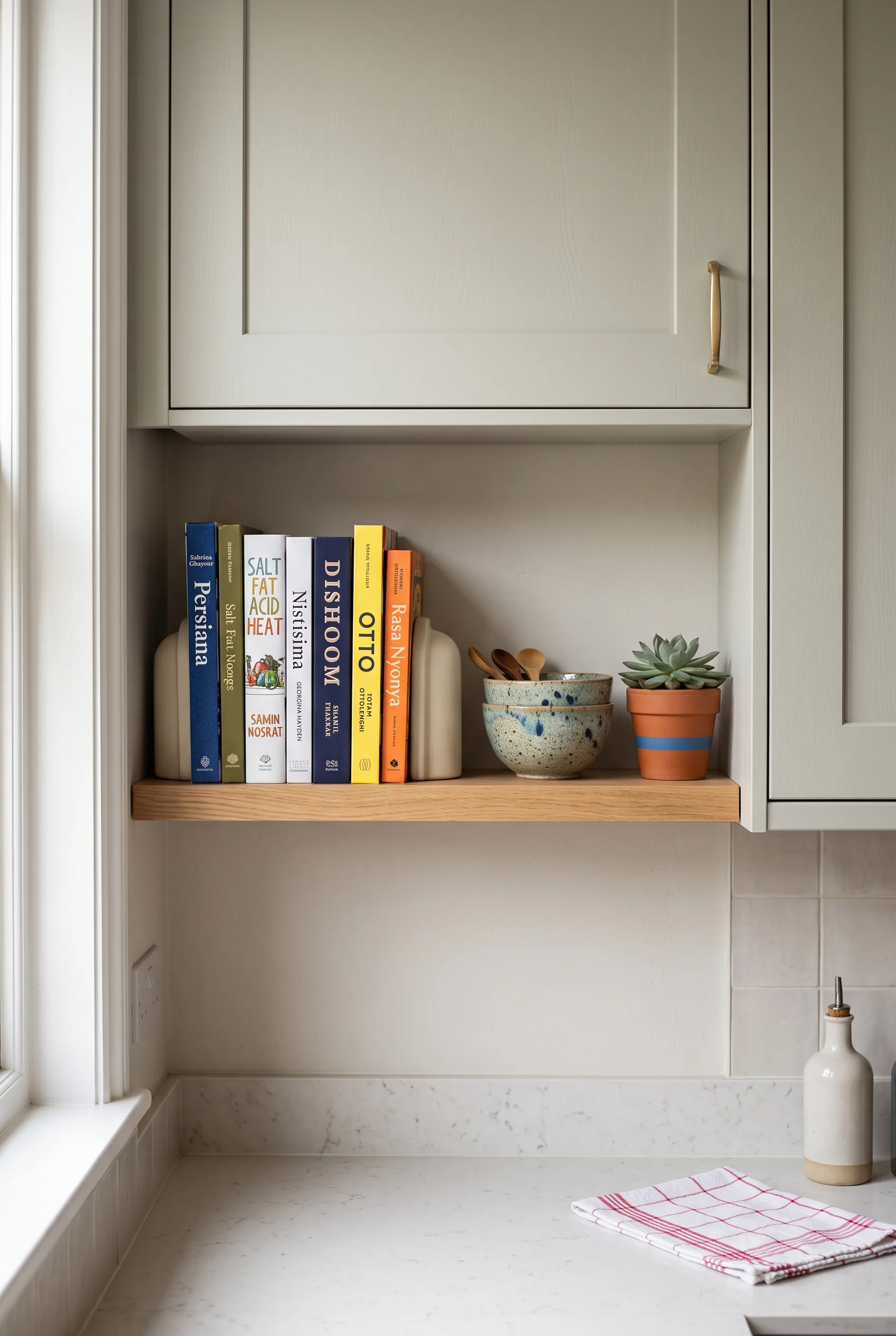
A small row of cookbooks adds color and character without requiring a new decorative purchase. Select the titles used most often, along with a few covers or spines that suit the room. Upright books held between simple bookends feel orderly on an open shelf.
Another option is a stack of two beneath a ceramic bowl, which varies the shelf height while keeping the arrangement useful. Protect books from the sink and cooktop, where moisture and grease can damage them. Rotating the selection by season or current cooking interests keeps the display fresh.
Artwork That Belongs Near the Dining Nook
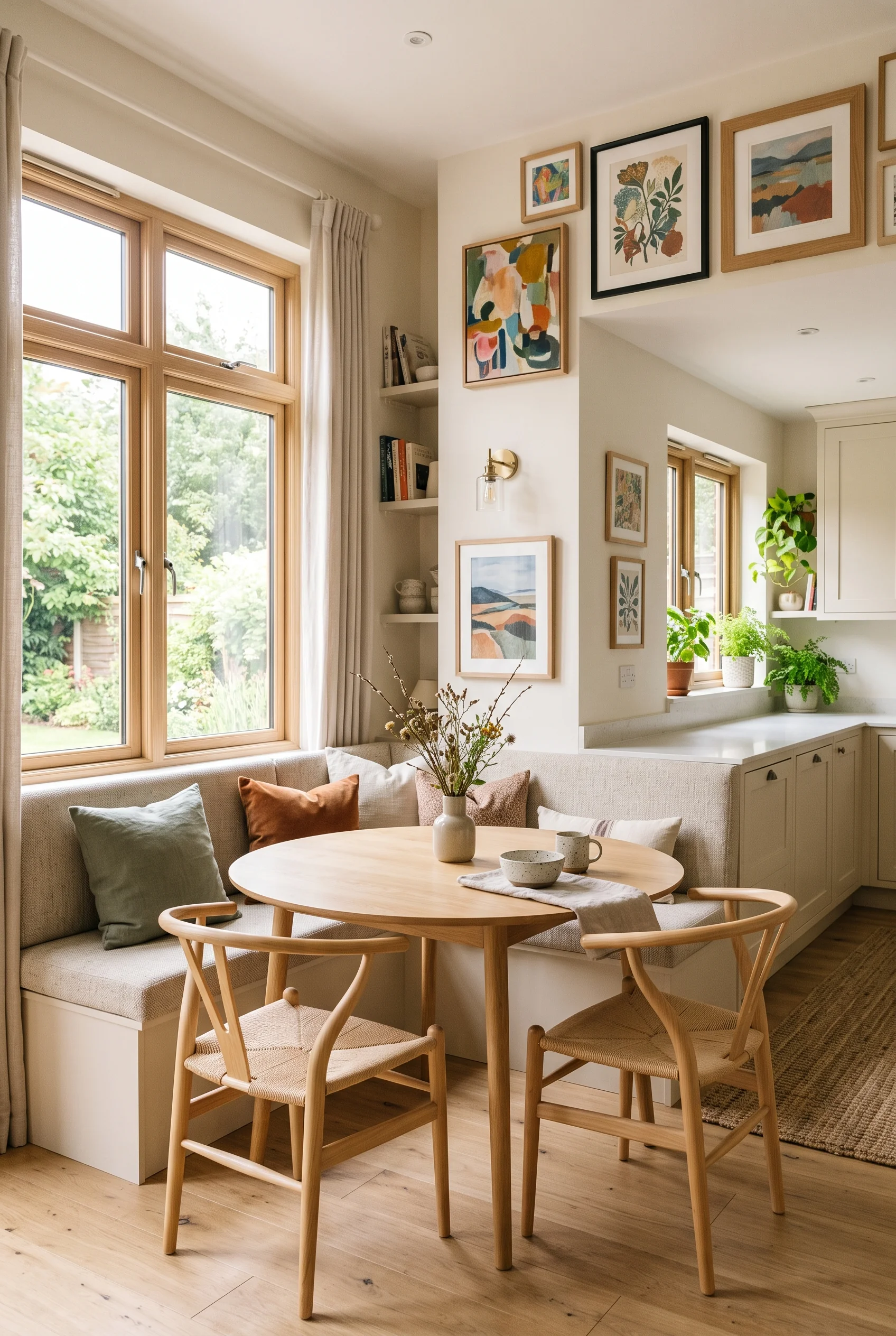
The dining side of a kitchen is a natural place for expressive artwork. A framed piece above a banquette or small table gives the eating area its own identity while keeping the main work zone clear. The subject does not need to be food-related to feel appropriate.
Pulling one shade from the artwork into a nearby cushion or textile connects it gently to the kitchen. Avoid direct exposure to heat, steam, and water. A piece you genuinely enjoy looking at will feel more lasting than something chosen only to coordinate with the cabinets.
Character From Meaningful, Useful Objects
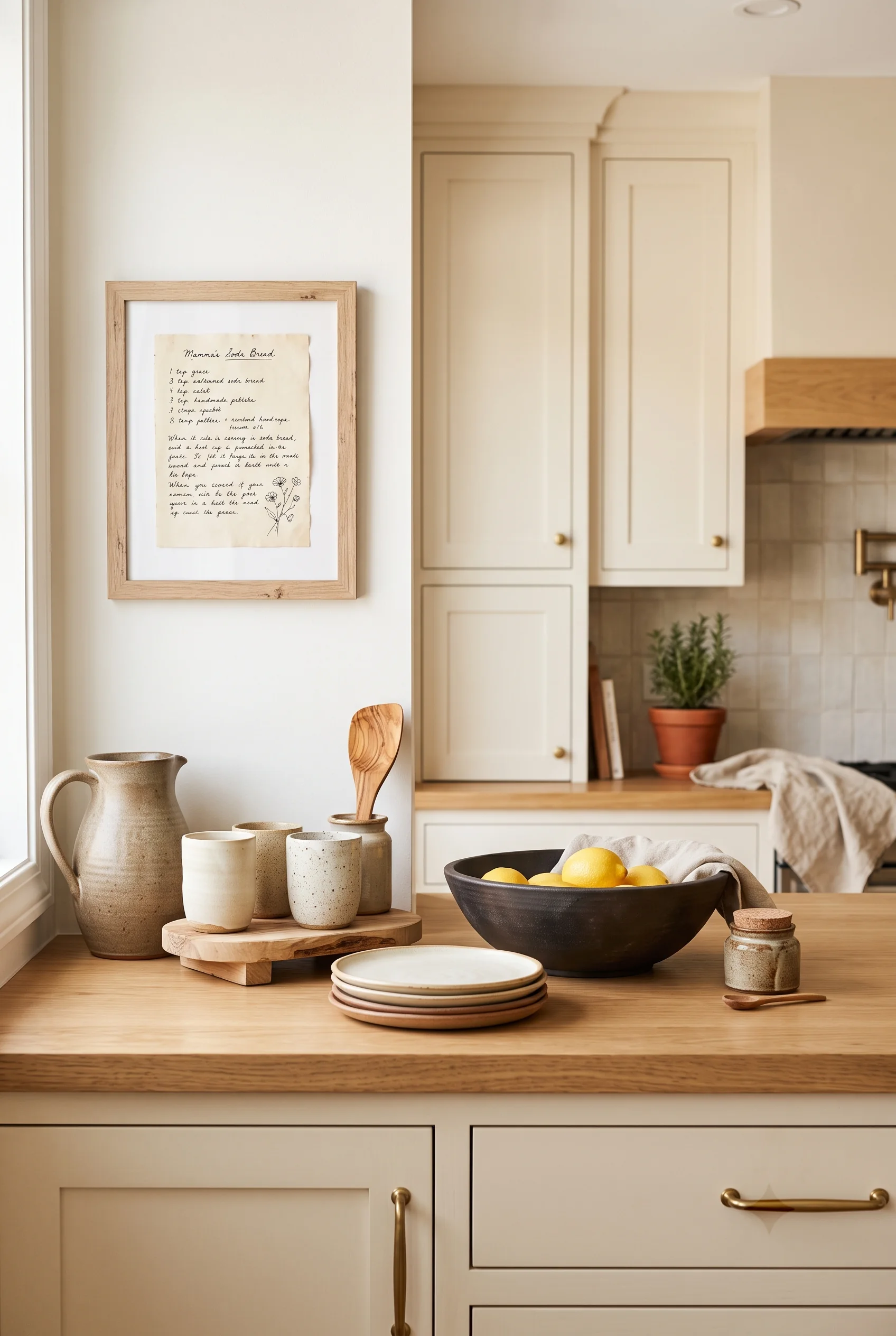
Curated pottery, a framed handwritten recipe, or a special serving bowl brings history into a clean-lined kitchen. These objects feel most natural when they retain a purpose. A cake stand can hold fruit, while a ceramic vessel may store wooden spoons.
Only a few pieces need to be visible at once. Store the rest and rotate them when the room needs a small refresh. Mixing familiar forms with simple cabinetry keeps the mood current and layered. The kitchen gains personality without becoming a display area for every meaningful item.
A Restrained Display Above the Cabinets
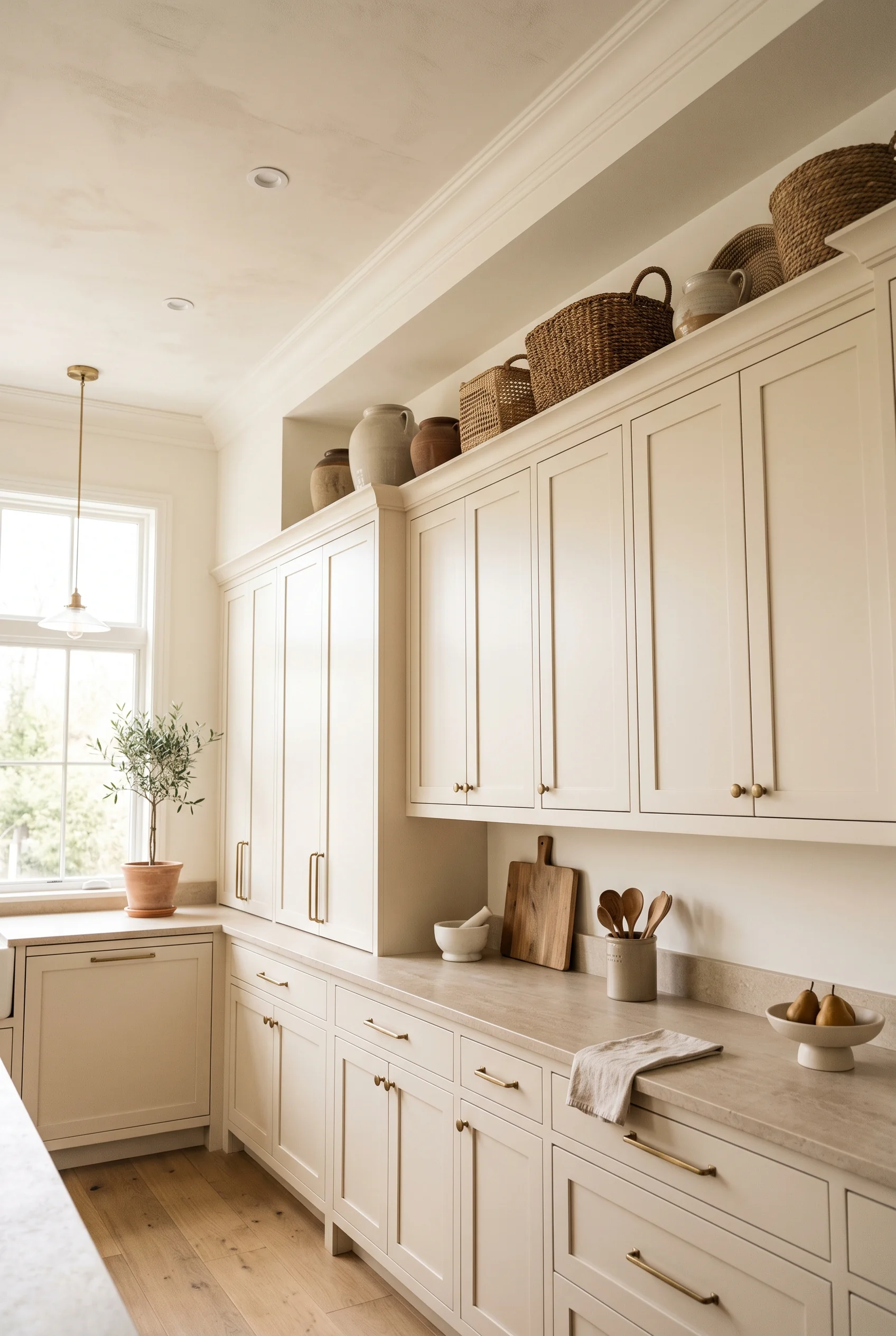
The area above kitchen cabinets only needs decor when it is tall enough for objects to breathe. A few large baskets or neutral vessels usually look calmer than a continuous row of small accessories. Empty sections are useful and keep the upper display from feeling heavy.
Repeat a shape or color across the cabinet line, but avoid perfect symmetry. Pieces should be light enough to remove for regular dusting. When the gap is narrow or difficult to reach, leaving it empty may be the cleaner choice. Restraint often gives tall cabinetry a more polished finish.
Storage Details That Earn Their Place
Organization can be decorative when the materials and proportions suit the room. Matching baskets, clear pantry jars, and thoughtfully selected hardware bring order without asking a kitchen to feel overly minimal. These choices are especially valuable in a compact layout, where every visible object carries more weight. Practical systems stay attractive because they support real routines rather than adding another layer to maintain.
Woven Storage With a Consistent Shape
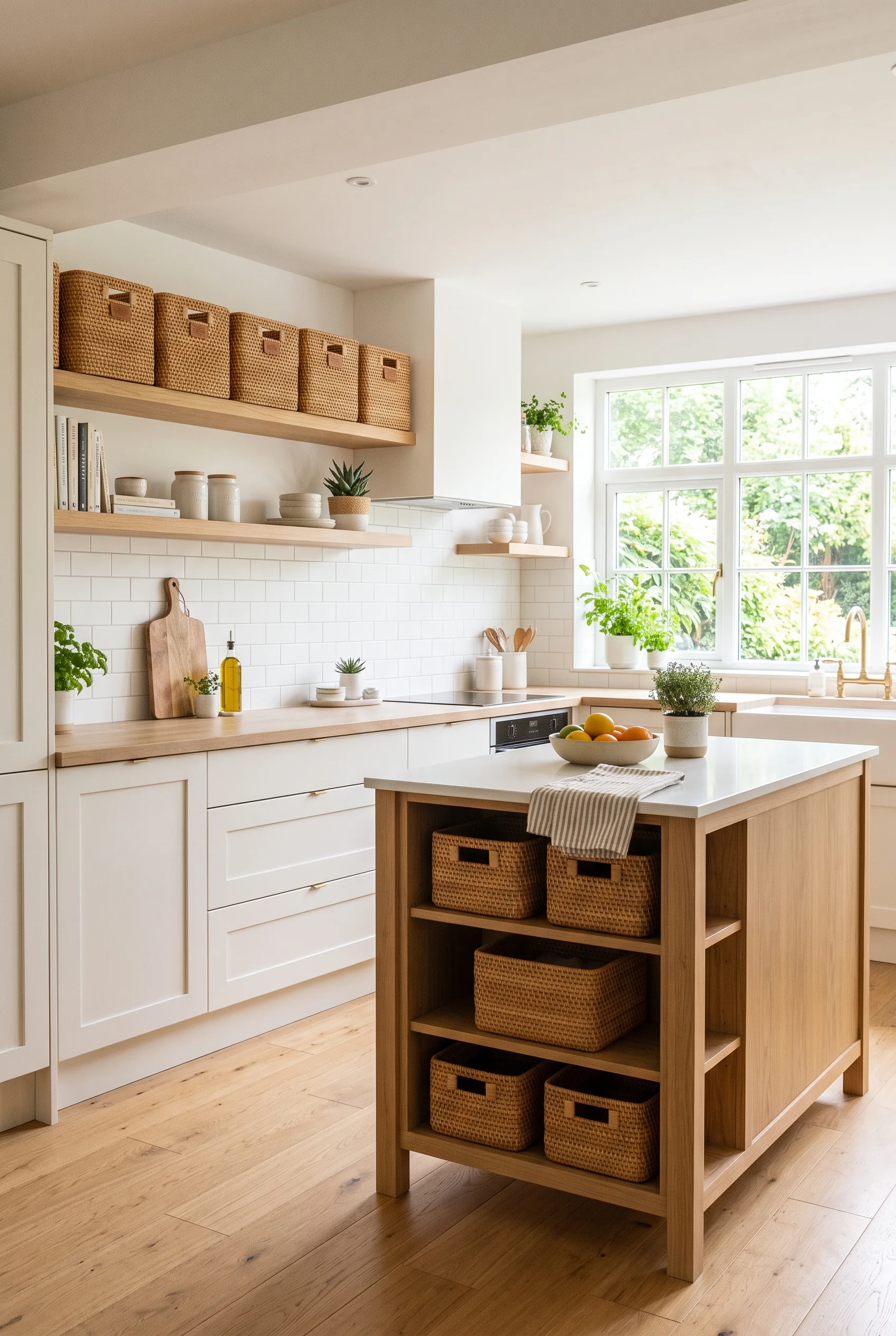
Woven baskets bring softness to shelves while hiding linens, pantry packets, or household extras. Consistent shapes and tones give multiple baskets a clean rhythm, even when the contents vary. They are particularly useful beneath an island or on high shelves where loose items would look scattered.
Labels help everyone return supplies to the right place, especially when the baskets sit above eye level. Keep the size proportional to the shelf so each one can slide out comfortably. The tactile weave adds warmth, while the concealed storage keeps less attractive necessities close at hand.
Cabinet Hardware With Everyday Impact
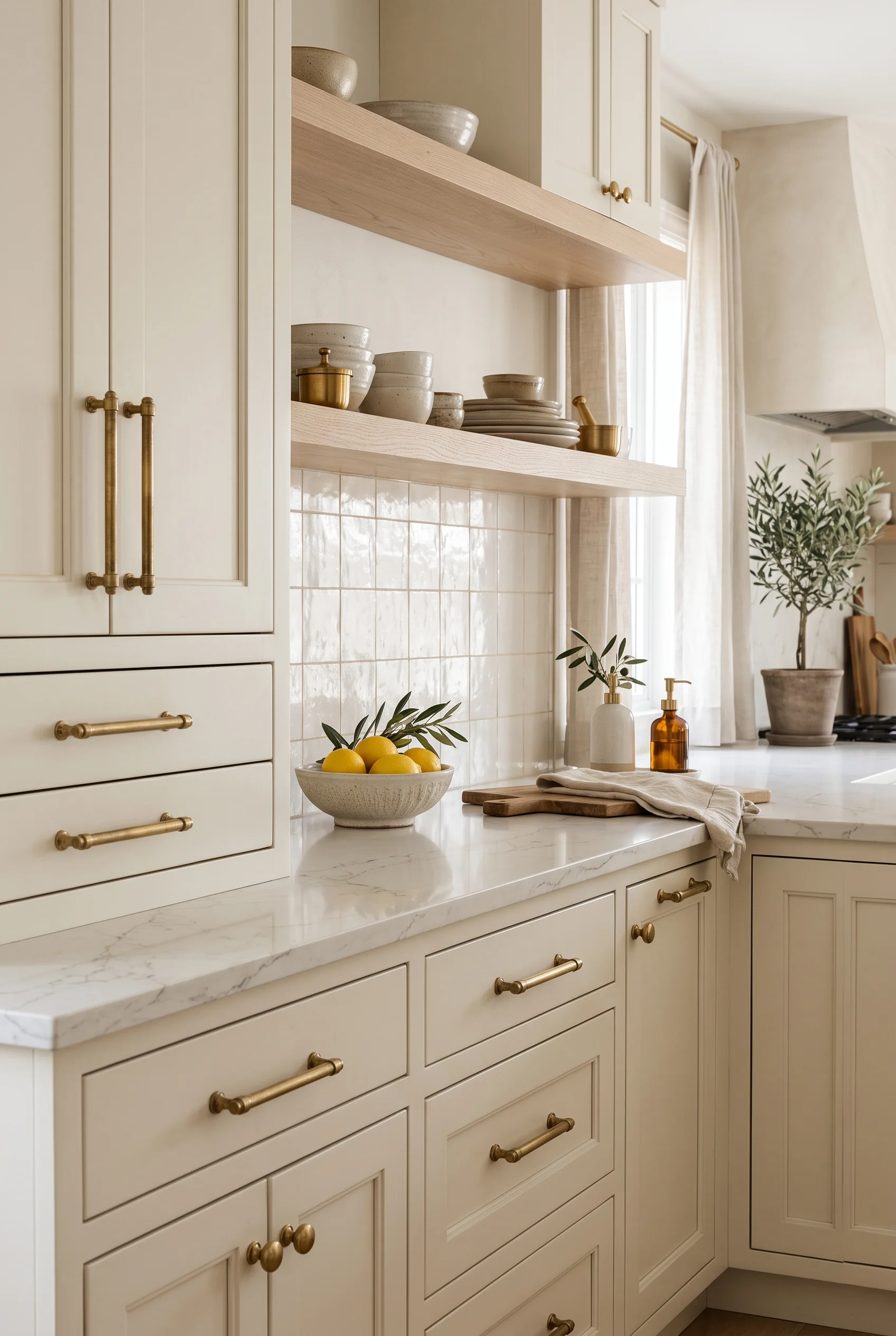
New knobs or pulls can shift the character of an entire kitchen while leaving the cabinets intact. Warm brass softens cream doors, while dark metal adds crisp definition. A subtle mix of finishes can work when one tone already appears in the lighting or faucet.
Measure the existing hole spacing before ordering, then test one sample on a frequently used cabinet. The pull should feel comfortable and look balanced in the room’s actual light. This small trial makes it easier to judge scale and finish before committing to hardware for every door and drawer.
Small Kitchen Decor With More Breathing Room
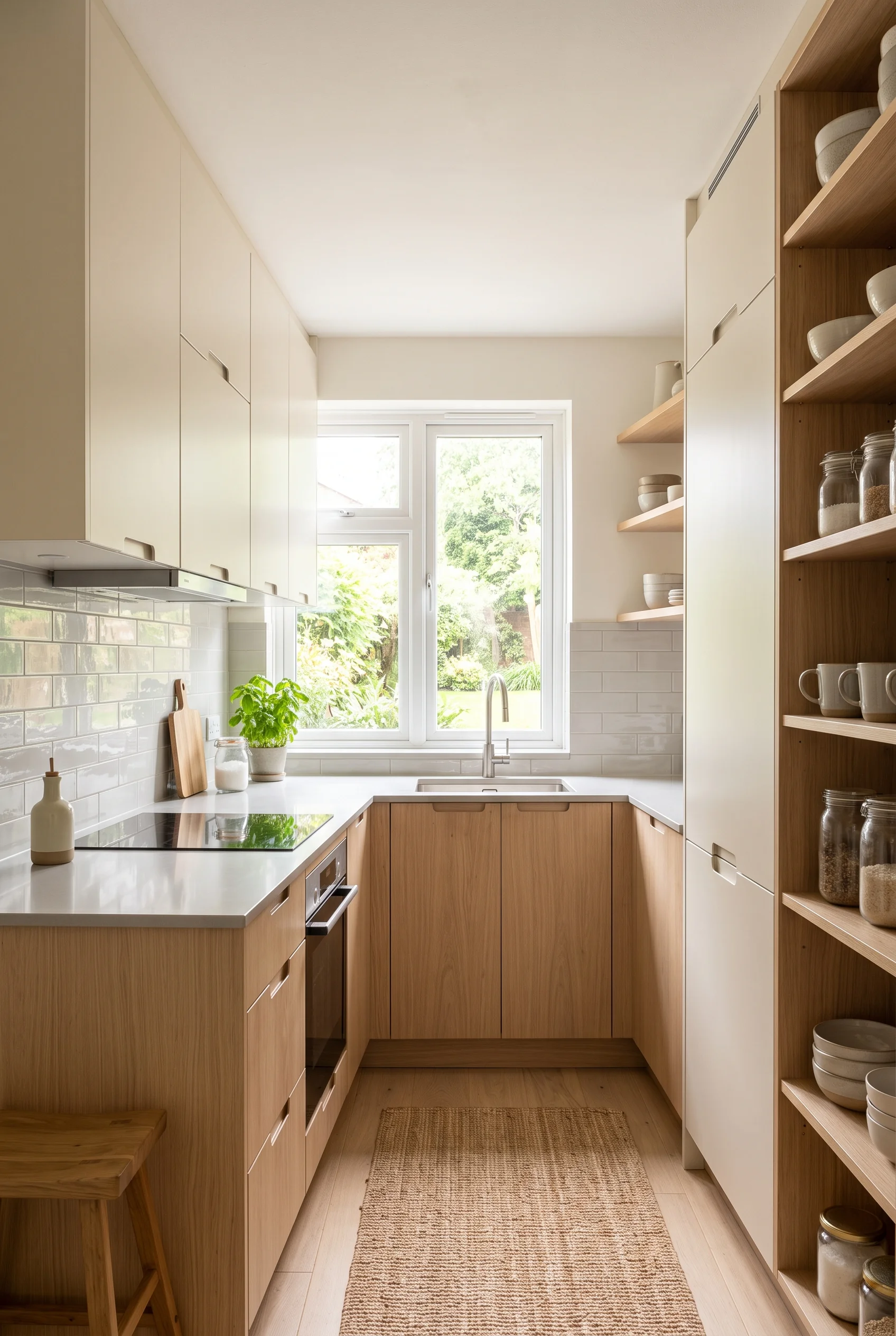
Pale reflective surfaces and uninterrupted sightlines help a compact kitchen feel brighter. Vertical storage frees the counters, while strong task lighting prevents corners from disappearing after dark. Limit small kitchen decor to a few pieces that share a material or color.
Budget-friendly kitchen decorating ideas can be wonderfully simple here. Light paint, under-cabinet lighting, and matching containers make a noticeable difference without changing the layout. Clear counters matter more than tiny accessories in every available spot. A compact room feels generous when its hardest-working surfaces remain open.
Glass Pantry Jars That Simplify the Shelf
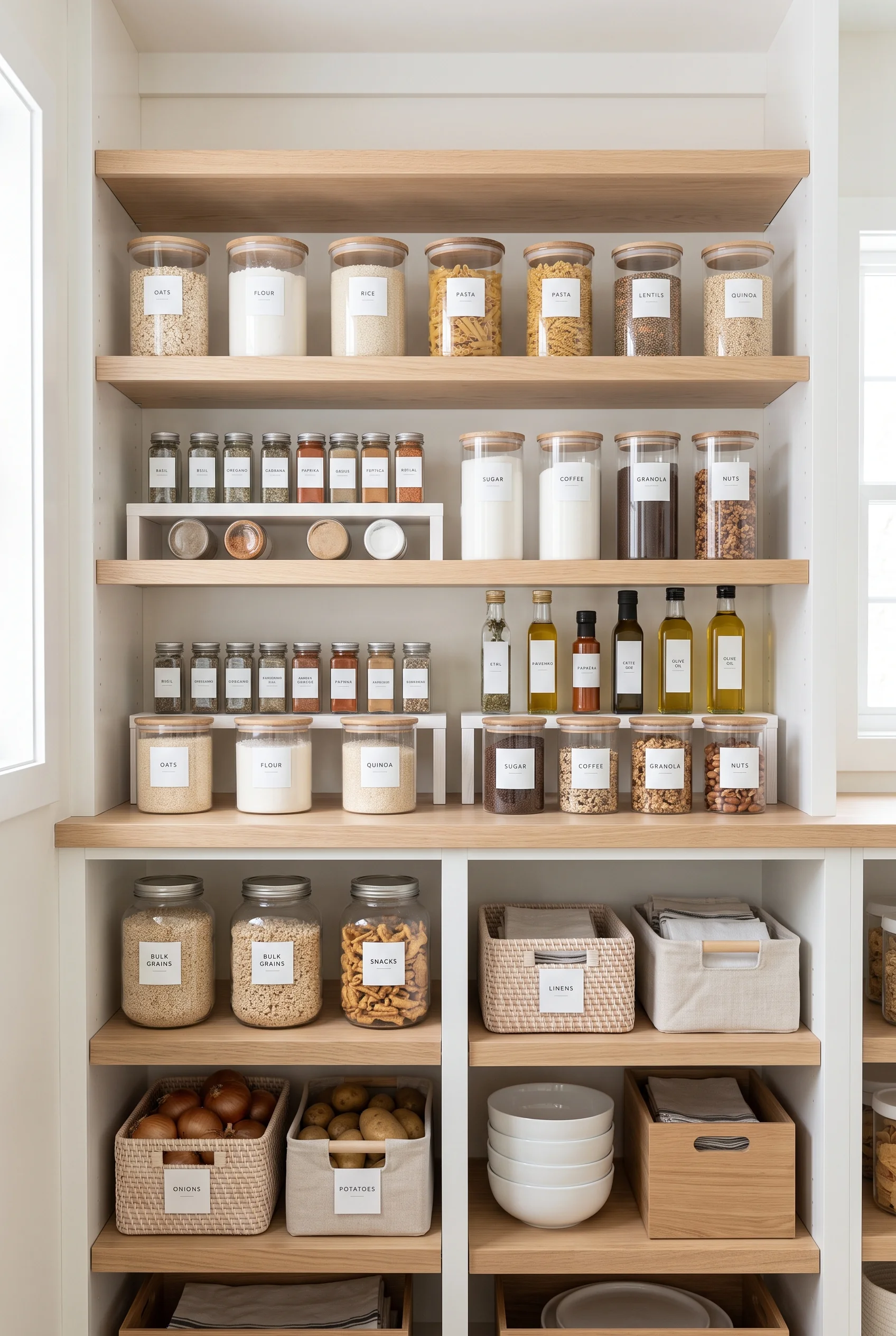
Clear airtight jars make frequently used dry goods easy to scan. Matching containers or consistent labels quiet the visual mix of packaging, especially on open pantry shelves. Decant only foods your household buys regularly so refilling never becomes an unnecessary chore.
Put cooking instructions and expiration dates on the back or bottom of each jar. Leave enough space between containers to lift them without shifting an entire row. Flour, oats, rice, and pasta become part of an organized display while remaining practical for everyday meals.
A Forgotten Corner With One Clear Purpose
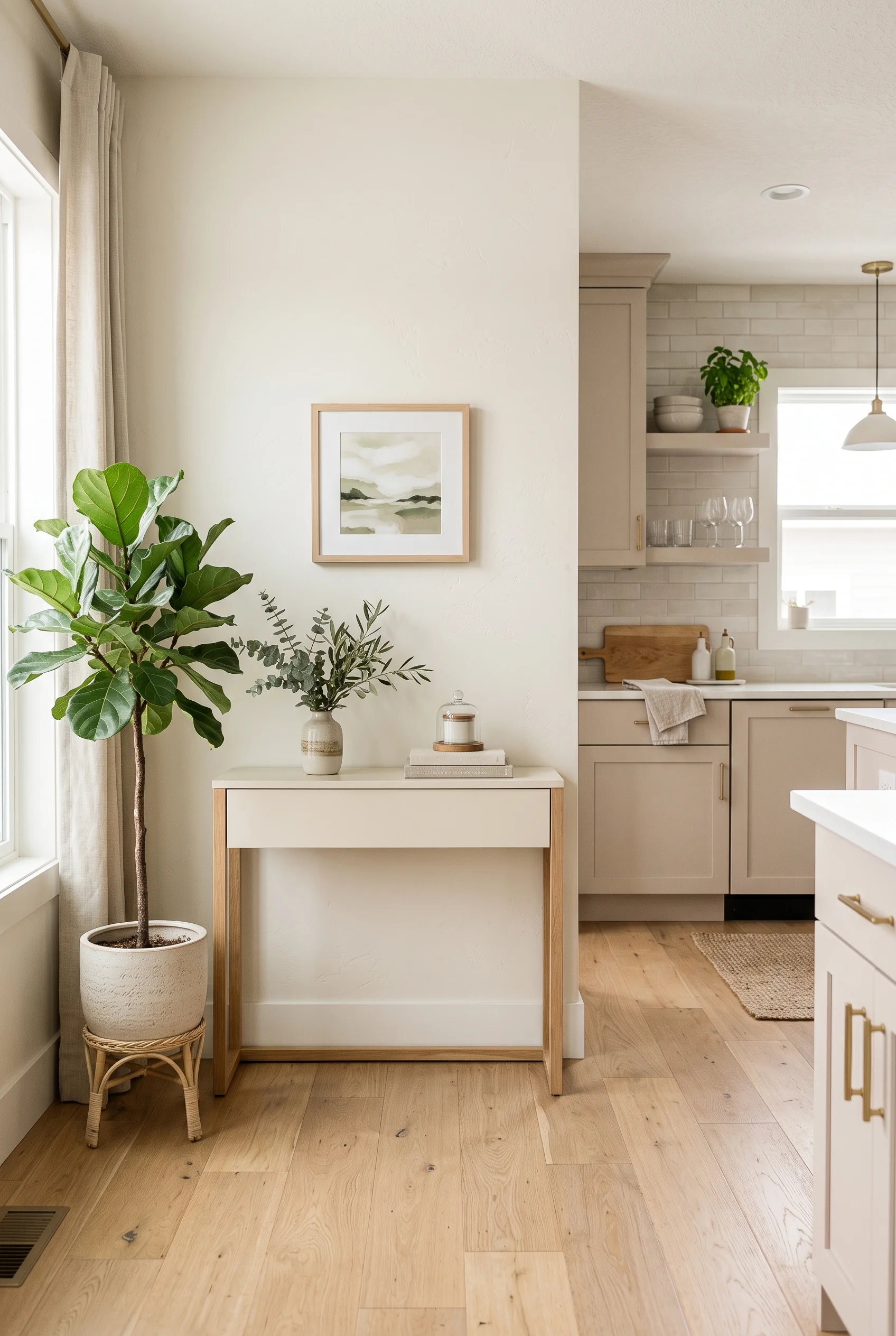
An empty kitchen corner does not need several small decorations. One slim cabinet, compact beverage station, or plant stand gives the area a clear role. Measure the surrounding walkway first so doors and drawers can open without interruption.
Vertical art or a tall plant draws the eye upward when floor space is limited. A narrow console can hold serving pieces while providing closed storage below. The corner should support the room rather than exist only to fill a gap. One well-scaled feature often feels calmer than a cluster of unrelated objects.
Clear Counters for the Rhythm of Family Life
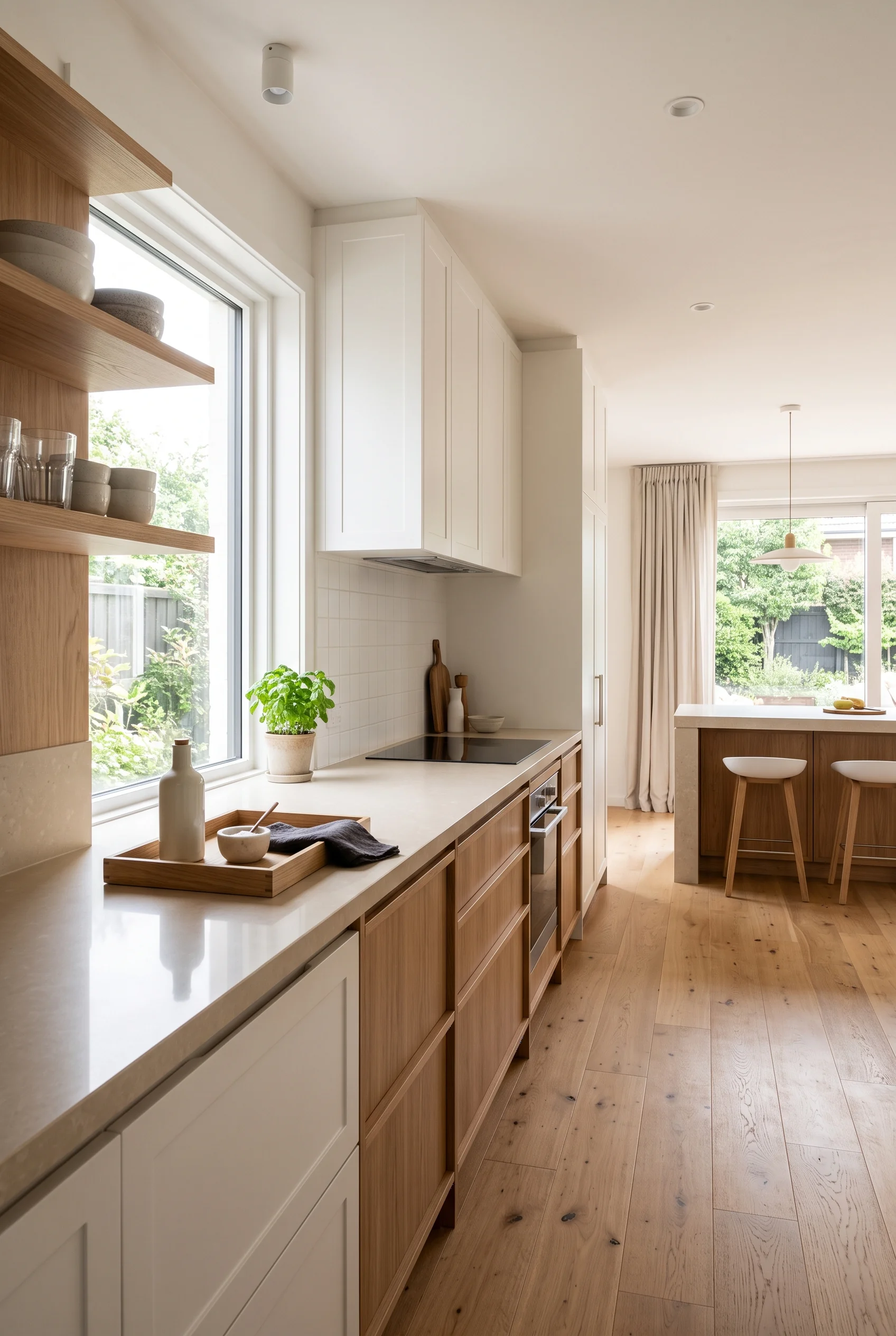
Practical decor earns its place by being useful, meaningful, or genuinely beautiful. One contained display in each counter zone is usually enough. The surrounding surface stays open for cooking, unpacking groceries, and the everyday tasks that arrive without warning.
Paperwork, charging cables, duplicates, and rarely used appliances are better behind closed doors. A quick evening reset keeps the room ready for morning. When a grouping begins to feel crowded, remove one item rather than finding a larger tray. Calm comes from what you leave open.
Finishing Touches That Support Daily Life
The final layer should make time in the kitchen more pleasant. Greenery, comfortable seating, and thoughtful lighting offer beauty alongside a practical role. Traditional forms can sit comfortably beside contemporary cabinetry when they are used sparingly. Seasonal accents and flowers add change without a permanent commitment, letting the room evolve gently through family routines and the passing months.
Potted Herbs Within Reach of Dinner
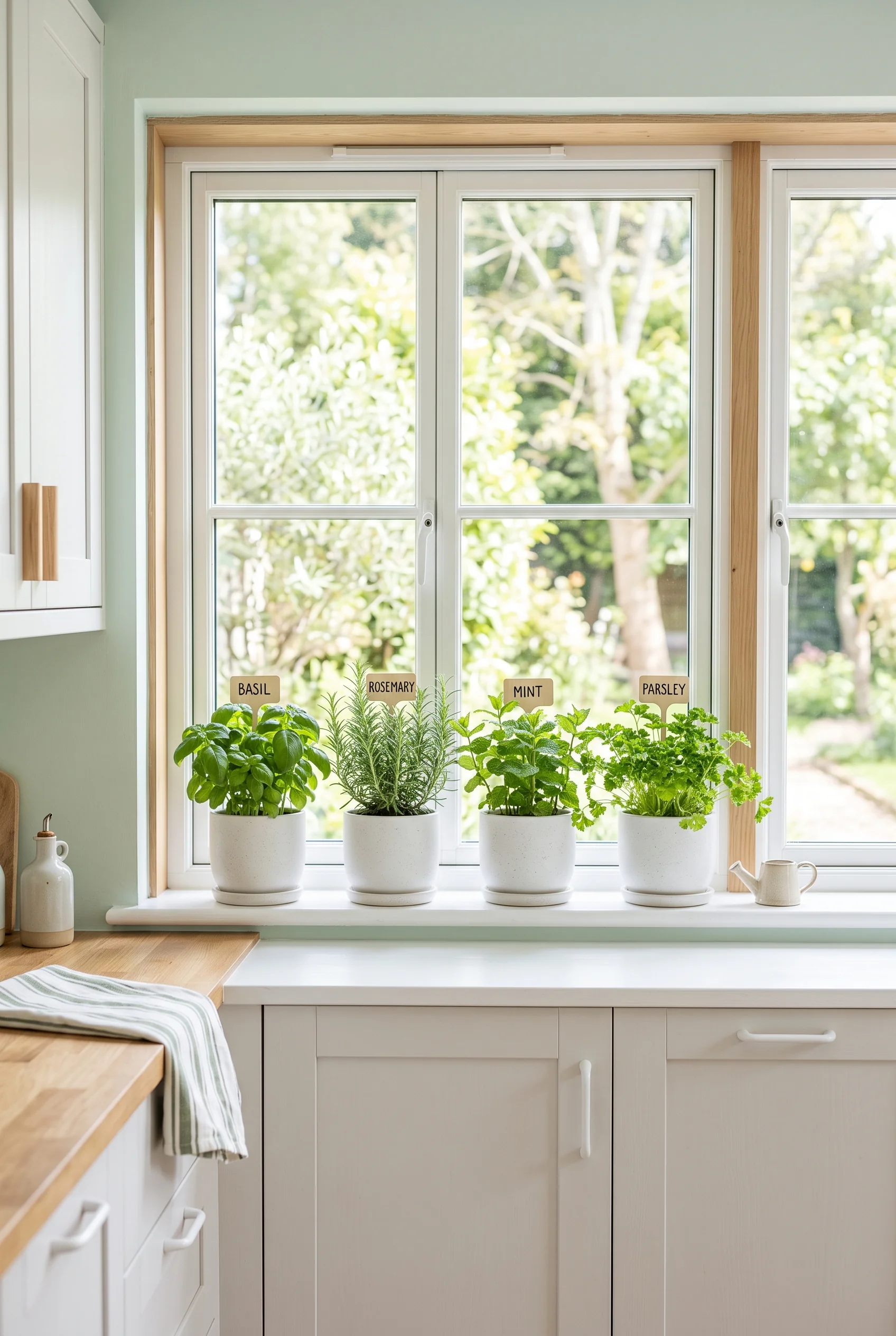
Basil, rosemary, mint, and parsley bring fresh green color to a bright kitchen window. Matching planters or saucers help several varieties read as one arrangement. Their usefulness at dinnertime makes the display feel especially at home near a preparation area.
Select herbs for the light the window actually receives, not the surface that happens to be empty. In a darker kitchen, a few realistic faux stems can offer a similar softness without an ongoing struggle. Healthy plants and simple pots give the window ledge a lively but orderly finish.
Pendant Lights That Give the Island Presence
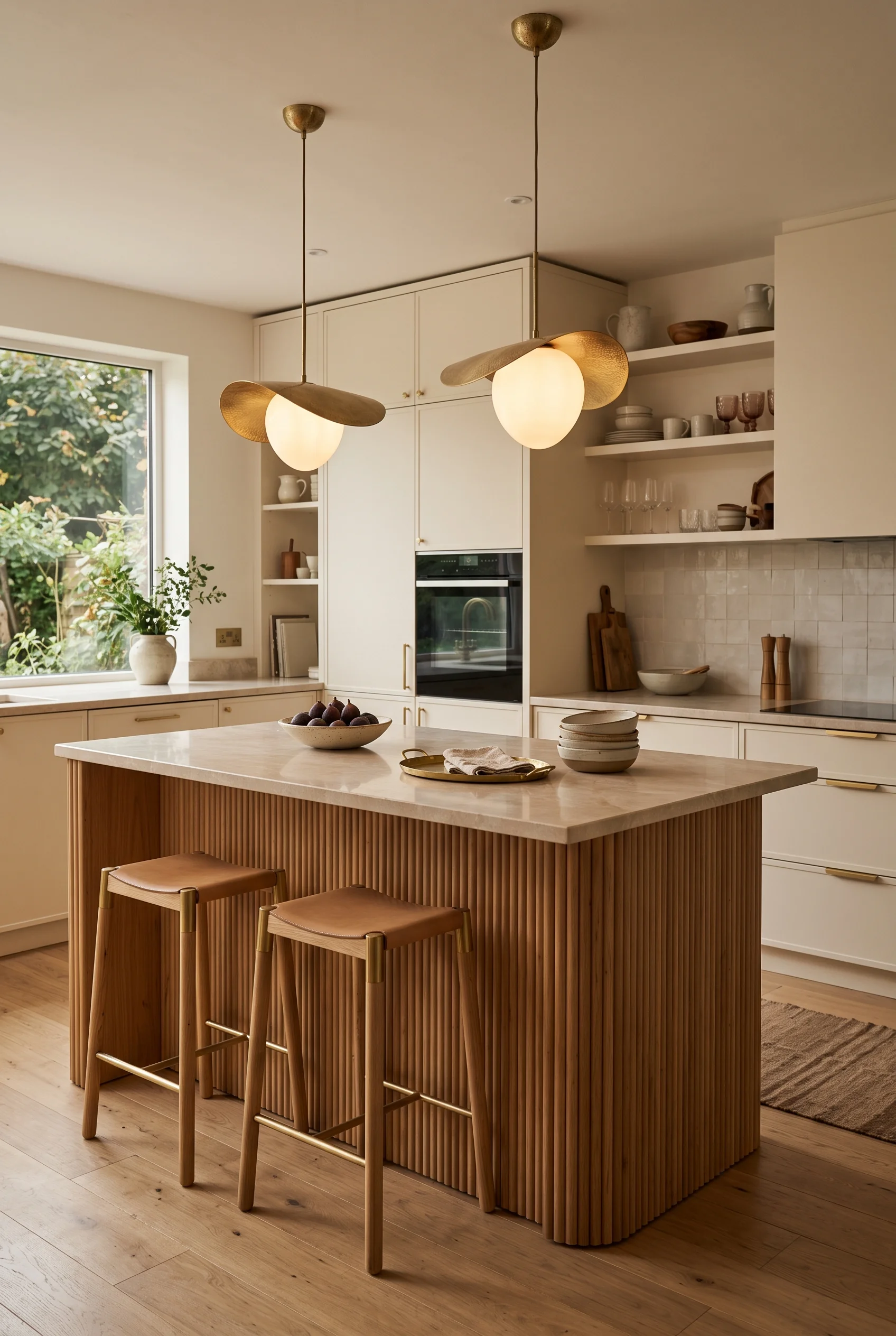
Sculptural pendant lights anchor an island and help define the kitchen within an open floor plan. Scale matters more than following a rule about the number of fixtures. Two generous pendants may suit a long island better than three smaller ones.
Hang them high enough to preserve sightlines while directing useful light onto the work surface. A finish repeated in the faucet, hardware, or stools connects the fixtures to the rest of the room. After sunset, their glow gives the island a warm center and makes the kitchen feel settled.
Counter Stools With Texture and Comfort
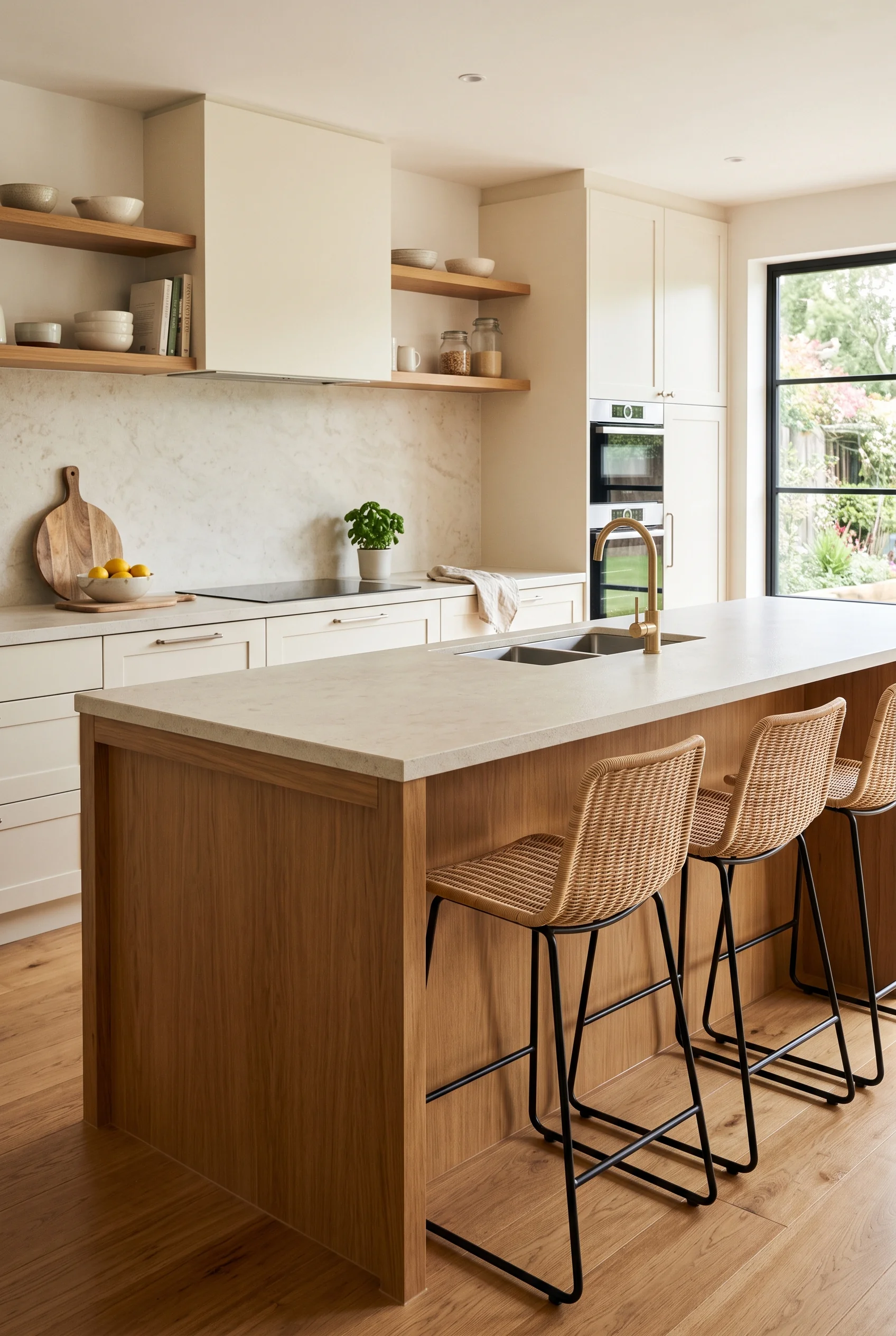
Woven seats, curved wood, or subtle upholstery can soften the straight edges of an island. Texture adds depth without needing another object on the counter. Measure the counter height and available legroom so the stools remain comfortable during meals and homework.
Leave enough space between seats for family members to move easily. Performance fabric and wipeable woven materials are practical when the island hosts snacks, crafts, and daily spills. A streamlined frame keeps the seating visually light, even when several stools sit side by side.
Classic Kitchen Details in a Modern Mix
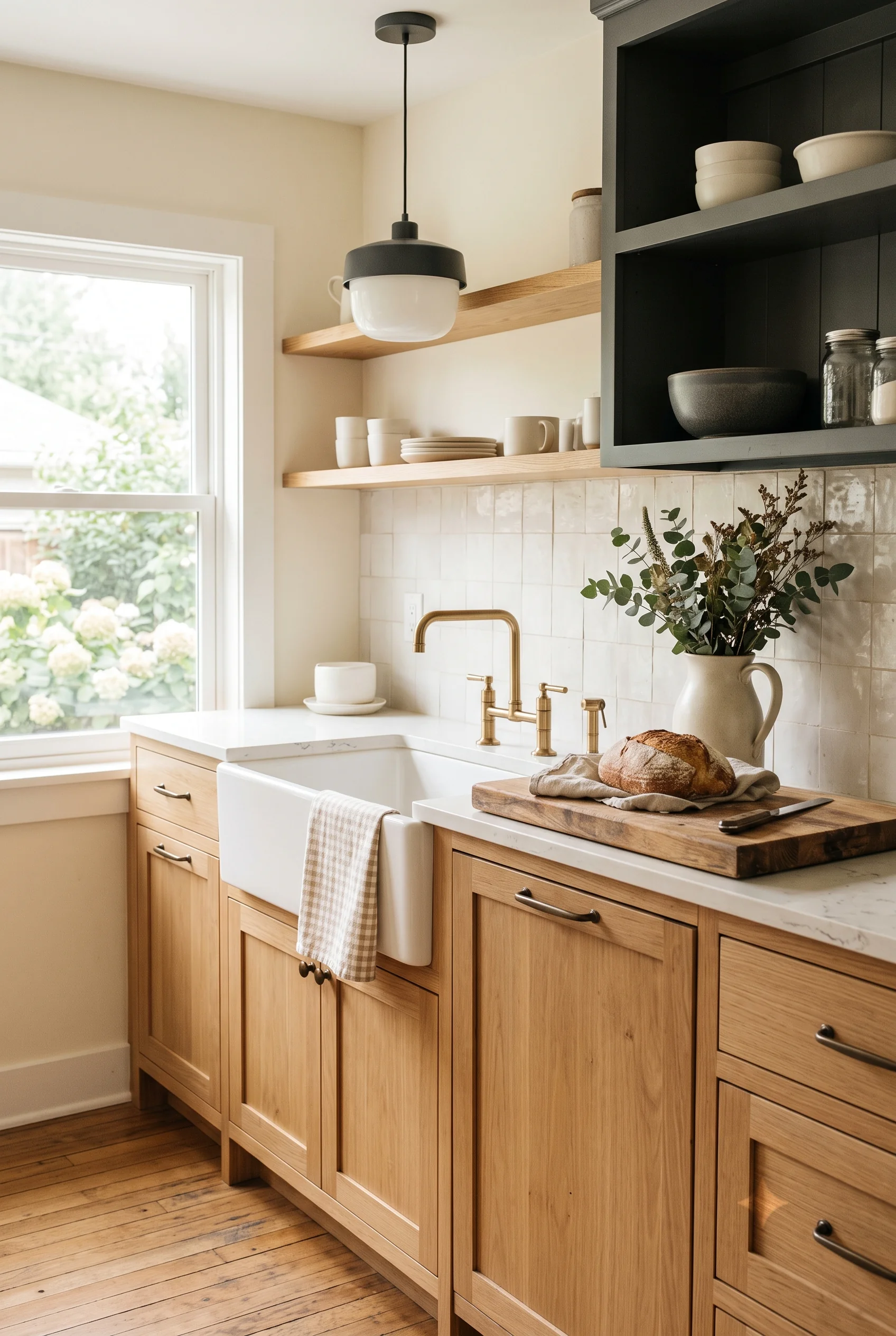
An apron-front sink, checked tea towel, or simple ceramic pitcher can bring a familiar quality to contemporary cabinetry. One or two recognizable details are enough. Clean-lined lighting and an edited palette prevent the room from becoming tied to a single decorative theme.
Useful accents feel the most natural. A bread board can lean against the backsplash, while a pitcher holds flowers or utensils. Natural wood and soft textiles add warmth without overwhelming sleek surfaces. The mix feels current because every traditional form has room to breathe.
Seasonal Changes That Stay Simple
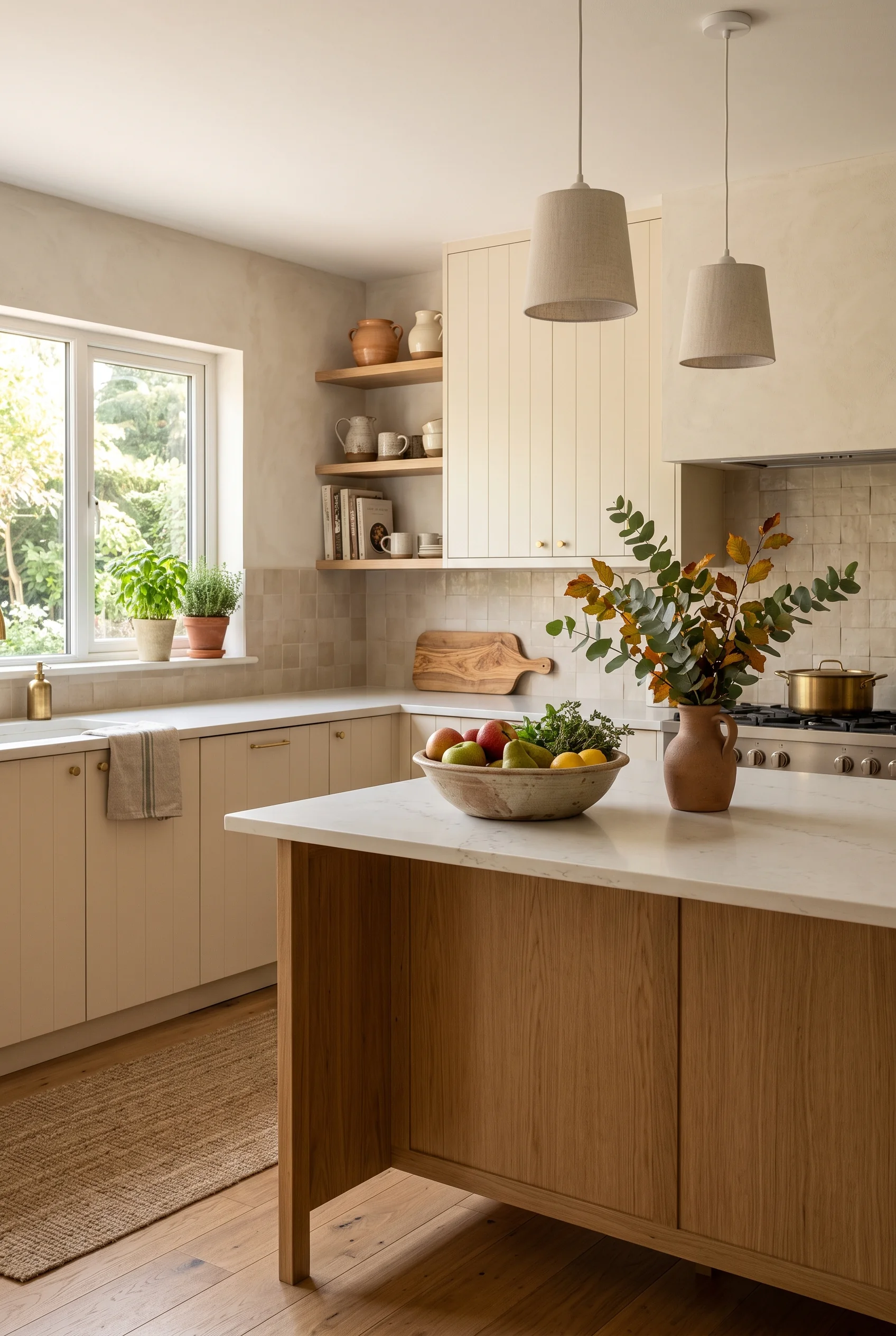
Seasonal kitchen decor can be as simple as a fresh hand towel, leafy branches, or a bowl of produce. Keeping the room’s core palette consistent allows temporary color to settle in naturally. You don’t need themed collections across every surface.
Store the few seasonal pieces together in one labeled container and rotate them thoughtfully. For autumn gatherings, the warm neutrals in 21 Neutral Thanksgiving Decor Ideas for a Calm and Elegant Home translate beautifully to a kitchen. A restrained change feels fresh while leaving the room easy to cook in.
Fresh Flowers as the Final Soft Layer
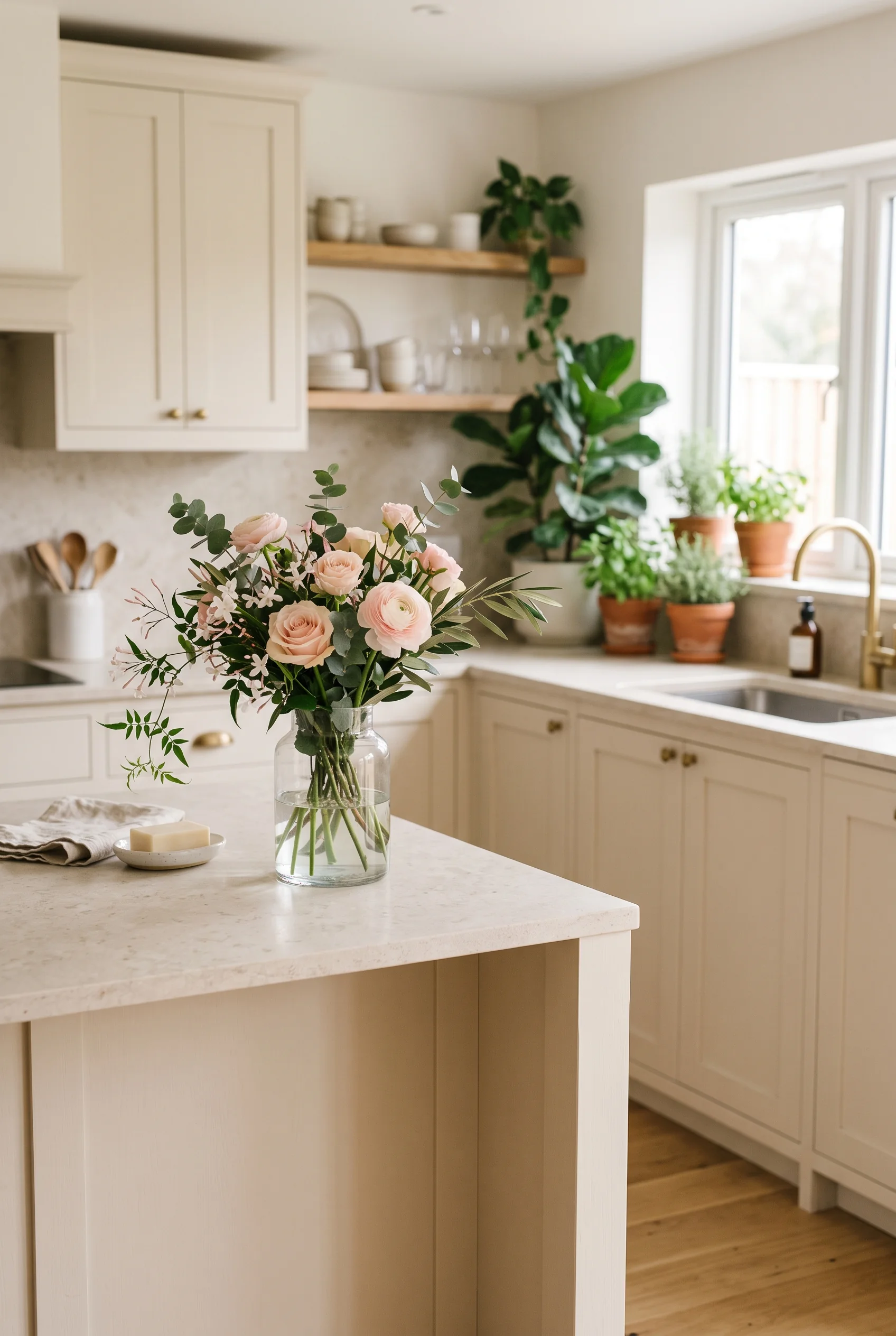
A small bouquet brings softness to an island, dining table, or quiet counter corner. Grocery-store stems, garden clippings, and a single leafy branch can all feel generous in the right vessel. The vase should be stable, washable, and appropriately scaled to the surface.
Keep the arrangement loose enough to move when you need the island for dinner or baking. A few stems often look more relaxed than a tightly packed bouquet. Against pale stone and warm cabinetry, fresh flowers provide a gentle point of color that makes the entire kitchen feel cared for.
A Kitchen That Feels Finished and Still Feels Like Home
A finished kitchen does not require a renovation or a counter covered in accessories. It comes from thoughtful layers that make everyday routines feel a little easier. Warm light over the island, a tray beside the cooktop, or a runner underfoot can carry more impact than a shelf full of decorative objects.
The most lasting choices are useful as well as beautiful. Cutting boards bring warmth while remaining close at hand. Baskets conceal household extras, and a small vase of flowers softens the room without interrupting its function. Open space plays an equally important role, especially in a family kitchen where the counters need to adapt throughout the day.
Start with one idea that fits how your household lives. That might mean replacing cabinet pulls, defining a coffee station, or clearing a crowded preparation area. Once that change feels settled, notice what the room needs next. A slower approach leaves space for meaningful objects and avoids buying decor simply to fill a gap.
These kitchen decor ideas are meant to be mixed, edited, and adapted to your own home. The right combination will make your kitchen feel warmer, calmer, and more personal while keeping it ready for real meals and real life. That sense of ease is the detail that finishes the room.