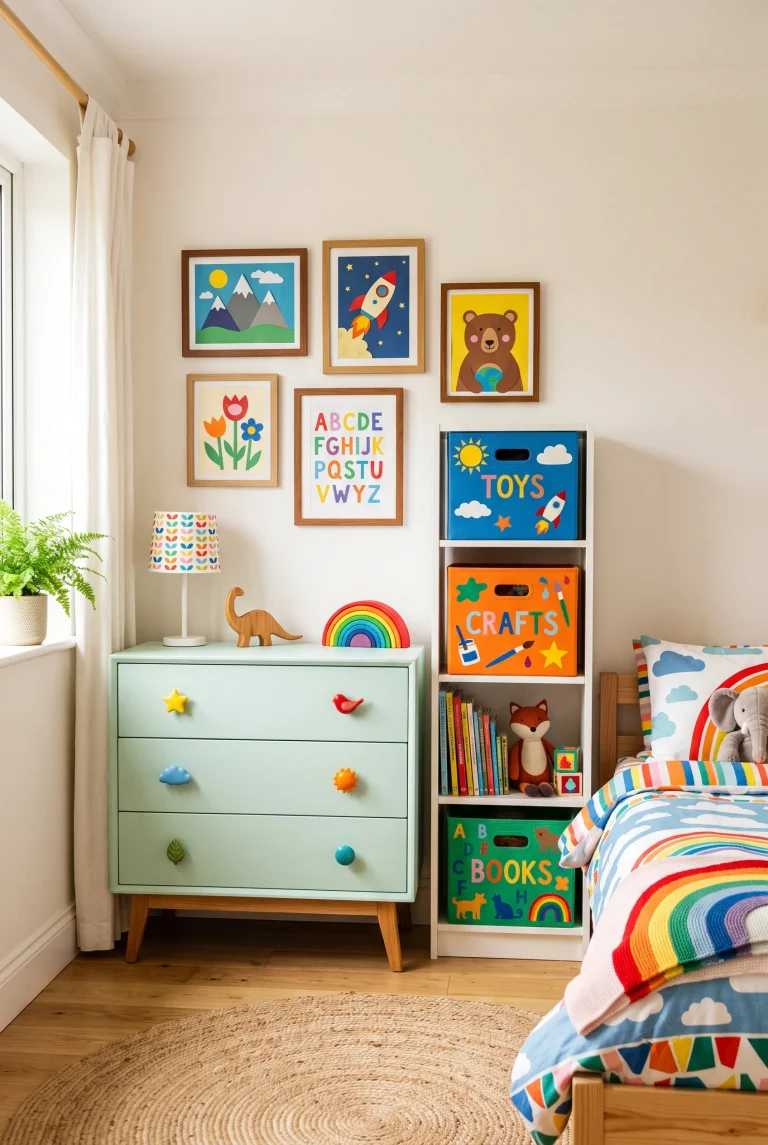
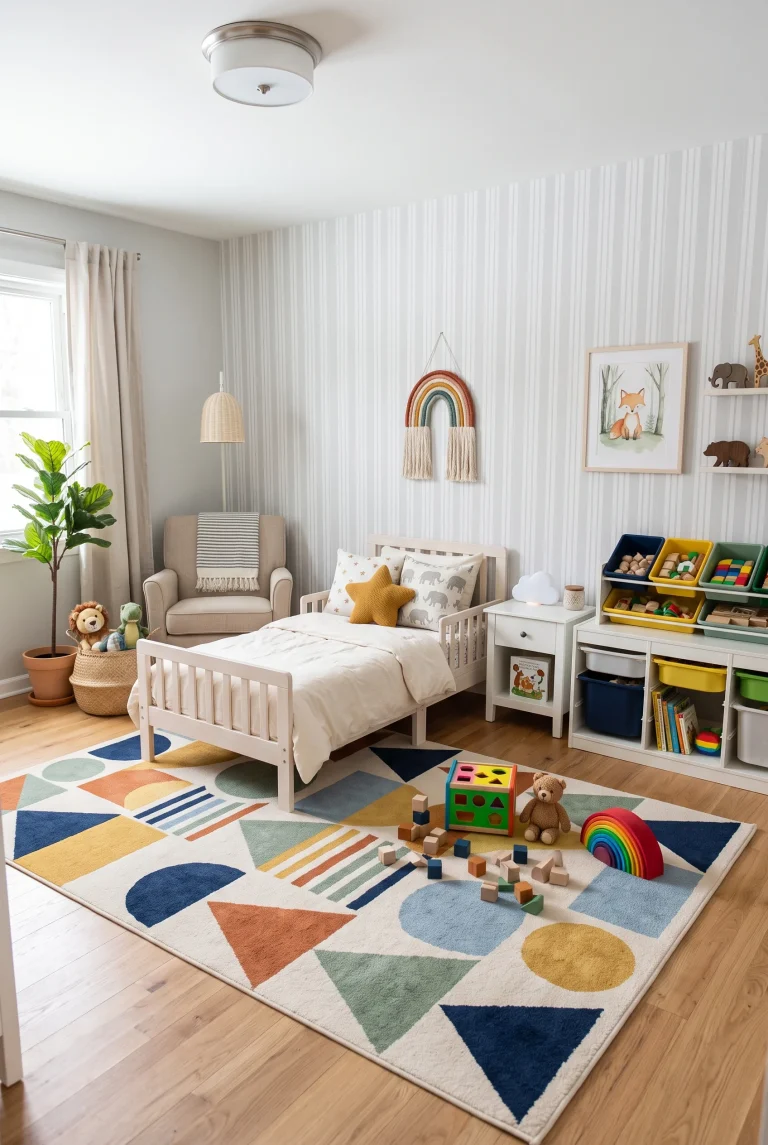
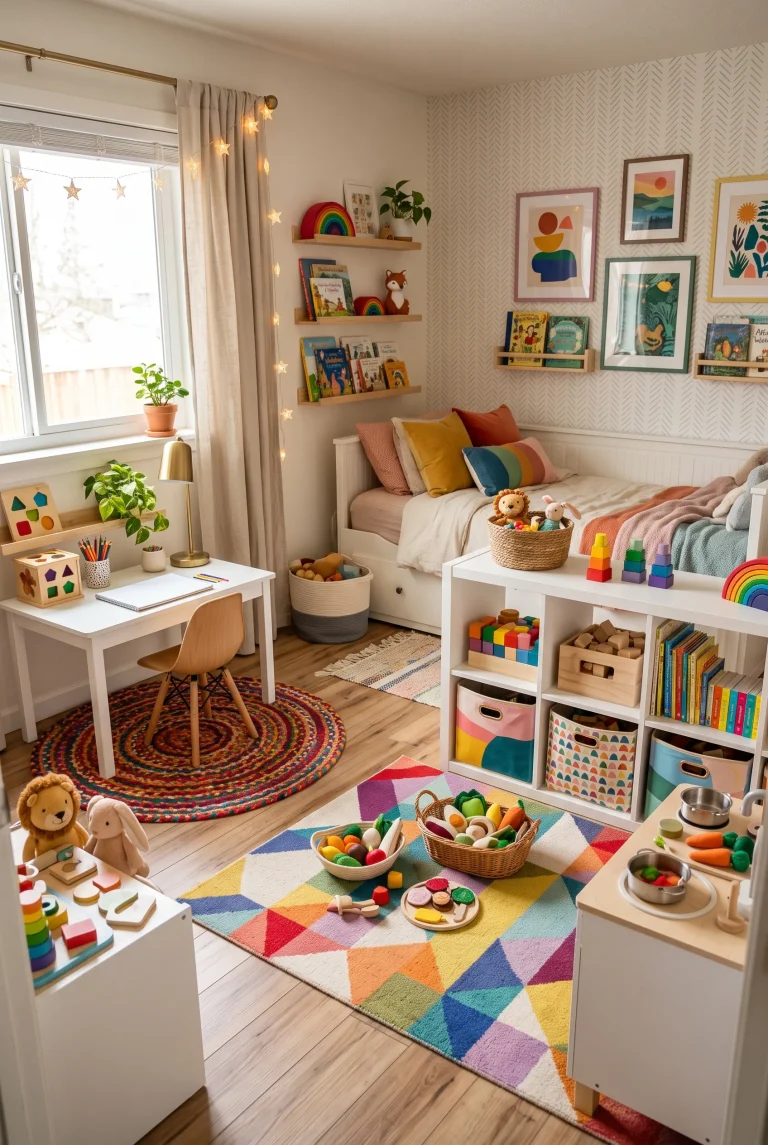
29 Homeschool Room Ideas for a Calm and Functional Learning Space
A beautiful homeschool room means very little if the school day is constantly interrupted by missing pencils, crowded work surfaces, and books that never seem to find their way back to the shelf. The best rooms make the ordinary parts of homeschooling easier. Children know where to begin, supplies are close when they need them, and moving from one subject to another doesn’t require rearranging the entire space.
That sense of order doesn’t have to come at the expense of personality. Simpler layouts in minimalist homeschool room ideas offer practical ways to reduce distractions, while Montessori classroom ideas for home show how accessible materials and child-sized furniture can encourage more independent learning. For families working with limited square footage, kids room ideas for small spaces offer another way to make storage and furniture work harder.
These homeschool room ideas focus on creating a learning space that supports the way your family actually teaches and learns. You’ll find practical layouts for different ages, organized places for books and supplies, and comfortable areas for reading and creative work. Whether you have a dedicated classroom or a corner of the dining room, the goal is to make lessons easier to start, transitions smoother, and the room simpler to reset at the end of the school day.
DISCLOSURE: Some of the links provided on this page are affiliate links. This means if you choose to make a purchase through these links, we may receive a small commission at no extra cost to you.
A Foundation That Makes Learning Feel Lighter
Color and layout set the emotional pace before a single organizer enters the room. A restrained palette gives busy school materials a quieter backdrop, while defined activity zones make transitions more natural. These foundational homeschool classroom ideas can work in a dedicated room or a borrowed corner. Each one begins with the way your family actually moves through lessons.
A Quiet Palette for Clearer Focus
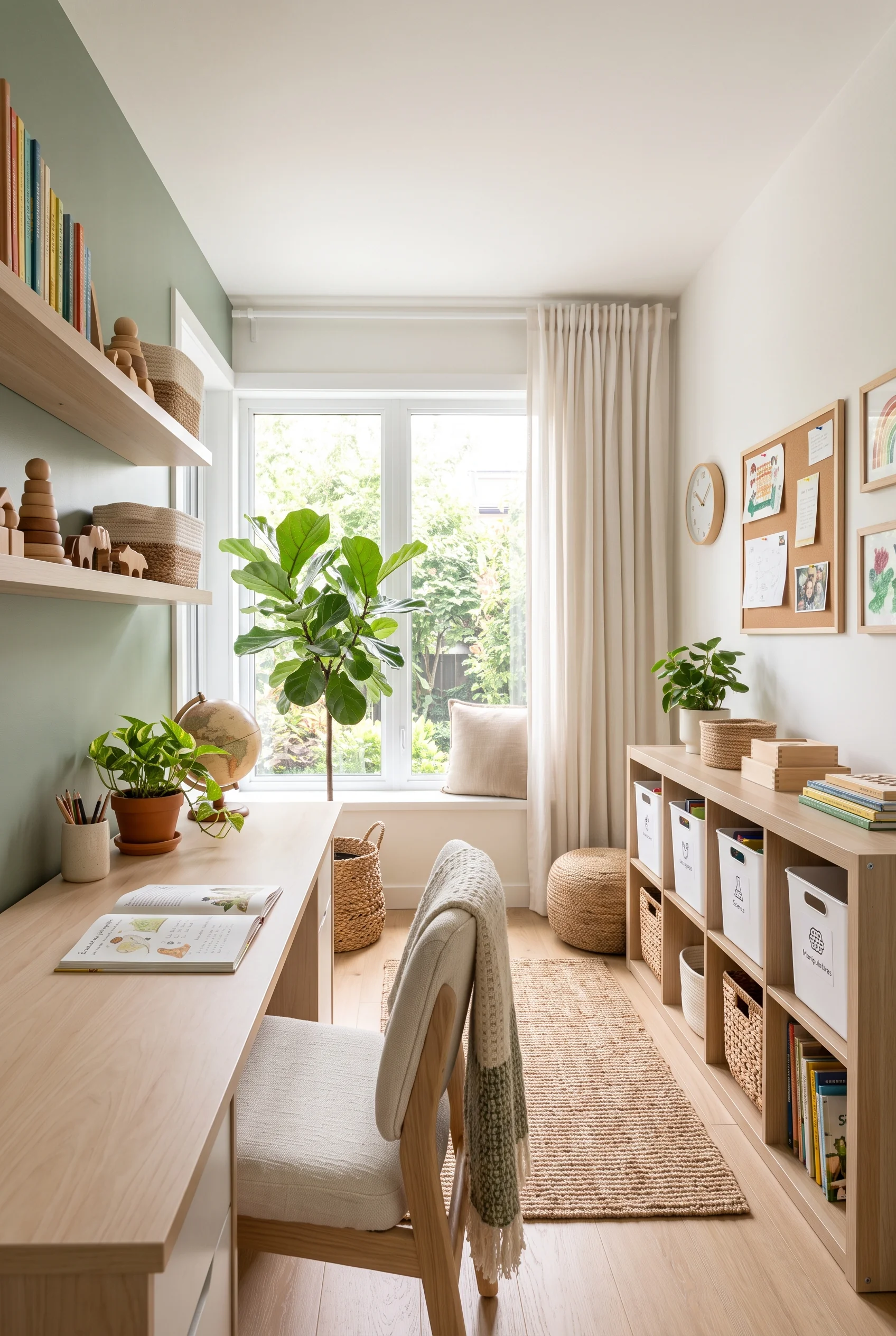
Warm white, soft beige, muted green, and pale blue offer a gentle starting point for a homeschool room decor scheme. Limiting the main palette to two or three colors leaves visual room for books, maps, and colorful project materials.
Natural wood and washable textiles bring in warmth without making the setting feel busy. Before committing to paint, view samples beside the desks in morning light and again after sunset. A shade that feels soft during the day can look much cooler under artificial light.
A Layout Shaped Around the School Day
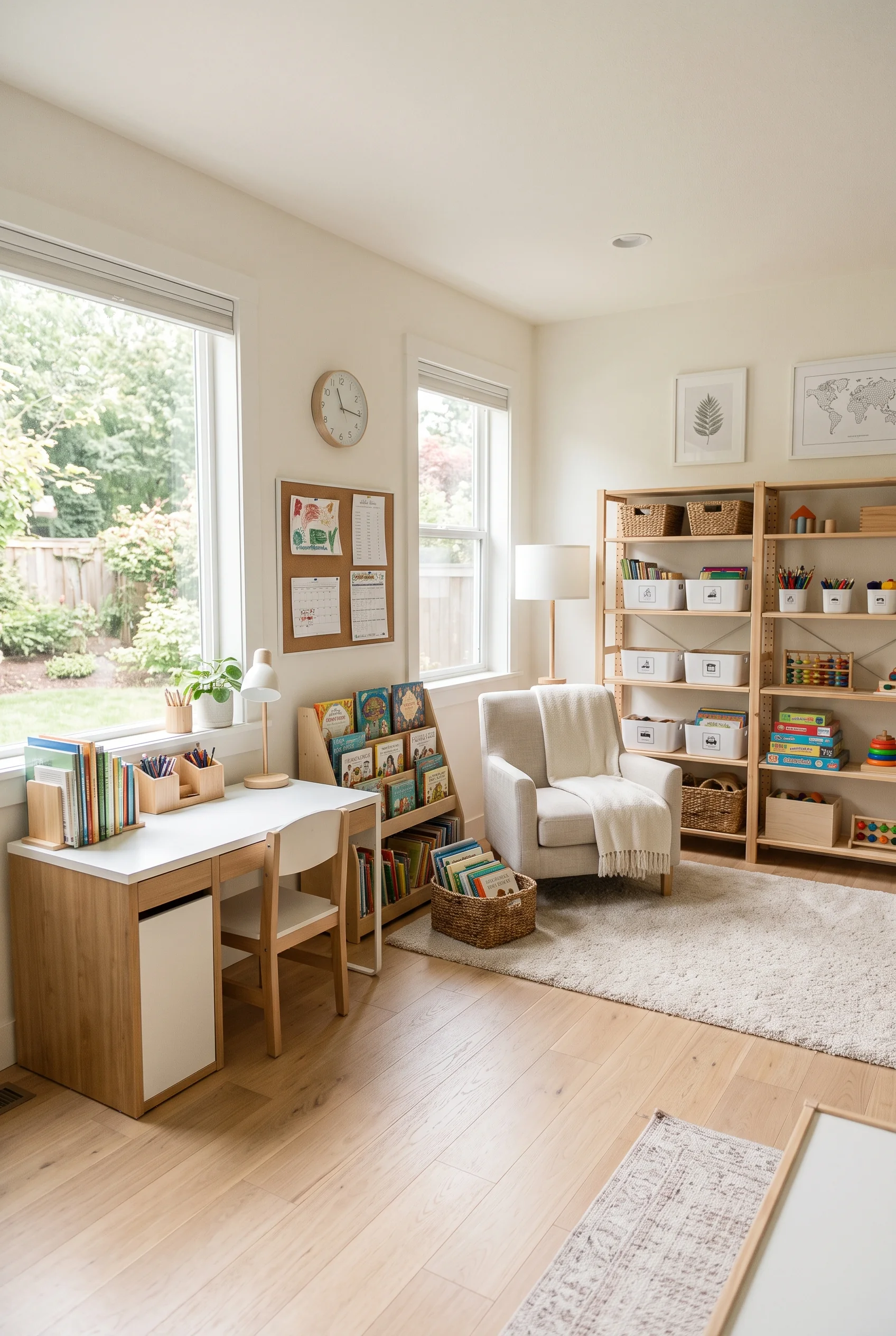
Begin with the activities that happen most often. Independent assignments may need a quiet desk, while shared lessons benefit from a larger table. Reading and hands-on projects can occupy softer, more flexible zones.
Clear walkways keep children from squeezing past chairs or stepping over supply bins. Work surfaces near a window feel pleasant, as long as computer screens face away from glare. The most practical arrangement follows your children’s ages and attention patterns, not a formal classroom plan.
A Dining Room That Resets by Dinner
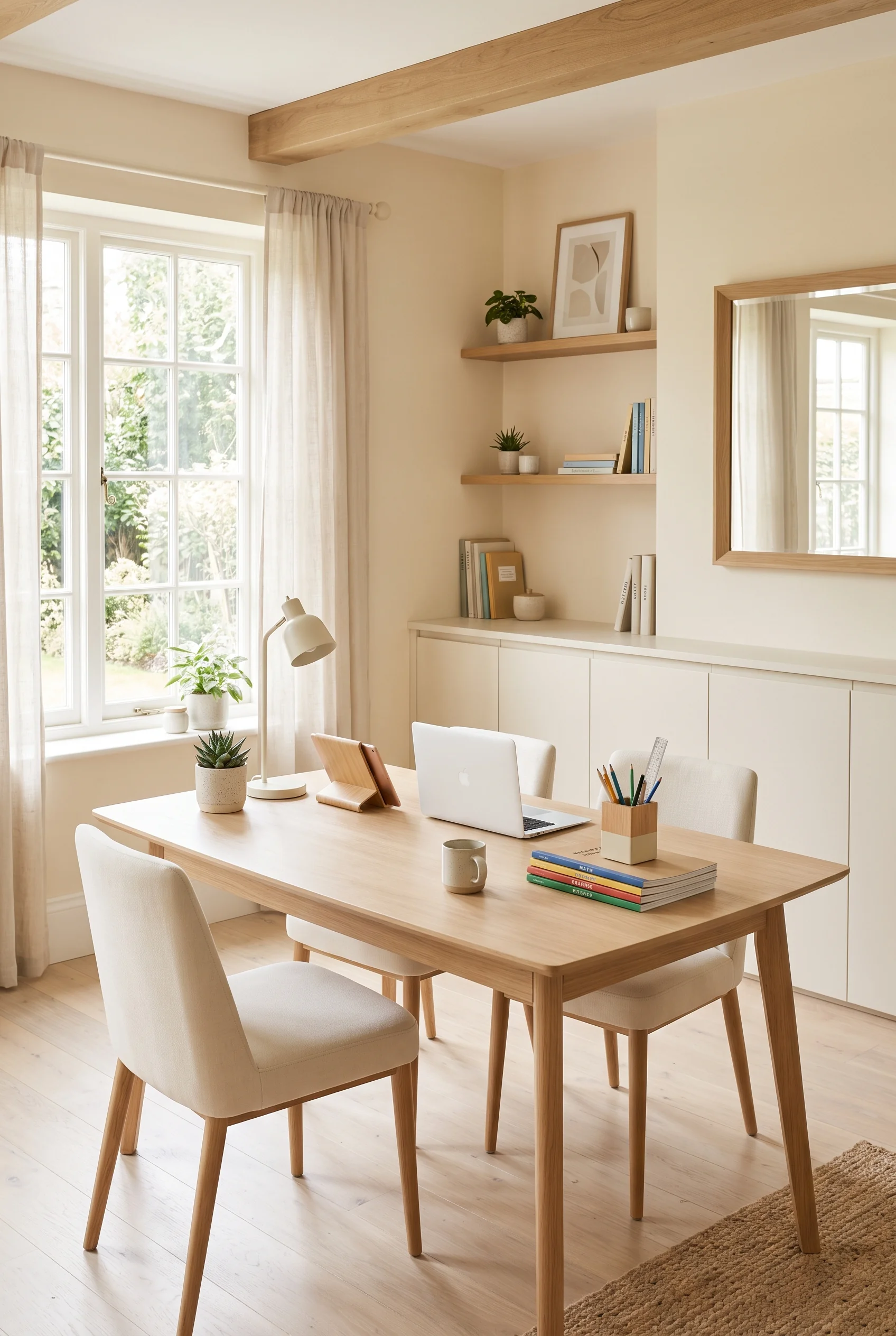
A dining table can comfortably handle group lessons, workbooks, and science projects without surrendering its original purpose. A nearby sideboard keeps curriculum close, while matching baskets contain the smaller pieces that otherwise linger after school.
Washable mats protect the tabletop during paint or experiments. At the end of the day, each child can return materials to one assigned basket before the table is wiped clean. That brief reset helps the room shift back into family life without a lengthy cleanup.
A Spare Room With Space to Evolve
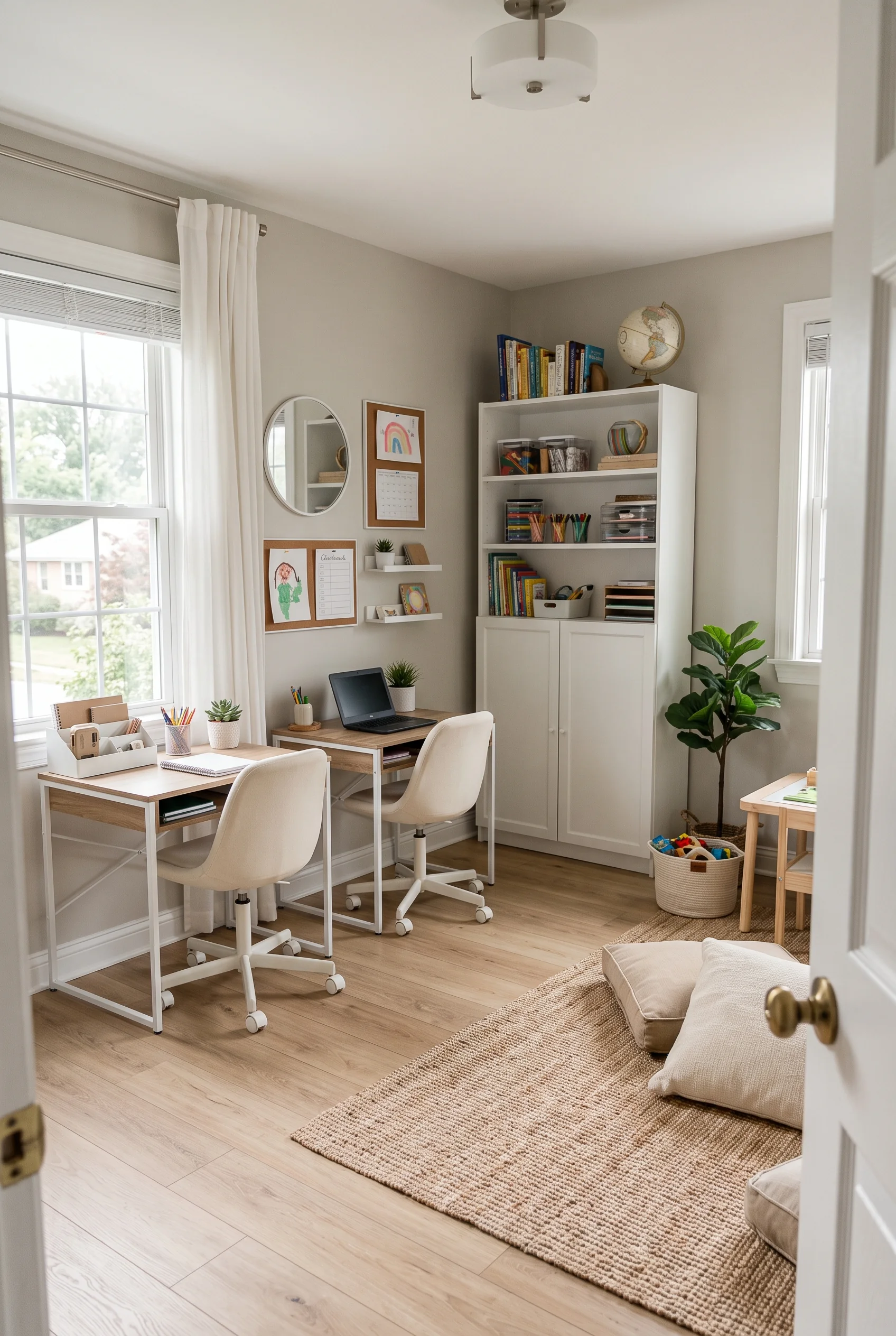
An underused bedroom offers enough separation for a dedicated home learning space. Once you remove unnecessary furniture, the room can hold compact desks, a reading chair, and storage without feeling crowded.
The closet is especially useful for curriculum, paper, and less attractive supplies. Closed doors leave the main area visually quiet between lessons. Keep one corner open for floor work or movement breaks rather than filling every wall immediately. That breathing room can take on a new purpose as children grow.
Homeschool Room Ideas for a Closet Nook
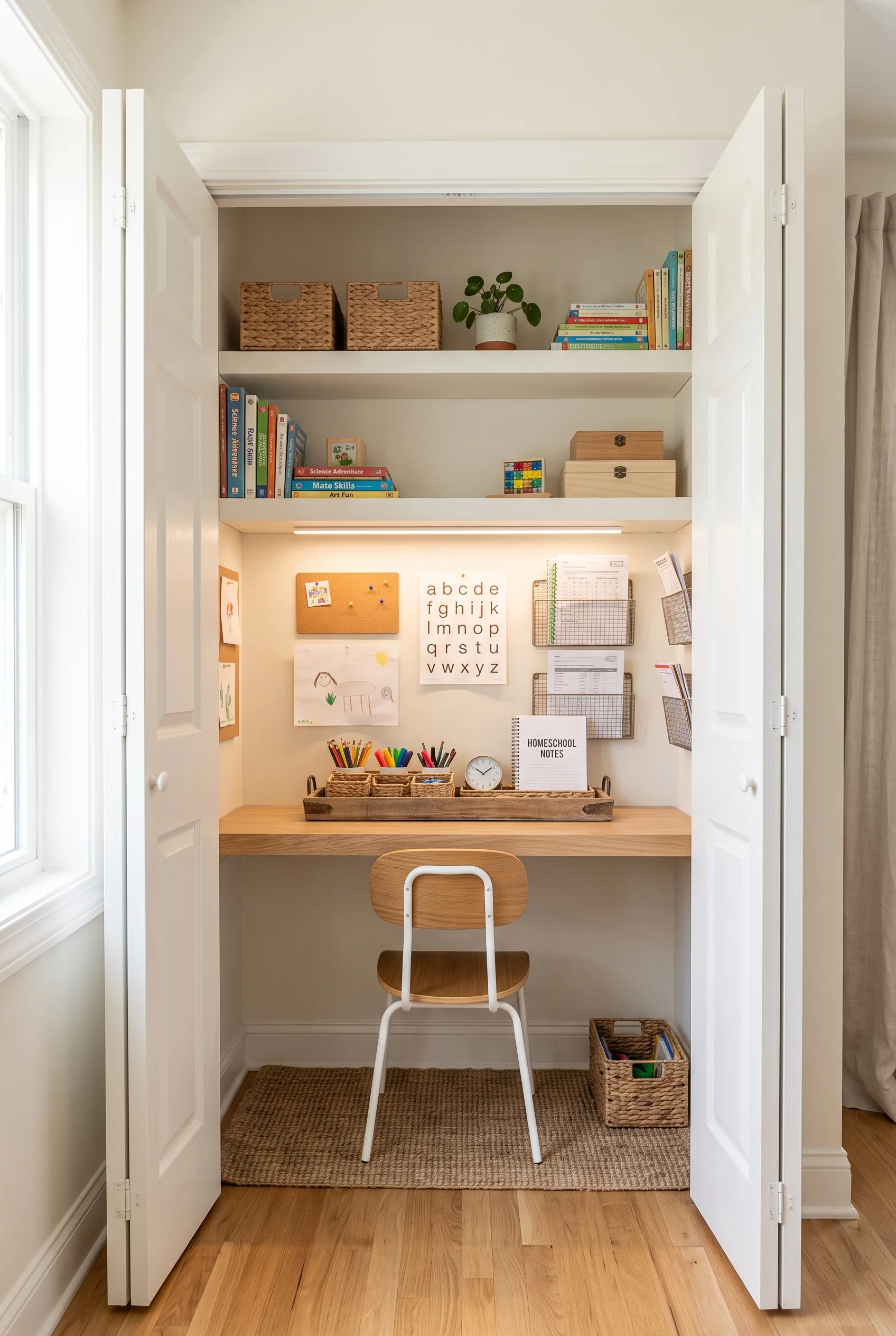
A reach-in closet can become a focused workstation with a fitted desktop and a few shallow shelves. Removing the doors makes the nook feel open. Keeping them allows books and supplies to disappear once the school day ends.
Because closet workspaces rarely receive ideal light, an adjustable task lamp matters. Wall pockets and narrow containers preserve the desktop for writing. The finished nook is compact but complete, making it a practical answer for homeschool room ideas for small spaces.
Small Footprints With Clearly Defined Boundaries
Shared family rooms need learning zones that feel intentional without dominating the surrounding decor. Compact desks, coordinated furniture, and distinct work areas give school materials a natural home. These arrangements also make cleanup easier because every child knows where work begins and where supplies go when lessons end.
A Living Room Corner That Belongs
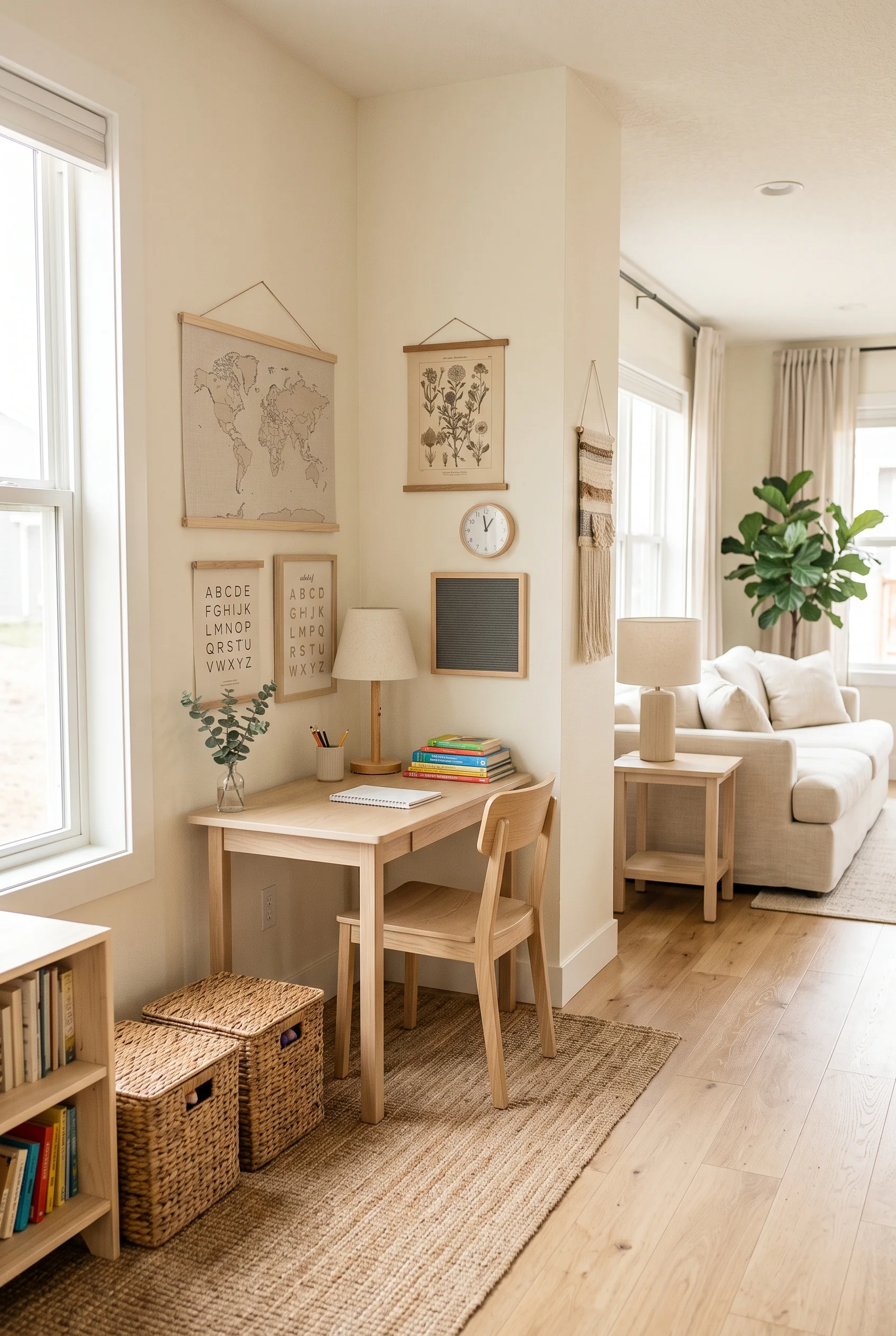
One defined corner prevents school supplies from gradually spreading across the living room. A compact pale wood desk or storage console can coordinate with the existing furnishings, rather than introducing a separate classroom look.
Lidded baskets make pencils and workbooks easy to clear away. Above the desk, one framed educational print or a subtle pinboard gives the zone an identity without covering the wall. The corner remains useful during lessons and settled enough for evenings together.
A Floating Desk With Almost No Footprint
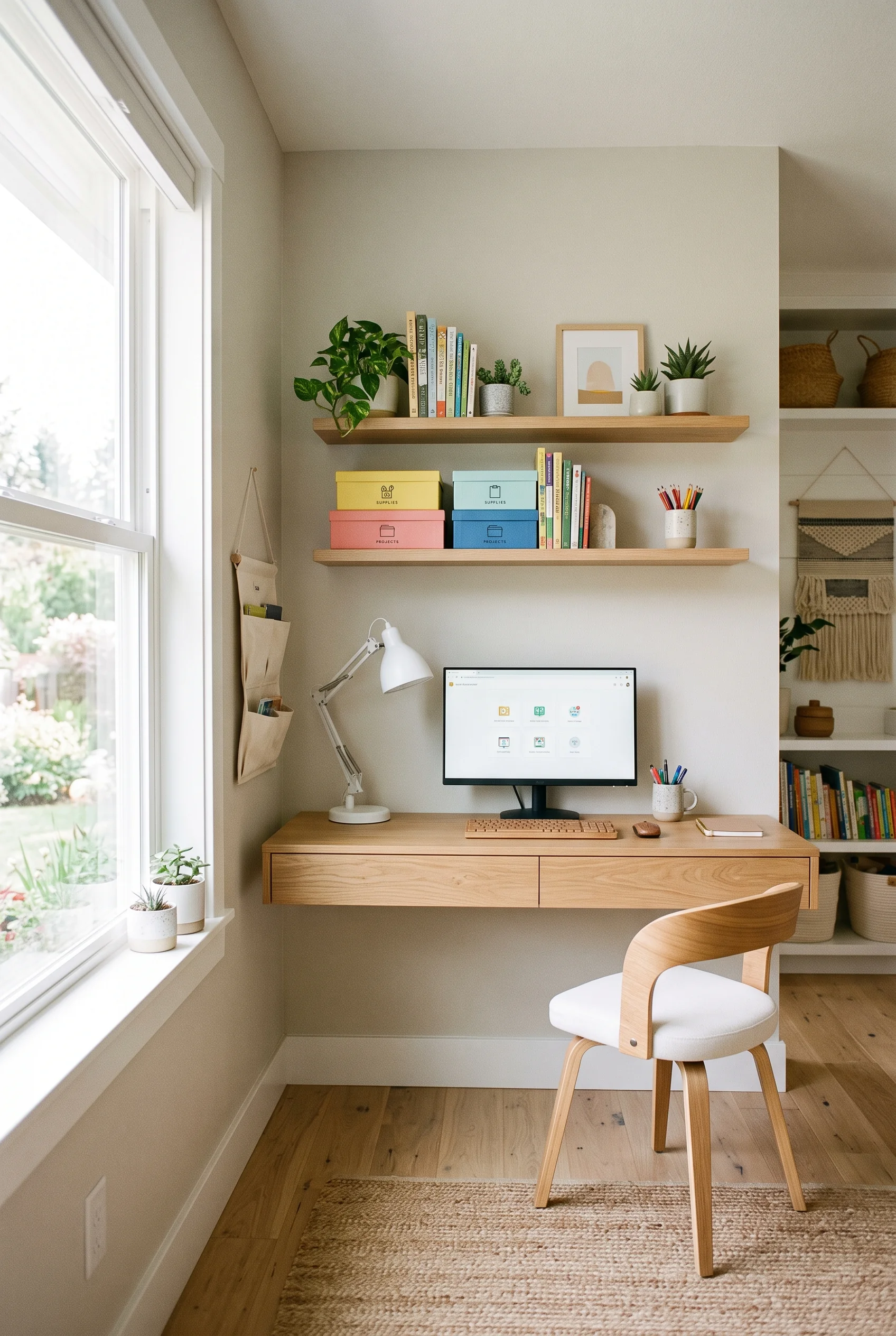
A wall-mounted desk opens up possibilities in a hallway, bedroom, or small homeschool room. The surface should sit at a comfortable height, with a supportive chair that slips neatly underneath when no one is working.
One or two slim shelves can hold current books and daily supplies without crowding the station. Keep most of the desktop open for a notebook and laptop. The generous patch of clear surface helps this compact setup feel far more spacious than its measurements suggest.
A Shared Table for Collaborative Mornings
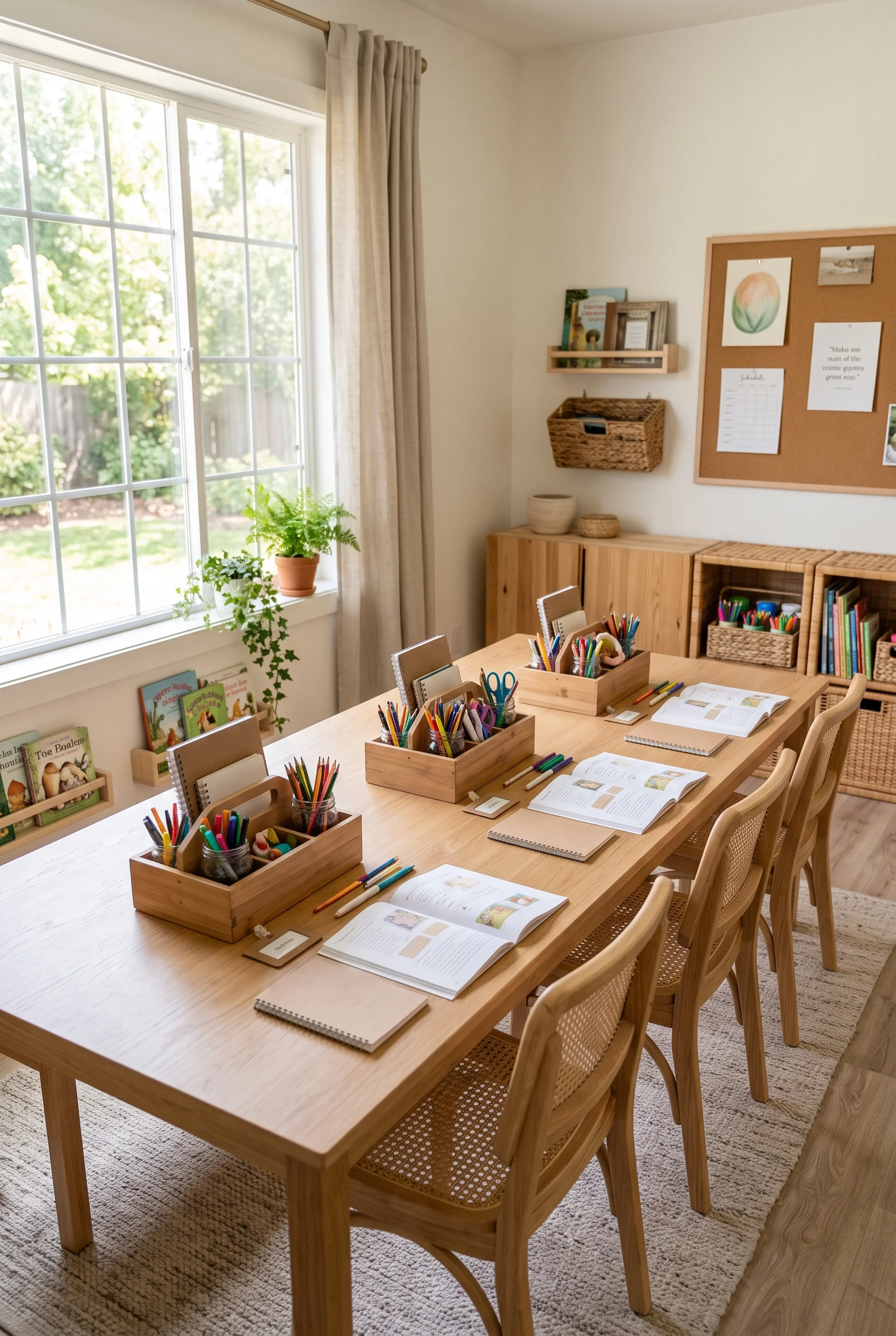
A generous central table gives siblings room for morning lessons, projects, and family discussions. Each child still needs a defined portion of the surface, along with a personal caddy or drawer for everyday materials.
Seat children according to how independently they work rather than arranging everyone symmetrically. A younger child may do better beside a parent, while an older student may prefer the quieter end. Separate reading or computer spots can provide relief when shared work turns distracting.
Personal Workstations With a Cohesive Look
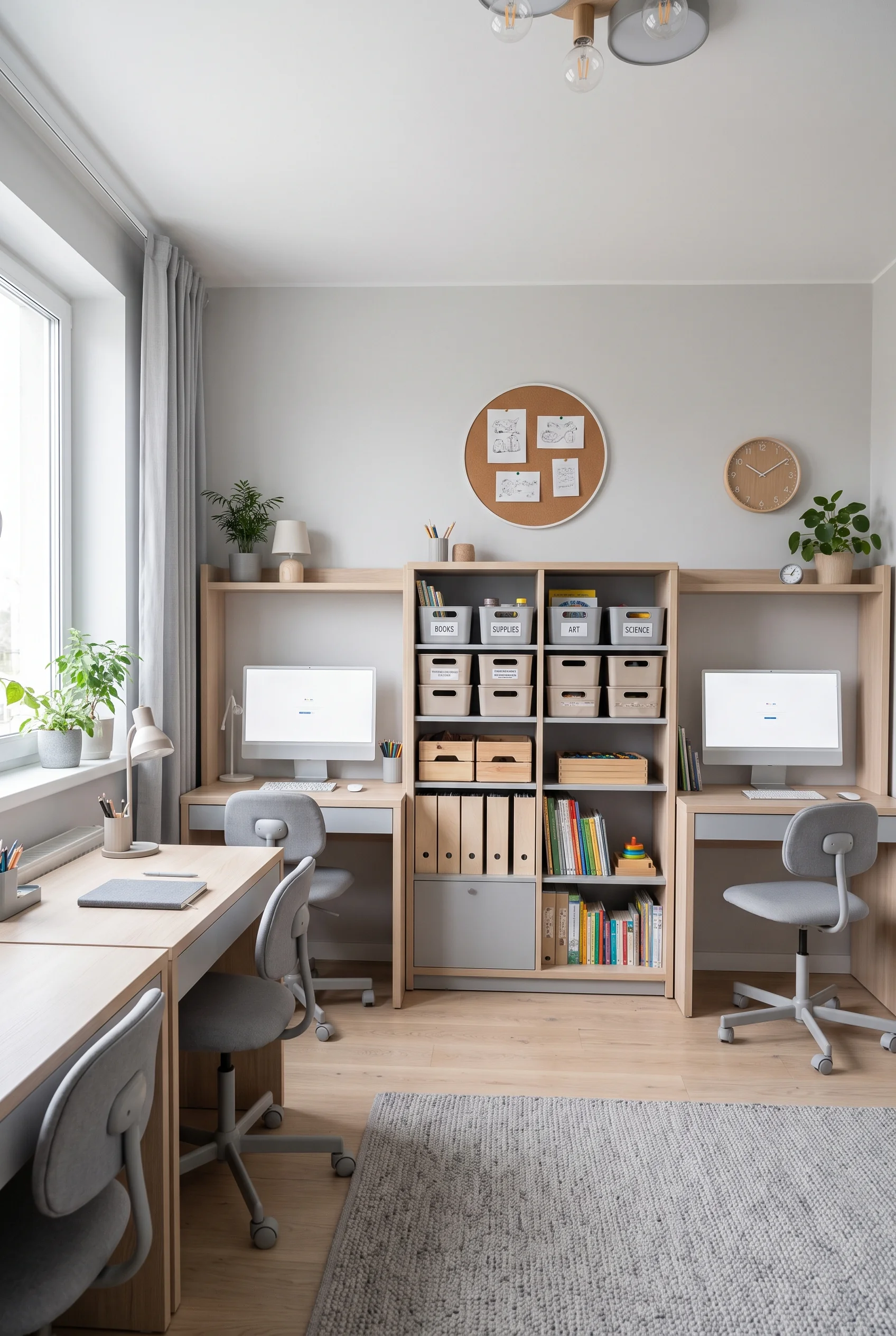
Individual desks give each child ownership over independent lessons. Small gaps or open shelving between stations soften conversational distractions without making anyone feel isolated.
A name label, pencil cup, and limited display area provide enough personality. Shared materials can stay in one central cabinet so families don’t need to duplicate every supply. Coordinated finishes tie the workstations together, while each child retains a clear place to begin and end the day.
Comfort That Invites Children to Settle In
Not every lesson belongs at a desk. Soft seating and accessible materials allow children to shift posture, read quietly, or work closer to the floor. A few well-placed comfort details can make the school day feel less rigid while preserving the calm structure parents need.
Supportive Seating Beyond the Desk
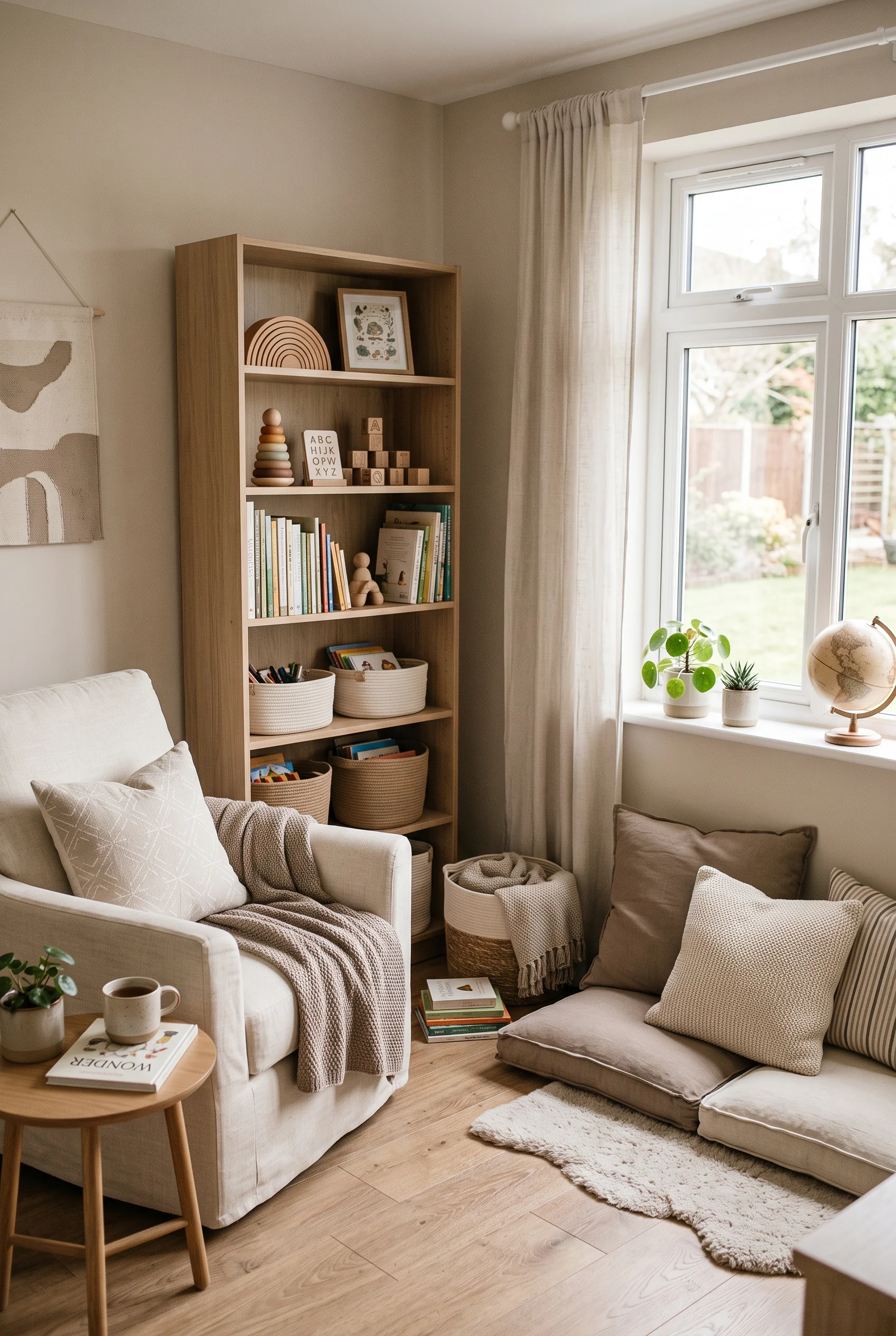
A cream armchair, compact loveseat, or child-sized seat creates a softer setting for reading and discussion. Washable upholstery matters more than a delicate finish because this furniture will be used often and occasionally meet a spilled drink.
Position the chair close to books and a reliable light source. A floor cushion offers another option for children who concentrate better when they can move freely. Multiple seating options can accommodate different ages and sensory needs without requiring a large room.
A Reading Retreat Tucked Into the Corner
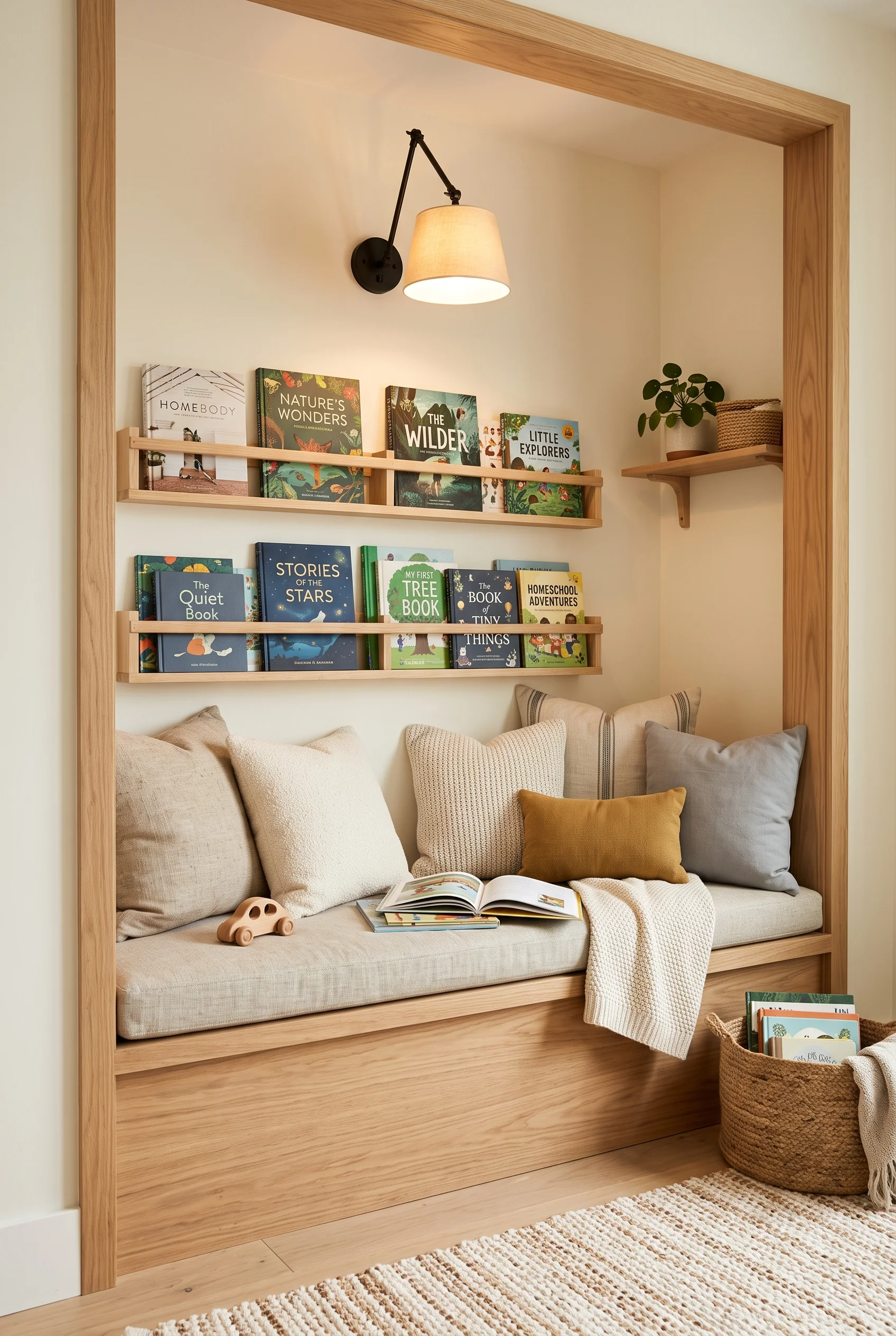
An empty corner beside a bookcase can hold a deeply inviting reading nook. A washable cushion, soft throw, and small rug are enough to signal a slower pace in this area.
Keep only a rotating selection of books nearby so the nook stays tidy and interesting. A wall sconce or rechargeable lamp offers comfortable illumination without using valuable floor space. The intimate scale gives children a place to pause when the larger learning area feels too active.
Low Shelves That Support Independence
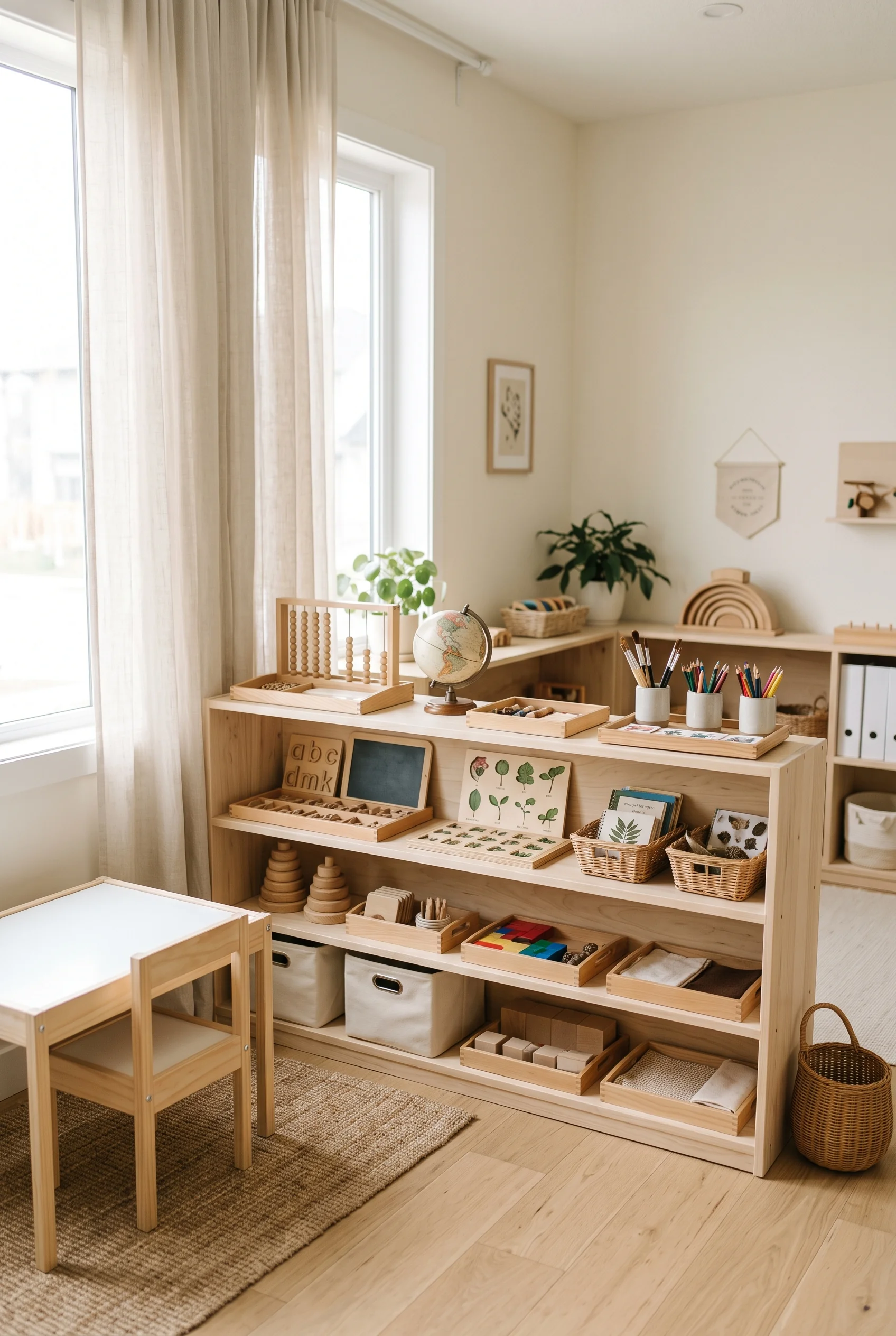
Books, manipulatives, and activity trays become easier to manage when children can reach them without help. Low shelving makes choices visible while encouraging materials to return to a familiar place after each lesson.
Leave open space between categories rather than packing every shelf. Place heavier materials at the bottom, and secure freestanding units to the wall. The arrangement feels orderly at a child’s eye level and naturally supports more independent routines.
Labeled Baskets Without a Complicated System
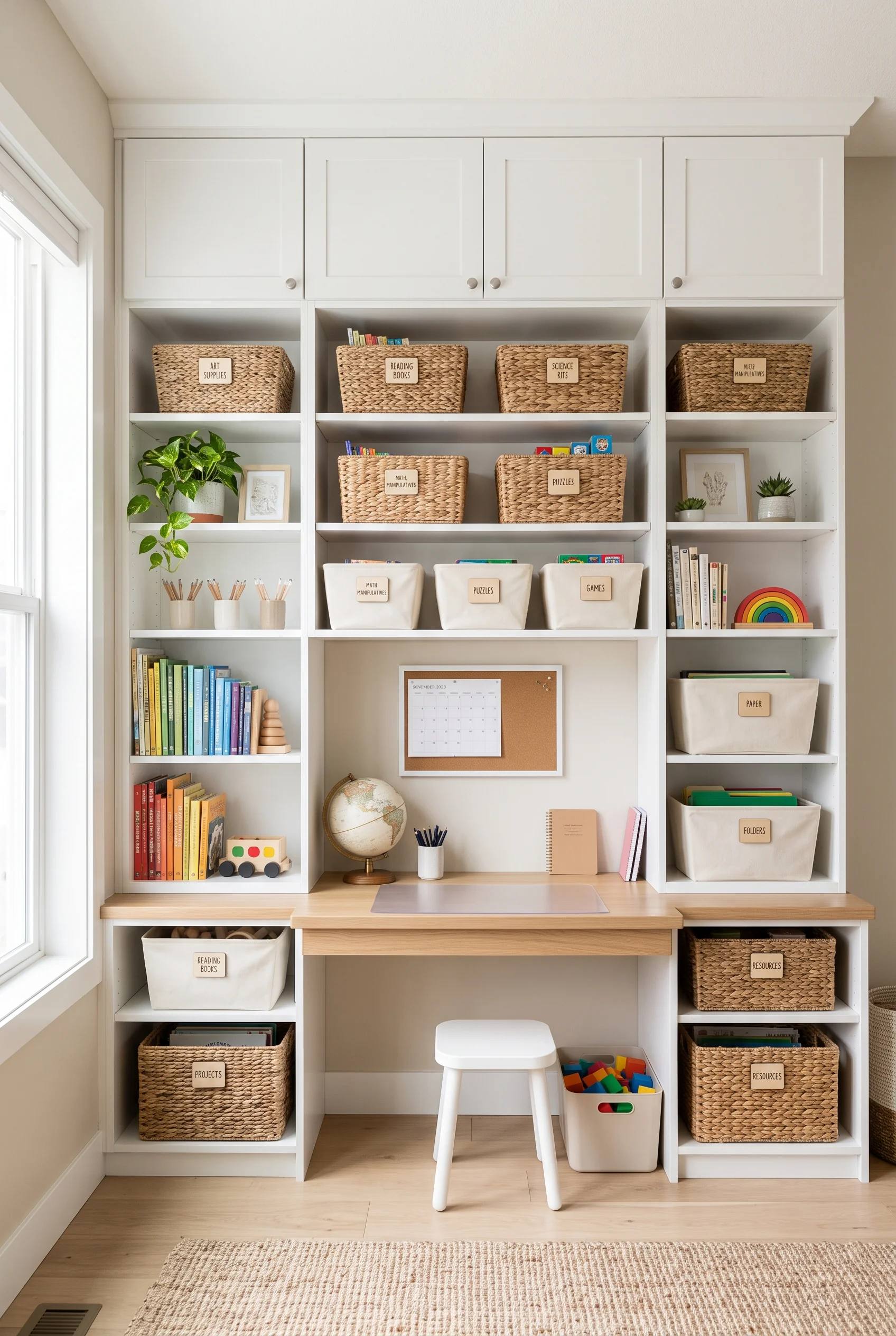
Broad categories keep homeschool room organization manageable. Separate baskets for writing tools, math materials, notebooks, and crafts are usually more sustainable than dozens of highly specific labels.
Written labels work for confident readers, while simple picture labels help younger children clean up. Coordinating basket colors create a quieter look on open shelves. The system stays easy to understand even during a rushed afternoon reset, when organization needs to work hardest.
Storage That Moves With the Lesson
The most useful homeschool storage ideas keep materials close without leaving everything in sight. Mobile carts, clear containers, and vertical shelves make small areas work harder. A simple planning station can then hold the administrative details that tend to drift across counters and desks.
An Art Cart Ready for Messy Projects
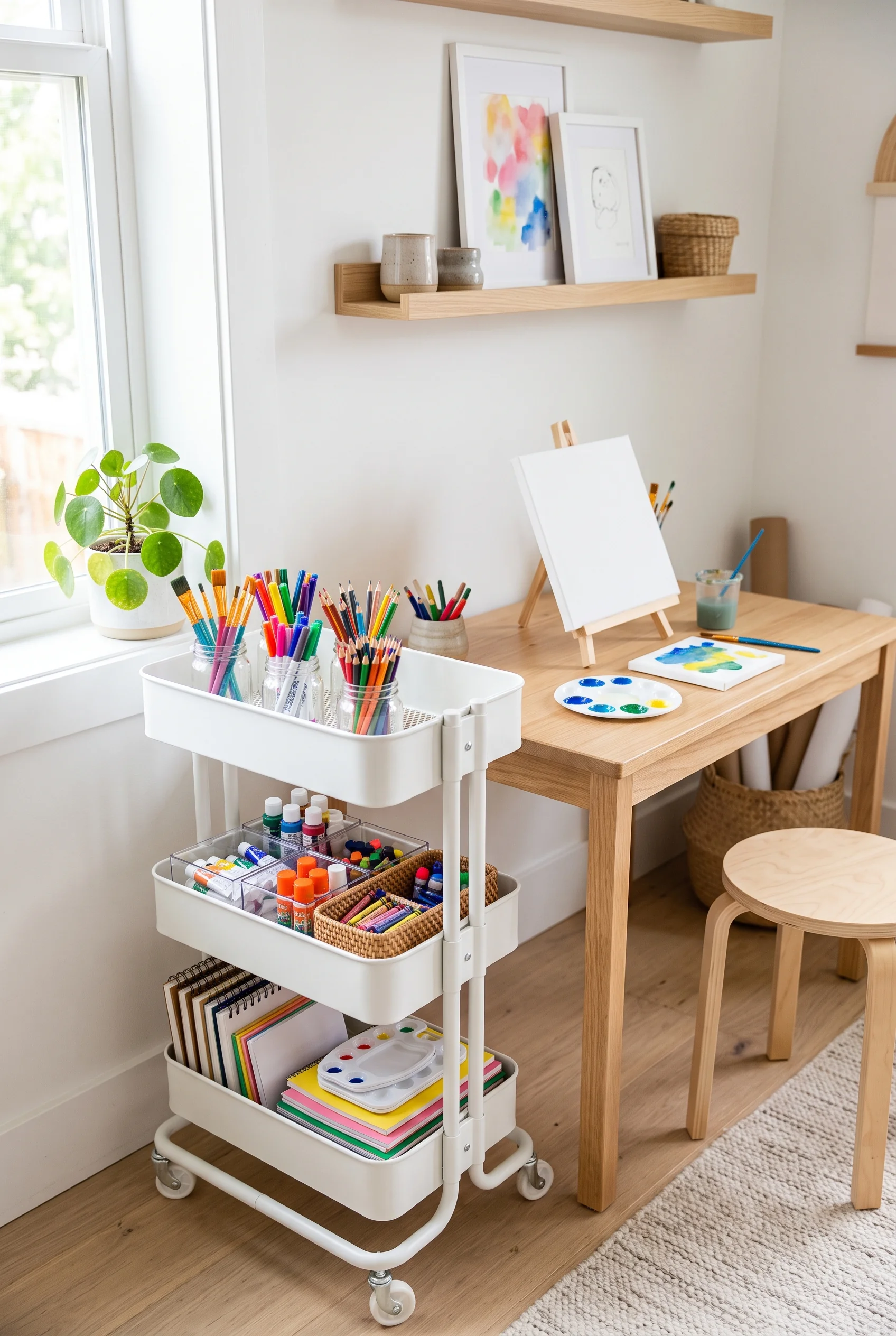
A slim rolling cart keeps paint, paper, markers, and glue together without claiming permanent space beside the table. Cups and small containers help supplies remain upright, visible, and easy to carry into a project.
Place child-safe materials on reachable tiers and reserve the top for supplies that need supervision. After art time, the cart can roll into a closet or quiet corner. That mobility lets creative work happen where there is room, not where storage happens to be.
Clear Bins for Supplies Used Less Often
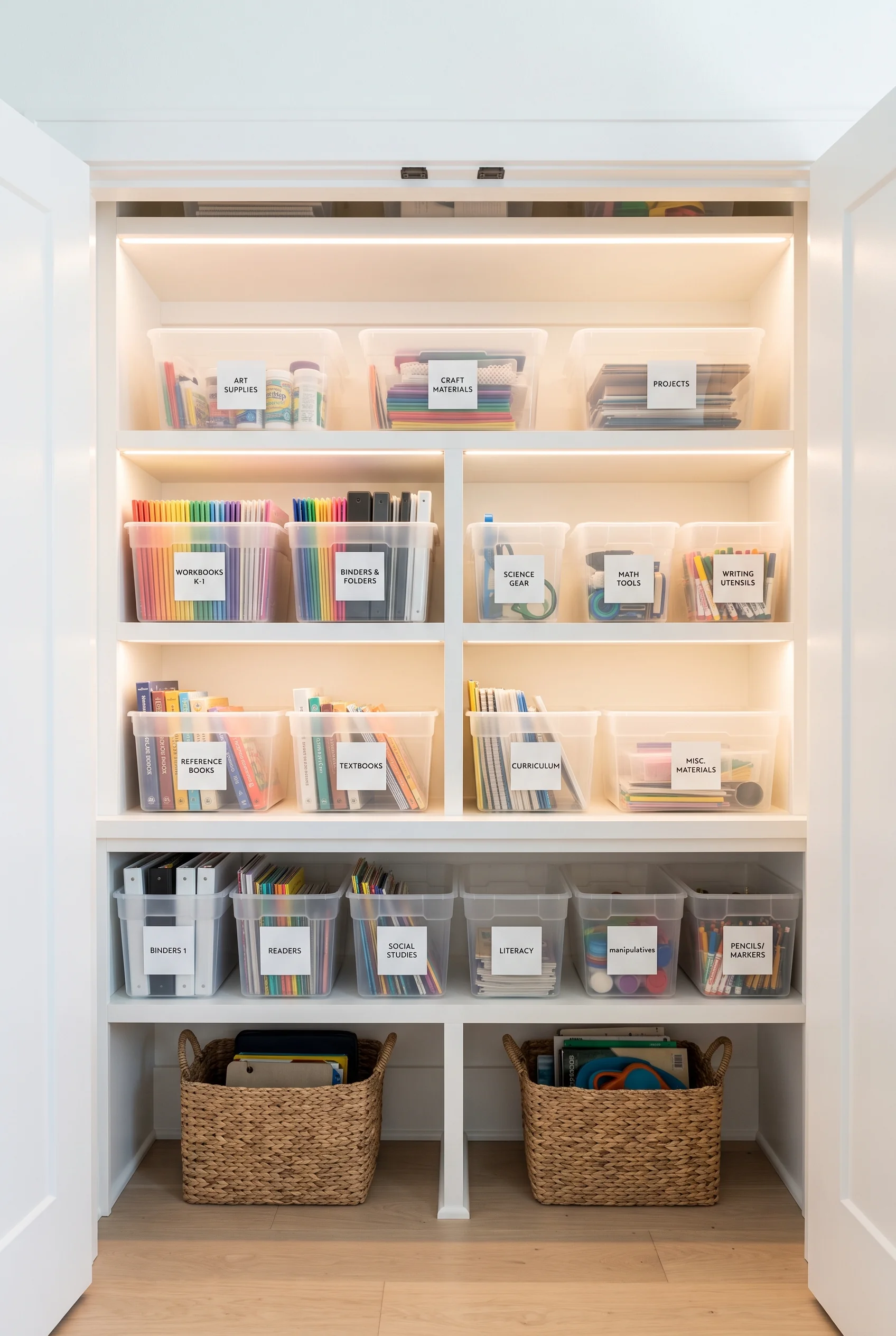
Transparent bins work well for science materials, games, manipulatives, and future curriculum because the contents remain visible. Consistent container sizes stack efficiently inside a closet and give shelves a more orderly appearance.
Labels are still helpful, even when the contents are visible. They tell every family member where each bin belongs. Leave a little space at the top rather than filling containers tightly. Materials are easier to remove, and children are more likely to put them back without frustration.
Homeschool Storage Ideas for Small Spaces
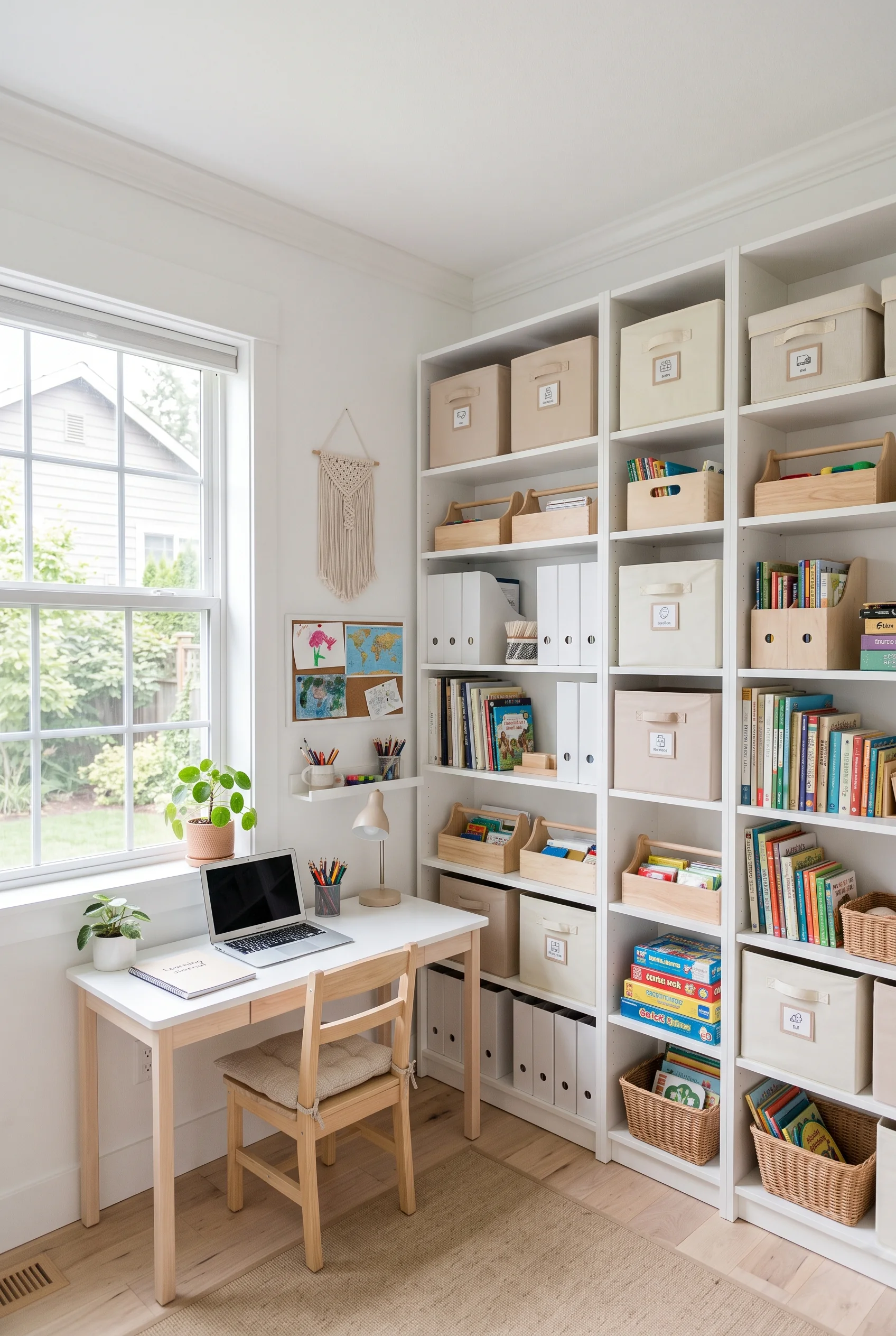
Tall bookcases and wall shelves draw storage upward when floor space is scarce. Keep daily materials at child height, while extra paper and seasonal resources can occupy the upper levels.
White shelving and coordinated boxes keep the vertical arrangement visually light. Tall furniture needs secure wall anchoring, and heavy supplies should never sit overhead. Used thoughtfully, the upper half of the room can absorb a surprising amount of storage while leaving space for a narrow desk below.
One Calm Headquarters for Weekly Plans
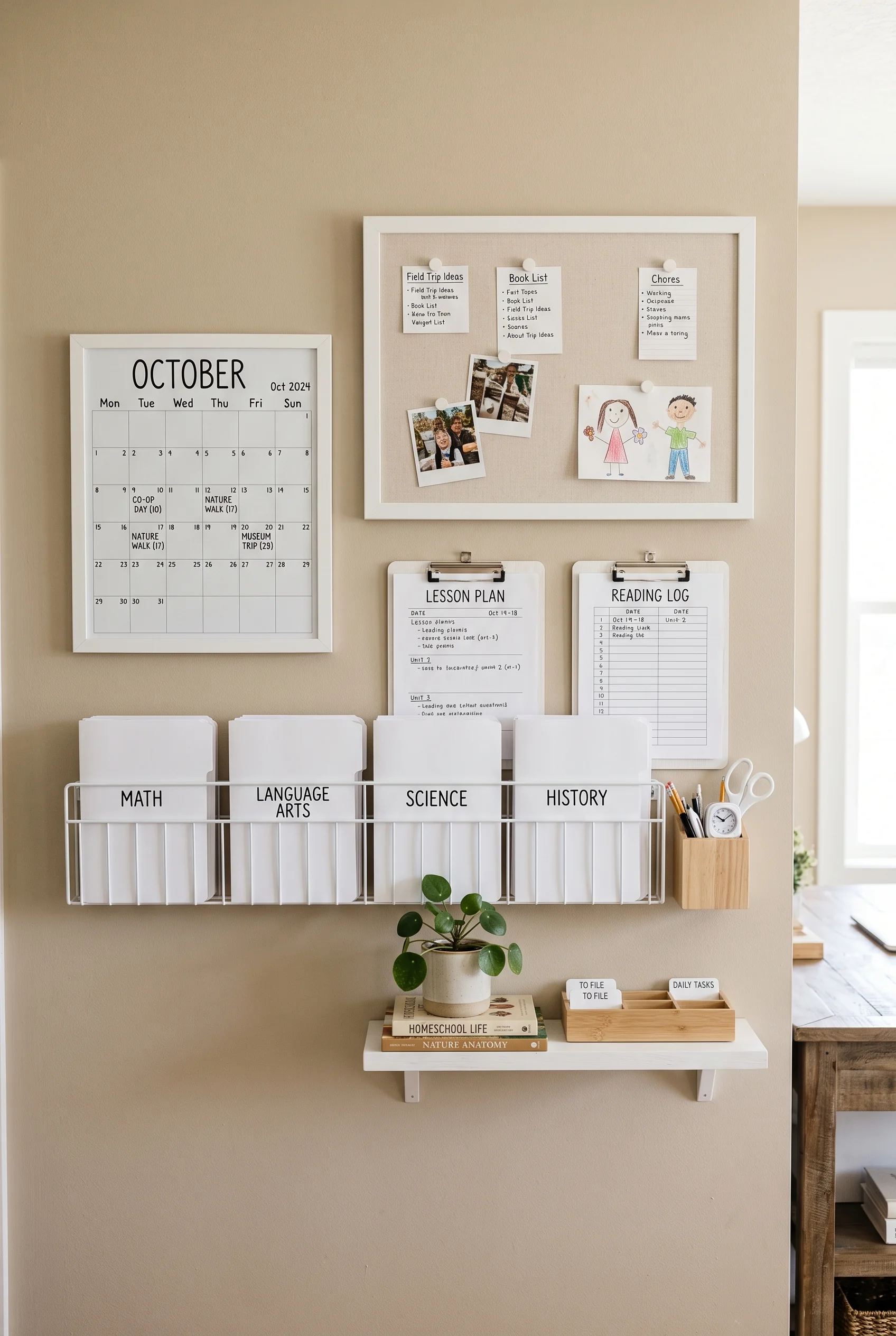
A calendar, pinboard, paper sorter, and labeled folders can bring the administrative side of homeschooling together on one wall. Position the command center where the teaching parent can see it without making paperwork the room’s focal point.
Keep only current lesson plans, forms, and weekly priorities visible. A short reset at the end of each week clears finished papers and prepares the next set of materials. Monday morning feels noticeably gentler when the practical details already have a place.
Walls and Cabinets That Earn Their Place
Thoughtful wall storage can make books more inviting and preserve valuable work surfaces. The key is restraint. A few visible resources support the current lesson, while cabinets and structured files hold the larger collection. The room stays useful without feeling like a crowded classroom.
Book Covers Turned Toward Young Readers
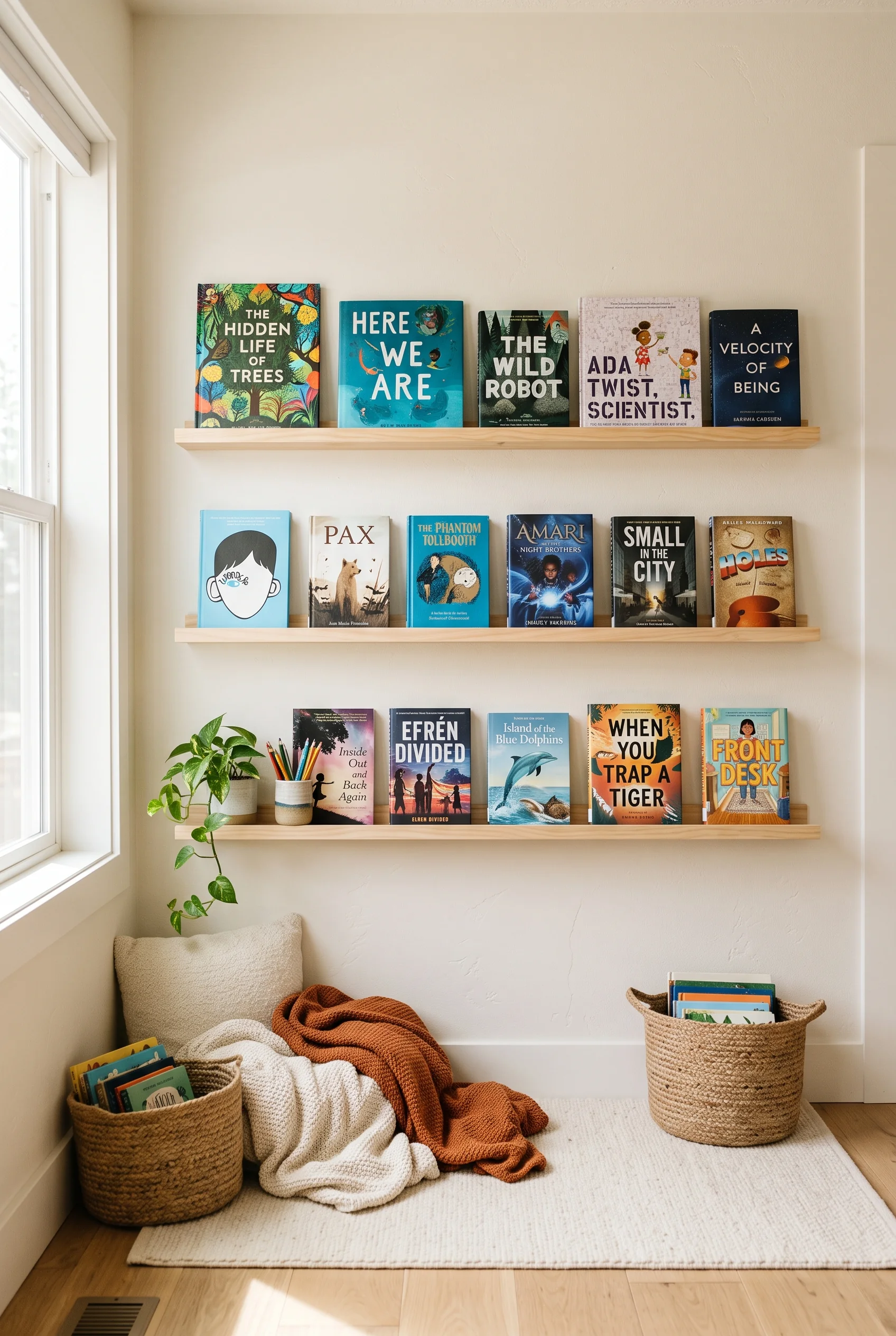
Front-facing picture ledges make books easier for young children to notice and choose. Covers carry more meaning than narrow spines, especially for early readers who are still building confidence.
Rotate the display around current studies and personal interests instead of showing the full collection. Shelves should sit at accessible heights with enough clearance for taller books. Traditional book storage can hold everything else, leaving the reading wall edited, colorful, and inviting.
Curriculum Shelves With a Clear Subject Rhythm
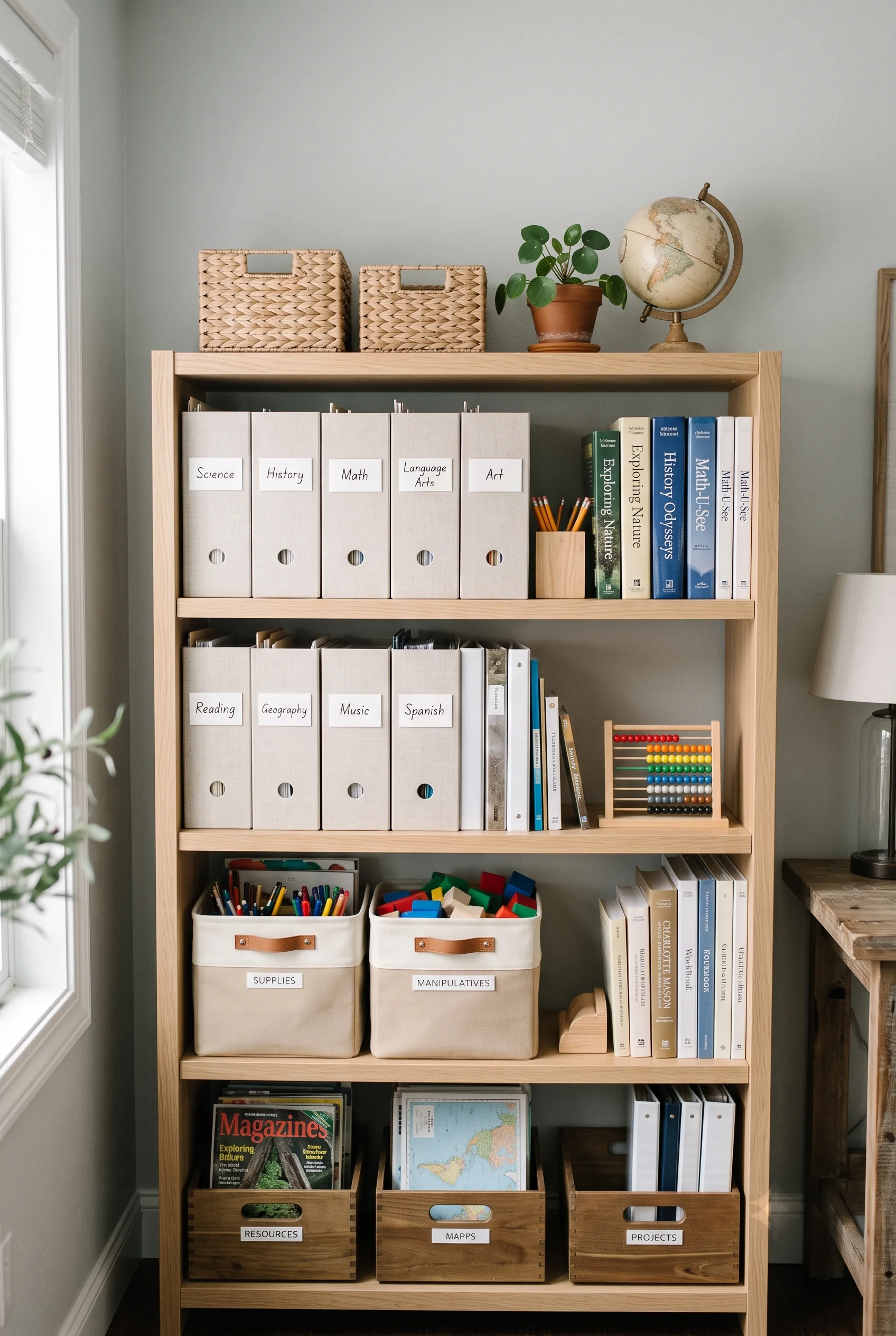
Math, language arts, science, and history are easier to locate when each subject has an assigned shelf or magazine file. Subtle color coding can speed up transitions without introducing a rainbow of visual noise.
Keep current books near the learning area and move completed or future materials into secondary storage. Each subject also needs a return spot. That small detail prevents curriculum from forming uneven stacks on the table as the day moves from one lesson to another.
A Pegboard for the Everyday Essentials
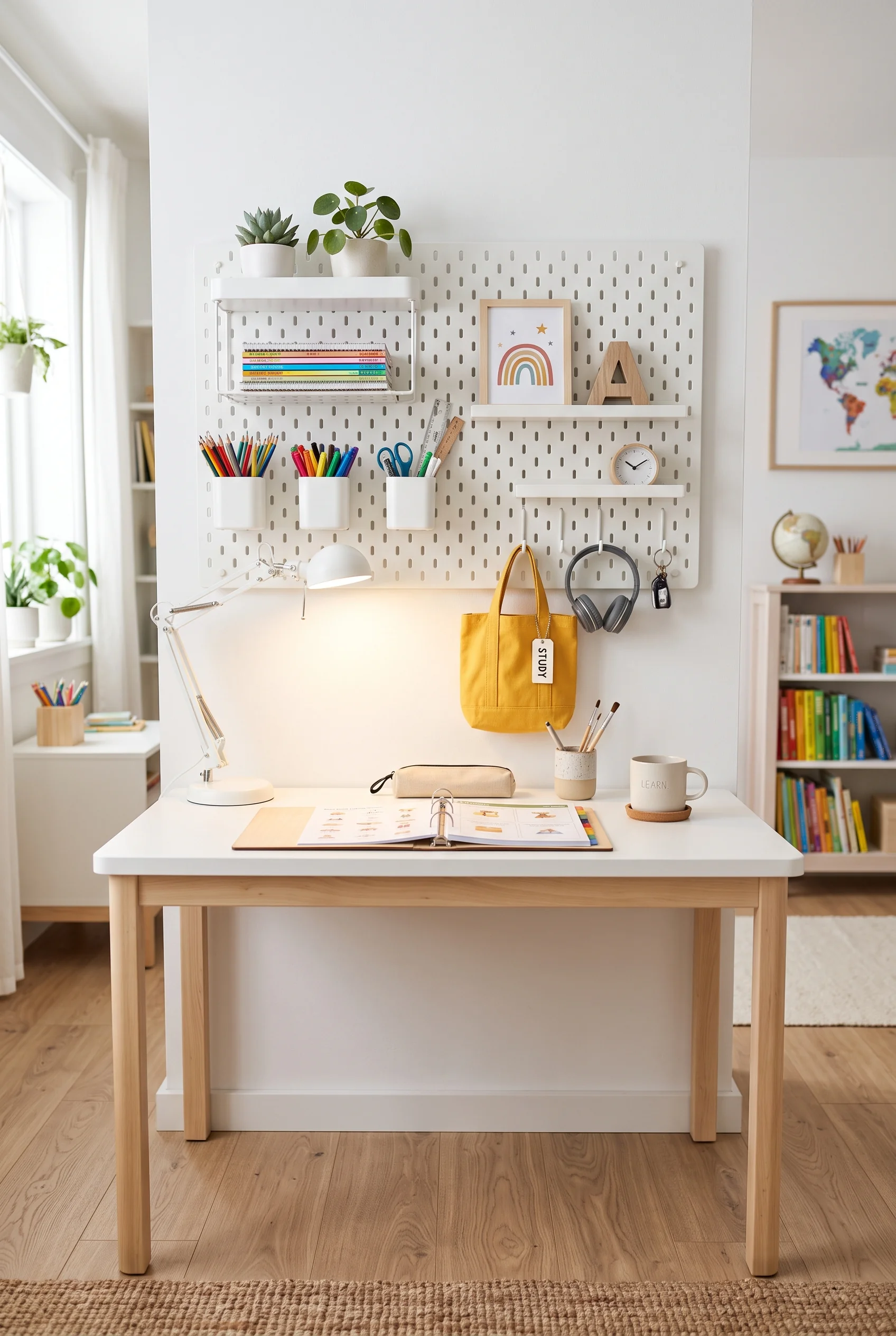
A pegboard lifts scissors, rulers, headphones, and pencils away from the desktop. Cups, clips, and small shelves can be rearranged as lesson needs change, giving the wall more flexibility than fixed organizers.
Only frequently used supplies deserve a visible position. Leave open sections between groups so the board does not become another source of visual noise. Above an art station or writing desk, the clean arrangement keeps tools close while preserving a generous working surface.
Closed Cabinets for a Quieter View
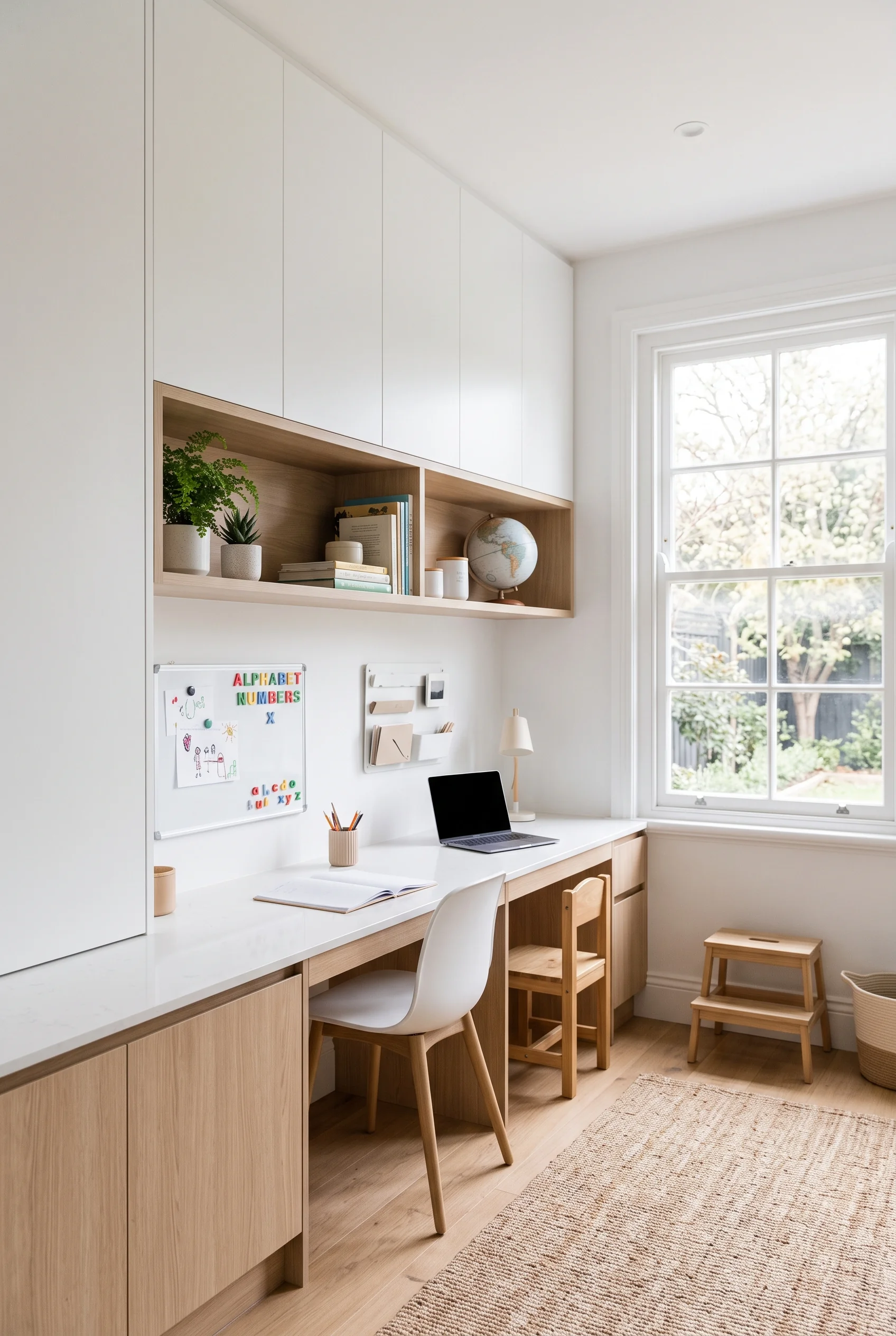
Cabinet doors conceal bulk paper, technology accessories, and teacher materials that do not need daily display. A smaller amount of open shelving can hold attractive books or frequently reached supplies.
Internal bins keep concealed storage from becoming a catchall. In a dining room or living area, cabinetry that coordinates with the surrounding furniture helps the learning zone feel like part of the home. Once the doors close, the room feels immediately restful.
Daily Tools With a Gentle Visual Presence
Technology, schedules, and lesson displays need to be useful without making the room feel institutional. Streamlined forms and quiet colors allow these tools to support the routine rather than dominate it. Natural materials then soften the practical pieces and connect indoor learning with the wider world.
A Focused Station for Screens and Writing
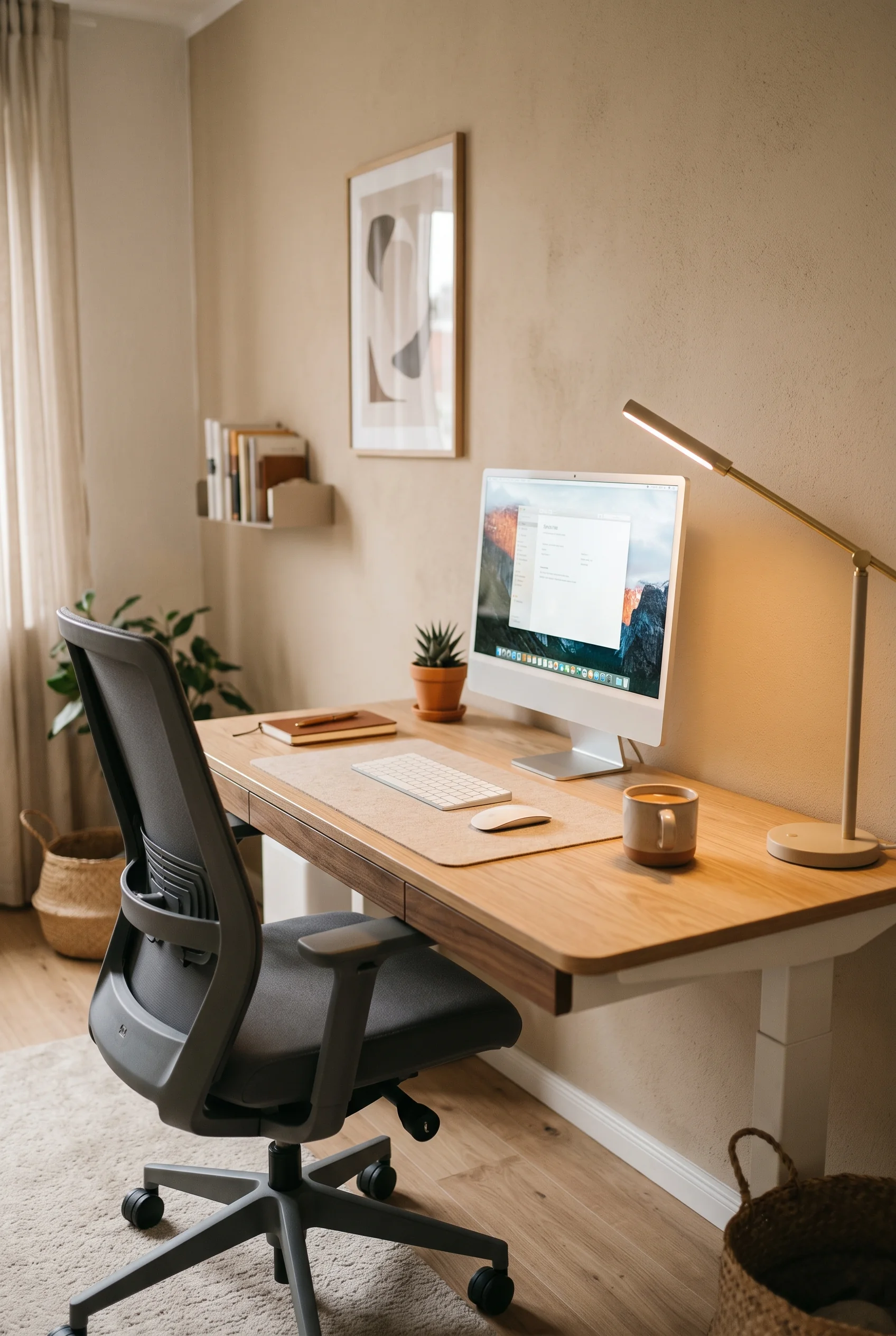
A laptop station needs enough room for the screen, one notebook, and a few writing tools. Cable clips, a cord box, or a desk grommet keep chargers from gathering beneath the work surface.
Turn the monitor away from direct window glare and pair the desk with an adjustable chair. The visual simplicity helps the station serve both homeschool lessons and later homework. When the cords disappear and the desktop stays open, screen-based work feels more focused.
A Whiteboard Sized for Real Life
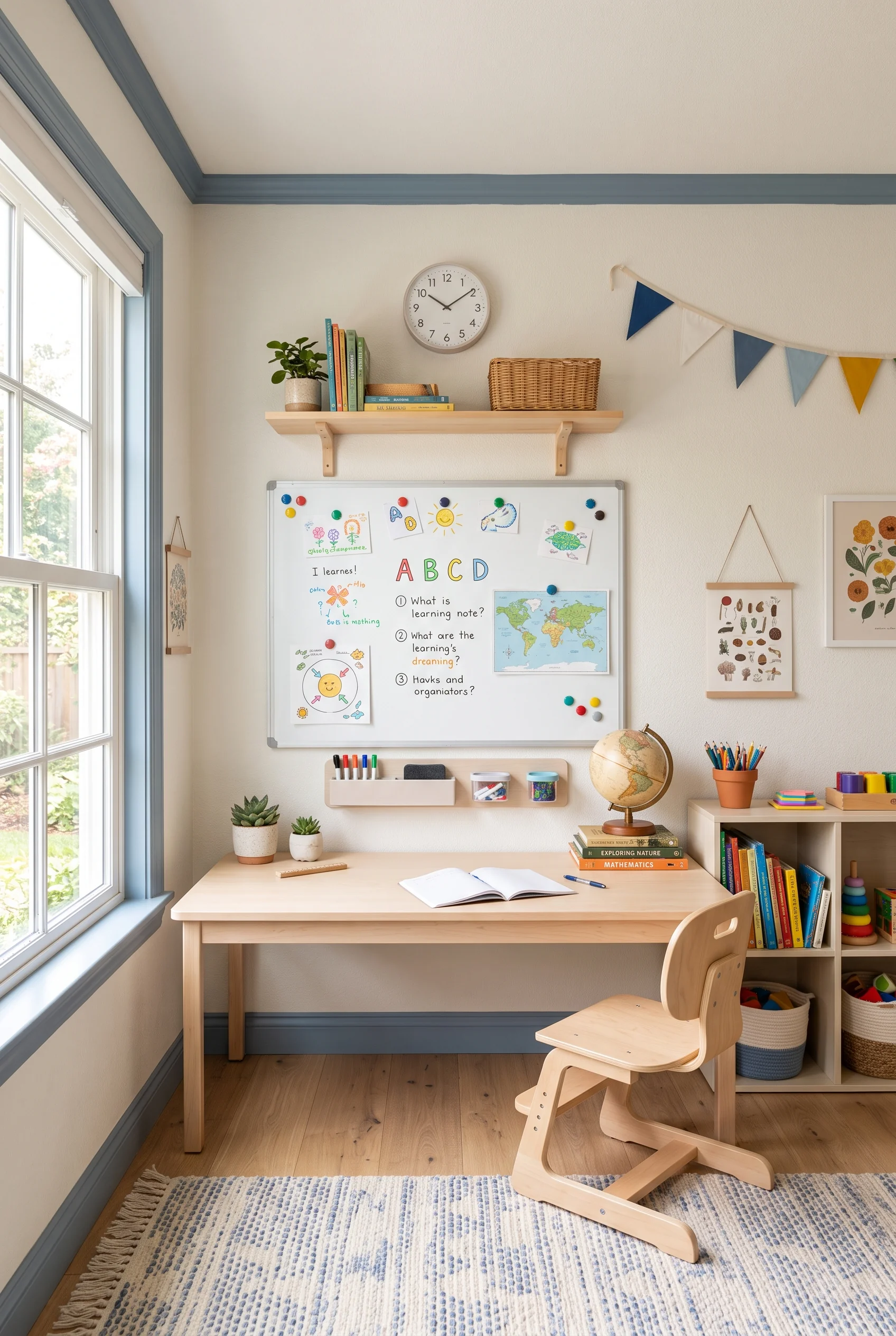
A medium whiteboard offers room for math problems, spelling words, and changing reminders without overtaking the wall. It should be easy to see from the main table but scaled to the room rather than modeled after a large classroom.
Store markers and an eraser in a nearby cup or magnetic tray. Wiping the board clean at the end of the day takes only a moment. The blank surface gives the next morning a fresh, uncluttered beginning.
A Learning Schedule That Leaves Room to Breathe
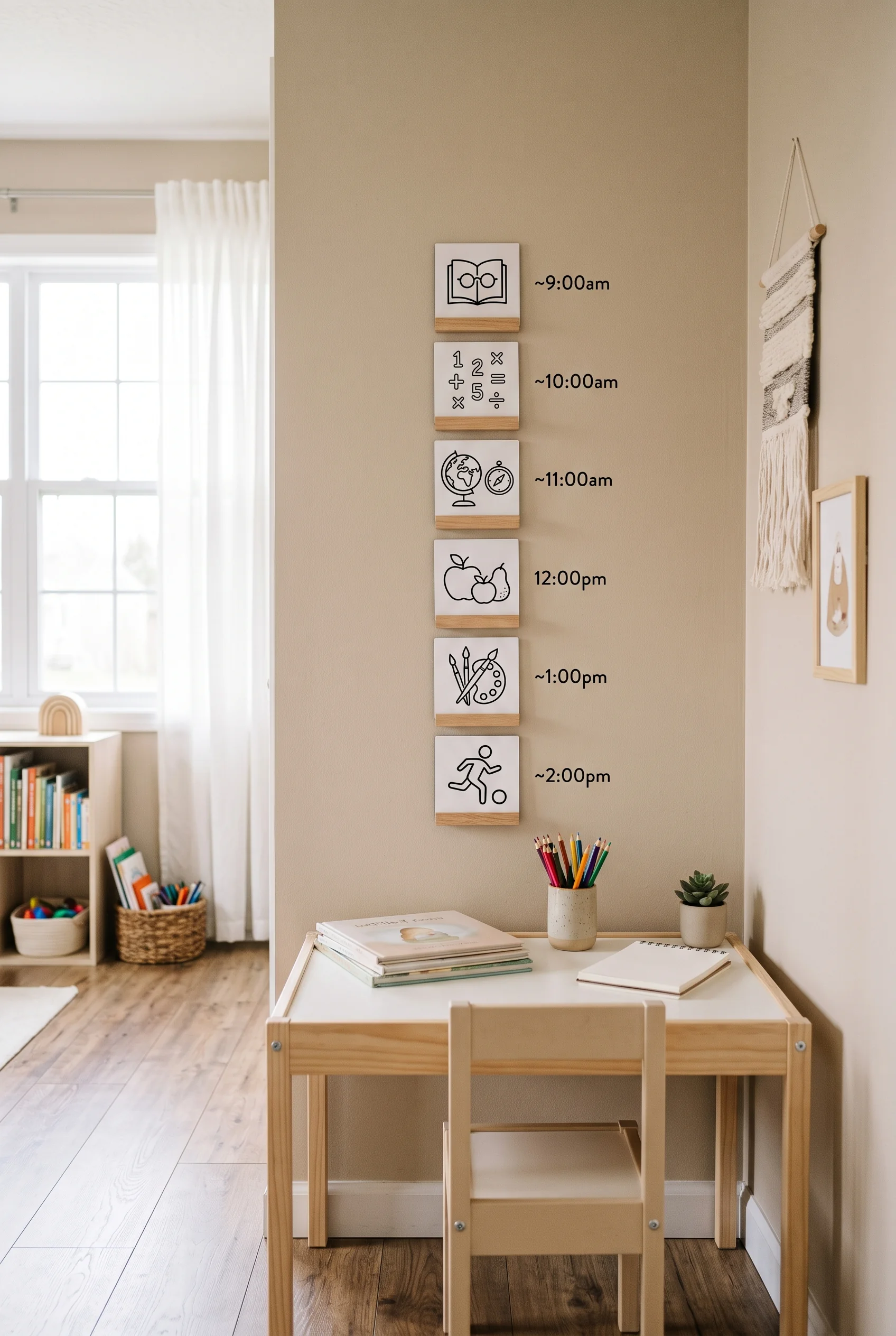
A simple daily or weekly schedule helps children anticipate transitions and move through familiar tasks more independently. Clear words may suit older students, while removable picture cards are useful for younger learners.
Include meals, breaks, outdoor time, and flexible periods alongside academic subjects. A quiet color palette keeps the display supportive rather than demanding. Update it whenever plans change so the schedule remains a trusted guide instead of forgotten wall decor.
Natural Details That Soften the School Day
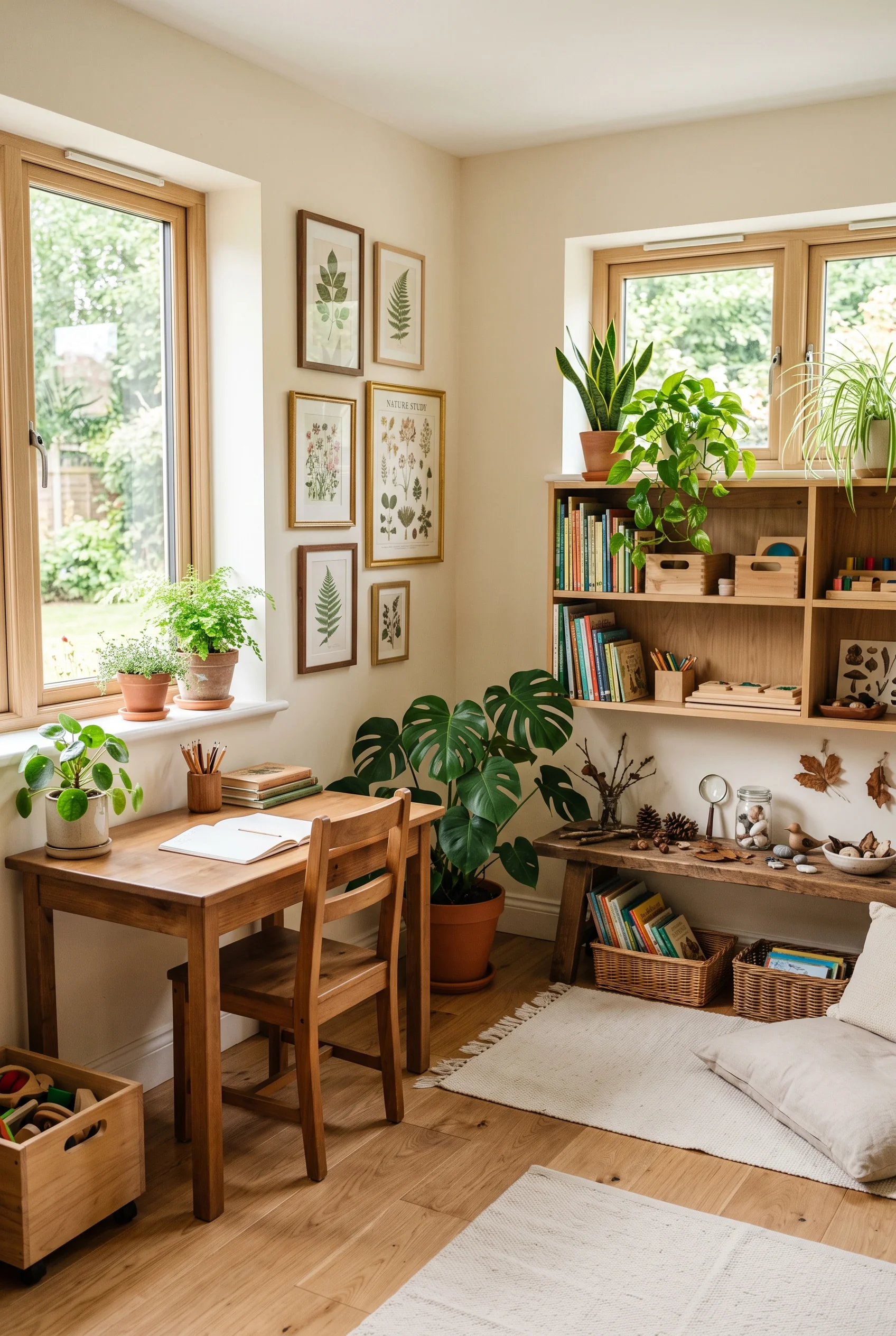
Green plants, botanical studies, and collected natural objects bring warmth to neutral homeschool room decor. Natural wood and woven textures add another gentle layer without competing with colorful school supplies.
Keep plants away from busy work surfaces, and choose varieties carefully for children and pets. A small nature shelf can hold leaves, stones, or seasonal observations gathered during walks. Its contents change with current science studies, giving the room a quiet connection to life outside.
Finishing Layers for a Warm, Flexible Room
Lighting and textiles shape how comfortable a room feels during long lessons. Flexible materials also help the space adapt as children gain new skills. None of these finishing layers needs to be elaborate or expensive. Their value lies in making everyday learning feel easier and more welcoming.
Soft Light for Darker Afternoons
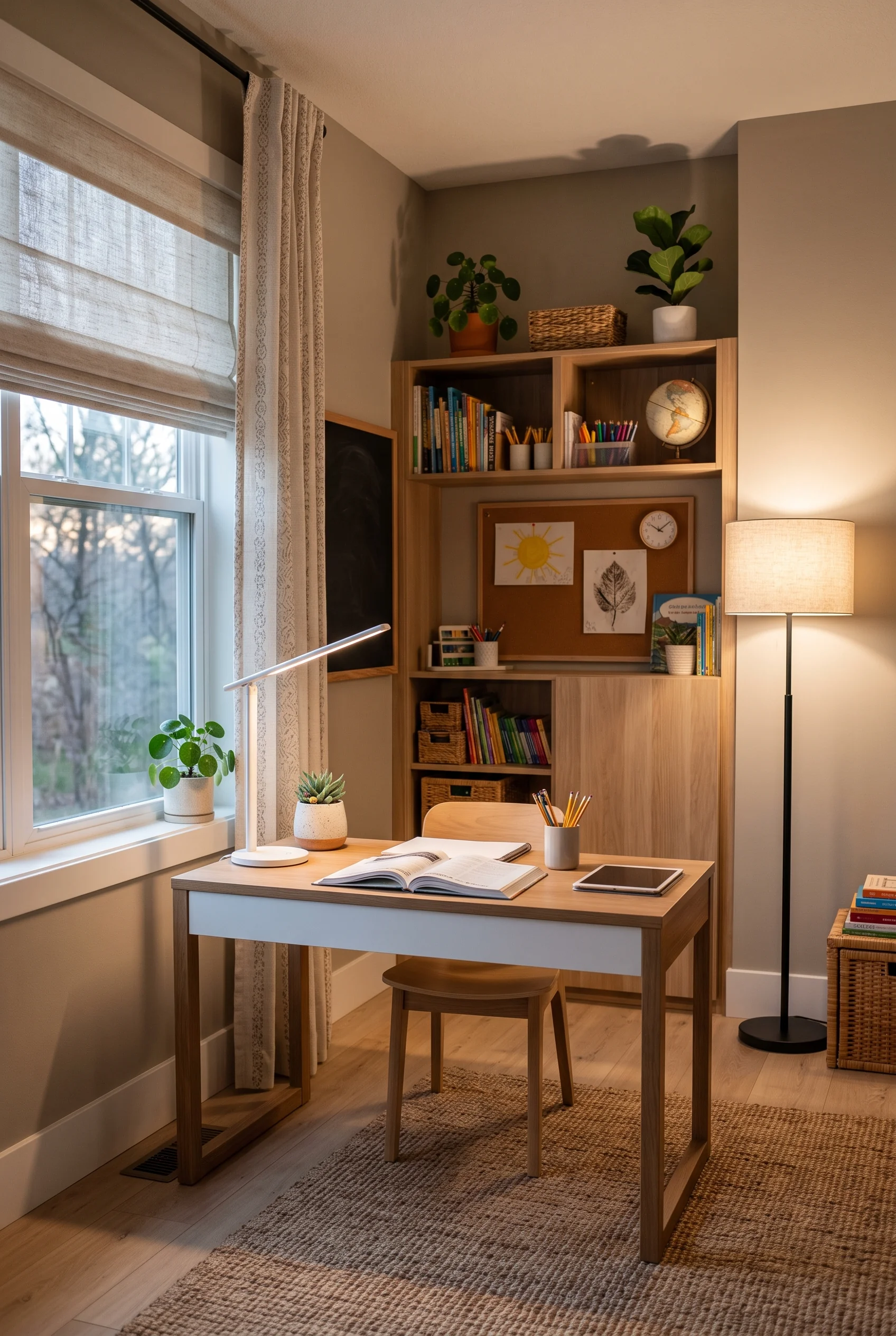
Natural light feels lovely, but it rarely supports every part of the school day. A ceiling fixture, adjustable desk lamp, and reading light provide comfortable layers without relying on one harsh source.
Warm or neutral bulbs can still offer enough brightness for writing and detailed work. Window coverings should soften glare while preserving daylight. As the afternoon fades, the room remains inviting rather than suddenly dim or overly bright.
A Washable Rug That Grounds Lessons
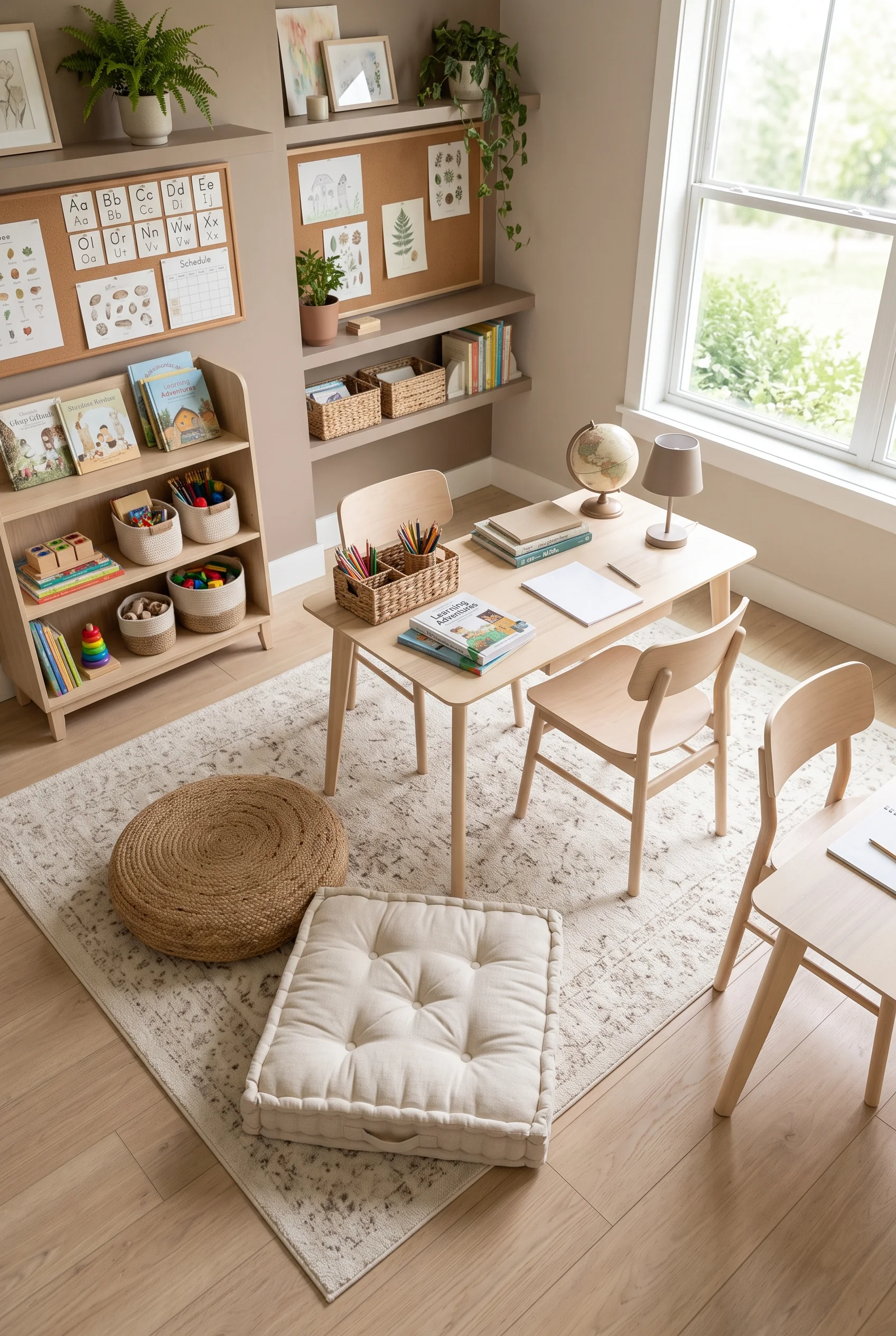
A low-pile washable rug softens the learning area and provides a comfortable place for reading or floor lessons. Subtle patterns and mid-tone colors are forgiving between cleanings without making the room feel visually busy.
The rug should be large enough to define the zone without interfering with desk chairs. A non-slip pad keeps it secure, while flat edges reduce tripping. Underfoot, that gentle layer makes the room feel more settled and less like a temporary workstation.
Purposeful Materials at a Child’s Level
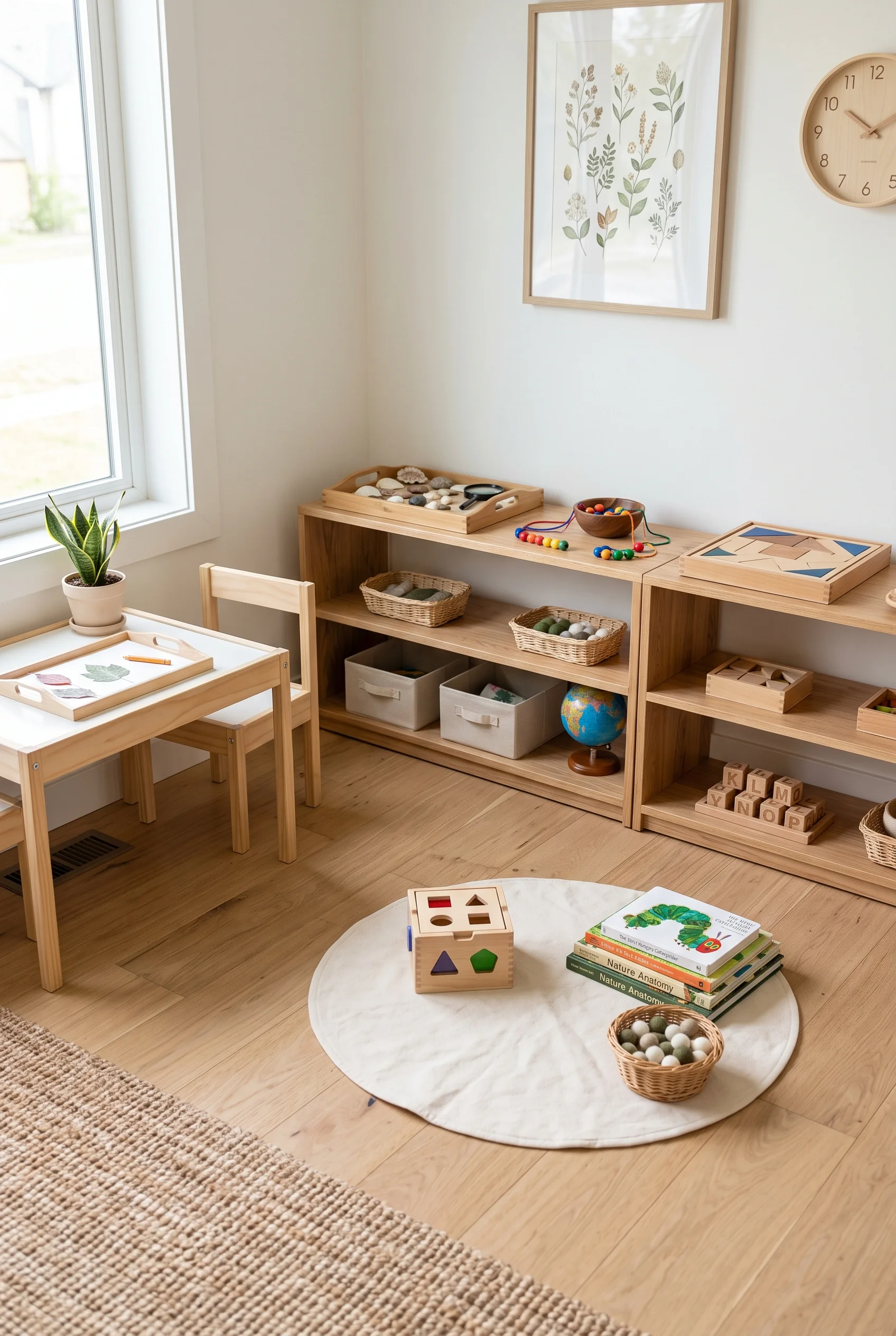
A limited selection of activities on low shelves encourages independent choice. Trays and baskets keep each activity complete, making it clear how to carry materials and return them.
Child-sized furniture and open floor space allow children to participate with confidence. Rotate materials according to current skills and interests rather than leaving every resource available. The quieter selection gives each activity more presence and keeps the room from feeling overloaded.
A Polished Learning Room on a Real Budget
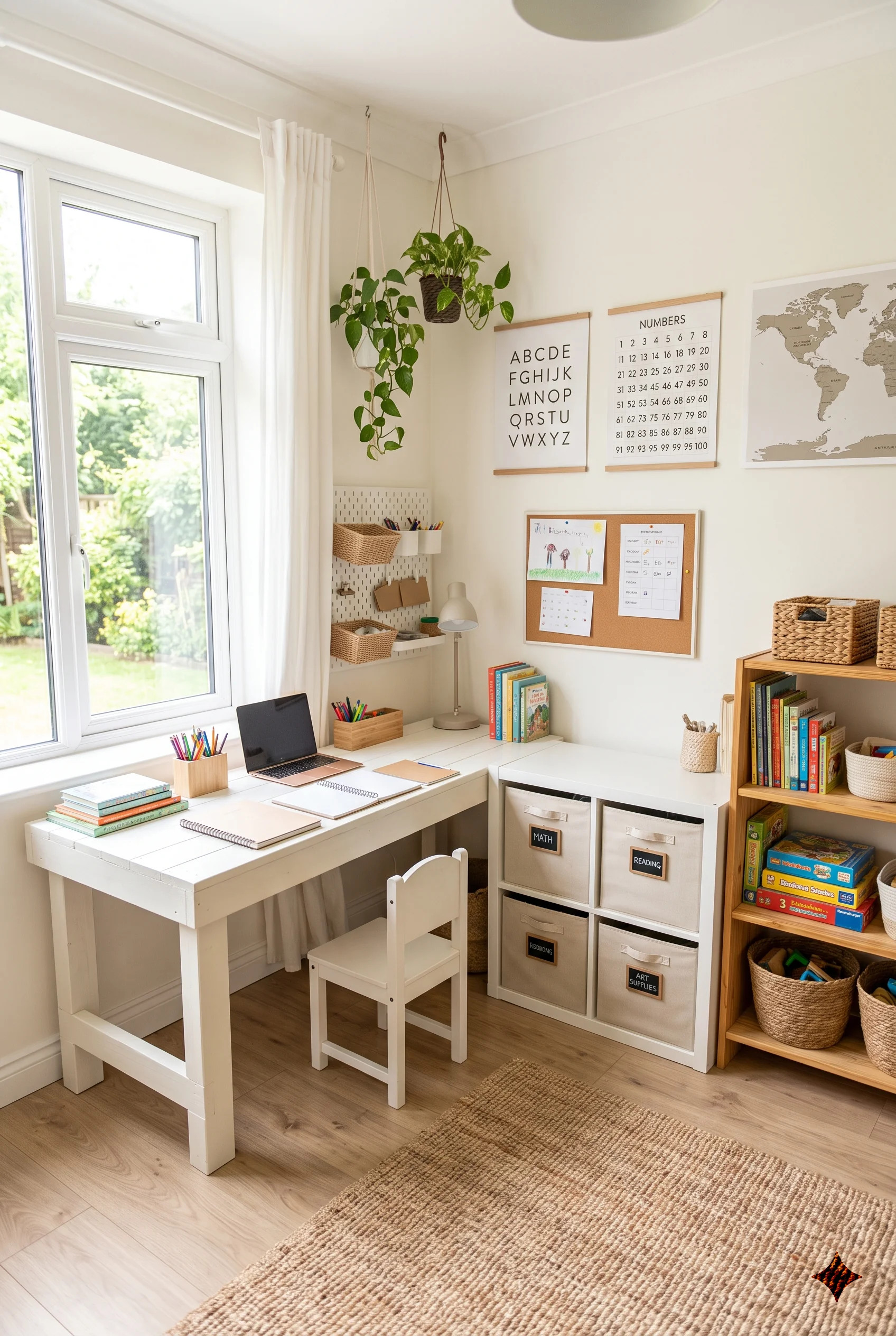
Homeschool room ideas on a budget often start with furniture you already have. A dining chair, basic shelf, kitchen cart, or file holder can take on a new role without a major purchase.
Matching bins and printable labels bring consistency to mixed pieces. Spend first on a comfortable work surface, supportive seating, and useful lighting. Simple organization will serve the family longer than elaborate decor, and the room can gain personality gradually as routines become clearer.
A Learning Space That Grows With Your Family
A successful homeschool room is not measured by its size, its budget, or how closely it resembles a carefully staged classroom. It works because the layout supports the way your family learns. Books are easy to reach, supplies have dependable homes, and children can move between focused work and quieter moments without unnecessary friction.
Start by noticing the biggest frustration in your current routine. If the table disappears beneath paper, begin with curriculum files or a rolling cart. If concentration is difficult, adjust the workstations or soften the visual palette. A dim reading corner may simply need a lamp and a cushion. One thoughtful change can make the whole day feel more manageable.
Choose the homeschool room ideas that fit your actual home rather than trying to recreate every detail at once. A closet nook can be just as useful as a dedicated room. A dining table can hold meaningful lessons and still return to family meals each evening.
As your children grow, their books, schedules, and need for independence will change. Let the space change with them. For printable resources that can support a simpler routine, explore Guides & Printables. Begin with one realistic idea, live with it for a while, and build from what genuinely helps.