33 Montessori Toy Storage Ideas for a Calm and Organized Playroom
If your playroom feels like it’s constantly being overtaken by toys, you’re not alone. The good news? A calmer, more organized space doesn’t require endless bins or complicated systems. Montessori-inspired toy storage focuses on simplicity, accessibility, and thoughtful organization, helping children play more independently while making everyday cleanup easier.
The beauty of the Montessori organization is that everything has a purpose and a place. Open shelves, child-height storage, and carefully curated toy displays create a space that feels inviting, not overwhelming. The result is a playroom that’s both functional for kids and visually calming for the rest of your home.
Explore these 33 Montessori toy storage ideas for a calmer, more organized playroom.
DISCLOSURE: Some of the links below are affiliate links. If you choose to purchase through these links, we may earn a small commission at no cost to you.
1. Use Low Open Shelving for Easy Toy Access
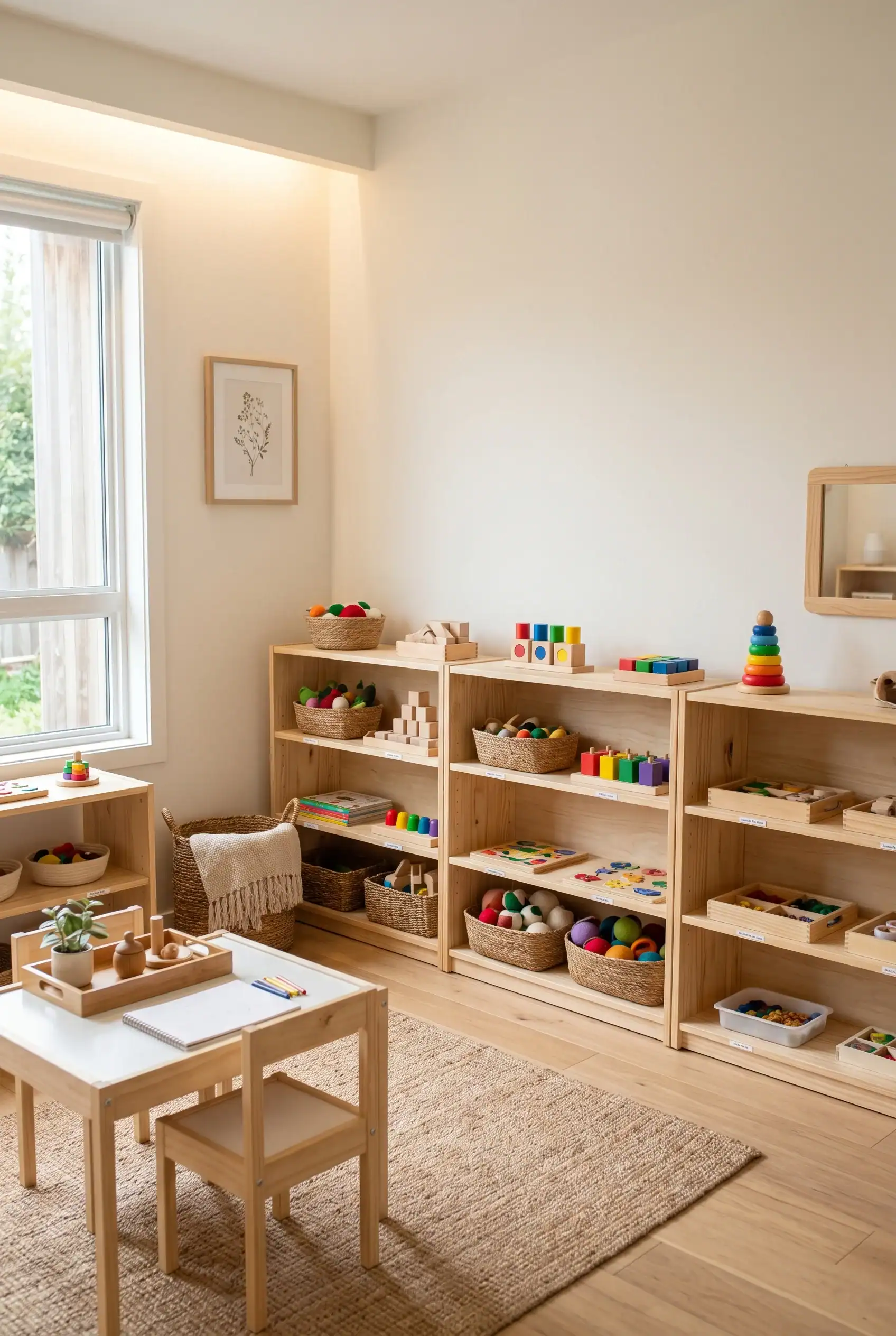
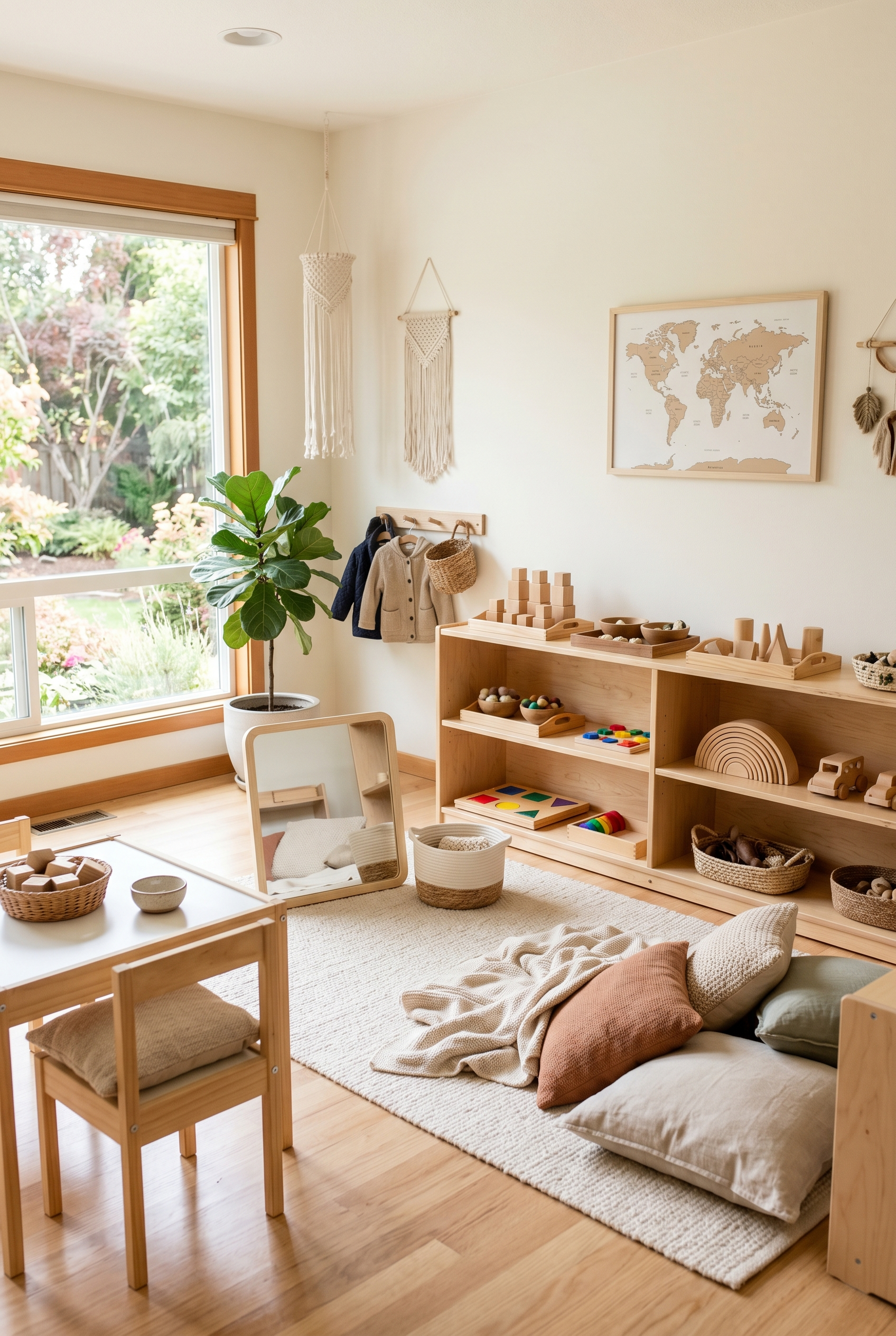
Low open shelving is one of the simplest ways to create a Montessori-inspired playroom. Keeping toys visible and within easy reach encourages children to make independent choices during play and return items when they’re finished. Pair shelves with baskets or trays to create a calm, organized setup that’s both functional and easy to maintain.
2. Choose Storage That Grows With Your Child
The best Montessori storage solutions can adapt as your child’s needs change. A combination of open shelving, baskets, and cubbies makes it easy to organize everything from toddler toys to books and learning materials. Versatile storage pieces help create a playroom that stays functional and organized for years to come.
3. Display a Curated Selection of Toys
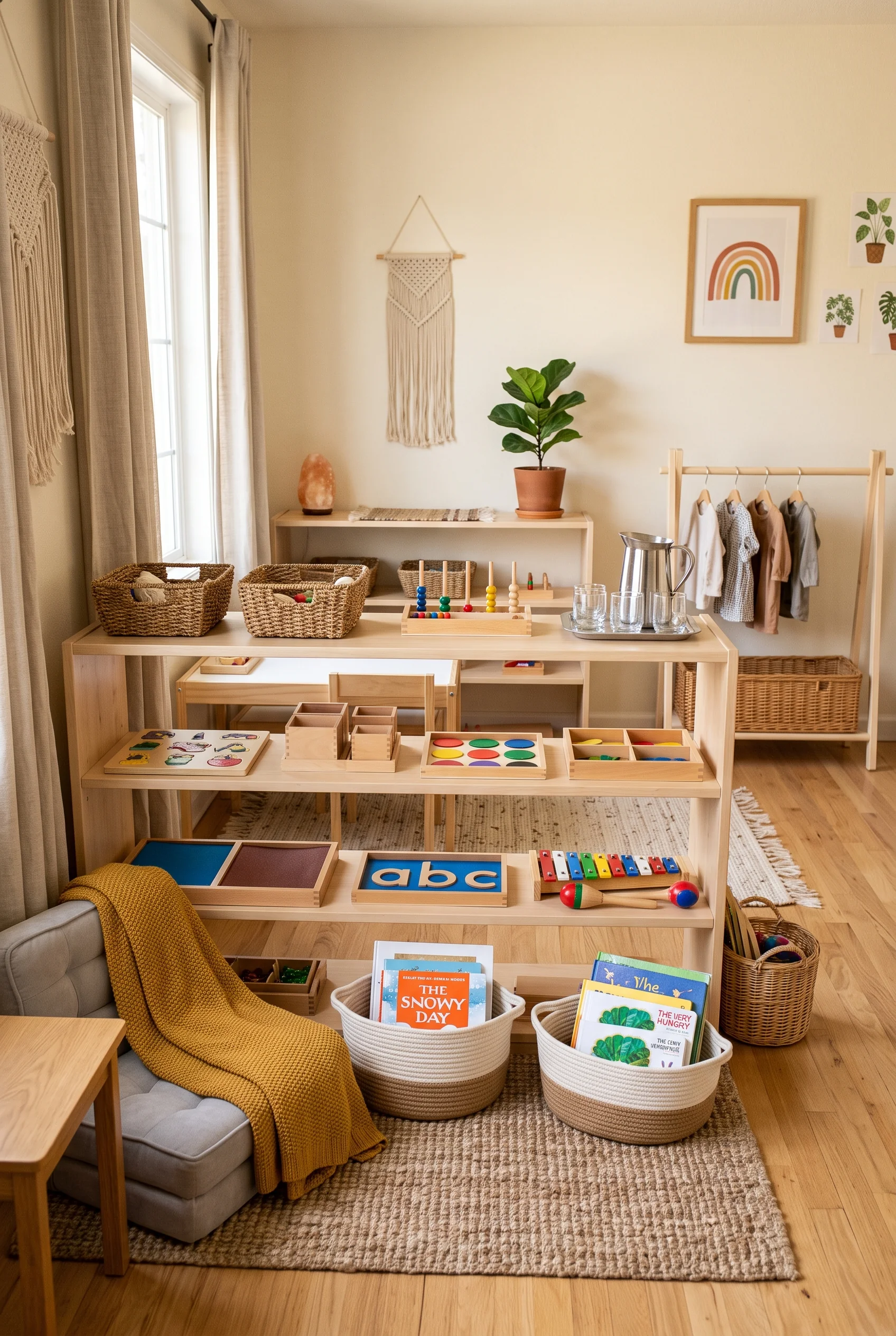
Open shelving makes it easy for children to see, choose, and return toys independently. Instead of storing everything in large bins, display a small selection of toys, books, and learning materials on low shelves so children can access them without help. This approach reduces visual clutter while encouraging more focused play.
4. Organize Toys with Woven Baskets and Bins
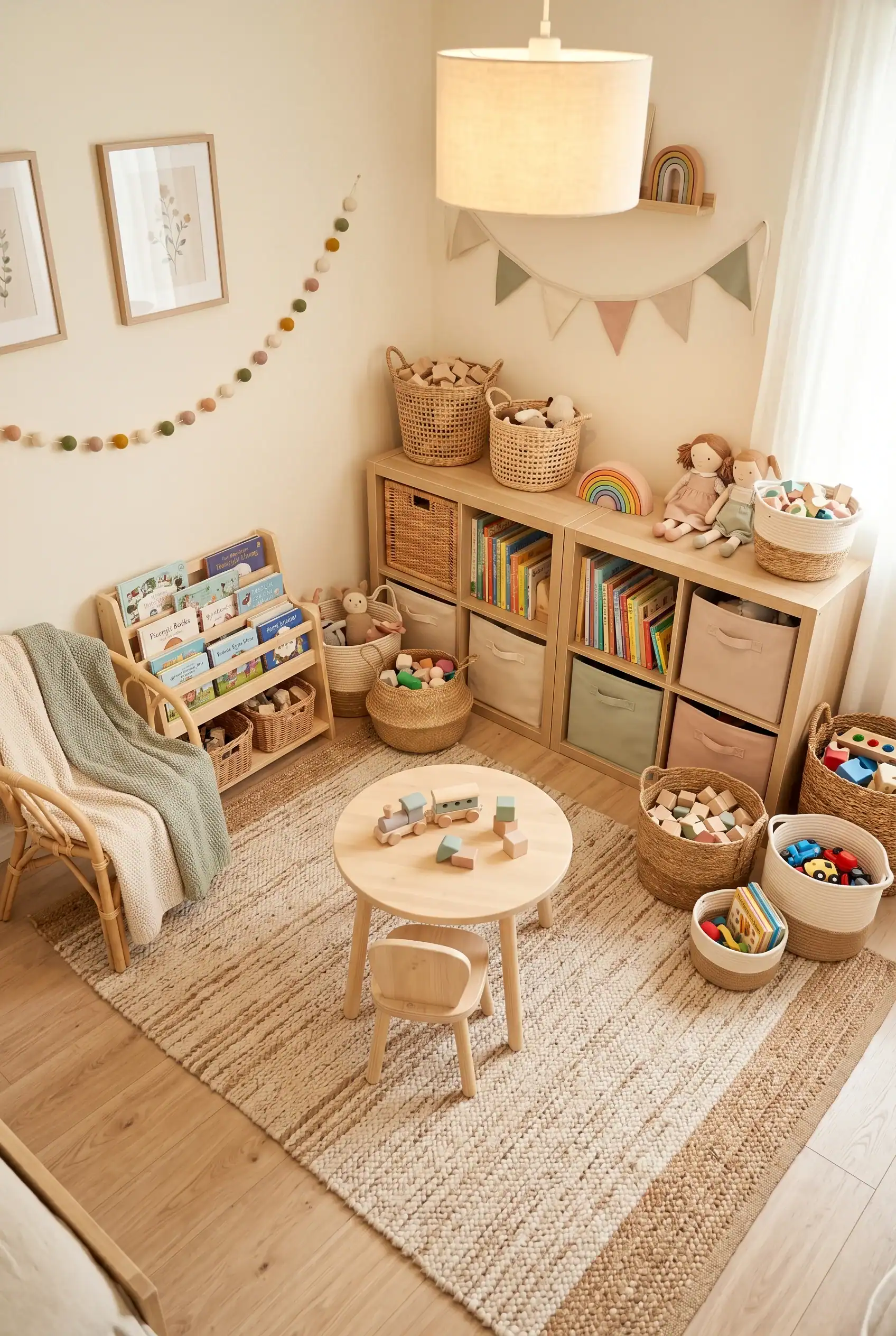
Baskets and bins make it easy to sort toys by type while keeping the playroom looking neat and inviting. Use open baskets for frequently used items and fabric bins for toys you don’t need to display. Mixing storage styles adds warmth and texture while keeping everything organized.
5. Rotate Toys to Keep Playtime Fresh
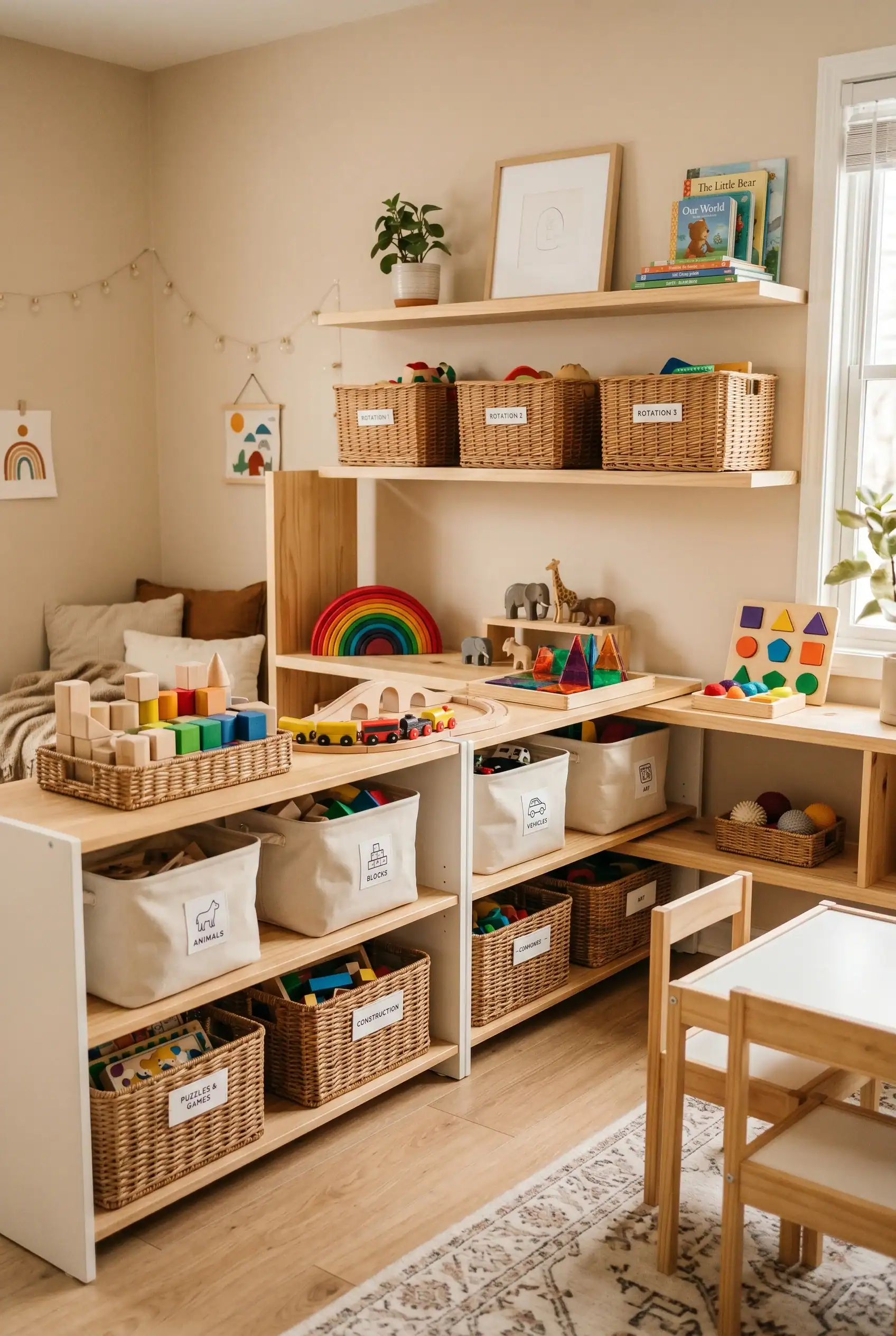
Toy rotation helps prevent shelves from feeling overcrowded while keeping children engaged with what they have. Instead of displaying every toy at once, store some items out of sight and swap them in periodically. A smaller, thoughtfully curated selection often leads to more focused play and a less cluttered playroom.
6. Add Child-Sized Tables and Chairs
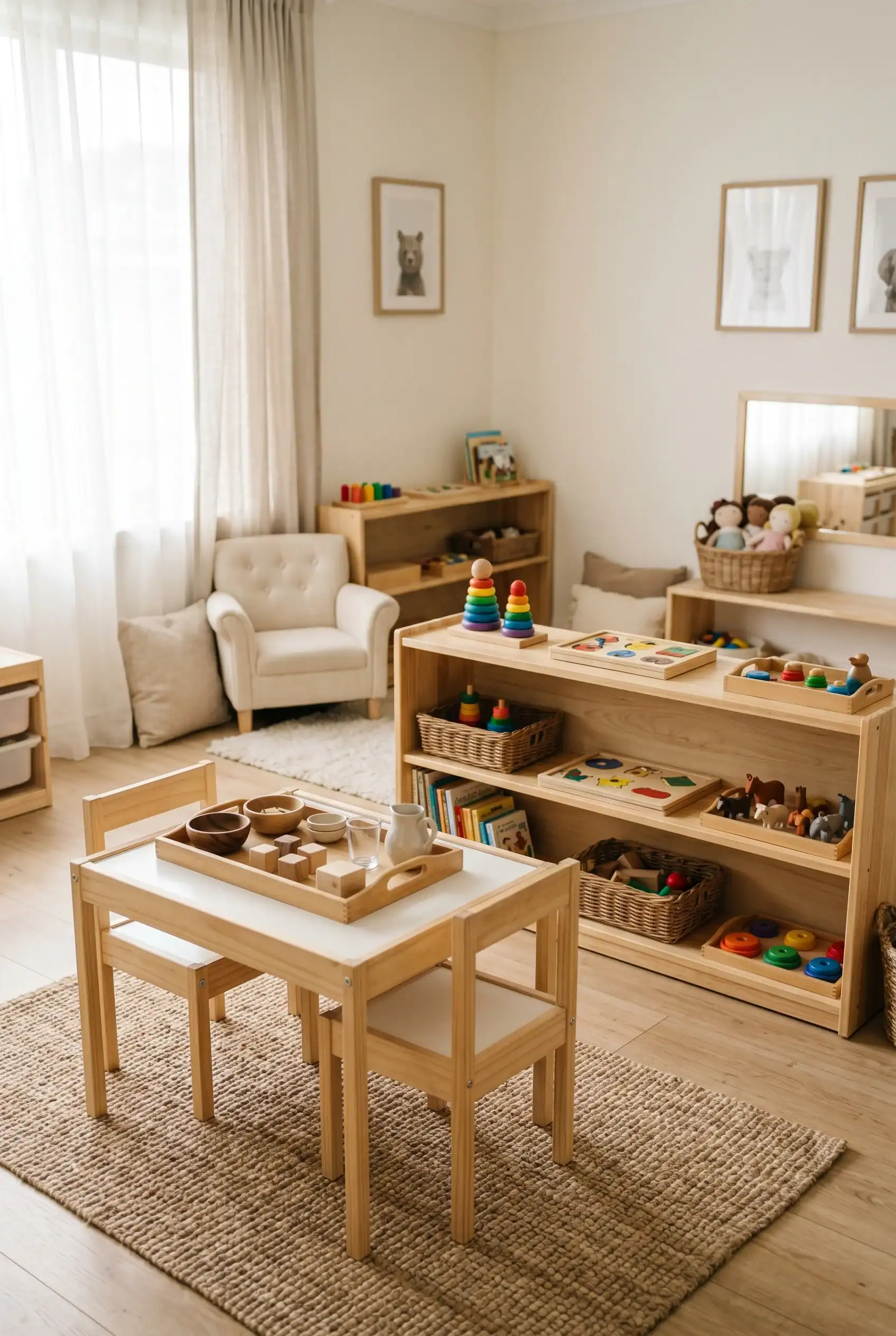
Child-sized furniture helps create a playroom that feels comfortable, accessible, and easy to navigate. A small table and chairs give children a dedicated space for puzzles, art projects, sensory activities, and independent play. When furniture fits their size, children can participate more confidently in both play and cleanup routines.
7. Maximize Storage with Tall Shelving
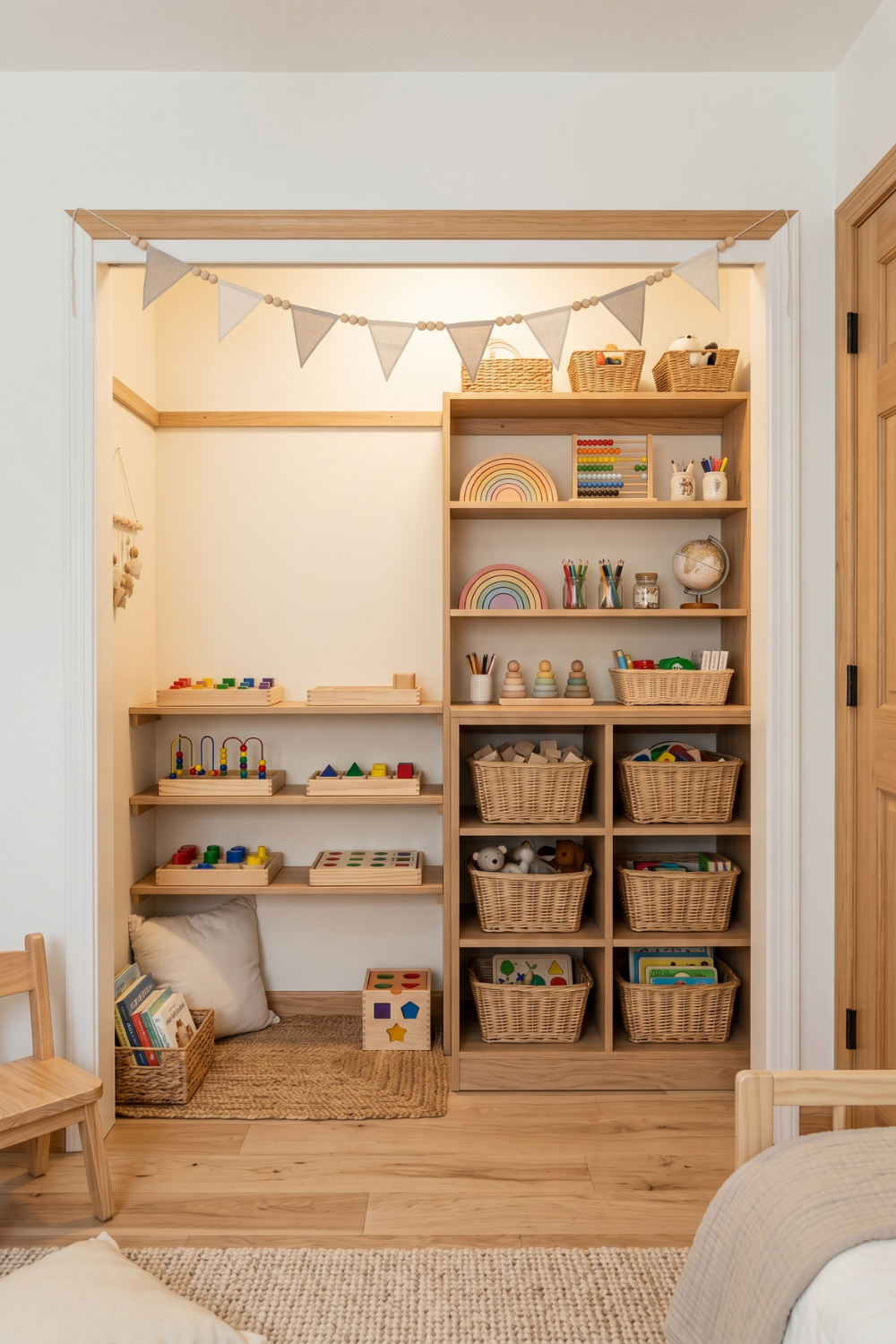
Tall shelving helps you use your space without sacrificing floor area for play. By combining open shelves with baskets and bins, you can keep toys organized while maintaining a clean, uncluttered look. This approach works especially well in small playrooms where every inch counts.
8. Embrace a Less-Is-More Approach
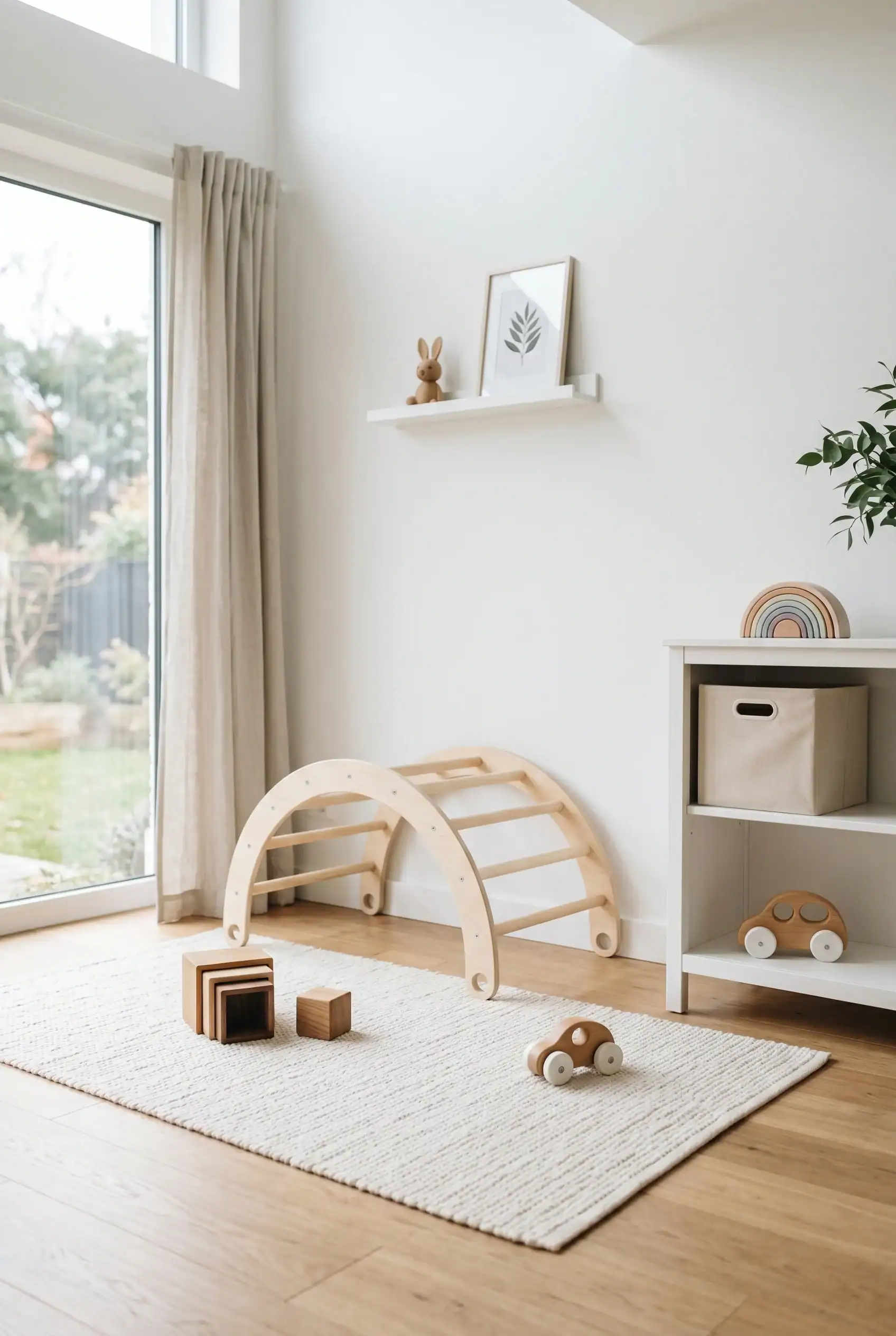
A thoughtfully curated playroom doesn’t need to be filled with toys. Limiting the number of items on display can help reduce visual clutter and encourage more focused, creative play. By prioritizing a few high-quality toys and leaving plenty of open space, you can create a playroom that feels calm, inviting, and easy to maintain.
9. Layer Natural Textures Throughout the Room
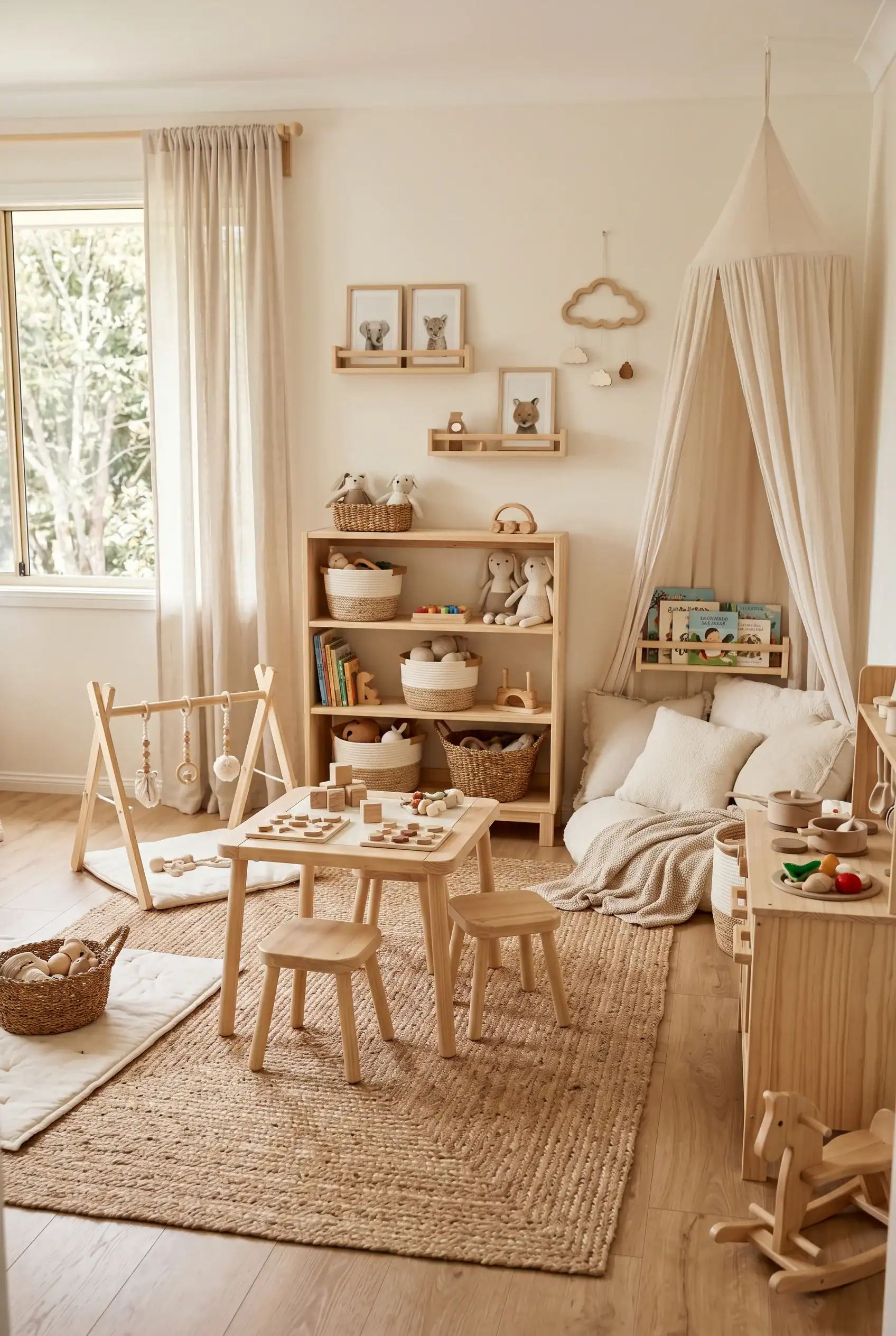
Natural materials help create the warm, calming atmosphere that Montessori-inspired spaces are known for. Incorporate wood furniture, woven baskets, cotton textiles, and natural-fiber rugs to add texture while keeping the room cohesive. These timeless materials bring warmth to the space and pair beautifully with organized toy storage.
10. Create Dedicated Zones for Play and Learning Activities
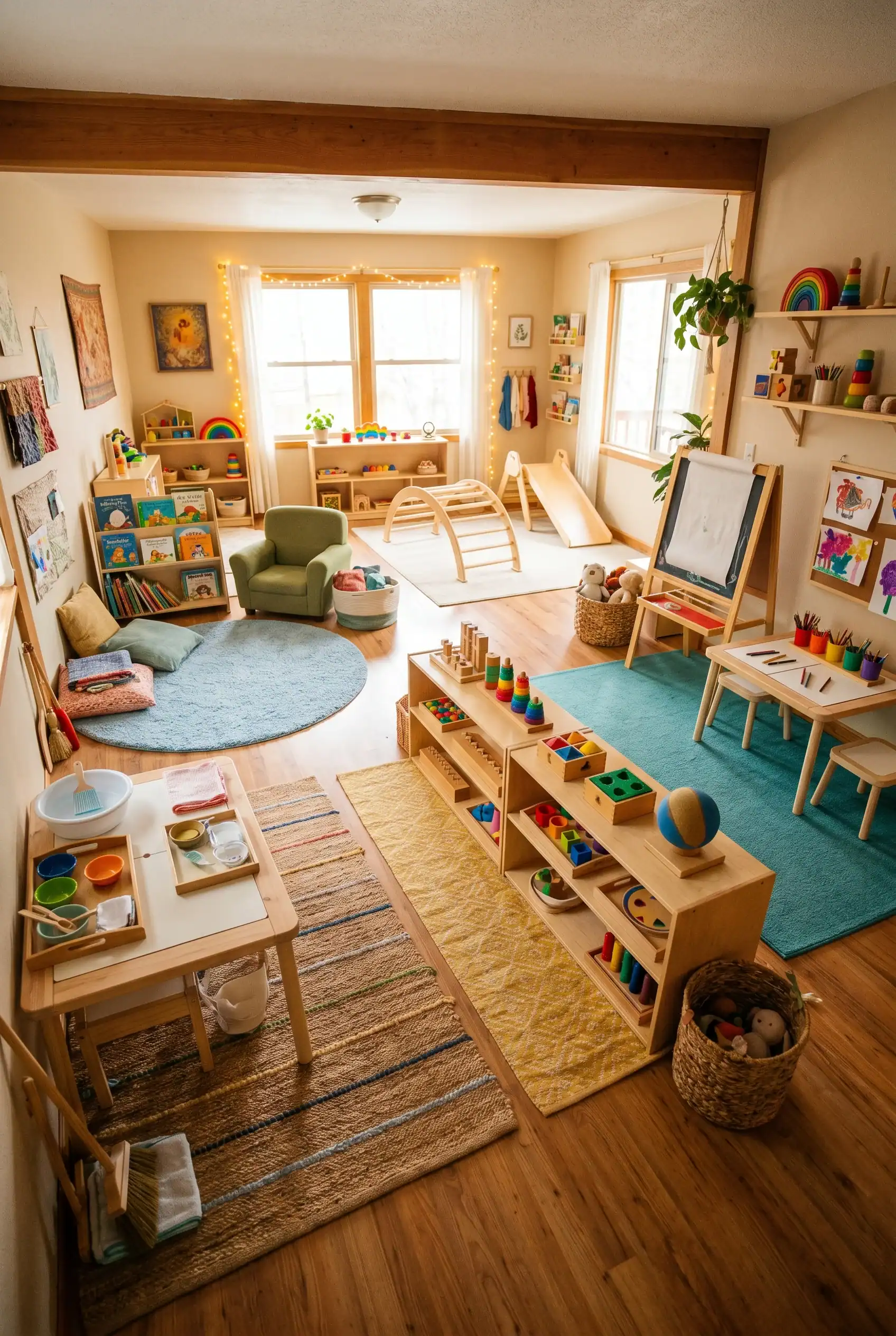
Organizing your playroom into dedicated activity zones can make the space feel more functional and easier for children to navigate. Consider creating separate areas for reading, art, building, sensory play, or active movement. Rugs, shelving, and furniture placement can help define each zone while keeping the room organized and inviting.
11. Label Toys and Storage Bins
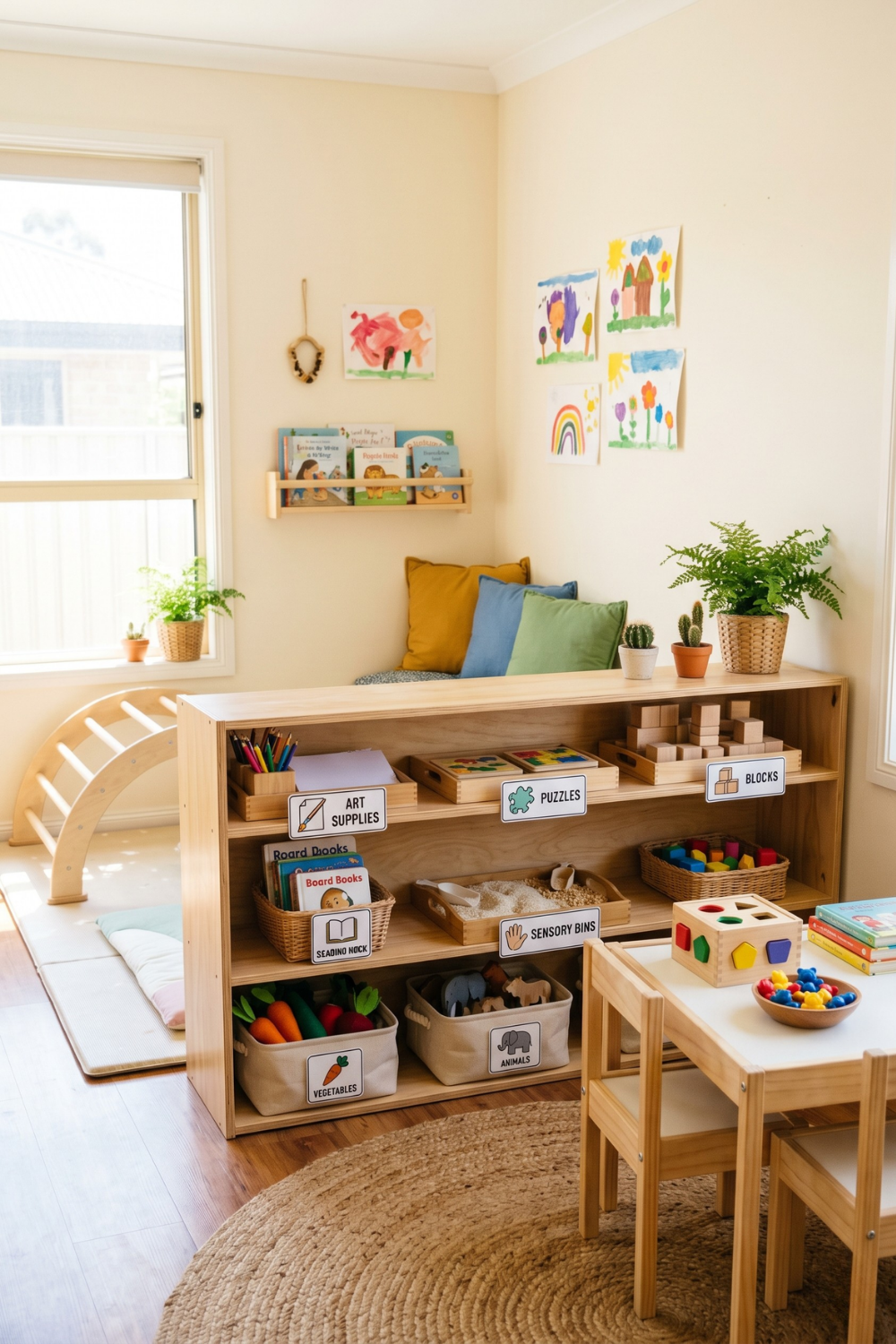
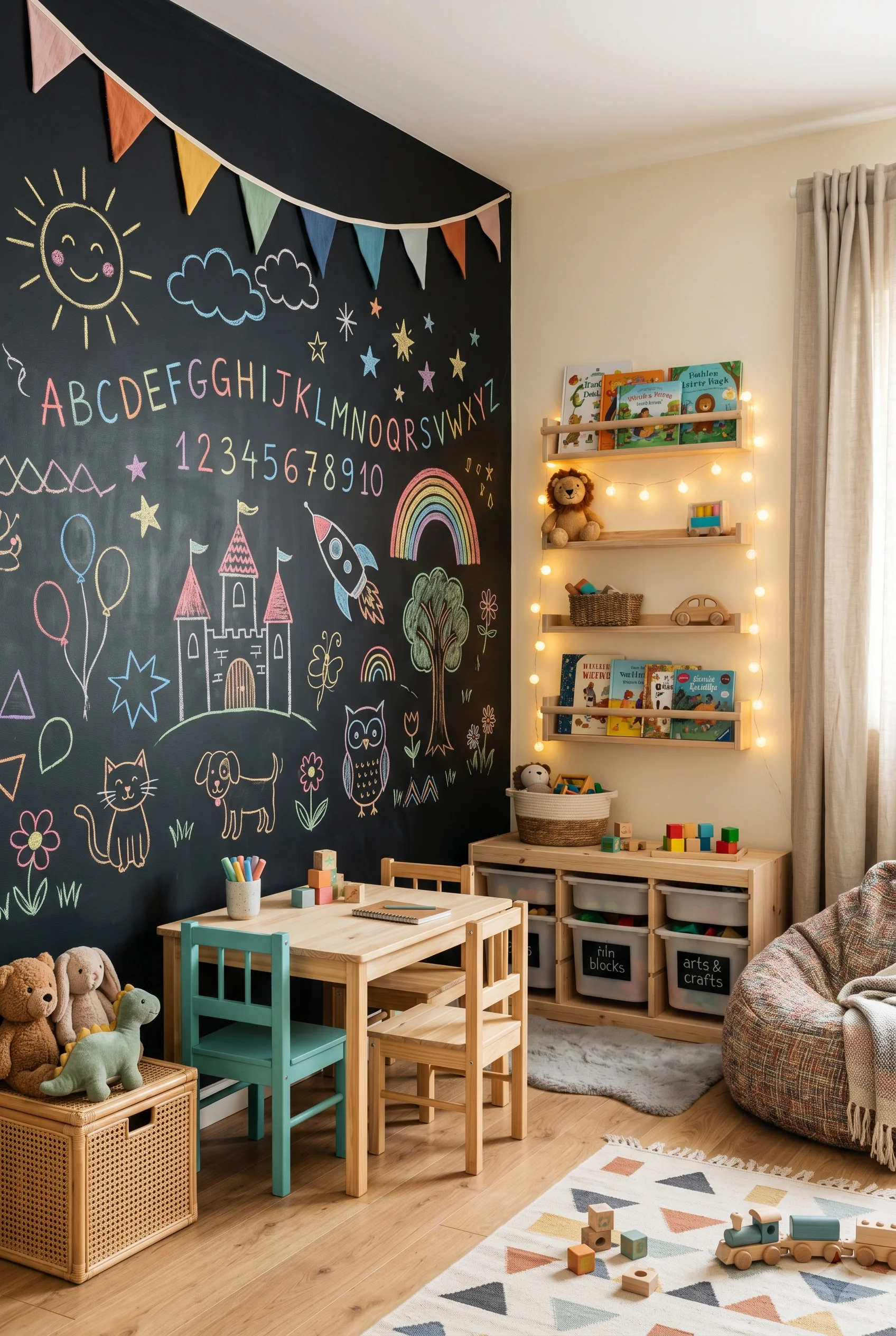
Labels can make a big difference in keeping a playroom organized. Whether you use words, pictures, or a combination of both, clearly labeled bins and baskets help children find what they need and return items to the correct spot. It’s a simple system that encourages independence while making cleanup easier for everyone.
12. Choose Furniture with Built-In Storage
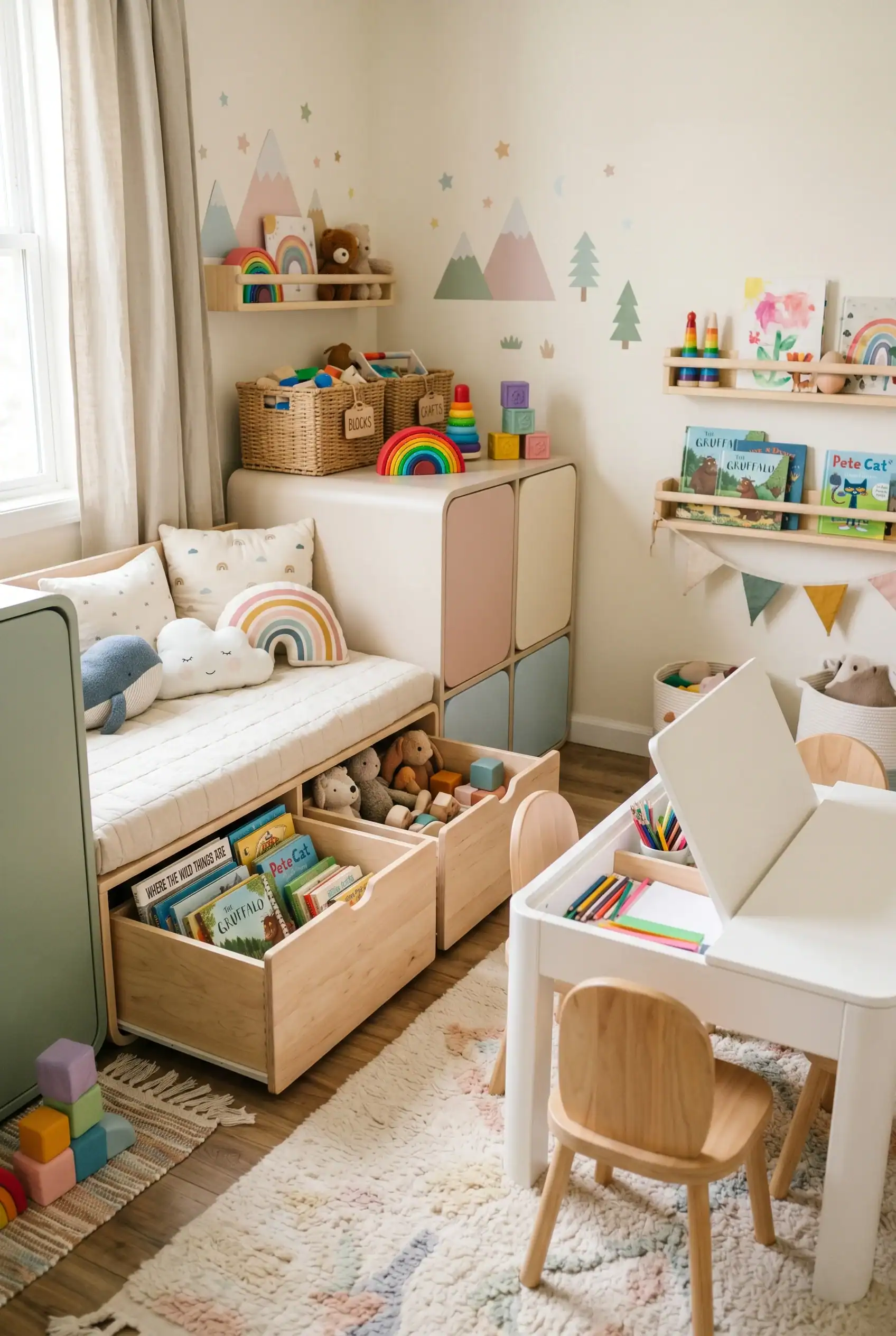
Furniture that doubles as storage can help maximize space while keeping toys organized and easy to access. A storage bench, cubby unit, or table with built-in compartments provides room for books, toys, and supplies without adding extra clutter. These versatile pieces are especially helpful in smaller playrooms where every square foot matters.
13. Use a Neutral Color Palette for a Calmer Feel
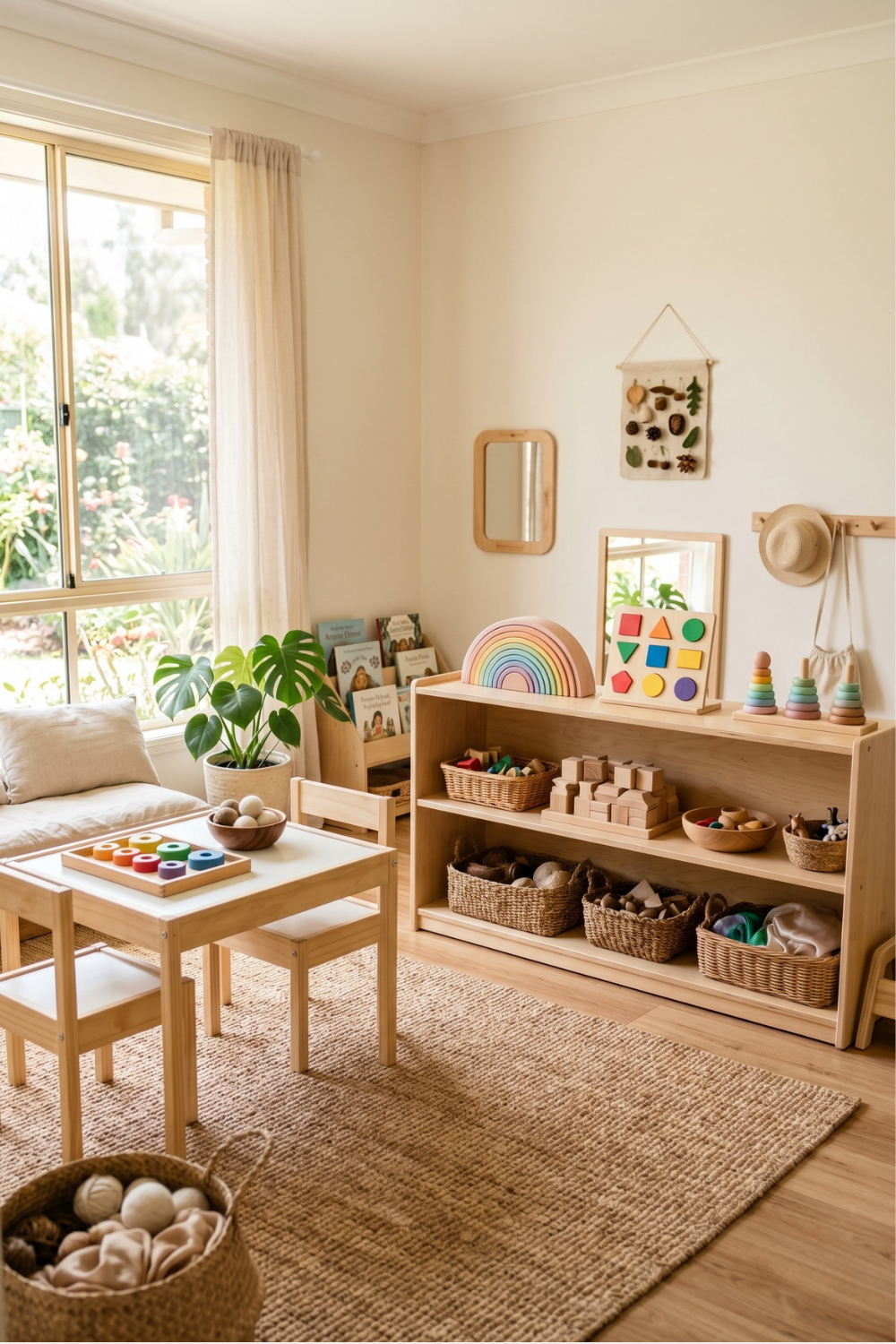
Soft neutrals, natural wood tones, and simple decor can help a playroom feel calm and welcoming. A cohesive color palette reduces visual clutter and lets toys and learning materials take center stage. Combined with organized storage and plenty of natural light, these elements create a space that feels peaceful for both play and relaxation.
14. Use Clear Bins to Keep Toys Visible
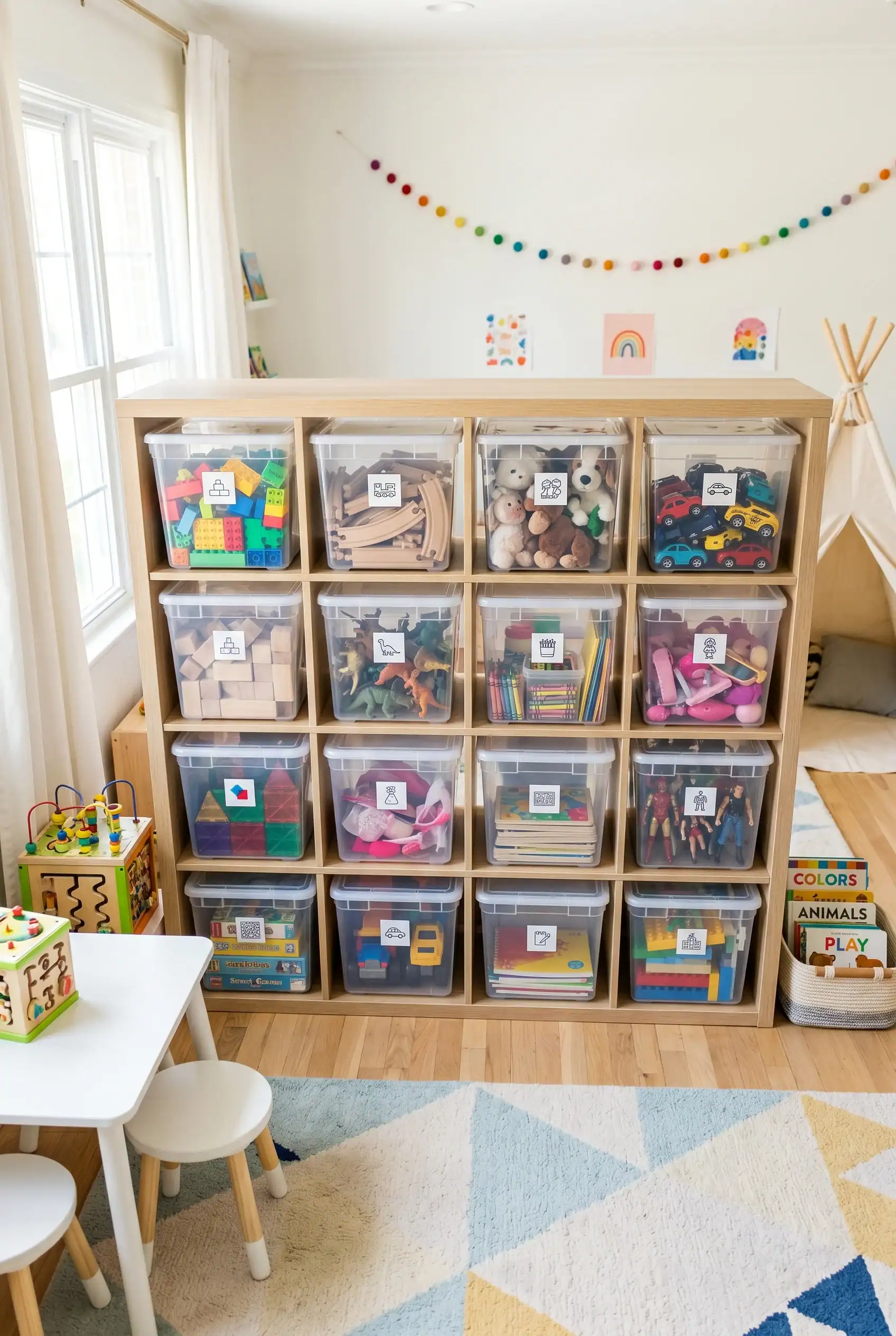
Clear storage bins make it easy for children to see what’s inside without pulling everything out. When toys are visible, kids can find what they need faster and return items to the right spot when they’re finished. Pair transparent bins with simple labels to create an organized system the whole family can maintain.
15. Organize Toys with Rolling Storage Carts
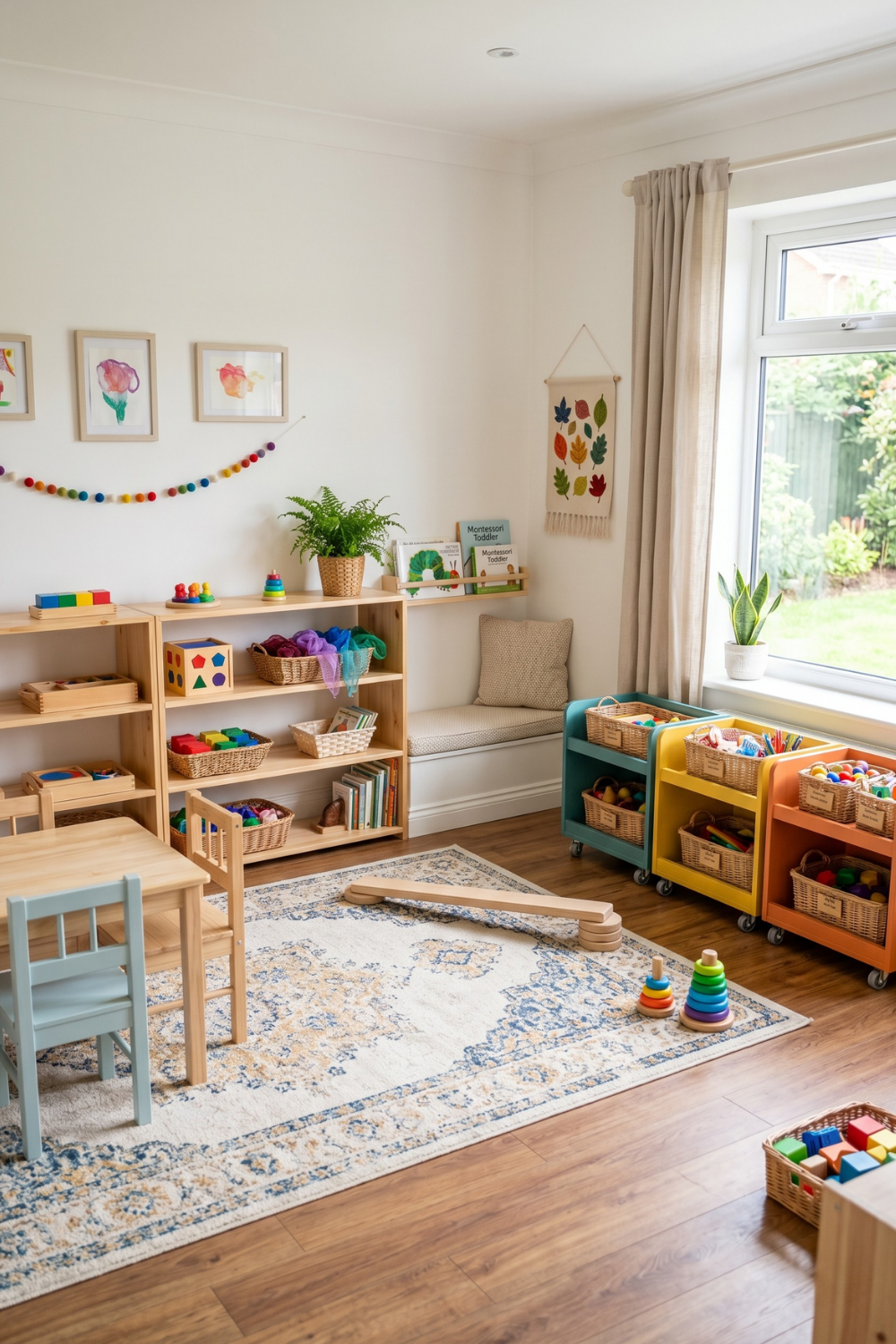
Rolling storage carts make it easy to sort toys by category while keeping everything within reach. You can move them around the room as needed and tuck them neatly against a wall when playtime is over. Using separate carts for different types of toys helps maintain organization without taking up valuable floor space.
16. Create a Cozy Reading Nook
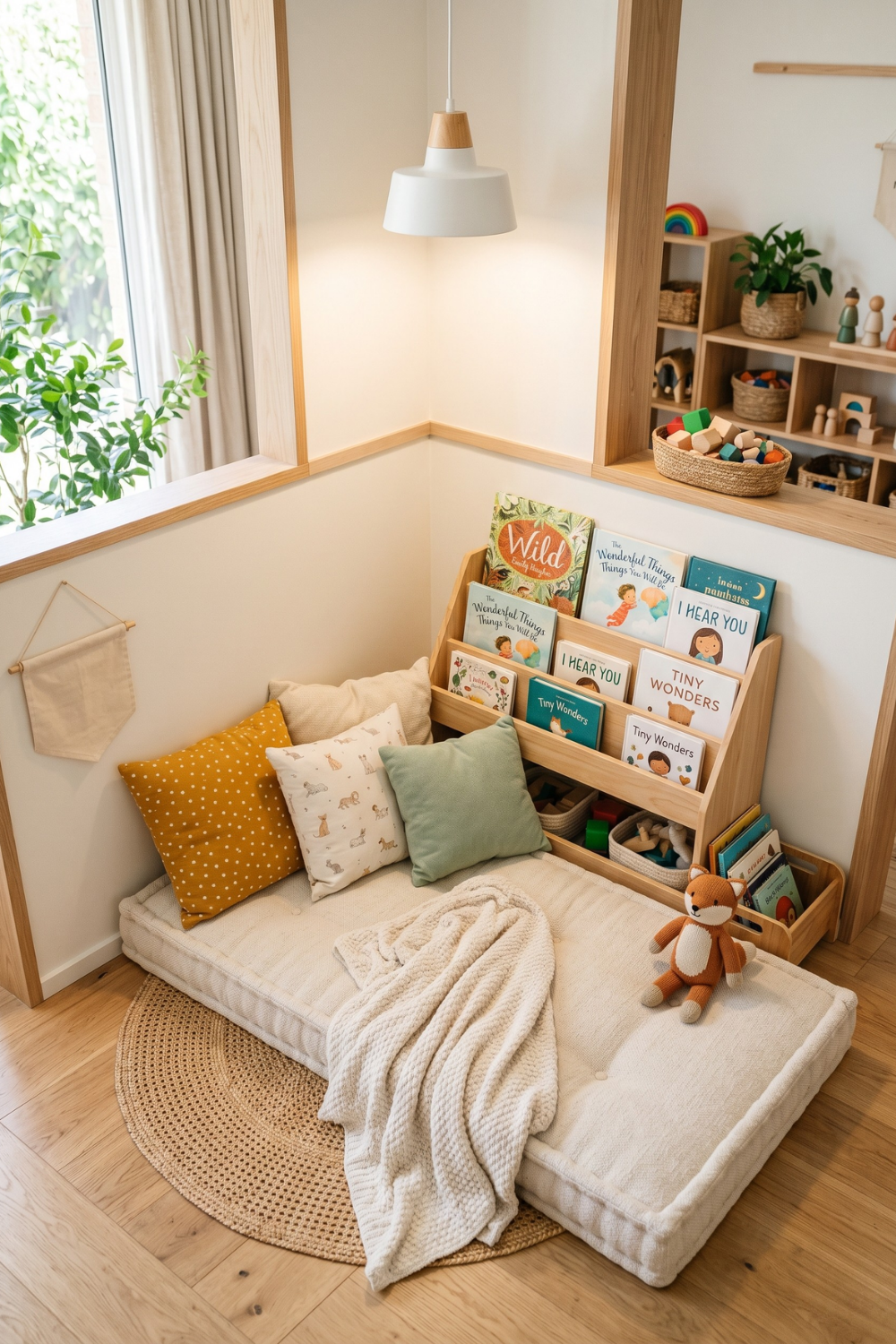
A cozy reading nook gives children a dedicated place to slow down and enjoy books. Floor cushions, soft pillows, and front-facing book displays make stories easy to access while creating an inviting spot for quiet time. Tucking a reading corner into an unused nook or corner can instantly make a playroom feel more thoughtful and functional.
17. Add Soft Seating for Comfortable Floor Play
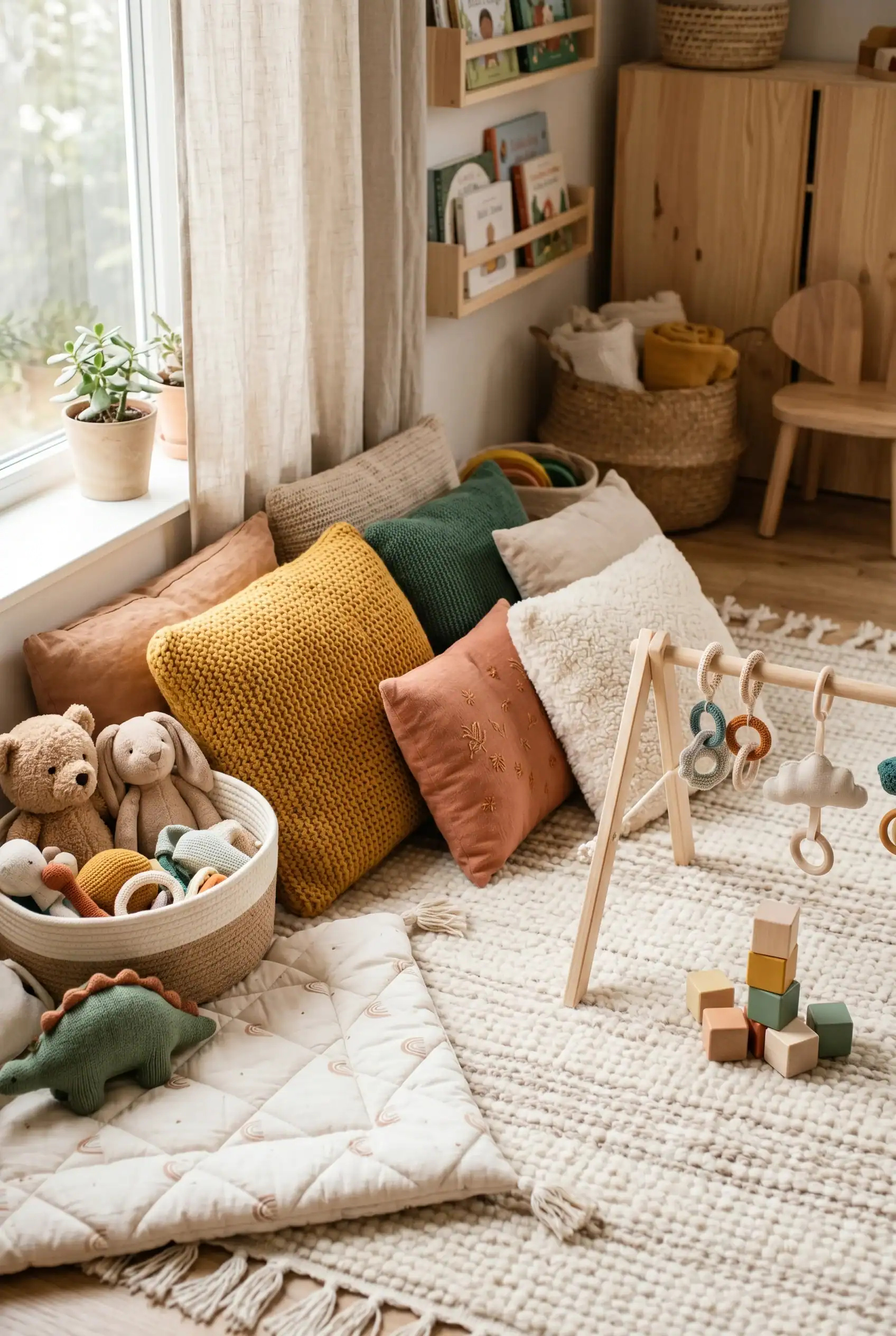
Floor cushions, plush rugs, and padded play mats can make a playroom feel more inviting while creating a comfortable space for everyday play. Soft seating encourages children to settle in with books, toys, and sensory activities while adding warmth to the room. Layering a few cozy elements can make even a simple play area feel welcoming and complete.
18. Add a Storage Bench for Seating and Organization
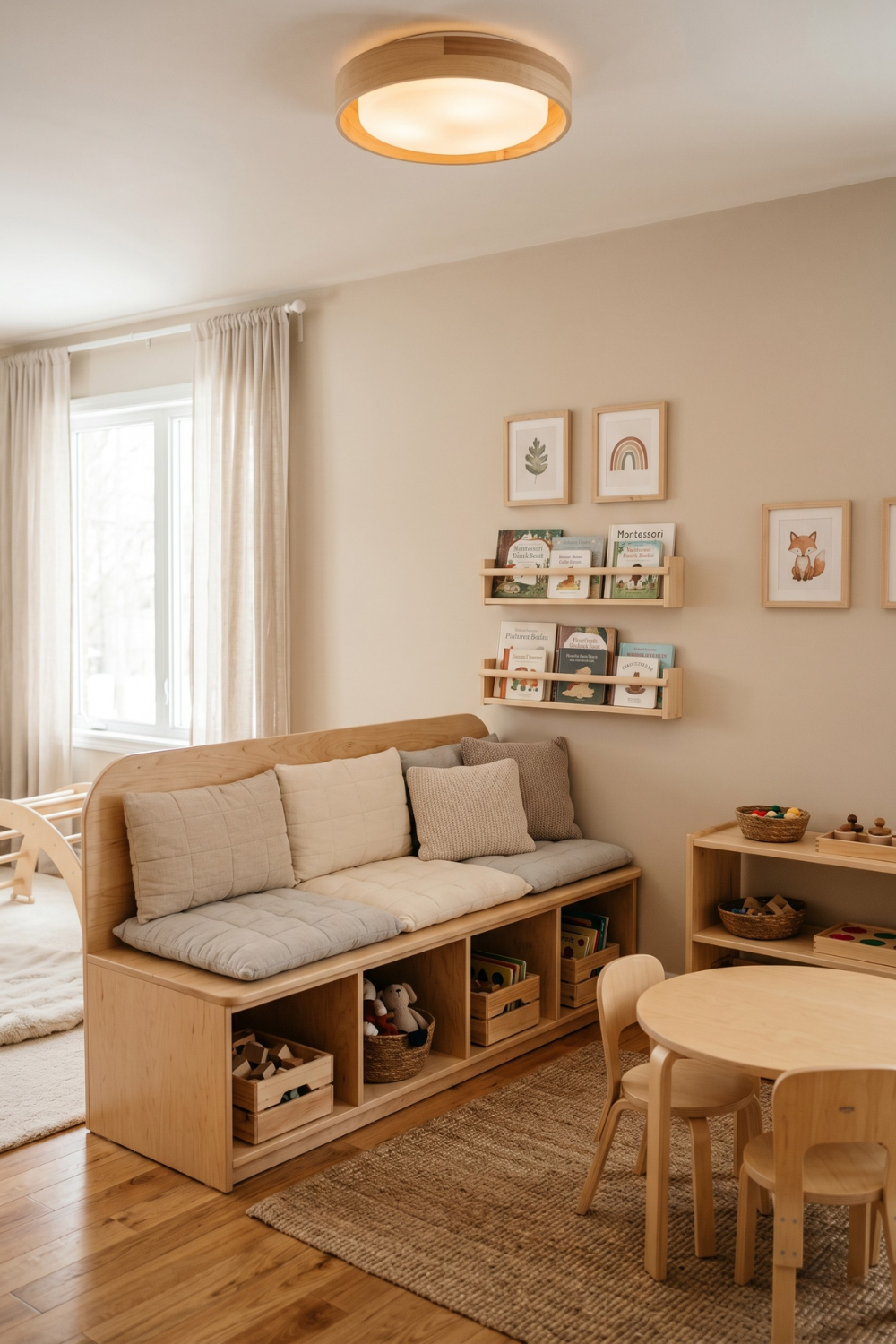
A storage bench is an easy way to add both seating and organization to a playroom. Open cubbies underneath provide a convenient place for books, toys, and baskets, while the cushioned top creates a cozy spot for reading or quiet play. This type of multifunctional storage works especially well in smaller spaces where every piece needs to serve multiple purposes.
19. Display Fewer Toys at a Time
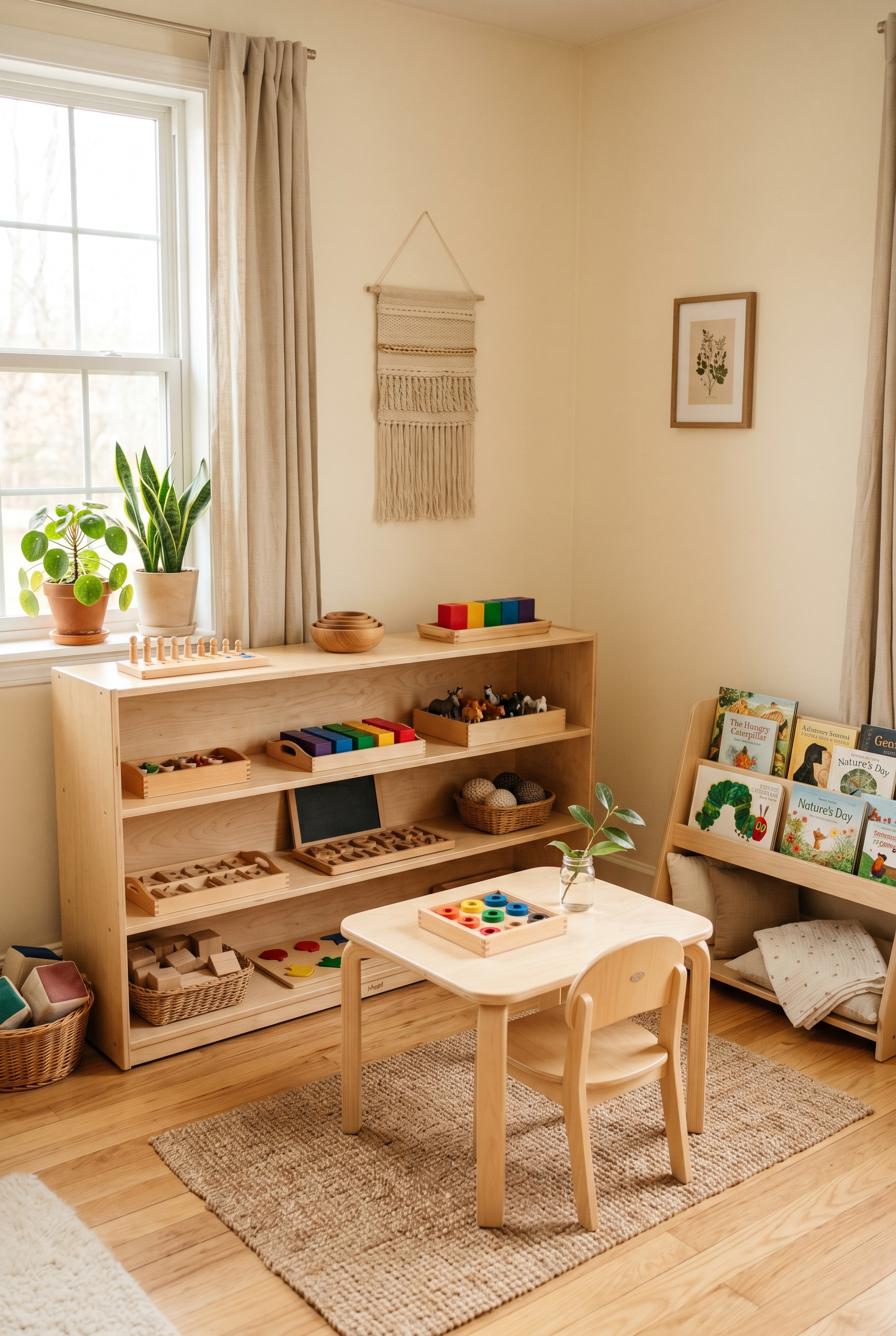
A thoughtfully curated toy display can make a playroom feel calmer and more organized. Instead of filling every shelf, leave space between activities and showcase only a small selection of toys at a time. This approach helps reduce visual clutter, encourages focused play, and makes cleanup much more manageable.
20. Keep Extra Toys Tucked Away with Hidden Storage
Hidden storage can help maintain a calm, clutter-free playroom without getting rid of toys your child still enjoys. Storage benches, ottomans, and under-bed drawers offer convenient places to store larger toys, seasonal items, or activities you don’t use every day. Keeping some toys out of sight can make the room feel more organized while still keeping everything within reach when needed.
21. Use Flexible Storage That Can Grow with Your Family
A playroom’s storage needs change as children grow. Modular shelves, stackable bins, and adjustable storage systems make it easy to reorganize toys, books, and supplies over time. Flexible storage solutions help create a space that adapts to new interests and routines without a complete redesign.
22. Create a Simple Toy Rotation System
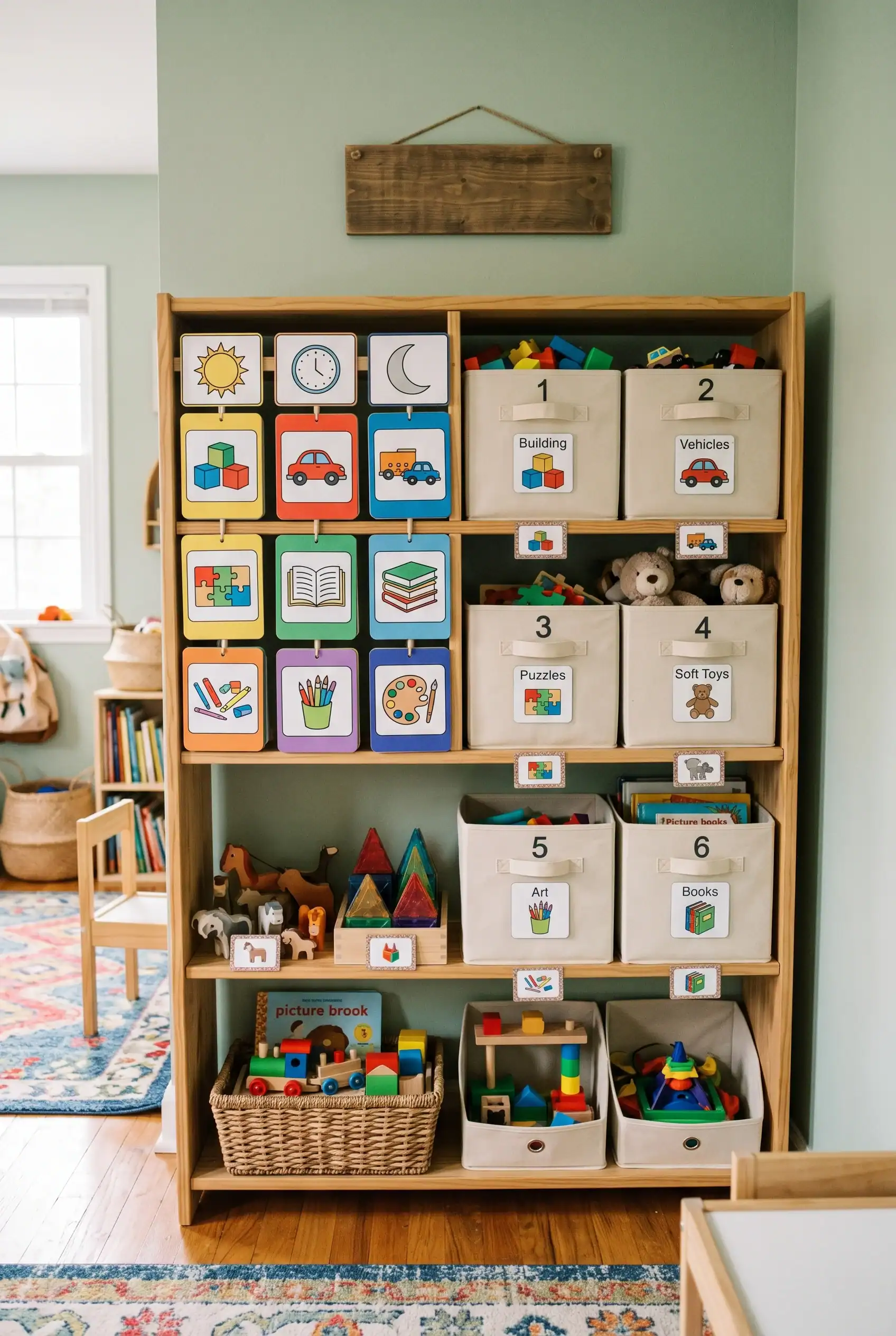
A toy rotation system helps keep playrooms organized without overwhelming children with too many choices. Store some toys out of sight and display only a curated selection on shelves, swapping items every few weeks. Labeled bins and categories make rotations easier to manage while keeping favorite toys organized and accessible.
23. Design the Space for Independence
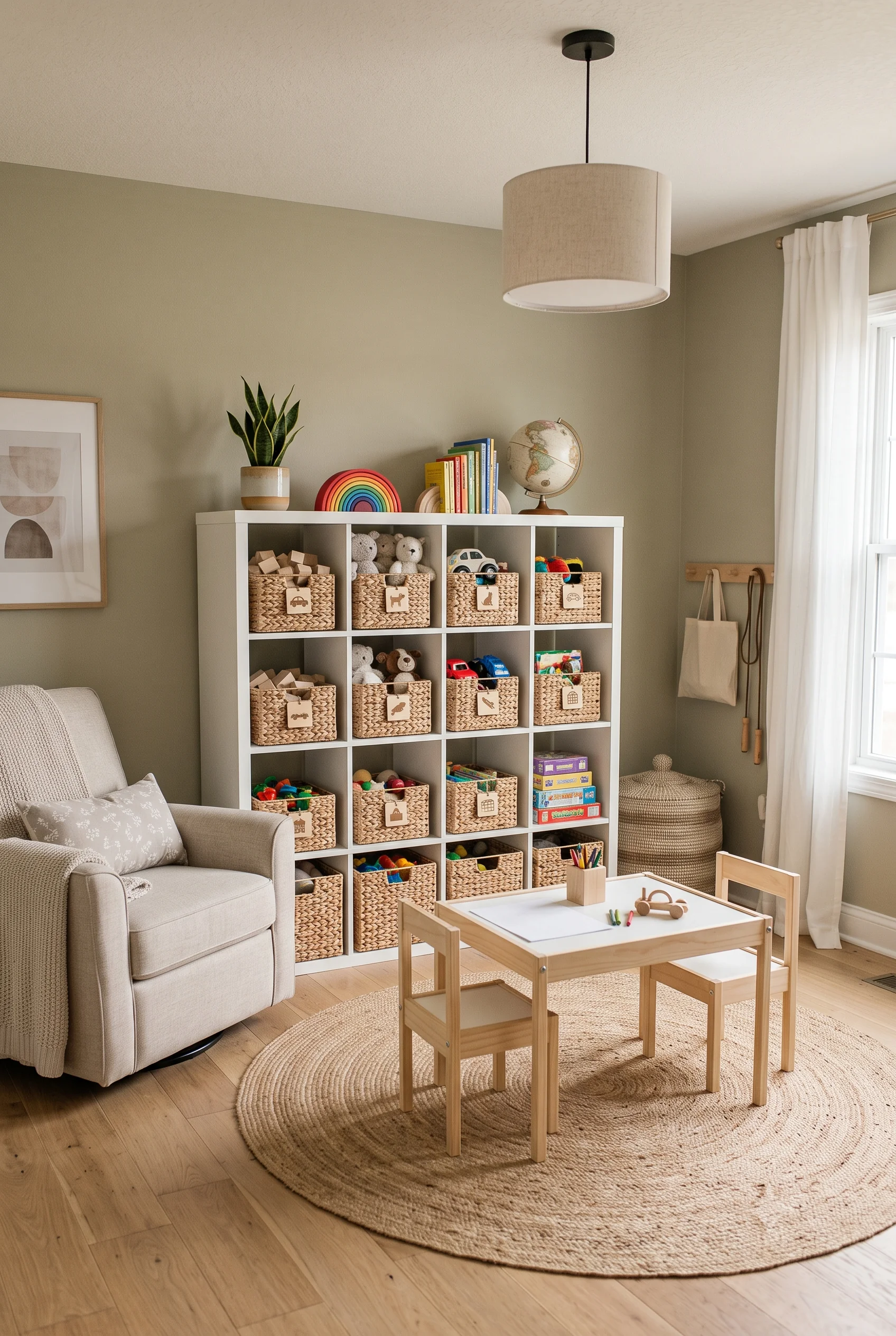
A well-organized Montessori playroom makes it easy for children to access and put away toys on their own. Low shelves, accessible storage, and child-sized furniture encourage independence while helping maintain an organized space. When everything has a designated place, children can help with cleanup and build lasting organizational habits.
24. Give Every Toy a Designated Home
One of the easiest ways to keep a playroom organized is to give every toy a designated place. Whether you use baskets, bins, shelves, or cubbies, assigning a specific home for each item makes cleanup faster and prevents toys from piling up around the room. A simple storage system also helps children learn where items belong, making it easier for them to help keep the space tidy.
25. Create an Organized Art Station
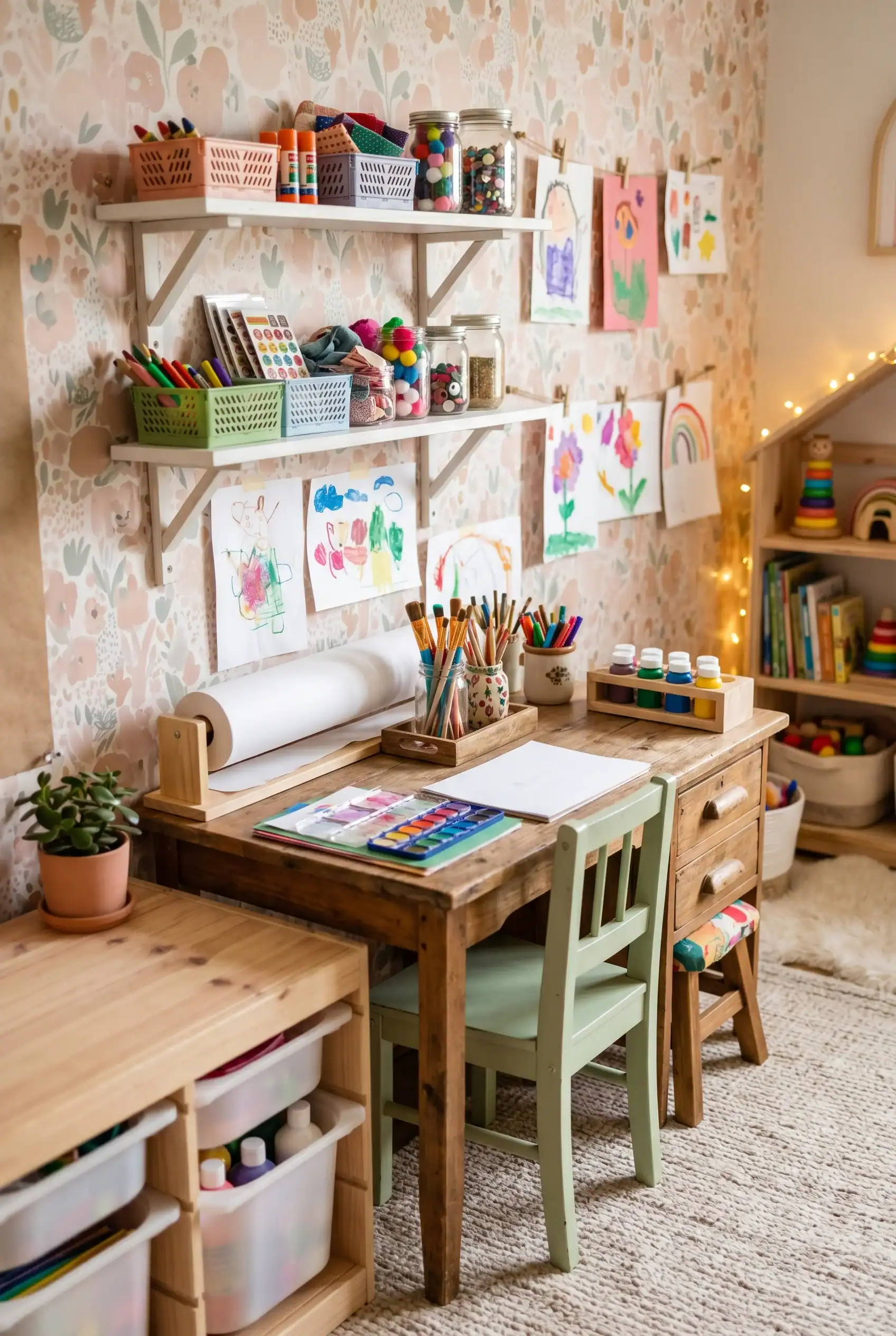
A dedicated art station makes it easier to keep creative supplies organized and ready to use. Store markers, crayons, paint, paper, and craft materials in labeled containers or open bins so children can access them independently. Keeping everything in one designated area helps contain messes, simplifies cleanup, and prevents art supplies from spreading throughout the playroom.
26. Mix Open Shelves with Basket Storage
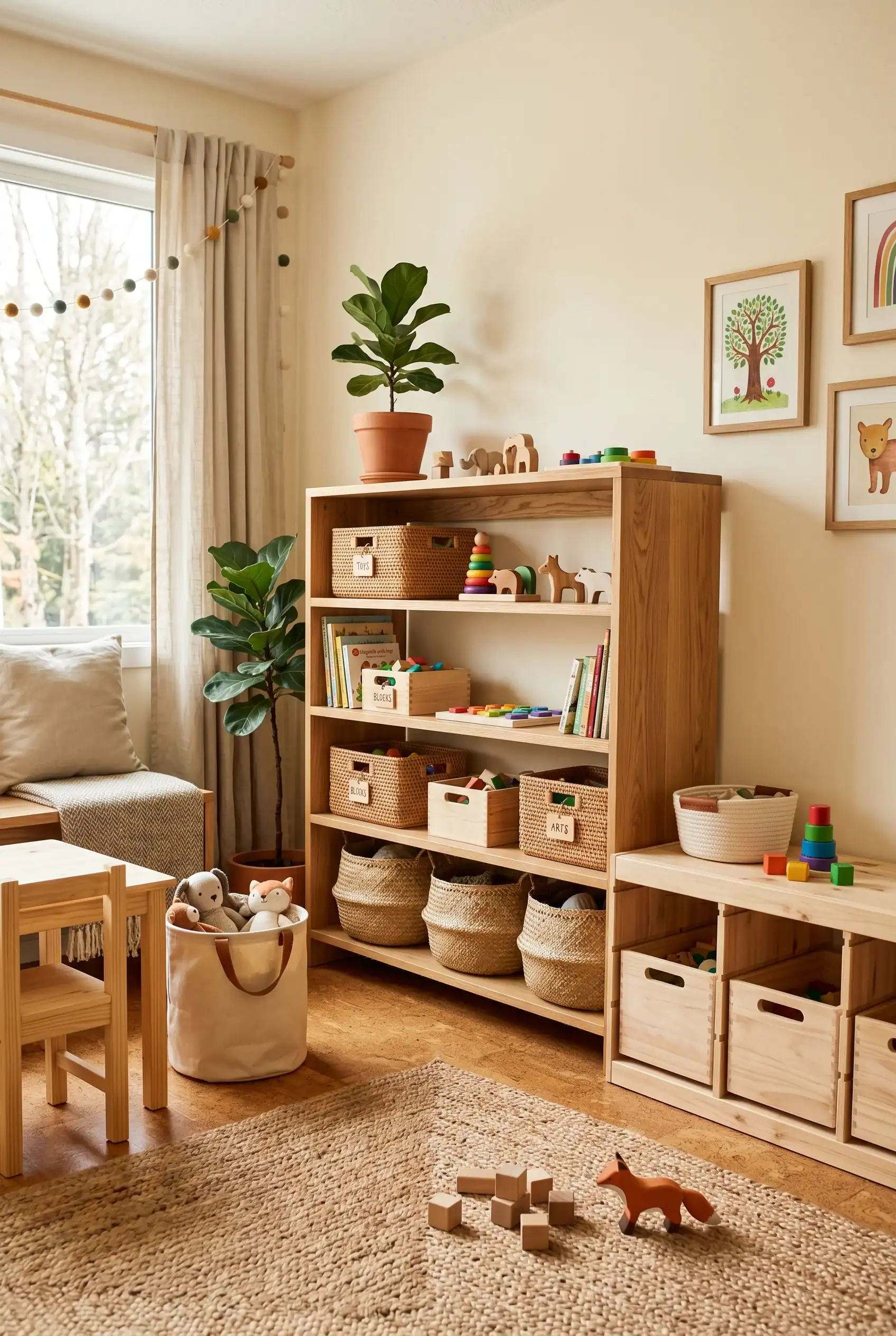
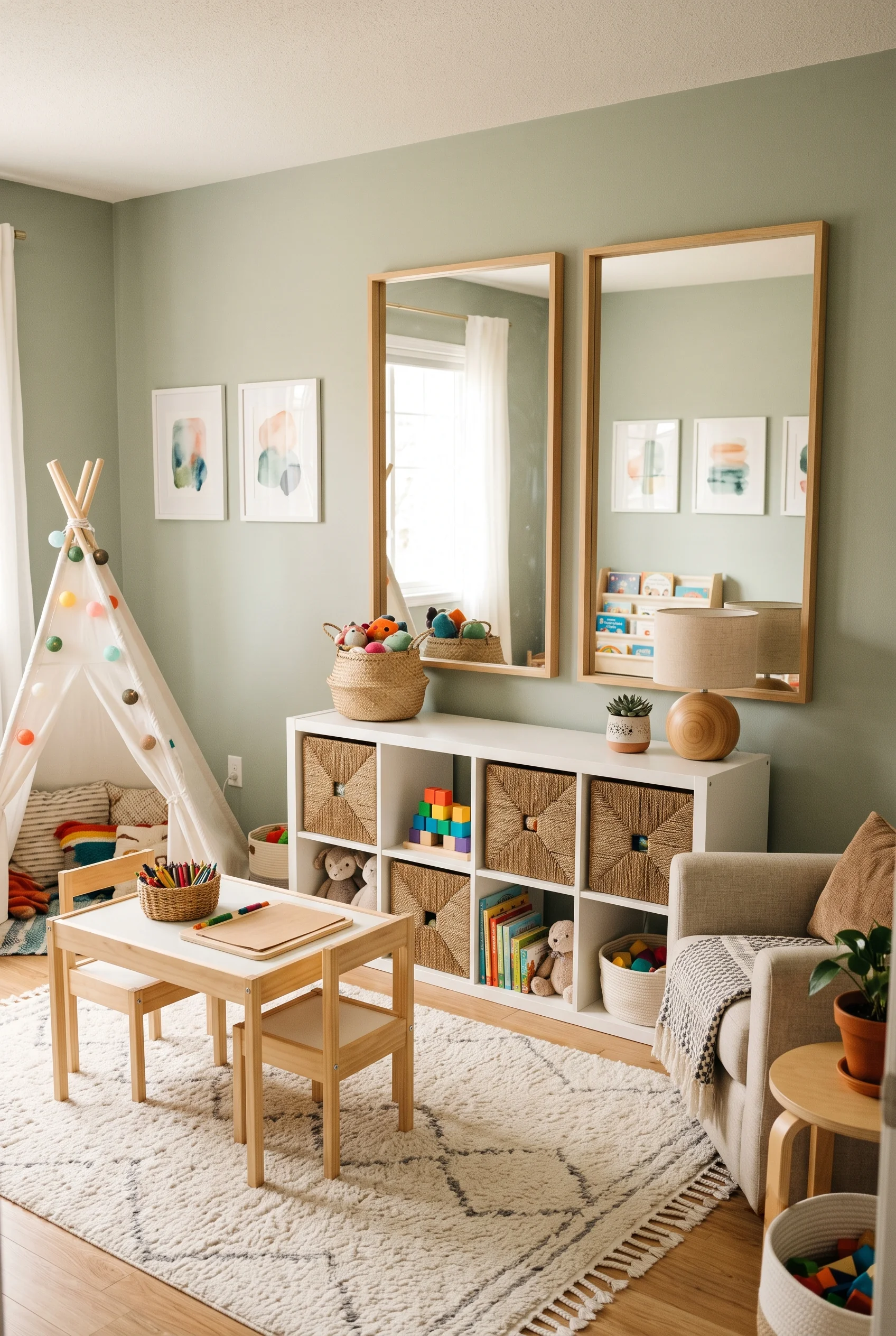
Combining open shelving with baskets creates a storage system that feels both organized and visually calm. Open shelves make favorite toys and books easy to access, while baskets help conceal smaller items and reduce visual clutter. Mixing display and hidden storage can make a playroom feel tidy without sacrificing functionality.
27. Store Similar Toys Together
Grouping similar toys together can make a playroom feel instantly more organized. Keep building toys, puzzles, art supplies, dolls, and vehicles in separate baskets or bins so children can easily find what they need. Categorizing toys not only simplifies cleanup but also helps prevent shelves and storage areas from becoming cluttered.
28. Create a Quiet Space for Independent Play
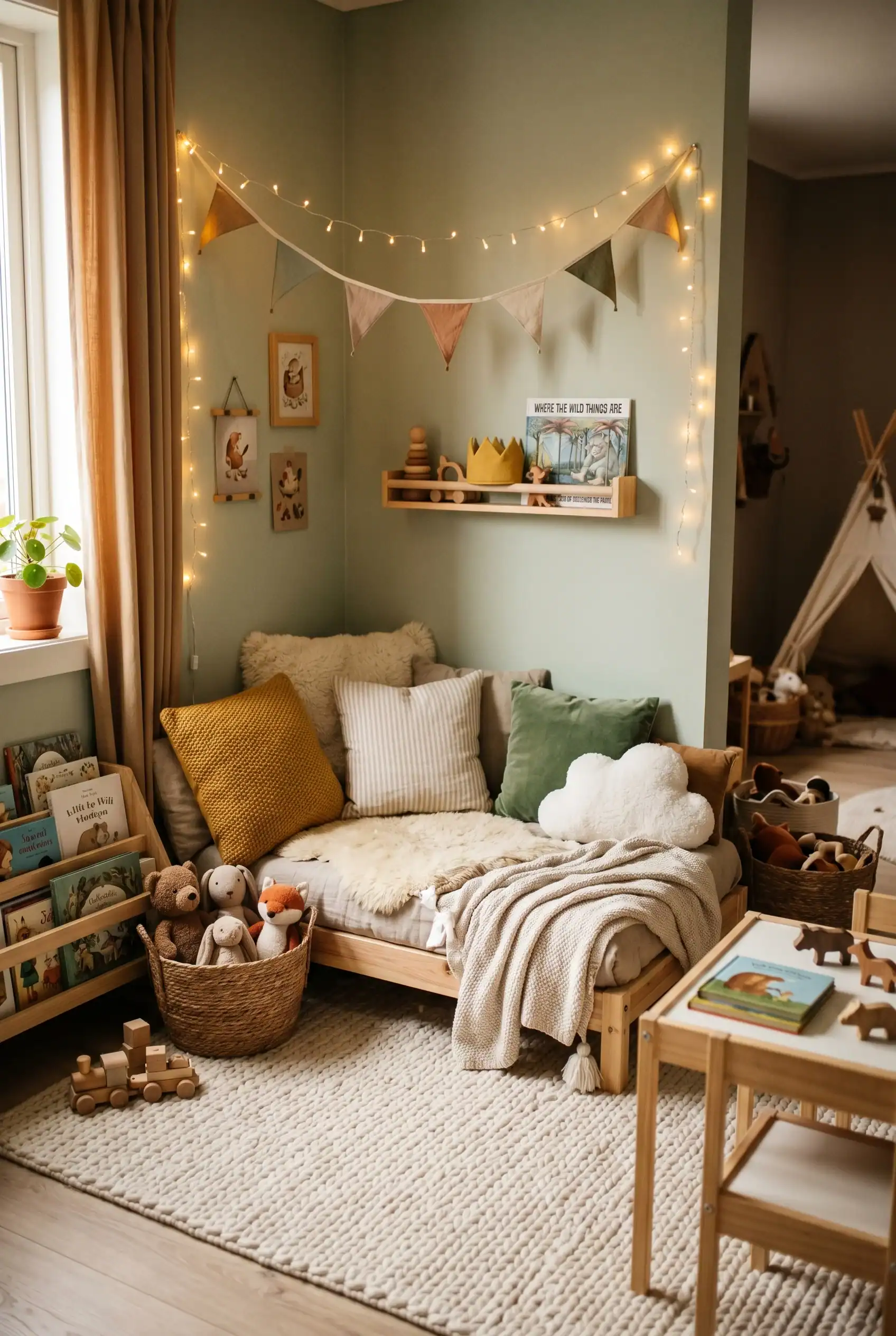
Every playroom benefits from a cozy area where children can relax, read, or play independently. A small daybed, floor cushions, or a comfortable chair, paired with accessible books and toys, can create a welcoming retreat. Defining a dedicated quiet space helps reduce overstimulation while making the playroom feel more balanced and organized.
29. Store Books and Toys Together
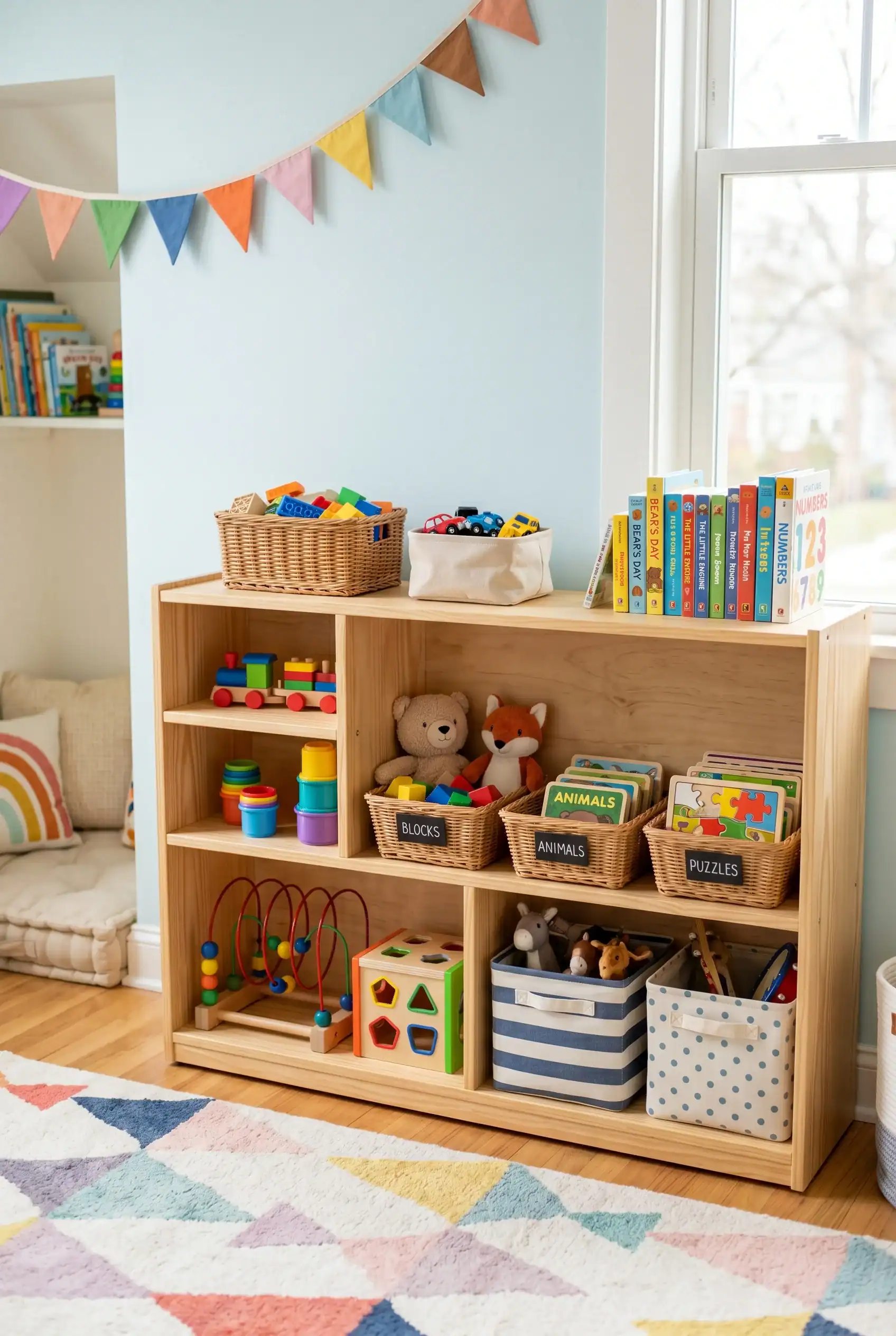
Keeping books and toys in the same storage area makes a playroom more functional and easier for children to use independently. A low shelf with baskets, cubbies, and accessible book storage allows children to move seamlessly between reading and play while keeping everything organized. Grouping frequently used items together can also simplify cleanup and reduce clutter.
30. Organize Toys with Clear Drawer Storage
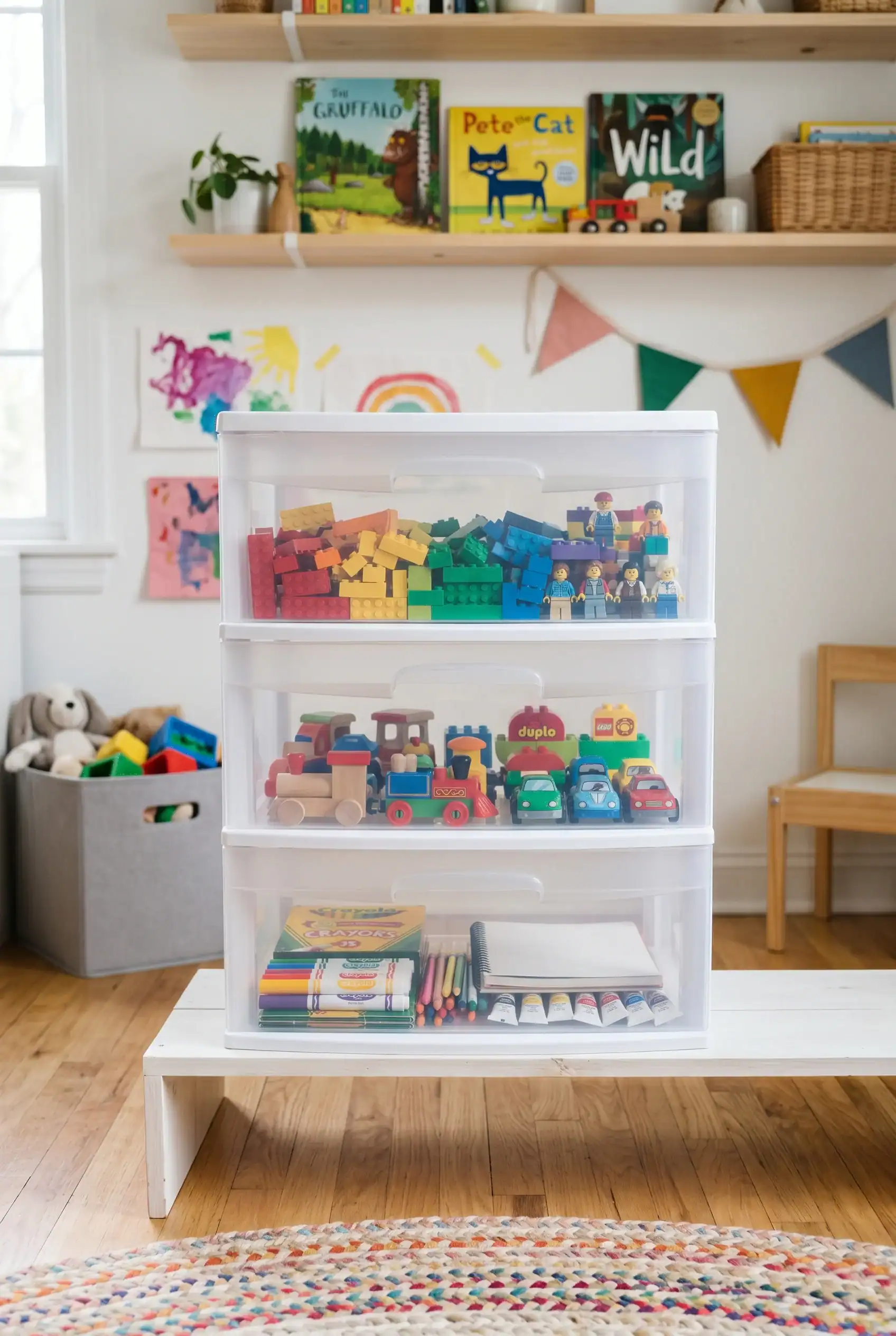
Clear drawers make it easy to sort toys, art supplies, and small accessories while keeping everything visible and organized. Children can quickly find what they need without emptying multiple bins, making both playtime and cleanup more manageable. Using separate drawers for different categories also reduces clutter and maintains order.
31. Create a Flexible Play SpaceLeave Open Space for Play and Movement
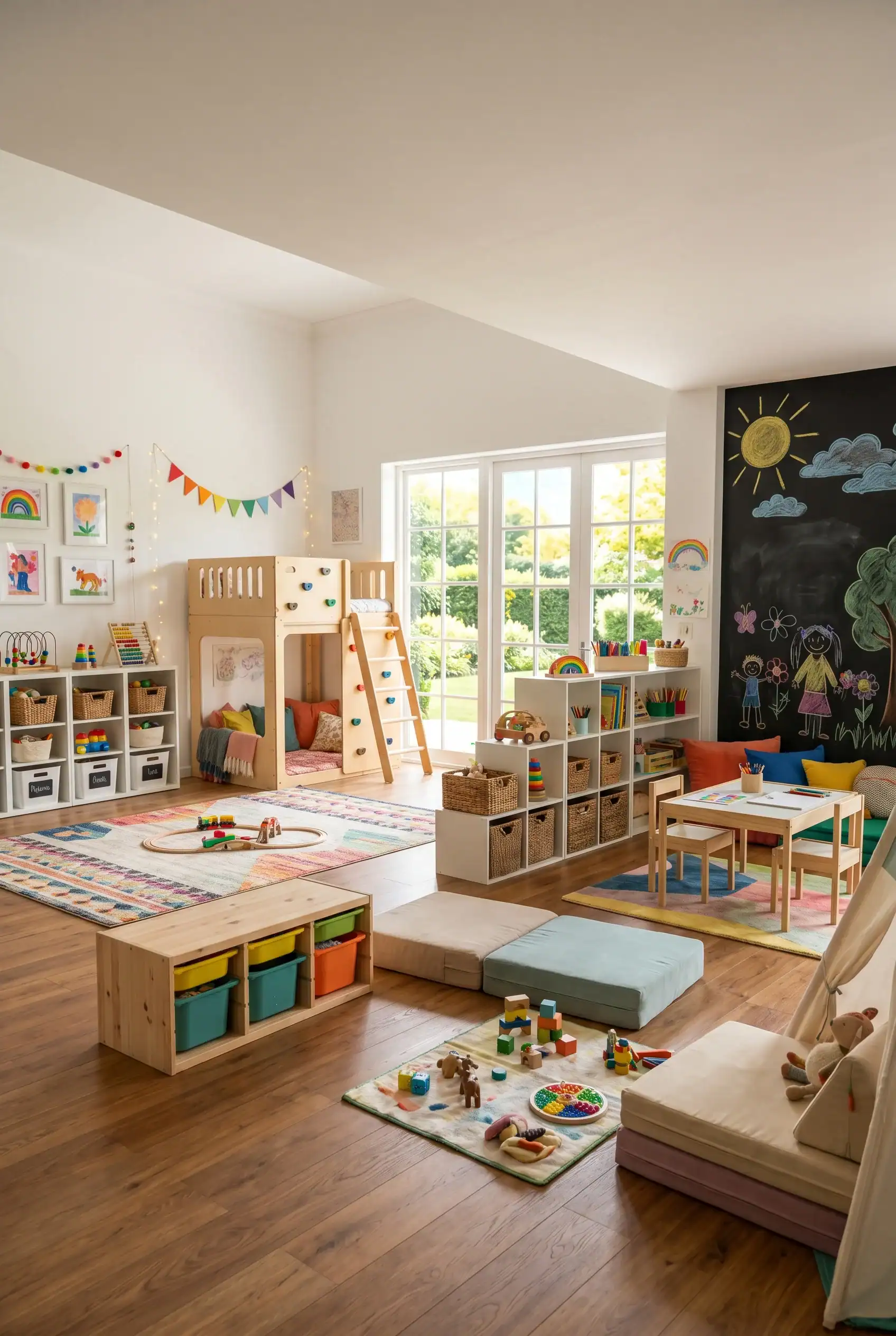
A well-organized playroom isn’t just about storage—it’s also about creating room to play. Leaving open floor space between storage units and activity zones gives children plenty of room for building, imaginative play, and movement. A less crowded layout can make the entire room feel calmer and more functional.
32. Organize Toys by Category
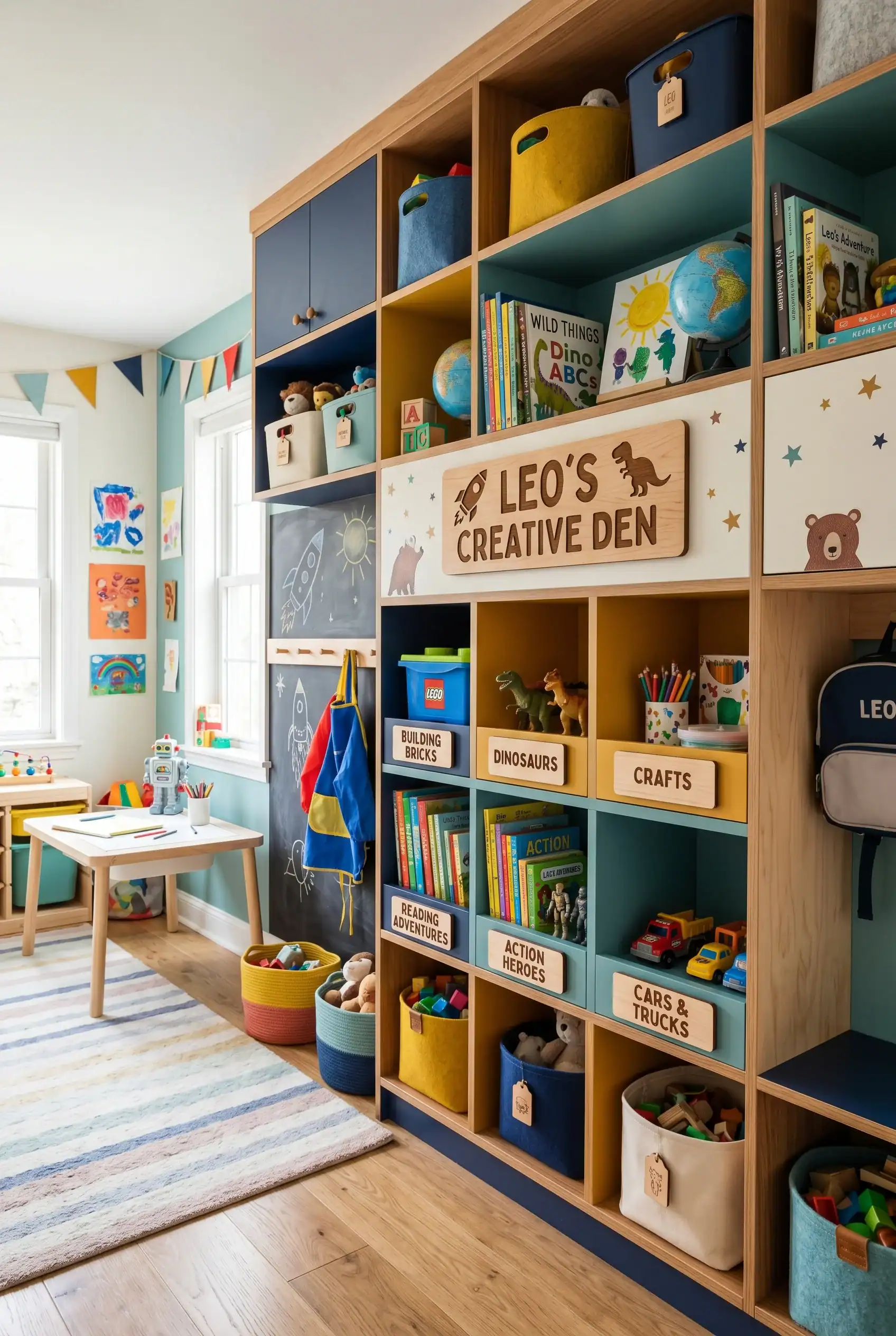
Grouping similar toys together makes it easier for children to find what they need and return items when they’re finished. Assign categories such as books, building toys, crafts, and vehicles to specific cubbies to create a simple organizational system that reduces clutter and encourages independent cleanup.
33. Use Portable Storage for Everyday Cleanup
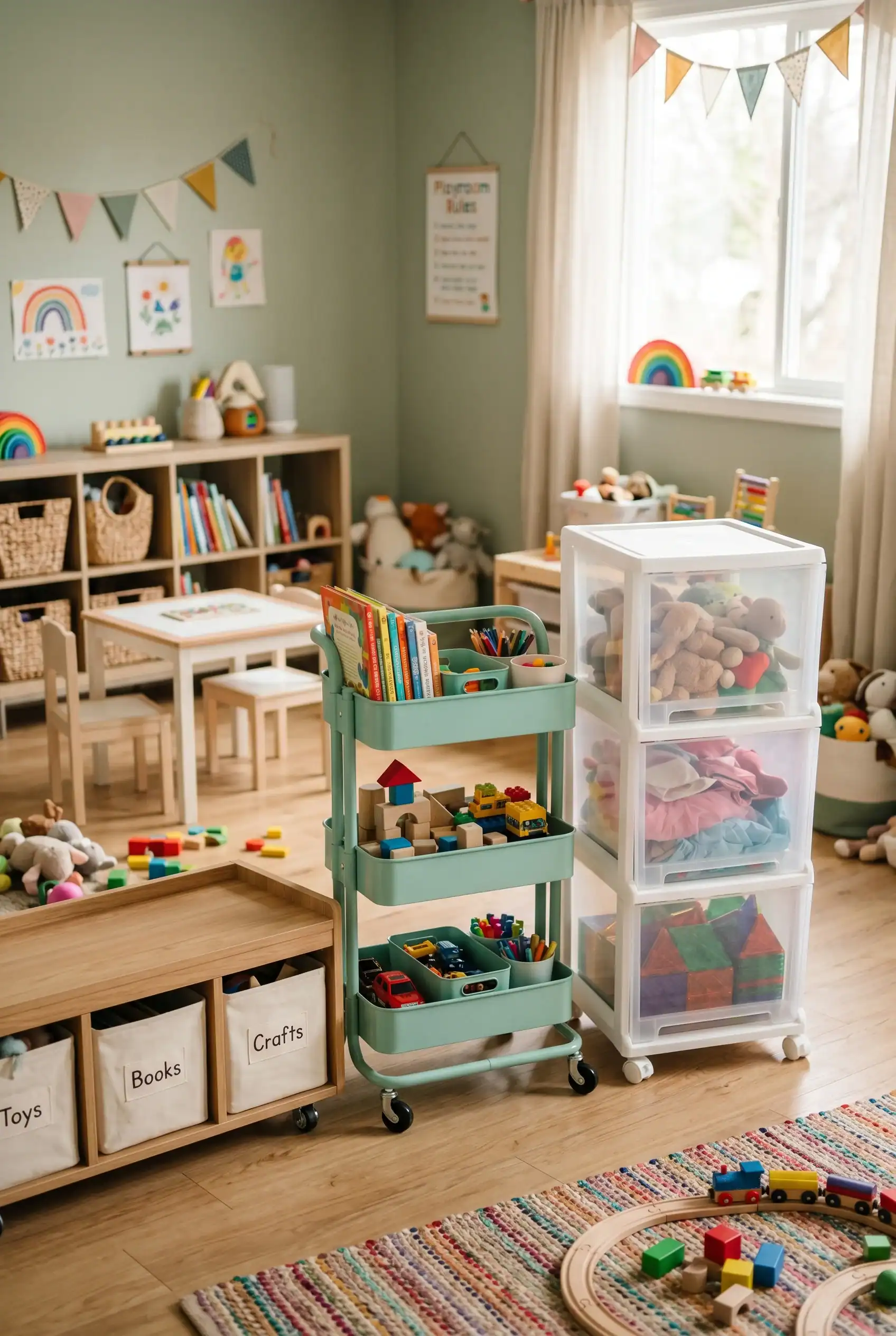
Rolling carts, handled bins, and mobile storage containers make it easy to move toys and supplies wherever they’re needed. Portable storage works especially well in shared spaces, allowing children to transport activities independently and put everything away when playtime is over. It’s a simple way to keep toys organized while making cleanup faster and easier.
Create a Montessori Playroom That Inspires
Creating a calm and organized playroom doesn’t require a complete overhaul. Small changes—like adding accessible shelving, grouping toys by category, or creating dedicated storage zones—can make a big difference in how the space looks and works. Montessori-inspired organization helps children play more independently while making everyday cleanup feel simpler and more manageable.
Whether you’re refreshing a dedicated playroom or organizing a small play space, these Montessori toy storage ideas can help create a room that’s both beautiful and practical for everyday family life.
If you found inspiration here, save your favorite ideas for later and explore more playroom organization and family-friendly home design tips.