19 Montessori Room Ideas That Work Beautifully in Small Spaces
Finding Montessori room ideas that fit a small space can feel like solving a puzzle with too many pieces. You want low shelves, open floor for movement, and a cozy reading corner. All those wooden toys need somewhere to live too, and the square footage keeps saying no. Here’s the good news: Montessori design and small-space design want exactly the same things.
Fewer toys out at once. Furniture a child can actually reach. Order simple enough that a three-year-old maintains it herself. A small room isn’t the obstacle to a Montessori setup; it’s practically the assignment. If you’ve browsed my Montessori playroom ideas or put together a Montessori bedroom for your toddler, you already know this philosophy rewards restraint.
This collection gathers 27 rooms that make the case, from wall-mounted shelving that frees every inch of floor to Montessori toy storage that ends the nightly cleanup standoff. Every idea here works in a corner, a closet-sized bedroom, or one end of the living room. Pick the ones that fit the space you actually have, and skip the guilt about the ones that don’t.
DISCLOSURE: Some of the links provided on this page are affiliate links. This means if you choose to make a purchase through these links, we may receive a small commission at no extra cost to you.
Layouts That Make a Small Footprint Feel Generous
Square footage is the one thing you can’t add, so the first job in a small Montessori room is a layout that spends every inch deliberately. The four rooms below all make the same trade: storage climbs the walls or hides inside the furniture, and the floor stays open for the actual playing. Get the bones right, and everything else on this list gets easier.
Furniture That Earns Its Place Twice Over
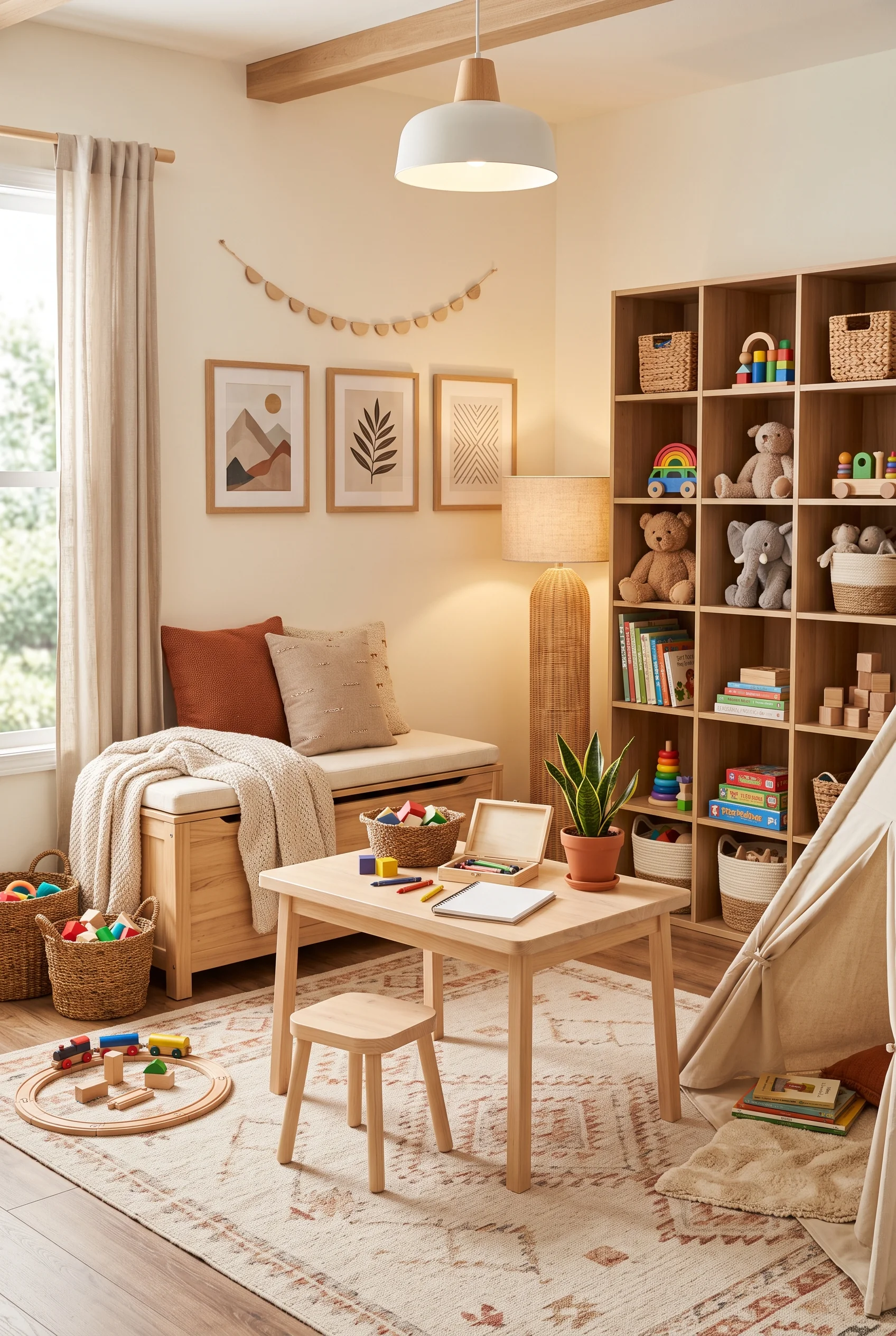
Under the window, a slim storage bench does three jobs at once. The lid hides blankets and out-of-rotation toys, the cushion turns it into a reading perch, and the rust and cream pillows make it feel like real furniture rather than kid equipment.
A small pine table anchors the middle of the room for puzzles and coloring, with a tall cube shelf keeping books and stuffed animals within reach. Nothing here would look out of place in an adult space, which matters when the playroom shares a wall with the rest of your life.
Everything Within Reach, Nothing Out of Bounds
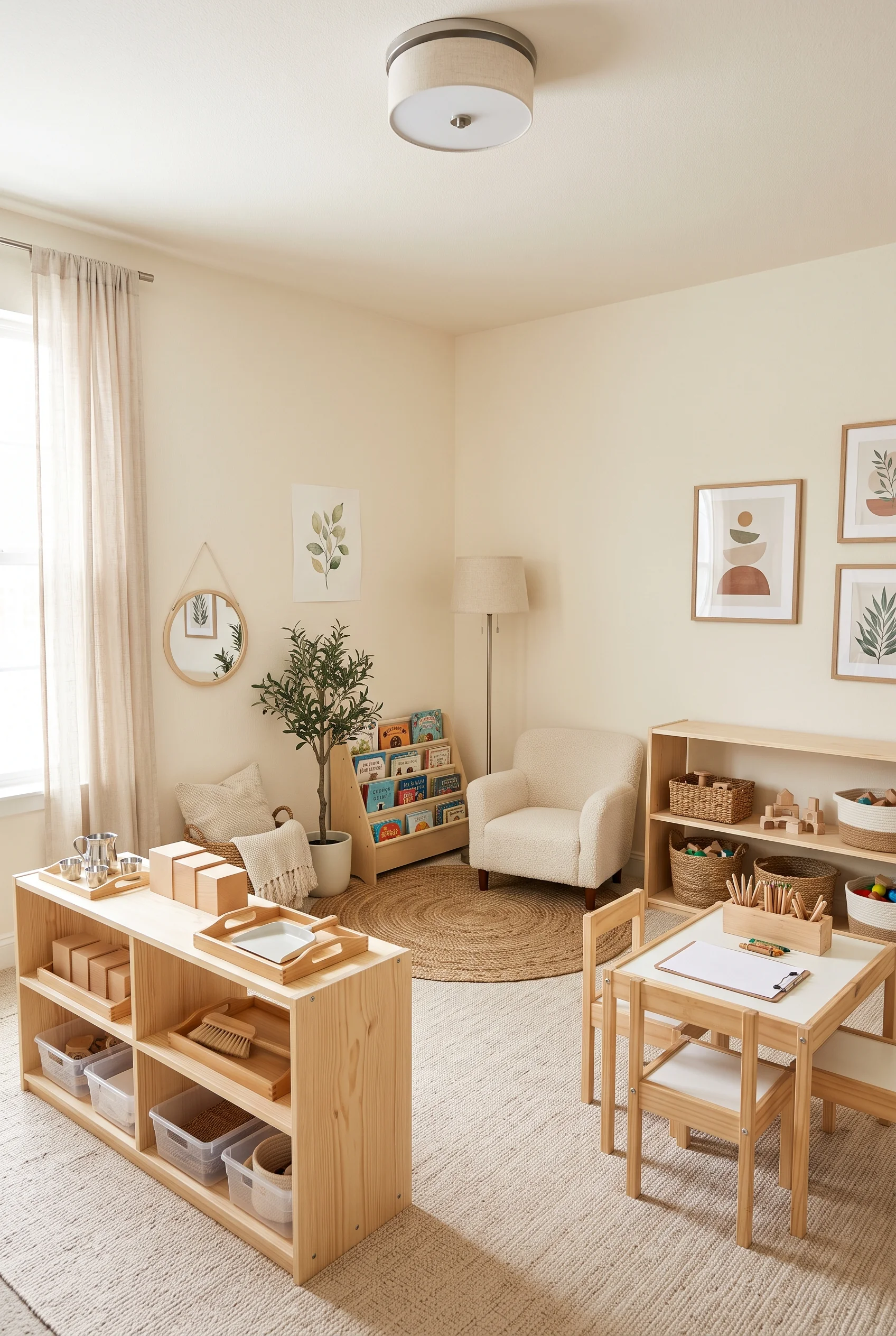
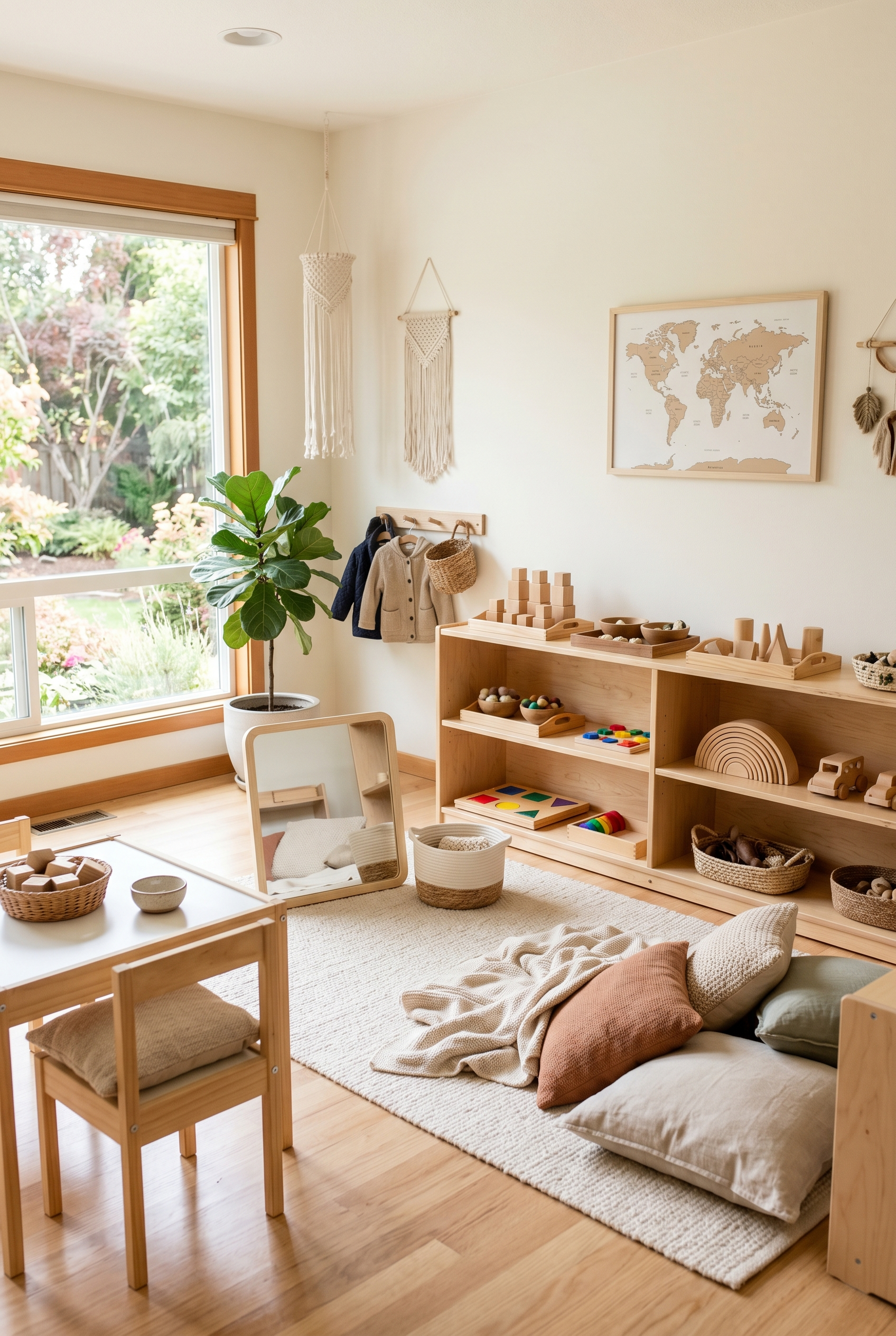
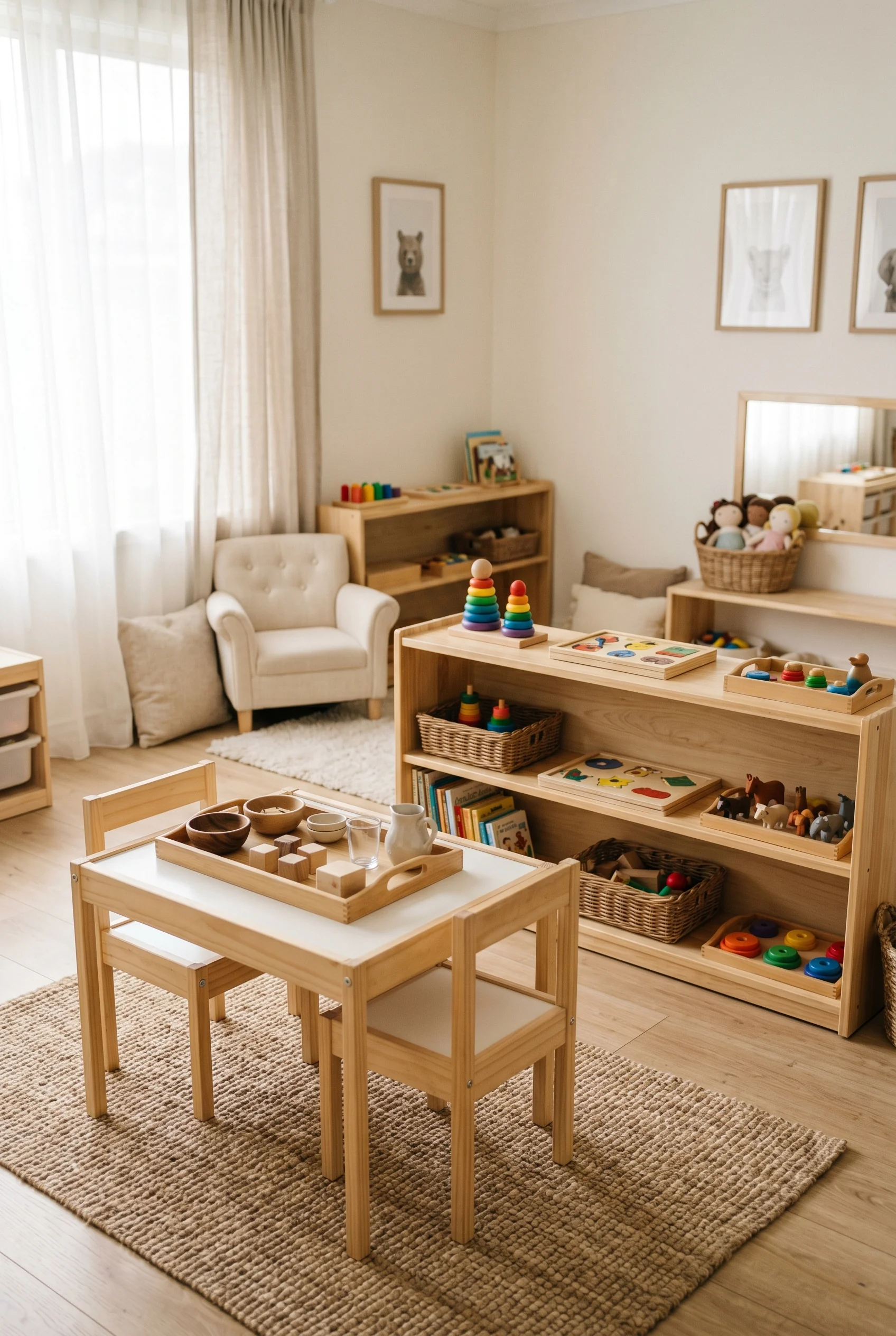
Pitchers, trays, and tidy stacks of blocks sit on pine shelves that top out around a toddler’s shoulders. Every bin is visible, every tray can be carried without asking for help, and the front-facing bookshelf shows the covers rather than the spines.
Independence is baked into the furniture’s height. A child who can reach her own work starts it, and the little table nearby gives her somewhere to put it. The adult armchair in the corner is the only tall thing in the room, and that’s exactly the right ratio.
A Calmer Room, Built on Purpose
Montessori spaces are famously calm, and that calm is engineered, not accidental. It comes from a quiet base palette, honest materials, and generous daylight. Just as important is a deliberate limit on how much is out at once. In a small room, these choices matter twice as much because visual noise shrinks a space faster than furniture does. These five rooms show the formula from every angle.
Fewer Toys Out, Deeper Play In
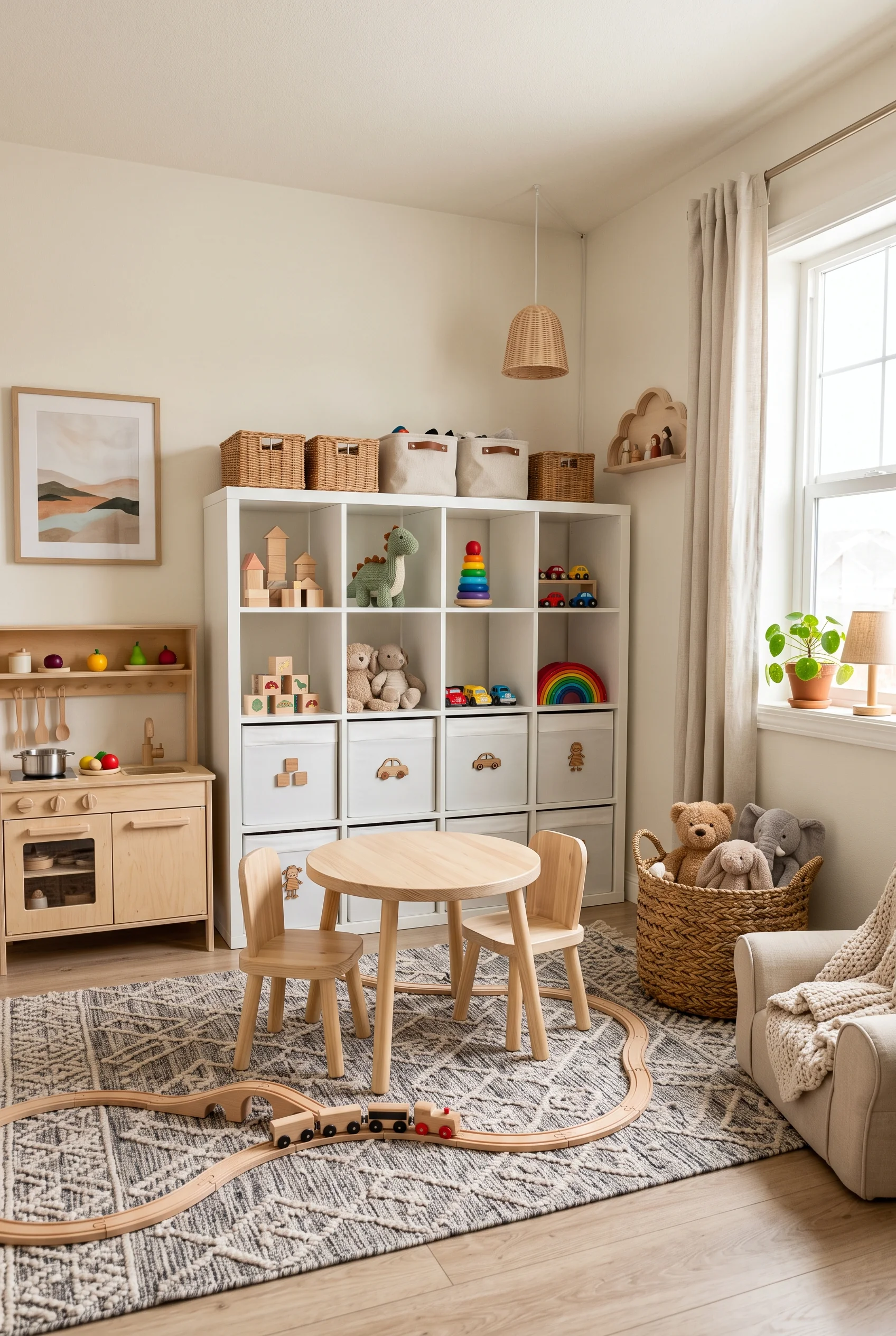
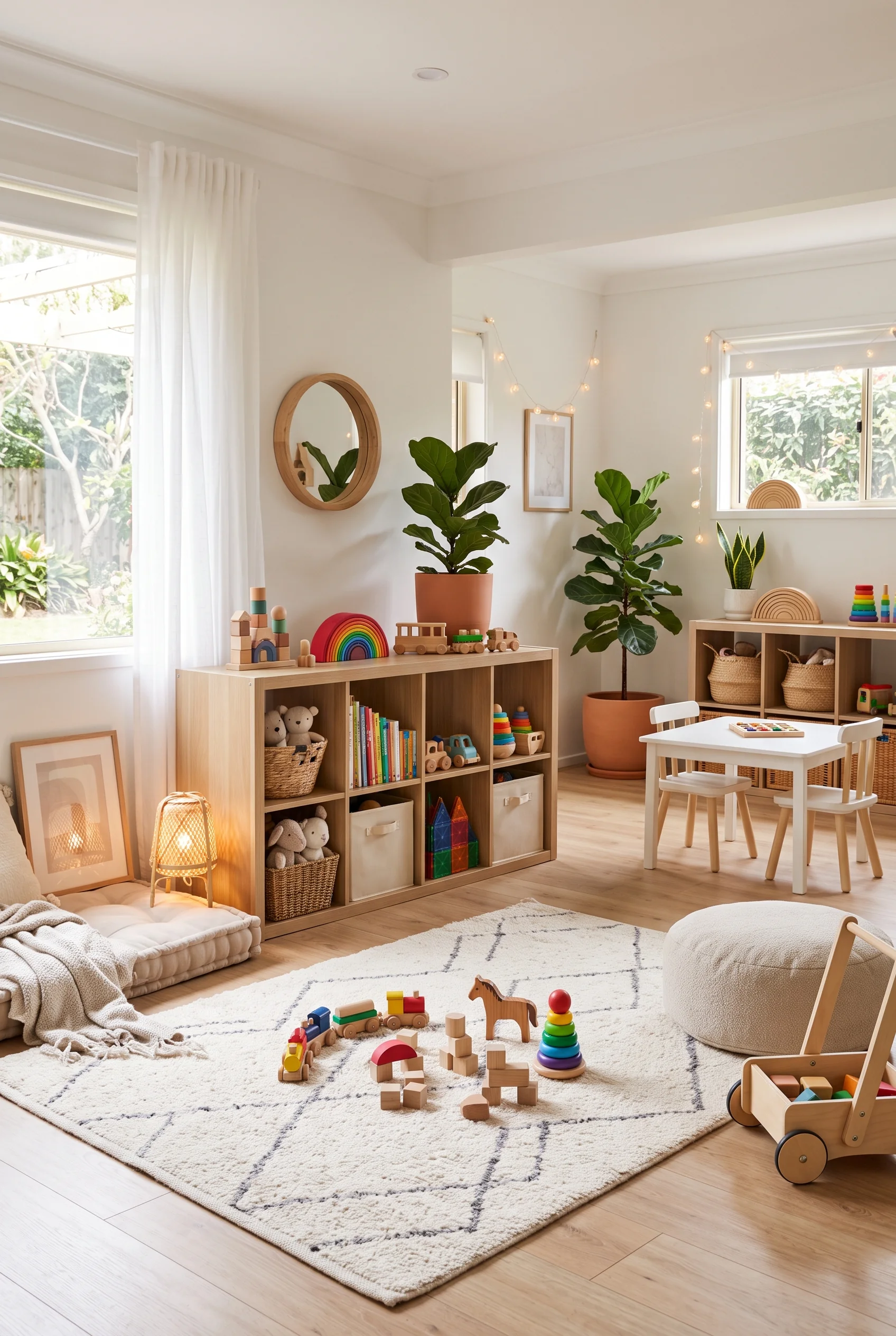
One toy per cubby. That’s the entire system on this white shelf, where a lone dinosaur, a stacker, and a rainbow each get their own stage while labeled bins below hold everything waiting its turn.
Children play longer and deeper when the menu is short. The play kitchen and little round table stay out because they’re in heavy rotation, and everything else cycles through every week or two.
The room feels calm because the child’s choices are calm.
Wood and Wicker That Shrug Off Hard Play
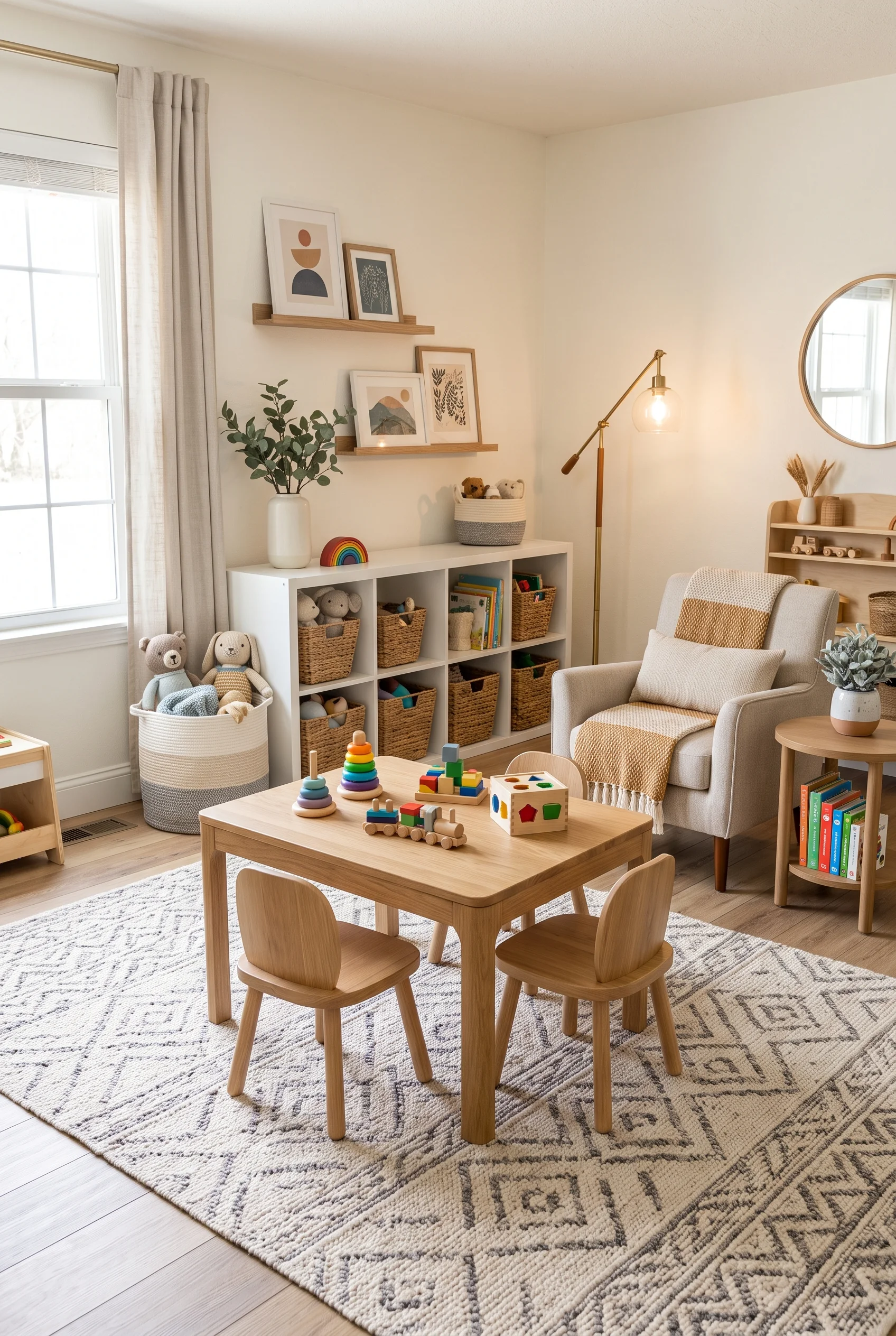
Solid pine, woven wicker, cotton rope. Every surface in this playroom can take a beating and look better for it, from the chunky little table and chairs to the baskets that get dragged across the rug daily.
Wood shrugs off what laminate can’t hide. Scratches blend into the grain, spills wipe from a sealed top, and a wicker basket that loses a strand still looks like a wicker basket. Materials chosen this way age alongside the child instead of against her.
Daylight as the Room’s Best Feature
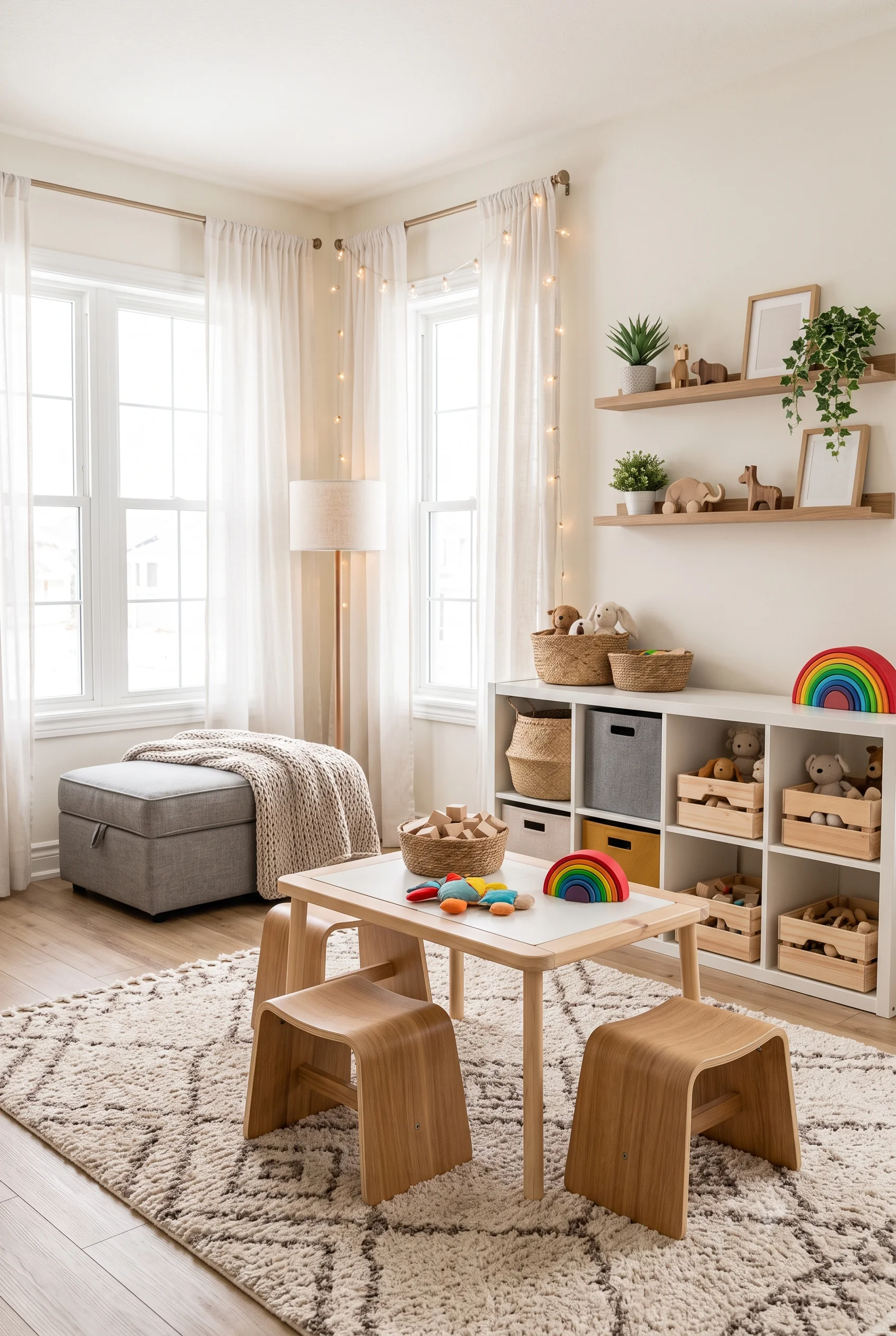
Two generous windows do more for this space than anything money could buy. Sheer curtains filter the glare without blocking the light, and the little play table sits squarely in the brightest patch of floor.
Daylight changes behavior in ways paint never will. Kids gravitate toward the sunny spot the same way cats do, so parking the work table there means the most-used zone is also the most inviting one. Fairy lights along the curtain rod carry the corner on gray afternoons.
See-Through Storage That Ends the Dumping Ritual
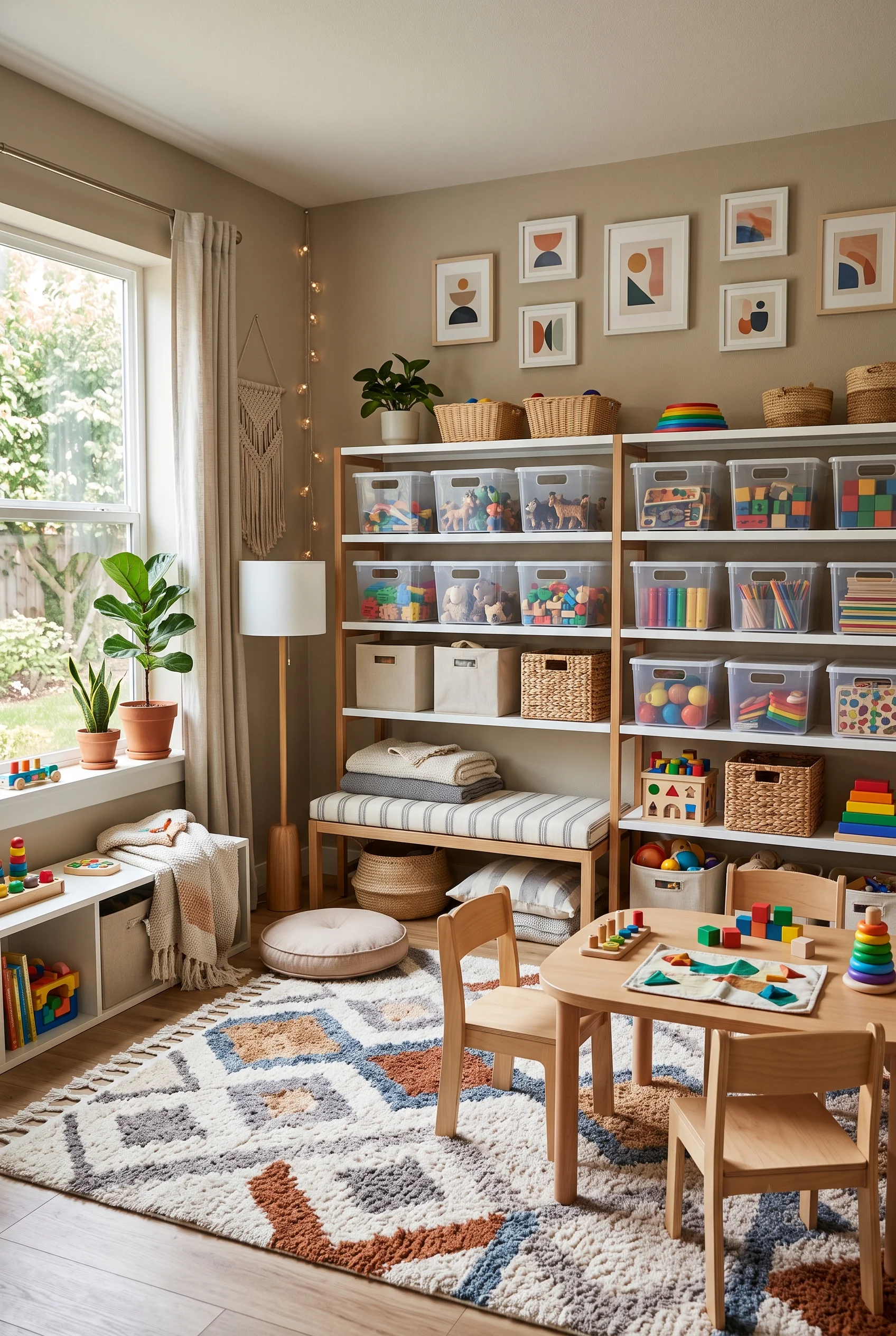
A child can’t put away what she can’t find a home for. Clear bins solve both halves of the problem: the contents show through, the labels confirm it, and the whole wall of shelving becomes a matching game a four-year-old can win.
Blocks with blocks, animals with animals, markers with markers. There’s less visual noise than open piles and less mystery than opaque baskets, which is why cleanup in a room like this actually gets finished.
Small-Space Moves That Add Visual Square Footage
A small room can’t get bigger, but it can feel bigger, and designers have been winning this particular eye test forever. Height, hidden storage, and living greenery all stretch the perceived size of a space without moving a single wall. So do empty floor and rugs that draw boundaries. Here are five rooms working those illusions hard, and every one still keeps what matters at a child’s height.
Seats and Beds With Secrets Inside
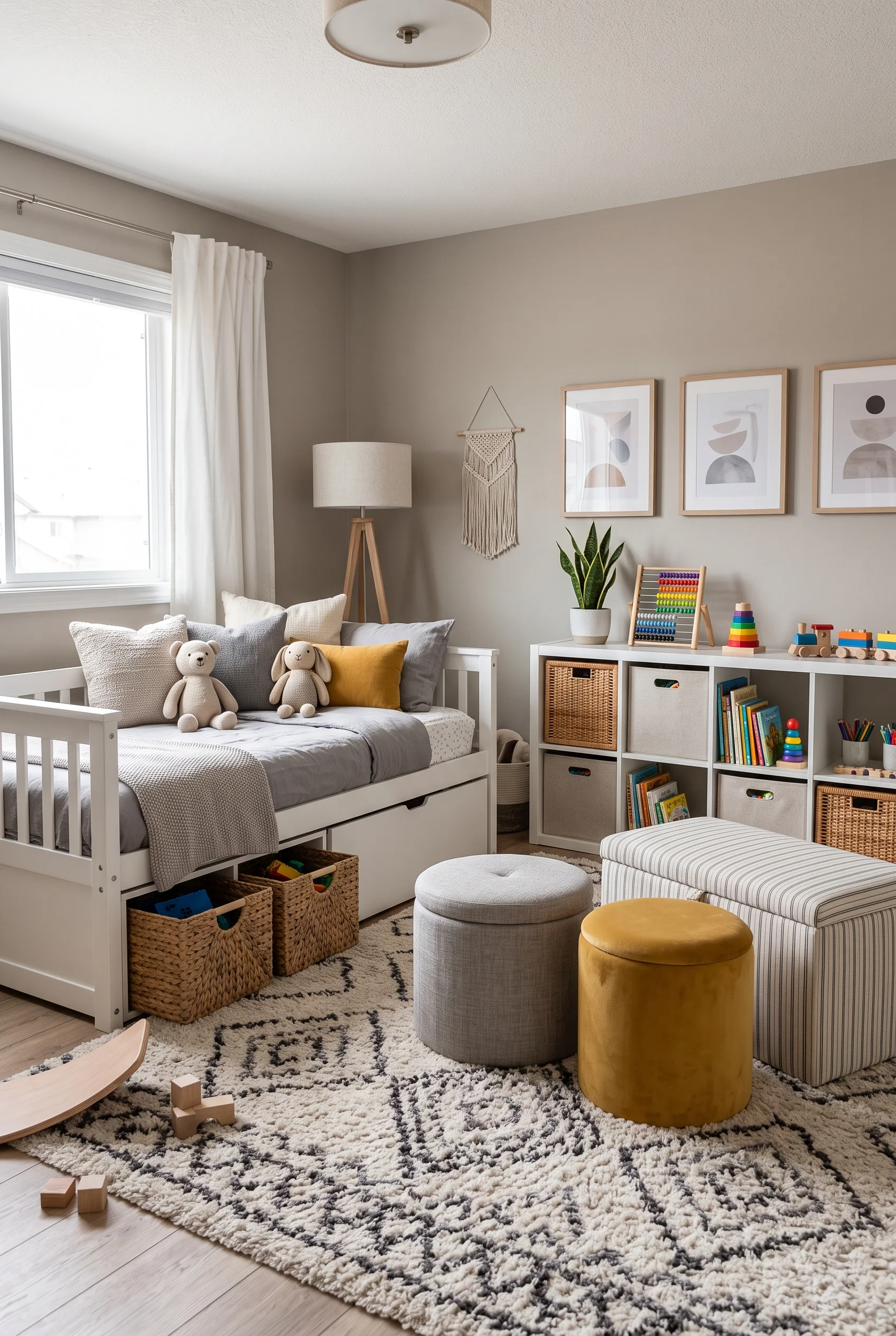
At first glance it’s simply a pretty bedroom. Look closer and nearly every piece is hollow: a deep drawer rolls out from under the daybed, wicker trunks slide in beside it, and the two poufs and striped bench at the foot all open up.
That’s several bins’ worth of clutter absorbed by furniture the room needed anyway. The cube shelf handles what the child uses daily, and the hidden layer quietly swallows the seasonal and sentimental overflow.
The Case for an Almost-Empty Play Area
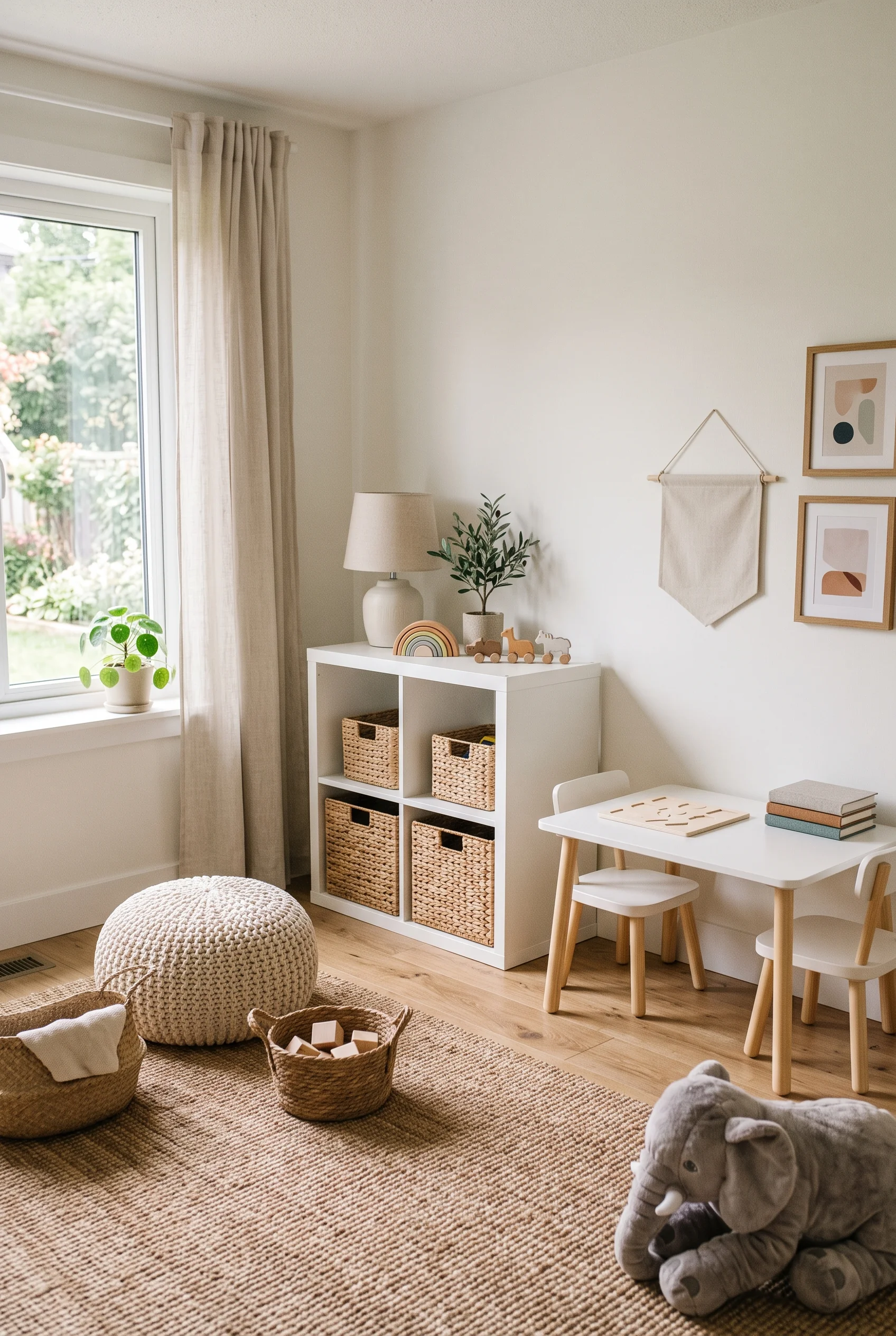
The shelf holds four baskets and little else. A small white table, a basket of wooden blocks, and one gray elephant complete the inventory, and the room feels bigger for everything it left out.
Sparse doesn’t mean sterile here. The jute rug, the soft pouf, and a little olive branch on the shelf keep things warm, while the empty floor invites the sprawling block projects that need it. My minimalist kids’ room ideas lean on this same restraint.
Rugs Draw the Room’s Invisible Walls
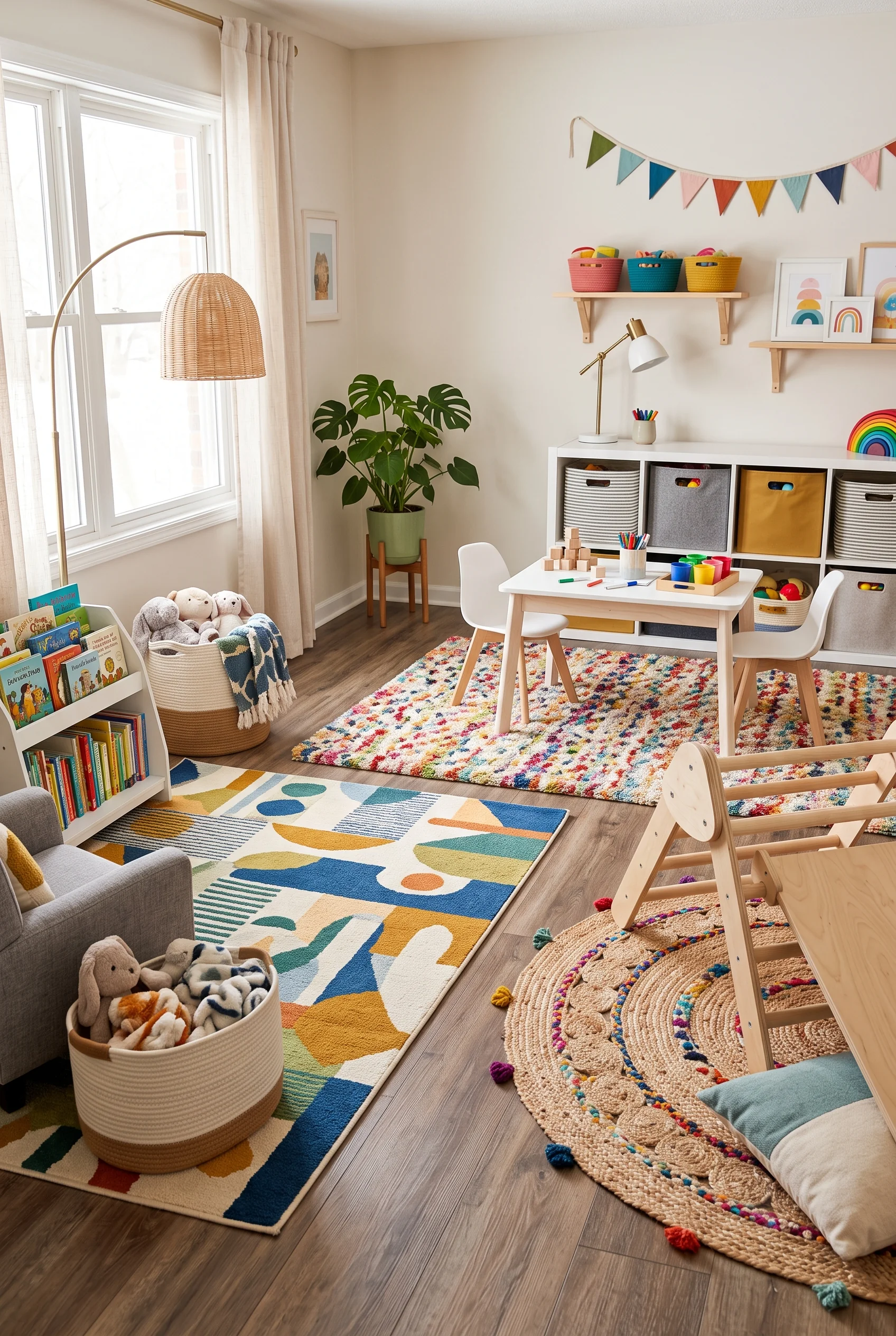
The floor does the zoning here. A bold abstract rug marks the reading corner, a confetti-flecked one holds the art table, and a round jute rug with pom trim stakes out the climbing arch, all without a single wall going up.
Kids read those boundaries instantly. Standing on the blue rug means books; the round rug means movement. In an open or shared room, that unspoken map keeps three activities from bleeding into one big mess.
Made for Real Afternoons at Home
A beautiful playroom that can’t survive a Tuesday isn’t finished. This next group is designed around the actual rhythms of family life: the wind-down hour, the sudden craft attack, the toddler who climbs everything. Then comes the nightly reset that decides whether the room works tomorrow. Comfort and cleanup get equal billing here, exactly as they should.
Low Light, Soft Edges, and Somewhere to Land
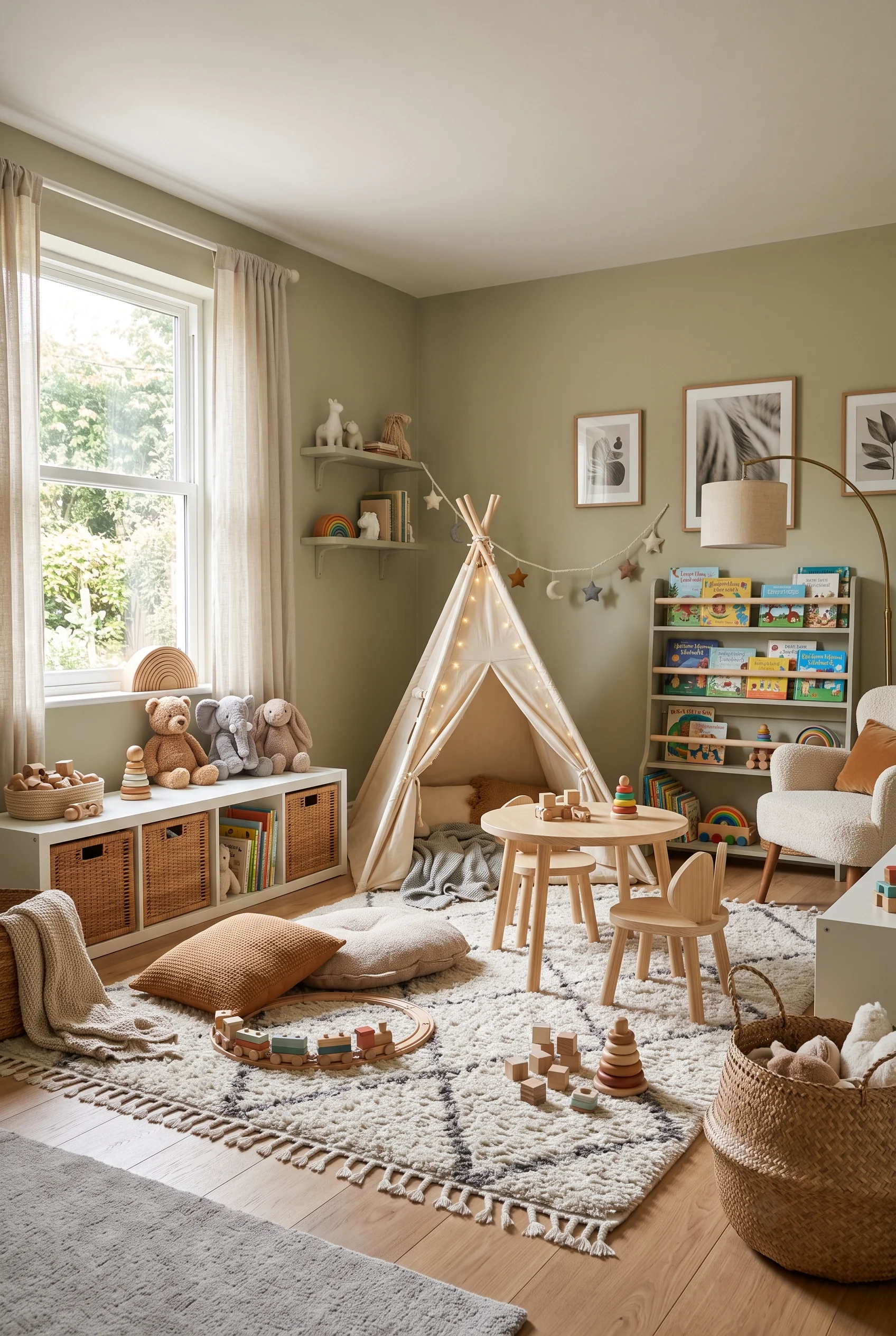
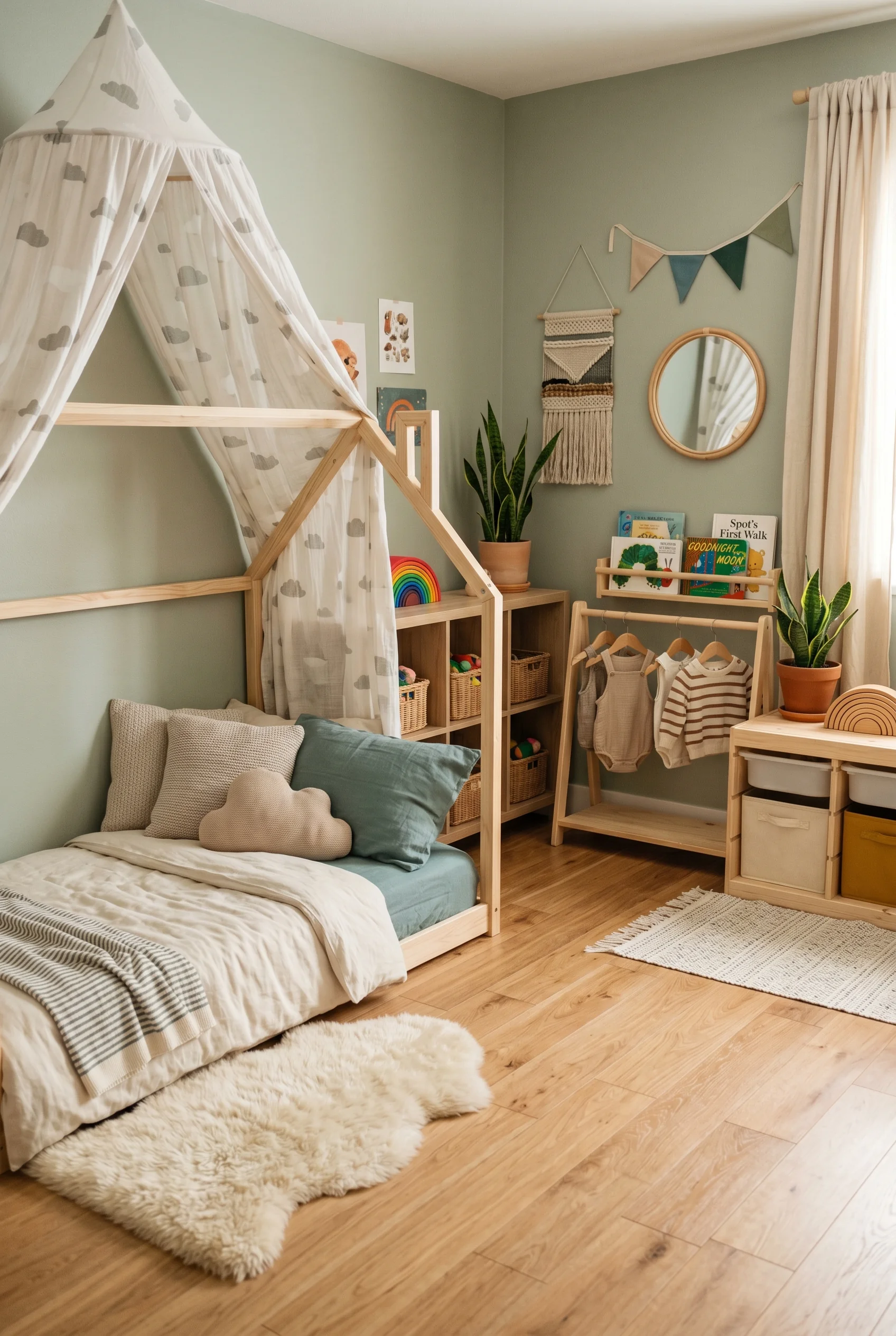
Sage green walls set the temperature low. Warm lamplight, a lit canvas teepee, and a star garland do the rest, layering glow on glow until the room feels ready for the wind-down hour.
Cushions and stuffed animals gather at floor level, where kids actually live. Nothing overhead is bright or busy. Rooms lit like this get used differently, with more page-turning and quiet building and less bouncing off the low white shelf.
An Art Studio the Size of a Card Table
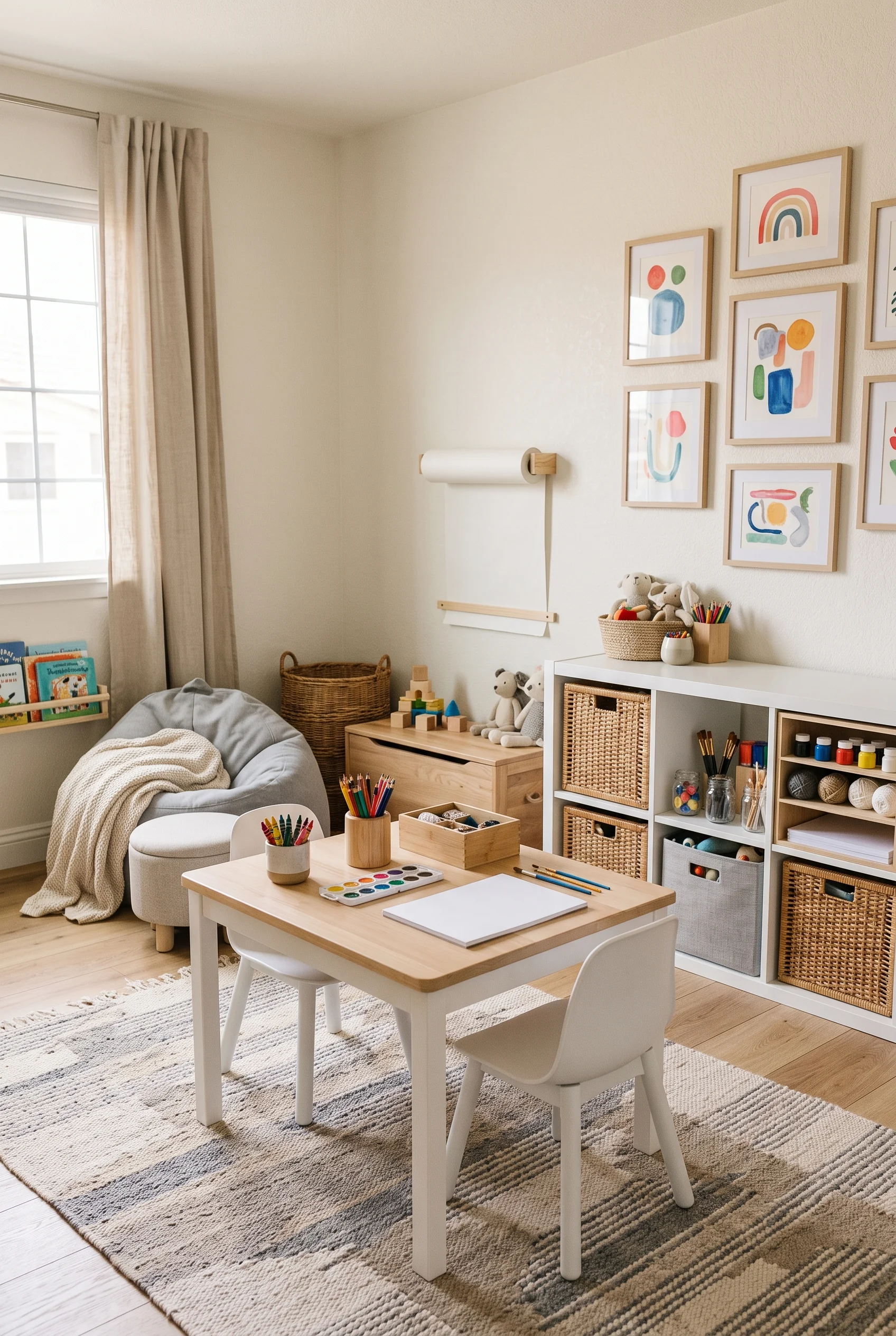
A roll of paper mounted to the wall means art can start the second inspiration strikes. Below it, the table already wears watercolors and fresh paper, and the cube shelf keeps paints and brushes in reach but in order.
The gallery of bright prints overhead signals that the work gets taken seriously. A bean bag in the corner covers the part of the creative process that looks like doing nothing. All of it fits in a stretch of wall barely wider than the table.
Furniture That’s Ready to Be Climbed On
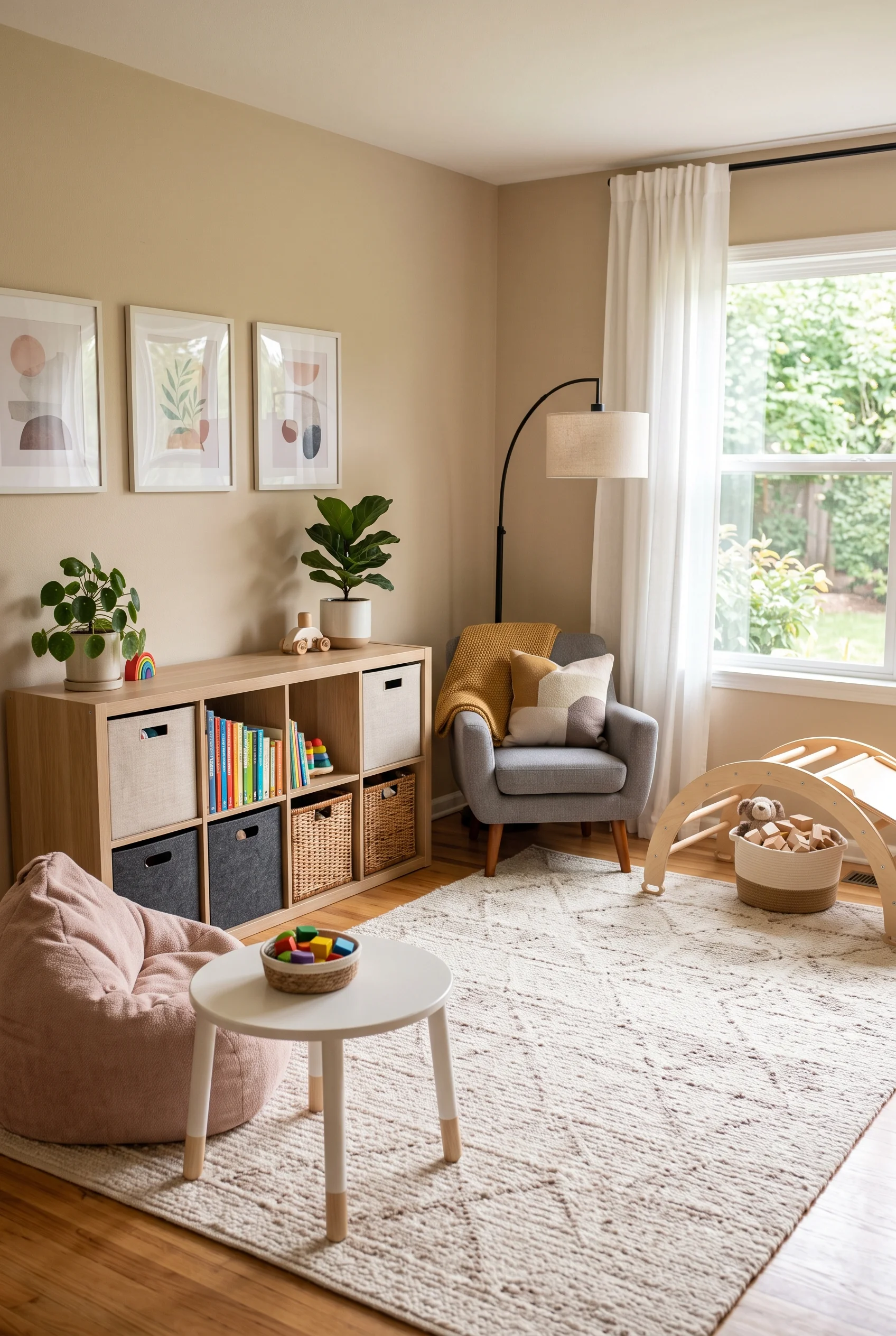
Every edge in sight is rounded, and half the furniture is meant to be climbed. The wooden arch doubles as a rocker and a boat, the blush bean bag breaks any falls, and the low cube shelf is sturdy enough to survive being used as a handhold.
Safety here isn’t a list of things removed. It’s furniture chosen so a two-year-old testing her limits meets soft landings and smooth corners, which lets a parent watch from the armchair instead of hovering an arm’s length away.
A Room That Resets in Five Minutes
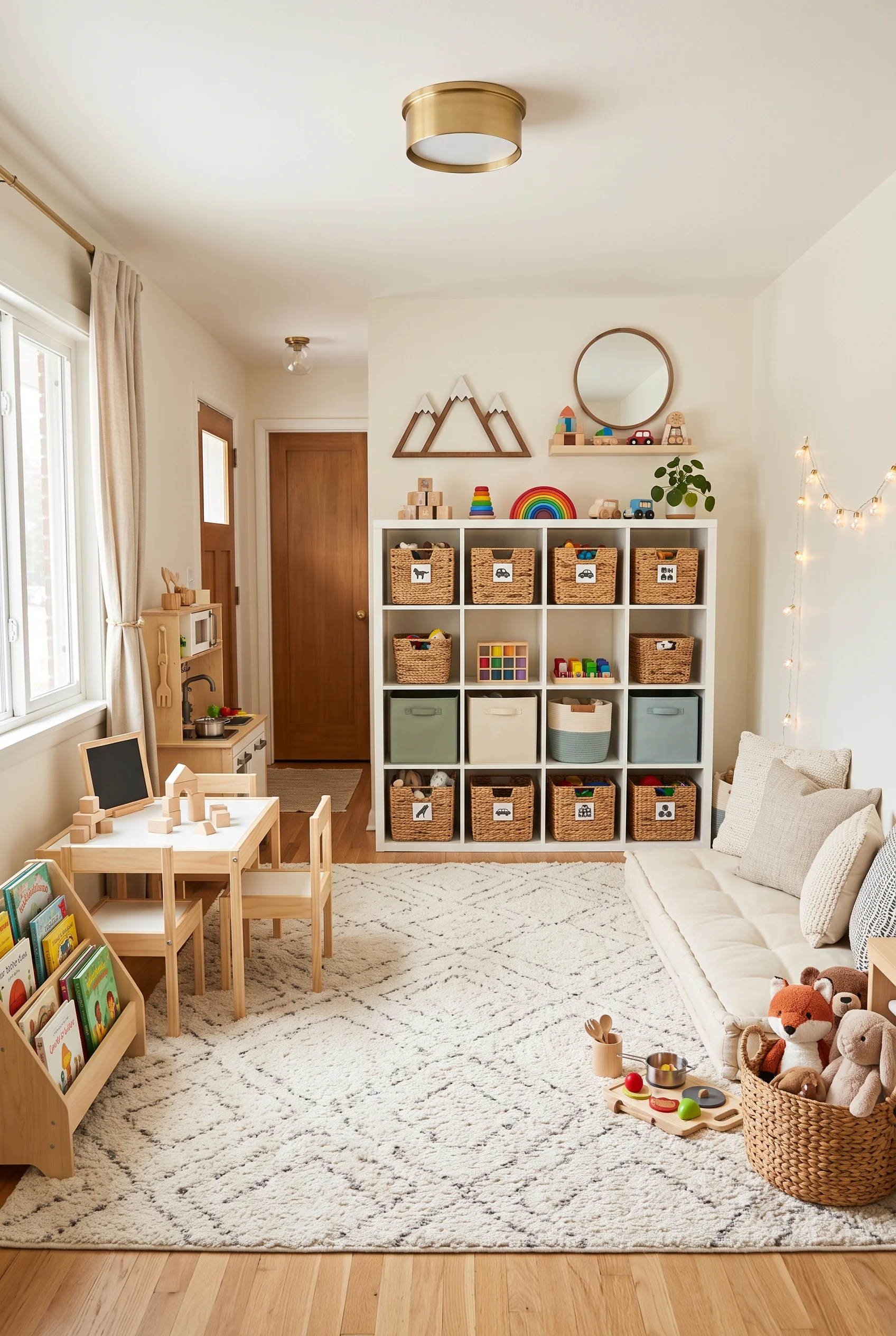
Cleanup is a design problem before it’s a discipline problem. Sixteen cubbies, most with a labeled basket, mean every toy in the room has one obvious home, so a child can shelve the lot without adult translation.
The picture labels matter for pre-readers, the low height matters for short arms, and the play kitchen parked nearby keeps its accessories one step from where they’re used. Rooms set up this way reset in the time it takes a kettle to boil.
The Details That Teach and Adapt
Montessori design has a few signature moves that pull surprising weight in tight quarters. Mirrors, movable furniture, and learning materials displayed like decor all serve the child’s development first and the square footage second. Modular pieces earn their spot the same way. The rooms in this section are full of details you can borrow one at a time, no full makeover required.
Learning Tools Styled Like Decor
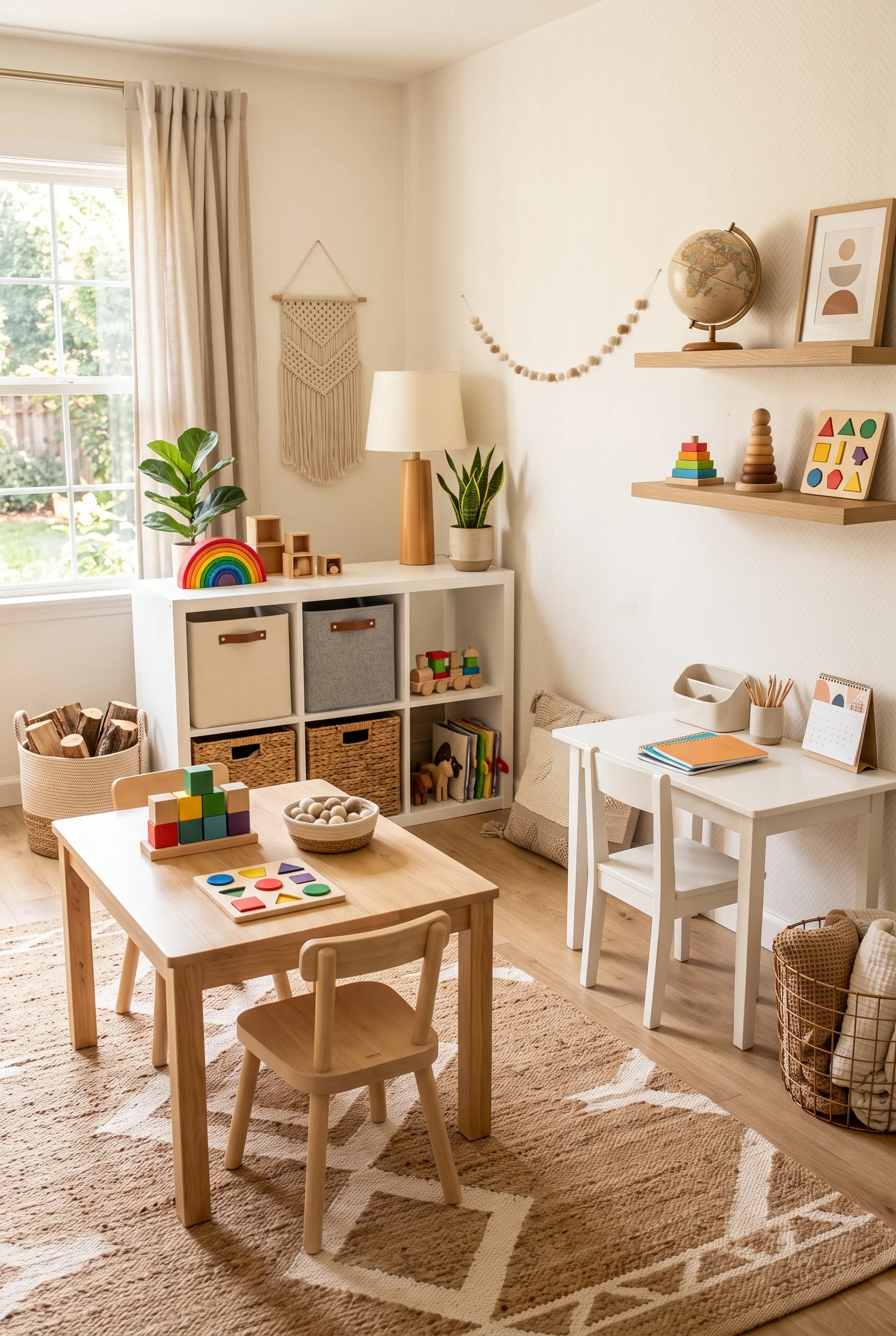
A globe, a shape board, and a stacking rainbow sit across the shelves like styling objects, because in this room they are the styling objects. Learning materials stay out in the open where curiosity can find them.
Against the far wall, a small white desk with a calendar and notebooks quietly plants the idea of a homework spot years before it’s needed. Play happens at one table, focus at the other. The room itself teaches the difference.
Nothing Here Is Bolted Down
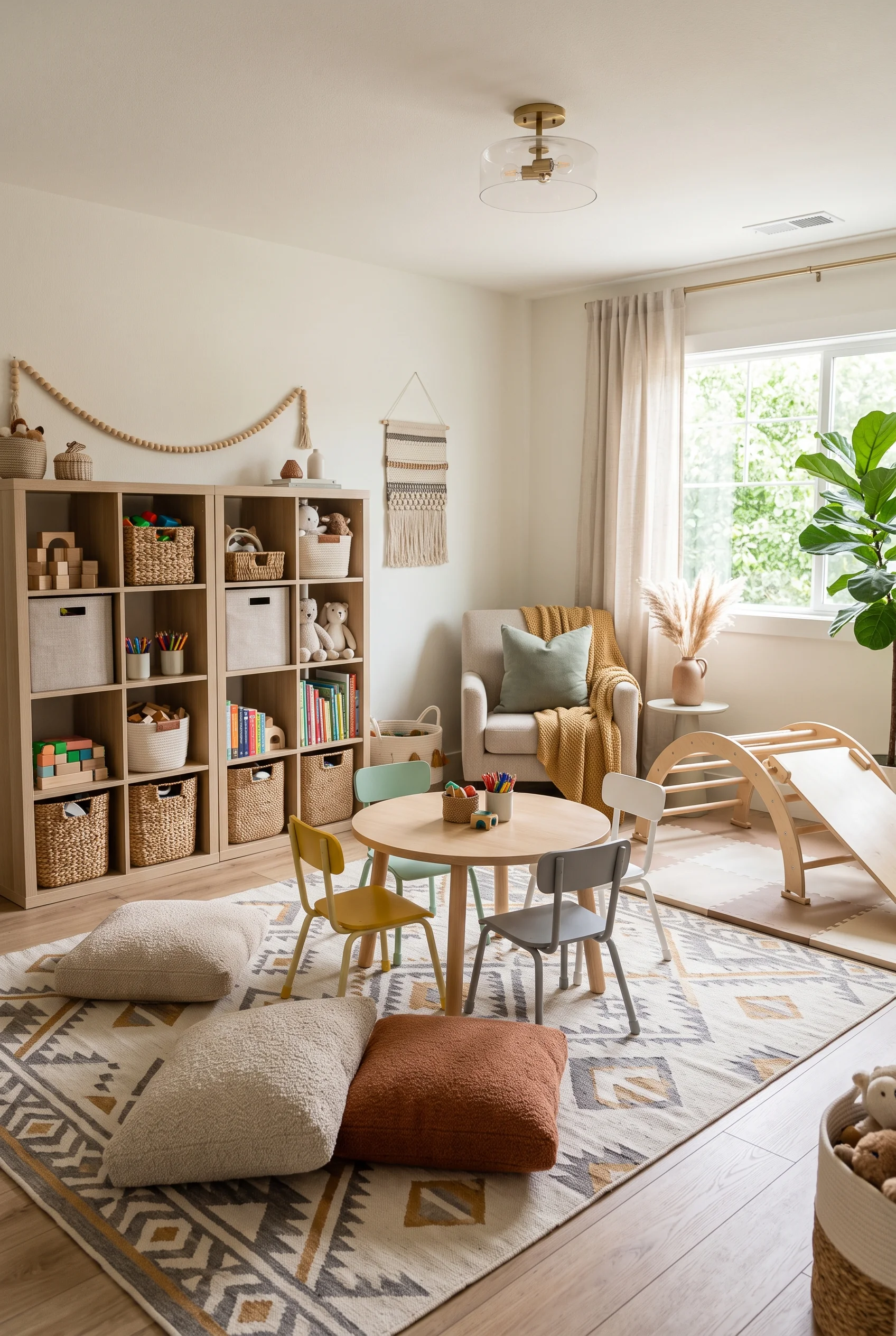
Not one piece in this playroom needs two adults to move. The round table and its mismatched pastel chairs slide anywhere, the floor cushions stack in seconds, and the climbing ramp tucks against the wall when the rug needs to become a fort site.
A layout this loose gets rearranged constantly, and that’s the feature. Gross-motor morning, tea-party afternoon, story-pile evening. Small rooms can’t afford furniture that only supports one version of the day.
Two Mirrors, Twice the Room
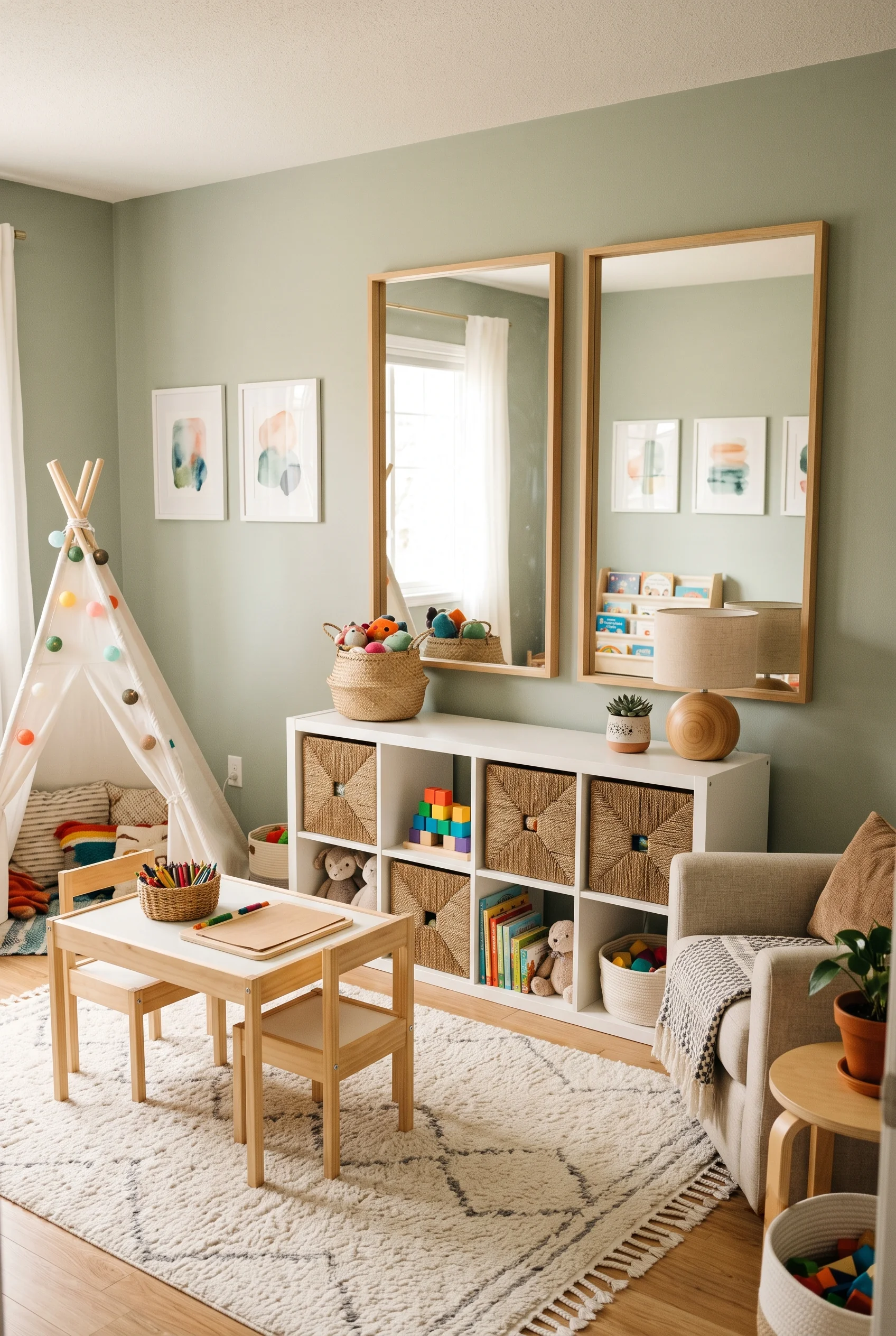
Two oversized wood-framed mirrors hang above the storage console, effectively doubling the space. They bounce window light into the far corners, reflect the little teepee back at itself, and make the sage walls feel twice as deep.
Mirrors are also classic Montessori tools. Toddlers study their own faces the way scientists study anything, so a mirror hung within view of the play table quietly serves self-discovery while it flatters the square footage.
Modular Pieces, Endless Rearrangements
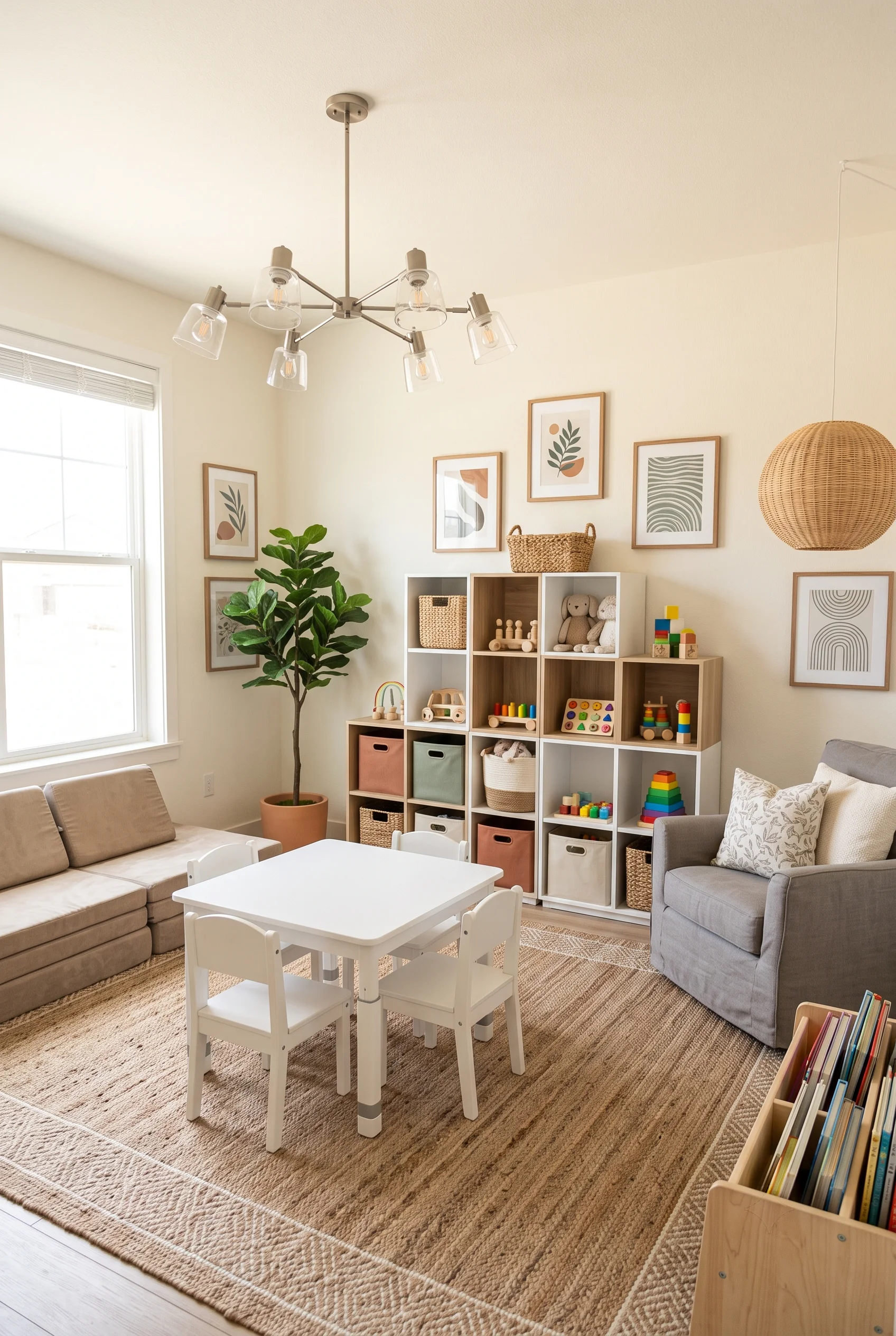
The sofa comes apart on purpose. Its low modular cushions rebuild into forts, ramps, and reading piles, while the stepped cube shelf beside the window can be reconfigured as collections grow and shrink.
Modular is the quiet hero of small kids’ spaces. Nothing needs replacing when the play changes, only rearranging, and the rattan pendant and neat rows of bins keep the whole setup reading as a considered room rather than play equipment.
A Room That Stays Theirs for Years
The best kids’ spaces think in years, not seasons. They’re zoned for how a child plays now, personalized enough to feel truly owned, and flexible enough to become something else entirely by the next birthday or two. These final four rooms take the long view, which happens to be the most budget-friendly decision in this whole post.
Every Corner Has an Assignment
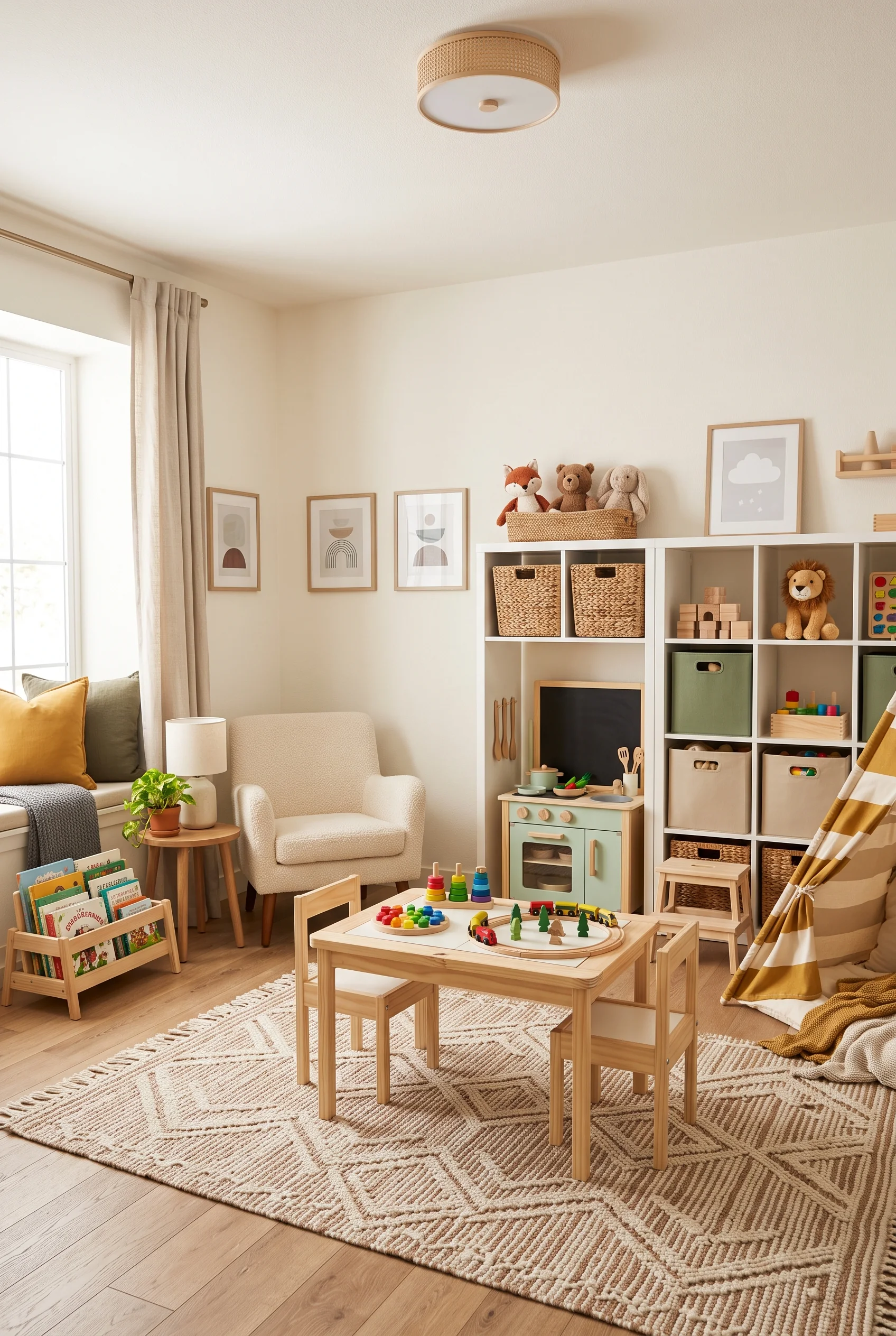
The kitchen corner cooks, the reading chair reads, and the train table runs on schedule. Each activity has a defined patch of the room, with its storage parked exactly where it happens.
Focus follows the floor plan. A child who settles into the book caddy-corner stays with books because nothing from the kitchen or the blocks is shouting for attention across the room. Even a modest space holds three little worlds when the borders are clear.
Labeled Baskets, Zero Guesswork
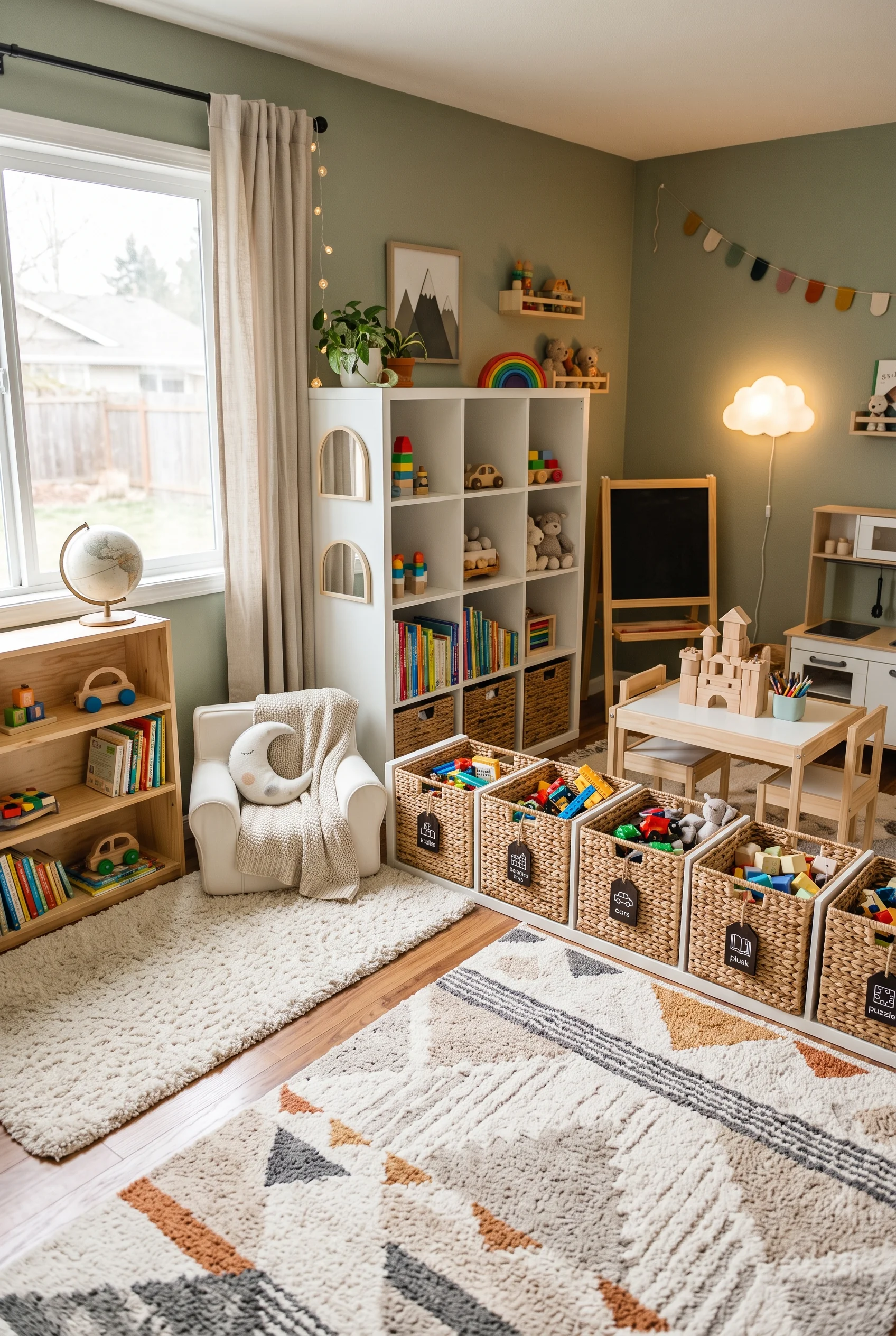
Every basket wears a name tag. A row of wicker bins lines the low white console, each labeled, so tidying becomes a one-step job of dropping things into the right mouth.
The tags double as early reading practice, and the baskets themselves are handsome enough for a living room. Chalkboard easel, play kitchen, moon-pillowed reading chair: the rest of the space stays busy, but the storage keeps it honest.
The Room That Changes Jobs as They Do
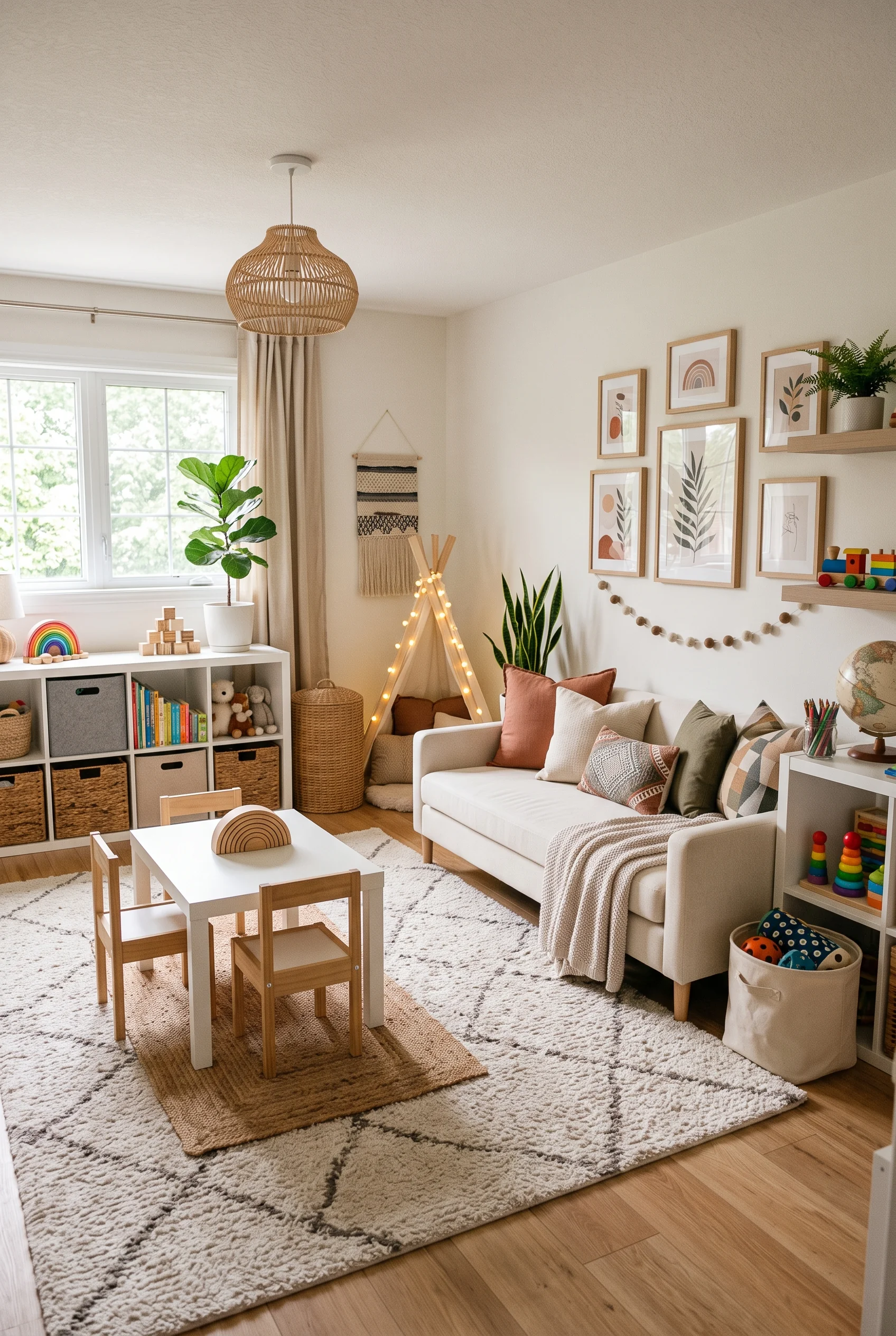
By day, the sofa hosts stuffed-animal audiences; by evening, it reverts to grown-up seating. The lit teepee, the kids’ table, and the basket-filled shelf all hold their own beside adult furniture, so nothing gets dismantled when company comes.
Every kid element here can graduate. The table becomes a homework desk, the baskets swallow whatever the next age brings, and the teepee eventually hands its corner to a proper reading chair. The room grows up in stages, no renovation required.
One Small Room, Endless Room to Grow
Twenty-seven rooms, one thread running through them all: a child-sized world doesn’t need a large one. Every space in this collection trusts the same handful of moves. Keep the palette quiet and the materials natural. Put what the child needs at the child’s height, limit what’s out at once, and let storage climb the walls or hide inside the furniture instead of eating the floor.
None of it requires a dedicated playroom. Most of these ideas work in a corner of the living room, one end of a hallway, or half of a bedroom, and if siblings are splitting that square footage, my shared kids’ bedroom ideas cover that exact balancing act.
Start small. Pick the single idea that fits the space you actually have: a teepee in an empty corner, labels on the baskets you already own, one shelf lowered to toddler height. Watch what your child does with it for a week, then add the next piece. Montessori room ideas work precisely because they’re incremental; the room is never finished, it simply keeps pace with the person growing inside it.
And when the play kitchen eventually graduates to a desk, and the picture labels turn into written ones, the bones you chose will still be doing their job. Beautiful now, useful for years, and calm the entire time. Love these ideas? Pin your favorites for the next rainy-weekend project.