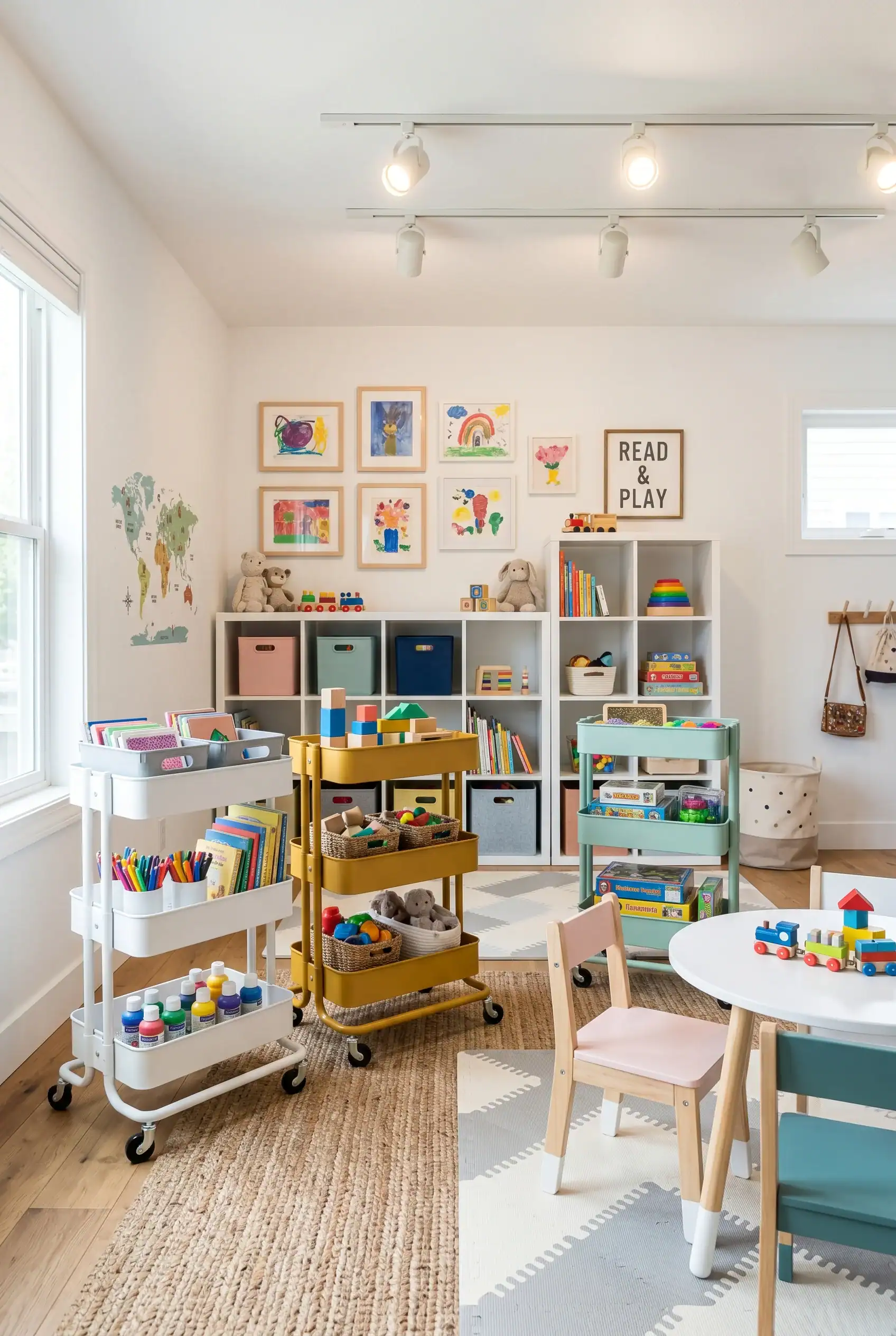
25 Montessori Playroom Ideas That Encourage Independent Play and Learning
A thoughtfully designed Montessori playroom does more than keep toys organized. It gives children the freedom to explore, make choices, and engage with their environment on their own terms.
While Montessori spaces are often known for their calm aesthetic, the real goal is independence. Low shelves, accessible materials, and clearly defined activity areas help children navigate the room confidently without relying on constant adult direction.
The same principles can extend throughout the home. Many families find that a playroom works best when paired with intentional Montessori toy storage that makes materials easy to see and return, as well as a Montessori bedroom that supports independence beyond playtime.
The most inviting Montessori playrooms aren’t necessarily the largest or the most expensive. They’re the spaces that feel welcoming, organized, and easy for children to use every day.
Whether you’re designing a dedicated playroom, a shared family space, or a small learning corner, these Montessori playroom ideas offer plenty of inspiration for creating a room that encourages curiosity, concentration, and independent play.
DISCLOSURE: Some of the links provided on this page are affiliate links. This means if you choose to make a purchase through these links, we may receive a small commission at no extra cost to you.
Build a Child-Centered Foundation
One of the defining characteristics of a Montessori playroom is that children can comfortably interact with the space without constantly asking for help.
Furniture, storage, and materials are scaled to their size, creating an environment that feels welcoming rather than overwhelming. Before adding activities, decor, or organizational systems, it helps to focus on the room’s foundation.
Use Child-Height Furniture
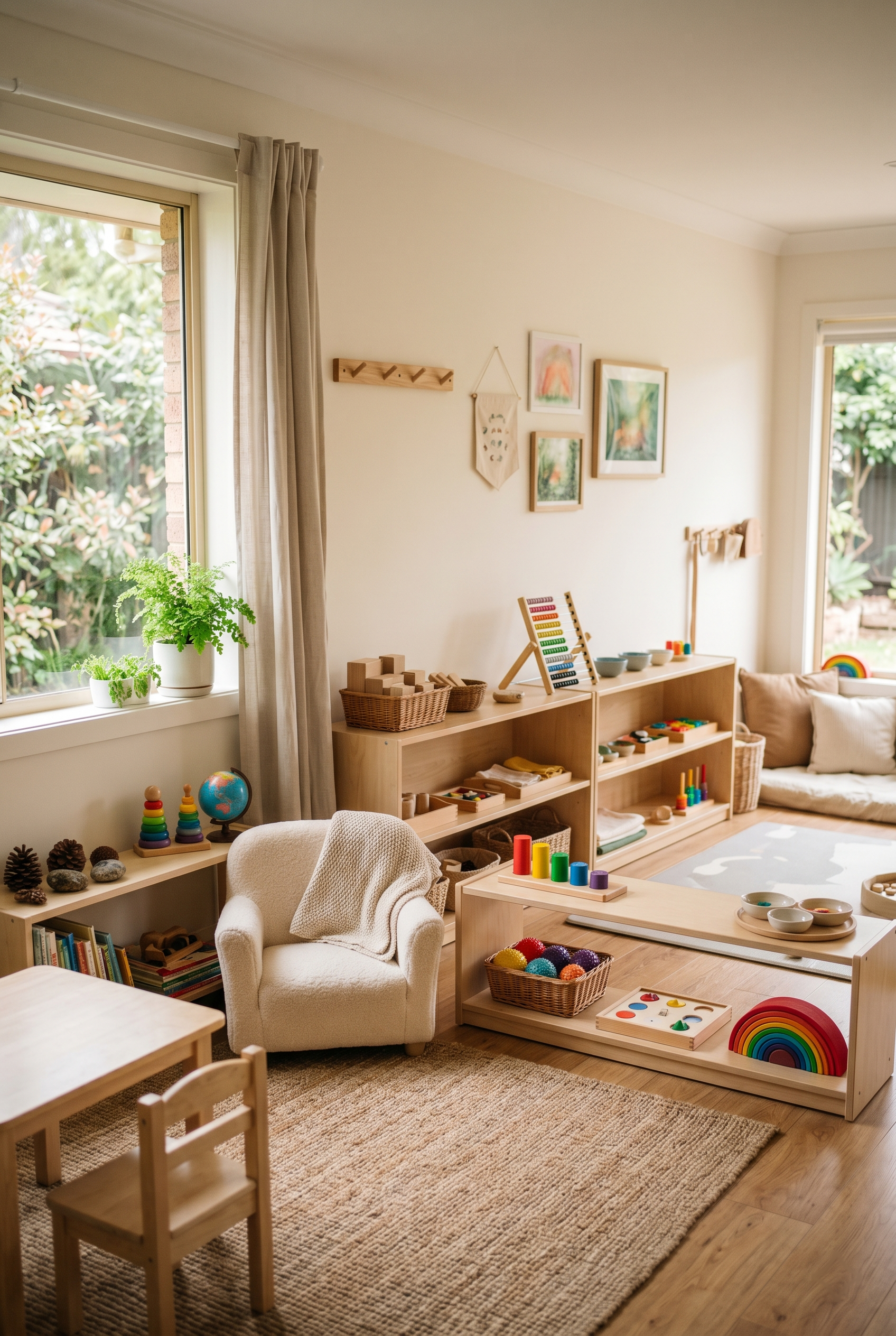
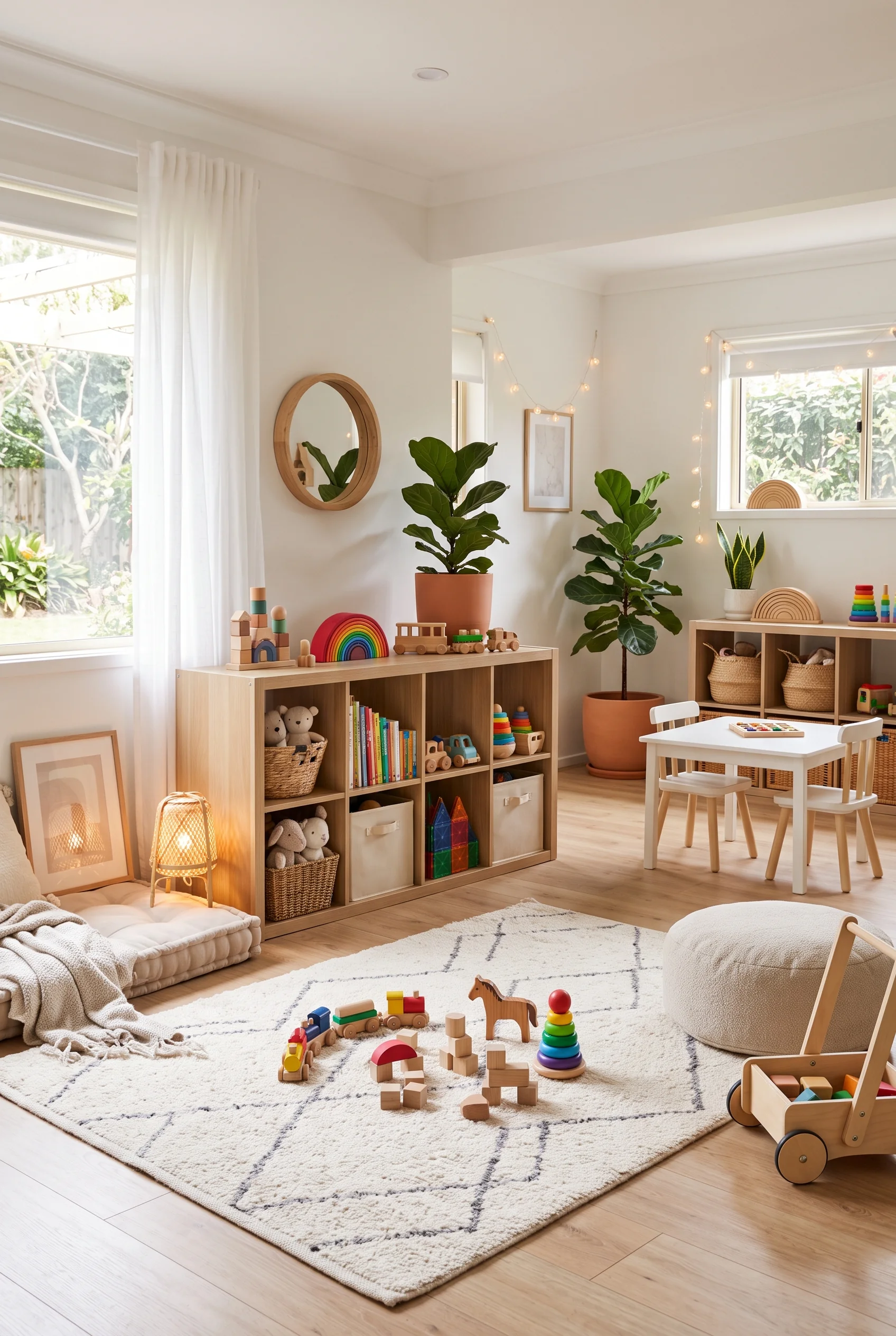
There’s something refreshing about a playroom that feels designed for children rather than adapted from an adult space. The low table and chairs in this setup create a natural place for puzzles, drawing, building activities, and independent work.
Because everything is sized appropriately, children can move in and out of activities with very little assistance. The room feels approachable, which often leads to longer periods of focused play.
Choose Low Open Shelving
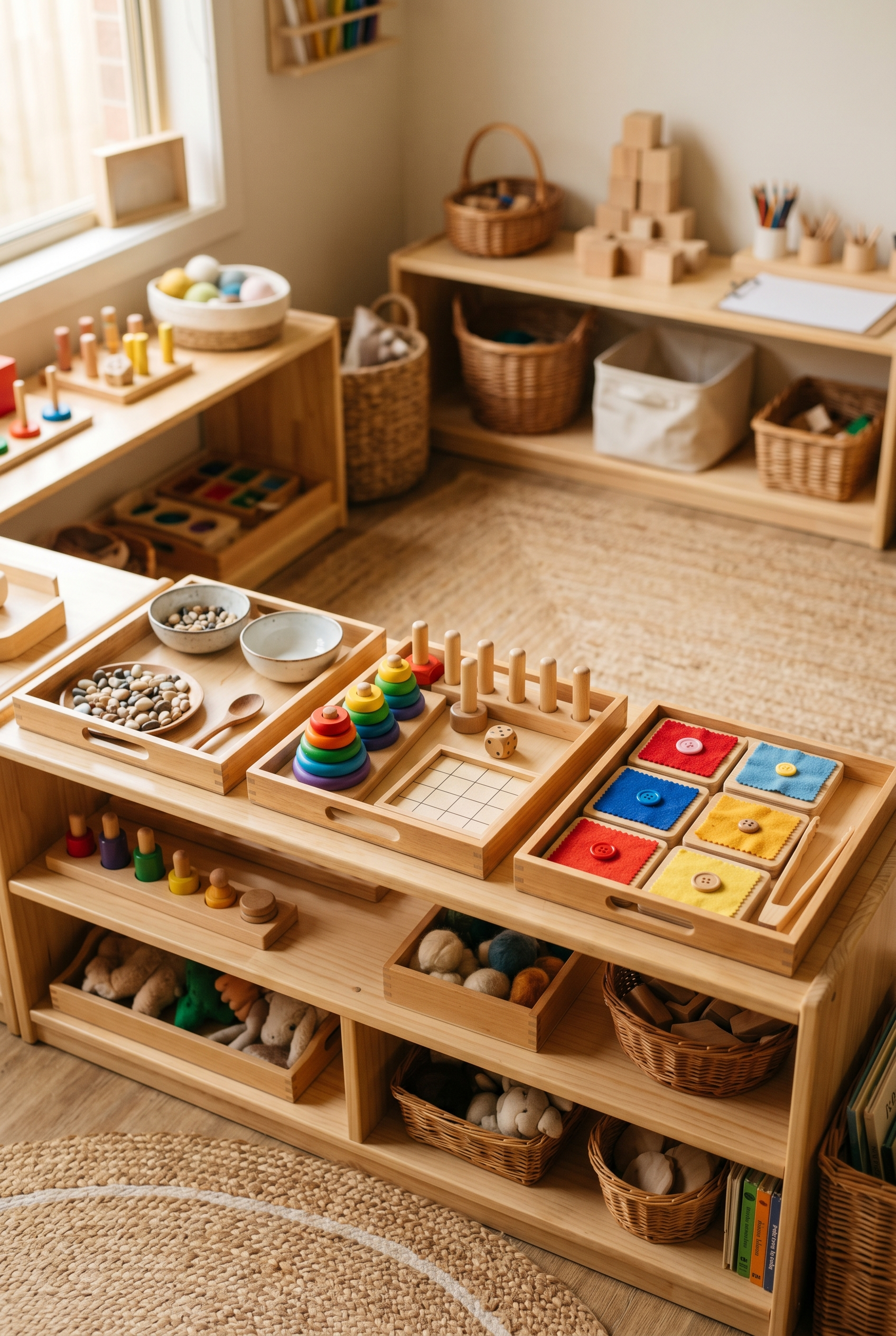
Open shelving changes the way a room functions.
Instead of digging through toy bins or searching for missing pieces, children can see what’s available at a glance. Materials become part of the room rather than hidden away inside storage containers.
The mirror adds another thoughtful layer, reflecting light throughout the space while encouraging self-awareness and independent movement.
Display Toys Instead of Storing Them Away
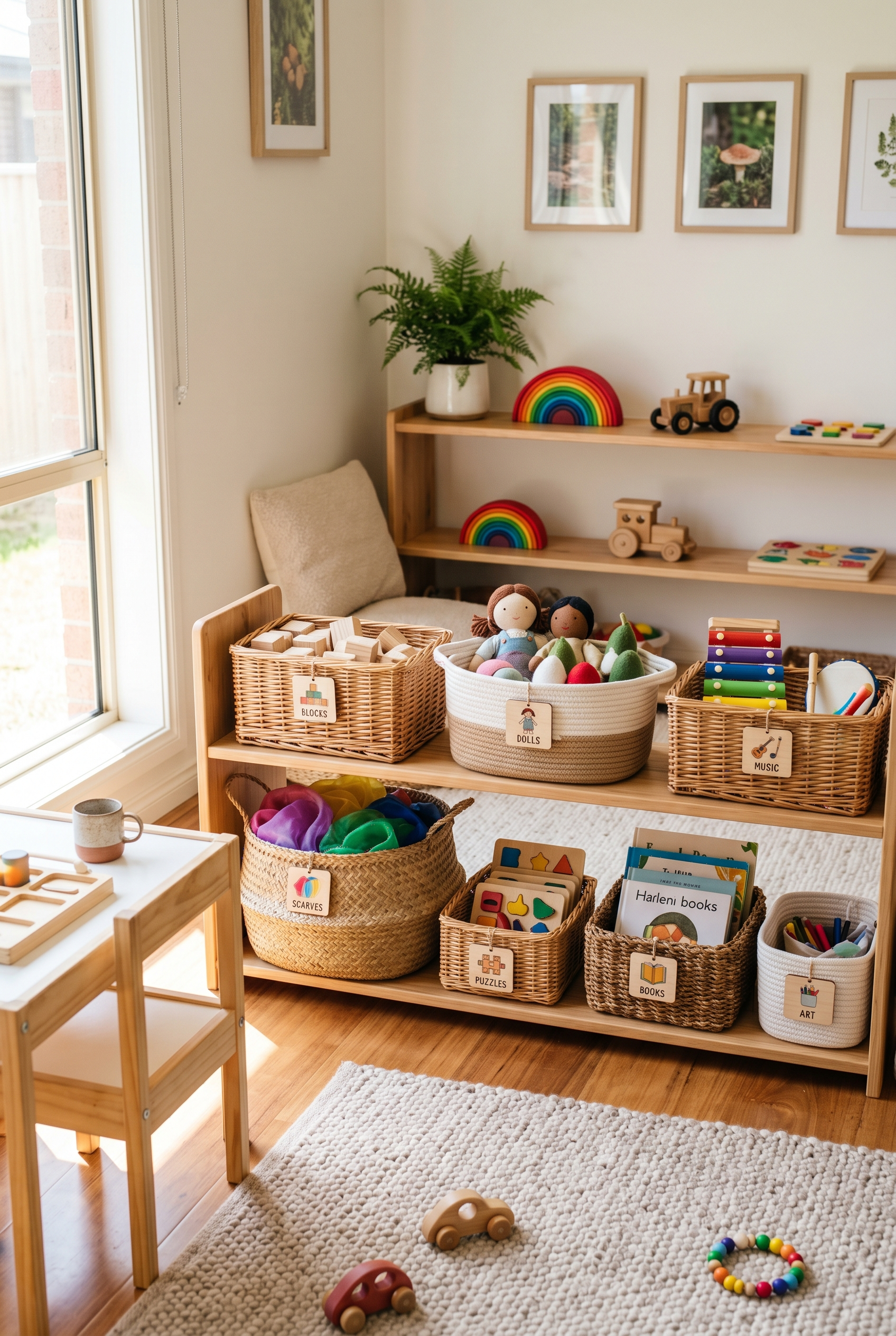
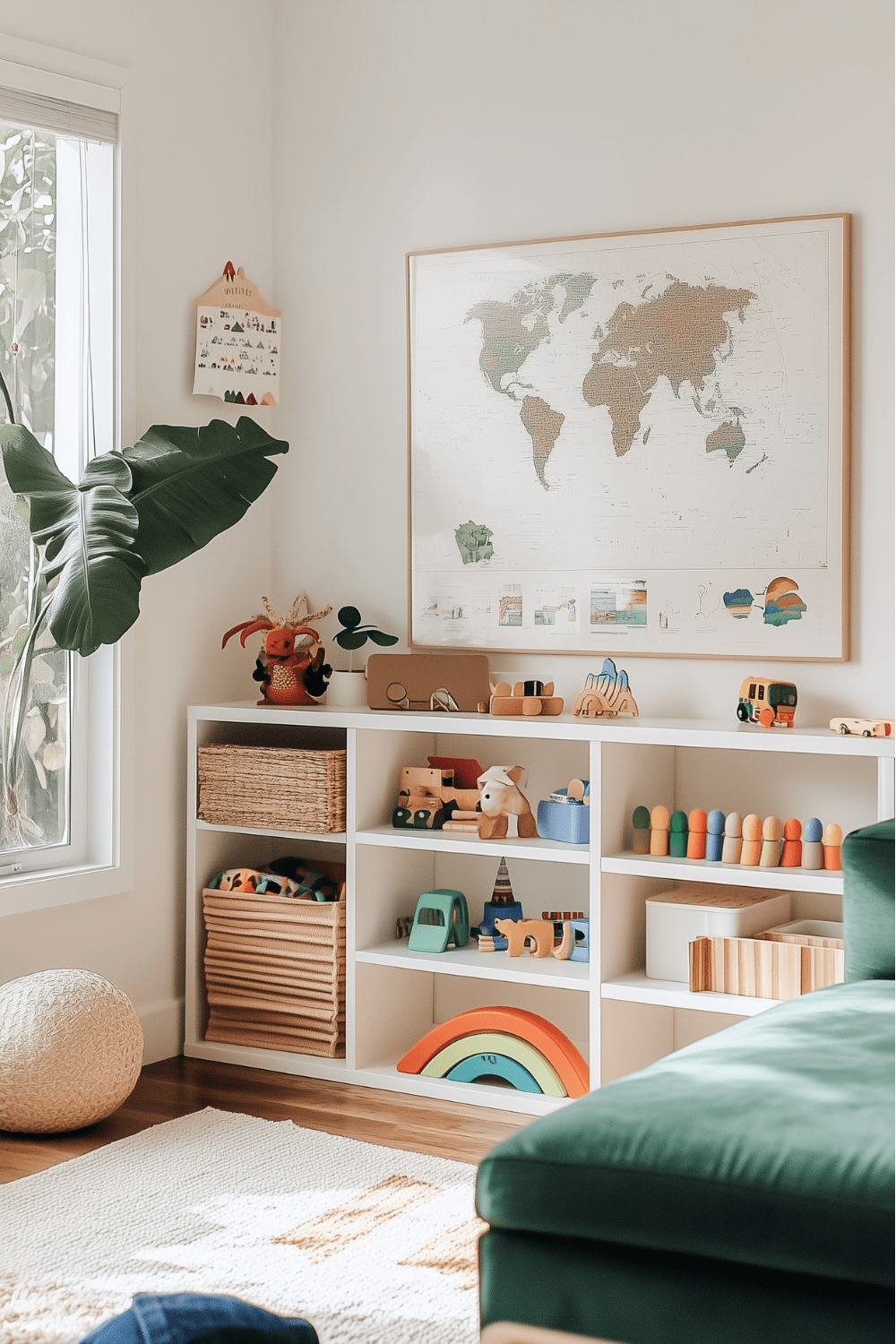
A curated shelf often feels calmer than a room filled with toy boxes.
Rather than offering every toy at once, this setup presents a smaller collection of materials in a way that feels inviting and easy to understand. The visual simplicity helps each activity stand out while giving the room a more organized appearance overall.
Organize Materials Into Simple Categories
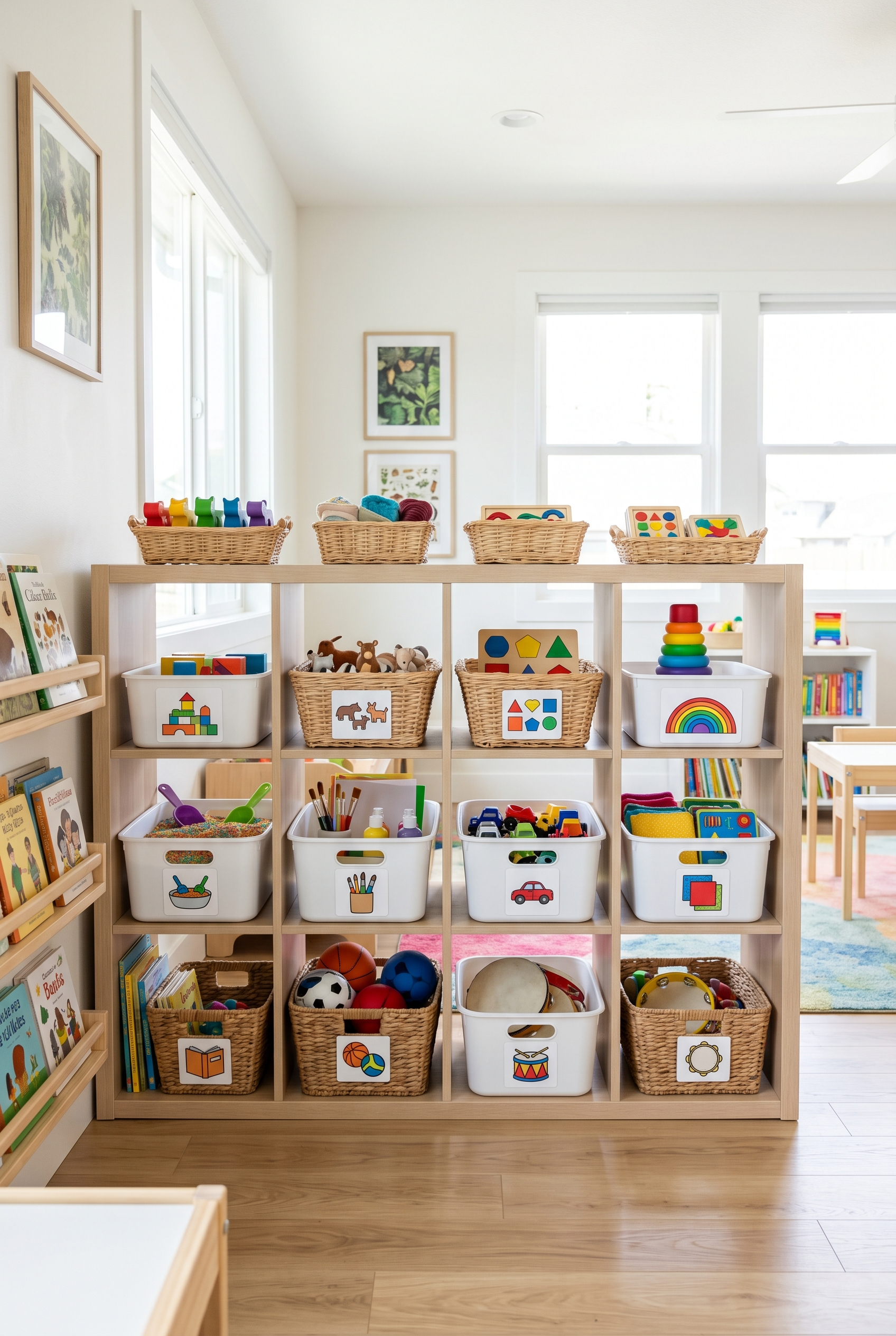
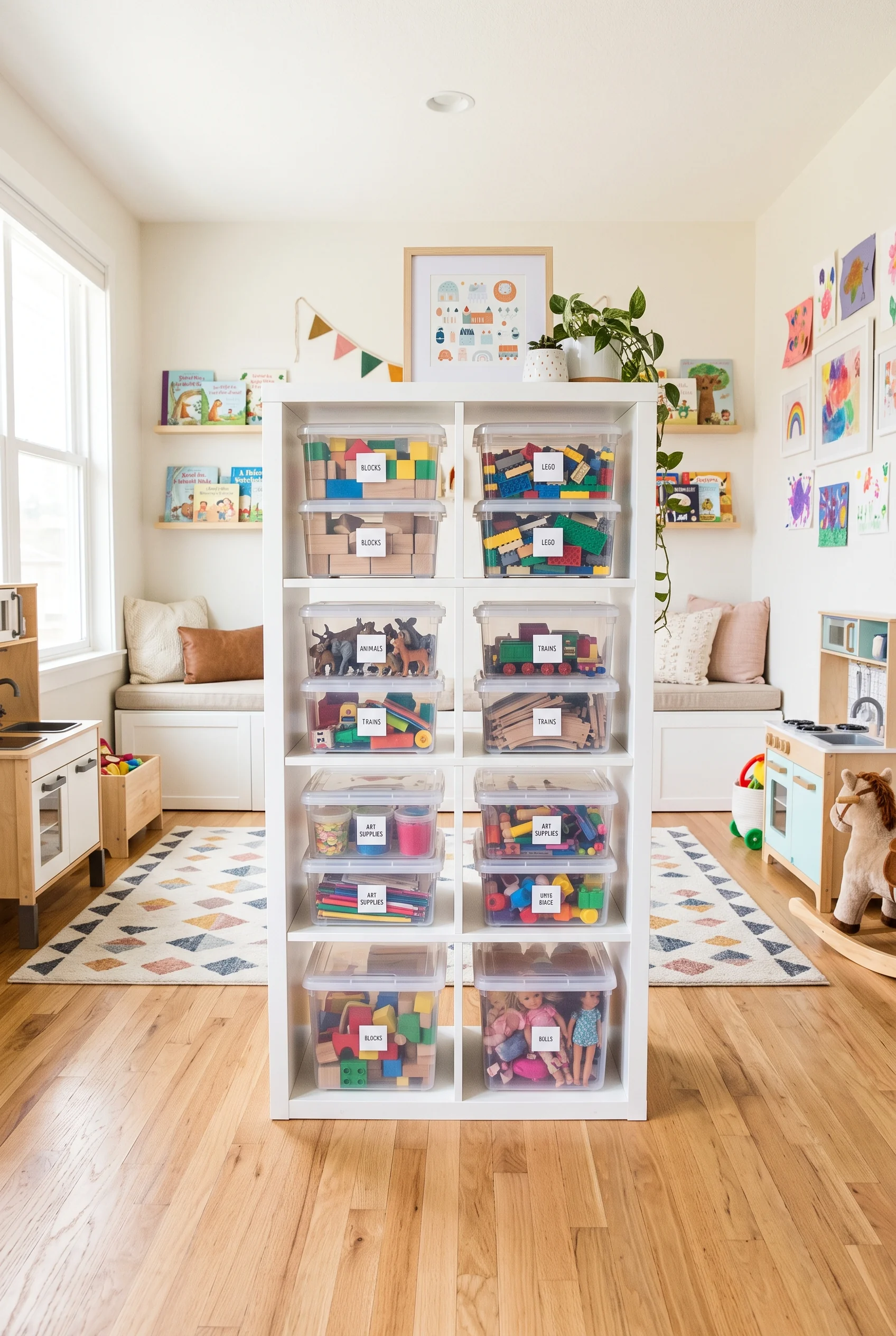
One of the easiest ways to make a playroom feel more functional is by grouping similar materials together.
Books stay with books. Art supplies stay with art supplies. Building materials have a dedicated home. Labels and clearly defined sections create a sense of order without making the room feel rigid or overly structured.
When children know where things belong, cleanup feels like a natural part of play rather than a separate chore.
SHOP THE ROOM
Create Spaces That Invite Learning
The most memorable Montessori playrooms tend to have a sense of rhythm. Include spaces for reading, creating, quiet reflection, and active exploration. Rather than filling every corner, these rooms leave enough breathing room for children to settle into an activity and stay there for a while.
Design a Dedicated Reading Nook
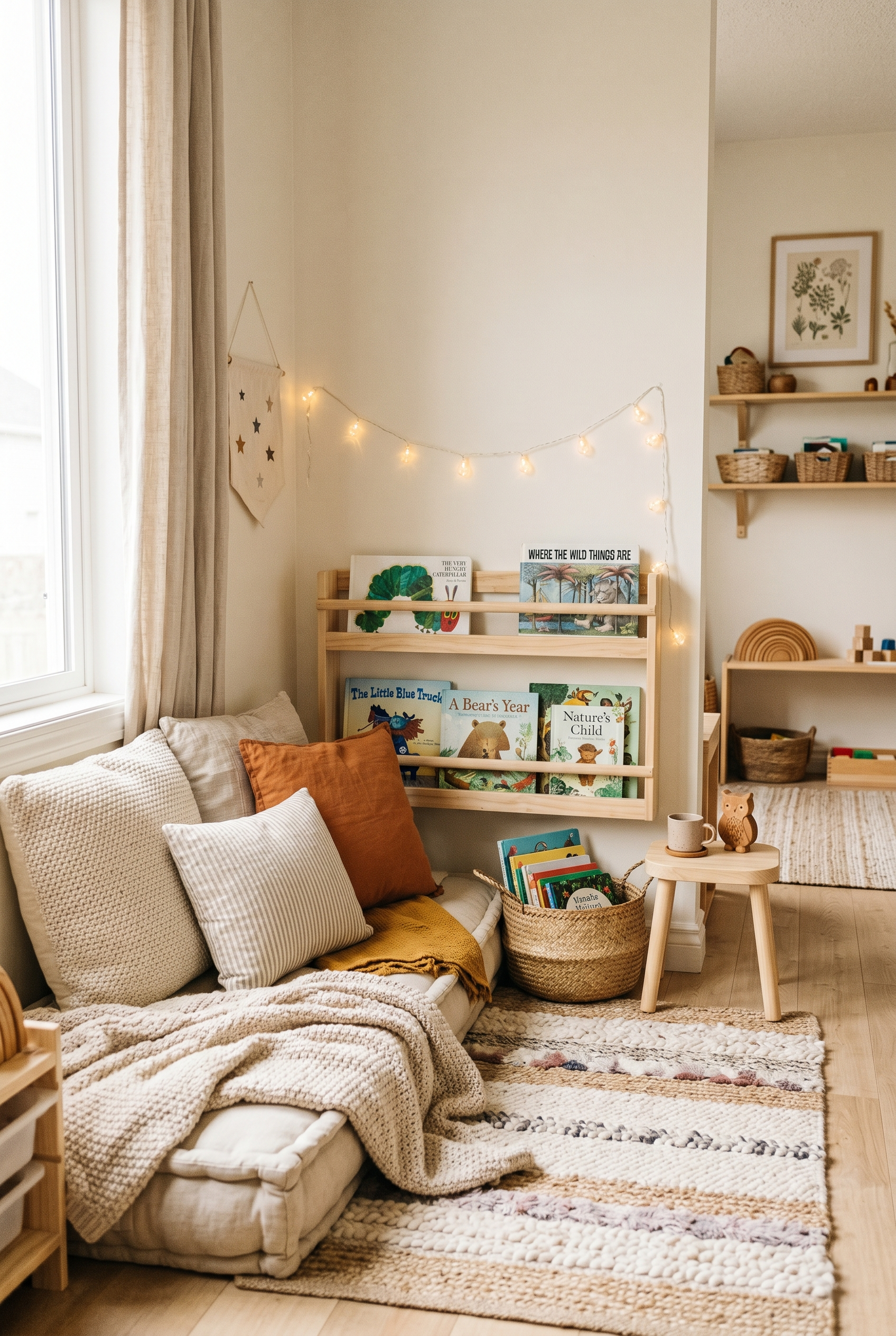
A well-designed reading nook provides a dedicated spot for books.
The floor cushions, accessible shelving, and soft textures create a space that feels separate from the more active play areas. Even in a larger playroom, carving out a quiet corner like this helps balance the room’s energy and encourages children to spend time with books throughout the day.
Keep Books Front-Facing
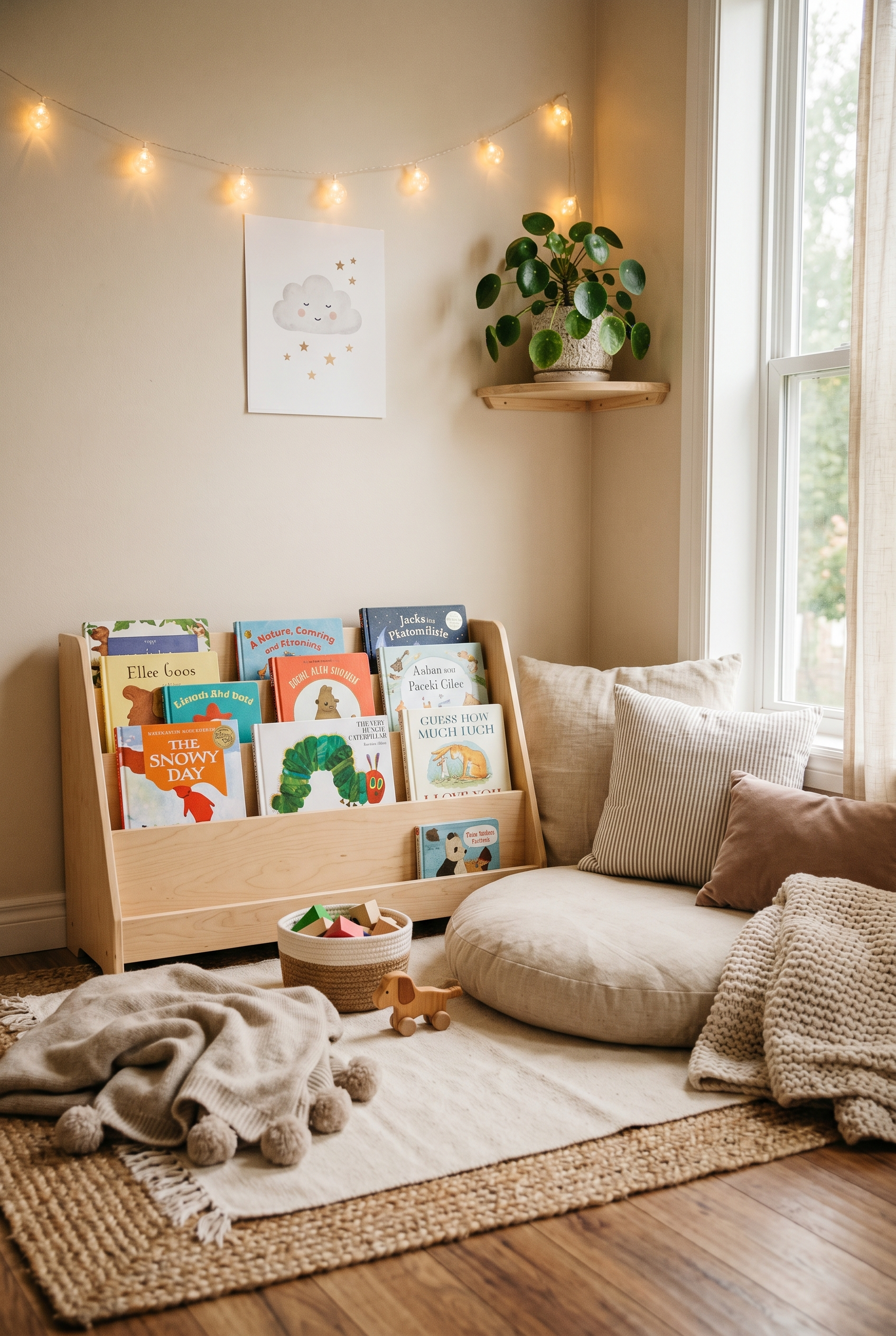
Children are naturally drawn to book covers.
Displaying books front-facing makes it easier for young readers to browse independently and select stories based on visual interest. It also adds color and personality to the room without relying on excessive wall decor.
A small collection displayed this way often gets more attention than an overflowing bookshelf packed with titles.
Create a Calm Corner for Quiet Time
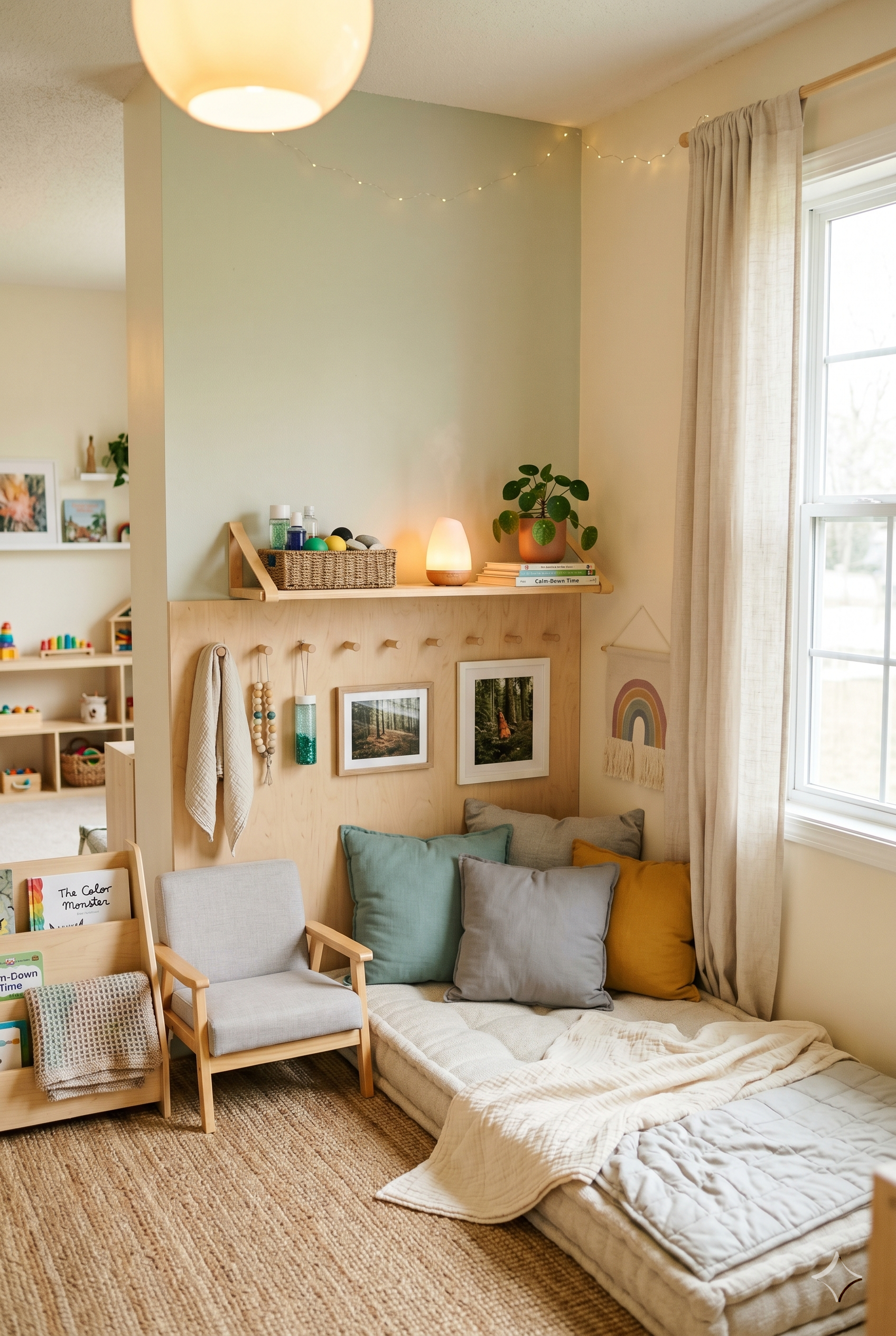
Not every moment in a playroom needs to be active.
This cozy setup feels like a natural place to pause, flip through a favorite book, or simply recharge after a busy morning. The soft lighting, neutral palette, and layered textures create a peaceful atmosphere without feeling overly styled.
The best calm corners feel comforting, not isolated. They’re integrated into the room while still offering a sense of retreat.
Use Mirrors to Encourage Independence
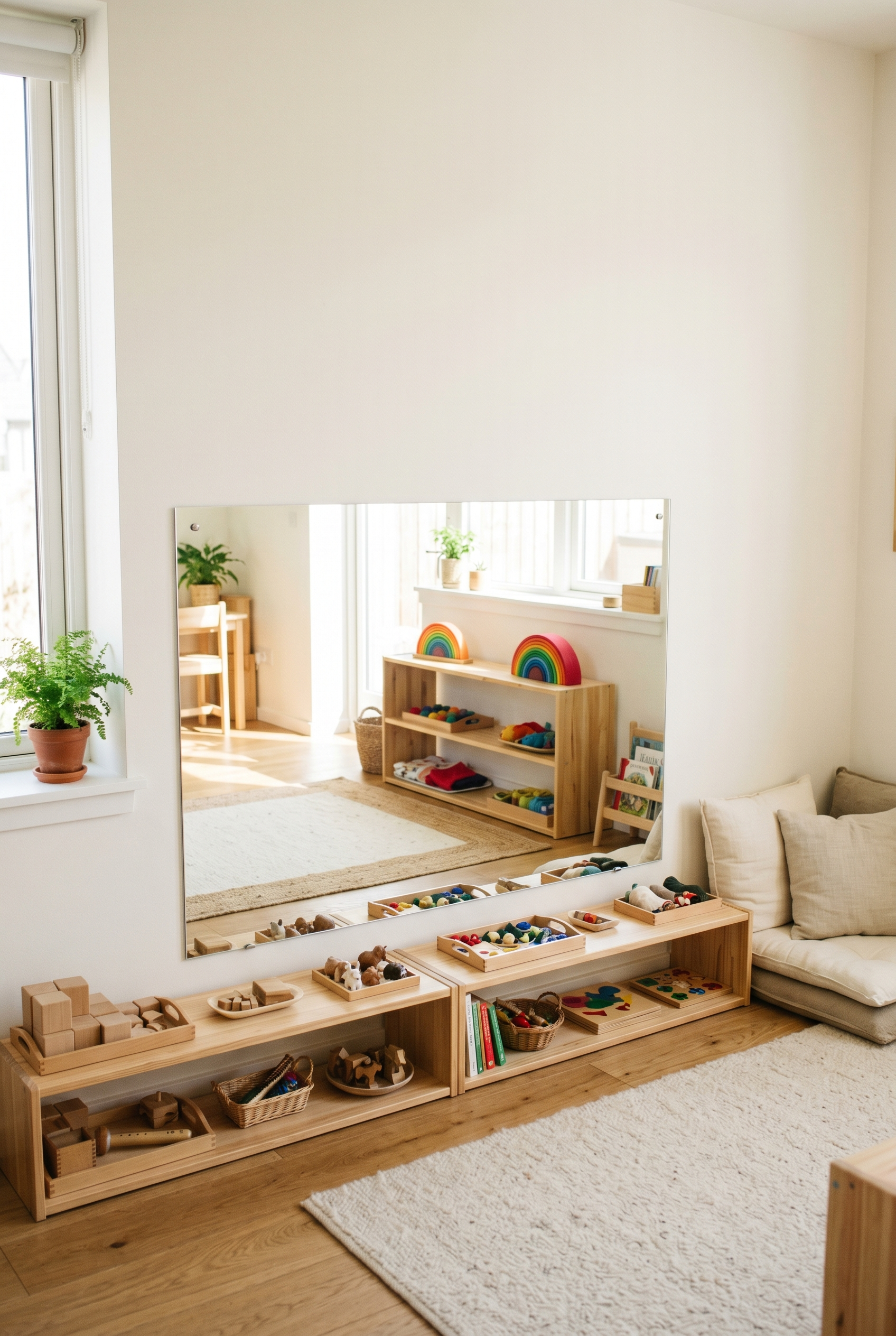
Mirrors are a classic Montessori element that also enhances the room’s visual appeal.
Positioned at child height, they allow children to observe their movements, expressions, and activities as they play. At the same time, mirrors reflect natural light, making smaller spaces feel brighter and more open.
Add a Learning Wall
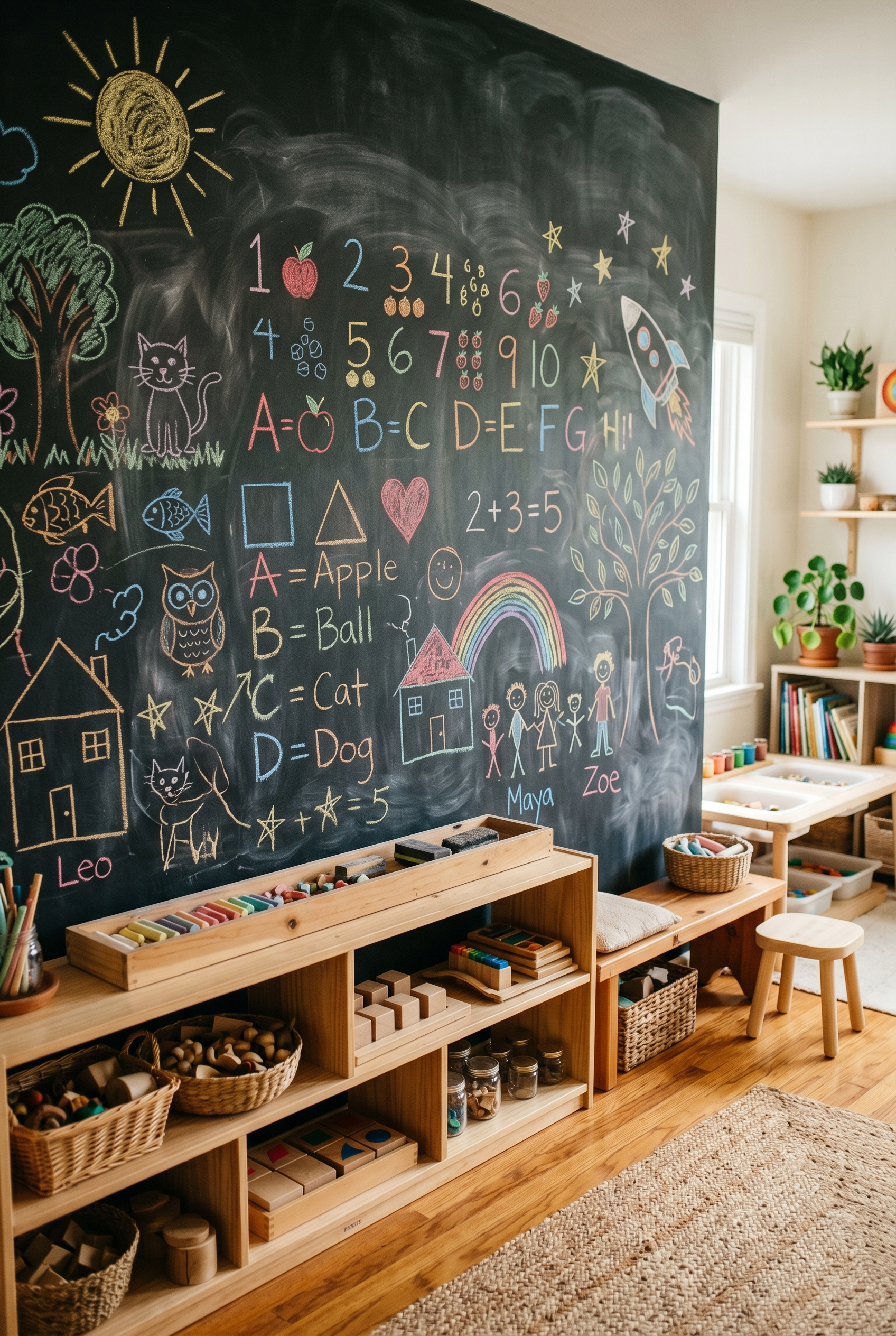
The chalkboard wall becomes part activity station, part rotating display.
Unlike permanent wall decor, it evolves alongside the child using the space. Drawings, letters, numbers, and creative experiments can all live here temporarily before making room for something new.
That flexibility keeps the room feeling fresh while encouraging everyday creativity.
SHOP THE ROOM
Encourage Hands-On Exploration
One reason Montessori playrooms feel so engaging is that they invite participation. Materials are arranged thoughtfully, activities are easy to access, and children are encouraged to interact with the environment rather than simply observe it.
Many of the most successful Montessori spaces rely on a simple principle: make interesting things visible and accessible.
Include a Sensory Play Area
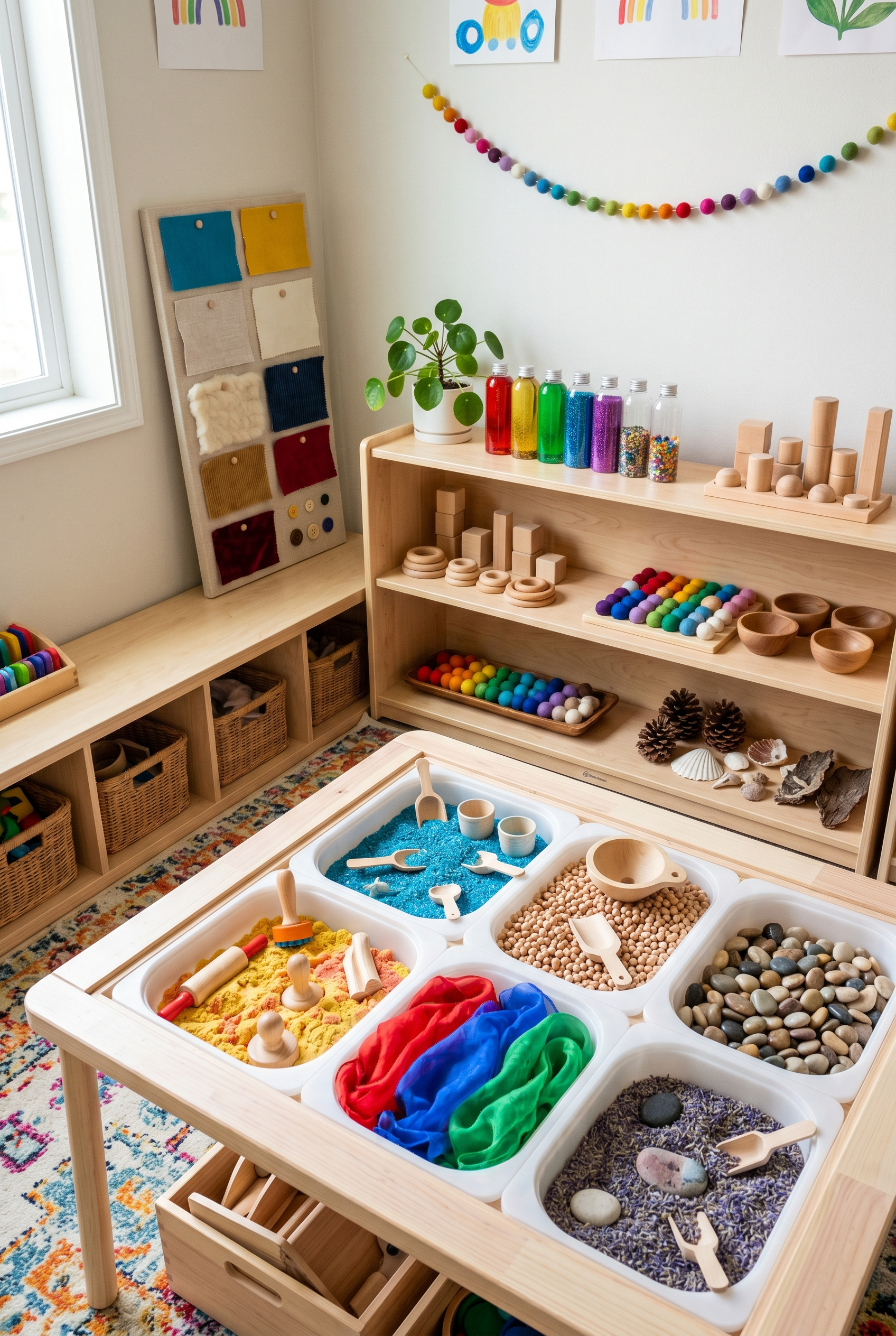
Sensory activities bring texture, movement, and discovery into everyday play.
This setup feels organized without losing its sense of fun. Everything has a place, yet the materials still invite experimentation. Whether children are scooping, sorting, pouring, or exploring different textures, sensory play supports concentration while encouraging curiosity.
The natural materials used throughout the space keep the area feeling cohesive with the rest of the room.
Create Invitations to Play
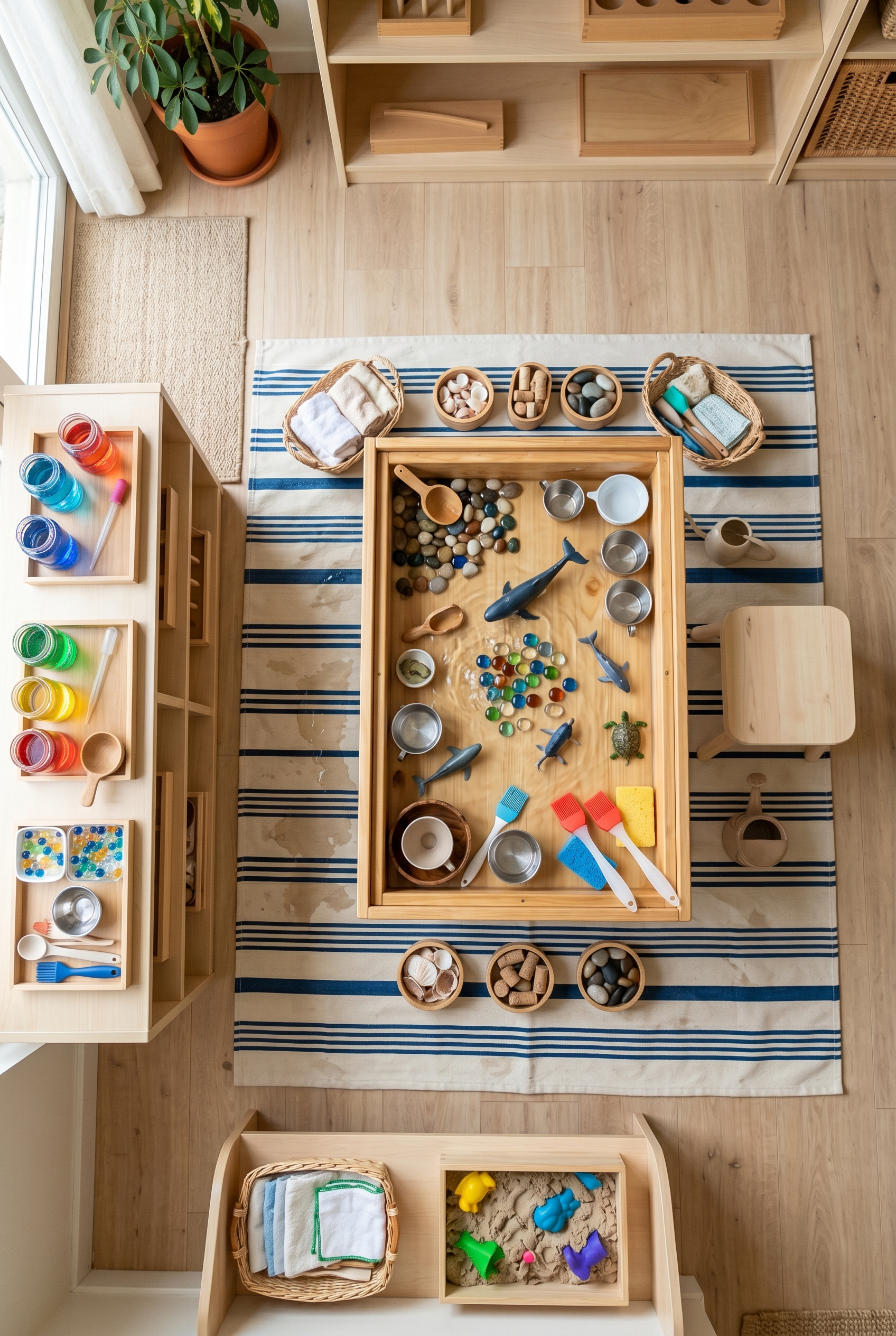
Some activities seem to pull children in immediately.
The carefully arranged materials in this water exploration setup create a clear invitation to engage. Nothing feels overwhelming. Instead, the activity is presented in a way that sparks curiosity while giving children the freedom to discover their own approach.
It’s a simple reminder that presentation often matters as much as the activity itself.
Introduce Open-Ended Toys
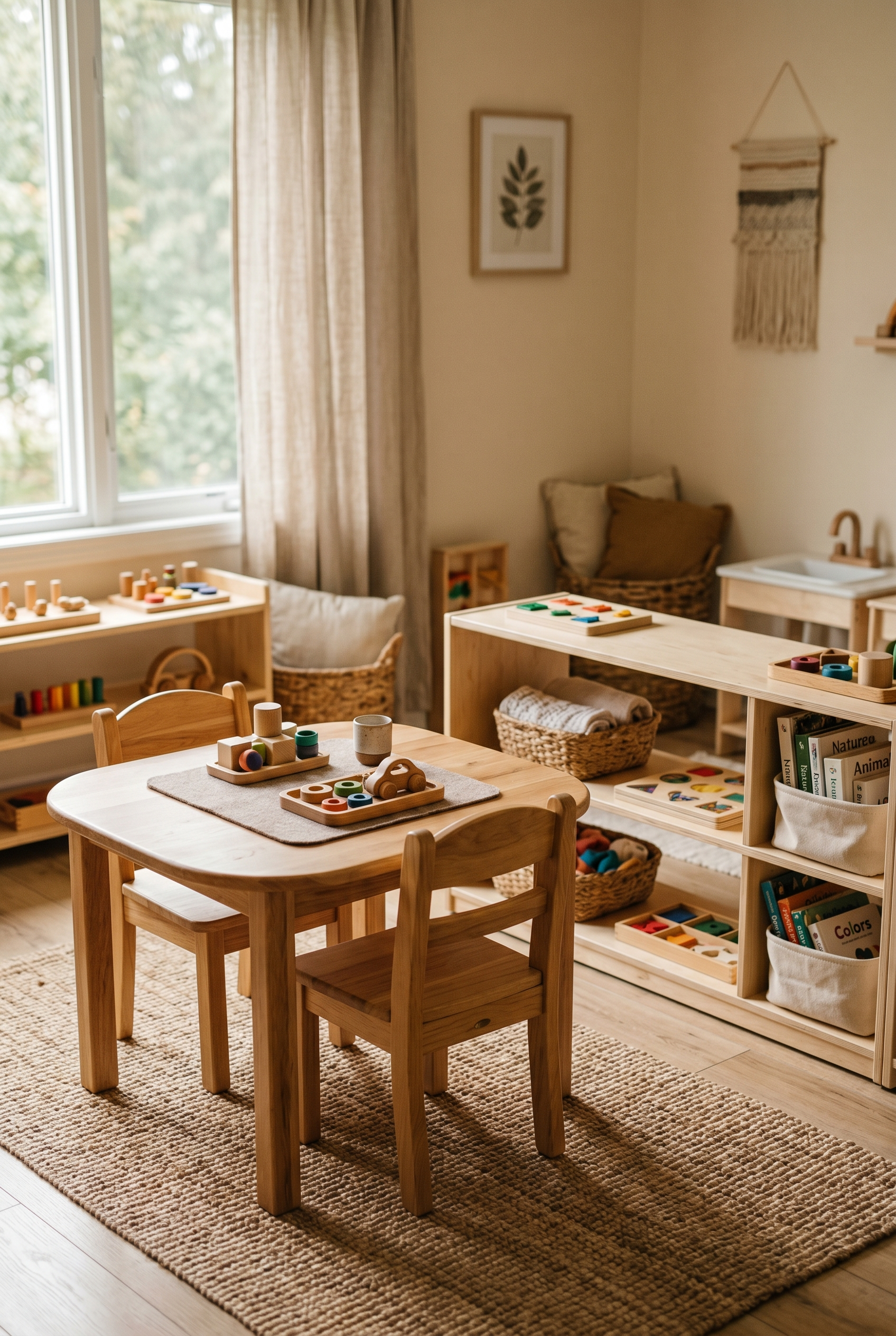
Open-ended materials tend to stay relevant longer because kids can use them in countless ways.
Blocks become buildings one day and roads the next. Loose parts transform into imaginative worlds. Rather than directing play toward a single outcome, these materials leave room for creativity and problem-solving.
That flexibility often keeps children engaged much longer than highly structured toys do.
Set Up an Accessible Art Station
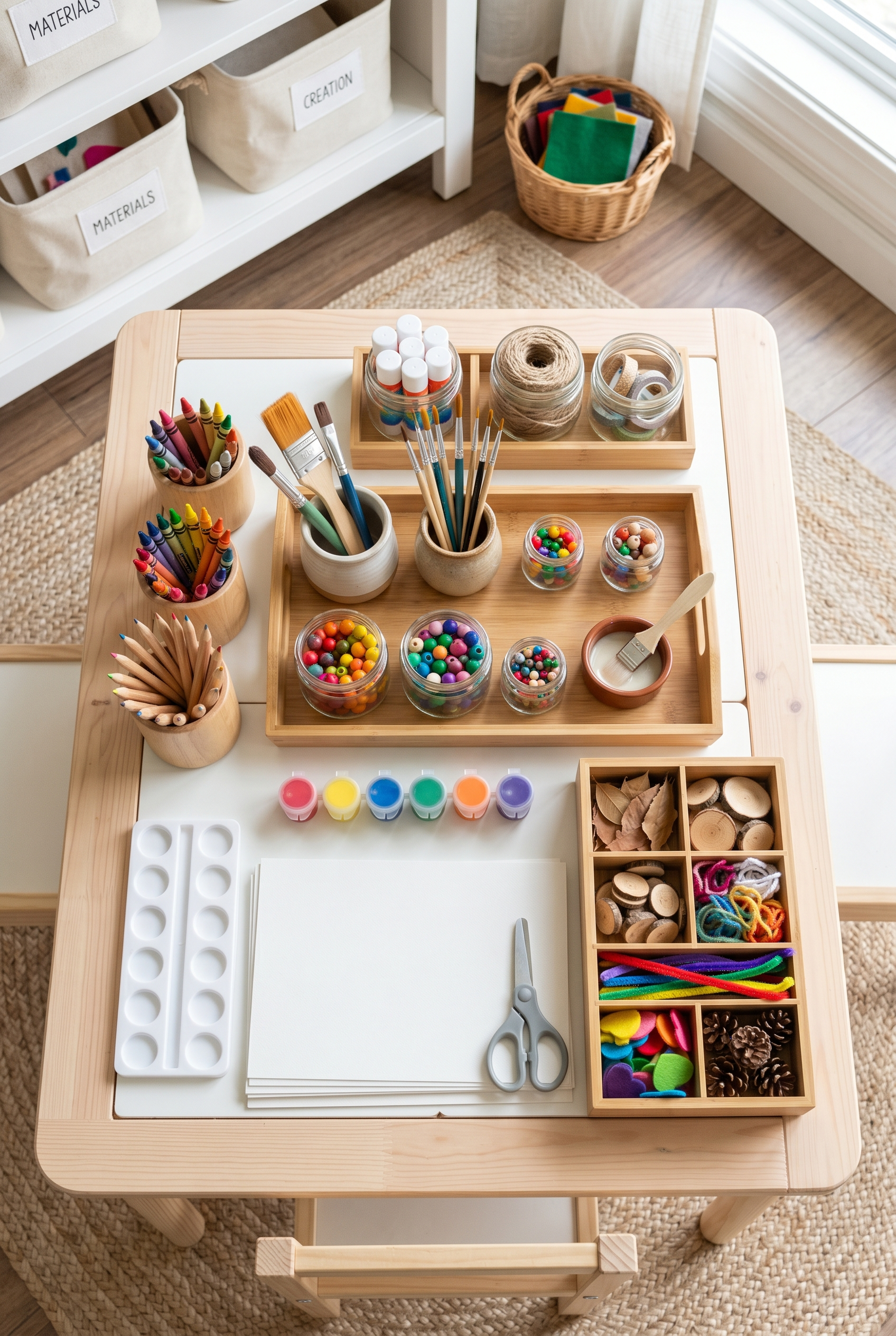
Art supplies become far more appealing when children can reach them independently.
This station feels creative without becoming chaotic. Materials are visible, organized, and ready to use, making it easy for children to move from inspiration to action without needing constant assistance.
The result is a space that supports spontaneous creativity throughout the day.
Keep Creative Supplies Within Reach
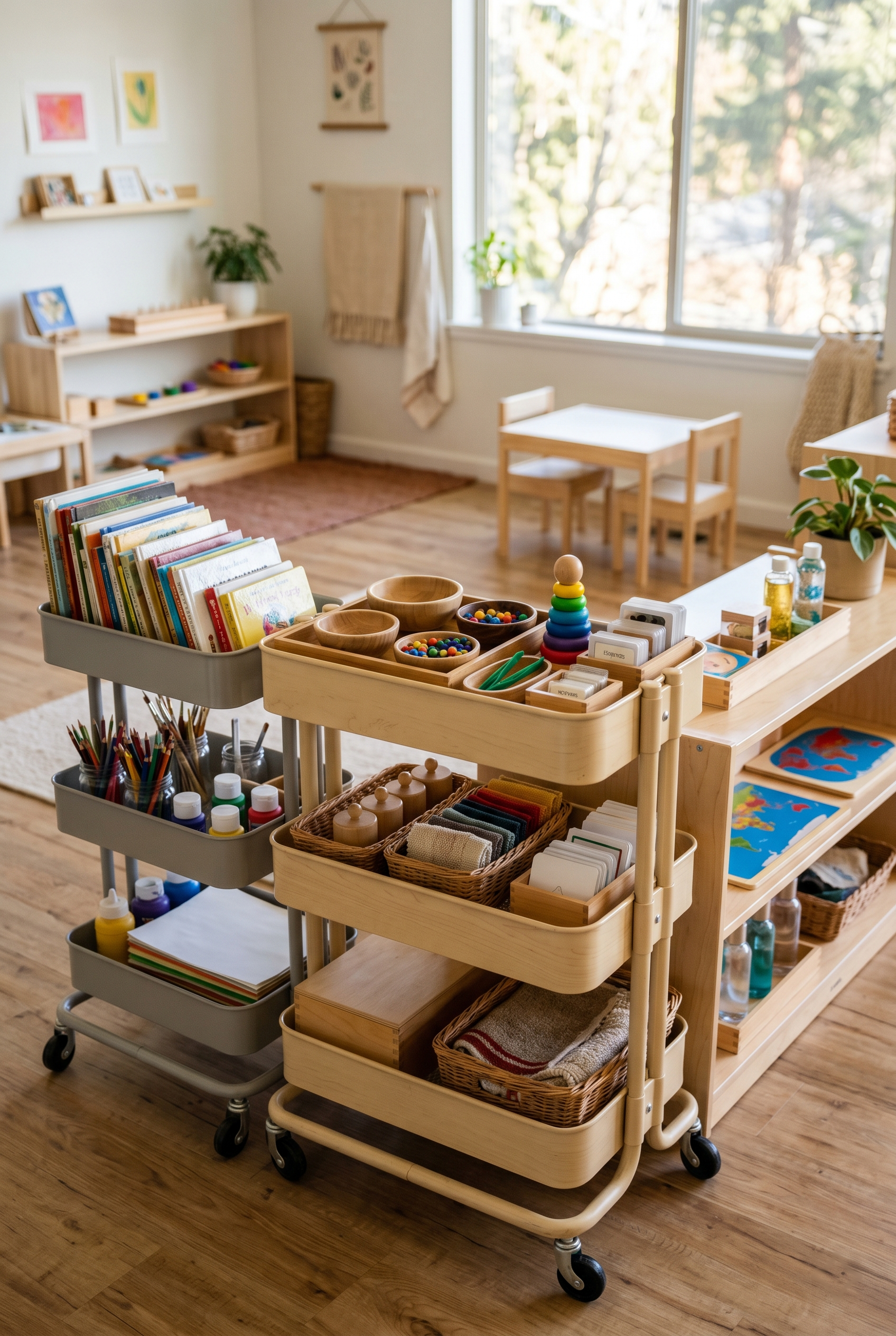
A dedicated workspace becomes even more useful when the tools needed for creating are close by.
Paper, crayons, markers, scissors, and other materials can live nearby without taking over the entire room. The arrangement feels intentional, giving children the freedom to start a project whenever inspiration strikes.
Rather than storing everything out of sight, this approach treats creativity as a natural part of everyday play.
SHOP THE ROOM
Incorporate Practical Life Activities
A Montessori playroom supports more than play. It also creates opportunities for children to participate in everyday routines, care for their environment, and build confidence through small acts of independence.
These spaces don’t need elaborate setups to be effective. Often, the simplest features have the biggest impact because they’re woven naturally into daily life.
Add Child-Level Hooks and Storage
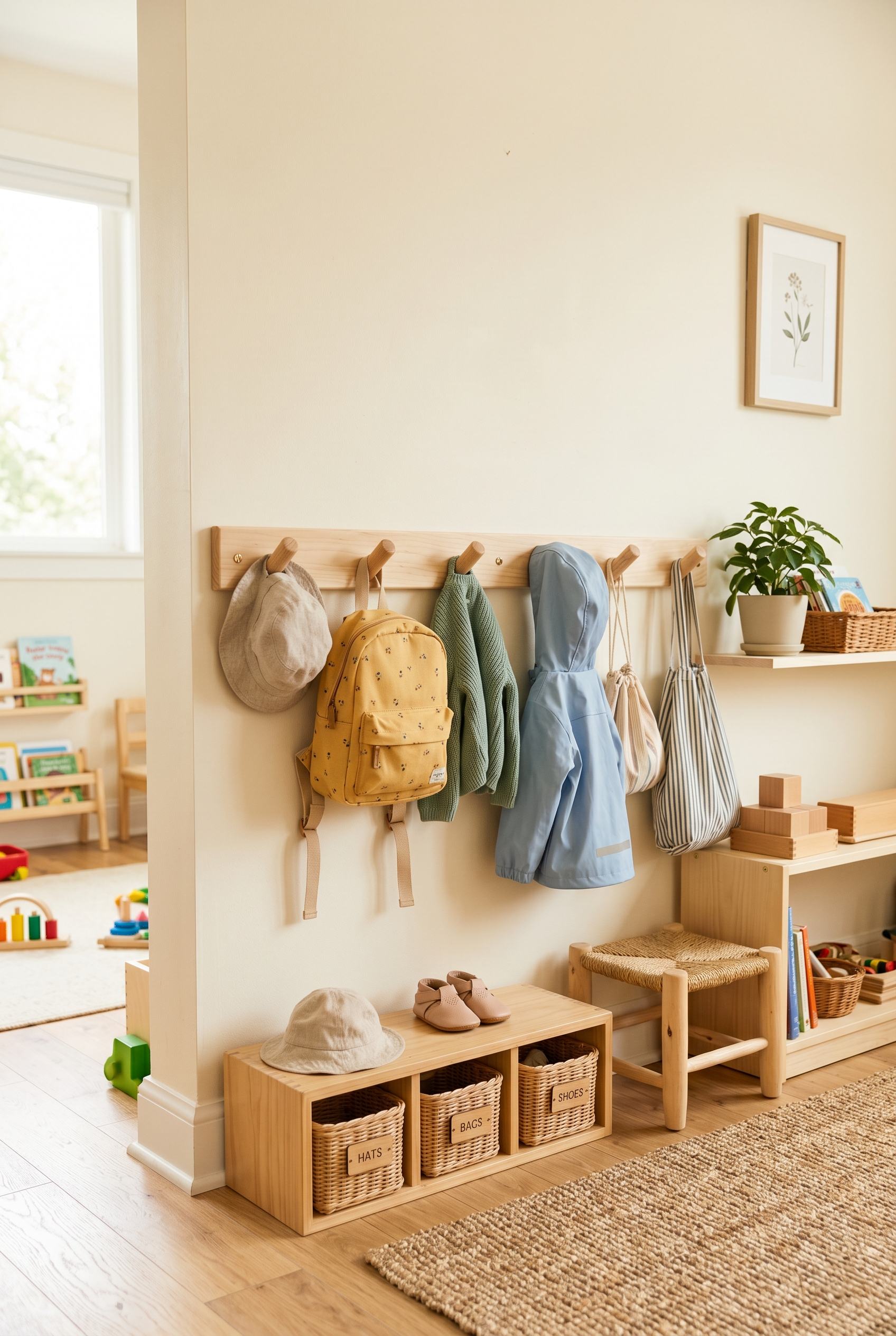
The placement of storage matters just as much as the storage itself.
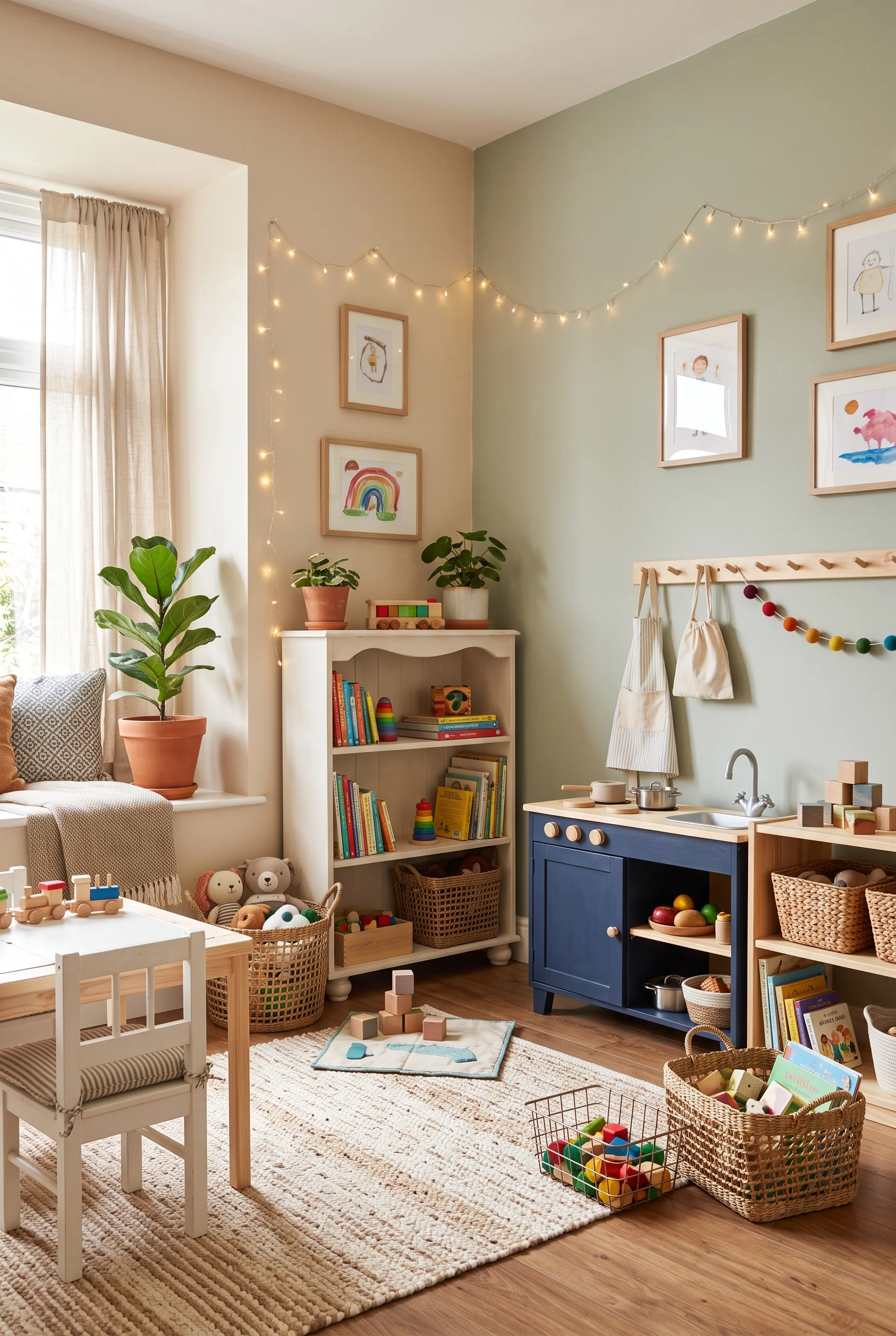
Hooks positioned at child height make it easy for children to hang jackets, bags, dress-up clothes, or aprons without assistance. It’s a small detail, but one that quietly encourages responsibility throughout the day.
The clean arrangement keeps the wall functional while maintaining the calm aesthetic for which Montessori spaces are known.
Create Spaces for Everyday Skills
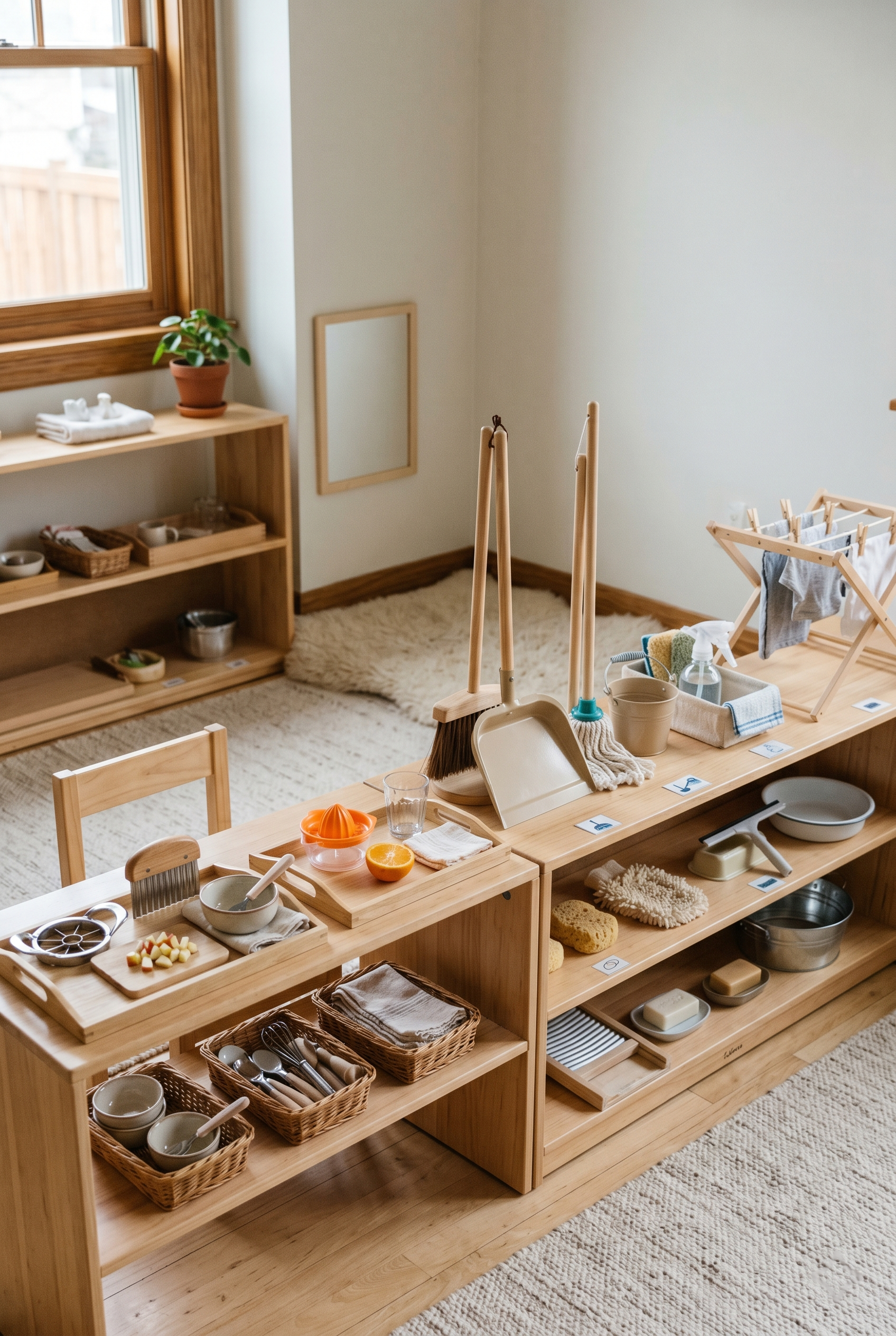
Some of the most engaging Montessori activities mirror real life.
Whether it’s arranging materials, caring for plants, preparing simple snacks, or organizing supplies, these practical tasks help children build confidence and feel genuinely useful. The room becomes more than a place for entertainment—it becomes a place where children actively participate in their environment.
The beauty of practical life activities is that they often require very little beyond thoughtful organization.
Encourage Responsibility Through Organization
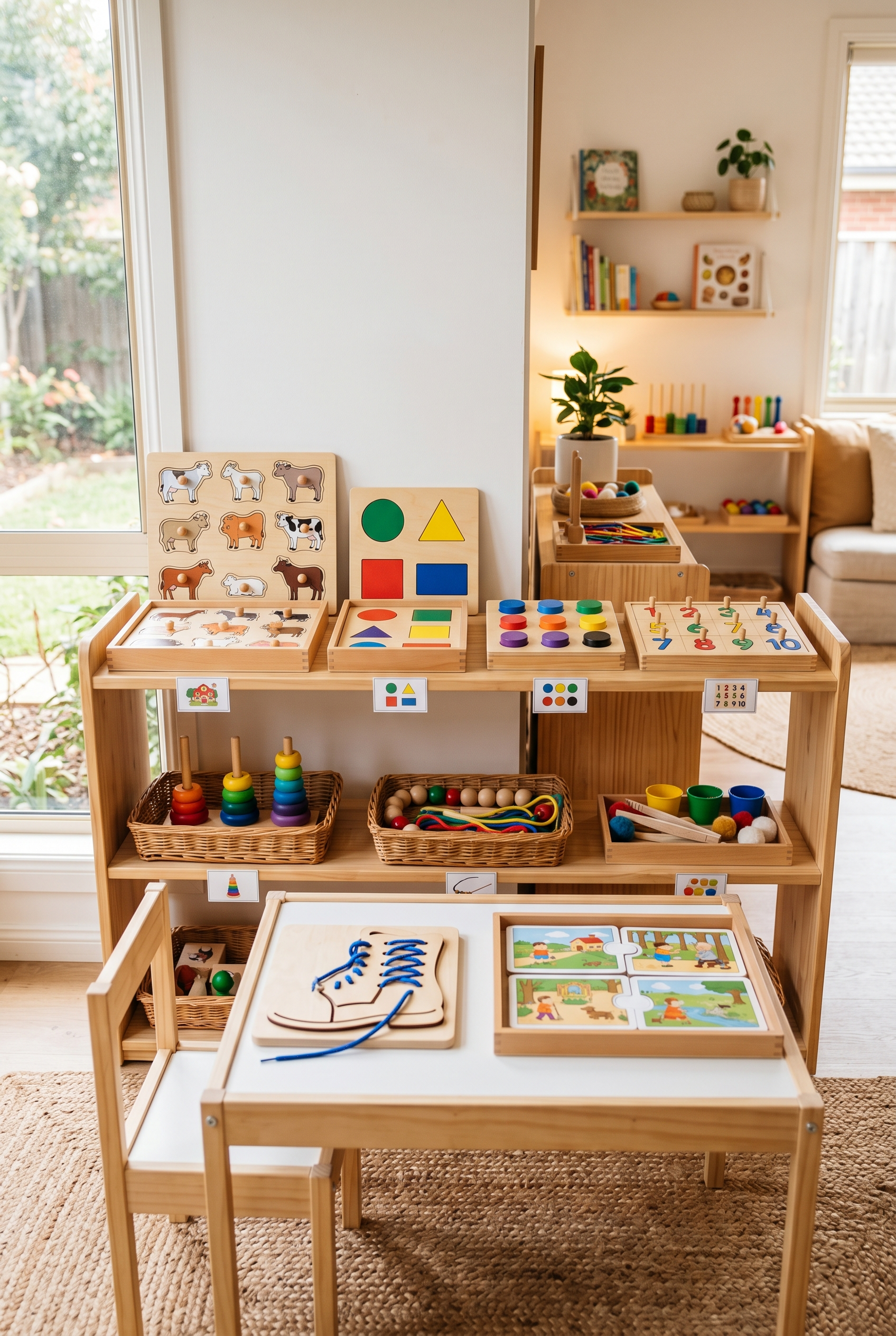
Organization in a Montessori playroom isn’t primarily about appearances.
It’s about making the room easier for children to understand and navigate independently. Clearly defined spaces create visual cues that help materials find their way back home when activities are finished.
As a result, the room tends to stay more manageable for both children and parents without relying on complicated systems.
Create Clear Activity Zones
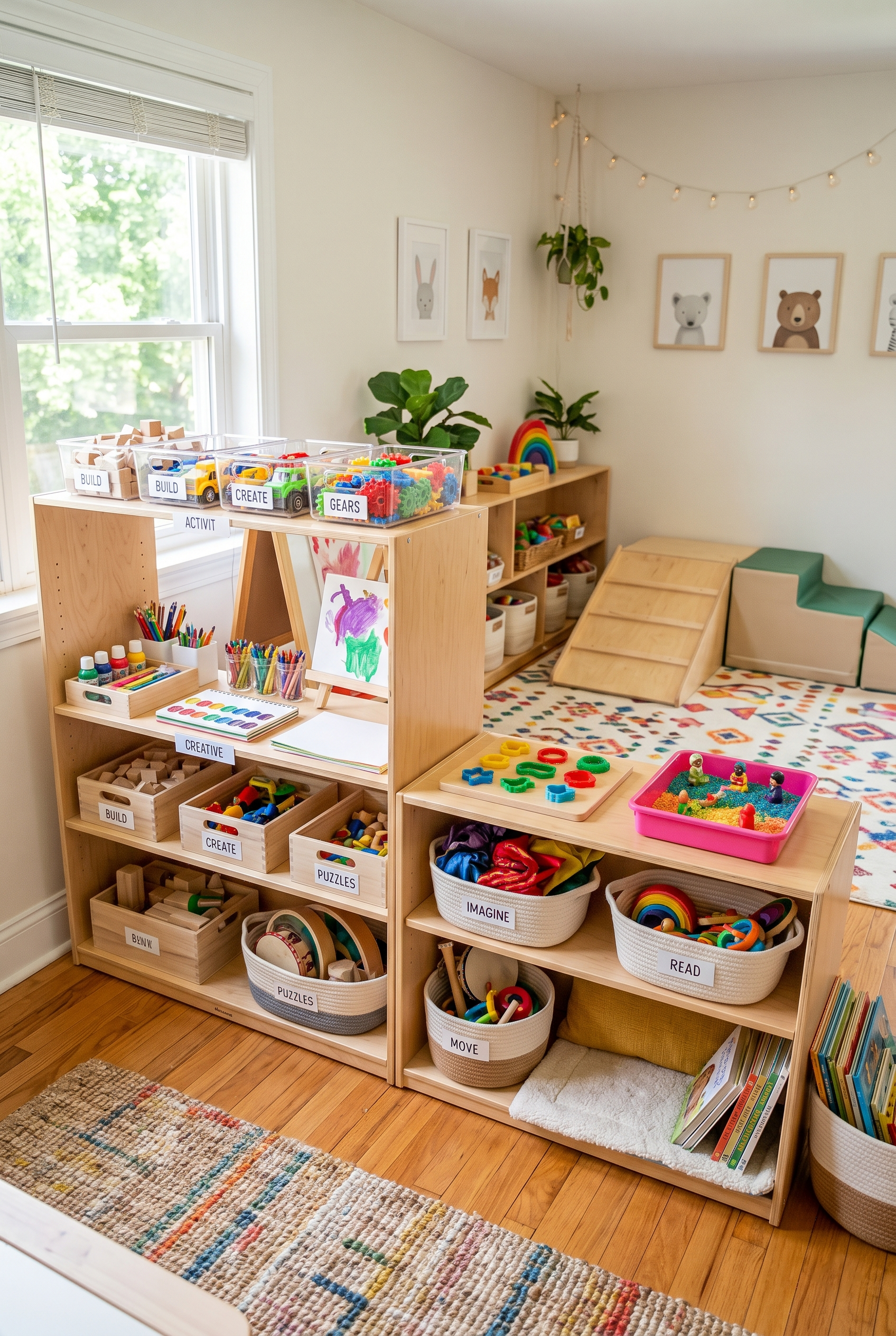
One of the easiest ways to make a playroom feel calmer is to give each area a clear purpose.
A reading corner feels different from an art station. Building materials have their own place. Sensory activities live somewhere else. Even when a room contains a variety of materials, these subtle divisions help the space feel organized rather than busy.
The visual clarity also helps children move confidently from one activity to another.
SHOP THE ROOM
Bring Nature Into the Playroom
Many Montessori spaces share a common thread: a connection to the natural world.
Wood tones, woven textures, plants, natural light, and nature-inspired collections help create rooms that feel calm and grounded. Beyond aesthetics, these elements encourage observation, curiosity, and a slower pace of play.
The result is a space that feels less like an entertainment zone and more like an environment designed for discovery.
Build a Nature Study Corner
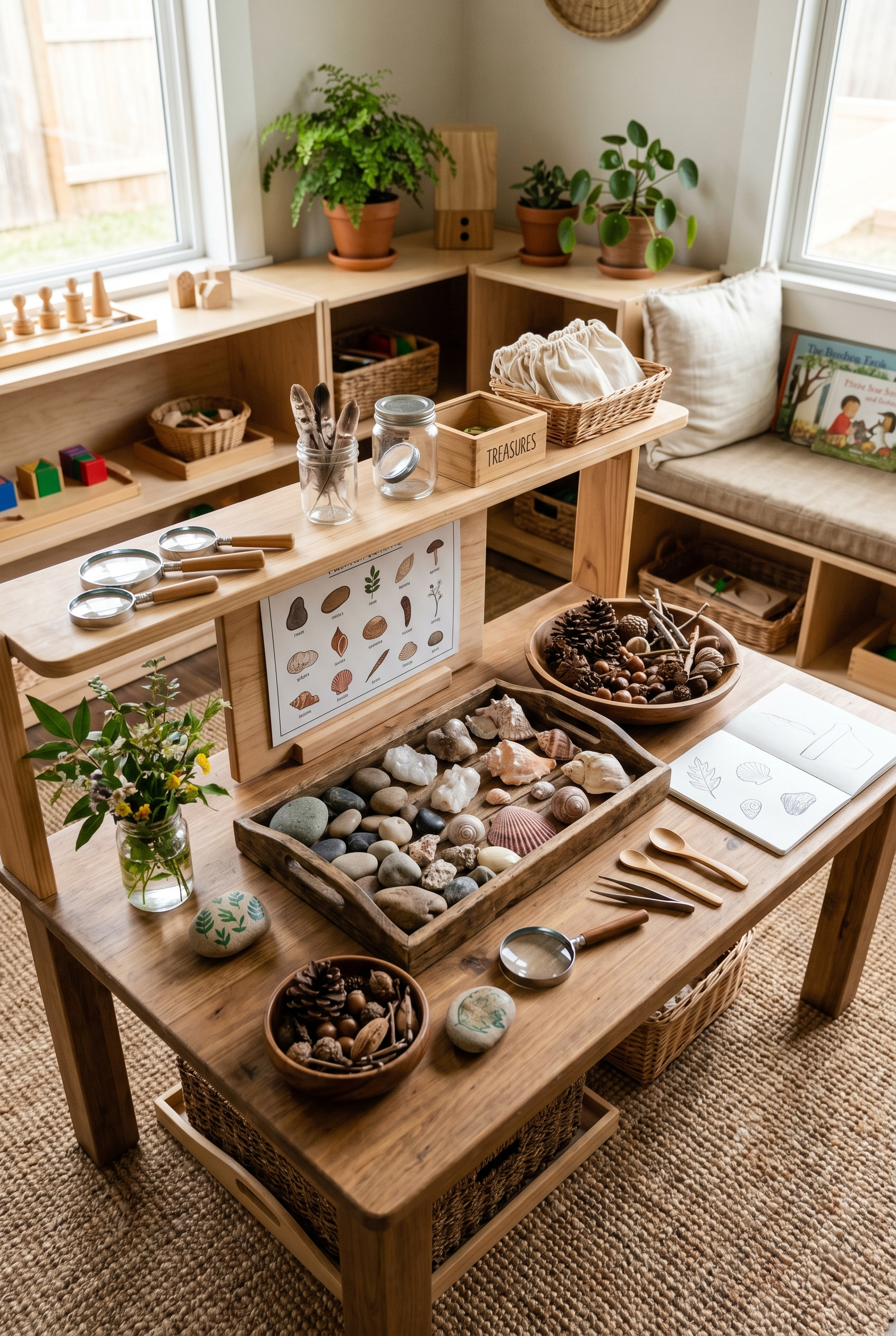
This setup immediately draws attention because it feels different from a typical playroom display.
Instead of brightly colored plastic toys, fill the shelves with specimens, books, magnifying tools, and objects that invite closer inspection. Children are naturally curious about the world around them, and a dedicated nature area gives that curiosity a place to grow.
The collection doesn’t need to be elaborate. A few interesting rocks, leaves, pinecones, shells, or seasonal finds can spark endless conversations and observations.
Display Natural Materials
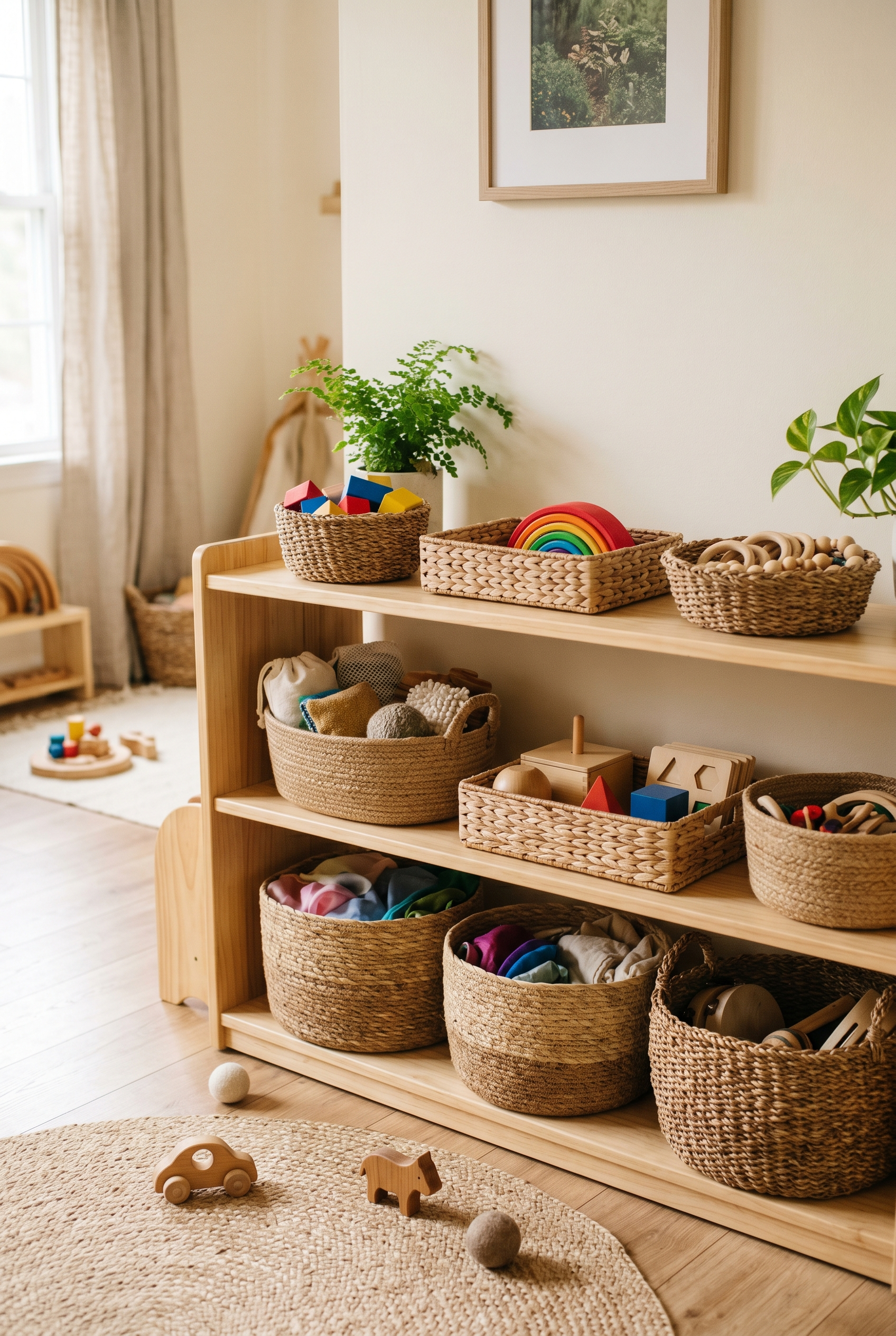
Natural materials bring warmth and texture to a room in a way that manufactured materials often can’t replicate.
Wood, rattan, cotton, wool, and bamboo create a soft visual while still standing up to everyday use. In a Montessori setting, these materials often feel more inviting because they encourage tactile exploration and connect children to real-world textures.
The layered mix of materials in this space keeps the room feeling interesting without relying on excess decoration.
Rotate Materials With the Seasons
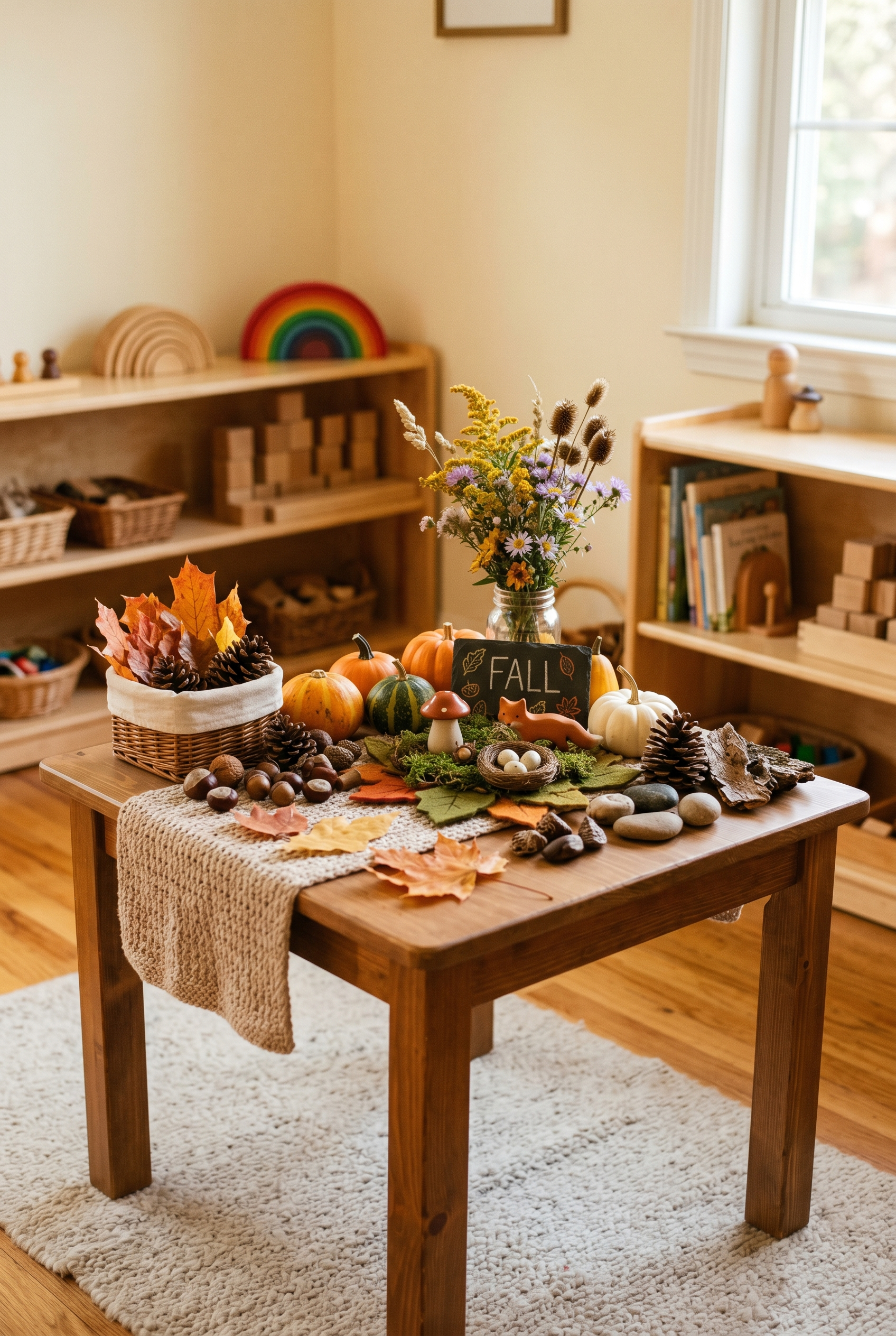
One of the easiest ways to keep a Montessori playroom feeling fresh is to let it change throughout the year.
Seasonal displays give children new things to observe and explore while helping them connect with nature’s rhythms. Autumn leaves, spring flowers, summer shells, or winter branches can all become part of the room’s story.
These small updates often have a bigger impact than purchasing new toys because they invite children to notice what’s happening outside their windows.
Add Plants and Natural Textures
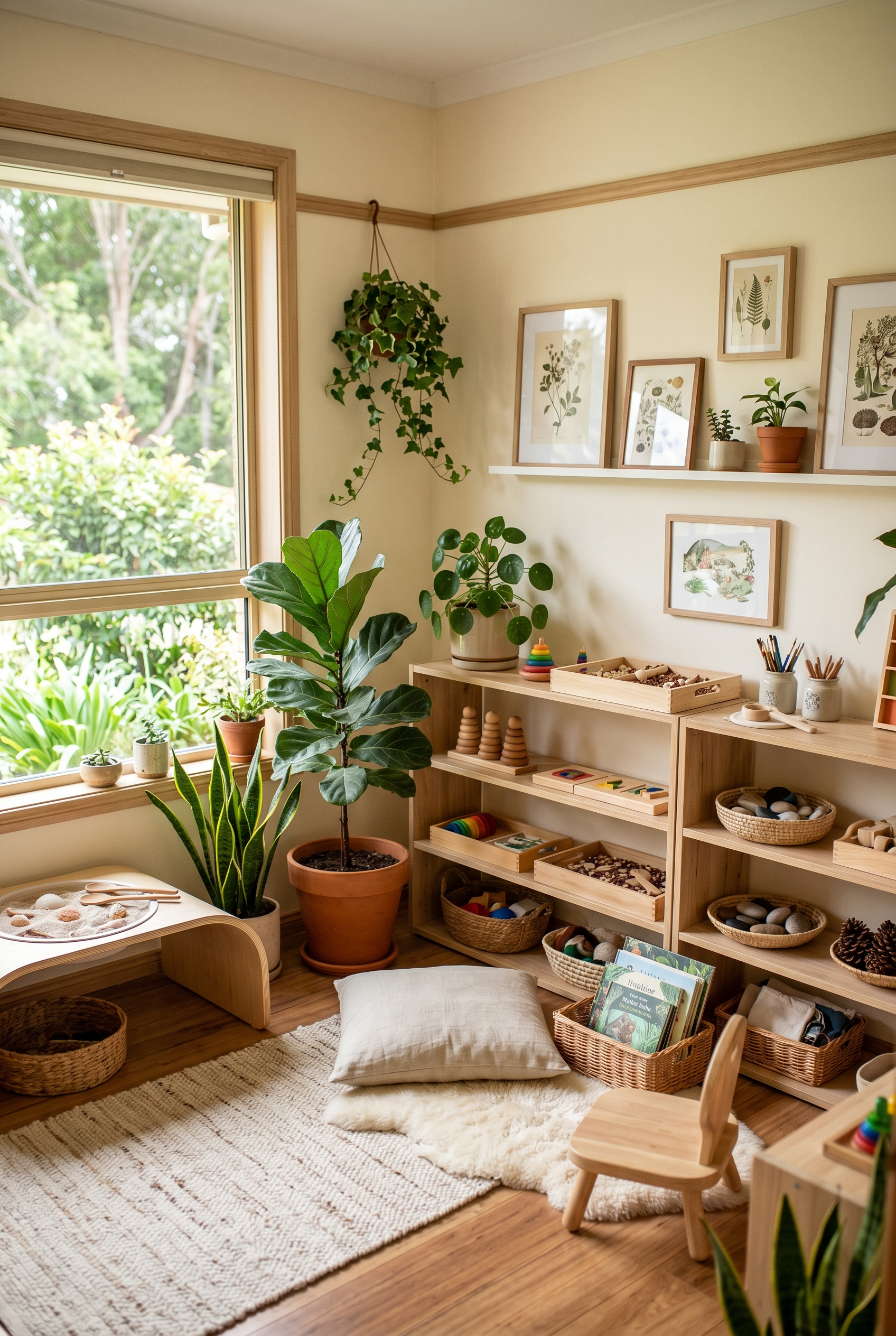
Plants bring a sense of life to a room that decor alone can’t replicate.
Paired with woven baskets, wood furniture, soft textiles, and abundant natural light, they help create the calm atmosphere many families aim for when designing a Montessori-inspired space.
The room feels relaxed without feeling empty. Warmth, texture, and visual interest appear everywhere you look, but nothing competes for attention.
Create Opportunities for Scientific Discovery
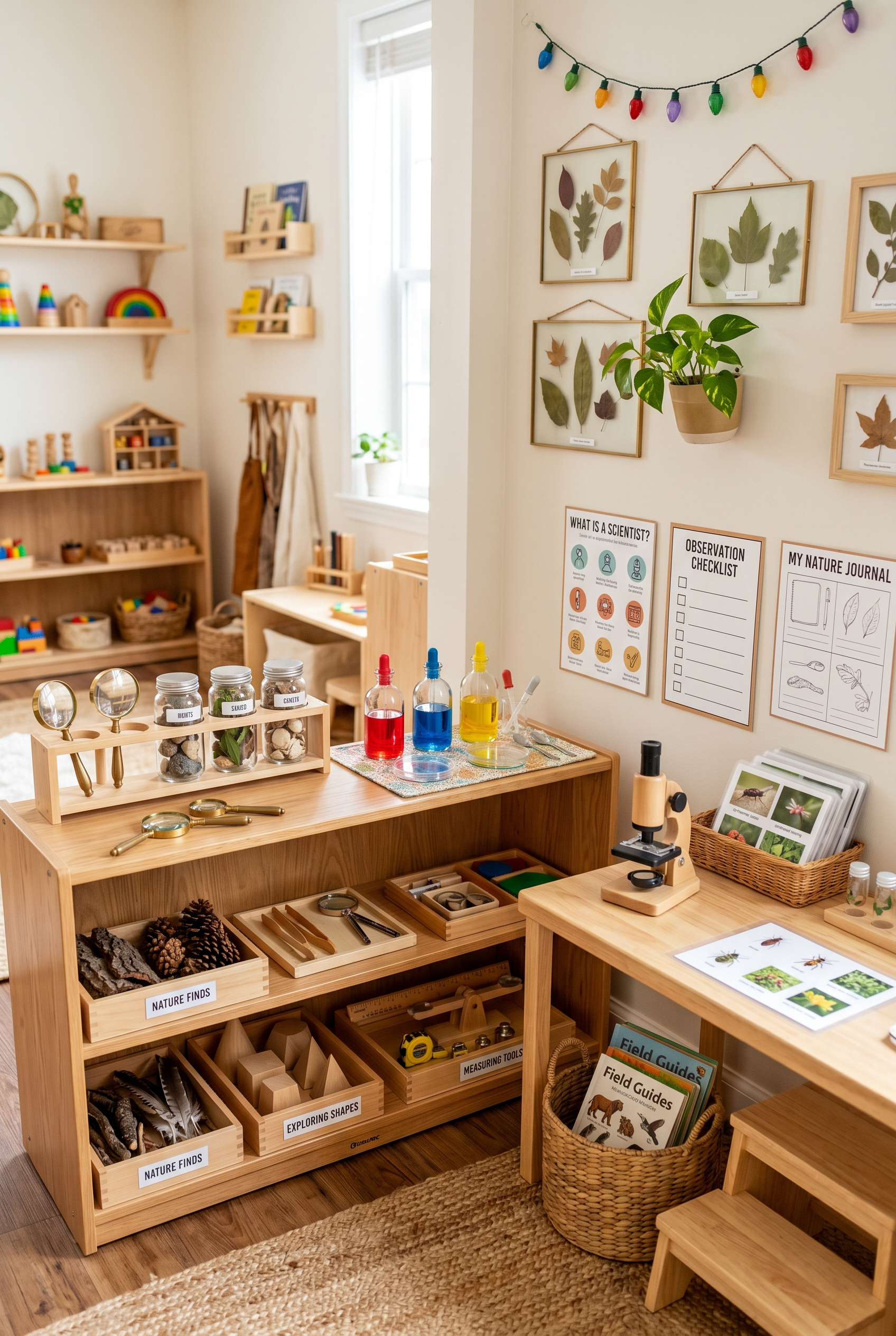
Children don’t need a formal science lab to begin exploring how the world works.
A magnifying glass, a collection of natural treasures, simple observation tools, and a few thoughtfully chosen books can transform an ordinary shelf into a place of investigation. The focus isn’t on memorizing facts. It’s on encouraging questions.
That sense of wonder often becomes one of the most rewarding parts of a Montessori environment.
SHOP THE ROOM
Design for Long-Term Independence
The most successful Montessori playrooms aren’t designed around a specific age or stage. They’re designed to evolve.
As children’s interests change, materials rotate, shelves shift, and activity areas adapt. The foundation remains the same: a space that feels accessible, organized, and inviting to use independently.
Rather than chasing perfection, these rooms support everyday life.
Keep Decor Calm and Purposeful
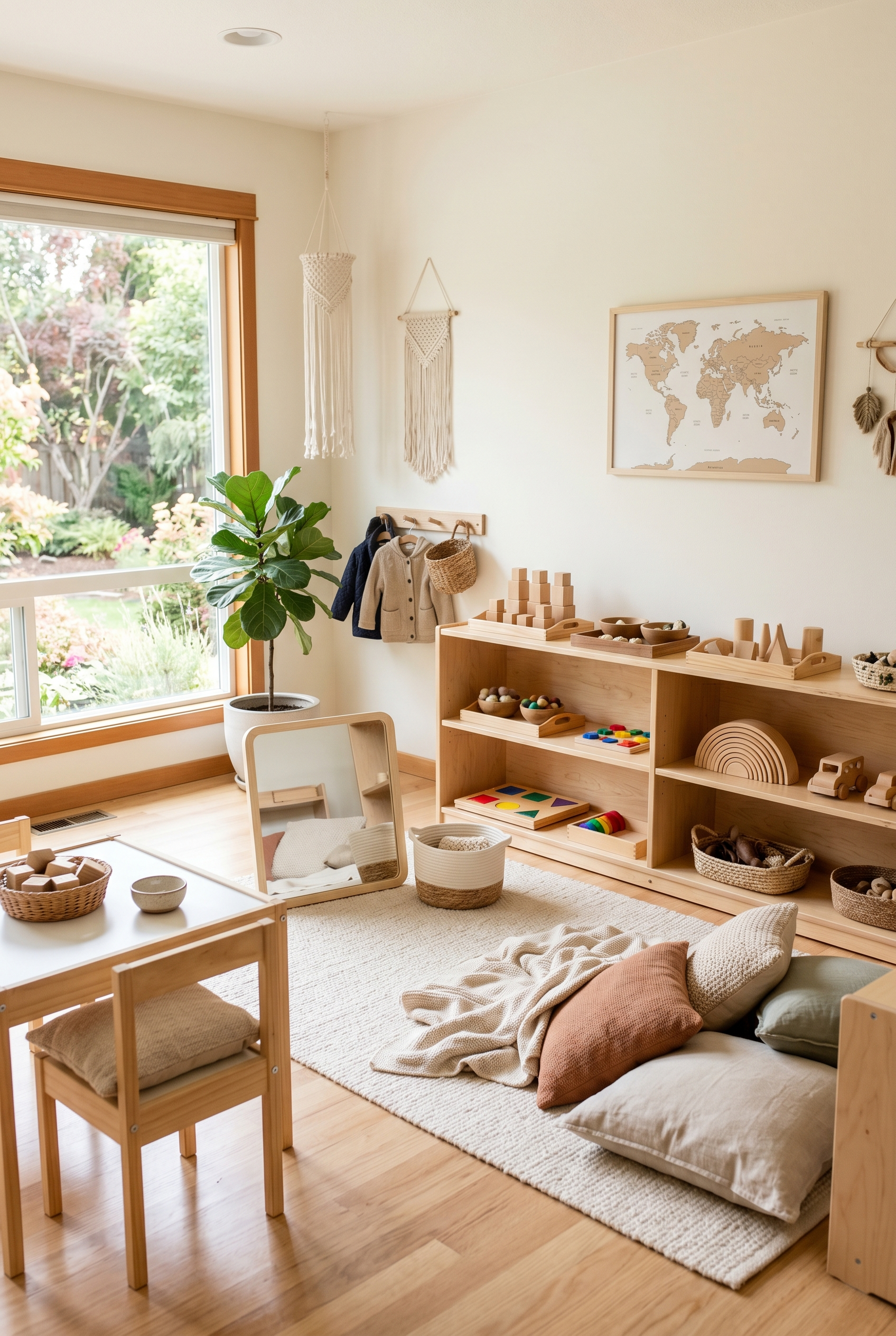
Some children’s spaces rely on bright colors and constant visual stimulation. This room takes a different approach.
The soft palette, natural materials, and uncluttered layout create a sense of calm, allowing the activities themselves to become the focal point. Books, toys, and learning materials feel intentional because they aren’t competing with excessive decor.
The atmosphere feels peaceful without sacrificing warmth or personality.
Prioritize Function Over Perfection
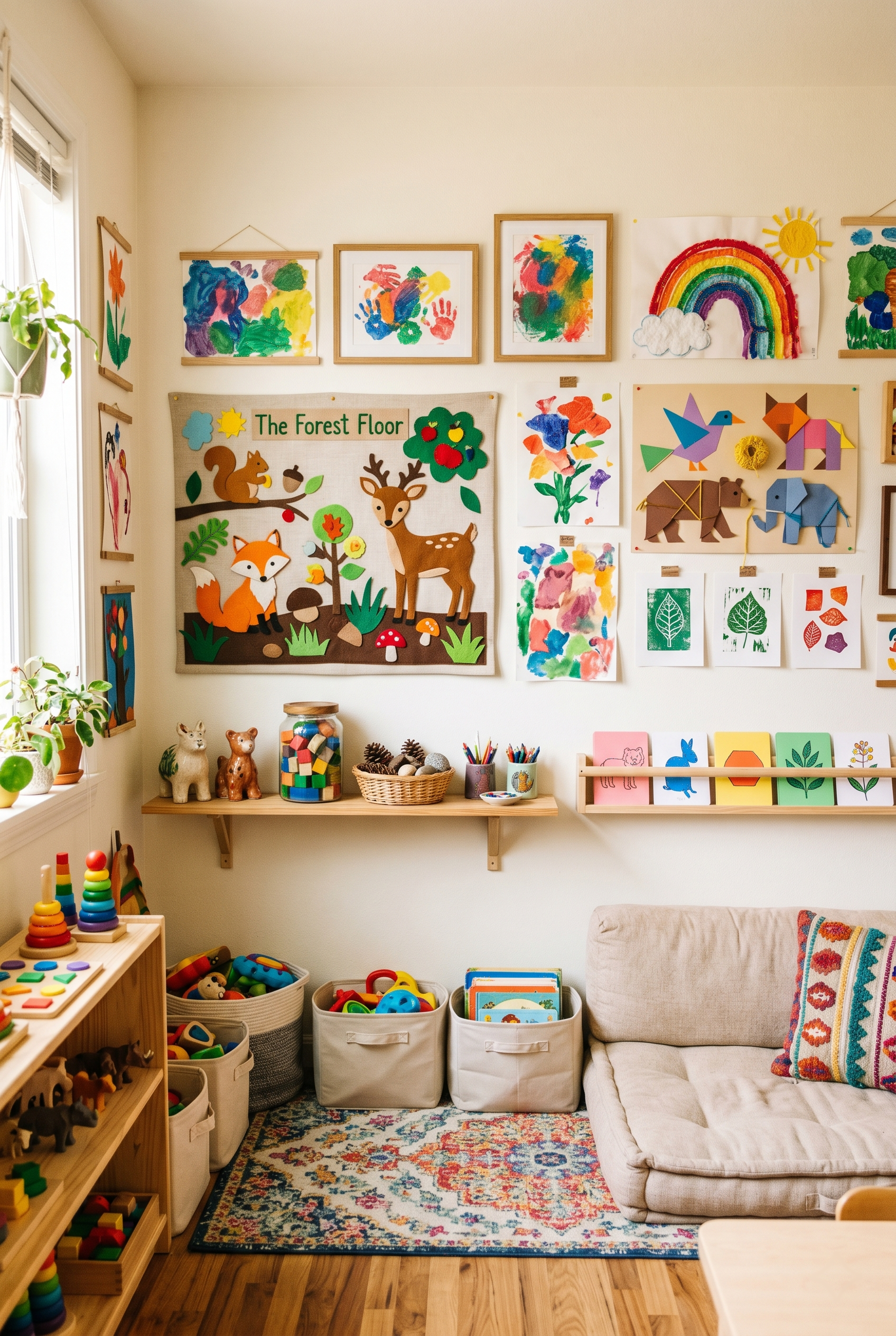
A Montessori playroom doesn’t need to look picture-perfect every moment of the day.
What matters most is whether children can use the space comfortably. The open shelving, accessible materials, and straightforward organization make it easy for children to interact with their environment without constant adult assistance.
A room that functions well often looks better, too.
Create Flexible Spaces That Grow With Your Child
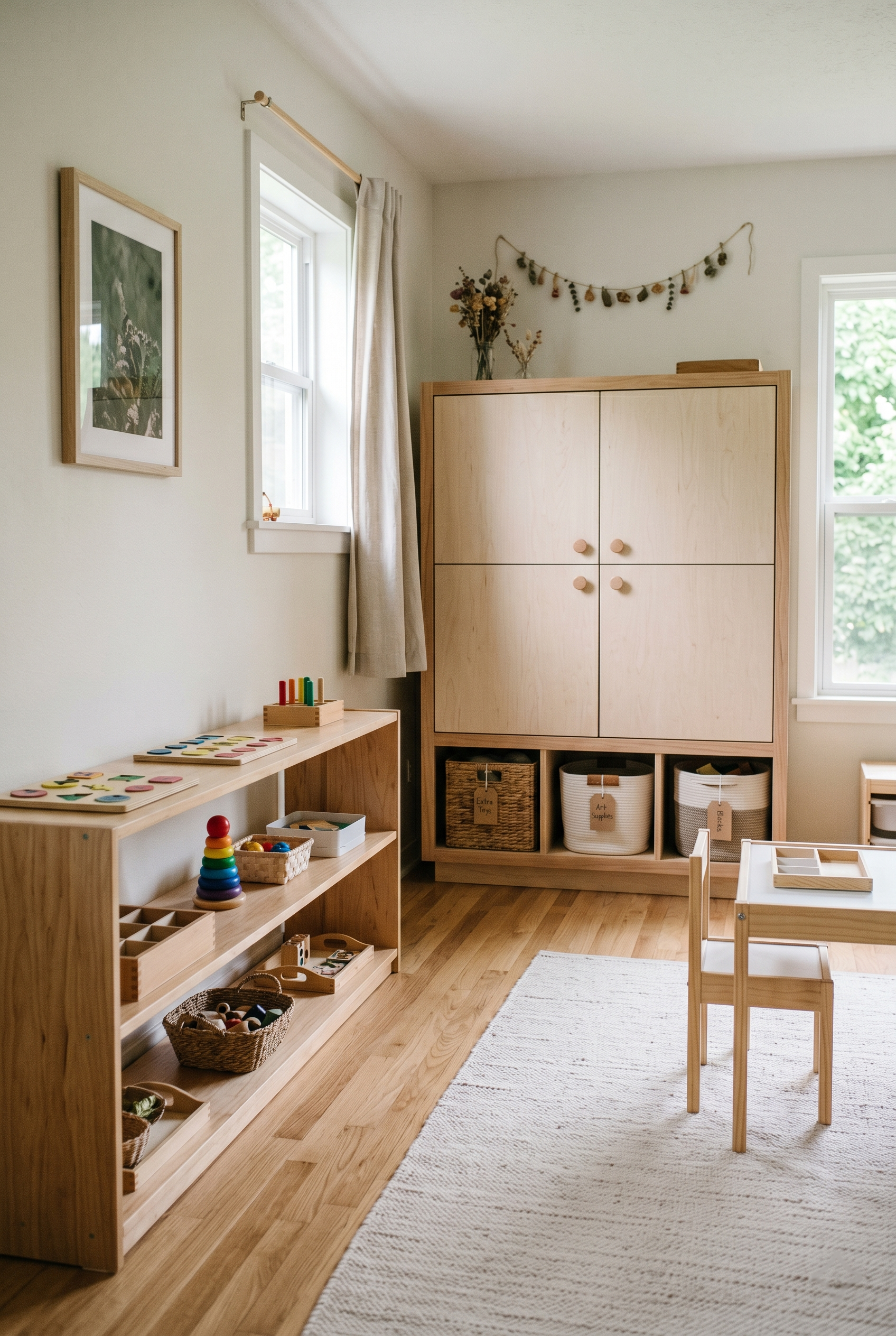
Children’s interests rarely stay the same for long.
A flexible layout lets the room evolve from toddlerhood through early elementary school without a complete redesign. Open floor space, movable furniture, and adaptable activity areas create room for changing interests and new skills.
The most useful Montessori spaces leave plenty of room for growth.
Focus on Accessibility Rather Than More Storage
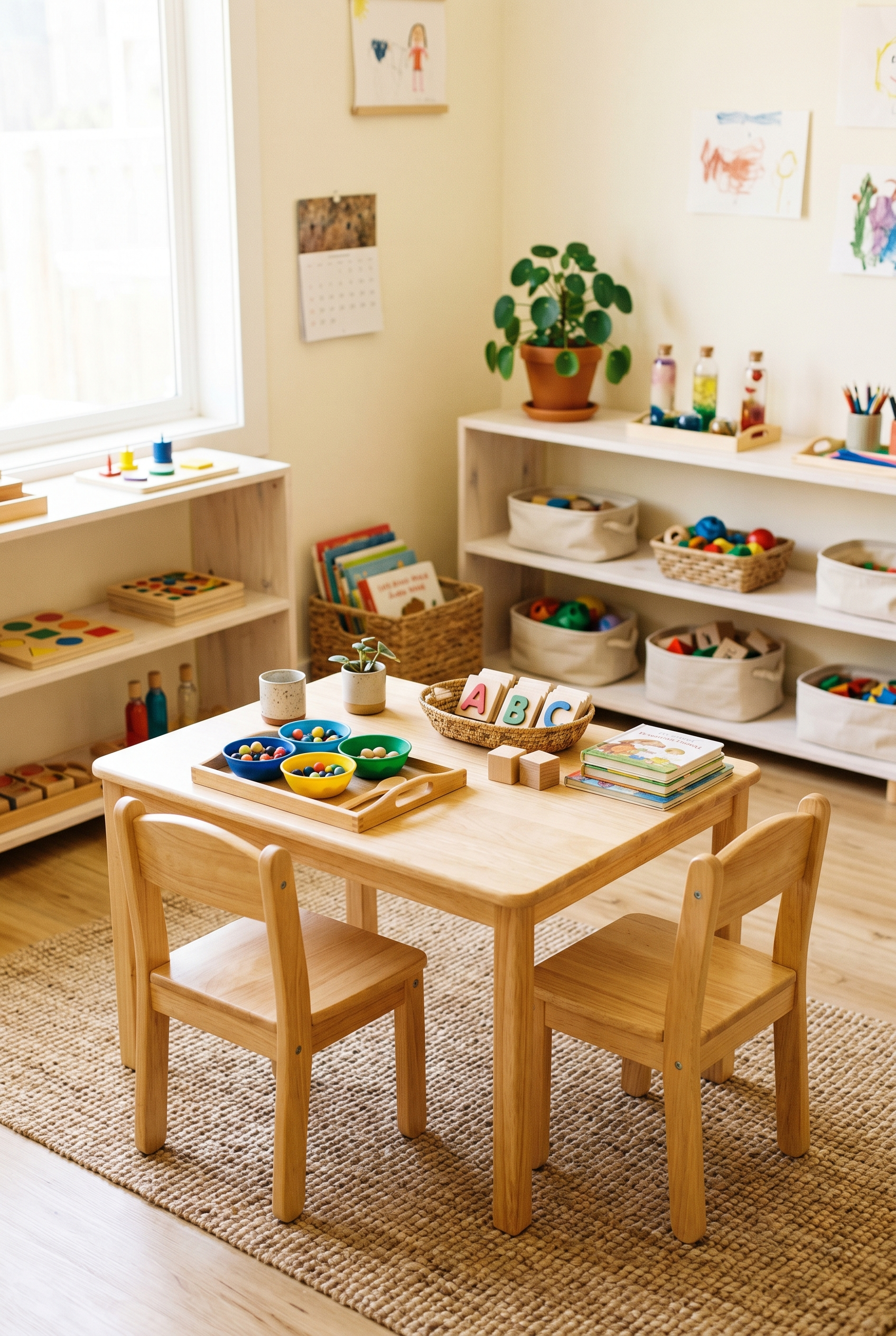
When a room starts to feel cluttered, the solution isn’t always to add more storage.
Often, the biggest improvement comes from making existing materials easier to access and return. Clear categories, open shelves, and thoughtful placement help children navigate the room independently while keeping the overall space manageable.
Accessibility often creates a greater sense of order than simply adding more bins and baskets.
Design for Independent Play
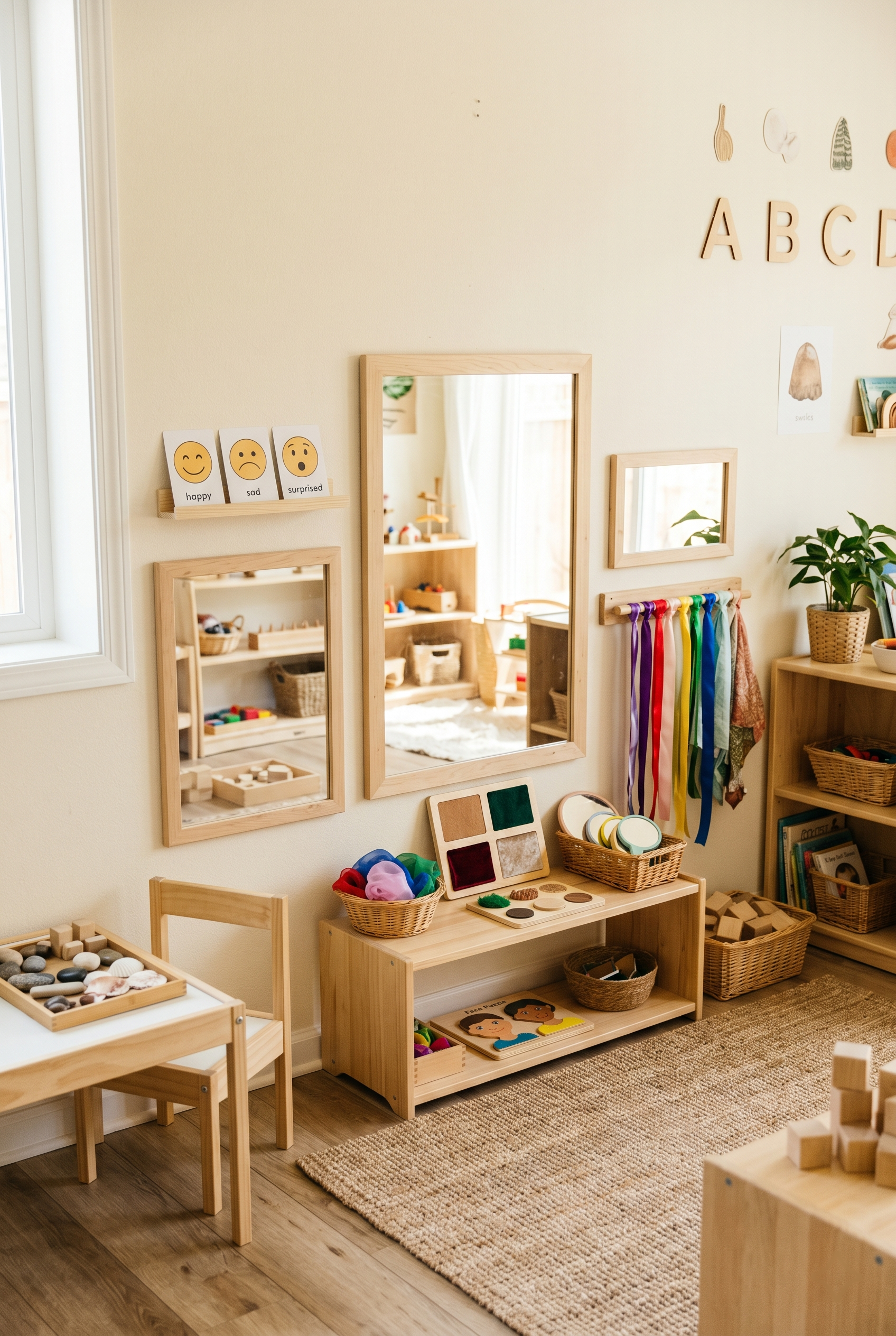
At its core, Montessori design is about trust.
The room communicates to children that they can make choices, explore materials, and engage with activities on their own. Every low shelf, accessible tray, reading nook, and organized workspace contributes to that message.
When children can confidently move through a room without relying on adults for every step, the space supports the very skills Montessori education is known for: independence, concentration, and self-motivation.
Final Thoughts on Creating a Montessori Playroom
A Montessori playroom doesn’t have to be large, expensive, or perfectly styled to be effective.
The spaces that tend to work best are often the simplest. A comfortable reading corner, a few well-organized shelves, accessible materials, and room to explore can have a greater impact than an overflowing collection of toys.
What makes these rooms feel special isn’t the furniture or the decor. It’s the way they invite children to participate.
Whether you’re starting from scratch or making small updates to an existing playroom, focusing on accessibility, organization, and thoughtful activity areas can help create a space that feels calm, functional, and genuinely enjoyable to use every day.
As children grow, the room will naturally evolve alongside them. The shelves may change, new interests will emerge, and favorite activities will come and go. A well-designed Montessori playroom leaves room for that growth while supporting curiosity, creativity, and independent learning for years to come.
This post showed you the best Montessori playroom ideas.
You may also like: