29 Minimalist Kids’ Room Ideas for Clutter-Free Spaces
A calm kids’ room doesn’t happen by accident.
Between toys, books, clothes, art supplies, and all the little treasures children collect along the way, it’s easy for a bedroom to start feeling crowded. The challenge isn’t finding more storage—it’s creating a space where everything has a purpose, and the room still feels peaceful at the end of the day.
That’s what makes minimalist kids’ room ideas so appealing. A well-designed minimalist room isn’t empty or overly strict. It feels warm, functional, and inviting while giving children room to play, imagine, and grow. Thoughtful furniture choices, accessible storage, natural materials, and a softer color palette can completely change how a space feels.
Many of the rooms featured below also borrow from Montessori design principles, encouraging independence through child-friendly layouts and accessible organization. If you love this approach, you may also enjoy our guides to Montessori Bedroom Ideas and Montessori Toy Storage Ideas.
From cozy reading corners to beautifully organized bedrooms, these minimalist kids’ room ideas show how a simpler space can make everyday family life feel a little calmer.
DISCLOSURE: Some of the links provided on this page are affiliate links. This means if you choose to make a purchase through these links, we may receive a small commission at no extra cost to you.
Creating a Calm Foundation
Minimalist rooms often feel effortless, but they’re usually built around a few intentional design decisions. Soft colors, natural materials, and thoughtful styling create a sense of calm long before any furniture or decor is added.
The rooms below show how simplicity can still feel warm, inviting, and full of personality.
Start With a Palette That Feels Quiet
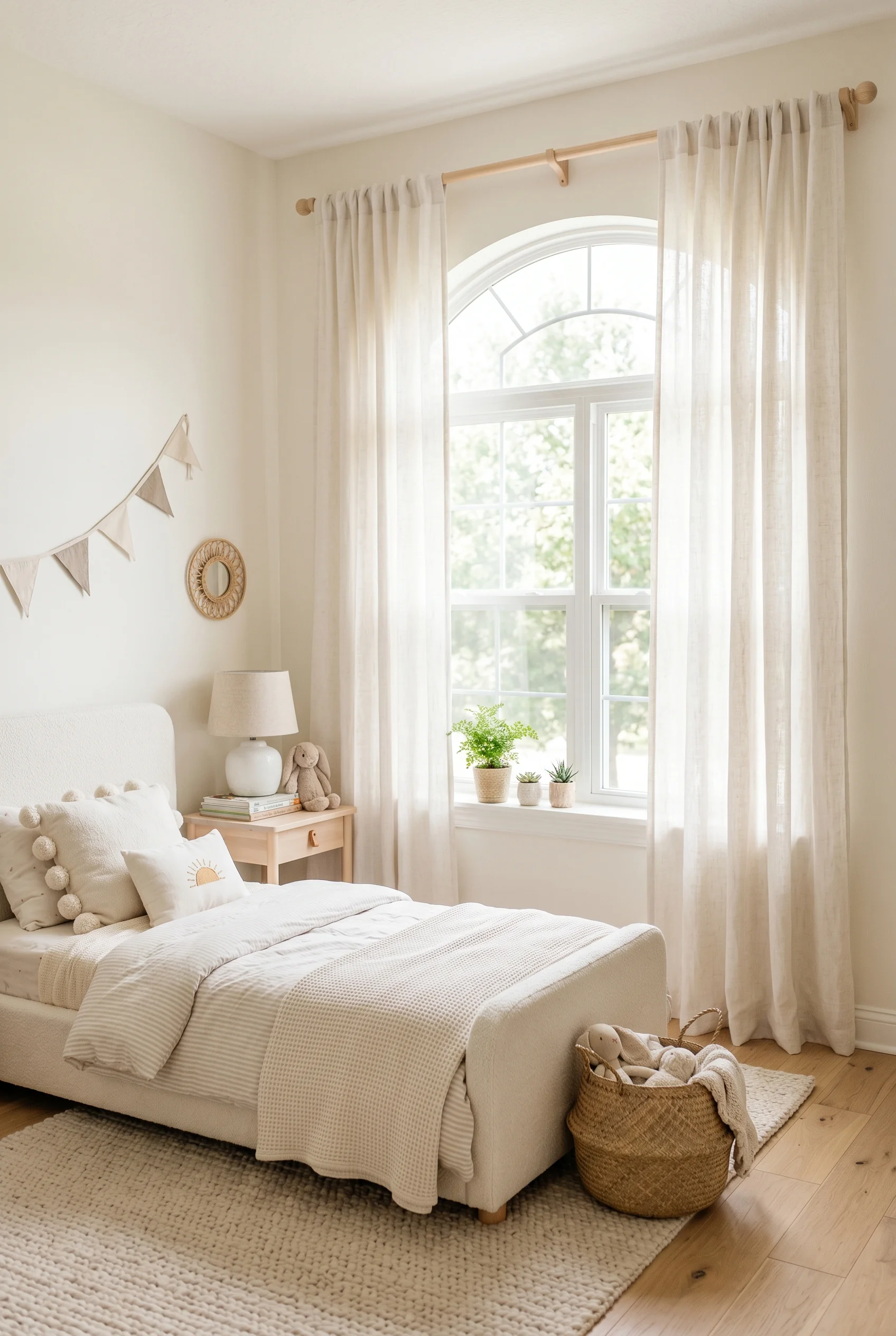
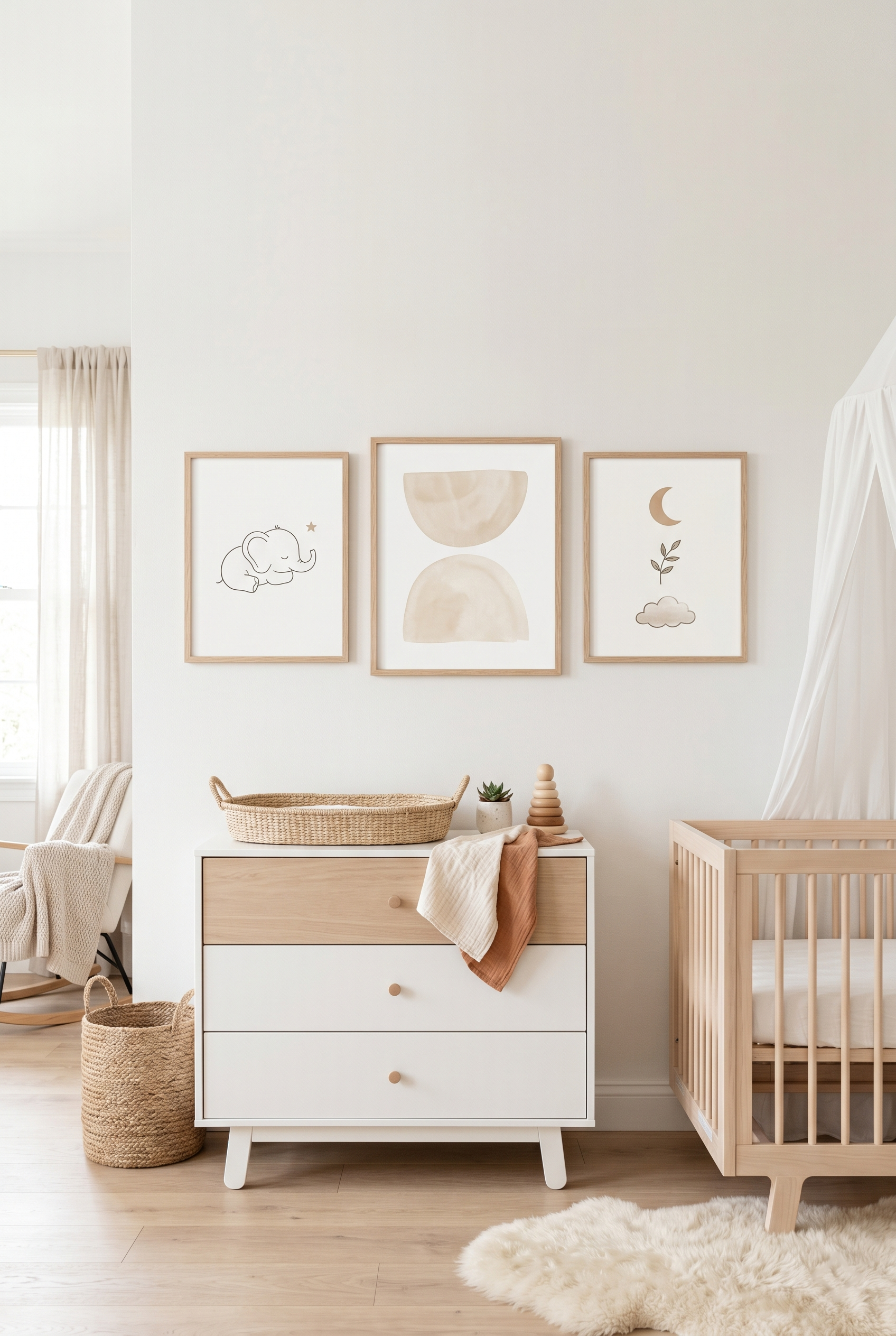
The first thing that stands out here isn’t a piece of furniture. It’s the palette.
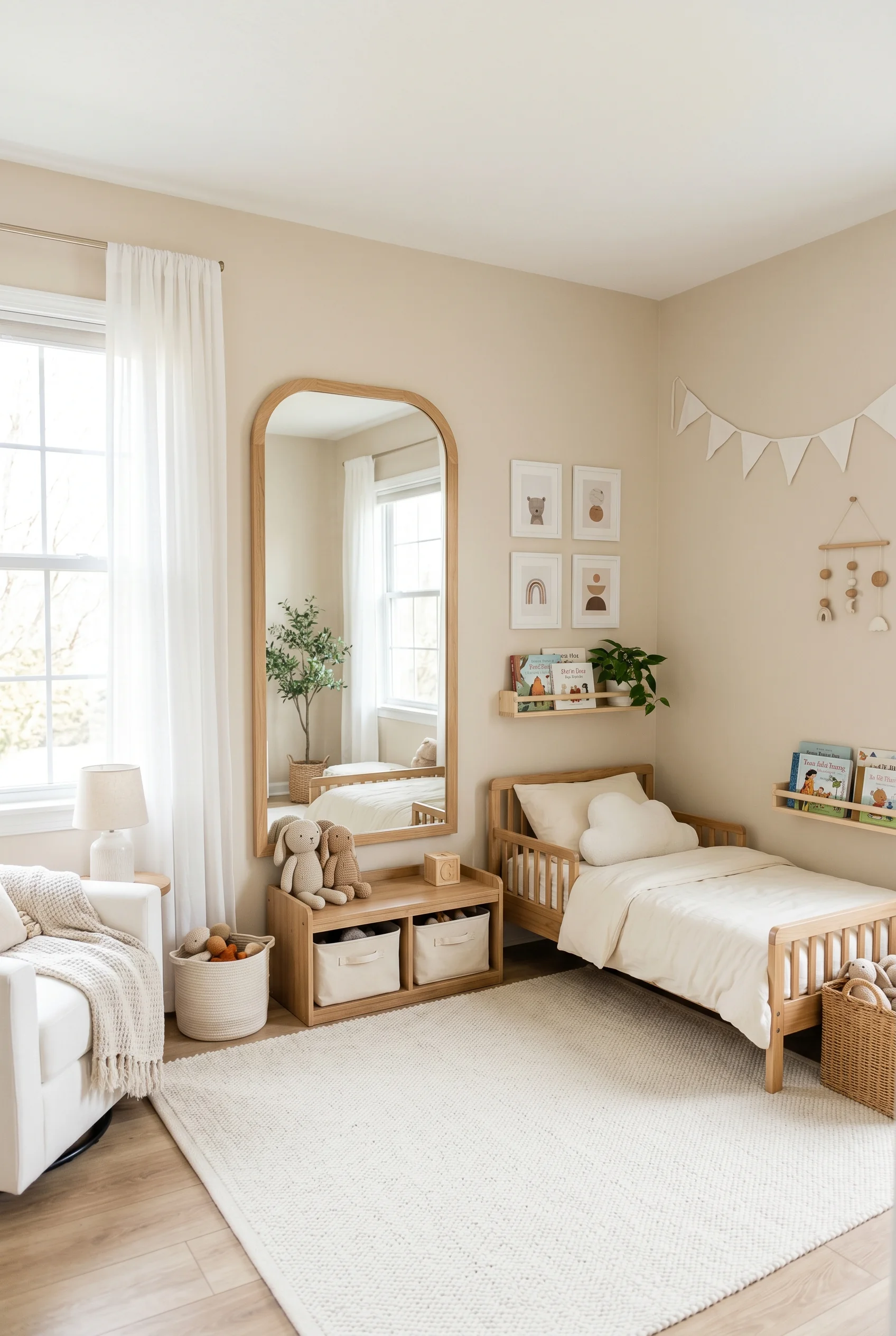
Warm whites, soft beige tones, and natural wood create a backdrop that feels calm from the moment you walk into the room. Nothing pulls your attention in ten different directions.
The space feels bright and airy, but there’s still plenty of warmth. It’s the kind of room that could easily grow alongside a child without needing a complete redesign every few years.
Let Natural Light Become Part of the Design
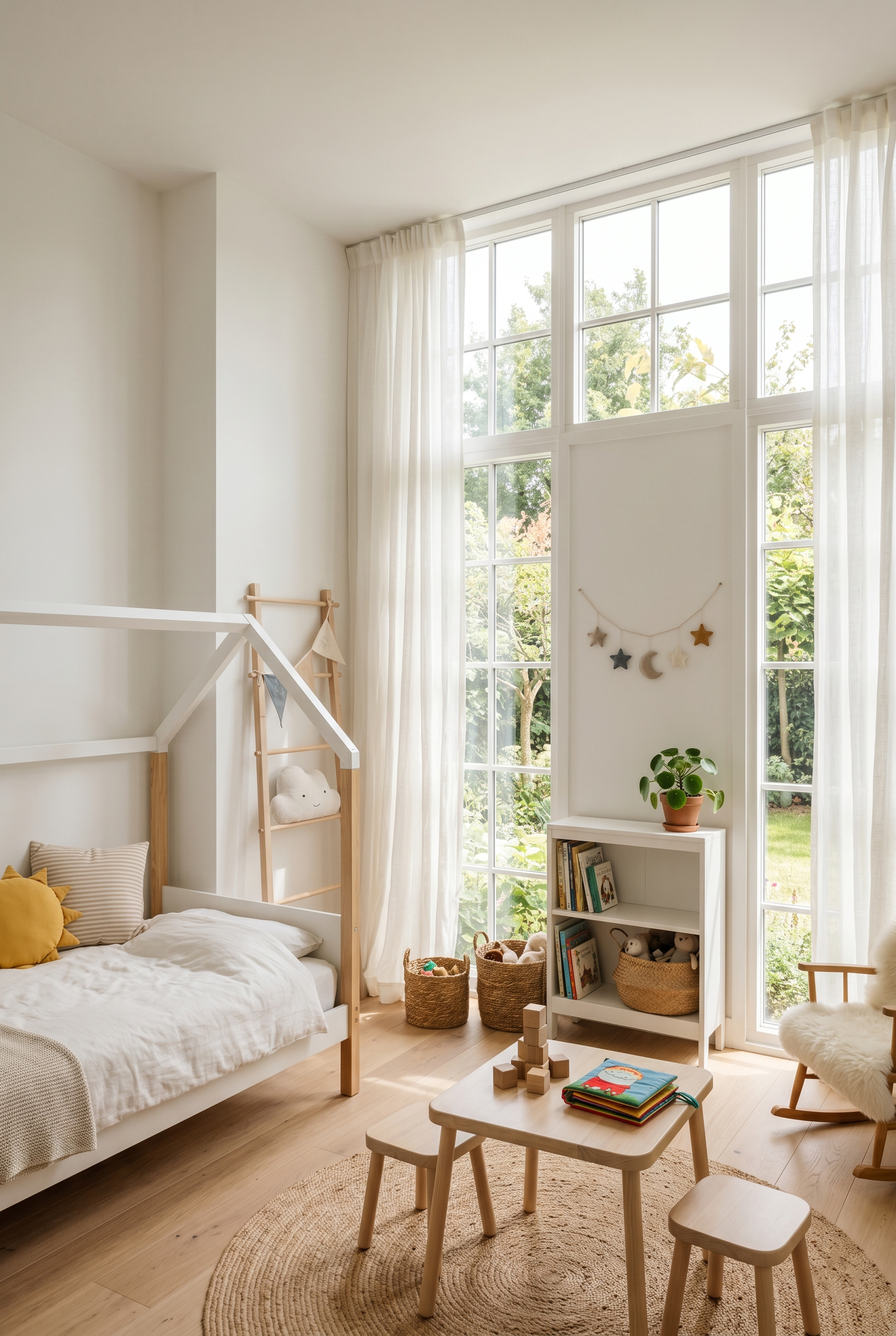
Floor-to-ceiling windows bring an incredible amount of warmth to this room.
Rather than filling every wall with artwork or shelving, the design allows natural light to become part of the visual experience. Throughout the day, shifting sunlight adds movement and softness that decorative objects simply can’t replicate.
The result feels open, fresh, and connected to the outdoors.
Use Texture Instead of Bold Color for Interest
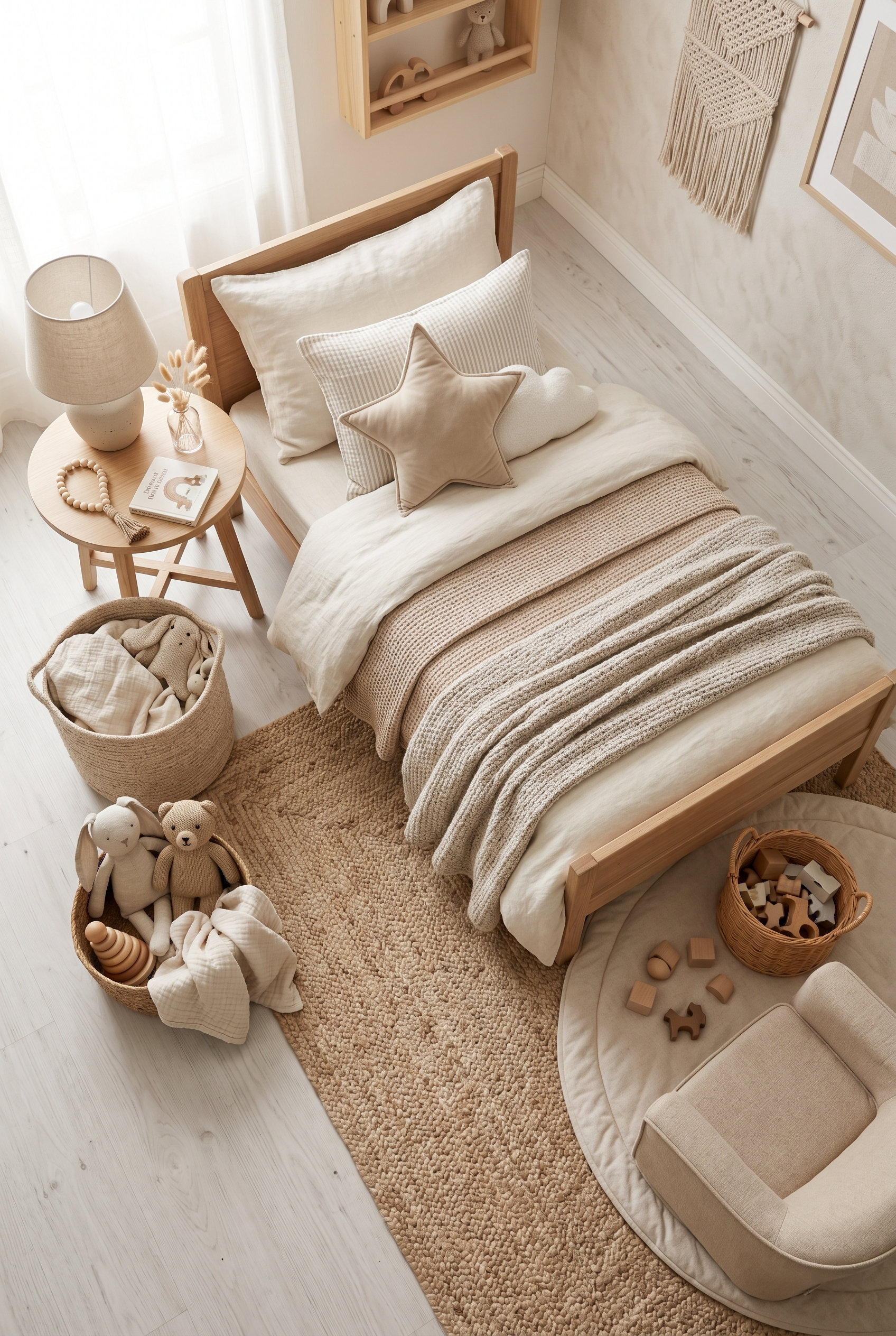
A minimalist room doesn’t need dozens of decorative accessories to feel complete.
Here, texture does most of the heavy lifting. Soft bedding, woven materials, natural wood tones, and subtle textiles create depth while maintaining the room’s calm atmosphere.
The room feels collected rather than decorated, which is often what gives minimalist spaces their enduring appeal.
Give Decorative Objects Room to Breathe
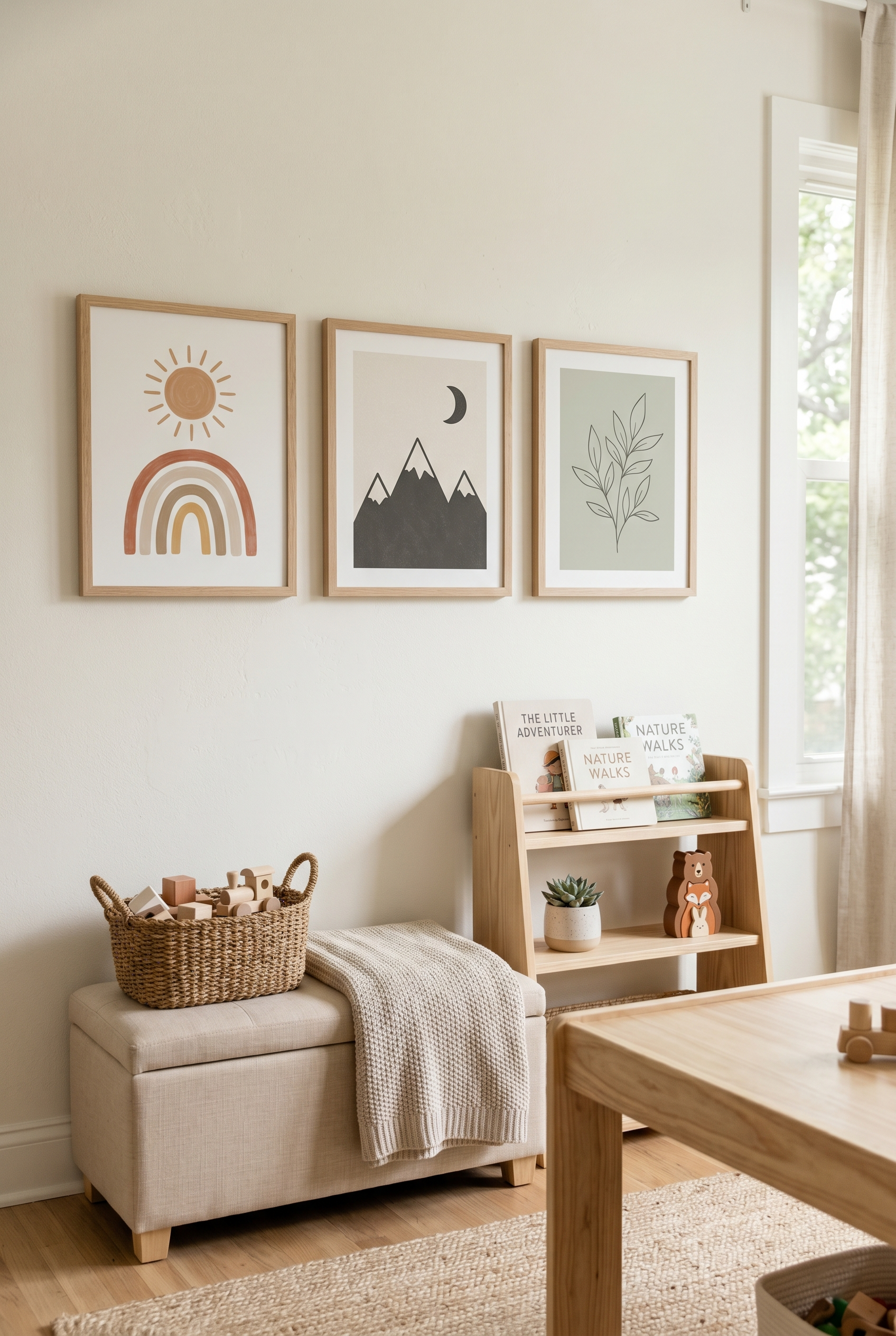
Not every shelf needs to be full.
A few carefully chosen pieces have far more impact when they aren’t surrounded by dozens of others. The empty space becomes part of the design rather than something that needs to be filled.
Your eye naturally settles on the details that matter, which gives the room a quieter and more intentional feel.
Bedrooms That Balance Simplicity and Comfort
Minimalist bedrooms often get a reputation for feeling cold, but the best children’s spaces strike a balance between simplicity and warmth.
Thoughtful furniture choices, cozy textiles, and uncluttered layouts help create bedrooms that feel calm while still supporting everyday family life.
A House Bed That Becomes the Room’s Focal Point
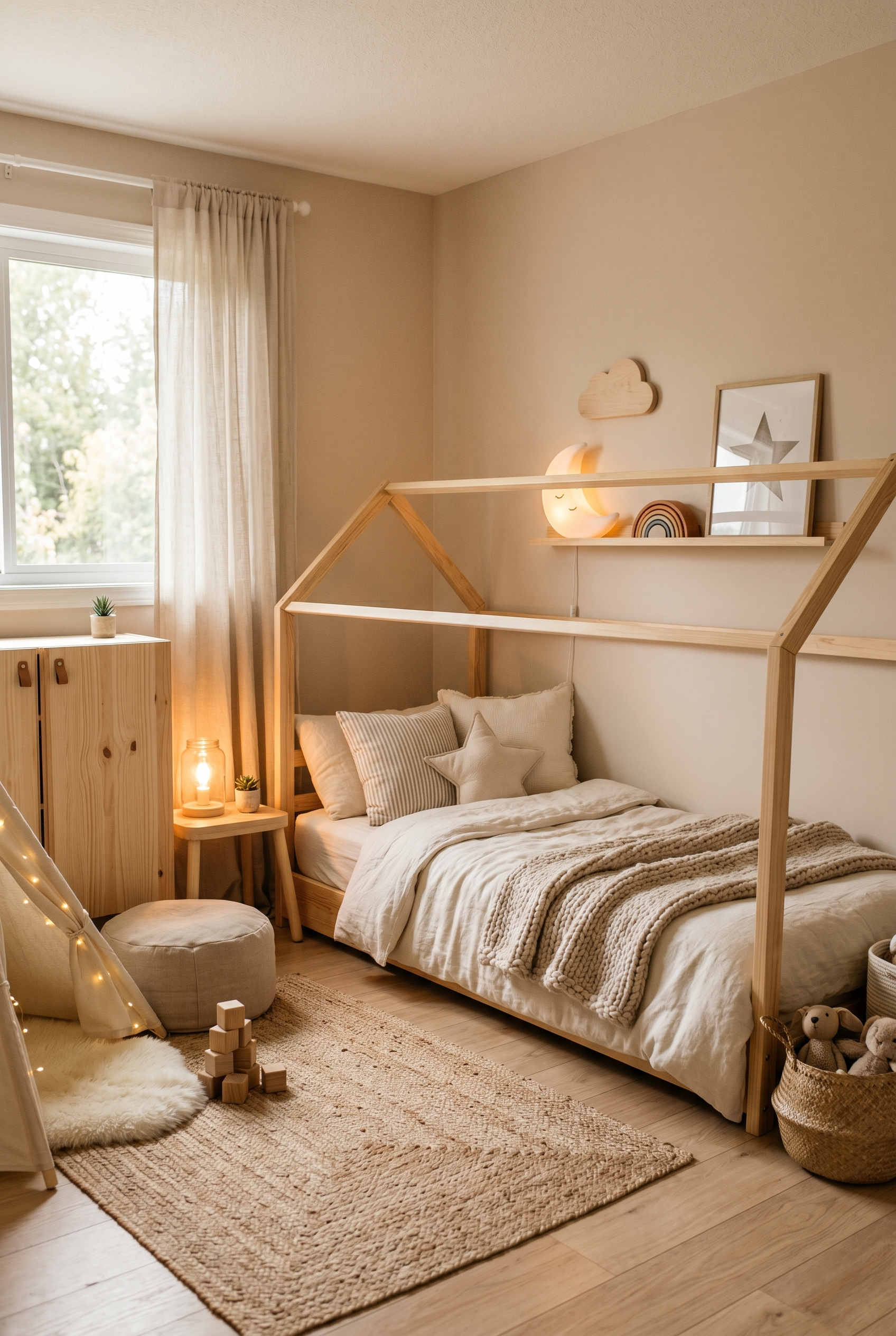
Some furniture pieces are decorative enough to eliminate the need for additional decor.
That’s exactly what’s happening here.
The simple house bed frame introduces shape and personality while keeping the overall design clean and uncluttered. Instead of relying on busy wall art or themed decorations, the bed’s architecture creates visual interest.
The reading tent nearby adds another layer of coziness, giving the room a playful feel without overwhelming the space.
This room feels imaginative yet remarkably calm.
SHOP THE ROOM
- Montessori House Bed Frame
- Neutral Kids Bedding
- Washable Area Rug
- Warm Night Light
Designing a Room From a Child’s Perspective
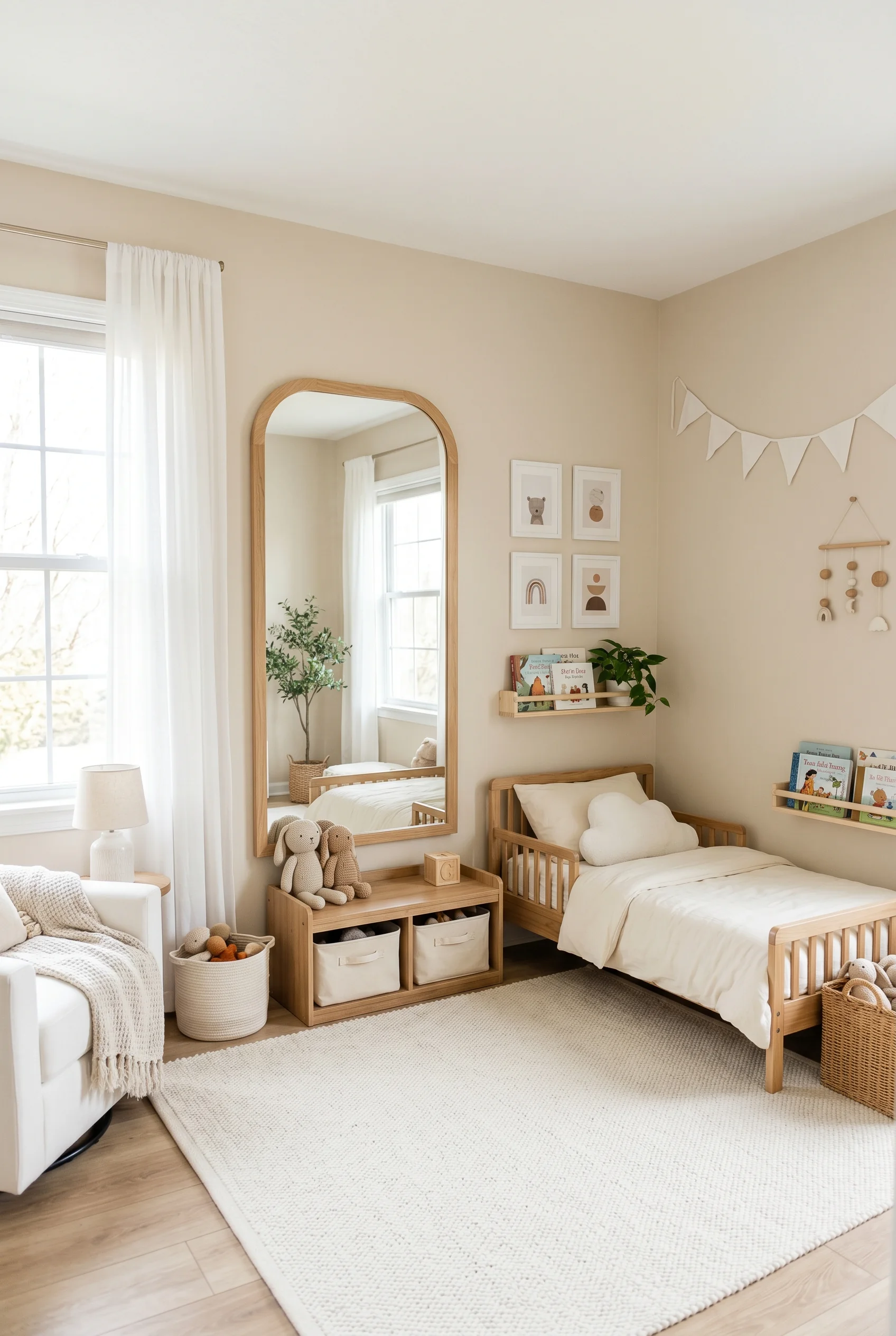
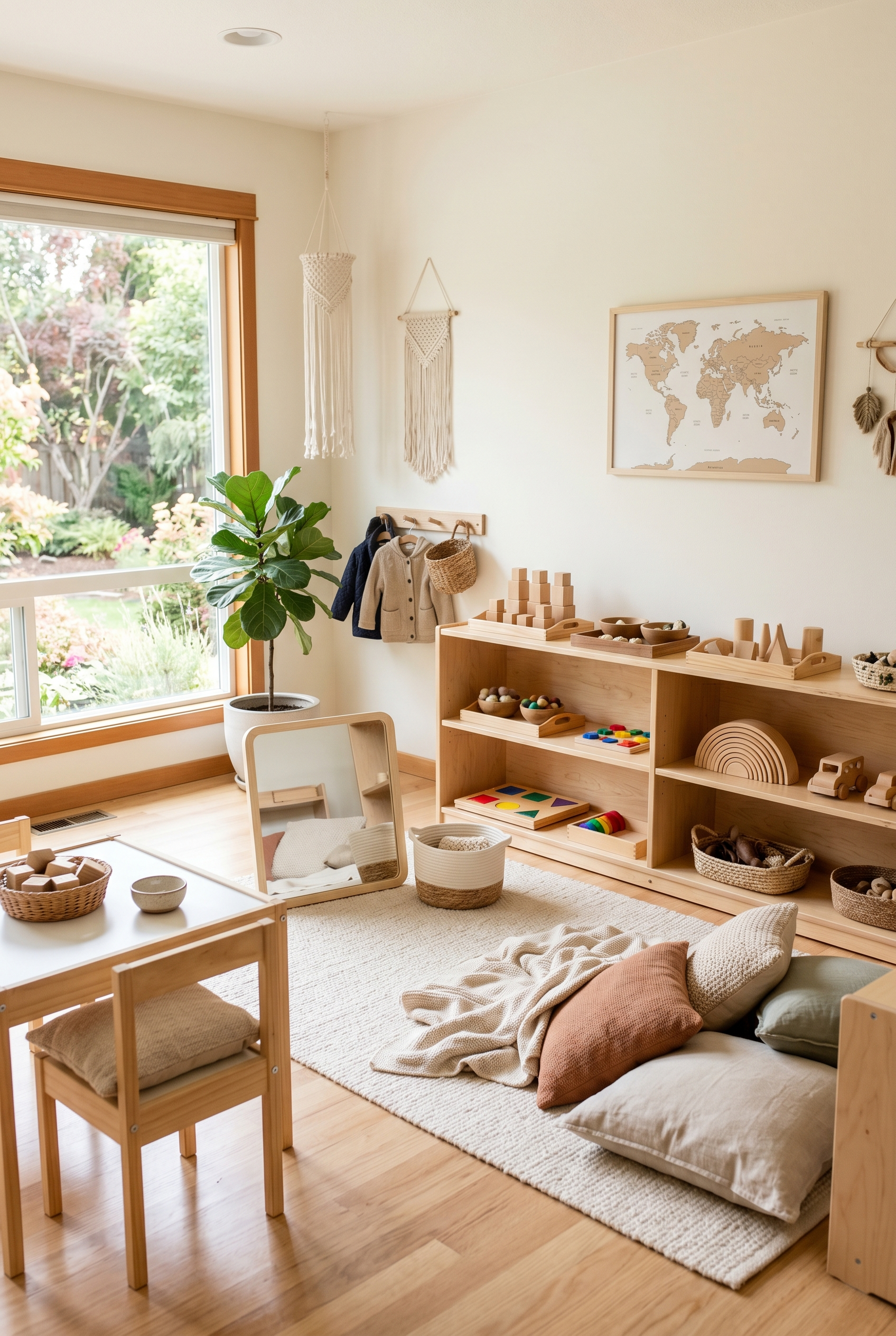
One reason Montessori-inspired rooms often feel so peaceful is that everything is designed around the child’s daily experience.
The floor bed keeps sightlines open and allows children to move freely throughout the room. Books, toys, and essentials remain within reach, encouraging independence while reducing the need for bulky furniture. The result feels beautifully scaled.
Nothing feels oversized or unnecessary, which naturally contributes to the room’s calm atmosphere.
Many of the same principles appear in thoughtfully designed Montessori bedrooms, where furniture, storage, and daily routines are intentionally scaled for children.
Giving Every Piece a Purpose
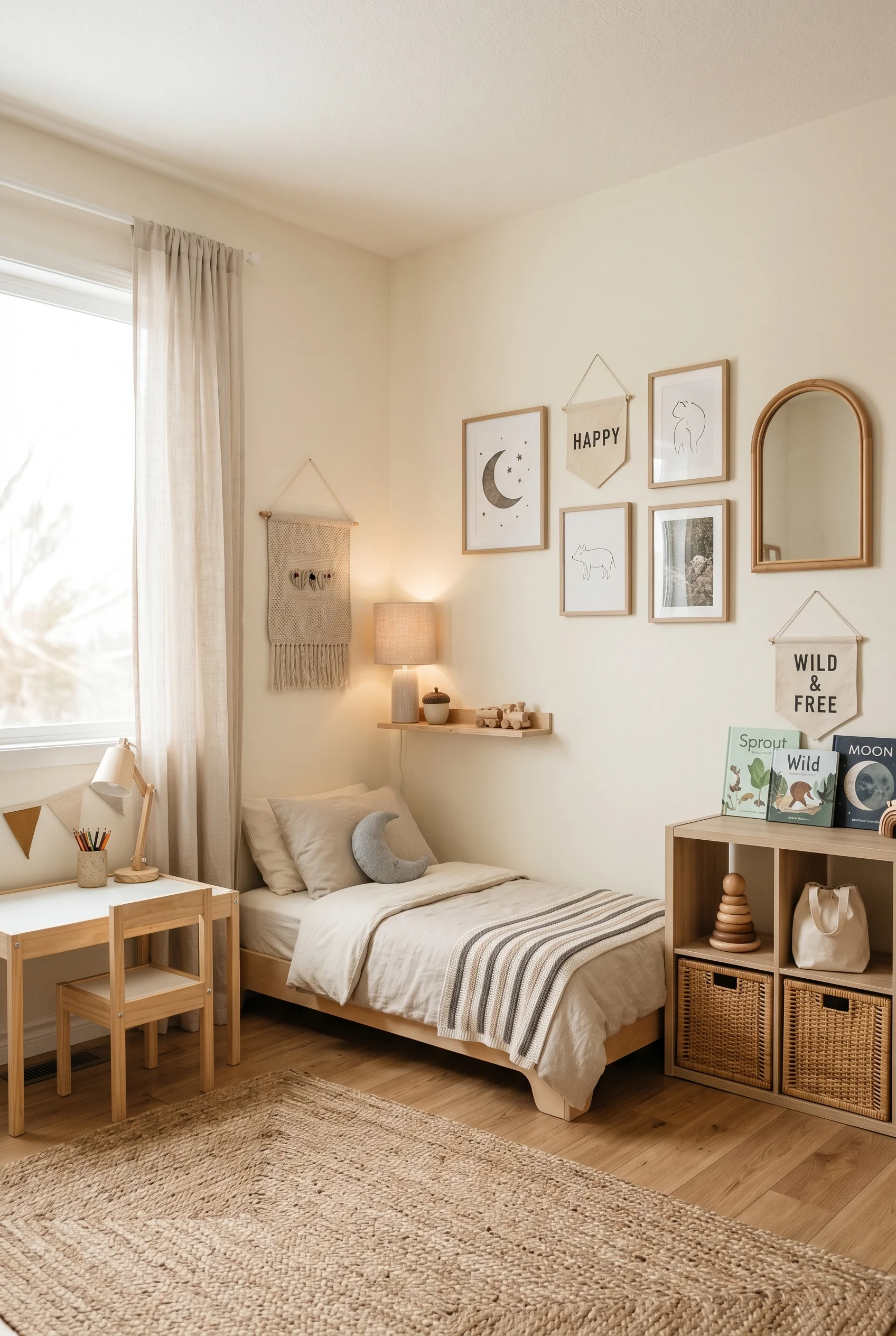
This room is a great example of functional minimalism.
The bed, storage, desk, and shelving all serve a clear purpose, yet the room never feels crowded. Instead of adding more furniture, the design focuses on choosing pieces that work harder.
A small room often feels larger when every item has a purpose.
That balance of practicality and simplicity helps the space remain flexible as a child grows.
Comfort Often Lives in the Small Details
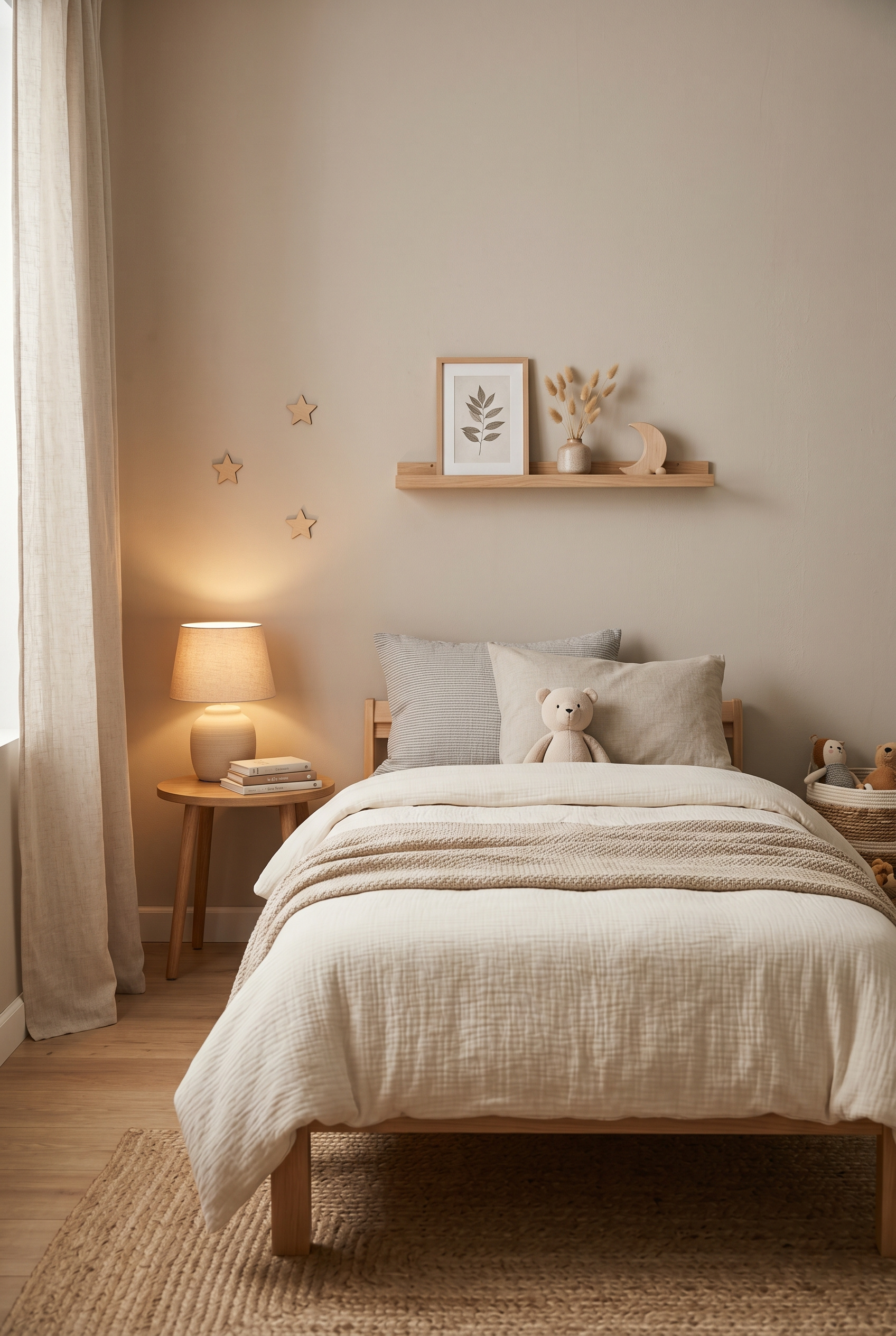
Not every cozy room relies on statement furniture or dramatic design features.
Sometimes comfort comes from the quieter details: layered bedding, soft textures, warm wood tones, and a favorite stuffed animal waiting on the bed.
This room feels welcoming because it hasn’t been overstyled. There is enough personality to make the space feel loved, but enough restraint to preserve the sense of calm that defines minimalist design.
The atmosphere feels relaxed, familiar, and ready for everyday life.
Storage That Works Hard Behind the Scenes
One of the easiest ways to create a calmer kids’ room is to reduce the amount of visual clutter on display.
That doesn’t necessarily mean owning less. More often, it means giving everyday items a dedicated place to live. Thoughtful storage helps toys, clothes, books, and supplies stay accessible while keeping the room itself more open and peaceful.
These spaces show how a smart organization can become part of the design.
An Open Wardrobe Designed Around Independence
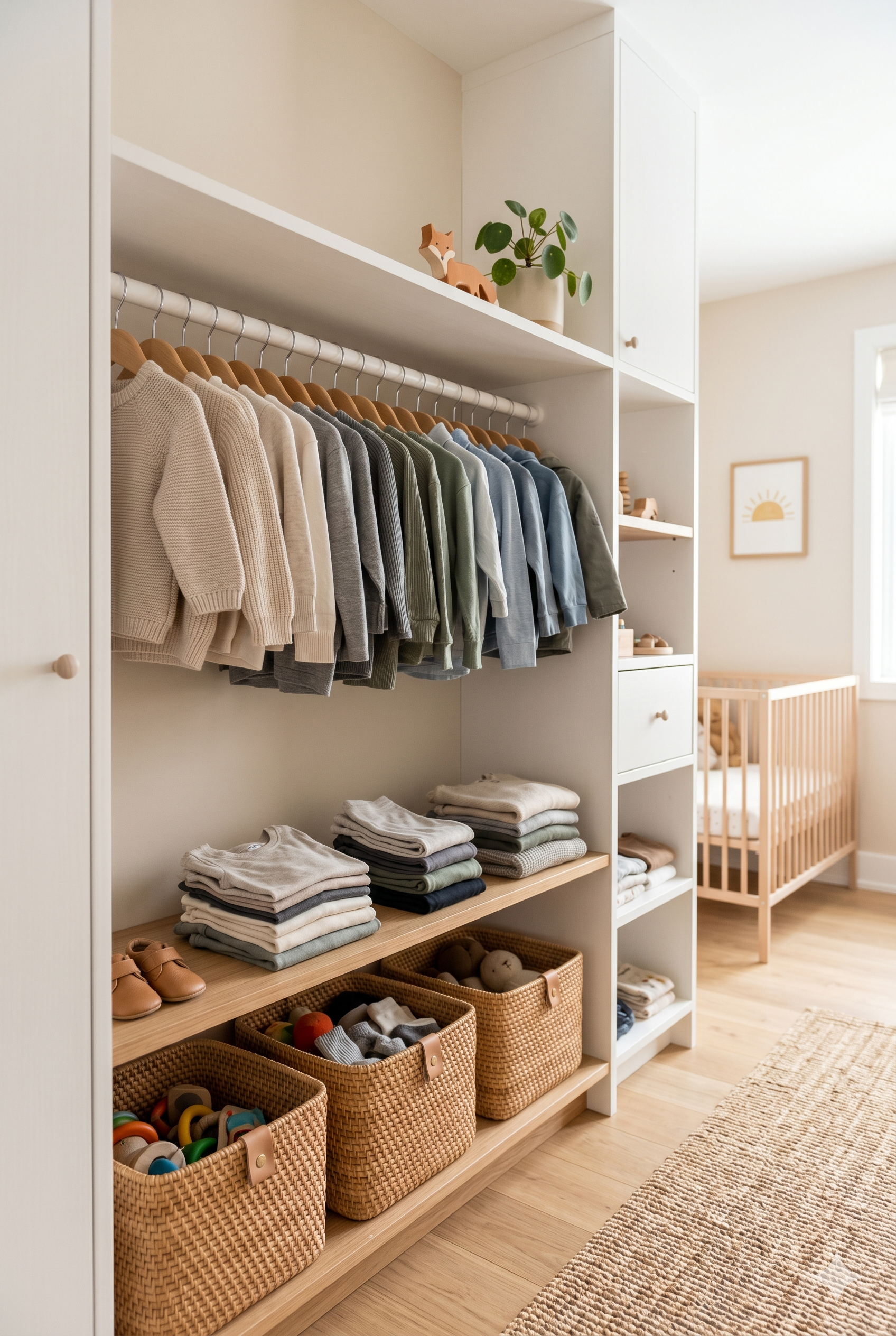
Traditional closets often place everything at adult height. This wardrobe takes the opposite approach.
Clothing is displayed where children can easily see and reach it, making daily routines feel more manageable and encouraging independence. The open design also creates a surprisingly tidy appearance because every item has a designated home.
Instead of hiding everything behind doors, the room relies on thoughtful organization and a carefully edited wardrobe.
Making Clothing Storage Feel Part of the Room
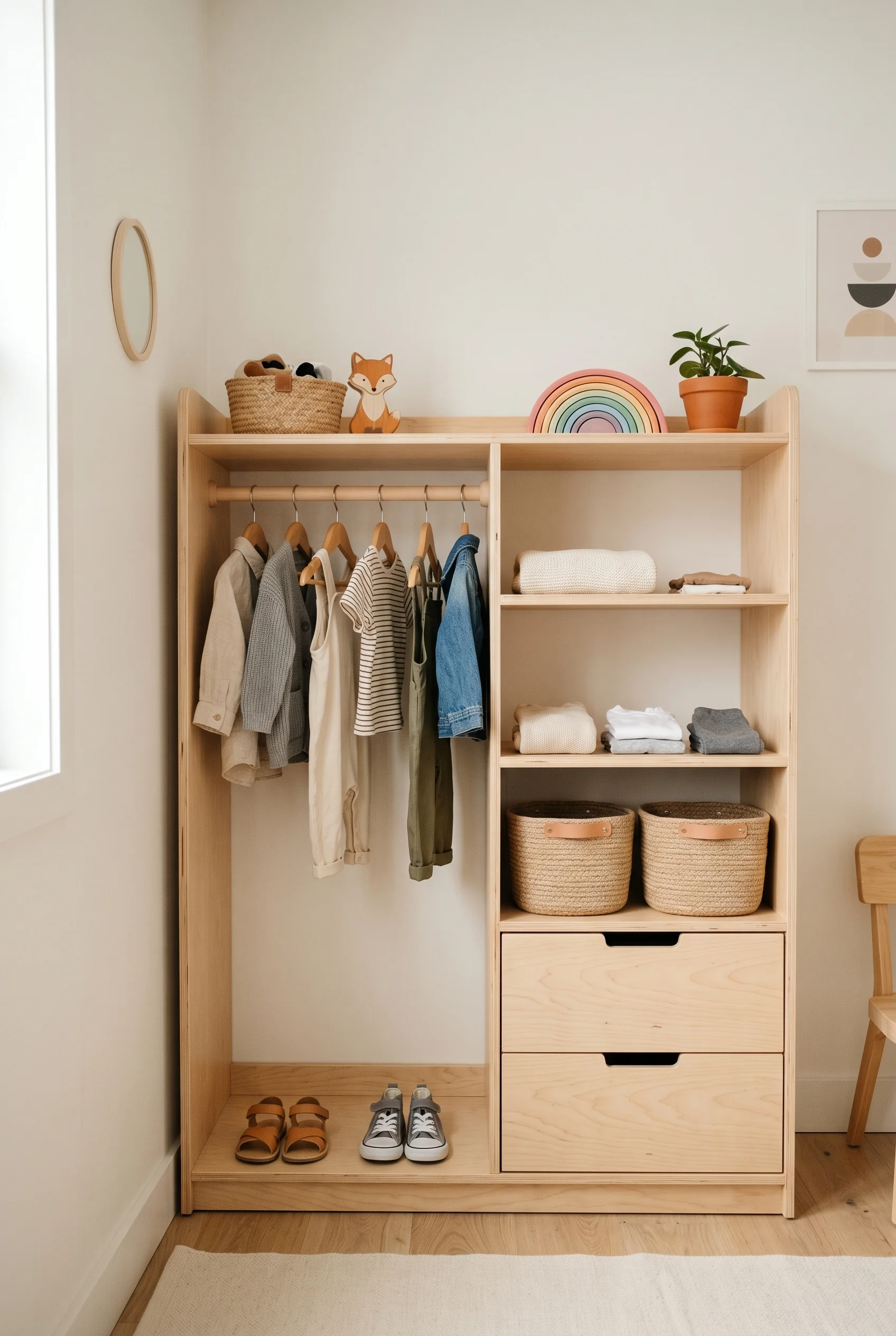
Storage furniture doesn’t have to feel separate from the overall design.
The natural wood tones and simple lines of this wardrobe blend seamlessly into the room, helping clothing storage feel intentional rather than purely functional. The result is both practical and visually calm.
When furniture serves a purpose and contributes to the aesthetic, fewer pieces are often needed overall.
Toy Storage That Looks Beautiful in Plain Sight
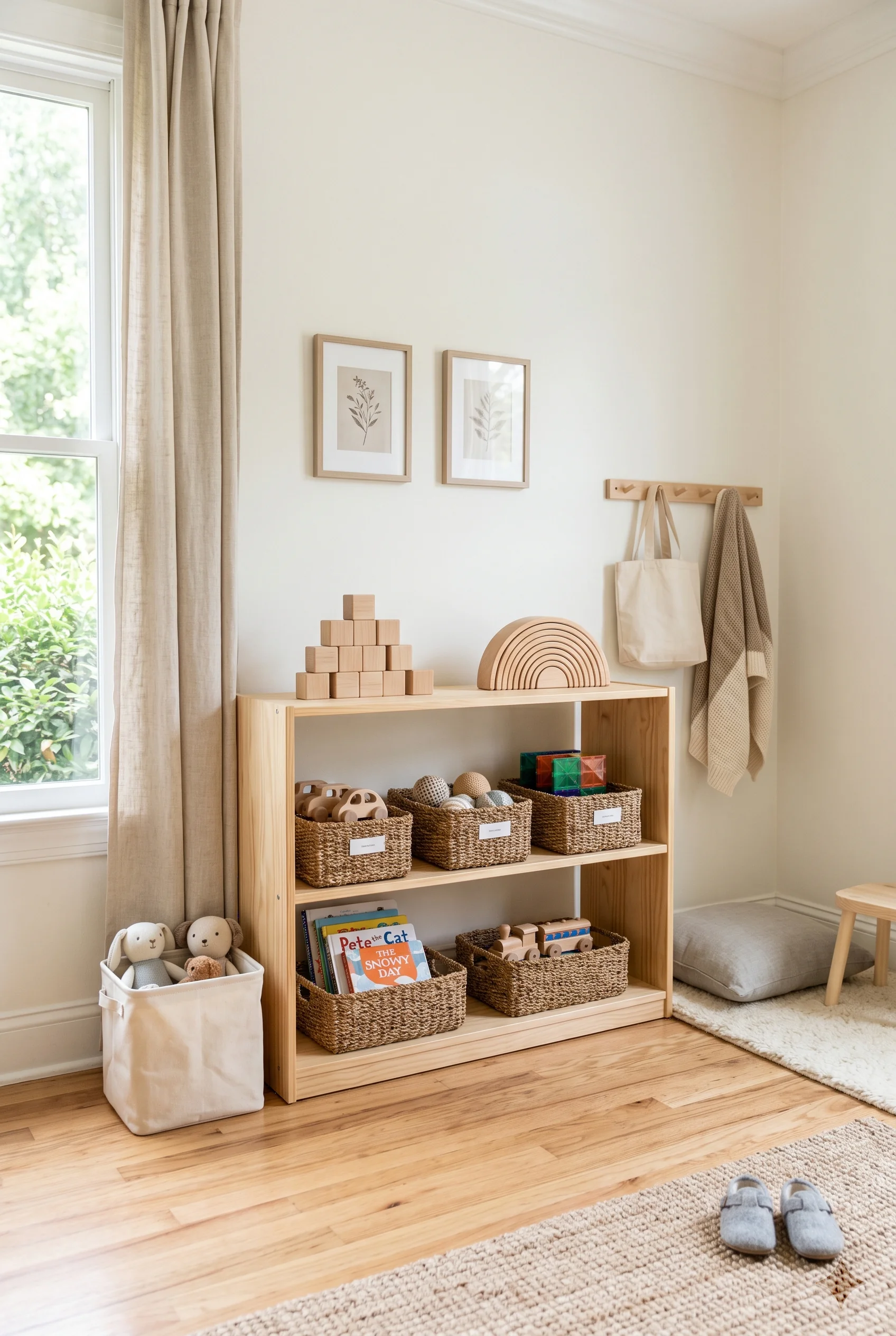
Open shelving works best when the collection is thoughtfully curated.
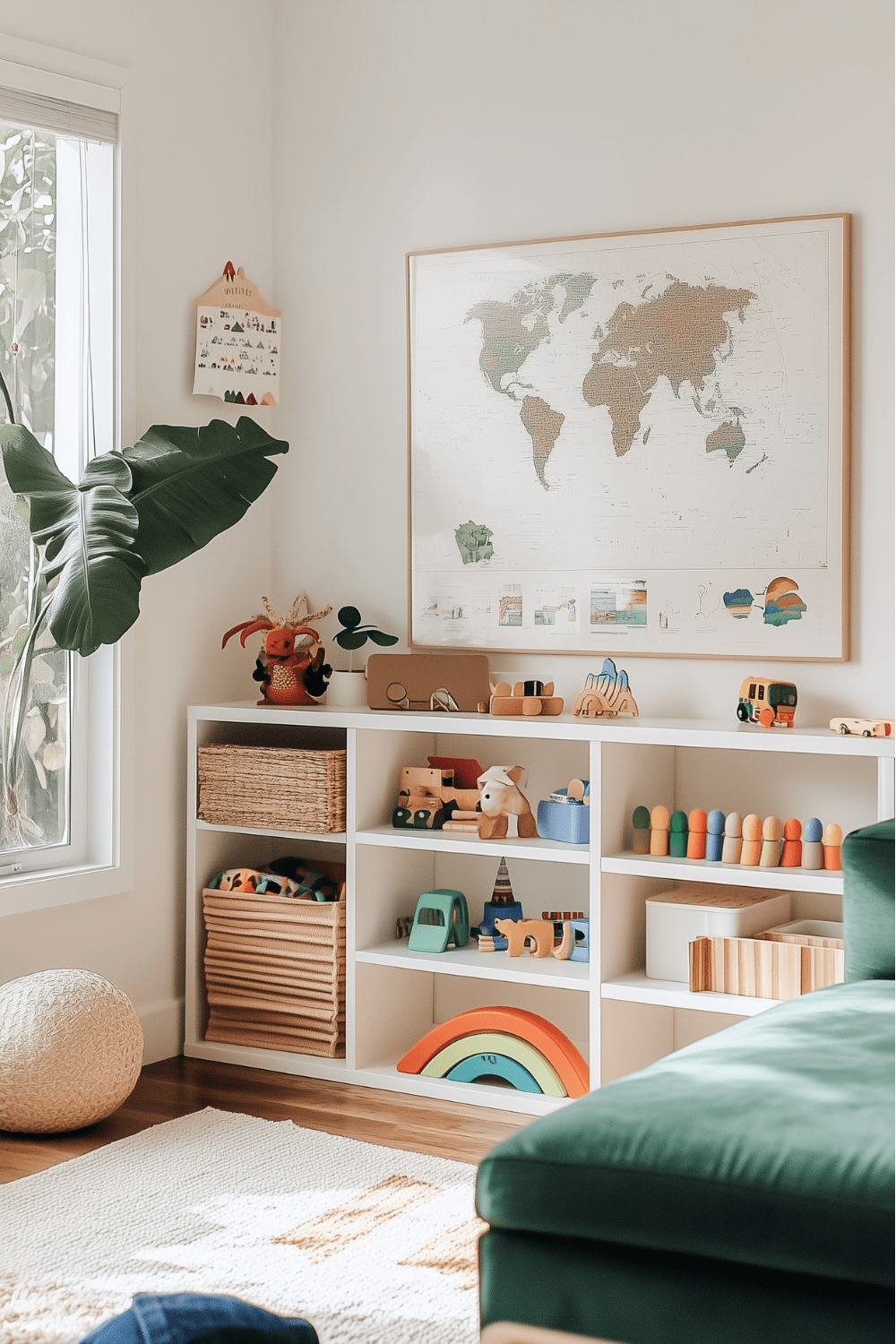
Rather than filling every shelf, this montessori-inspired toy storage setup leaves breathing room between toys, allowing favorite items to stand out while keeping the display manageable. The labeled baskets add another layer of organization without disrupting the room’s clean aesthetic.
For families trying to reduce visual clutter, displaying fewer toys often has a greater impact than purchasing additional storage.
Built-In Storage That Eliminates the Need for Extra Furniture
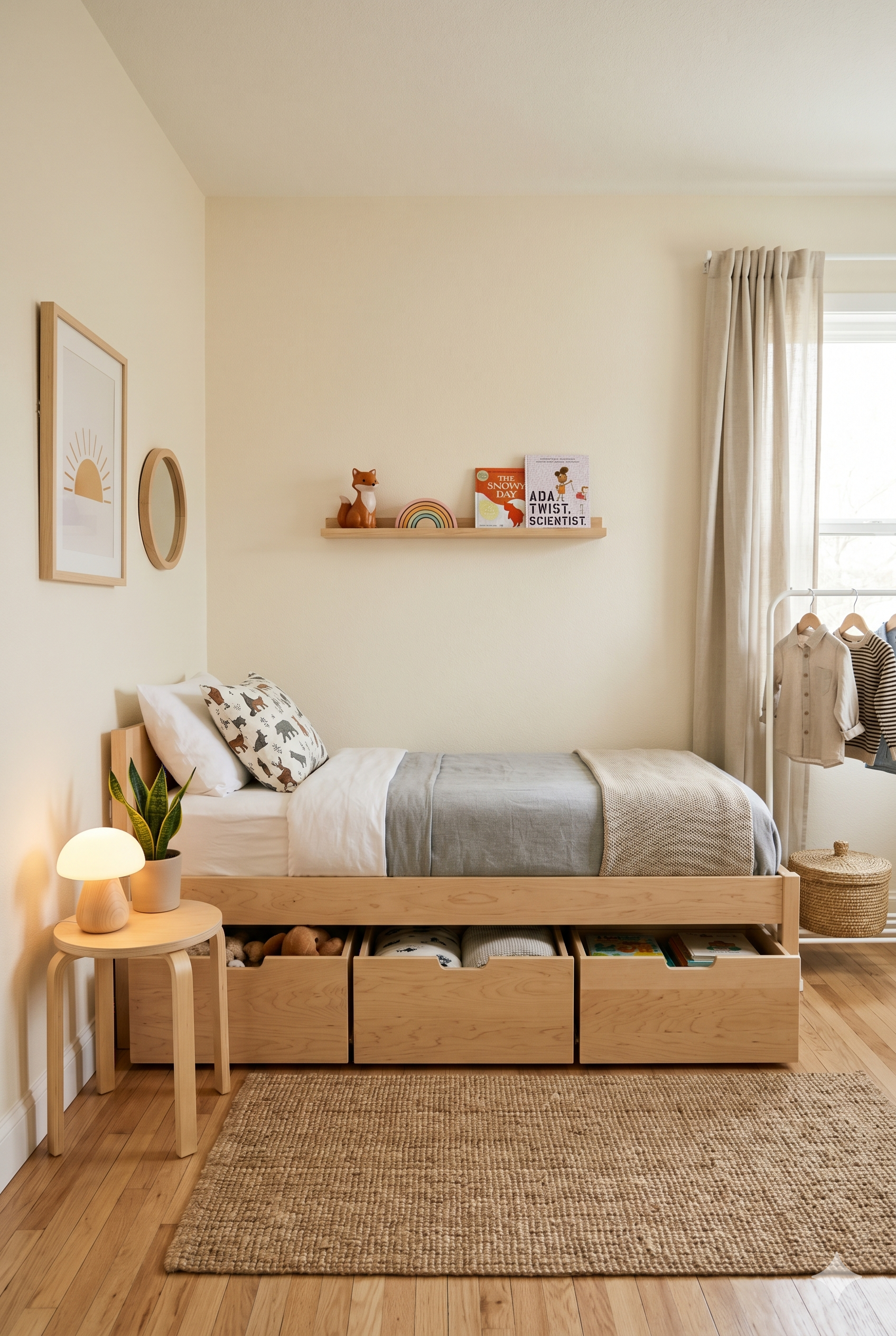
One of the smartest ways to simplify a kids room is to let furniture perform more than one job.
The built-in drawers beneath this bed provide substantial storage without requiring additional dressers, bins, or shelving units. That efficiency keeps floor space open while helping everyday items stay neatly organized.
The room feels streamlined because storage is integrated directly into the furniture rather than added around it.
SHOP THE ROOM
- Storage Bed Frame
- Under-Bed Drawer System
- Washable Area Rug
- Neutral Bedding Set
Hidden Storage Can Make a Room Feel Larger
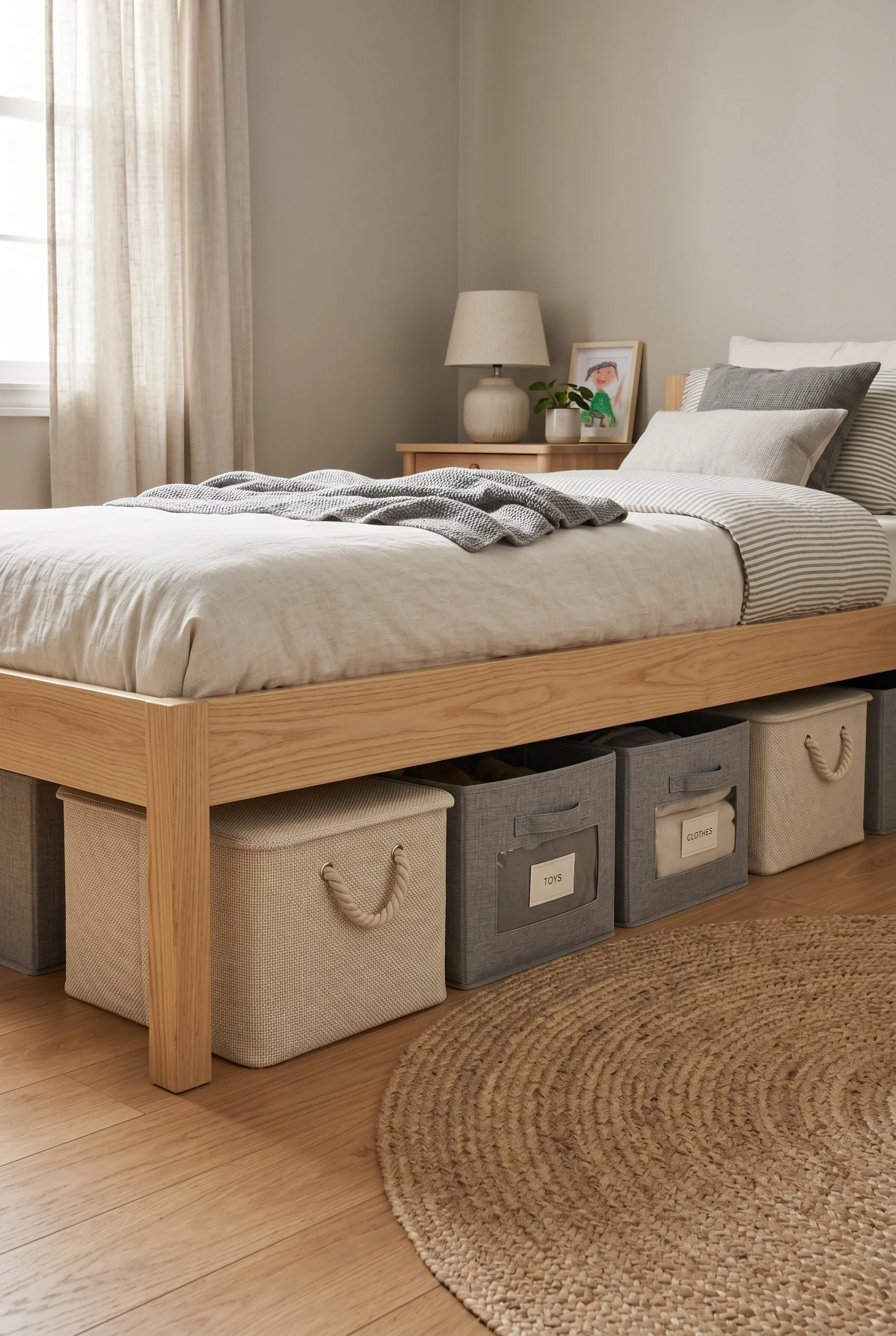
Not all storage needs to be visible.
The bins tucked beneath this bed keep toys and seasonal items close at hand while maintaining the room’s uncluttered appearance. Because the storage disappears when not in use, the room feels more spacious and visually lighter.
It’s a simple solution, but one that can dramatically improve how a room functions day to day.
SHOP THIS ROOM
- Rolling Under-Bed Storage Bins
- Fabric Storage Containers
- Bed Risers (if needed)
- Toy Organization Labels
Thoughtful Design Details That Make a Big Impact
Minimalist kids’ rooms rarely rely on dramatic design features.
More often, it’s a collection of thoughtful decisions that shape how the room feels. The placement of storage, the choice of materials, and the way everyday items are displayed all contribute to a space that feels calm, functional, and visually balanced.
These details may seem small, but together they have a significant impact.
Use Wall Space for Display and Storage
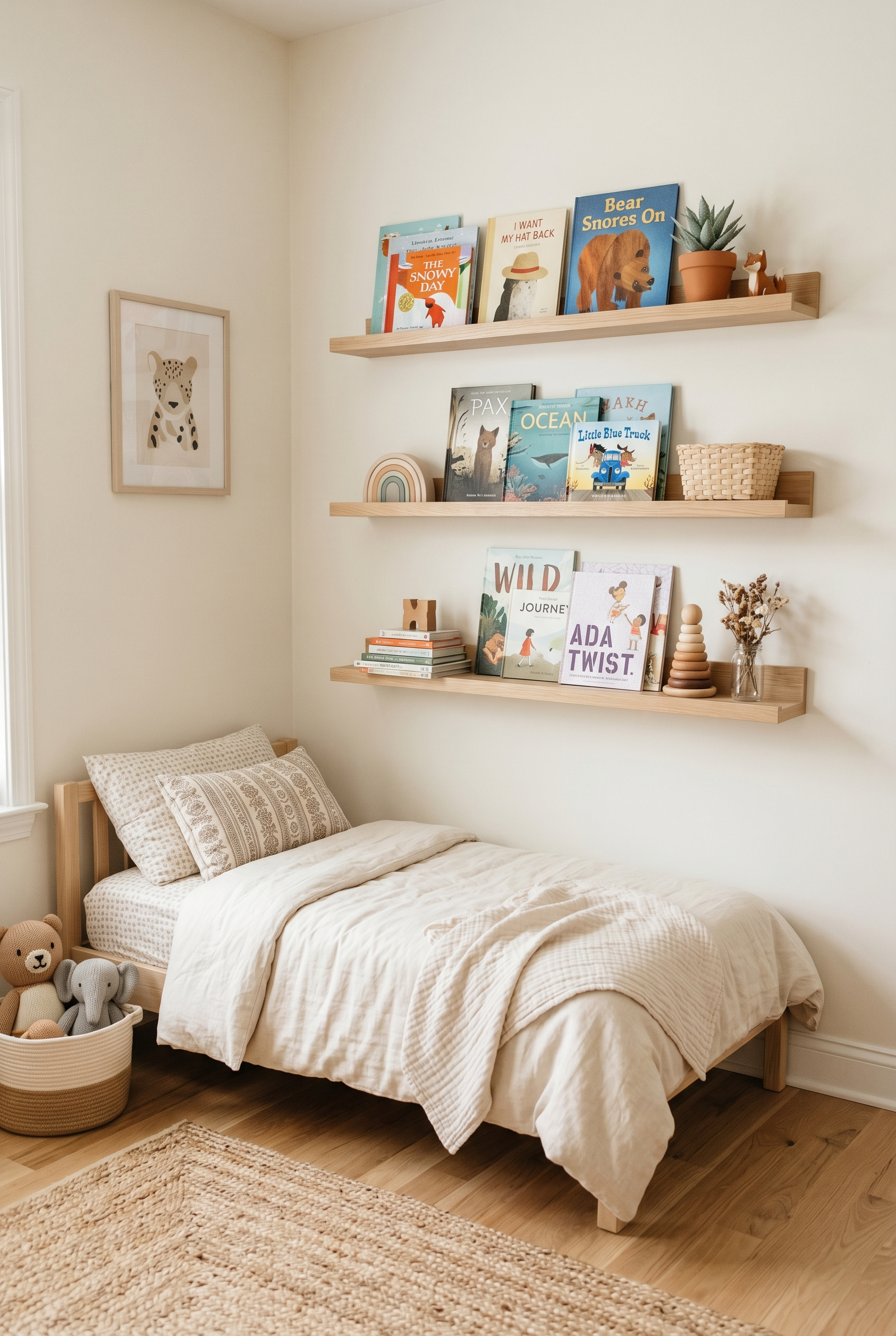
One of the easiest ways to maintain open floor space is to make better use of vertical storage.
The front-facing bookshelves in this room keep favorite books visible while doubling as part of the room’s decor. Because the storage is mounted on the wall, the room remains open and uncluttered.
It’s a practical solution that adds both personality and function.
Make Storage Feel Like Part of the Design
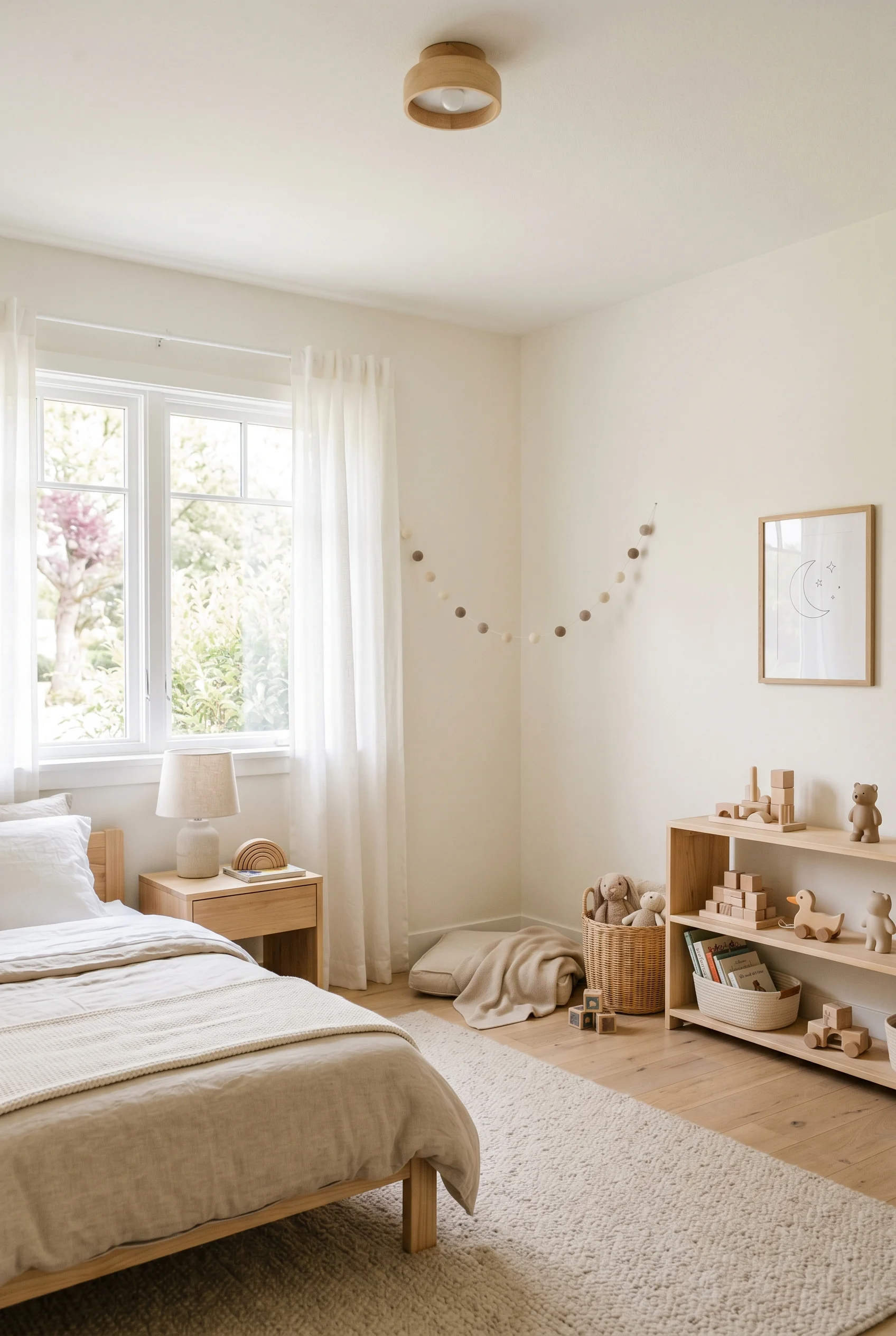
The shelving in this room feels integrated into the overall design rather than added as an afterthought.
Books, toys, and decorative objects each have a designated place, helping the room feel organized without relying entirely on closed storage. The arrangement feels intentional while still supporting everyday family life.
When storage contributes to the overall aesthetic, a room naturally feels more cohesive.
Beautiful Minimalist Kids Rooms Worth Saving
Sometimes the most inspiring ideas come from seeing how all the elements work together.
These rooms combine calming color palettes, practical storage, child-friendly layouts, and thoughtful design details to create spaces that feel both beautiful and livable.
Create a Room That Grows Alongside Your Child
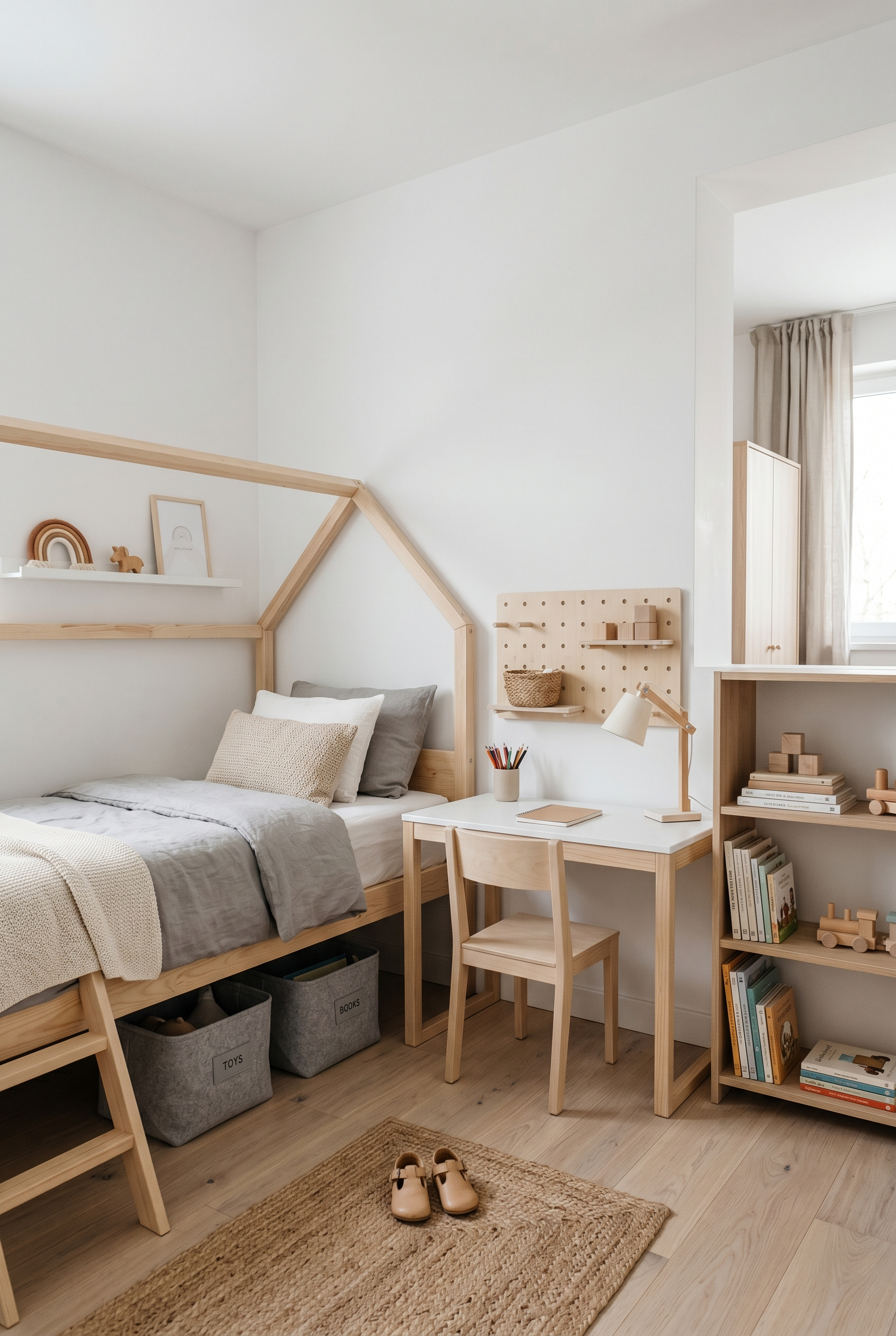
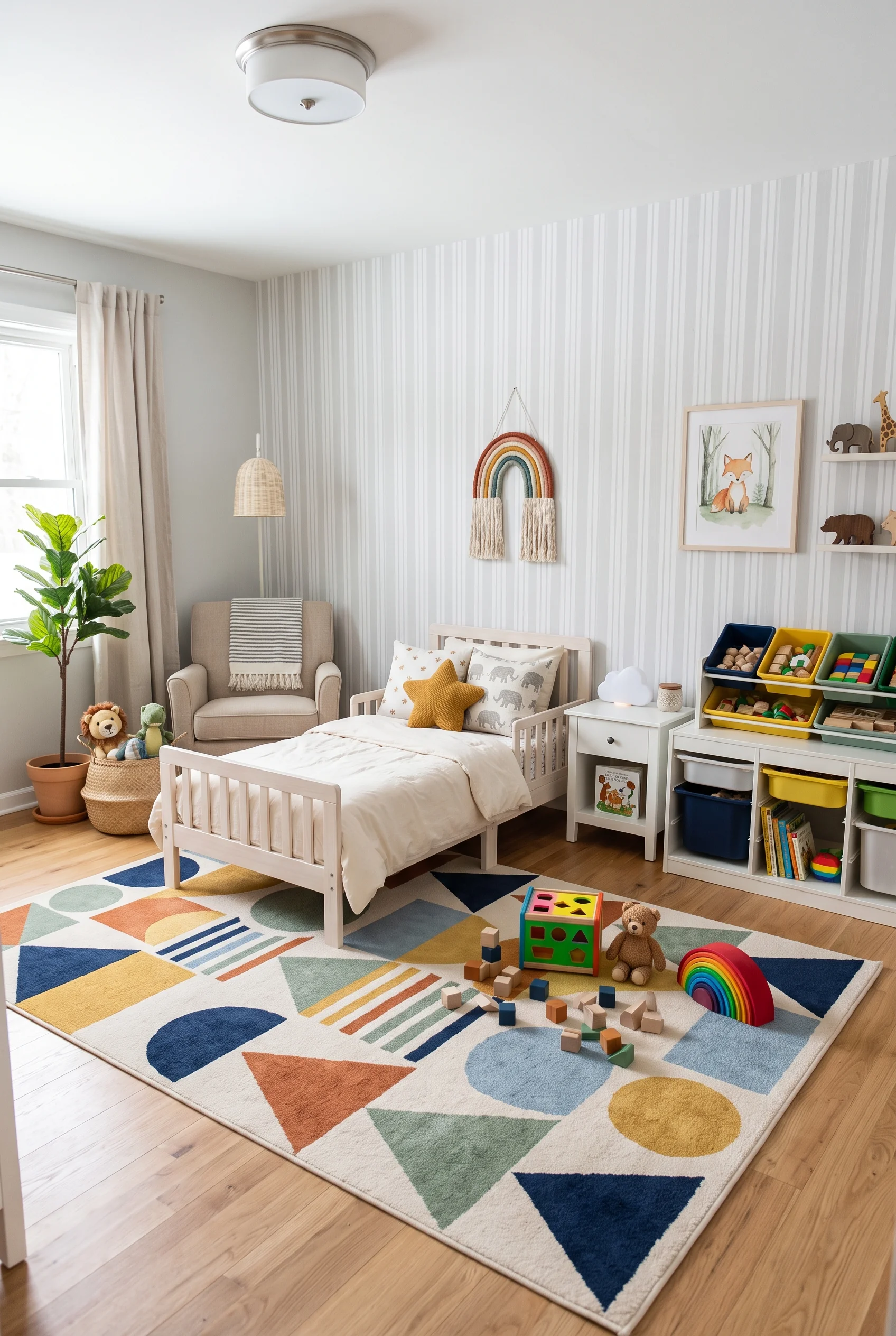
This room feels thoughtfully designed for both the present and the future.
The simple house bed adds character without locking the space into a specific theme, while the desk, shelving, and storage solutions support changing needs as children grow. What works today for coloring and storybooks can easily transition into homework, hobbies, and independent projects later on.
The neutral palette also gives the room remarkable flexibility. Instead of redesigning the entire space every few years, small updates to bedding, artwork, or accessories can help the room evolve naturally over time.
Perhaps the most appealing part of this design is how balanced it feels. There’s space to sleep, learn, create, and stay organized without the room ever feeling crowded.
Create Space for Living, Learning, and Play
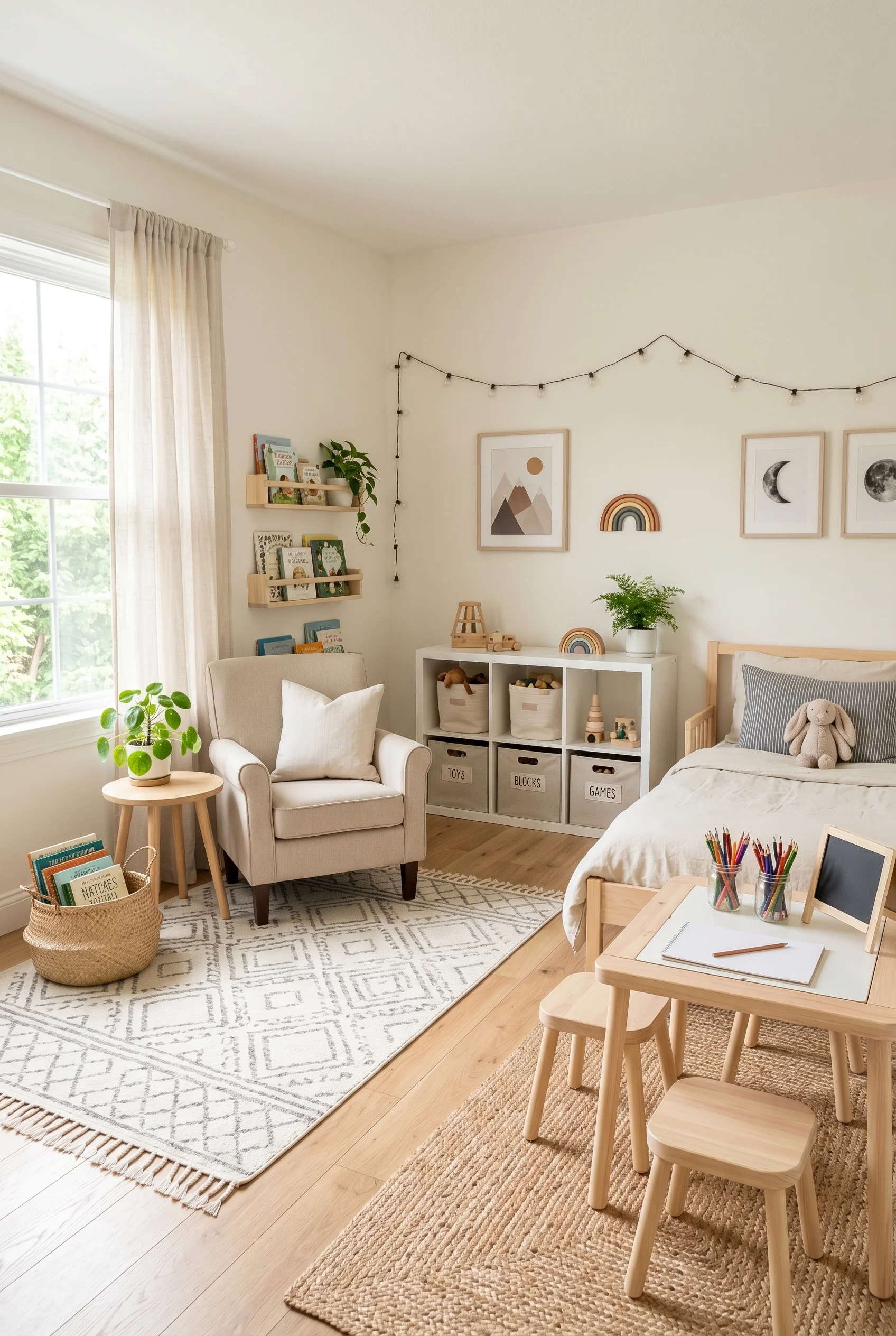
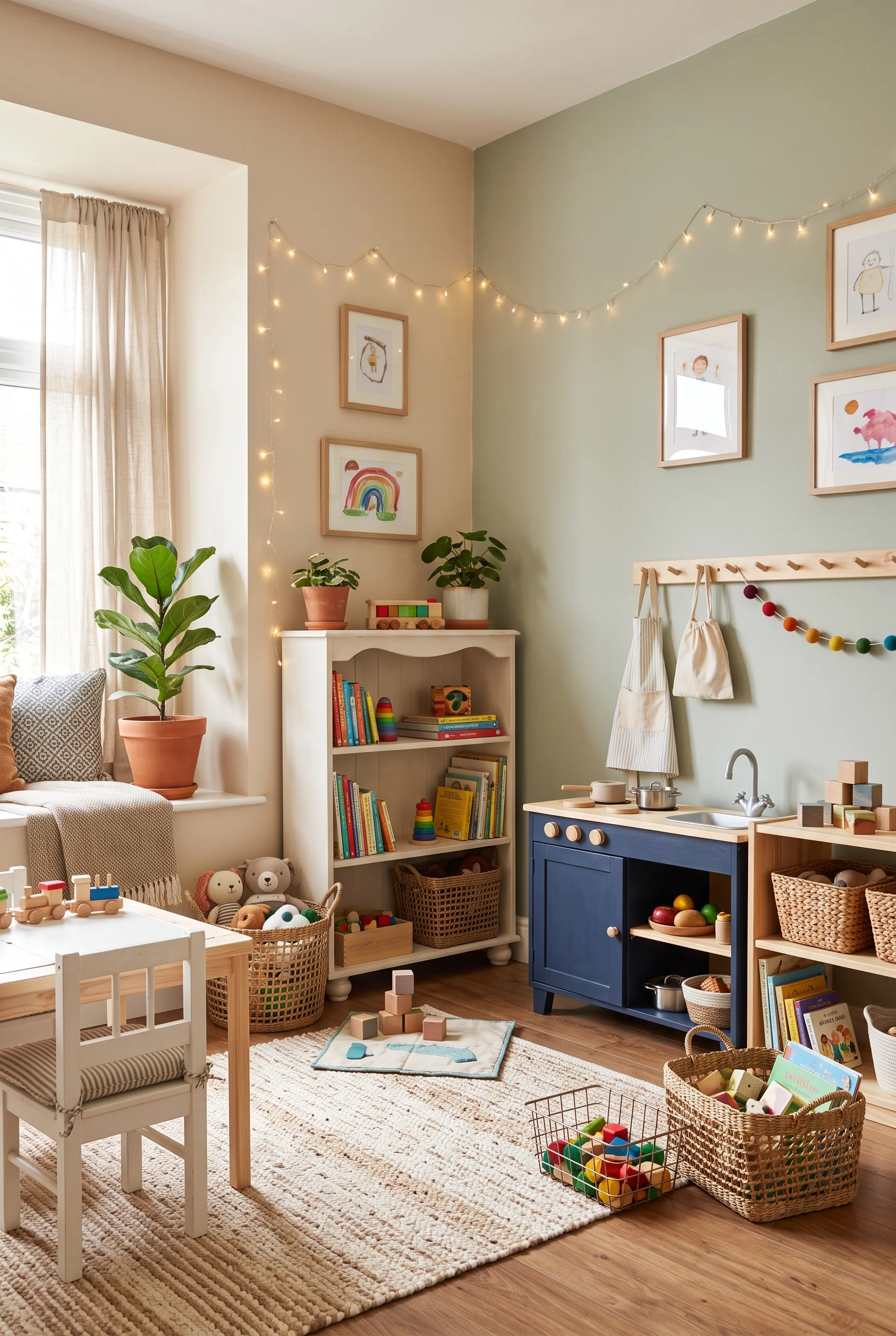
This room proves that a minimalist design doesn’t have to limit how a space functions.
A reading corner, activity table, toy storage, and sleeping area all fit comfortably within the room while maintaining a calm, uncluttered feel. Thoughtful organization keeps everyday items accessible without overwhelming the space.
The result feels practical, inviting, and easy to live in—exactly what many families hope to achieve with a minimalist kids’ room.
A Simple Room That Never Feels Empty
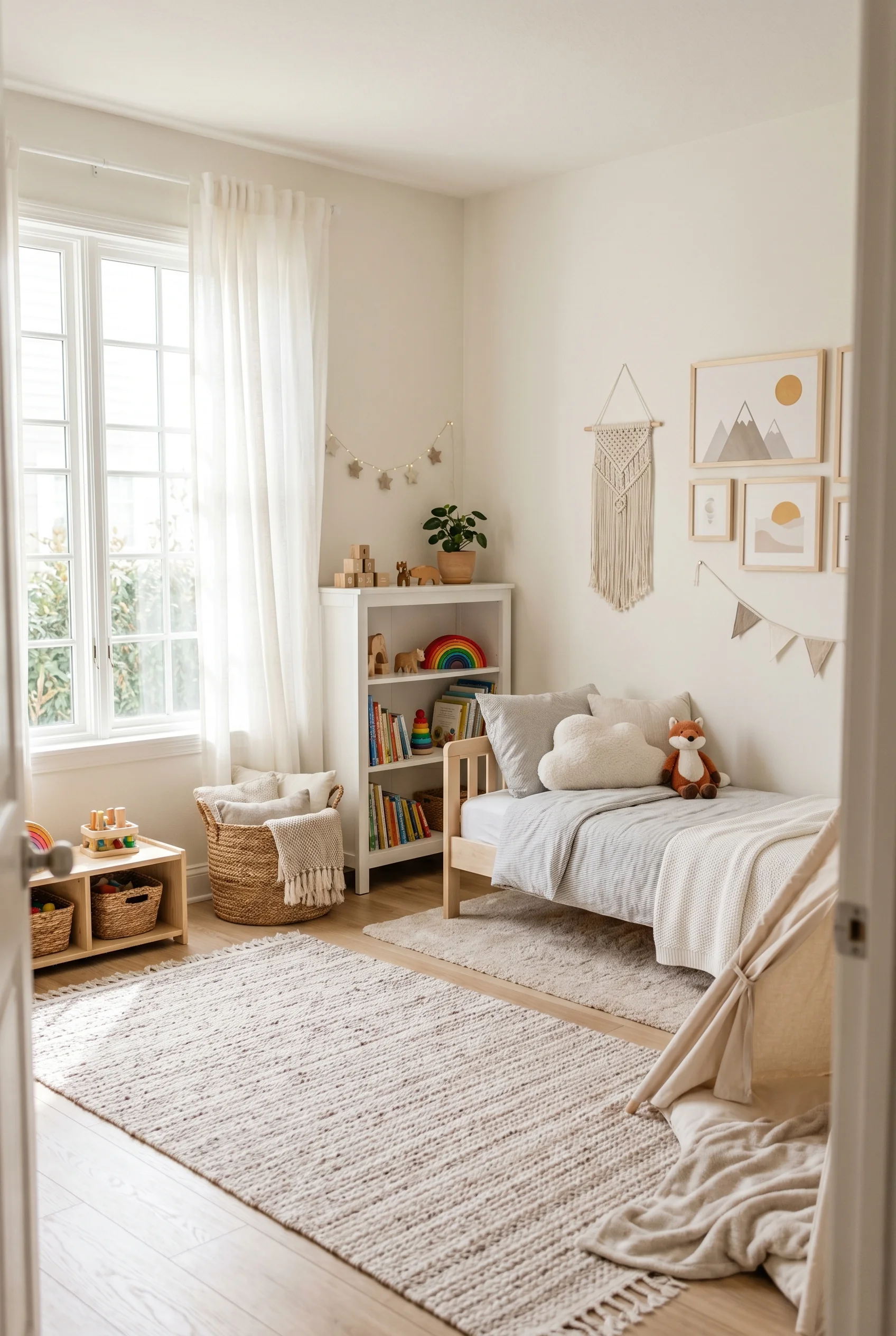
This room is a good reminder that minimalist design isn’t about removing everything. It’s about making space for what matters most.
The furniture is practical, the storage is accessible, and the decor remains understated. Every piece contributes to the room without competing for attention.
The result feels bright, comfortable, and easy to live in—qualities that often make minimalist kids’ rooms so appealing.
Conclusion
A minimalist kids room isn’t about removing personality. It’s about creating a space that feels easier to live in every day.
Whether that means choosing calmer colors, investing in smarter storage, or designing a room that encourages independence, even small changes can make a noticeable difference.
The best minimalist kids rooms balance function, comfort, and personality while leaving room for what matters most: childhood.