21 Valentine’s Day Tablescape Ideas for a Romantic Dinner at Home
Valentine’s Day tablescape ideas don’t have to start with a restaurant reservation, a babysitter, and a bill that arrives with dessert. The sweetest February evenings often happen at your own dining table, after the backpacks are hung up and the house finally goes quiet.
A romantic dinner at home starts with the table, not the menu. A few candles, a softer palette, and linens you actually like touching can turn the same table that holds homework and cereal bowls into somewhere that feels set apart. None of it needs to be expensive. Most of it is probably already in your cabinets.
Homes that lean toward modern organic decor will find plenty here that fits right in, especially linen, greenery, and warm wood. And if you gave your rooms a fresh start in January, February is the perfect excuse to enjoy them by candlelight.
Below are 21 Valentine’s table settings grouped by what they do best, starting with lighting and color and ending with a sweet finale. Pick one idea or layer several; either way, the evening will feel intentional. The goal is simple: a table that makes you want to linger.

This post contains affiliate links, which means I may earn a small commission if you purchase through my links, at no extra cost to you. I only recommend products I genuinely love and think you will too!
Soft Light That Sets the Whole Evening
Lighting changes a dining room more than any centerpiece can. Overhead fixtures are great for homework and weeknight spaghetti, but a romantic dinner at home asks for something lower and warmer. The four ideas below layer candlelight and string lights with a gentle scent, so the room feels intimate from the moment you sit down. Even one low source of light changes the whole table.
Candlelight With Real Depth
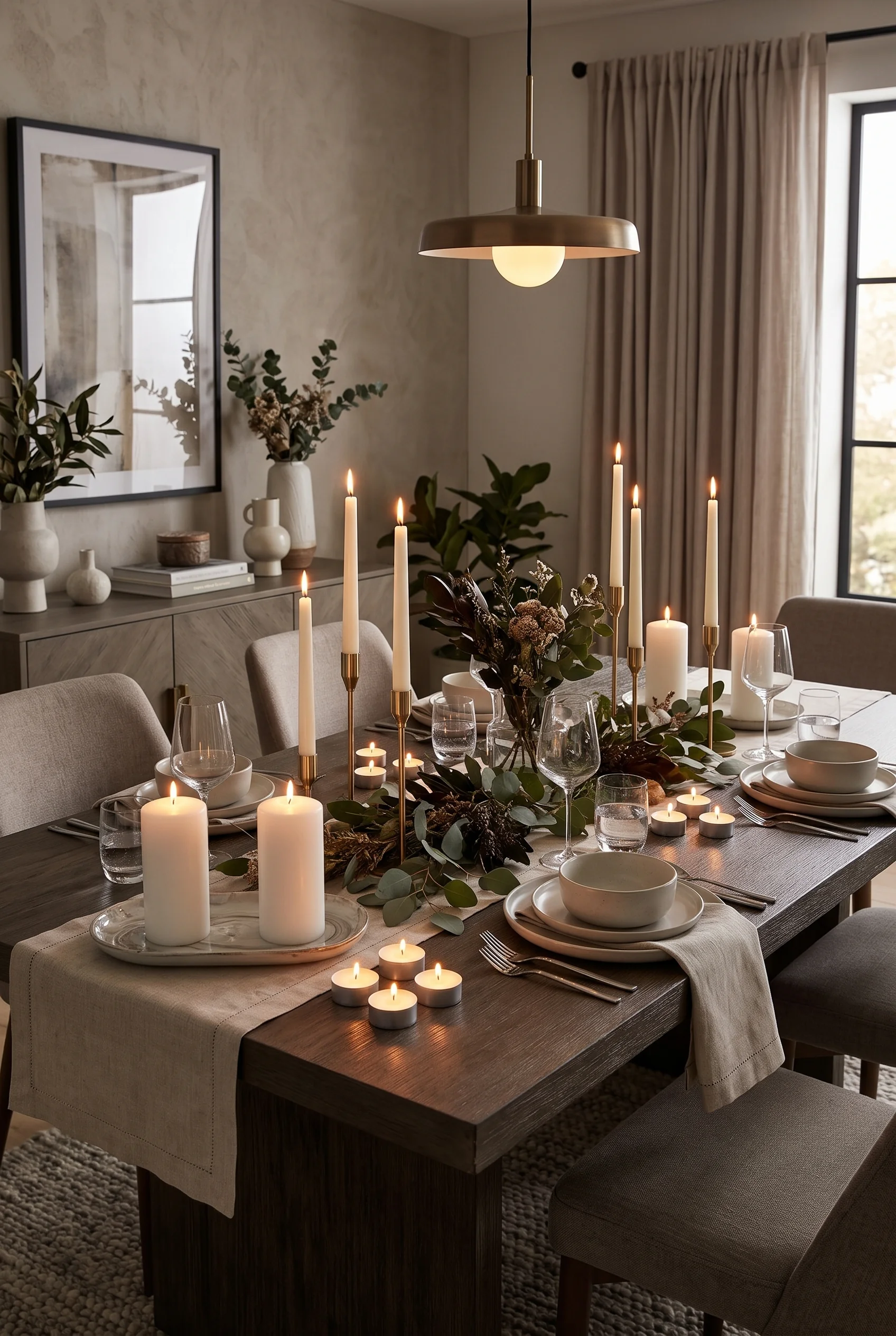
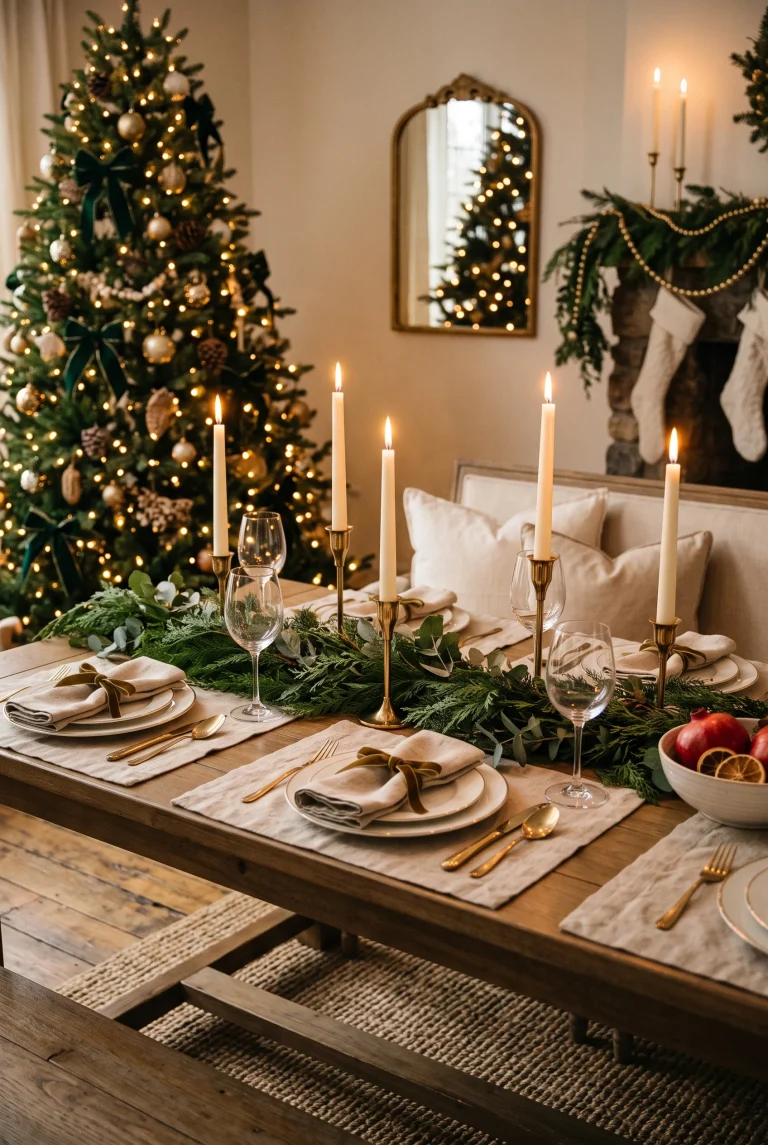
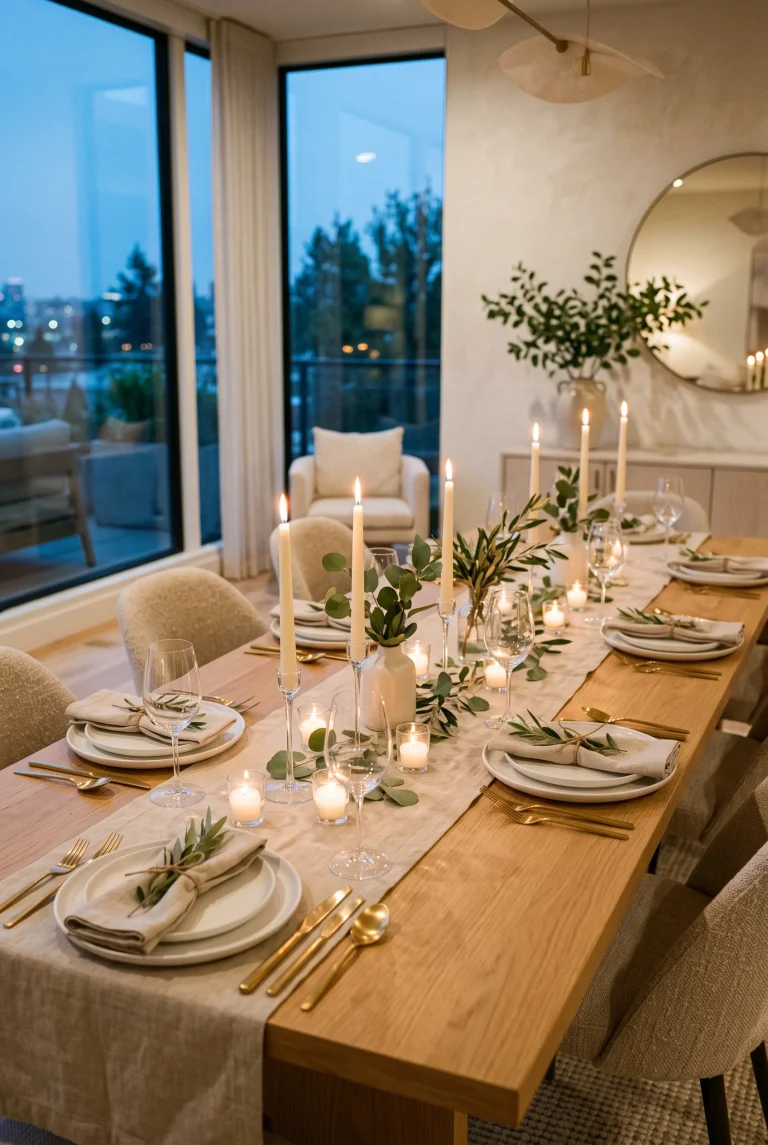
Candlelight is the fastest mood change a dining room can get, and height is what makes it look generous. Tapers pull the eye up, pillars hold the middle, and tea lights scatter a low glow across the linen.
Small clusters read as more intentional than candles spaced evenly down the table. Two or three pools of light feel like a scene. A straight row feels like a hallway.
Stick with unscented candles near the plates so dinner smells like dinner. Tea lights gathered on a tray are also the easiest to whisk away when a little one wanders back downstairs for a glass of water.


A Banquette Corner That Feels Like a Favorite Restaurant
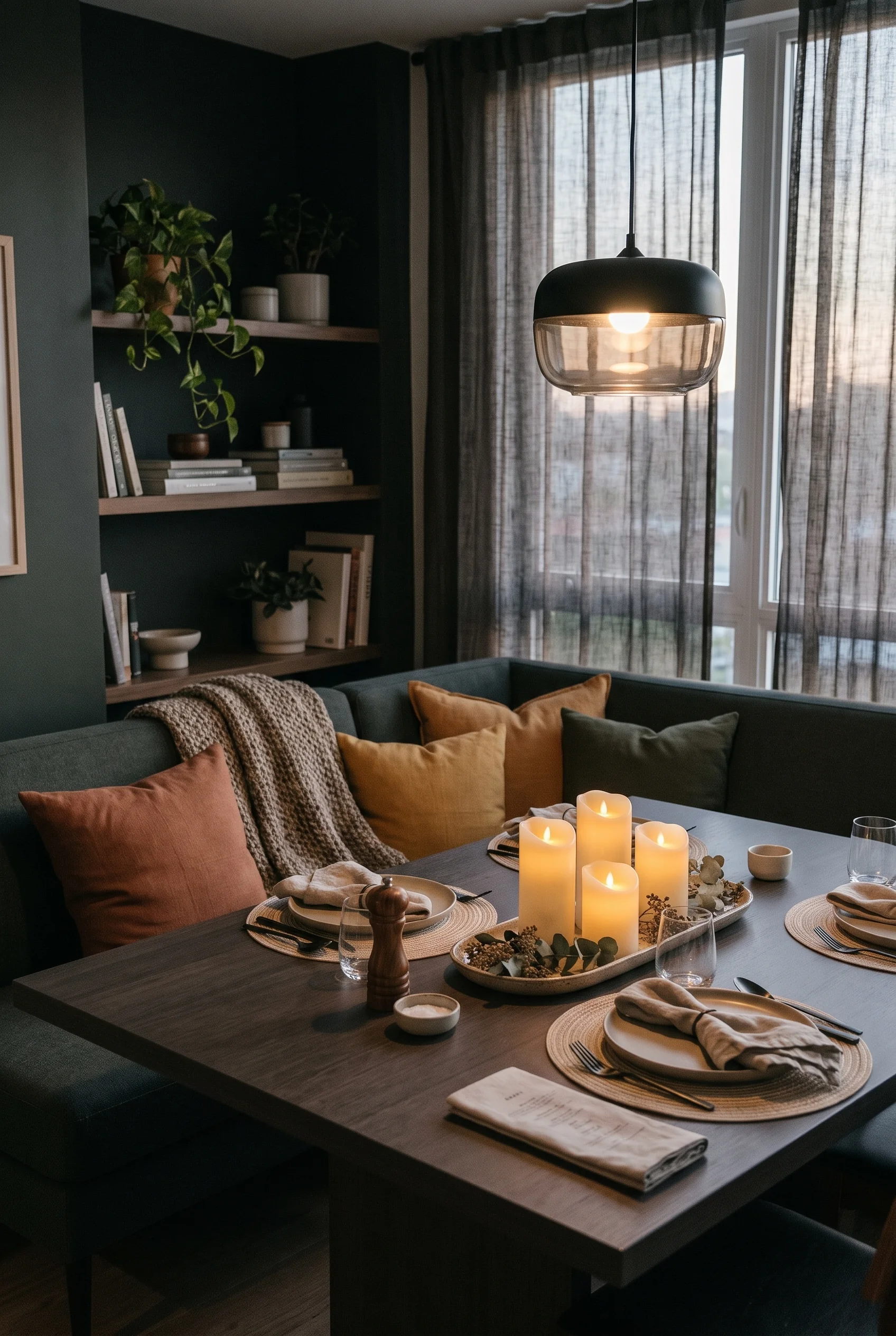
Comfort is half of romance. A dinner that stretches past dessert needs seating you can sink into, and a banquette or bench piled with cushions does that better than any formal chair.
Warm-toned textiles bring color without a single heart in sight. A soft throw tossed over the bench keeps the corner cozy once the heat clicks down for the night.
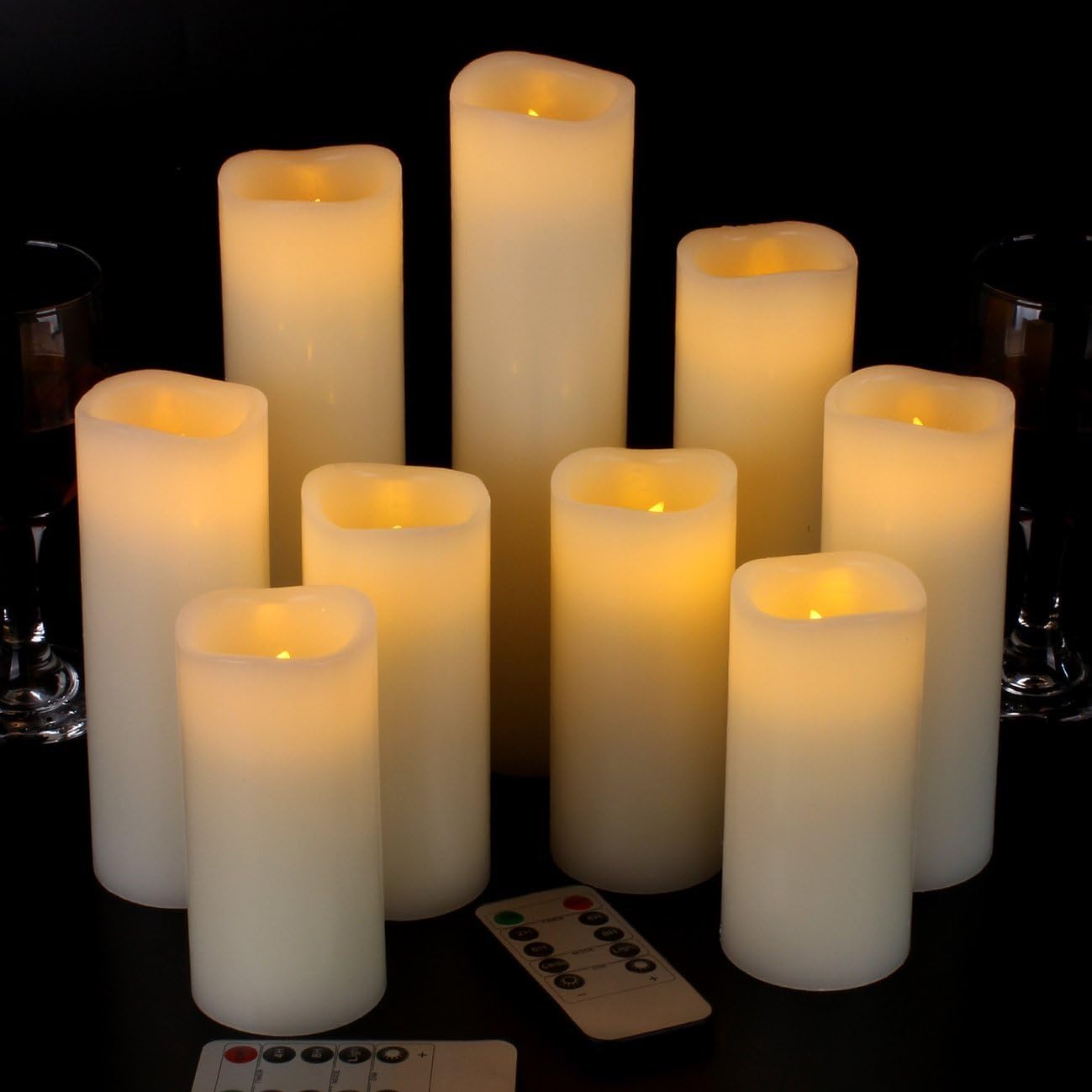
Dim the overhead light and let flameless candles carry the table. They glow for hours, never need a watchful eye, and feel every bit as intimate as the real thing when the rest of the room goes low.
Overhead String Lights That Feel Like a Garden Party
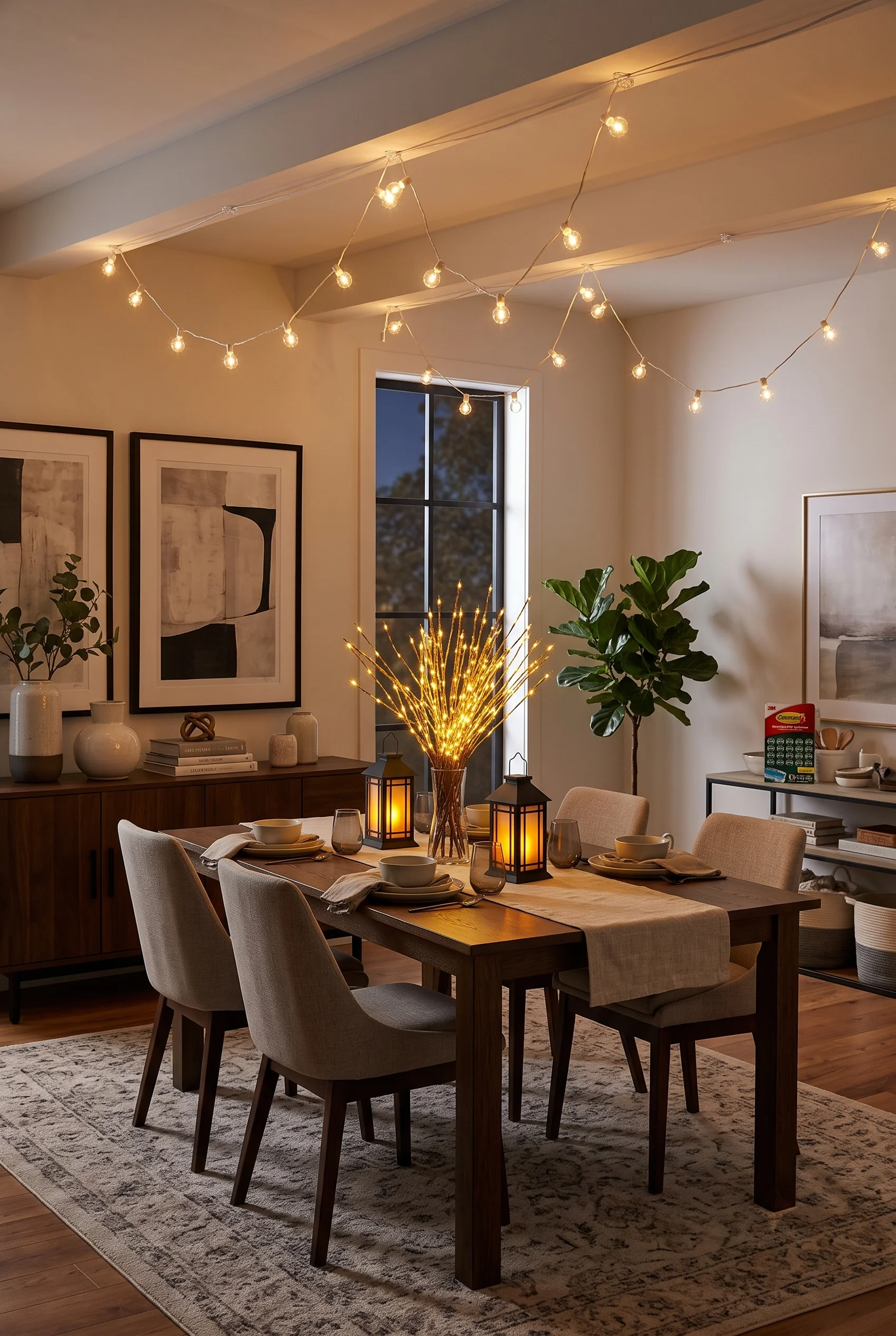
String lights aren’t only for patios. Draped loosely across a beam or ceiling, a strand of warm white bulbs turns an ordinary dining room into something closer to a garden party in February.
Warm white matters here. Cool or color-changing bulbs read as holiday decor, while a soft amber glow flatters faces and food. Removable adhesive clips hold the strand without nail holes, so it comes down Sunday morning in five minutes.
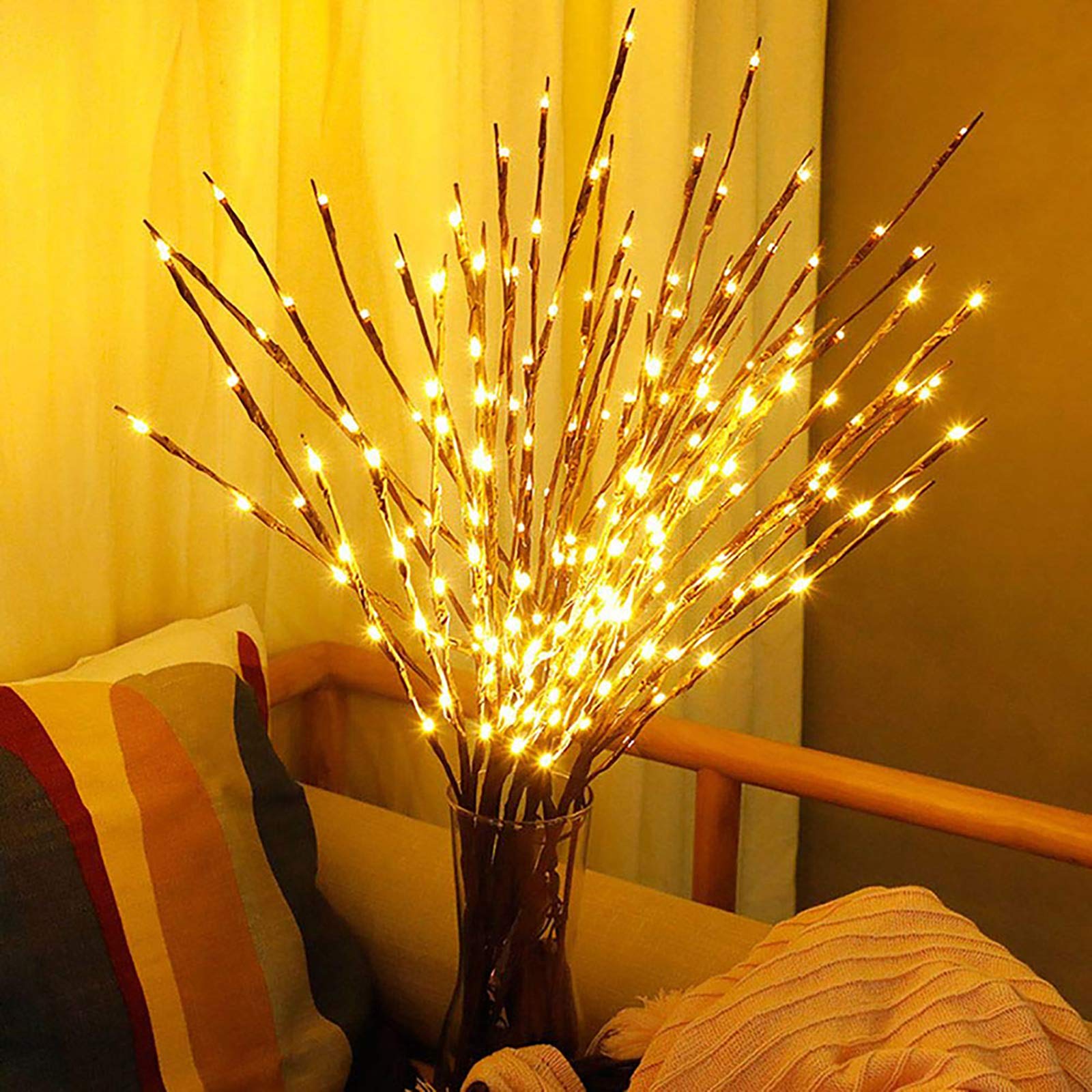
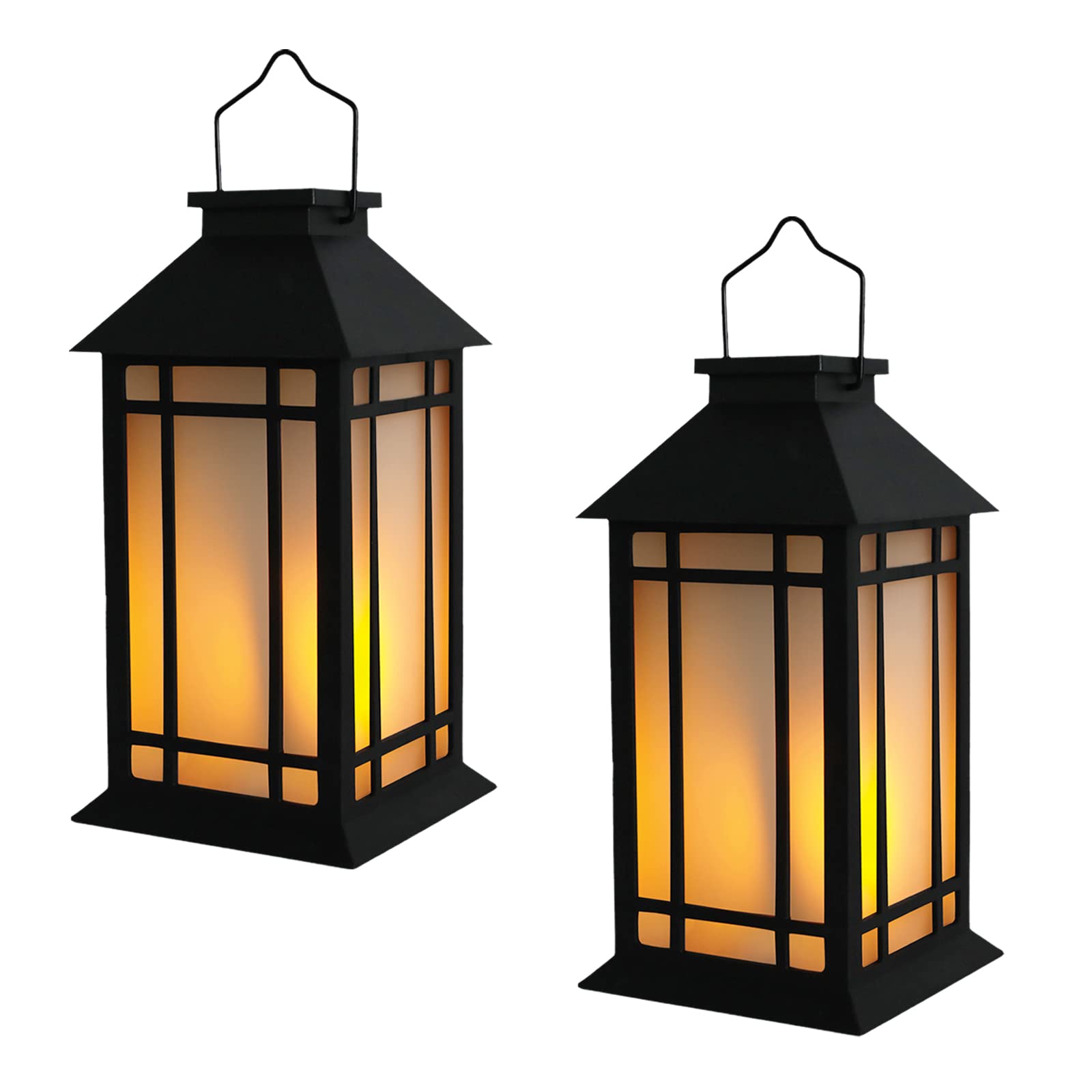
Battery-powered branch lights and a pair of lanterns bring the same sparkle down to table level, with no cords snaking across the floor for small feet to catch.

Scent That Stays Politely in the Background
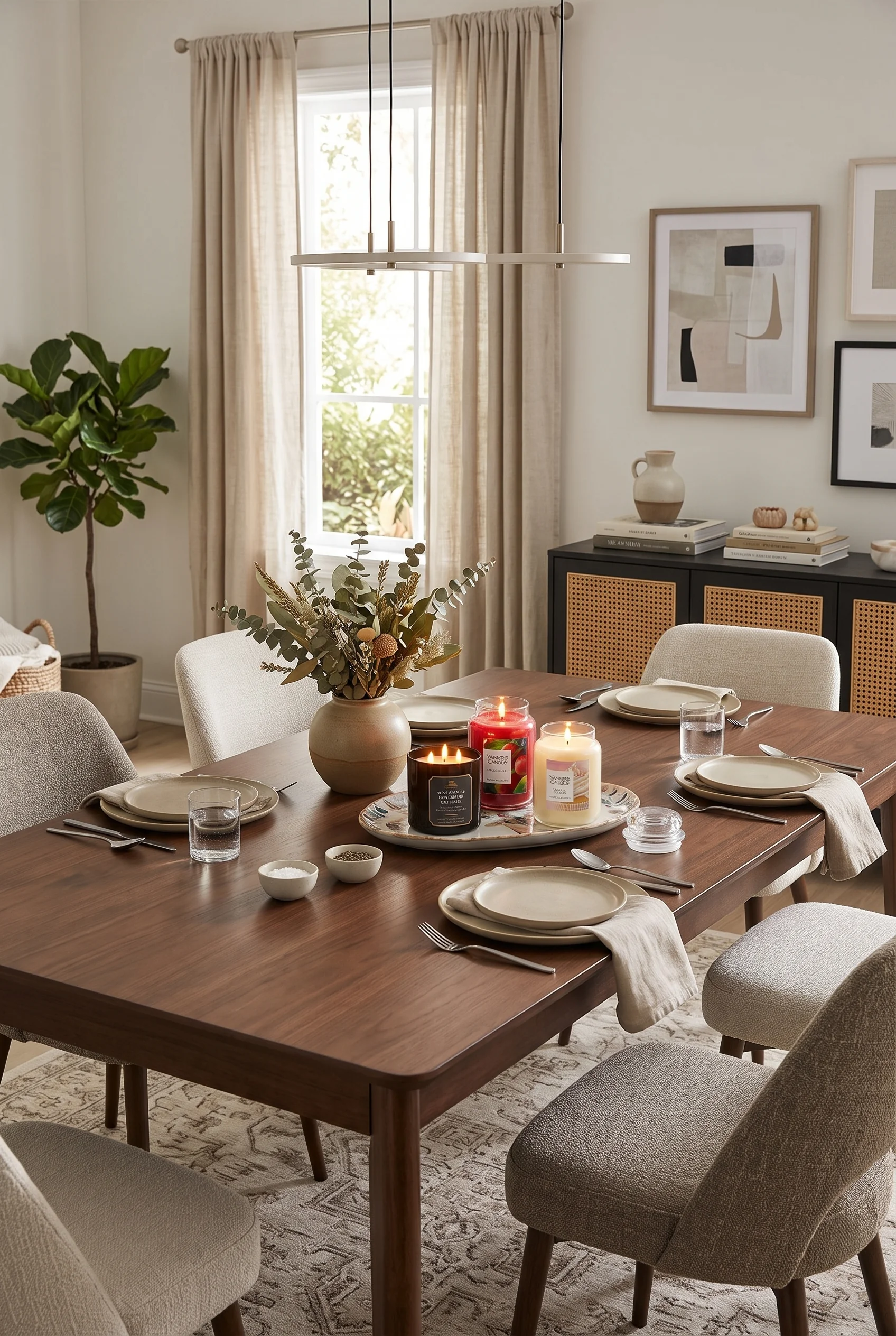
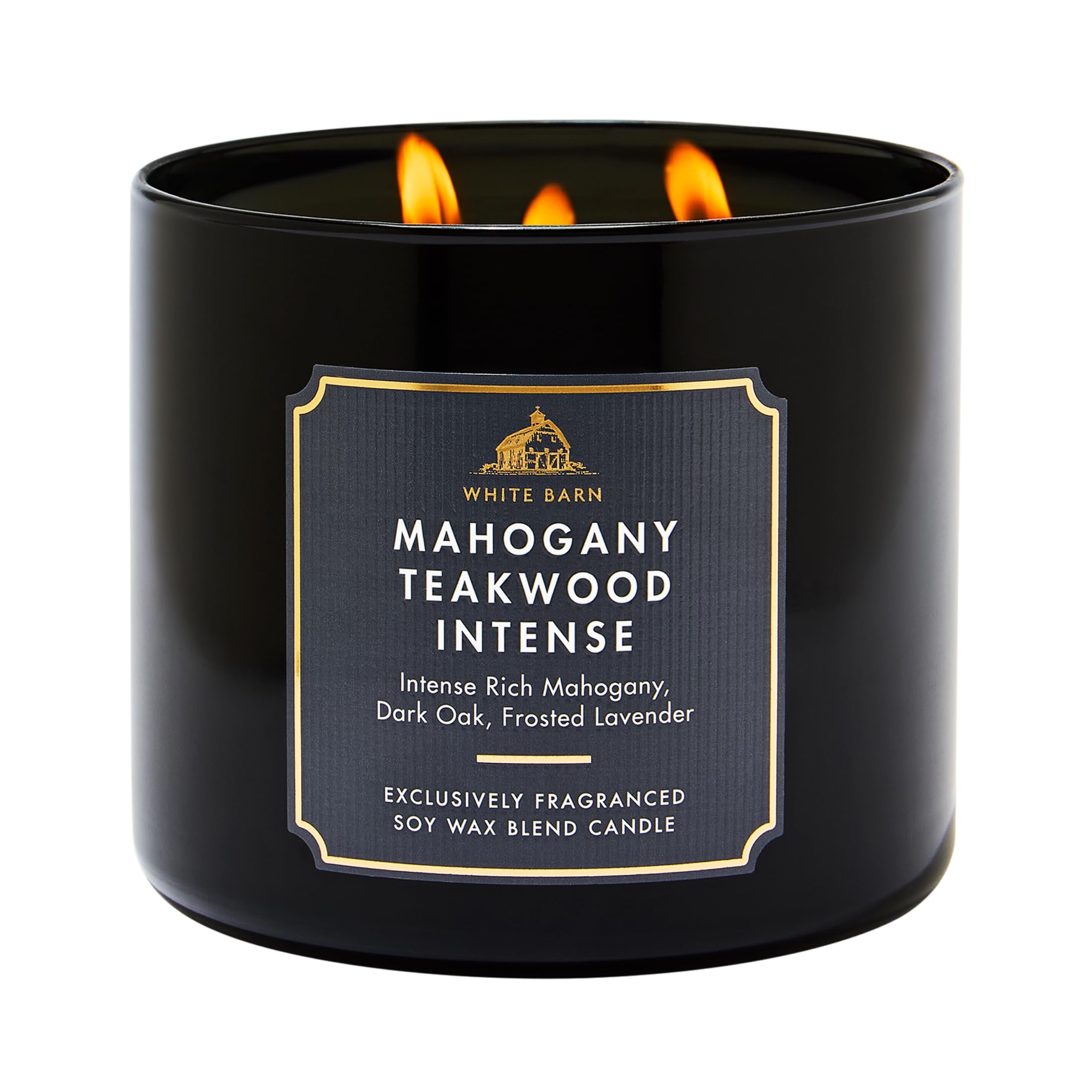
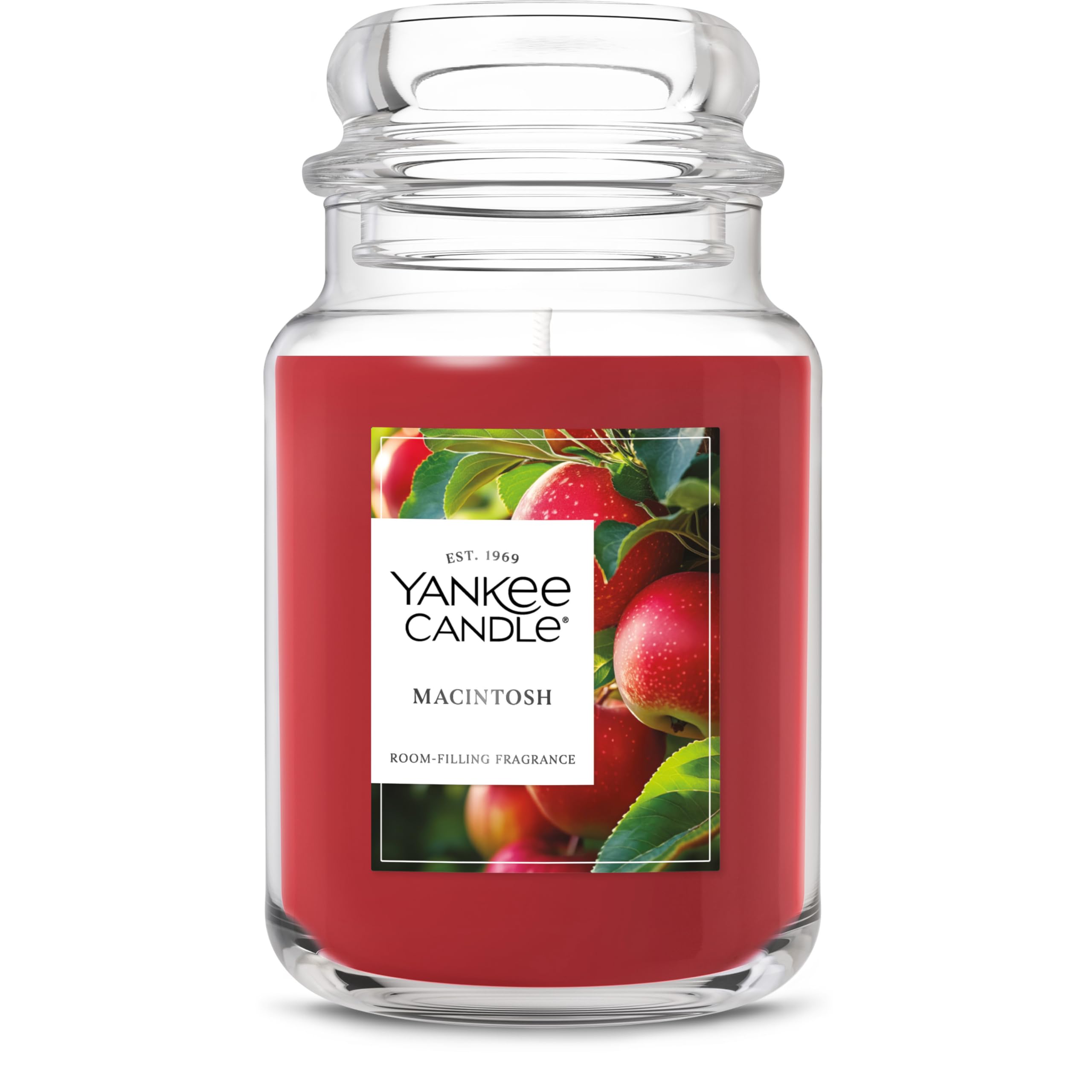
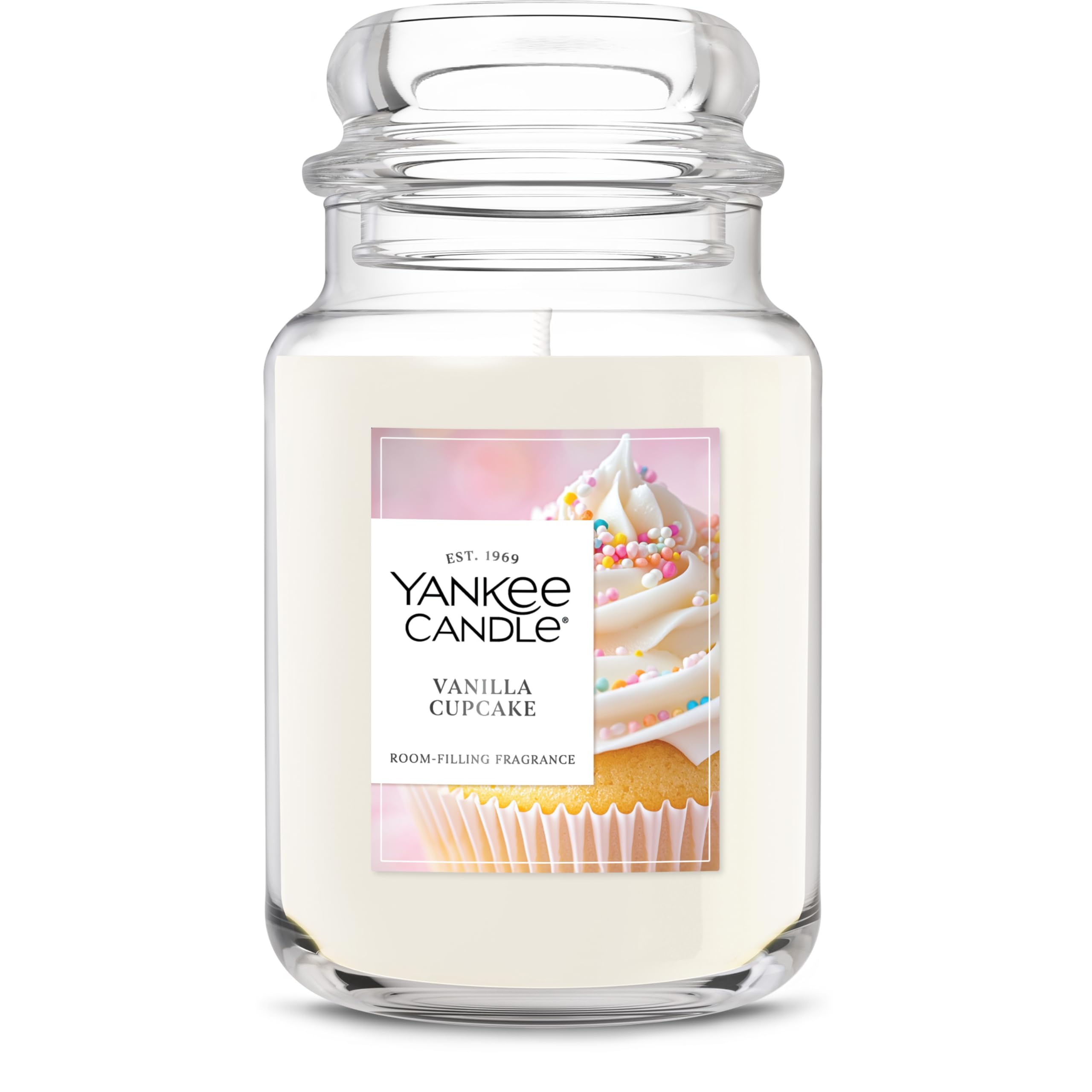
A scented candle belongs near dinner only if it whispers. Strong fragrance competes with food, so choose one soft scent family, whether woody, fruity, or a light vanilla.
Placement makes the bigger difference. Gather jar candles on a tray toward the middle or end of the table instead of beside each plate, and light them about half an hour before you sit down. By the time dinner arrives, the room smells warm and nobody can quite say why.
Blow them out before dessert if the air starts to feel heavy. The scent lingers long after the flame is gone.
Romantic Color Without the Kitsch
Valentine’s decor has a reputation for being loud. Yours can whisper instead. A few pops of red or pink, a heart-shaped plate here and there, and one playful napkin fold say everything without turning your dining room into a card aisle. Restraint is the trick: neutrals do most of the work, and the romance lives in the details people touch and notice.
Red and Pink Kept to the Small Stuff
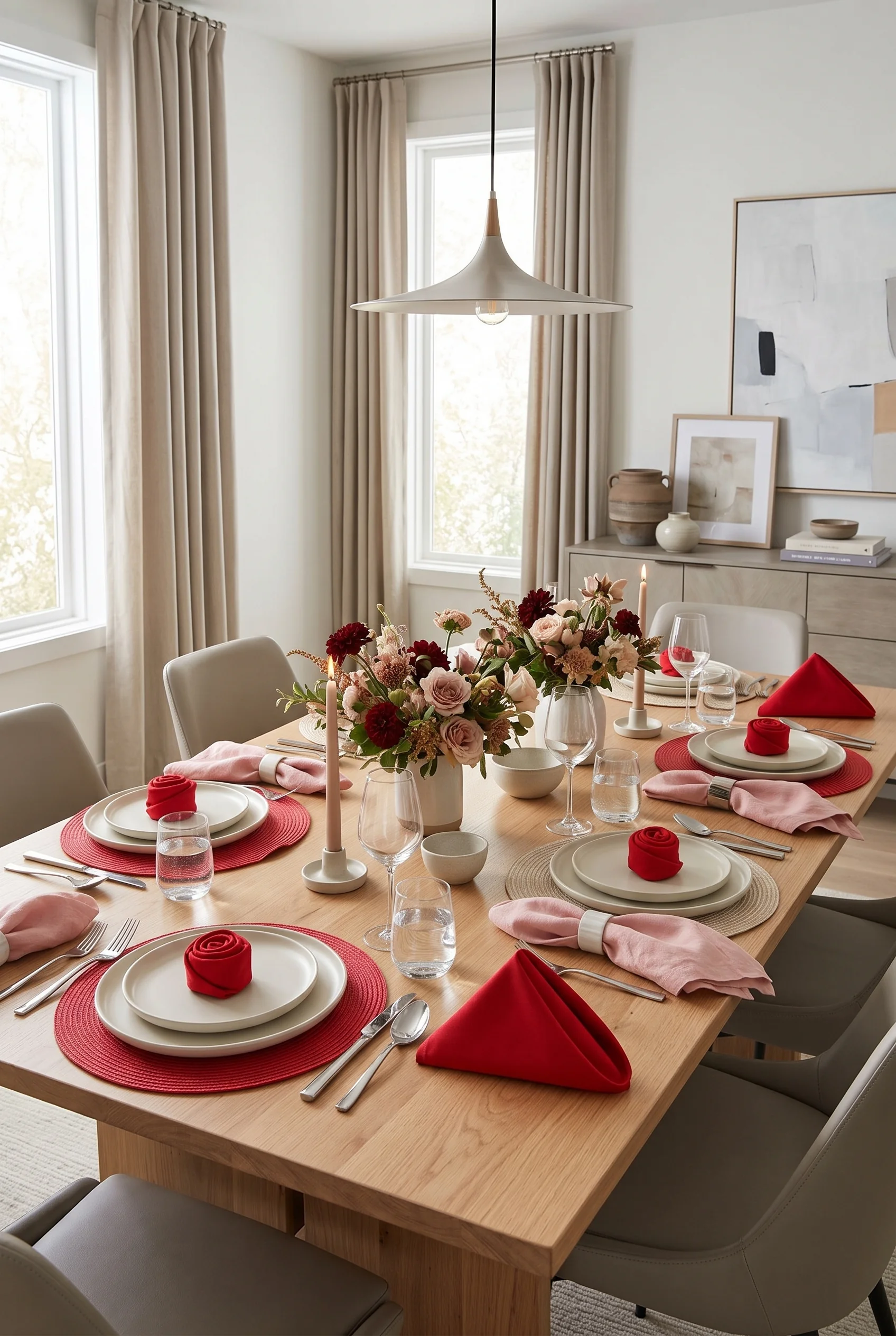
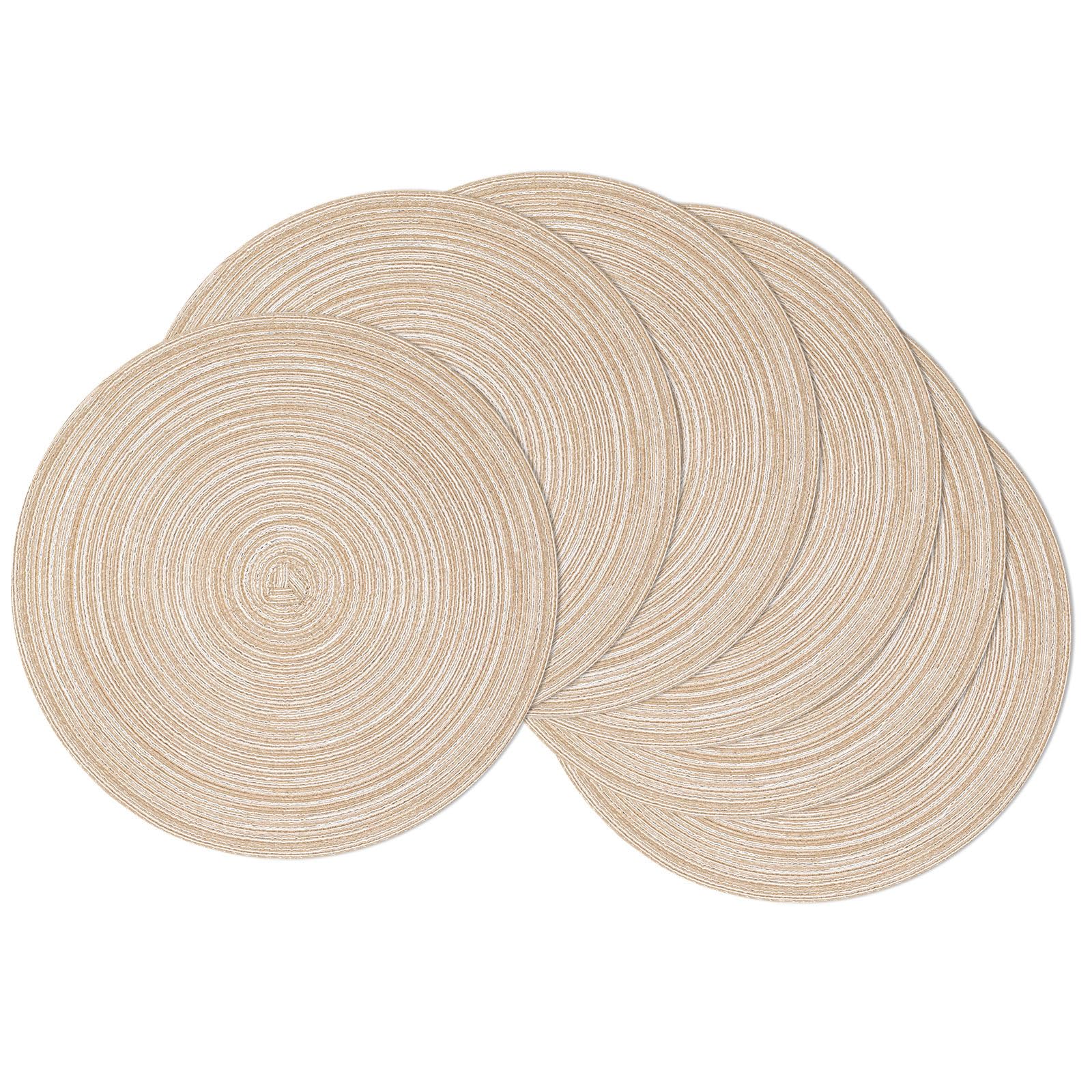
Red and pink are the obvious Valentine’s colors, and they look best in small, deliberate doses. Napkins and placemats are the ideal place for them. They’re inexpensive, easy to swap, and sit right where everyone’s eye lands.
Mixing the two shades keeps things playful. Alternate seats, or pair a red placemat with a blush napkin, and the table looks styled rather than store-bought.
Neutral plates, clear glasses, and simple flatware give the color room to breathe. When most of the table stays calm, those pops of red become the whole point.

Hearts in Shape, Not in Print
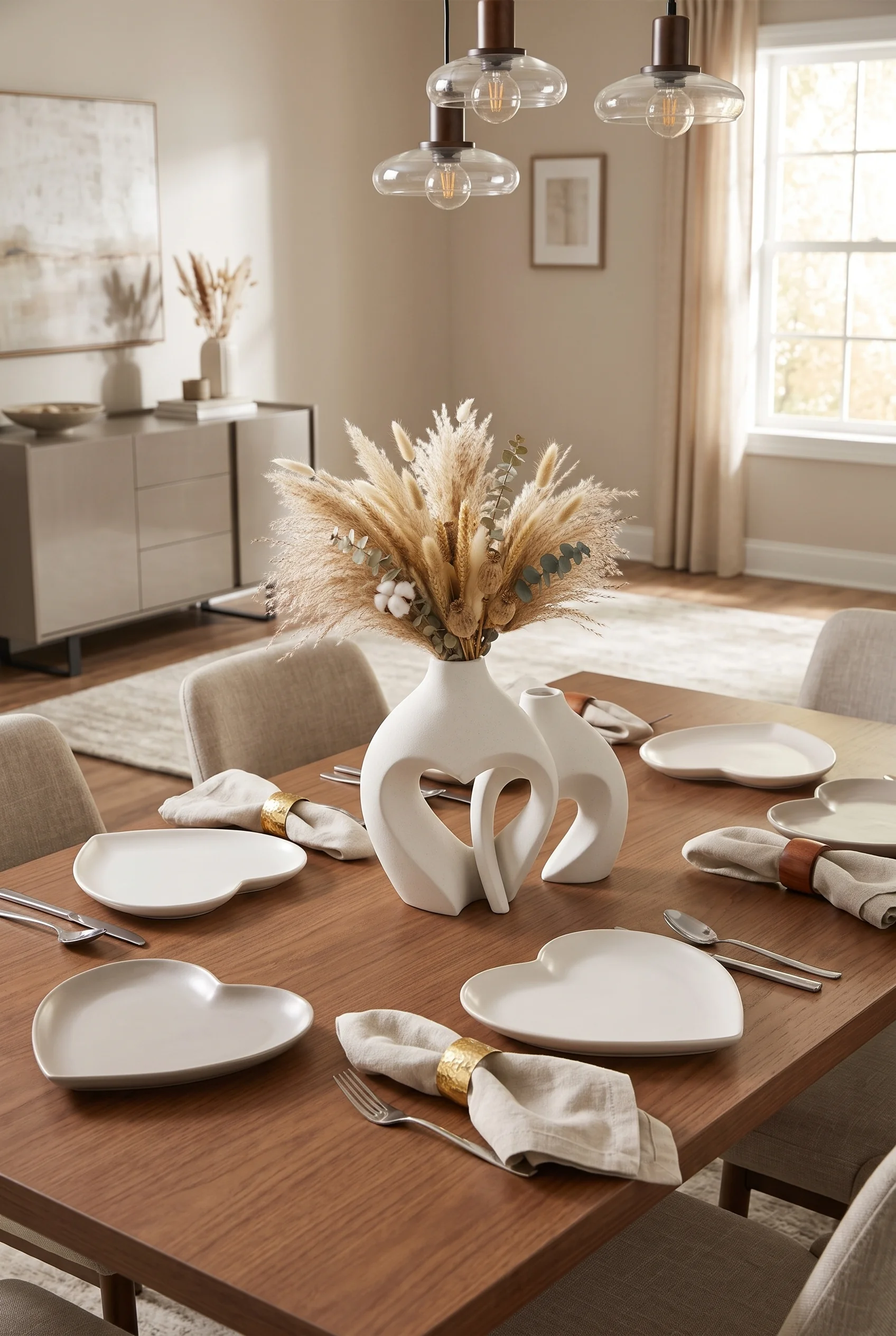
Heart motifs walk a fine line. Printed hearts on everything can feel like a party store, but a heart shape in a solid, quiet material feels modern and grown-up.
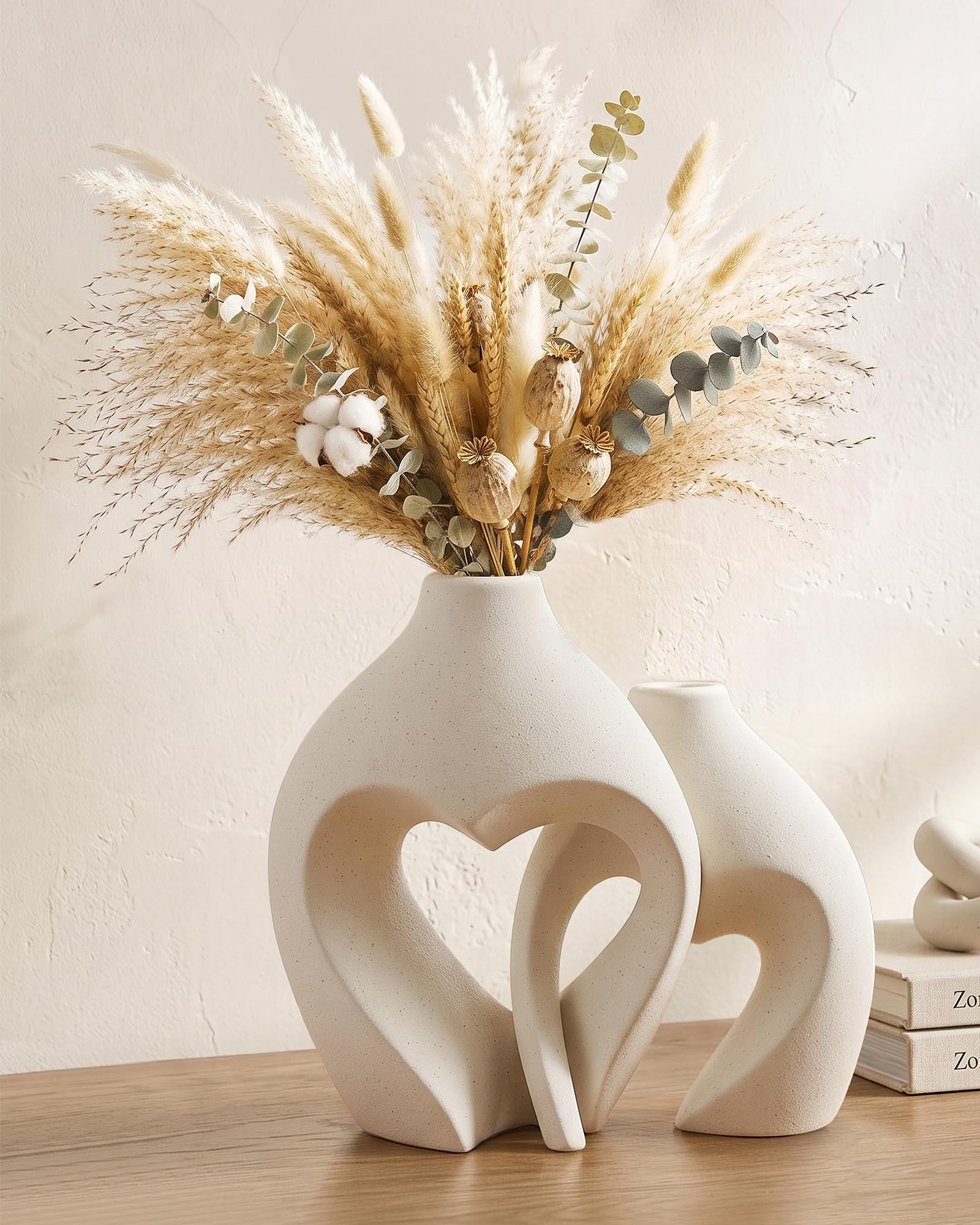
Plates are a natural place to start. A heart-shaped plate in a soft neutral gets the message across and still pairs with everyday flatware. One sculptural vase in the center echoes the shape without adding clutter.
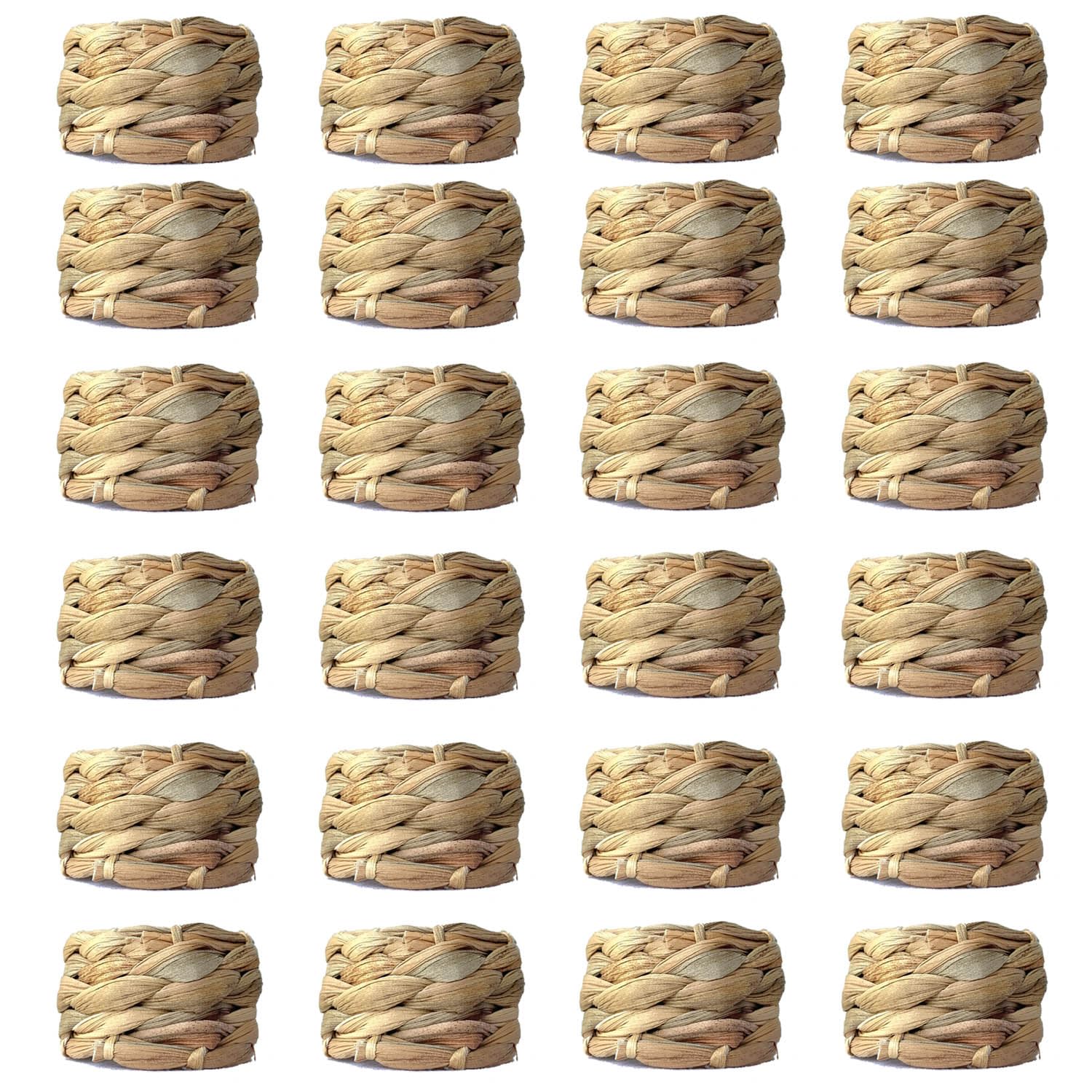
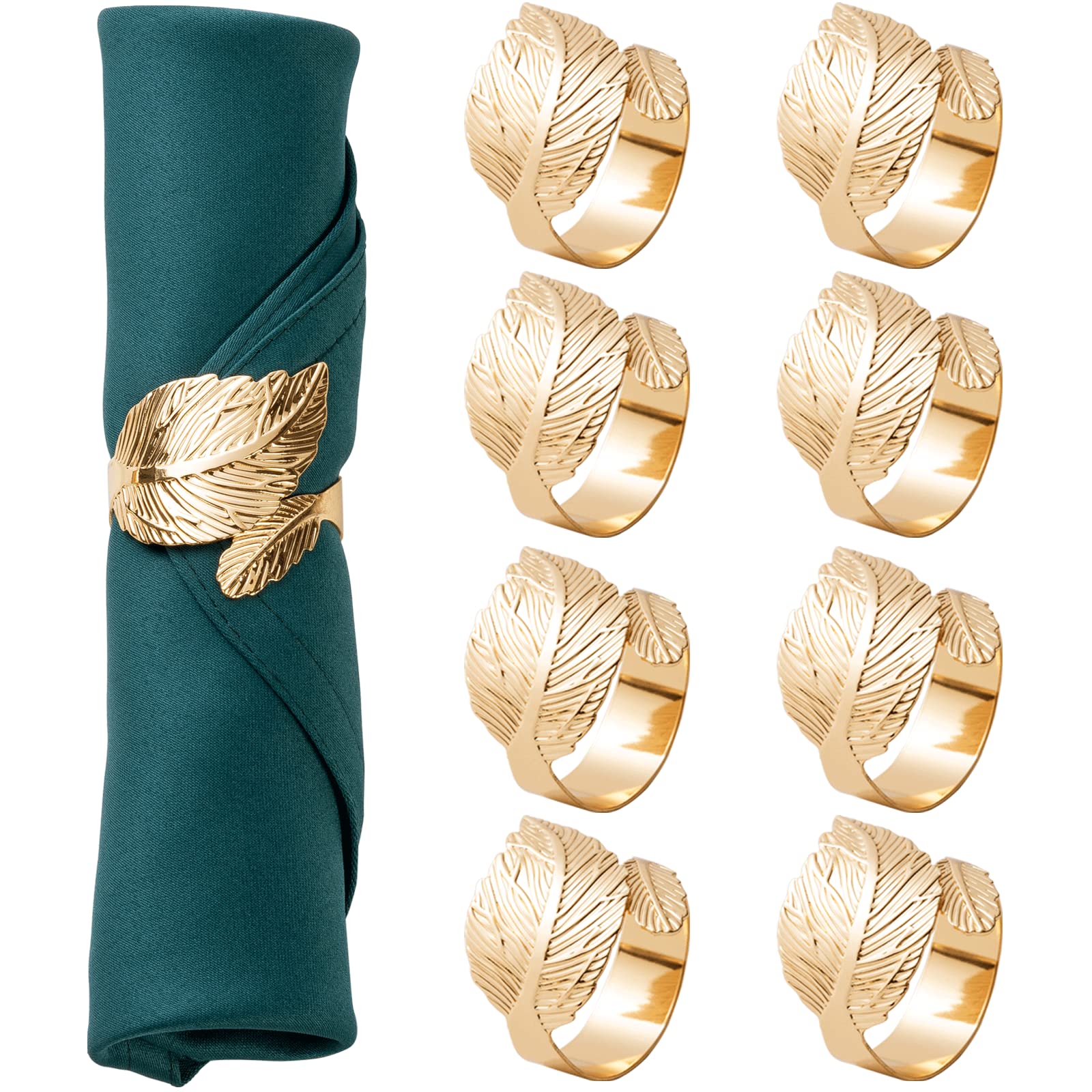
Simple napkin rings finish each setting. Skip the confetti and the balloons. Two or three heart details across the whole table are plenty, and the rest can stay beautifully plain.


A Heart Fold That Doesn’t Need to Be Perfect
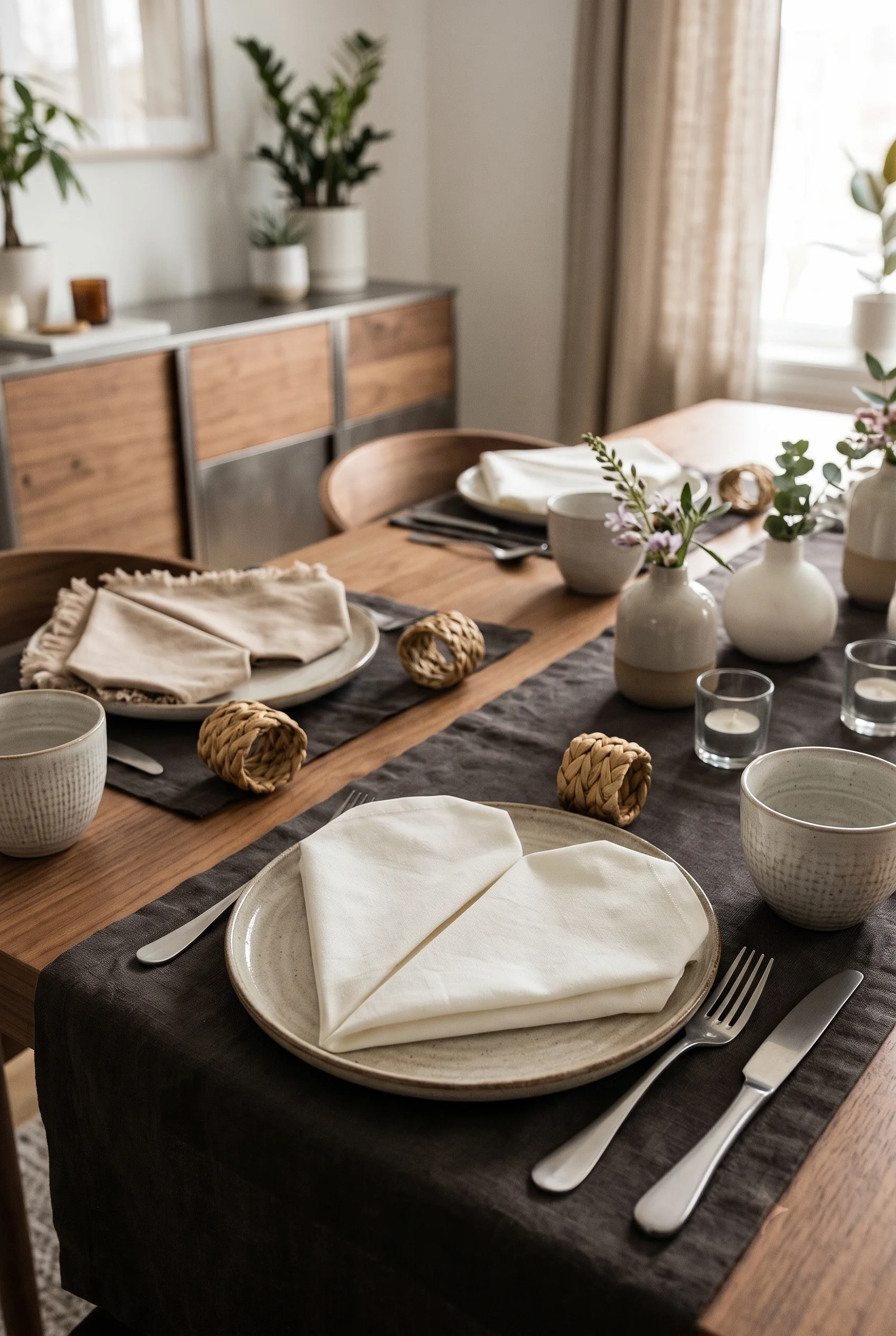
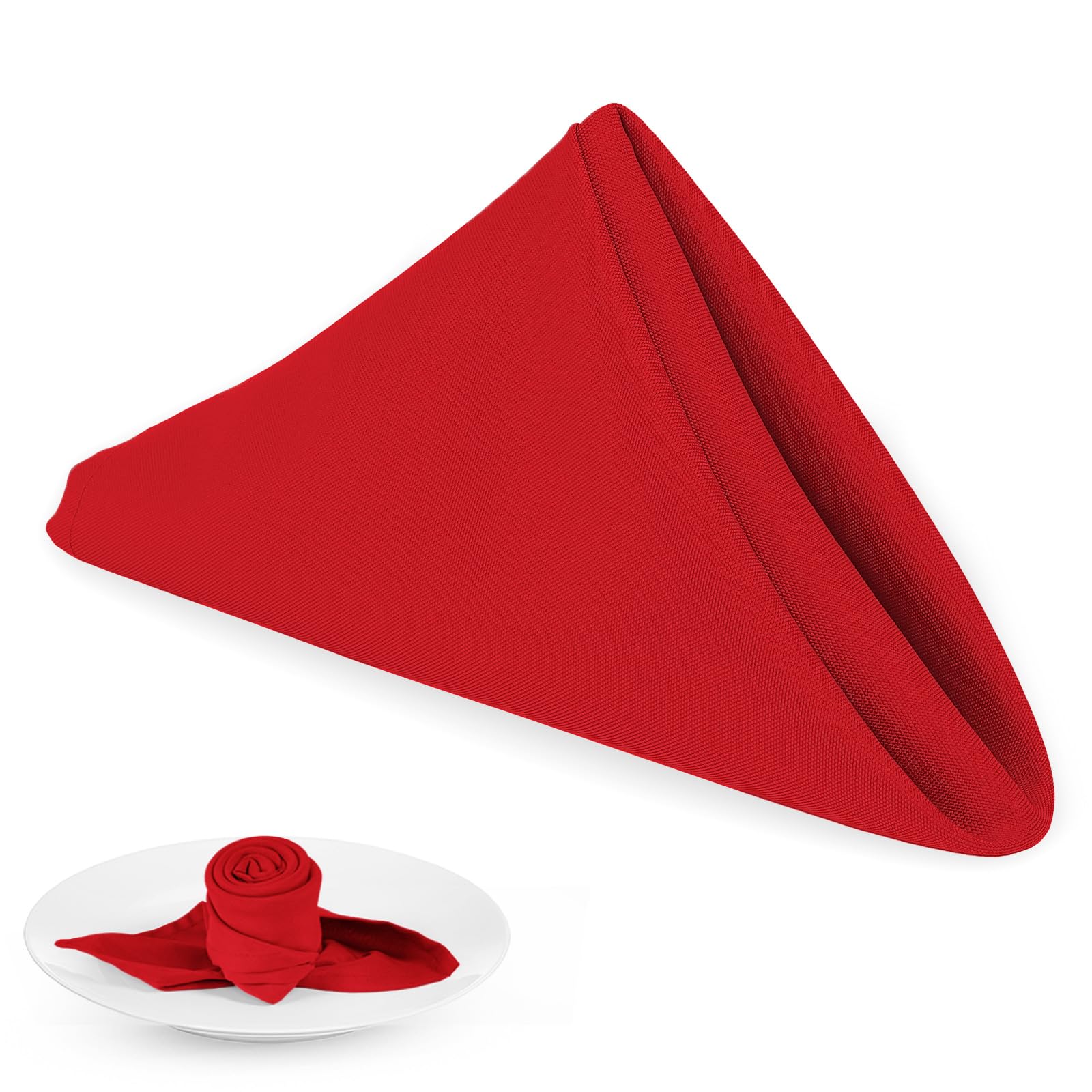
Napkin folding might seem fussy, but a loose heart shape takes about ten seconds. Fold a square napkin into a long strip, then fold each half down from the center so the ends point down in a V. Lay it on the plate and nudge the top into soft curves.
It won’t be crisp, and that’s part of the charm. Soft cotton or linen holds a relaxed fold better than stiff polyester, and a quick press beforehand helps the edges sit flatter.
Simpler styles at the other seats keep the heart from feeling like a gimmick. A plain fold tucked beside a woven napkin ring sits happily next to one casual heart, and the table feels collected rather than matched.
Centerpieces That Leave Room for Conversation
A Valentine’s Day centerpiece should frame dinner, not block it. The best ones stay low enough to see over, use items you already own, and leave space for plates and serving dishes. These four ideas range from fresh flowers to a humble bowl of fruit, and each one is easy to pull off on a weeknight.
Valentines Day Tablescape Ideas That Start With a Low Bouquet
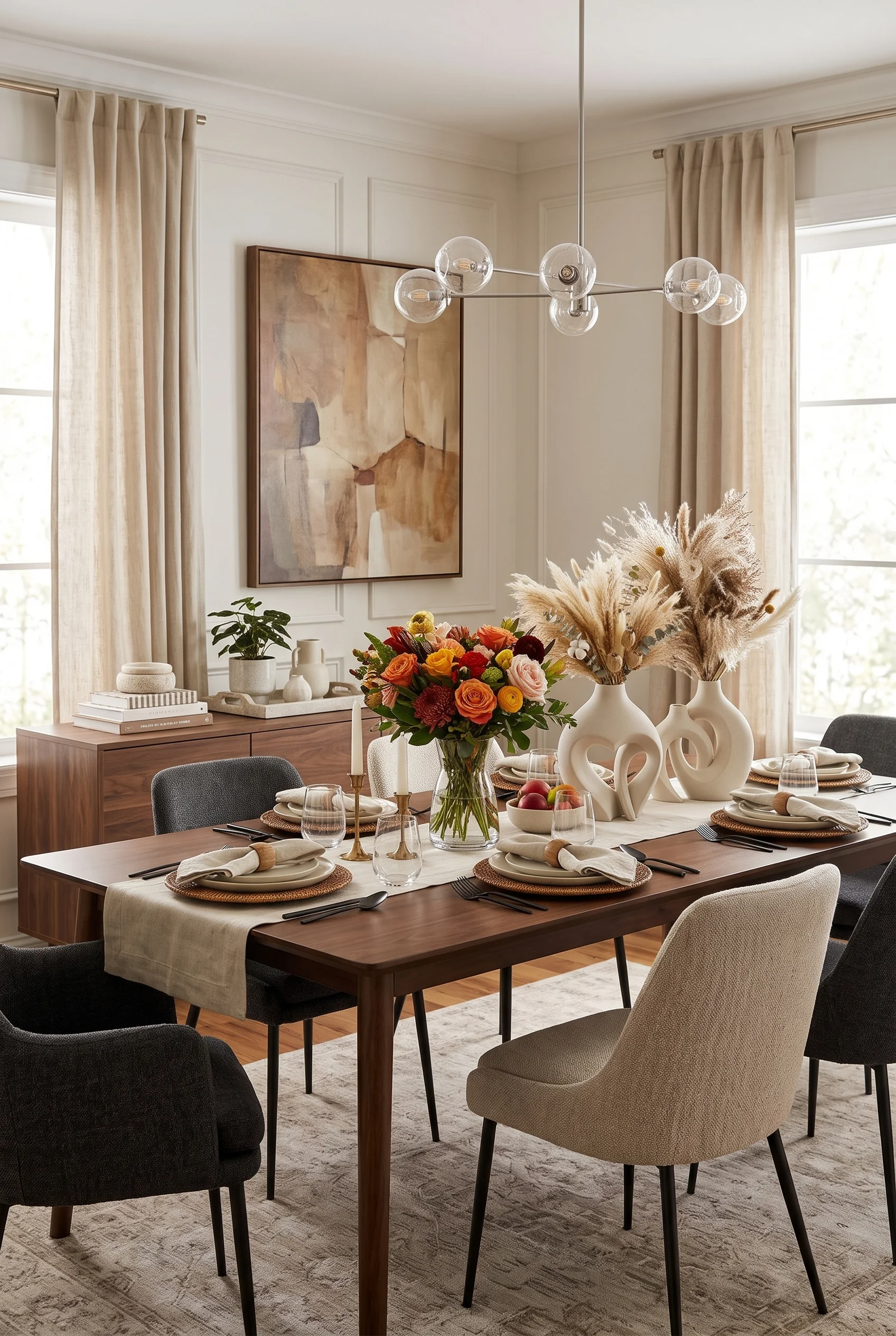
Flowers bring a table to life faster than anything else, but height can spoil a dinner for two. Keep the main arrangement low enough to see over, roughly below chin height when you’re seated.
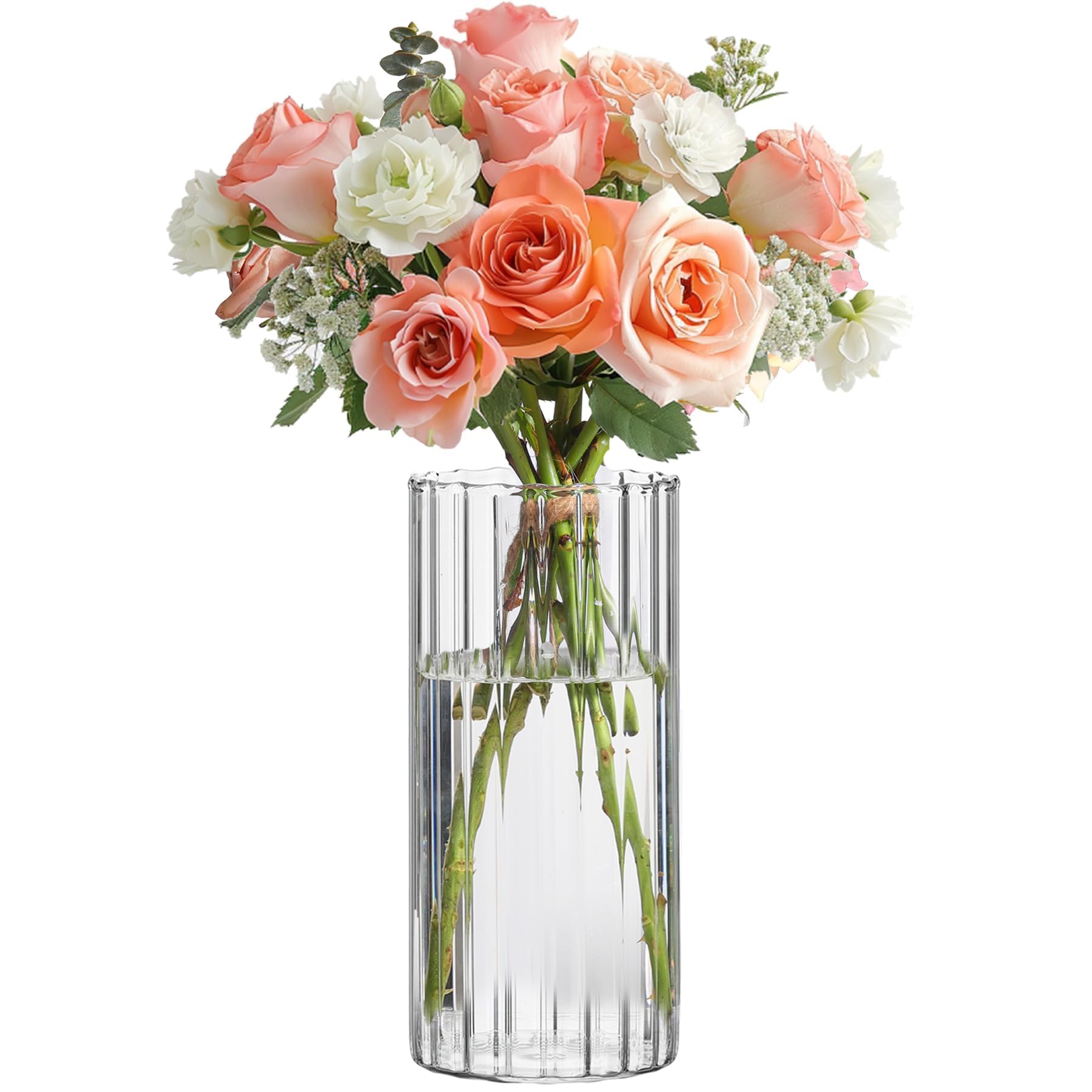
Seasonal blooms last longer and cost less. February is generous with roses, ranunculus, and tulips, and mixing two or three varieties gives an arrangement texture without a florist’s bill. A clear glass vase keeps the focus on the stems.
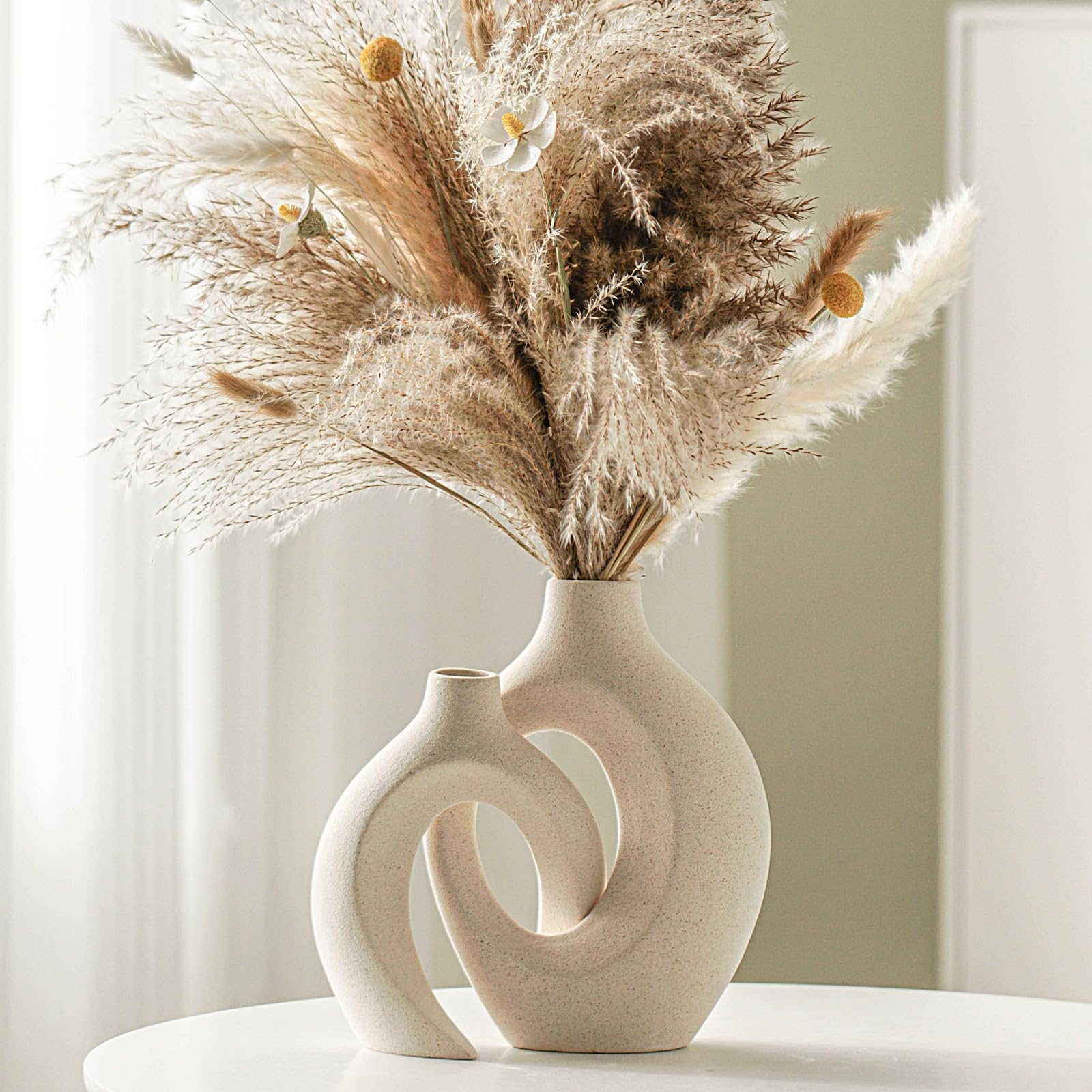
Taller pieces, like dried pampas in sculptural vases, belong at the far end of the table or on a nearby sideboard. They bring drama to the room while the view across the table stays wide open.
Collected Finds Beside Clean Modern Glass
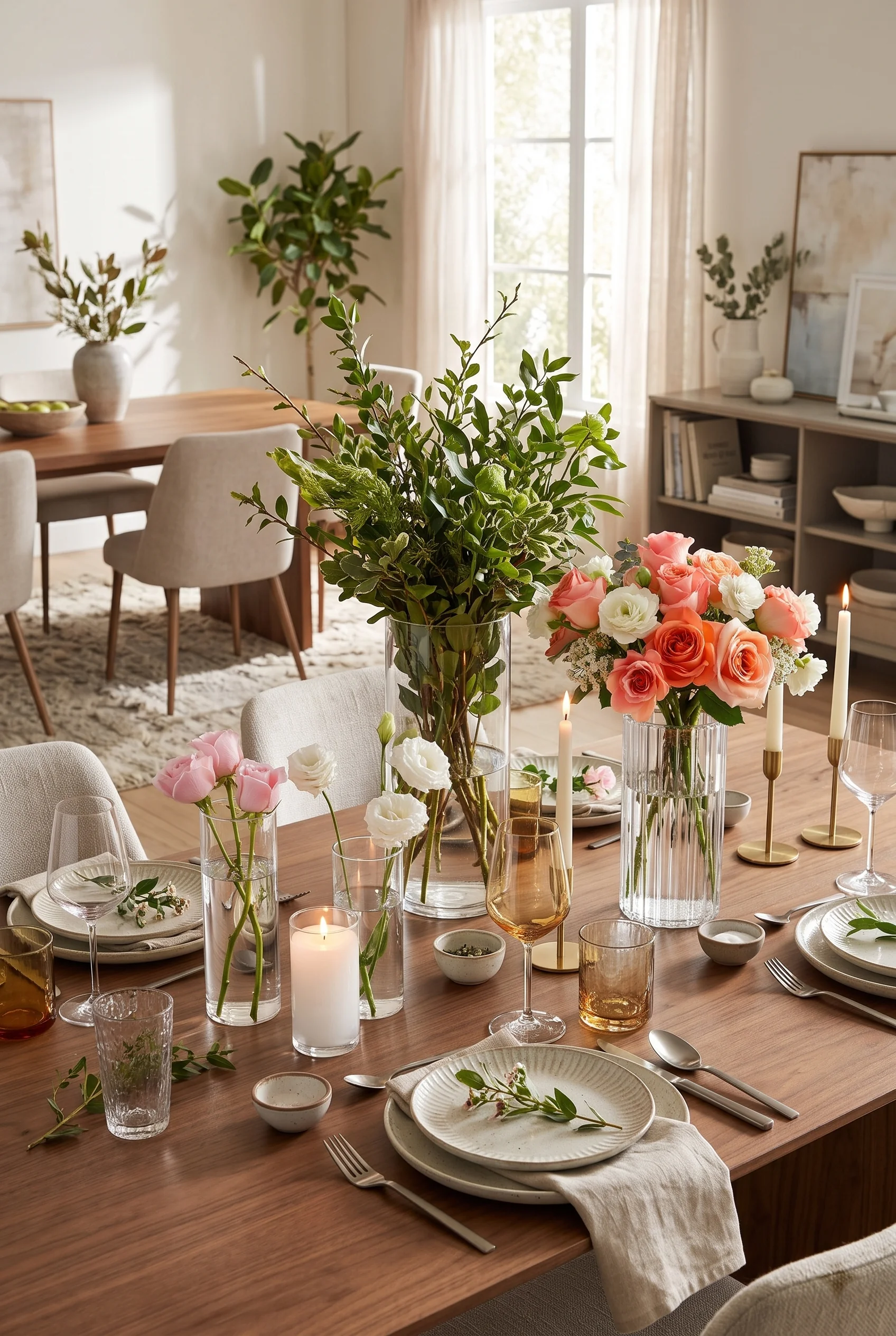
Every cabinet has a few pieces with history: candlesticks from a wedding registry, colored glasses from a thrift-store find, a serving bowl that’s been around forever.
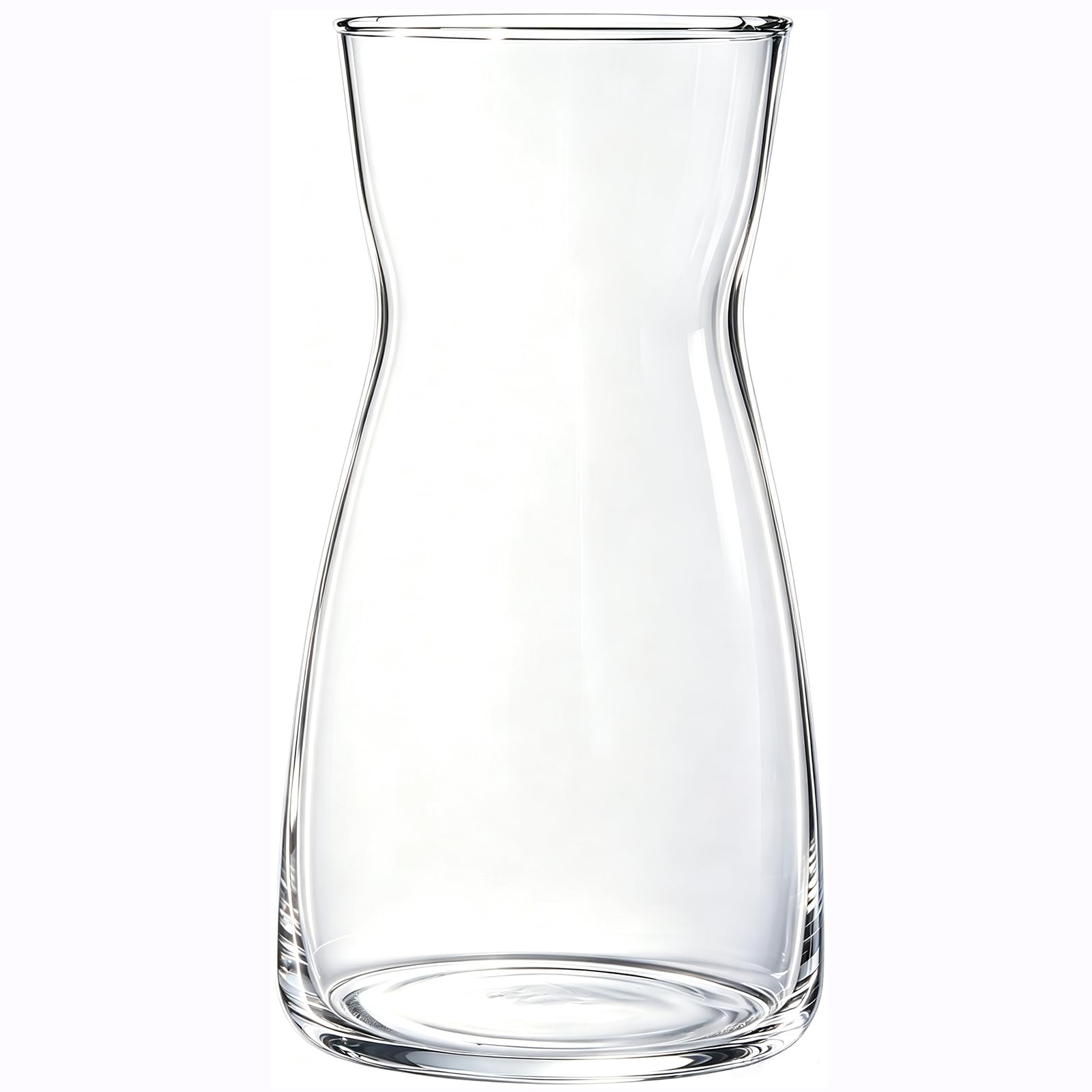
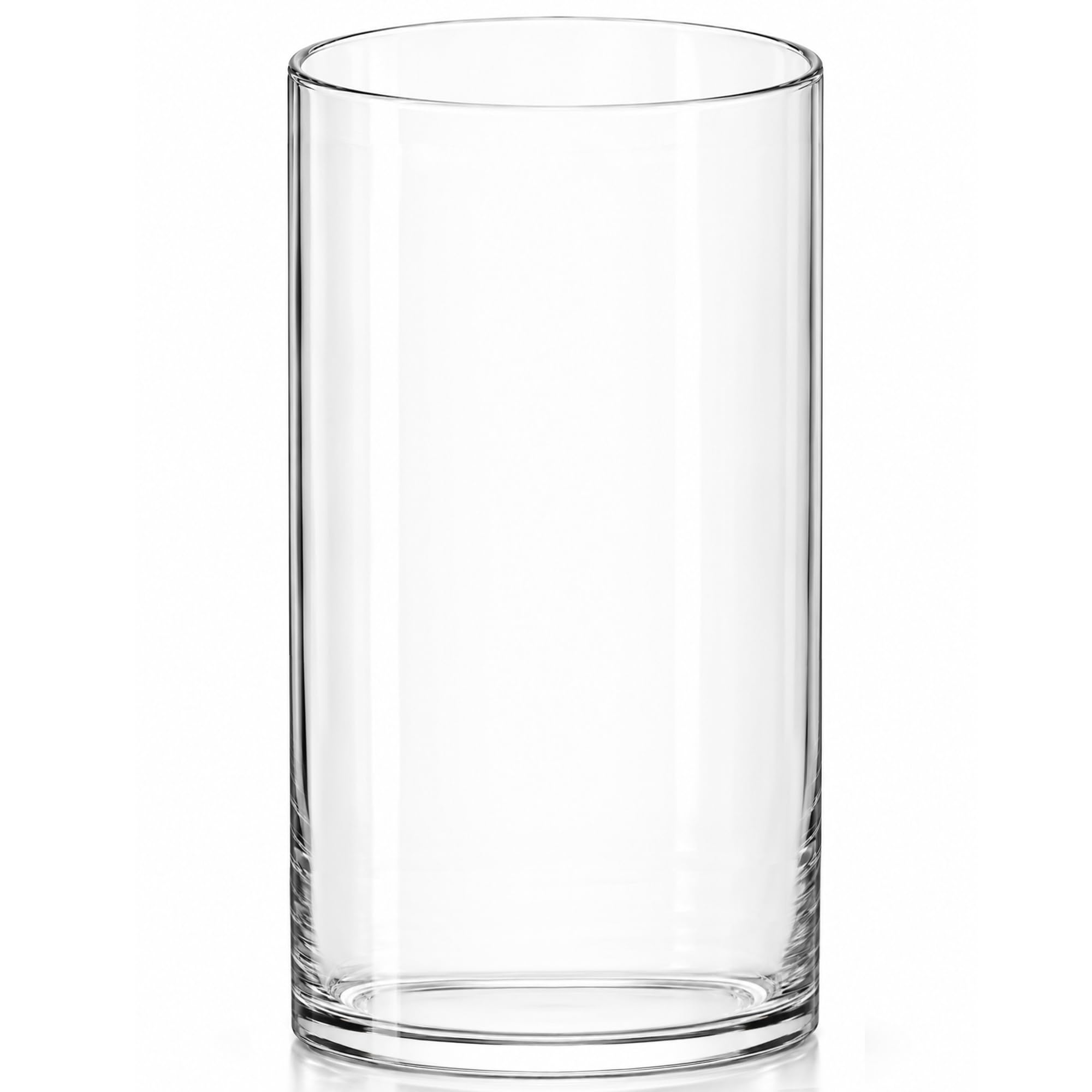
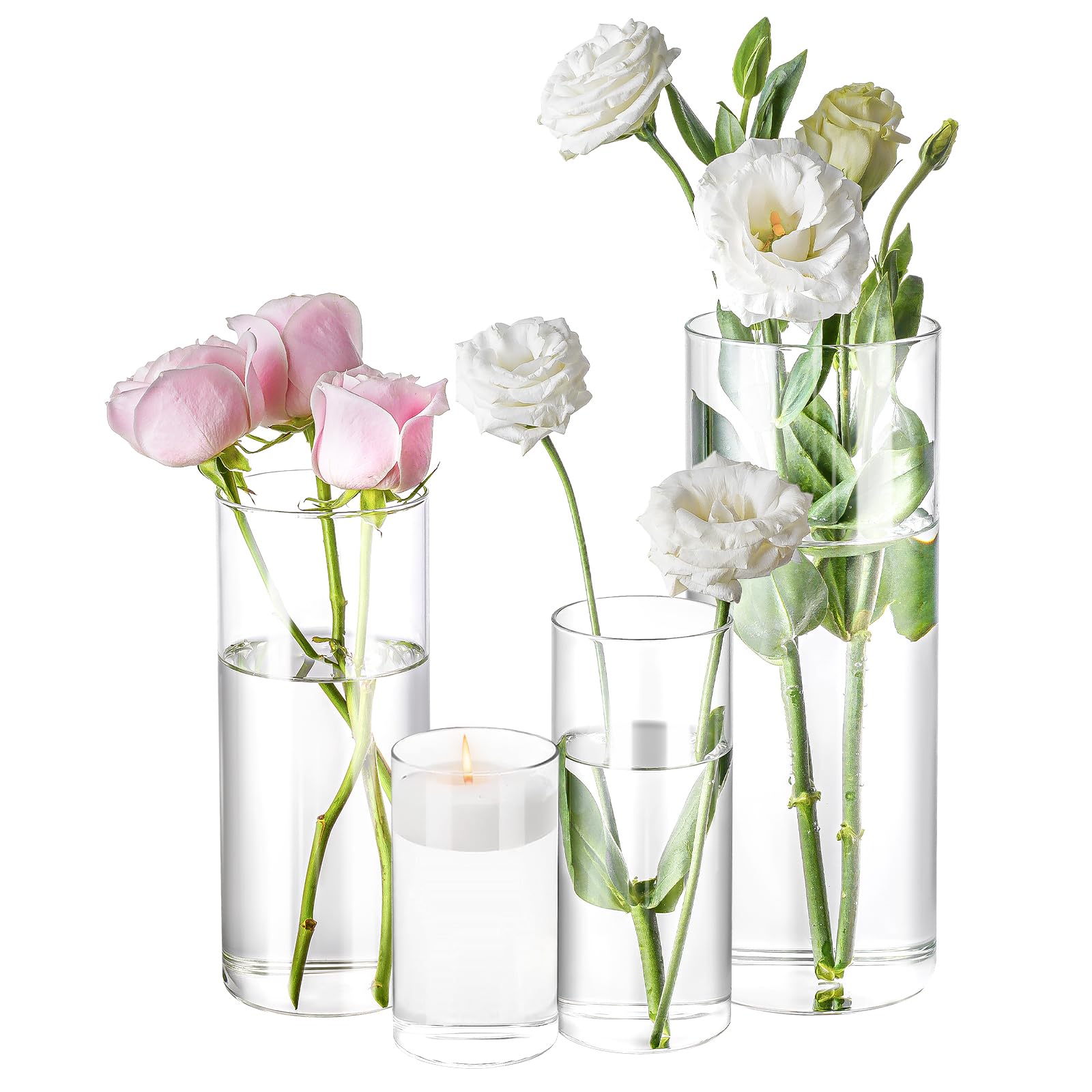
Those pieces look their best next to something clean and simple. Clear cylinder vases are the easiest bridge. They hold a few loose stems without competing, so the collected pieces keep the spotlight.
A few vases in the same plain shape set a rhythm, while a treasured piece or two can break it. A thrifted colored glass beside a row of clear cylinders feels personal and a little unexpected.
A Fruit Bowl Doing Double Duty
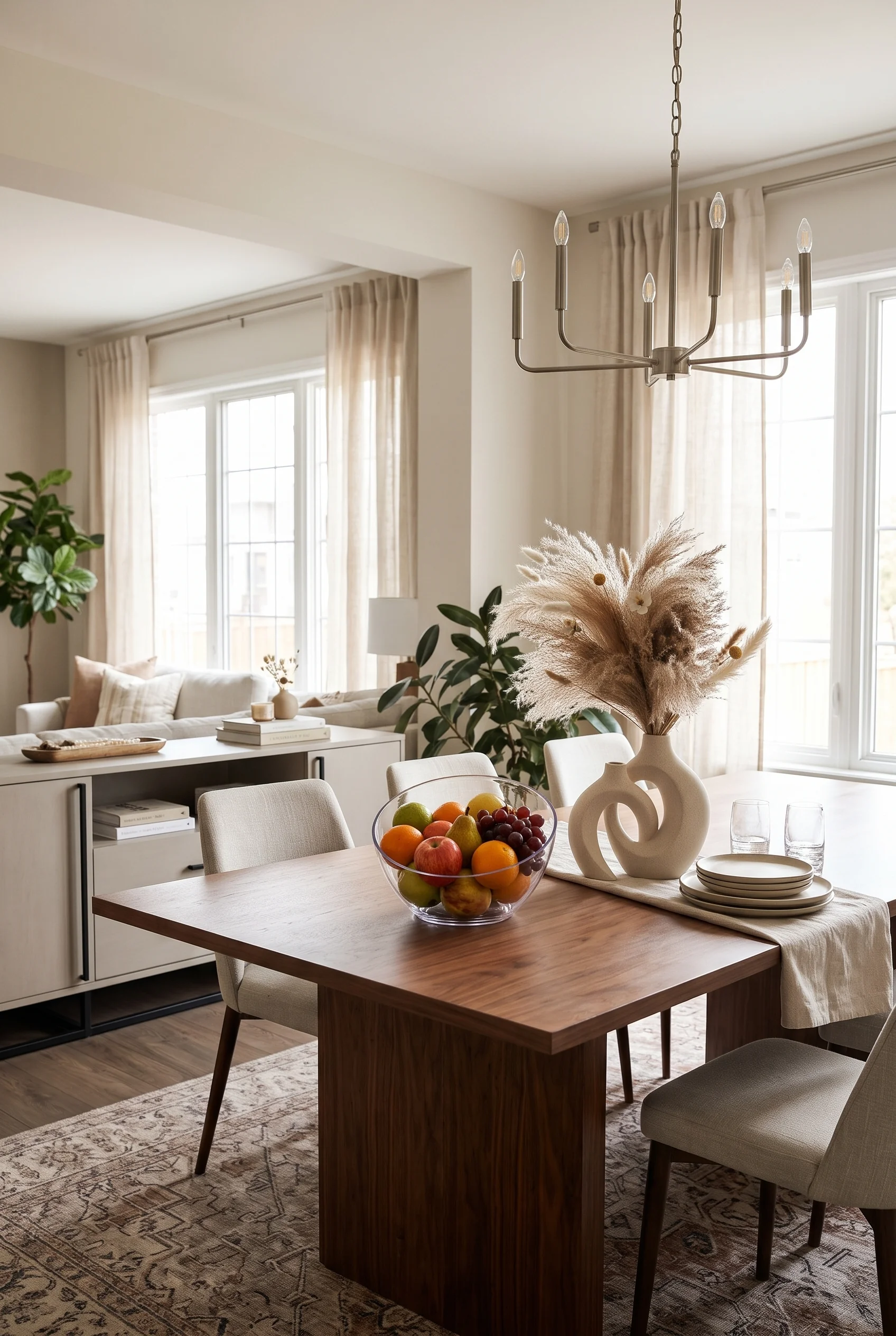
Fruit makes a centerpiece you can actually eat. Oranges, pears, and grapes are pretty and sturdy, and they’re easy to snack on while dinner finishes cooking.
A clear glass bowl lets the color show through, and it moves straight to the kitchen counter afterward. These kitchen countertop organization ideas help keep the counter calm once the bowl lands there.
Pomegranates, blood oranges, and strawberries feel especially seasonal in February. Pair the bowl with one taller element, like dried grasses in a ceramic vase, so the table has a little height on one side.

Layers That Make a Simple Table Feel Dressed
Good table decoration tips almost always start underneath the plates. Linens, greenery, and texture form the base that everything else sits on, making a table feel finished before a single candle is lit. These three foundations suit nearly any dining room decor, from sleek and minimal to warm and layered, and every piece can be reused all year long.
Linen Underneath Everything
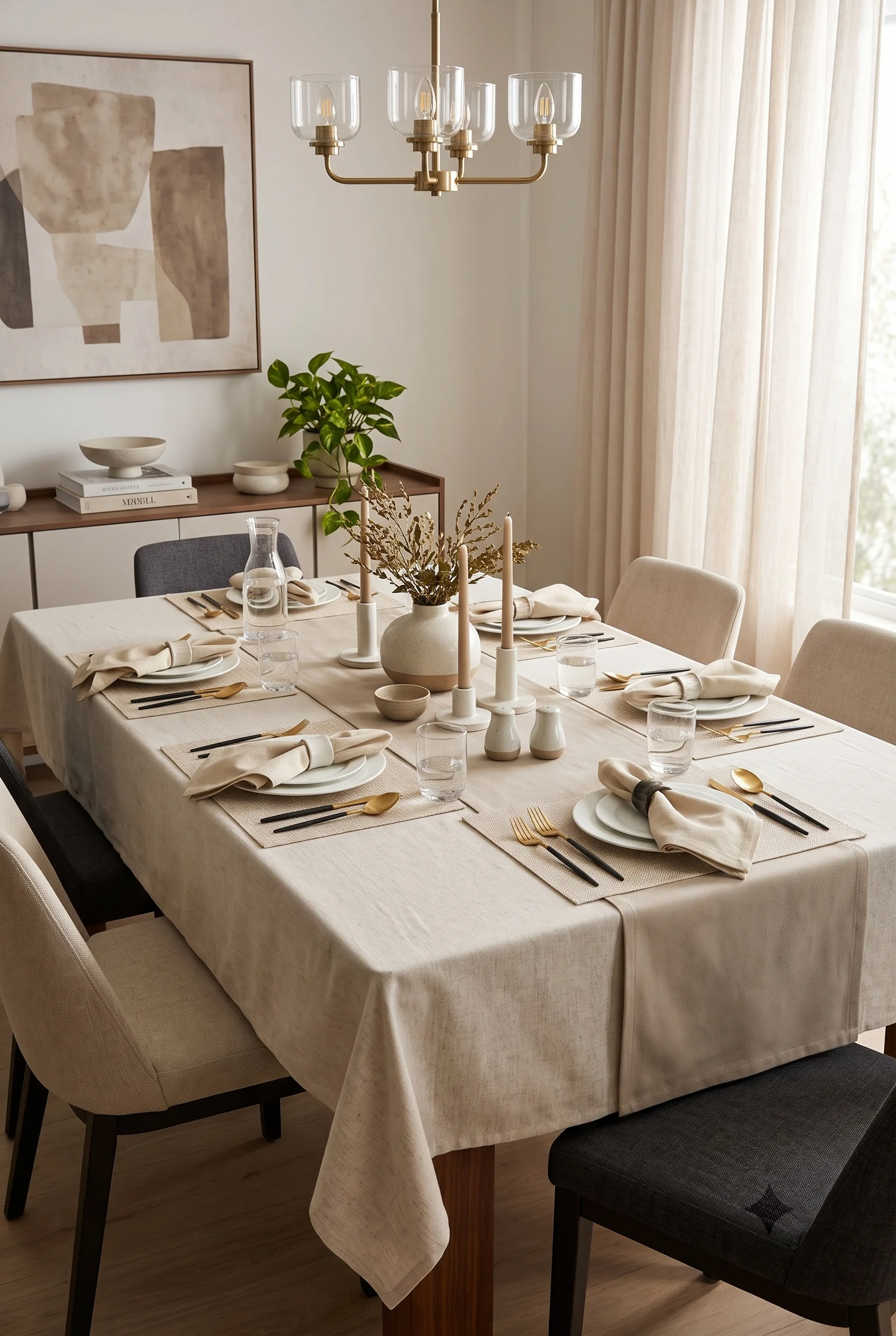
A good tablecloth does more than any single decor piece. It softens the clink of plates, hides a table’s daily wear, and signals right away that tonight is different.
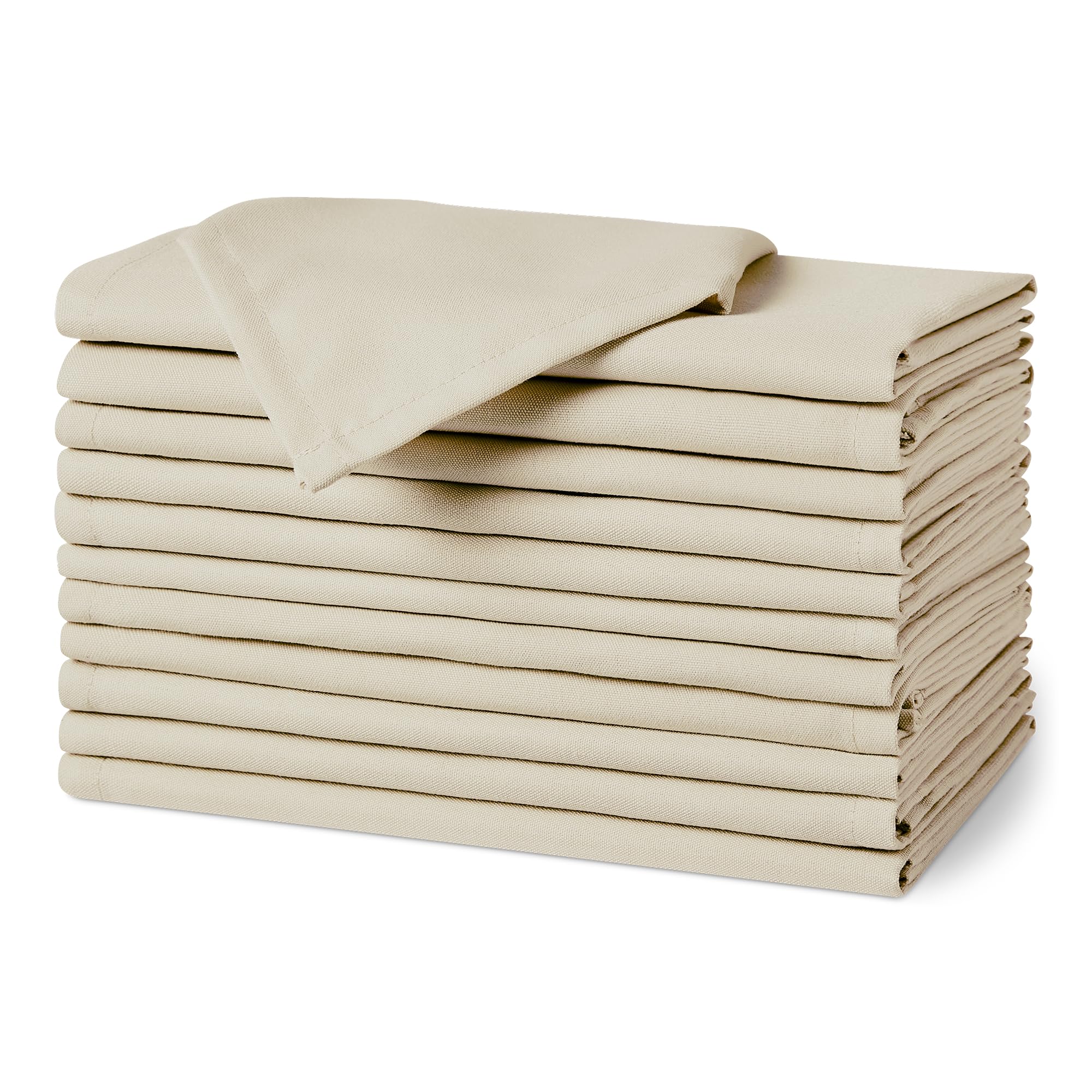
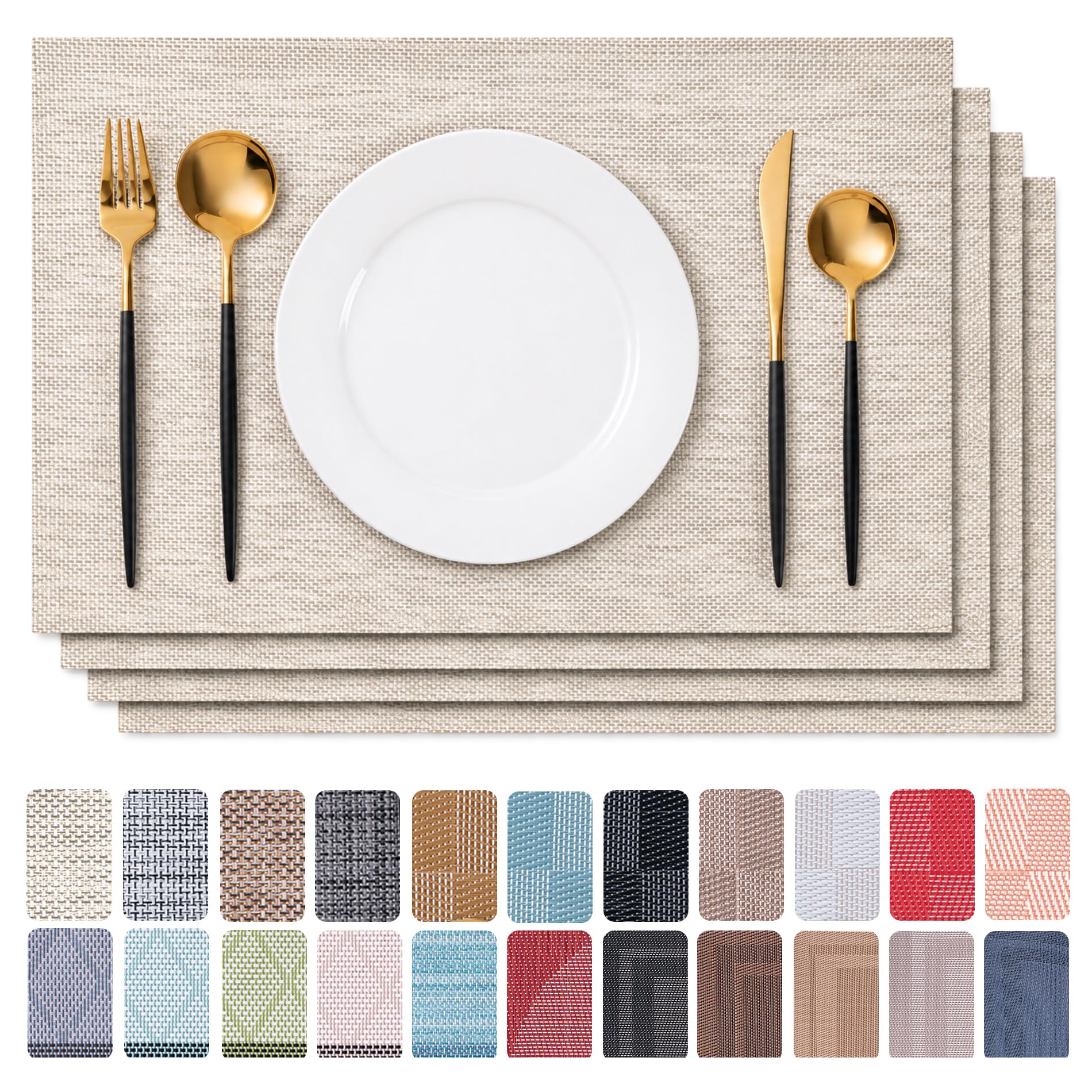
Neutral linen is the most versatile choice. It works for Valentine’s dinner, Easter brunch, and every birthday in between. Placemats on top give each seat definition, and napkins in the same tone family keep the setting calm. Afterward, a dedicated linen shelf like the ones in these home organization ideas saves a frantic search next year.
Press everything the afternoon before. Wrinkles show up in candlelight more than you’d think, and a crisp cloth makes even plain plates look polished.
A Greenery Runner That Outlasts Cut Flowers
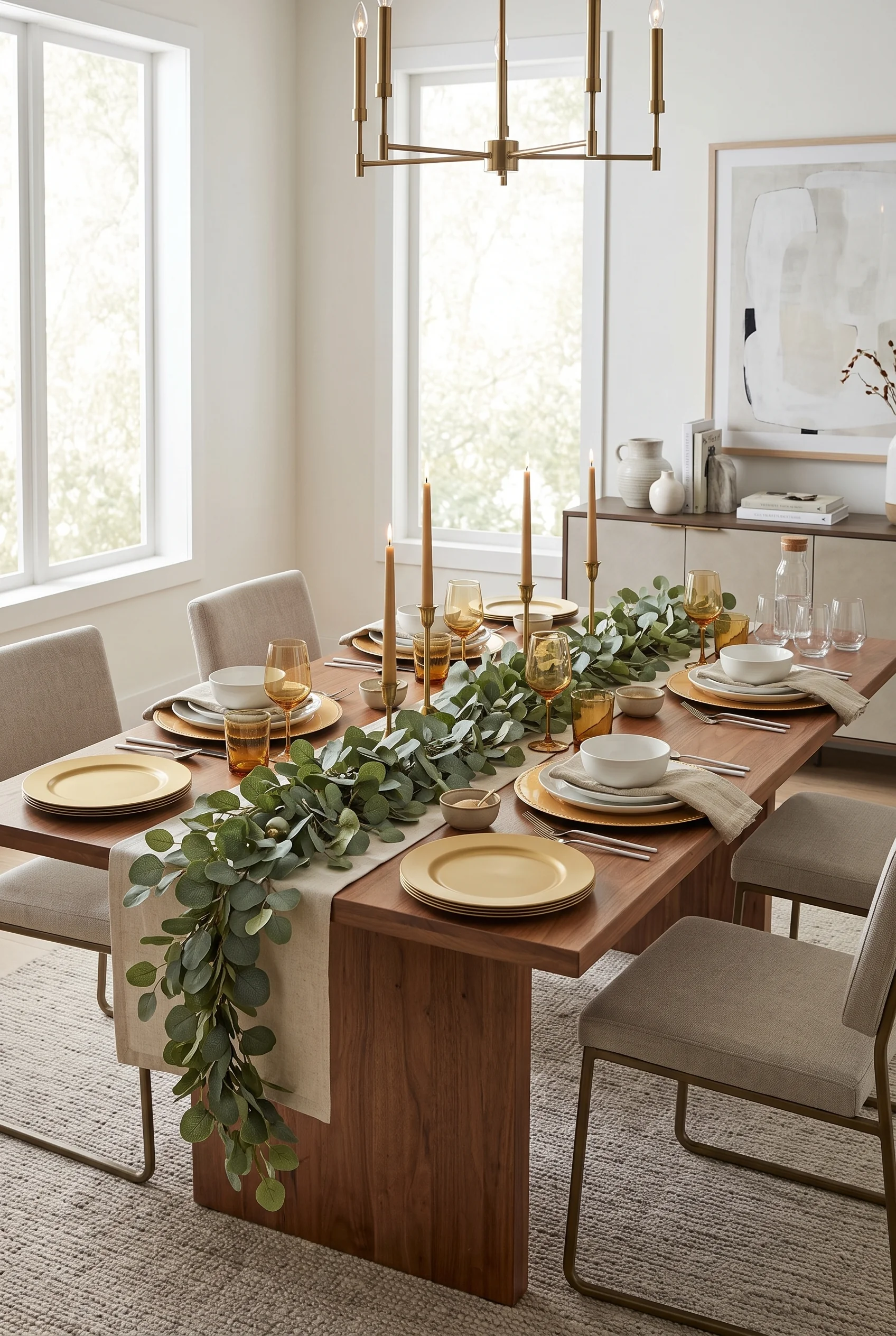
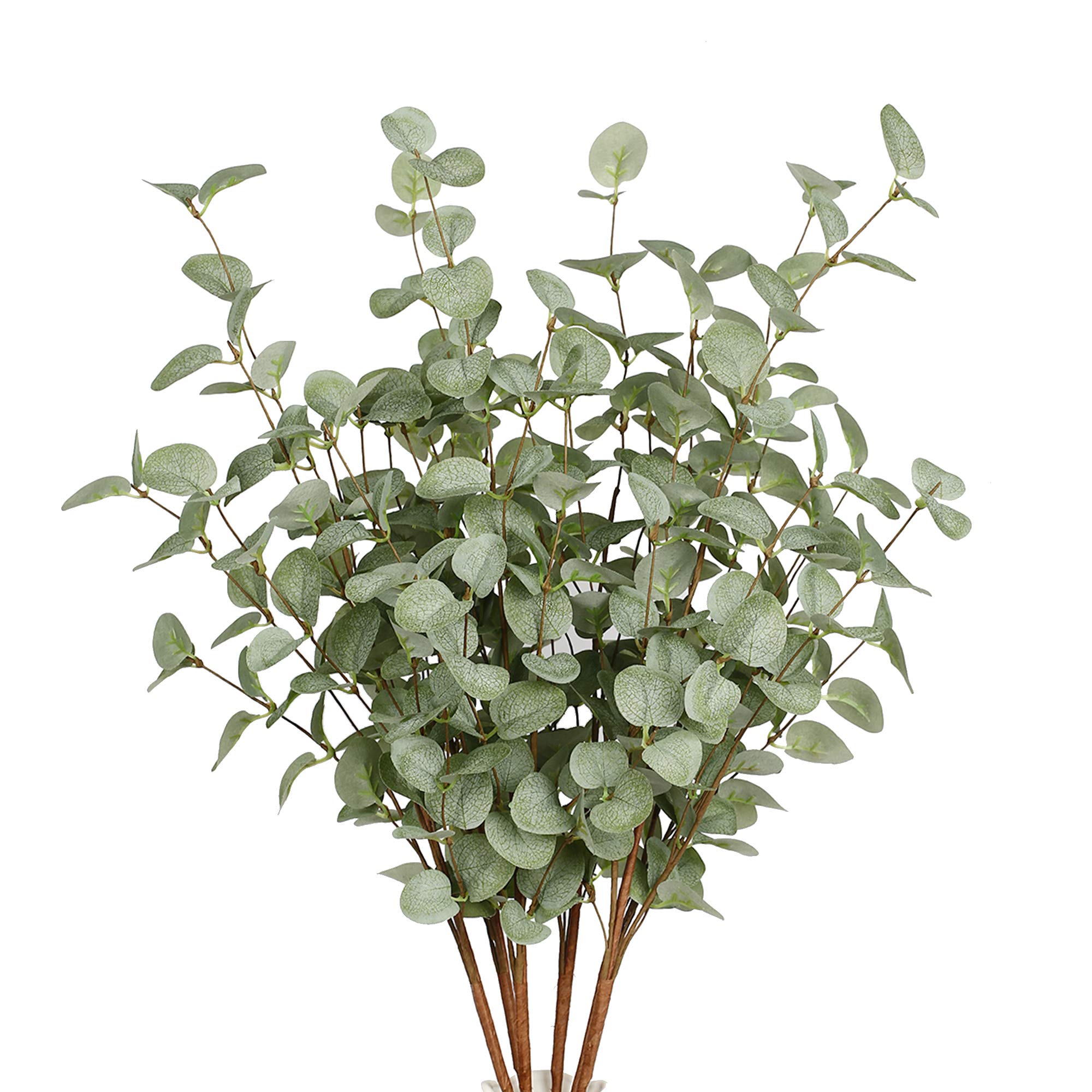
Eucalyptus is the most versatile greenery for a dinner table. It drapes beautifully, smells fresh without competing with food, and outlasts most cut flowers by days.
Lay the stems loosely down the center of a runner and let a few spill past the edge. No vase or floral foam required. Small bowls or candles tucked in between break up the line.
Gold chargers under each plate bring warmth that balances all that green. They also give a simple dinner plate a frame, which matters more than you’d expect once the lights go low.


Texture Contrast That Keeps Neutrals From Falling Flat
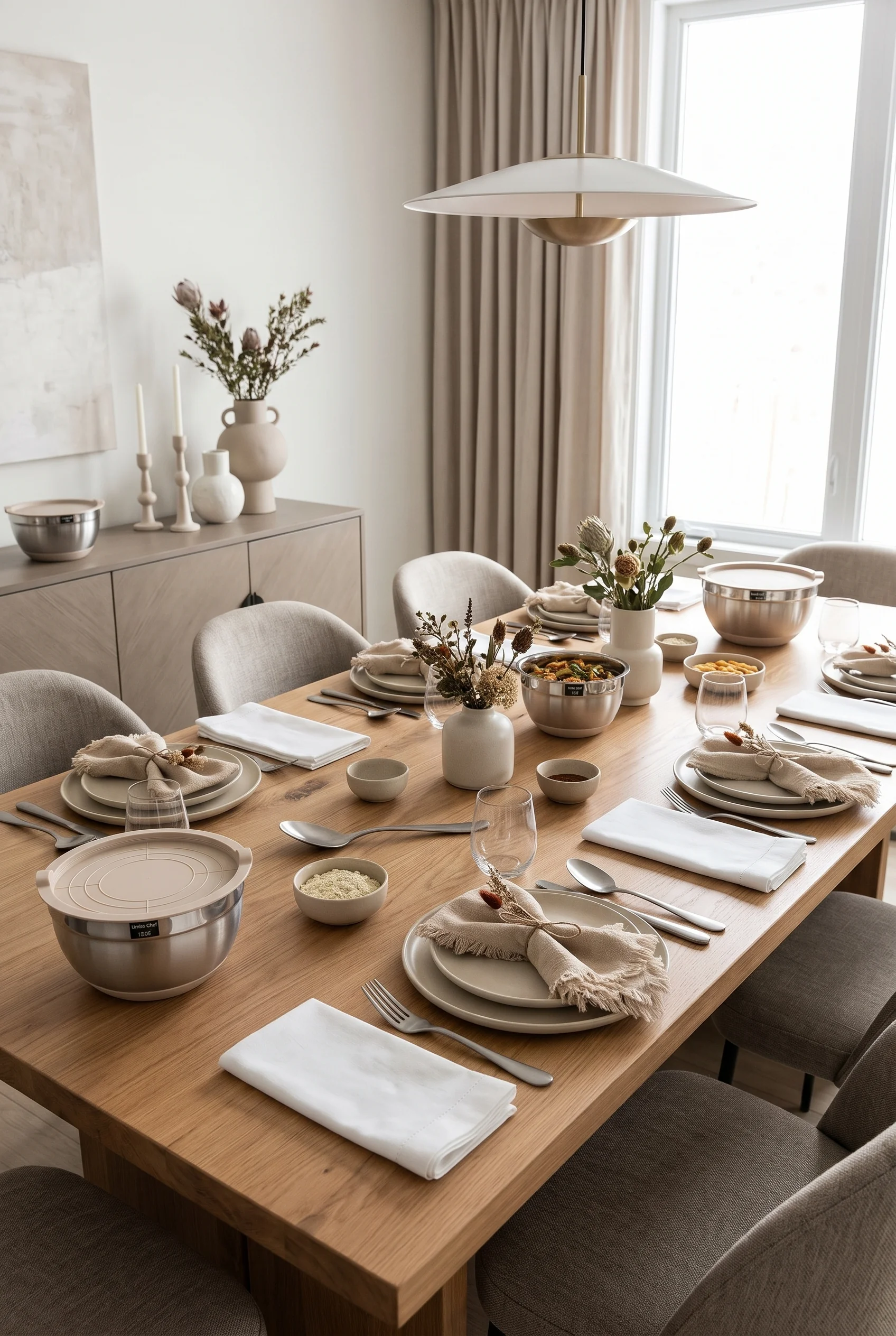
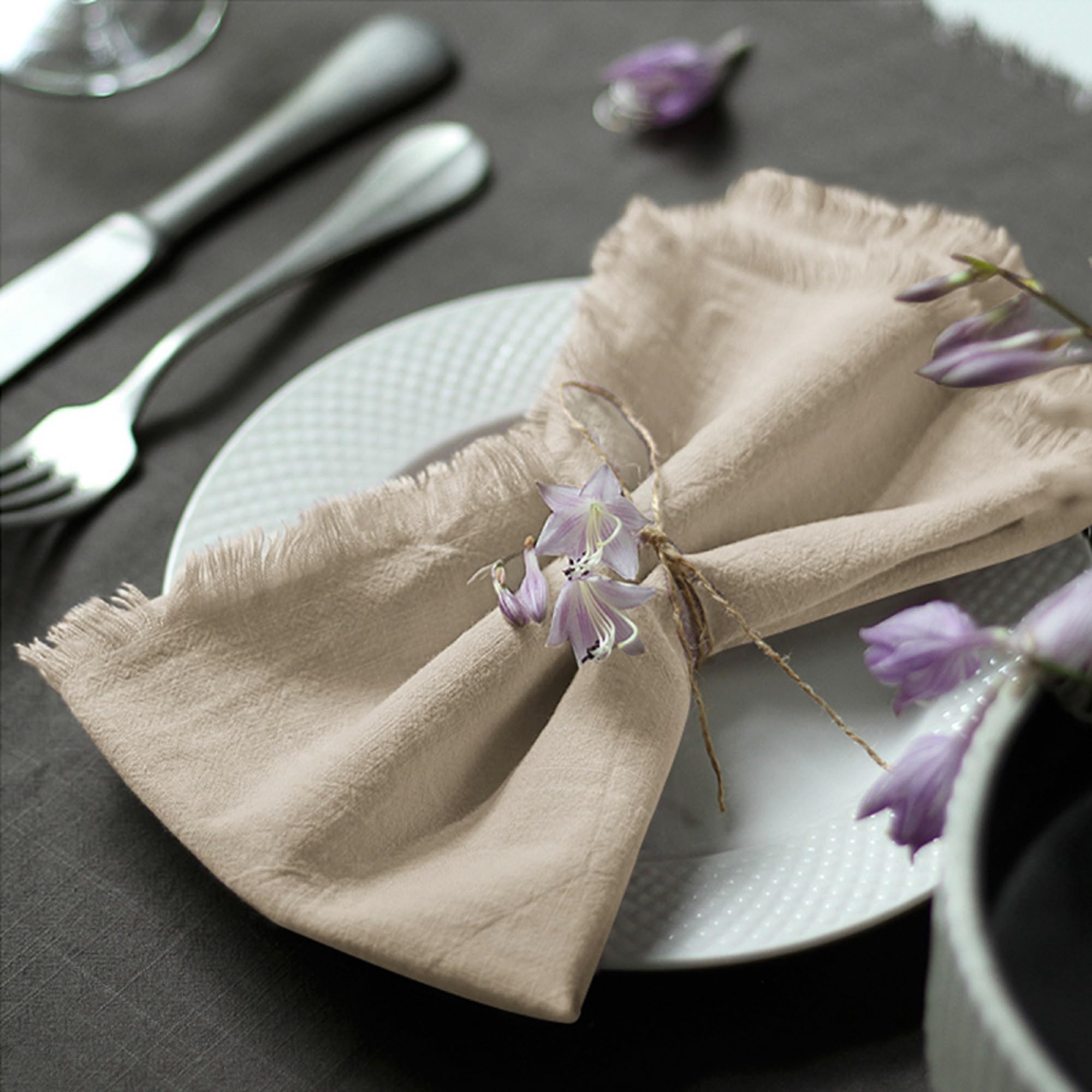
Run a hand across this table and the surface changes every few inches, from glazed stoneware to soft fringe to a cool edge of steel. On a neutral table, contrast like that does the work color usually does.
Fringed napkins against glazed plates is a simple pairing that does a lot of work. Crisp white napkins at the other seats add a cleaner note, so the table never reads as one texture repeated.
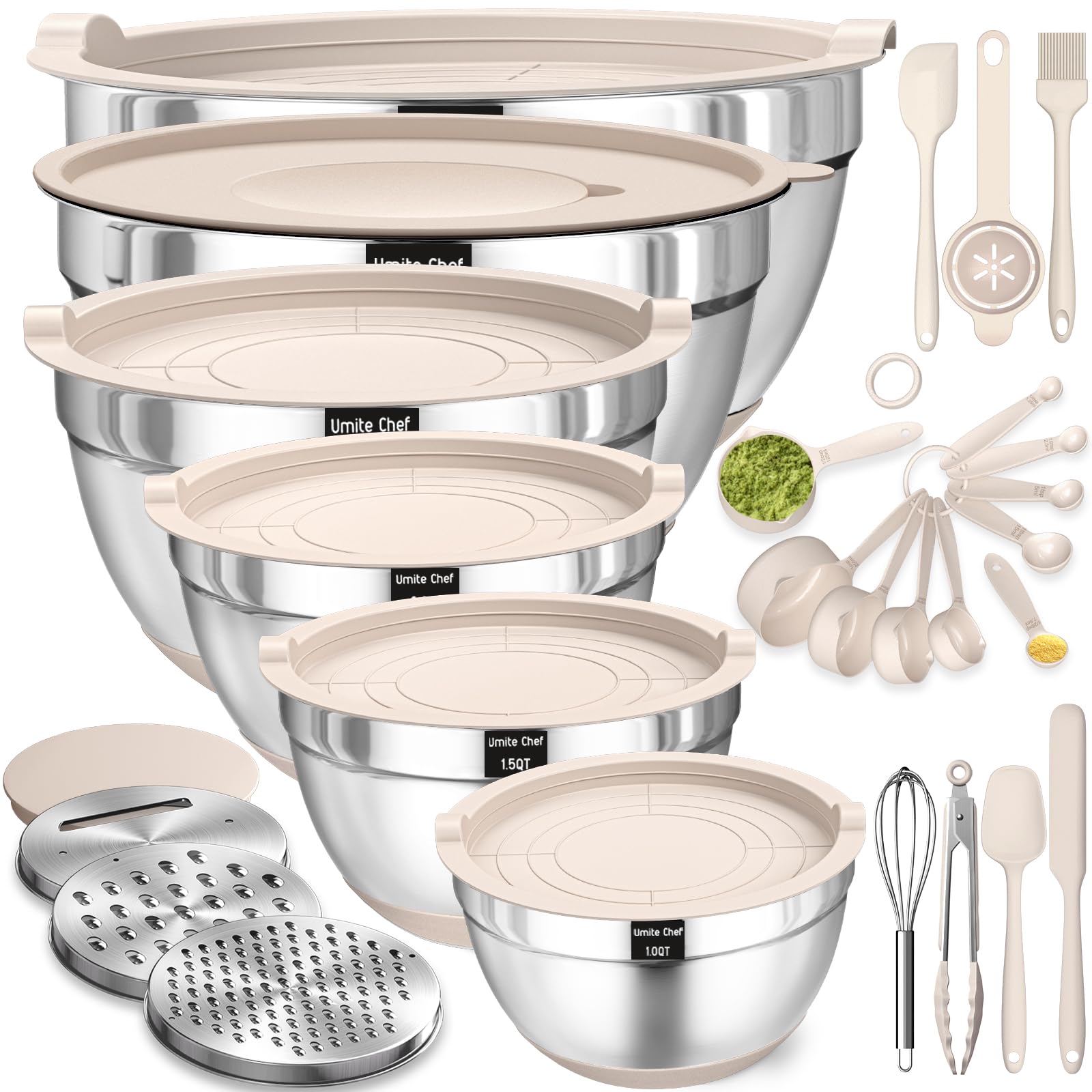
Serving straight from lidded stainless bowls brings in that bit of shine and keeps a family-style dinner warm between helpings. With a tight palette of soft neutrals and one metal, the textures carry all the interest.
Place Settings With Quiet Polish
Plates, flatware, and glasses are the pieces everyone touches all evening, so they deserve a little thought. Elegant doesn’t have to mean fragile or formal. These ideas focus on dinnerware that mixes easily, metal accents with a clear point of view, and glassware chosen for what’s actually being poured. None of them require buying a whole new set of dishes.
Dinnerware Simple Enough to Mix
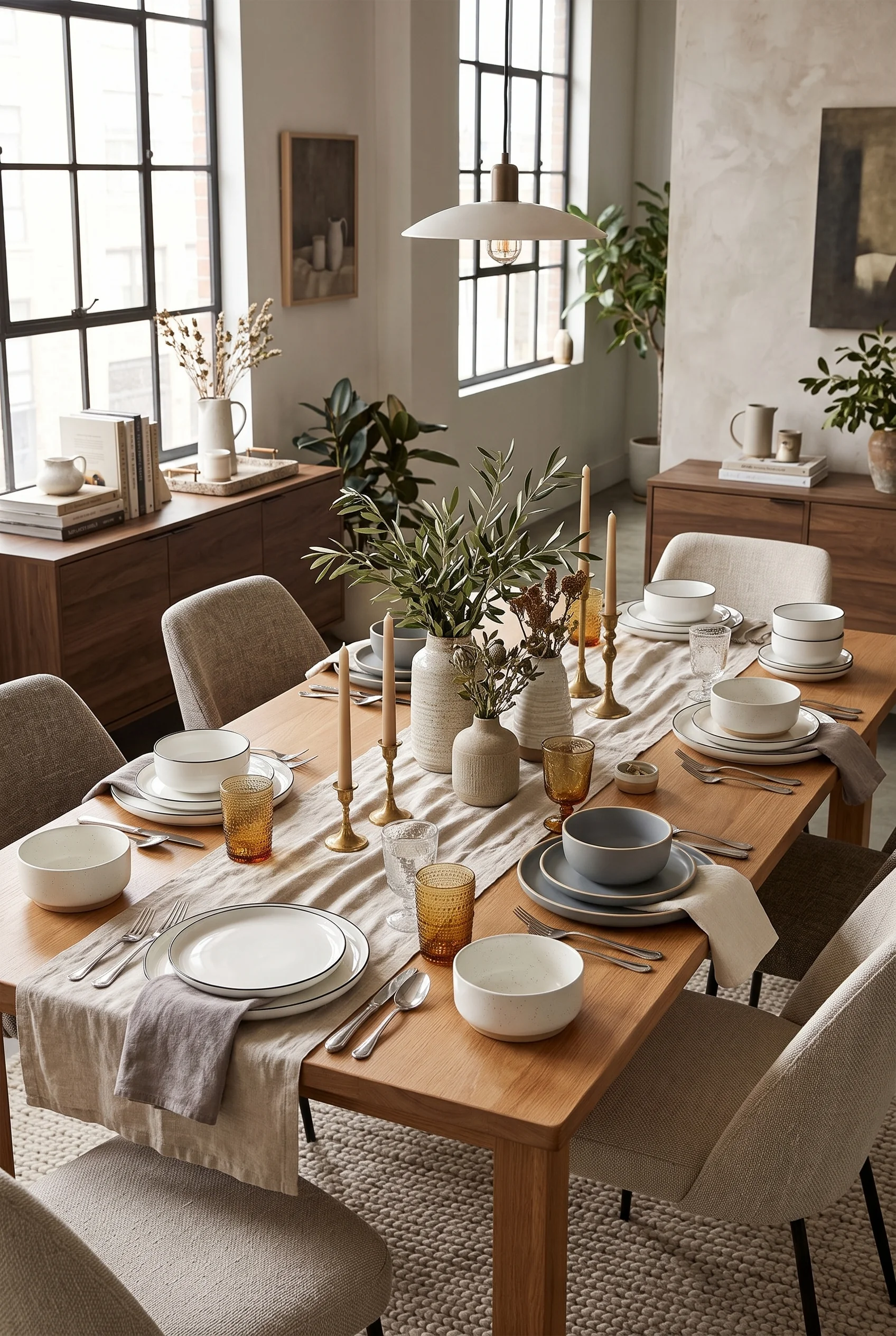
Plain white or cream plates with a clean rim carry weeknight pasta and an anniversary dinner equally well. Often the best Valentine’s tableware is the set already stacked in the cupboard.
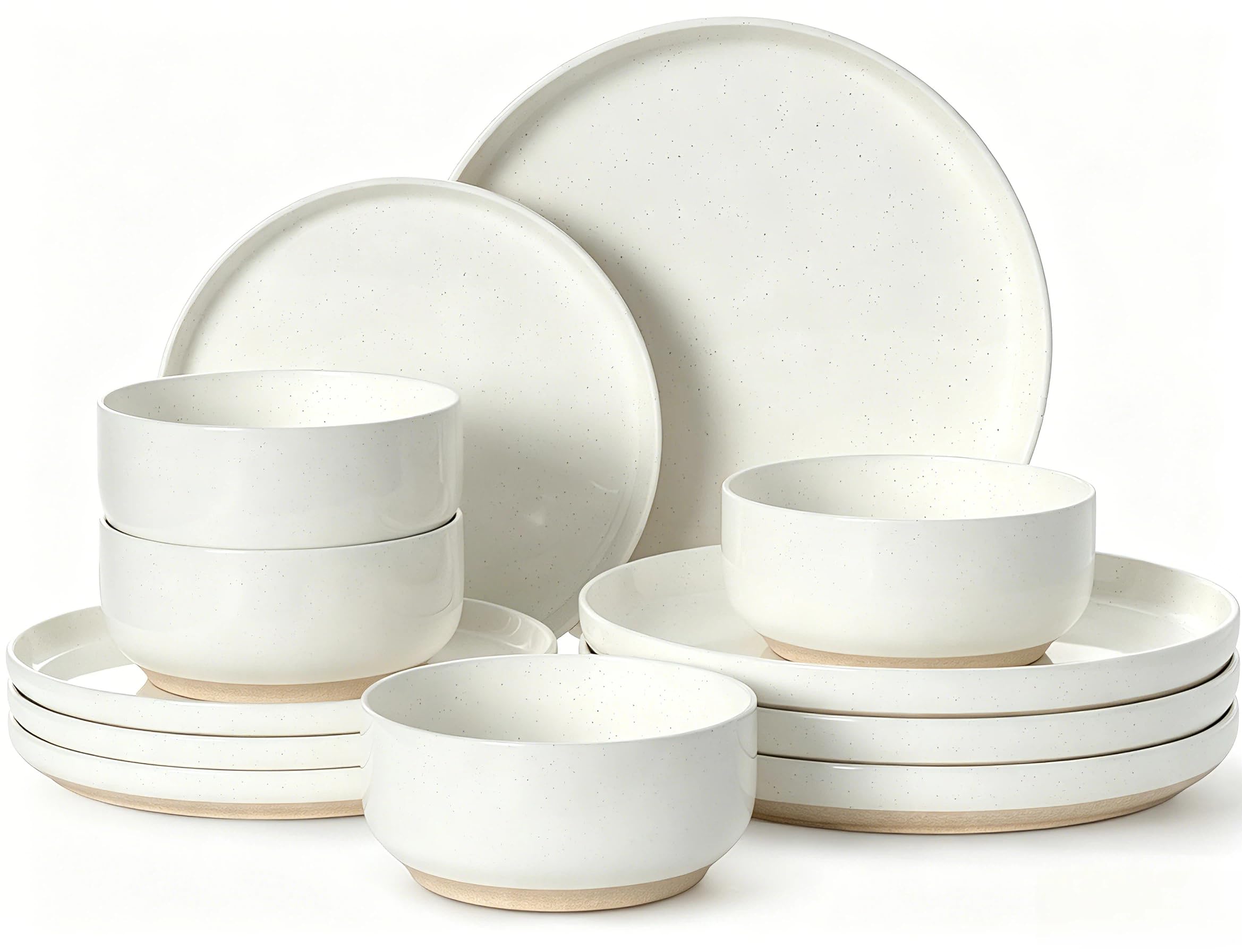
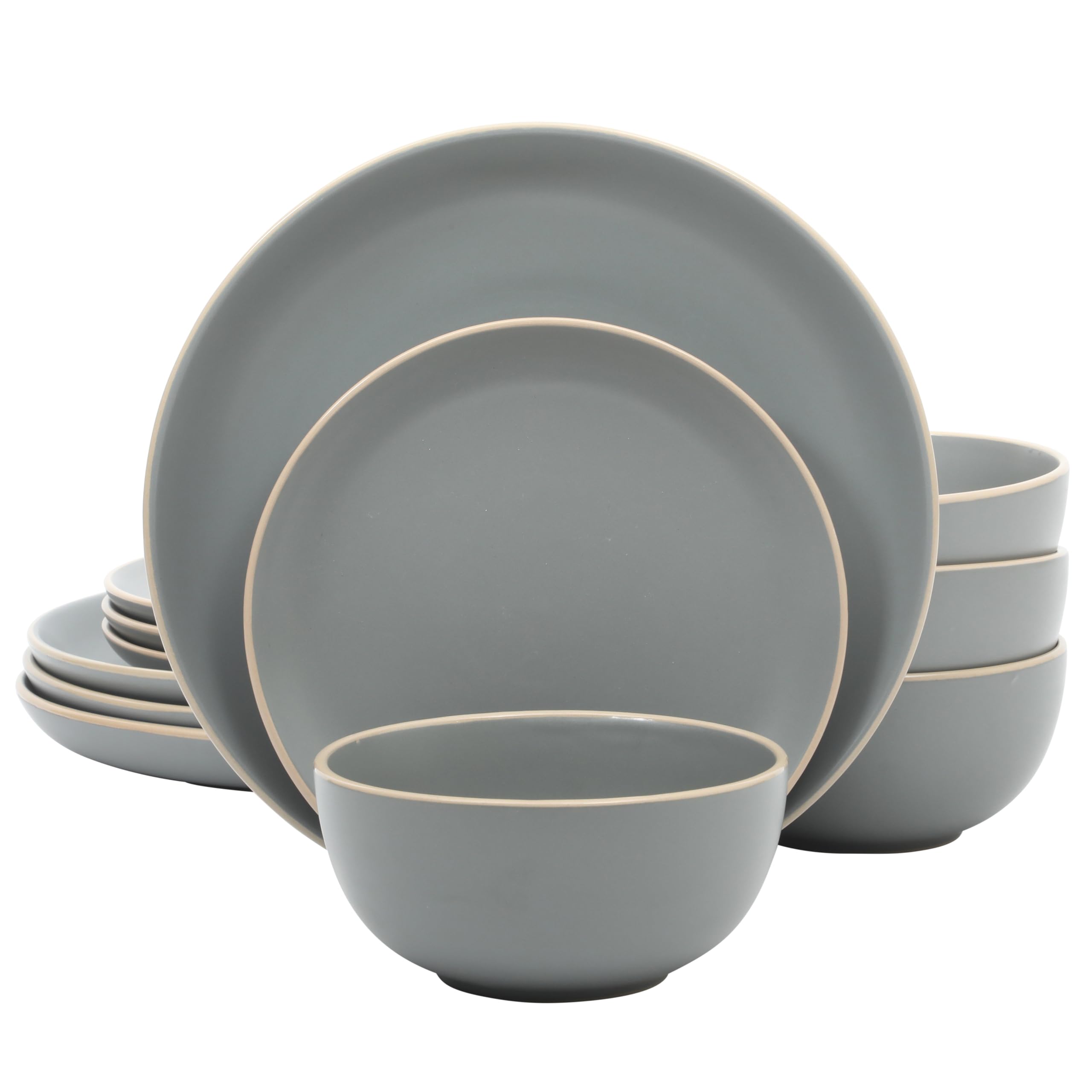
Plain pieces mix easily, too. Pair a white dinner plate with a stoneware bowl in a softer tone, or set one place with a slightly different glaze. As long as the shapes stay simple, the mismatch looks intentional.
Colored glassware warms up a pale set without adding pattern. And on Monday morning, every piece goes right back into regular rotation for school lunches and family dinners.

One Metal, Repeated With Intention
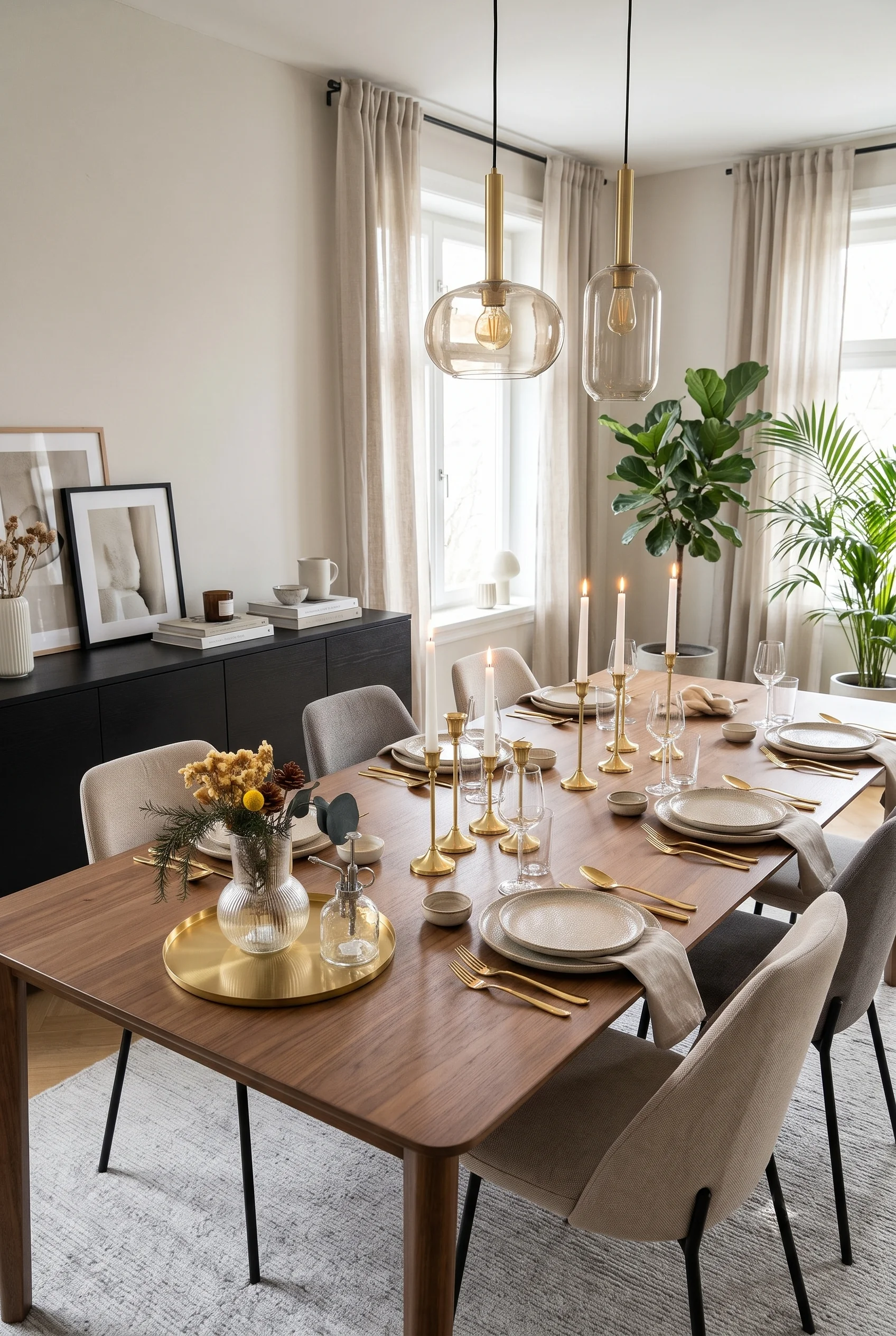
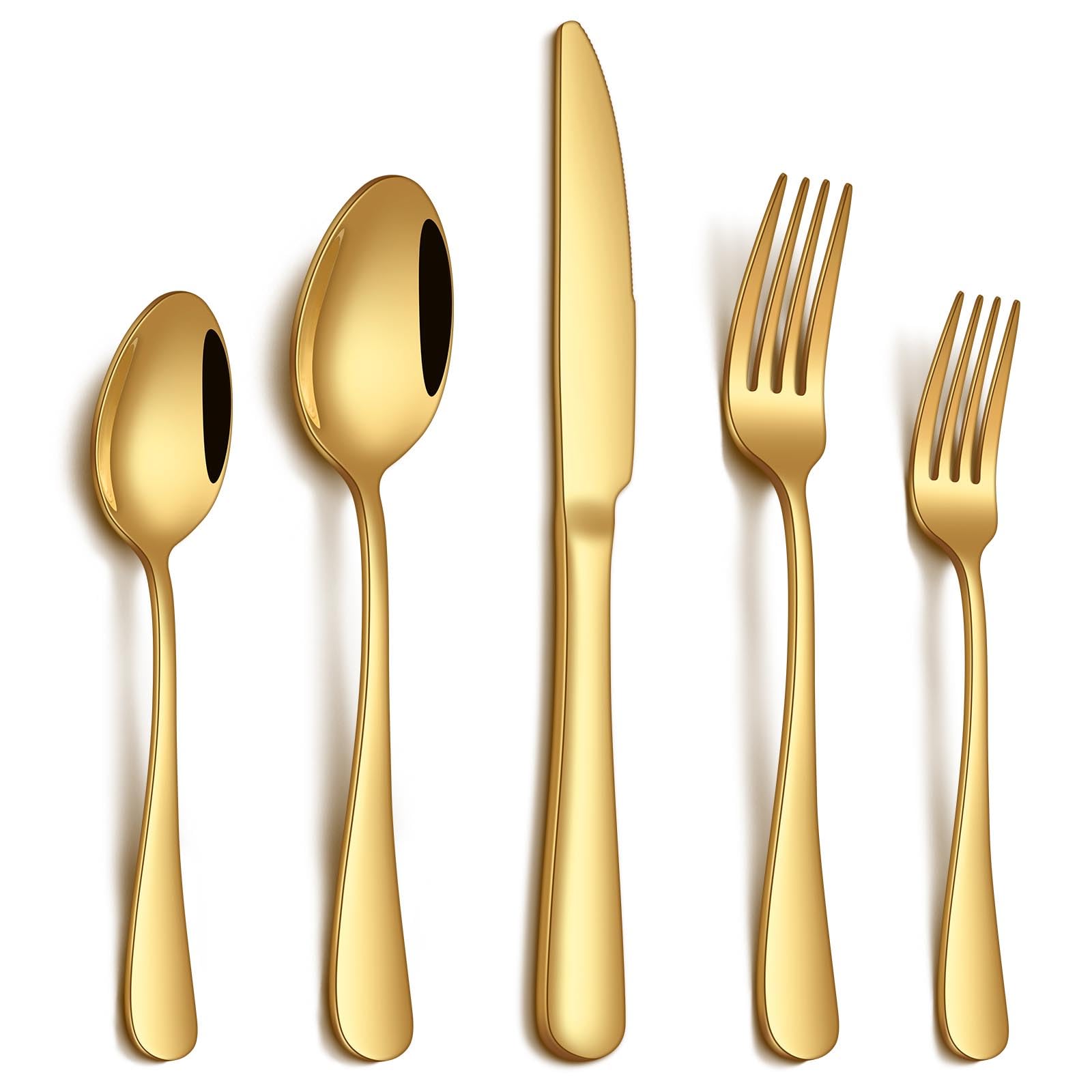
Gold flatware is a small swap that makes a table feel dressed up. Metallic accents look best when you commit to one finish instead of mixing gold, silver, and copper all at once.
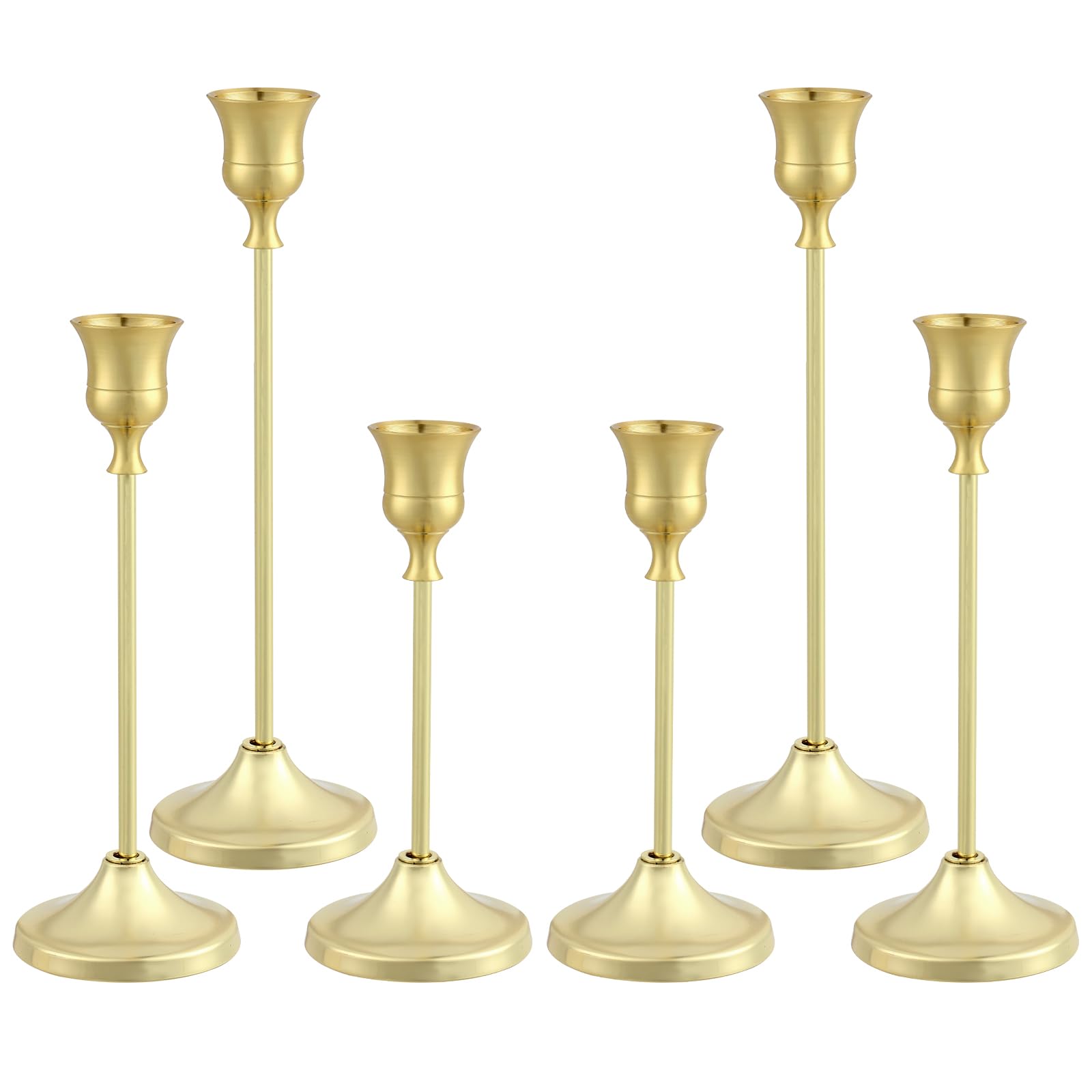
Gold cutlery at each place, a cluster of slim candlesticks, and a round tray under a small arrangement all speak the same language.
Neutral plates and linen napkins keep the shine elegant. Scattered in small glints across the table, the gold catches the candlelight the way good jewelry does.

Glasses Picked for What You’re Pouring
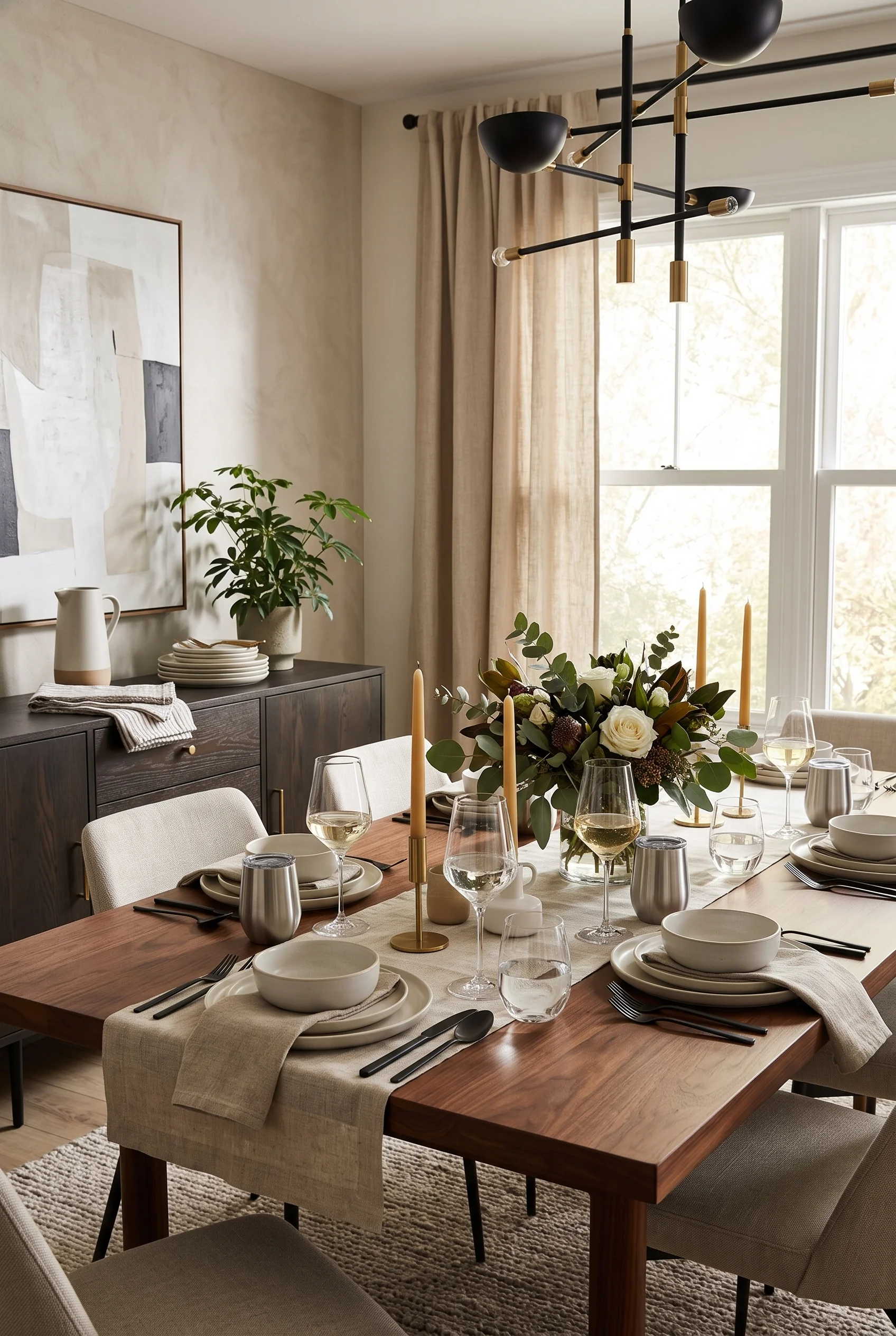
Glassware is easy to overlook, yet it’s the one thing everyone holds all night. Plan the glasses around the drinks rather than the other way around.
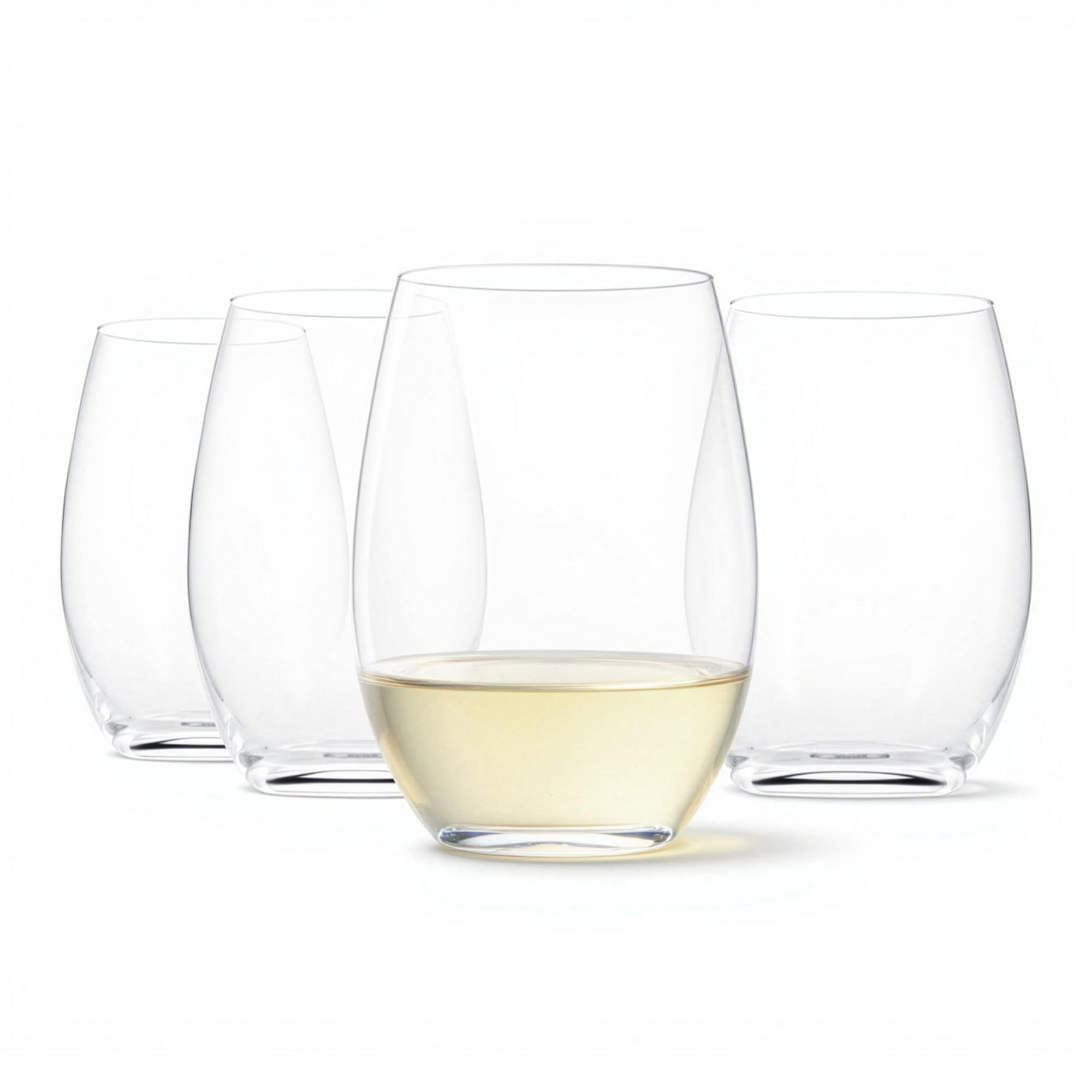
Stemmed wine glasses keep chilled white wine cool, since hands stay off the bowl. Simple stemless glasses handle water or sparkling juice for anyone skipping wine. Clear glass always looks elegant and never fights the rest of the table.
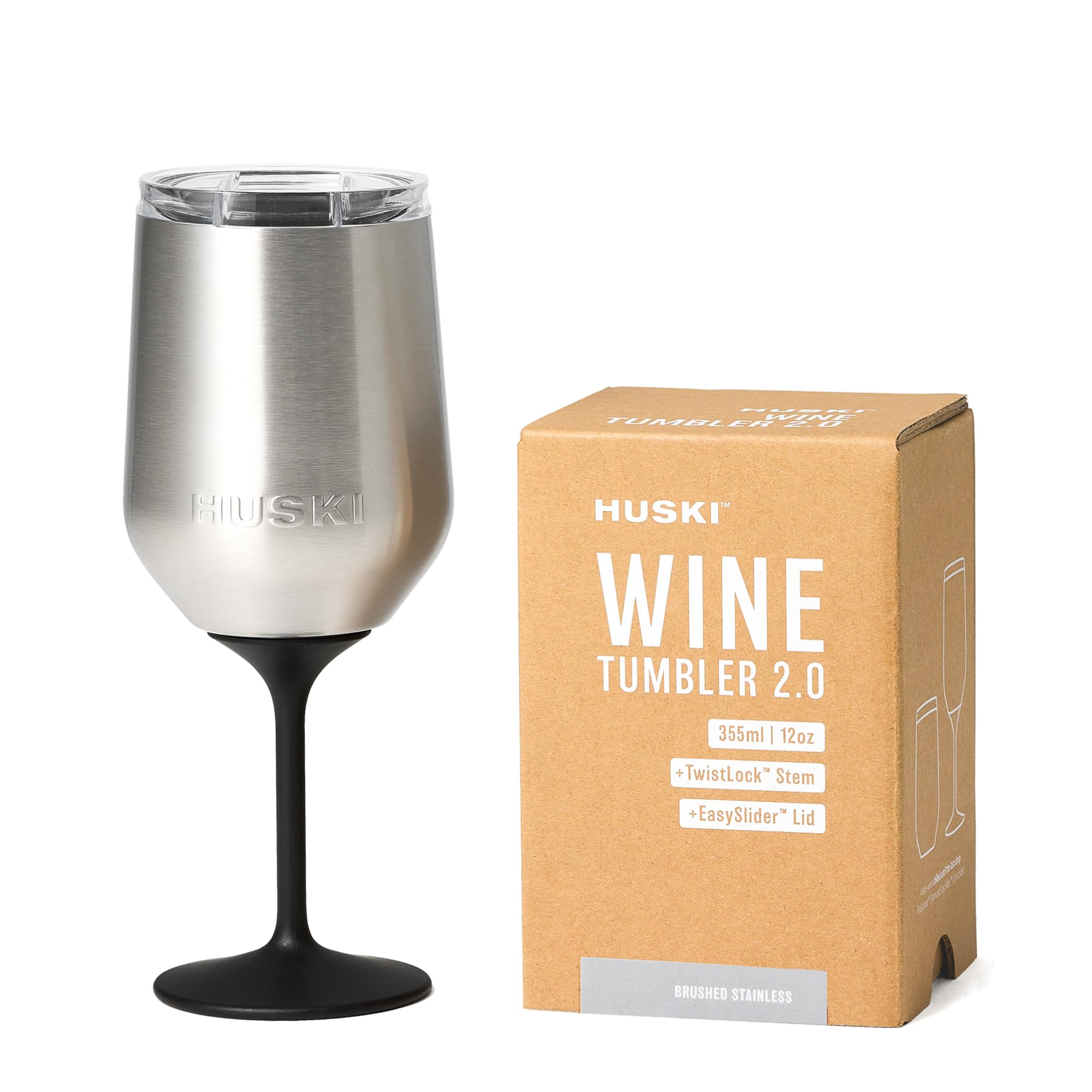
Some evenings drift from the table to the patio or the couch. Insulated wine tumblers keep a drink cold on the move, and they shrug off the inevitable bump from an elbow.

Personal Touches and a Sweet Last Course
The details people remember are rarely the expensive ones. A handwritten name card, a treasured family serving piece, or a photo from your early days together can bring meaning to the table. These four ideas create a dessert spot worth lingering over and are perfect for getting the kids involved.
Place Cards That Make Everyone Feel Expected
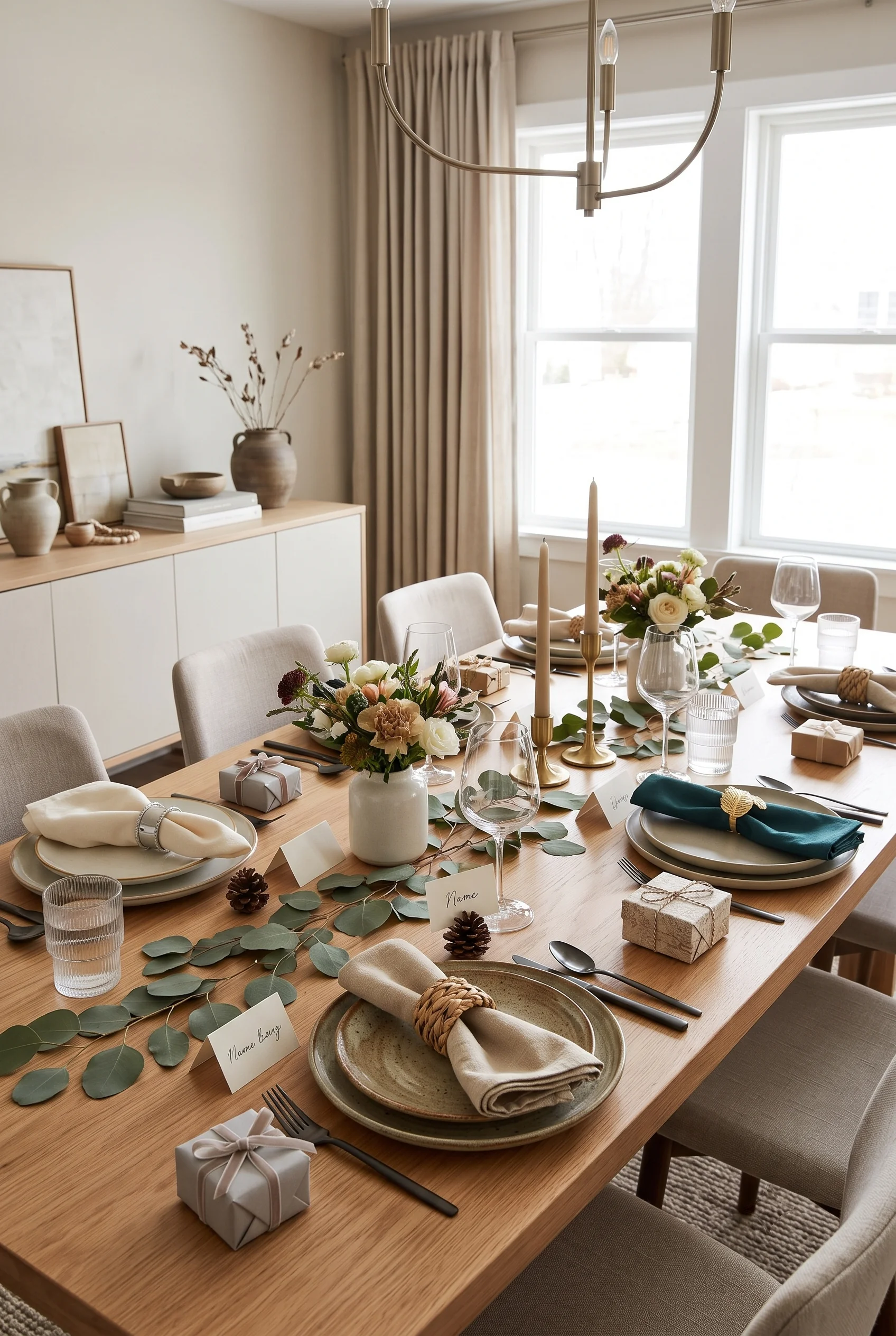
Valentine’s dinner can also stretch past two chairs. A family table with the kids, or a Galentine’s night with close friends, feels extra special when every seat has a name on it.
Handwritten place cards take minutes to create. Add a tiny wrapped gift at each setting, like a chocolate, a folded note, or a small candle. Kids especially love finding something waiting at their spot, and they’re usually happy to help write the cards.
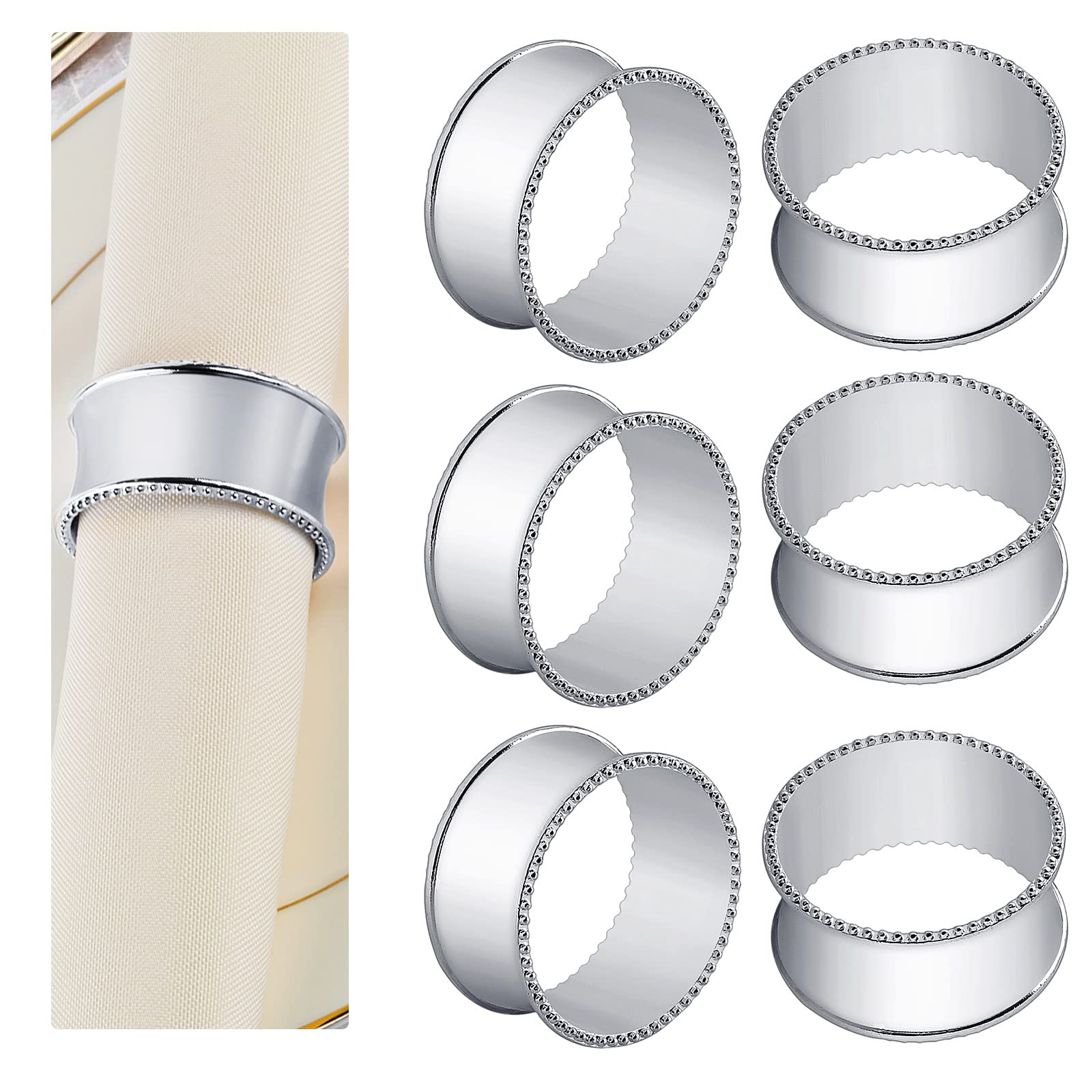
Mismatched napkin rings give each place its own personality. Gold at one seat, polished silver at another, and no two settings feel quite the same.
Heirlooms That Give the Table a Backstory
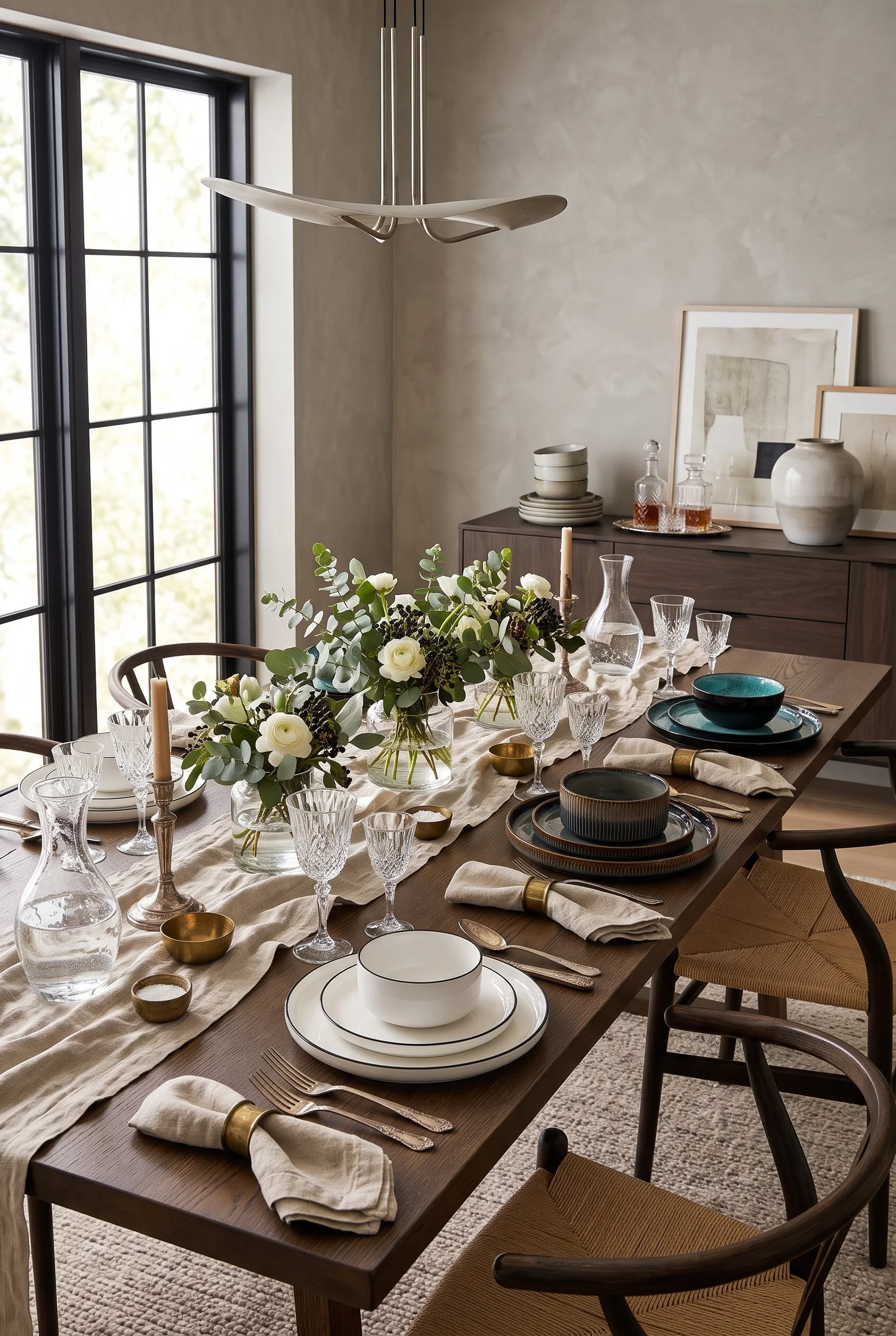
Heirlooms bring a sense of story that nothing new can match. A grandmother’s crystal glasses, a decanter from a wedding, or a set of brass bowls are the pieces that start conversations.
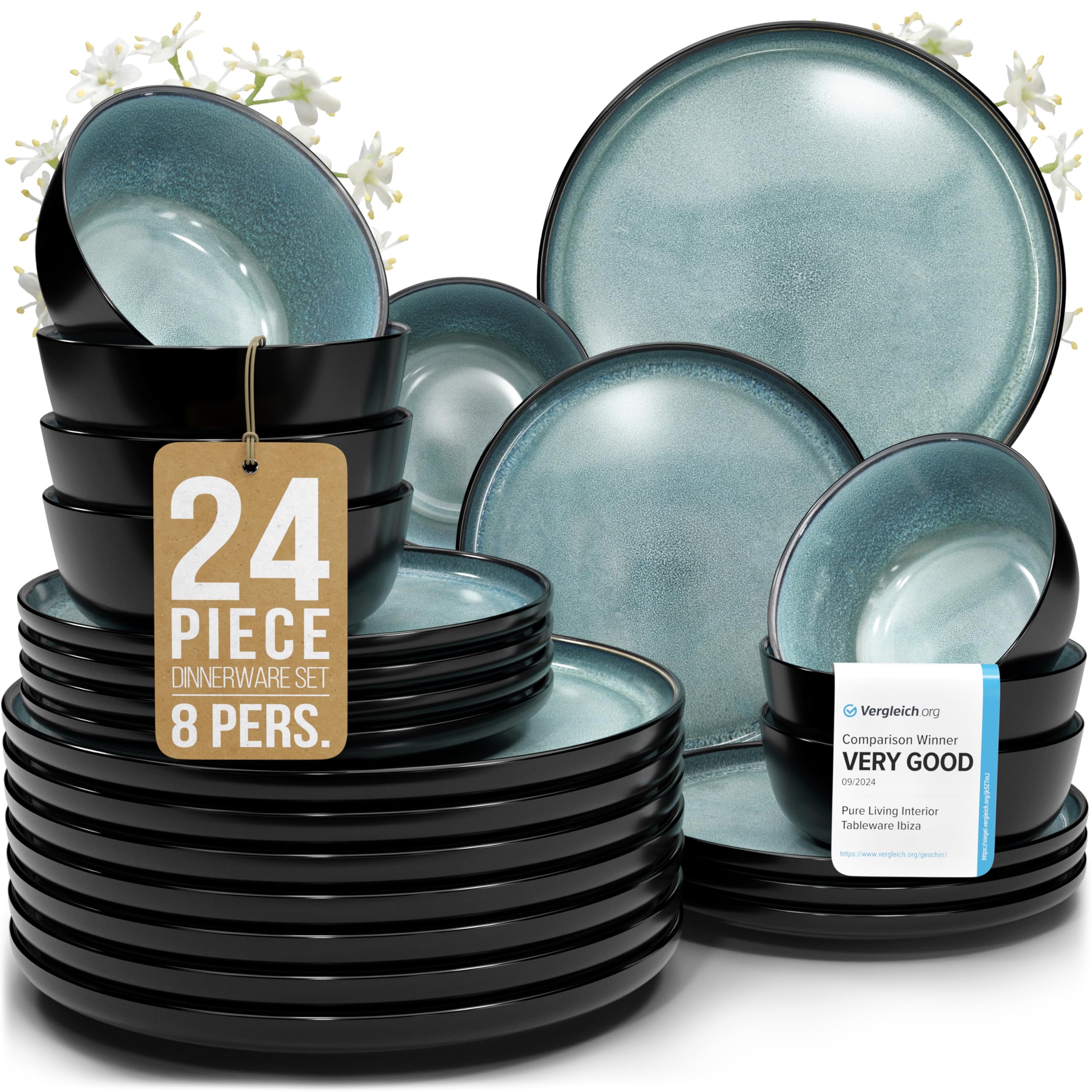
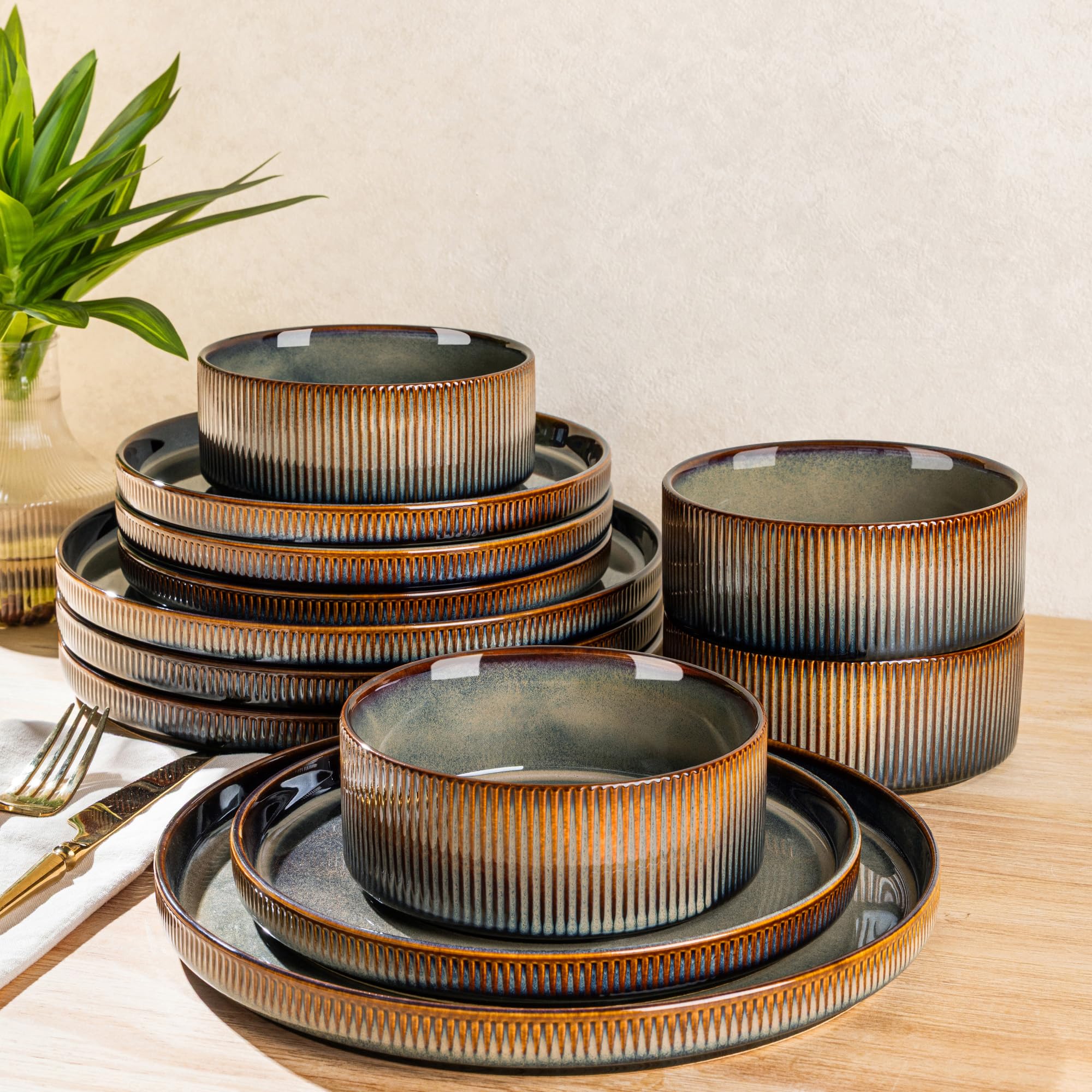
Modern dinnerware keeps the table feeling fresh instead of formal. Simple plates and bowls in a clean shape let the older pieces stand out, and a few different glazes at different seats keep the mood relaxed.
Check everything before the big night. Polish the metal, wash the glass by hand, and set aside anything chipped. Pieces that are cared for look cherished, never tired.
Your Story, Set Right on the Table
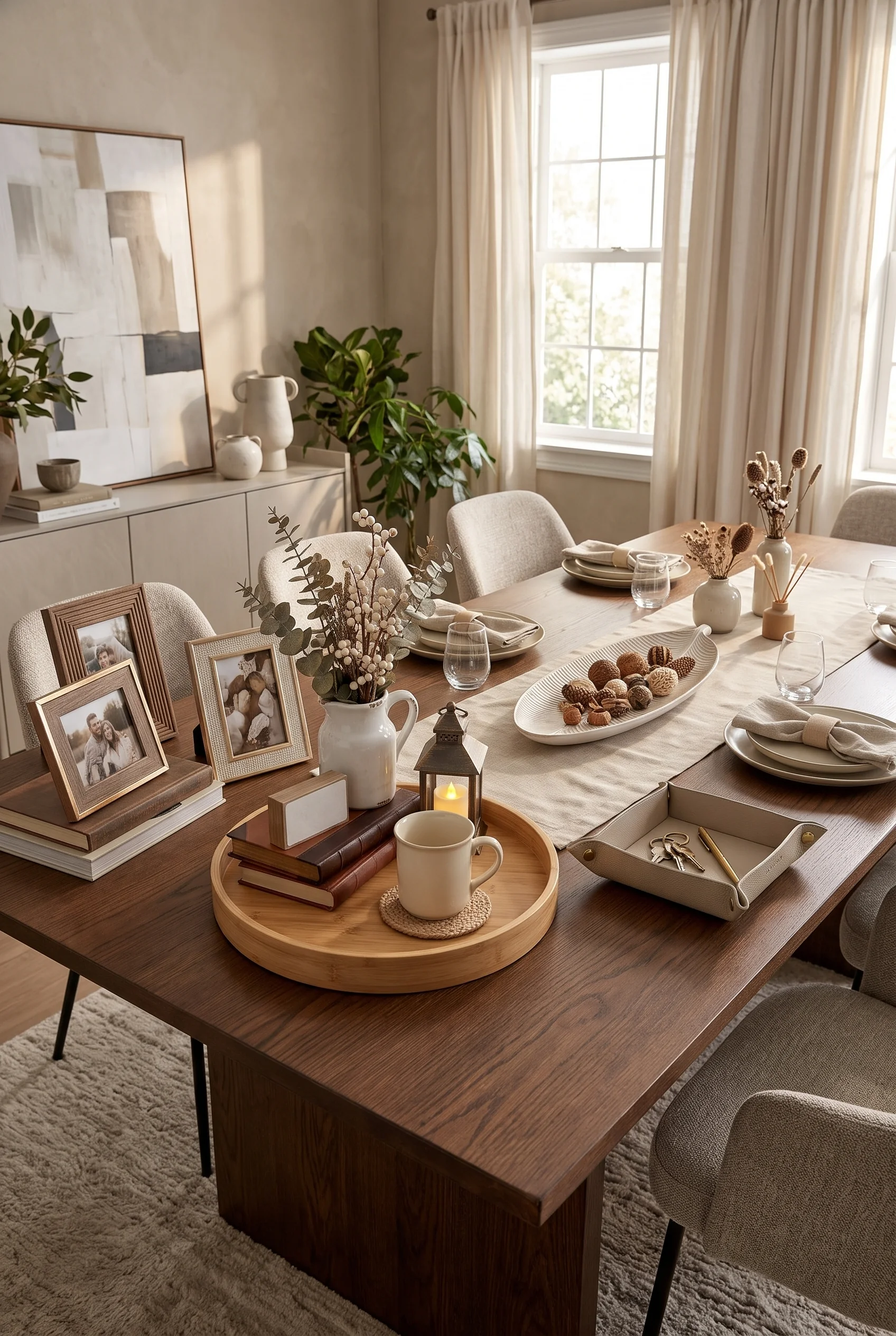
The most meaningful Valentine’s table settings tell a story only the two of you know. A few framed photos at one end, a mug from your first apartment, or a stack of favorite books bring personality without crowding the plates.
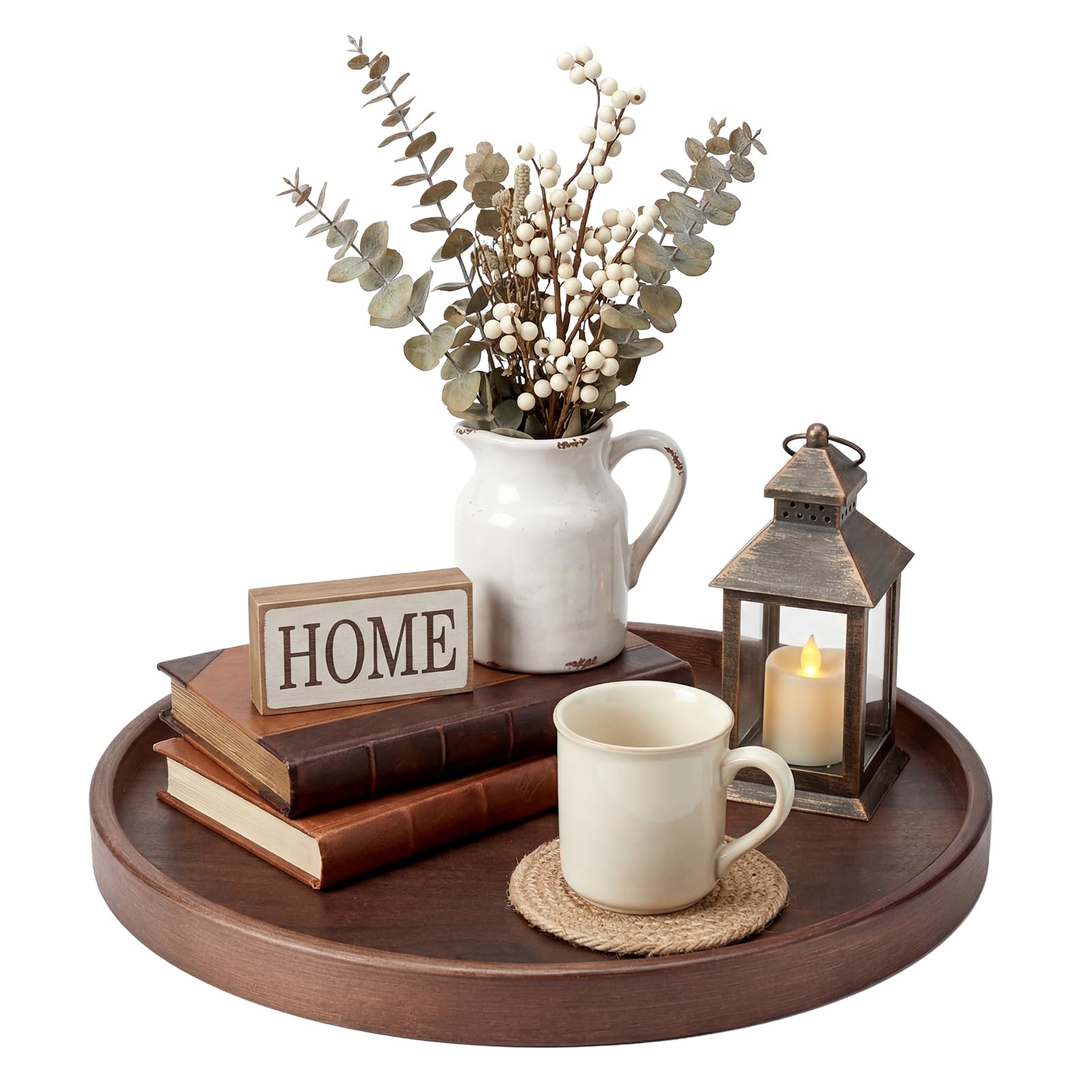
Trays keep personal touches contained. A round wooden tray can corral photos and a small lantern, while a little valet tray holds keepsakes like ticket stubs or the keys to your first home. Everything moves together when it’s time to clear the table.
A handful of pieces is enough, and the ticket stub propped against a candle will get picked up and passed around before dessert.

A Champagne and Dessert Corner for the Final Toast
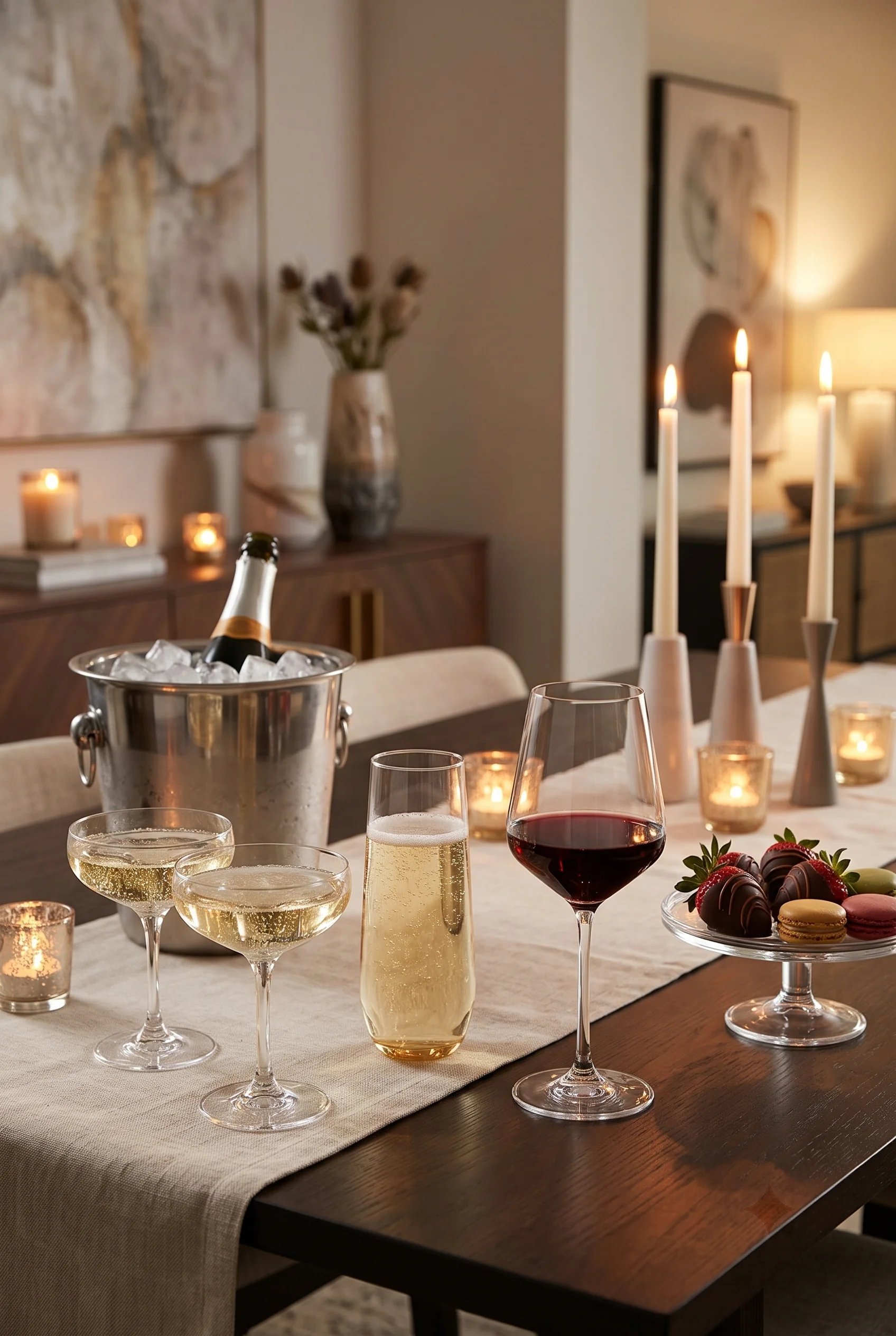
Ending the night with something sweet feels easier when there’s a spot ready for it. A small dessert station at the end of the table, away from the dinner plates, gives the last course its own moment.
Chill a bottle in an ice bucket before dinner starts. A glass cake stand keeps chocolate-dipped strawberries and macarons at eye level while taking up very little room. Coupes or flutes wait for the bubbly, with a wine glass nearby for anyone who prefers red.
Shatterproof flutes are a smart pick for nights that wander to the couch. Compact and close at hand, the whole setup waits patiently until someone finally asks if it’s time to open the champagne.


A Valentine’s Table That Feels Like Yours
Romance at the table has very little to do with getting every detail right. It comes from slowing down long enough to make an ordinary evening feel chosen. Candlelight, a softer palette, and one or two personal touches are usually all it takes.
Nearly every idea here works with what most homes already have: plates you use every week, glasses tucked behind the everyday ones, napkins waiting in a drawer. Start with one idea that fits your space, then add another next year. Over time, those pieces become a February tradition of your own.
These Valentine’s Day tablescape ideas are meant to be mixed, borrowed, and made yours. Maybe it’s a quiet dinner for two after bedtime. Maybe it’s a family table where the kids find a little gift at every seat. Both deserve a setting that feels a bit special.
Once the candles are out and the dishes are done, give your entertaining pieces one home so next time is easy. A single shelf or bin keeps it all together, and these kitchen organization ideas can help you find what you need. Then the next special dinner, whether it’s an anniversary or a random Tuesday, is only a few minutes of setup away.