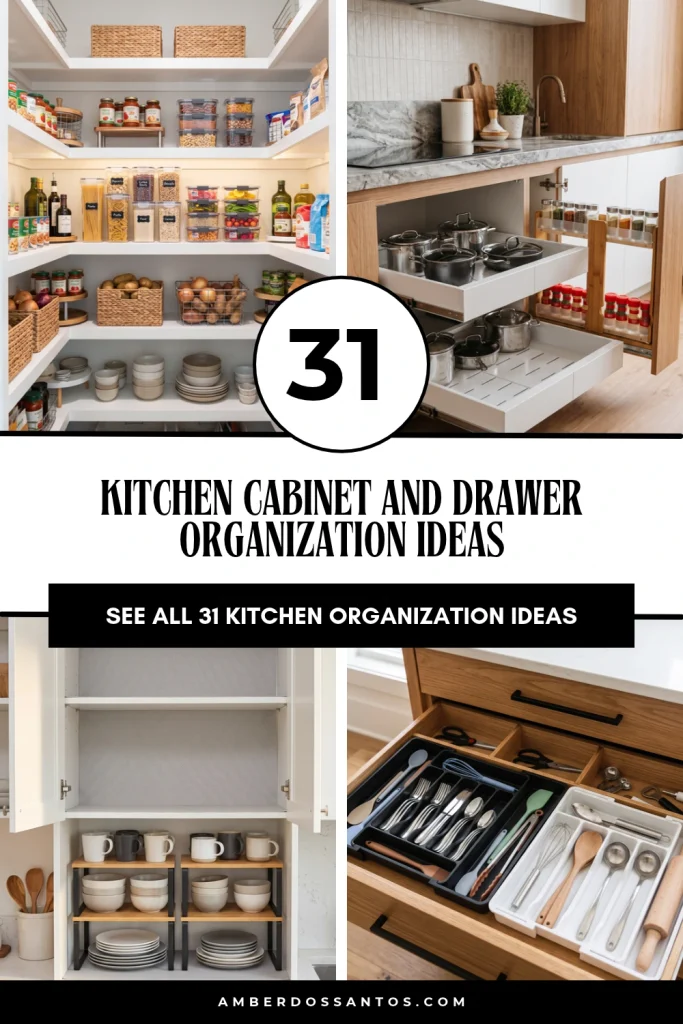
31 Kitchen Organization Ideas for a Clutter-Free Kitchen
The right kitchen organization ideas can change how an entire day feels. As a mom, I know how fast a counter fills up: school papers, a stray lunchbox, the mail nobody opened. By dinnertime, finding a clean cutting board can feel like a scavenger hunt.
A clutter-free kitchen isn’t about owning less. It’s about giving everything you actually use a place that makes sense. When the pantry is easy to read and the drawers close without a fight, cooking stops feeling like a chore you brace for. If you’ve already started on the rest of the house with these home organization ideas, the kitchen is the natural next stop.
Below, you’ll find 31 kitchen storage solutions grouped by where they live, from the pantry and cabinets to the sink. Daily routines get their own small stations at the end. Some take five minutes and a pack of adhesive hooks, while others ask for a weekend.
Think of them as kitchen decluttering tips with a designer’s eye, meant to feel calm rather than clinical. Once the storage is sorted, these kitchen decor ideas help the room feel finished instead of merely tidy.
Pick the two or three that solve your biggest daily frustration and start there. Small wins add up faster than you’d think.
DISCLOSURE: Some of the links provided on this page are affiliate links. This means if you choose to make a purchase through these links, we may receive a small commission at no extra cost to you.
A Pantry You Can Read at a Glance
Most pantry chaos comes from one problem: you can’t see what you have. Duplicate jars of cumin, three open bags of pretzels, a box of crackers that went stale behind the cereal. Every idea in this group chases the same goal of visibility. When food is easy to spot and easy to put back, the pantry stays tidy almost on its own, and grocery lists get shorter and more accurate.
Clear Containers, the Kitchen Organization Idea Everything Else Builds On
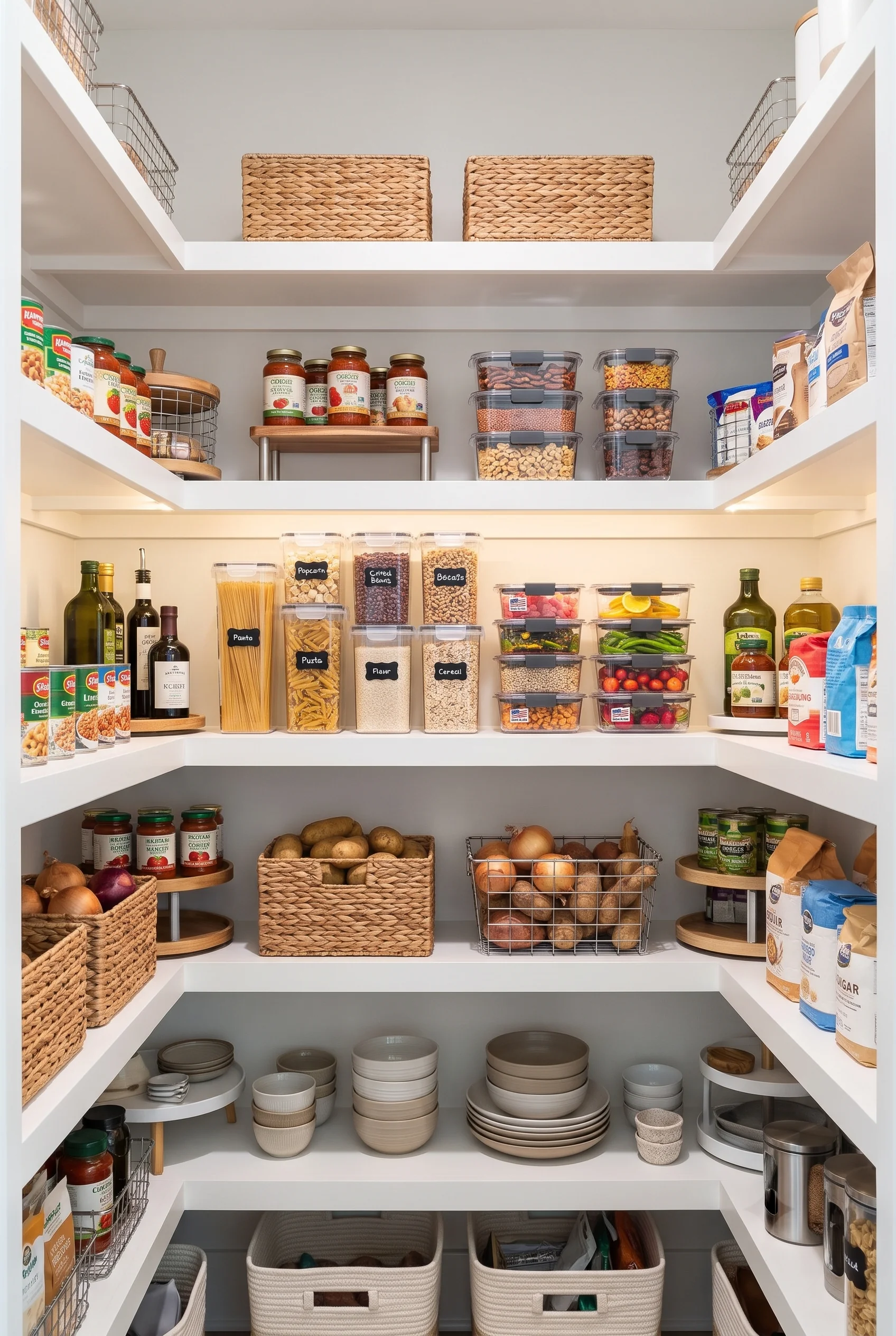
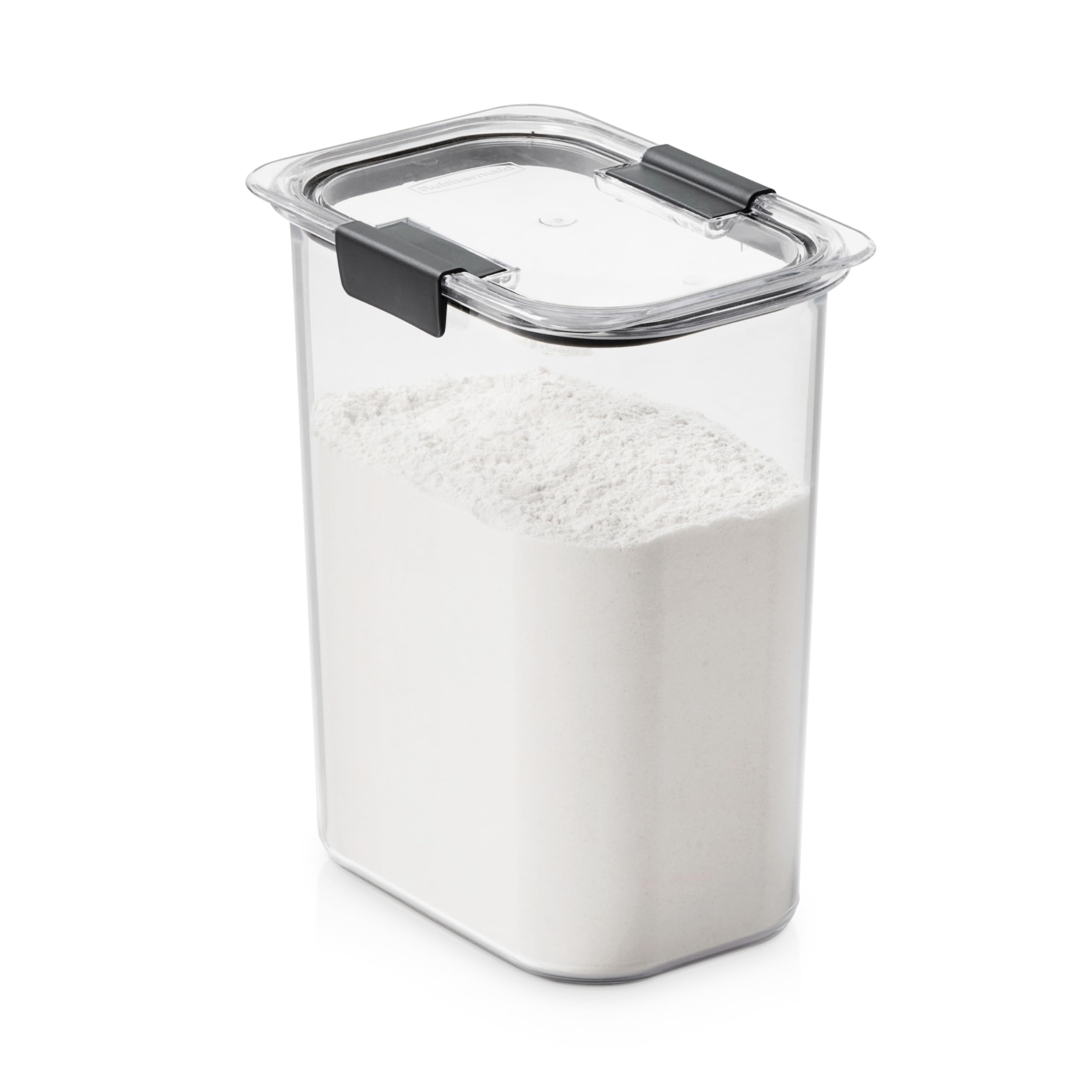
Decanting pasta, rice, and grains into clear airtight containers is the first step I suggest to anyone starting from scratch. You stop guessing how much is left. The half-empty bag that tips over every time someone reaches past it disappears for good.
Square, stackable shapes matter more than most people expect. They sit flush against each other and use the full depth of the shelf, which round jars and slumped bags never manage. Stack two or three high and a single shelf holds a week of staples.
A simple label on the front of each one finishes the job. Chalk-style labels wipe clean when you switch from farro to quinoa, and anyone in the family can find the oats without asking.


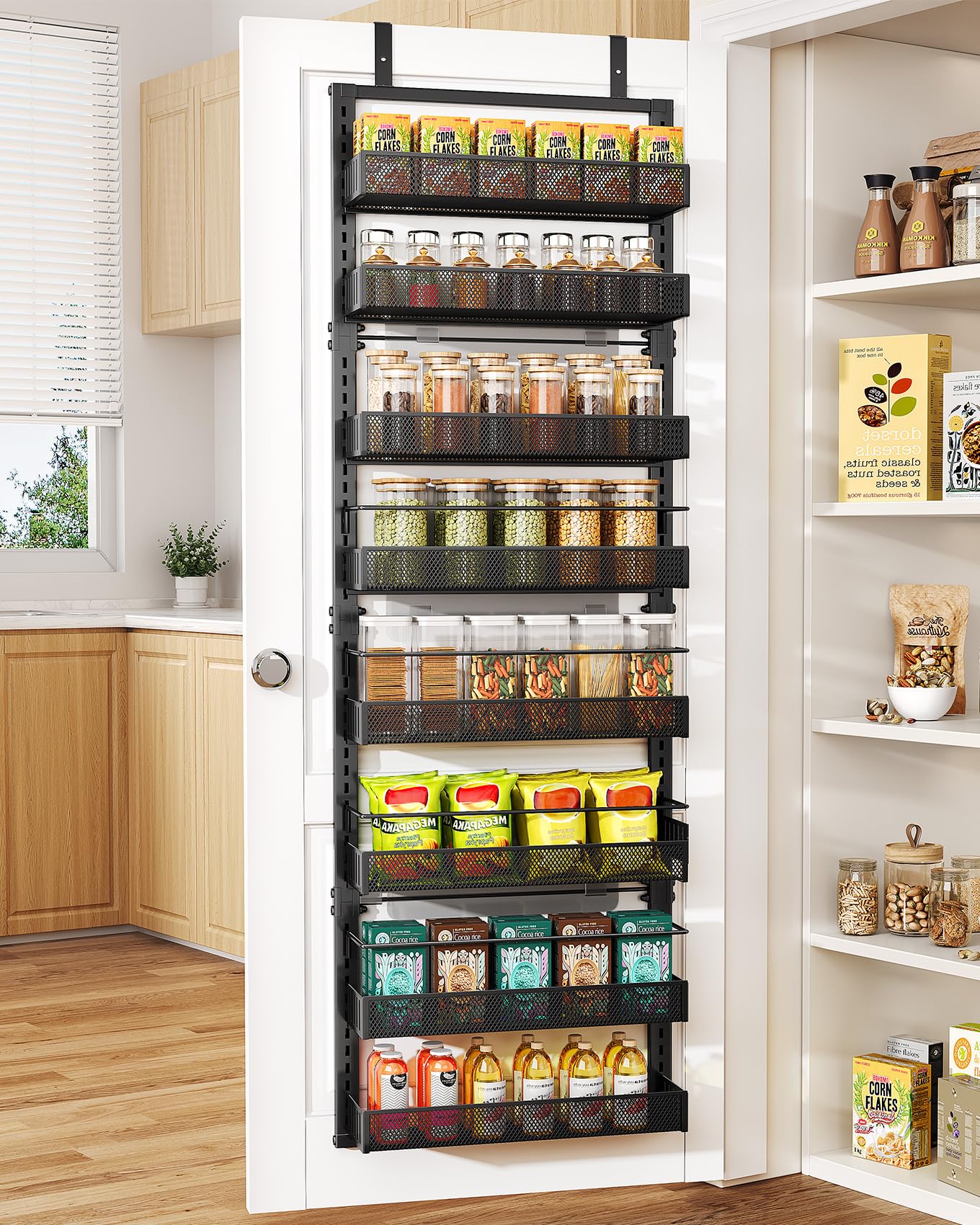
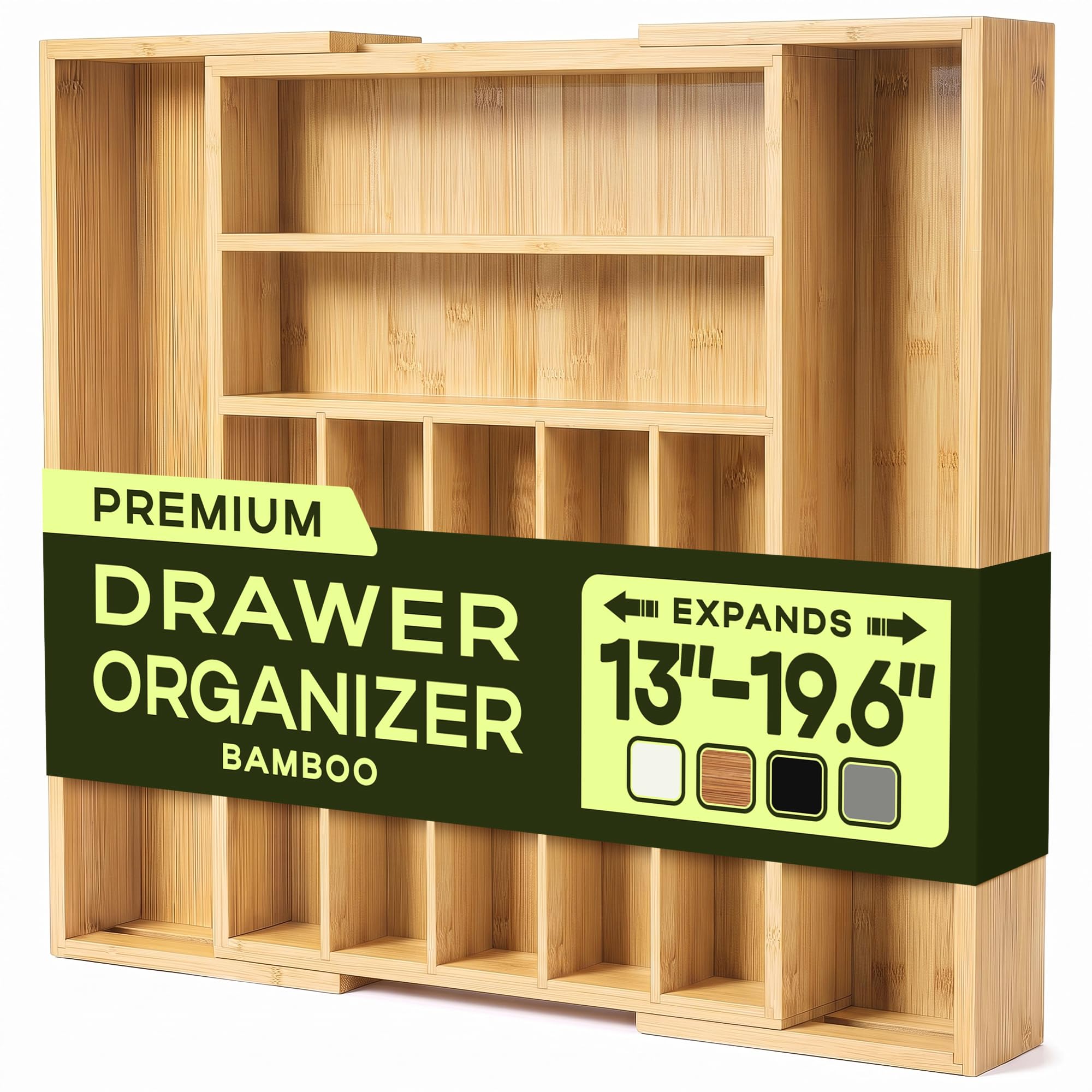
Snack Storage Hiding on the Back of the Door
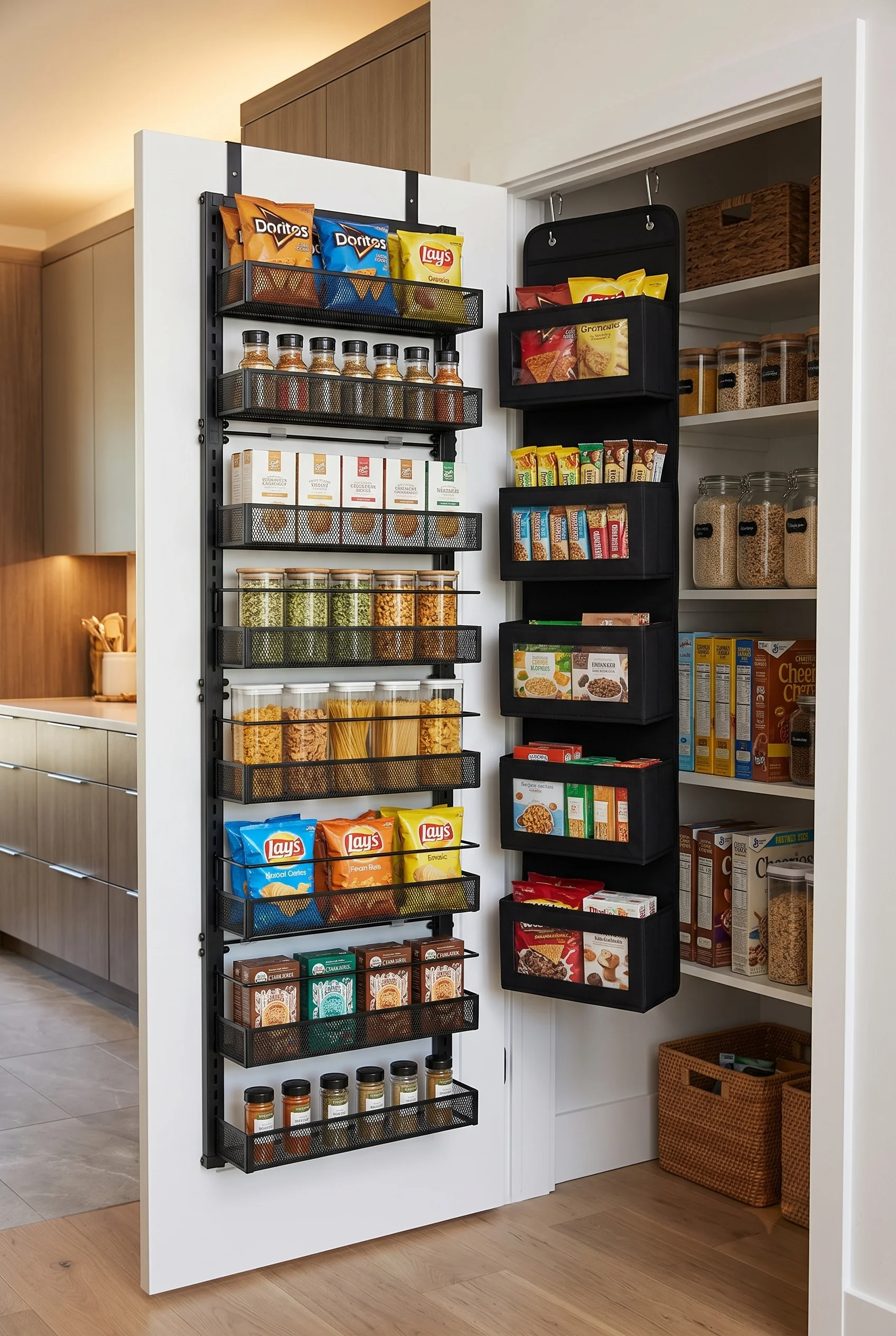
The back of a pantry door is one of the most overlooked surfaces in the house. A tall over-the-door rack turns it into a full wall of shallow storage, which is exactly the depth chip bags, spice jars, and seasoning packets need.
Shallow is the secret. Nothing gets buried, and every item faces out. Kids can grab their own after-school snack without rummaging through the main shelves, and you can tell at a glance when the granola bars are running low.
Heavier items belong in the bottom baskets so the door still swings smoothly. Lighter bags and small jars go up high, where a quick look is all it takes.


Baskets for the Bulk, Bins for the Small Stuff
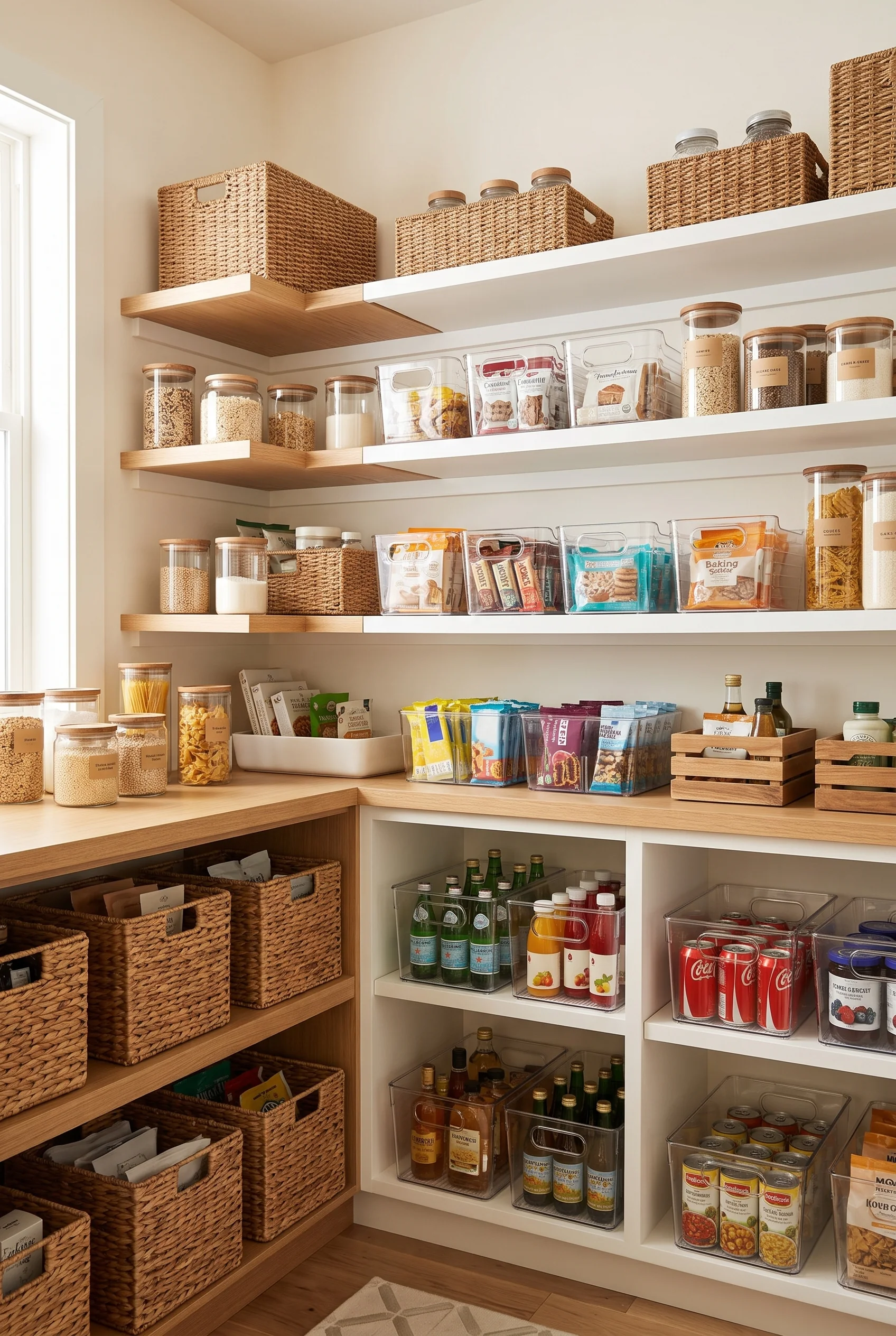
Bulk buying saves money, but those big packs rarely fit neatly anywhere. Woven baskets on the lower shelves swallow oversized bags of potatoes, extra paper goods, and backup boxes, while softening a long wall of shelving at the same time.
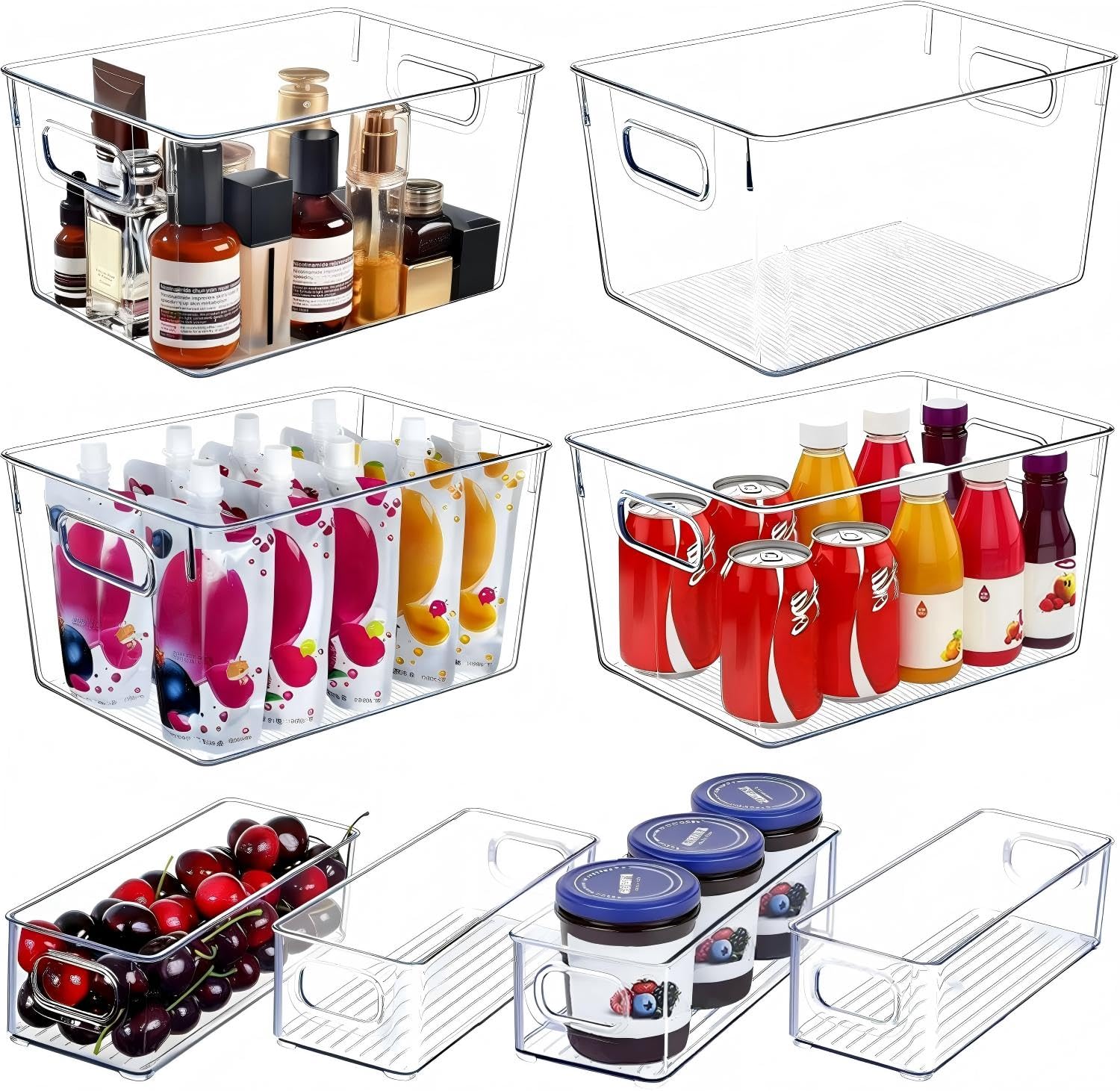
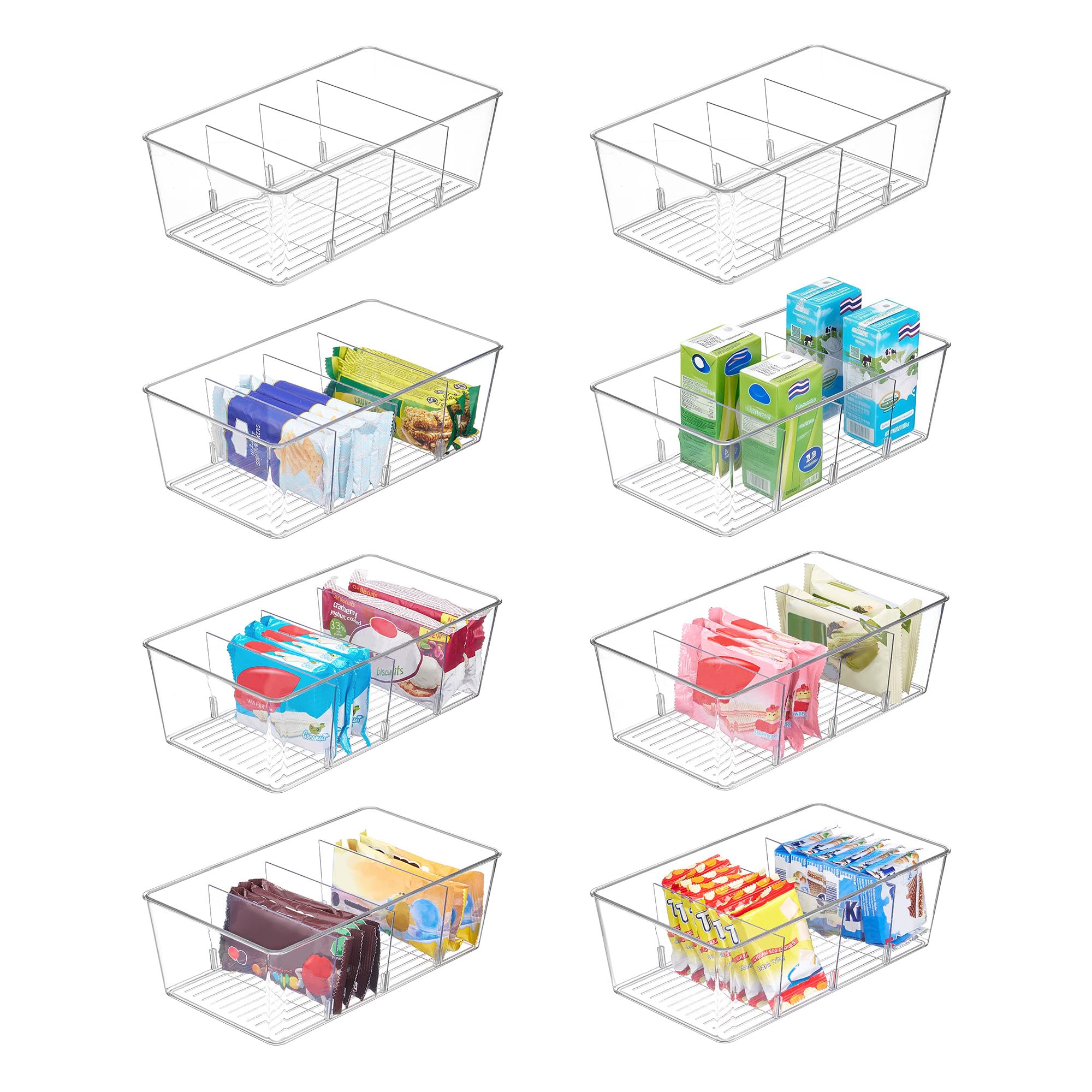
Up at eye level, clear bins do the opposite job. Snack packets, drink bottles, and canned goods stay grouped by type, and the front of each bin works like a little window. One pull and the whole category comes out, so nothing gets lost behind its neighbors.
Soft texture down low, see-through storage up high. That simple split keeps a busy pantry from looking busy.

A Pantry System Instead of a Pantry Pile
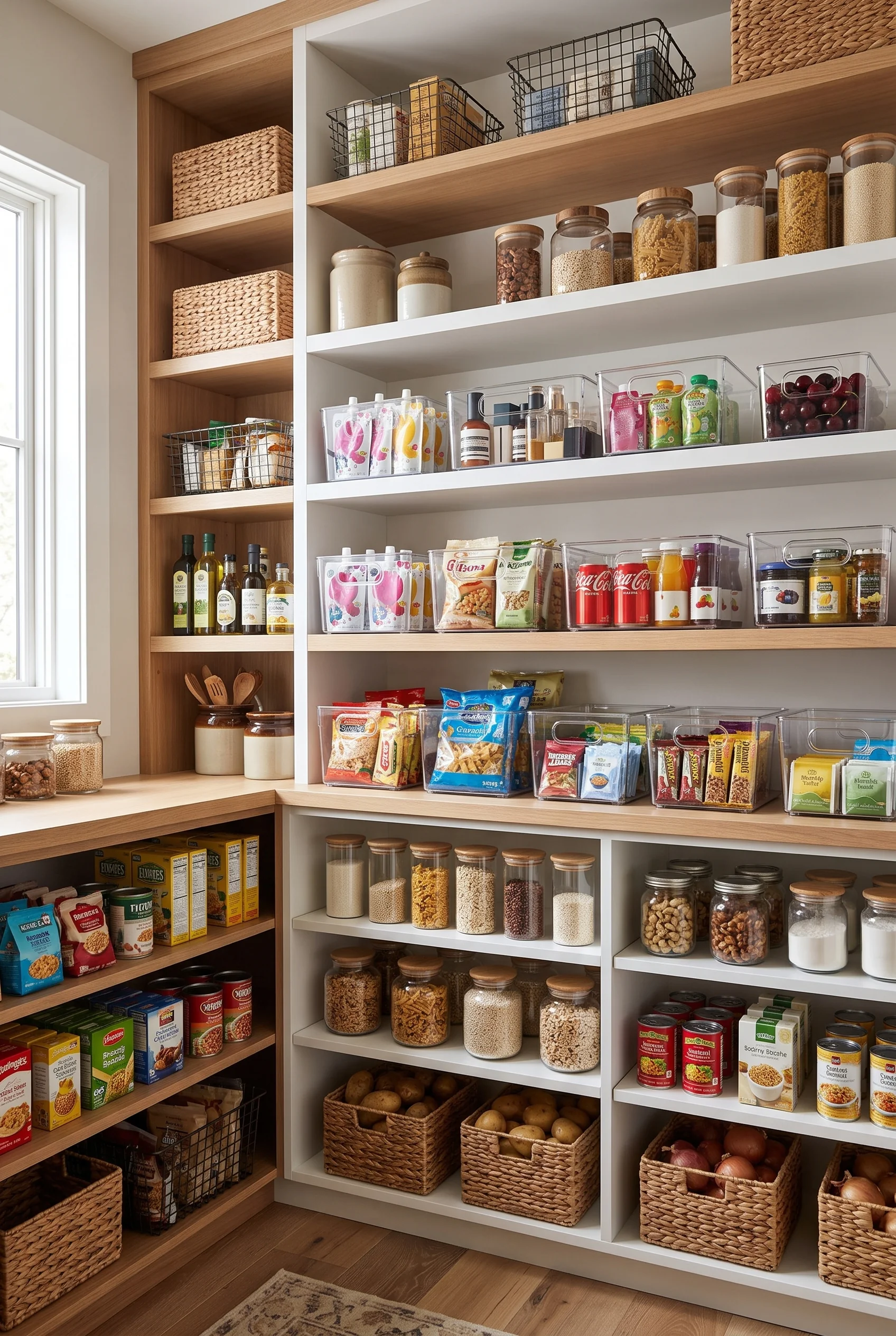
Individual containers help, but a system is what keeps the pantry organized six months from now. Every shelf gets a job: breakfast on one, baking on another, snacks where little hands can reach, and backstock up top.
Once each zone has a purpose, putting groceries away takes minutes instead of a half hour of shuffling. Matching jars handle dry goods, clear bins corral packets, and baskets catch the produce that doesn’t need the fridge.
It also makes the pantry easier to share. When everyone in the house knows where the crackers live, the crackers actually go back there.
Cabinets and Drawers That Work Harder Behind Closed Doors
Closed storage is where clutter loves to hide. A cabinet can look perfectly fine from the outside while pots avalanche every time the door opens. These kitchen storage solutions focus on the interiors, where pull-outs and risers make every inch reachable. Dividers and liners handle the rest. For even more ways to tame the bottom of the kitchen, these deep kitchen drawer organization ideas pick up right where this section leaves off.
Pull-Outs That Bring the Back of the Cabinet to You
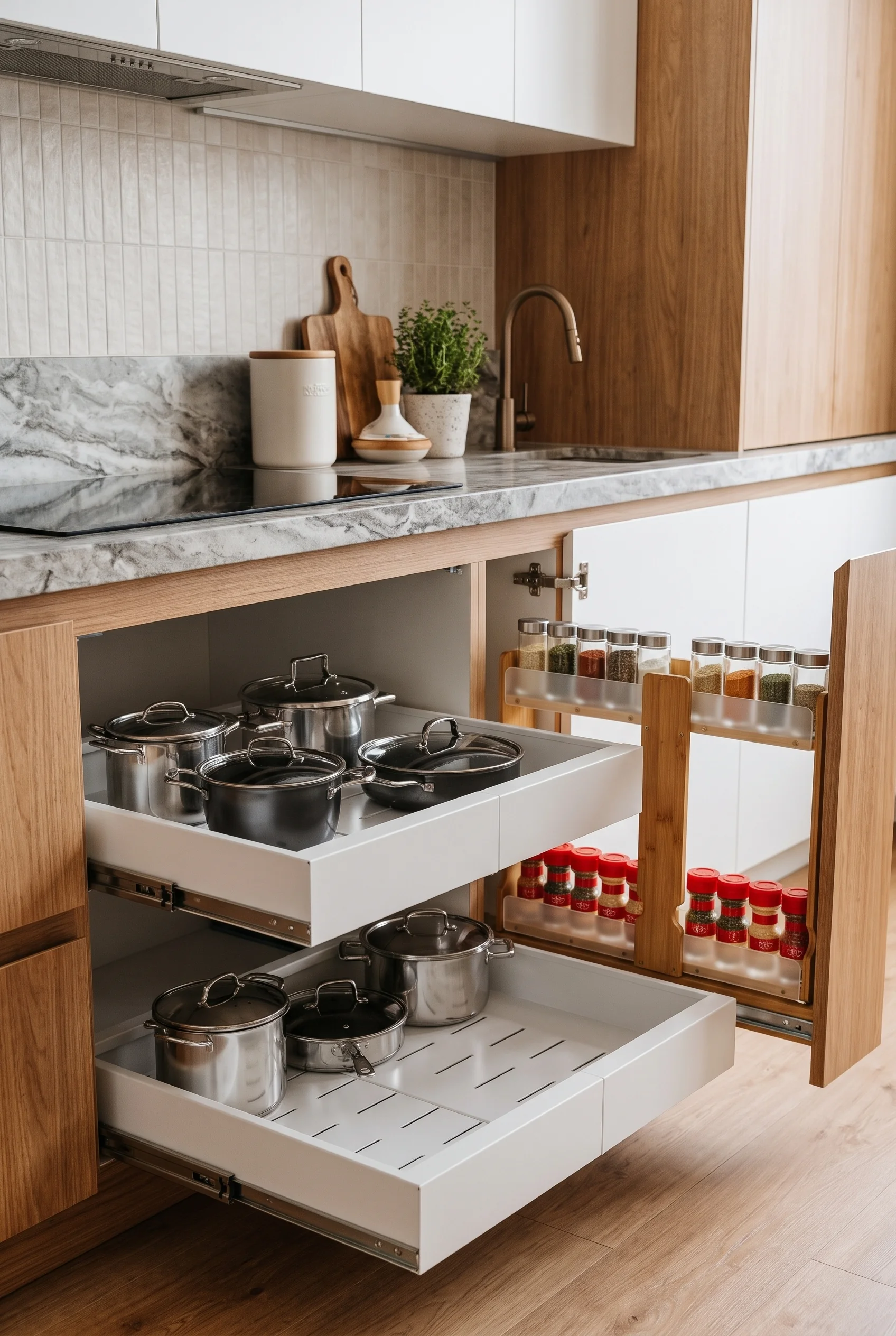
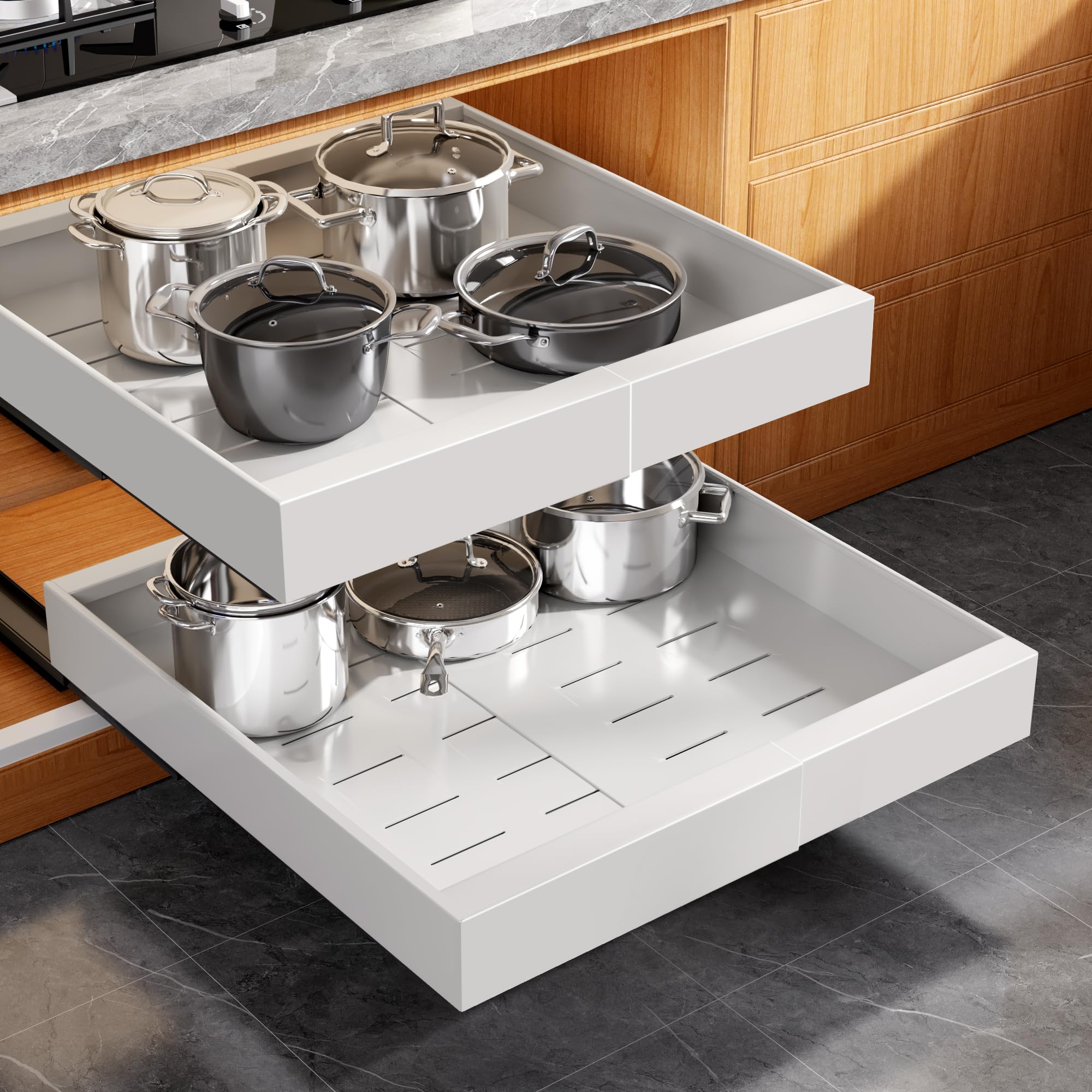
Deep base cabinets have a frustrating habit of swallowing whatever lands in the back. Pull-out shelves slide the entire shelf forward, so the stockpot you use twice a year is just as easy to reach as the everyday skillet.
Full-extension slides are worth the small upgrade. Cheaper versions stop partway, which leaves a dark strip at the back right where things go to be forgotten.
A narrow pull-out spice rack in the slim cabinet beside the cooktop earns its place too. Spices stand in tidy rows within arm’s reach of the burners, and the whole collection glides out with one finger.

Shelf Risers That Double a Cabinet Overnight
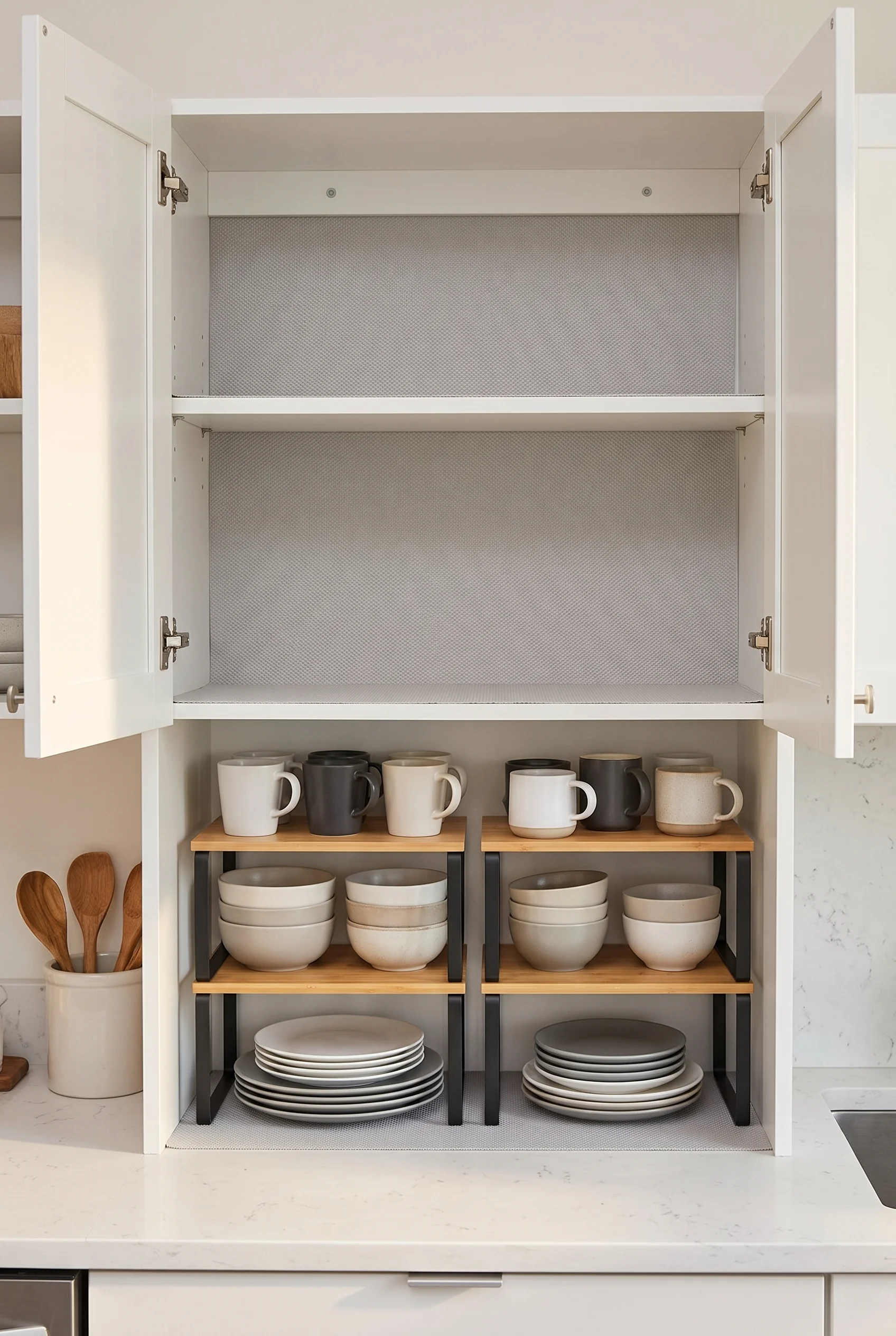
Most cabinet shelves are spaced for tall items, so a short stack of bowls leaves a lot of empty air above it. A simple shelf riser splits that space into two levels without a single tool.
Plates sit underneath, bowls and mugs go on top, and nothing has to be lifted off something else to get to what you want. Unstacking three bowls to reach the dinner plates is one of those tiny daily frustrations you won’t miss.
Two risers side by side fill a standard cabinet neatly. They’re easy to shift around while you’re still figuring out what goes where.


Drawer Dividers That Give Every Utensil an Address
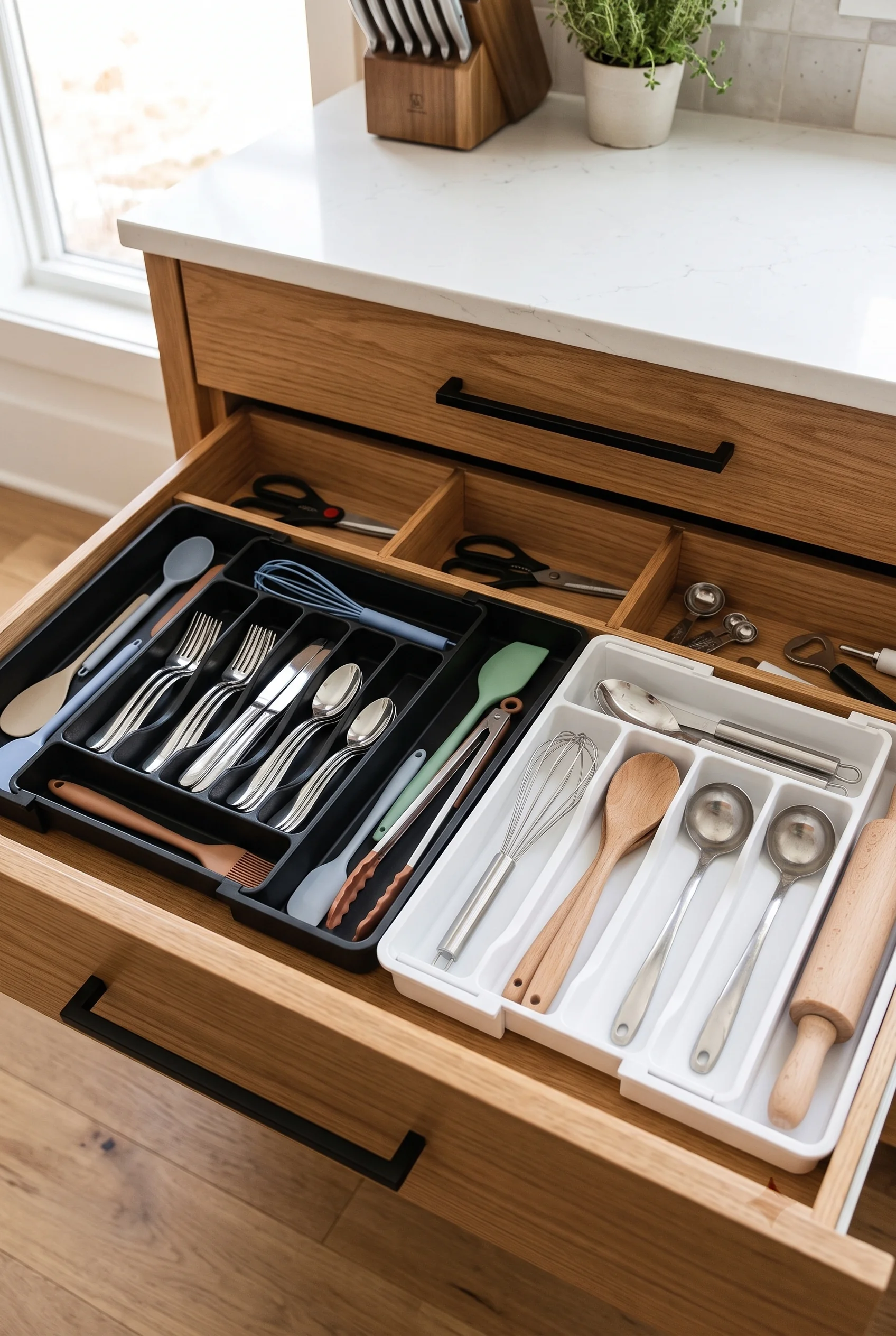
An open drawer turns into a jumble within a week. Dividers give forks, spoons, and spatulas their own lanes, and that structure is what keeps a drawer organized long after the first tidy-up.
Expandable trays are the most forgiving choice. They stretch to fit wall to wall, so nothing slides around when the drawer slams shut. One tray handles everyday silverware while a second holds cooking tools like whisks, ladles, and the rolling pin.
Sorting by frequency matters more than sorting by type. Daily tools up front, once-a-month gadgets tucked into the back corners.


Lazy Susans for the Corners Nobody Can Reach
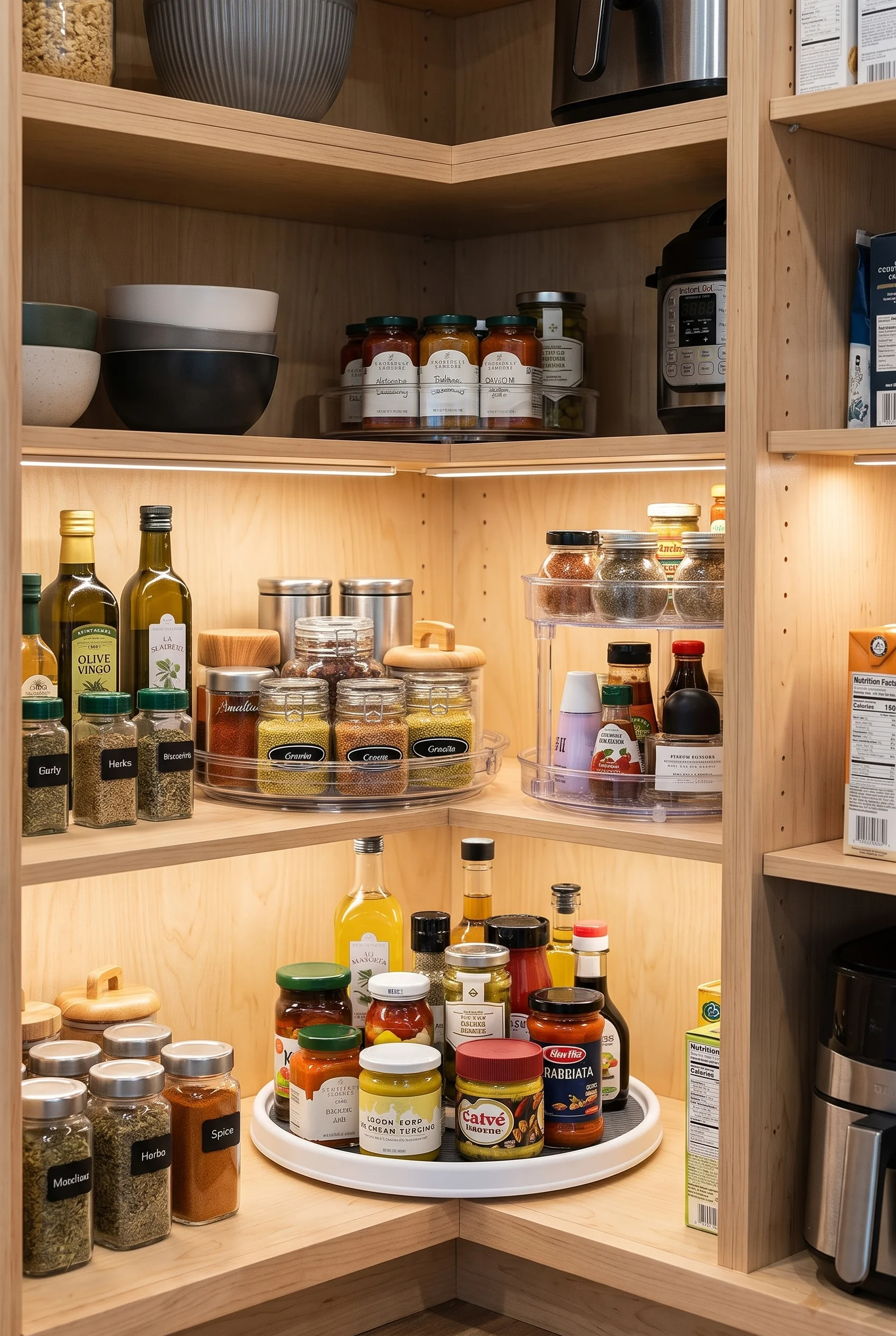
Corner cabinets and deep pantry shelves are where jars go to expire. A lazy Susan brings the back row to the front with one spin, so you don’t have to knock over three bottles to find the soy sauce.
They shine when grouped by similar items. Oils and vinegars on one turntable, sauces and spreads on another, small spice jars on a two-tier version that uses the full height of the shelf.
A turntable just a bit smaller than the shelf depth spins freely even when it’s fully loaded. That little gap is all it needs.


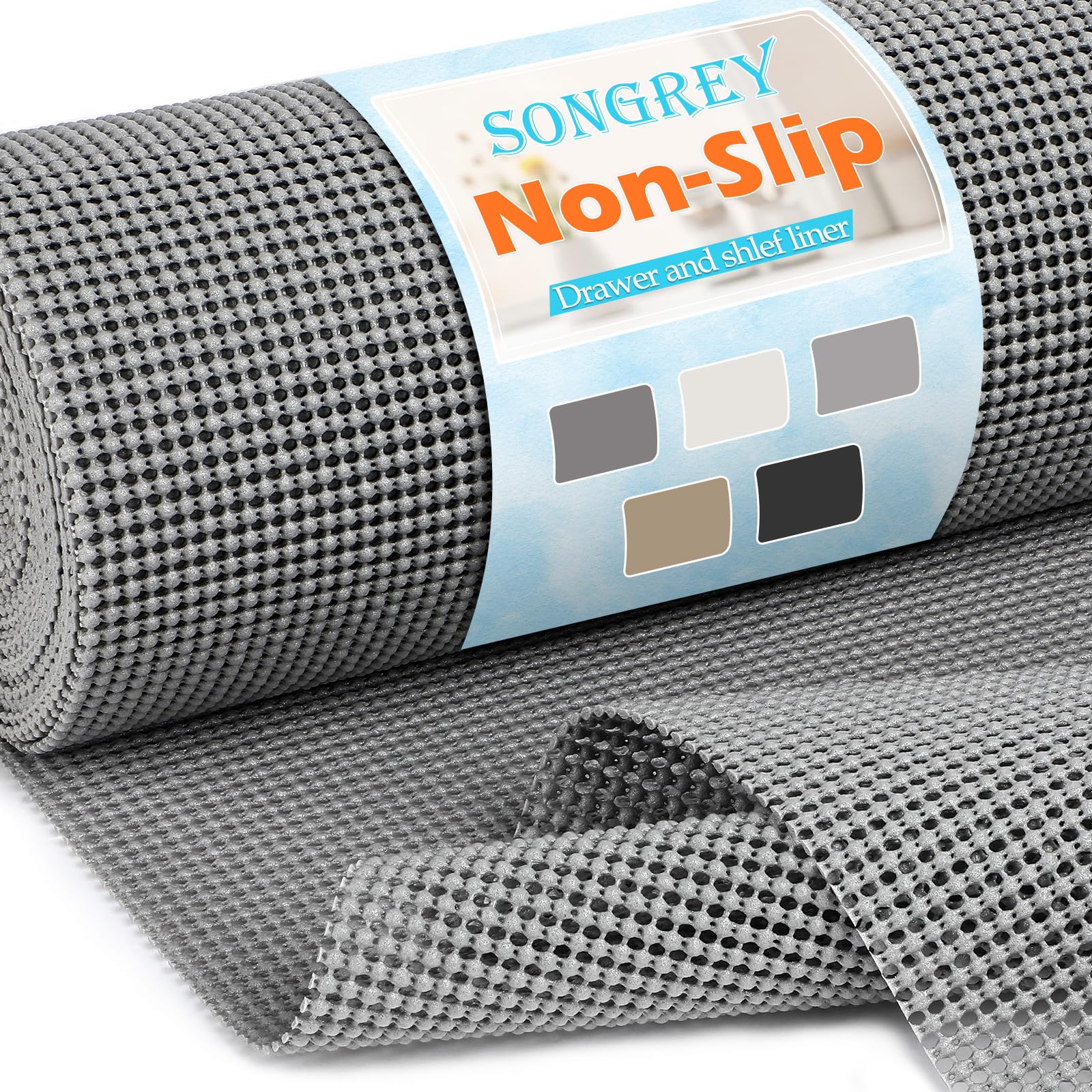
Shelf Liners That Make Wiping Up a Two-Minute Job
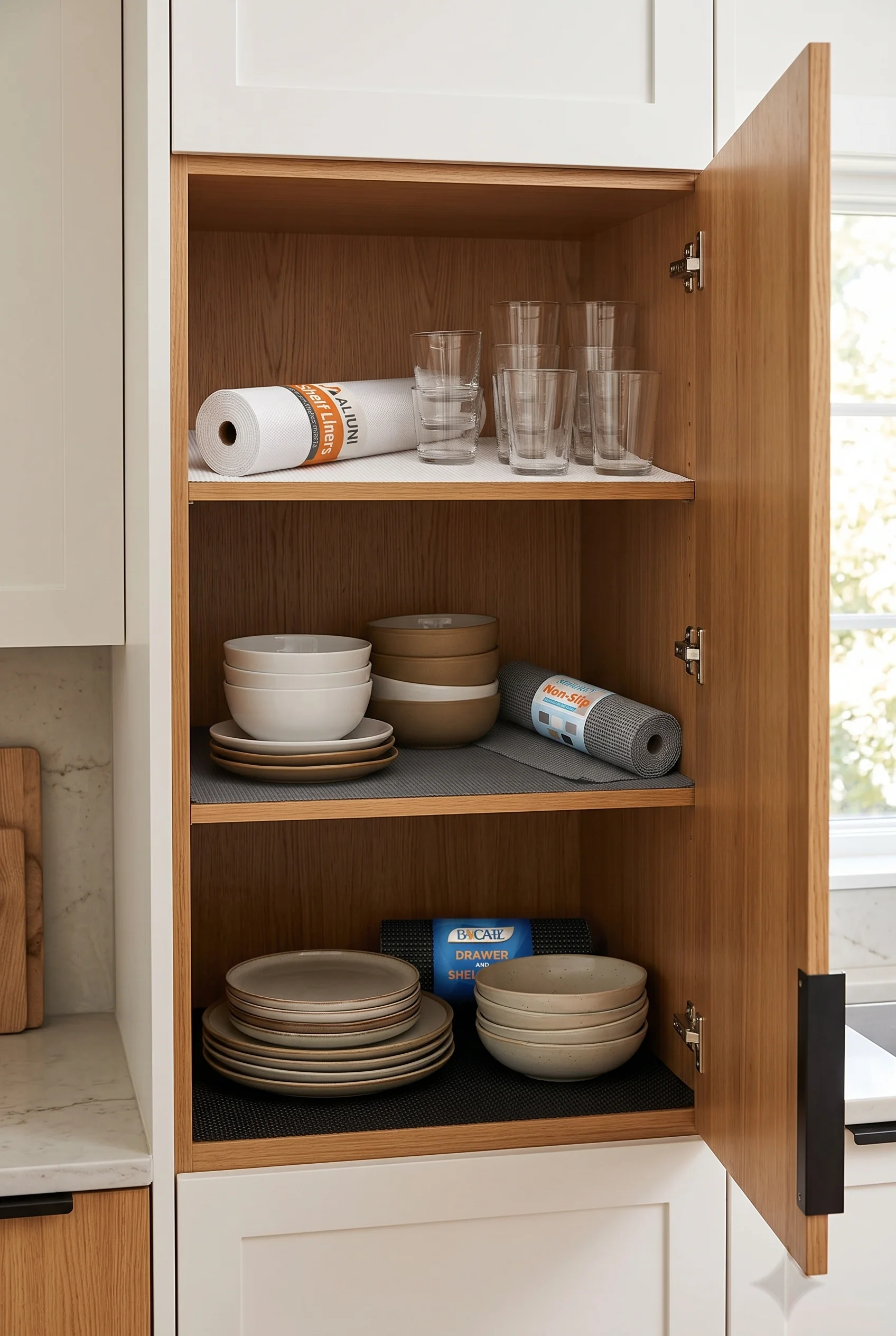
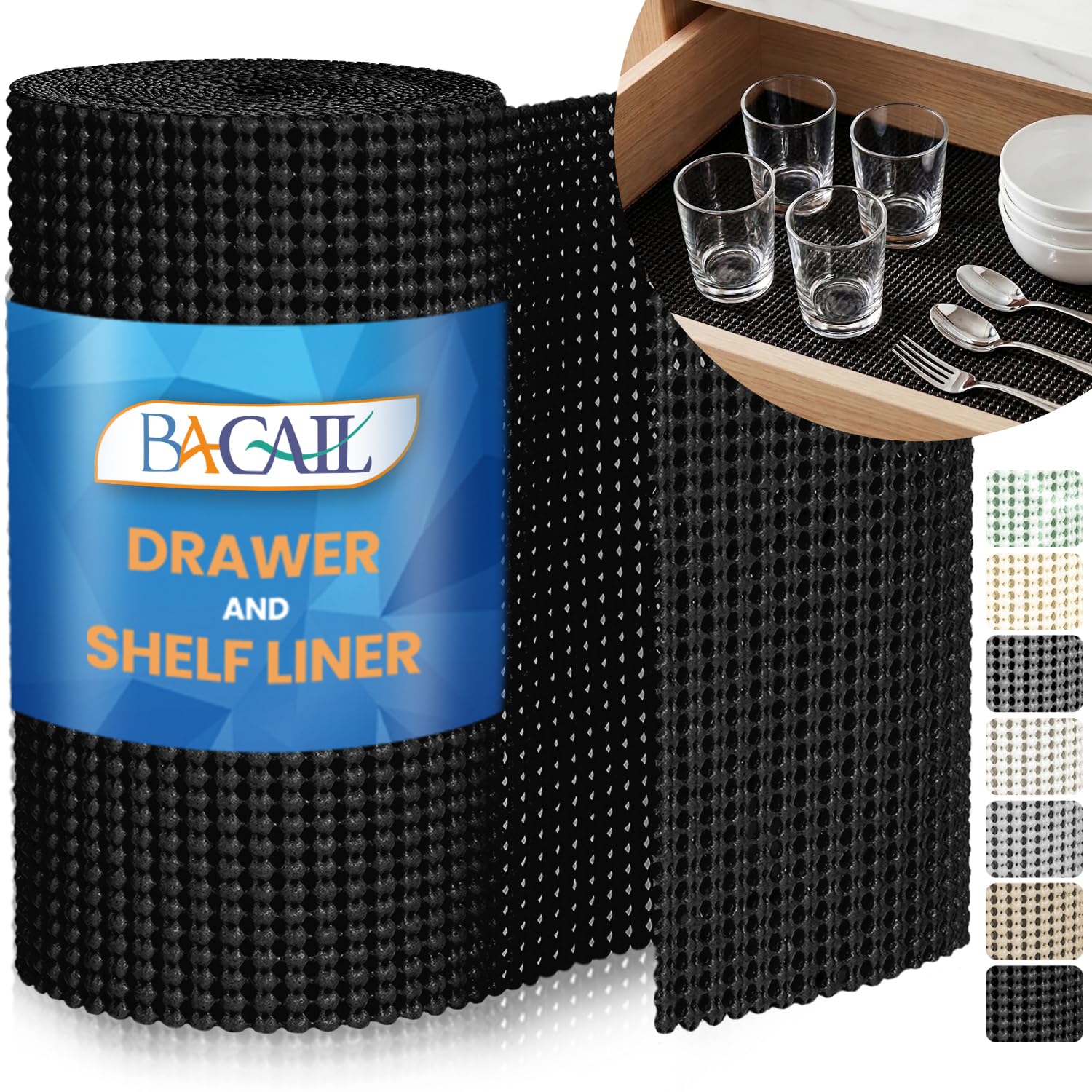
Shelf liner is the least glamorous item on this list and one of the most useful. It protects cabinet bases from drips and water rings, and it keeps plates and glasses from sliding when the door closes.
Cleanup becomes almost effortless. Instead of scrubbing sticky residue off the cabinet itself, you lift the liner out, wipe it down at the sink, and lay it back in. Non-slip versions grip stacked dishes so they stay put.
Each piece is cut a touch smaller than the shelf, so it lies flat without curling up the sides. Fresh liner is also one of the quickest ways to make a well-used cabinet feel new again.

Cutlery Inserts Sized to the Drawer You Have
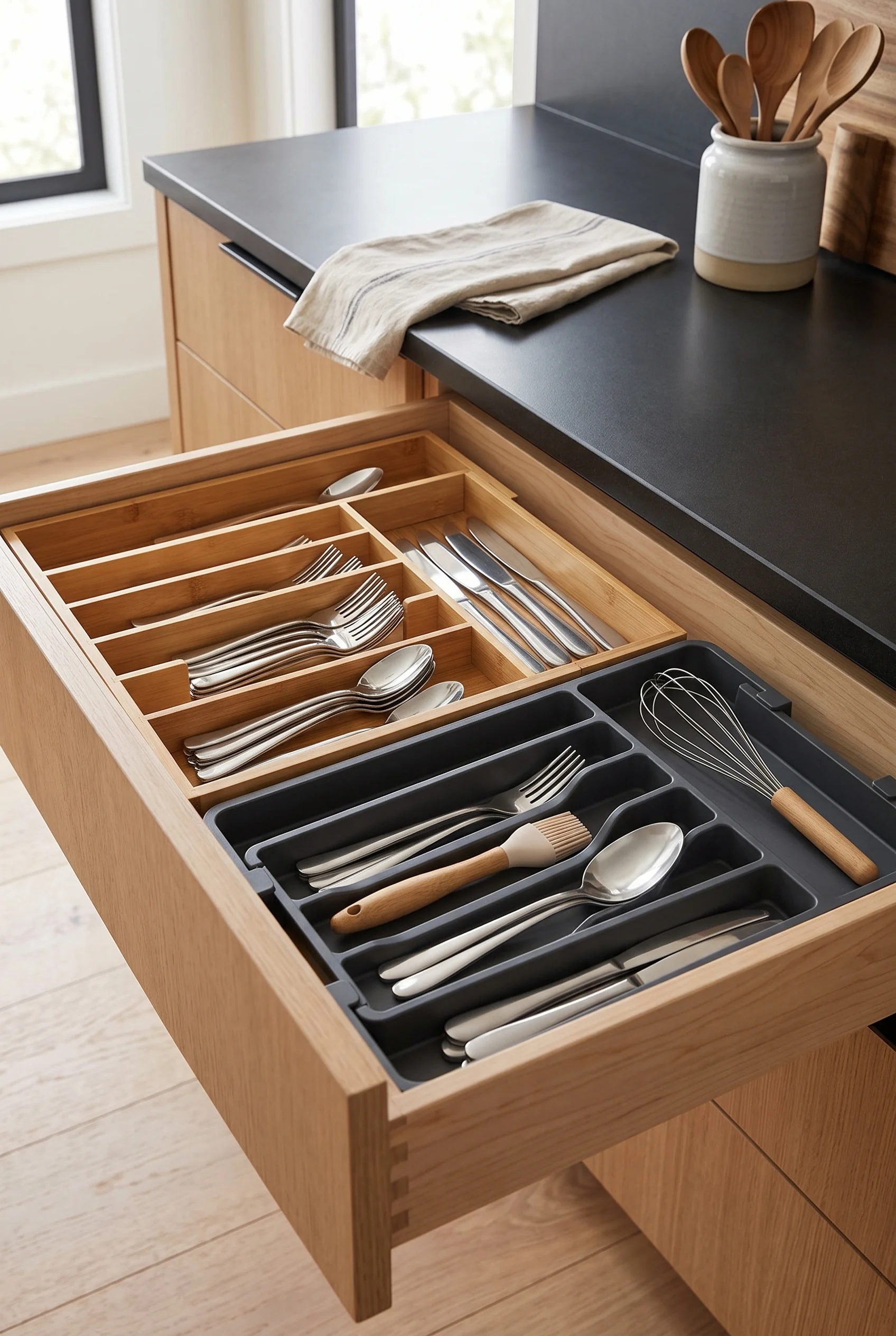
Store-bought cutlery trays often leave awkward gaps along the edges, and those gaps become home to twist ties and birthday candles. Measuring the drawer before you shop is the simplest fix.
A bamboo insert brings a warm, finished look to the everyday silverware drawer. An adjustable tray beside it handles the odd shapes, like whisks and spatulas, that don’t fit standard slots. Together they fill the drawer with no wasted inches.
Opening a drawer where every fork and spoon has its own slot feels small, but it sets the tone for the meal. Setting the table becomes a job the kids can handle on their own.

Pot Lids Finally Off the Floor of the Cabinet
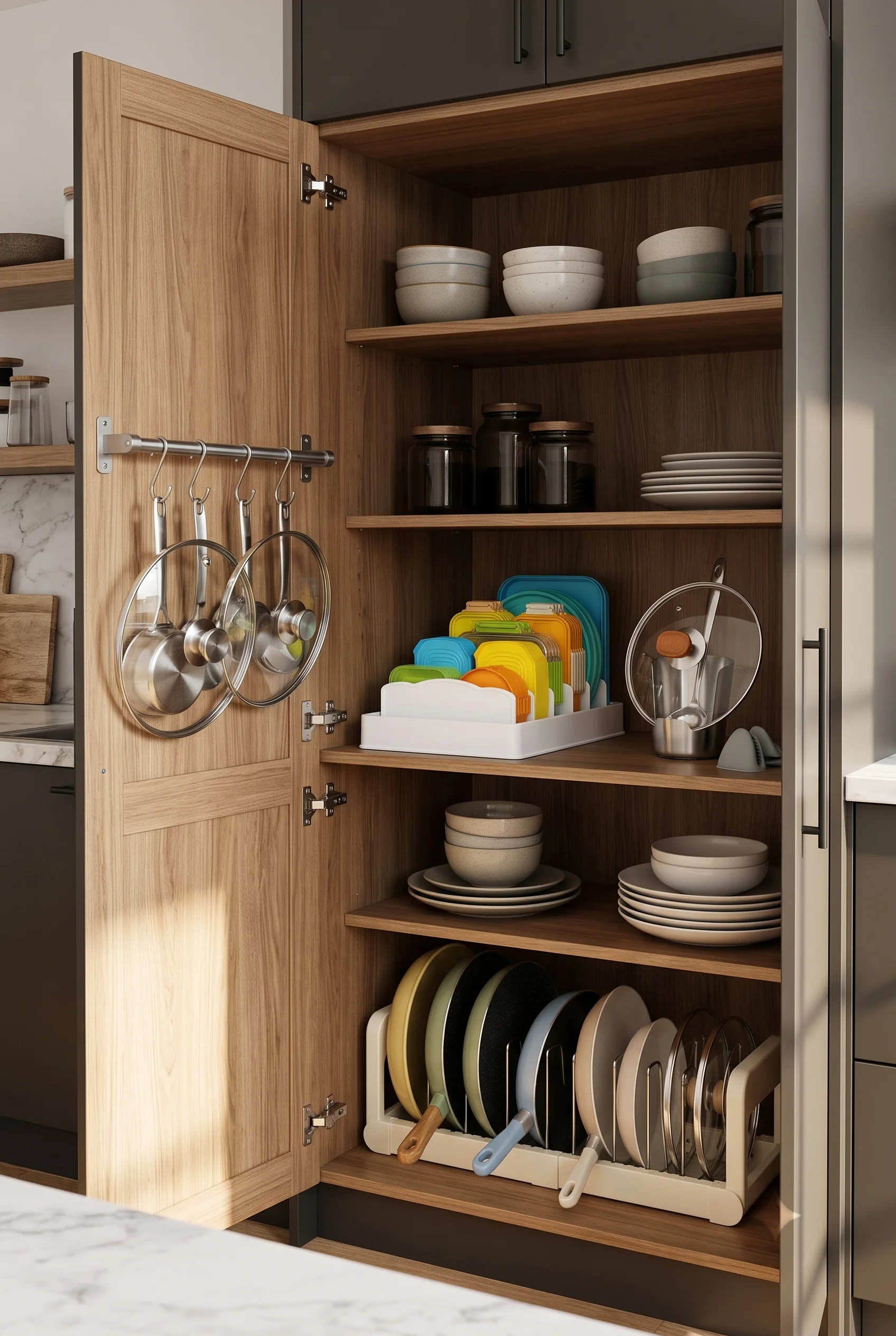
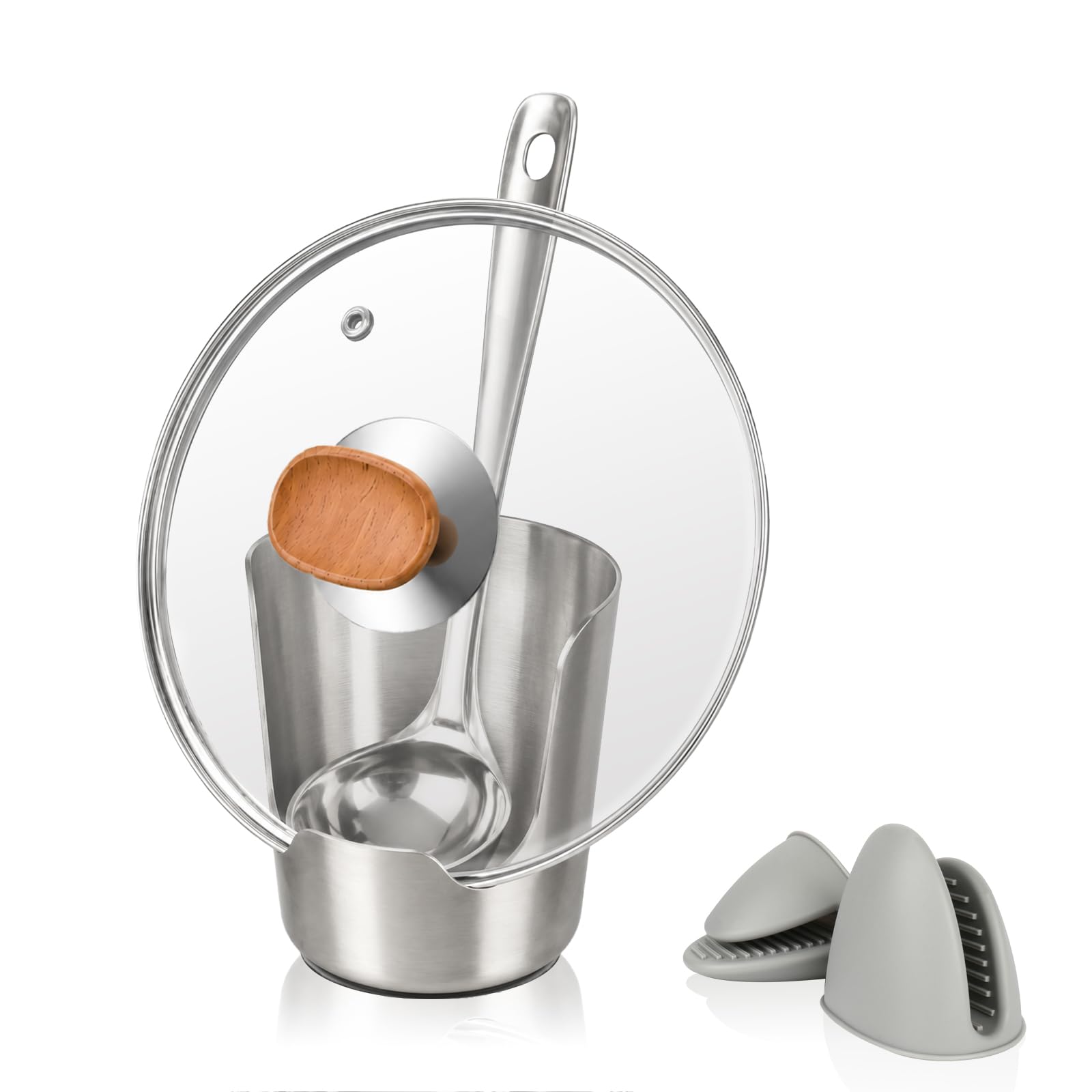
Pot lids are awkward. They don’t stack, they rattle, and they always seem to be at the bottom of the pile. A slim rail on the inside of a cabinet door holds them upright and flat, using space that would otherwise sit empty.
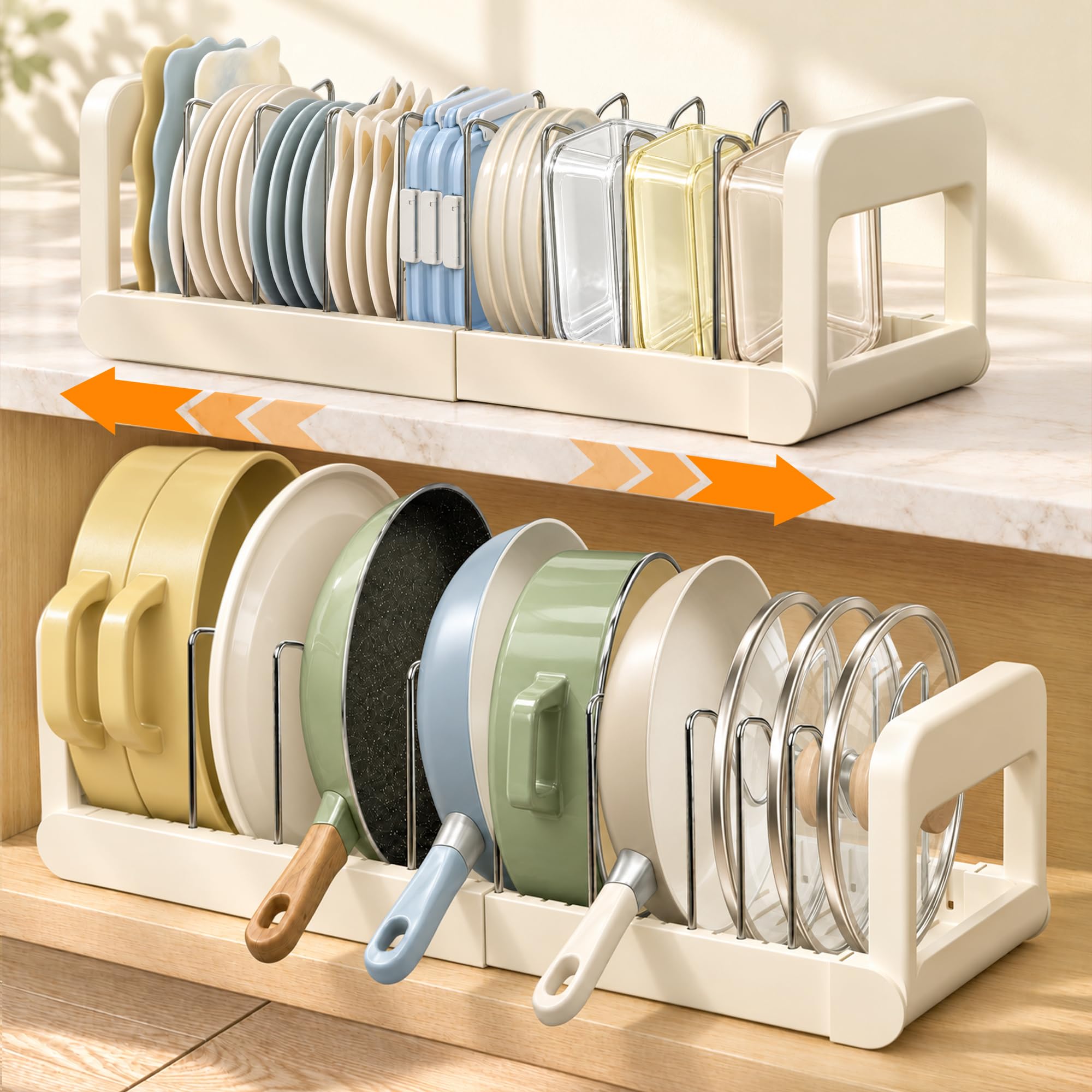
An upright pan organizer on the shelf below pairs beautifully with it. Skillets stand on their edges like files, so you can slide one out without lifting the rest.
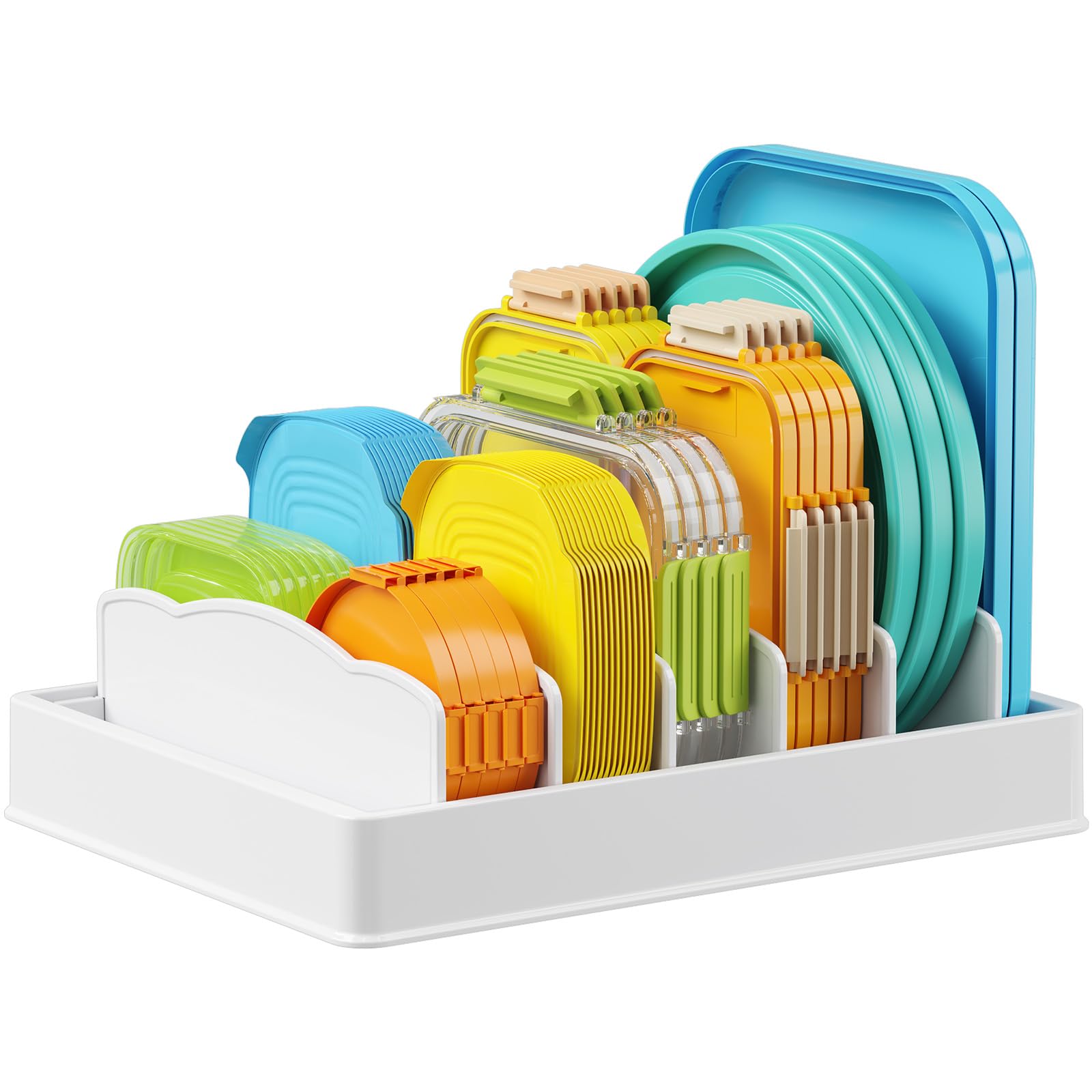
Food storage lids benefit from the same treatment. A small rack keeps them filed by size, which ends the nightly hunt for the one lid that actually fits.
A Fridge and Produce Setup That Wastes Less
Food waste usually starts with forgetting. The leftover that slid behind the milk, the bag of onions that sprouted in a dark cupboard. Giving the fridge and fresh produce the same care as the pantry keeps food visible while it’s still good. These ideas rely on clear storage, easy rotation, and finding a proper home for produce that doesn’t need refrigeration, so meals get eaten instead of tossed.
Produce on a Rolling Tower, Not Crowding the Counter
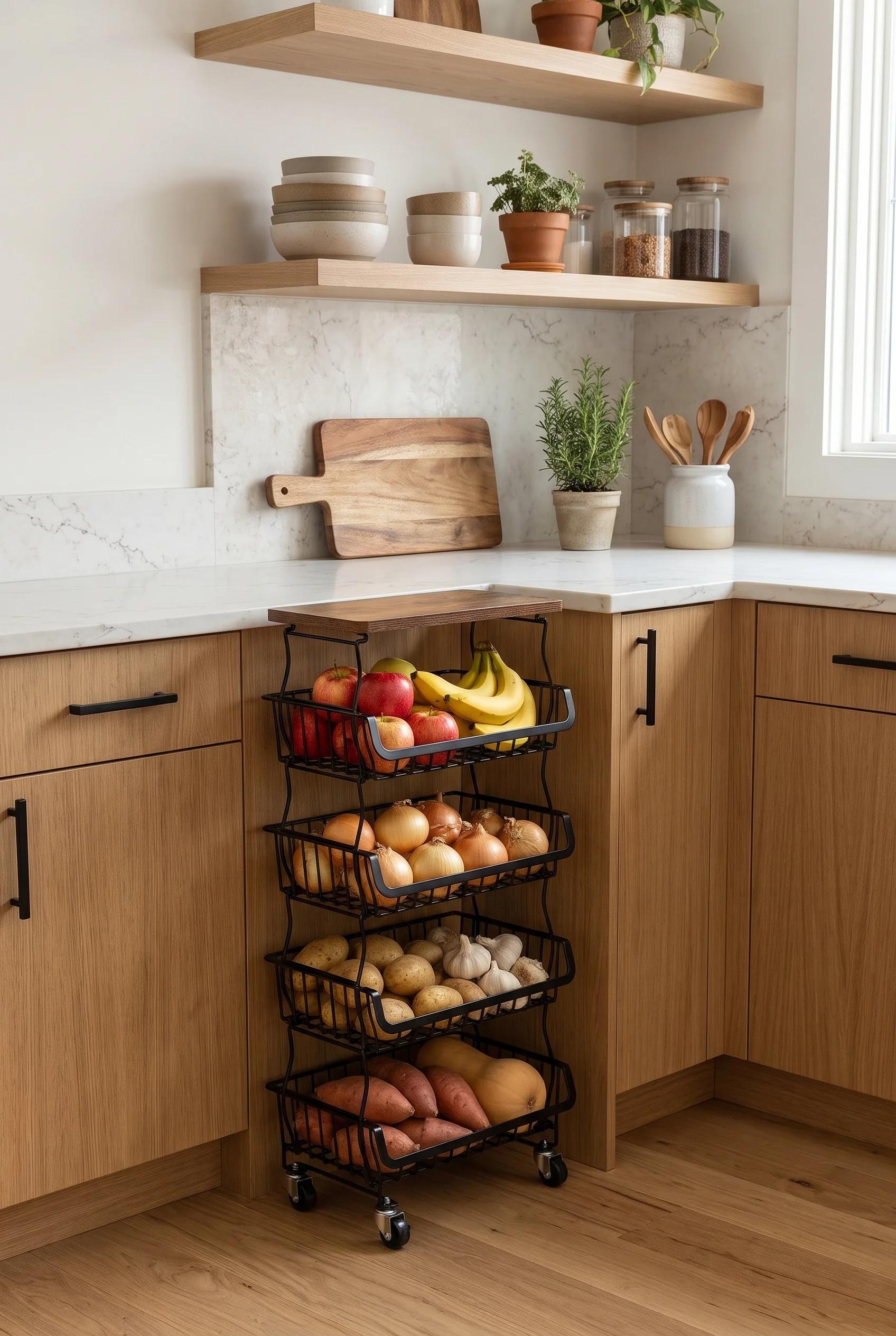
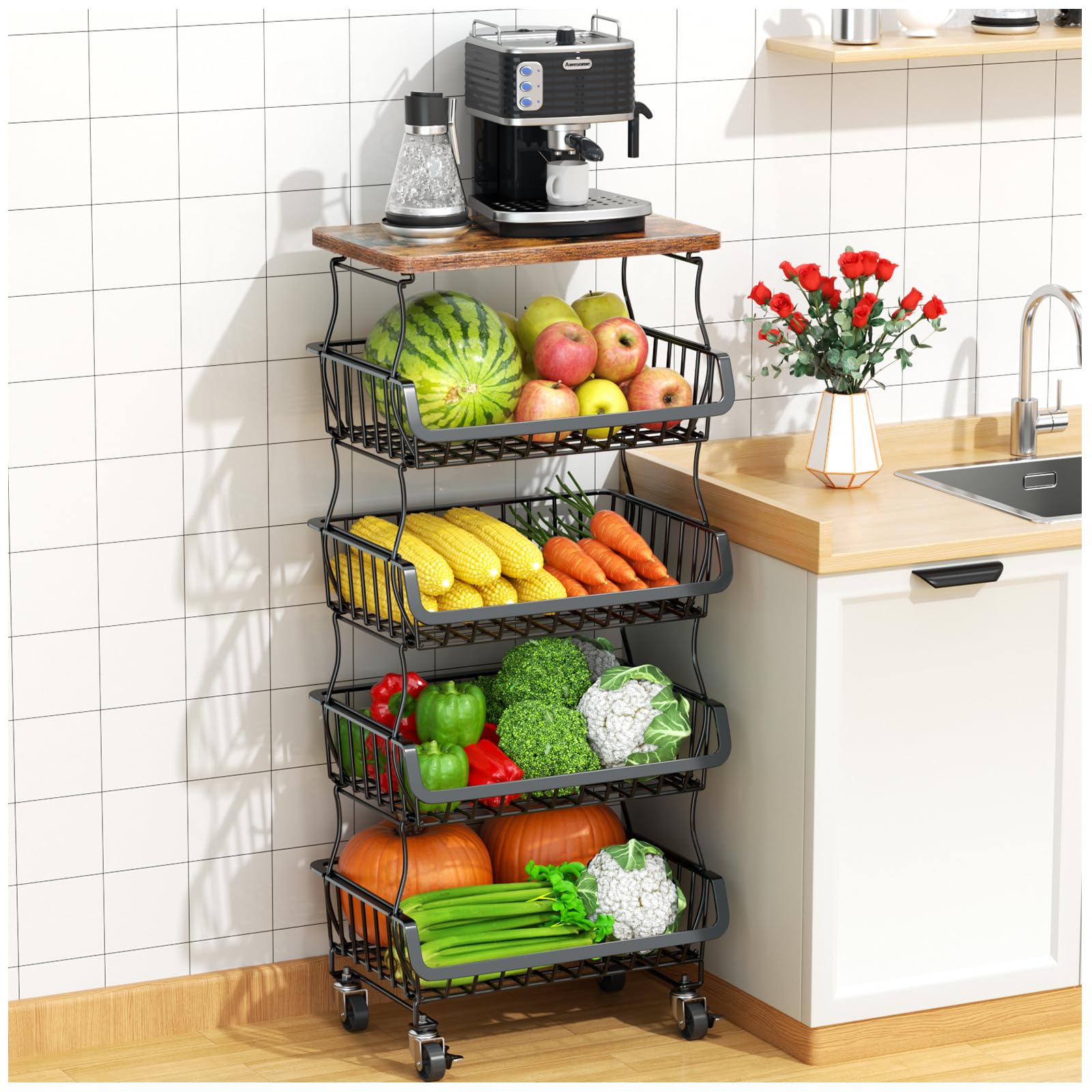
Onions, potatoes, and bananas don’t need the fridge, but they take up a surprising amount of counter space. A tiered fruit and vegetable basket moves them to the floor in a slim footprint beside the cabinets.
Open wire baskets let air circulate, which helps produce last longer than it would if sealed in a bag. Each tier holds its own category, so potatoes never end up bruising the bananas.
Wheels make it easy to roll the whole tower aside when you mop. It also keeps fruit at a height where kids can grab an apple without asking for help.
Glass Containers That Turn Leftovers Into Lunches
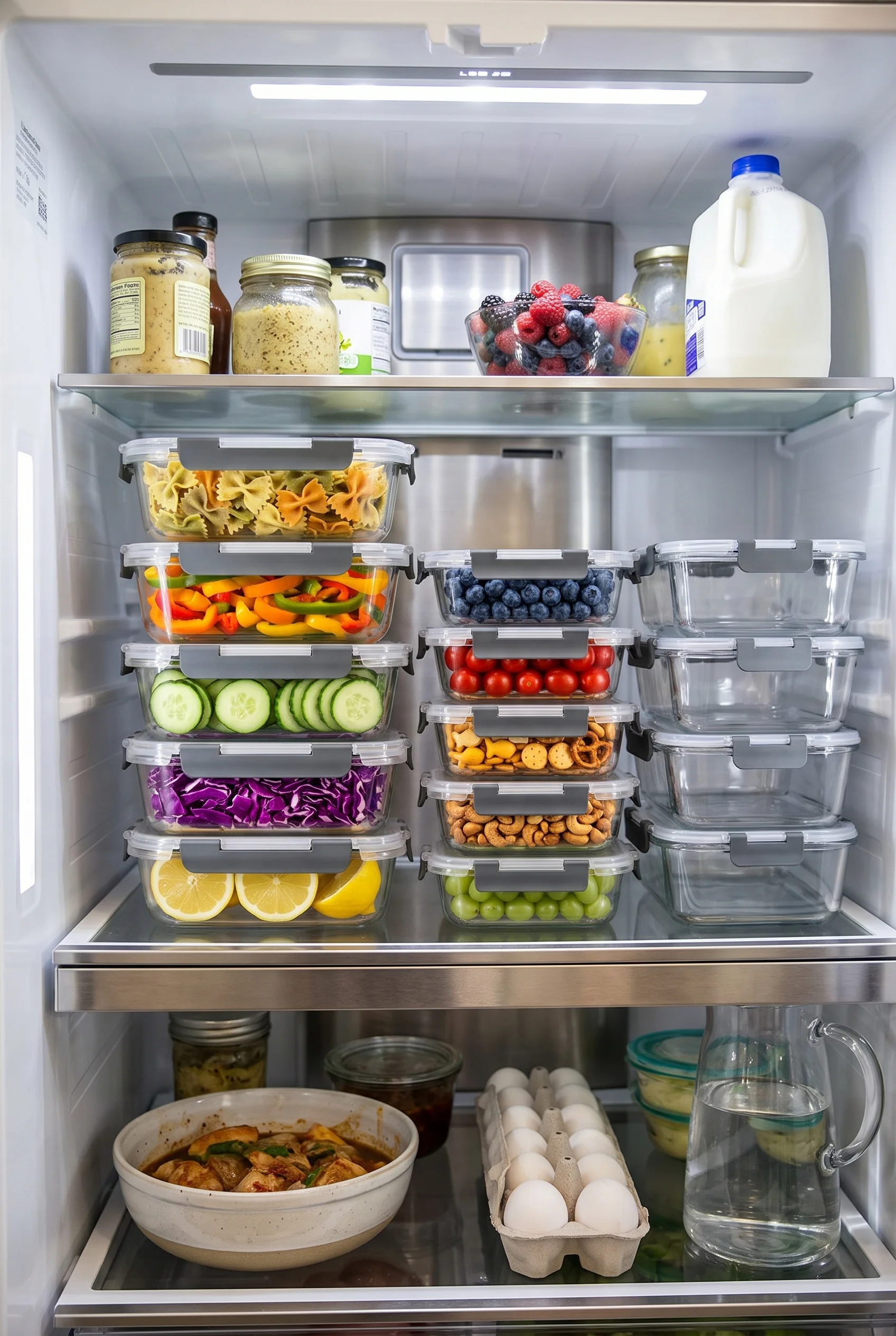
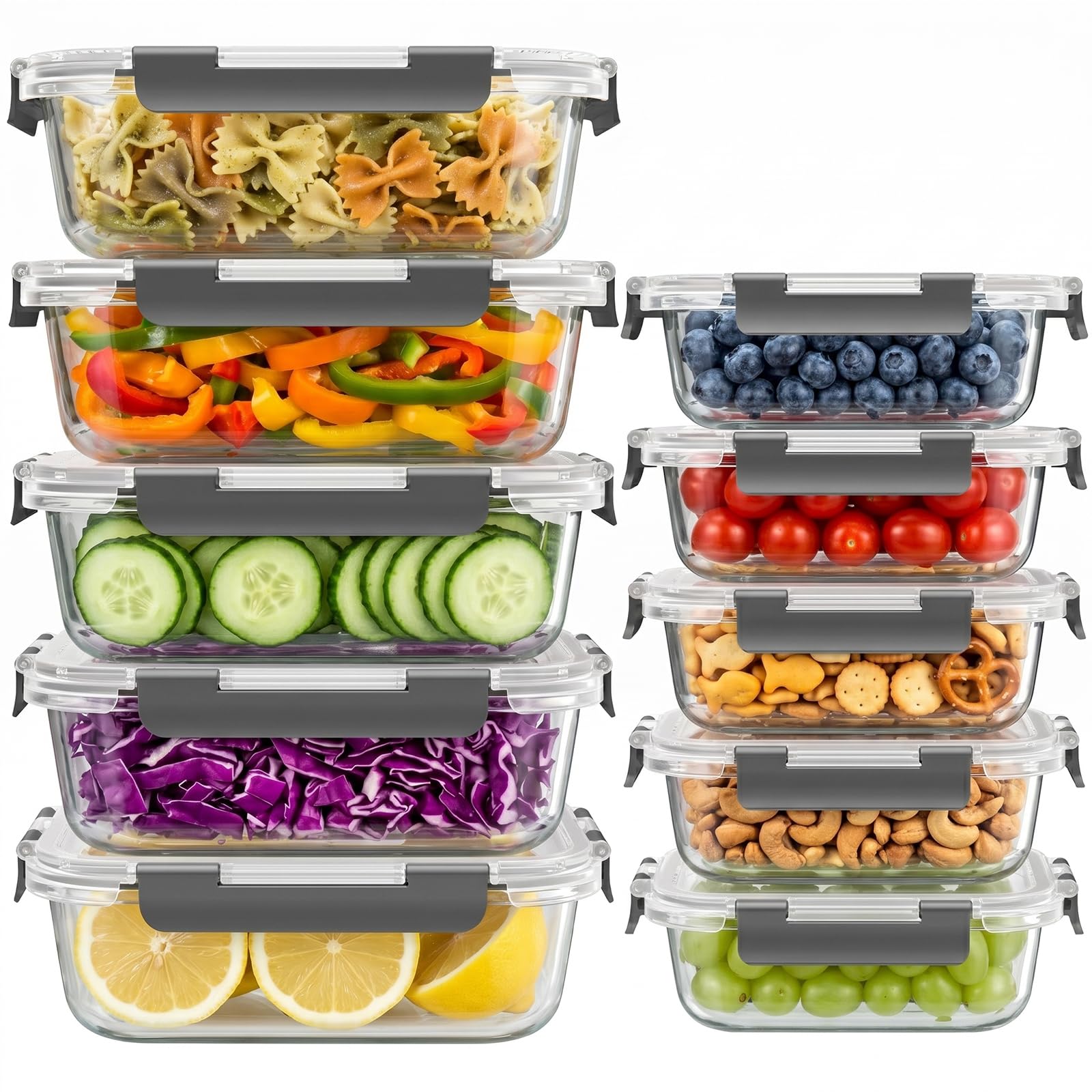
Leftovers get eaten when you can see them. Stacked glass containers with snap-lock lids keep last night’s pasta, prepped vegetables, and cut fruit right at eye level, the first thing you notice when the door opens.
Glass reheats straight in the microwave and doesn’t hold onto tomato stains or garlic smells the way plastic does. Sticking with one brand in a few sizes means every lid fits every base of its size.
Sunday meal prep gets easier too. A row of matching containers filled with chopped cucumbers and washed berries makes healthy snacking the path of least resistance.


Fridge Bins That Group Food by Who Eats It
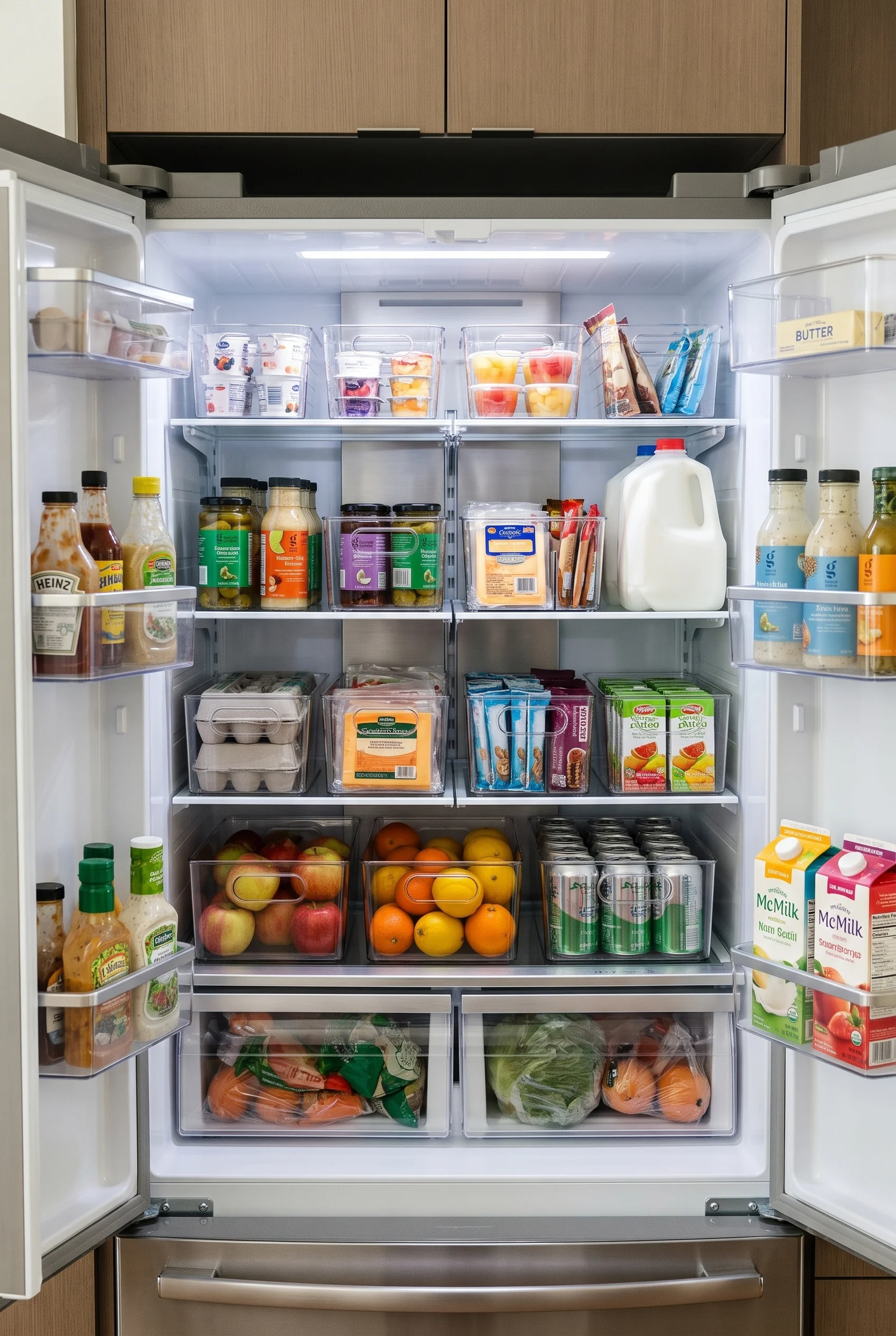
A fridge without zones becomes a game of Tetris every time someone puts groceries away. Clear bins give each category a home: yogurts in one, cheese in another, drinks lined up in a third.
Grouping by user works well for families. A bin of kid-friendly snacks on a low shelf lets little ones help themselves, while lunch supplies for the adults stay together higher up.
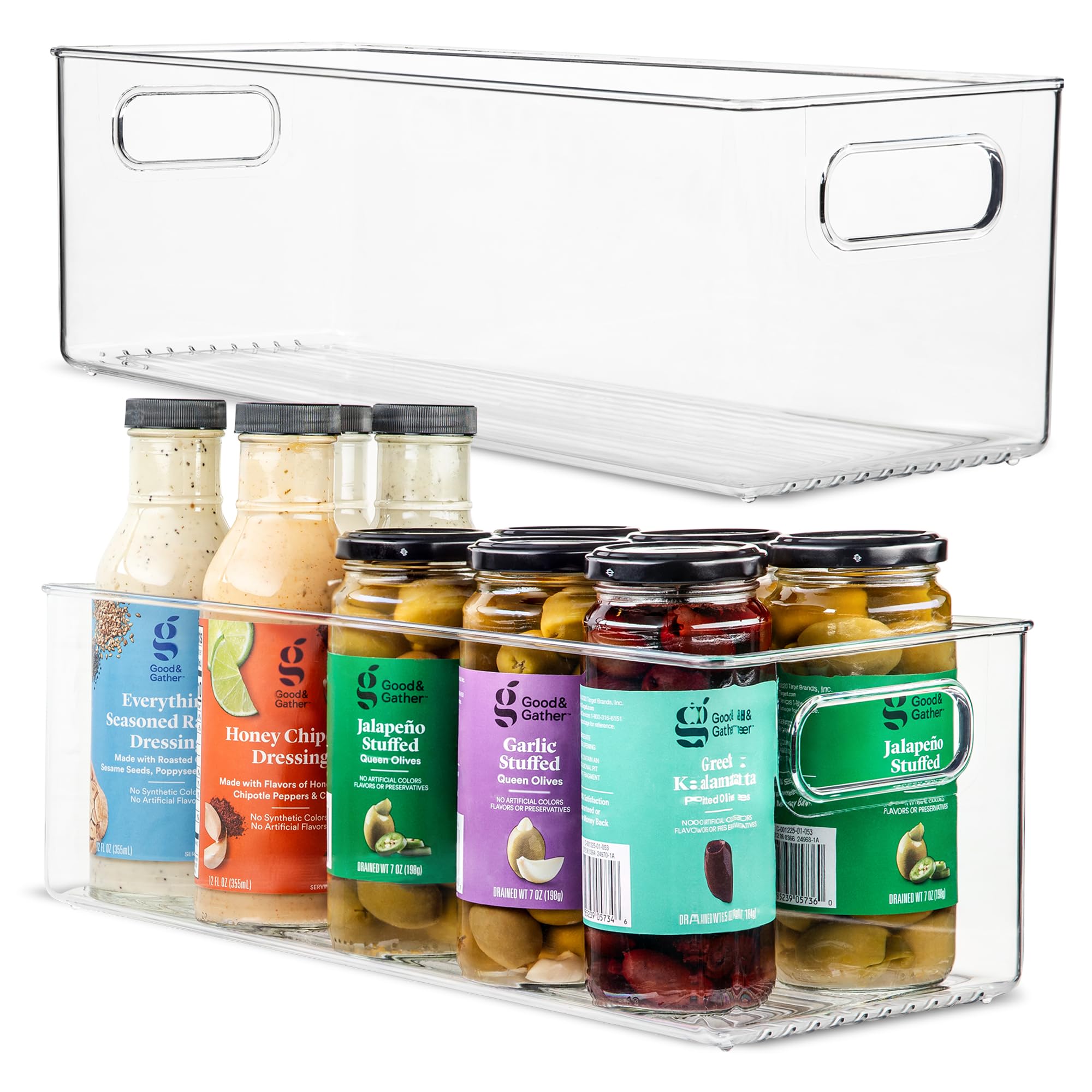
Bins with handles slide out like drawers, and spills stay contained. When the yogurt tips over, it stays inside one bin instead of seeping across the whole shelf.

Walls and Undersides Doing Quiet Work
When the cabinets are full, the answer is often overhead. The wall between counter and cabinet, the underside of a shelf, and the inside of a door all offer usable storage. Functional kitchen design depends on this kind of vertical thinking, especially in smaller homes. The ideas here lift everyday items off crowded counters and hang them where they’re both handy and easy on the eye.
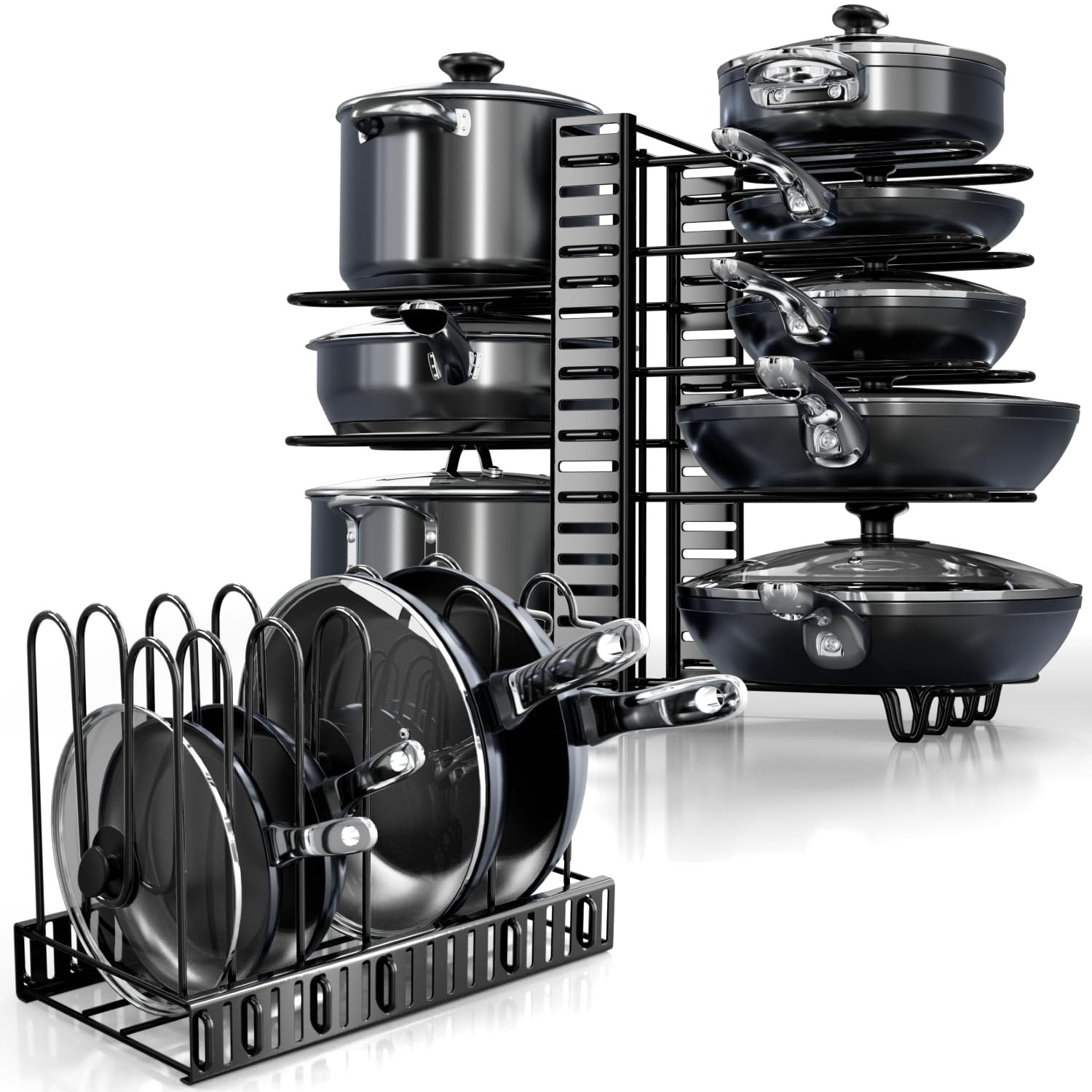
Cookware on Display, Cabinets Set Free
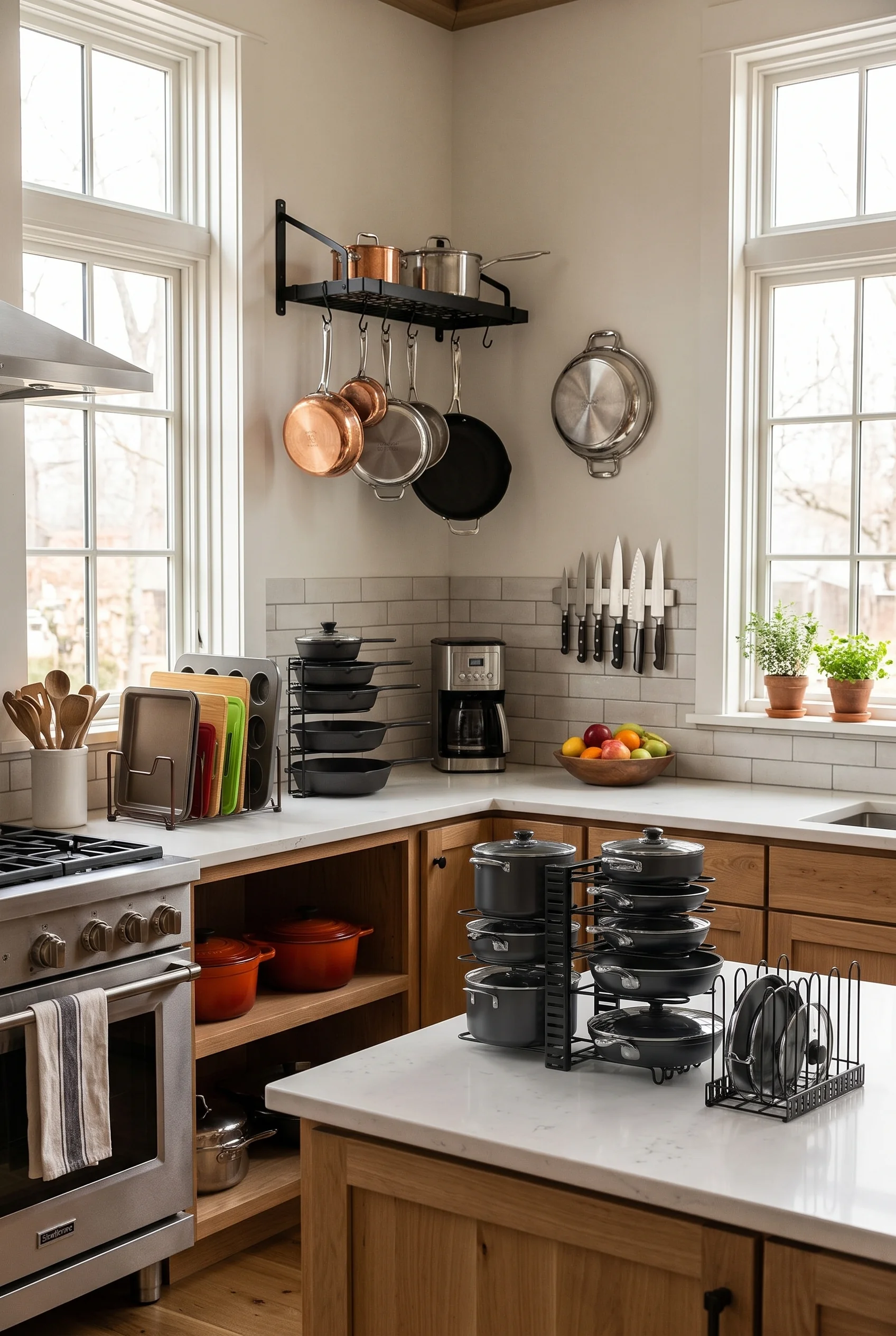
Pots and pans eat up more room than almost anything else in the kitchen, and nesting them in a low cabinet means unstacking four to reach one. A wall-mounted pot rack hangs your most-used pieces in plain sight and frees a whole cabinet in the process.
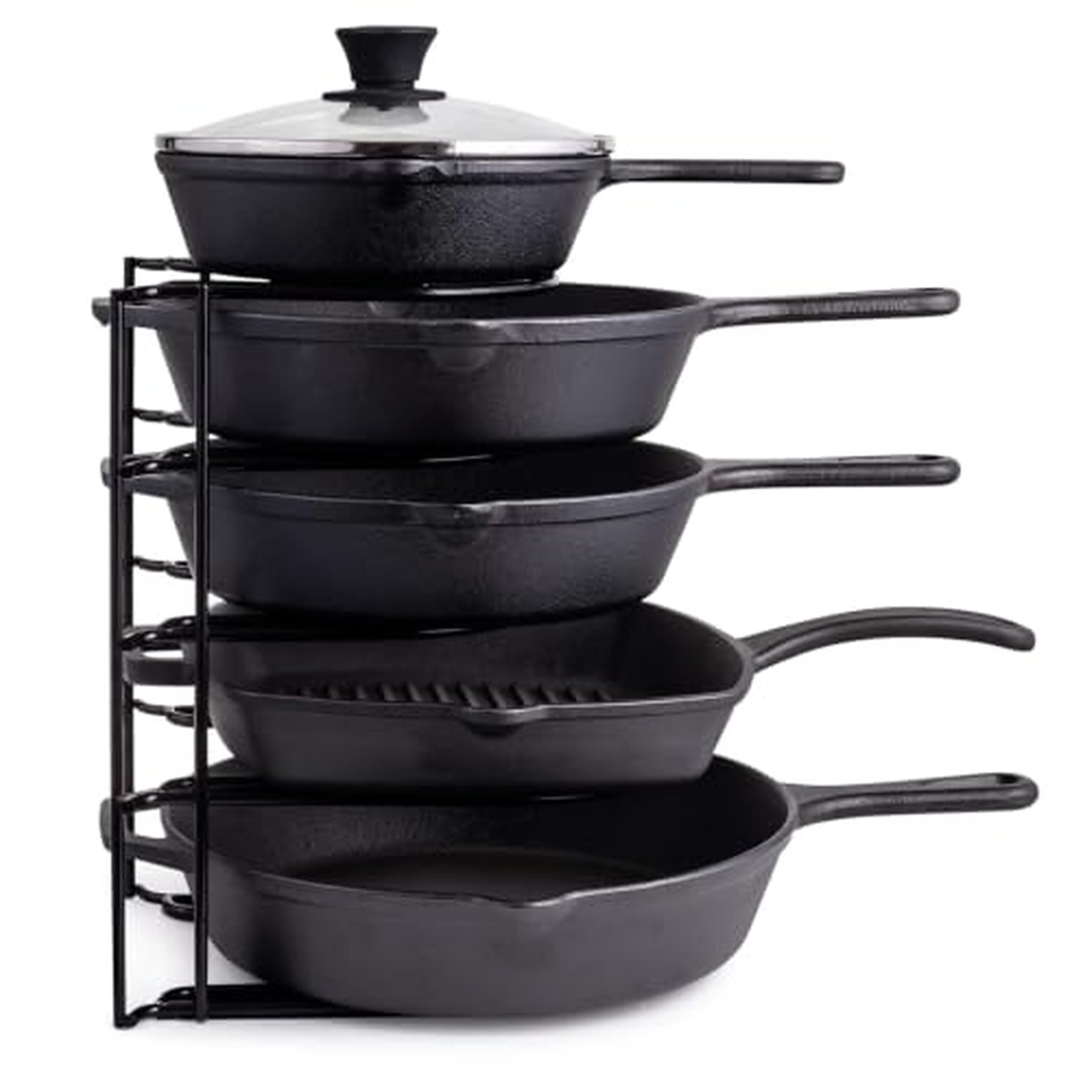
Only the weekly favorites need to hang. A few good pans look intentional, while a dozen starts to feel crowded. Everything else can live on a tiered pan organizer that gives each skillet its own shelf.
An upright rack for baking sheets and cutting boards beside the range finishes the idea, with each piece filed neatly on its edge.

Mugs That Hang Instead of Hogging a Shelf
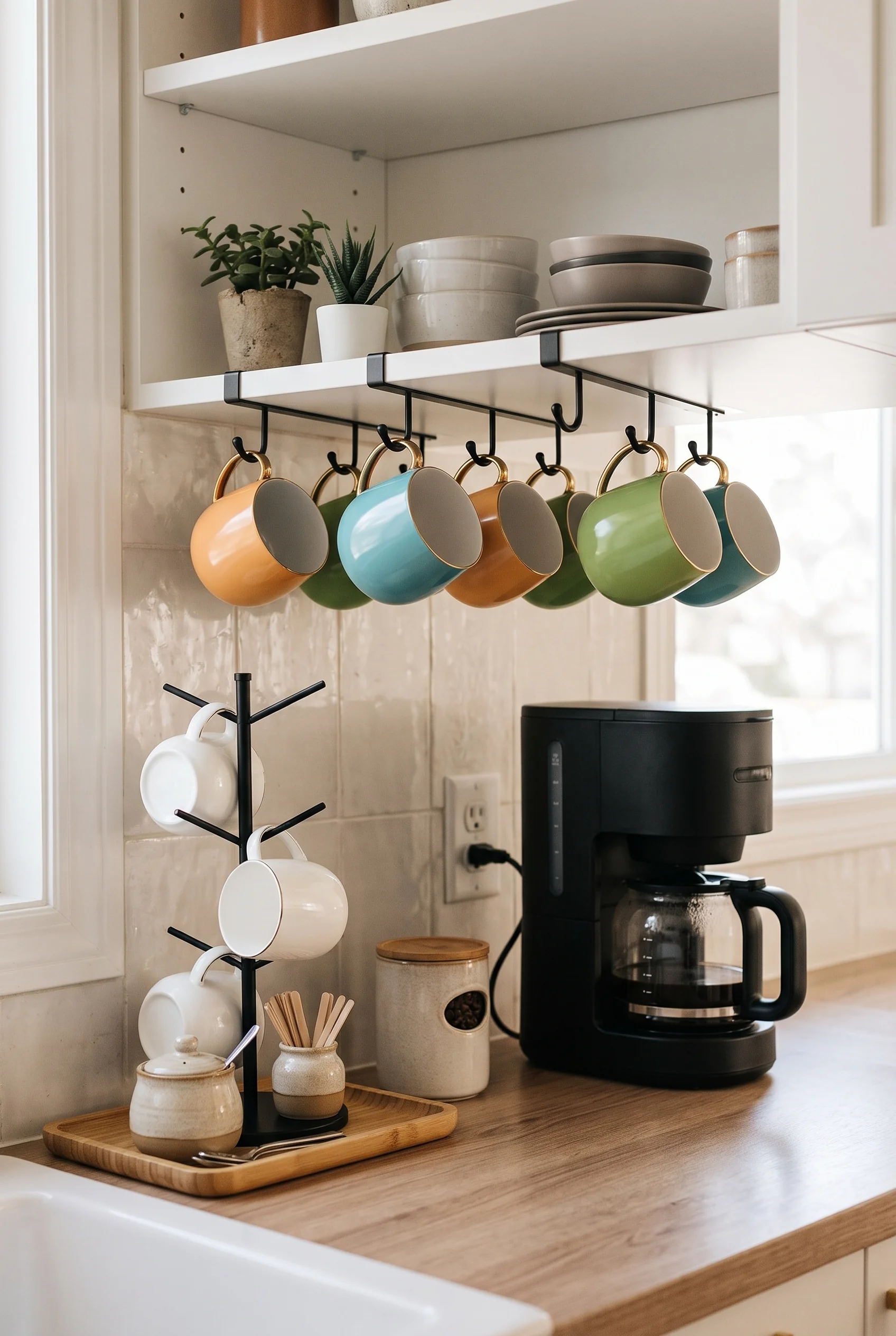
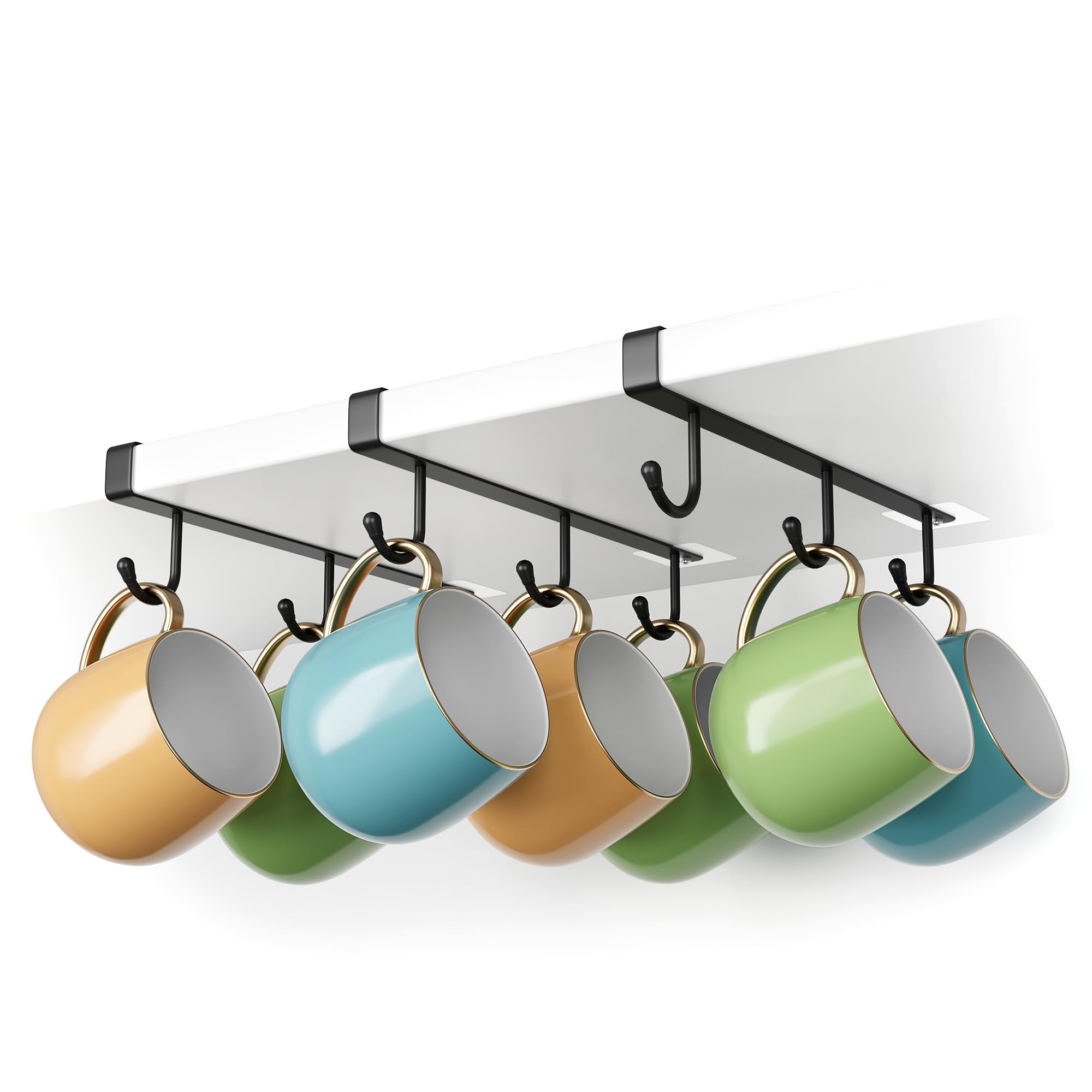
Slide-on hooks clip under an existing shelf and hang a full row of mugs in the empty air beneath it, no drilling required. Stacked on a shelf, those same mugs wobble and claim more room than they deserve.
A necessity starts to feel personal. A collection of favorite mugs reads as decor, and the morning cup is always right above the coffee maker.
A countertop mug tree handles the overflow. It holds a few extras on a tiny footprint and keeps guest mugs separate from the everyday set.

Spices on the Wall Where You Can Actually Read Them
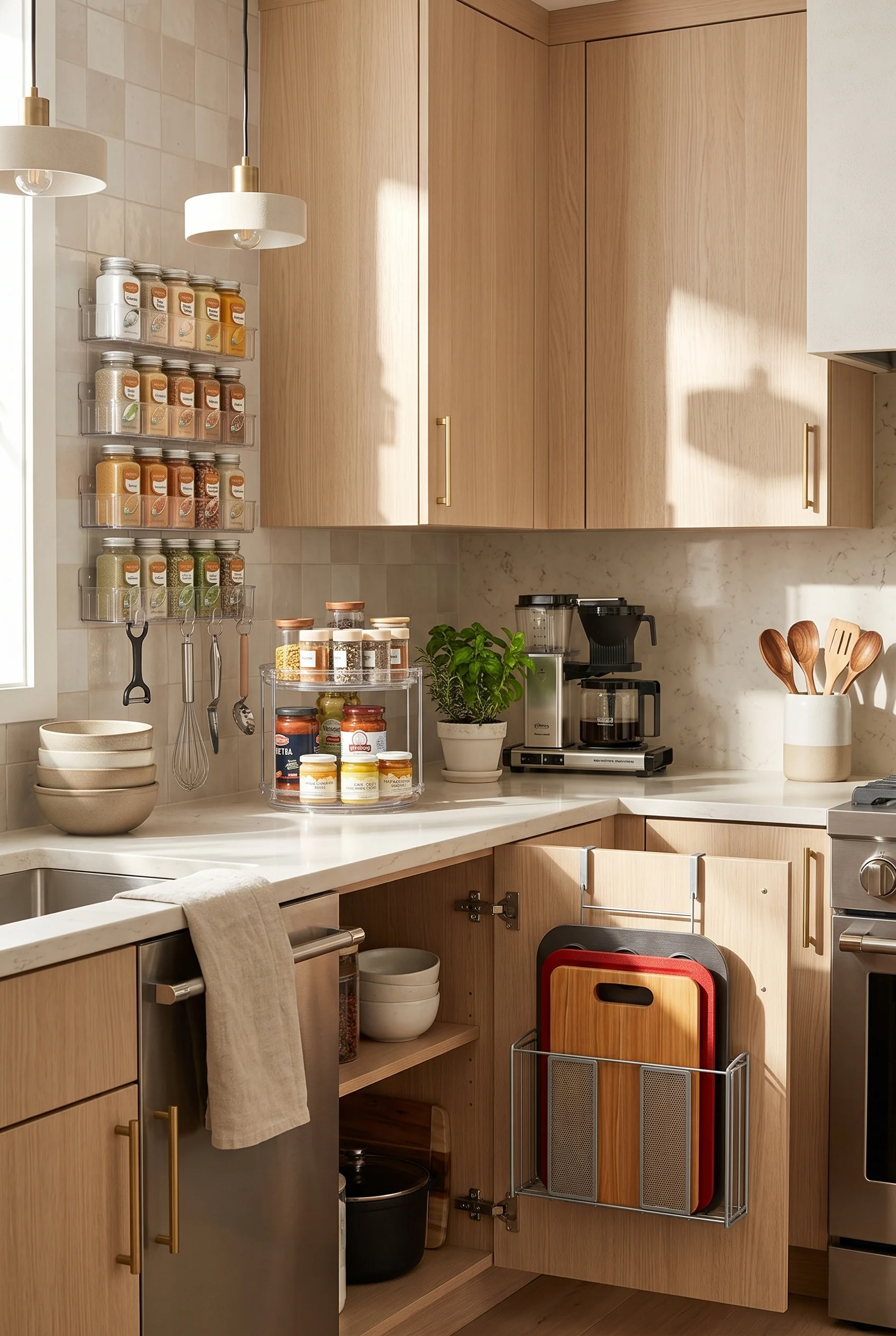
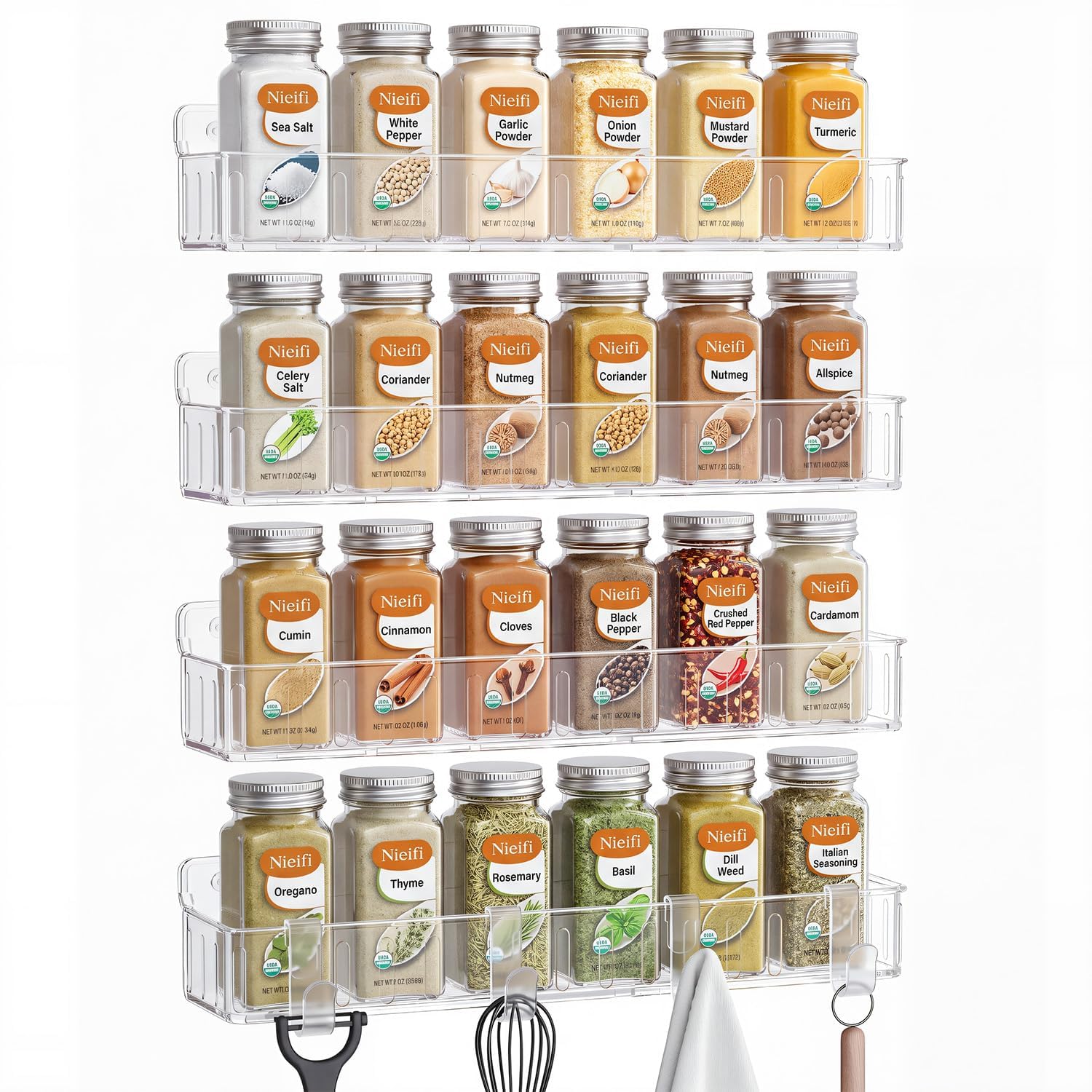
Spice jars crammed into a drawer are hard to read and easy to buy twice. Slim racks mounted on the wall near the prep area line every jar up at eye level, labels facing out.
Wall racks are especially helpful for small kitchen organization, where cabinet space is precious. They free up a whole shelf and keep seasoning within reach of the cutting board.
The inside of a cabinet door pulls the same trick for cutting boards. A wire organizer mounted there holds them upright and out of the way, on a surface that usually goes unused.


A Paper Towel Holder That Clears the Counter
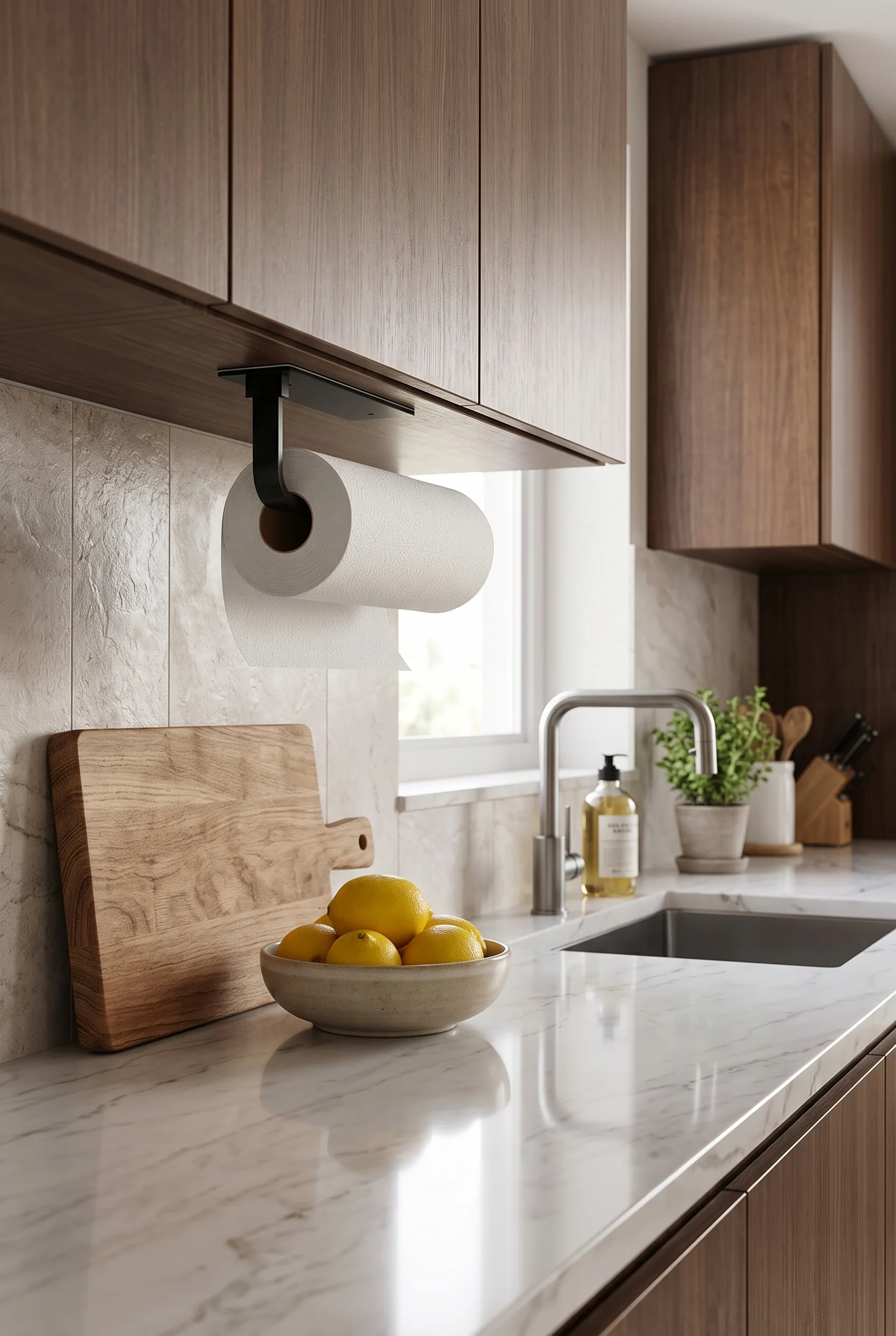
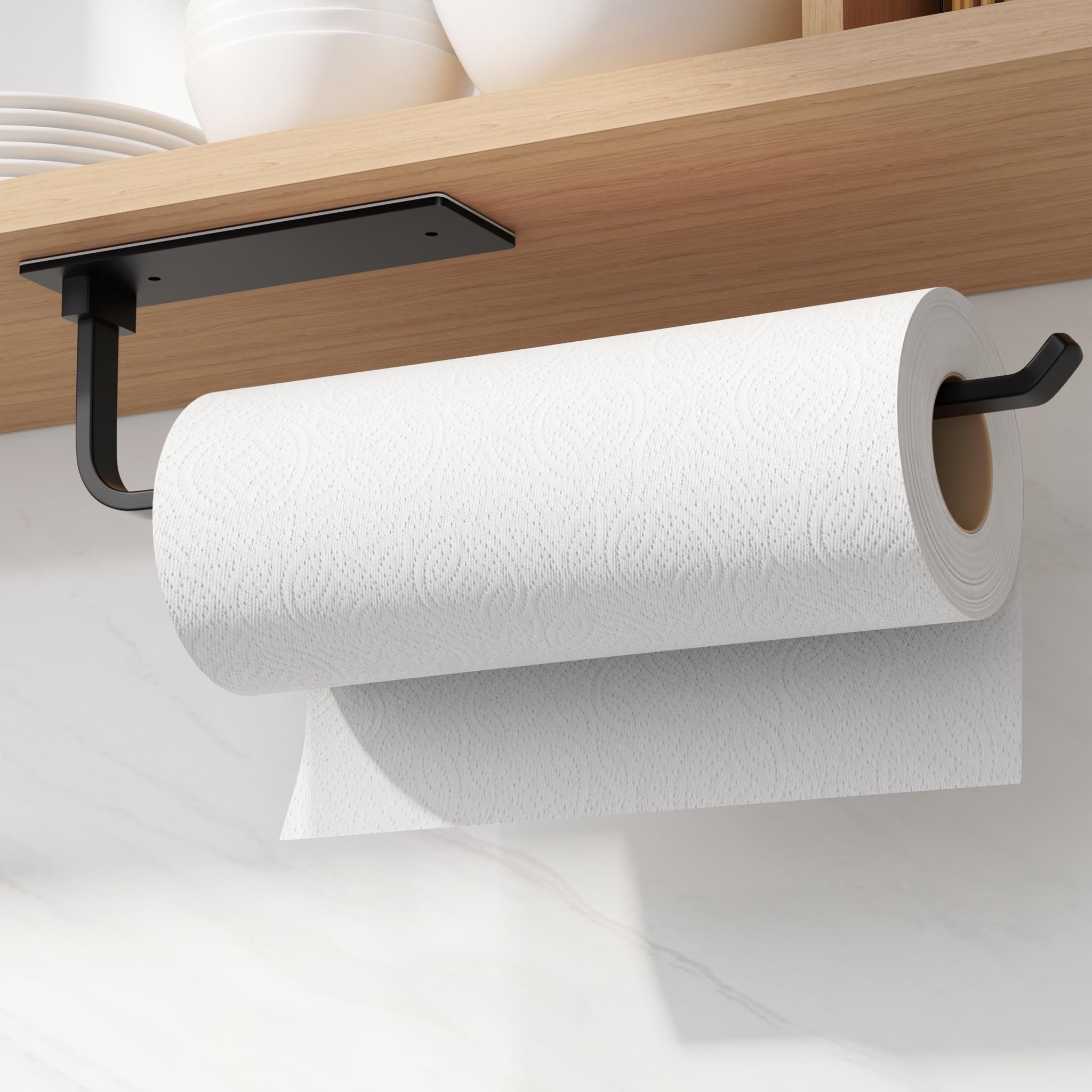
A countertop paper towel stand looks small, but it claims prime real estate right where you prep. Mounting the holder under an upper cabinet frees that spot entirely.
Right beside the sink, the roll catches drippy hands and spills fast, before anyone trails water across the floor. One-handed tear-off designs are easiest when your other hand is full.
With the roll overhead, the counter below stays open for a cutting board and a bowl of lemons, which is really all a counter needs.

Utensil Hooks That Take Tools Off the Counter
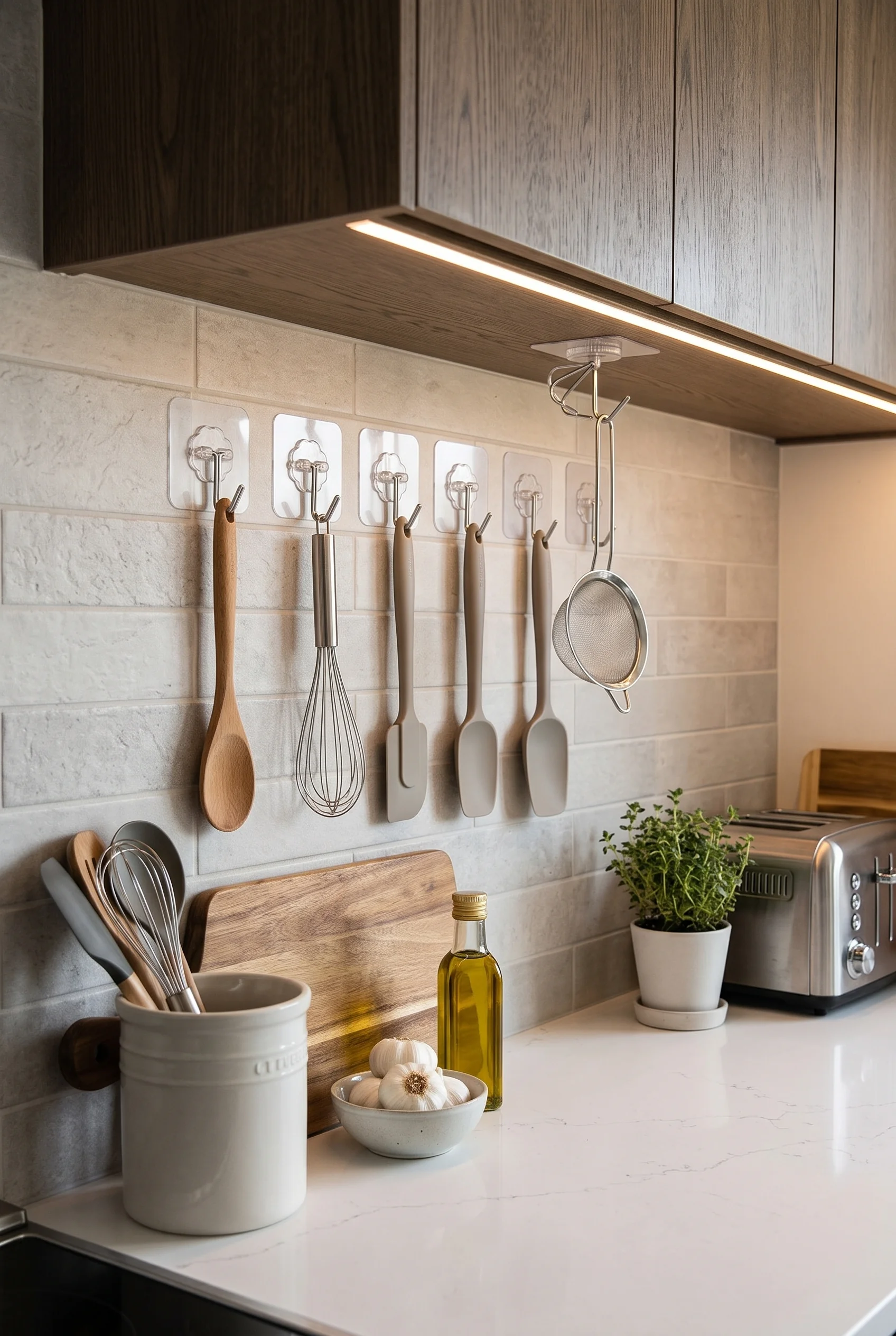
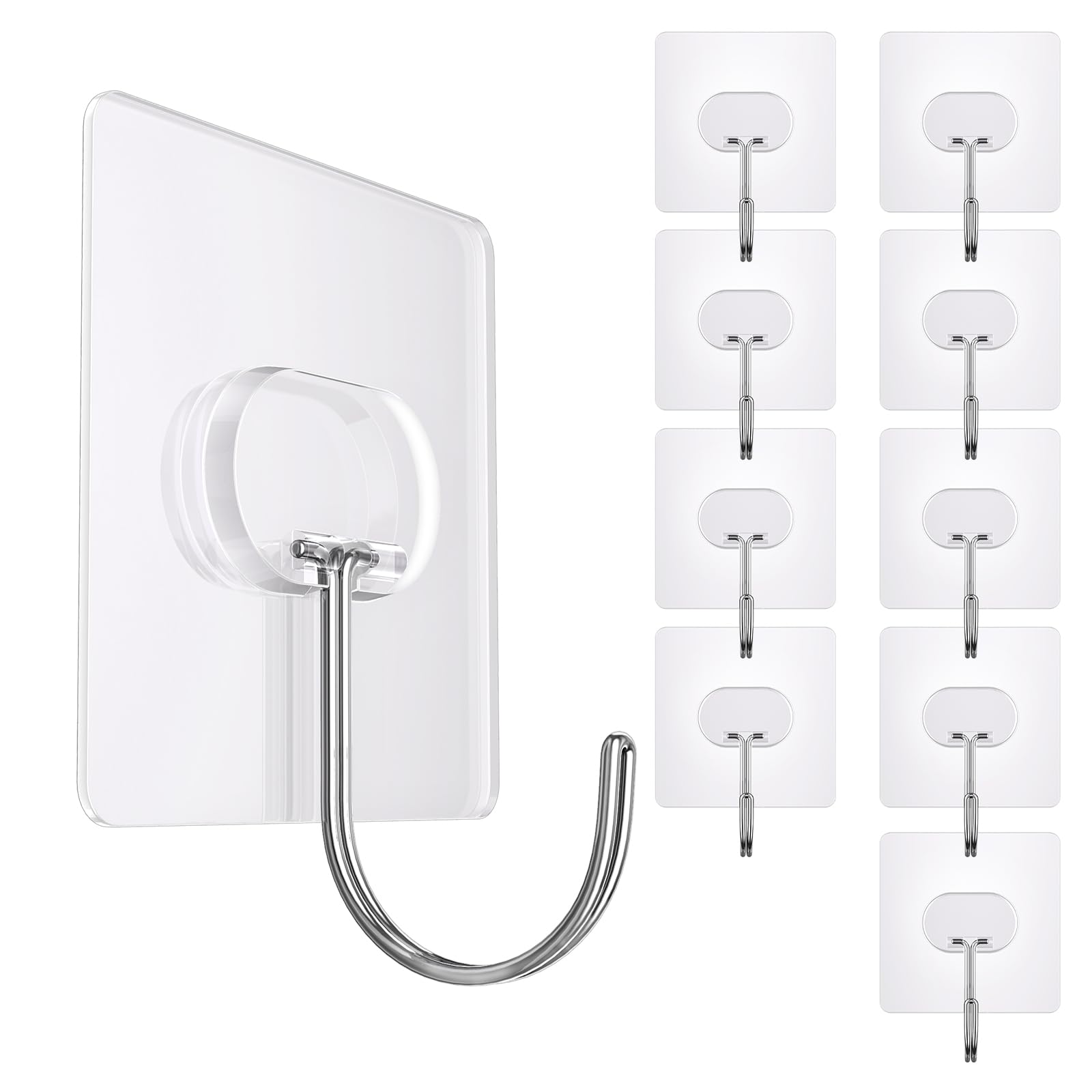
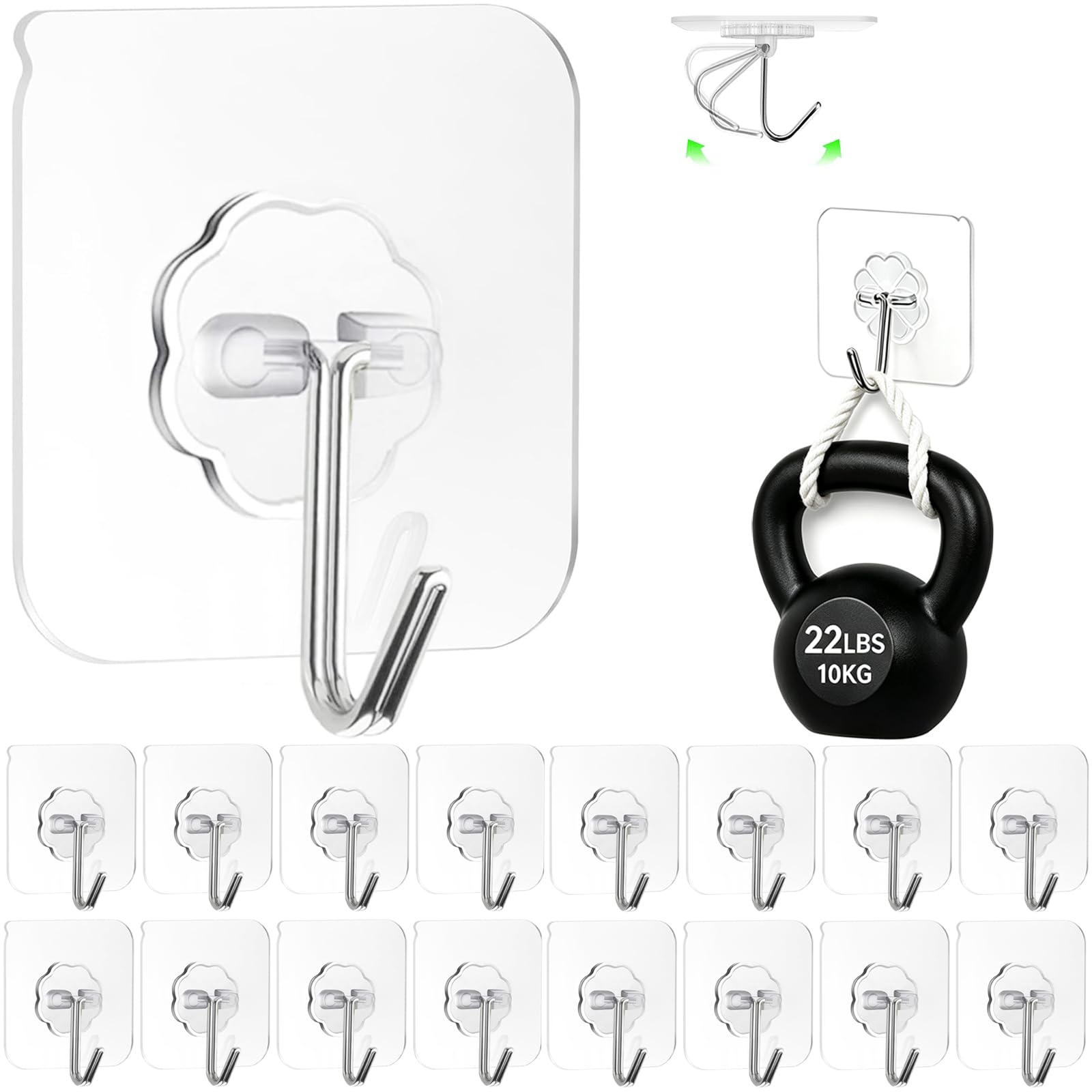
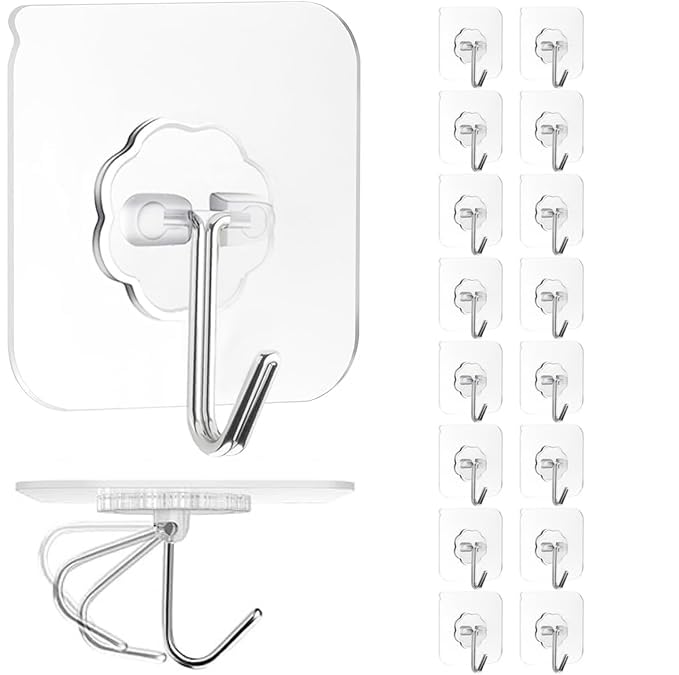
Ladles, whisks and spatulas all have odd shapes that never nest neatly in a drawer. A row of adhesive hooks along the backsplash gives each one its own spot, visible and ready to grab mid-recipe.
Heavy-duty adhesive versions hold more than you’d expect and peel off cleanly, which makes them a smart choice for renters. Hanging tools also dry faster after washing than tools packed into a drawer.
Evenly spaced hooks with tools hung in a loose size order read as calm rather than cluttered. A little rhythm goes a long way on a busy wall.
A Sink Zone That Stays Clean Between Dishes
The sink is the hardest-working spot in the kitchen and often the messiest. Wet sponges, soggy towels and a drying rack spilling onto the counter add up quickly. Giving each of these a defined spot keeps the area clean even on the busiest nights. These ideas work from the cabinet under the sink up to the counter beside it, so the whole zone stays easy to wipe down.
Under-Sink Storage Built Around the Pipes
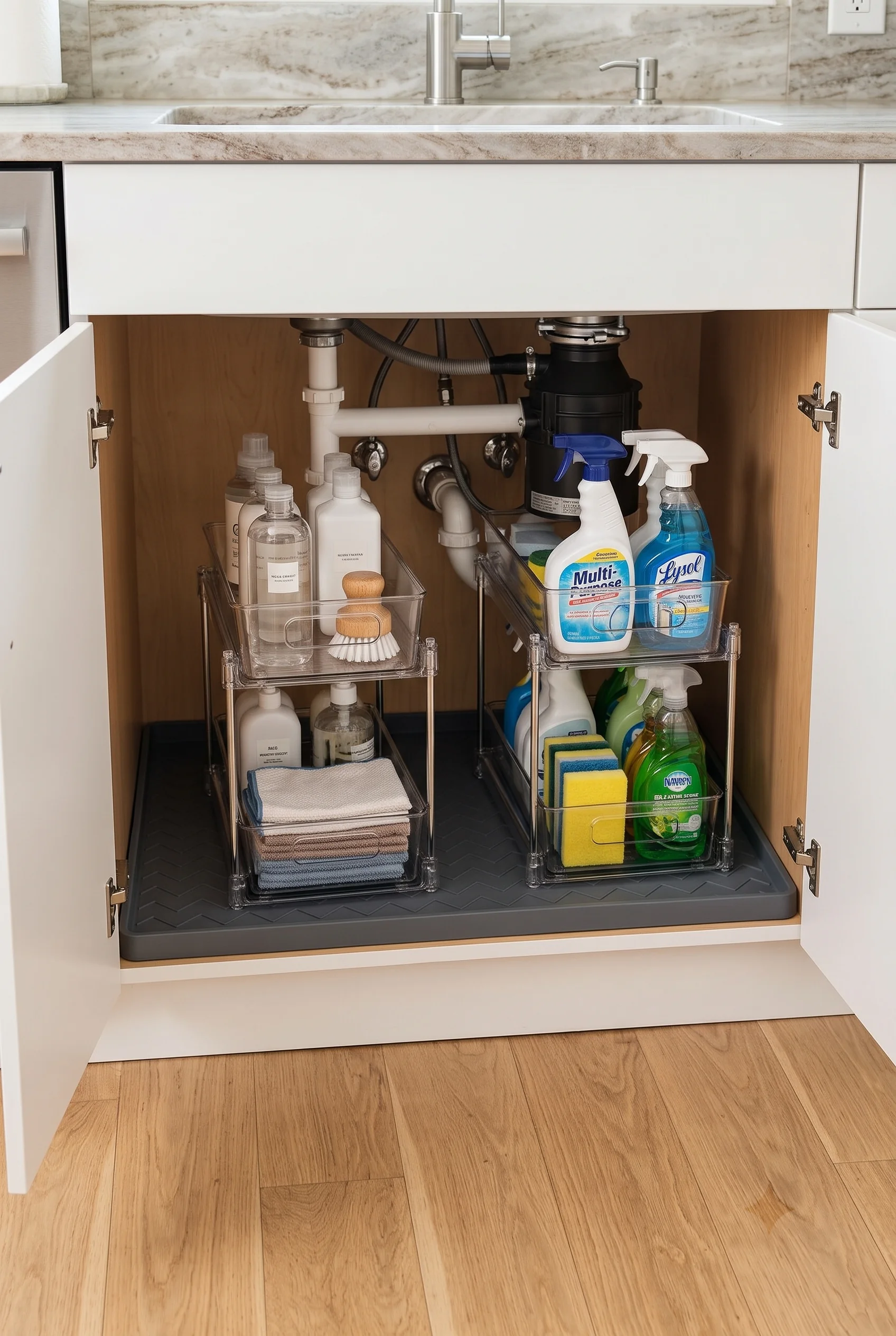
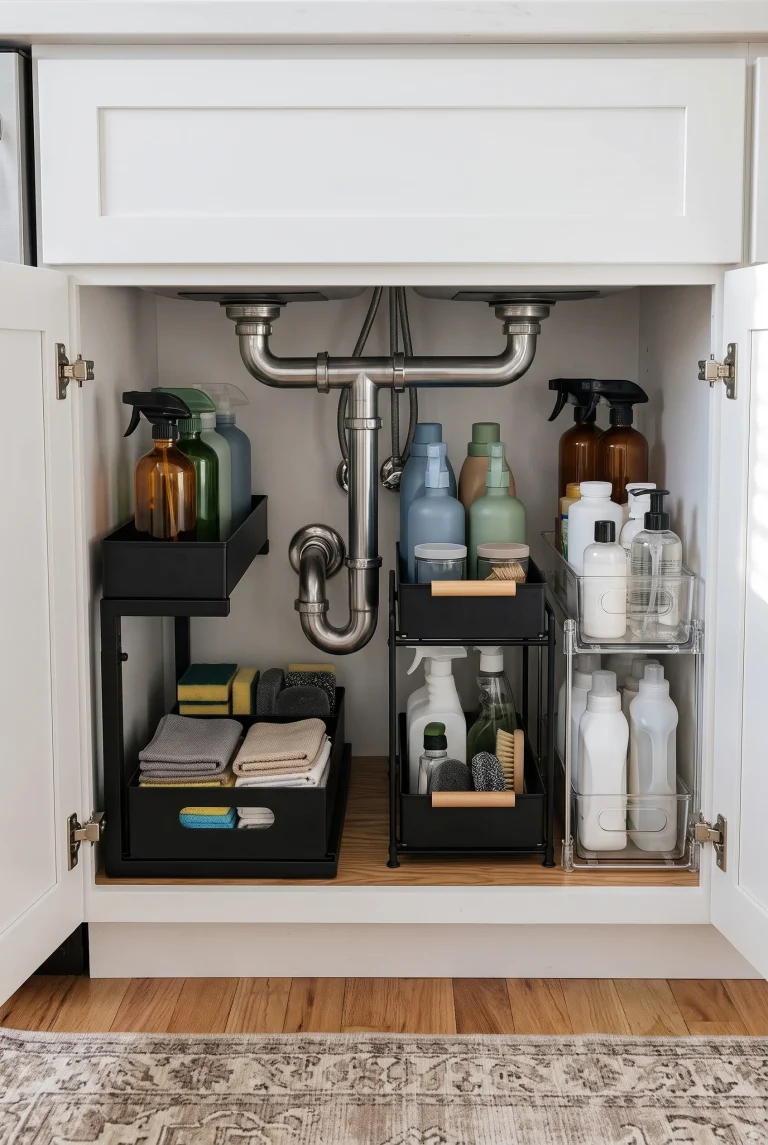
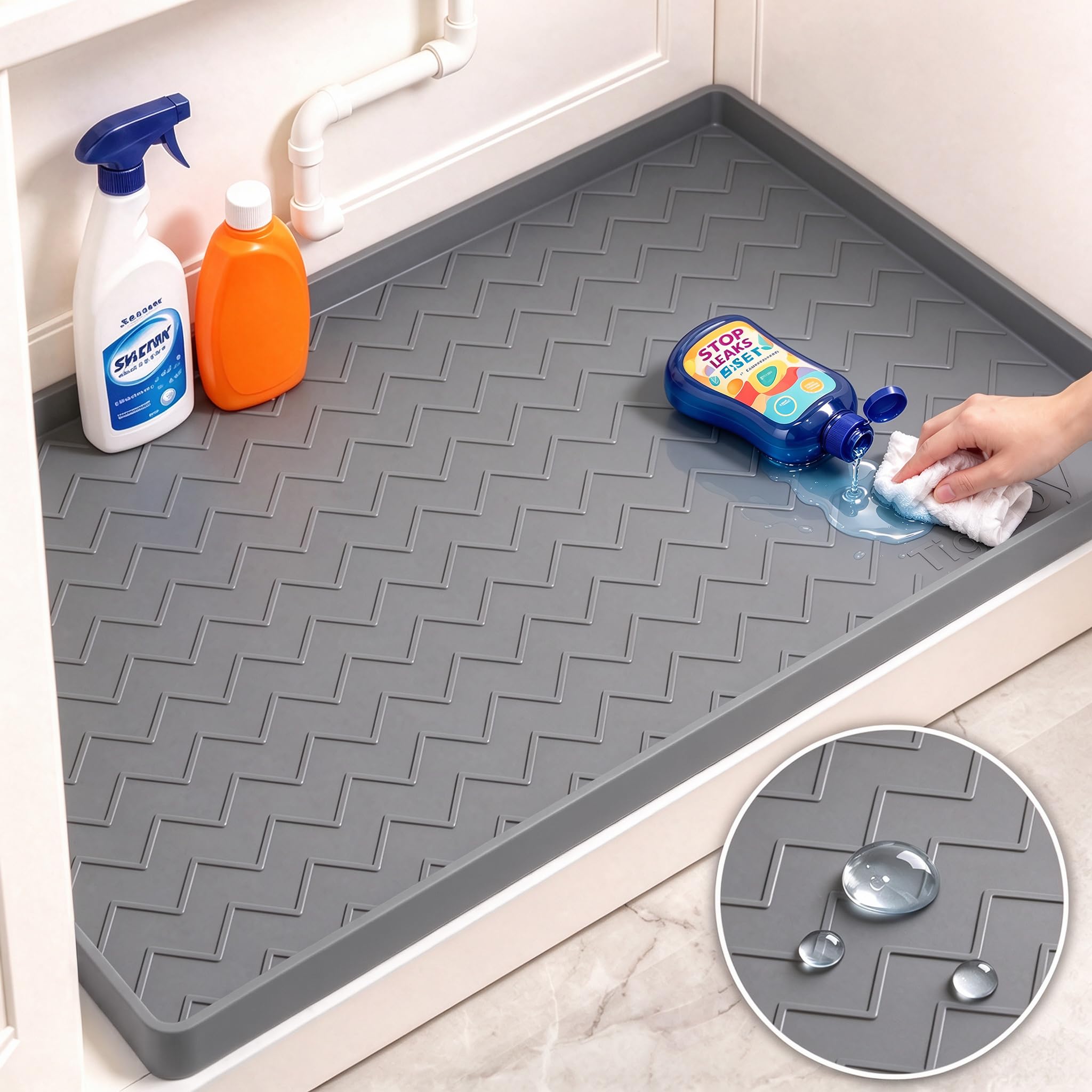
The cabinet under the sink is awkward by design, with plumbing running right through the middle. Two-tier sliding organizers fit on either side of the pipes and turn a jumble of bottles into neat, reachable rows.
A waterproof mat on the cabinet floor is the step most people skip. It catches drips from leaky bottles or a loose fitting before they warp the wood, and it wipes clean in seconds.
Sprays on one side, spare sponges and dish towels on the other. For more ways to work around the plumbing, these under kitchen sink organization ideas cover every inch.


Dish Towels Within Reach of Wet Hands
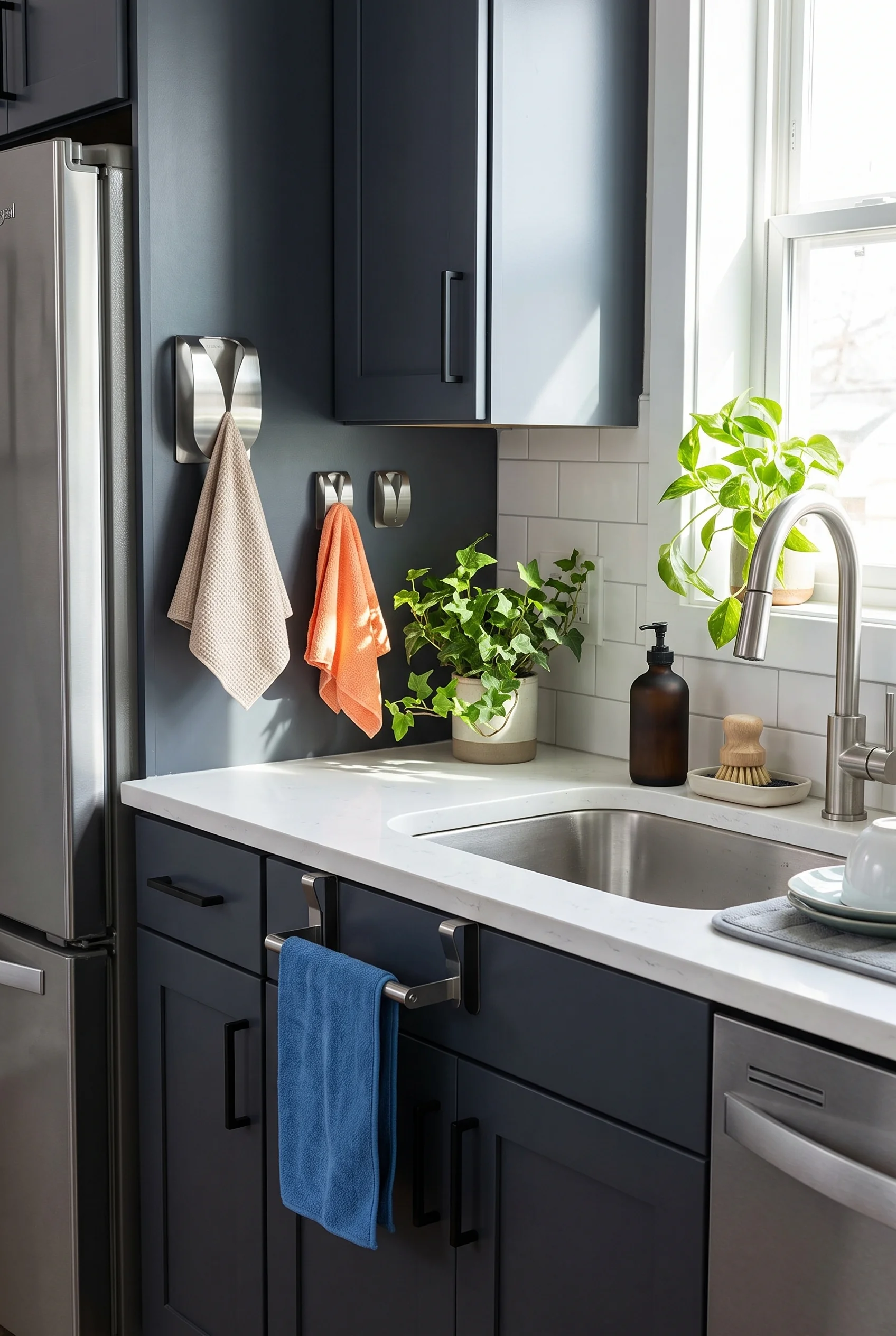
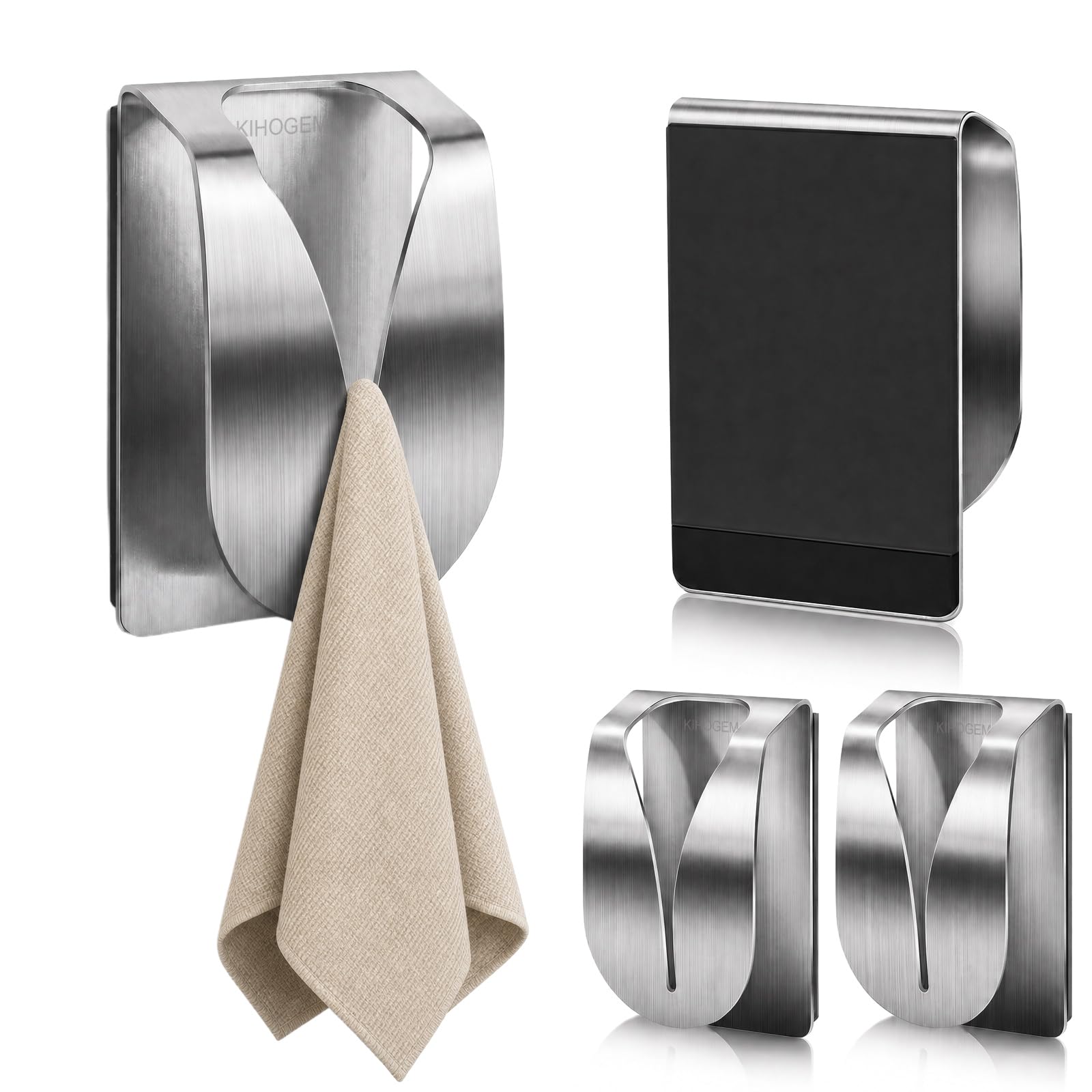
Dish towels have a way of ending up draped over the oven handle, the chair back and the edge of the counter. Hooks mounted right beside the sink give them a permanent home exactly where wet hands need them.
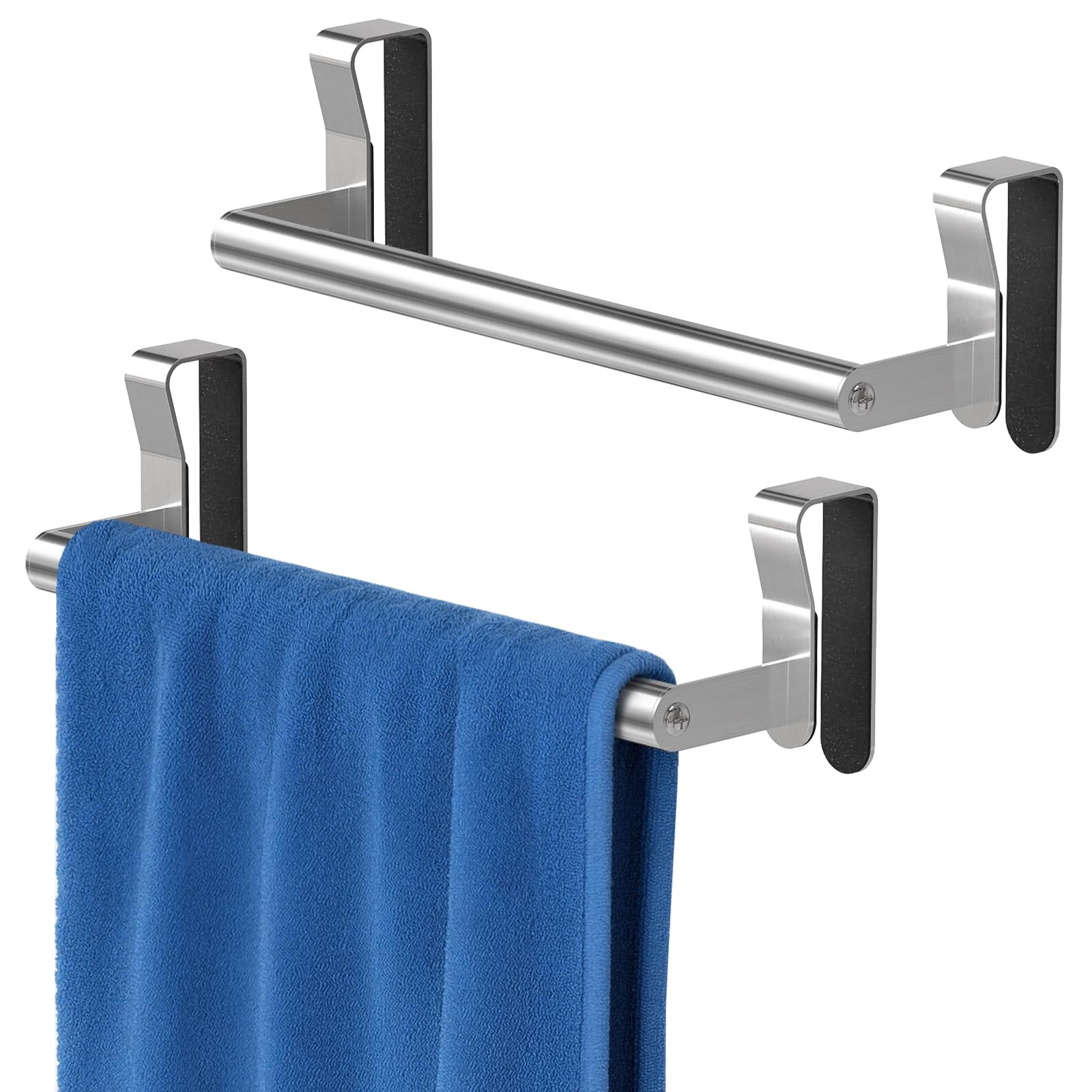
Hanging towels dry faster than crumpled ones, which keeps them fresher between washes. A bar that clips over a cabinet door adds one more spot without any hardware, handy for a towel reserved for drying dishes.
One towel for hands, one for dishes, each hanging on its own hook beside the faucet.

A Drying Rack Sized to the Sink Beside It
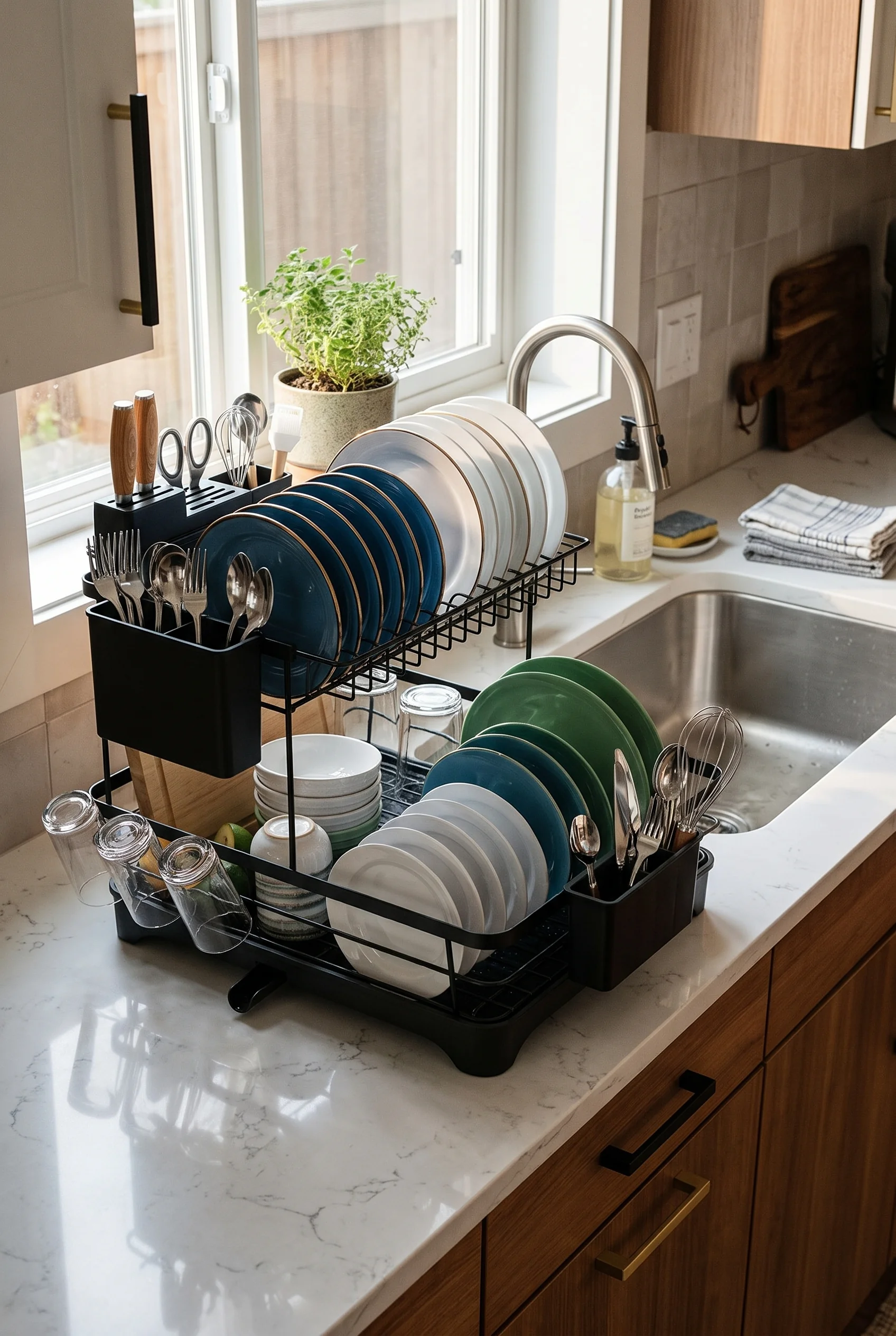
An oversized dish rack can take over half the counter. A compact two-tier design stacks plates on top and bowls or glasses underneath, so it holds a full load in a smaller footprint.
Racks that angle water straight into the sink save you from wiping up puddles on the counter every night, and side caddies keep cutlery and knives contained.
A rack that fits the space sits neatly against the backsplash and still leaves room to prep on the other side of the sink.


A Caddy That Gives Sponges Room to Dry
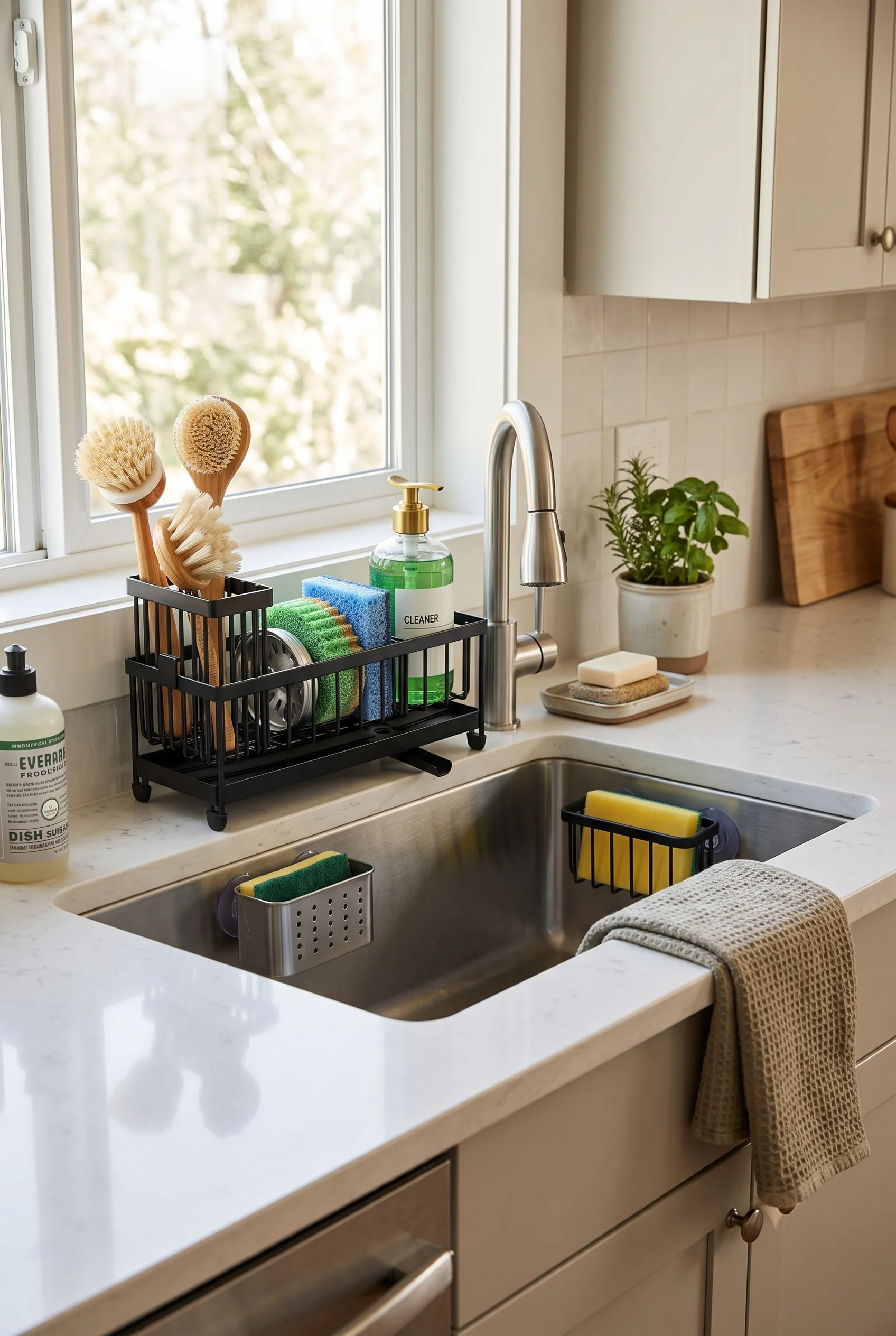
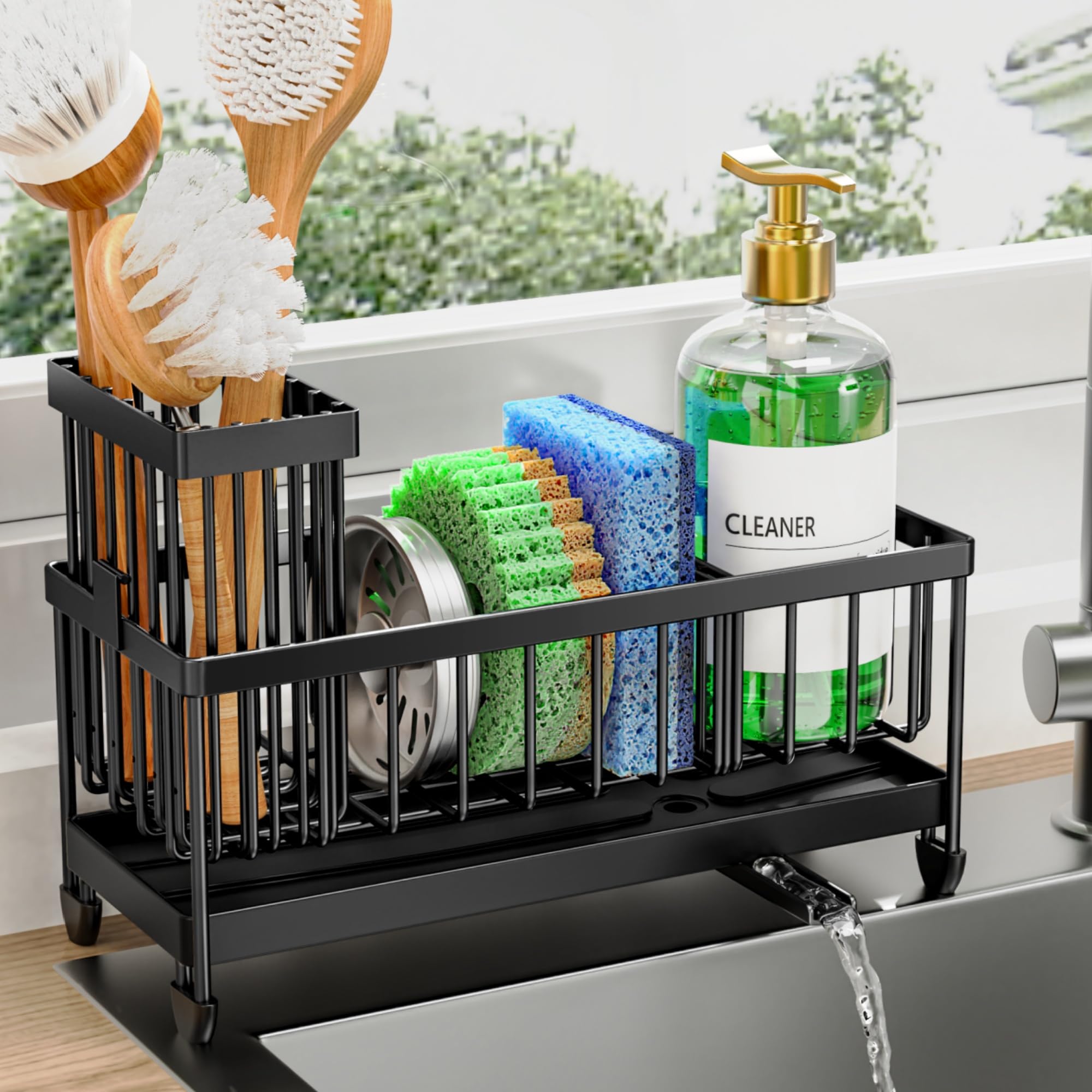
A sponge sitting in a puddle on the edge of the sink gets smelly fast. A small caddy lifts sponges and brushes so air can circulate and water can drain, helping them last longer.
Separate compartments keep it working. Brushes stand upright, sponges sit flat, and the soap bottle has its own slot so it isn’t sliding around the counter.
An in-sink holder adds a second spot for the scrubber you use most.

Stations That Give Every Routine a Home
Thinking in routines instead of items changes how a kitchen gets organized. Coffee, baking, and dinner prep each need a handful of things in one place, and so do after-school snacks. Grouping those tools into stations, and adding a piece of furniture when the cabinets run out, means far less walking back and forth. These final ideas turn scattered supplies into easy-to-understand zones for the whole family.
A Coffee Corner That Runs Itself Each Morning
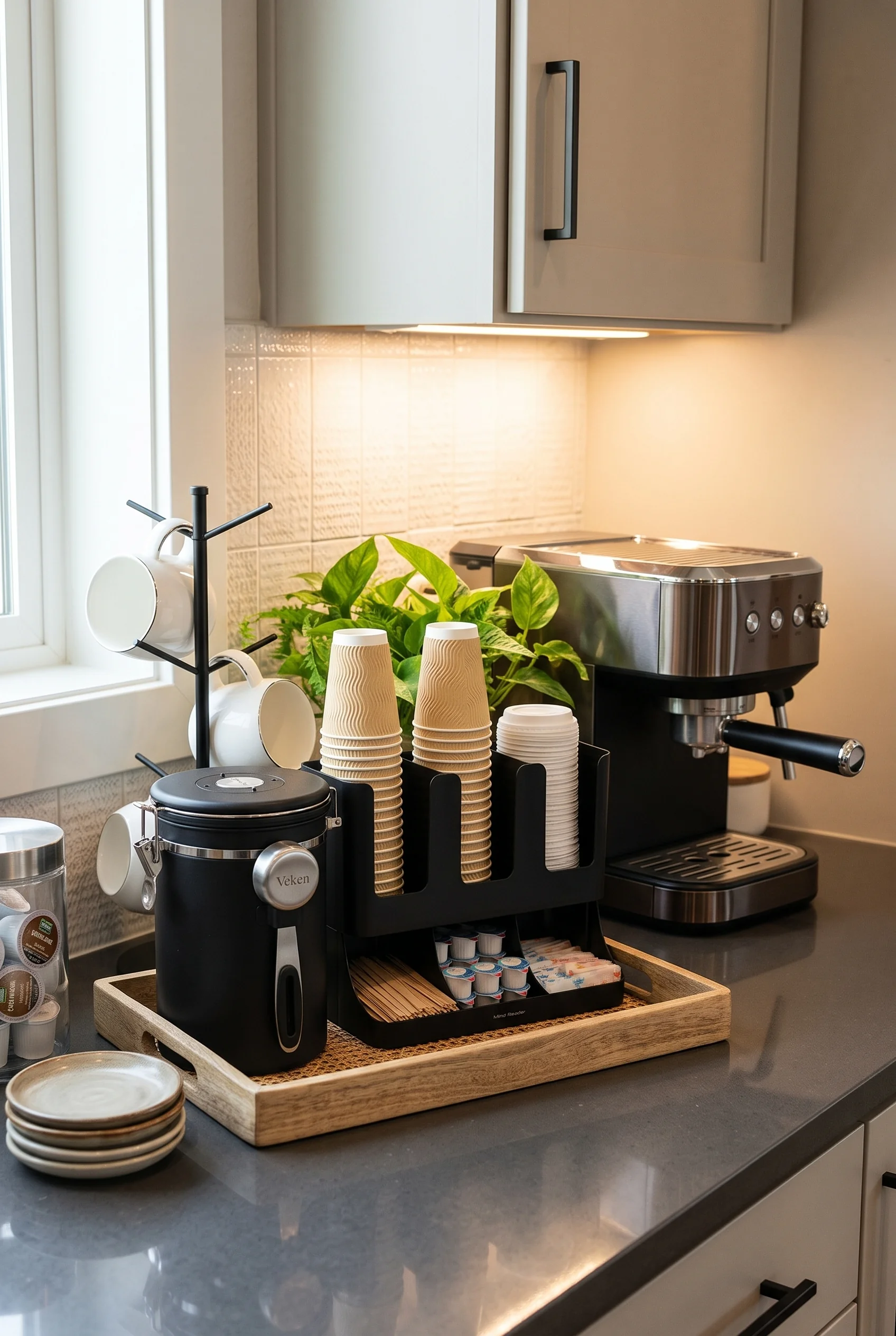
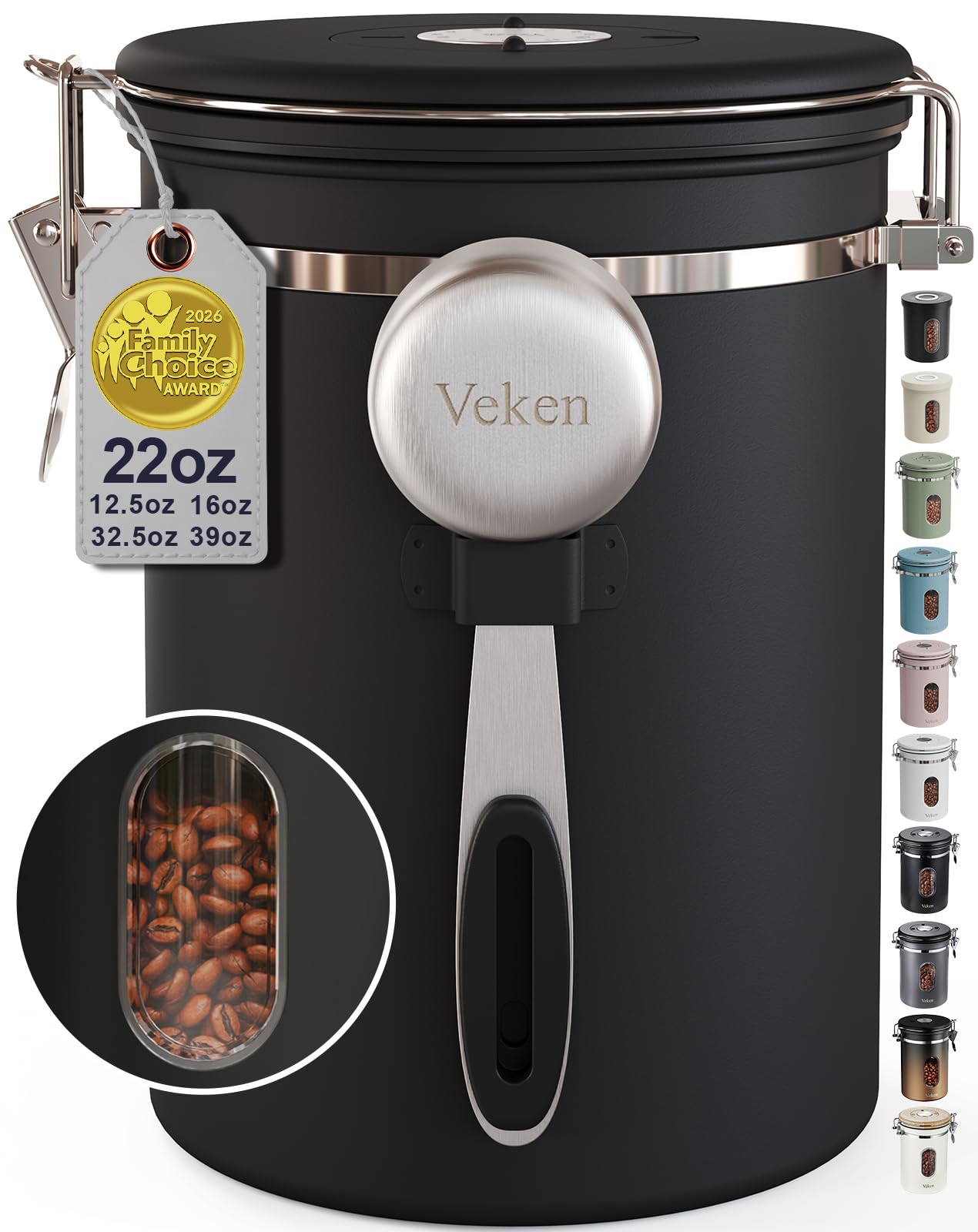
Mornings move faster when everything for coffee lives in one spot. Gathering the machine and beans into a single corner, with cups and pods right beside them, means no one opens four cabinets before they’re fully awake.
A tray defines the station and catches drips and stray grounds. An airtight canister keeps beans fresh much longer than the bag they came in, and a divided organizer holds cups, stirrers, and pods upright and sorted.
Small as it is, a corner that’s ready to go makes the first ten minutes of the day feel calm.

A Baker’s Rack That Takes Appliances Off the Counter
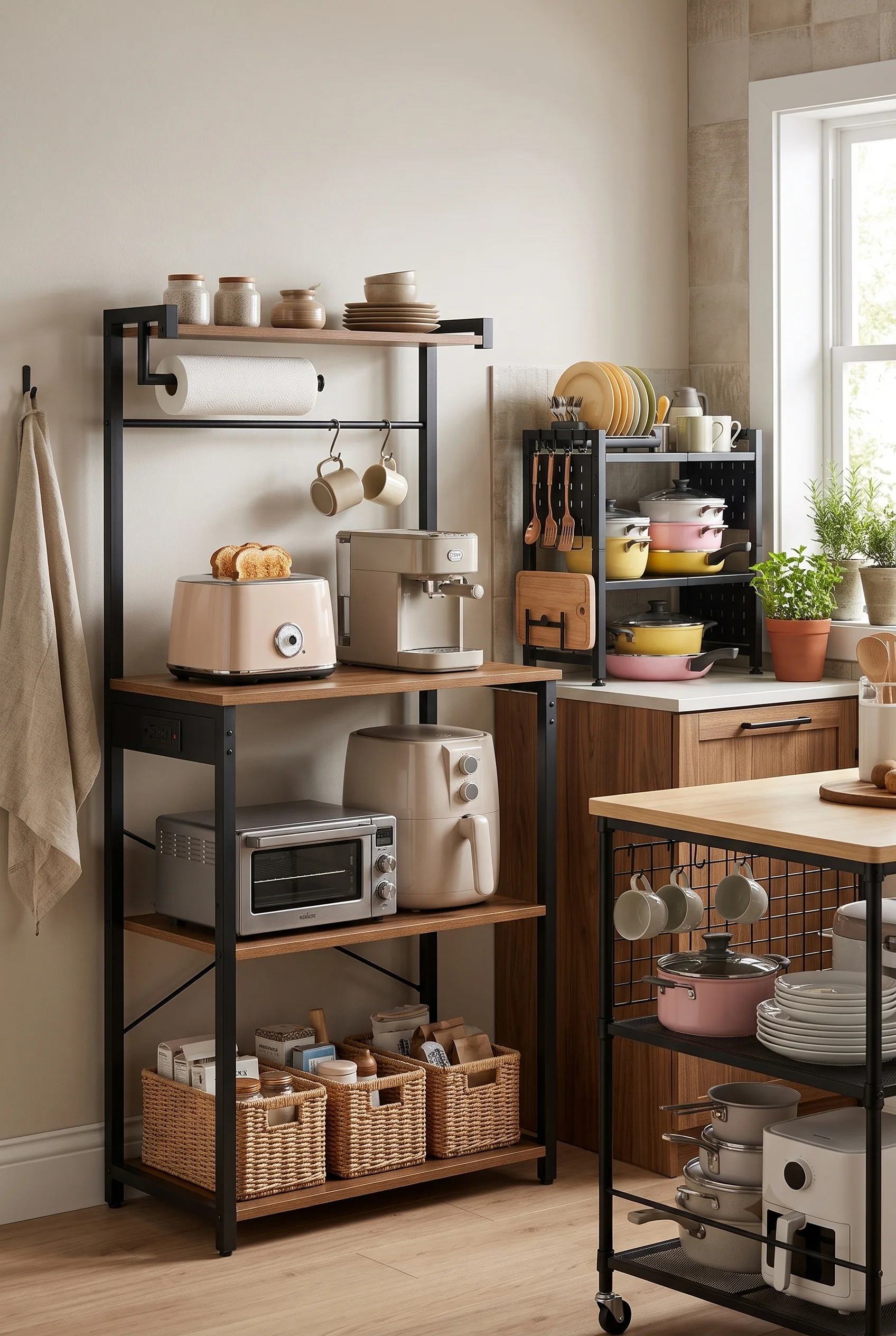
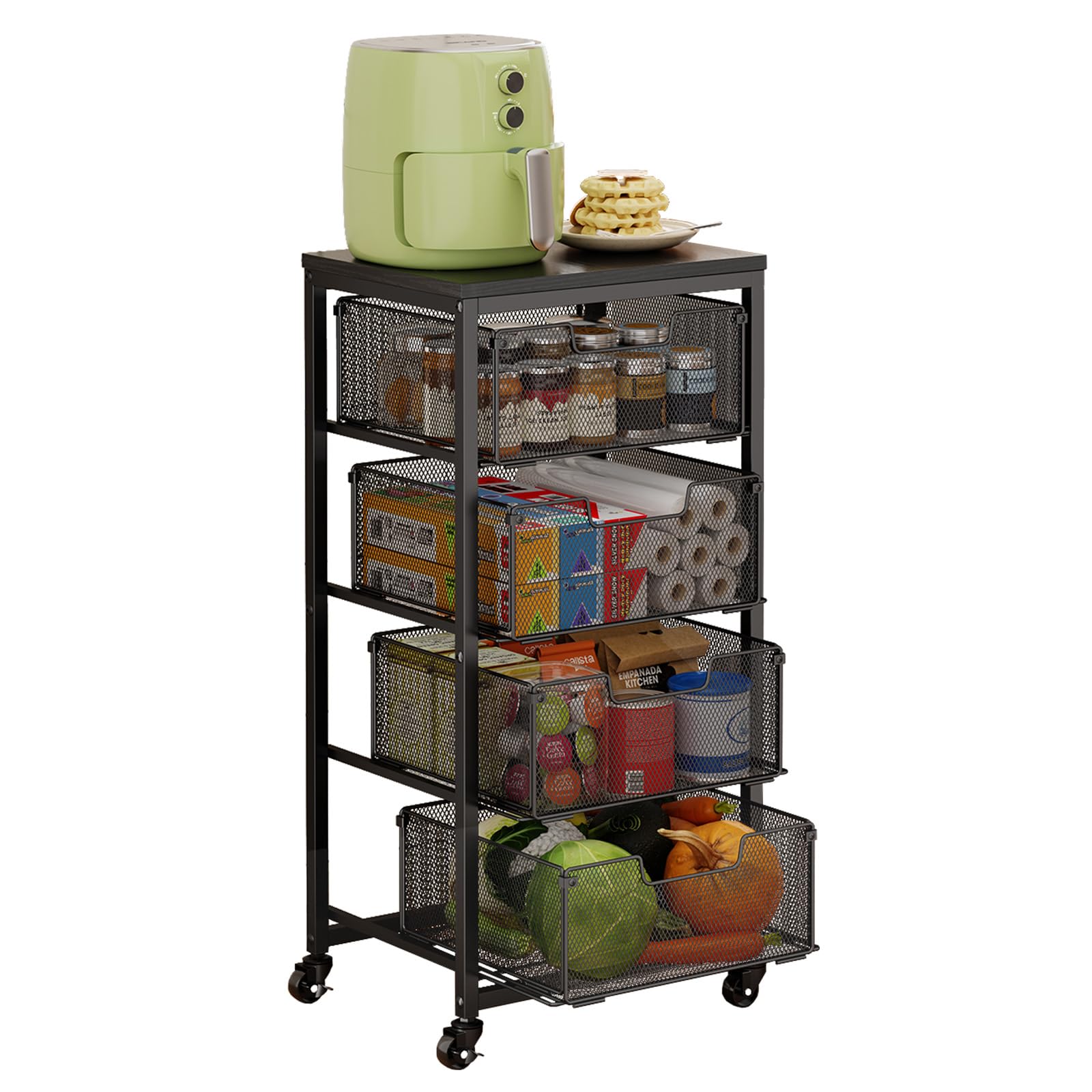
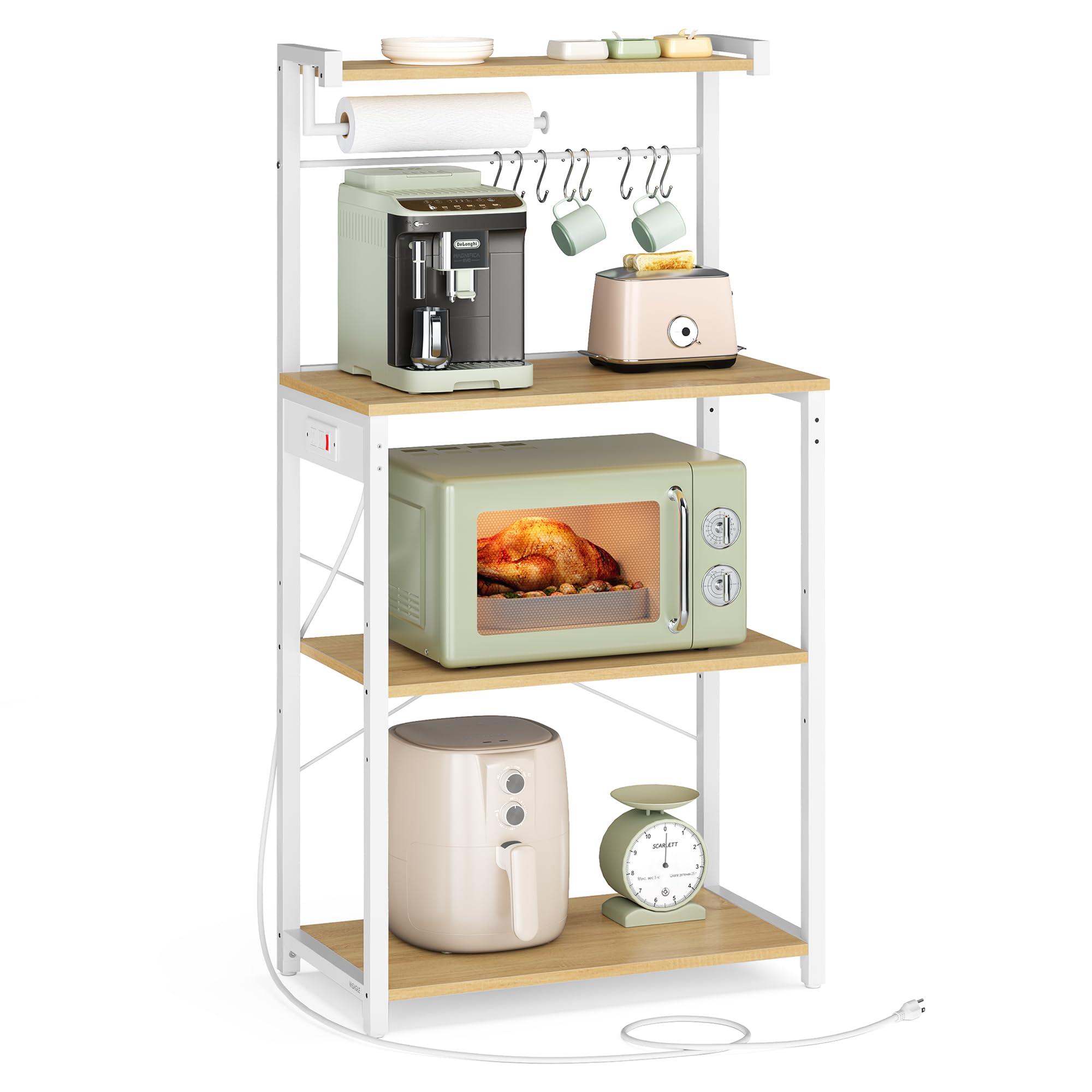
Stand mixers, air fryers, and toasters are useful, but together they can swallow an entire counter. A baker’s rack gives them a dedicated home on open shelves, still plugged in and ready to go.
A sturdy metal frame with solid shelves handles heavier appliances without wobbling. Some versions include a built-in power strip, so cords stay tidy instead of snaking down the wall.
Woven baskets on the bottom shelf hold loose baking supplies and snack packs. Meanwhile, the main counter gets its breathing room back.
A Rolling Cart for the Things You Reach for Most
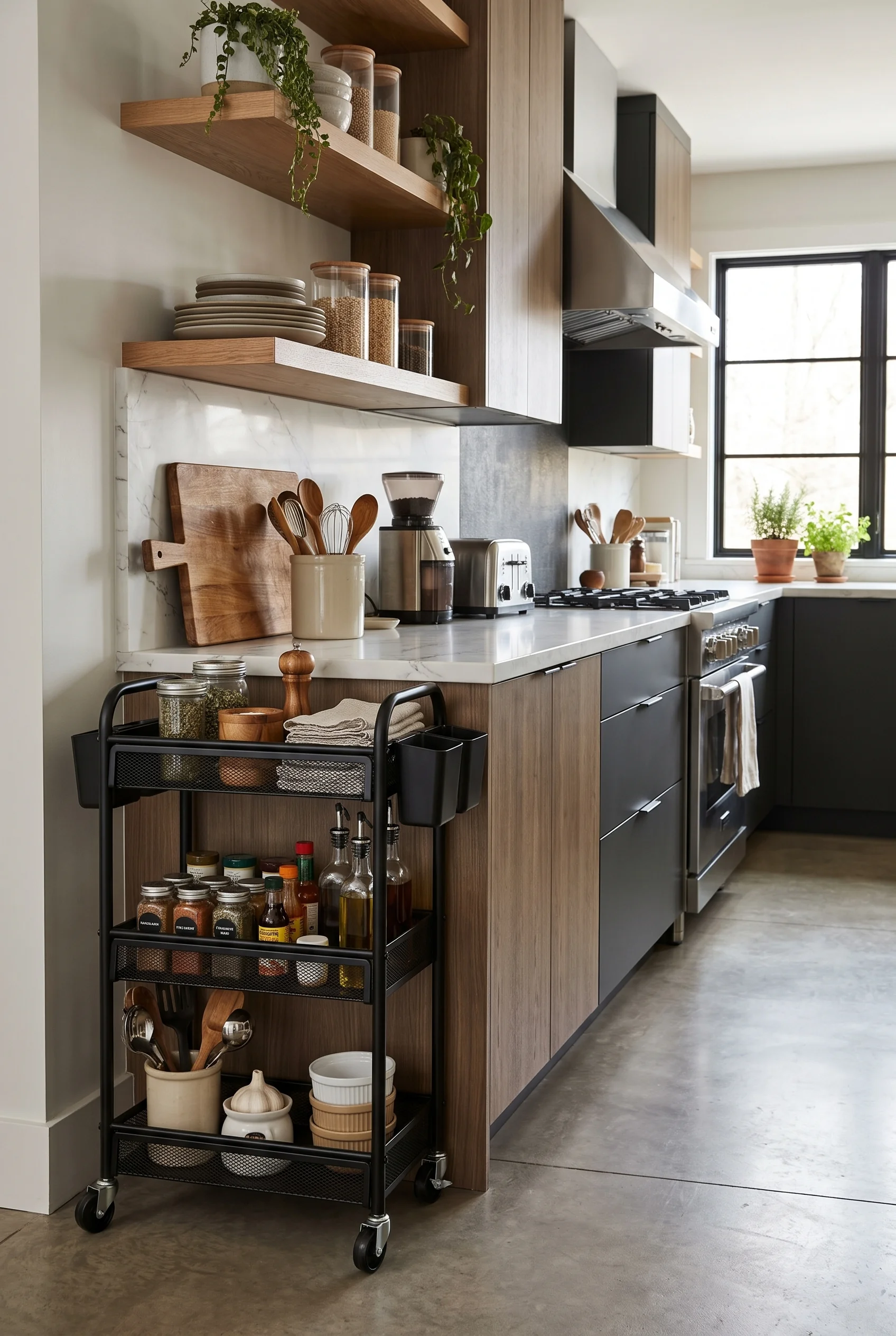
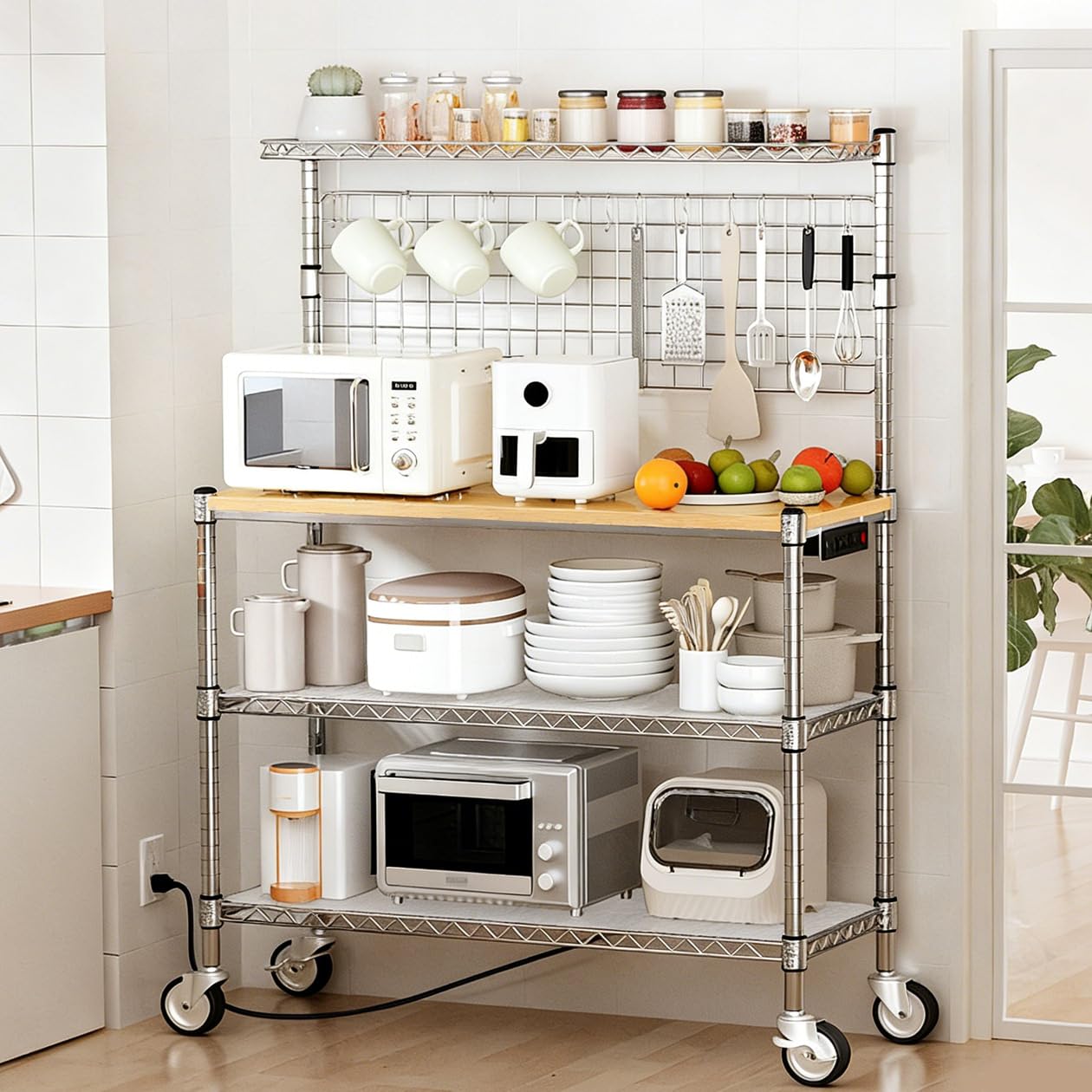
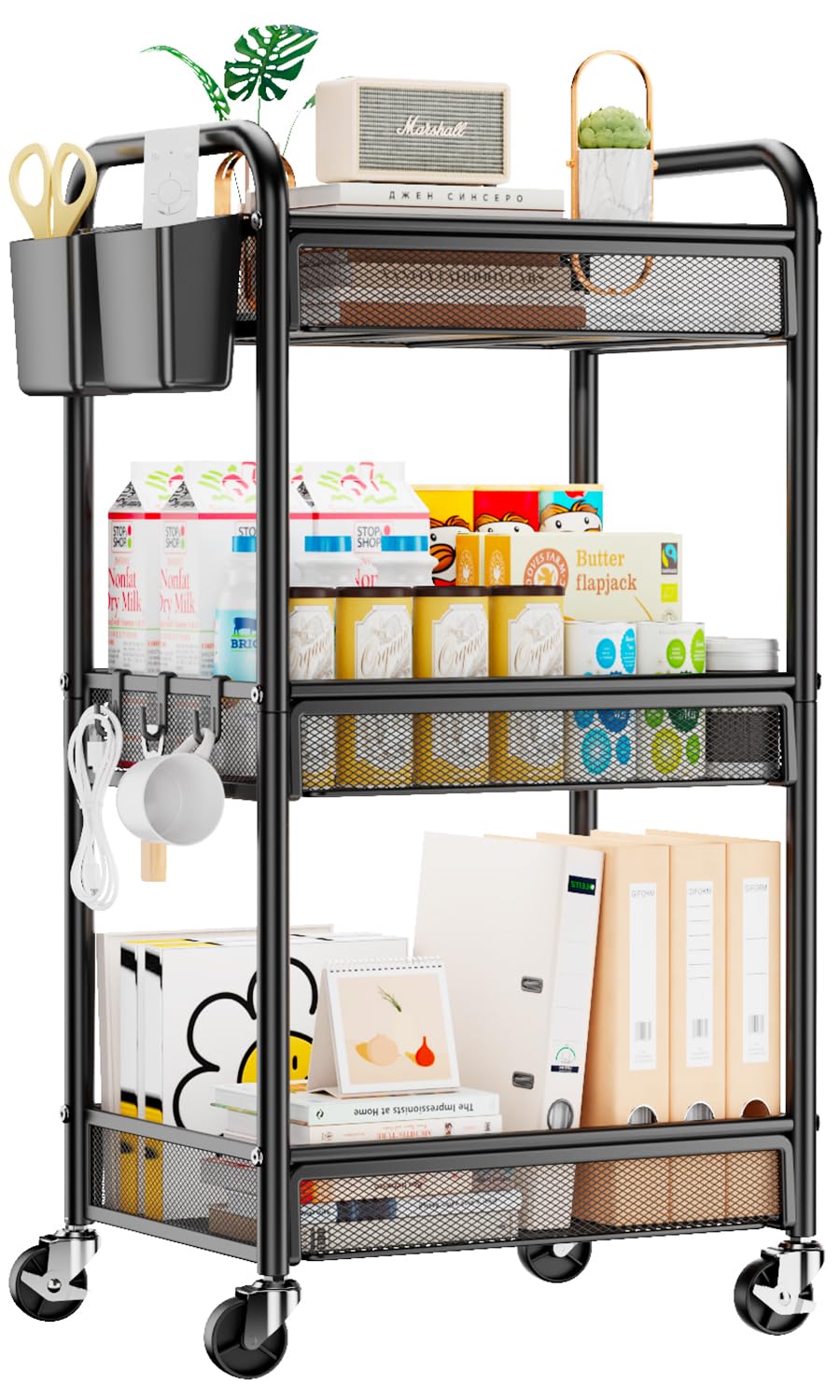
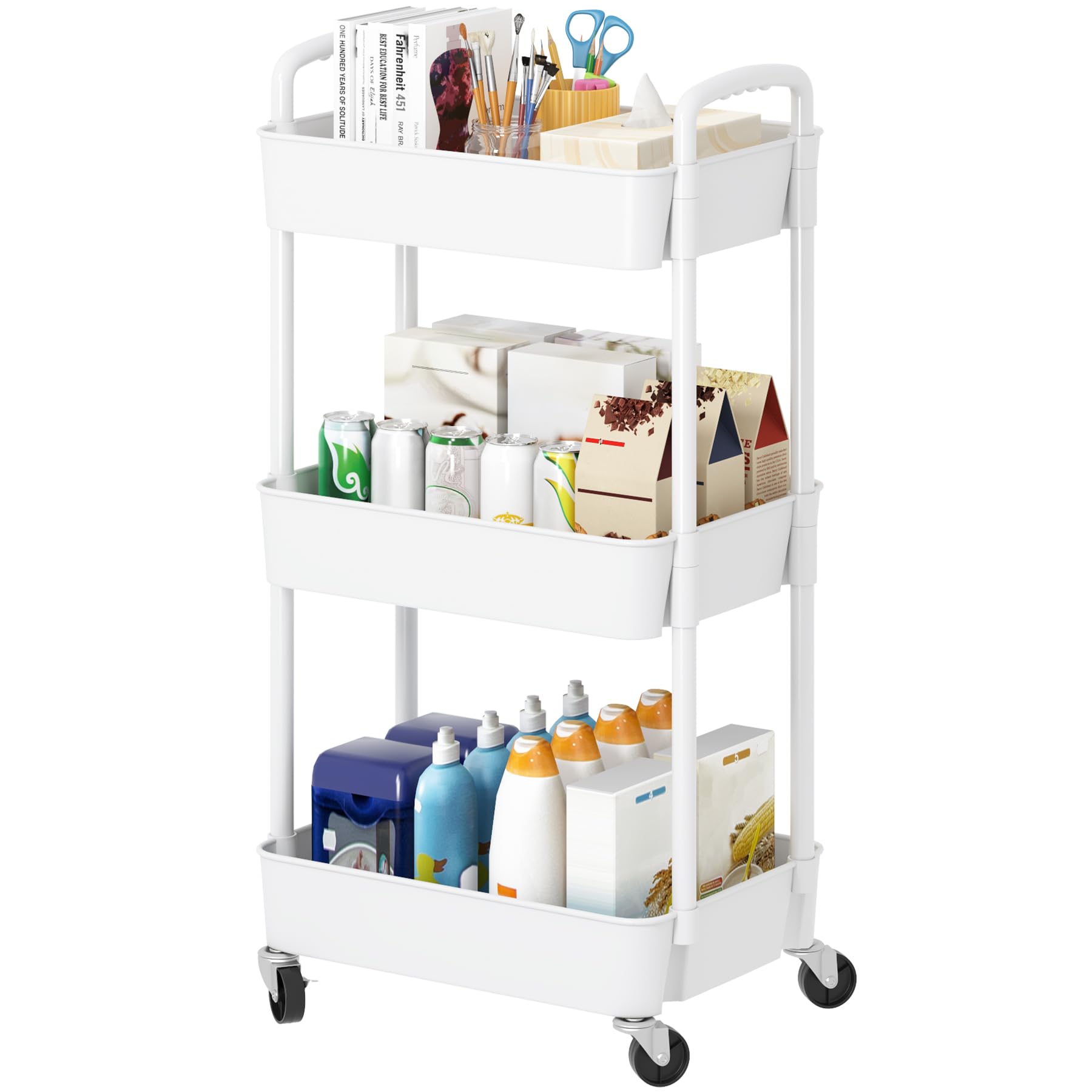
A slim rolling cart fits into the narrow gap at the end of a counter where nothing else would go. Oils, spices, and cooking utensils ride on its shelves, ready to roll next to the stove when it’s time to cook.
Mobility is the real advantage. On busy weeknights, the cart moves to wherever you’re working, and on cleaning day it rolls aside so you can sweep underneath.
Cooking essentials only is the rule that keeps it useful. A cart that holds a little of everything quickly becomes one more surface for clutter.

A Baking Station Ready for Any Craving
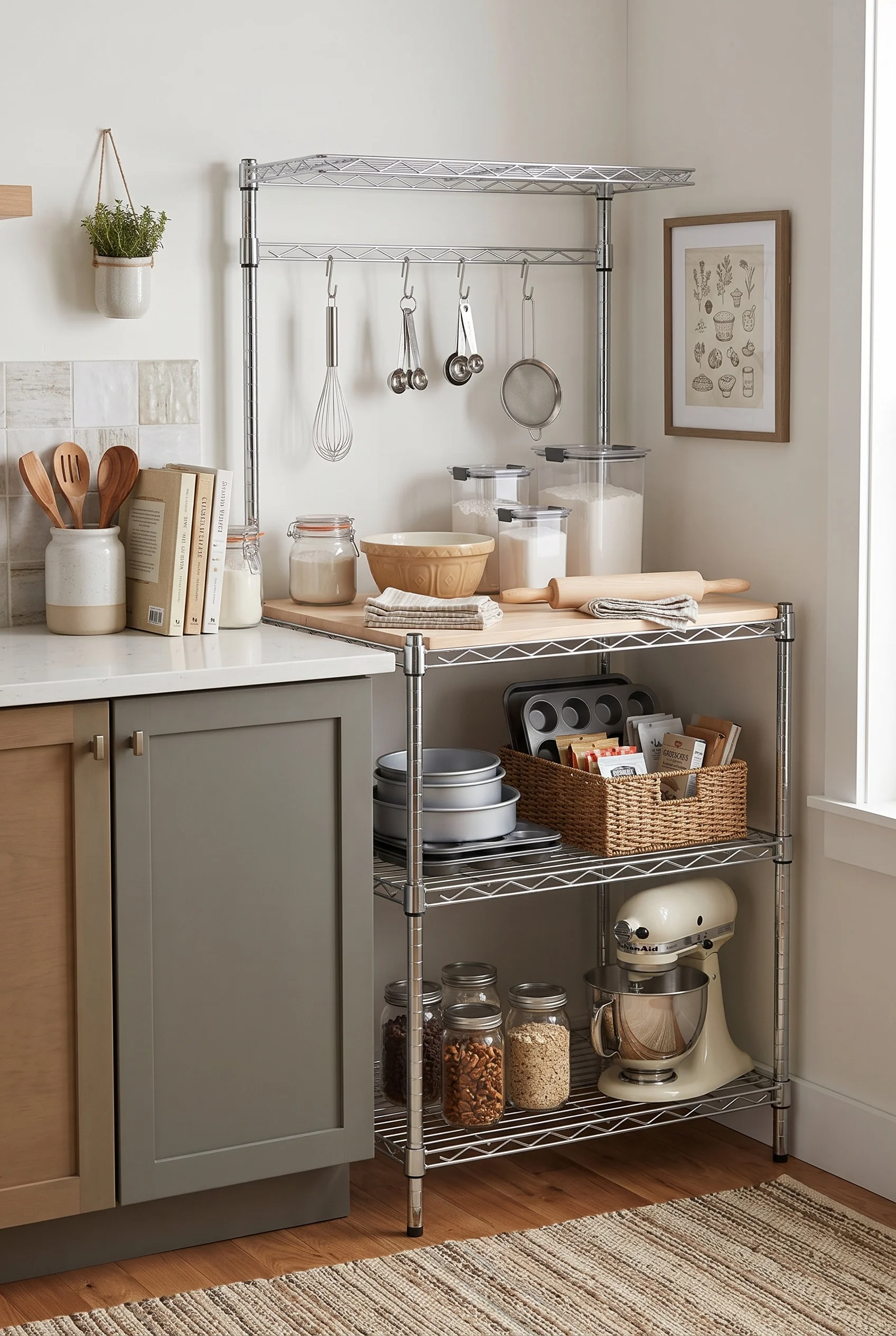
Baking calls for a surprising number of ingredients and tools, and digging through three cabinets for flour, sugar, and measuring cups takes the fun out of it. A dedicated baking station keeps everything together.
Large airtight canisters for flour and sugar sit on the work surface, with measuring spoons and whisks hanging from hooks above. Mixing bowls, cake pans, and the stand mixer fill the lower shelves.
Saturday morning muffins become a much easier yes when everything is already in one place. Kids can help measure without anyone hunting for the right spoon.

Utensil Crocks Within Arm’s Reach of the Stove
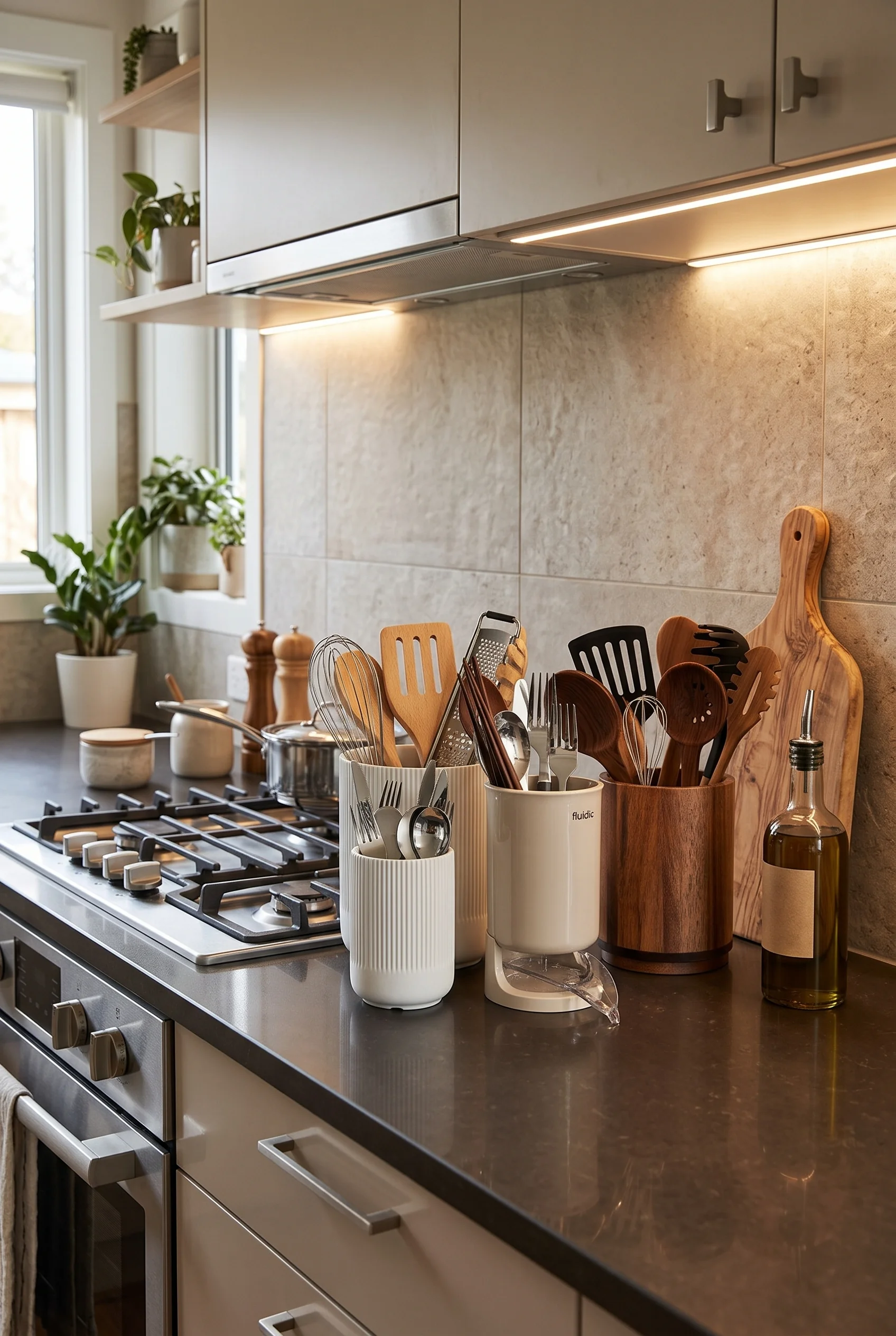
The tools you use while cooking should be the easiest things in the kitchen to grab. A few utensil crocks clustered beside the stove keep wooden spoons, spatulas and tongs ready while the pan heats.
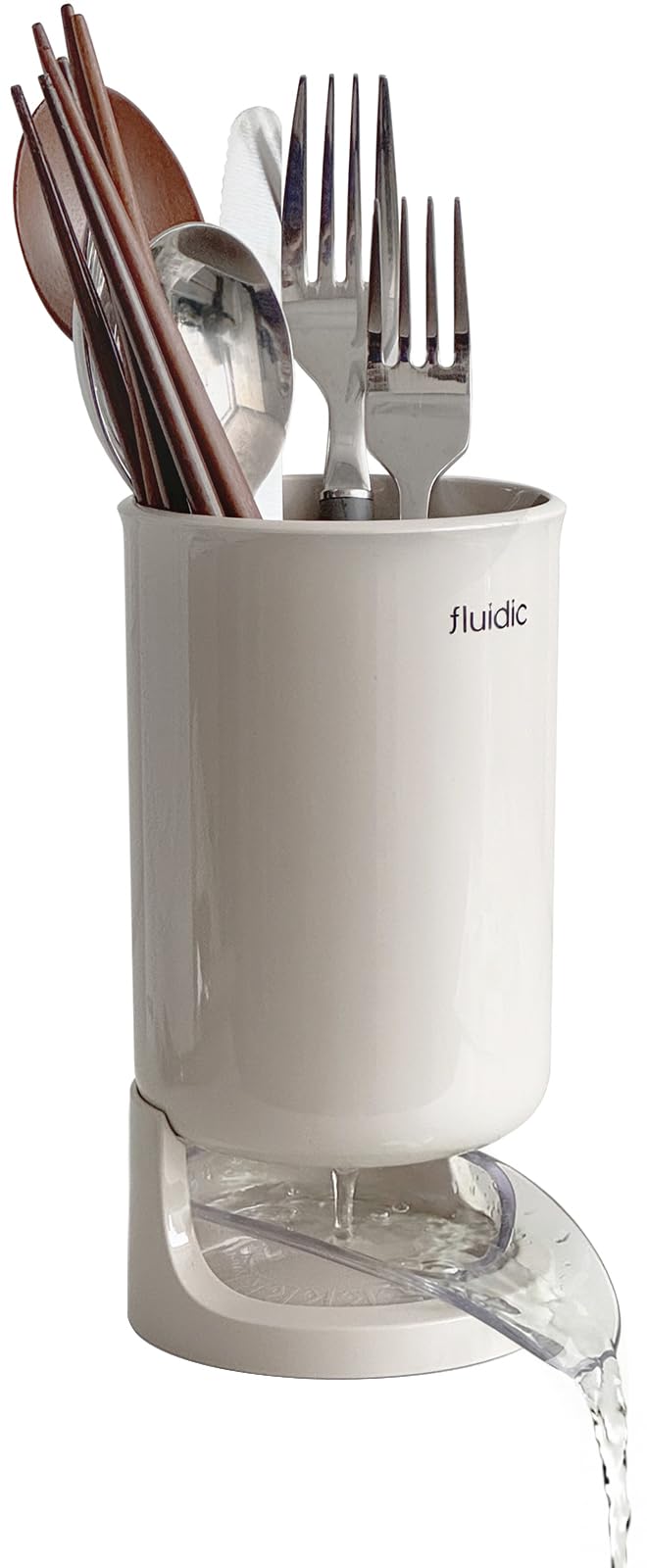
Sorting by type stops the tangle. Wooden tools in one crock, metal in another, and a self-draining holder for anything that goes straight back after a rinse.
Wide, heavy bases keep crocks from tipping when you pull out a long-handled spoon. A matched set subtly pulls the cooking zone together.


A Snack Station the Kids Can Run Themselves
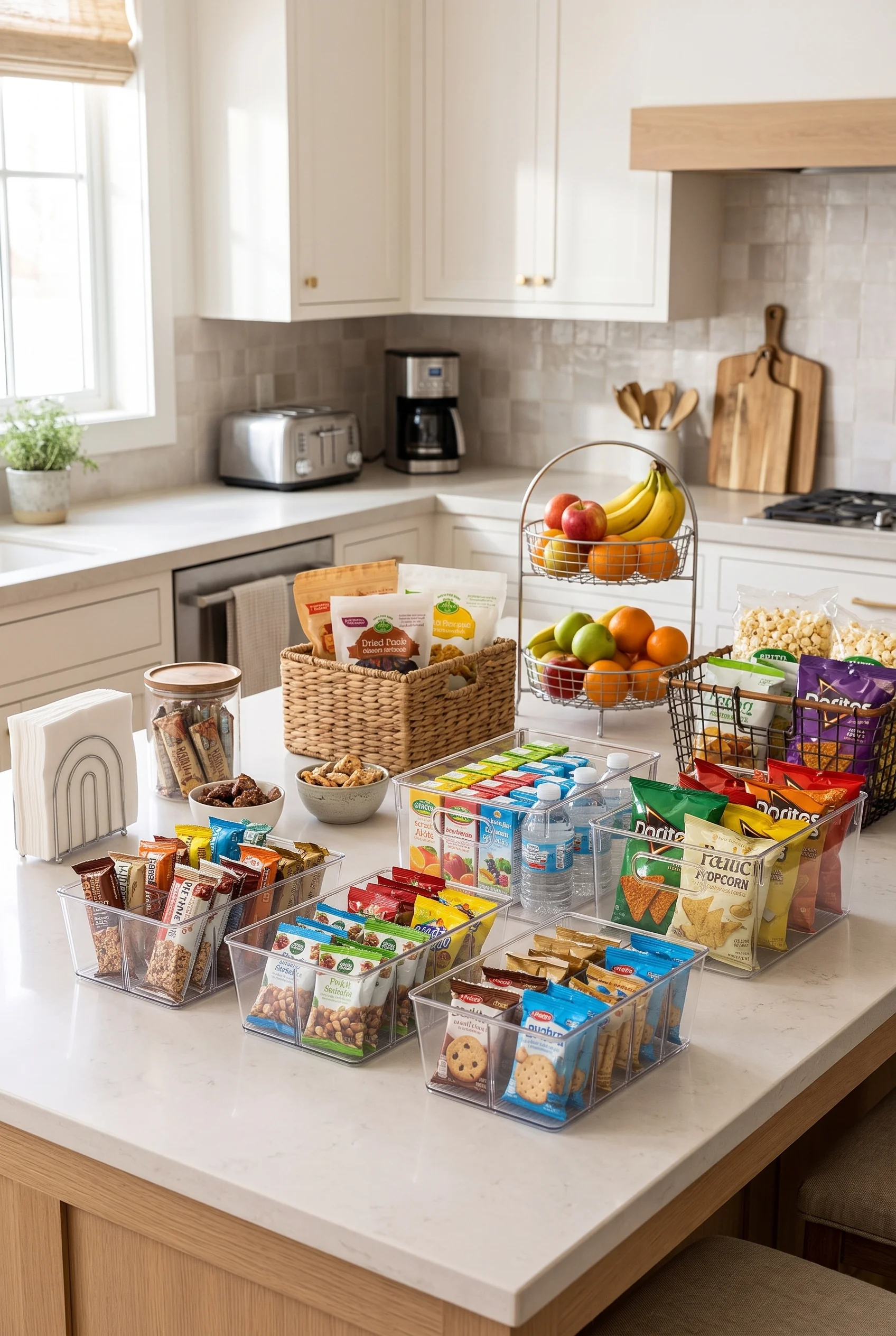
Snack requests can feel constant with little ones at home. A dedicated snack station on the counter or island gives them some independence back.
Clear bins sort granola bars, crackers, and fruit pouches by type, so kids can see what’s available and choose for themselves. A tiered fruit basket adds fresh options right alongside the packaged ones.
A weekly refill and one simple rule, like one snack from each bin, is all it takes. Fewer interruptions, and the pantry door stays closed between meals.

An Island That Stores as Much as It Serves
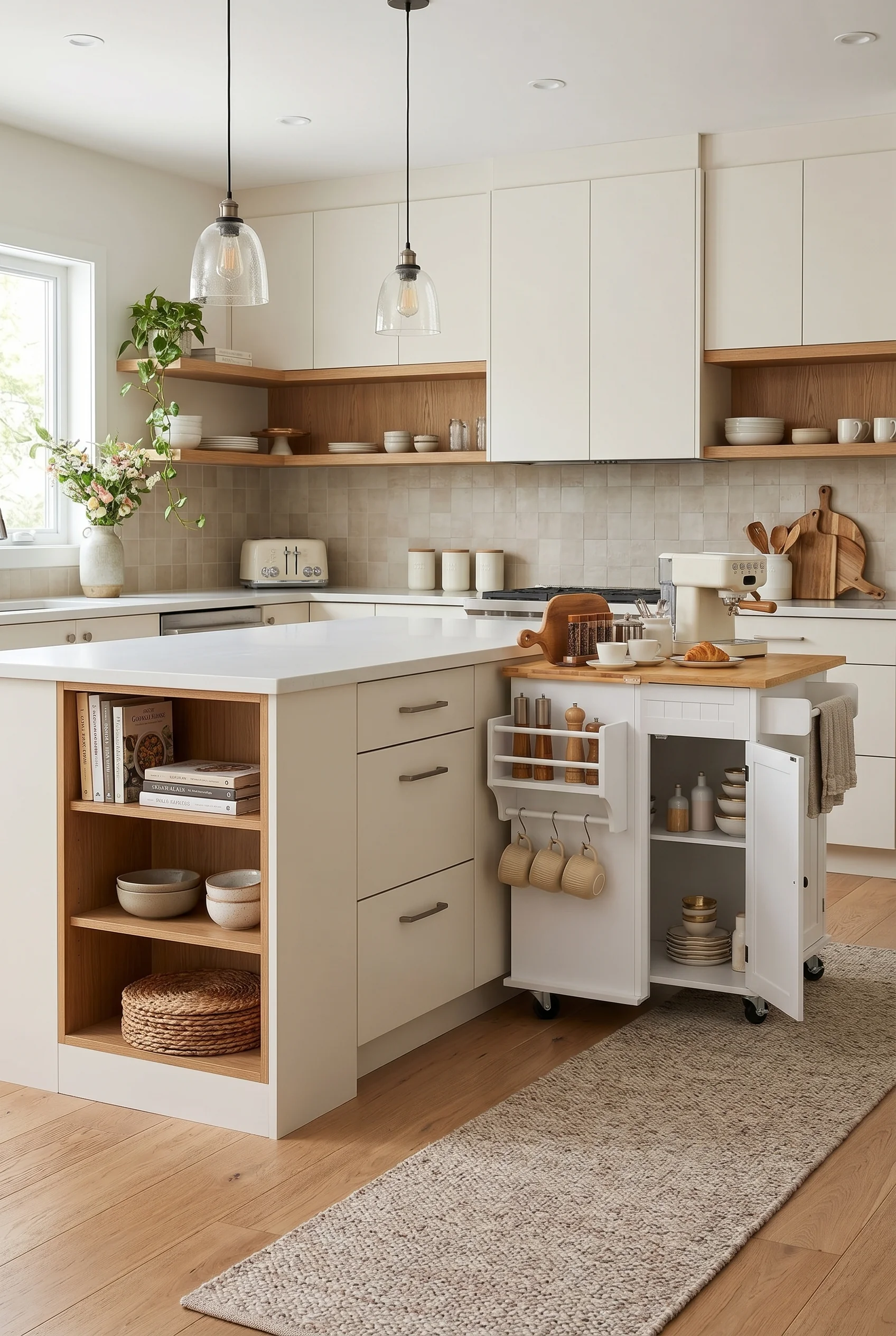
An island with built-in storage adds counter space and cabinet space in one move. Open shelves on the end hold cookbooks and serving bowls, while drawers keep linens and tools close to the prep area.
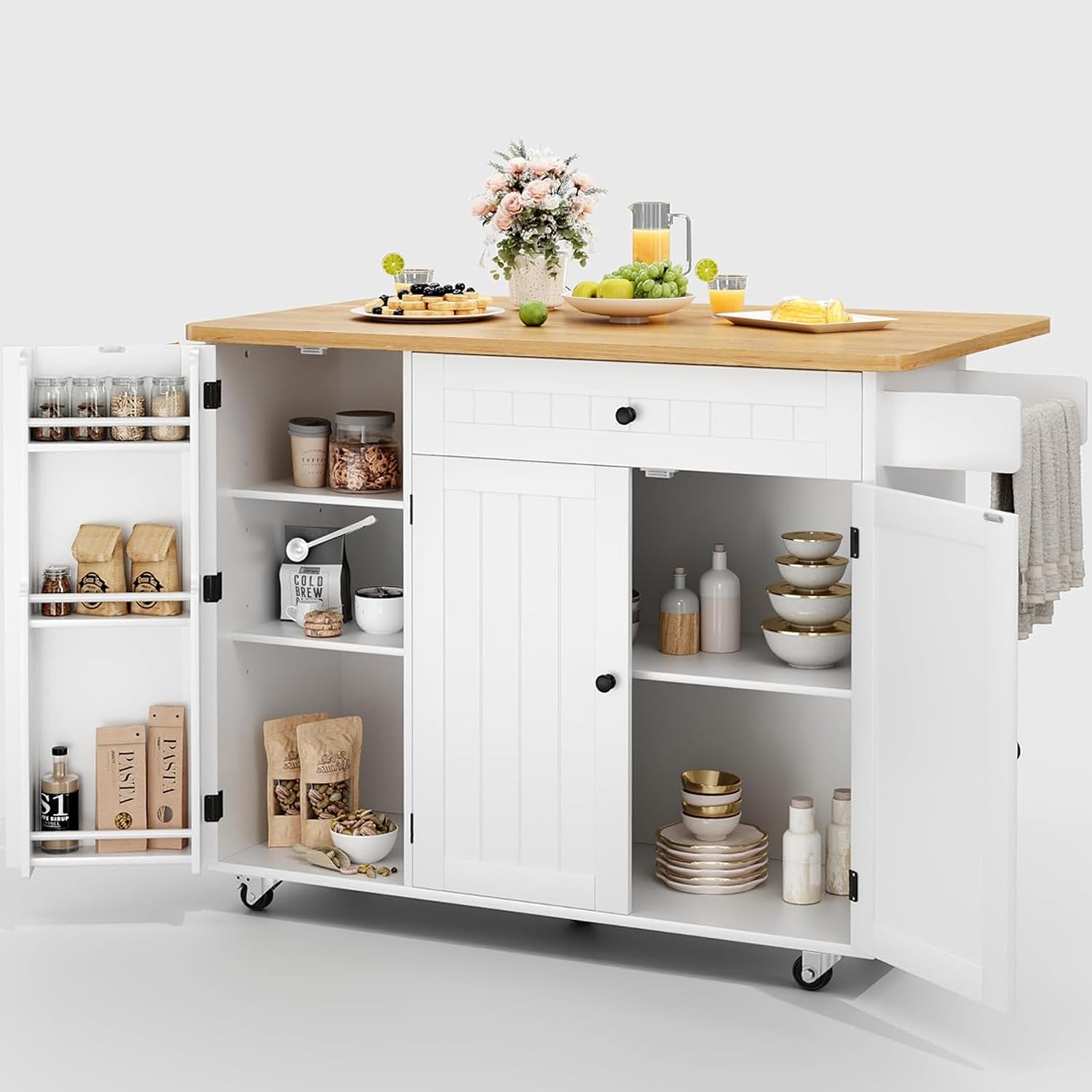
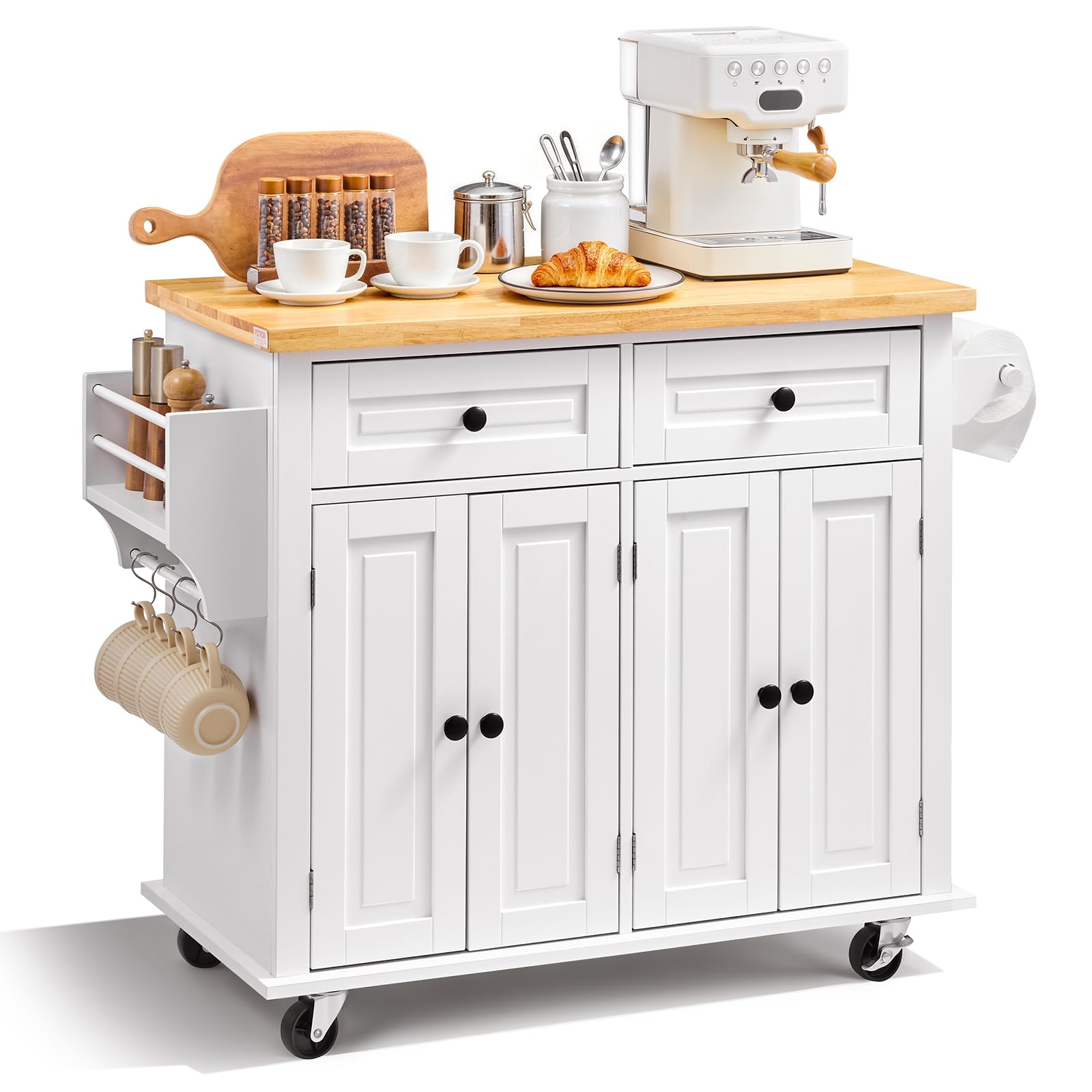
In a smaller kitchen, a rolling island cart can do much of the same work. Spice racks, towel bars, and mug hooks on its sides use every surface, and the whole thing moves aside when you need the floor.
Before long, it becomes the hub of family life, the spot for homework, snacks, and conversation while dinner cooks.
A Kitchen That Makes the Next Meal Easier
One thread runs through every idea here: put things where you use them, and make them easy to see. A pantry you can read, drawers that close cleanly, a sink zone that dries out between dishes. None of it requires a renovation, just a few thoughtful choices made one corner at a time.
Start with the spot that frustrates you most. For some families that’s the overflowing pantry. For others it’s a cabinet of rattling lids or a counter buried under appliances. Fix one area, live with it for a week, and notice how much calmer cooking feels before moving on to the next.
The best kitchen organization ideas are the ones that fit your real routines, not a picture of perfection. A clutter-free kitchen still has fingerprints on the fridge and a stack of school papers waiting for attention. It simply gives you a clear place to set down the grocery bags and a calmer room to cook in at the end of a long day.
If the kitchen is your first project of the season, these new year home refresh ideas carry the same easy, room-by-room approach through the rest of the house.
Choose one idea from this list today, and enjoy a more organized kitchen tomorrow.