31 Kids Bedroom Ideas for a Cozy, Functional, and Stylish Space
A child’s bedroom is never really finished. Favorite colors change, toys get bigger, and the little desk that once seemed unnecessary eventually becomes the most-used piece of furniture in the room. The best kids’ bedrooms make space for those changes without requiring a full refresh every few years. They feel personal to the child living there now, with enough flexibility for whoever they’re becoming.
That doesn’t mean choosing furniture and colors so neutral that the room loses its character. The personality found in colorful kids room ideas can work beautifully alongside practical kids bedroom storage that adapts as belongings change. The child-centered approach behind Montessori kids room ideas offers another way to think about furniture placement, independence, and making everyday routines easier.
These kids bedroom ideas explore how to create a room that feels comfortable, functional, and truly reflects your child. You’ll find inspiration for different ages, layouts, and decorating styles, with ways to make room for sleep, play, and growing independence without expecting one bedroom design to last forever.
DISCLOSURE: Some of the links provided on this page are affiliate links. This means if you choose to make a purchase through these links, we may receive a small commission at no extra cost to you.
A Calm Foundation for Sleep, Play, and Learning
A functional kids’ bedroom begins with a visual sense of order. Quiet colors, soft textiles, and clearly defined activity areas give the room structure without taking away its playful spirit. These foundational choices also make later updates easier. Bedding can change, artwork can rotate, and furniture can shift as routines evolve, while the room stays settled and comfortable.
A Restful Palette With Room for Personality
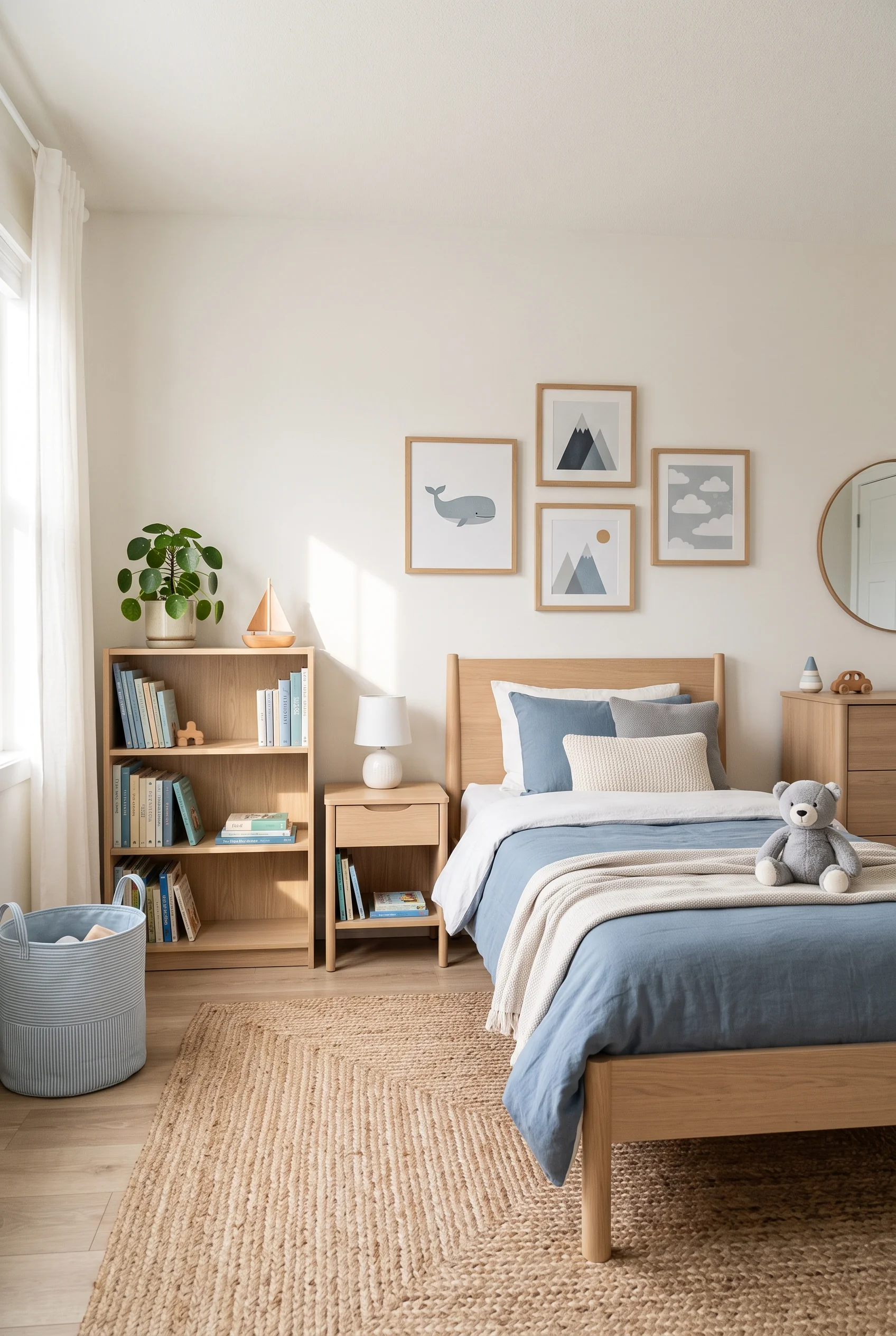
Warm white, soft beige, and muted blue offer a peaceful starting point for a child’s bedroom. These quieter shades work especially well on larger surfaces, where strong color can sometimes feel overwhelming at bedtime. A low-sheen washable paint keeps the finish practical for fingerprints and everyday marks.
Personality can still come through in bedding, toys, and framed art. Repeating two or three accent colors across those smaller details gives the room a polished rhythm without feeling overly coordinated. The palette stays calm while favorite belongings remain part of the story.
Cozy Kids Bedroom Layers That Stay Practical
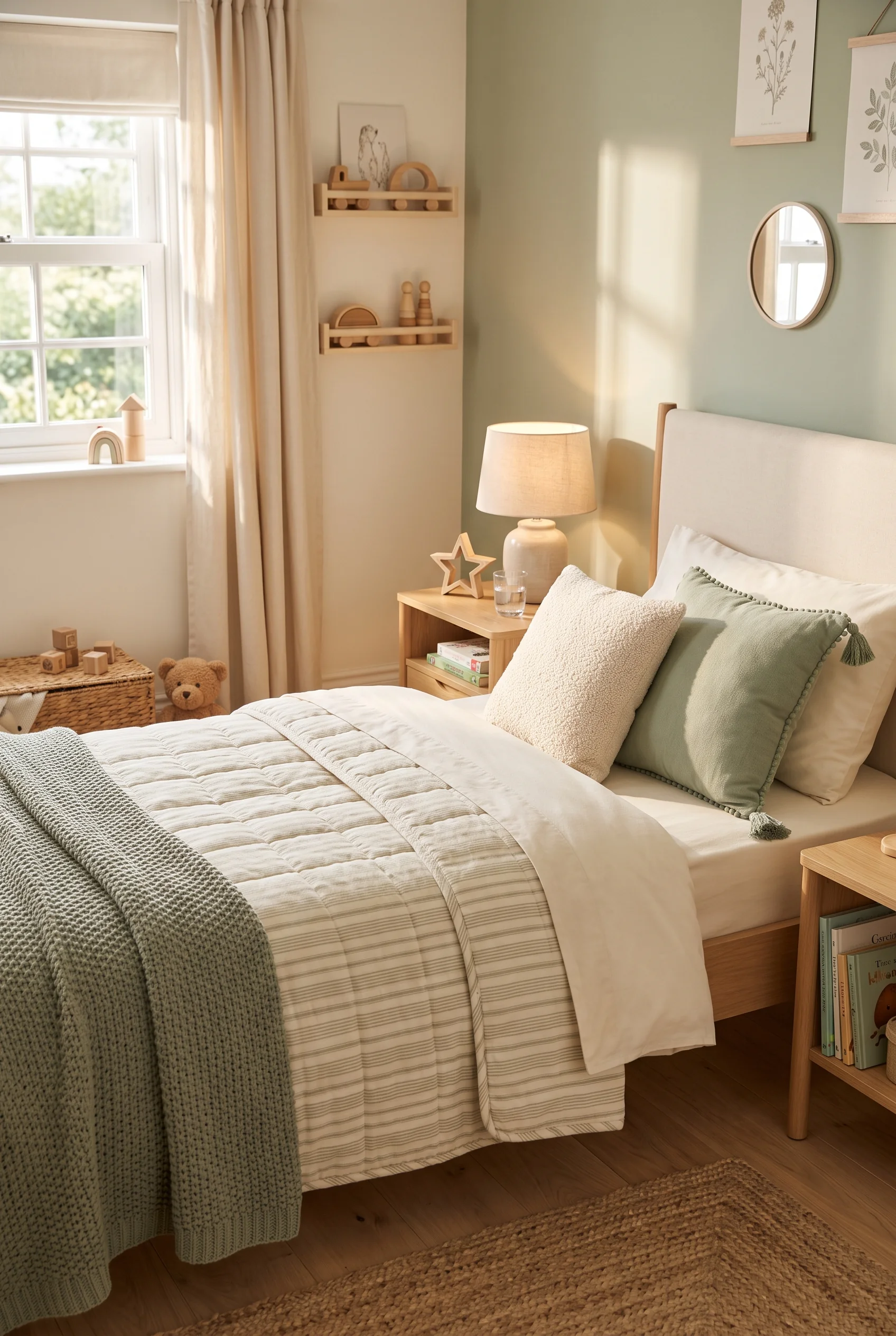
Breathable sheets paired with a lightweight quilt make the bed comfortable through changing seasons. A knit blanket or softly textured throw adds warmth without requiring a complicated arrangement of decorative pillows. Children can still make the bed themselves, which matters on busy school mornings.
Subtle texture feels calmer than several competing prints. Cream, sage, or dusty blue fabrics bring gentle contrast while keeping the sleeping area restful. Machine-washable materials are essential here. They allow a cozy kids bedroom to feel soft and inviting without turning ordinary spills into a major event.
Storage Hidden Beneath the Bed
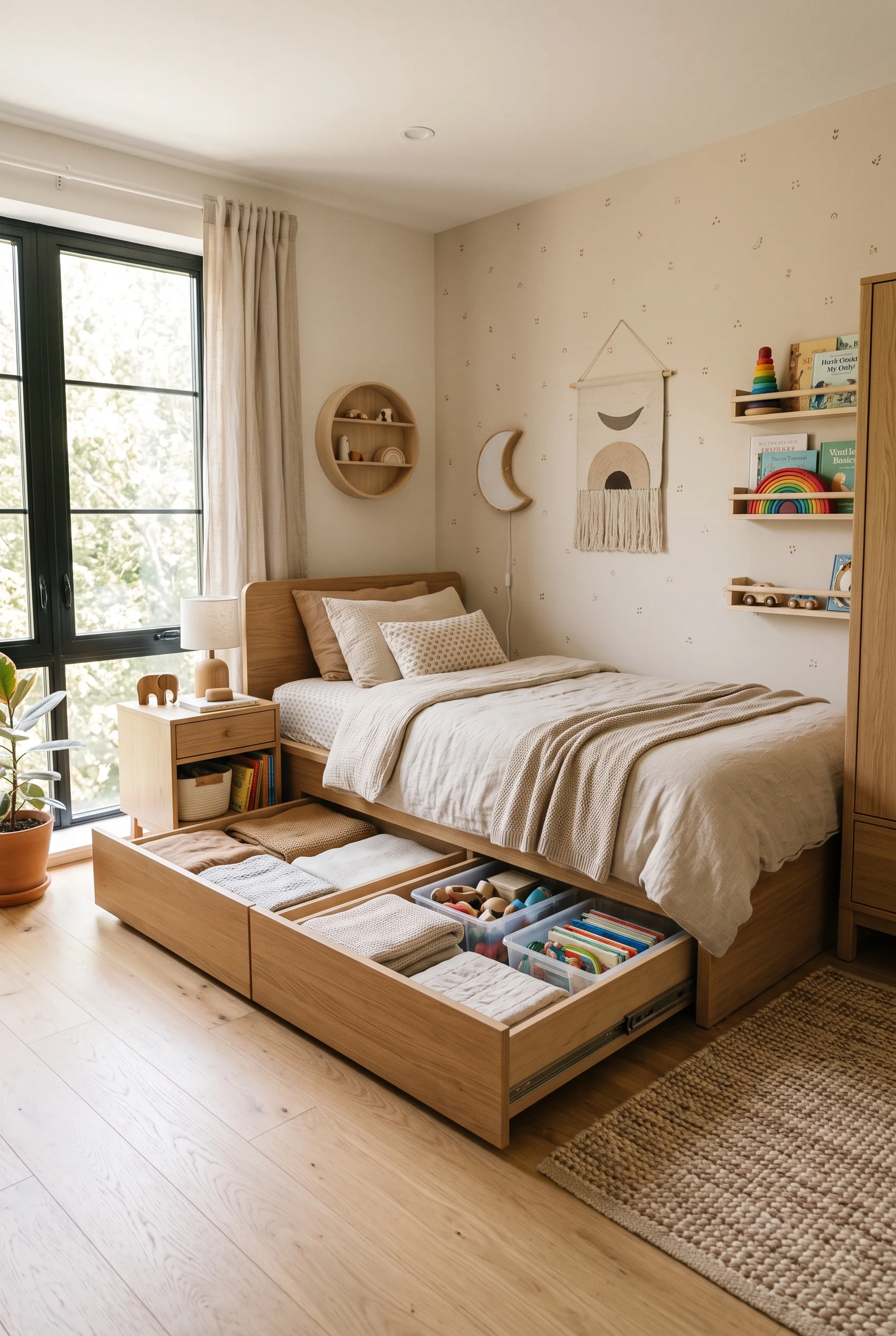
The unused area beneath a bed can hold a surprising amount without taking up another inch of floor space. Fitted drawers feel especially streamlined, while low rolling bins work well for extra bedding, off-season clothing, or toys you don’t need every day.
Measure the available clearance before buying containers, including the space needed to pull them out comfortably. Lids protect fabric and toys from dust, while simple labels prevent the storage from becoming a forgotten holding zone. Everything remains close enough to reach but quietly out of view.
Wall Storage for a Smaller Footprint
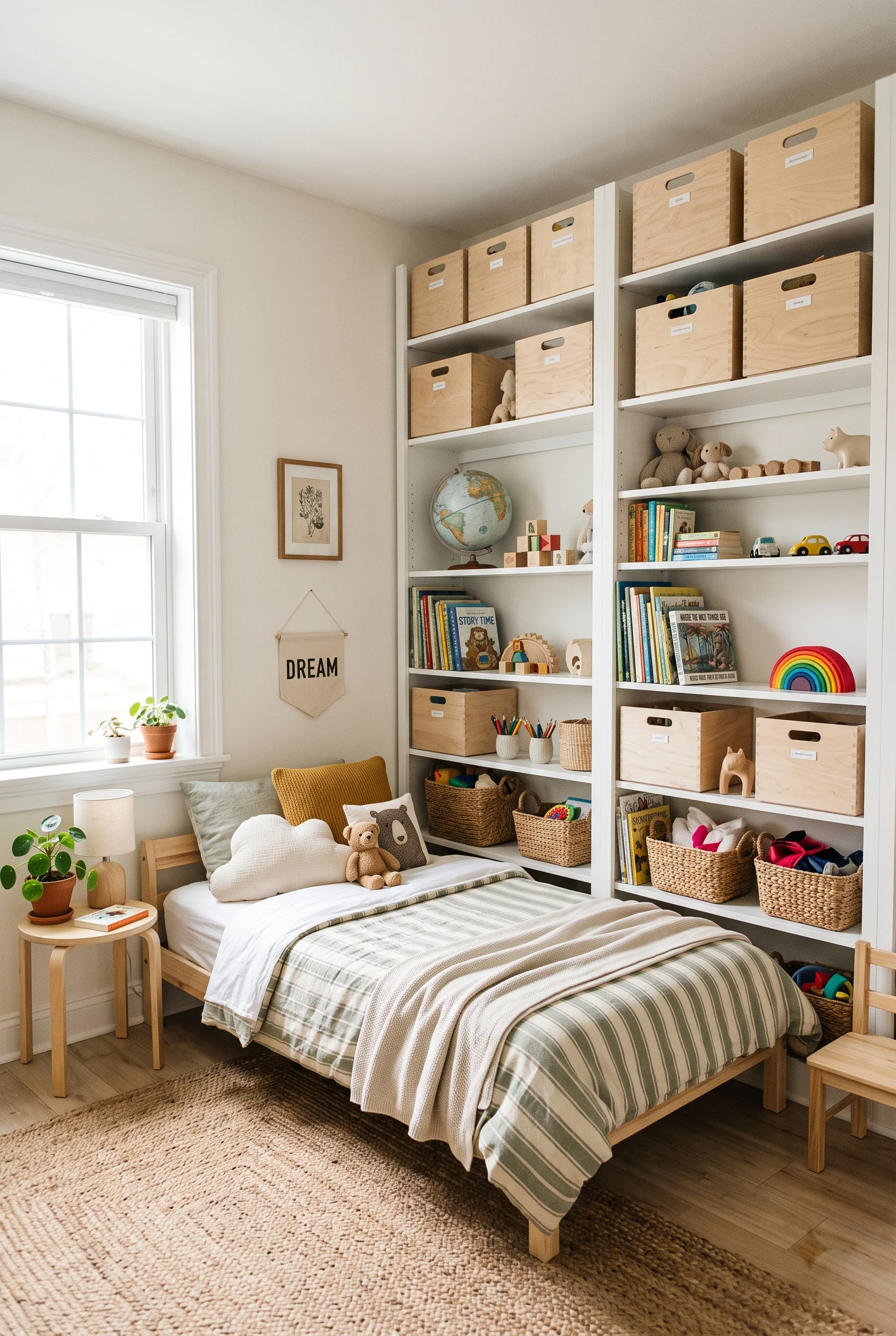
Tall shelving and wall-mounted cubbies draw storage upward when floor space is limited. Keep everyday books and toys on the lower levels, where children can reach them safely. Higher shelves can hold spare linens or supplies that require adult access.
A little open space between baskets keeps the arrangement from feeling heavy. Secure every tall unit to wall studs, even when the furniture appears stable. For more kids’ bedroom ideas for small rooms, thoughtful vertical storage often has more impact than adding another cabinet. The wall becomes useful without closing in the room.
A Reading Corner Made for Quiet Moments
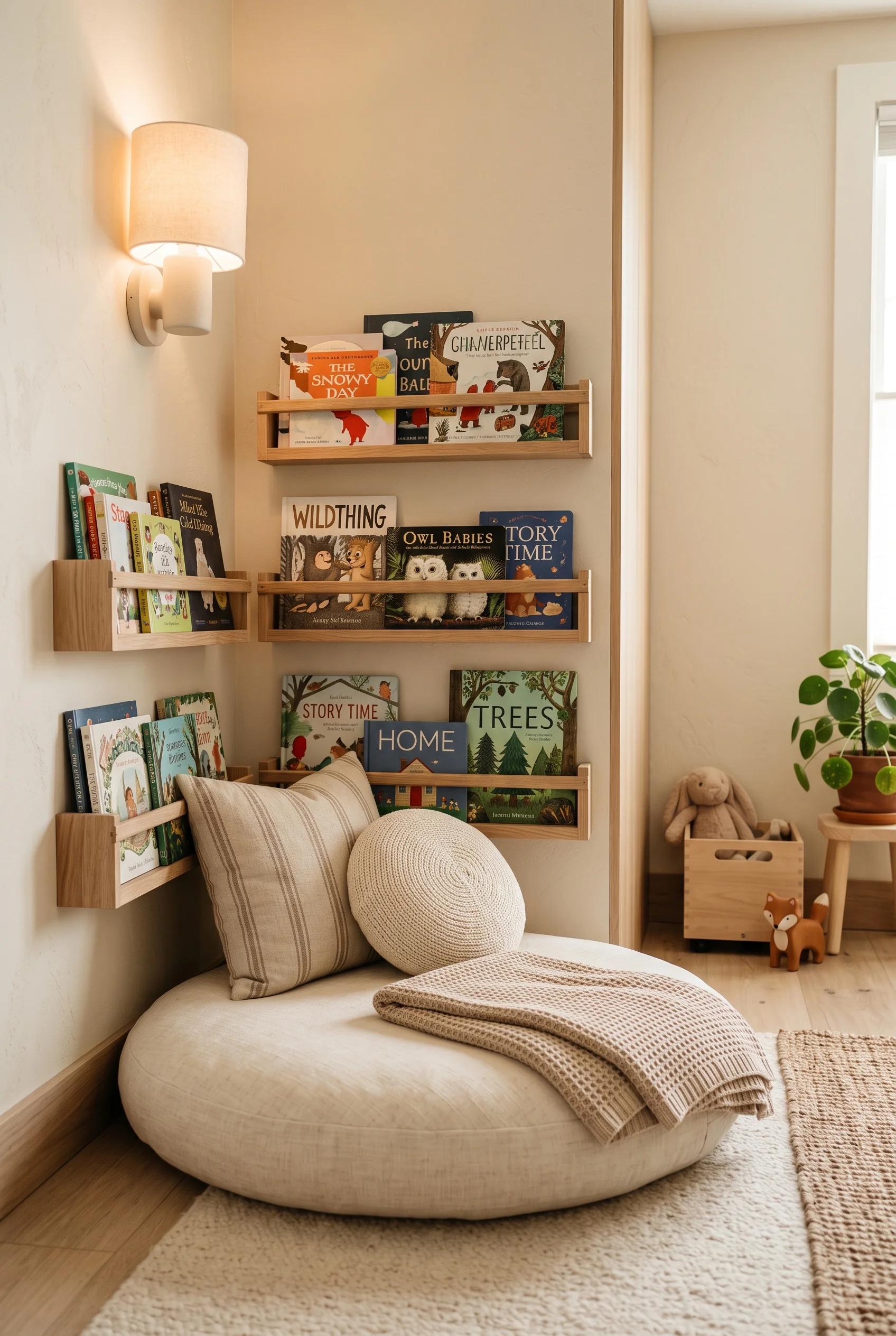
An overlooked corner can become a favorite retreat with one generous floor cushion and a few forward-facing books. Keeping book covers visible makes choosing a story feel simple, especially for younger readers who recognize images before titles.
A soft wall light gives the nook a warm evening glow without using valuable floor space. One blanket and two comfortable cushions are usually enough. Too many layers quickly crowd a small corner and make tidying harder. The finished nook feels sheltered and inviting, with everything needed for a slow bedtime story close at hand.
A Homework Station With Growing Room
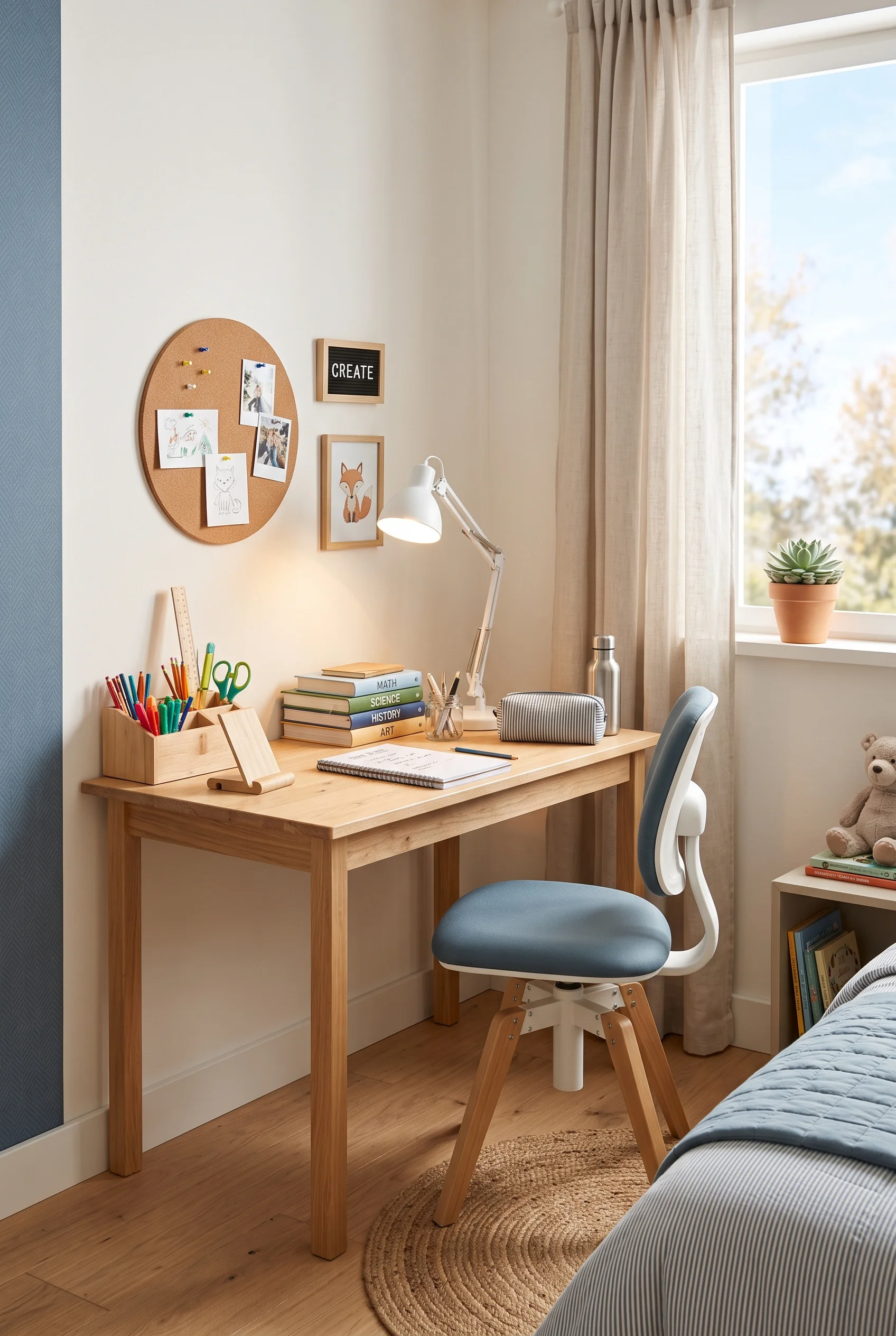
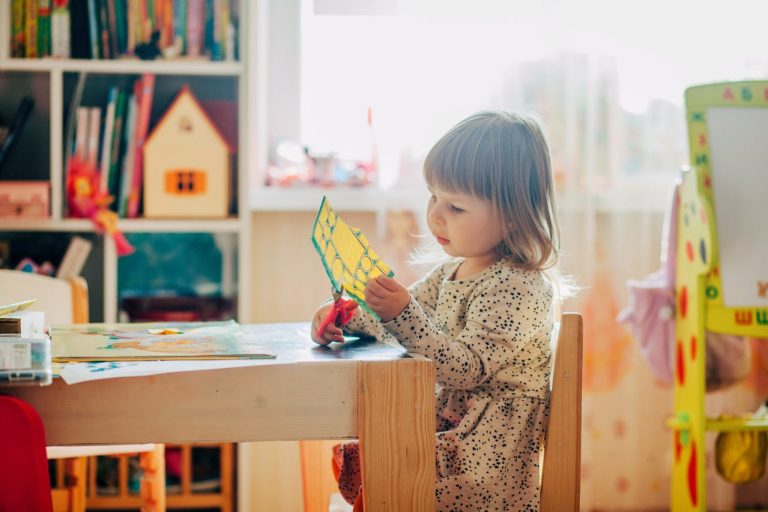
A compact desk works best when its surface is clear enough for writing, reading, and a laptop. Natural light is helpful during the day, while a focused task lamp keeps the area useful after sunset. A nearby drawer or small caddy prevents pencils and paper from spreading across the bedroom.
An adjustable chair extends the setup’s life as the child grows. The desk does not need to dominate the room or resemble a formal office. Clean lines, comfortable proportions, and easy access to supplies make it a natural part of the daily routine.
Clear Zones for a Smoother Daily Rhythm
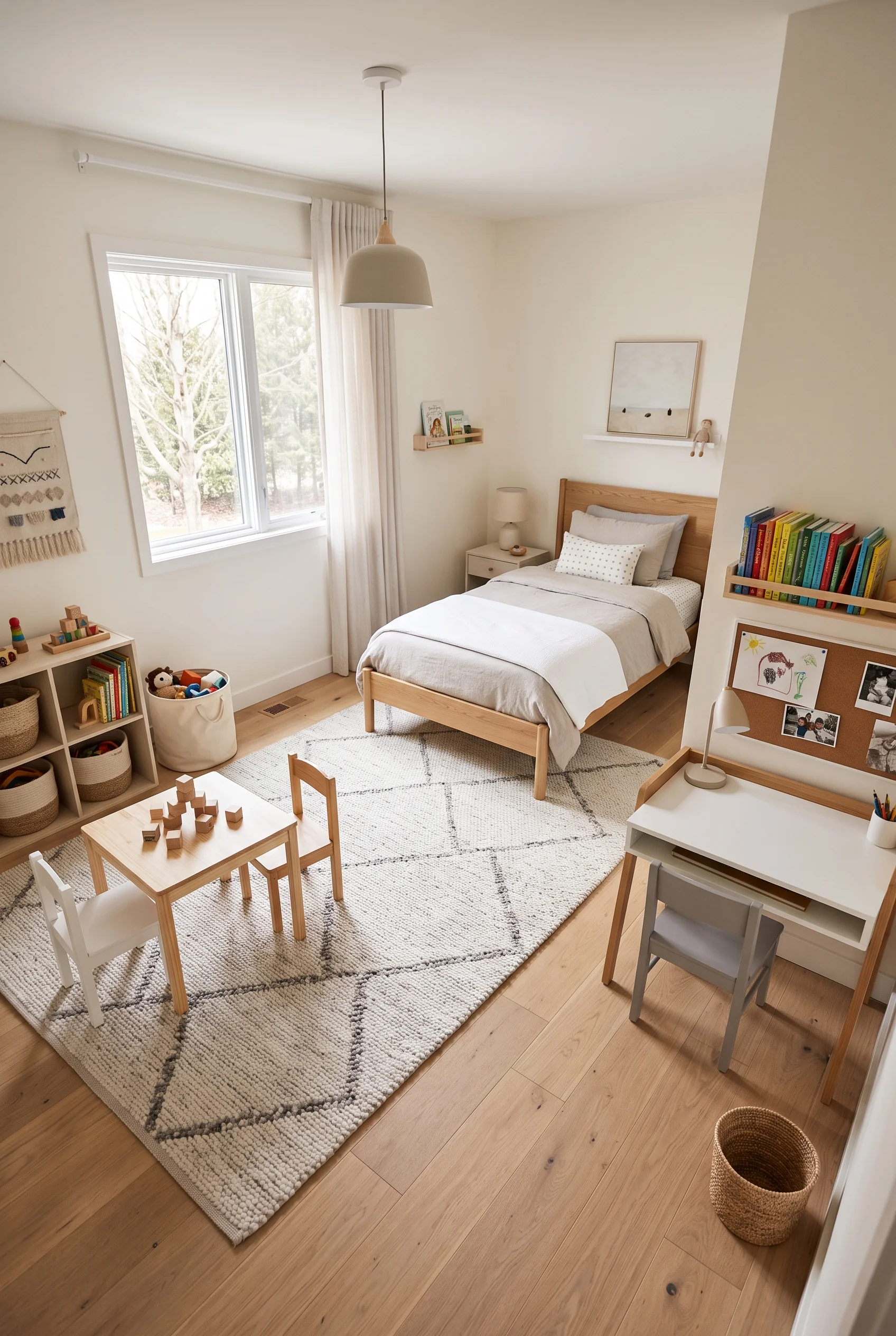
Separate areas for sleeping, dressing, studying, and playing help a busy bedroom feel easier to navigate. Furniture placement can define these zones without adding dividers. A rug might mark the play area, while a desk lamp visually anchors the workspace.
Active play feels more natural away from the bed, leaving the sleeping corner quieter as evening approaches. Open pathways between the door, closet, and furniture matter, too. Children can move comfortably, and the room feels less crowded even when several activities share the same footprint.
Furniture and Layouts That Make Every Inch Count
The right furniture earns its place by supporting more than one part of the day. Storage beds, balanced shared layouts, and visually light pieces preserve breathing room while meeting practical needs. Scale matters as much as function. A carefully measured piece feels integrated into the layout, while an oversized one can make even a generous bedroom difficult to use.
Furniture With More Than One Purpose
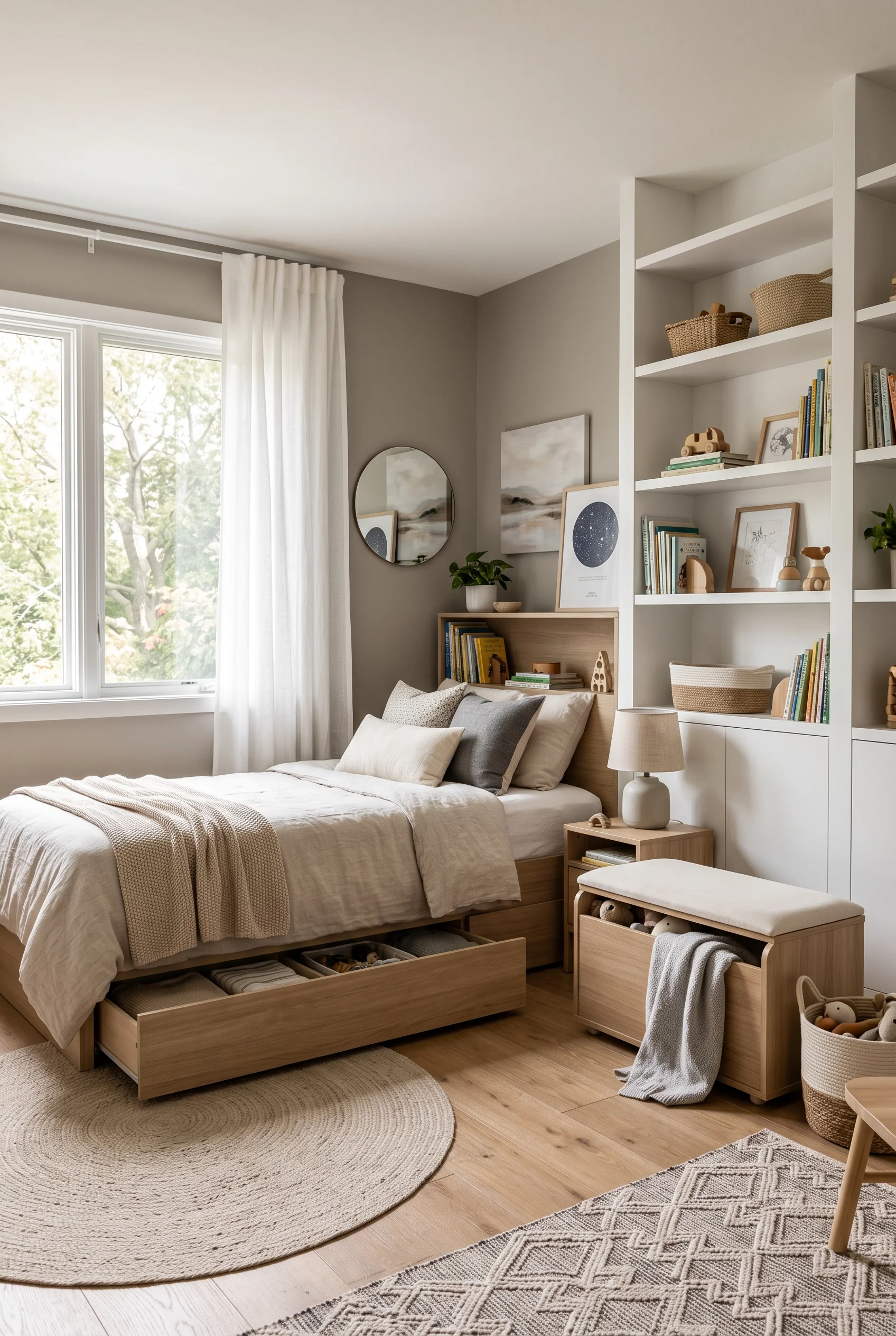
A storage bed, bookcase headboard, or bench with a hidden compartment can replace several separate pieces. This is particularly helpful when a bedroom needs to support sleep, reading, and toy storage within a modest footprint.
Multifunctional furniture should still leave comfortable walking space around doors and windows. Measure the full room before choosing anything, including the clearance required for drawers and cabinet doors. Pieces with clean silhouettes offer useful capacity without appearing bulky. The strongest options look like ordinary furniture until you need their extra storage or flexibility.
A Bunk Bed That Returns Floor Space
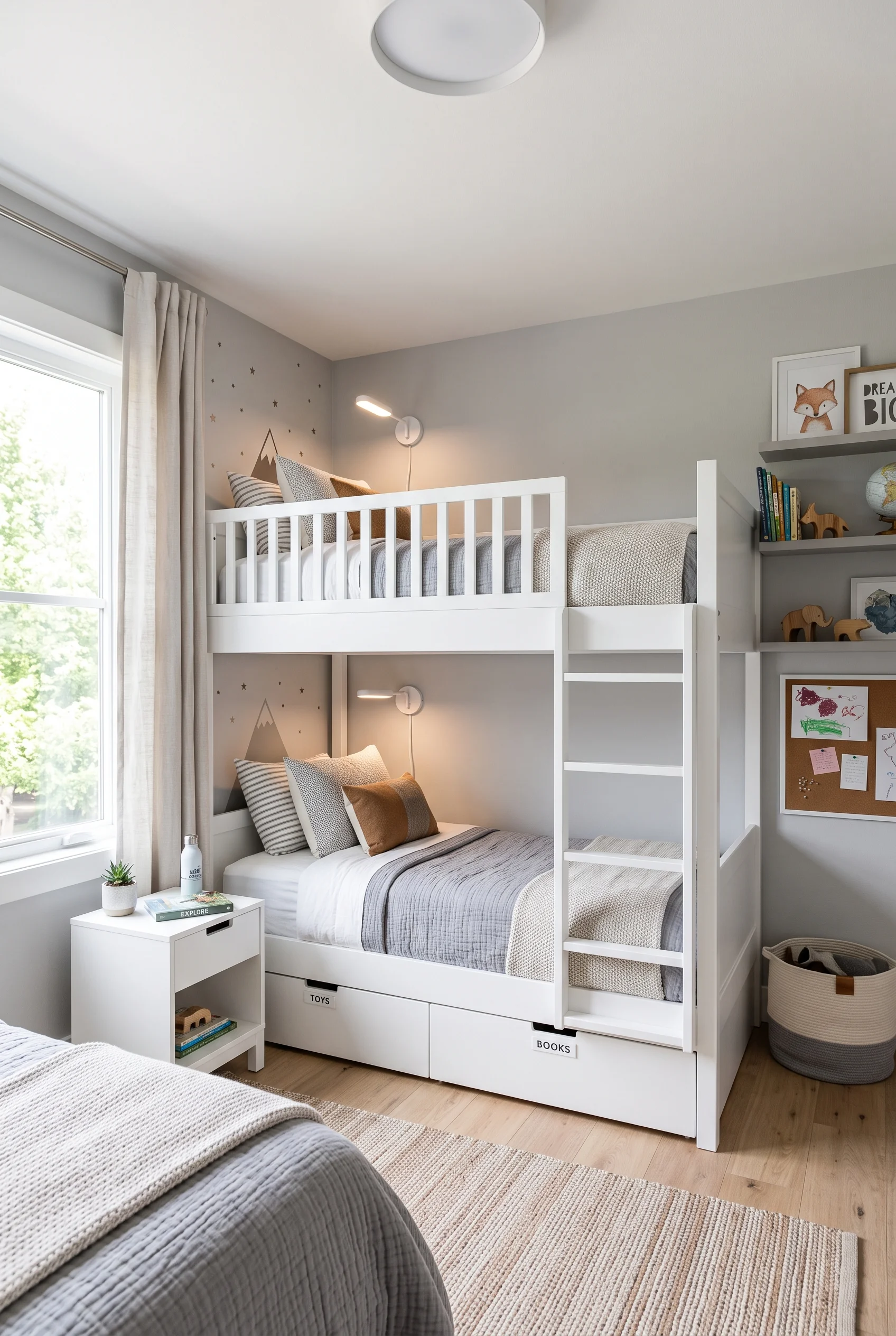
A streamlined bunk bed places two sleep zones within the footprint of one. The open floor below and around it can then support play, a shared dresser, or additional storage. Built-in drawers make the arrangement even more efficient.
Before choosing a style, prioritize guardrails, a secure ladder, and age-appropriate construction. Individual reading lights help each bunk feel personal, while a small shelf gives both children a place for a book or water cup. The room gains practical space without asking either child to give up a comfortable sleeping area.
Shared Kids Bedroom Ideas With Equal Presence
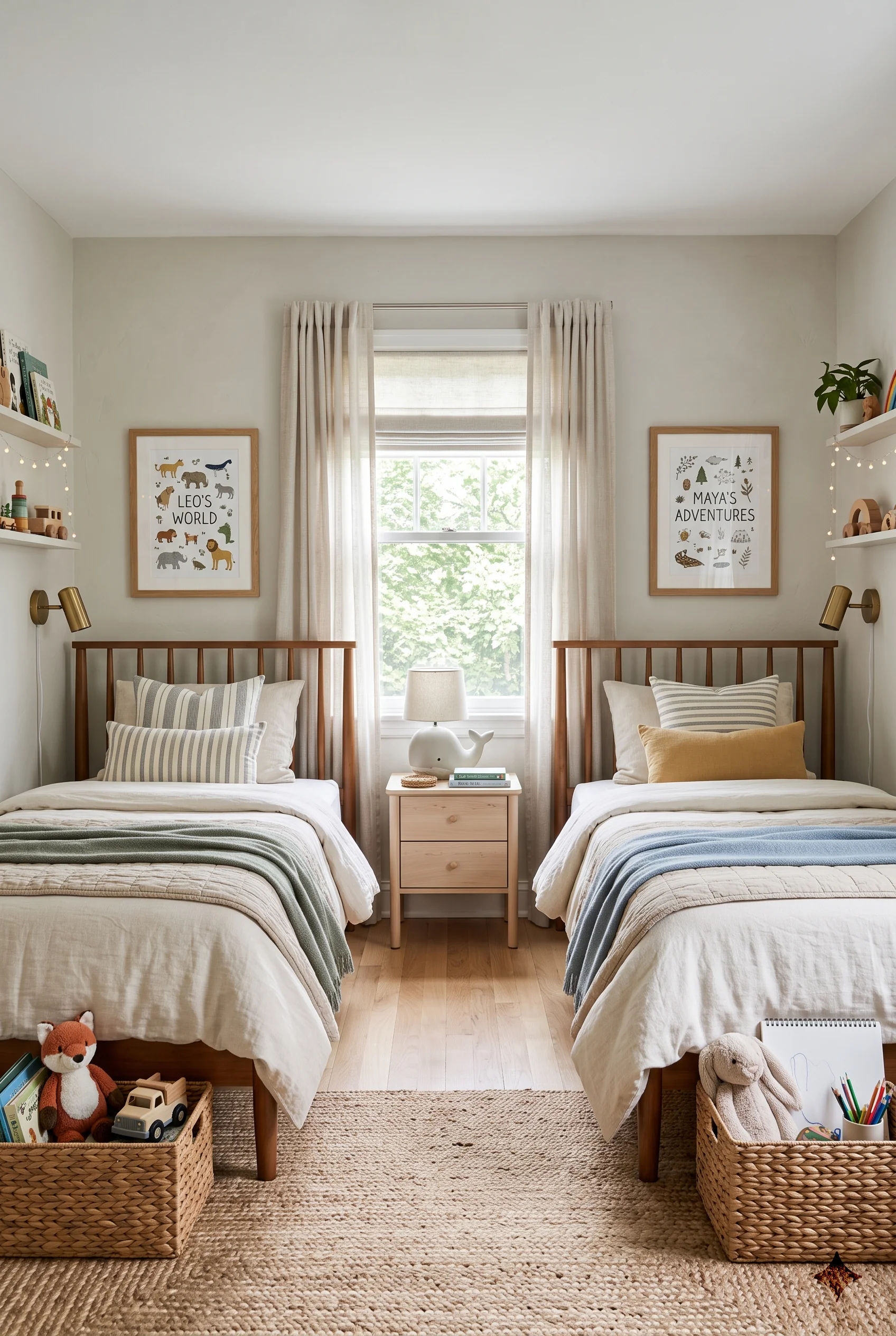
Two matching bed frames or repeated colors bring visual balance to a shared room. Within that framework, each child can have separate artwork, bedding accents, and a dedicated basket or drawer. The bedroom feels connected without erasing individual preferences.
A central bookcase or toy cabinet can hold belongings both children use. Personal storage works better near each bed, where it is clear what belongs to whom. These small boundaries can ease everyday routines and make a cozy and functional shared kids’ bedroom feel considered from both sides.
Light, Airy Choices for Compact Rooms
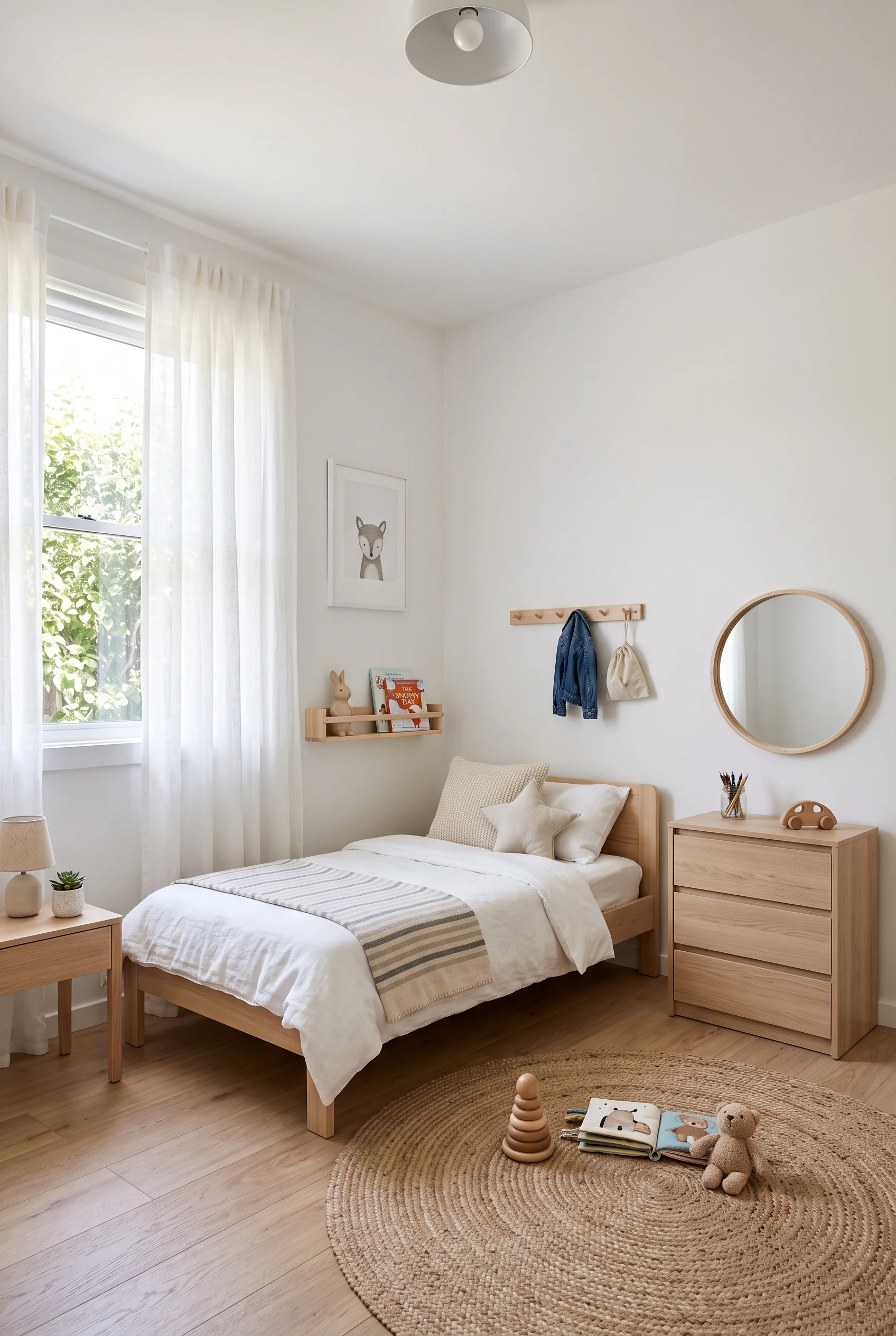
Pale walls and light wood furniture let natural light flow through a compact bedroom. Curtains that frame rather than cover the window keep the room bright during the day. A securely mounted mirror can reflect that light and bring extra depth to a narrow wall.
Clear sightlines matter just as much as color. Limiting tall or oversized furniture prevents the layout from feeling boxed in, particularly near the doorway. Small kids’ bedroom ideas often work best when you choose fewer pieces with more care. The eye can travel across the room without stopping at unnecessary bulk.
Soft Baskets for Everyday Toy Storage
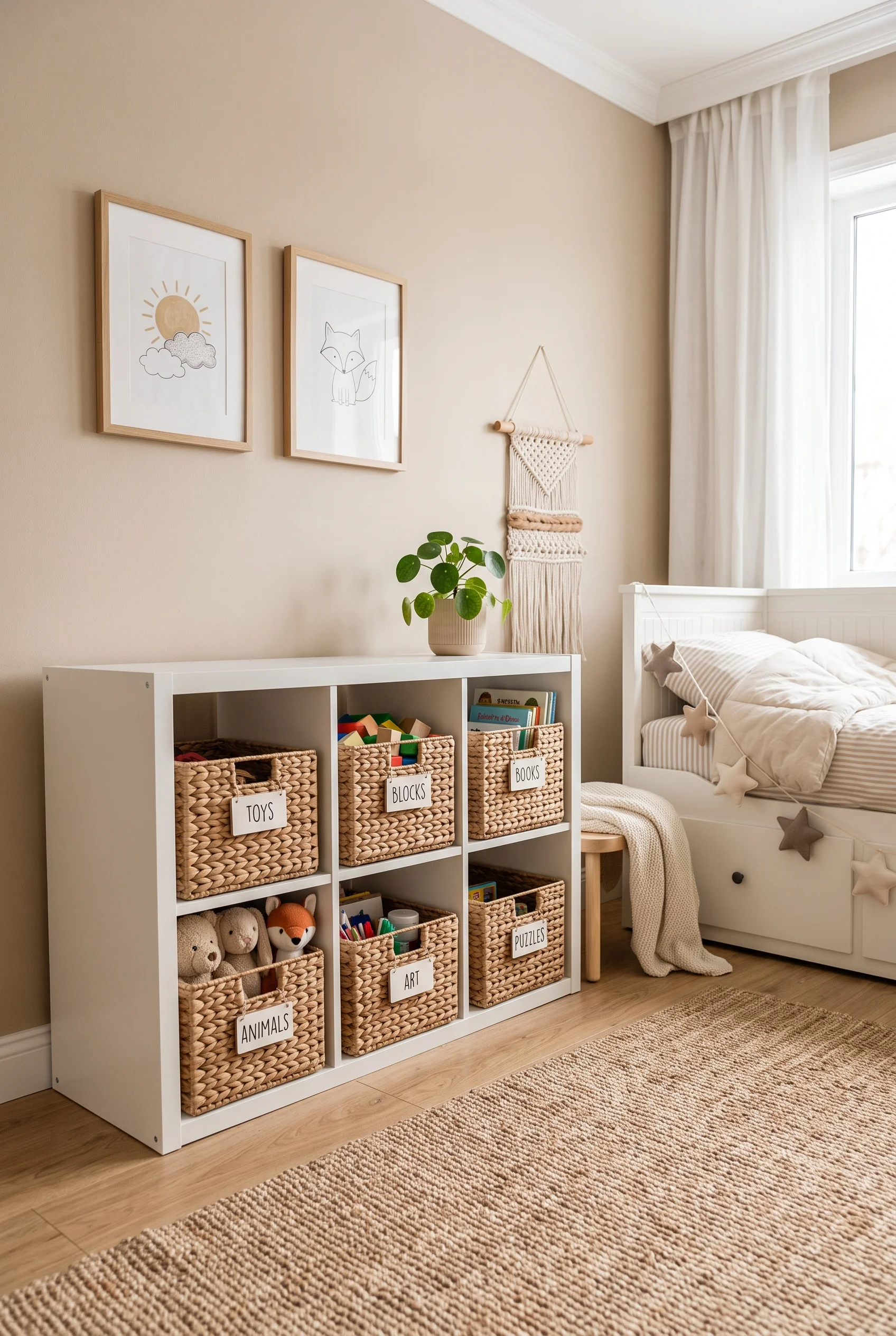
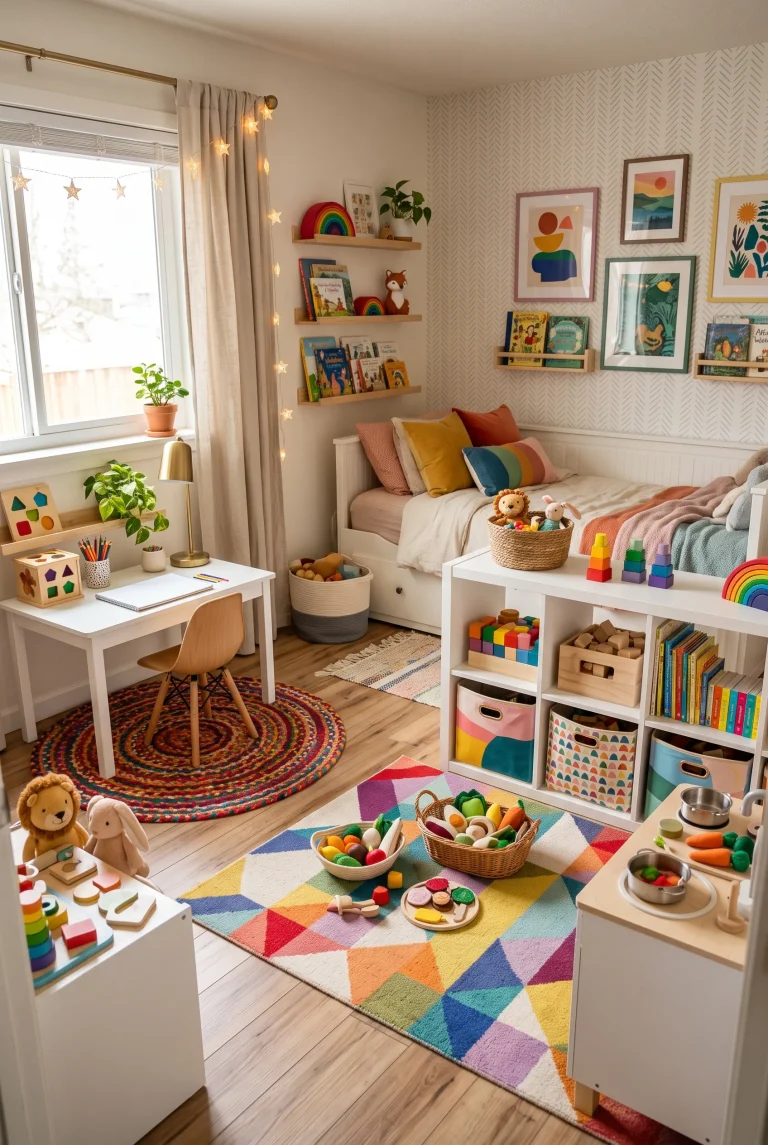
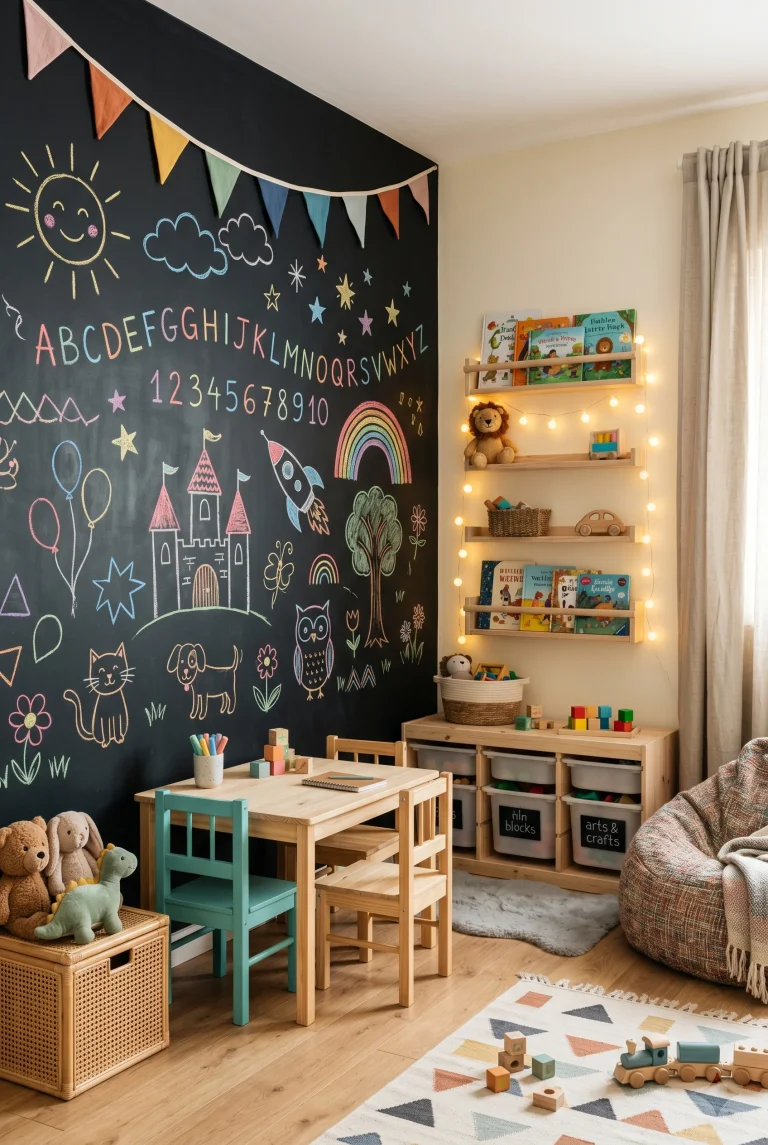
Coordinated storage baskets soften open cubbies while concealing the visual noise of small toys. Broad categories such as blocks, figures, and art supplies are easier for children to remember than highly specific sorting systems. Cleanup stays realistic, even at the end of a long day.
Place the most-used baskets at child height and leave a little empty capacity in each one. When containers are packed tightly, finding a single toy often means emptying everything onto the floor. Durable handles and structured sides also help baskets hold their shape through daily use.
Book Covers Within Easy Reach
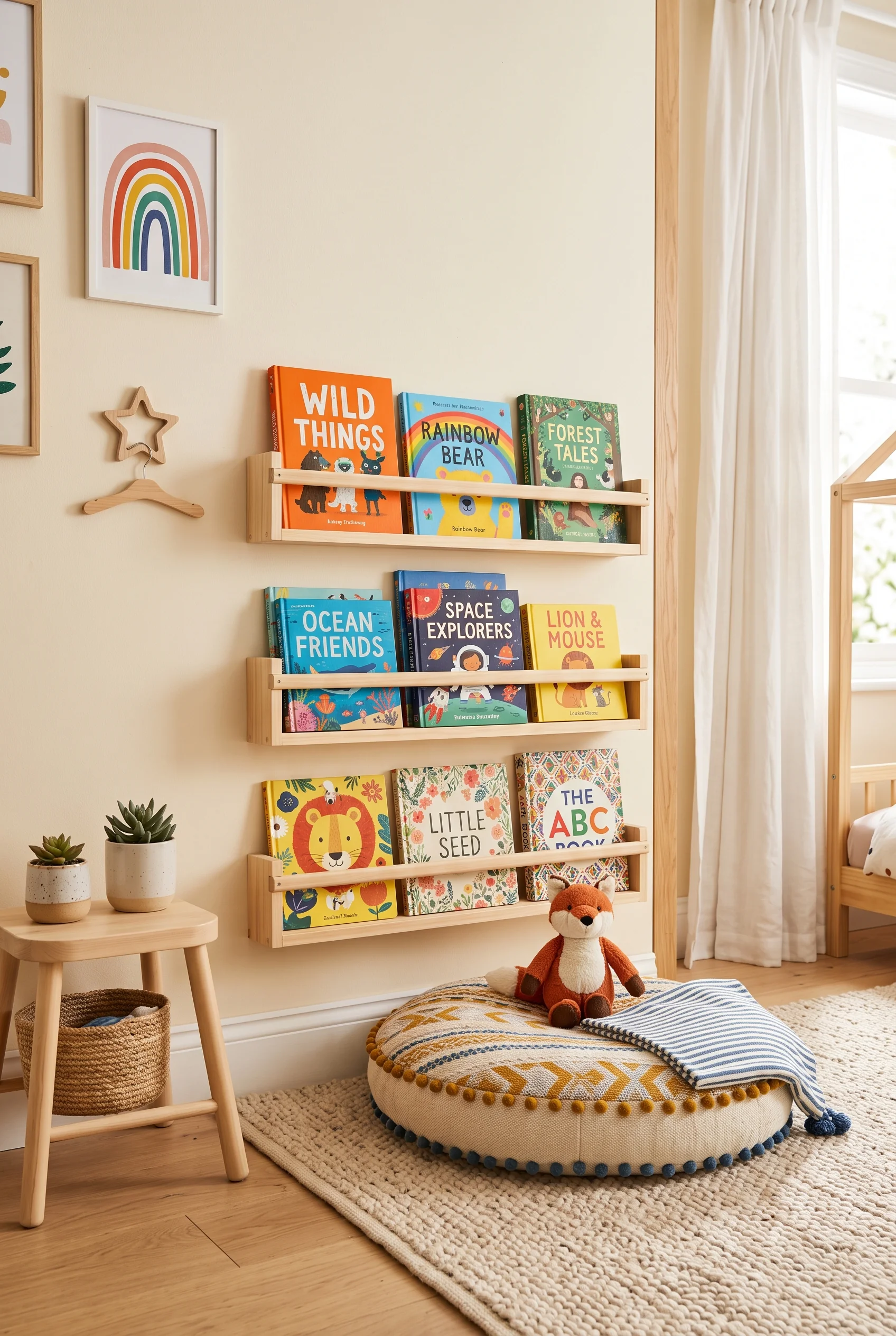
Shallow wall ledges turn colorful book covers into useful kids’ room decor. Unlike a deep bookcase, they take up little room and let children see their choices at a glance. Mount the lowest row at a comfortable height to reach.
A small rotating selection keeps the display from becoming crowded. Books can change with the season, current interests, or reading level while the ledges remain in place. Secure each one carefully and avoid placing heavy objects above the bed. The arrangement feels cheerful, accessible, and naturally connected to reading time.
Everyday Storage With a Place for Everything
Good organization should feel intuitive enough for a child to follow. Hooks near the door, accessible closet storage, and clear picture labels make putting things away part of the room’s natural rhythm. Lighting and window treatments support that same ease in quieter ways. Each detail removes a small frustration and helps the bedroom settle into a more dependable routine.
A Simple Landing Place for Daily Essentials
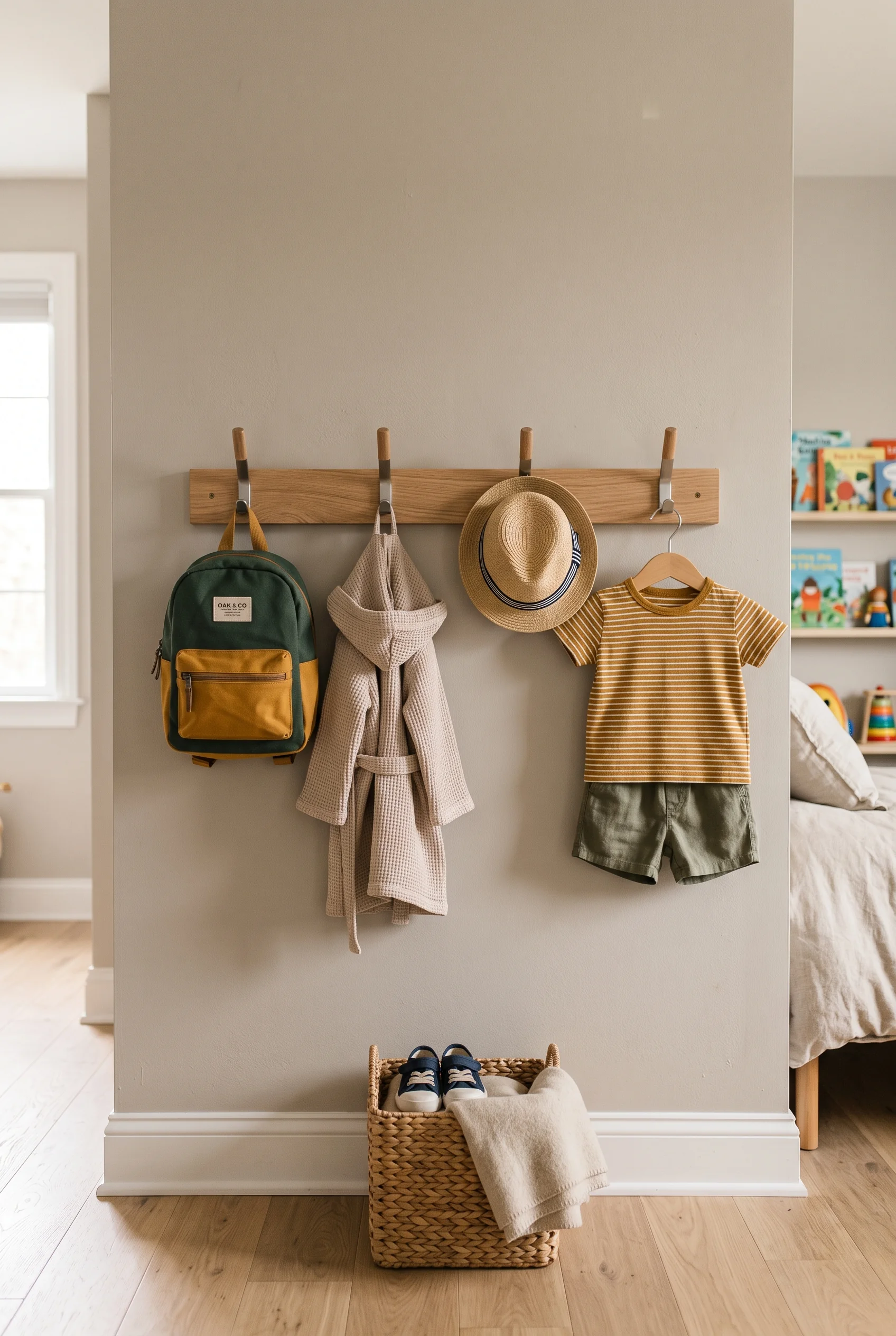
A neat row of hooks gives backpacks, robes, hats, and tomorrow’s outfit an obvious home. The wall behind the door or beside the closet is often ideal because it uses space that might otherwise sit empty.
Mount several hooks at child height so putting belongings away does not require help. Matching shapes or finishes keep the arrangement visually quiet, even when the hooks are full. Sturdy hardware matters for school bags and heavier clothing. The morning routine feels gentler when the things needed first are waiting in one predictable place.
A Closet Designed Around Current Needs
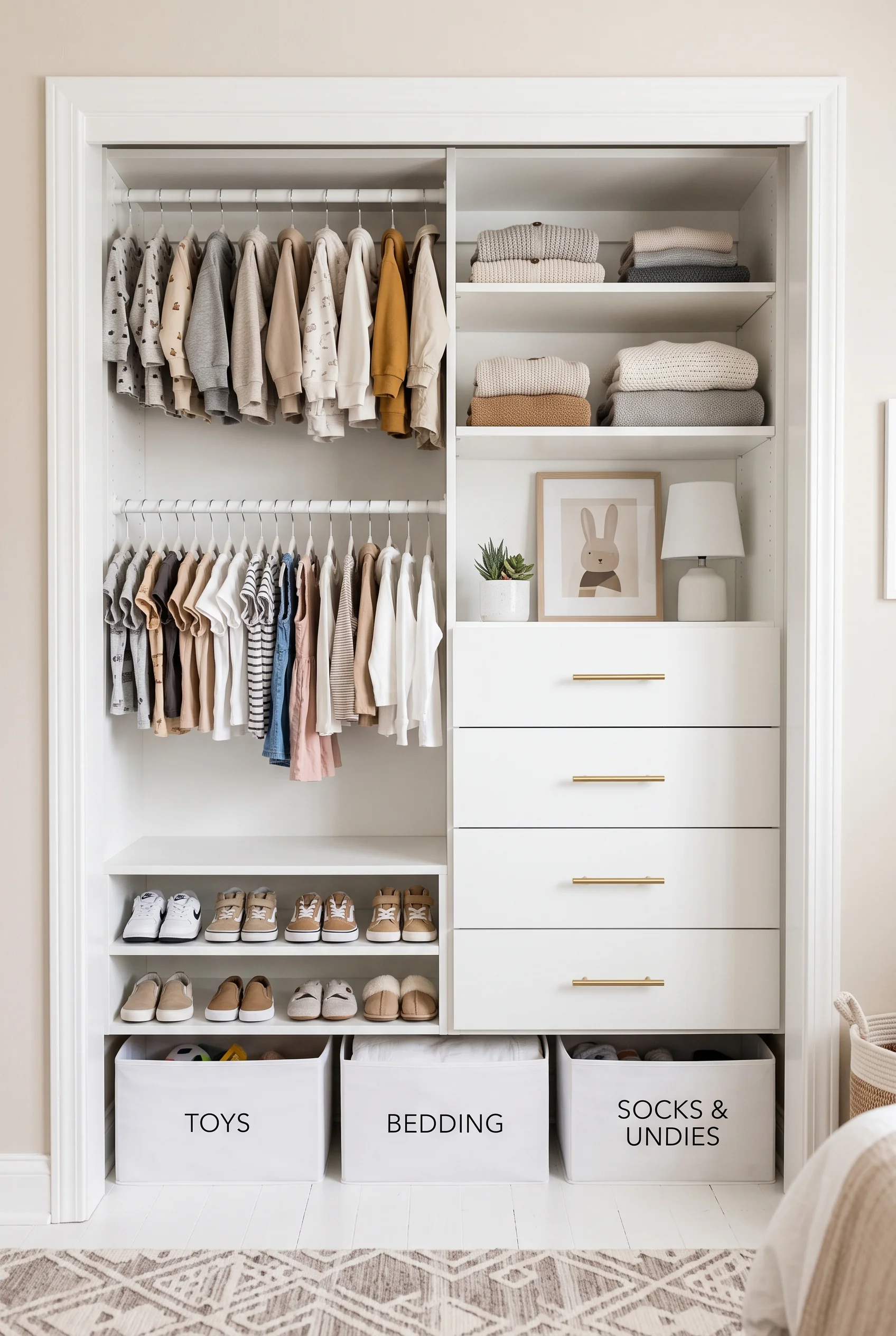
A second hanging rail makes better use of the vertical space inside a child’s closet. Short shirts, jackets, and pants can occupy two levels, while low drawers or shoe shelves keep everyday items within reach.
Upper bins are useful for off-season clothing and the next size up, especially when each container has a clear label. Regular editing matters as much as adding organizers. Removing outgrown pieces prevents the closet from becoming long-term overflow. What remains supports the child’s present routine rather than taking up space for a stage that has already passed.
Picture Labels That Support Independence
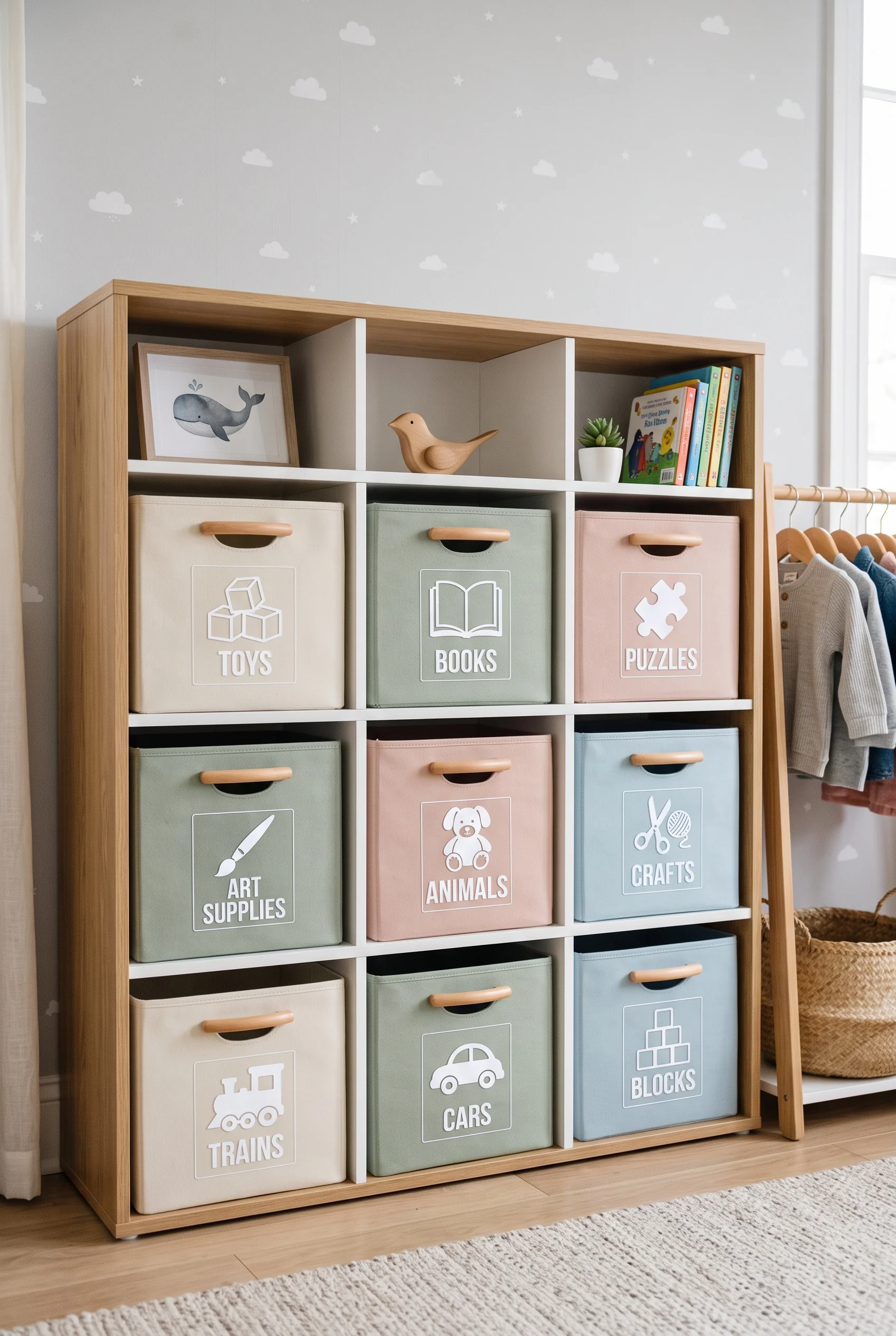
Simple pictures paired with written words make a storage system understandable before a child can read confidently. Drawers, cubbies, and baskets can each carry a clear category without covering the room in busy signage.
Consistent colors and clean label designs keep the setup polished. More importantly, children can see exactly where pajamas, building pieces, or art materials belong. Update the labels when clothing sizes, interests, or routines change. The system stays useful because it grows alongside the child instead of asking the child to adapt to an outdated arrangement.
A Soft Rug at the Heart of the Room
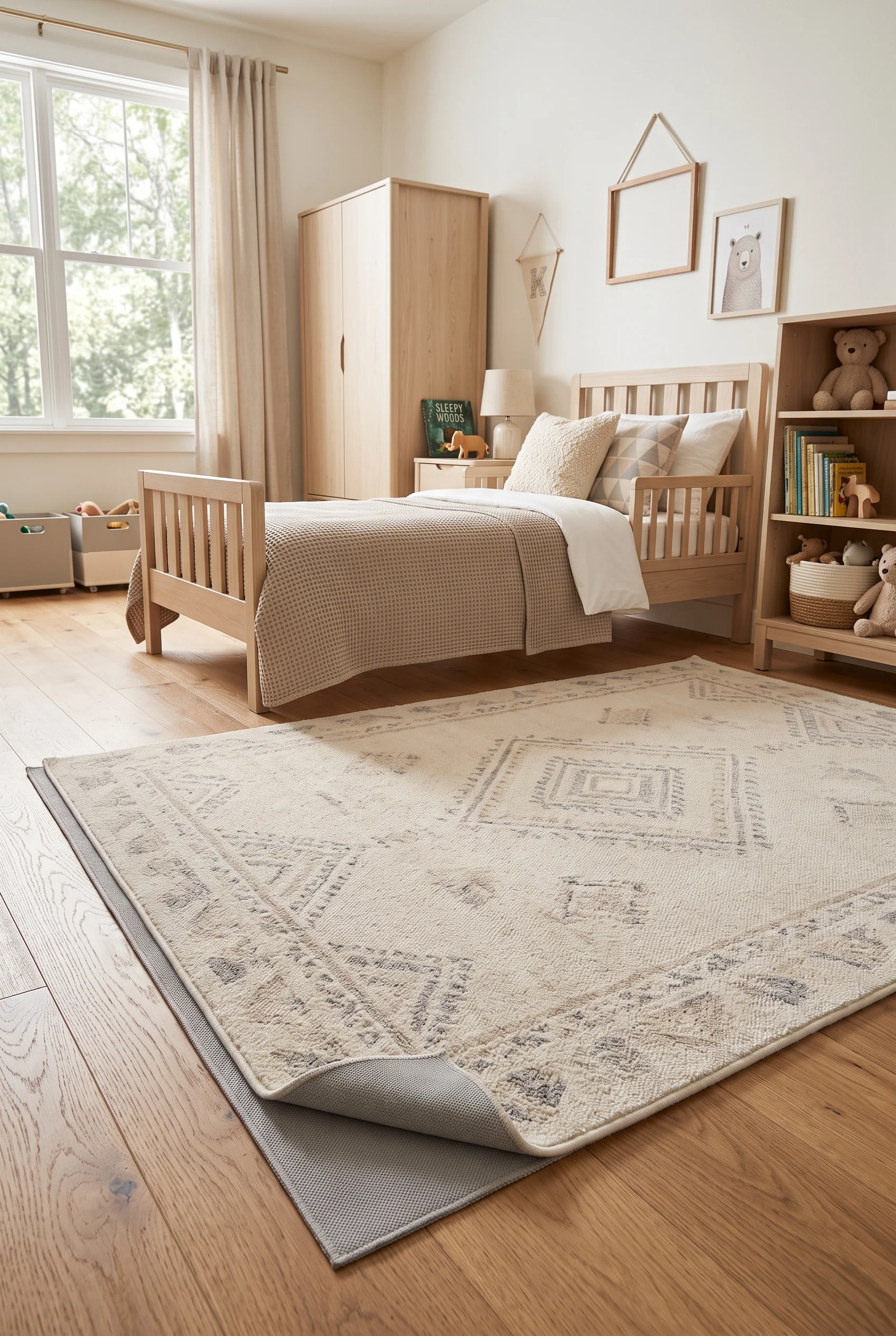
A comfortable area rug brings warmth to bare floors and gives play a natural gathering place. Beside the bed, it makes early mornings feel softer underfoot. Beneath the central play area, it visually anchors toys and child-sized furniture.
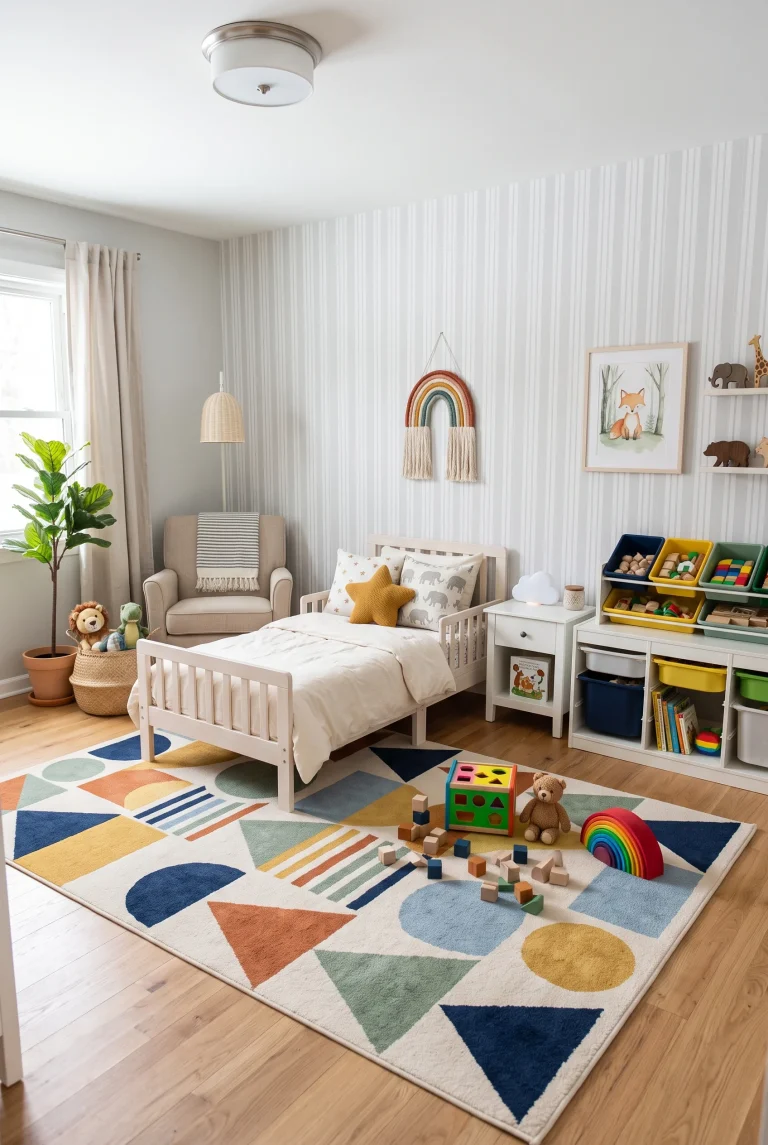
Low-pile, easy-clean materials are usually the most forgiving choice for spills and frequent traffic. A subtle geometric pattern can connect bedding and wall colors without competing with artwork. Place a nonslip pad underneath to reduce shifting and curled corners. The room gains softness and definition while remaining ready for real family use.
Warm Light for Every Part of the Day
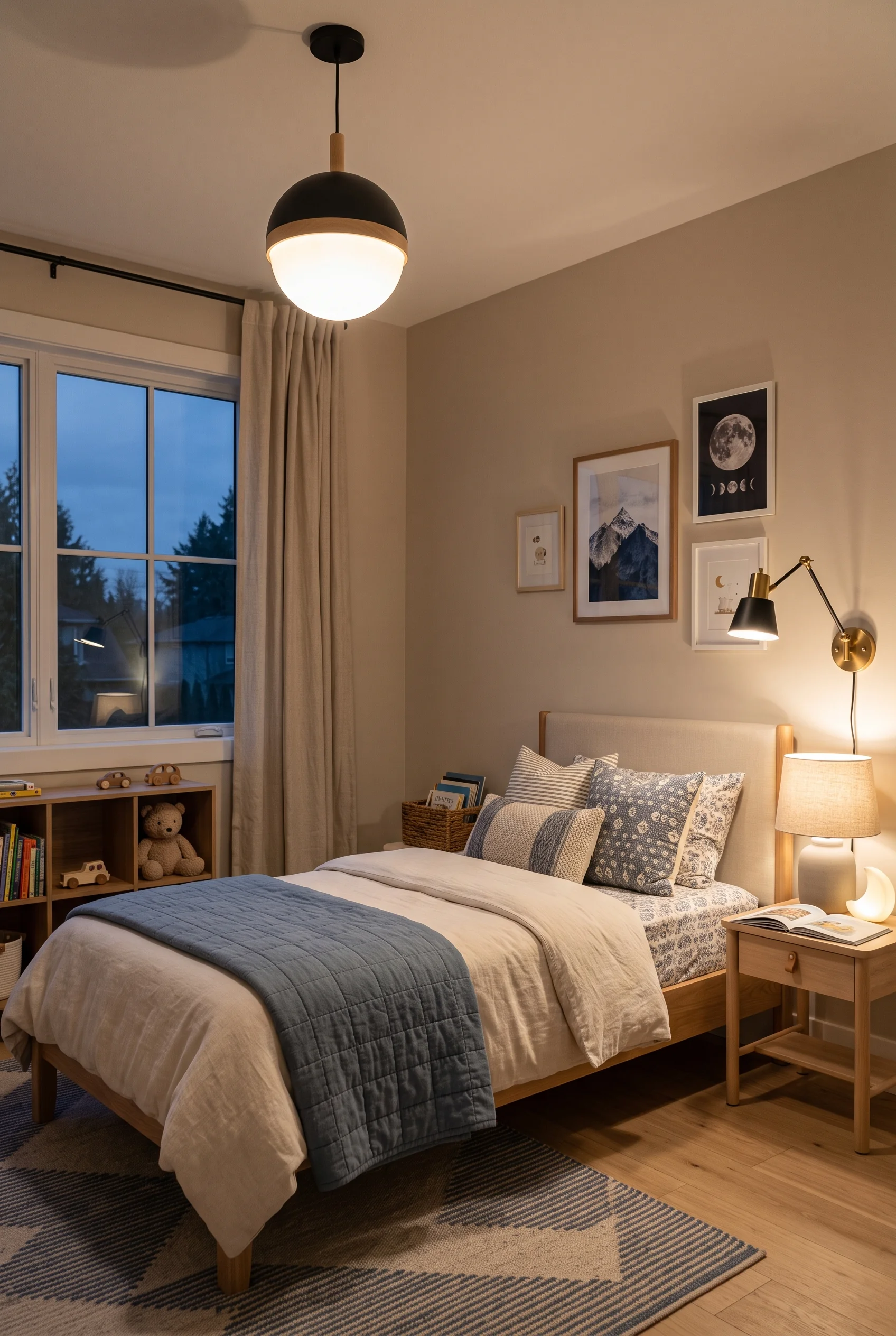
Overhead lighting handles general tasks, but smaller light sources make a bedroom feel comfortable after dark. A bedside lamp supports winding down, while a reading sconce or desk lamp provides focused illumination exactly where it is needed.
Warm-toned bulbs have a softer evening presence than cool white light. Dimmers and low-level night lights also make bedtime routines and nighttime check-ins less disruptive. Manage cords carefully and position lamps where they cannot be knocked over. Layered lighting allows the mood to shift naturally from active afternoons to quiet nights.
Window Layers That Protect Rest
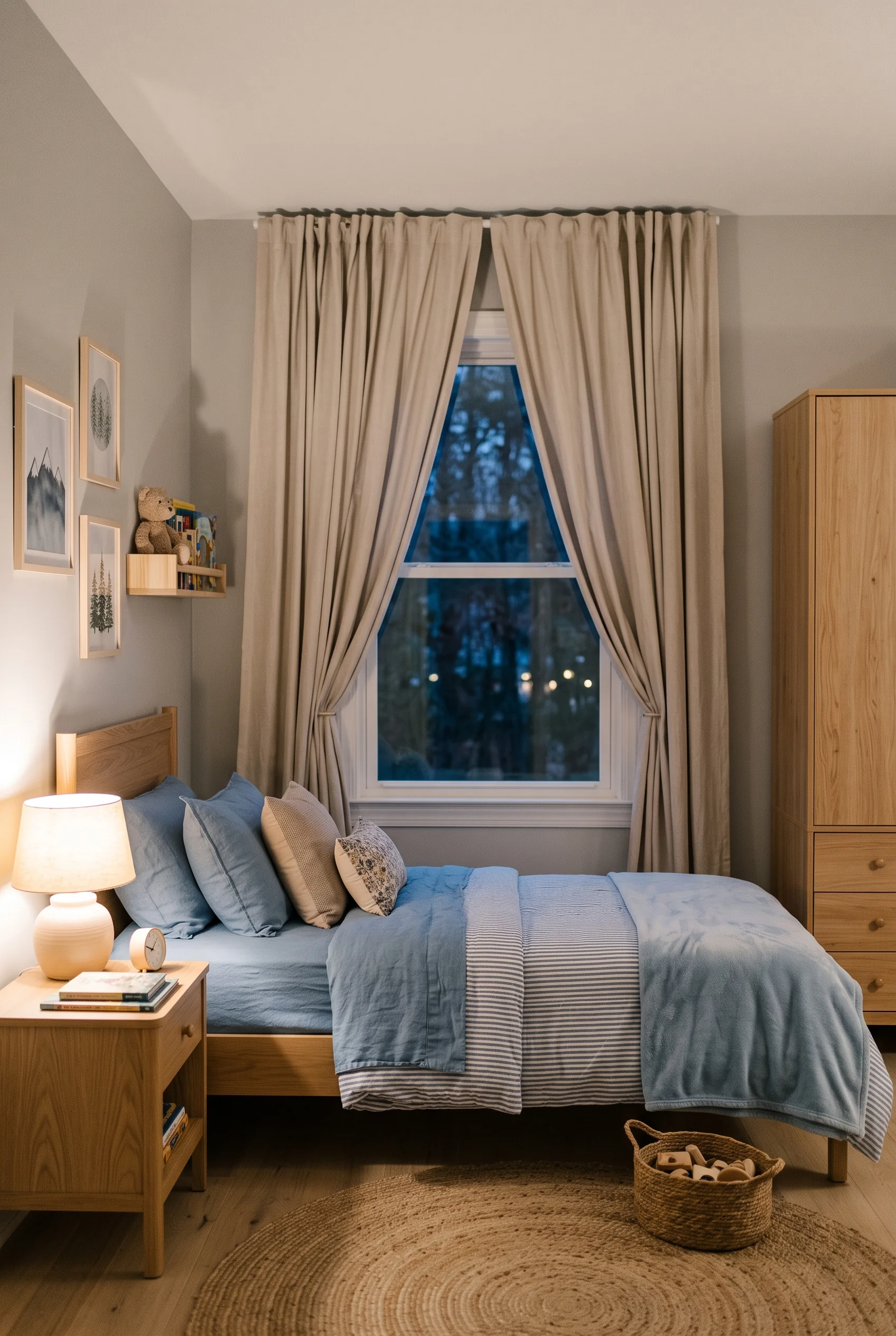
Blackout curtains or lined shades soften early morning light and help maintain a more consistent sleep environment. Hanging panels slightly above and beyond the window frame improves coverage while making the window appear more generous.
A solid neutral or restrained pattern blends easily with changing bedding and decor. Child-safe cordless hardware keeps the treatment practical, especially in rooms used by younger children. During the day, the curtains can open fully to welcome natural light. At bedtime, the same window becomes quiet, sheltered, and ready for rest.
Playful Details Within a Quiet Modern Frame
Children’s rooms can hold color, pattern, and imagination without feeling visually restless. The most adaptable approach gives one detail a clear moment, then lets the surrounding elements stay simple. An accent wall or canopy can shape the mood, while meaningful art makes the bedroom personal. These layers are expressive, but they can still change easily as interests develop.
An Accent Wall With Gentle Energy
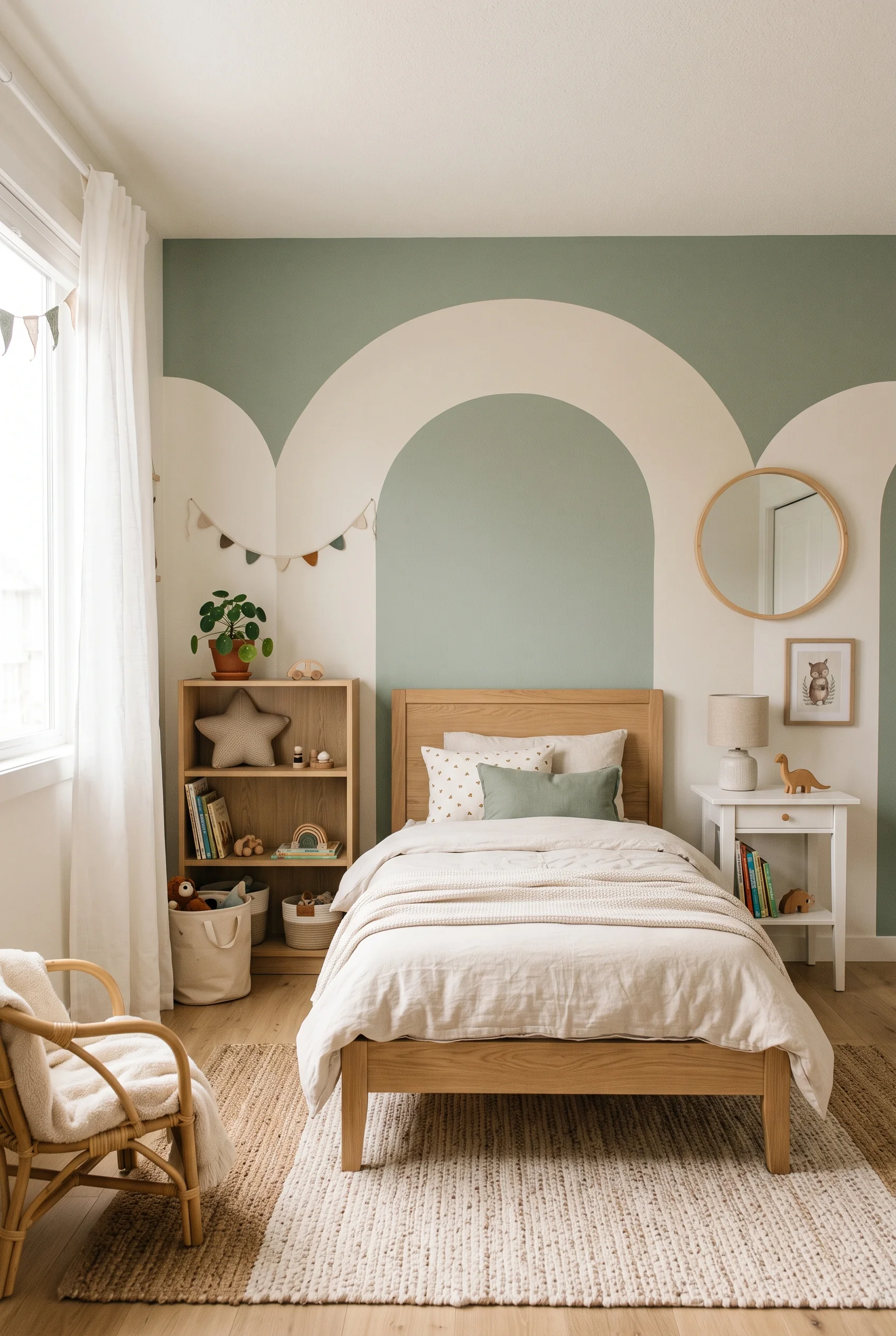
A painted arch, simple mural, or restrained panel detail gives one wall a clear focal point. Muted green, dusty blue, or soft clay can feel playful without overwhelming the sleeping area. The remaining walls stay quiet and allow the feature to breathe.
Pull one or two colors from the accent wall into bedding or small accessories to tie the room together. You don’t need to repeat the motif everywhere. A single confident gesture has more presence than several competing themes, especially in a compact bedroom where every surface is visible at once.
Removable Pattern With Lasting Flexibility
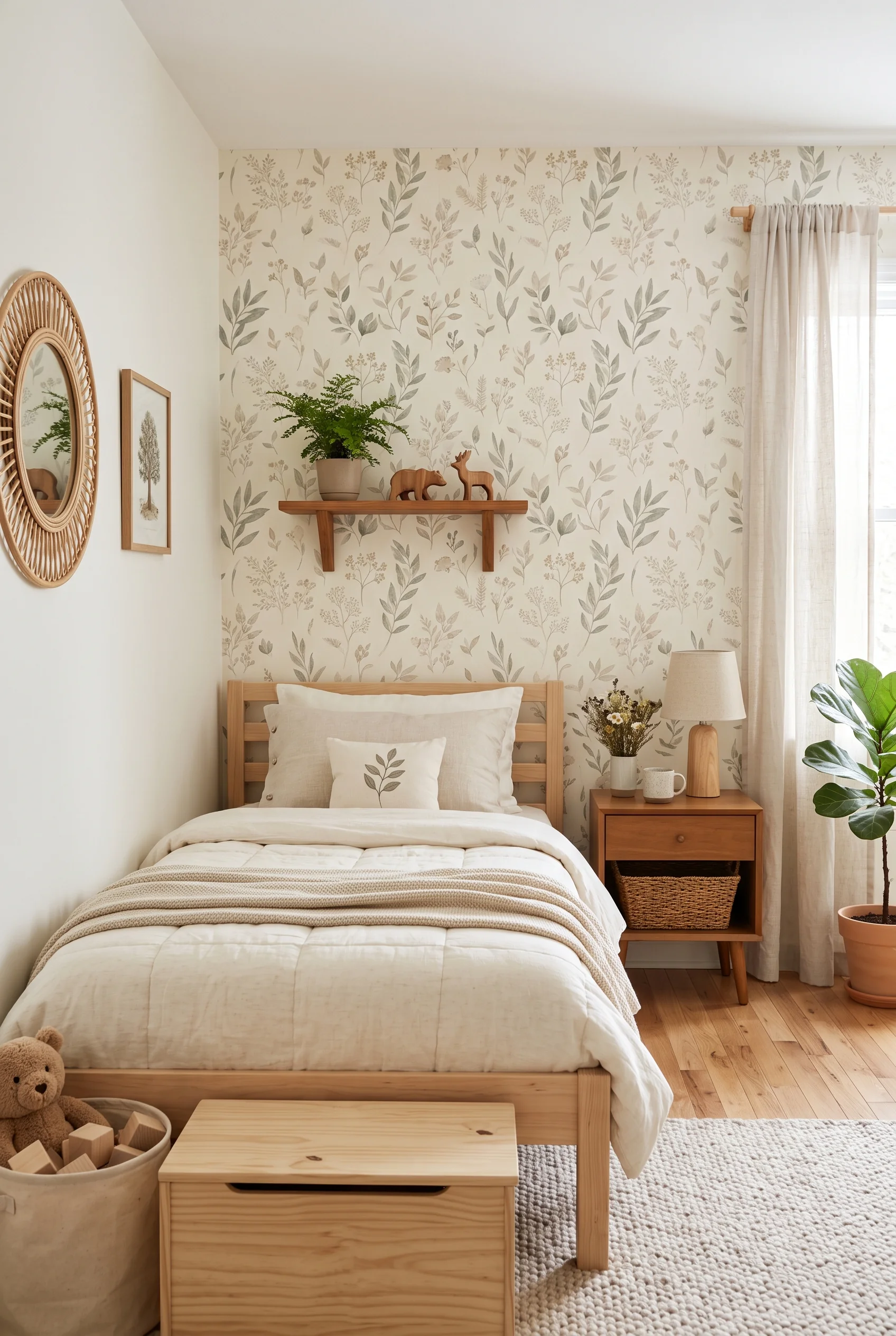
Removable wallpaper brings pattern to the wall behind a bed, inside a closet, or across a small feature area. A medium-scale botanical or geometric print adds interest while leaving enough open background to keep the room calm.
Test a sample before committing to the full installation. Color can shift throughout the day, and not every adhesive works equally well with every wall finish. Solid bedding and simple accessories give the pattern room to stand out. The bedroom gains personality without requiring a permanent design decision.
Artwork With a Personal Point of View
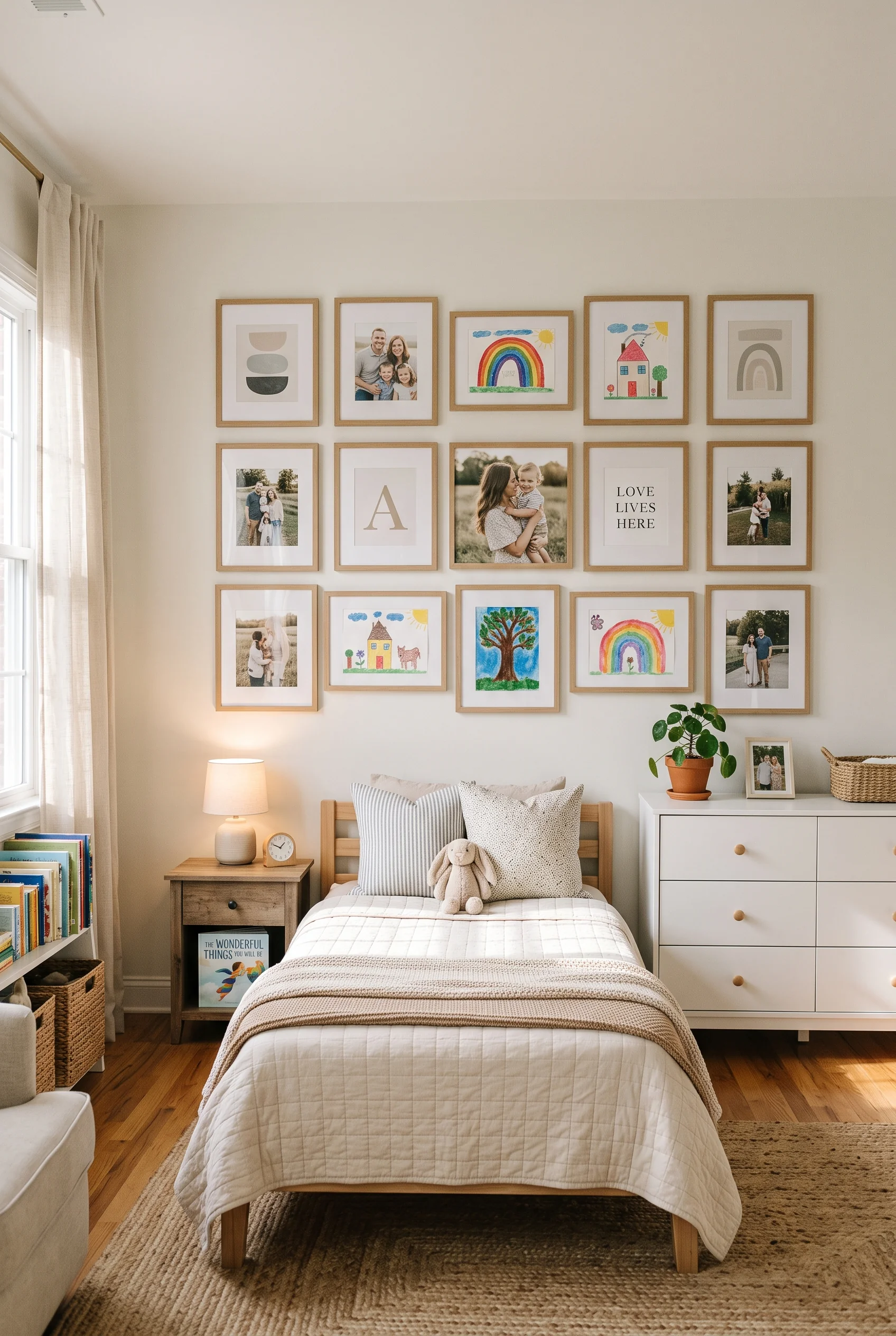
Children’s drawings, family photographs, and prints connected to current interests bring genuine warmth to a bedroom. Matching frames or a limited color palette can unite pieces that vary widely in style and subject.
A picture ledge or designated gallery area makes future changes easy. New artwork can join the display without requiring a full redesign each time. Mount frames securely, and keep heavier pieces away from the area directly above the bed. The collection feels curated, but its meaning comes from the child and family who live with it.
A Soft Hideaway for Slower Moments
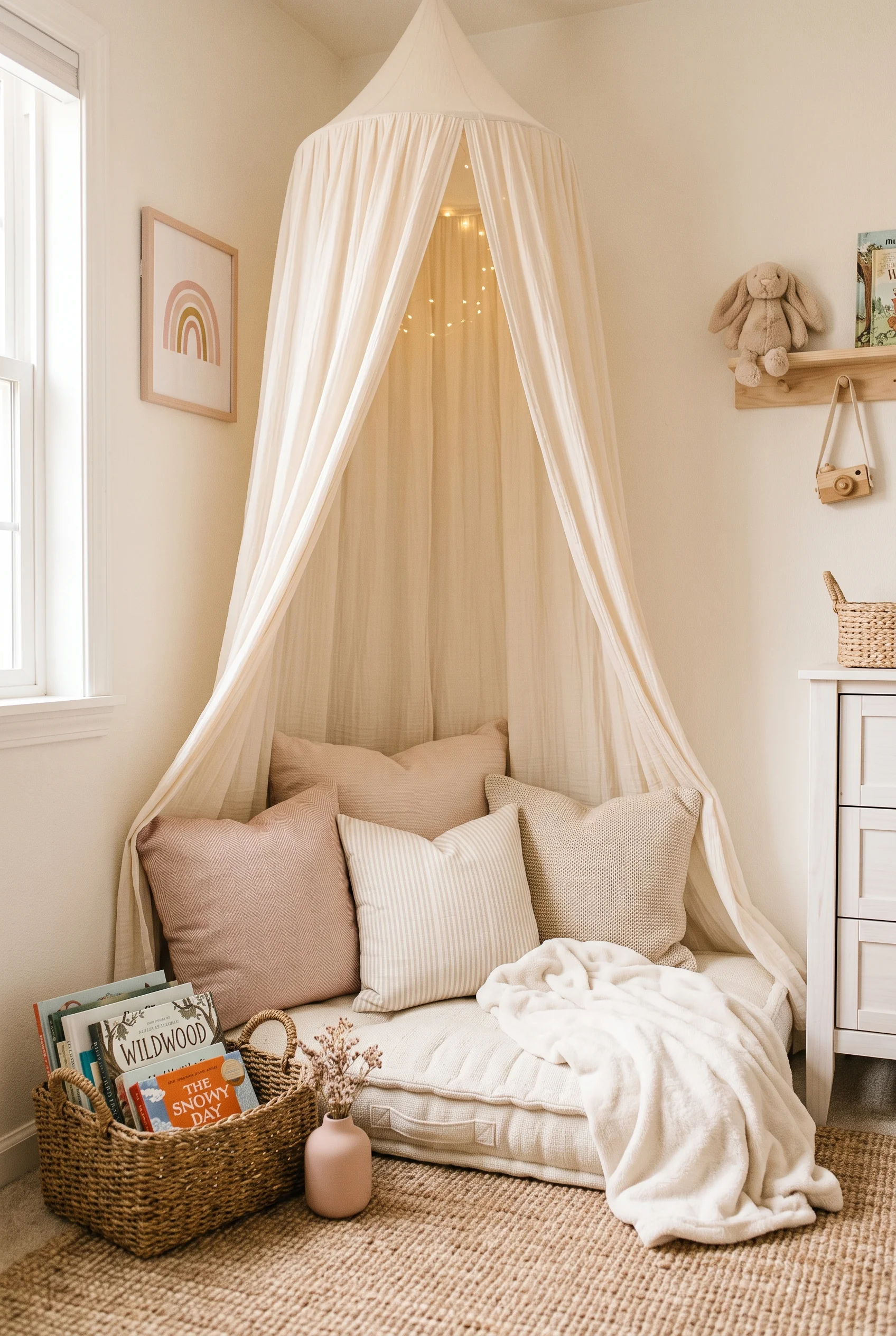
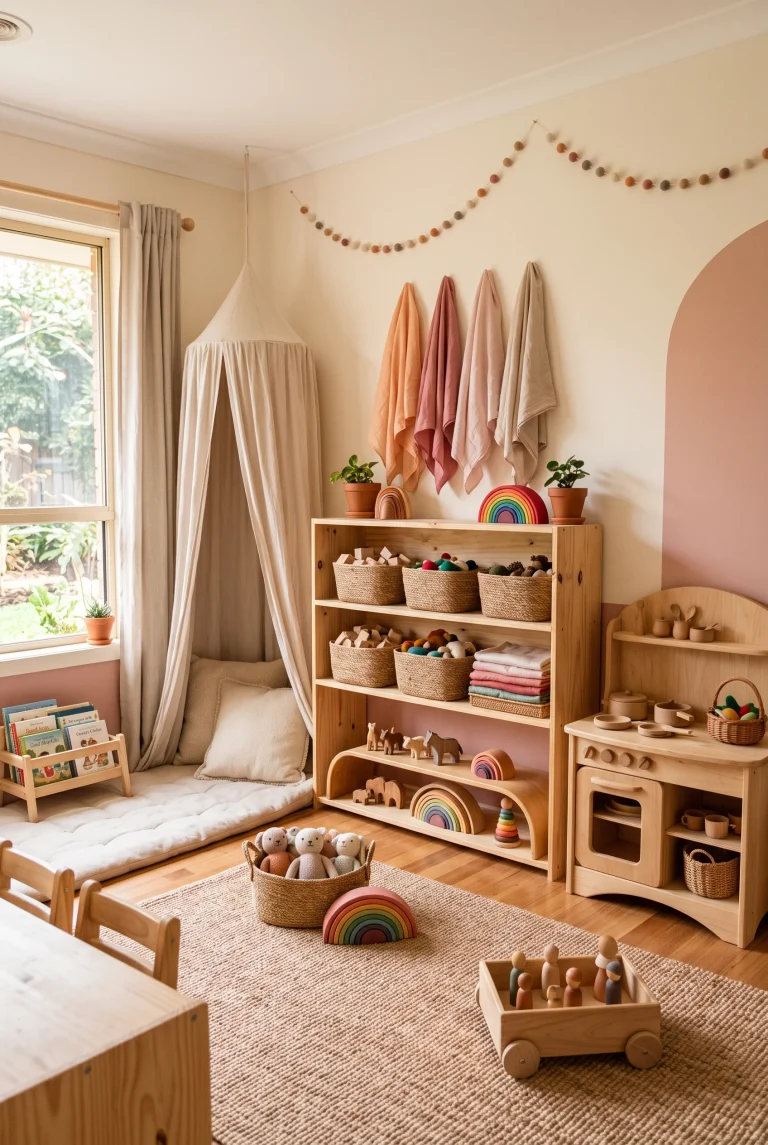
A lightweight canopy can turn a floor cushion into a comforting retreat for reading or quiet play. Cream, pale blush, or muted blue fabric adds softness without making the corner feel overly themed.
Placement deserves careful thought. Keep the fabric away from ceiling fans, light fixtures, and furniture that invites climbing. Secure mounting hardware is essential, and the fabric should never interfere with sleep or movement through the room. When kept simple, the canopy feels airy rather than fussy. It gives the child a small sense of enclosure within the larger bedroom.
Nature-Inspired Color With a Modern Mood
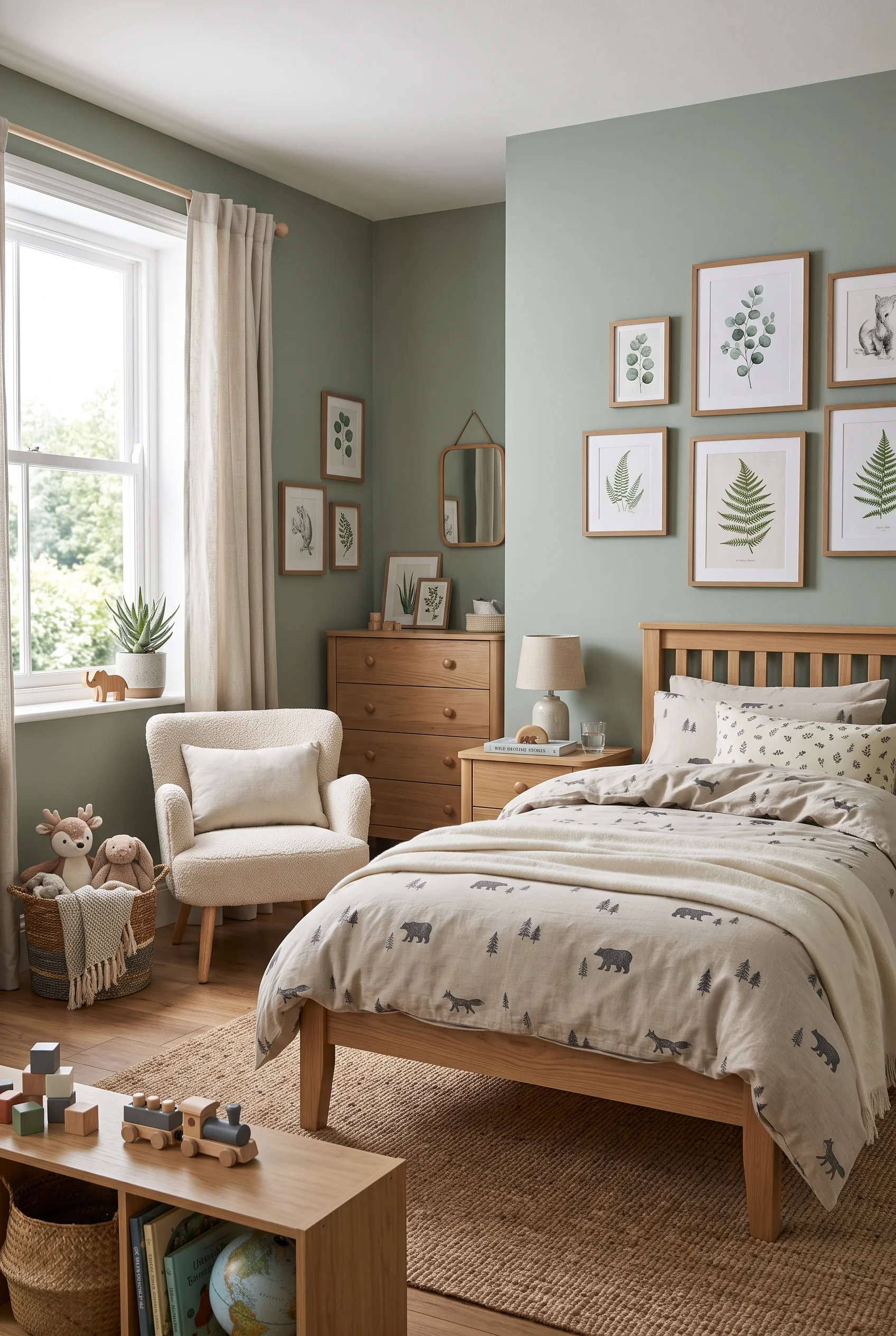
Soft greens, sandy neutrals, and sky blue give kids’ room decor a grounded quality. Natural wood furniture supports the palette, while botanical prints or simple animal artwork bring in a gentle connection to the outdoors.
The room feels freshest when these references remain subtle rather than becoming a strict theme. Clean furniture shapes and open wall space balance the organic colors. An easy-care plant can add another living note when placed safely out of reach. The finished bedroom feels peaceful, current, and connected to familiar colors found beyond the window.
Child-Height Simplicity for Everyday Confidence
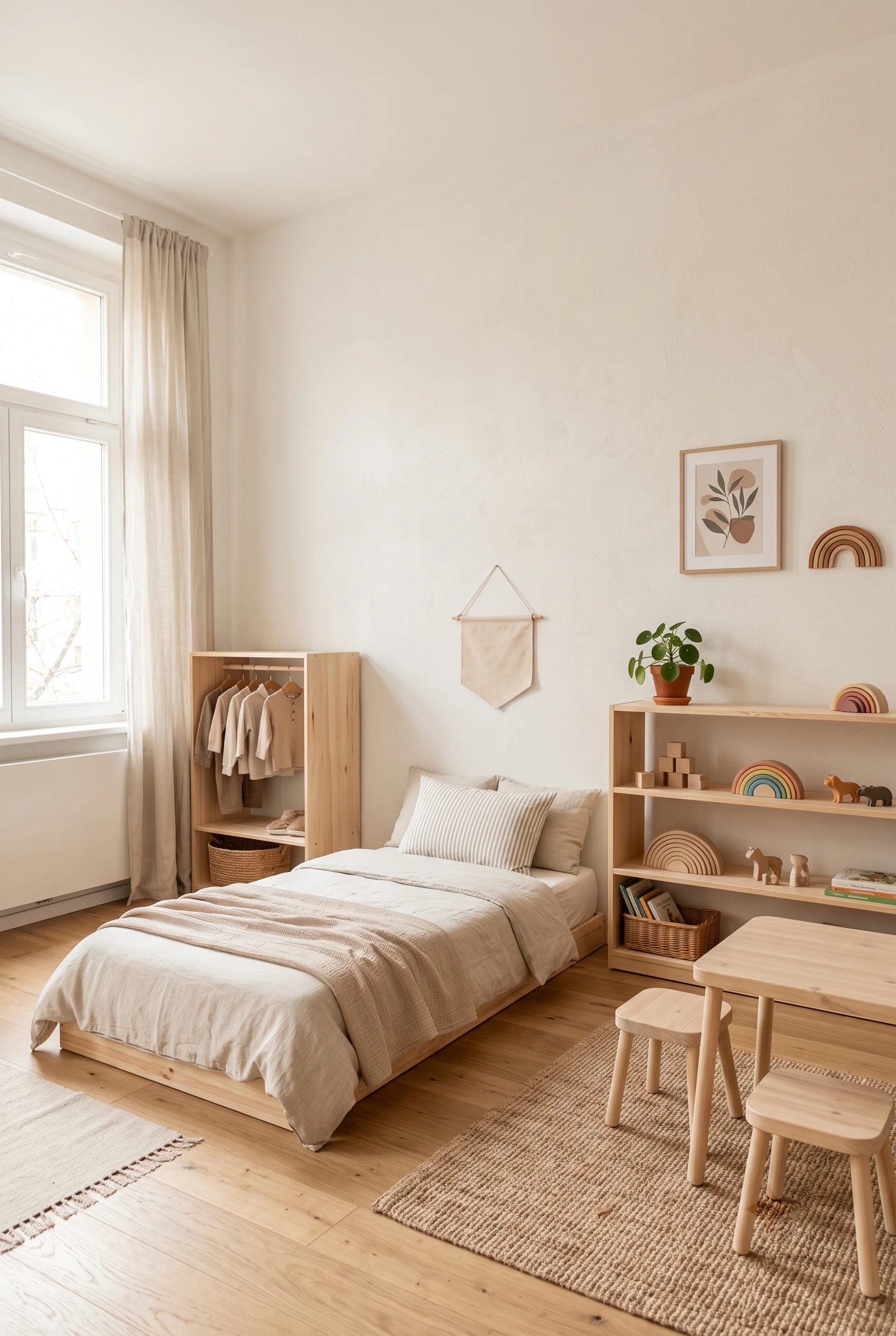
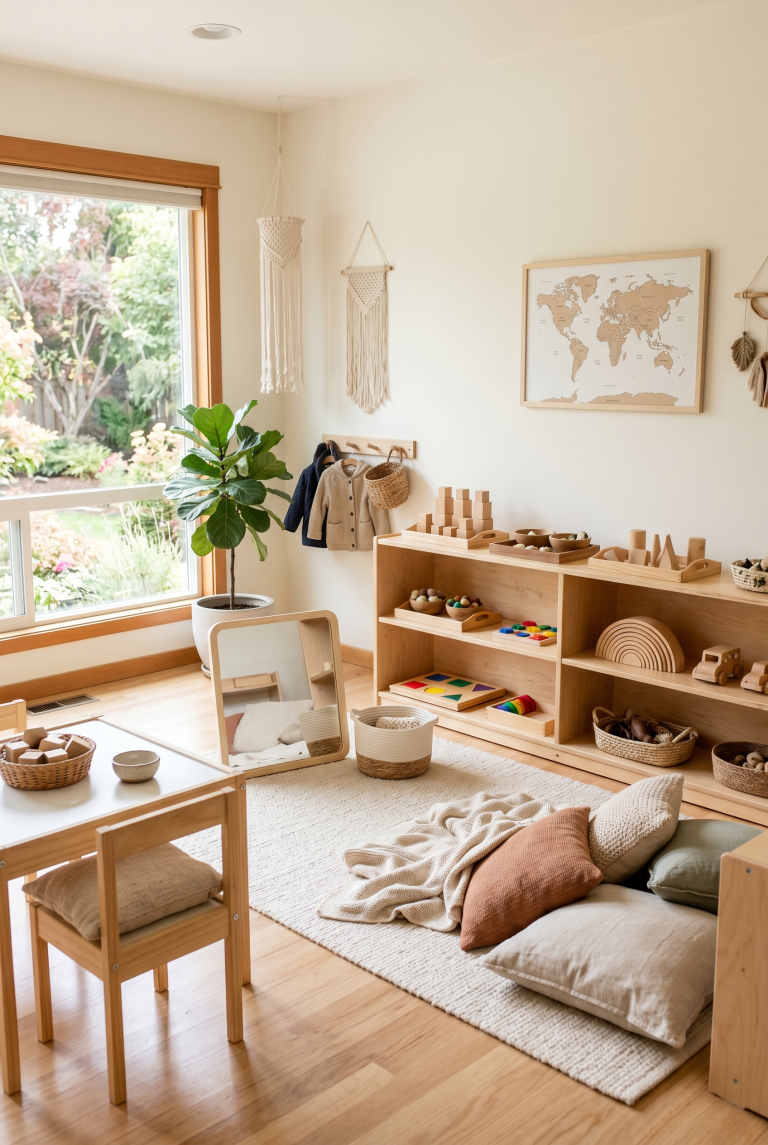
A low bed, accessible shelves, and child-sized furniture let more of the bedroom work without adult help. Clothing, books, and a limited toy selection stay within safe reach, with each belonging given an obvious home.
Open space is an important part of the arrangement. Fewer available items can make choosing and tidying less overwhelming, particularly for younger children. The approach should always reflect the child’s age, abilities, and family routine rather than following a rigid formula. Calm proportions and clear placement support independence in a way that still feels warm.
Personal Touches That Can Change as They Grow
A child’s bedroom should have enough flexibility to welcome new interests without starting over. Timeless furniture forms a reliable backdrop, while personal signs, collections, and textiles can shift more freely. Hidden storage keeps those expressive details from becoming lost in visual clutter. The final layer is less about decoration and more about creating a room that feels theirs unmistakably.
A Name Detail That Feels Truly Personal
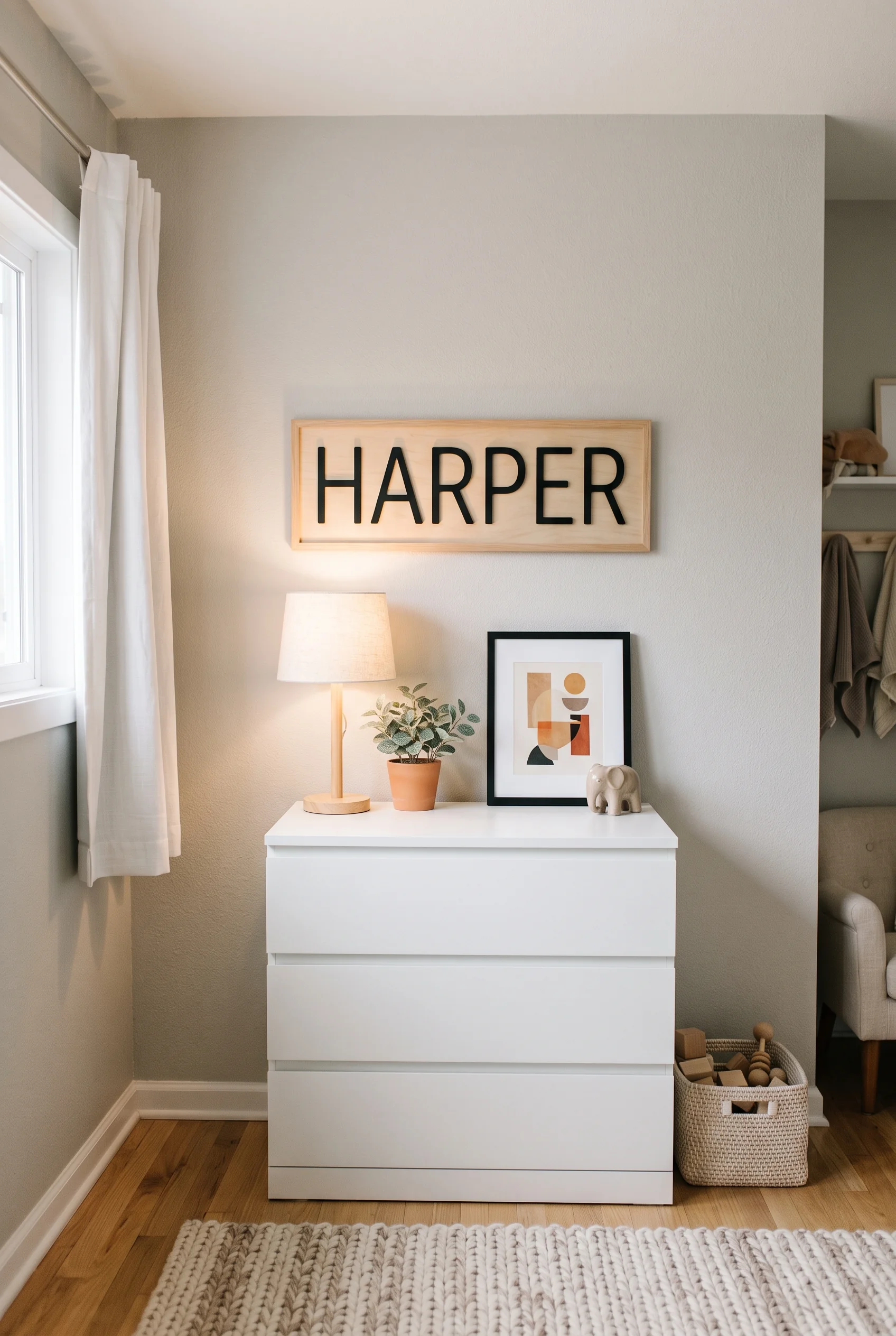
A simple name sign, monogram, or single initial can give the bedroom a personal focal point. Clean lettering looks polished above a dresser, reading nook, or open wall section, especially when its color repeats a shade already used elsewhere.
Placement away from the area directly above the bed keeps the arrangement safer. Removable lettering is useful when the room may eventually be shared or reassigned. The detail does not need to be large or elaborate. A quiet, well-positioned sign can make the bedroom feel clearly connected to the child who calls it their own.
Kids Bedroom Ideas That Grow With Them
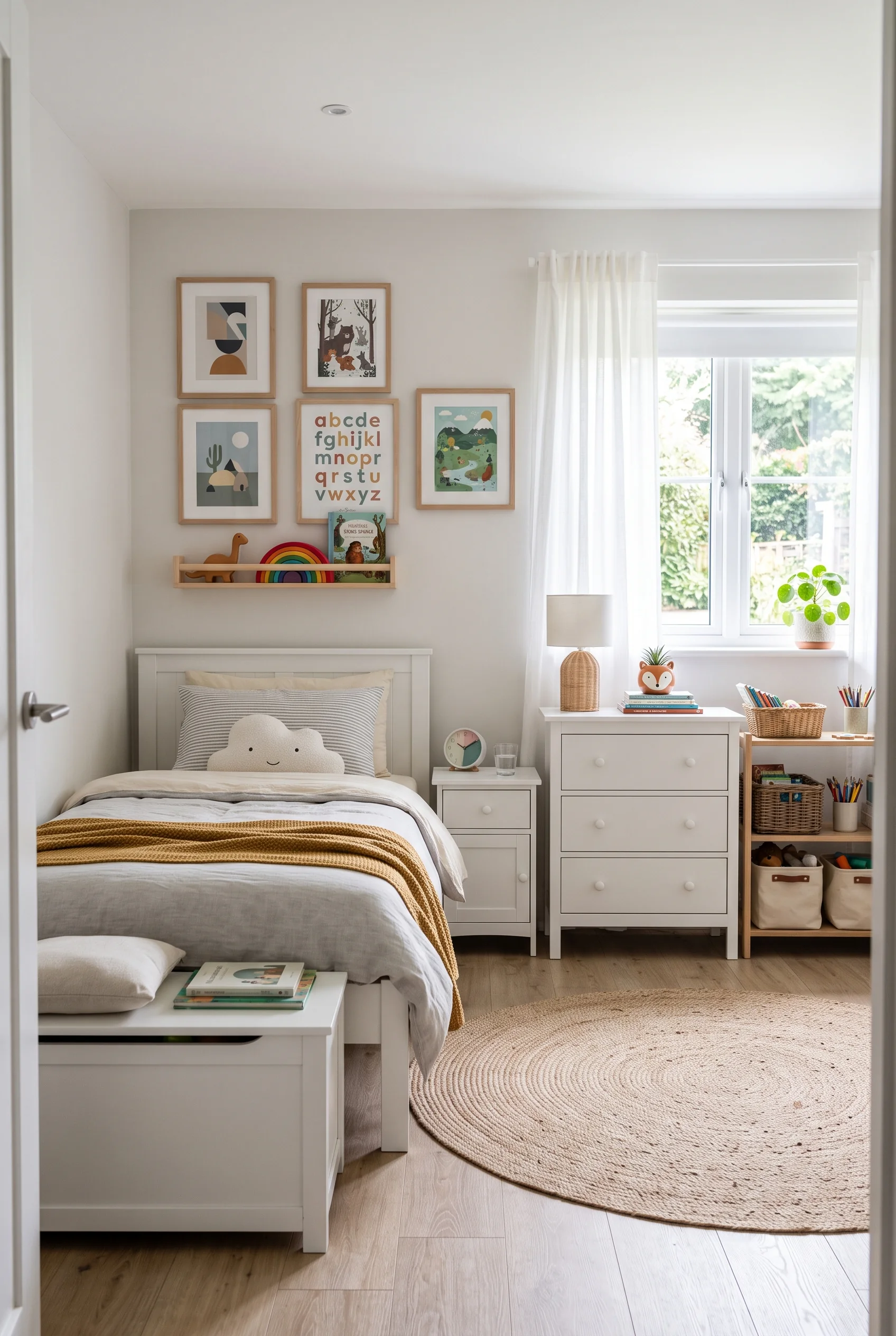
A simple bed, dresser, and shelving unit can remain useful through several ages. Their clean lines provide a steady background while pillow covers, art prints, and bedding reflect whatever the child currently loves.
Highly specific themes are easier to enjoy through smaller pieces than permanent finishes or expensive furniture. As tastes and routines change, those accents can shift without replacing the room’s foundation. Leaving a little physical and visual space for future belongings is equally valuable. The bedroom feels current now, yet it is not locked into one short stage of childhood.
Favorite Collections in a Curated Display
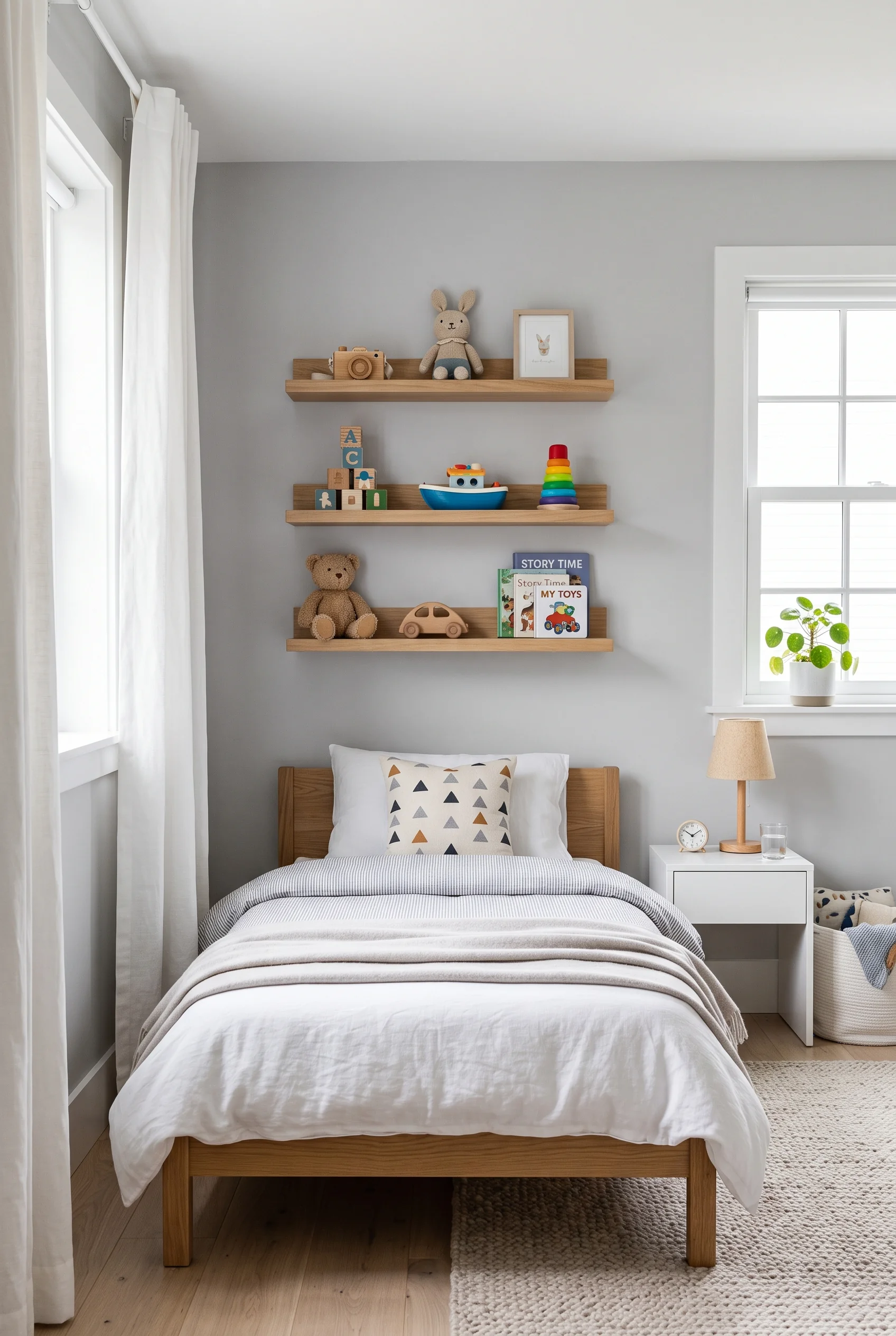
A dedicated shelf gives favorite figures, models, or small collections a place of importance. Grouping similar items together feels more intentional than scattering them across every available surface. It also makes the collection easier to notice and enjoy.
Not every treasured object needs to be displayed at once. Rotating a selection keeps the shelf fresh and leaves enough open space around each piece. Put fragile items and small parts higher when younger siblings share the room. The display adds personality without letting the collection take over the bedroom’s calm.
Hidden Storage for a Calmer View
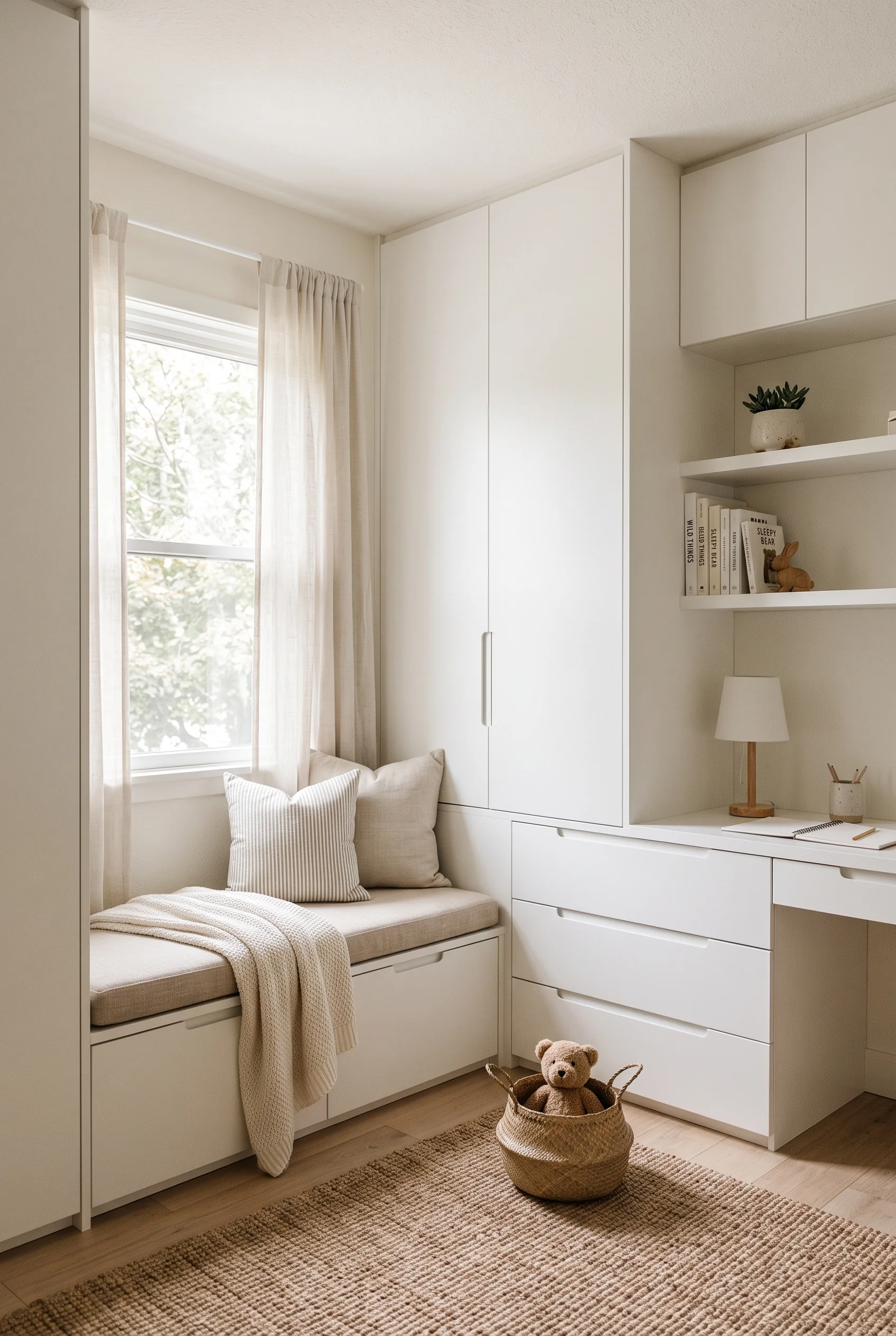
Closed cabinets, deep drawers, and lidded benches conceal belongings that are visually busy or difficult to arrange. Open shelves can then hold books, artwork, and a few favorite toys with enough room around them to feel considered.
Each hidden compartment still needs a clear purpose. Otherwise, clutter simply moves behind a door and becomes harder to manage. A short daily reset is often enough when categories are broad and containers aren’t overfilled. These stylish kids’ bedroom storage solutions protect the room’s calm surface while keeping everyday belongings close by.
Open Floor Space for Bigger Imaginations
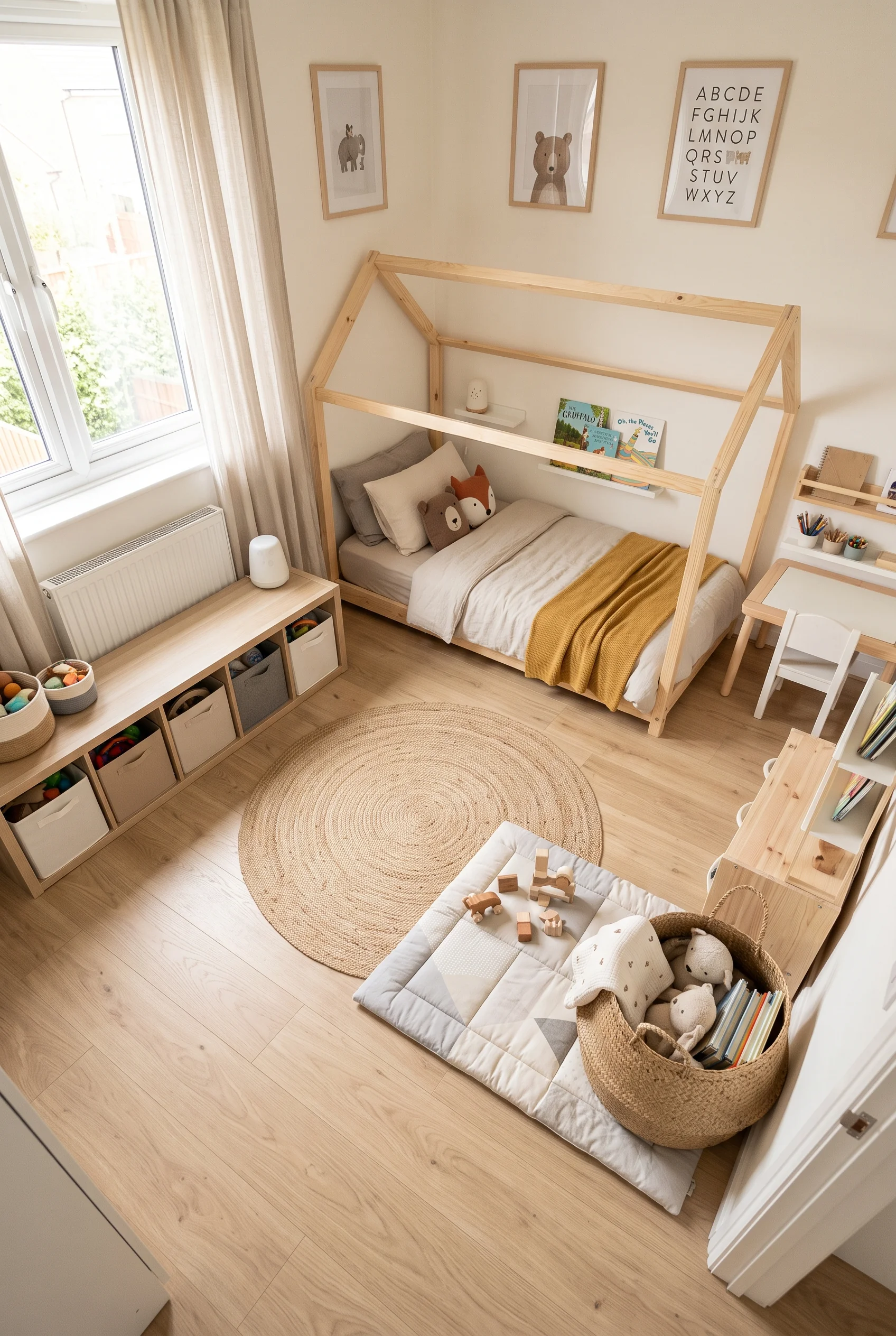
Furniture arranged around the perimeter leaves the center of the room open for building, movement, and imaginative play. Clear paths between the bed, door, closet, and desk make the layout safer and easier to use.
A lightweight basket or small play mat can be moved aside whenever you need more floor space. Empty corners don’t always need filling, especially in a smaller bedroom. The open area gives the room flexibility throughout the day. It can hold a train track in the morning, stretch out in the afternoon, and be empty by bedtime.
Practical Details for a Gentle Finish
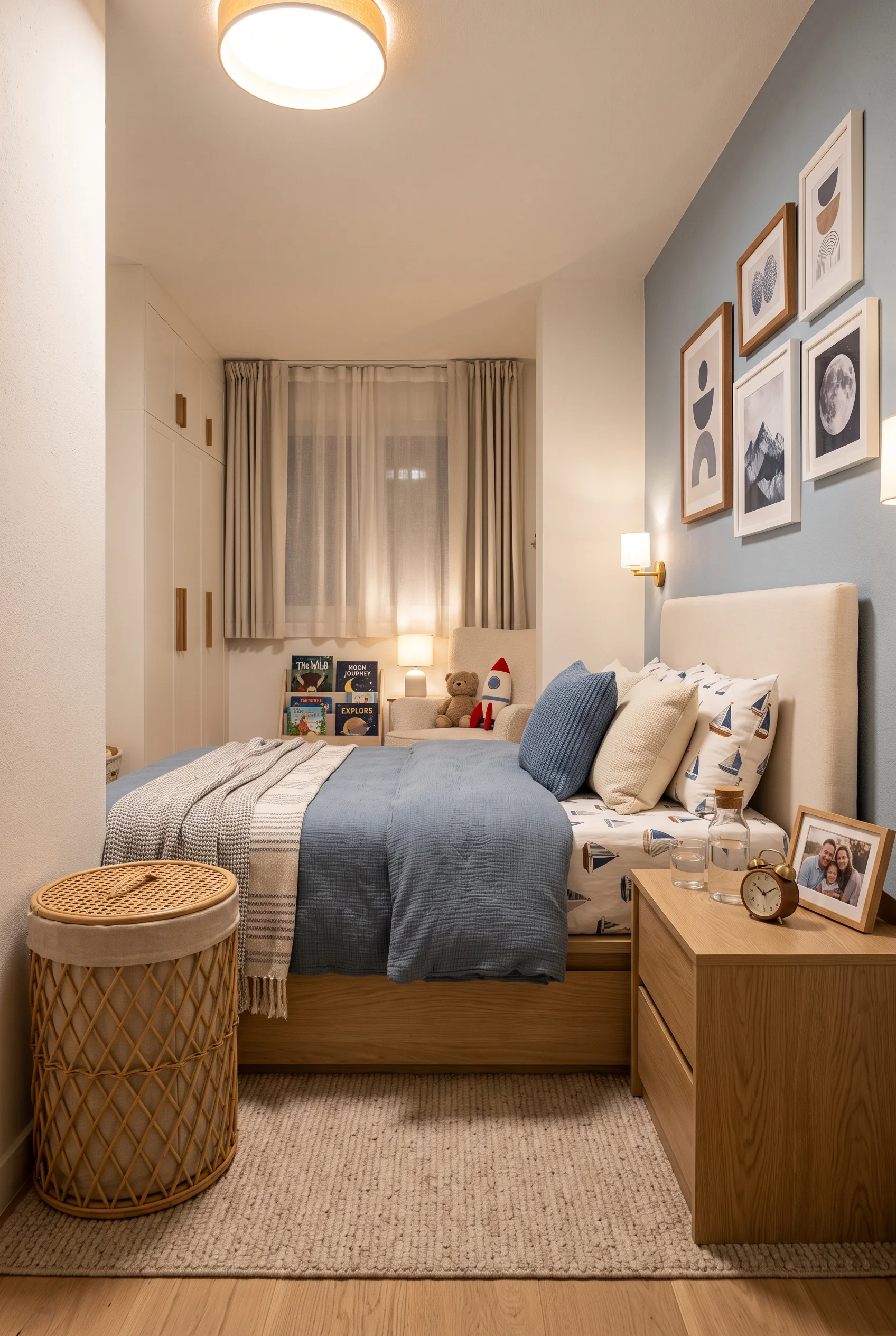
A compact nightstand can hold water, tissues, and a small clock within easy reach. A nearby hamper supports the evening routine, while a favorite stuffed animal or family photograph adds emotional warmth.
The final edit matters more than another decorative accessory. Check that cords, furniture, window treatments, and wall pieces are properly secured. Remove anything that makes cleaning or movement unnecessarily difficult. What remains should support comfort and daily life. The bedroom feels finished not because every surface is styled, but because each detail has a useful place.
A Bedroom That Supports Real Childhood
A beautiful child’s bedroom can be calm and expressive at the same time. The foundation may be quiet, with simple furniture and a restrained palette, while the softer layers carry color and personality. Storage belongs where children can understand it. Lighting should shift with the day. Treat open floor space as useful rather than as something waiting to be filled.
You don’t need to redesign the entire room at once. Begin with the part that causes the most difficulty. That may be an overflowing closet, an uncomfortable reading corner, or a bed surrounded by toys at the end of every day. One well-chosen change can make the next decision much clearer.
As you sort through these kids’ bedroom ideas, choose the details that fit your child’s age and your family’s routines. A storage bed may be transformative in one home, while better lighting or a row of hooks may matter more in another. The room should remain flexible enough to change as sleep habits, schoolwork, and interests develop.
Most of all, leave space for the child who lives there. Their books, artwork, and favorite objects give the bedroom its warmth. A thoughtful room does not ask childhood to look perfectly arranged. It simply makes everyday life feel a little easier, safer, and more comfortable.