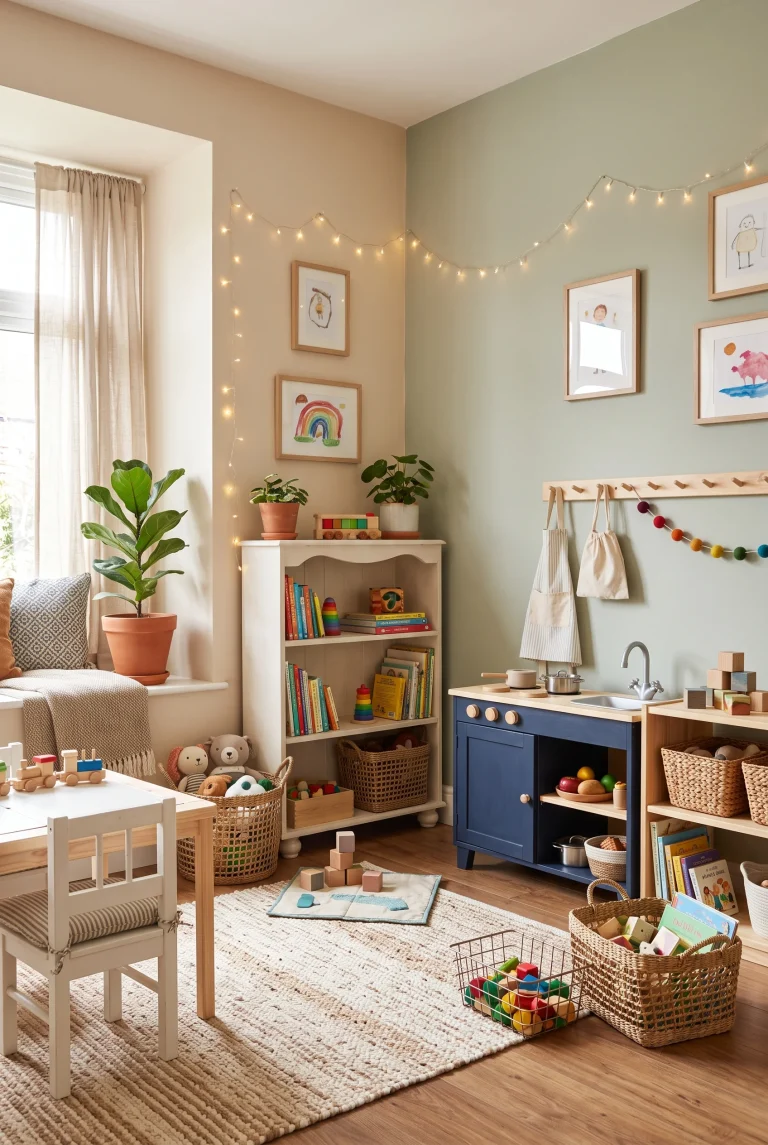
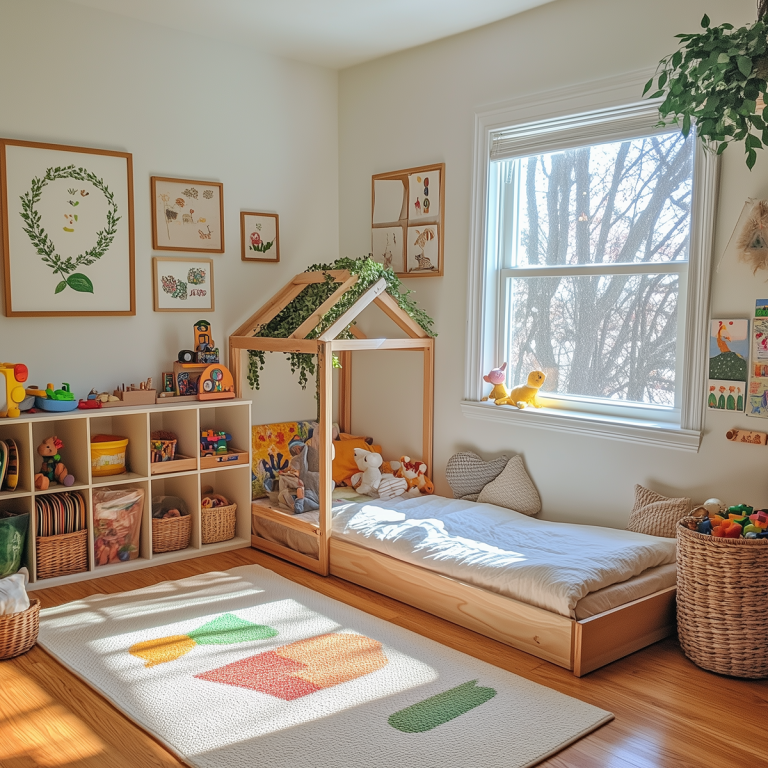
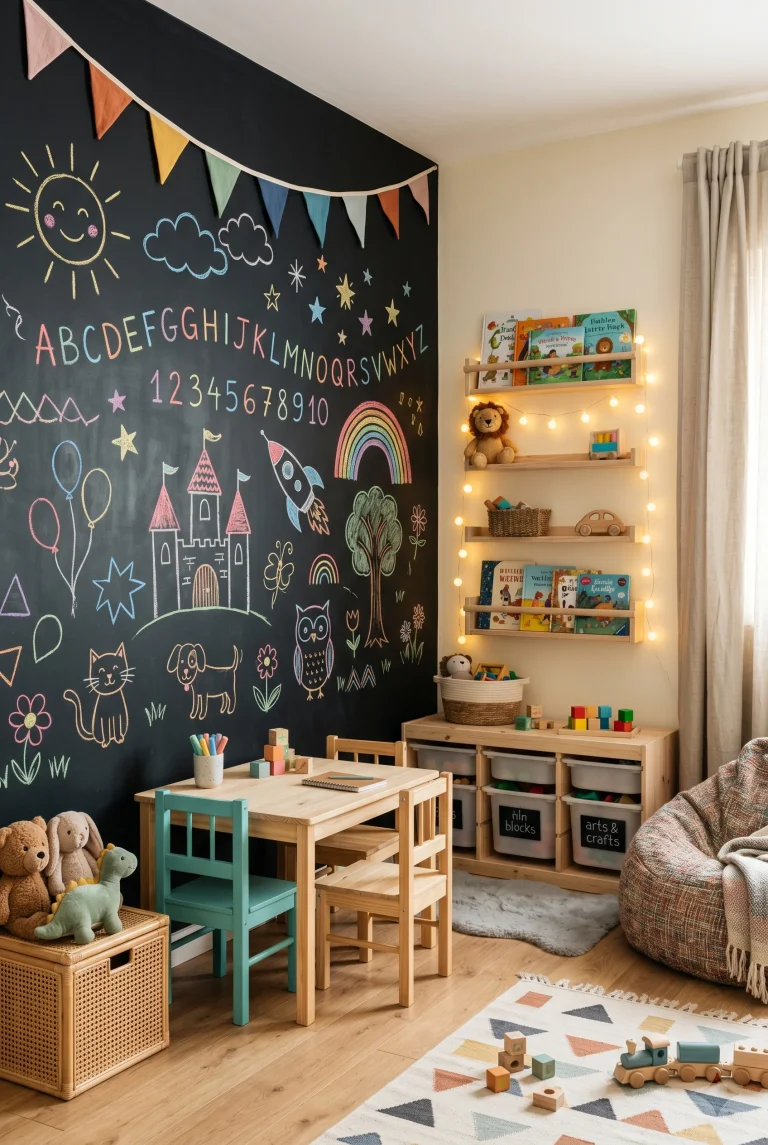
31 Playroom Ideas for a Fun, Beautiful, and Organized Kids Space
The best playrooms rarely stay the way you set them up. A reading corner becomes a fort, the building blocks migrate across the floor, and a carefully planned activity table ends up hosting an entirely different project. That’s part of what makes a playroom worth having. A beautiful space should give children room to surprise you, not expect them to play according to the furniture layout.
There’s a lot of freedom in designing around that reality. The open-ended materials and softer atmosphere of Waldorf playroom ideas can encourage imaginative play, while Montessori playroom ideas offer a different perspective on independence and accessible activities. Practical playroom storage ideas support both approaches by making it easier for children to find what they need and put things away when they’re finished.
These playroom ideas explore how to create a space that’s enjoyable for children and equally pleasant for the whole family. You’ll find inspiration for different room sizes, ages, and decorating styles, with ways to balance open floor space, comfortable corners, and storage that doesn’t dictate how children should play.
DISCLOSURE: Some of the links provided on this page are affiliate links. This means if you choose to make a purchase through these links, we may receive a small commission at no extra cost to you.
A Layout That Makes Room for Every Kind of Play
A useful playroom starts with movement, not furniture. Children need clear paths between active play, focused projects, and quieter moments. Defining those areas gently, without filling every corner, gives the room a natural rhythm. These functional playroom ideas keep the center open while giving each activity a place to land.
An Open Plan With Space to Move
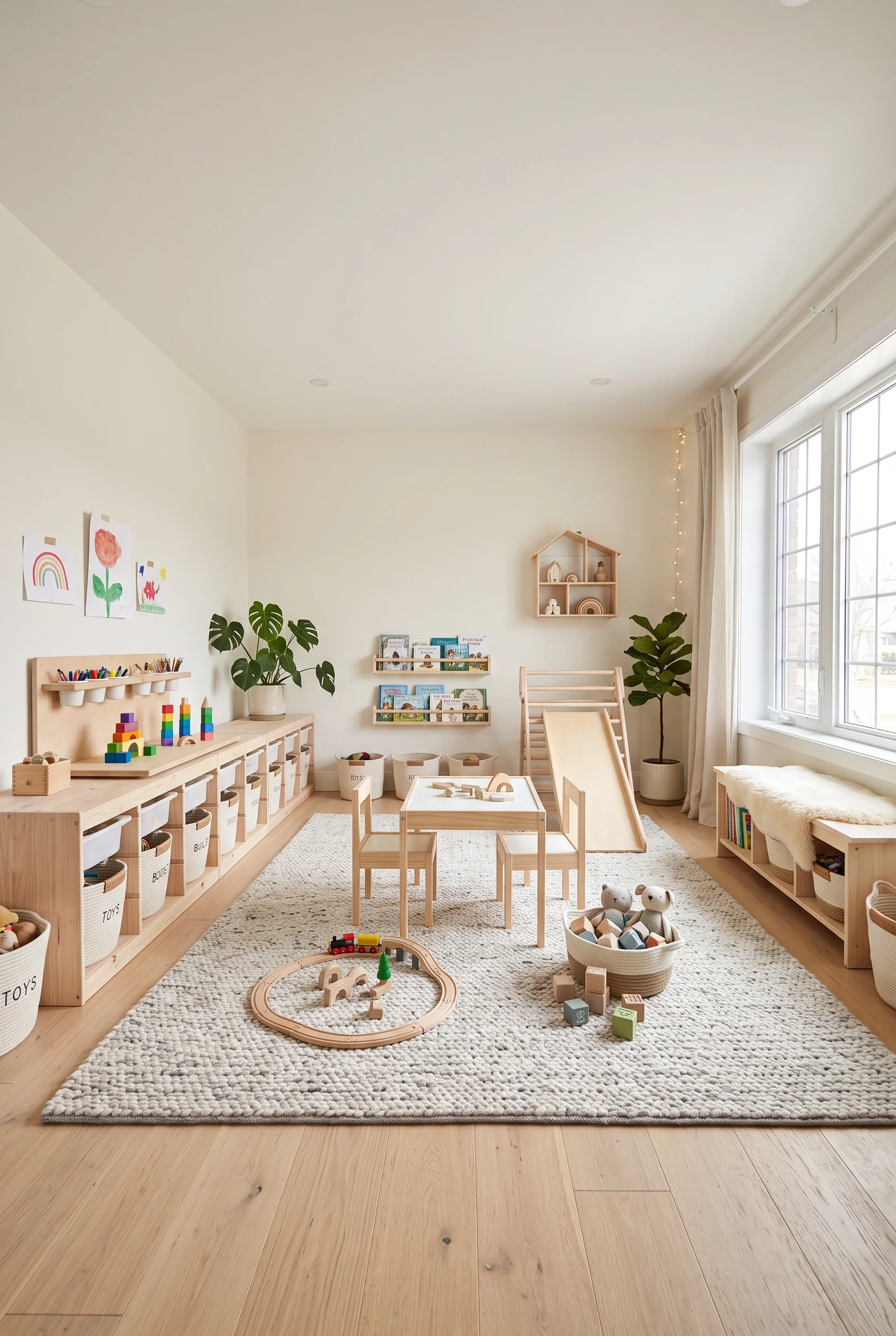
Open floor space is often more valuable than extra storage. It gives children room to build long train tracks, spread out puzzles, and move between activities without squeezing around furniture.
Place larger pieces against the walls, then watch how your children cross the room before settling on the final arrangement. A quick floor-plan sketch can help preserve one clear path from the doorway to the main play area. The center remains bright, flexible, and ready for whatever captures their attention that day.
A Table That Is Always Ready
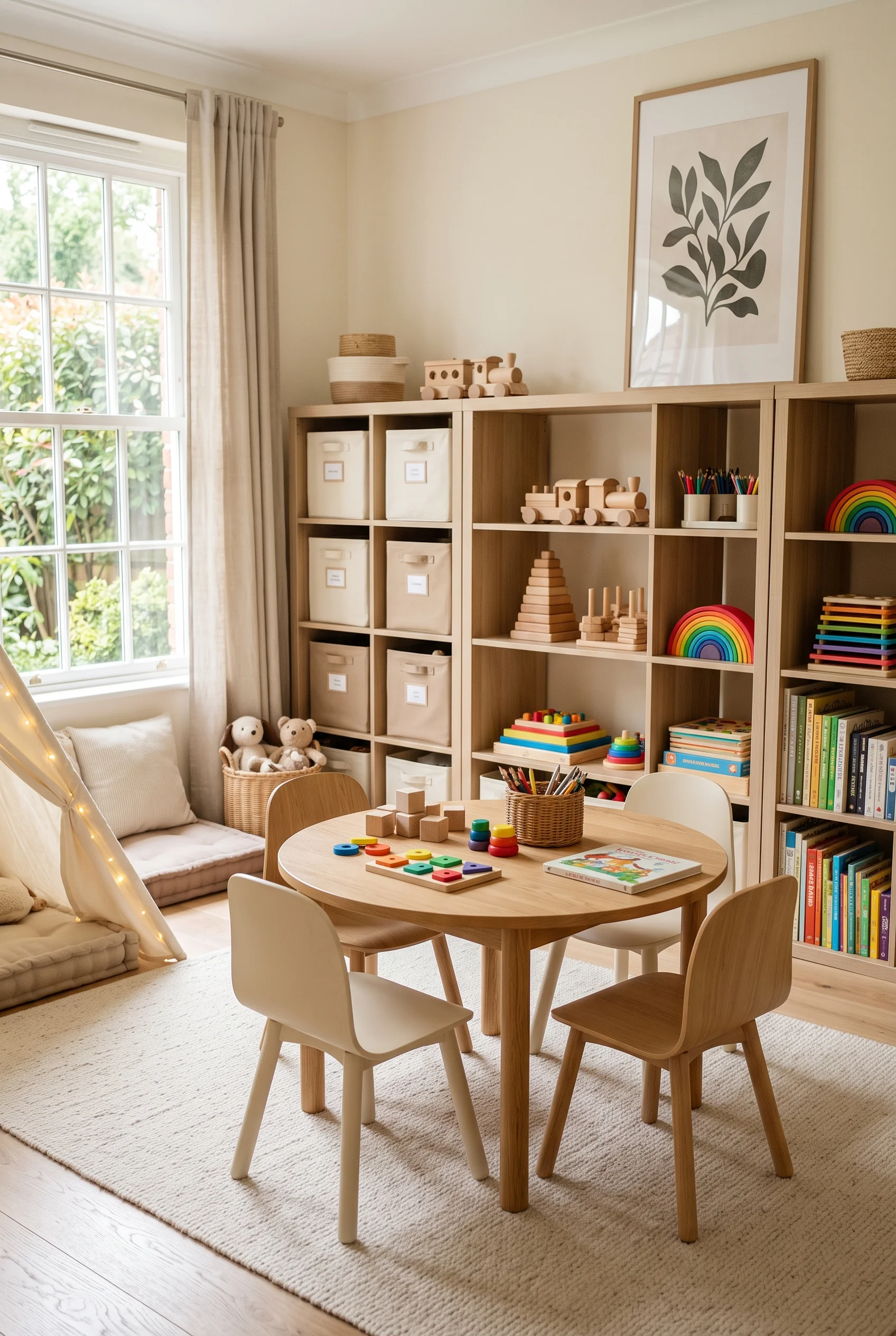
A child-size table offers a dependable landing place for crafts, puzzles, snacks, and family games. Rounded corners and well-proportioned chairs make it comfortable enough to use every day.
Keep the tabletop mostly clear rather than treating it as another shelf. Supplies can live in a nearby drawer or portable caddy, where setup and cleanup take only a minute. A round light wood table feels visually gentle and allows several children to gather without sharp corners interrupting the flow.
A Music Corner With Room to Perform
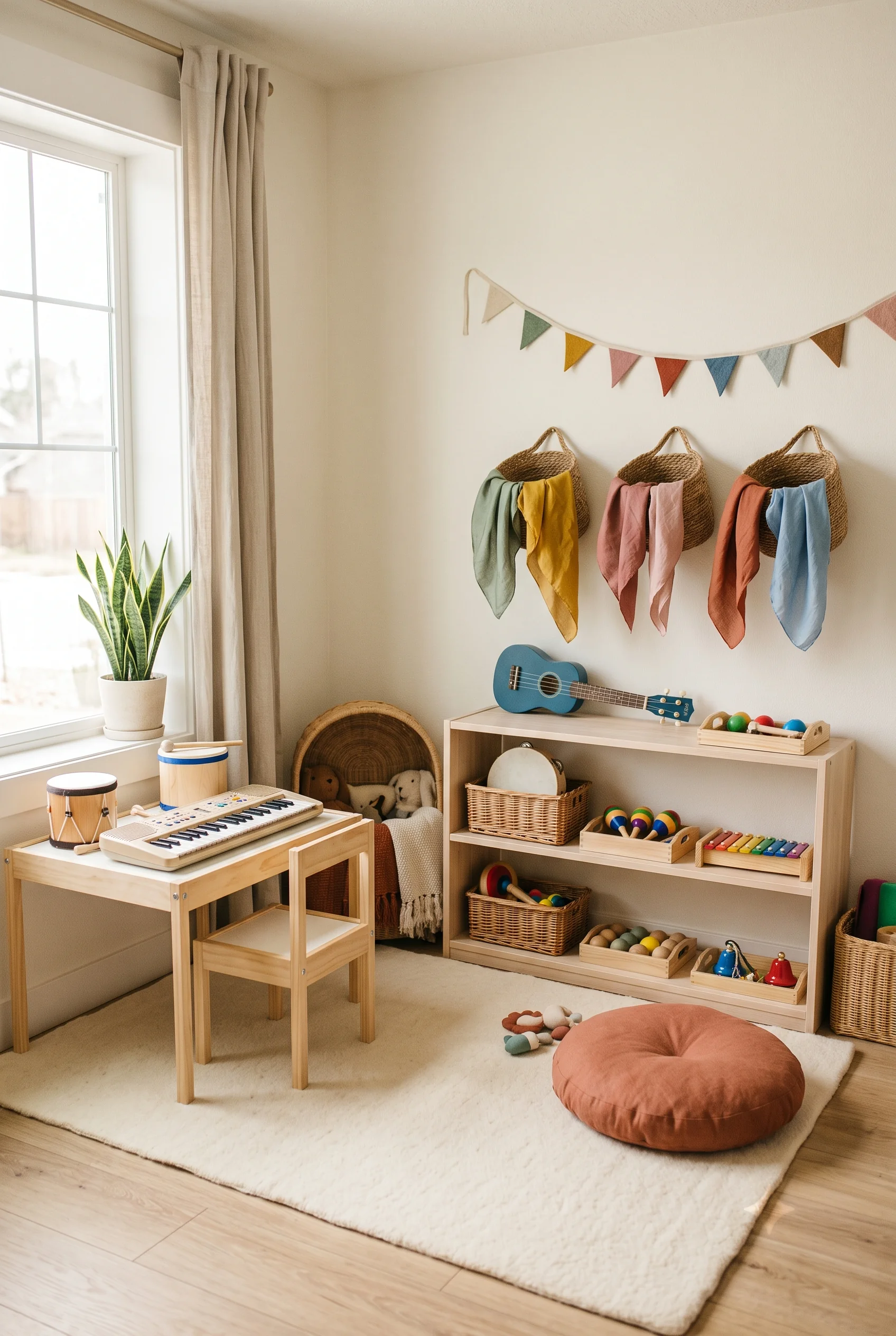
Music needs a little breathing room. A low basket with a few child-friendly instruments can anchor the area while leaving open floor space for dancing, scarves, and spontaneous performances.
Three or four instruments are often more inviting than an overflowing collection. Secure hooks can hold lightweight pieces, while a small keyboard sits neatly along the wall. Everything is visible enough for independent use, and the open mat becomes a natural stage.
Storage Children Can Actually Maintain
Playroom organization works best when the system is obvious at a glance. Everyday favorites belong within reach, broad categories are easier than intricate sorting, and closed storage can hold the visually busy pieces. These playroom ideas with toy storage support independence while keeping cleanup manageable for the whole family.
Low Shelves for Independent Play
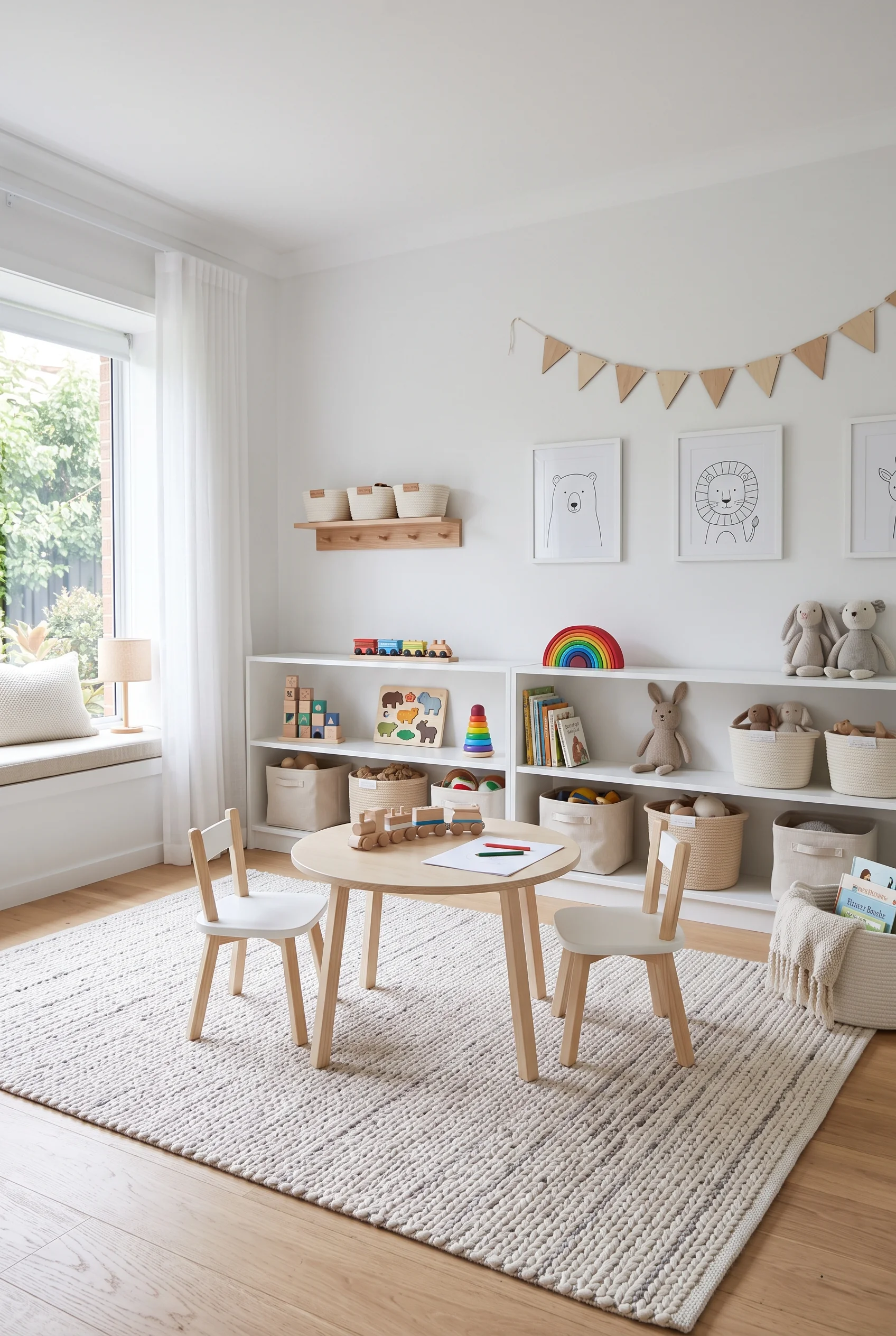
Low shelving places toys where children can see, choose, and return them without waiting for help. Leave enough empty space around each item so the shelf reads as an invitation rather than a crowded display.
Reserve the easiest levels for current favorites and secure the entire unit firmly to the wall. A few toys can stand alone, while contained sets belong in simple bins. This is one of the most useful kids playroom ideas for encouraging independent choices throughout the day.
Shop this pick: Low Montessori-Style Toy Shelf, A sturdy low shelf anchors the organization system and encourages independent access to everyday toys.
Labels That Make Cleanup Obvious
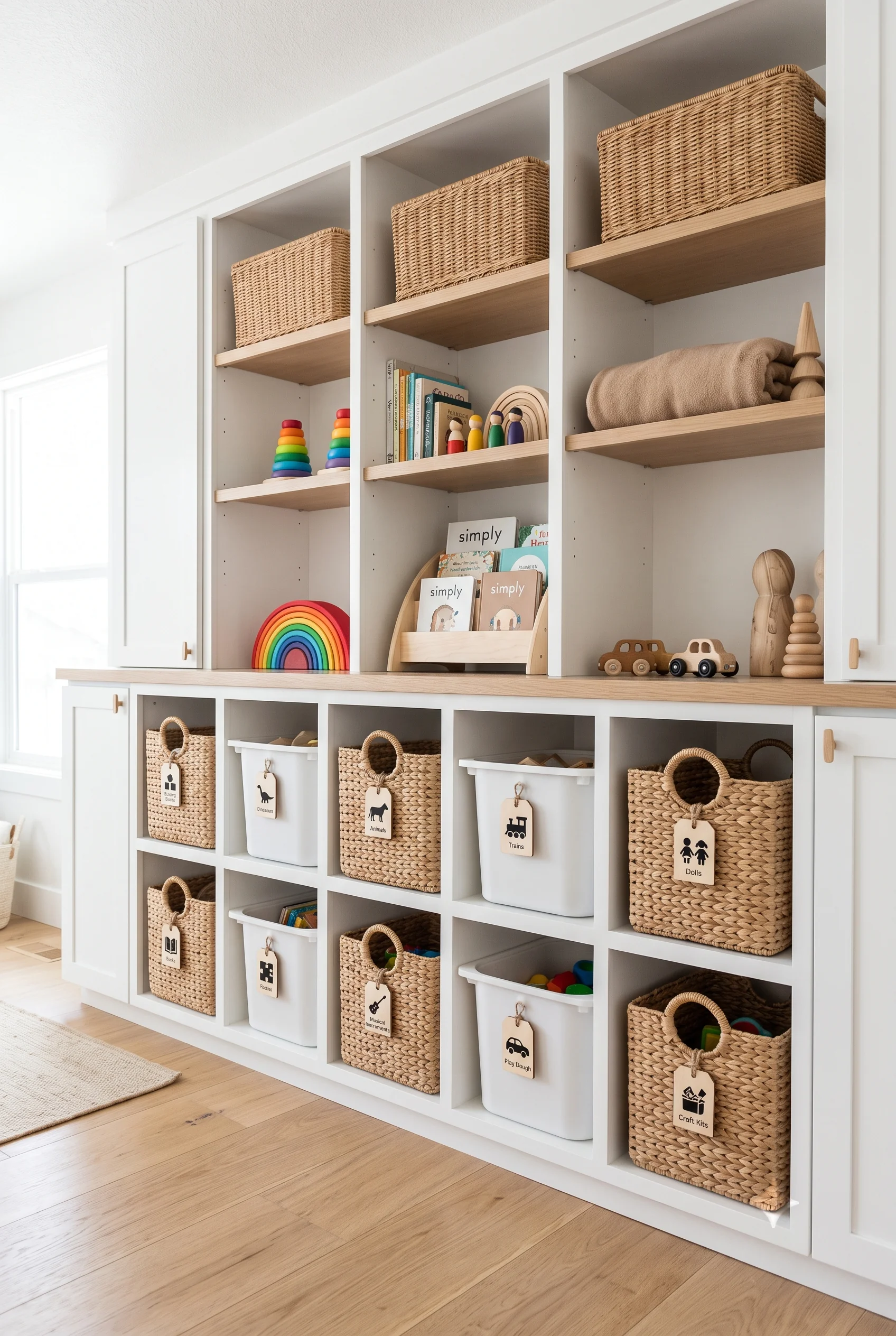
Blocks, vehicles, dolls, and puzzle pieces are easier to manage when each category has a clear destination. Picture labels paired with simple words allow younger children to participate before they can read.
Begin with the three categories most often left on the floor. Coordinated baskets calm the look of open shelves, but they don’t need to match perfectly.
Closed Cabinets for the Busy Pieces
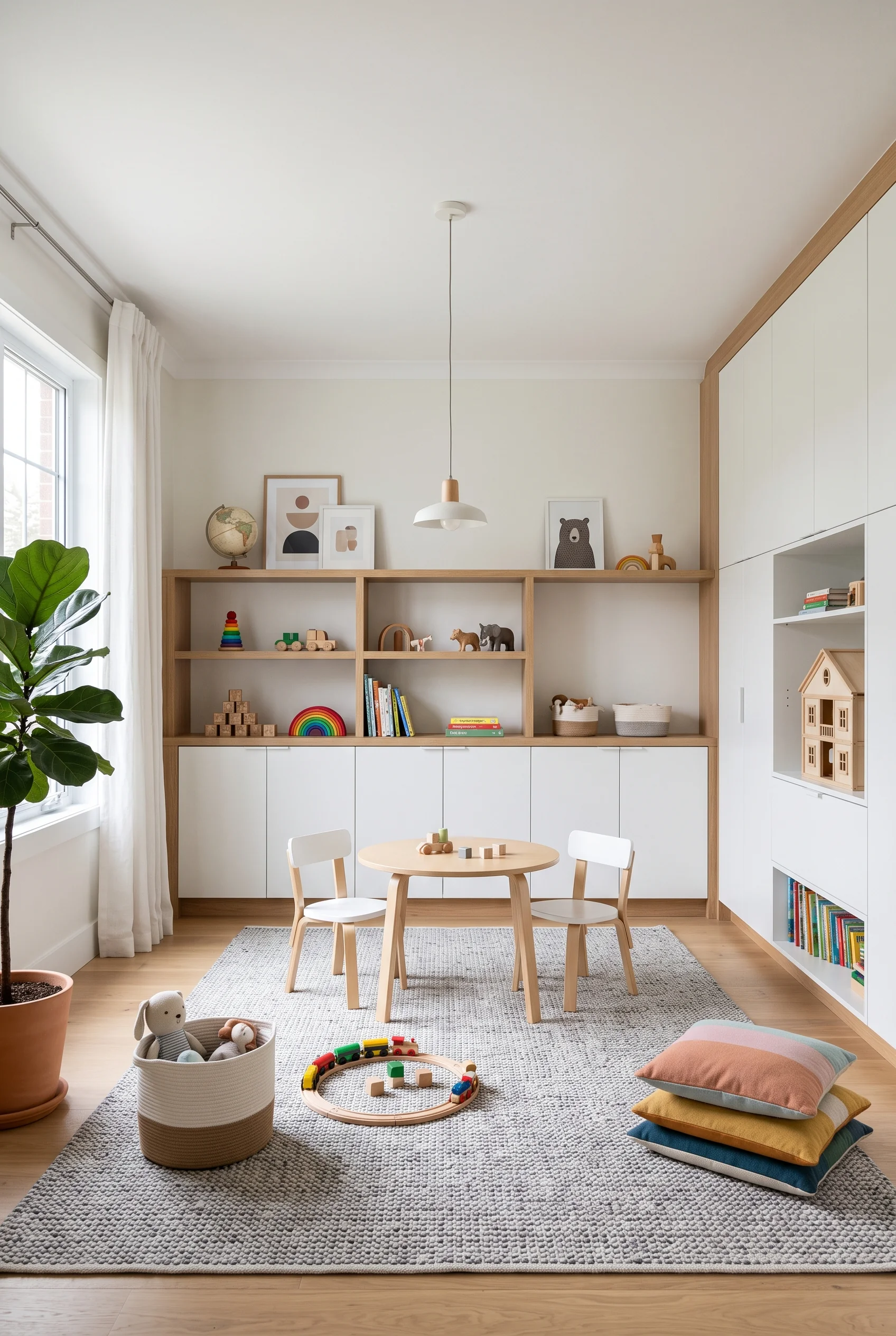
Games with many pieces, extra craft supplies, and bulky toys often look better behind streamlined doors. Closed cabinets soften visual clutter while keeping the room practical for everyday family use.
Interior bins prevent concealed storage from becoming a jumble. Give each shelf a broad purpose, such as games or creative supplies, and pair the cabinets with a few open displays. The mix feels polished without hiding everything children love.
Vertical Storage With a Lighter Footprint
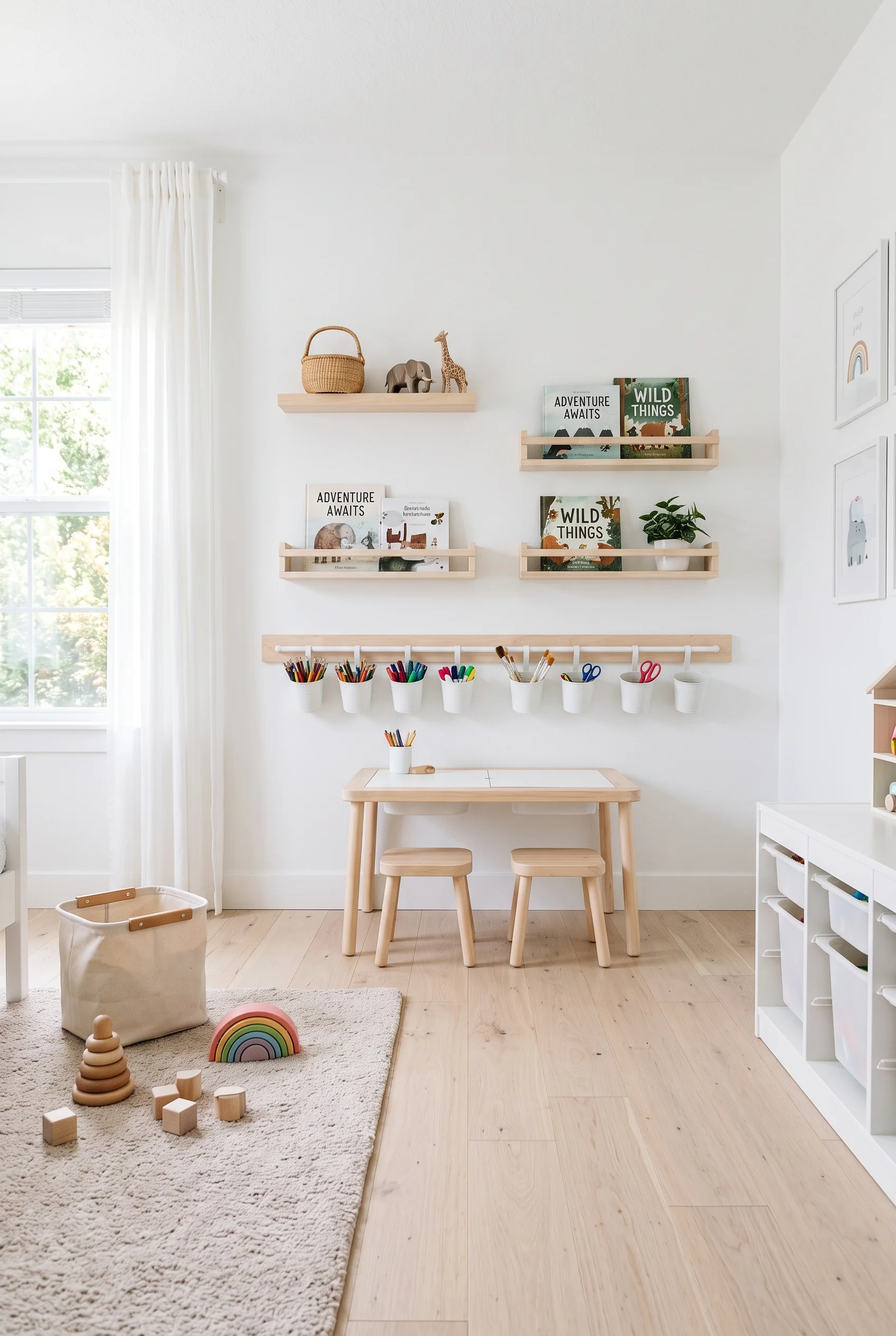
Wall-mounted rails, shallow shelves, and pockets free the floor for actual play. They are especially helpful above an art table, where lightweight tools can remain visible without covering the work surface.
Keep child-safe supplies low and place adult-supervised materials higher. One rail with a few hanging cups may be all a compact room needs. Leaving open wall around the arrangement prevents practical storage from becoming another source of visual noise.
A Pegboard That Changes With Their Interests
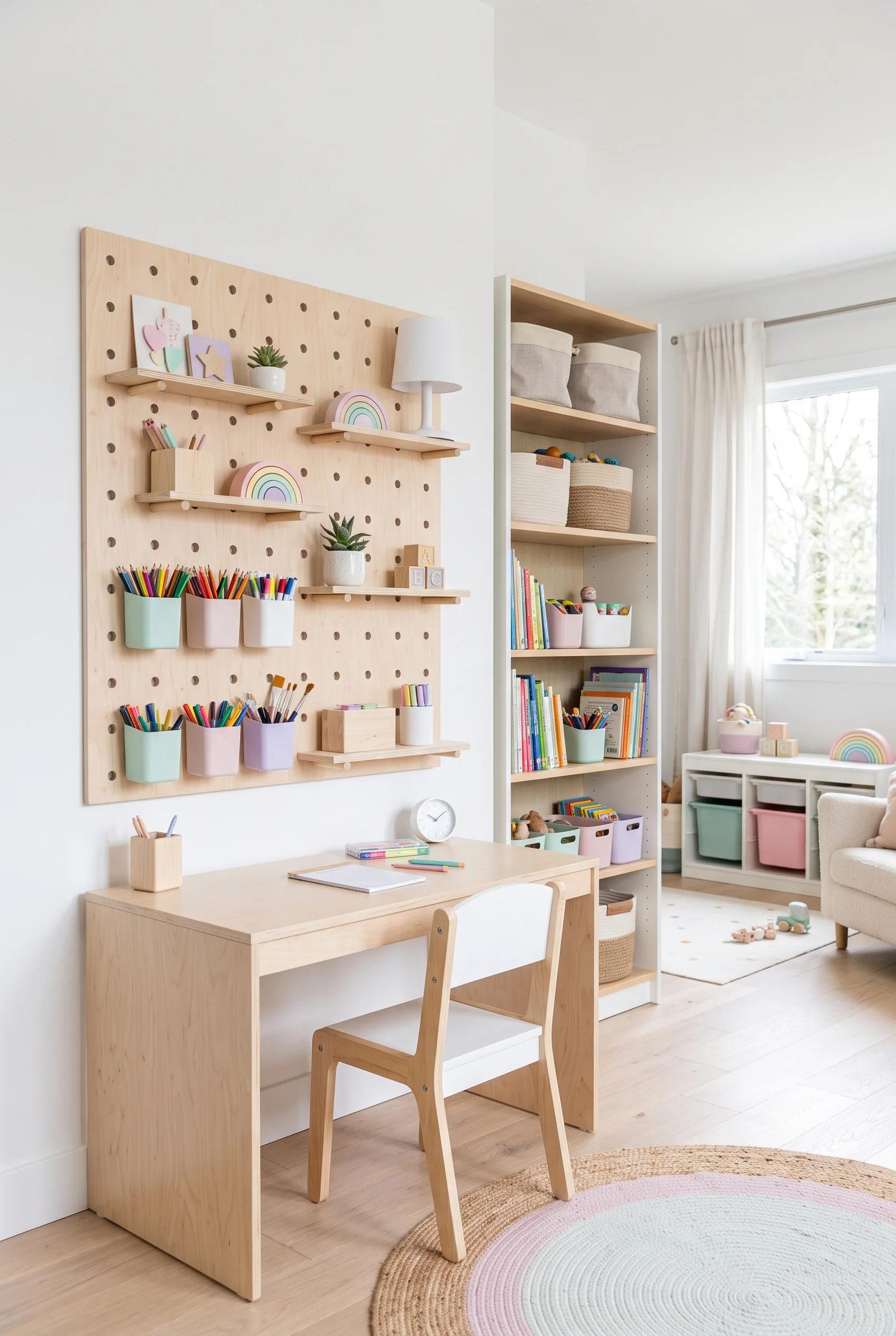
A small pegboard adapts easily when drawing tools give way to headphones, craft materials, or hobby supplies. Hooks and containers can move without replacing the entire storage setup.
Mount it securely above a desk and begin with only three practical containers. Keep unsuitable objects beyond reach, and resist filling every opening. The flexible grid brings order to small essentials while maintaining a clean, modern profile.
Everyday Favorites at Child Height
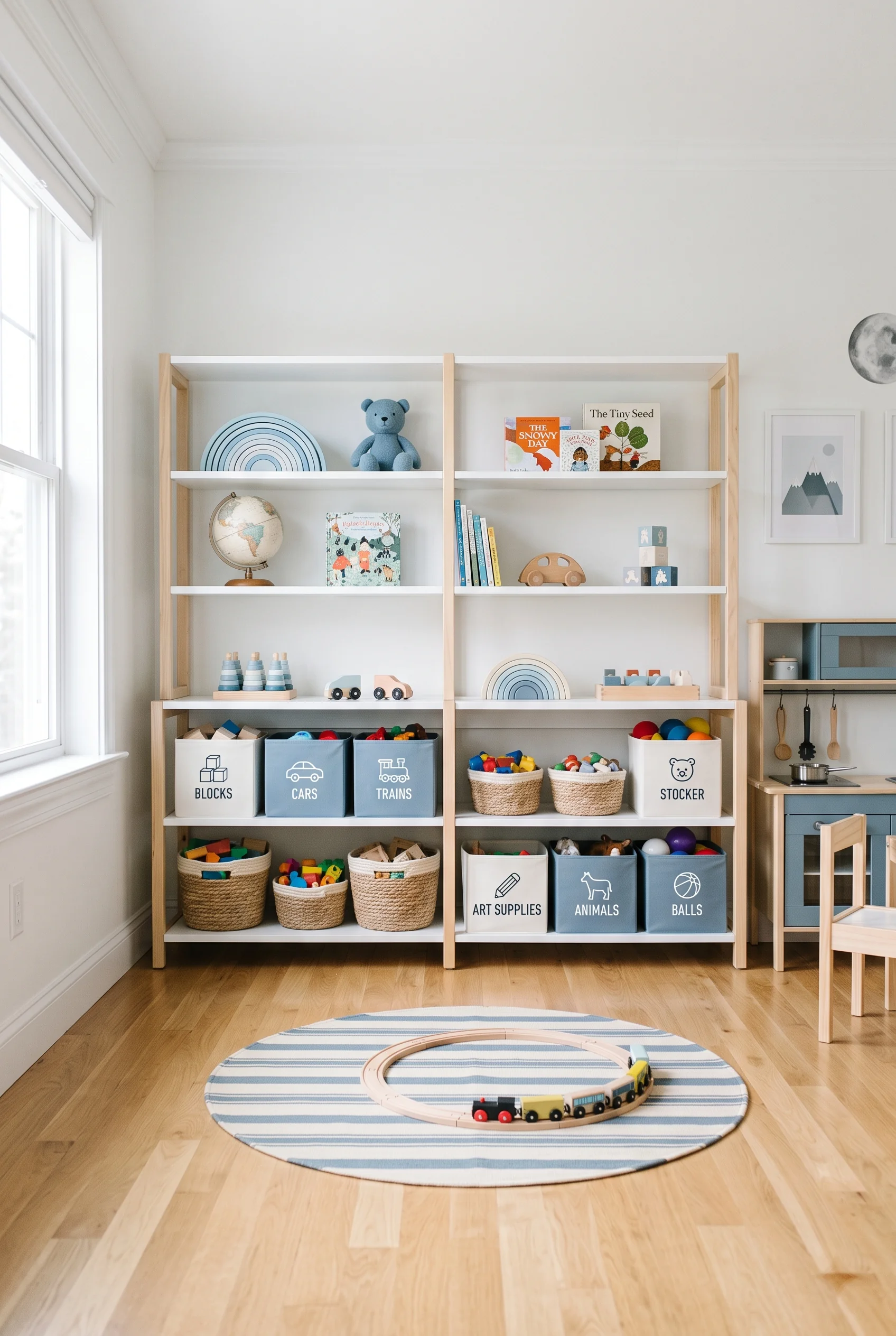
The toys used most often deserve the easiest shelves. Watch what your children reach for during an ordinary week, then place those items between floor level and shoulder height.
Occasional projects and messier activities can sit higher or behind doors. Each everyday category should have one clear home, so finding a favorite toy never requires emptying several bins. Accessible storage feels orderly because it follows real behavior rather than an idealized system.
Quiet Comfort Beside Everyday Creativity
Not every moment in a playroom needs to be energetic. Soft seating, accessible books, and a ready-to-use creative surface give children places to settle into slower activities. The contrast between cozy corners and expressive zones helps the room support different moods without asking for more square footage.
A Reading Nook That Feels Tucked Away
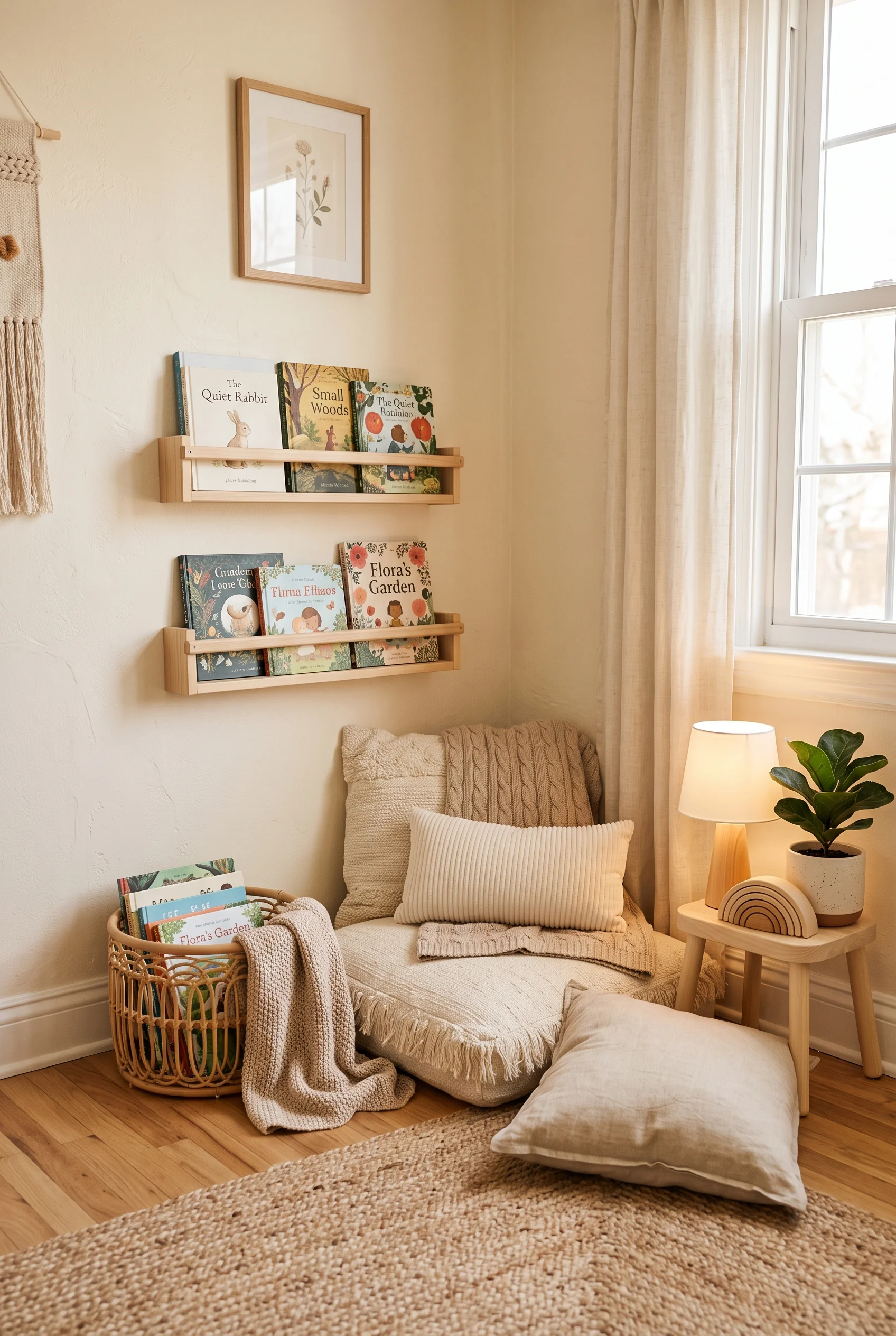
An unused corner can become a gentle retreat with one floor cushion, a basket of books, and warm child-safe lighting. Soft textiles distinguish the nook from busier play areas without requiring a divider.
Keep current favorites close enough for children to browse on their own. A padded mat or small chair can replace the cushion as they grow. The best reading corners feel slightly sheltered while remaining visible from the rest of the room.
Book Covers That Invite a Closer Look
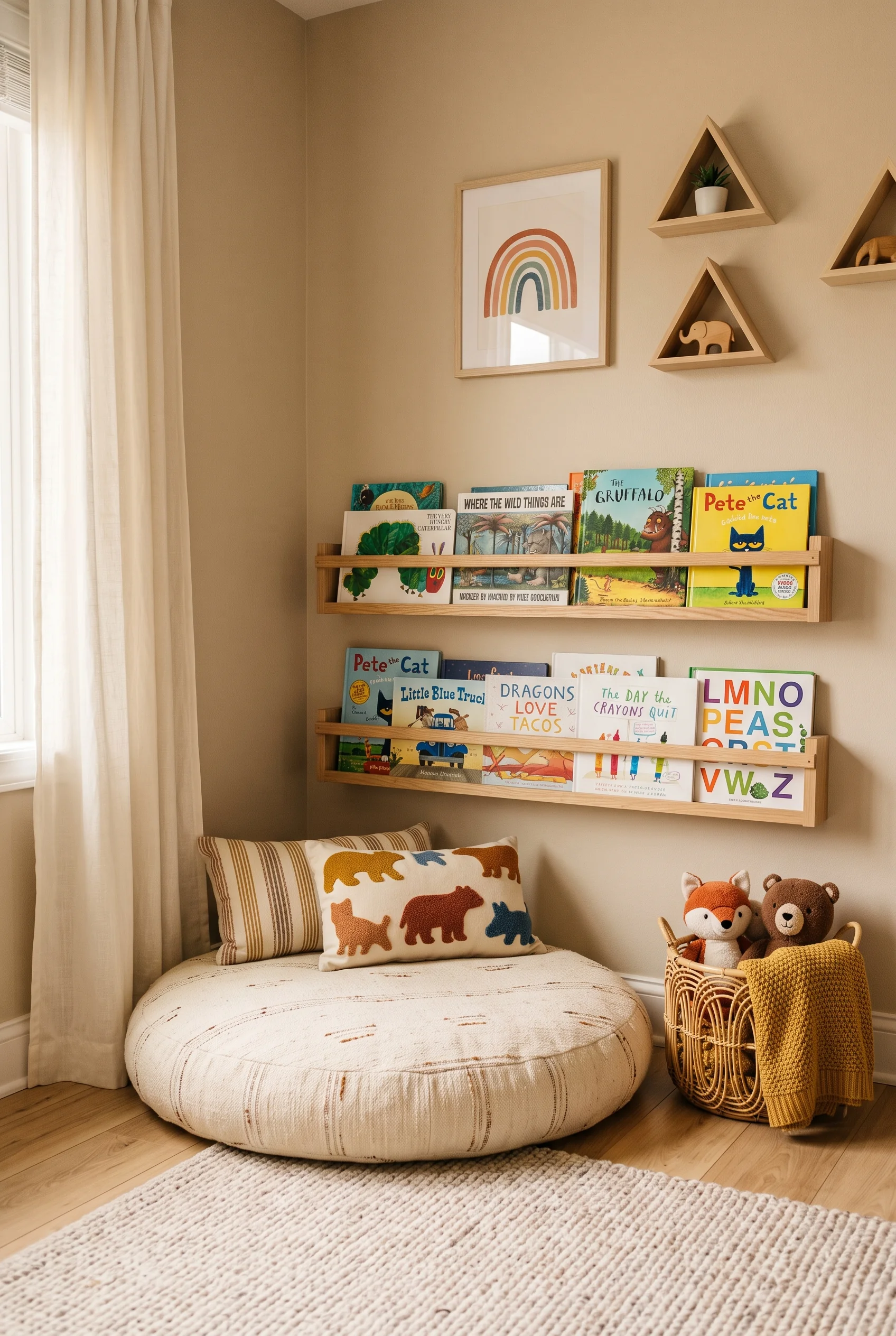
Front-facing ledges turn colorful book covers into part of the room while making choices easier for young readers. Install them at an accessible height and allow space for several book sizes.
Eight to twelve titles create interest without overwhelming the display. Store the remaining books in a nearby basket, then rotate the selection with changing interests or seasons. Familiar favorites can stay while a few new covers keep the wall engaging.
An Art Station Made for Everyday Messes
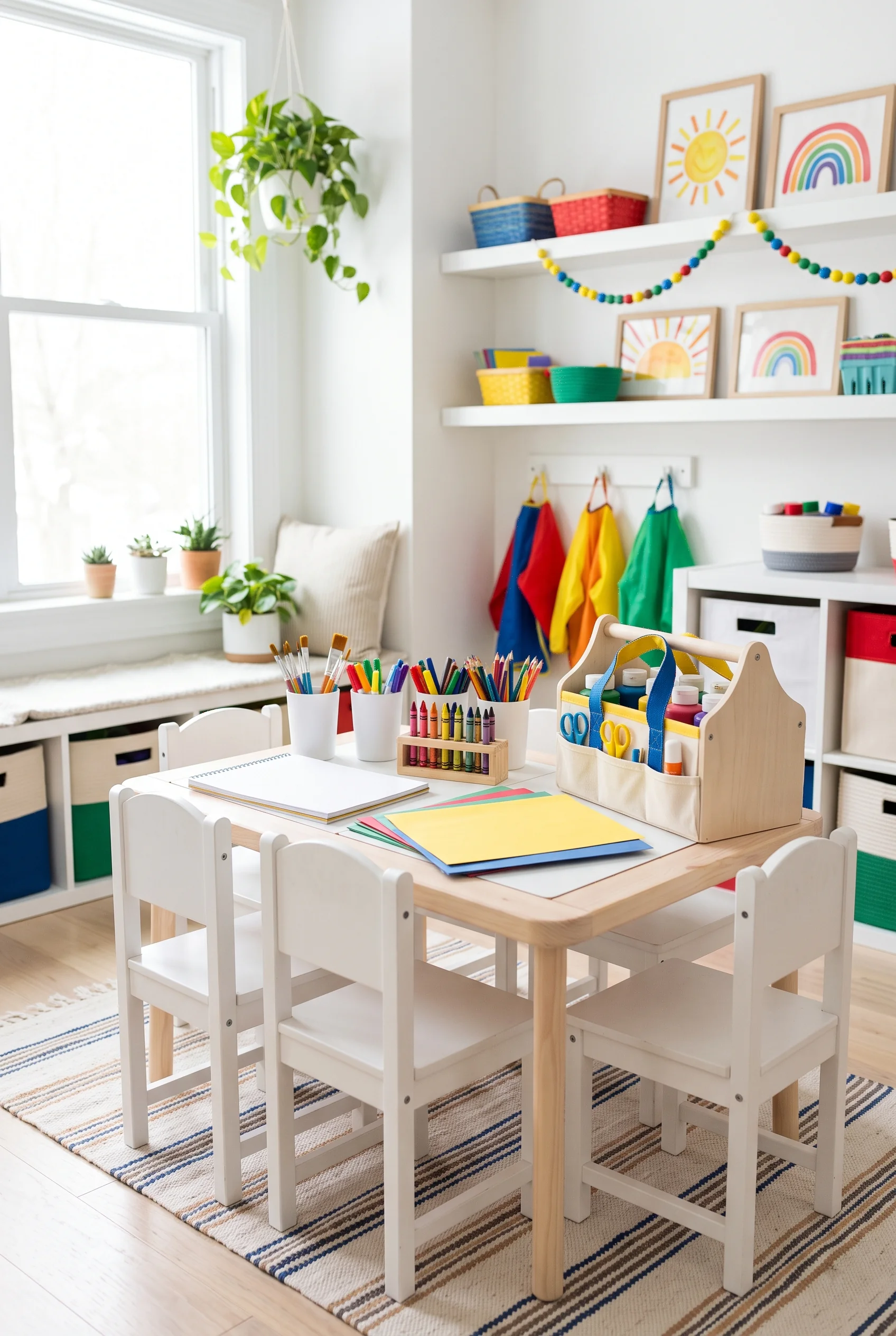
A child-height work surface makes creativity feel available rather than reserved for special occasions. Washable markers, crayons, paper, and child-safe scissors can live together in one portable caddy.
Wipeable surfaces let everyone relax when paint drips or glue wanders. Supplies that need supervision can remain higher up, while everyday materials stay within reach. A bright table near natural light turns an ordinary corner into a place where ideas can begin immediately.
Shop this pick: Kids Wooden Art Table and Chair Set, The art table defines the creative zone and offers lasting usefulness beyond a single type of project.
Soft Floor Seating That Moves Easily
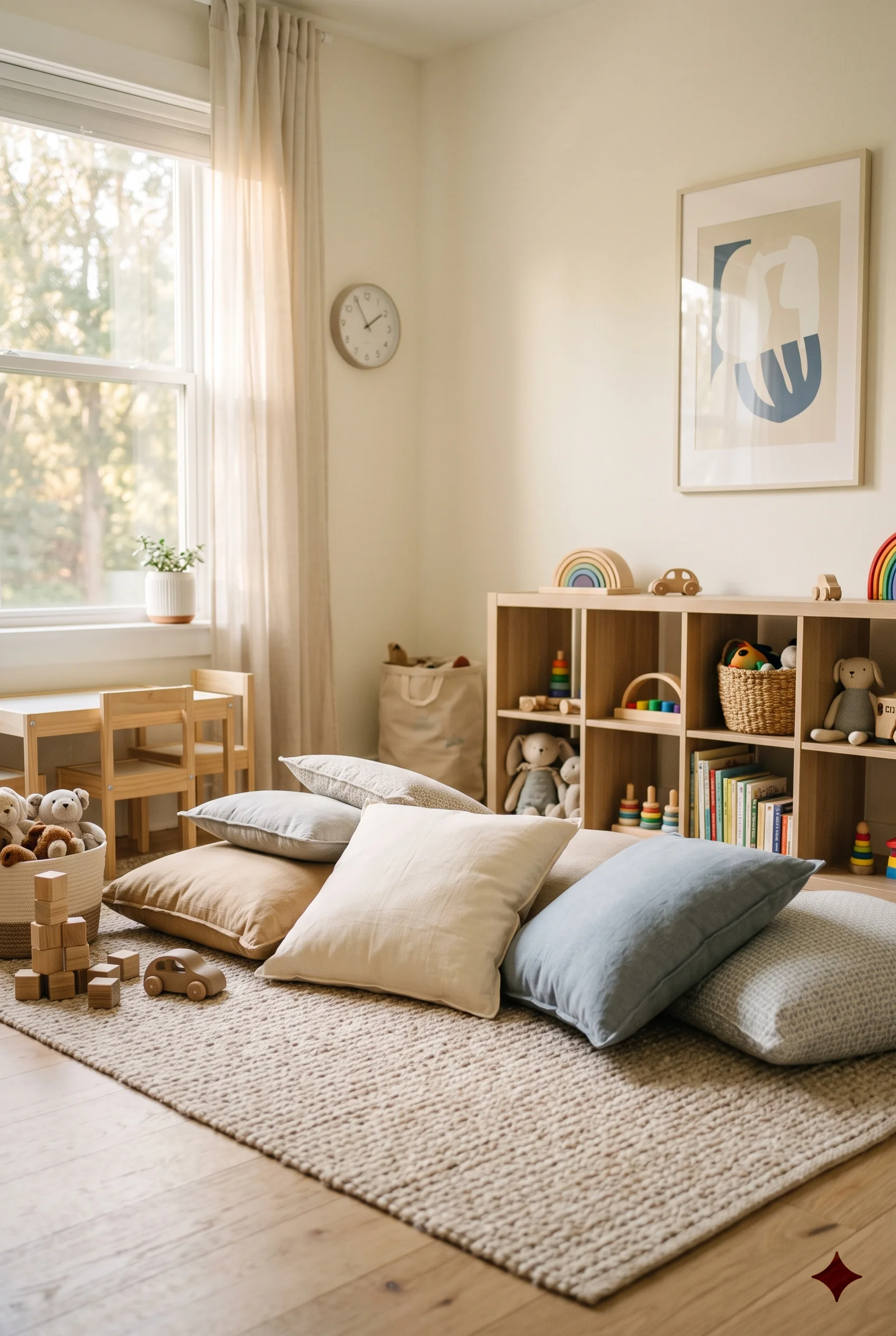
Floor cushions provide relaxed seating for stories, games, quiet time, and visiting friends. They can move wherever children need them, which is more useful than committing every corner to permanent furniture.
Two generously sized cushions are usually enough to begin. Removable, washable covers handle everyday spills, and colors repeated elsewhere help them settle into the room. Stack them in a corner or oversized basket whenever the floor is needed for active play.
A Small Gallery for Big Creativity
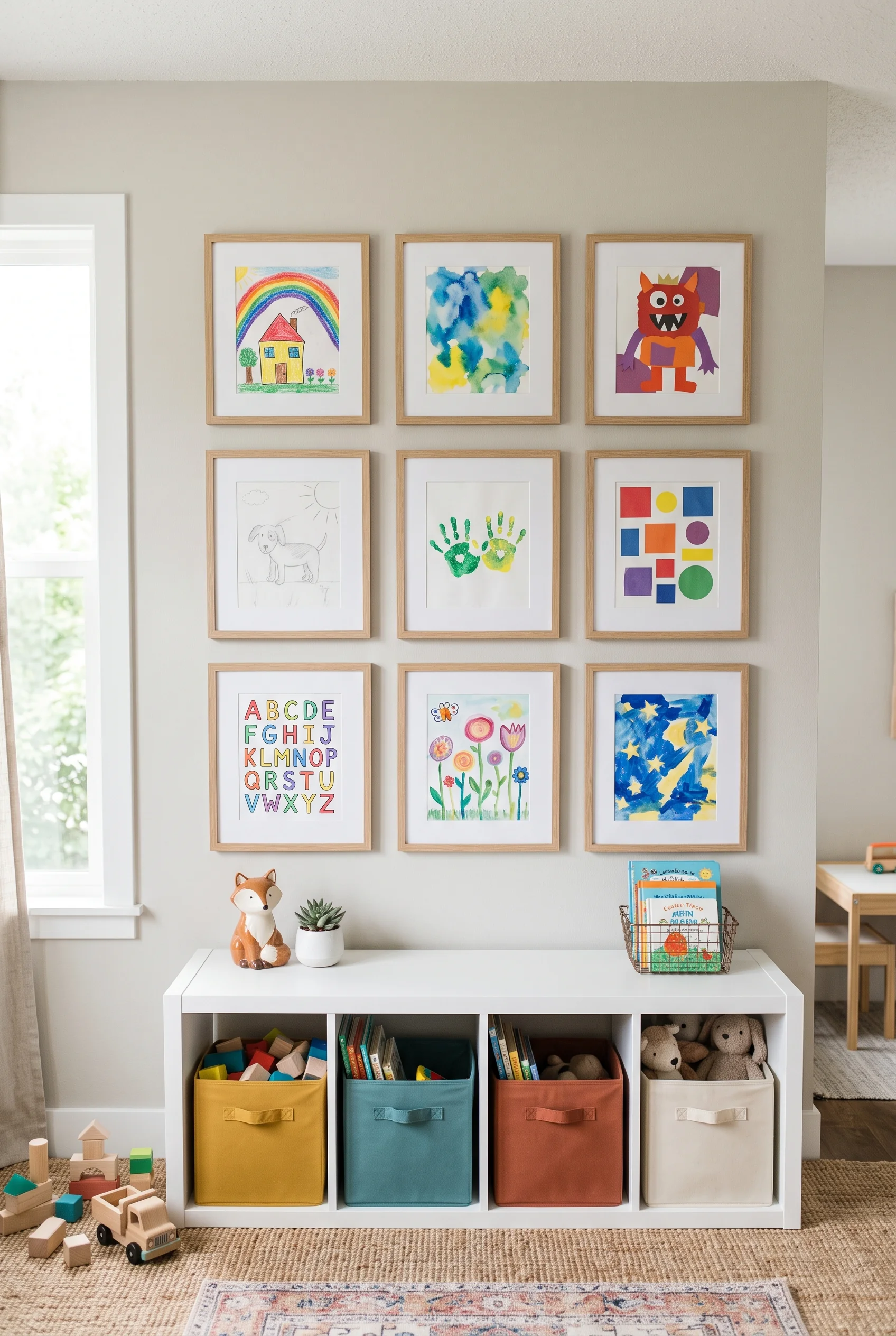
Selected artwork feels meaningful when it has a dedicated place rather than covering every available wall. Three favorite pieces in matching slim frames can form a cheerful, intentional gallery.
Magnetic holders or clip rails make frequent changes easier for prolific young artists. Swap work regularly and store special pieces in a portfolio. The display celebrates effort while letting the room retain a calm backdrop.
Materials Ready for Real Family Life
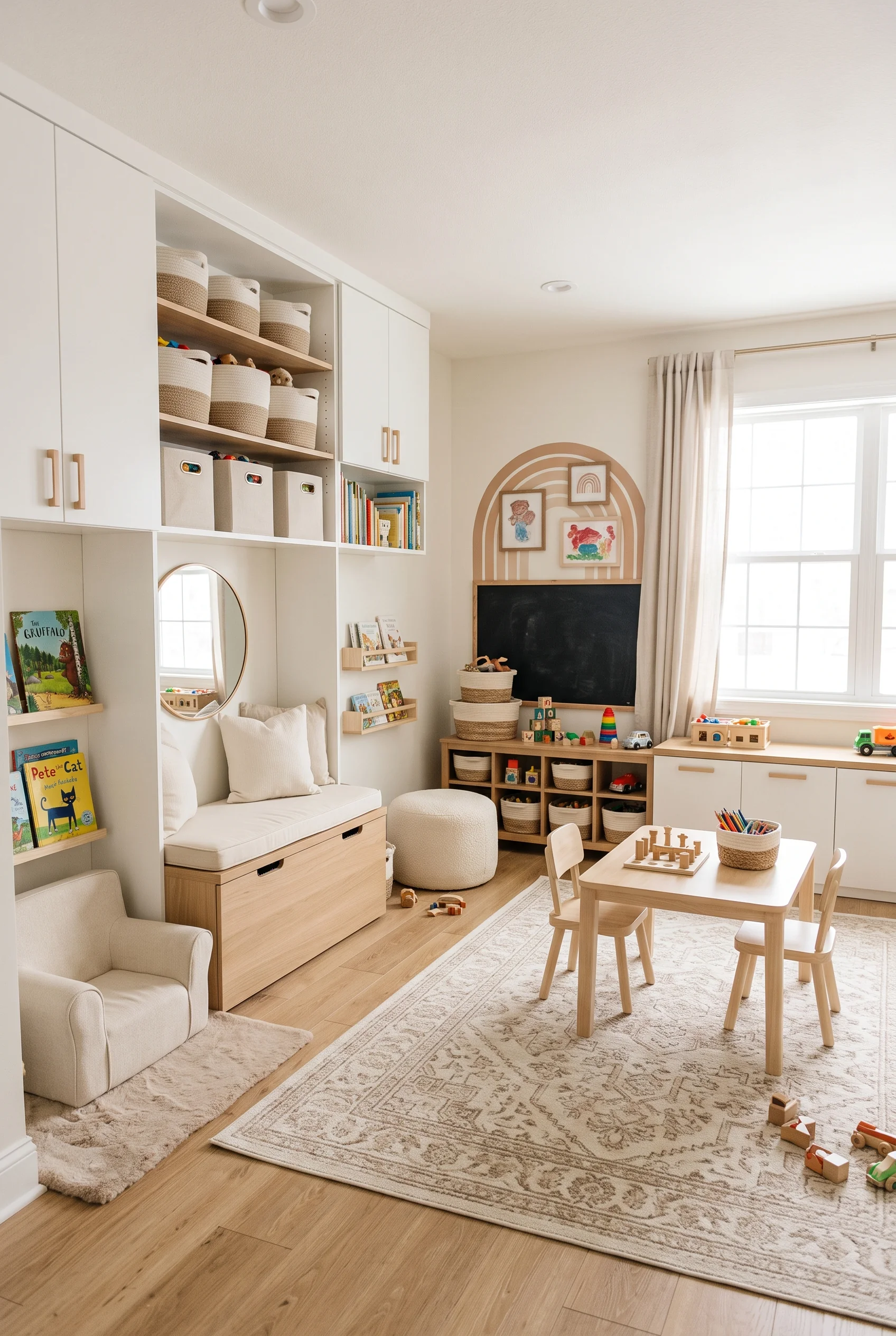
Playrooms work hard, so their surfaces should tolerate markers, crumbs, spills, and energetic use. Wipeable paint, sturdy furniture, and washable fabrics reduce the need to protect every finish.
Durability does not have to feel severe. Soft rugs and cushions with removable covers bring comfort back into the practical foundation. Upgrading the hardest-working textile or surface first can noticeably change how relaxed the room feels during daily play.
A Modern Palette With Warmth and Personality
Modern playroom ideas do not have to mean stark rooms or colorless decor. A quiet foundation gives toys, artwork, and personal details more presence. Warm wood, soft neutrals, and a restrained mix of accents can hold plenty of personality while keeping the overall mood restful.
A Calm Palette Behind Colorful Toys
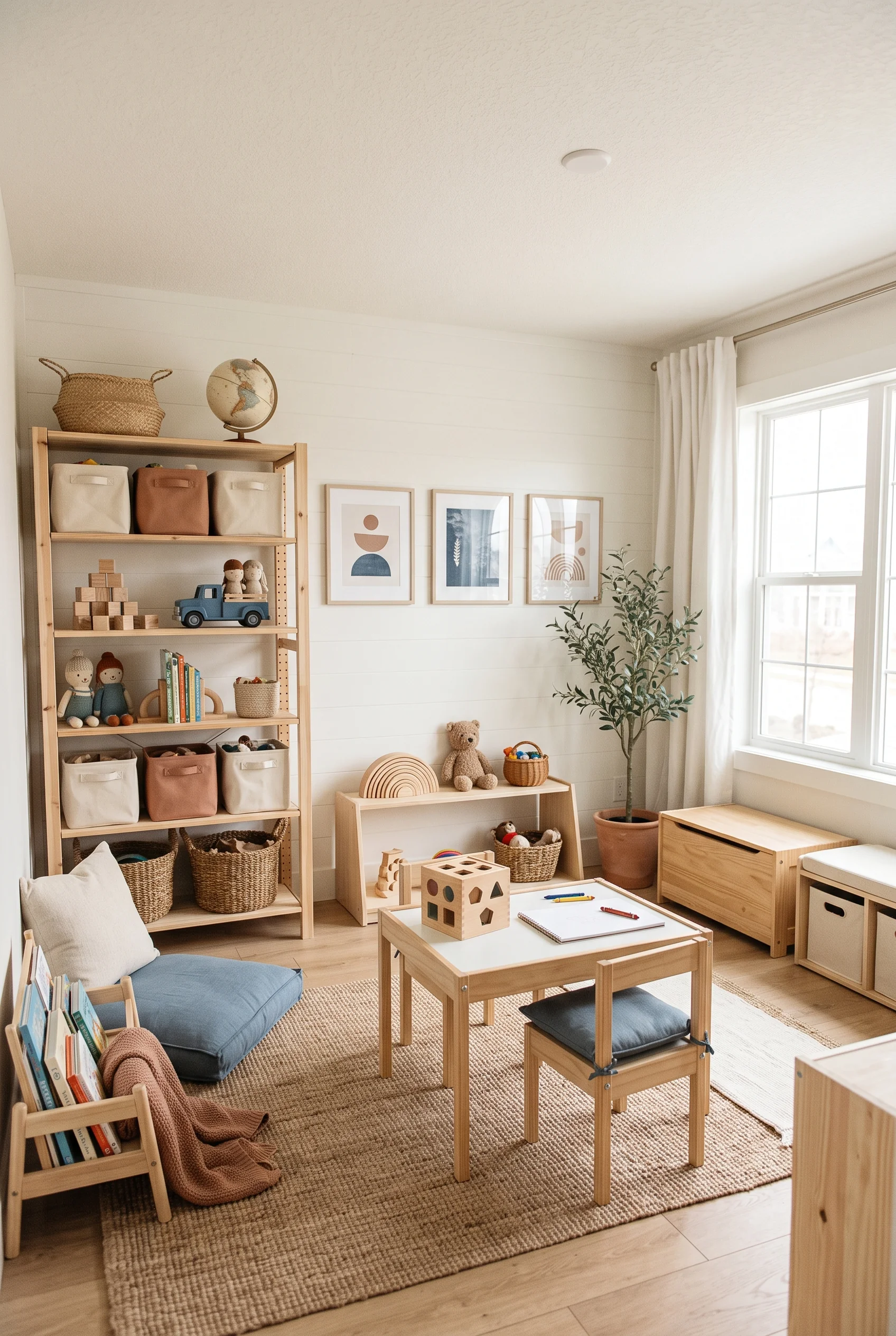
Warm white walls and two muted accent colors give the room a flexible foundation. Toys and books already contribute plenty of color, so the larger surfaces can stay soft and steady.
Repeat the accent shades across a few bins, textiles, or prints rather than introducing a new tone with every purchase. Muted blue and clay feel playful without becoming loud. The limited palette allows practical pieces to sit together more comfortably.
Open-Ended Props for Bigger Stories
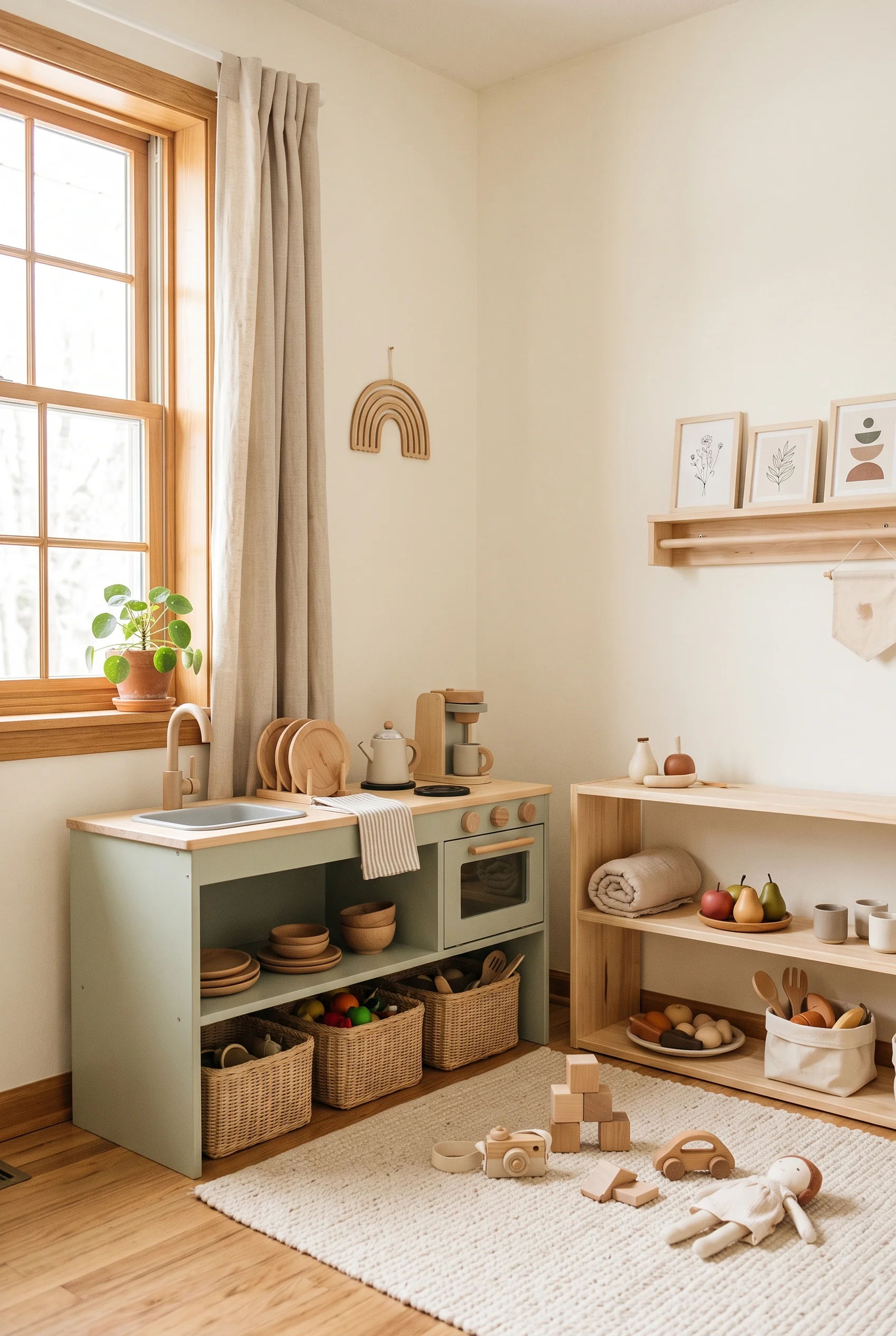
Simple props often sustain imaginative play longer than highly specific sets. Play food, animals, fabric, dolls, and a few costumes can move between countless stories.
Gather the smaller accessories in one low basket beside a streamlined play kitchen or open surface. Leaving breathing room around the area makes it easier for children to invent rather than merely sort through options. A restrained setup can hold a surprisingly expansive world.
A Dress-Up Corner With Just Enough Choice
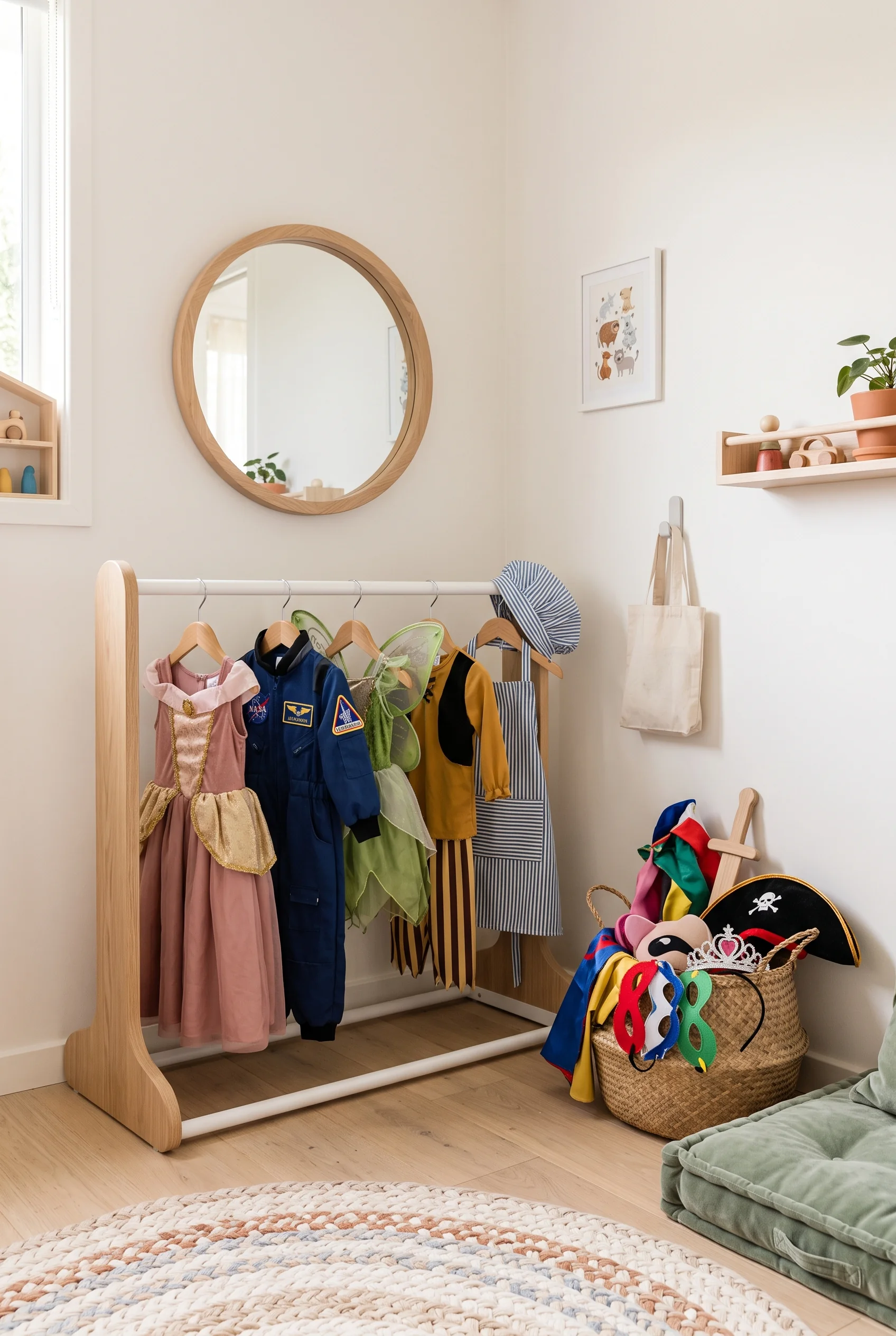
Visible costumes invite dramatic play, but too many options can quickly end up on the floor. A short rail or row of low hooks keeps five current favorites easy to see and return.
One basket can contain hats and smaller accessories. Add a securely mounted, child-safe mirror with rounded edges to complete the corner. Rotating costumes preserves novelty while keeping the setup light and manageable.
Shop this pick: Wooden Kids Dress-Up Rack, A low costume rack is the most distinctive and shoppable focal piece in a dedicated dress-up corner.
Personal Details With Room to Change
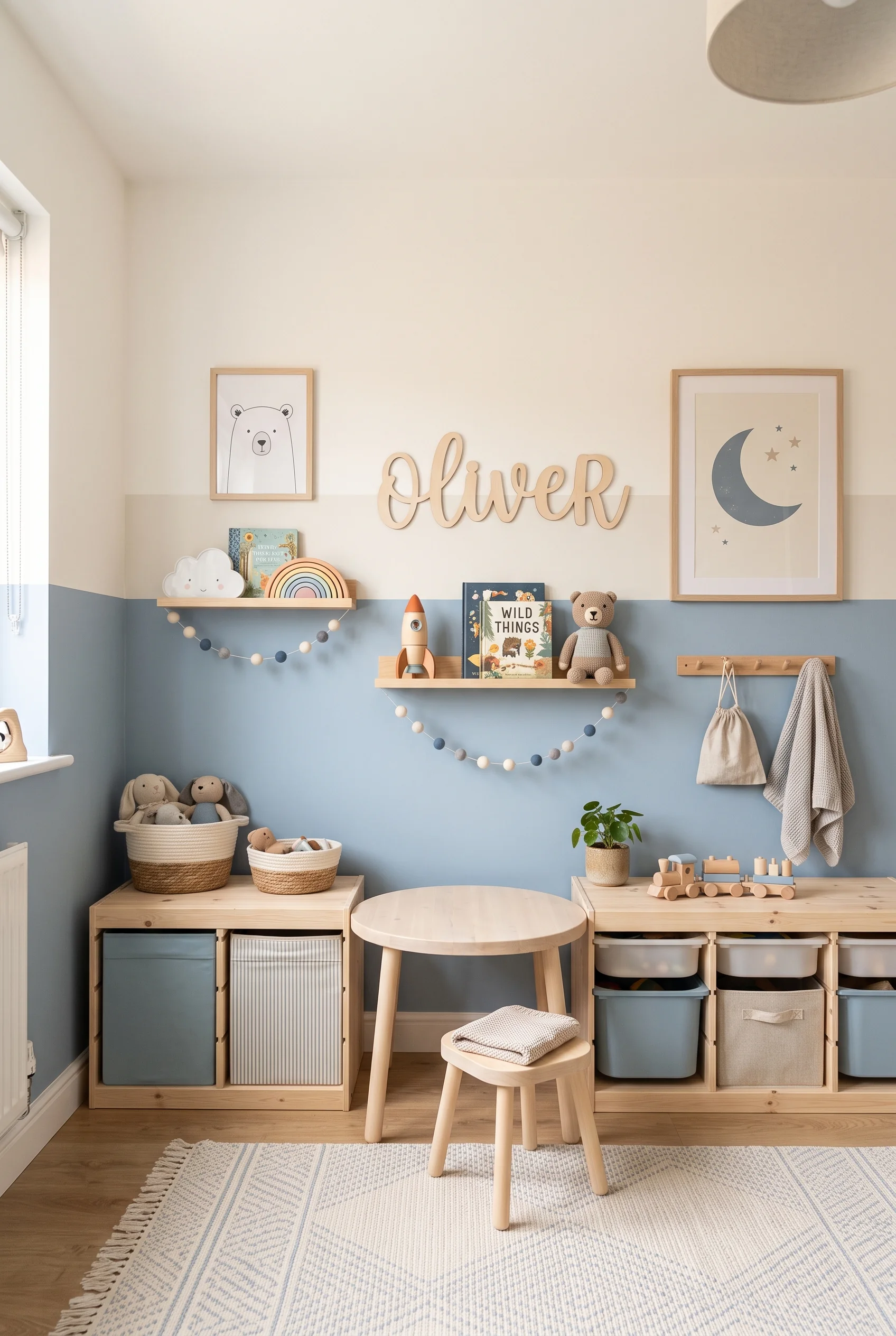
A name print, meaningful family photographs, or a small collection of graphic art can make the playroom feel distinctly theirs. Concentrating those pieces on one focal wall gives them more impact.
Changeable frames and removable decals suit interests that may shift quickly. Keep the arrangement restrained, with a little open wall around every piece. Personal playroom decor ideas feel most polished when they tell one clear story rather than filling every surface.
Neutral Layers With Plenty of Texture
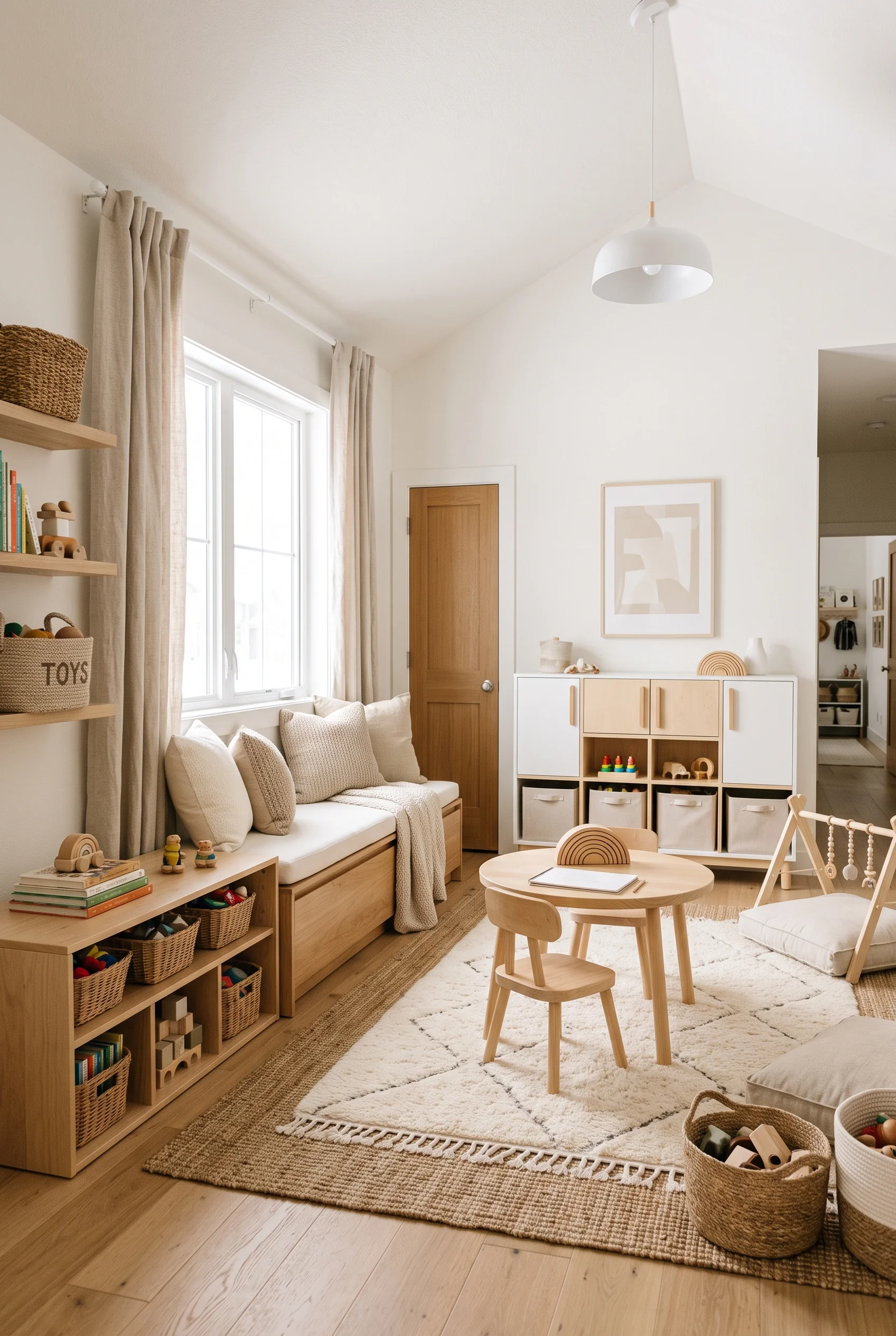
Warm whites, beige textiles, and pale natural wood form an adaptable backdrop for years of changing interests. Clean-lined furniture keeps the look current, while tactile layers prevent the palette from feeling flat.
Repeat one wood tone across the main pieces and one soft neutral through rugs or curtains. Baskets and cushions can introduce subtle variation without disturbing the calm. Daylight brings out the warmth in every understated surface.
Color Carried by the Easy-to-Change Pieces
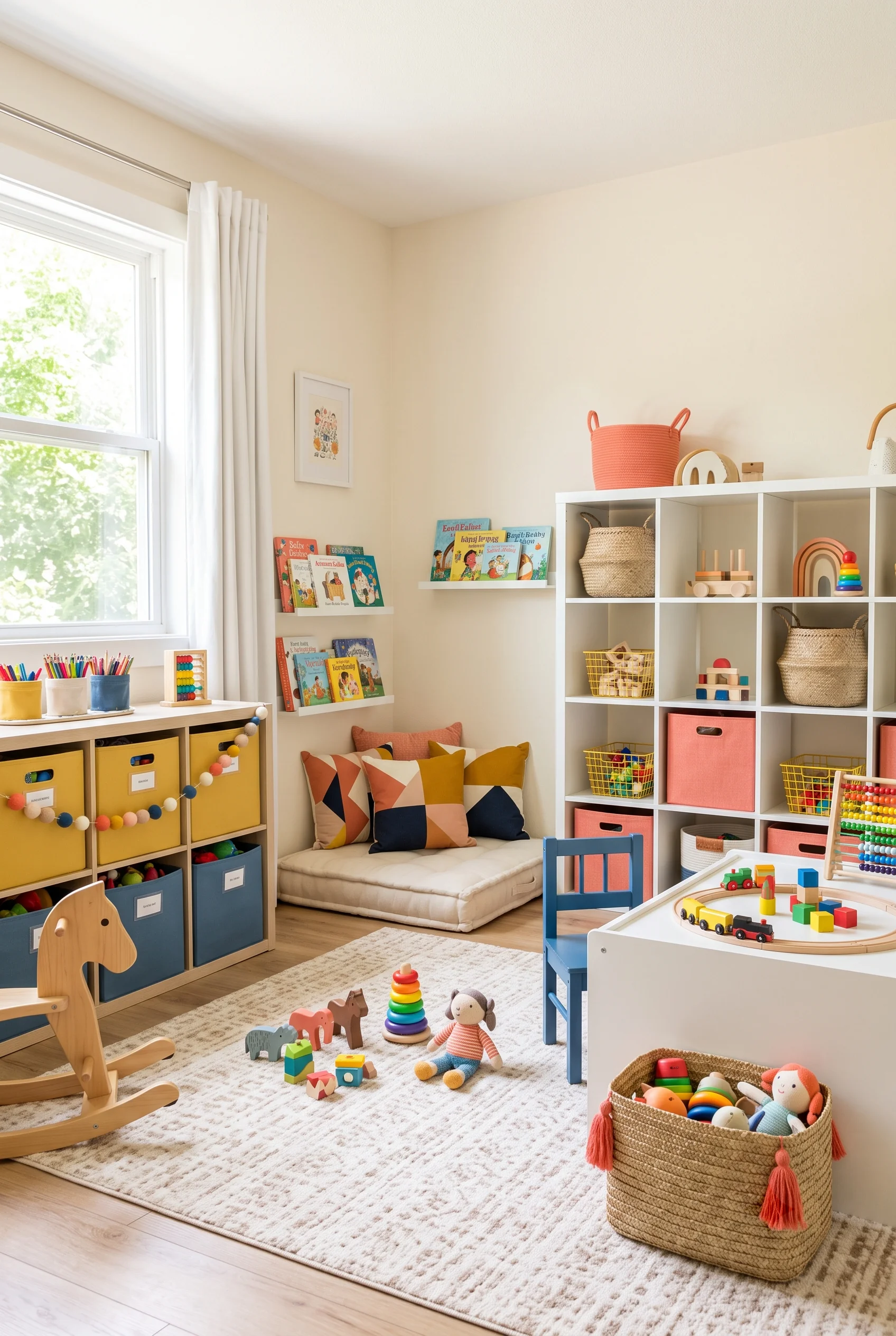
Books, toys, art, and cushions can provide all the color a playroom needs. Against a quieter backdrop, coral, blue, or yellow accents feel lively without competing for attention.
Select two favorite shades and echo them in a few small details around the room. Accessories are simple to update as preferences change, so permanent surfaces can remain versatile. The color feels joyful, but the room still has visual breathing room.
Flexible Pieces and Habits That Last
A playroom becomes easier to live with when furniture can serve more than one purpose and storage responds to what children actually use. Adaptable pieces stretch across changing stages. Simple routines protect the work already done, helping the room recover from a full day without turning cleanup into an evening project.
A Rug Soft Enough for Floor Play
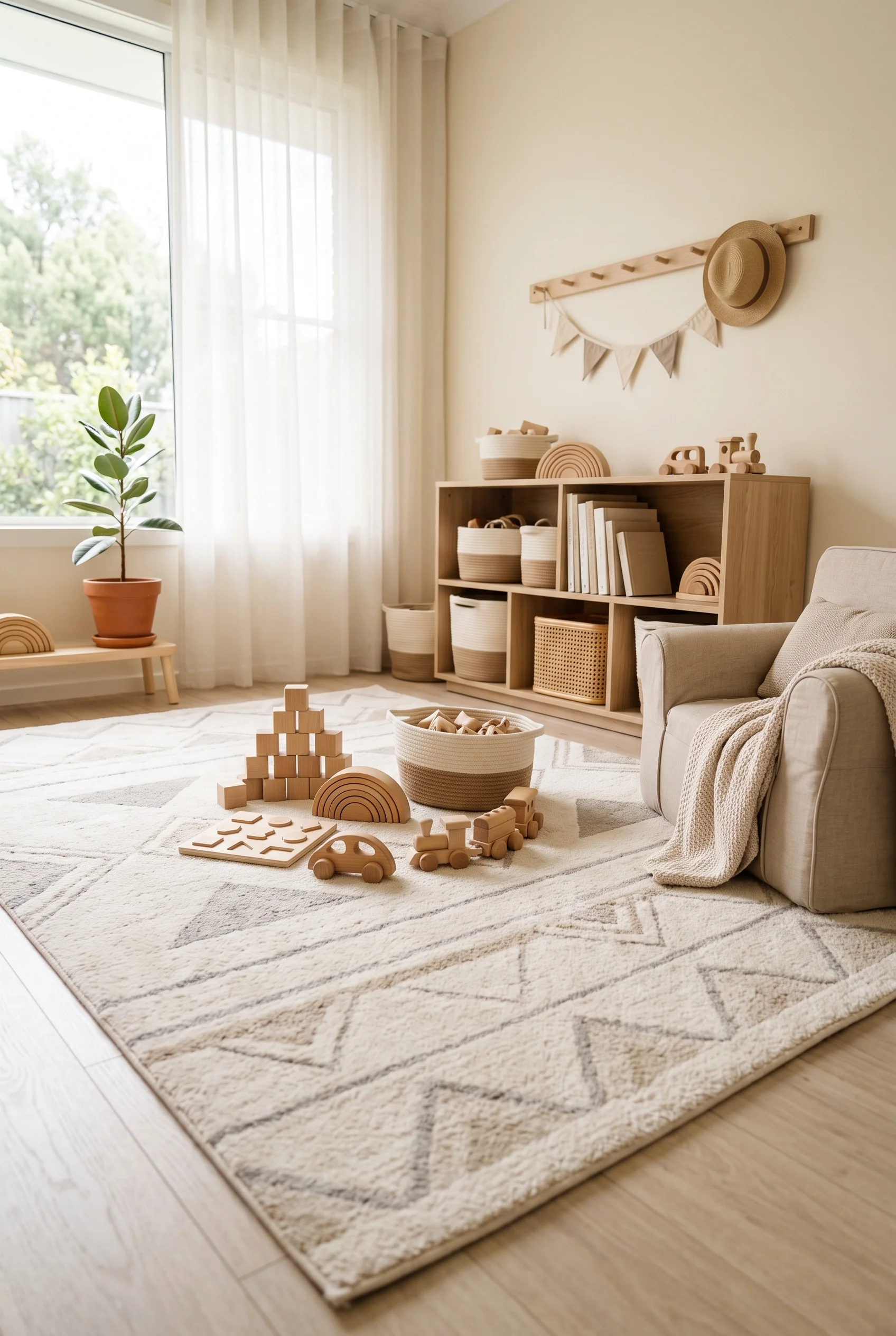
Much of childhood play happens on the floor, making the rug one of the room’s hardest-working elements. A low-pile washable design offers cushioning without trapping small pieces deep in its fibers.
Measure the main play area before selecting a size. A rug large enough to anchor the activity zone feels more settled than a small mat floating in the center. Add a nonslip pad beneath it so energetic play stays comfortable and secure.
Shop this pick: Washable Geometric Playroom Rug, A washable rug grounds the main play area while addressing comfort, spills, and everyday maintenance.
A Smaller Toy Collection With Fresh Appeal
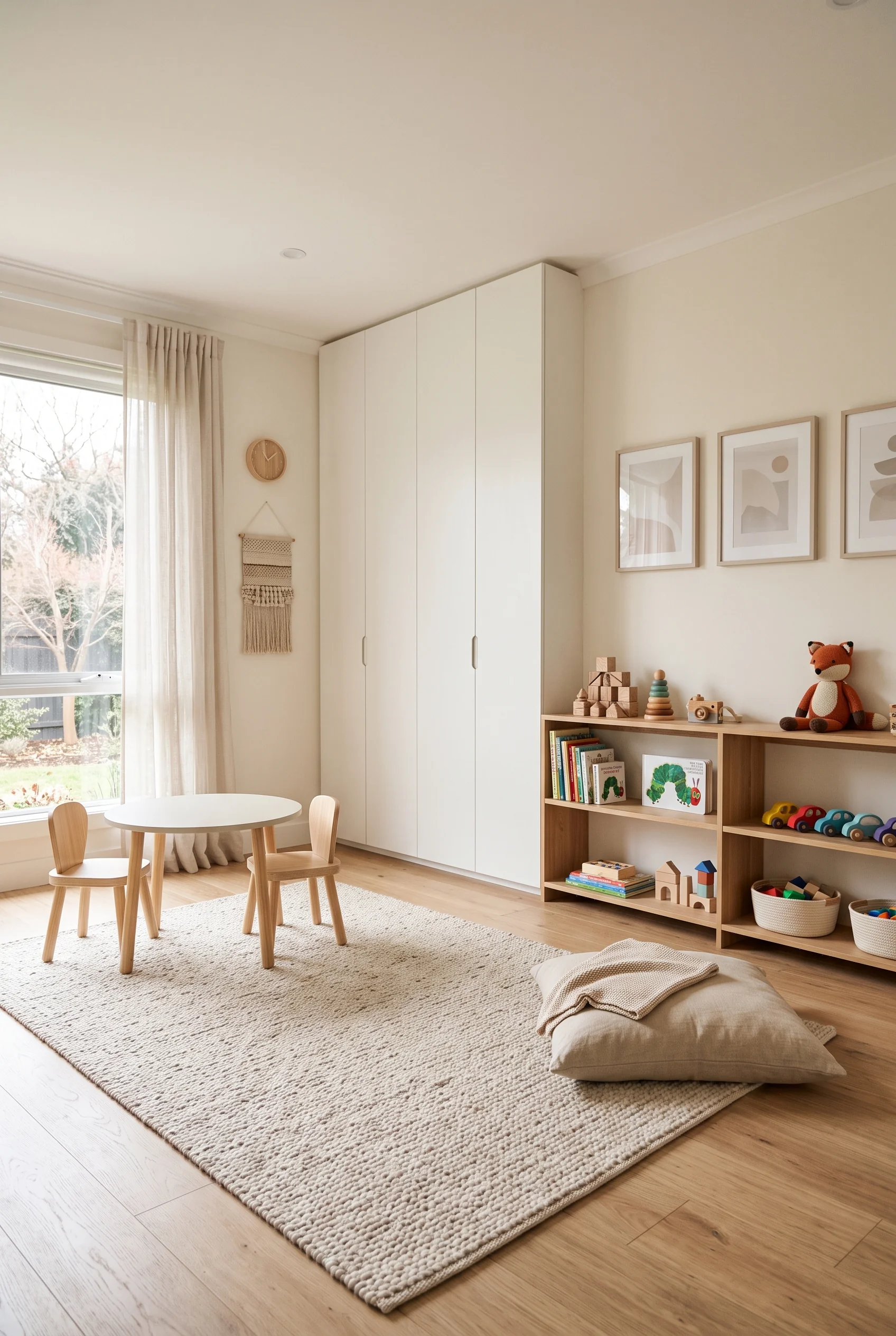
A curated selection is often easier for children to enjoy than shelves packed with every toy they own. Store roughly one-third elsewhere, then notice which items are genuinely missed.
Rotate by broad category every few weeks or whenever interest fades. No complicated schedule is needed. A few renewed choices can make familiar toys feel engaging again while giving each shelf enough breathing room.
Furniture That Earns Its Footprint
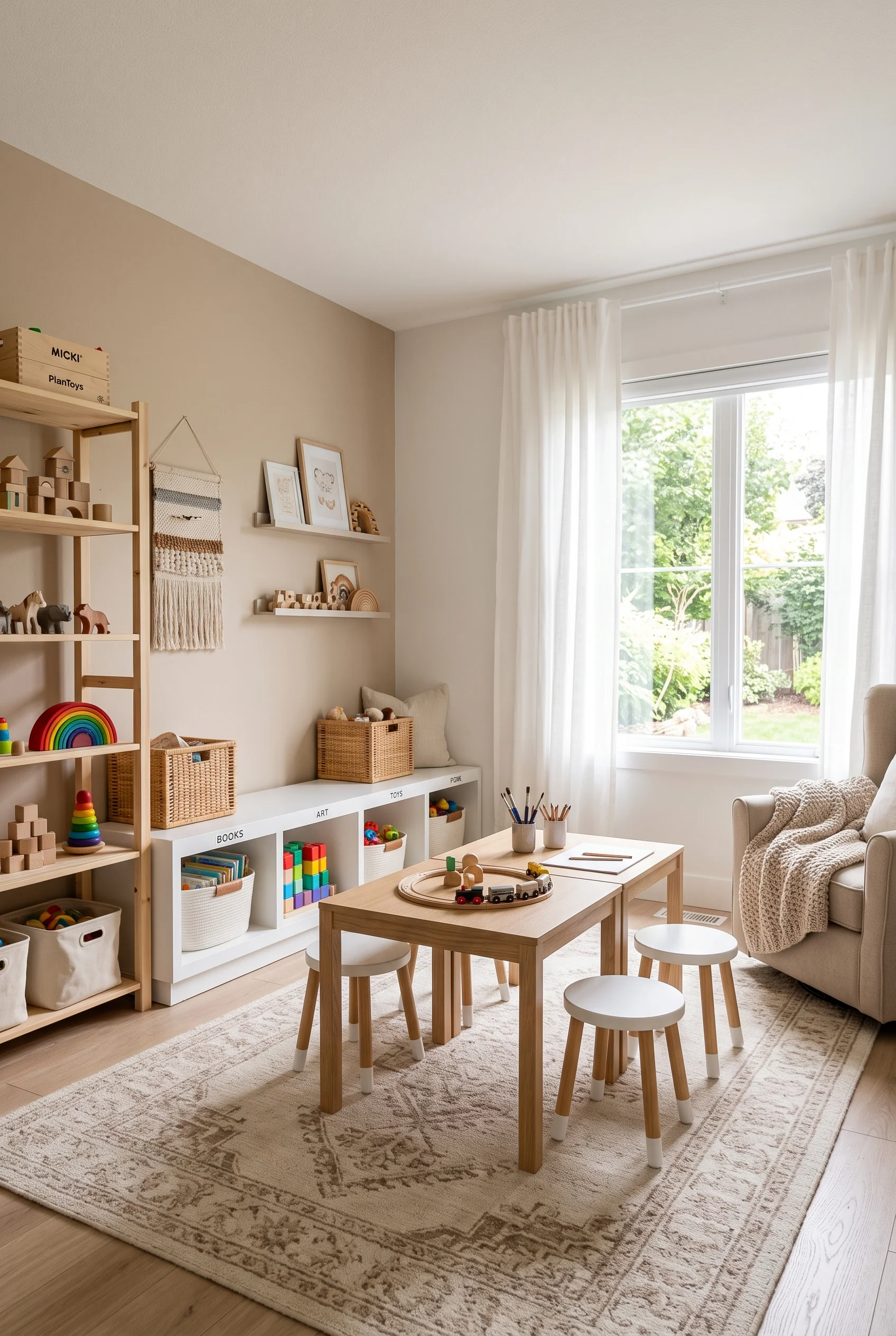
In a busy family room, furniture works harder when it combines storage, seating, or a useful work surface. A bench with bins or a table with drawers can replace several single-purpose pieces.
Simple shapes adapt more easily as interests change. Before bringing in anything new, identify the two needs it should solve and confirm that children can use it comfortably. The room gains function without giving up valuable open floor space.
Seating With Storage Hidden Below
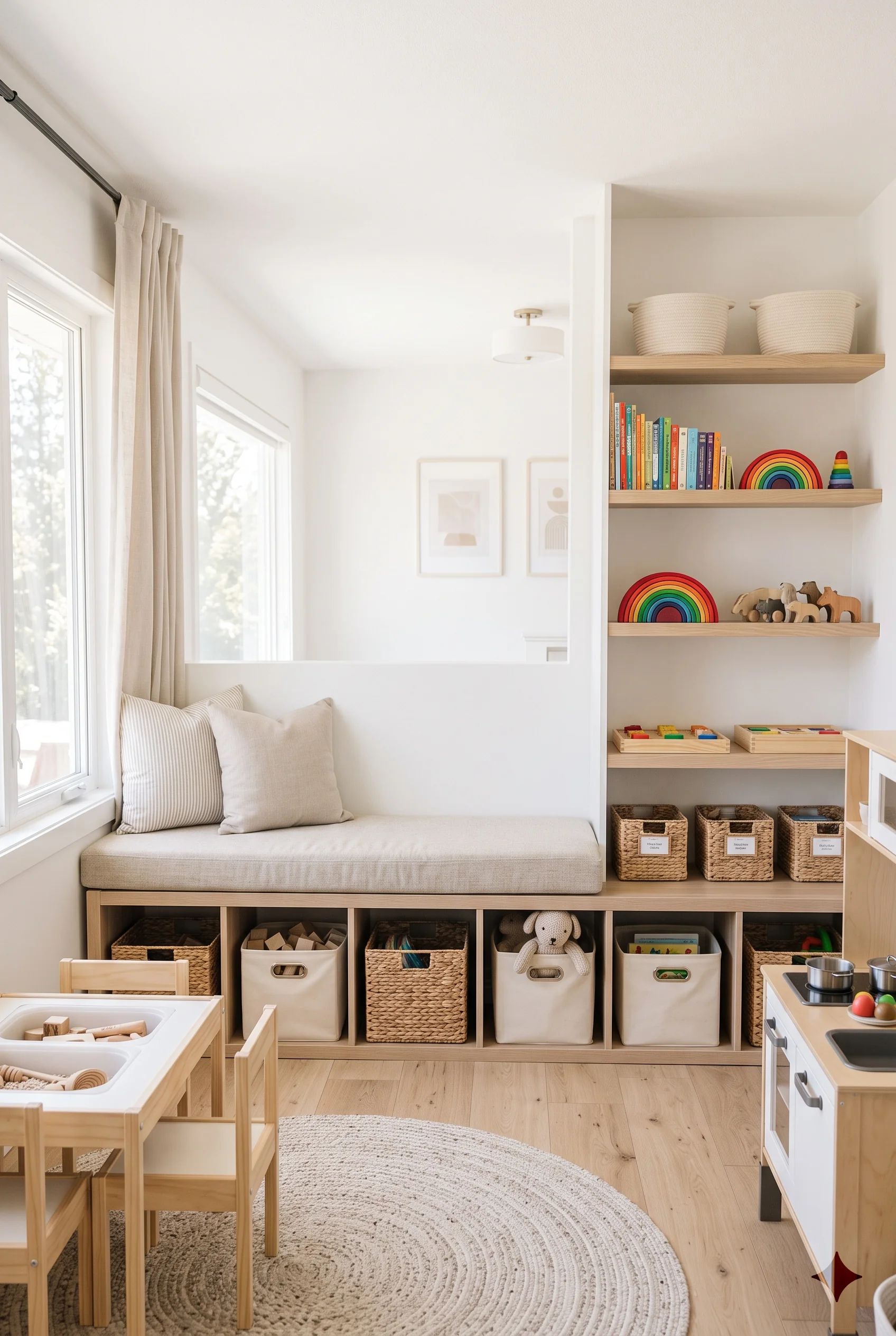
A storage bench provides a comfortable perch while concealing stuffed animals, large toys, or extra blankets. Assigning it to one broad category prevents the compartment from becoming an unmanageable mix.
A child-safe lid or open cubbies reduce the risk of pinched fingers. Top the bench with a washable cushion in a color already used elsewhere. The finished piece reads as built-in seating while quietly handling bulky belongings.
Shop this pick: Kids Storage Bench With Cubbies, The bench combines two high-value playroom needs by providing accessible storage and practical seating.
A Room Ready for the Next Stage
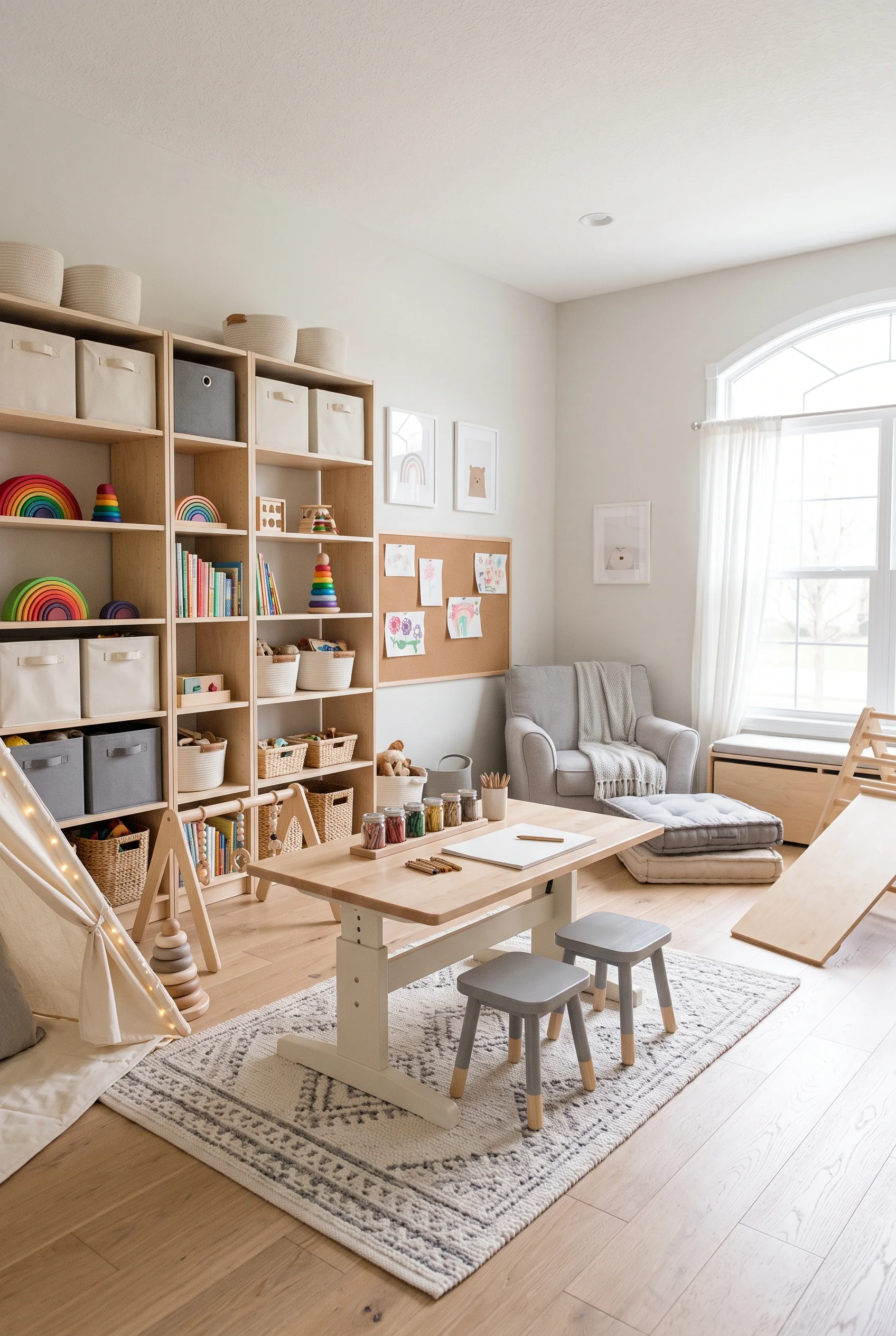
Adjustable tables and modular shelving can move from early play to homework, hobbies, and time with friends. Understated furniture also leaves room for children’s interests to change without requiring a complete redesign.
Before buying a major piece, imagine how it might serve the family in three years. Keep permanent features flexible and express current favorites through art or accessories. Thoughtful playroom ideas for different ages make each transition feel less disruptive.
Shop this pick: Modular Kids Storage System, A modular storage system can adapt across multiple childhood stages and changing family needs.
A Five-Minute Reset at Day’s End
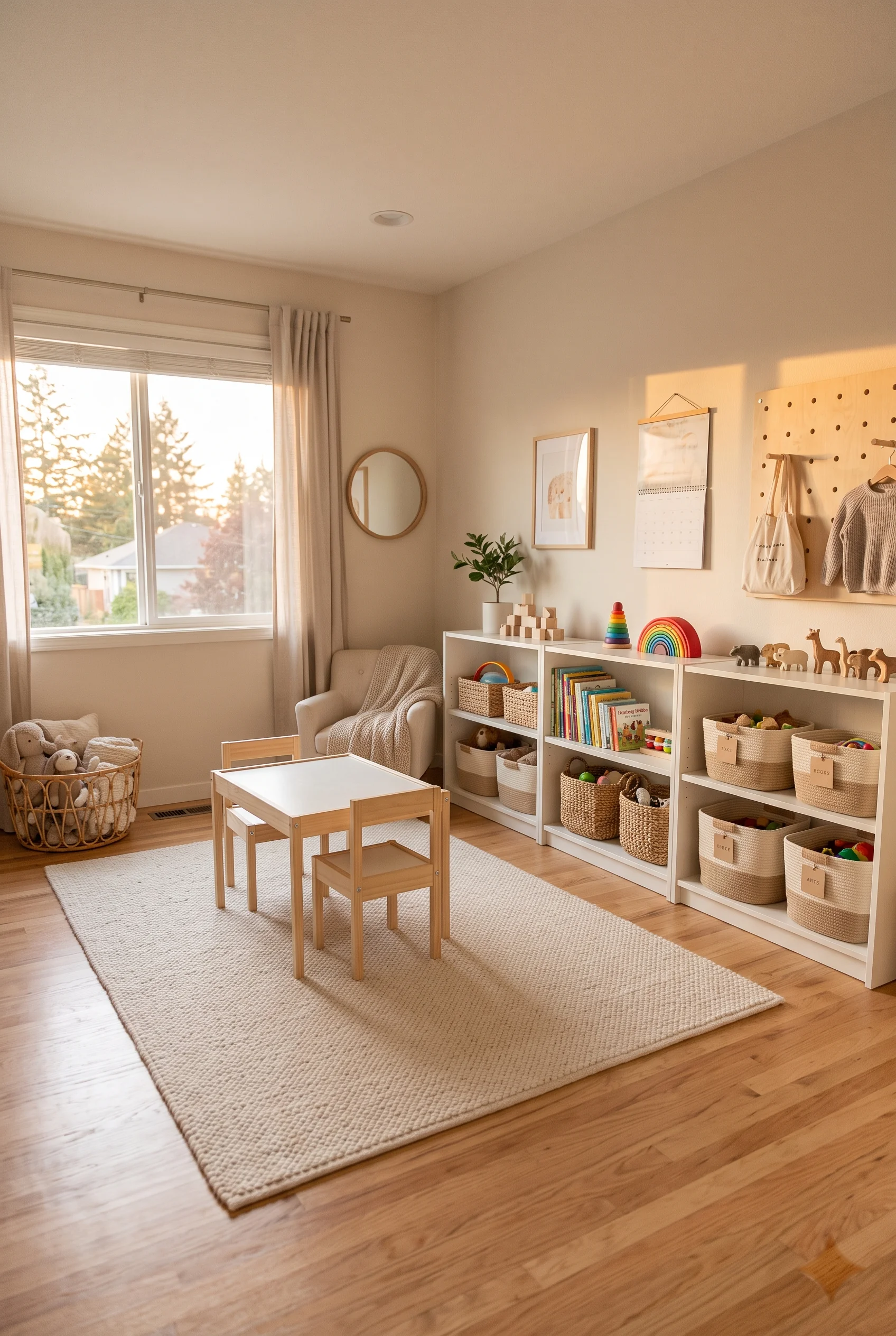
A short daily reset is gentler than waiting for clutter to become an all-afternoon project. Set a five-minute timer at a consistent point in the evening and invite everyone to return toys to their broad categories.
Clear labels keep instructions simple. Once a month, remove broken pieces and set aside items that are no longer used. Learning how to keep a playroom organized is less about constant tidiness and more about a routine the family can repeat.
A Playroom That Settles Into Family Life
A beautiful playroom does not need to be finished in one weekend. It only needs to support the children using it and the routines that shape your days. For one family, that may mean a generous building surface. For another, closed cabinets and a five-minute reset may bring the greatest sense of calm.
Begin with the area that creates the most frustration. Clear a pathway, label three baskets, or place favorite books at child height. Live with that change before deciding what comes next. The room will tell you where another shelf is needed and which activities deserve more space.
As children grow, their play changes. Flexible furniture, quiet colors, and easy-to-update details allow the room to change alongside them. A craft table can become a homework desk. A pretend-play corner can make way for music, games, or time with friends.
These playroom ideas are not a checklist for perfection. Pick the details that suit your square footage, your budget, and the way your family actually lives. A room that can handle creative messes and return to calm will always feel more valuable than one arranged only for photographs. Start small, notice what works, and let the space evolve naturally.