21 Playroom Storage Ideas That Make Cleanup Easier
A playroom can have plenty of storage and still be impossible to keep tidy. The problem is often what happens between taking a toy out and putting it away. If children have to open heavy lids, sort through overflowing bins, or ask where everything belongs, cleanup becomes another job for the adults. Good storage removes those little obstacles so putting things away feels almost as easy as taking them out.
That doesn’t mean every toy needs to be displayed or every basket needs a label. The accessible shelving in Montessori toy storage offers useful lessons in helping children manage their own belongings, while small playroom ideas show how to make storage work without sacrificing valuable floor space. For rooms that serve several purposes, living room playroom combinations offer another way to keep toys close without letting them take over the house.
These playroom storage ideas focus on systems that fit the toys your children own and how they actually play. You’ll find options for bulky toys, small pieces, art supplies, and shared family spaces, with solutions children can understand and maintain as they grow. The payoff is less time spent sorting through the mess and more time enjoying the room together.
DISCLOSURE: Some of the links provided on this page are affiliate links. This means if you choose to make a purchase through these links, we may receive a small commission at no extra cost to you.
Walls That Work Harder Without Crowding the Floor
Vertical storage gives toys a home while preserving the open floor children need for play. Tall shelving, low cabinets, and slim wall organizers each use a different part of the room. The strongest layouts keep daily favorites within reach and reserve higher areas for lighter, less-used belongings. Secure installation matters just as much as appearance, especially around active children.
Stuffed Animals Off the Floor
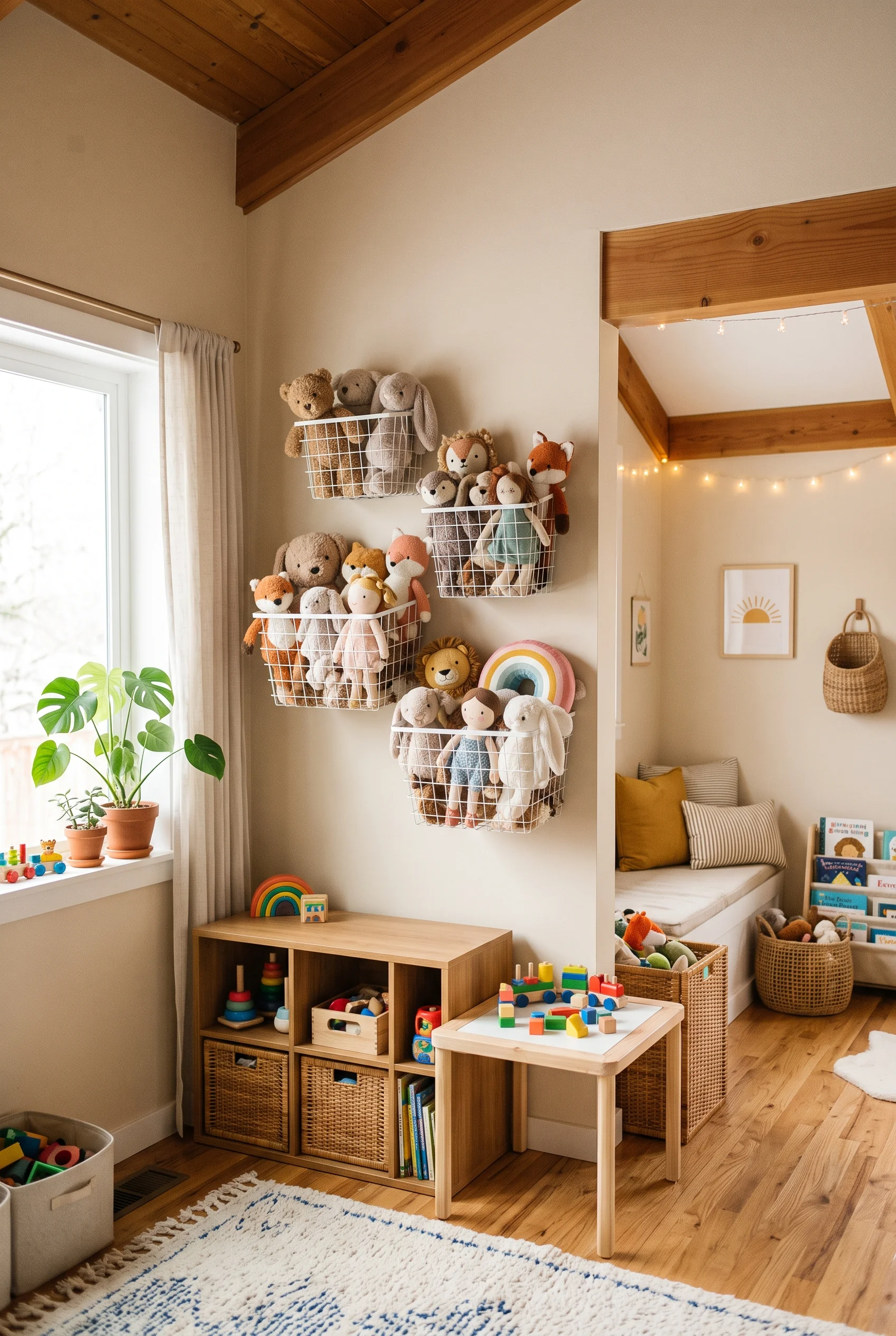
Wall-mounted baskets turn a loose collection of stuffed animals into an easy-to-see display. Open fronts help children find a favorite without emptying every basket. A reachable height also allows the animals to return home after play.
Limit each basket to what fits comfortably. Overfilled storage frustrates small hands and puts unnecessary pressure on the hardware. Lightweight wire or fabric styles feel visually open against a pale wall. Secure every basket with the correct anchors and check the fittings as part of regular room maintenance.
Useful Storage Behind the Door
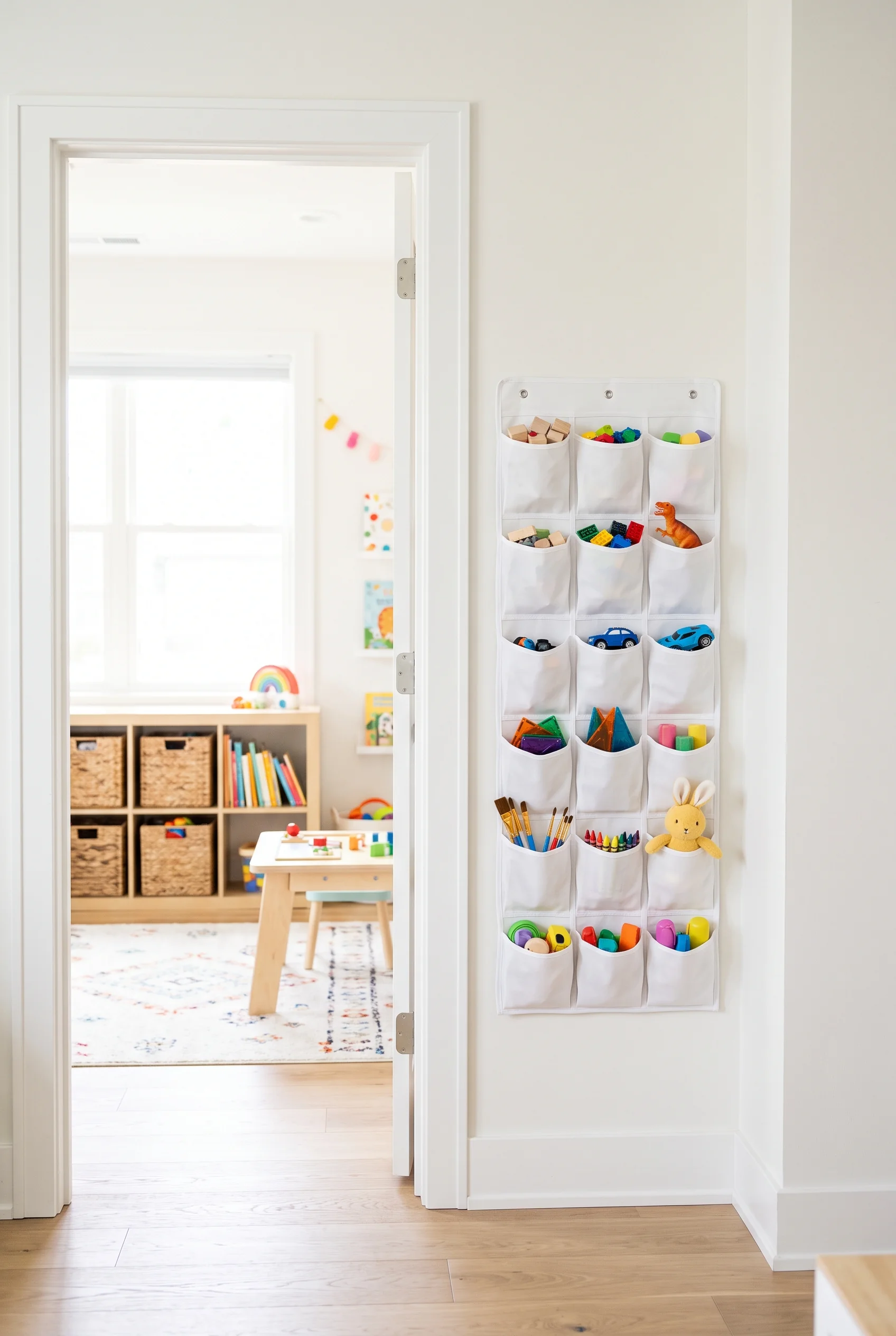
An over-the-door organizer can hold dolls, cars, costume accessories, or compact art tools. Clear pockets keep small items visible, which reduces the digging that often leaves toys scattered across the floor.
Everyday belongings fit best in the lower pockets. Reserve the top for lightweight supplies that need adult supervision. Before filling the organizer, open and close the door several times to check the clearance. A streamlined white design blends quietly into the room while making an overlooked surface genuinely useful.
A Pegboard That Changes With Their Interests
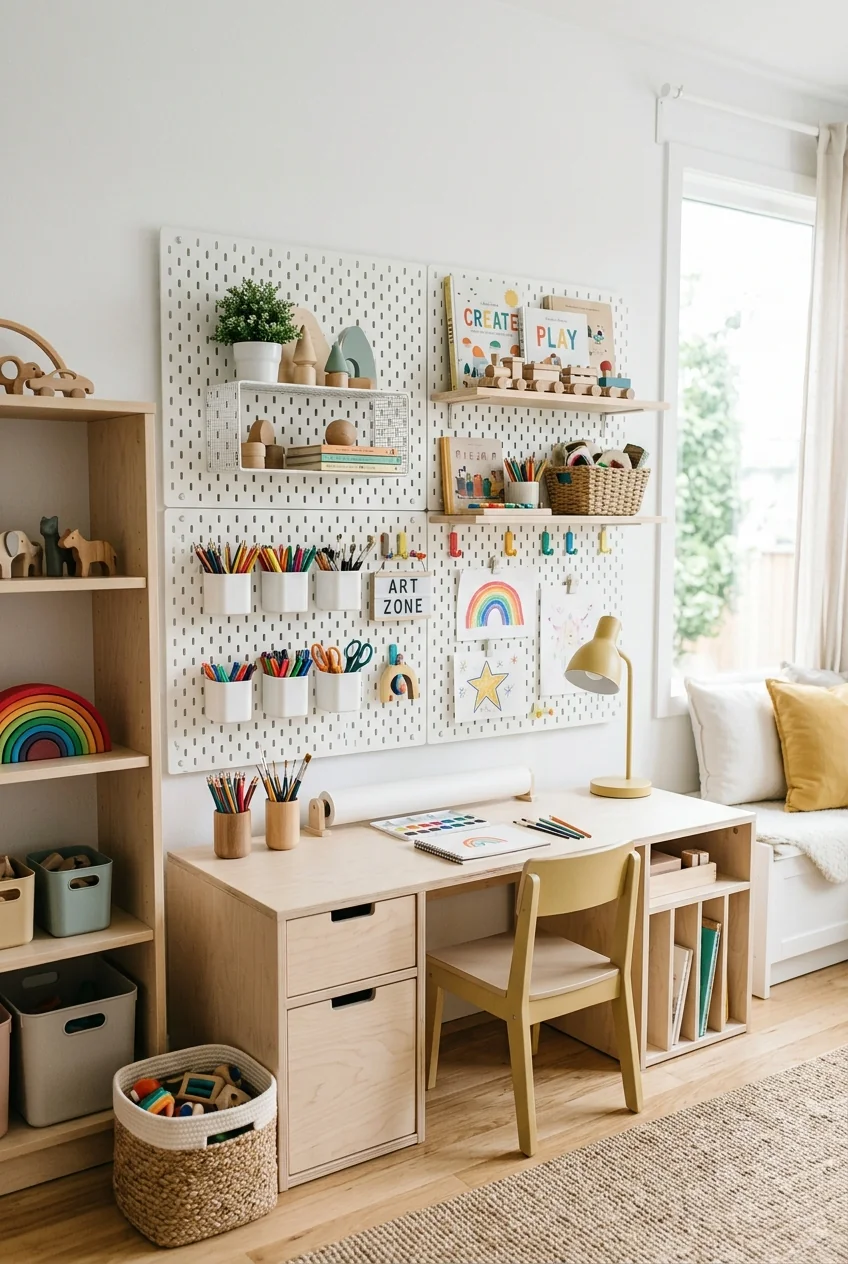
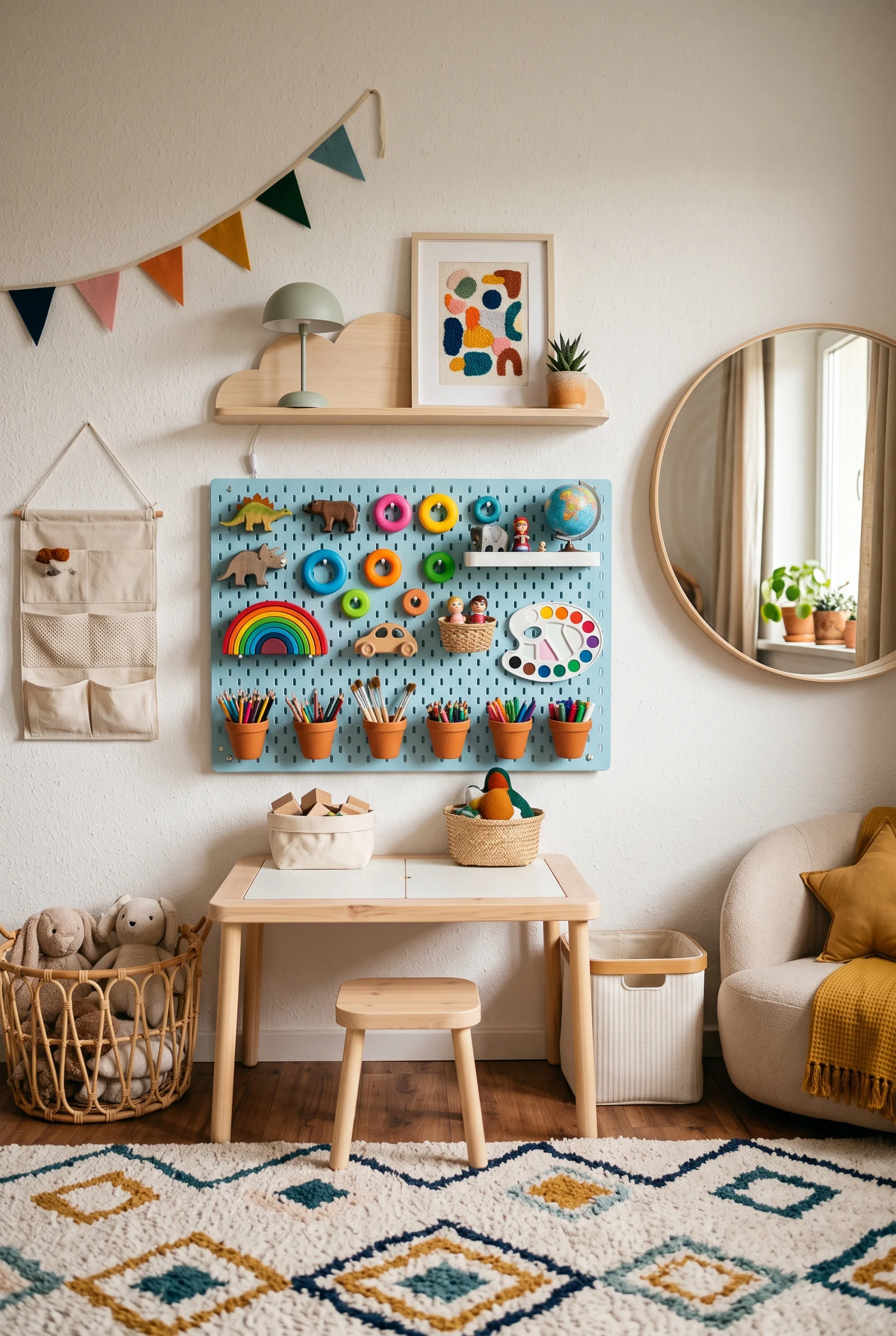
A pegboard above an activity table keeps tools visible without covering the work surface. Cups can corral pencils and brushes, while small shelves hold paper or works in progress. The modular arrangement is especially useful as children’s interests move from coloring to building.
Keep heavier supplies near the bottom and attach the board securely to the wall. A limited palette of white, pale wood, and one soft accent color helps the practical pieces feel considered. You can rearrange the layout without replacing the entire storage system.
Shop this pick: Modular Playroom Pegboard Organizer, It offers flexible vertical storage that can adapt as children’s supplies and interests change.
Containers That Make Every Category Obvious
Bins and baskets work best when children can understand the system at a glance. Visibility suits small pieces used every day, while closed containers soften the look of colorful collections. Broad categories are easier to maintain than highly specific ones. A consistent shape, label style, or color also gives mixed storage a calmer presence across the room.
Clear Bins for Faster Toy Decisions
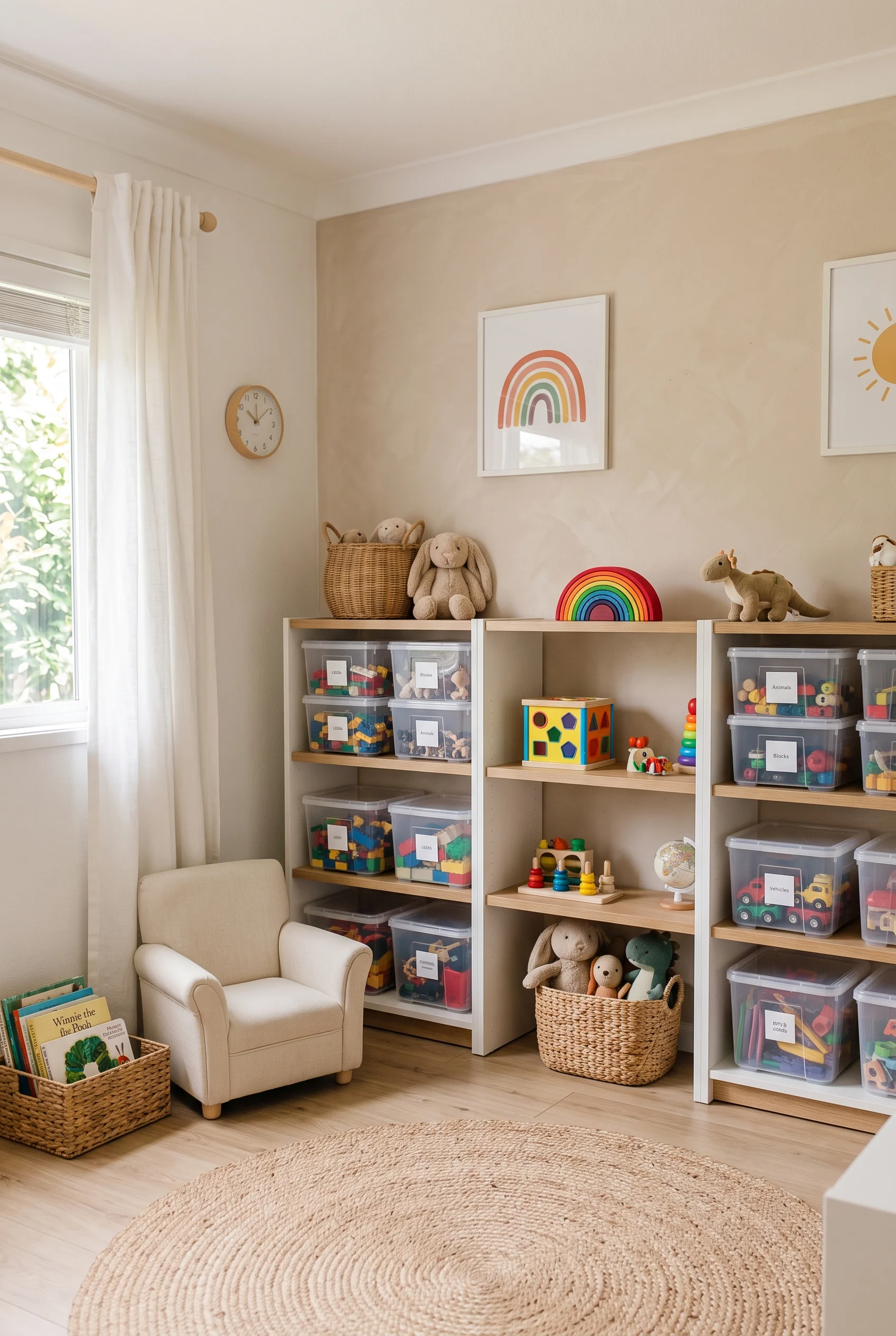
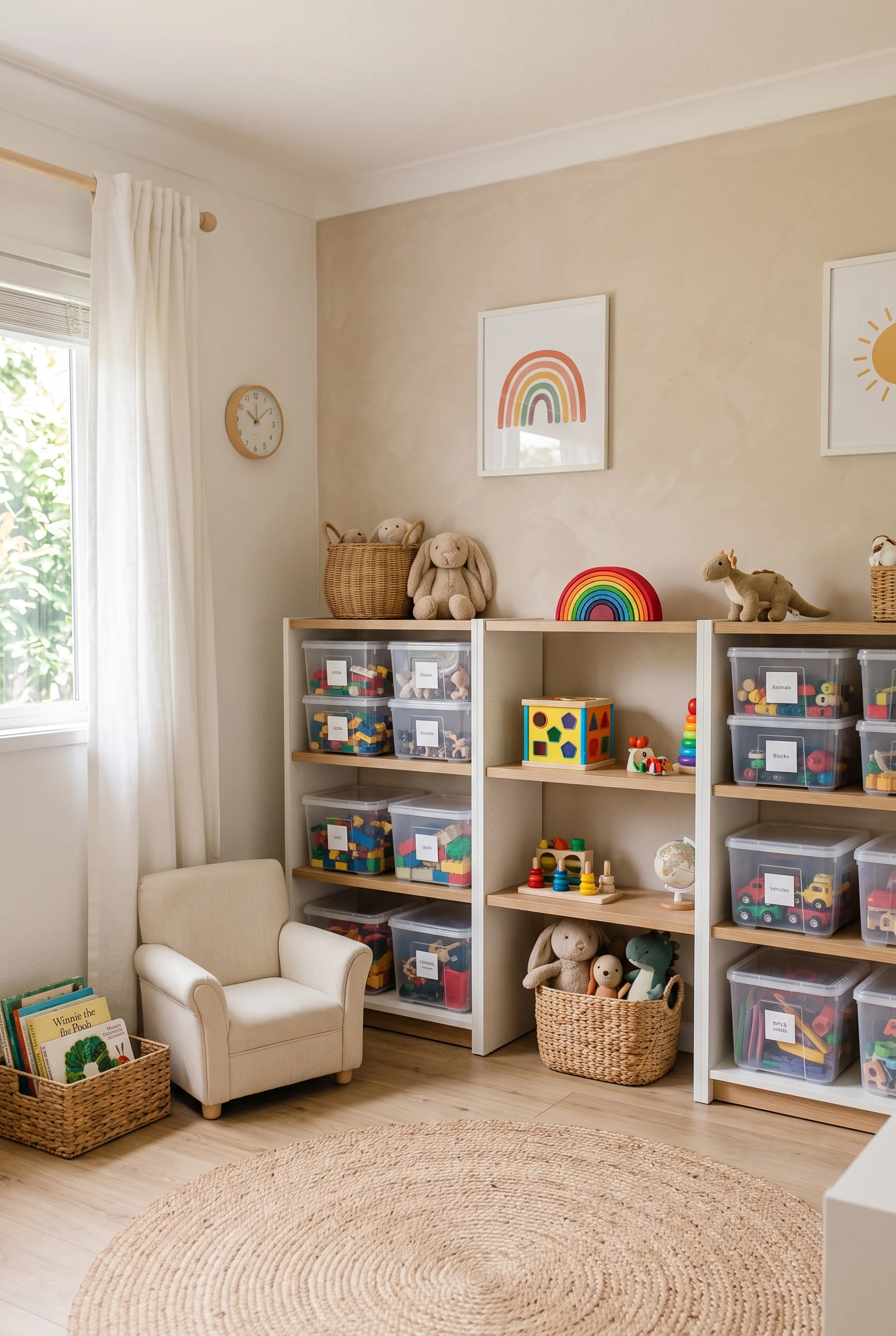
Clear bins remove the guesswork from finding building pieces, cars, and play food. Children can see what belongs inside before opening a lid, which supports more independent play and cleanup.
Give each container one broad category rather than mixing unrelated toys. Shallow bins are particularly useful for small pieces because nothing disappears beneath a deep pile. Smooth edges and easy-grip handles make the containers more comfortable for children to carry. On low white shelves, transparent storage keeps colorful toys visible while the overall arrangement stays crisp.
Picture Labels That Children Can Follow
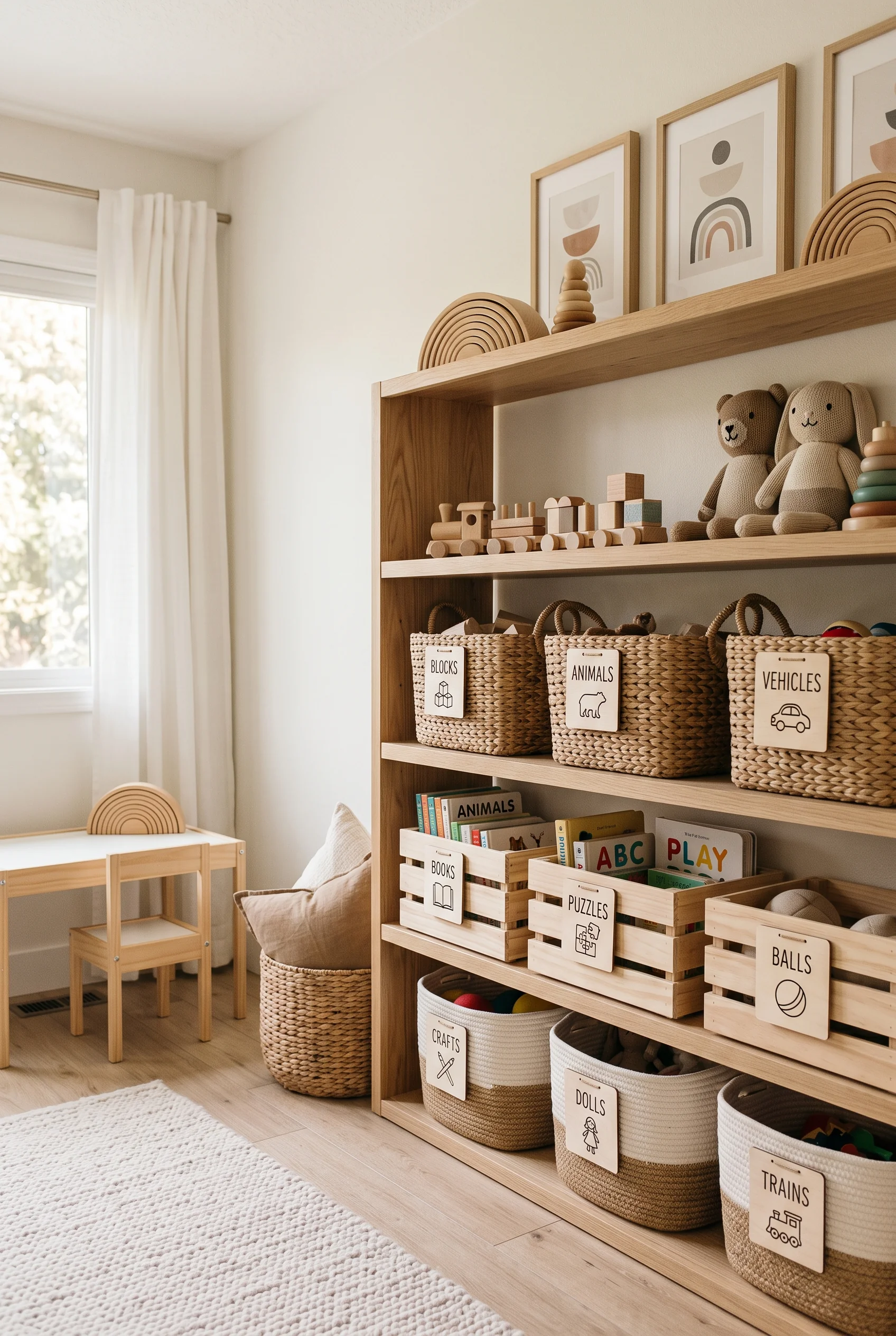
Words paired with simple picture icons make basket labels useful at multiple reading stages. Blocks, dolls, animals, and art are broad enough for children to remember without turning cleanup into a sorting project.
Place each label at child height, and use a format you can replace as interests change. Matching labels across woven baskets lend a polished rhythm to open shelving. More importantly, they answer the question of where each toy belongs before clutter has a chance to build. The system remains clear without requiring constant adult direction.
Shallow Drawers for Tiny Collections
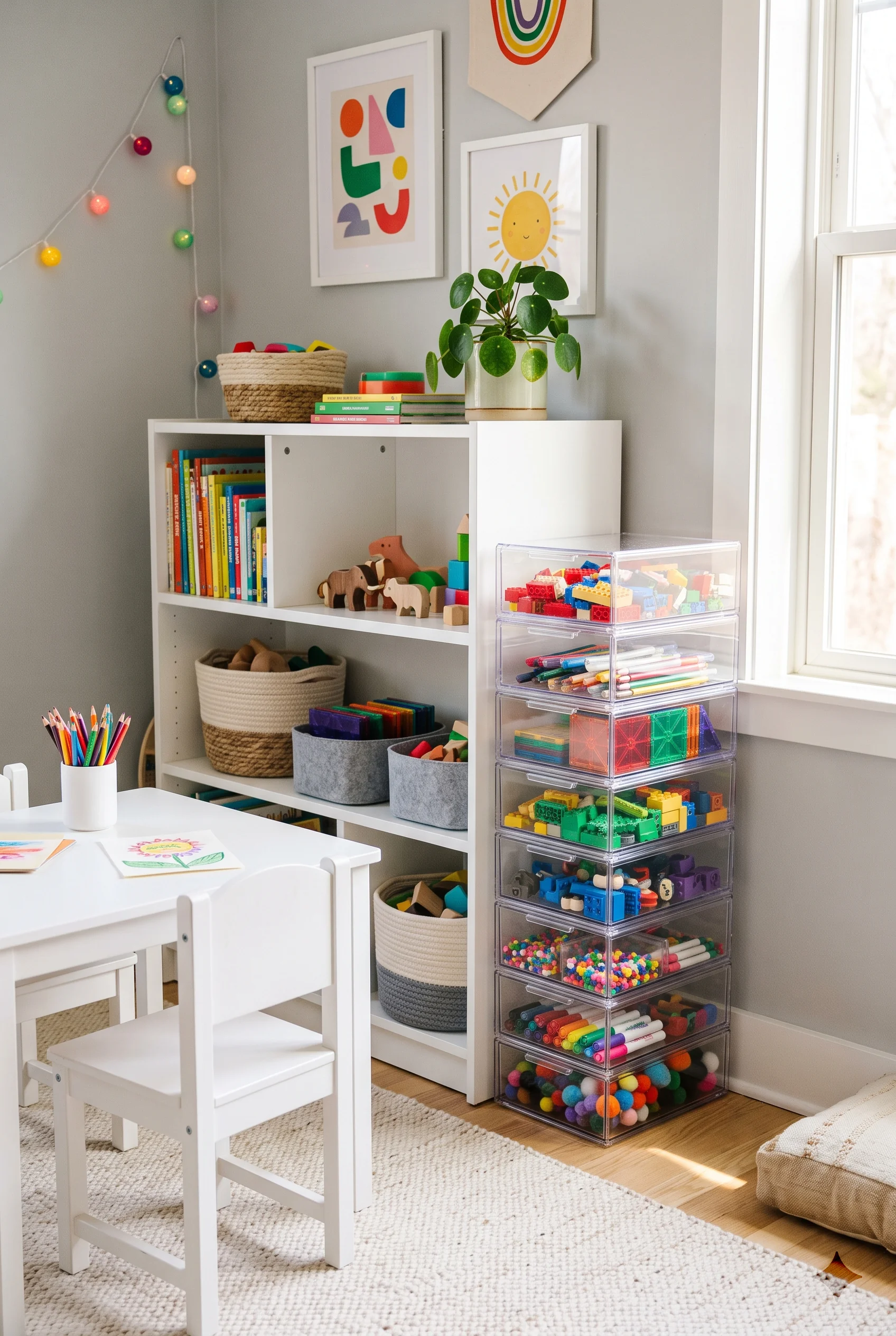
Mini figures, beads, and toy cars disappear quickly into deep containers. Shallow stackable drawers keep those collections separated and easy to scan. Transparent or lightly tinted fronts offer visibility without adding visual noise.
Position the unit near the table or floor area where the toys are normally used. A picture label on each drawer keeps categories clear, even when several look similar from the outside. Because the drawers stack vertically, the system adds capacity without taking over the activity zone.
Puzzle Storage Without Bulky Boxes
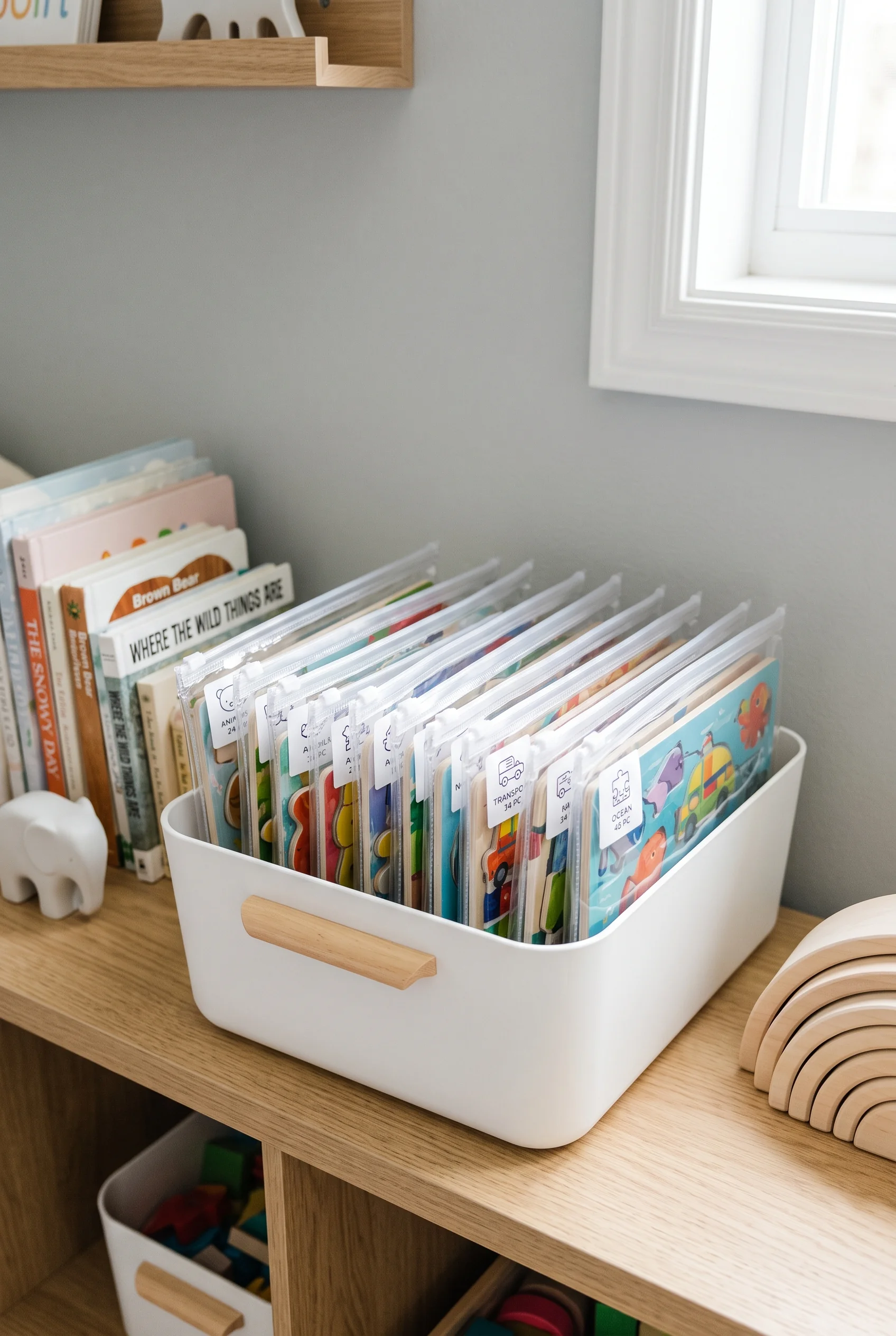
Zippered pouches hold puzzle pieces in far less space than damaged cardboard boxes. Include a small image of the completed design inside each pouch so children can match every piece to the correct set.
File the pouches upright in a sturdy bin instead of stacking them flat. Children can browse the options without disturbing the full collection. Puzzle boards and oversized pieces fit better in a separate vertical organizer nearby. The compact arrangement makes a crowded game shelf noticeably easier to use and reset.
Board Games That Slide Out One at a Time
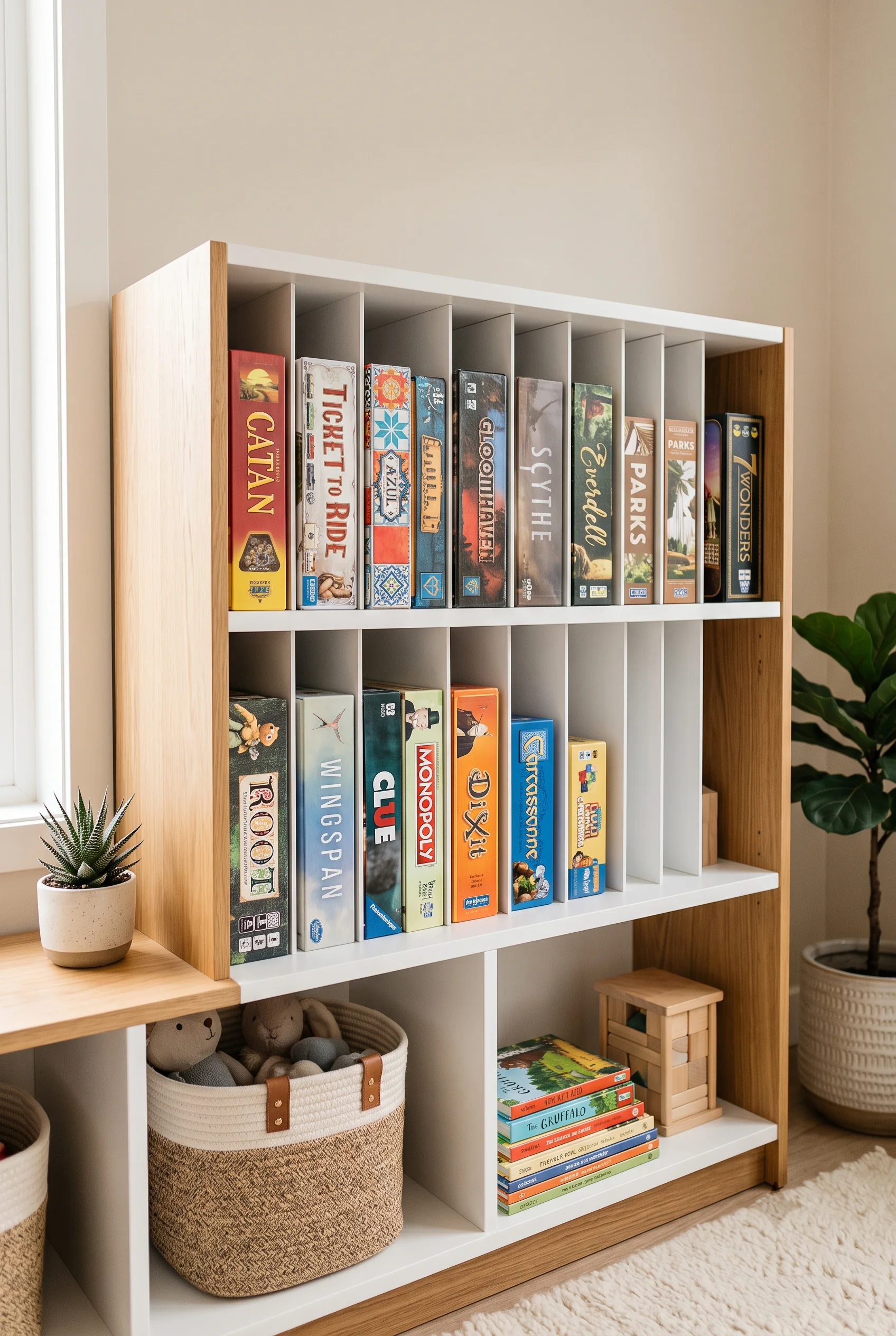
Vertical board game storage eliminates the unstable stack that has to be rebuilt whenever someone chooses the bottom box. Shelf dividers or magazine files keep boxes upright and make individual games easier to remove.
Reusable bands help secure loose lids before small pieces spill into the cabinet. Keep family favorites at a reachable height, with more complex games above when necessary. Grouping boxes by size creates a composed row and uses shelf depth better. Game night begins without an avalanche of boxes.
Lidded Baskets for a Quieter View
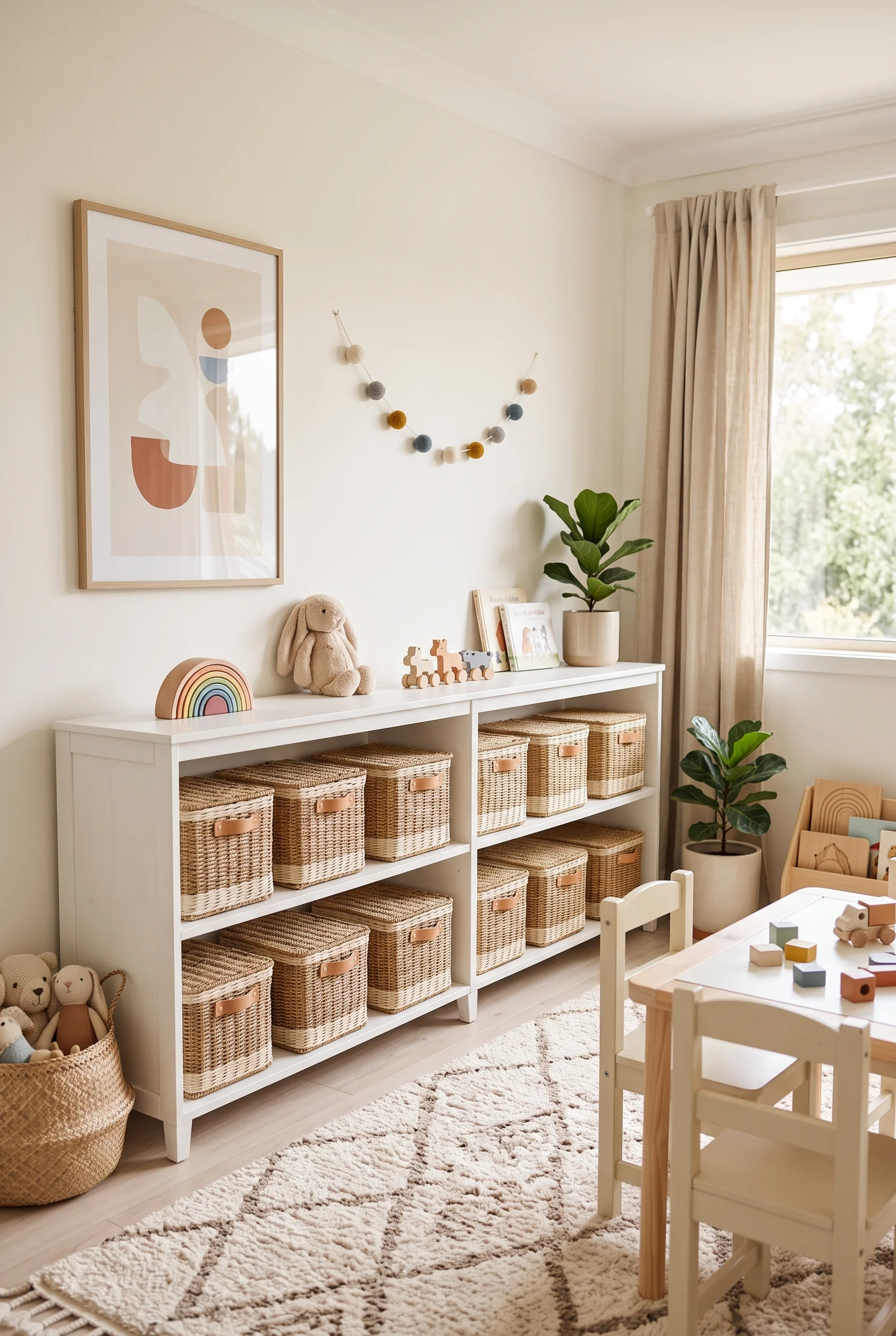
Lidded baskets soften the visual energy of toys with many pieces. They suit occasional supplies or collections that look busy on an open shelf. Lightweight lids are easier for children to lift and return without frustration.
A clear label prevents concealed storage from becoming a landing place for unrelated objects. Repeat one or two basket shapes rather than introducing a different style in every cubby. Cream and tan finishes sit gently beside colorful toys, giving the room a more restful backdrop without hiding every sign of play.
Furniture With Storage Built Into the Footprint
Multifunctional furniture earns its place by supporting play, seating, and storage within the same footprint. Benches hold bulky pieces, tables conceal activity supplies, and cabinets quiet an entire wall. These choices are especially valuable when play shares space with reading or family time. Child-safe hinges, comfortable clearances, and durable finishes keep each piece practical for years to come.
A Storage Bench With a Softer Side
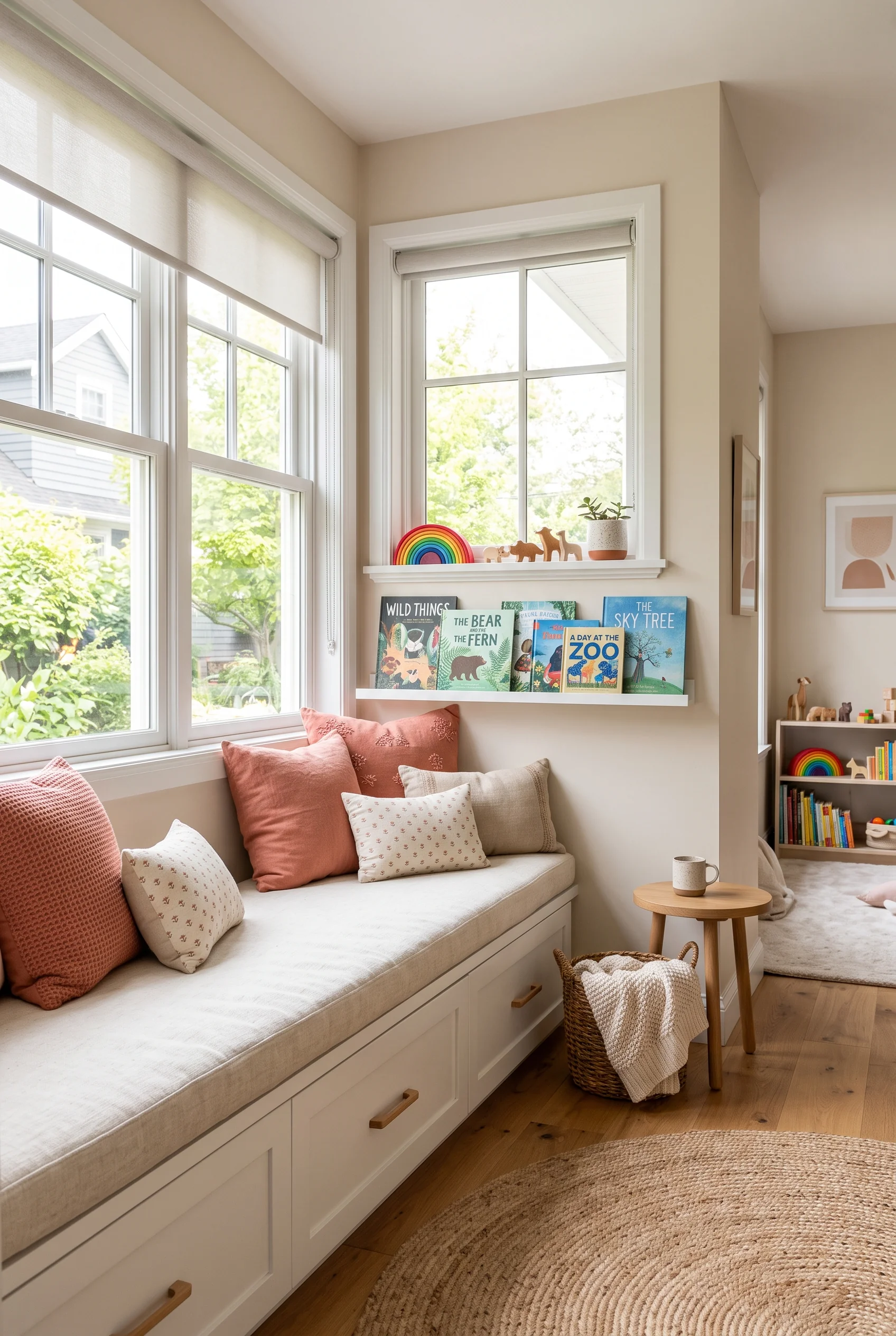
A streamlined bench beneath a window combines a generous toy compartment with a comfortable reading perch. Bulky dress-up pieces, foam blocks, and soft toys fit easily because they don’t need precise compartments.
Child-safe hinges protect small fingers, while removable interior bins prevent the contents from becoming one deep jumble. Finish the seat with a washable cushion and two supportive pillows. The bench feels like part of the room rather than a storage container placed as an afterthought, and the window corner gains a warm everyday purpose.
Shop this pick: Kids Storage Bench With Safety Hinges, It combines concealed toy storage with useful seating and is easy for readers to picture in a playroom or reading corner.
Craft Supplies Beneath the Work Surface
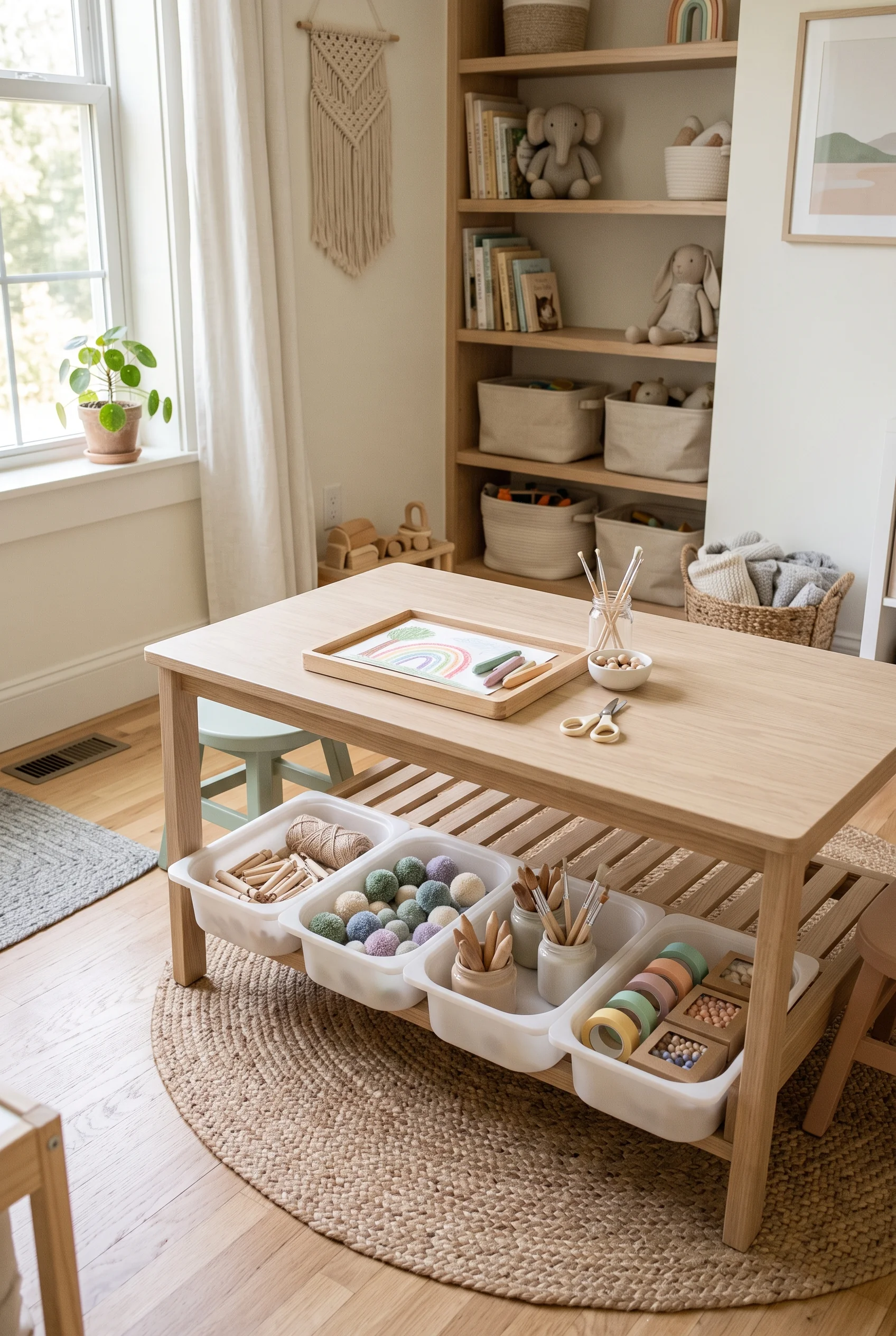
The open area beneath a play table can hold paper, coloring books, and play dough close to where children use them. Fitted baskets or shallow drawers keep the tabletop available without requiring another cabinet.
Measure both the available height and the space needed for knees before selecting containers. Felt pads help lightweight bins glide, while small casters make heavier drawers easier to manage. Muted containers under pale wood furniture keep the practical storage visually quiet. Children can begin a project and return its supplies without crossing the room.
Cabinetry That Calms a Busy Collection
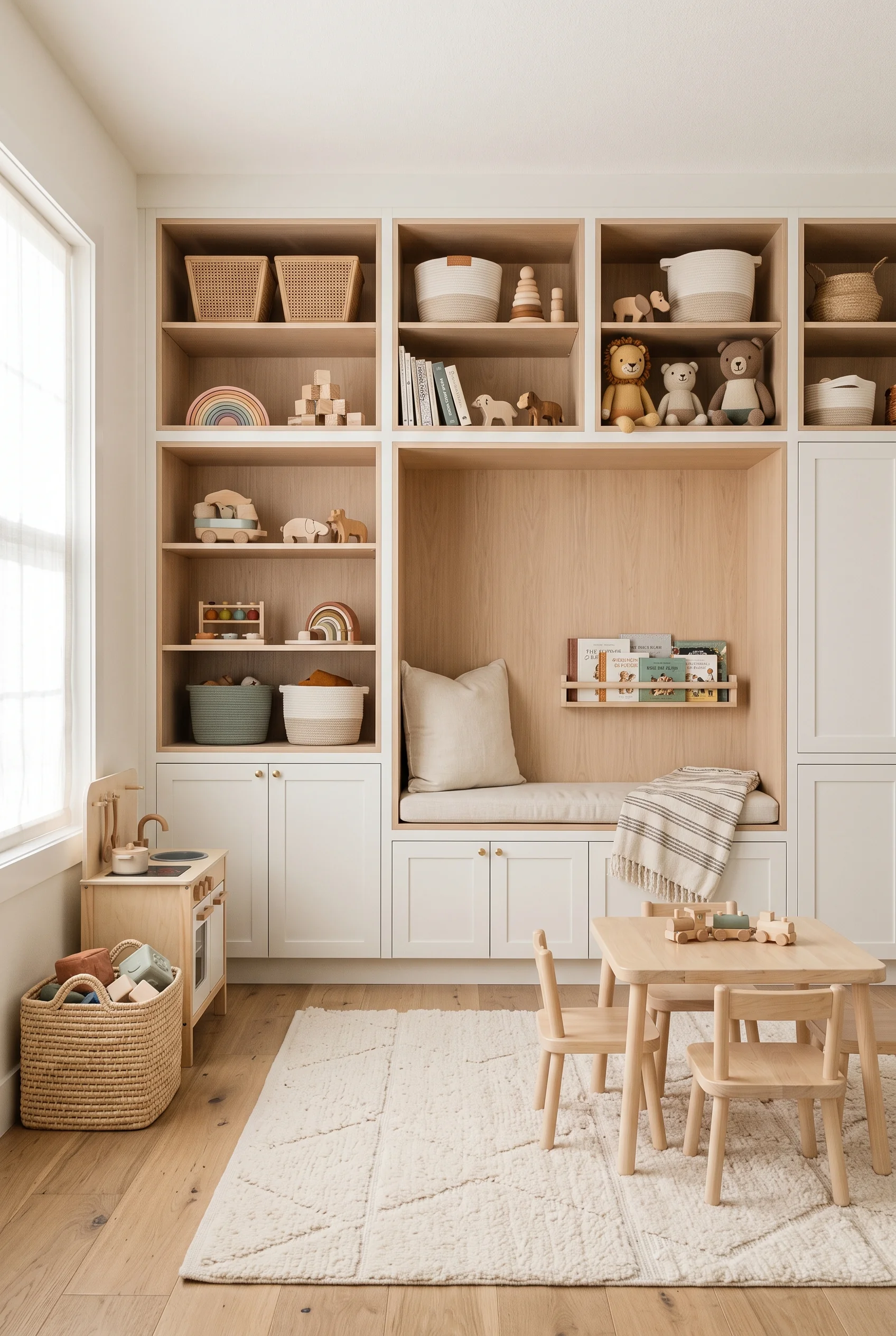
Closed built-in cabinets give large toy collections a clean architectural home. Lower cupboards can hold children’s belongings, while upper sections store seasonal toys and supplies that need supervision. A few open niches prevent the wall from feeling too solid.
Adjustable interior shelves let the layout change as toys grow taller, smaller, or less frequent. Simple hardware and a finish connected to the rest of the home make the playroom feel considered. Behind the doors, broad zones are more sustainable than an elaborate arrangement of tiny categories.
A Play Table Ready for More Than One Activity
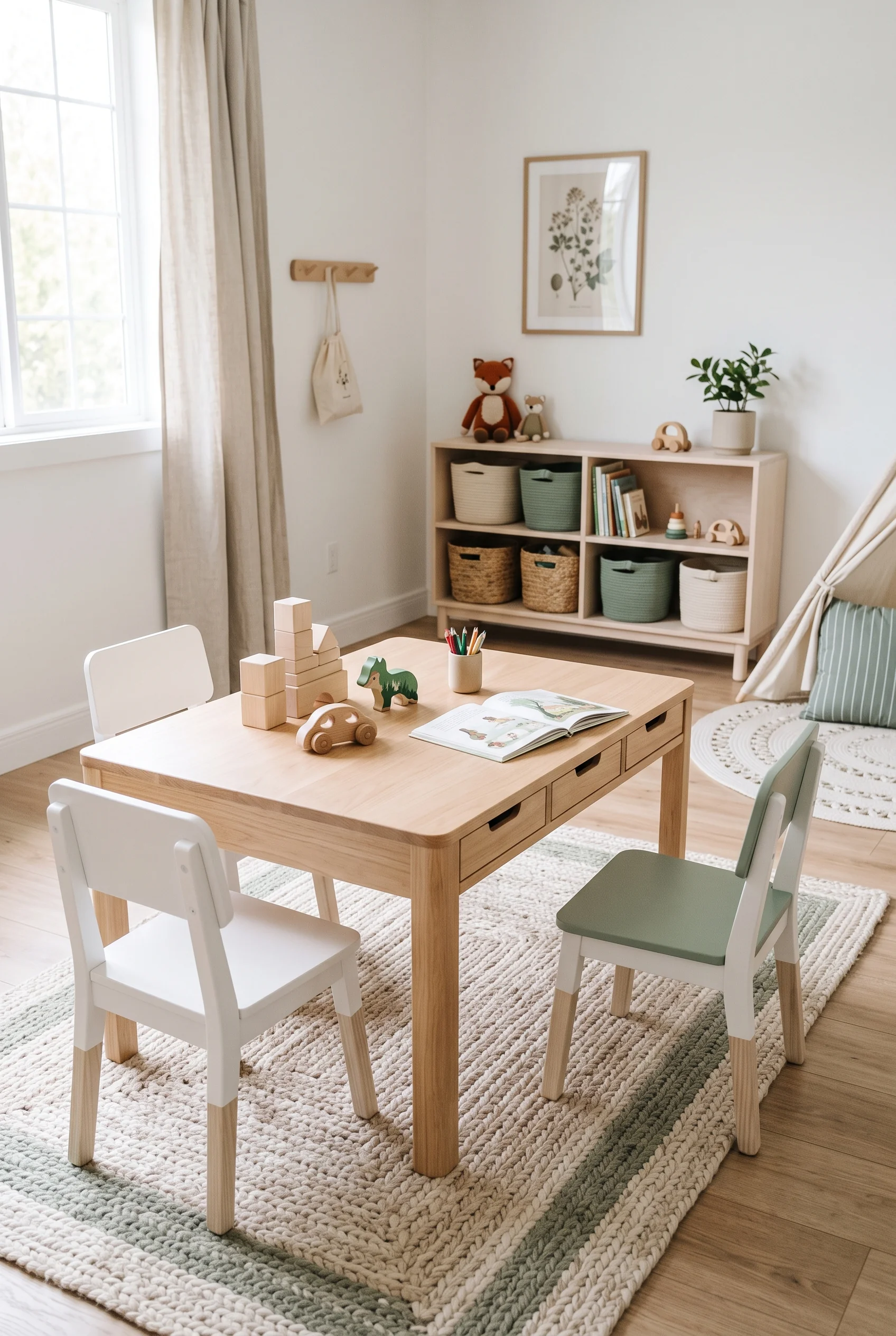
A play table with hidden drawers keeps blocks, train pieces, and art materials beside the surface where they are used. Concealed storage also allows the top to remain ready for crafts, building, or homework.
Look closely at the opening mechanism before bringing the table into a family space. Drawers should glide smoothly, and lift-top compartments need supports that prevent them from closing suddenly. Pale wood and simple white chairs give the piece a light presence. It can shift through different stages of childhood without requiring a new activity station each year.
Shop this pick: Kids Play Table With Hidden Drawers, Its multifunctional design supports crafts, building, and homework while keeping frequently used supplies concealed.
Deep Drawers Beneath a Window Seat
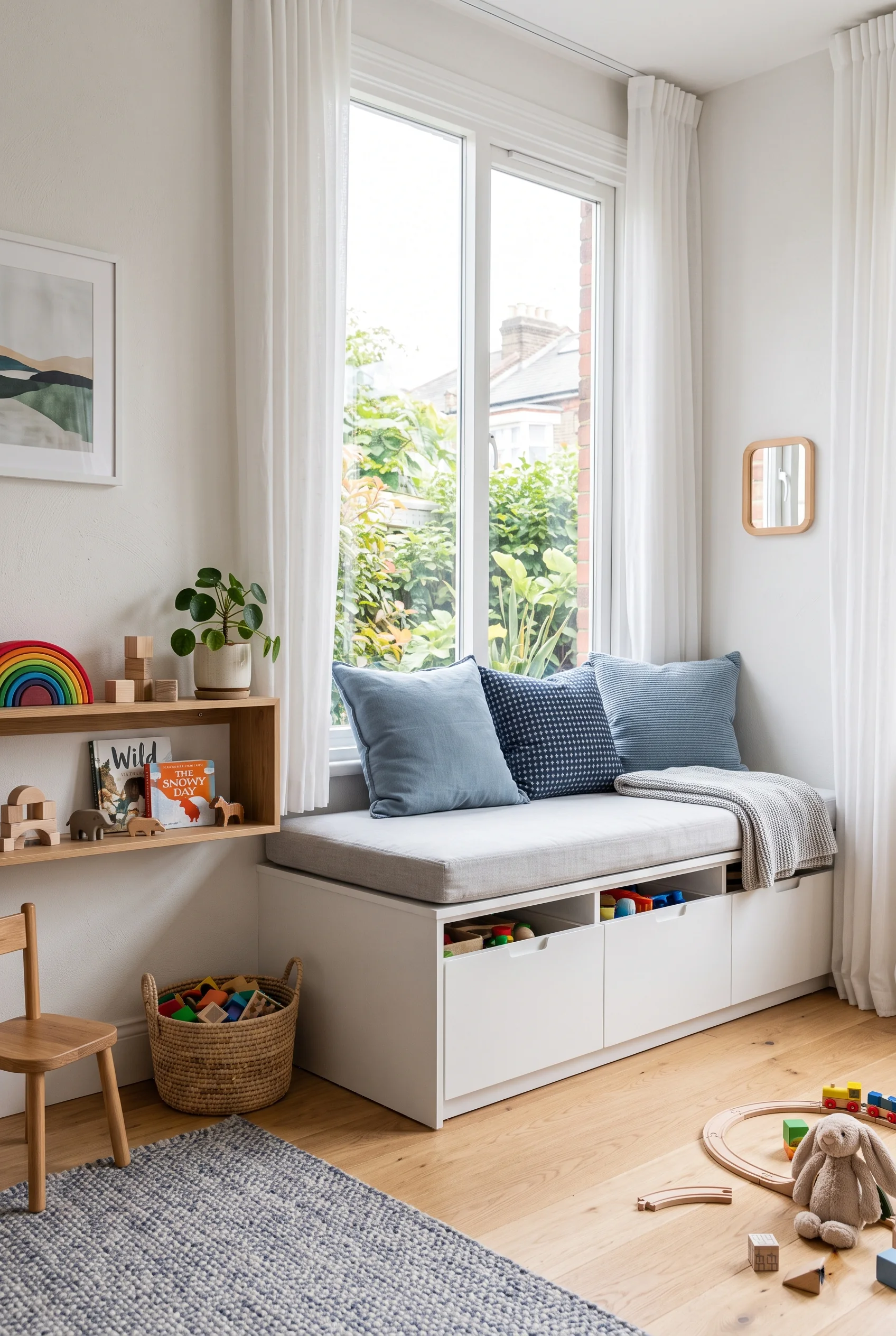
Under-bench drawers offer the capacity of a toy chest with easier access to items stored at the back. One drawer can hold building toys, while another can hold dolls or dress-up pieces. Families may also assign a drawer to each child.
Full-extension slides make the entire interior visible, which prevents forgotten toys from collecting in hidden corners. Recessed pulls or smooth handles stay clear of clothing during active play. Once closed, the drawers disappear beneath the cushioned seat, leaving a polished window area behind.
Shop this pick: Window Bench With Storage Drawers, It delivers substantial hidden storage and polished seating in a single family-friendly piece.
Multifunctional Pieces That Earn Their Space
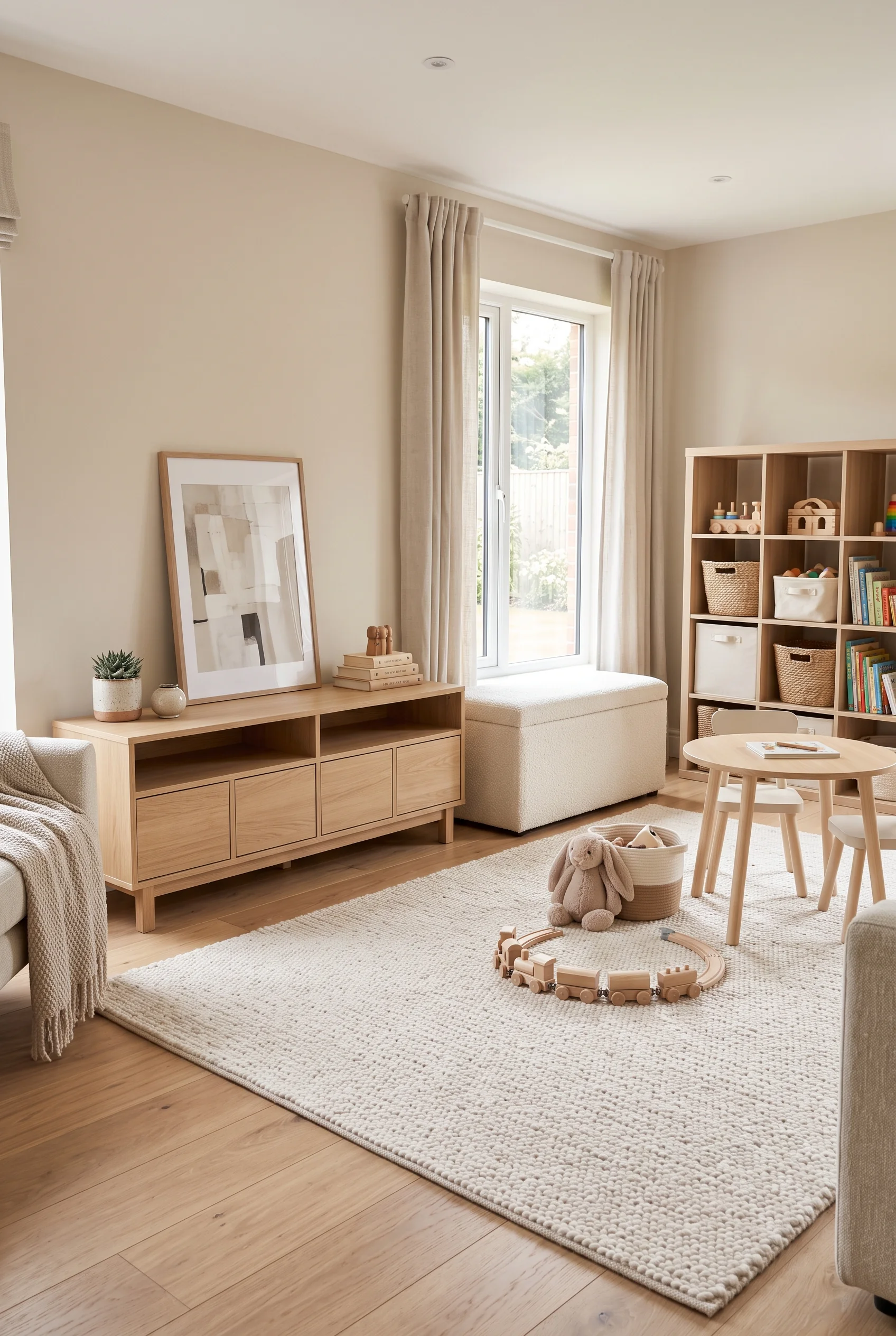
A storage ottoman, window seat, or low side table can hide toys while serving the whole room. The most useful pieces meet an existing need, such as seating or a place to set books, rather than adding furniture solely to contain clutter.
Measure walkways carefully so concealed capacity does not come at the expense of open play. Rounded corners and durable finishes suit daily family use, while child-safe lids make access less stressful. In a warm neutral palette, multifunctional furniture settles naturally into a contemporary playroom.
Dedicated Zones for the Toys With Many Parts
Some activities stay neater when every related piece lives in one defined area. Art tools belong near the table, costumes need a visible rail, and building bricks benefit from a rimmed surface. These zones shorten the distance between using and returning an item. Furniture placement or a small rug can establish the boundary without dividing the room into rigid compartments.
An Art Cart That Arrives When Needed
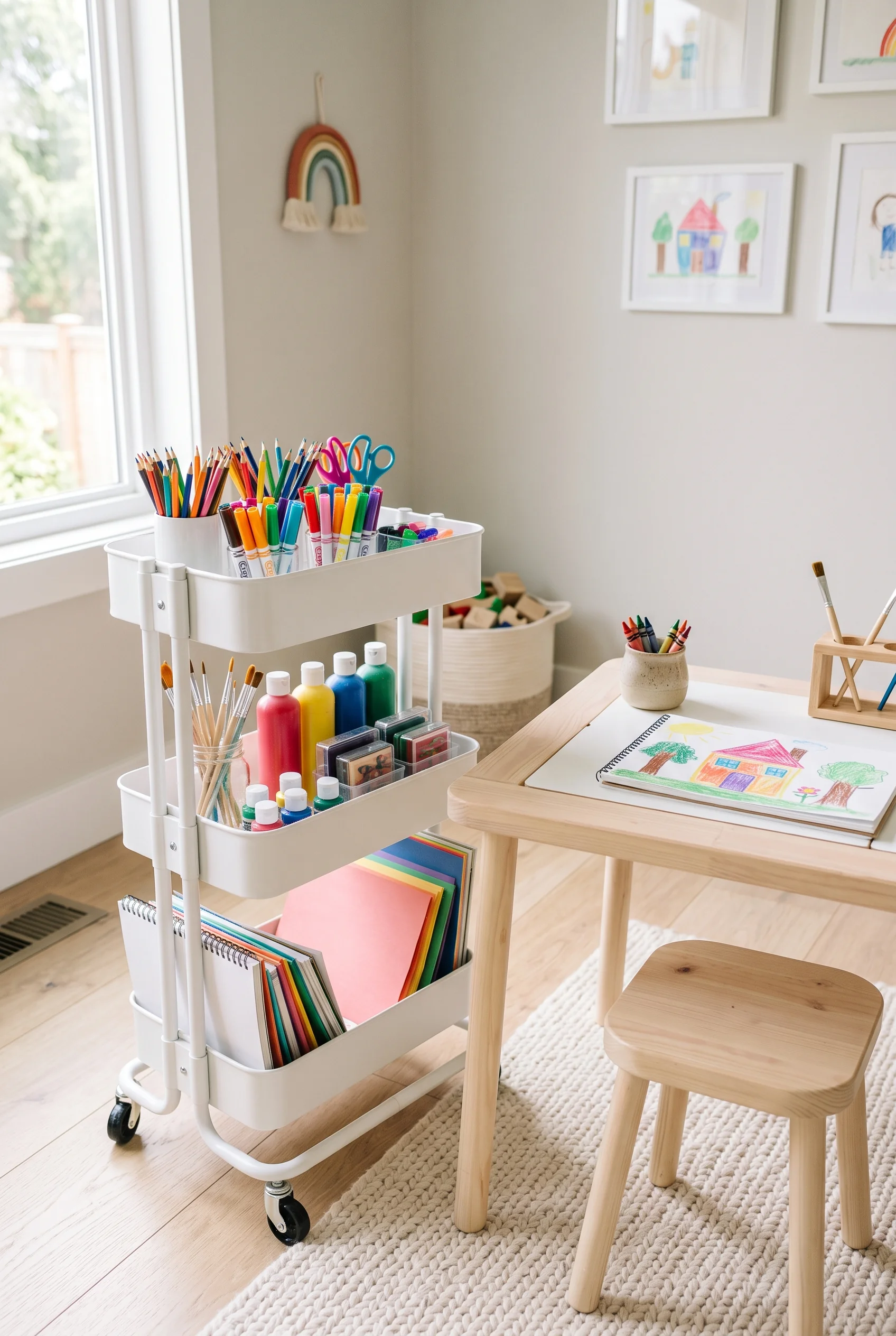
A slim rolling cart brings paper, coloring tools, and washable paint directly to the activity table. When creative time ends, the full station can move aside without leaving supplies spread across the work surface.
Removable cups make marker stains and small spills easier to handle. Everyday materials fit on the lower tiers, while glue or supervised supplies belong at the top. Keep each tier focused rather than filling every inch. A white cart beside a pale wood table feels bright and useful, with enough color to invite the next project.
Shop this pick: White Three-Tier Rolling Art Cart, It is a recognizable, affordable hero product that makes creative supplies easier to use and put away.
Dress-Up Clothes Within Reach
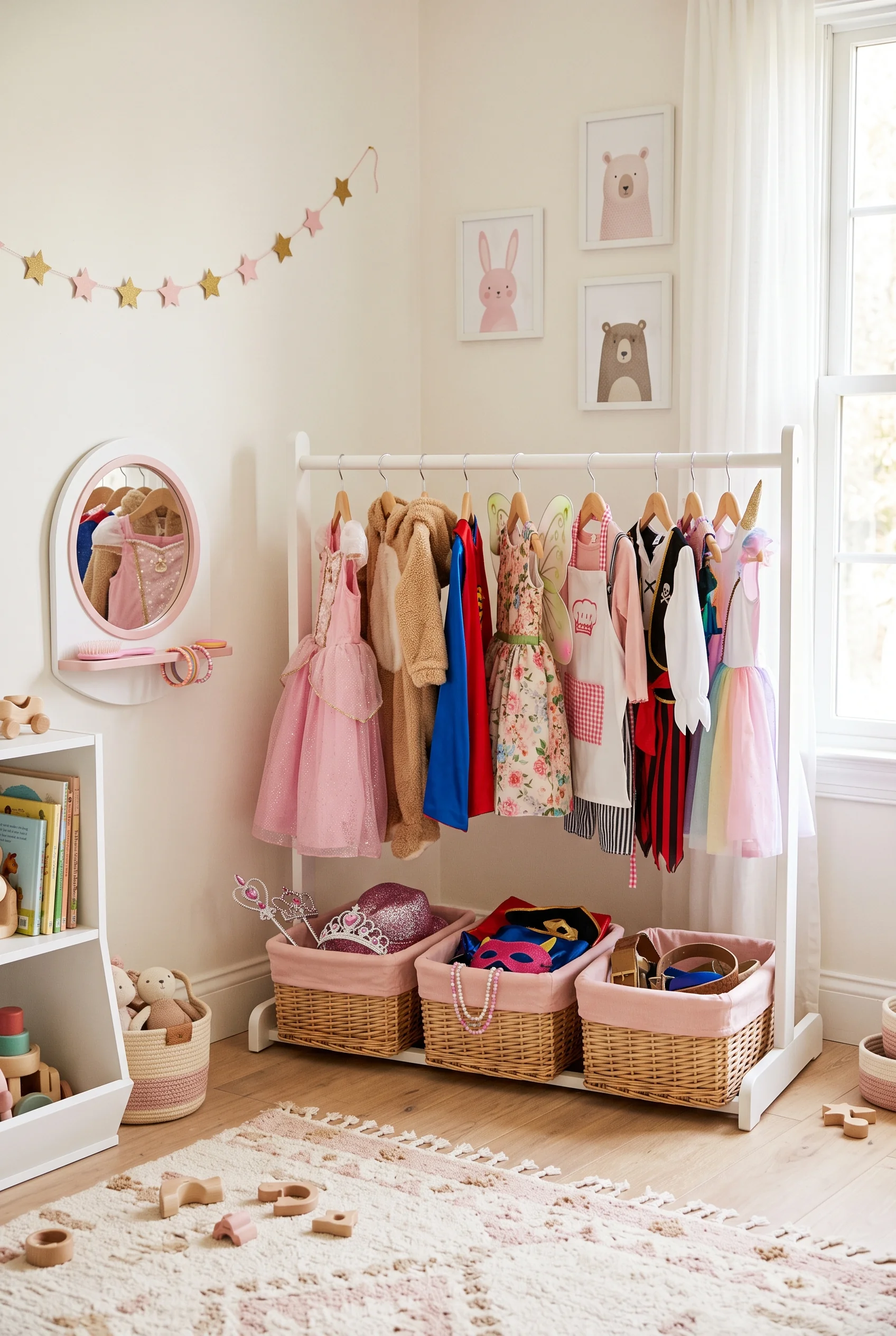
A child-size clothing rail turns costumes into an inviting part of pretend play. Small hangers or sturdy hooks make outfits easier to choose and return. Baskets directly below can hold masks, hats, and other accessories.
Keep the displayed collection edited so garments can slide along the rail without crowding. Extra costumes can move into rotation storage until interest returns. A white rail with matching baskets feels orderly against soft color, but it still leaves the costumes visible enough to spark an idea. Cleanup becomes part of the play ritual.
Shop this pick: Child-Size Dress-Up Clothing Rack, It anchors the entire pretend-play zone while giving costumes an accessible and visually appealing home.
A Building Station That Contains the Bricks
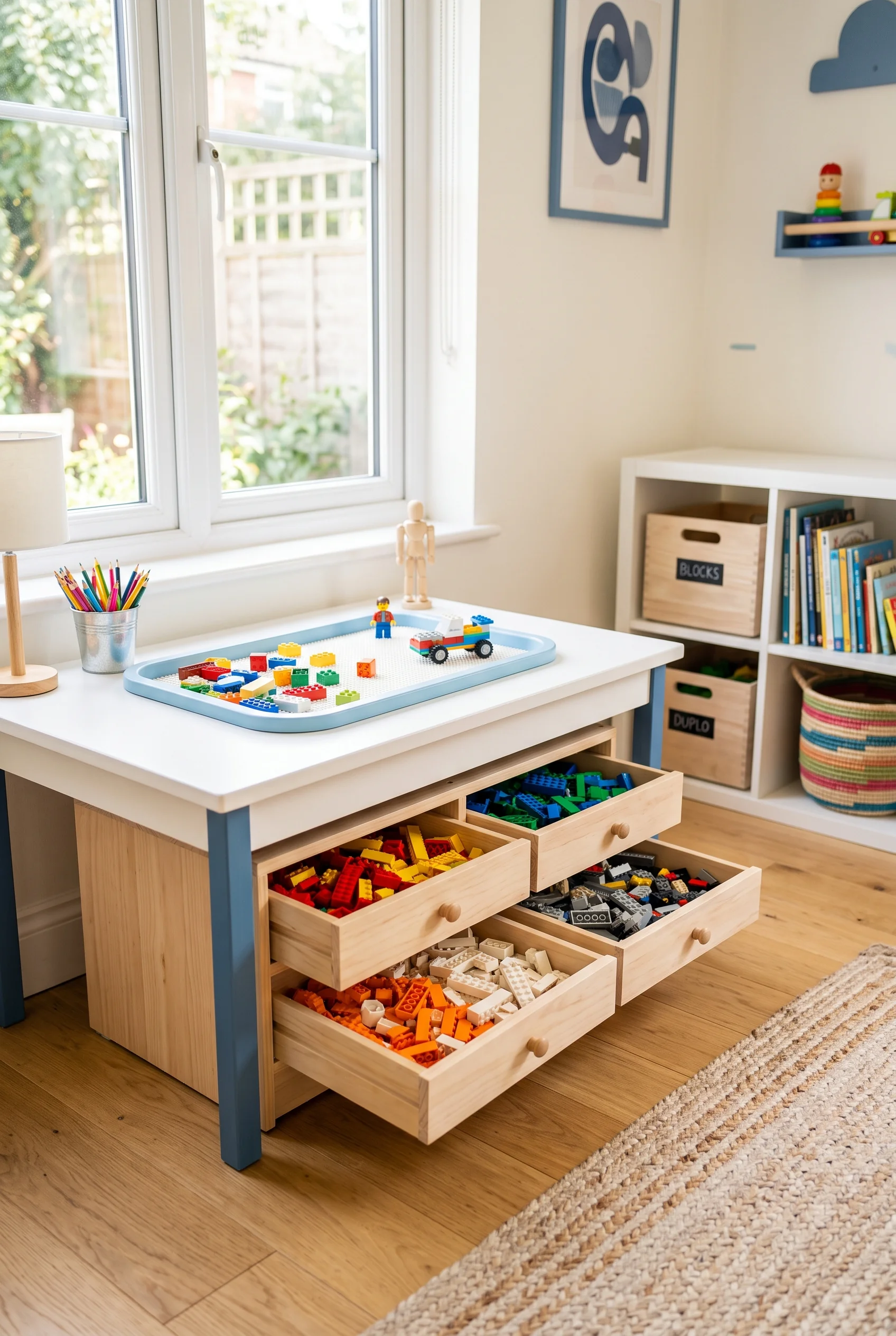
A dedicated LEGO station gives loose bricks a defined part of the room. General pieces can live in larger open bins, while figures, wheels, and specialty parts fit neatly into shallow divided drawers.
A rimmed tray or play surface catches pieces before they scatter across the floor. Broad categories are usually easier for children to maintain than sorting every brick by color or shape. Position the storage directly beside the table, and leave enough surface open for works in progress. The setup supports focused building without letting tiny pieces migrate through the room.
Shop this pick: Building Brick Table With Storage, It solves both play-surface and small-piece storage needs in one focused station.
A Closet Reworked as a Toy Nook
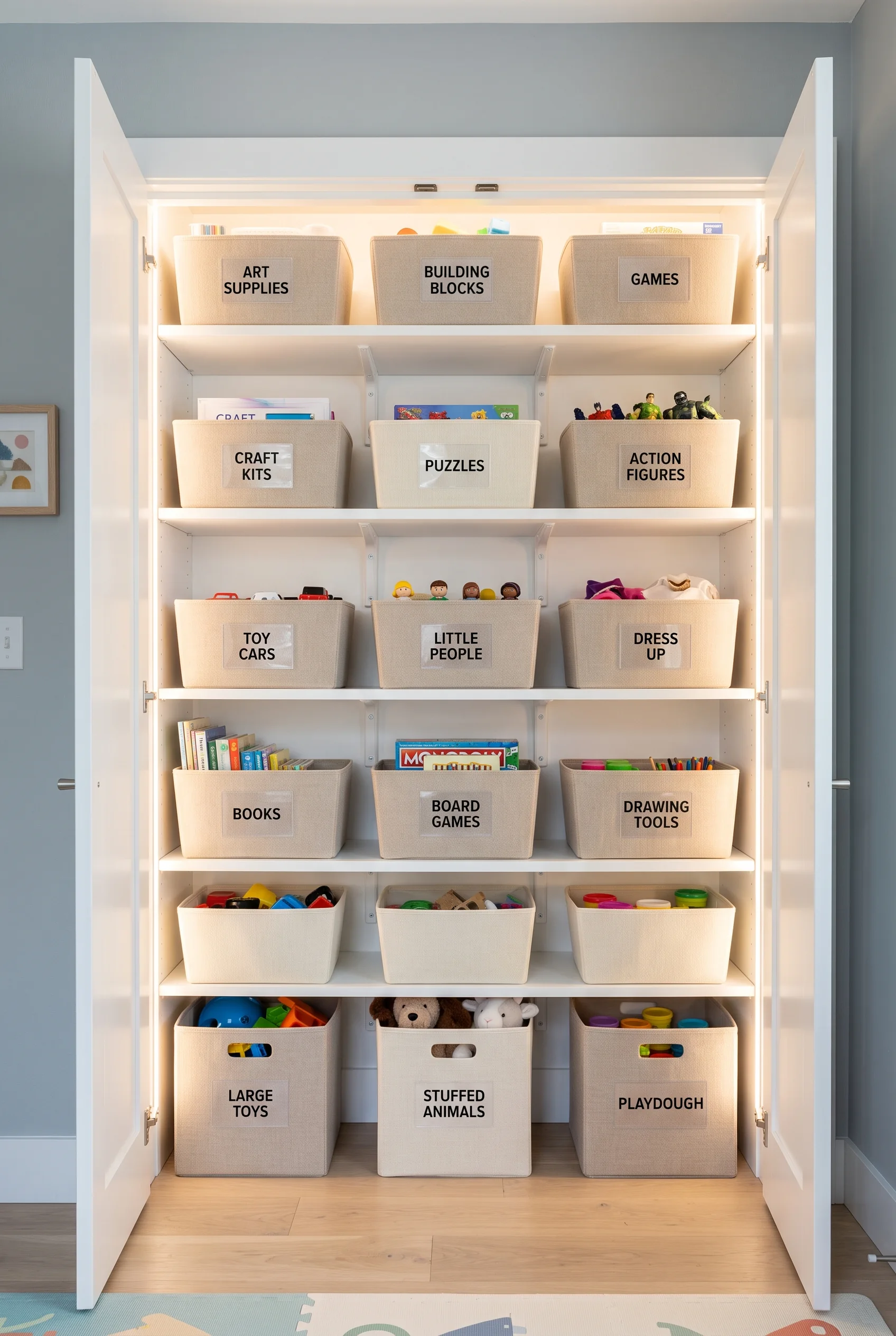
An underused closet can become a generous toy station with adjustable shelves and clear categories. Large bins fit naturally on the floor, while rotation items and supervised supplies can occupy the highest shelf.
Battery-powered lighting keeps dark corners from swallowing small toys. Clear labels help every shelf remain useful after the initial setup. Leave the door in place when the room benefits from concealed storage. An open nook can feel appealing too, but only when the contents are simple enough to maintain without constant rearranging.
Play Zones With Shorter Cleanup Paths
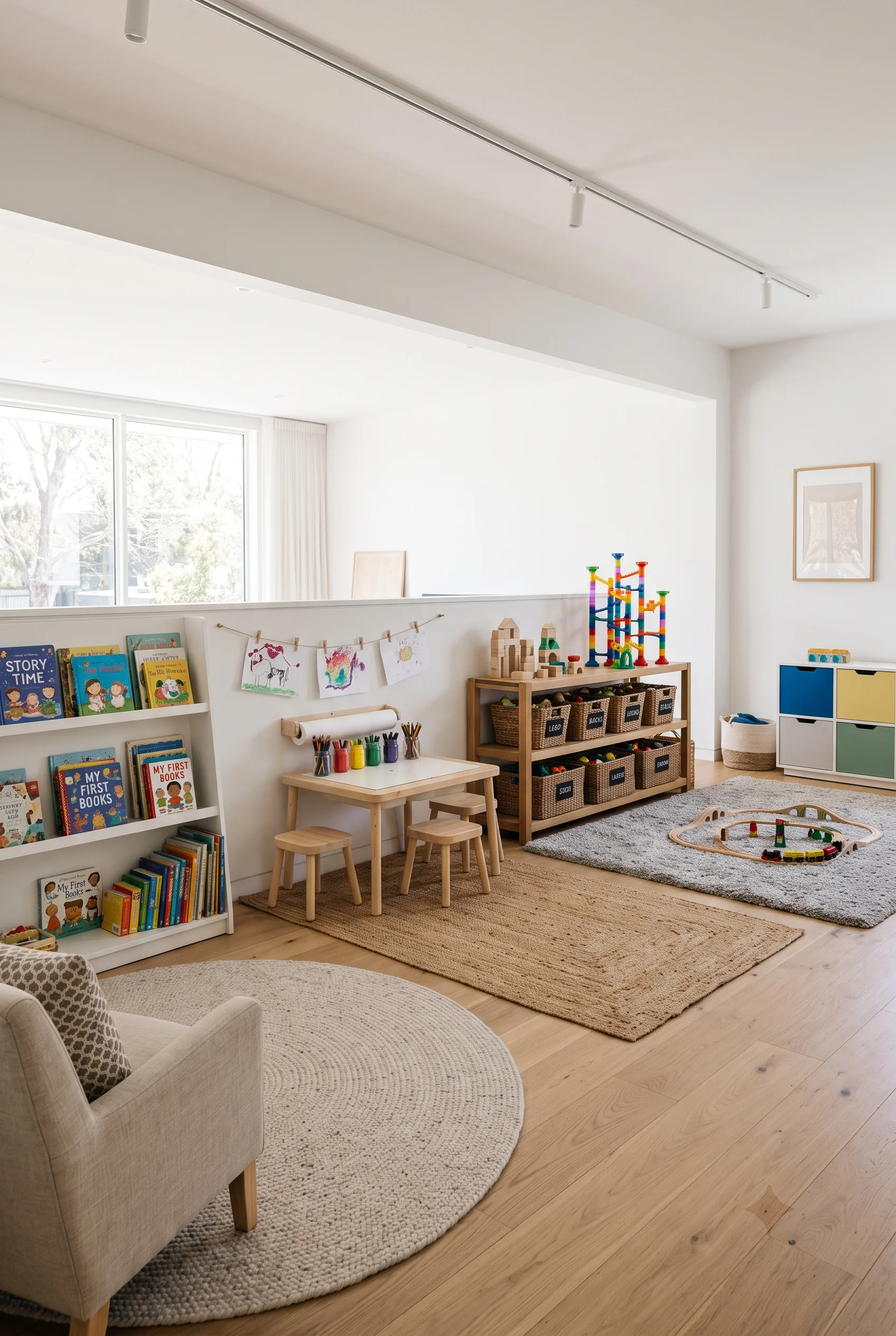
Reading, building, crafts, and pretend play each become easier to manage when their storage sits nearby. A low book ledge belongs beside the cushion, while blocks stay close to the open floor where structures take shape.
Rugs, shelving, and furniture placement can suggest boundaries without bulky dividers. Keep the center open so children can move freely and activities can expand when needed. Clear zones also make playroom organization ideas easier to maintain because every item has a logical destination connected to how it is used.
A Doll Collection Kept Together
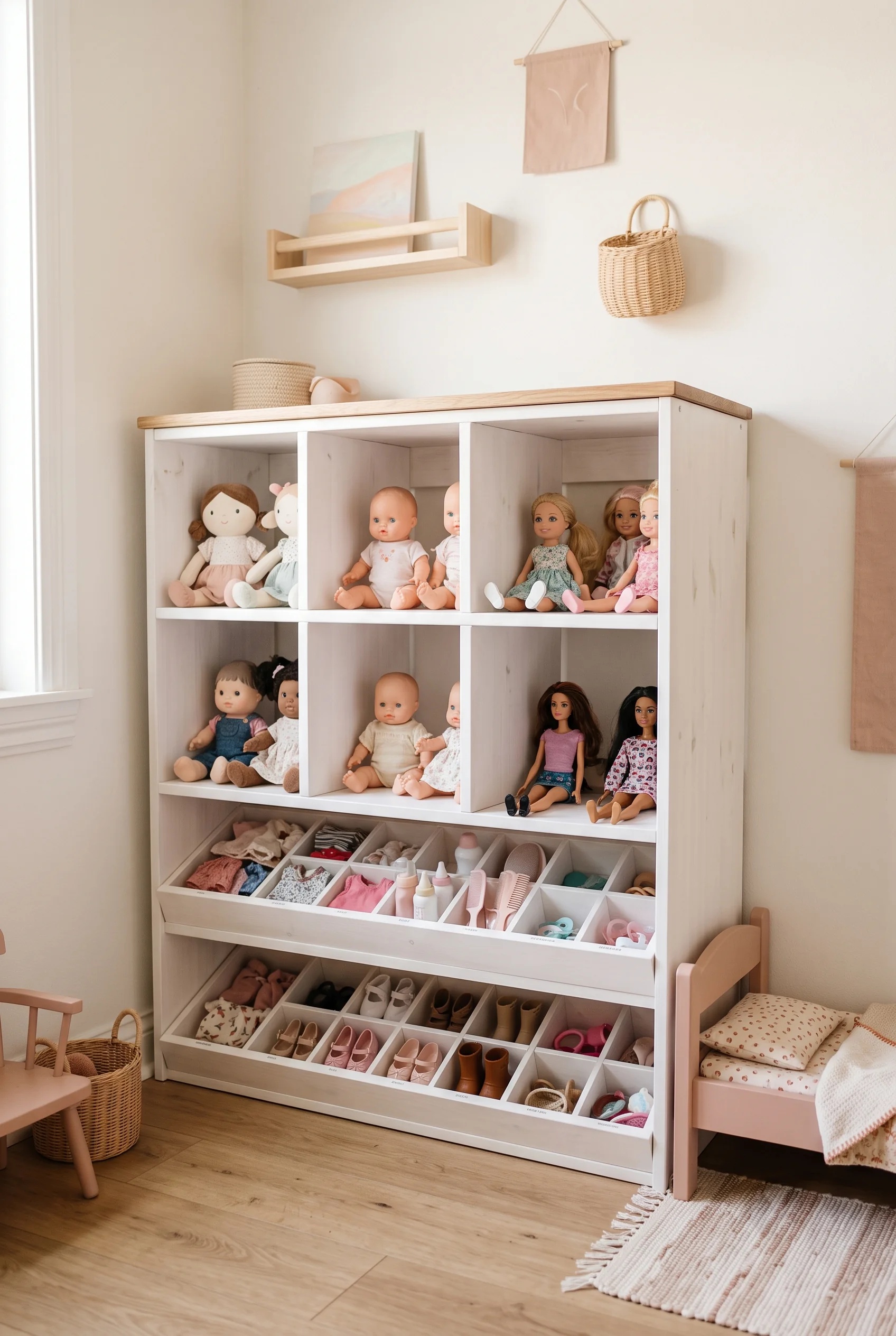
Dolls are easier to enjoy when clothing, shoes, furniture, and carriers remain in one station. Dolls can stand upright in a divided cubby or open basket, while small accessories stay visible in shallow compartments.
Broad labels such as clothes and accessories are more realistic than a separate category for every tiny object. Place the smallest bins beside the dolls so children don’t have to search across the room to complete an outfit. Soft blush accents can define the area while the white cubbies keep the full collection feeling composed.
Simple Systems That Make the Daily Reset Easier
A successful playroom is not measured by how it looks before children enter. It is shaped by how easily the room recovers afterward. Open storage, edited toy selections, and generous catch-all baskets remove unnecessary steps. Shared living areas benefit from the same approach, with quieter finishes that connect play storage to the surrounding furniture and decor.
A Toy Rotation With Room to Breathe
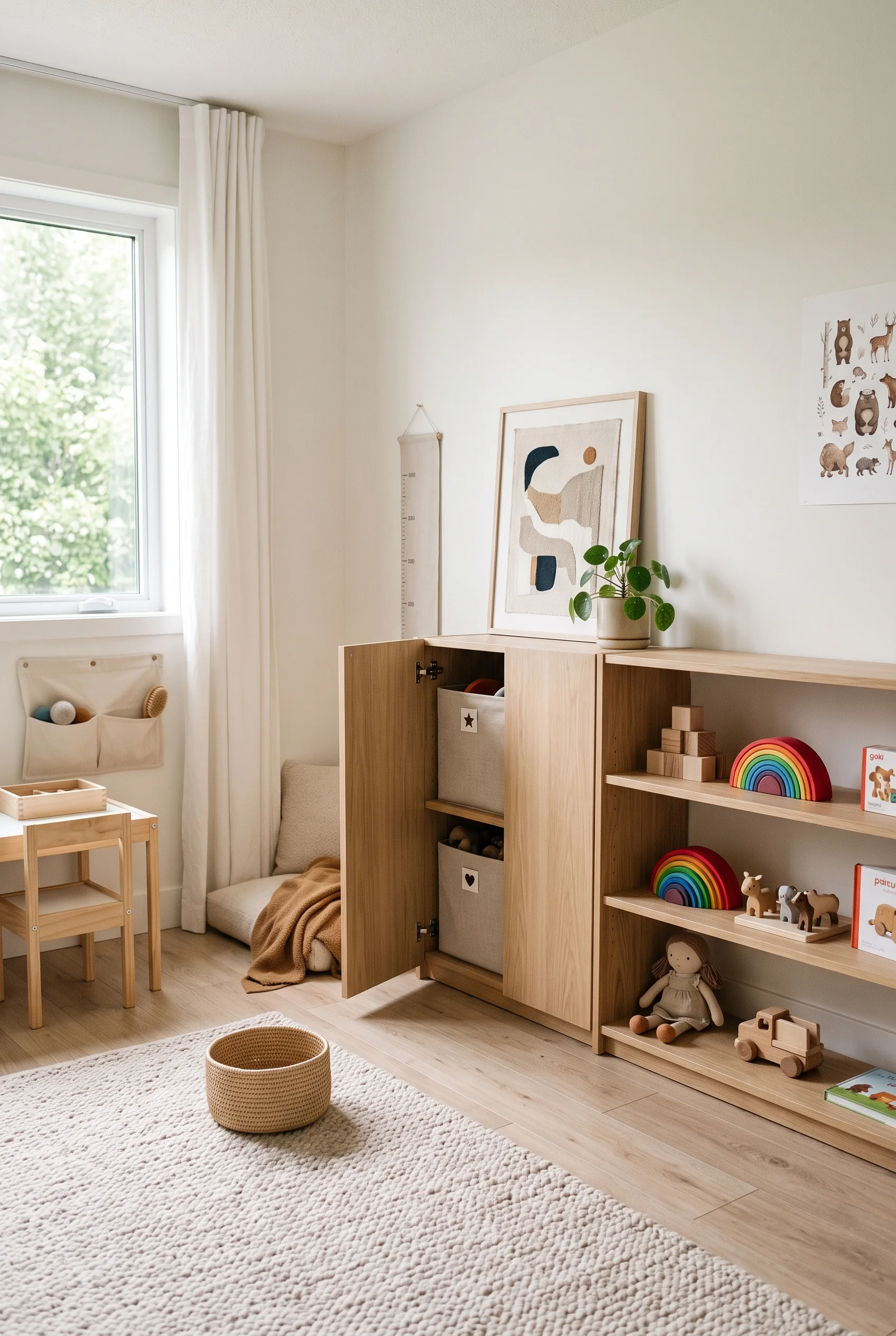
A smaller selection of available toys can make the playroom feel more spacious and help familiar objects hold children’s attention. Store complete sets together in labeled containers so they are ready when they return.
The rotation does not need a strict calendar. Swap items when interest fades, or the shelves start to feel crowded. An out-of-sight cabinet, closet shelf, or lidded bin keeps the resting collection separate. The toys still in the room gain more breathing space, and cleanup involves fewer decisions at once.
Oversized Baskets for the Awkward Pieces
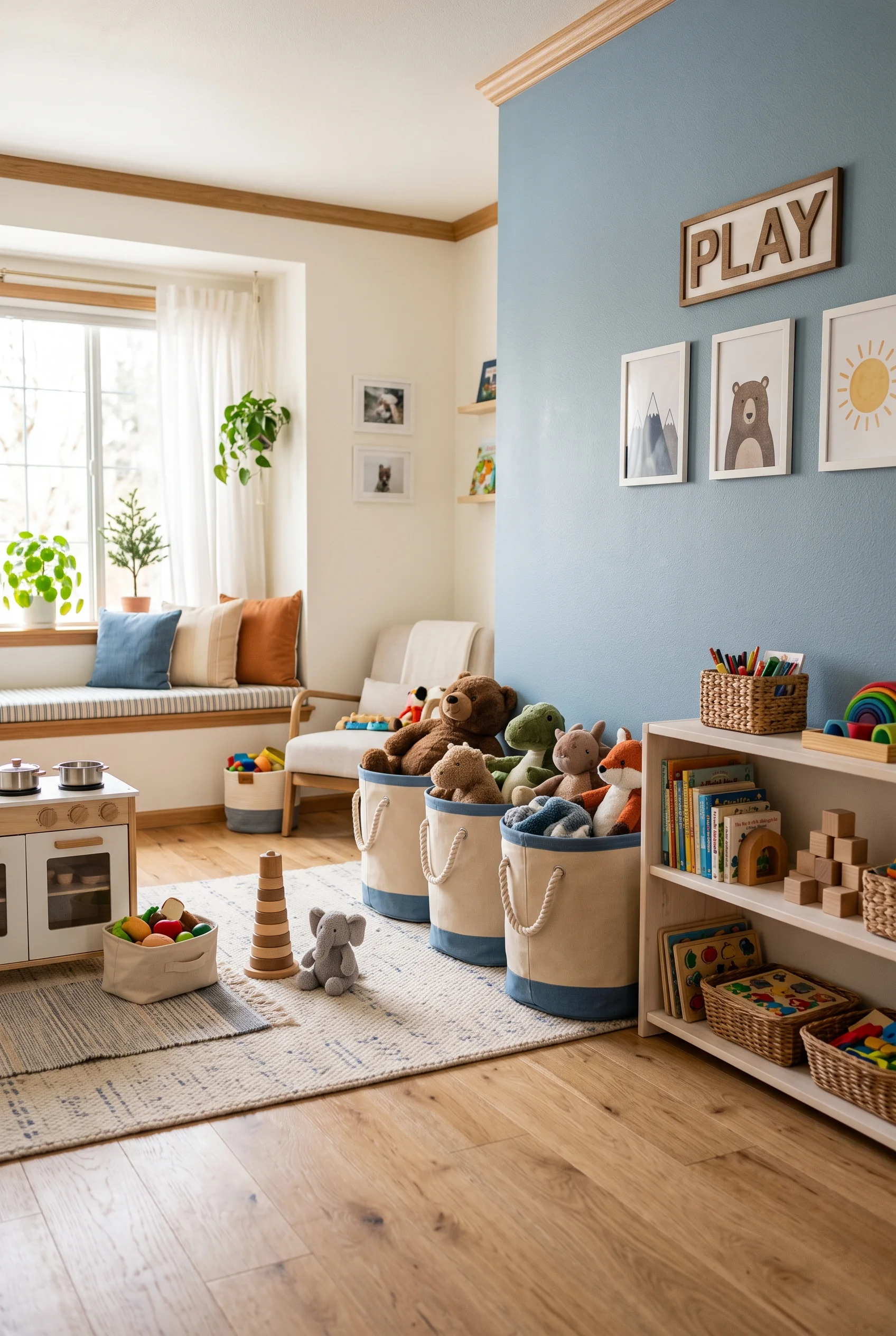
Balls, foam blocks, and train tracks rarely sit neatly on standard shelves. Oversized floor baskets give these bulky toys a generous opening, allowing children to toss pieces inside during a quick reset.
Soft, lightweight materials are easier to move and safer around active play. Position the baskets against a wall or beside a larger storage unit so walking paths stay open. One basket per broad category is usually enough. Natural textures and muted colors help the containers blend into the room while still staying clearly available for cleanup.
Living Room Toy Storage That Belongs There
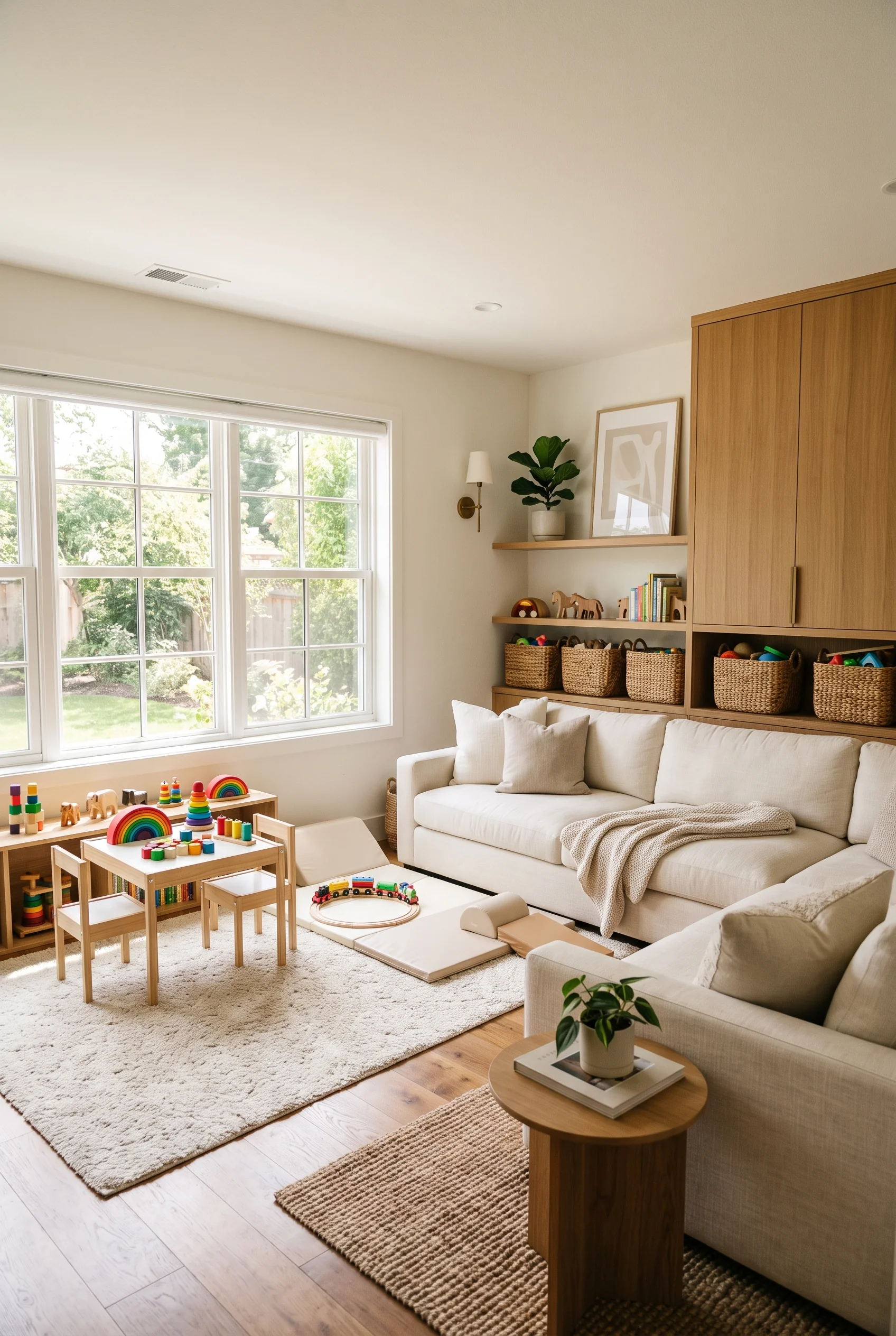
Toy storage ideas for living rooms need to support play without taking over the shared setting. Closed cabinets, neutral baskets, and a streamlined ottoman can coordinate with existing furniture while giving children’s belongings clear boundaries.
Keep a modest selection accessible and place the rest in rotation storage. Consistent colors and simple silhouettes help the play area settle into its surroundings. A specific cabinet or shelf also prevents toys from gradually spreading into every corner. The room can return to a calm family setting once the doors close.
Shop this pick: Storage Ottoman With Child-Safe Lid, It blends naturally into a shared living room while providing quick, concealed toy storage.
Everyday Favorites at Child Height
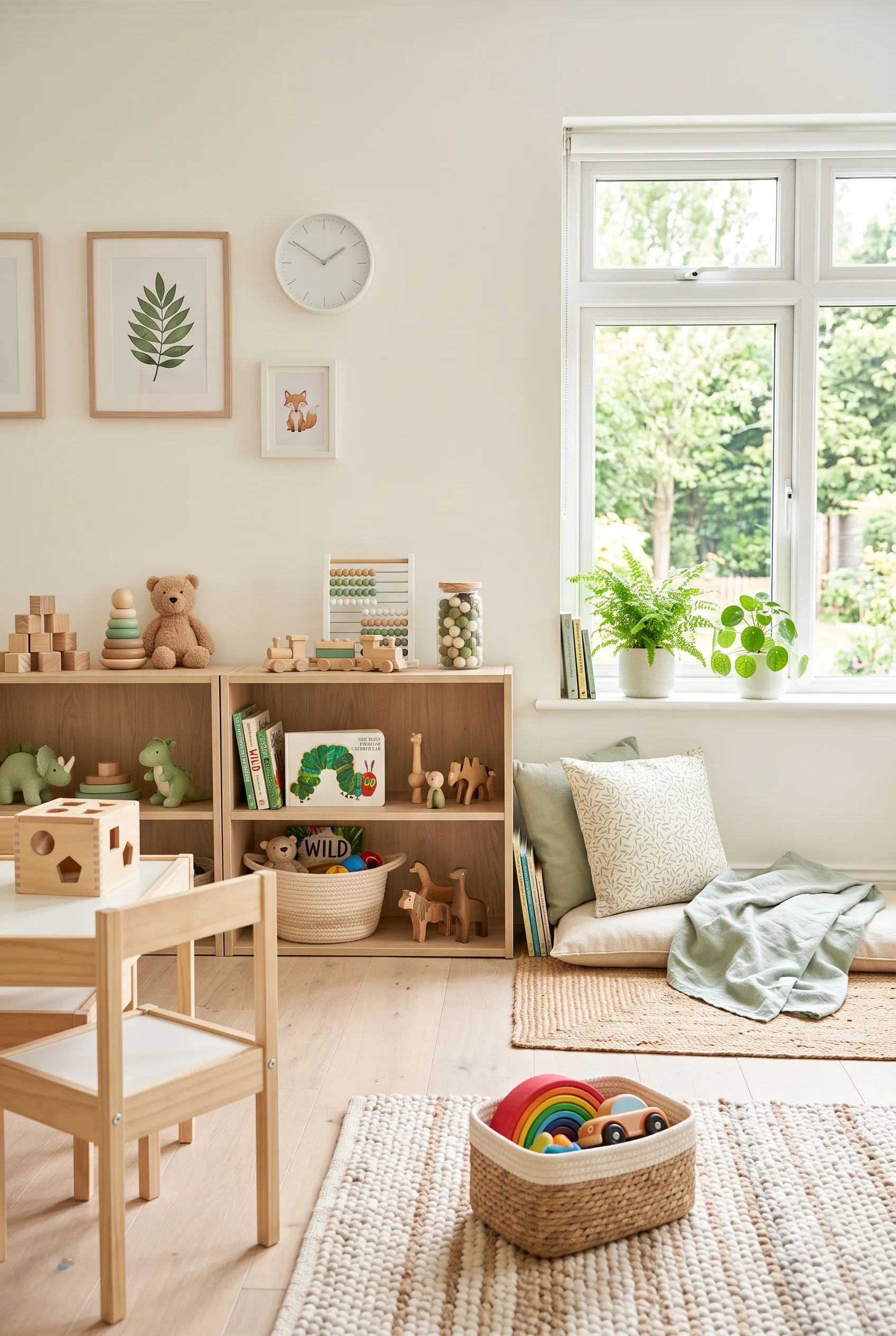
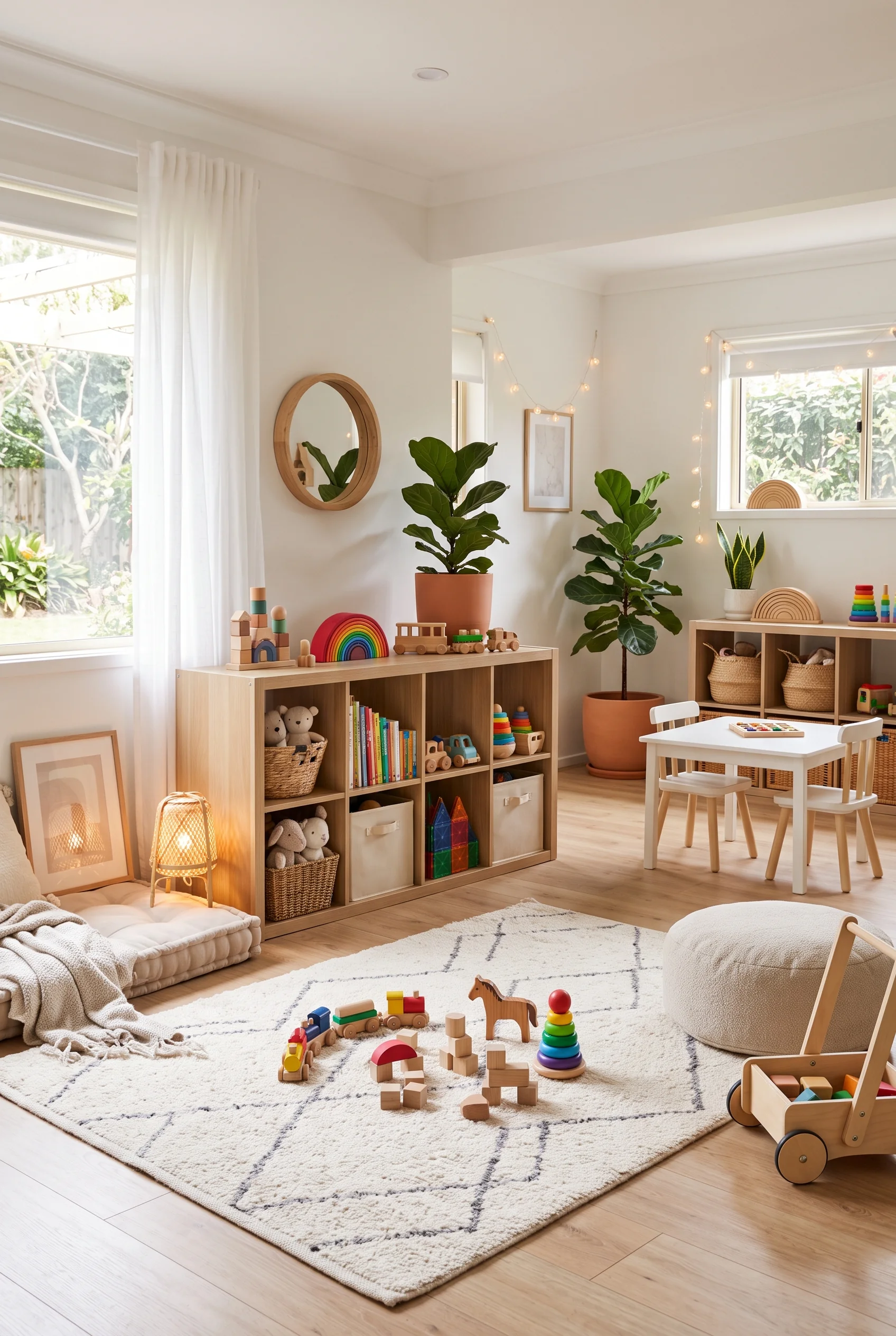
The toys used most often belong between the floor and a child’s shoulder height. Open bins and low shelves remove complicated lids, latches, and lifting from the daily routine. Children can begin play independently and see where each favorite returns.
Higher shelves suit backup supplies, display pieces, or anything requiring adult supervision. Revisit the easy-reach zone as interests and abilities change. What feels accessible to a toddler may be unnecessary a year later. A lightly edited lower shelf keeps the room inviting without presenting every option at once.
Playroom Storage Ideas for a Kid-Friendly Reset
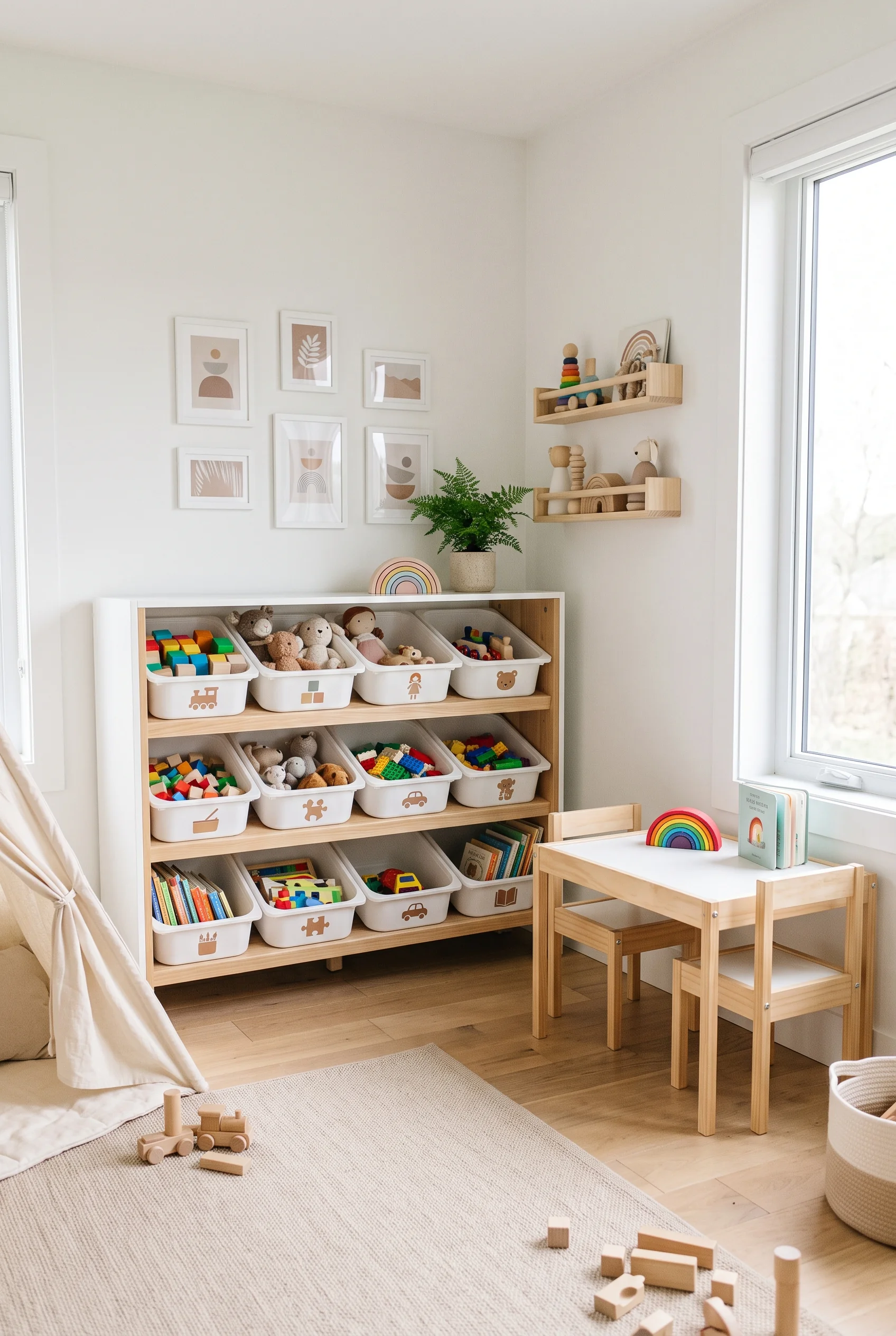
A cleanup system works when children can remember it without a long explanation. Picture labels, open bins, and low storage remove extra steps. Broad categories make it easier to answer the only question that matters during a reset: where does this belong?
A short daily tidy keeps the room from getting overwhelming. Focus on returning toys to the correct zone rather than arranging every piece perfectly. If one basket consistently attracts unrelated items, the category may be too narrow or unclear. The system should adjust to family life, not ask family life to bend around it.
A Playroom That Feels Easier to Live With
A calmer playroom rarely begins with a complete makeover. It begins with noticing where toys collect, which items children reach for, and what makes cleanup stall. Storage can then meet those habits with fewer steps and clearer destinations.
Choose one idea that addresses the most persistent source of clutter. That may be an oversized basket for bulky pieces, low shelving for everyday toys, or a rotation bin for items that overwhelm the room. Give the change time to become familiar before introducing another layer.
The strongest playroom storage ideas are flexible enough to change with your family. Adjustable shelves can move. Labels can be replaced. A craft cart can become a homework station, and a toy bench can remain a reading seat long after the toys inside have changed.
You don’t need to sort every small object or hide every bright color. A few visible favorites make the room feel welcoming, while closed storage gives the eye somewhere to rest. A useful system supports real play and makes the return to order feel possible.
Start small, watch what works, and build from there. The room only needs storage that fits its footprint, its toys, and the children who use it. When those pieces align, everyday play feels freer, and cleanup becomes a shared rhythm rather than a constant battle.