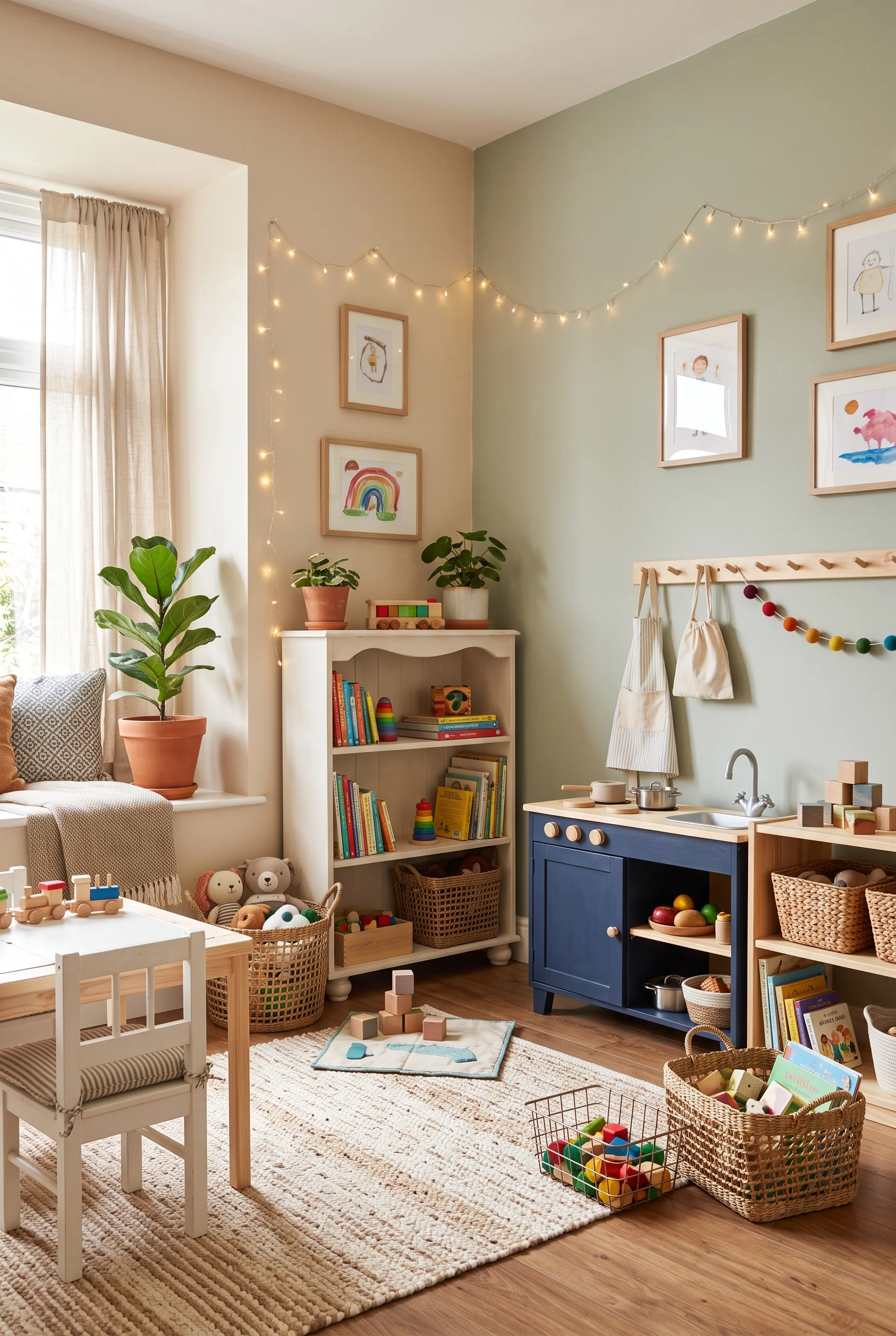
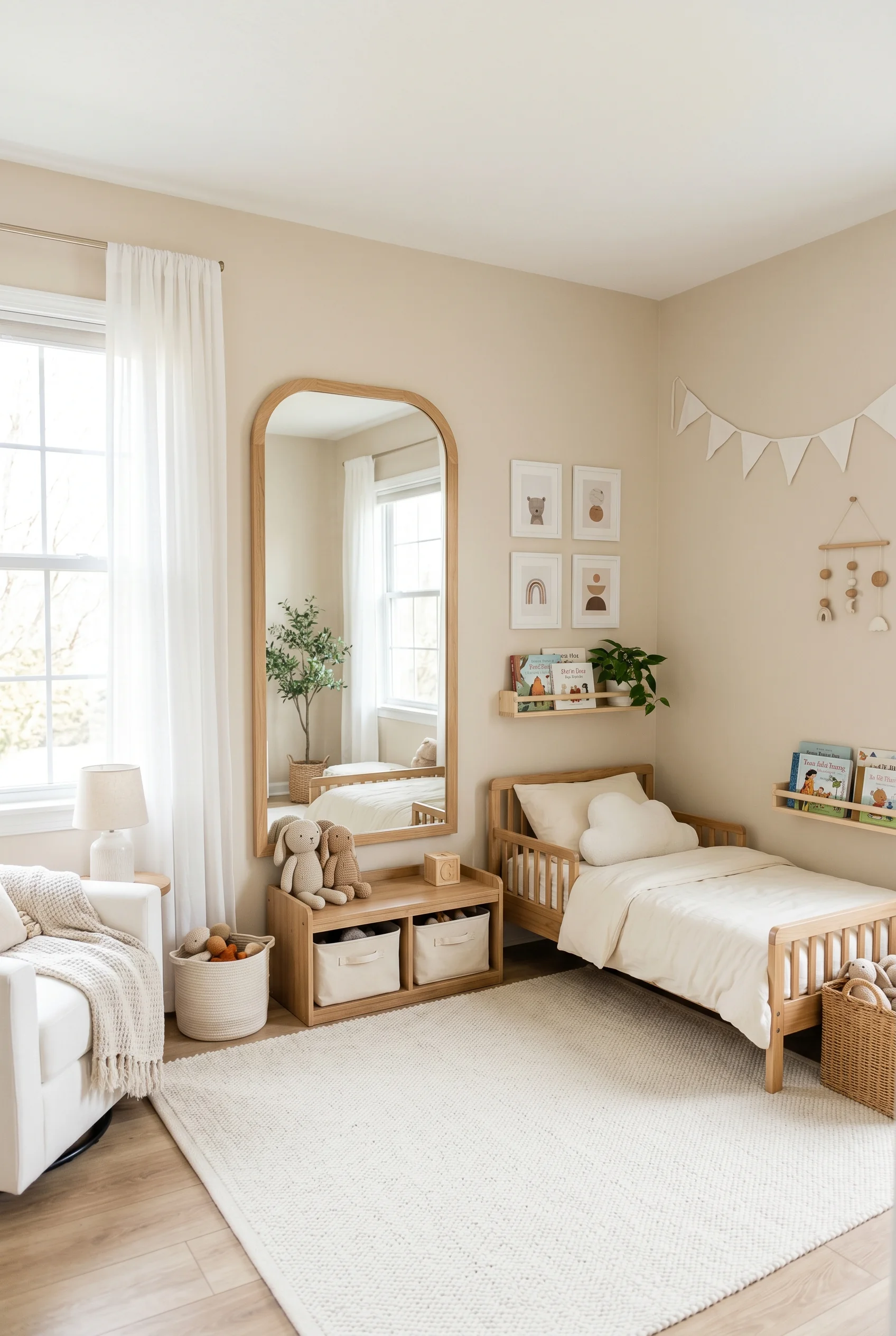
29 Montessori Classroom Ideas for a Home Learning Space
A Montessori classroom doesn’t need four walls dedicated to learning. What matters is whether a child can walk into the space, recognize what they want to work on, and begin without waiting for an adult to get everything ready. That kind of independence comes from the way a room is arranged, not from how many educational materials you can fit inside it.
At home, those principles can take shape in surprisingly ordinary places. Accessible activity areas in Montessori playroom ideas can work just as well in a homeschool corner, while Montessori room ideas for small spaces show how to make learning materials accessible without dedicating an entire room to them. Thoughtful Montessori toy storage also offers useful lessons in presenting materials clearly and making it easier for children to return things independently.
These Montessori classroom ideas focus on creating an environment where children can concentrate, make choices, and take responsibility for their own materials. You’ll find practical ways to arrange shelves, learning tables, and activity areas in real family homes, with ideas that work whether you have a dedicated homeschool room or a small corner shared with everyday life.
DISCLOSURE: Some of the links provided on this page are affiliate links. This means if you choose to make a purchase through these links, we may receive a small commission at no extra cost to you.
A Calm Foundation at the Child’s Scale
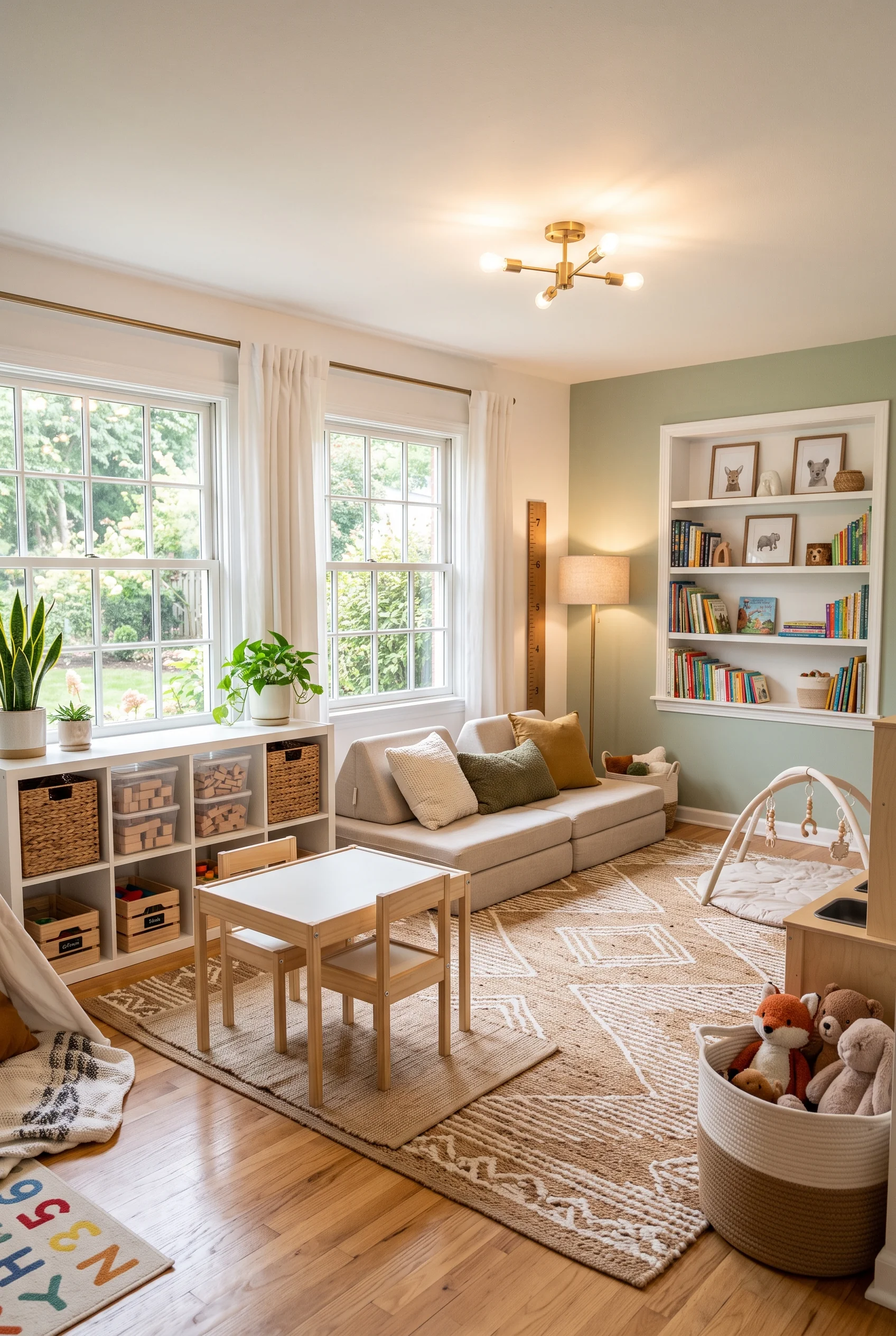
Independence begins with proportions that make sense to a child. Low surfaces, reachable materials, and comfortable furniture remove many of the small obstacles that lead to constant adult help. A restrained palette and soft light keep attention on the activity itself. Together, these choices establish a Montessori room setup that feels peaceful, polished, and genuinely usable.
Montessori Shelves Within Easy Reach
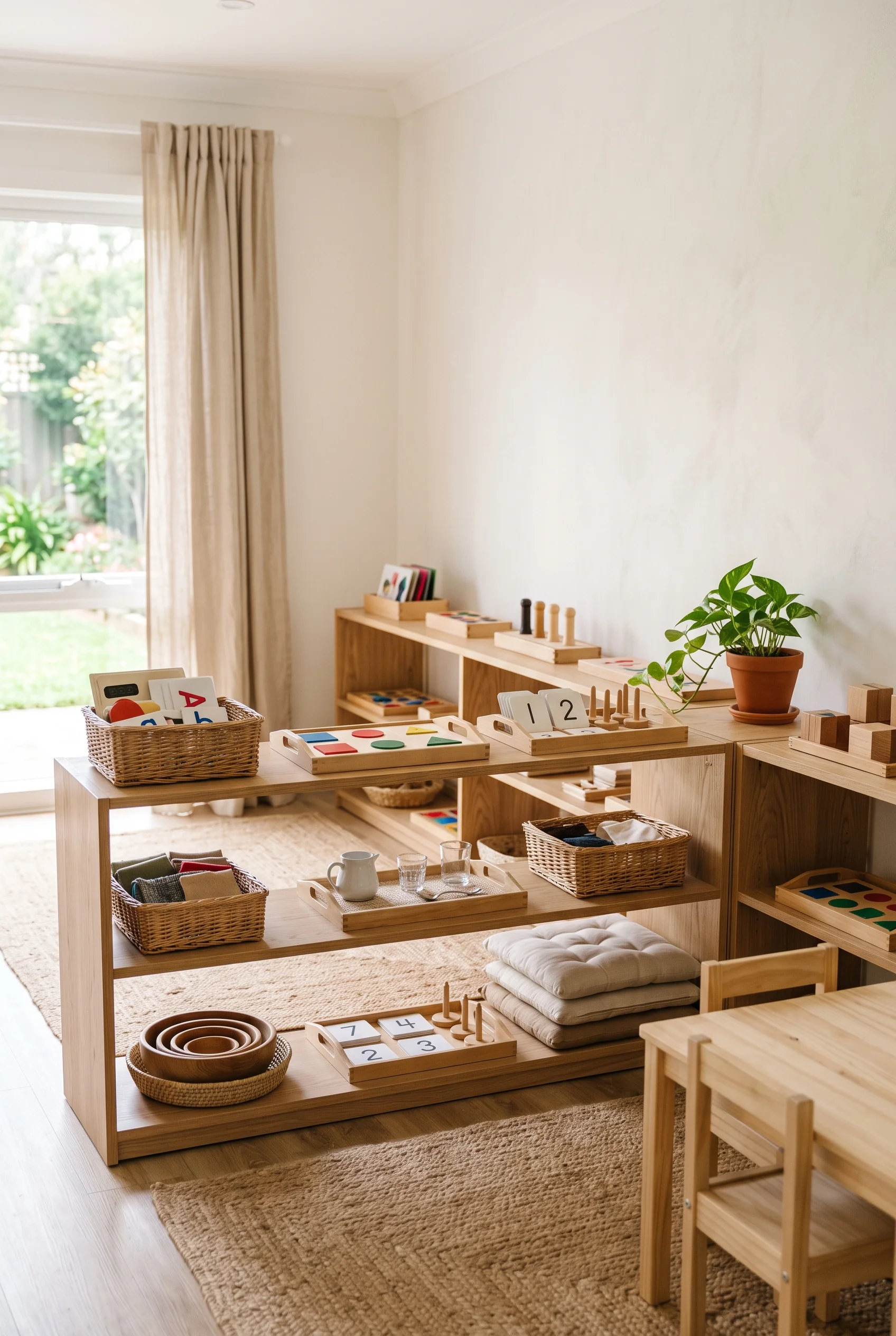
Low Montessori shelves give children a clear view of their choices without requiring an adult to retrieve each activity. A sturdy open unit works best when trays are spaced generously rather than lined up edge to edge. Keep familiar work at eye level and place adult-managed supplies elsewhere.
Fewer materials also make it easier to return each item. Four or five purposeful activities may be plenty for a toddler shelf. Secure the unit to the wall, especially when a child might pull up on it or lean forward while choosing a tray.
Shop this pick: Low Natural Wood Montessori Shelf, A secure low shelf is the foundation for making activities visible and independently accessible.
Furniture Proportioned for Growing Independence
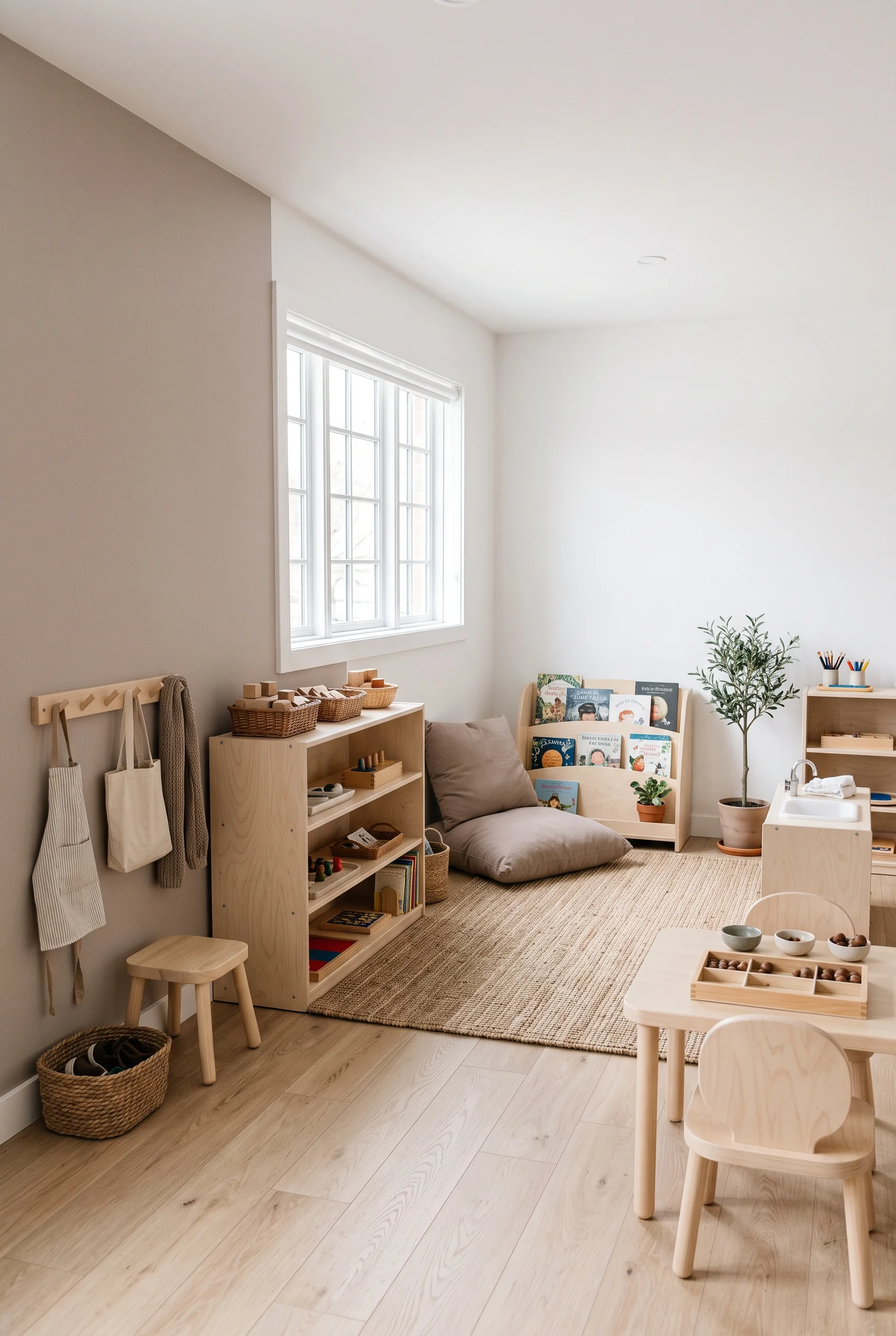
Child-sized furniture supports ordinary movements that adults often overlook. A low hook allows a child to hang a sweater. A reachable work surface lets a child sit down without being lifted into place. These quiet adjustments help daily routines feel like the child’s.
A Montessori room setup needs only a few well-made pieces. Prioritize stable construction, rounded corners, and enough open floor around each item. Measure both the child and the available area before buying. A spacious layout with two useful pieces will serve family life better than a crowded matching set.
A Restful Palette That Lets Materials Lead
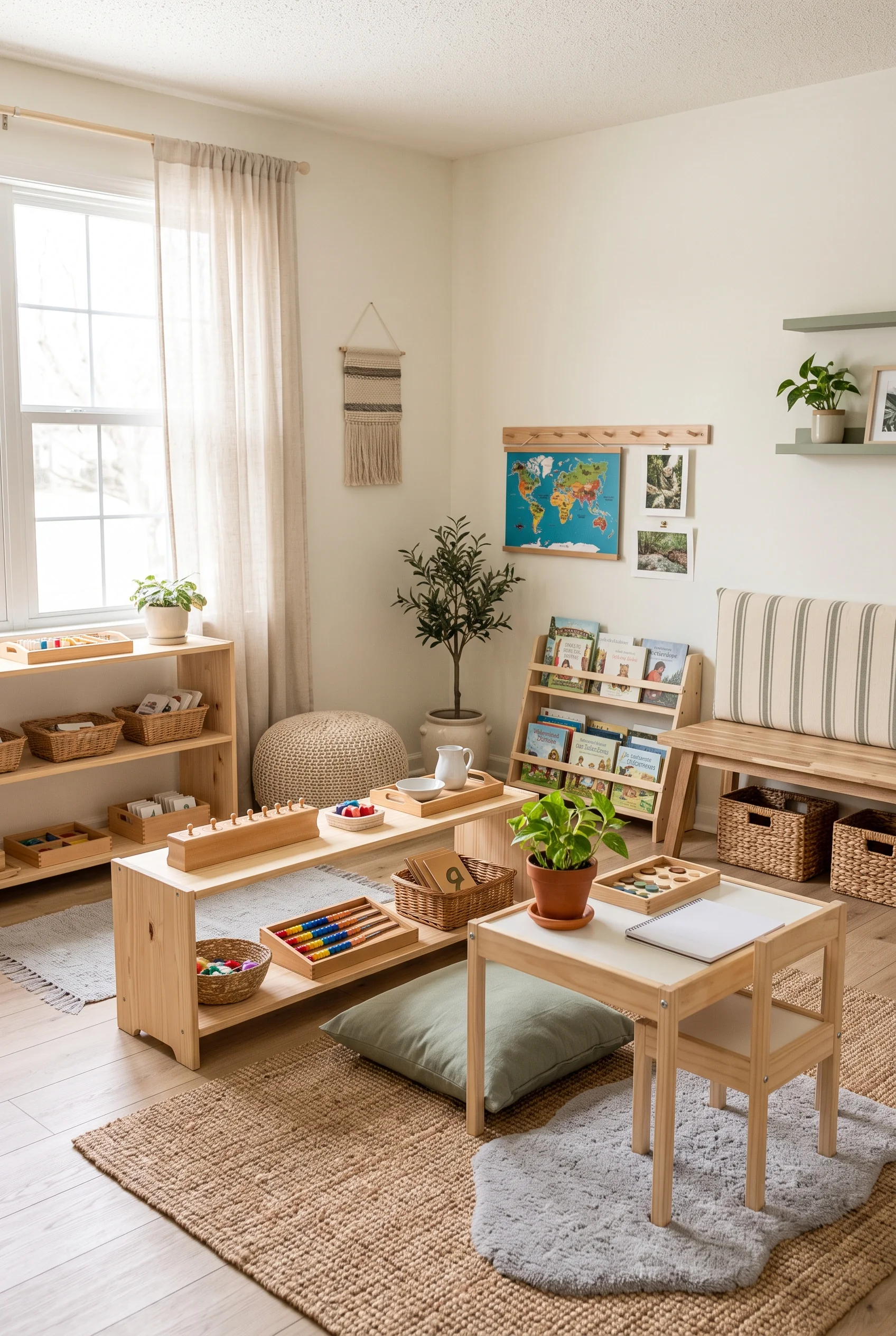
Warm white, muted green, and soft taupe provide a quiet background for colorful learning materials. Natural wood and woven textures add warmth without asking for attention. The room can still feel playful, but the visual energy comes from the work on the shelves rather than busy walls.
Keep artwork selective and position it where a child can actually see it. Cotton cushions or a wool rug introduce softness in a practical way. Repeating a limited range of finishes across shelves, baskets, and furniture gives the Montessori learning space an easy sense of order.
Daylight for Quiet, Focused Work
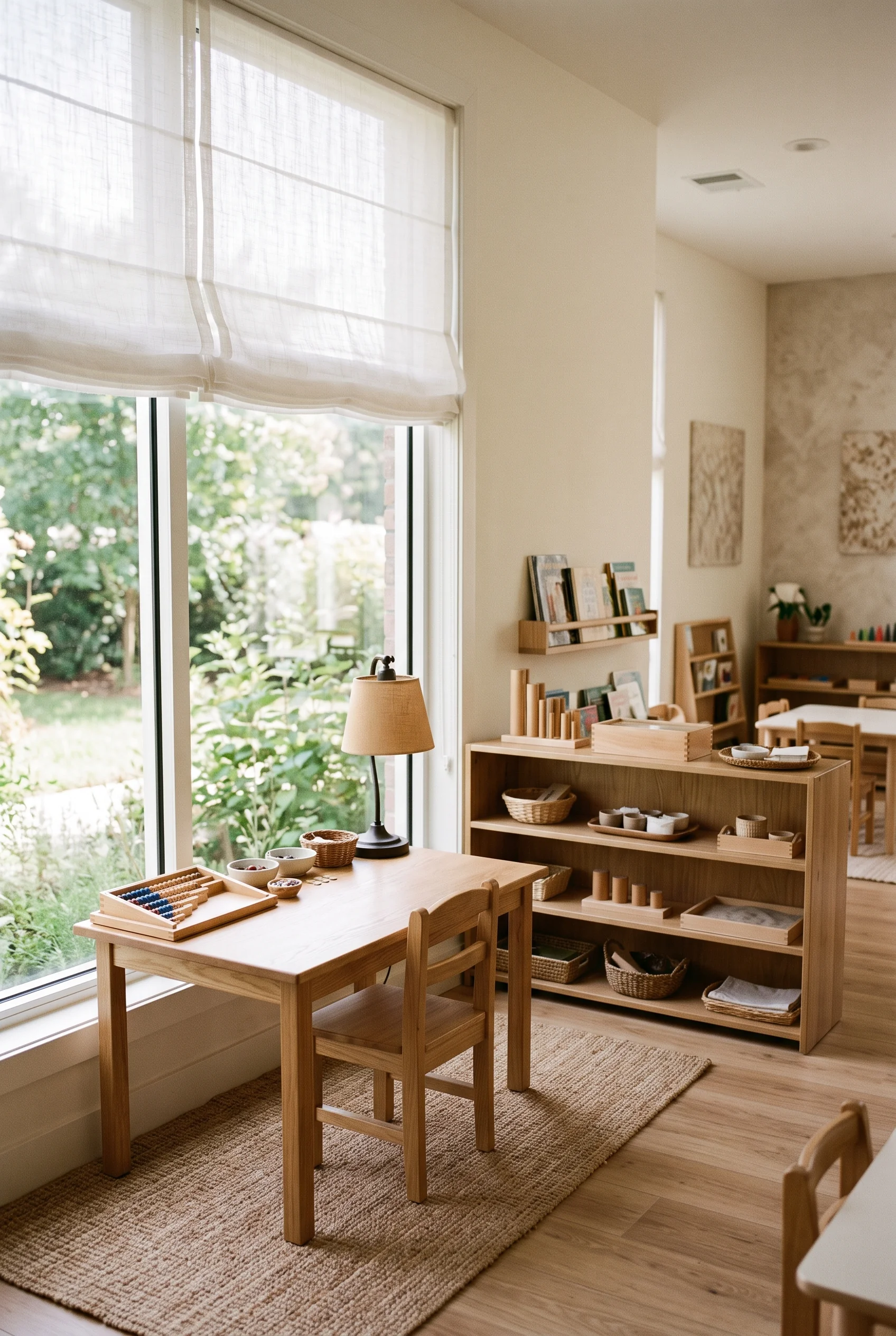
Natural light makes reading, drawing, and close observation more comfortable. When the floor plan allows, place a table or reading cushion near a window, leaving enough distance to open curtains safely. Light-filtering shades soften strong glare without losing the room’s airy feel.
A warm table lamp can carry the space through cloudy afternoons. Select a stable base, secure every cord, and keep bulbs out of reach. The lighting should feel gentle rather than dim, with enough brightness for small hands working carefully with puzzle pieces, pencils, or beads.
A Work Table Made for Many Moments
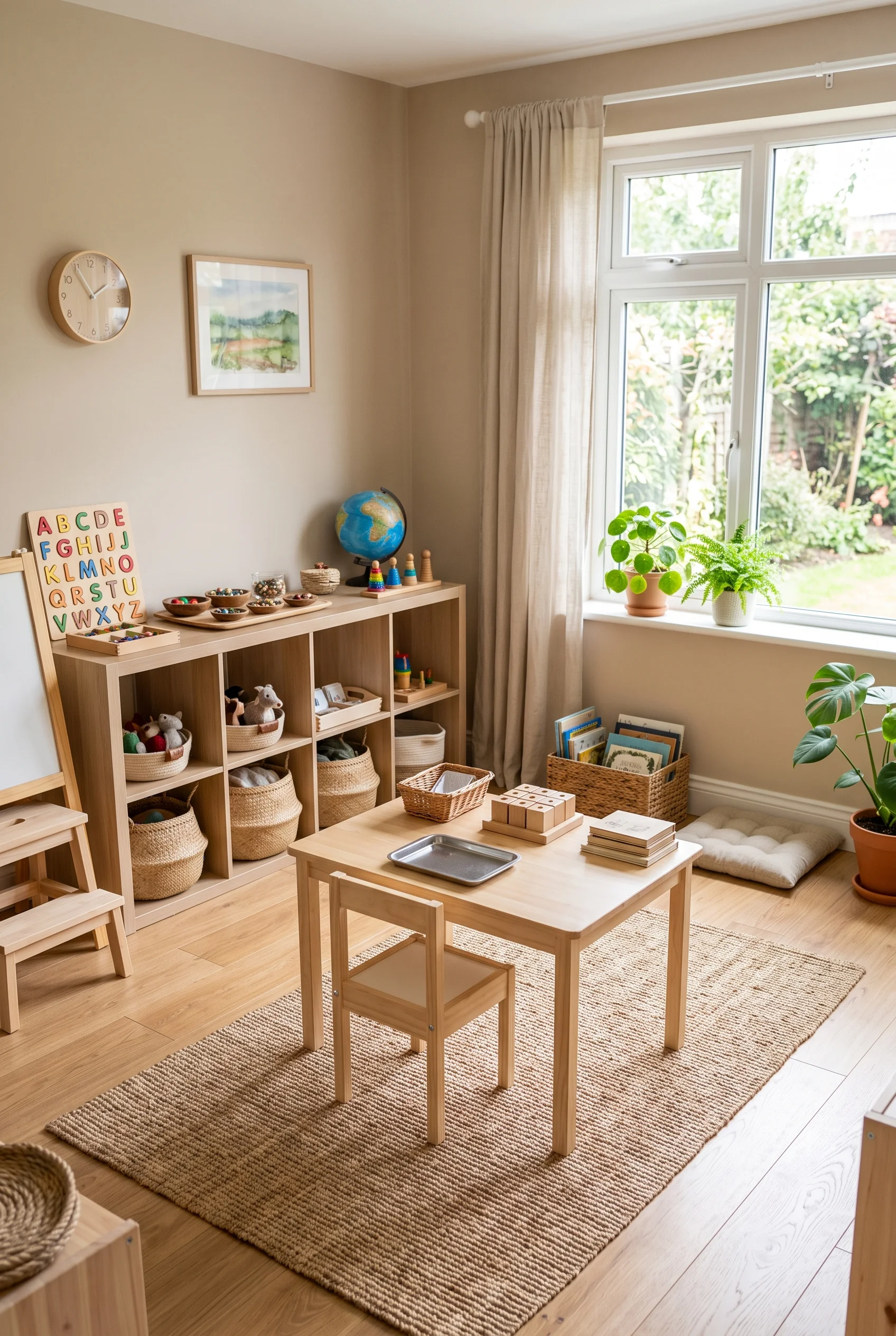
A small table becomes one of the hardest-working pieces in a Montessori homeschool room. It can hold a puzzle after breakfast, art supplies in the afternoon, and a simple food preparation activity before dinner. The chair should allow both feet to rest flat on the floor.
Leave clear space behind the chair so you can move it without assistance. Simple construction and a wipeable surface matter more than decorative detail. A durable table that shifts easily between activities will remain useful well beyond the earliest Montessori activities.
Learning Materials With a Clear Purpose
Academic materials feel more approachable when each shelf has a clear focus. A small, edited selection gives children time to become familiar with each activity instead of moving quickly through visual clutter. Present new work before placing it on the shelf, then arrange it in a sequence that feels natural and easy to scan.
A Math Shelf That Builds From Concrete Ideas
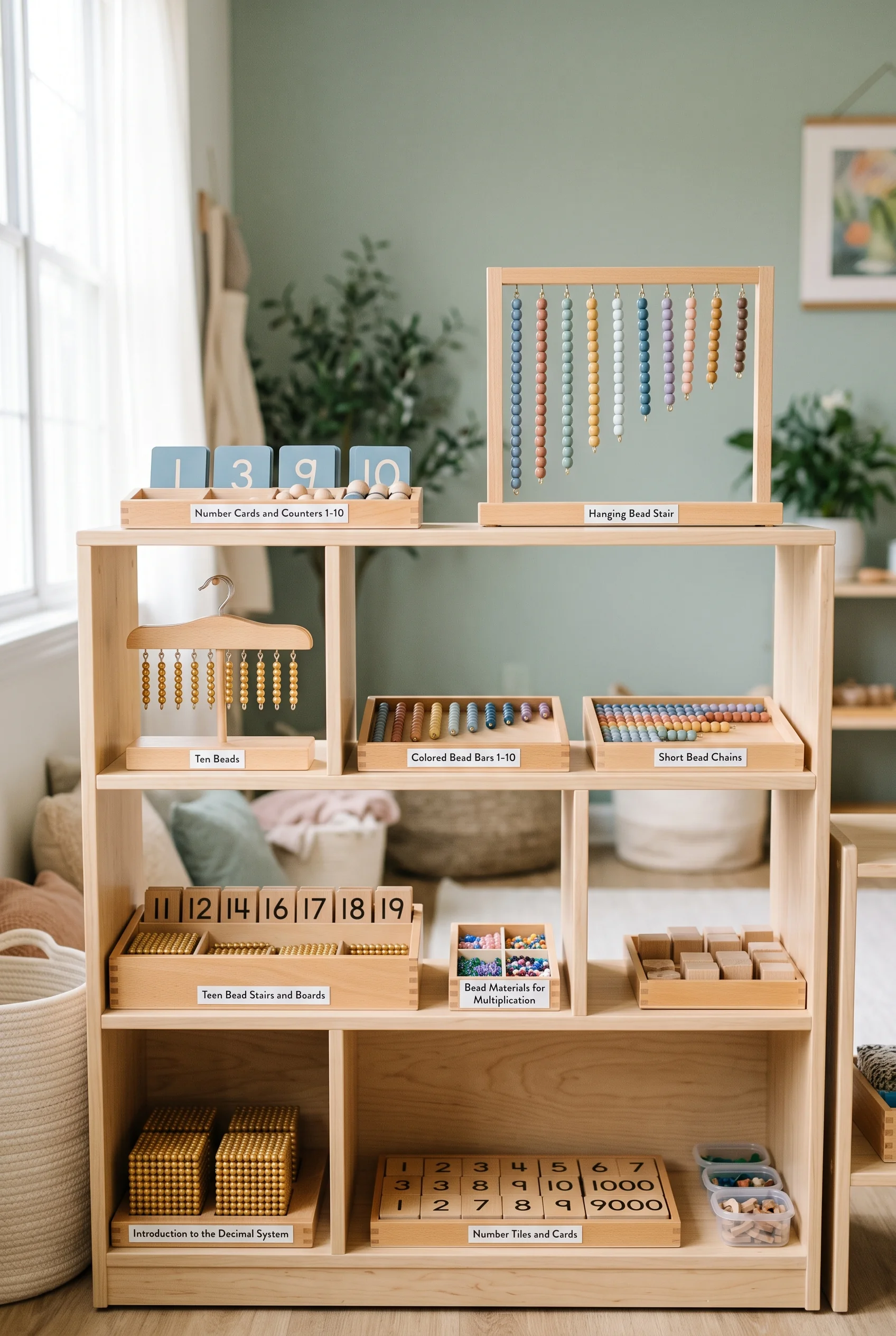
Early math feels tangible when children can hold, count, and compare real objects. A simple shelf might include counters, number cards, or beads arranged in separate trays. Begin with quantities the child understands before introducing more complex combinations.
Place the simplest activity on the left and gradually increase the challenge. Only display work that has already been demonstrated. That familiarity lets a child select a task and complete it without guessing how to handle the materials. The shelf remains focused, even as the skills grow.
Shop this pick: Montessori Counting Bead Set, A tactile bead set supports several stages of concrete number work and offers strong long-term value.
Language Materials Connected to Everyday Life
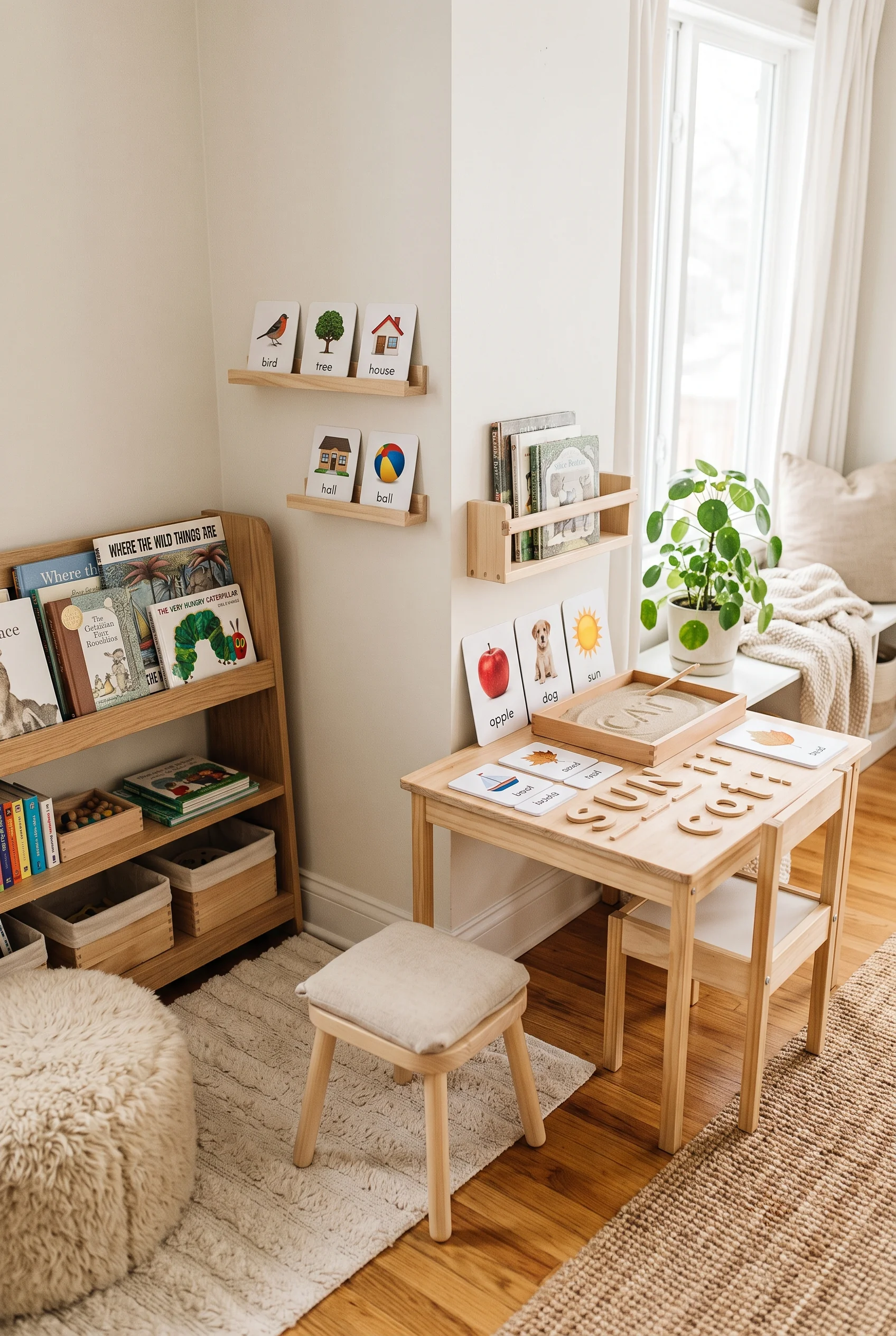
Realistic picture cards, sound games, and movable letters make language work feel connected to the child’s world. Themes such as household objects, foods, or familiar animals offer useful vocabulary without requiring an elaborate curriculum. Match each activity to readiness, not age alone.
A small writing tray can hold paper, pencils, and chalk where children may reach them throughout the day. Writing does not need to stay inside a formal lesson. A label for a drawing or a note beside a block structure can become meaningful literacy practice in an ordinary moment.
A Wider World on One Thoughtful Shelf
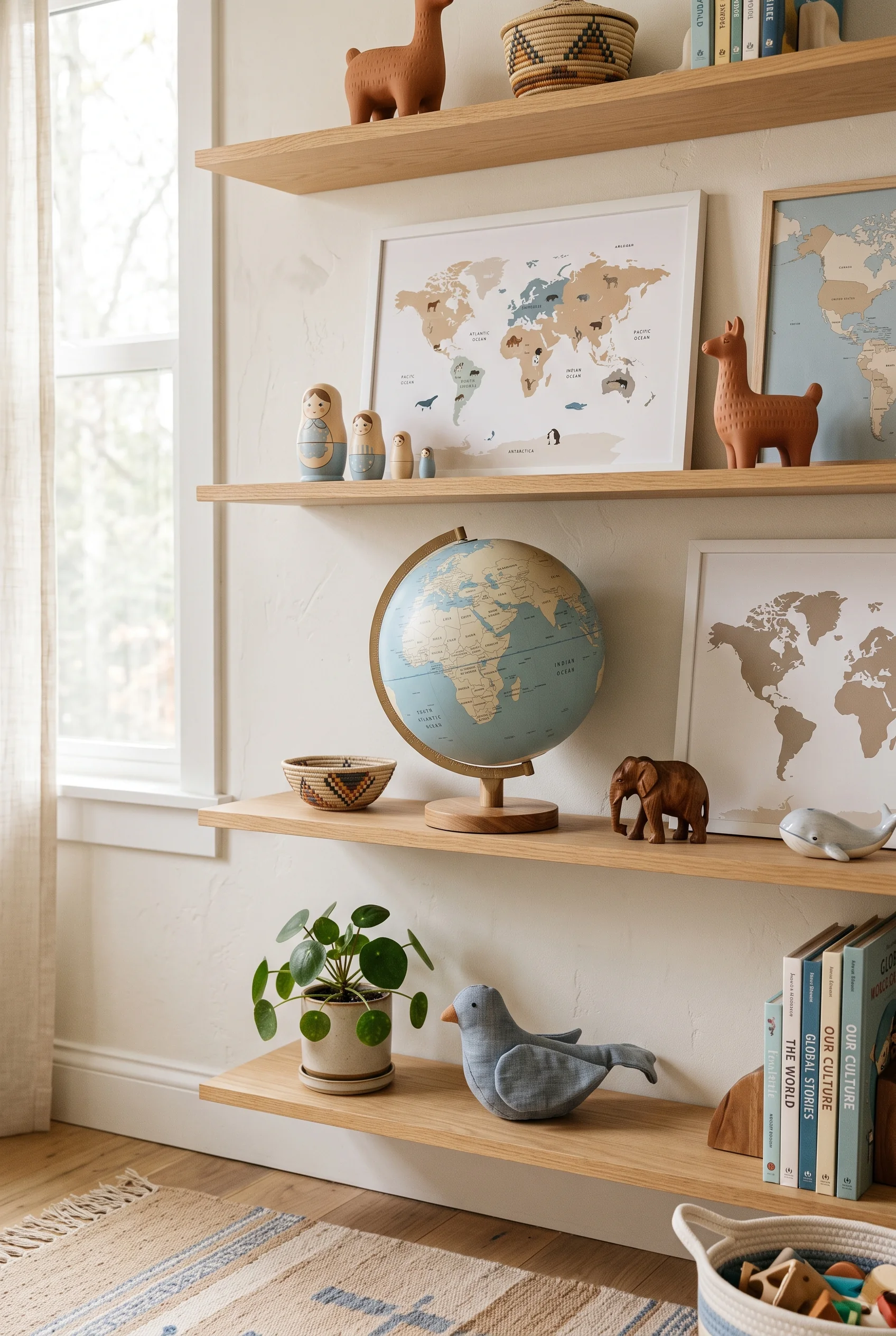
A child-friendly globe and a few simple maps offer an inviting introduction to geography. Add photographs or cultural objects related to family heritage, music, animals, or a place the child has recently noticed. A focused theme adds depth without overwhelming the shelf.
Choose current, respectful resources that represent communities as active and diverse. Rotate individual materials as interests change rather than displaying every resource at once. A globe, one basket, and a small set of cards can inspire a surprisingly rich conversation about the wider world.
Sensory Work With a Defined Focus
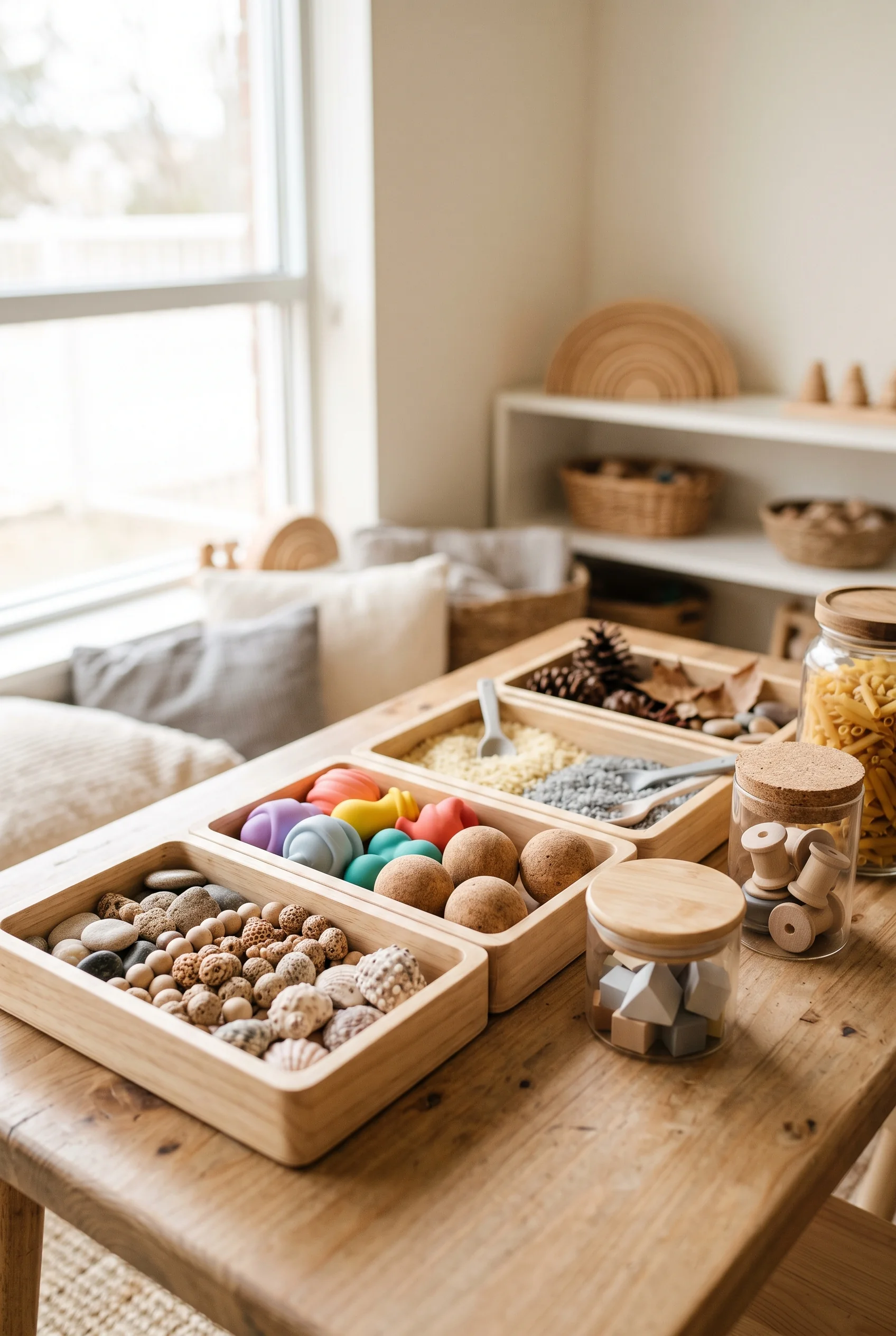
Sensory materials are most engaging when they invite a specific comparison. Children might match textures, grade objects by weight, or sort a small collection by color. One clear task feels calmer than a bin filled with unrelated pieces.
Shallow trays keep the materials visible, while lidded containers help manage smaller components. Choose pieces suited to the child’s developmental stage and supervise anything that could present a swallowing risk. The finished area should feel focused and tactile, with enough empty space for careful hands to notice the differences between objects.
Quiet Corners for Creativity and Reflection
Not every part of a learning environment needs to feel task-oriented. Reading, creative work, nature study, and emotional rest all benefit from softer corners with a little separation from active movement. These zones can be compact. A cushion, a tray, or a small table is often enough to signal a different pace.
A Reading Nook That Invites a Pause
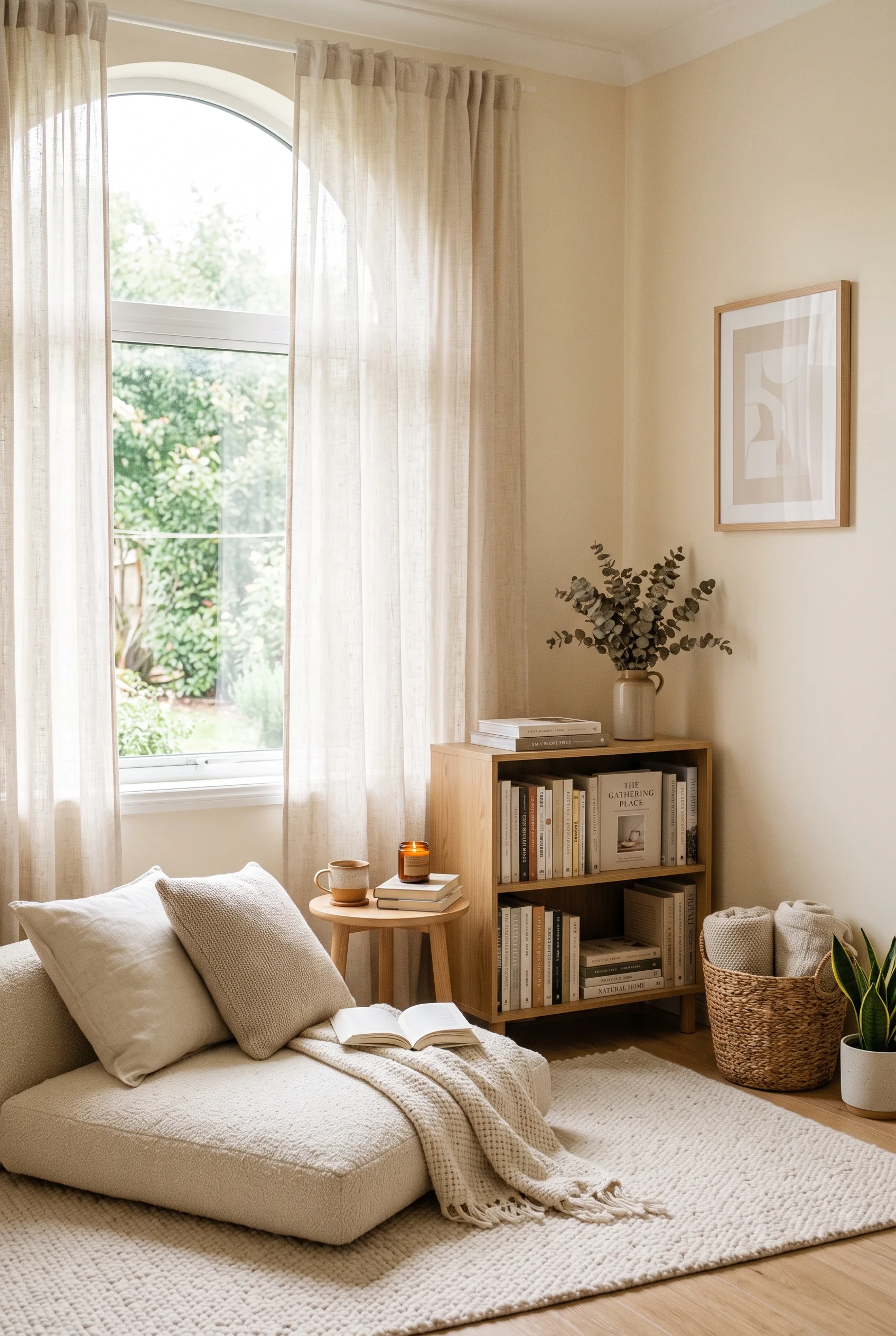
A soft rug and one comfortable cushion can turn a quiet corner into an appealing reading nook. Place a few books with their covers facing forward so the choice feels manageable. Natural light is lovely here, as long as the nook stays separate from the busiest play route.
Rotate titles according to current interests, seasonal changes, or topics appearing elsewhere in the Montessori learning space. The collection does not need to be large. Five well-chosen books at a child’s eye level can feel more inviting than a crowded bookcase with only the spines visible.
Shop this pick: Front-Facing Kids Book Display, A front-facing display makes independent book selection easier and immediately defines the reading zone.
Art Supplies Ready for Independent Ideas
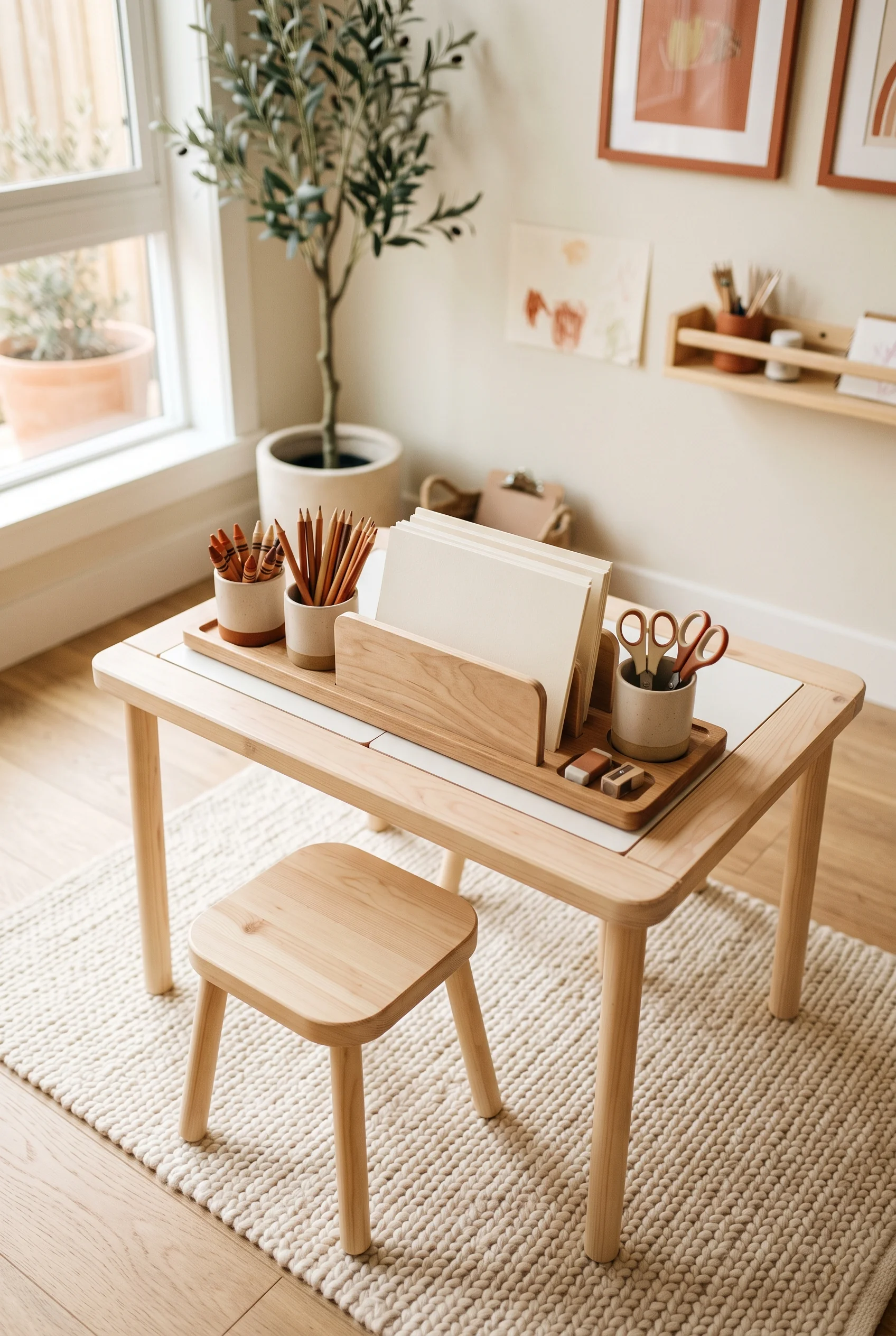
Accessible art materials allow creativity to begin without a lengthy setup. Keep a small selection of paper, crayons, pencils, and child-safe scissors in divided containers. Each supply should have a visible home, with enough room for the child to return it independently.
A washable mat protects the table, while a nearby cloth makes cleanup part of the process. Open-ended materials leave room for personal ideas rather than steering every project toward the same finished example. A compact station can feel cheerful and expressive without spreading supplies across the entire room.
Nature Details Worth Looking At Closely
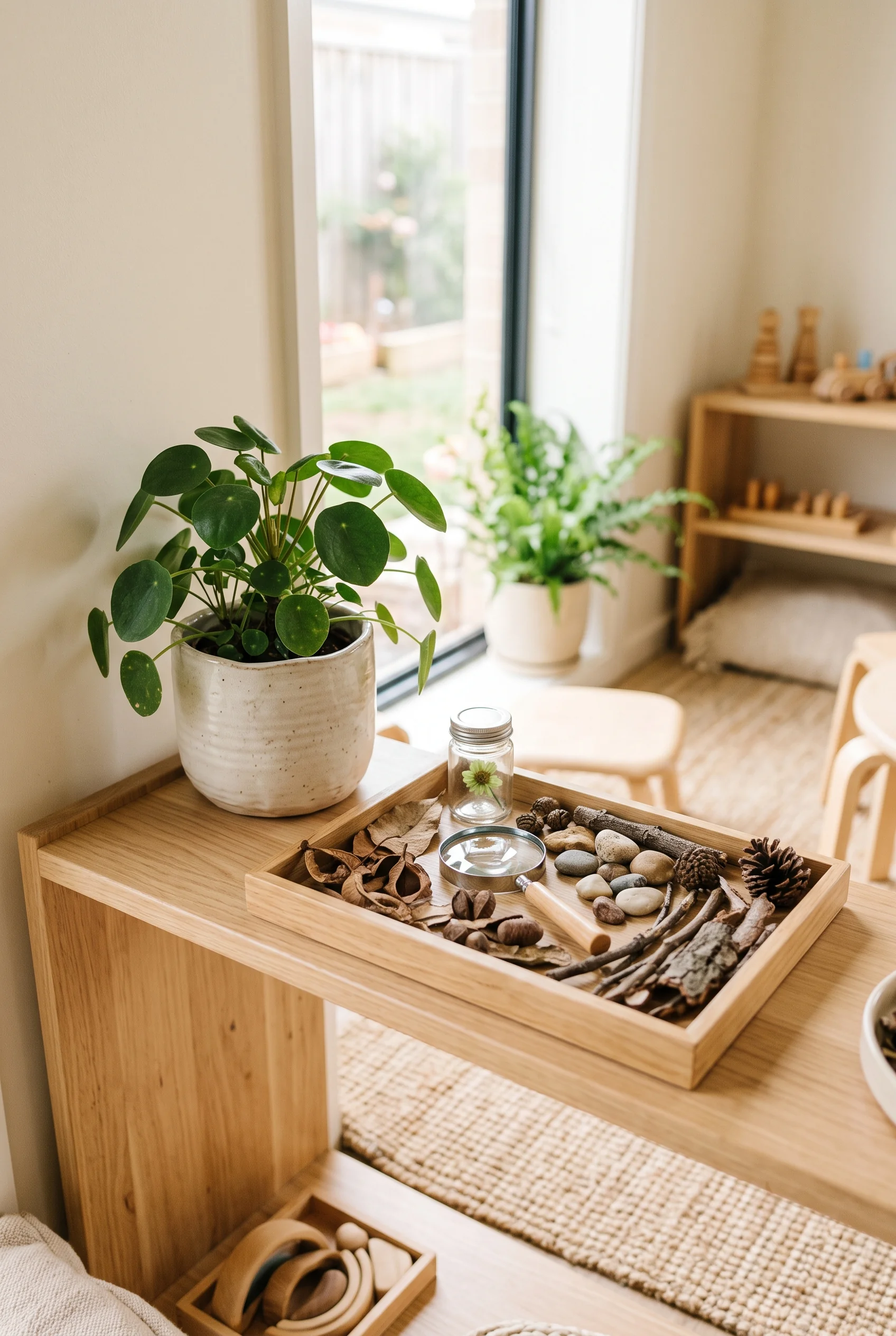
A plant introduces daily care into the learning space in a beautifully simple way. Children can water it, notice new growth, and observe how it changes over time. Nearby, a tray of stones, leaves, or seed pods offers material for closer study.
A magnifying glass and a small nature journal extend the observation without complicating the display. Refresh collected objects regularly and inspect them for sharp edges or other concerns. Natural details bring gentle color and texture into the room while giving children something real to examine, handle, and care for.
A Peace Corner for Gentle Resets
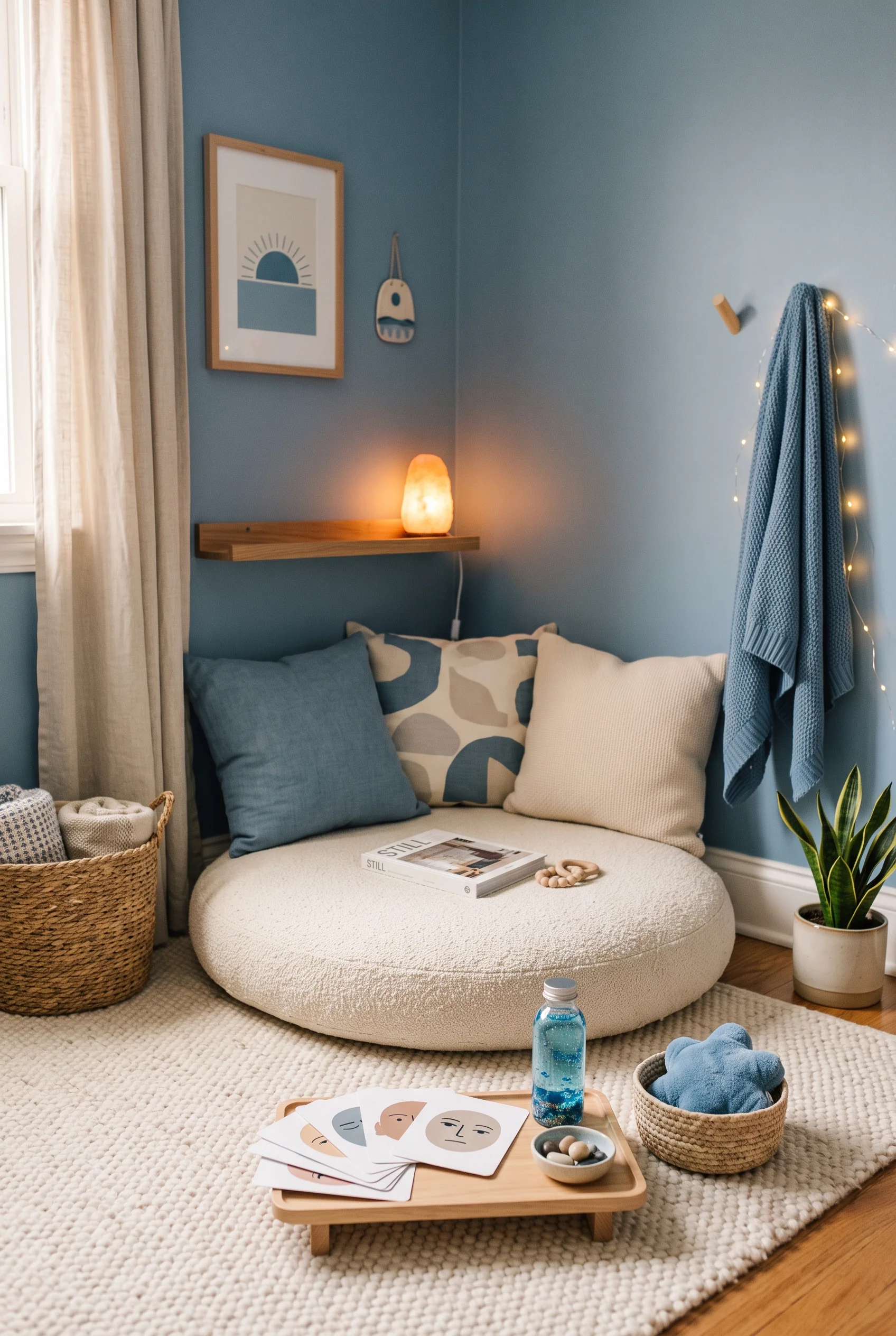
A peace corner offers a quiet place to pause when emotions feel large. Keep it comfortable but simple, with a cushion, a soft rug, and one or two familiar calming tools. Emotion cards or a breathing prompt can support children who are still learning how to name what they feel.
Introduce the corner during a calm part of the day so it never feels connected to punishment. Sit there together, model a slow breath, and let the child explore the tools without pressure. Keep the mood reassuring, private, and open whenever a reset is needed.
Visible Order Without Visual Clutter
Montessori homeschool room organization works best when children can understand it at a glance. The goal is not perfect styling. It is a predictable place for each activity and a manageable amount to care for. Thoughtful rotation, well-sized baskets, picture labels, and defined floor boundaries make the room easier to use throughout the day.
A Smaller Rotation With More Breathing Room
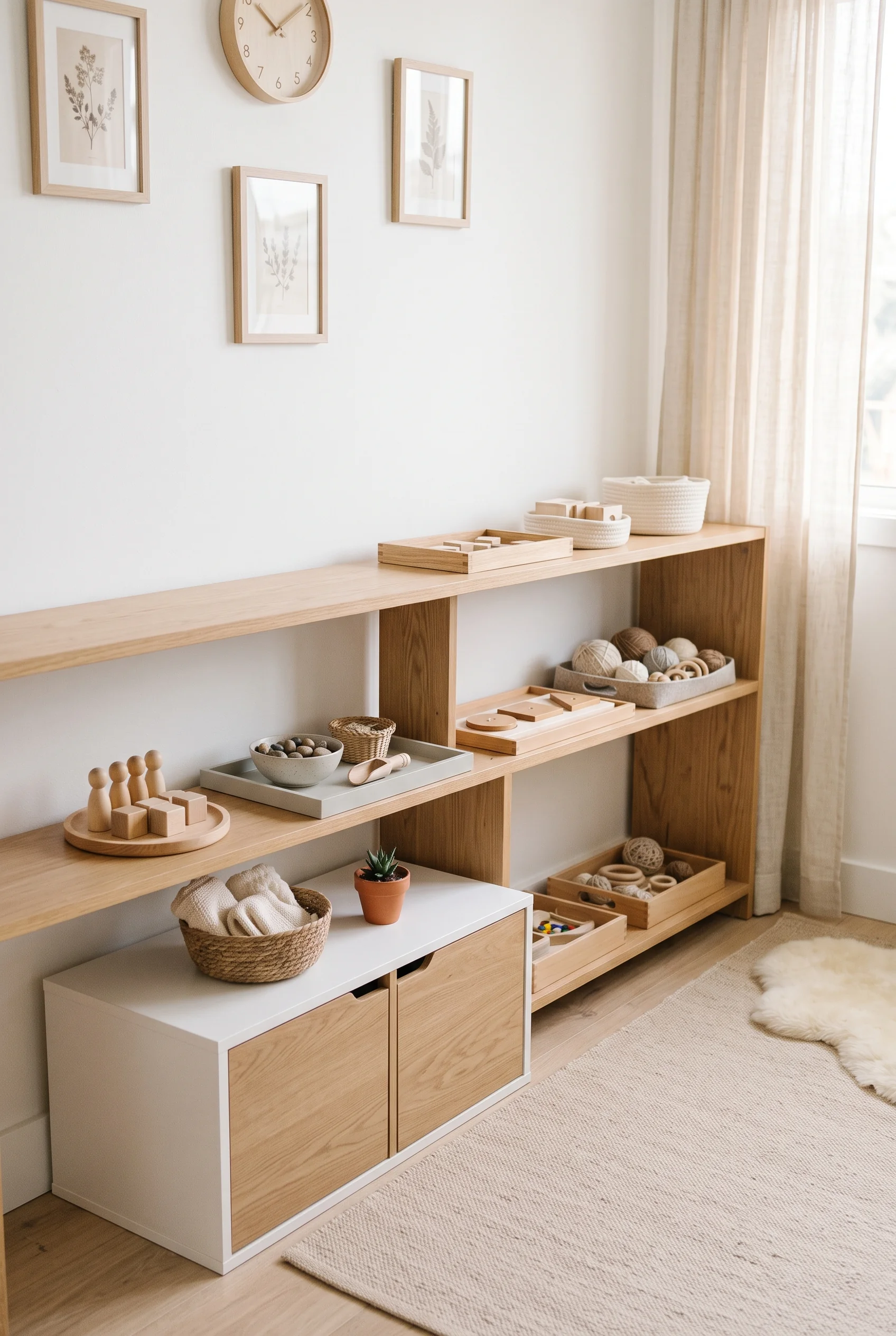
Activity rotation keeps Montessori shelves from becoming crowded storage. Display a limited selection and keep the rest in closed cabinets or containers elsewhere. Watch what the child returns to before deciding which materials should stay.
A rotation may happen when interest fades, a skill becomes comfortable, or a new need appears. You don’t need to change everything on a strict schedule. A flexible rhythm of two to four weeks works for many families, but observation matters more than the calendar. A few well-used trays are enough.
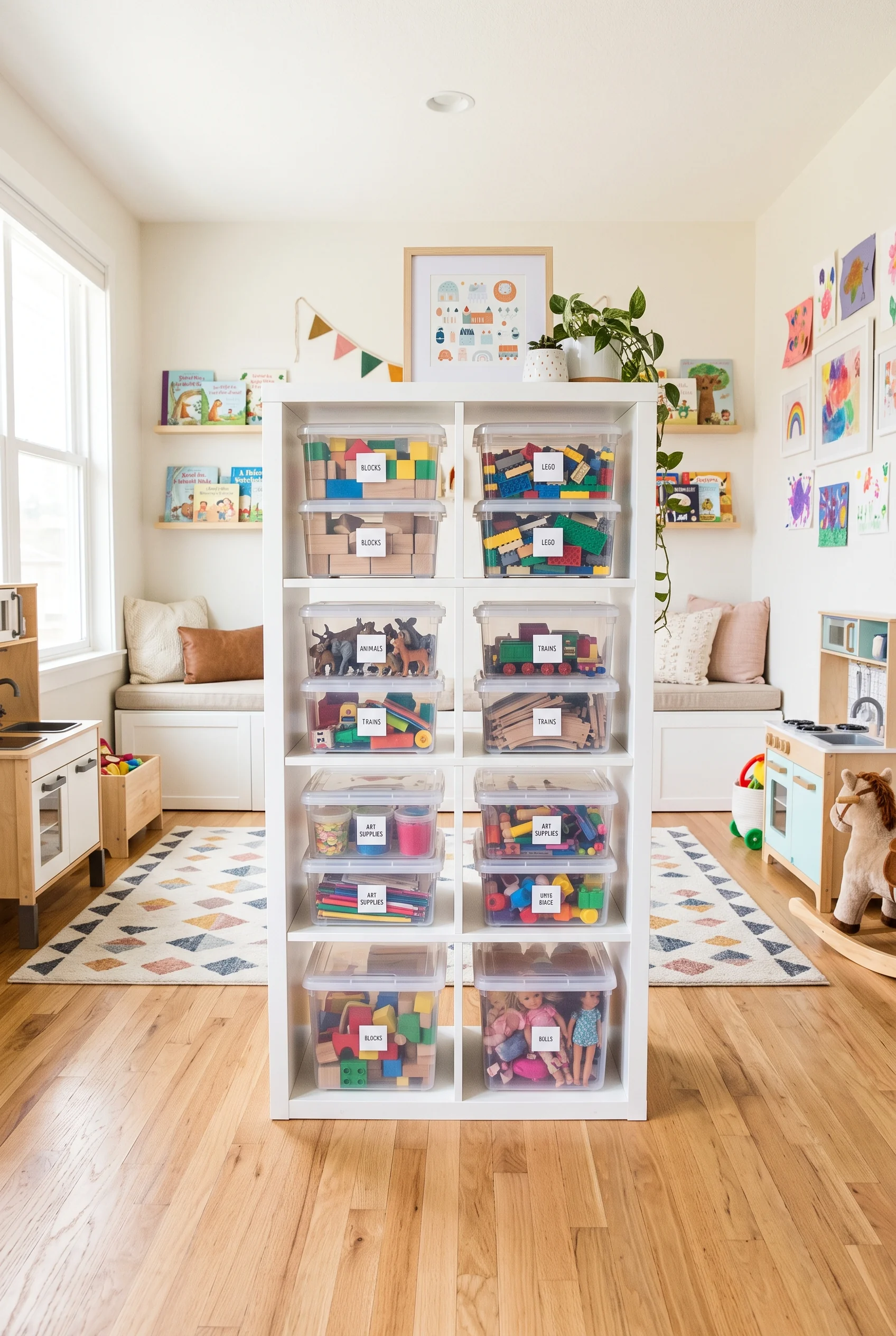
Baskets That Hold One Complete Activity
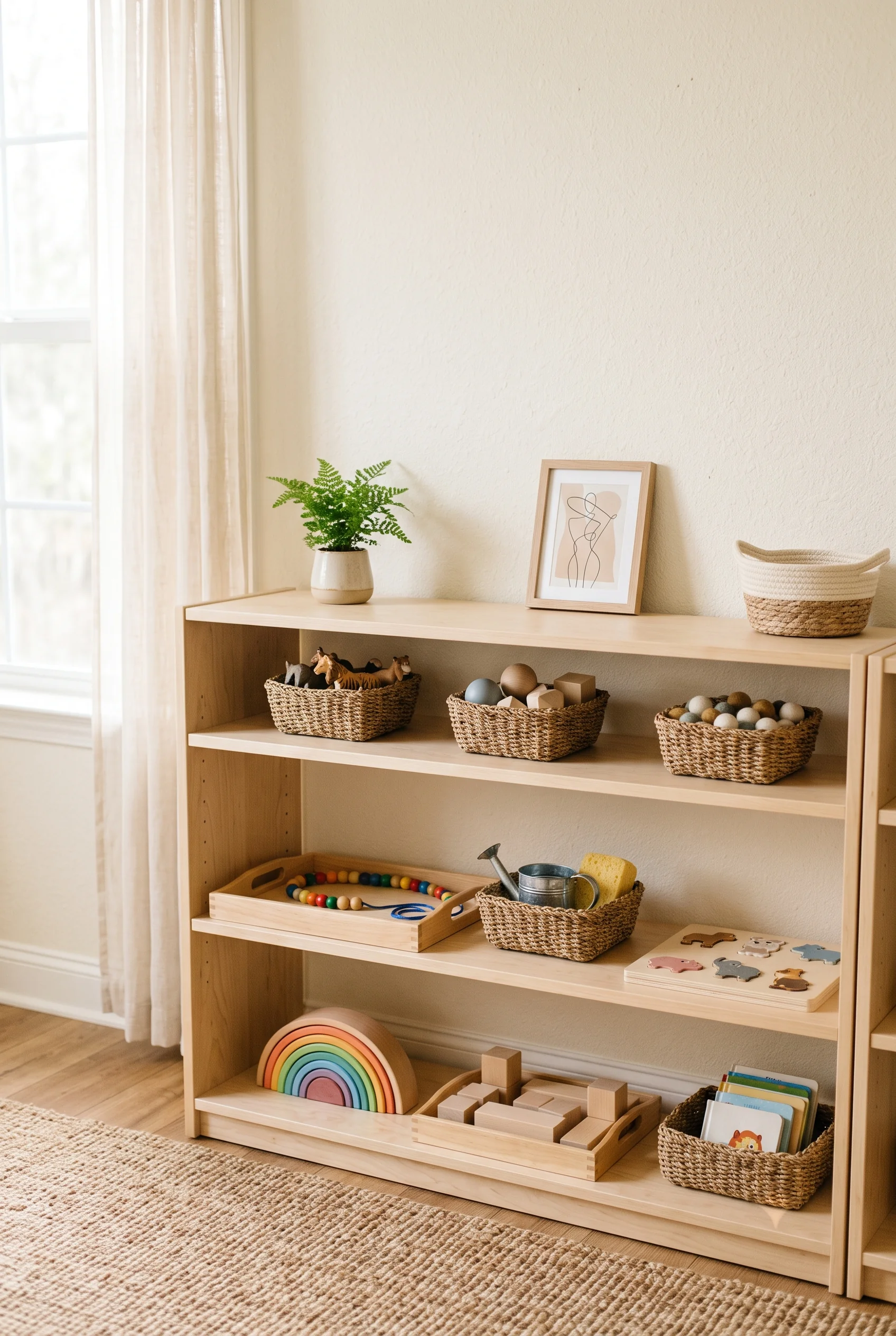
One basket should contain everything needed for one activity. That simple boundary makes selecting, carrying, and returning the work easier. Lightweight baskets with comfortable edges are especially helpful when small hands need to hold them with both hands.
Match the container closely to its contents. An oversized bin tends to collect unrelated pieces, while a shallow tray keeps each part visible. Repeating two or three finishes across the room brings visual consistency without requiring every container to match. Natural wood trays and soft woven baskets sit quietly beside the materials.
Shop this pick: Woven Activity Basket Set, A coordinated basket set keeps complete activities portable while giving open shelves a calm appearance.
Picture Labels at a Child’s Eye Level
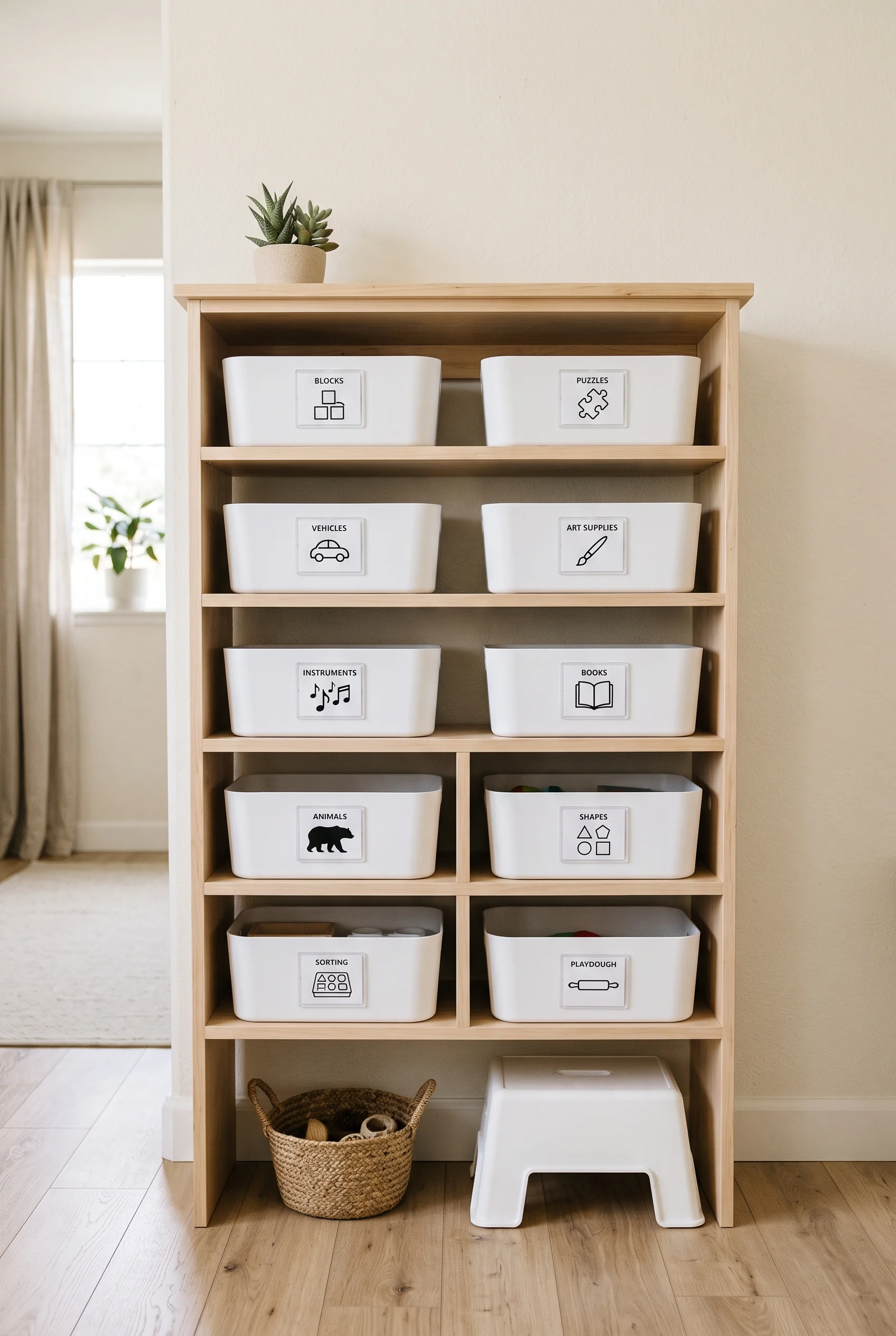
Picture labels clarify where materials belong before a child can read. Use a clear photograph or simple illustration on shelves, bins, and drawers. Place each label where the child naturally looks, not near the top of an adult-height cabinet.
Pairing the picture with a printed word adds gentle literacy exposure without turning cleanup into a lesson. Update the labels whenever the contents change. When the image accurately reflects what belongs inside, putting materials away becomes less of a guessing game and more of a familiar part of the work cycle.
Floor Mats That Hold the Work Together
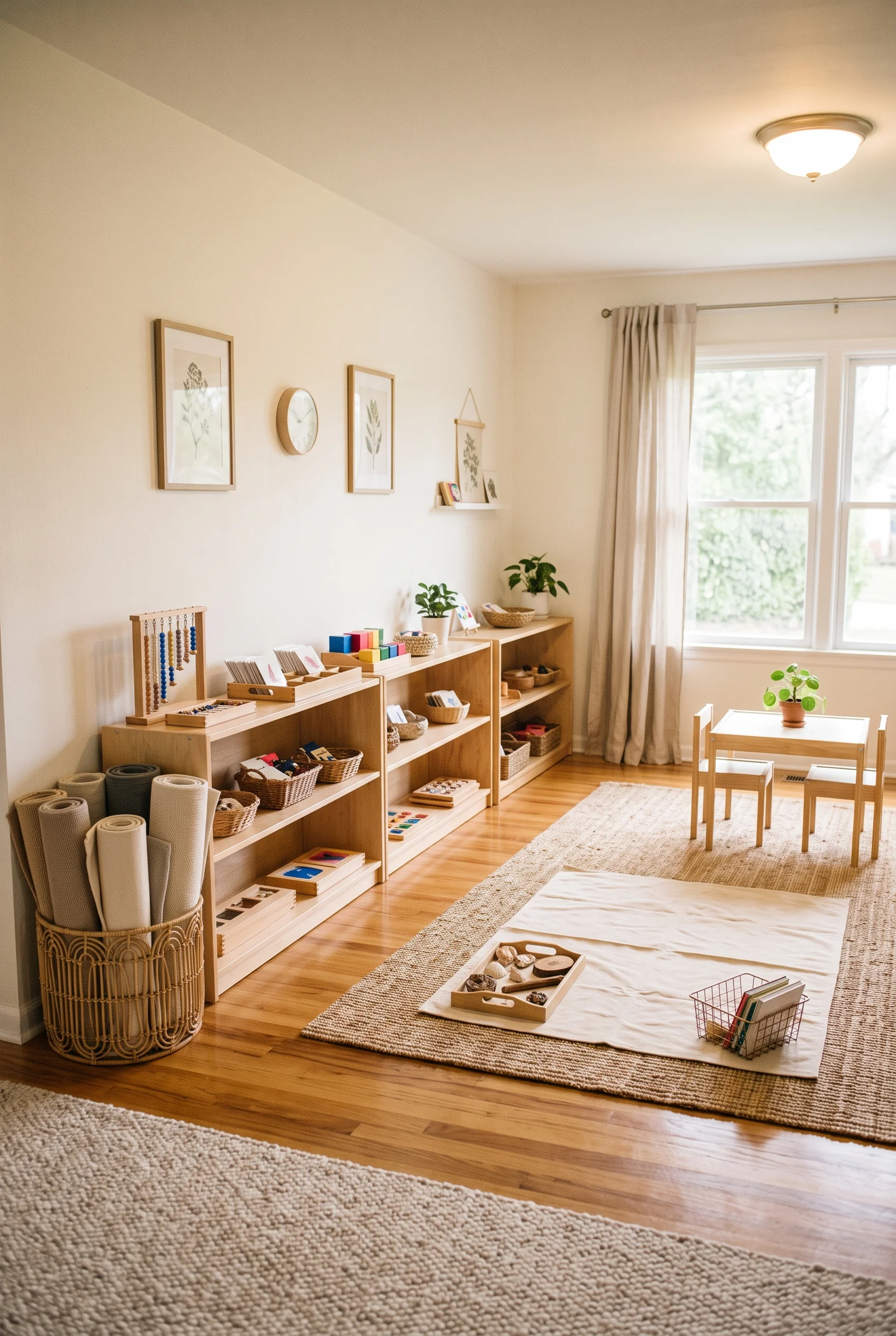
A work mat marks a clear boundary on an open floor. Puzzle pieces, counters, and matching cards remain contained, while other family members can move around the activity without disturbing it. Keep one or two rolled mats in a basket beside the shelves.
Practice carrying and unrolling the mat before introducing detailed work. A washable, low-pile style is easier for small hands to manage and simpler to maintain. When the activity is complete, the child can return the pieces, roll the mat, and restore the open floor.
Daily Care Within Comfortable Reach
Practical life belongs naturally inside a family home. Pouring, washing, dressing, and preparing food have a real purpose that children can see. Arrange these routines with accessible tools and modest portions so participation feels possible. A little water may spill, and a sock may take time, but those ordinary moments carry meaningful practice.
Practical Life Trays With a Beginning and End
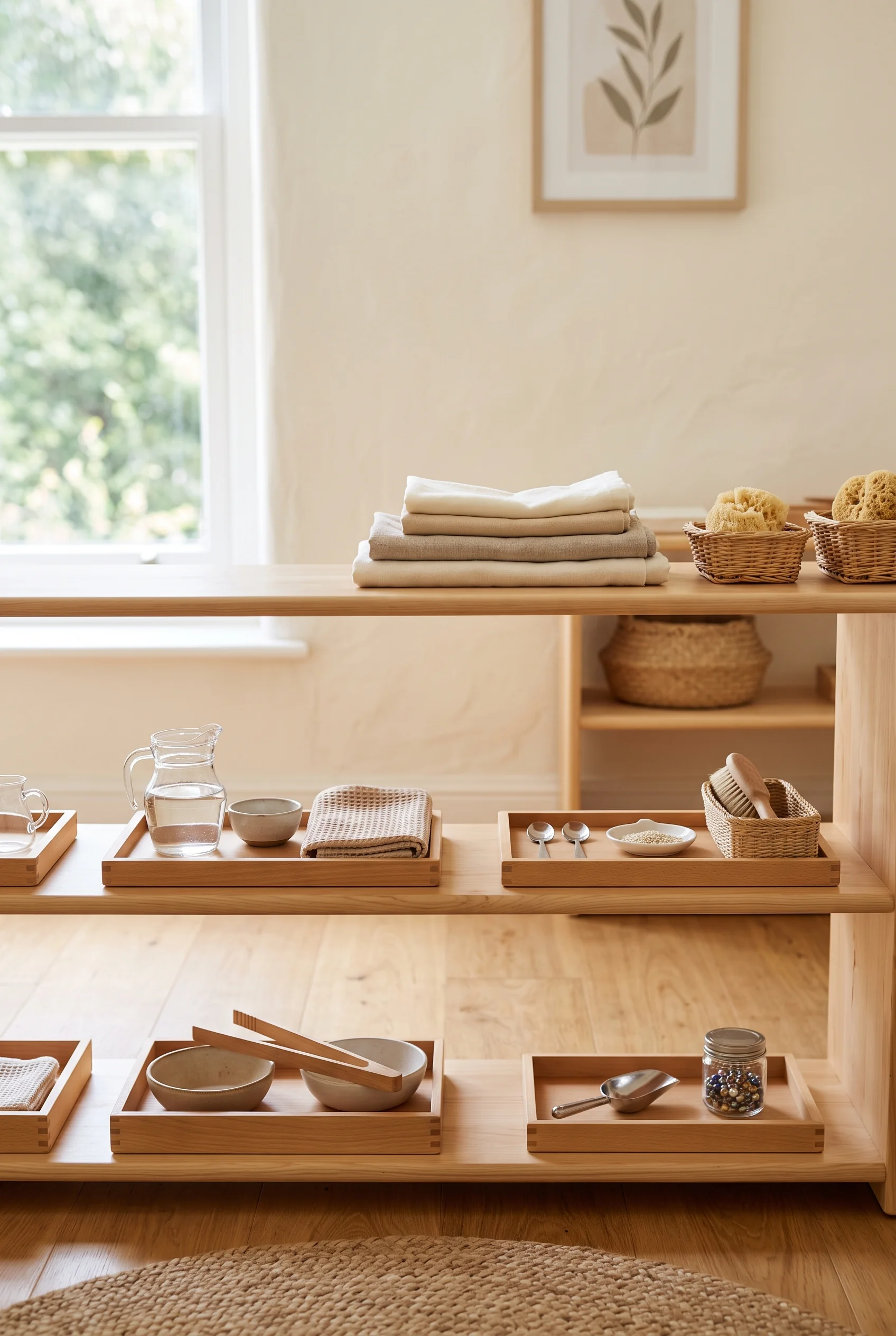
Pouring, spooning, transferring, and wiping become manageable when every tool sits together on one tray. Begin with a single activity and demonstrate it slowly. A child can then see where the work starts, how it progresses, and what to return.
Small pitchers and bowls may include carefully selected breakable materials when age and supervision make them appropriate. Their weight and sound encourage deliberate movement. Keep the arrangement spare, with a cloth included for spills. Practical life work feels satisfying because it resembles the useful routines children already watch adults complete.
A Snack Station for Everyday Participation
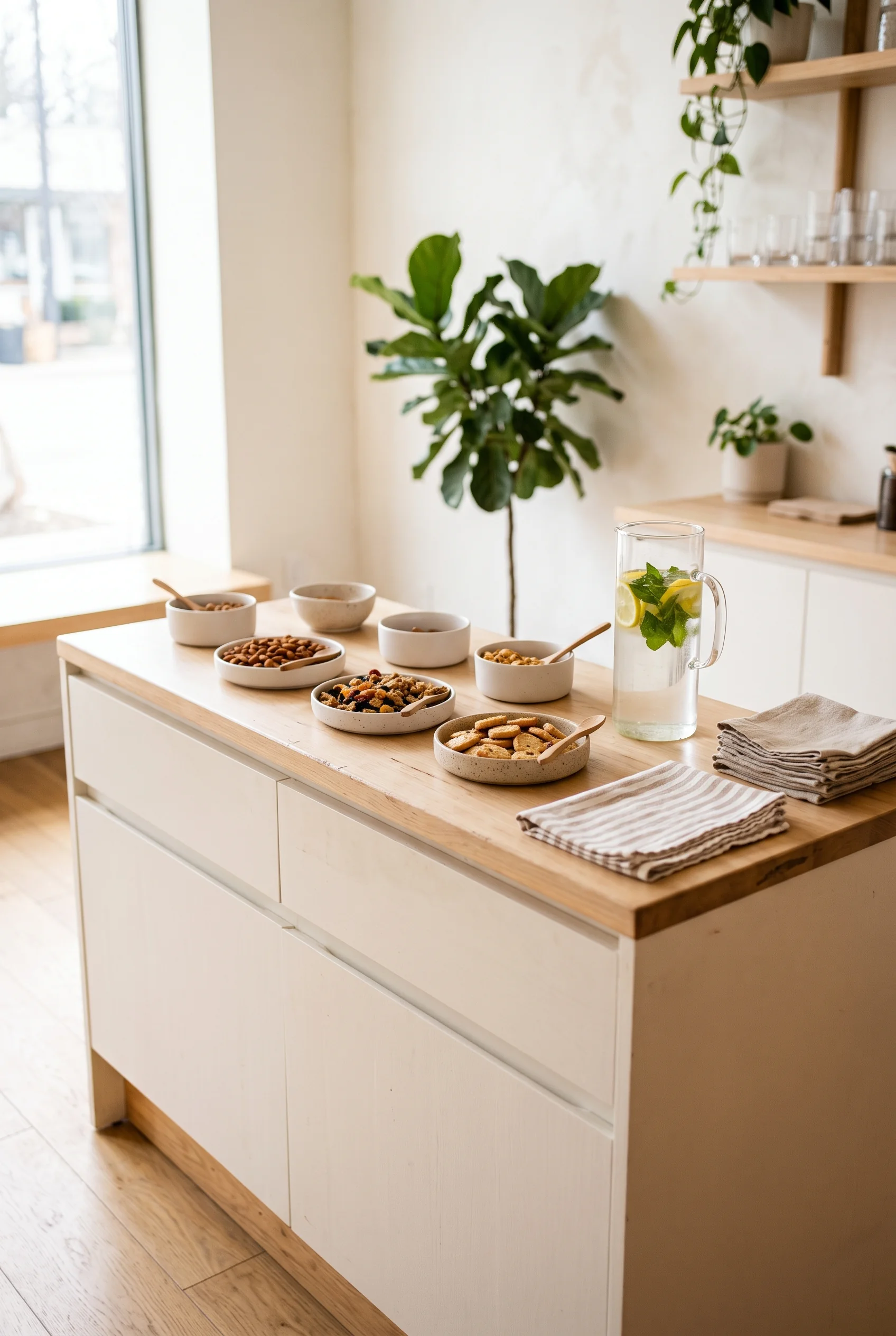
A low snack station lets a child manage a small, familiar routine. Offer a modest portion of food with a plate, cup, napkin, and child-sized utensils. A small pitcher can support supervised pouring when the child is ready.
Include a clear place for used dishes and keep a cloth nearby for spills. Food access should always reflect age, allergies, and household expectations. The station does not need to stay stocked all day. Even a prepared tray offered at a consistent time can support independence while keeping the routine comfortable for the whole family.
Shop this pick: Child-Sized Glass Pitcher, A small pitcher is the recognizable centerpiece of an independent snack routine and supports purposeful pouring practice.
Handwashing Tools Where Children Need Them
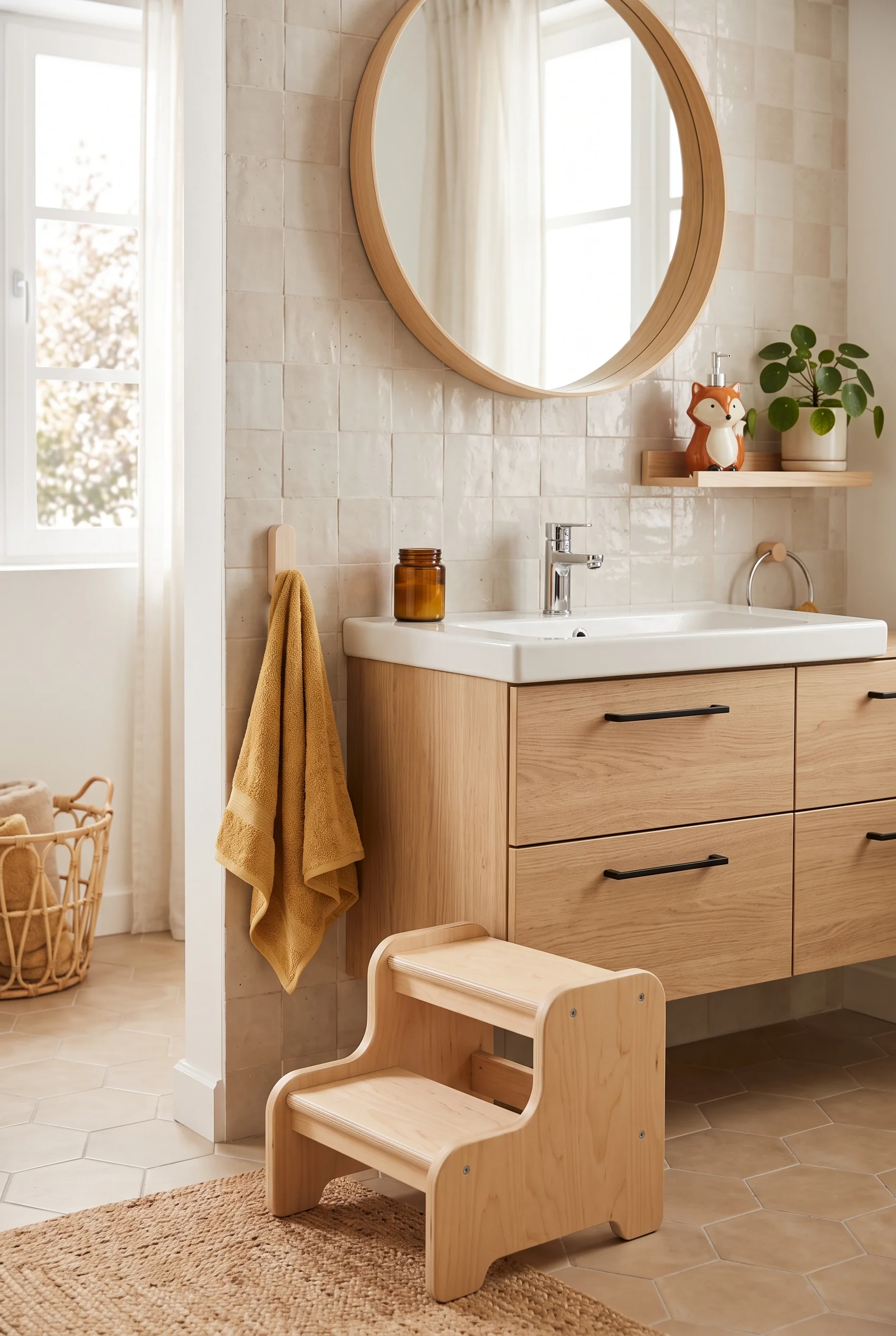
A secure step stool can make an existing sink more accessible without adding a separate washstand. Place soap and a towel within comfortable reach, then show the handwashing sequence slowly. Drying hands and wiping splashed water belong to the routine too.
Nonslip surfaces and close supervision keep water play safe. If the bathroom layout doesn’t suit a stool, a small, supervised water container may work in another area. The setup should be simple enough to reset quickly, with every essential item visible and easy to return.
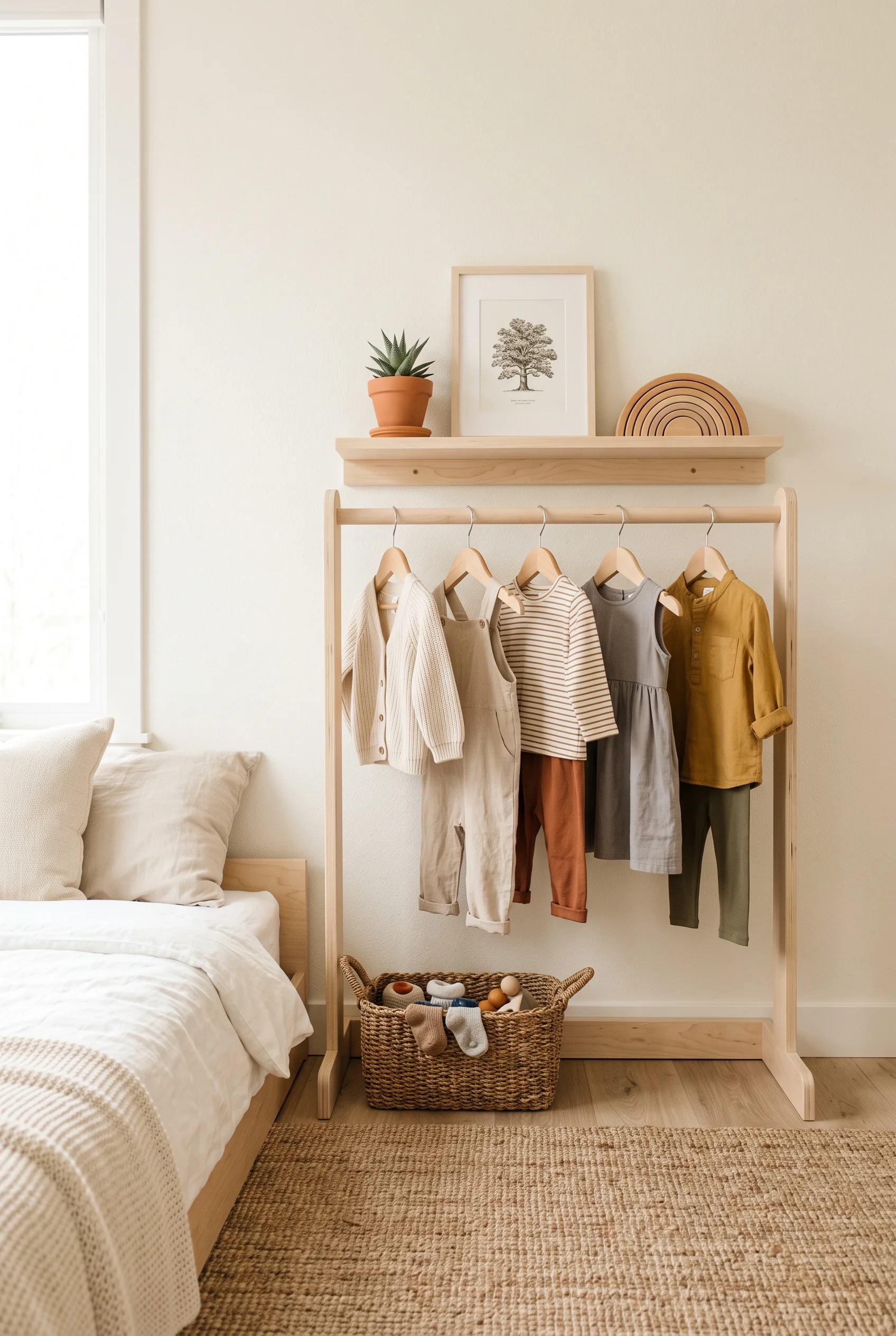
A Dressing Station With Manageable Choices
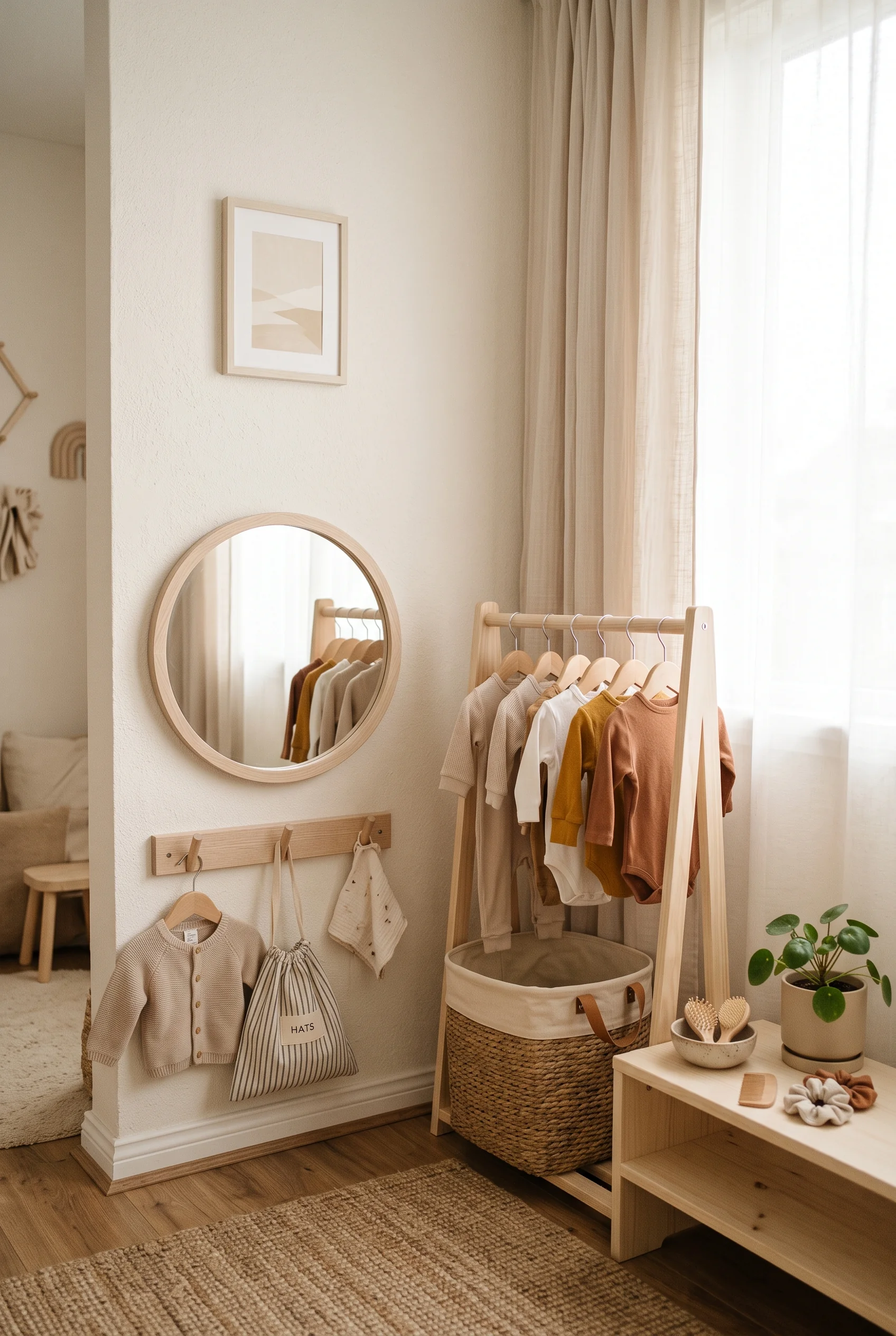
Low hooks or a short rail allow children to participate in choosing and caring for clothing. Offer only a few weather-appropriate options to keep decisions comfortable. A child-height mirror, brush, and small hamper can complete the area without filling it.
Focus on skills that are currently within reach, such as pulling on socks or fastening a simple closure. Progress may look slow from an adult perspective, but extra time is part of the practice. A calm station with neatly spaced items makes the routine feel approachable at the beginning and end of the day.
Family Rhythms That Make Room for Participation
A Montessori approach extends beyond shelves and materials. Children also need time to concentrate, room to move, and a clear role in everyday transitions. Predictable cues can hold the day together without making it rigid. These ideas connect focused learning with the practical rhythm of arriving home, preparing food, and caring for shared spaces.
A Work Cycle With Time to Settle In
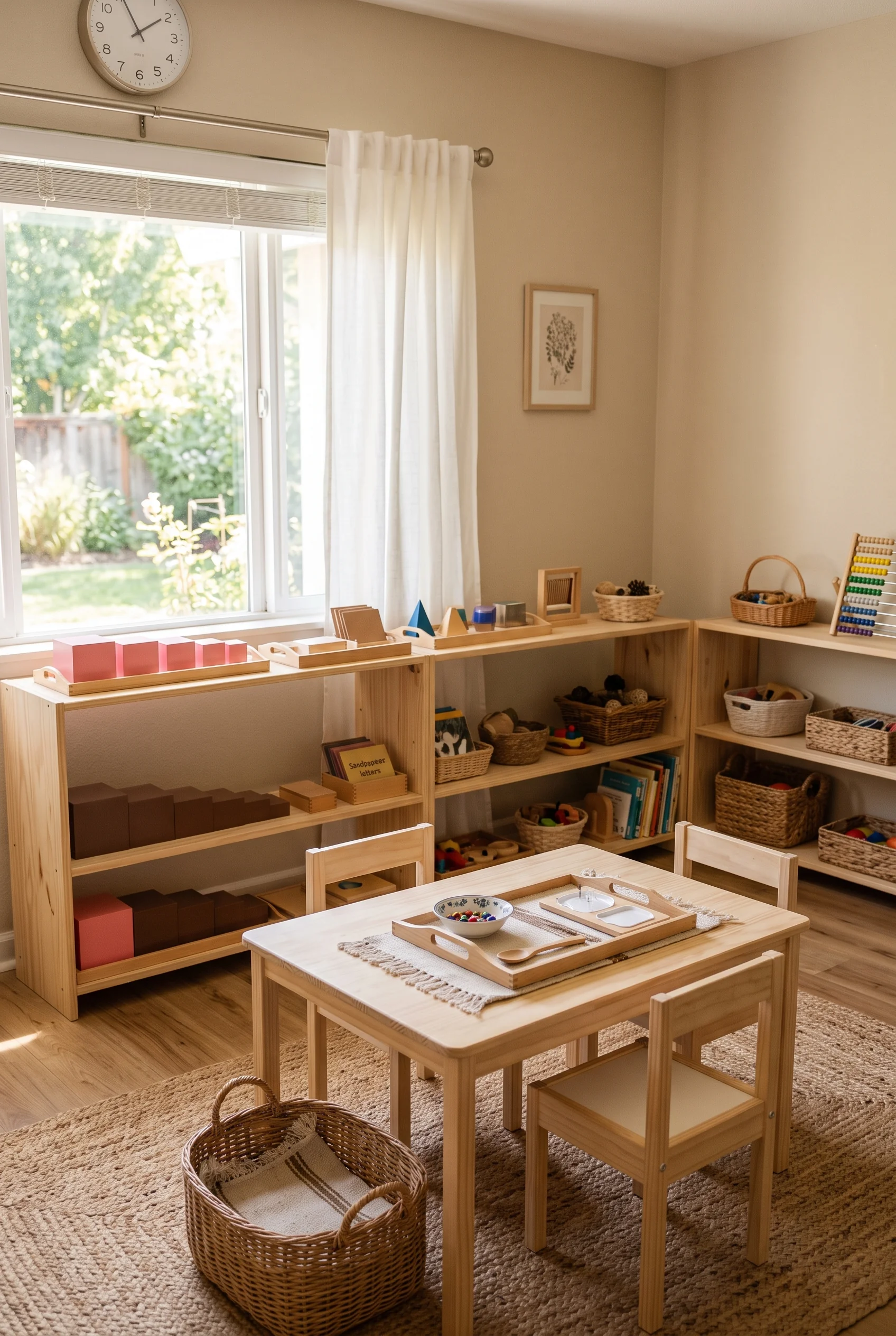
Concentration often arrives after a child has had time to look, choose, and begin. Set aside an uninterrupted period that fits the child’s age and your family schedule. A shorter block that happens consistently is more useful than an ambitious routine that rarely works.
Familiar opening and cleanup cues help define the work cycle without constant verbal reminders. Stay nearby for calm guidance, but reduce unnecessary interruptions once an activity is underway. The room becomes quieter as everyone learns the rhythm of selecting work, completing it, and returning it before moving on.
Open Floor Space for Big Movement
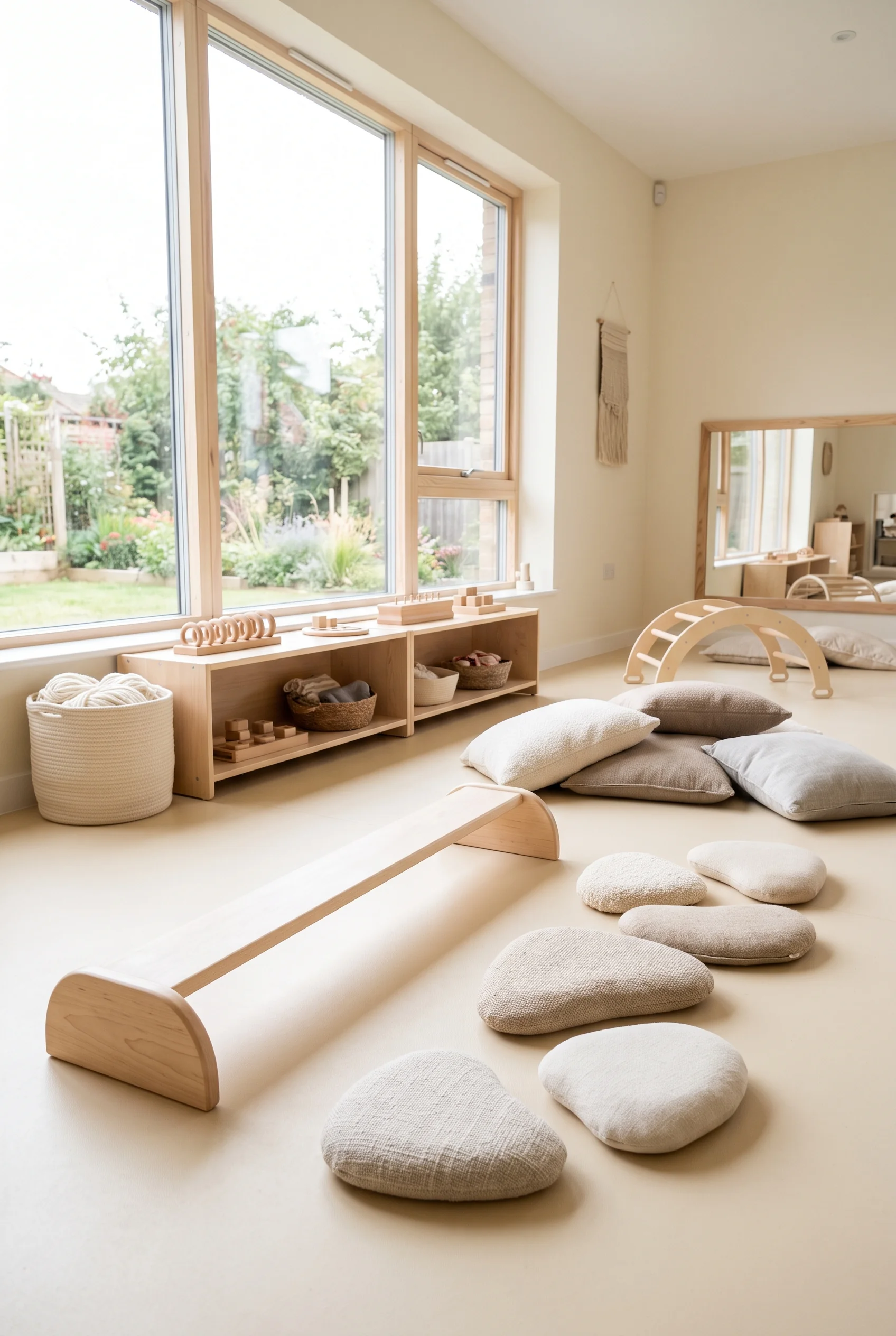
Children need room to stretch, balance, dance, and carry objects with care. A clear patch of floor can support these movements without requiring permanent equipment. Movement cards or stepping stones may be brought out, then stored when focused work begins.
If space allows, a low balance beam or secure climbing piece can offer a defined physical challenge. Match every element to the child’s age and coordination, with clear safety expectations. Open floor remains the most valuable feature because it can shift easily between energetic movement and quieter Montessori activities.
Shop this pick: Wood Toddler Balance Beam, A low balance beam offers a clear gross motor challenge without requiring a large permanent play structure.
An Entryway That Supports the Daily Transition
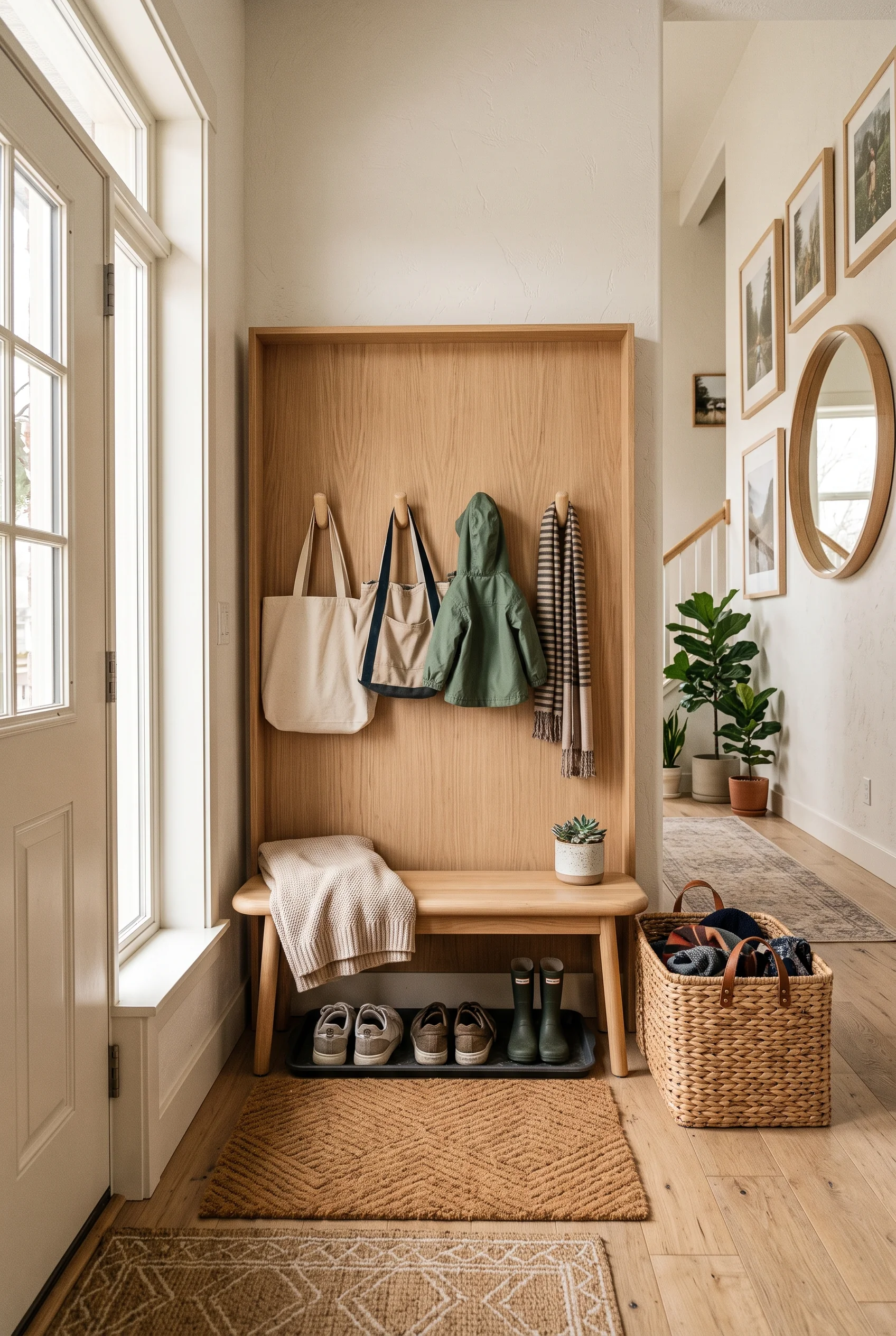
Low hooks give coats, hats, and backpacks a clear landing spot. A small bench supports independent shoe changes, while a tray keeps footwear from drifting into the walkway. Limit the arrangement to items currently in use.
The entryway works best when the sequence is visible and consistent. Shoes come off, the coat goes on a hook, and the bag returns to its place. Children can participate in arrivals and departures without searching through a crowded closet. The area stays practical for adults while offering a child-sized routine within a shared family zone.
Kitchen Work With a Real Family Purpose
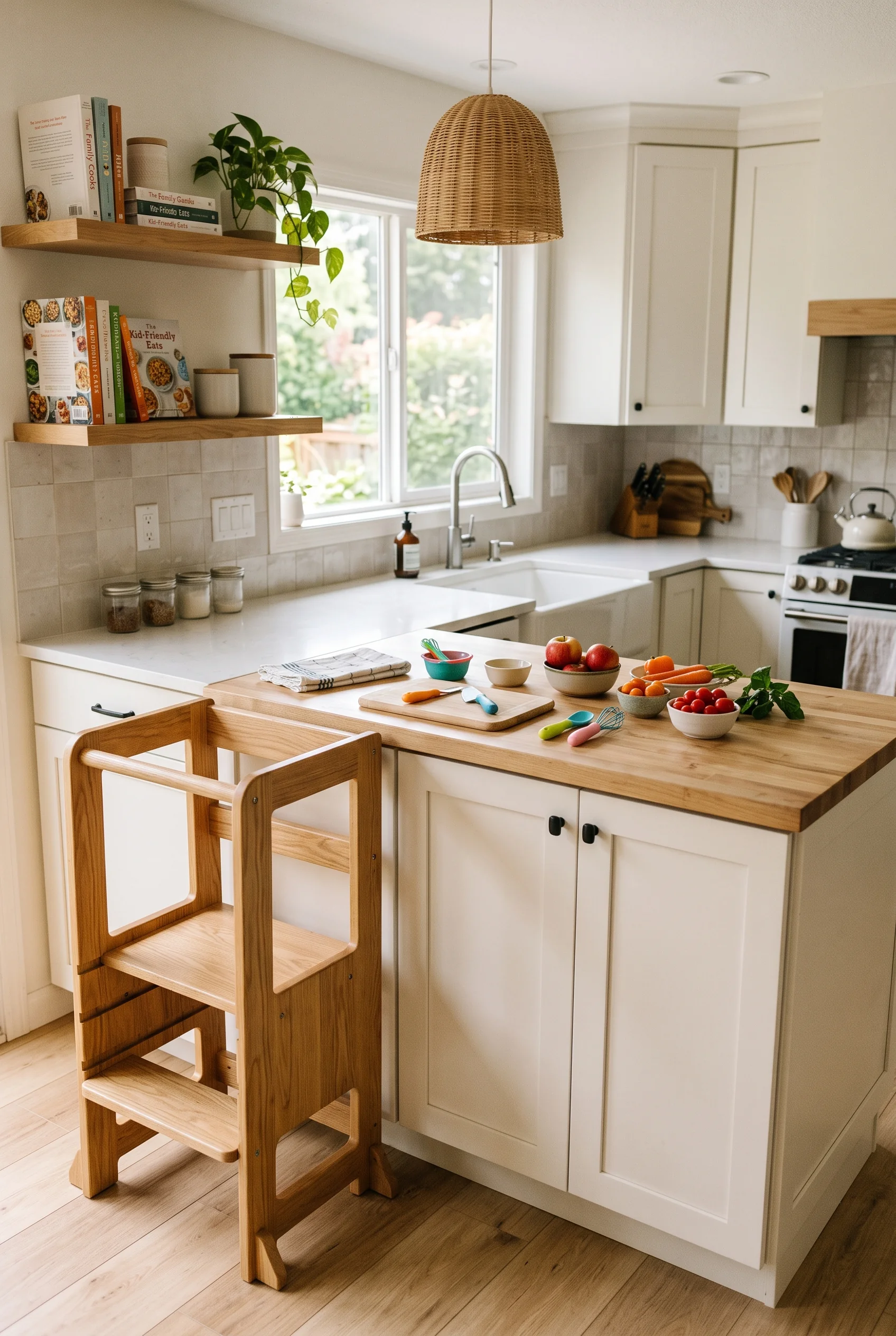
The kitchen offers countless simple Montessori activities for home. Children can wash produce, stir ingredients, set napkins, or wipe a counter. A low drawer containing a few child-safe tools makes participation easier when a suitable task appears.
A stable learning tower or secure stool may provide supervised counter access. Break the task into clear steps and allow more time than an adult would need. A sliced banana or slightly damp counter is not the important outcome. The meaningful part is contributing to work that the family genuinely needs.
Montessori at Home in the Space You Have
A dedicated classroom is lovely, but it is not essential. Bedrooms, living rooms, and narrow corners can support meaningful work when the boundaries are clear. Compact furniture and concealed backup storage protect the character of the surrounding room. This final group centers on Montessori learning space ideas for small homes and realistic budgets.
A Bedroom Learning Zone That Still Feels Restful
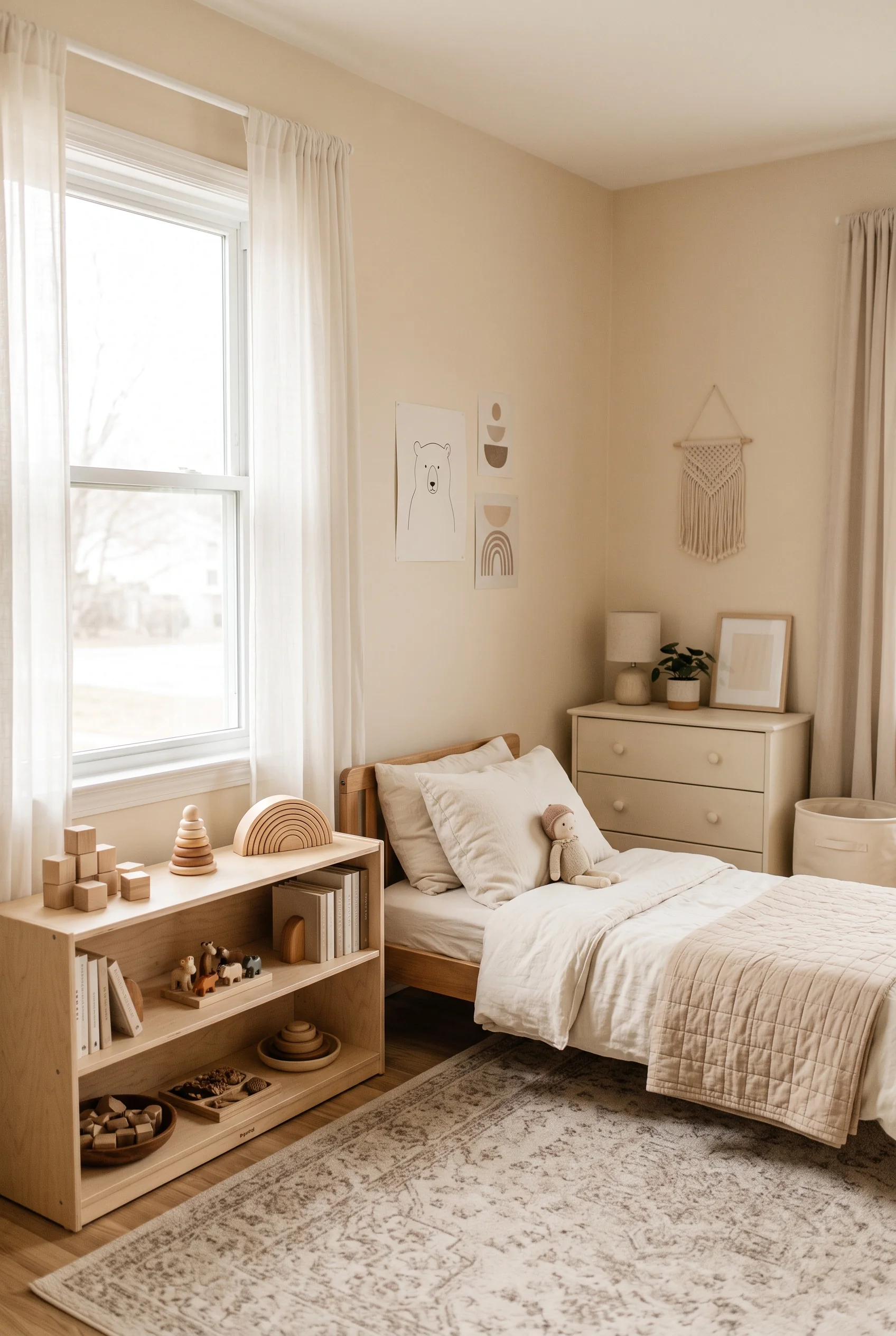
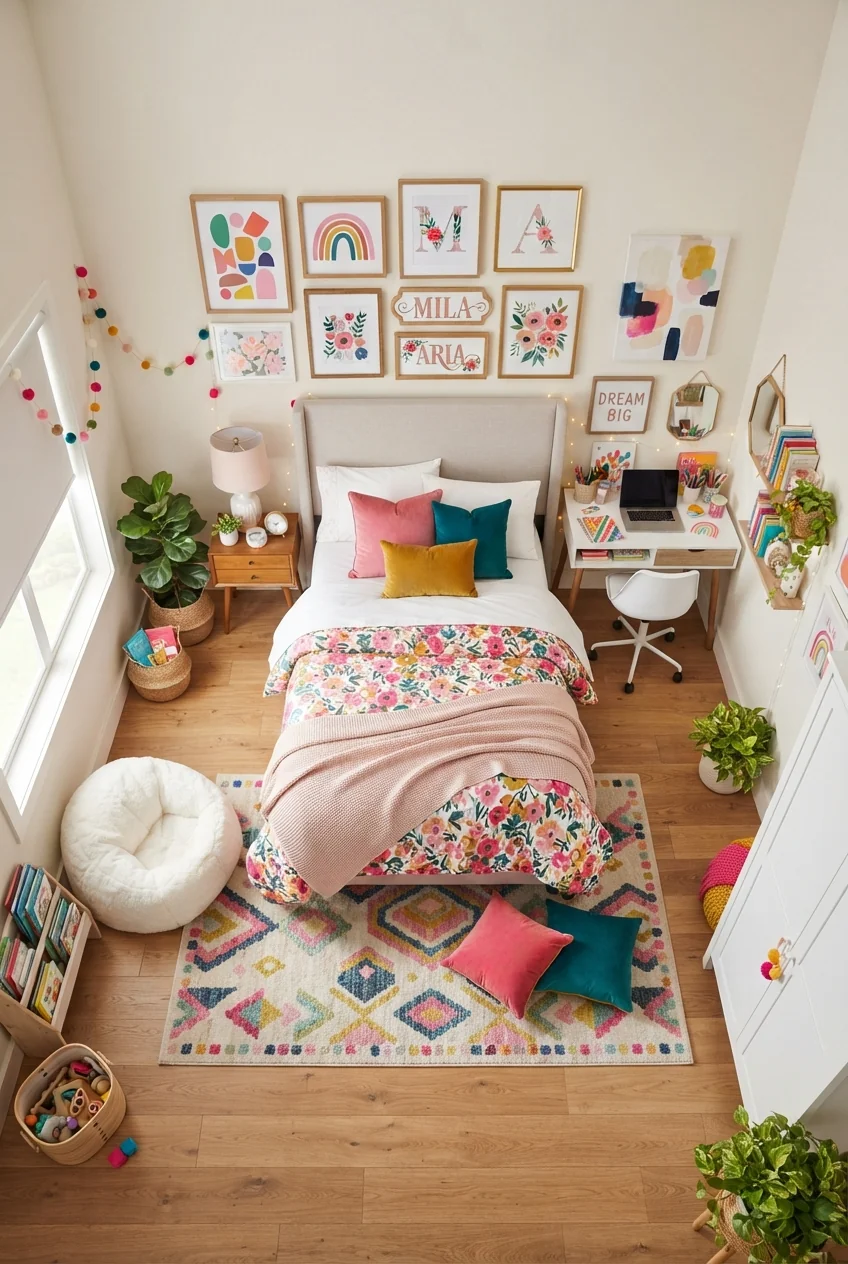
One low shelf can establish a Montessori learning zone without turning the bedroom into a busy classroom. Select quiet work such as matching cards, drawing materials, or a simple puzzle. Keep the shelf away from the bed when space allows.
Put extra activities in closed storage so the room feels settled at bedtime. A compact cart may replace a fixed shelf when flexibility matters. The aim is a visible boundary between active work and rest, even if both happen within a small footprint. Soft colors and a limited rotation protect the bedroom’s calmer mood.
A Living Room Corner for Shared Family Life
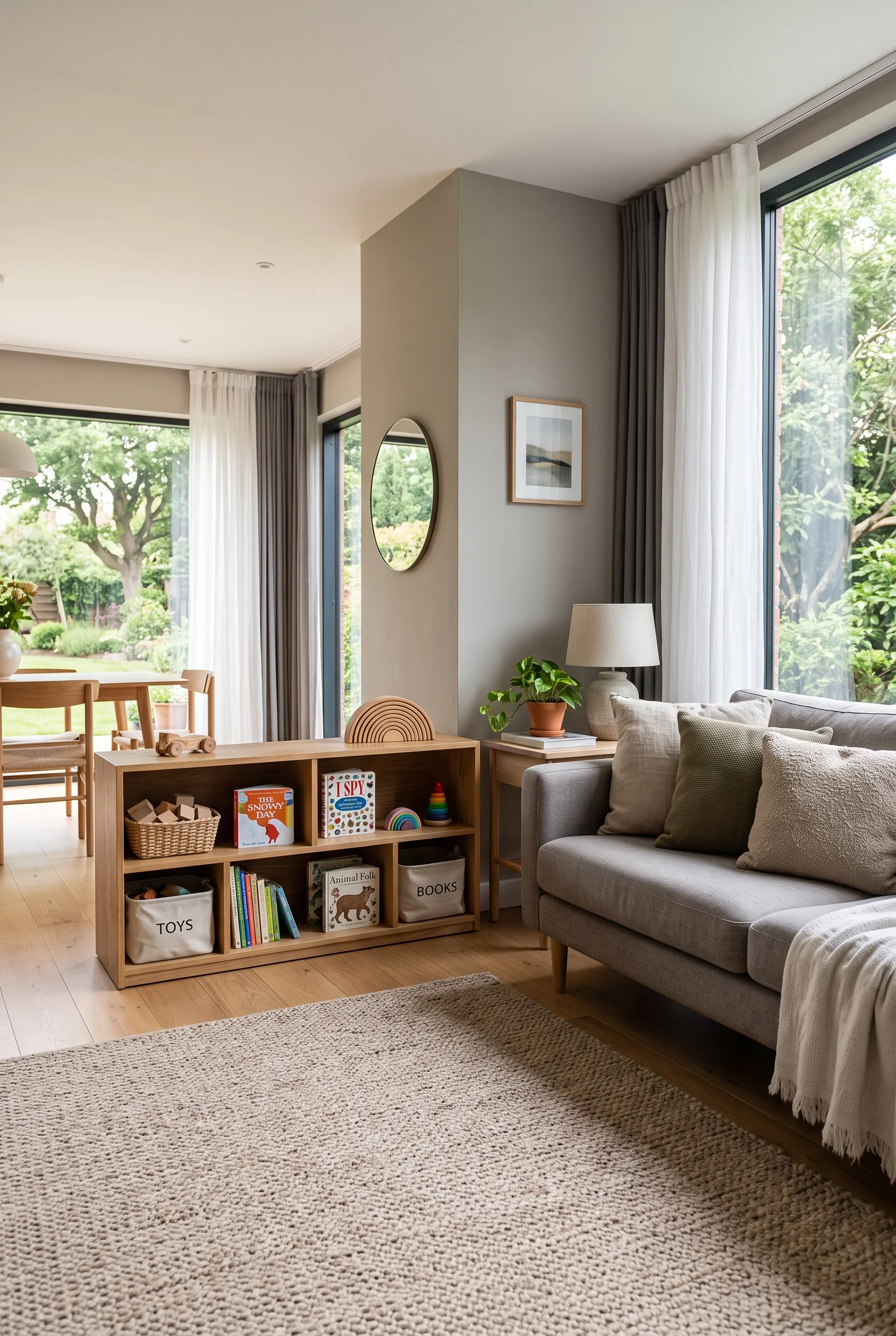
A discreet low shelf can make Montessori at home possible in the room where family life already happens. Select storage that relates to the surrounding furniture, then reserve one cabinet section or corner for a small rotation of activities.
A nearby rug defines where the materials may be used without physically dividing the room. Reset the corner together each evening so the living room remains comfortable for everyone. The child still has dependable access to meaningful work, while adults keep a shared space that feels considered rather than overtaken by learning supplies.
Small-Space Montessori Classroom Ideas
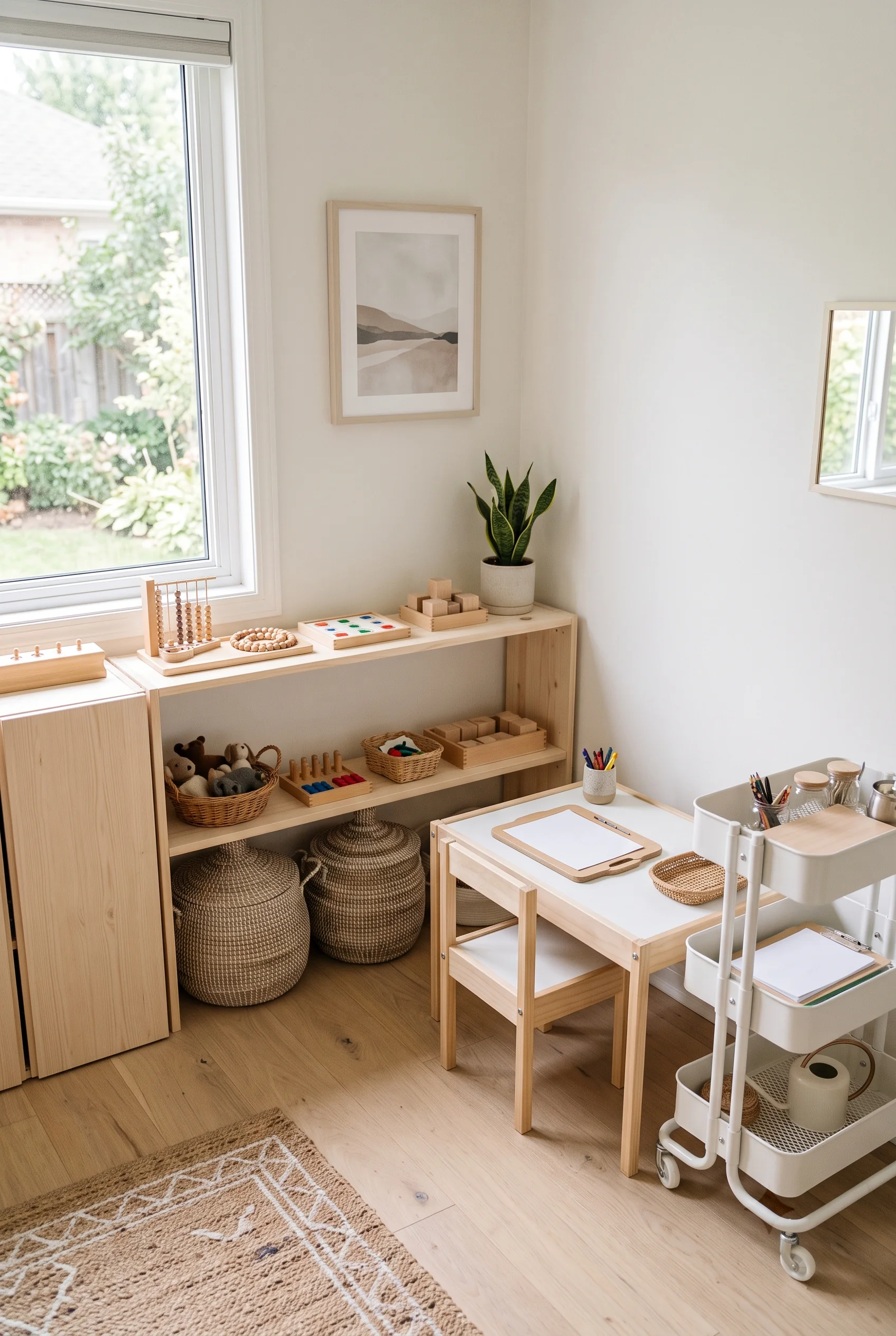
Creating a Montessori classroom at home often comes down to choosing one clear zone. A narrow shelf, rolling cart, or compact table may be enough. Wall hooks and under-bed containers can hold overflow without using valuable floor space.
Select activities that support several skills and rotate them consistently. Avoid filling every wall simply because storage is available. Open floor makes a compact room feel easier to use and gives children space to carry materials safely. A small Montessori homeschool room can function beautifully when each piece earns its place.
Shop this pick: Narrow Low Montessori Shelf, A slim shelf provides accessible activity storage while preserving precious floor space in a compact home.
A Thoughtful Setup Built on a Real Budget
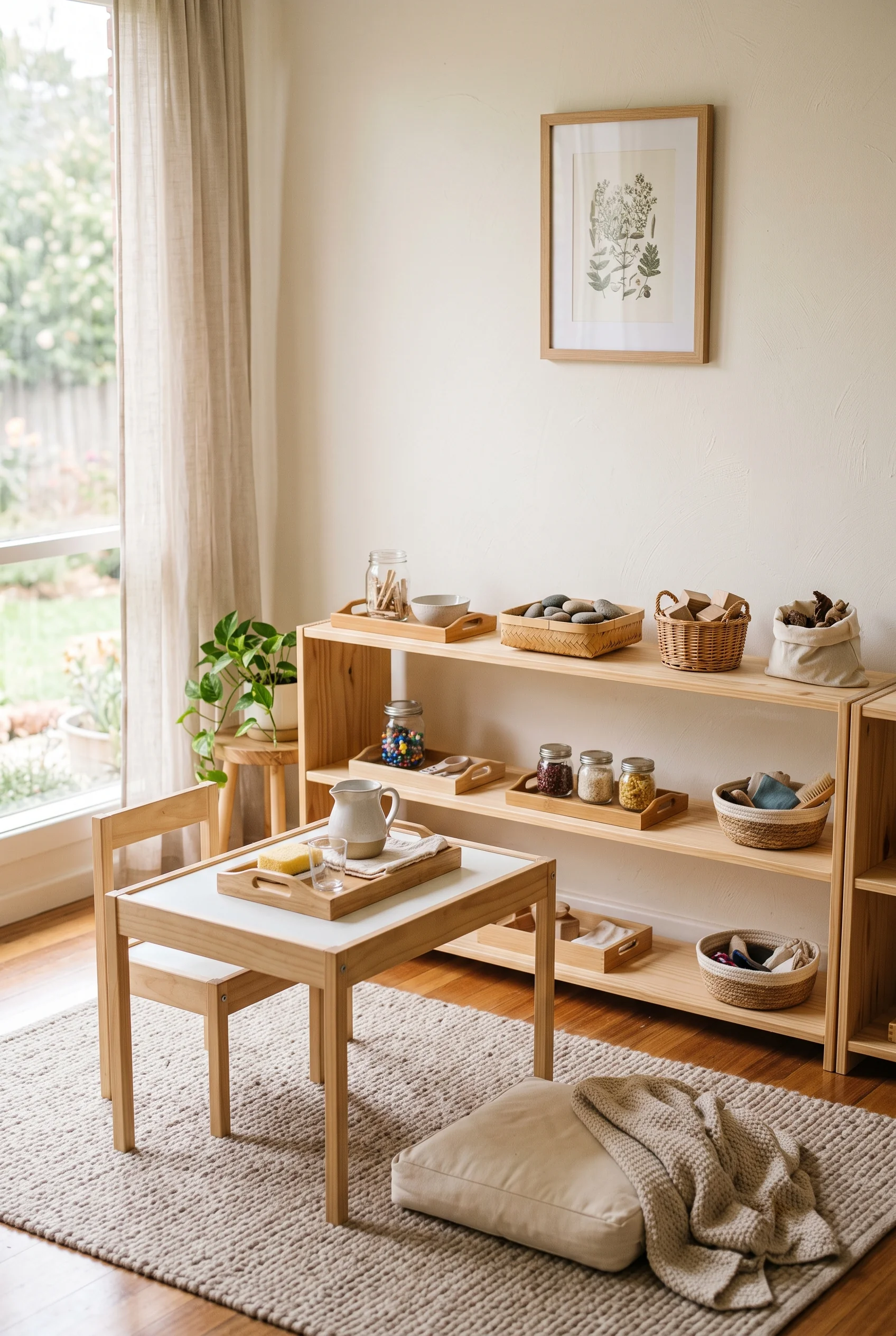
A budget-friendly Montessori classroom setup can begin with objects already in the home. Small bowls, cloths, kitchen tools, and sturdy containers often become practical activities with very little preparation. Existing furniture may only need rearranging so materials sit within reach.
Start with safety, secure shelving, and durable pieces that can support several developmental stages. Specialty products can wait until observation reveals a genuine need. Add one purposeful item at a time to give the room space to evolve with the child. The finished setup feels personal because it grew from family routines, not a shopping list.
A Learning Space That Grows With Your Child
A meaningful Montessori environment isn’t measured by square footage or the number of materials on display. It is shaped by how comfortably a child can participate. A reachable towel, a clearly labeled basket, or an open patch of floor may support more independence than an elaborate room filled all at once.
Start with one idea that addresses a real moment in your day. A low shelf might reduce frustration during play. A snack station could give your child a useful role in the afternoon routine. A peaceful reading corner may offer a welcome pause when the rest of the house feels busy.
After making that change, observe before adding more. Notice what your child reaches for, what remains confusing, and which routines begin to happen with less help. Those details will guide the next adjustment more reliably than a perfectly styled reference photo.
These Montessori classroom ideas are meant to be adapted, not copied exactly. Keep the elements that suit your child, your home, and your current season. A calm learning space grows slowly through thoughtful choices, daily use, and small changes that help family life feel more capable and connected.