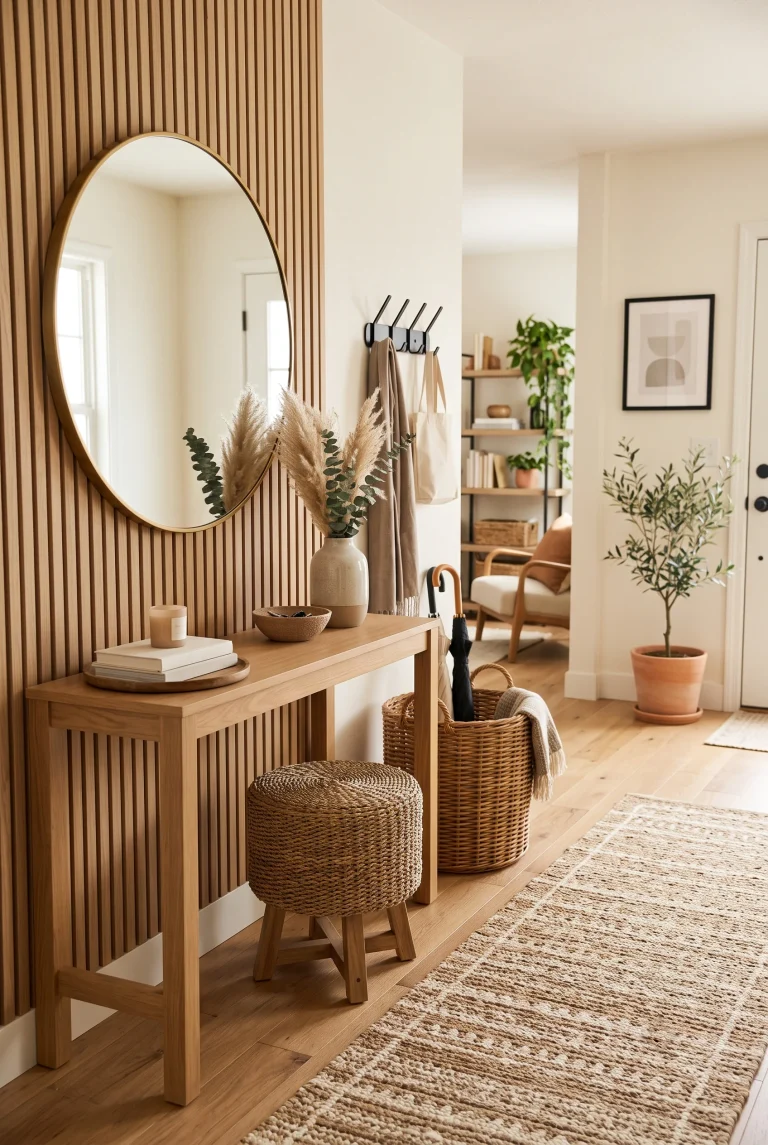
238 – 19 Small Entryway Shoe Storage Ideas That Save Precious Space
Small entryway shoe storage is one of those problems you notice every single time you walk through the door. Sneakers pile up by the mat, boots land in the walkway, and that’s the first thing anyone sees when they step inside. As a mom, I know how fast a few pairs per person turns into a full obstacle course.
The good news? A small entry doesn’t need more square footage. It needs smarter decisions about where shoes actually go.
The best setups use walls, doors, and seating so the floor stays open. Once that clicks, the rest of the house feels calmer too, which is the same idea behind these home organization ideas for every room.
You’ll find 19 small entryway shoe storage ideas sorted by how they save space. They start with vertical storage and seating that hides shoes, then move on to closed cabinets and slim hallway pieces. The last group is open shelving pretty enough to leave out.
Some cost less than takeout. Others are small investments that pay you back every morning. Pick the one that fits your door and your family’s habits, and start there. If you love a warm, natural look, many of these pair beautifully with modern organic decor ideas.
This post contains affiliate links, which means I may earn a small commission if you purchase through my links, at no extra cost to you. I only recommend products I genuinely love and think you will too!
Walls and Doors That Do the Heavy Lifting
When floor space runs out, the walls are still wide open. Doors, empty stretches of drywall, and the gap between baseboard and ceiling hold more shoes than most people expect. The trick is keeping vertical storage light enough that the entry still feels airy, so the space doesn’t shrink visually. This is the same thinking that rescues a small kitchen without a pantry: once you stop fighting for floor space, every wall starts pulling its weight.
Small Entryway Shoe Storage That Lives on the Back of the Door
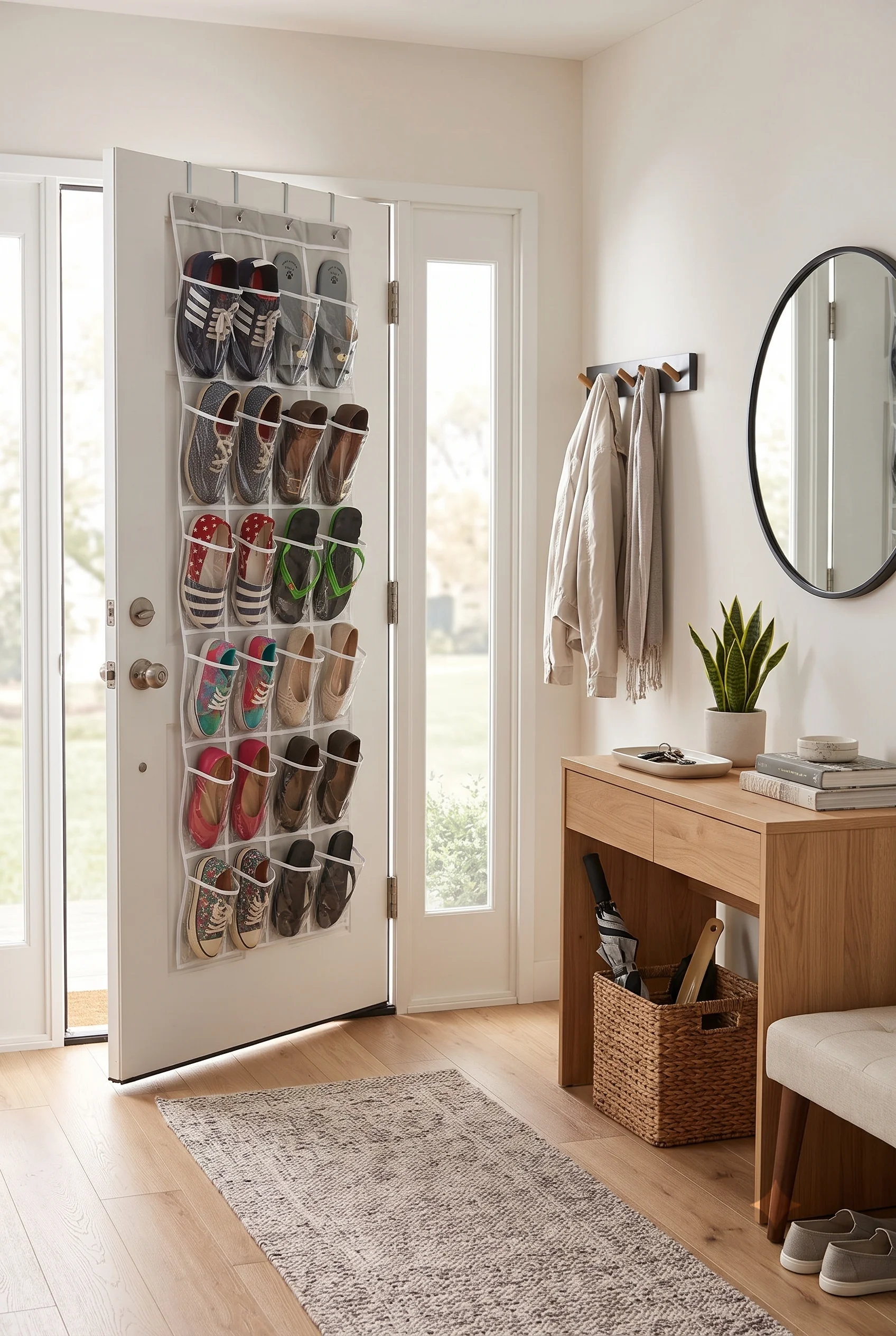
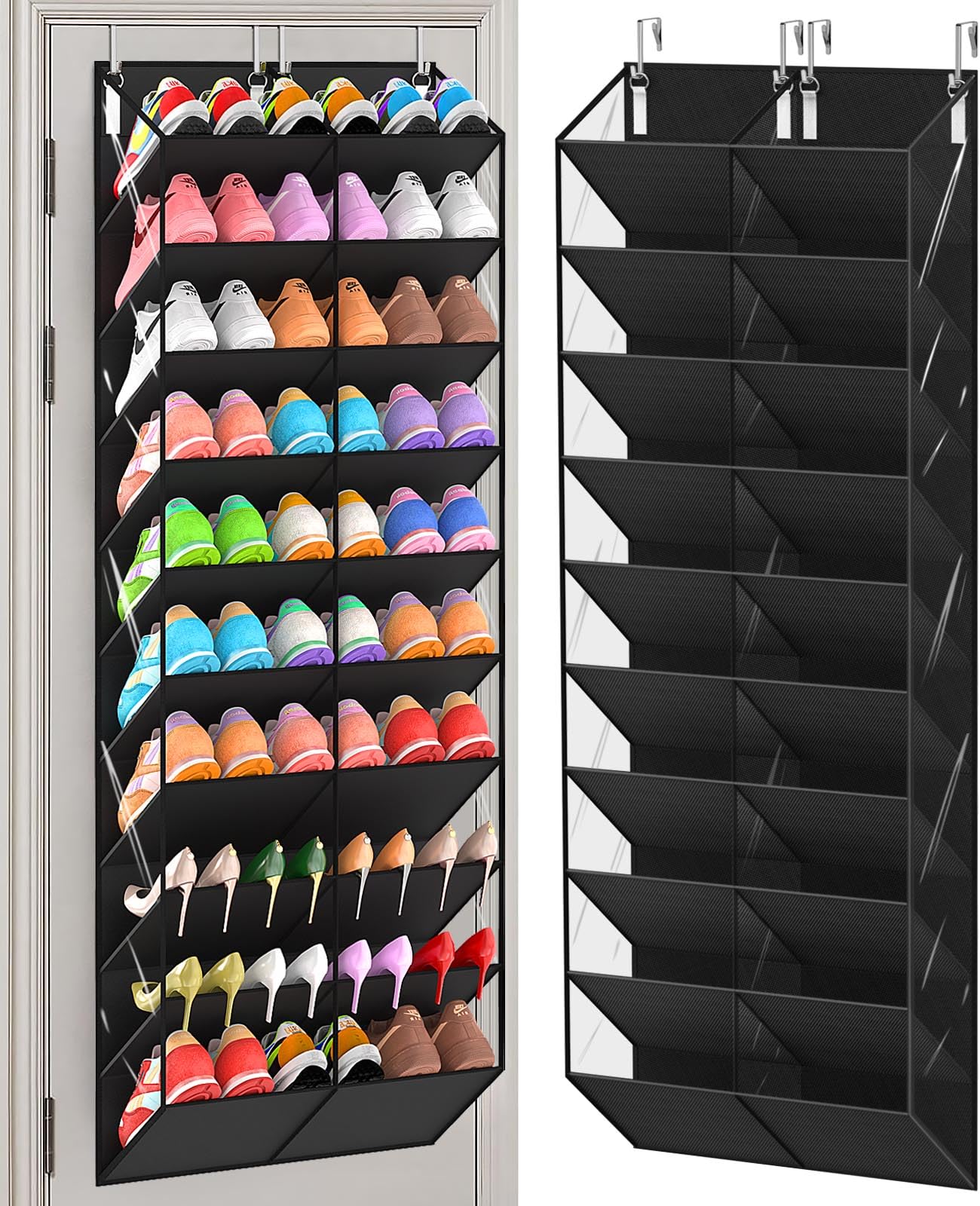
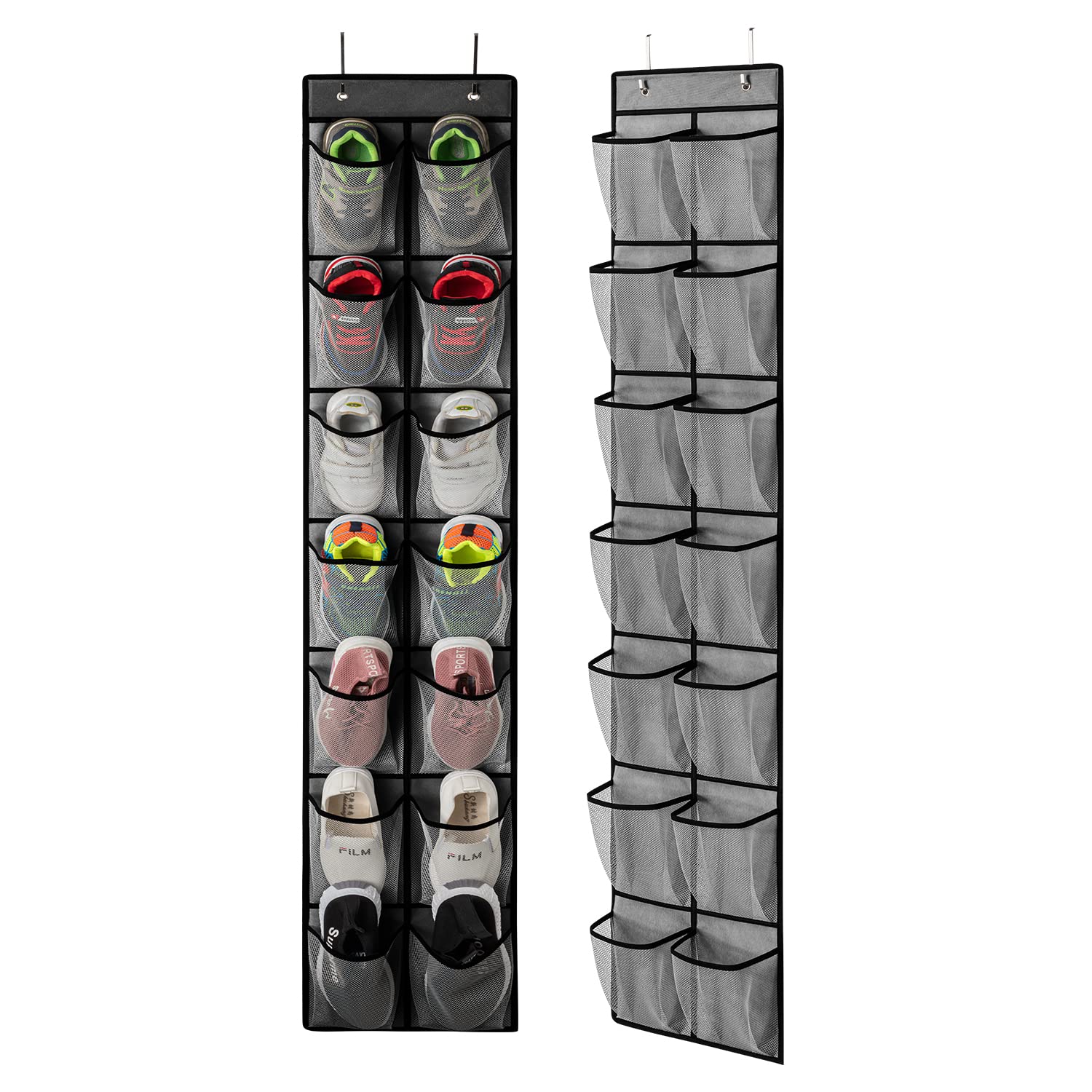
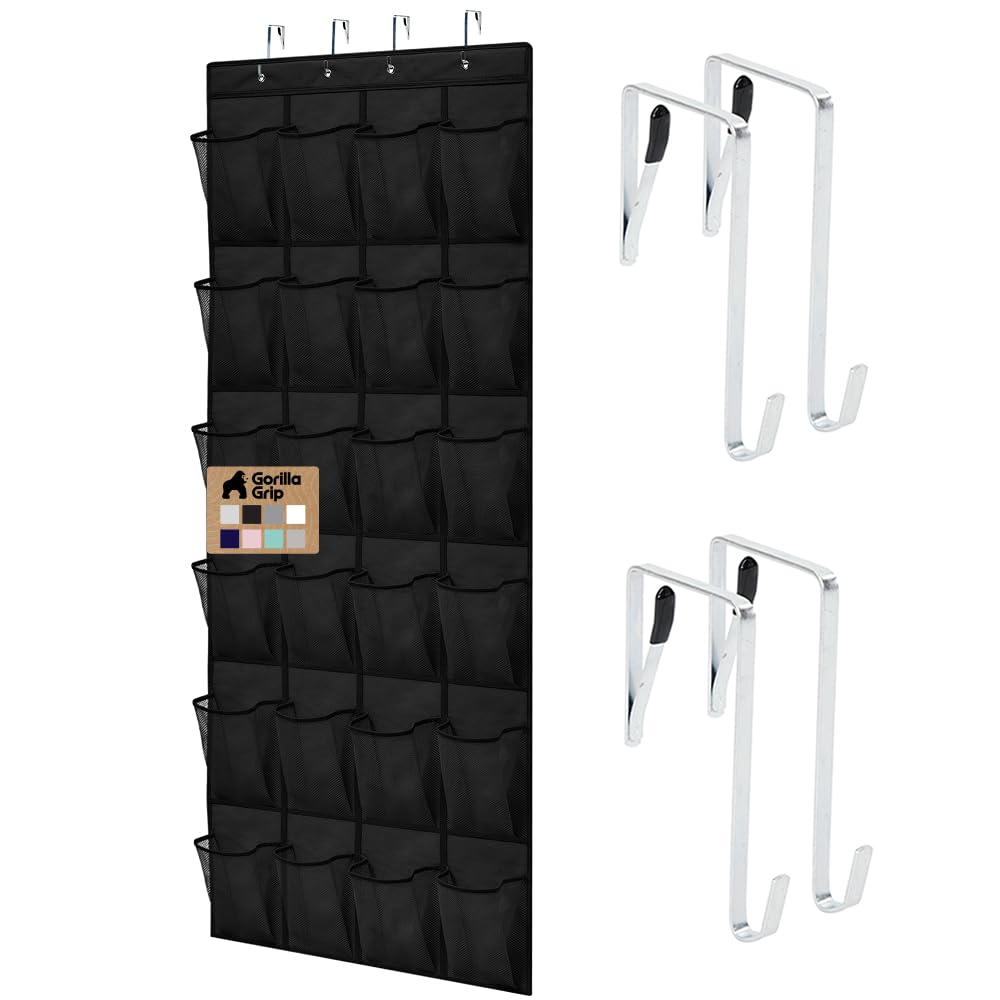
The back of the front door is the most overlooked storage wall in the house. A pocket organizer hangs on simple hooks above, holds two dozen pairs, and takes up zero floor space. For apartments and rentals, it’s hard to beat.
Clear or mesh pockets matter more than you’d think. You can spot the right sneakers at a glance, and air moves through so shoes don’t trap odors.
Test the fit before loading it up. Thick hooks can rub against the frame, so a quick trial hang saves a scuffed finish. Flats, sandals, and kids’ sneakers fit best, while chunky boots belong somewhere sturdier.


A Leaning Ladder That Asks Almost Nothing of the Floor
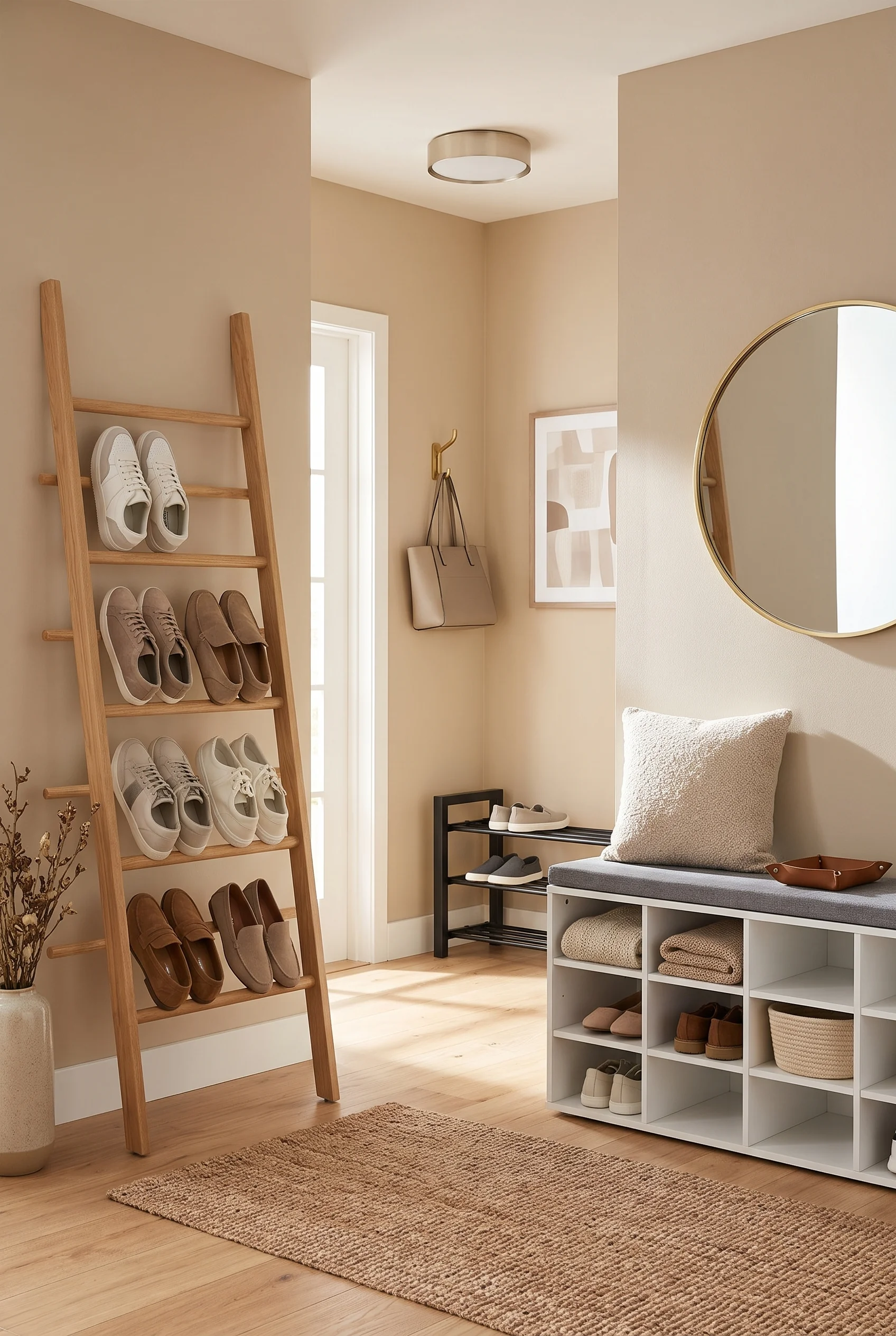
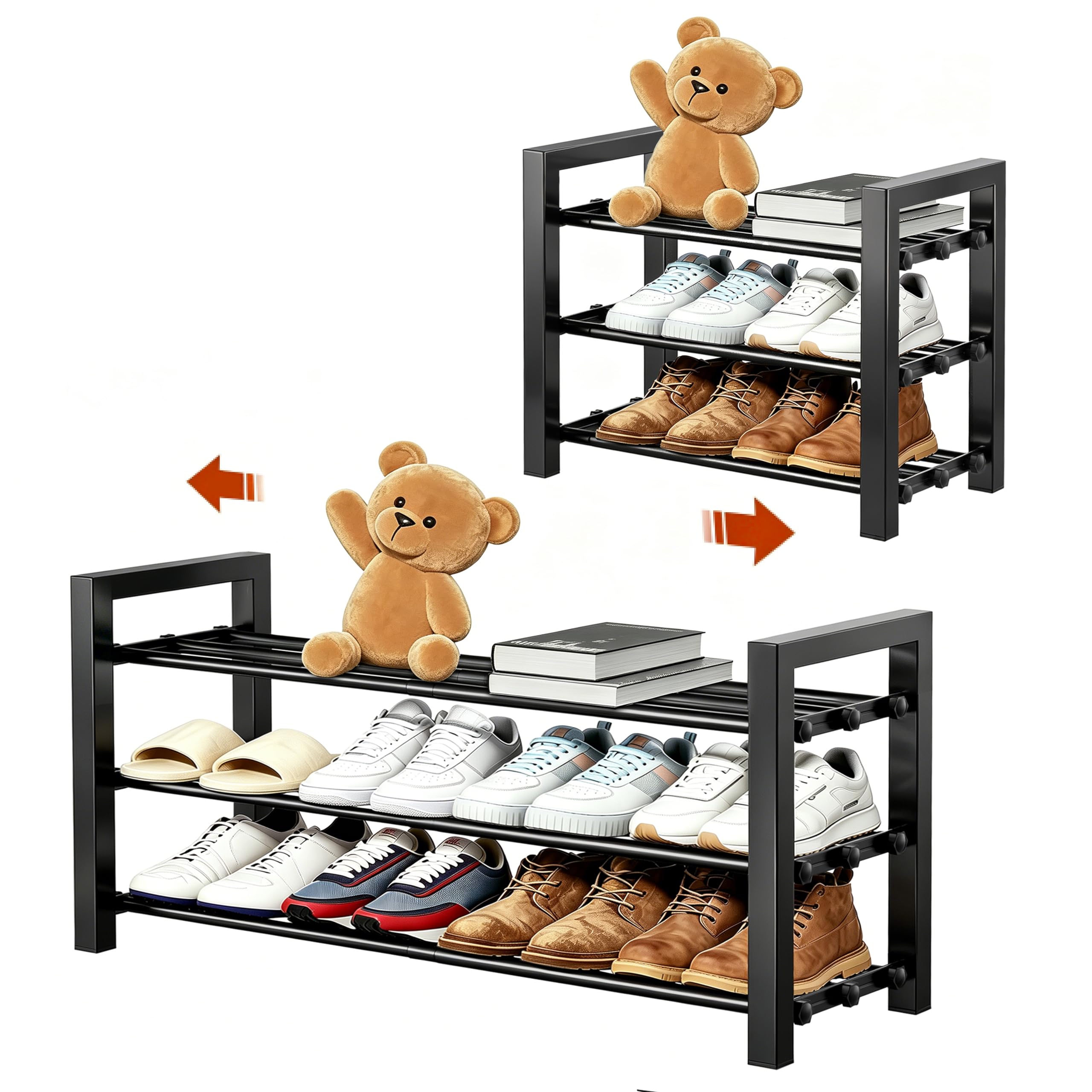
A ladder rack leans against the wall at an angle, so its footprint is only a few inches deep. No drilling, no assembly marathon, and it moves with you when you rearrange or relocate.
Each rung holds two or three pairs, which naturally limits how many shoes live by the door. That built-in boundary means out-of-season pairs head to a closet, and what stays is what you actually wear this week.
A small low rack nearby catches overflow on busy days. Rubber feet or a bit of museum putty at the base keep the ladder from sliding on hardwood.
A Pegboard Wall Renters Can Rearrange Anytime
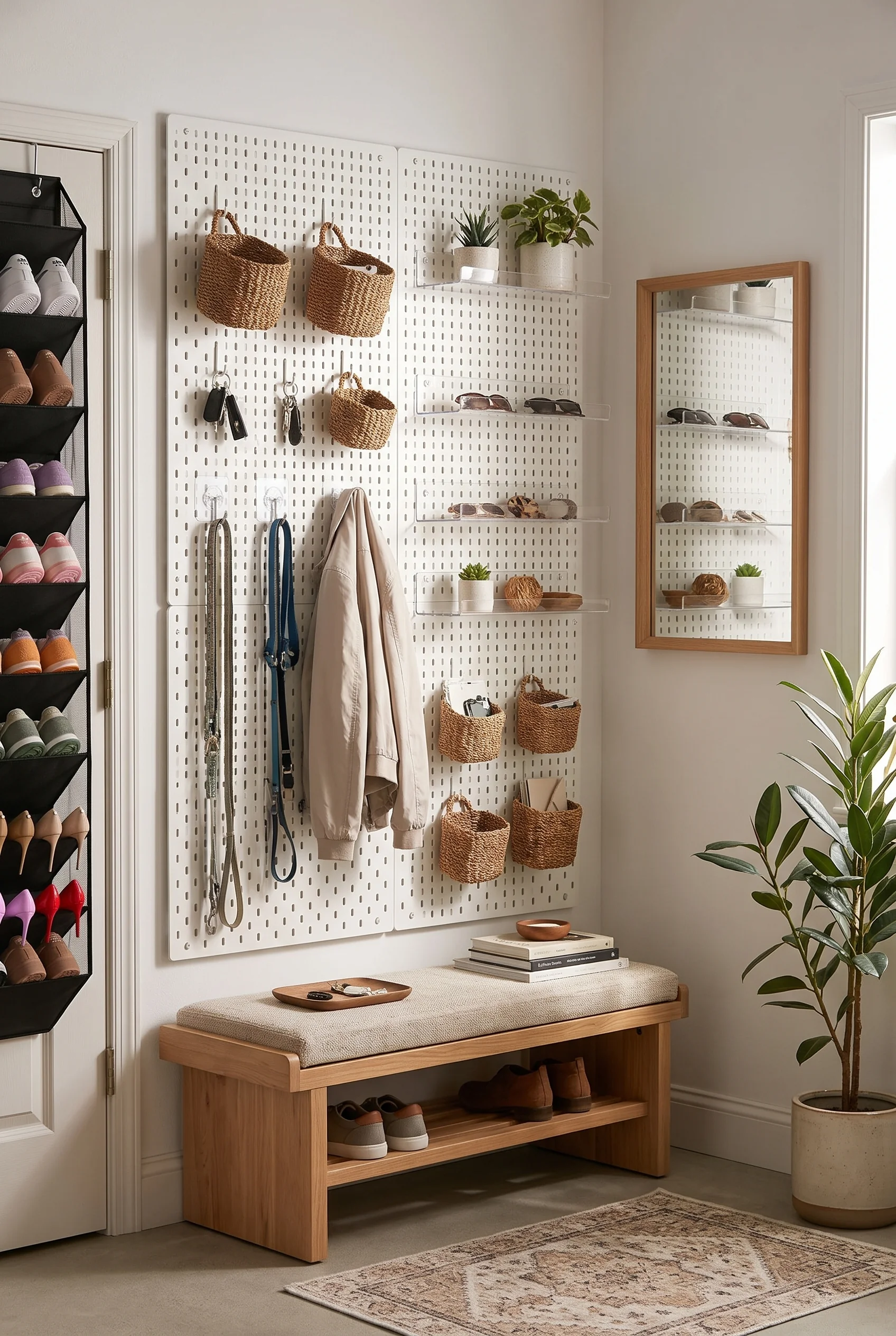
Pegboard turns a blank wall into storage you can reconfigure in minutes. Hooks, small baskets, and shelves slot in wherever you need them, so the setup grows with your family instead of locking you into one layout.
Shoes don’t have to hang on the board itself. Let the pegboard hold keys, leashes, and sunglasses, while an over-the-door organizer and a low bench handle footwear. Each zone gets one job.
For renters, a large panel leaned securely behind a bench avoids drilling altogether. Small baskets can hold kids’ slippers or spare socks, beating the search for shoes five minutes before school.
Seating That Earns Its Spot
A place to sit by the door is a small luxury that quickly feels essential. Little ones need a spot to wrestle on boots, and grown-ups appreciate it after a long day. In a small entryway shoe storage situation, though, a bench can’t just be seating. Every piece here pulls double duty, hiding or holding shoes underneath so the furniture earns every inch it occupies.
Two Small Pieces That Work Harder Than One Big One
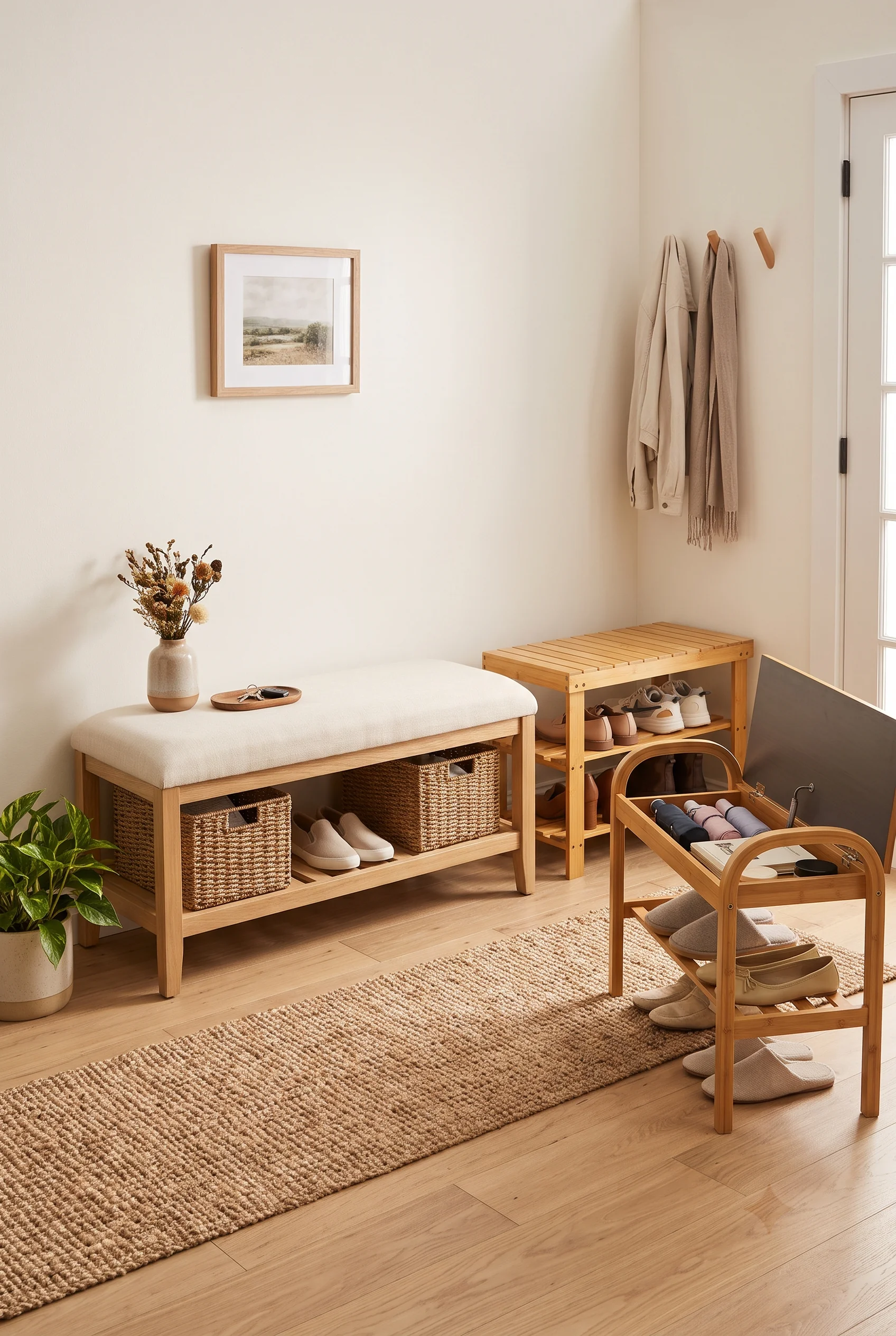
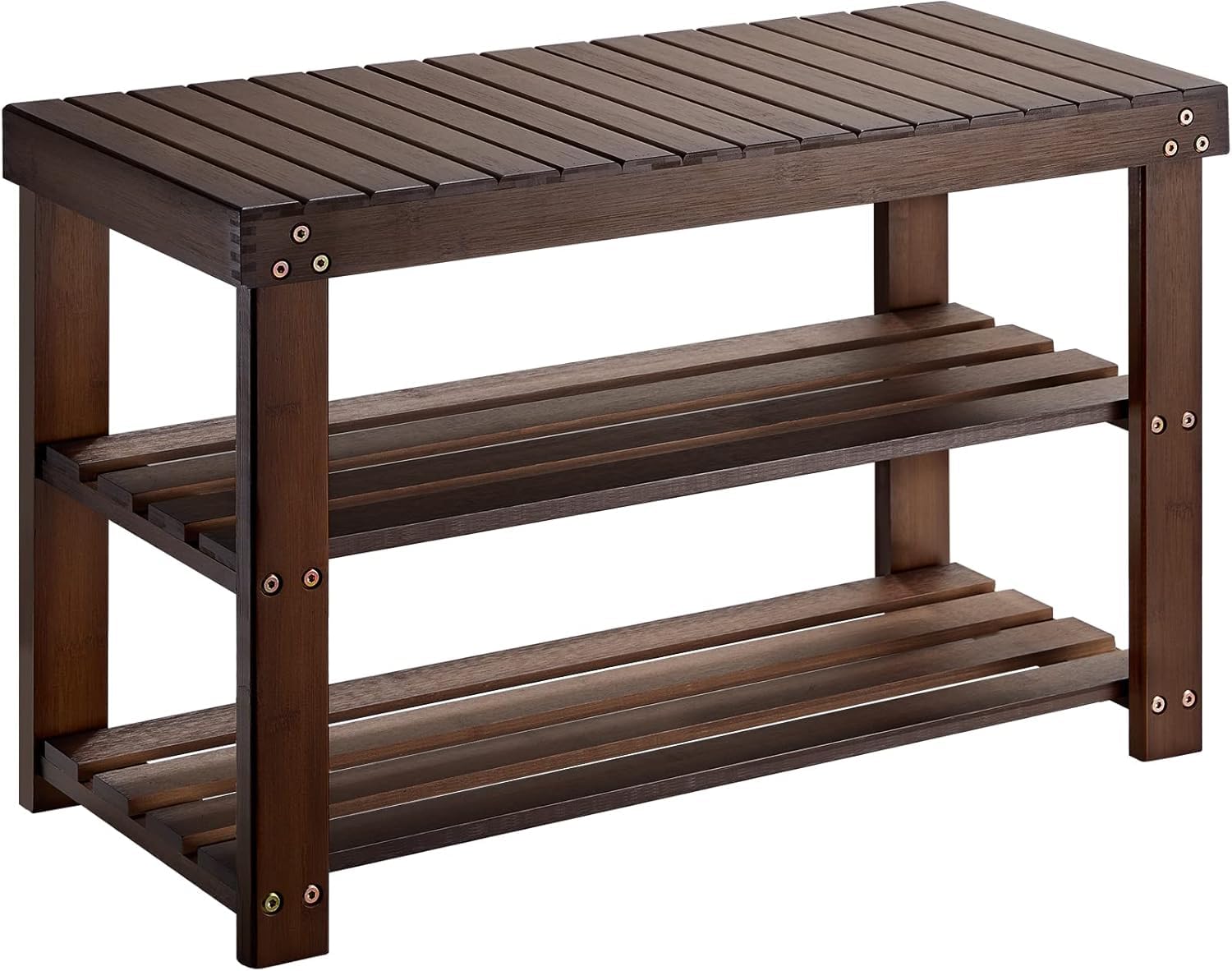
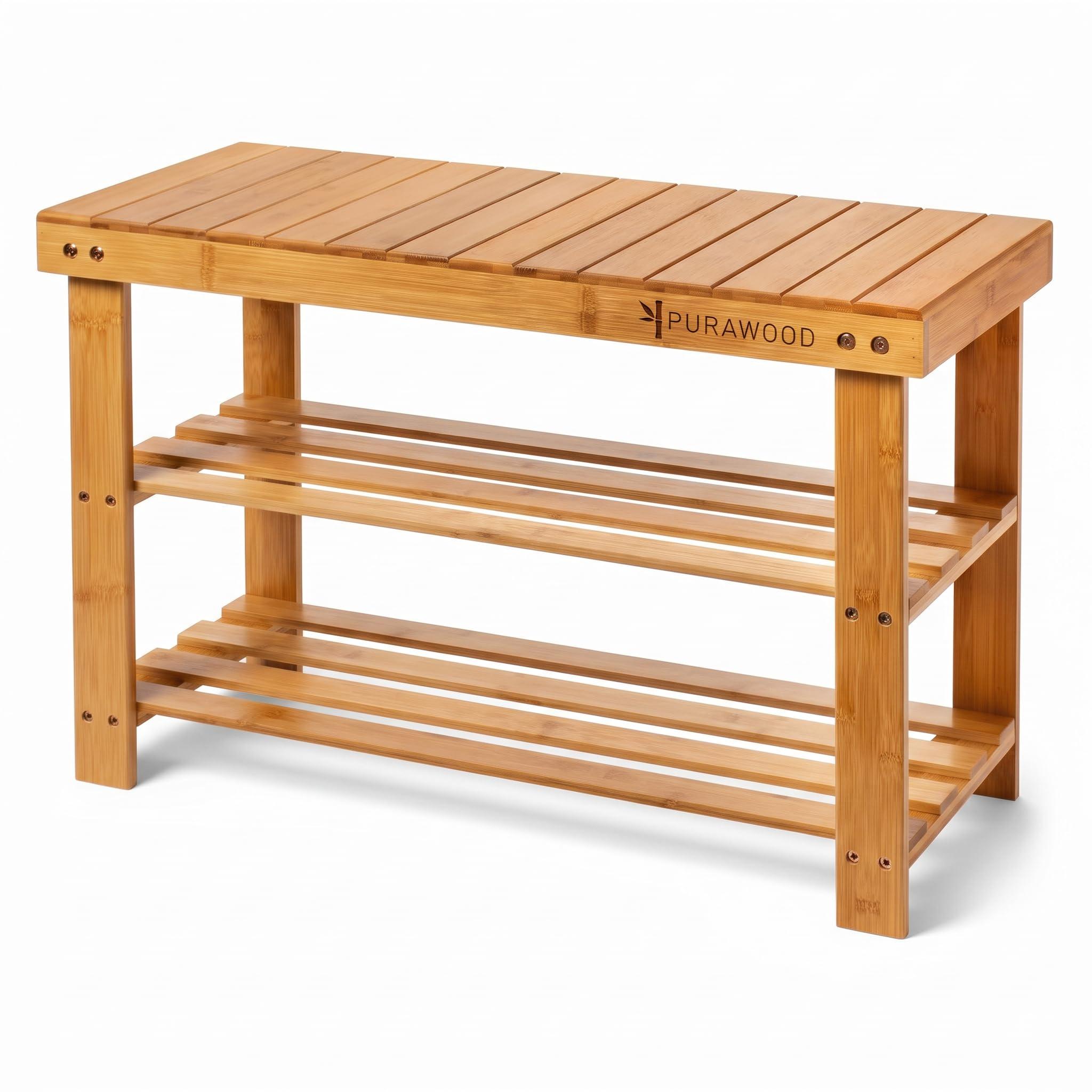
Splitting seating and shoe storage into two compact pieces often fits better than one bulky unit. A cushioned bench handles the sitting, while a slim bamboo rack beside it takes the overflow. Each piece can tuck into its own wall or corner.
Bamboo is a smart material for this spot. It shrugs off a little moisture from damp soles and stays light enough to shift around when you mop.
This approach shines when the layout is awkward. Two small pieces bend around a radiator, a door swing, or an angled wall in a way a single long bench never could.
Cubbies Small Enough for Kids to Manage on Their Own
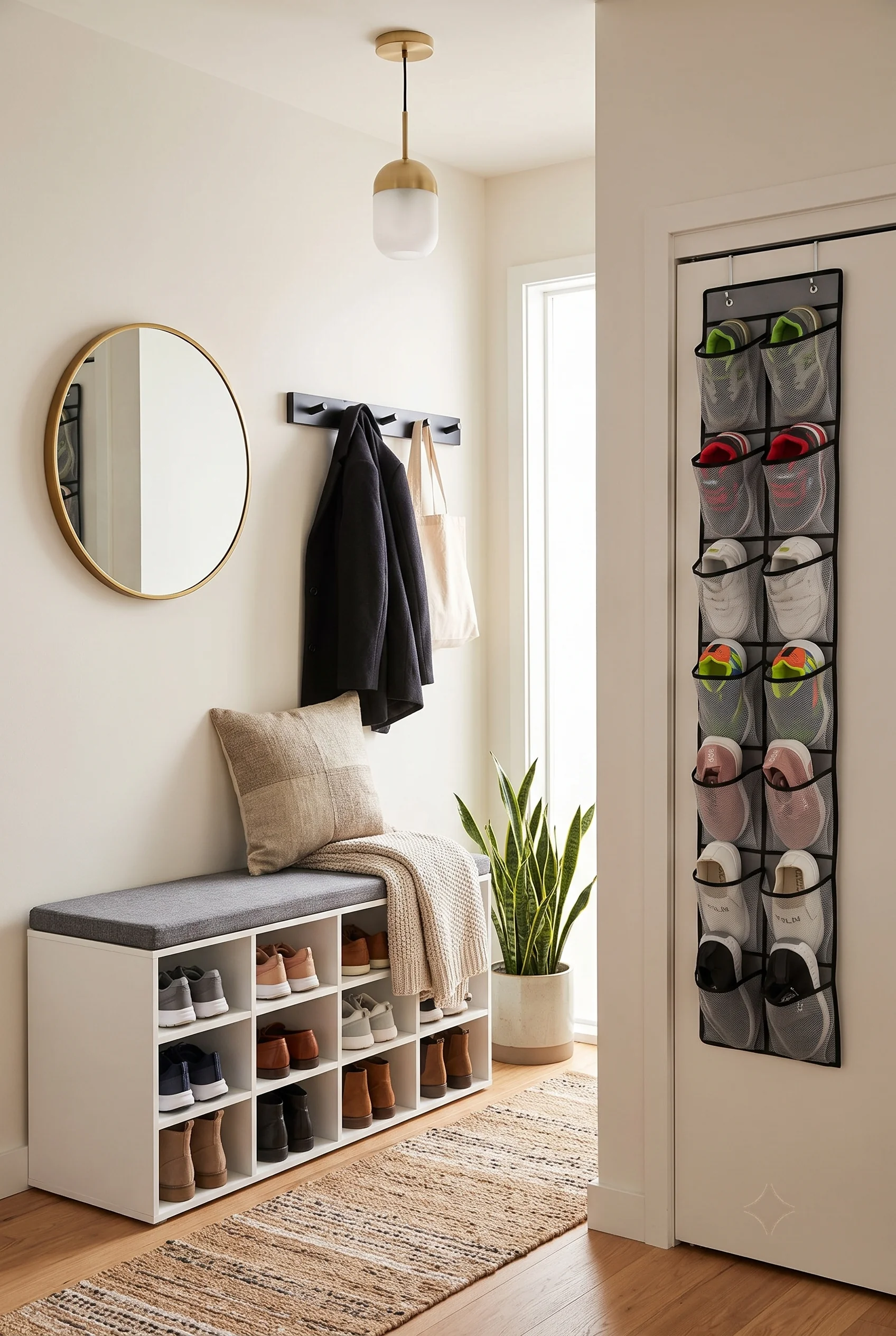
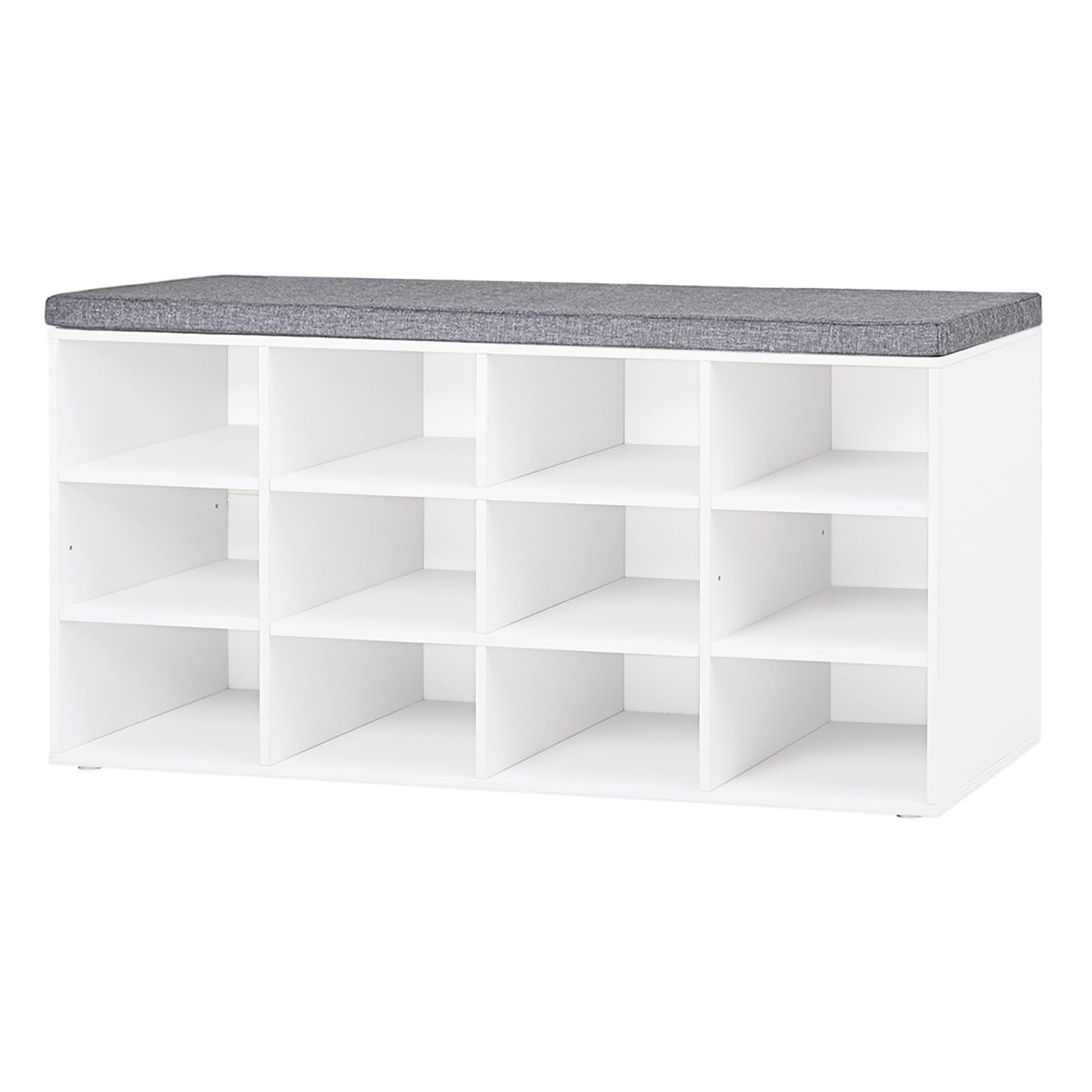
Individual cubbies give each pair of shoes an obvious home, and that clarity is what makes them work with kids. A child who can see an empty square knows exactly where their sneakers go. No lecture required.
The cushion on top turns the whole unit into seating. Sit, slip off your shoes, and slide them into the cubby below. Even a preschooler can follow that routine.
Give each family member a row, with the littlest ones at the bottom where they can reach. Extra pairs can move to an over-the-door organizer nearby, which keeps the cubbies from overflowing by Friday.
Baskets That Quiet the Visual Noise
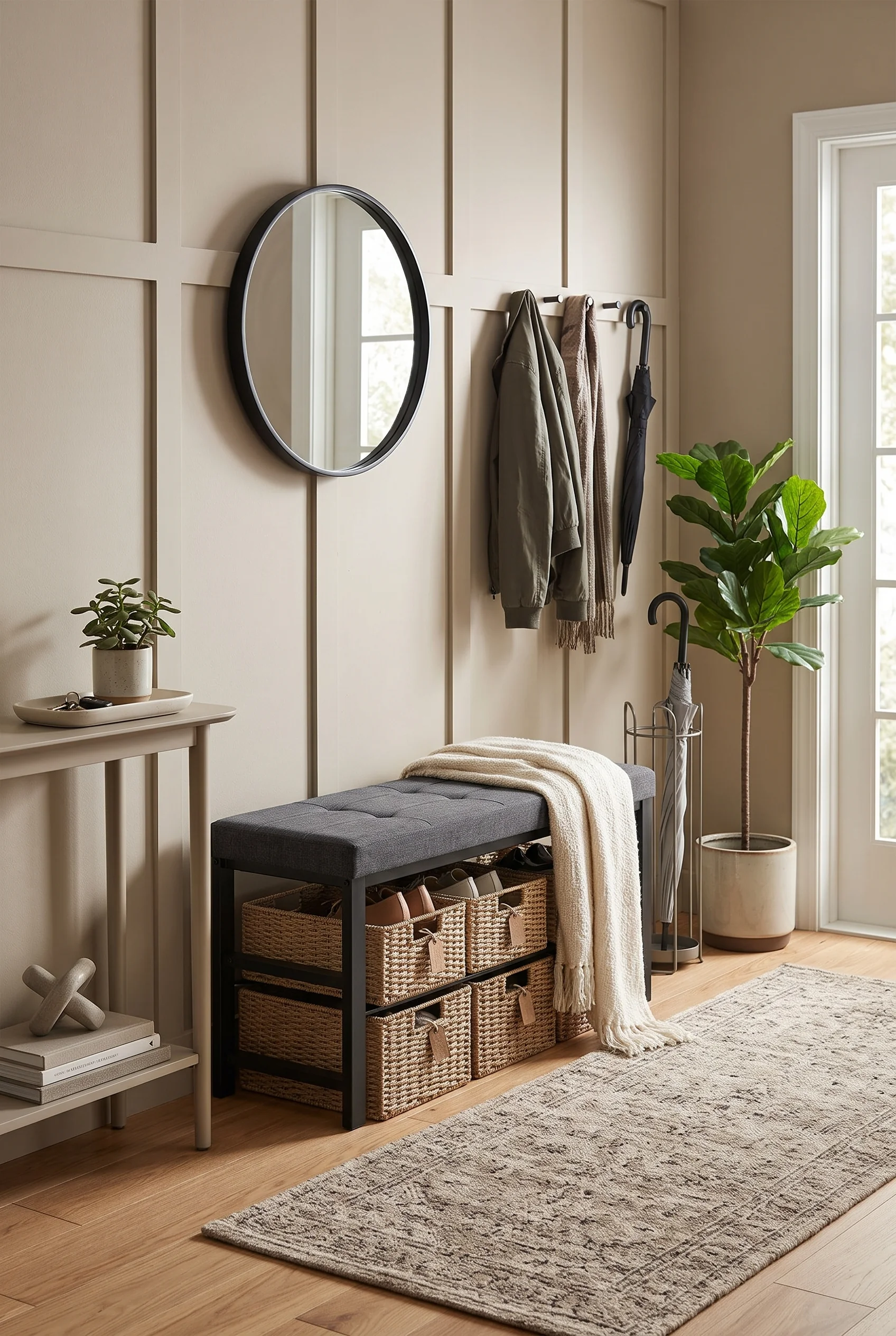
Woven baskets under a bench hide the jumble of tangled laces and scuffed toes. From across the room, all you see is texture, so a small entry feels ordered even when every basket is full.
One basket per person keeps things simple. Kids can toss shoes in without lining them up, and nobody digs through someone else’s pile on the way out the door.
Baskets with handles slide out easily, and a small tag on the front settles the morning debate over whose is whose. Shallow ones work best because deep baskets turn into black holes where single sandals vanish.
A Low Open Bench for the Pairs You Wear Every Day
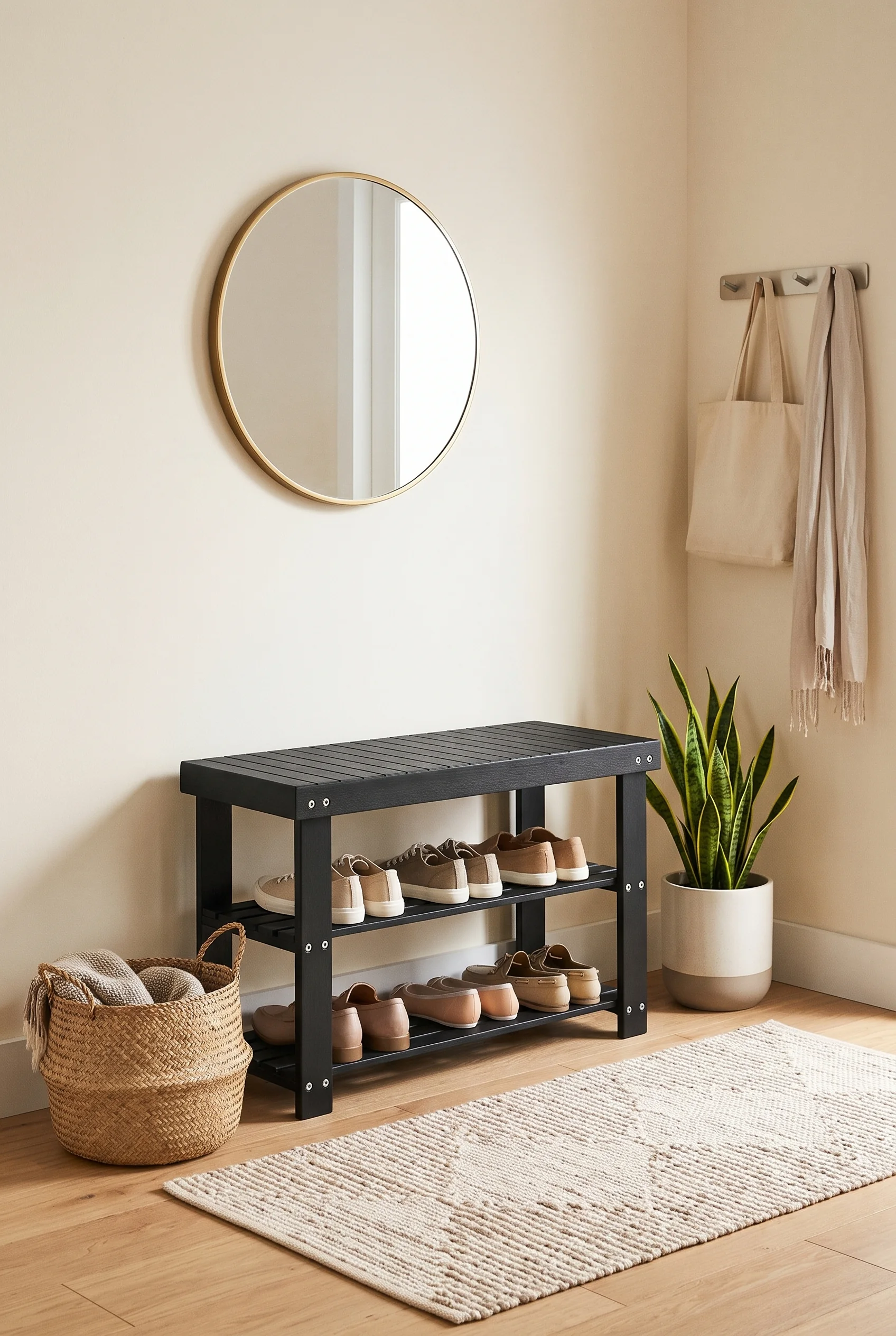
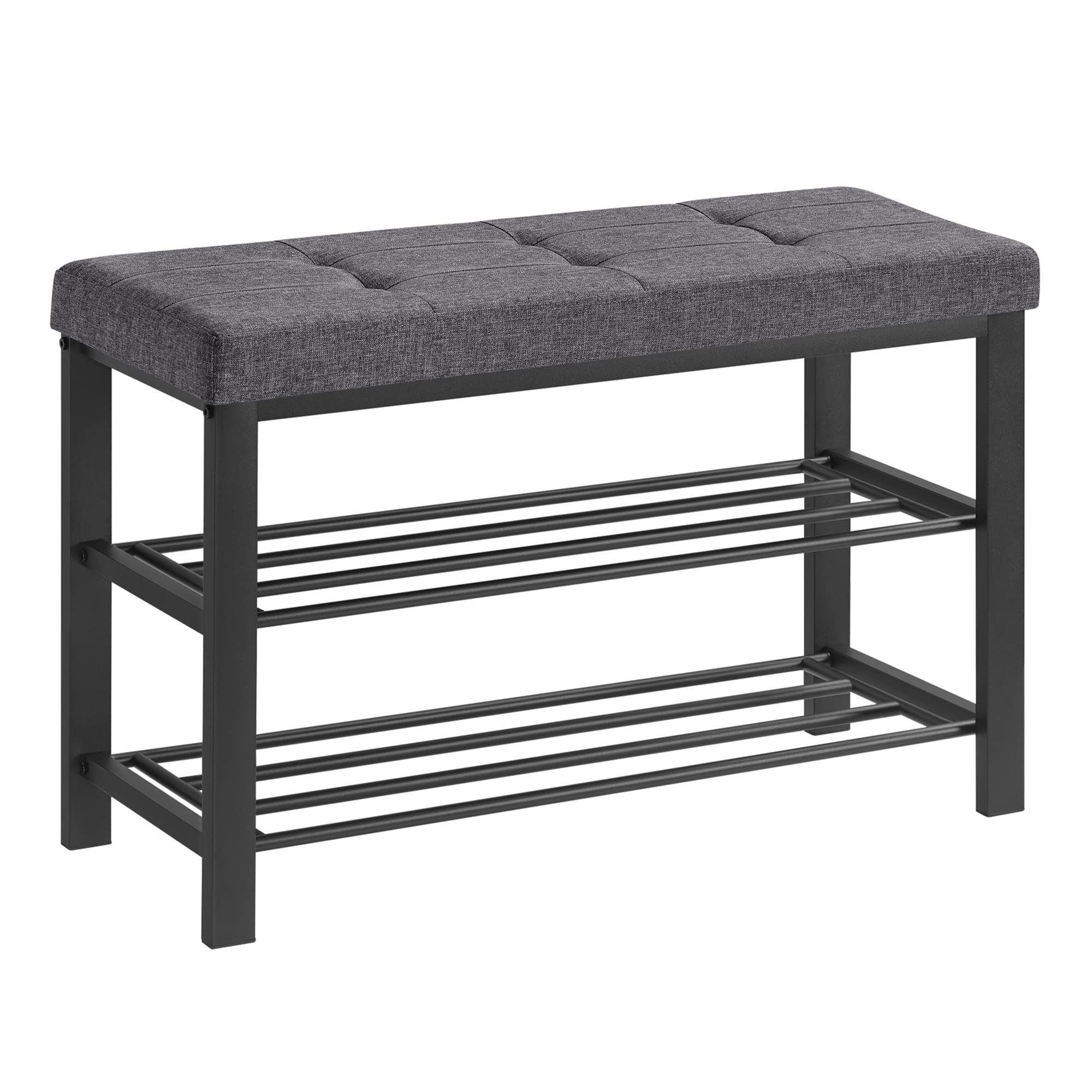
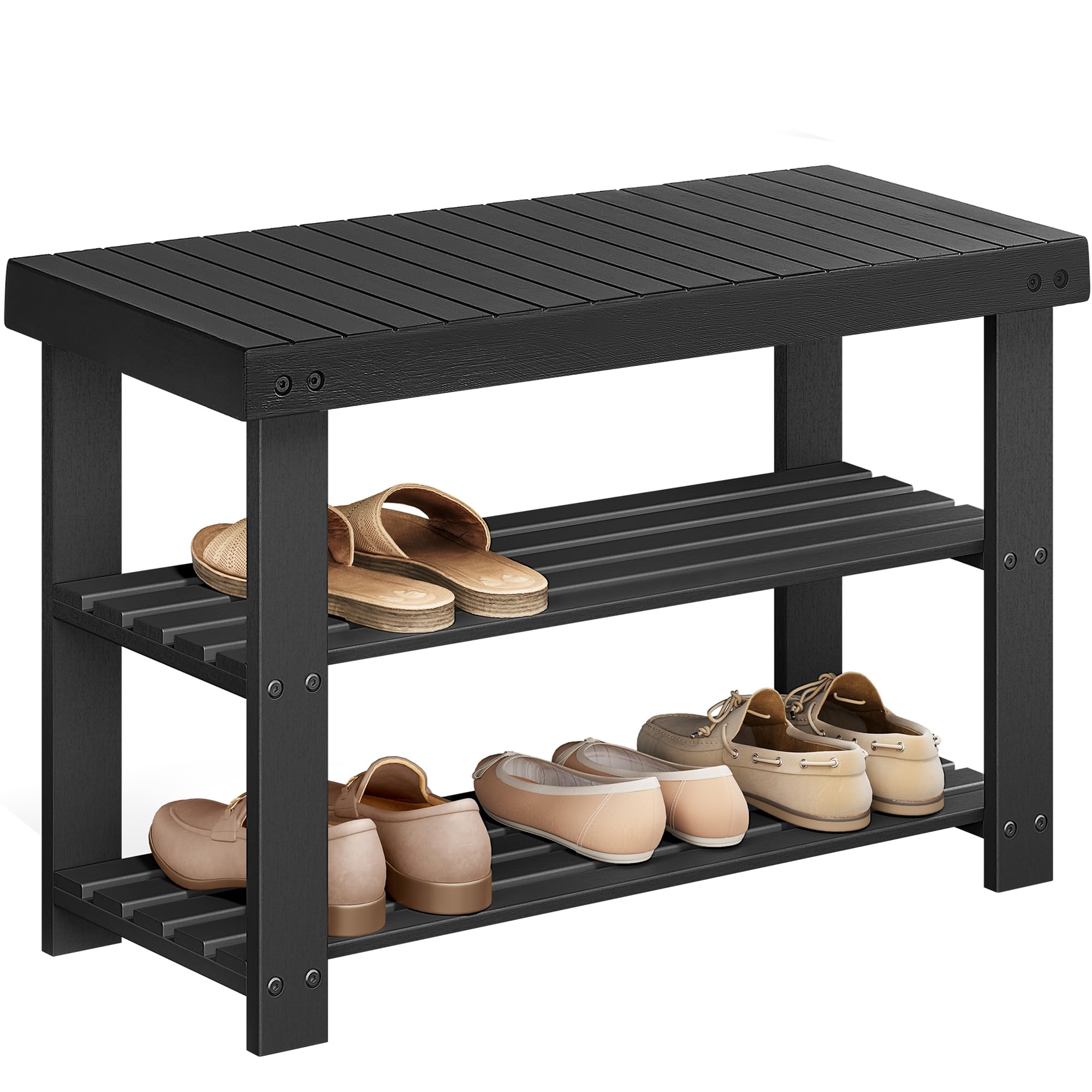
A low two-tier bench handles the shoes worn constantly, the ones that never make it back to a closet anyway. Open shelves let damp sneakers dry out instead of sitting sealed in a cabinet, and grabbing a pair takes one motion.
Its height matters more than it seems. At knee level, it leaves the wall above free for a mirror and a few hooks, so you get layers without clutter.
Set a limit and stick to it: two shelves, one row each. Anything that doesn’t fit rotates back to a bedroom closet, and the sturdy slatted seat becomes a perch for tying laces or a landing spot for a bag.
Off-Season Shoes Tucked Inside a Storage Ottoman
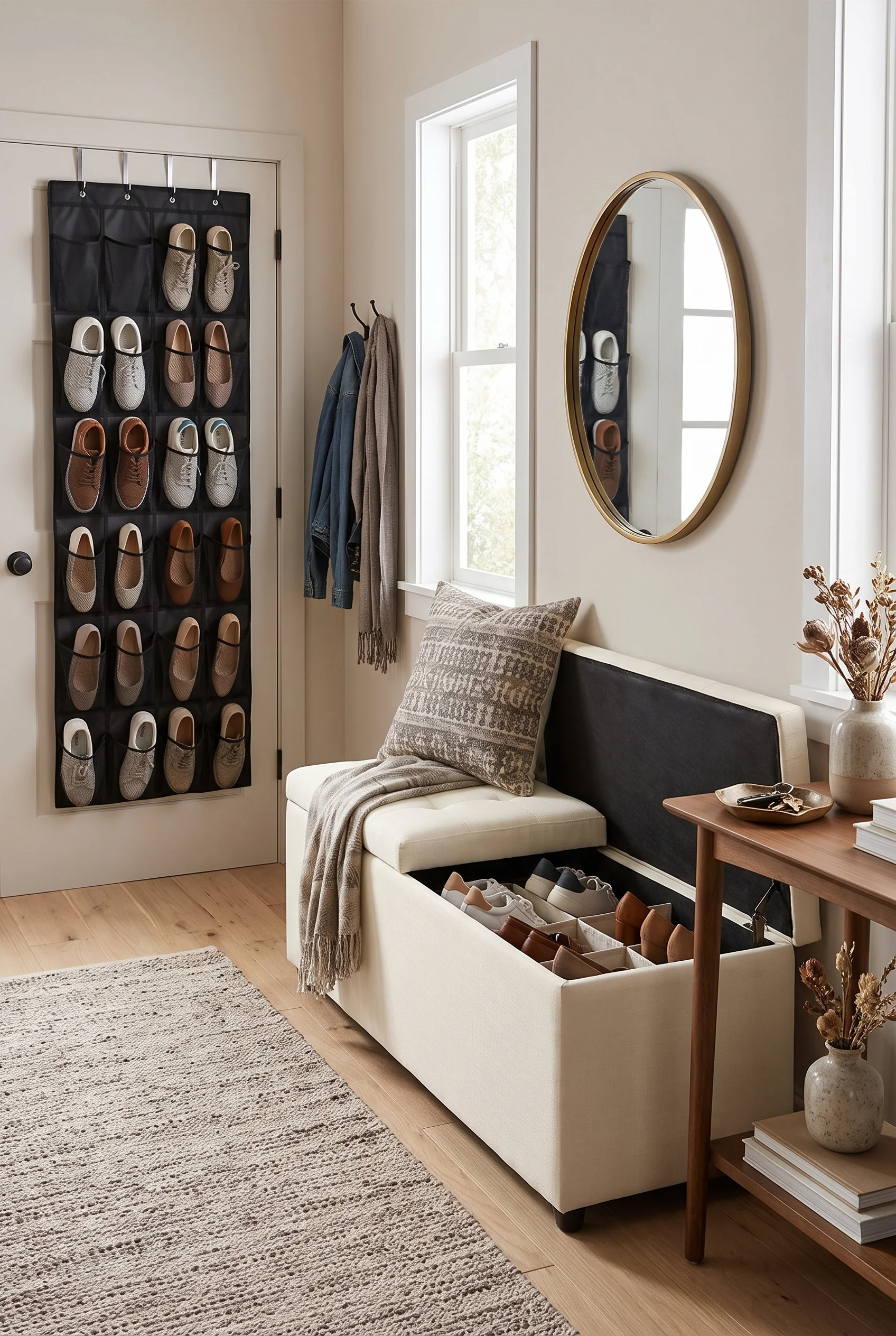
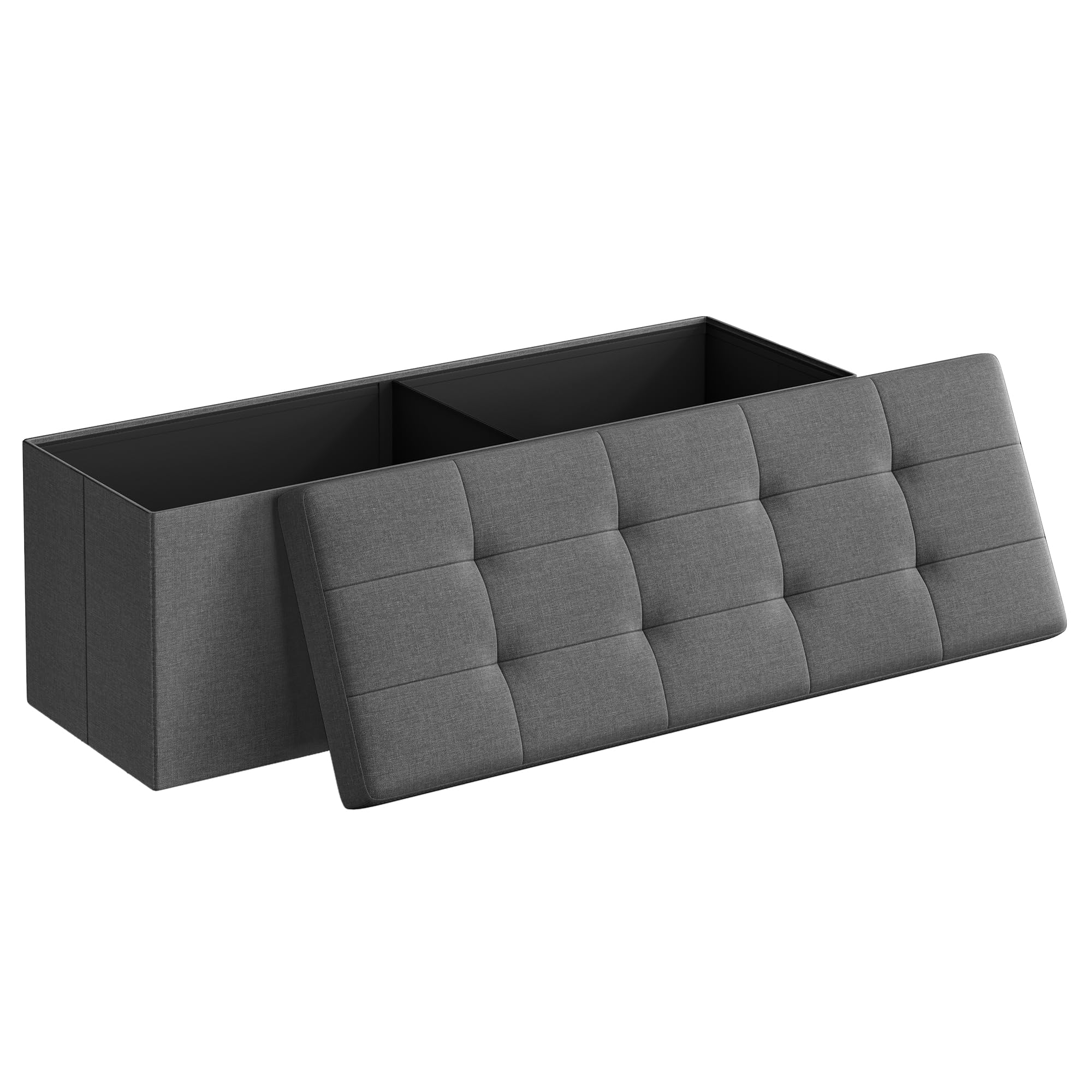
Winter boots in July, sandals in January, the cleats that only come out on Saturdays: every family has shoes waiting for their season. A lift-top storage ottoman hides them all and reads as nothing more than a soft seat.
Inside, a few shoe dividers or shallow bins keep pairs from tumbling into a heap. Put the least-used shoes on the bottom, with weekend pairs on top.
Upholstered seating also softens an entry full of hard surfaces. With a throw and a pillow, it feels more like a cozy nook than storage. Everyday pairs can hang on an over-the-door organizer nearby, so the lid only opens a few times a season.
Closed Storage for a Calmer First Impression
Some families own more shoes than any open rack can display neatly. Closed storage solves this by removing visual clutter, so the entry reads as furniture first and shoe storage second. These pieces work especially well in small spaces, where every item on display competes for attention, and a single closed front gives the whole room breathing room.
One Cabinet for Everyday Pairs and Bulky Extras
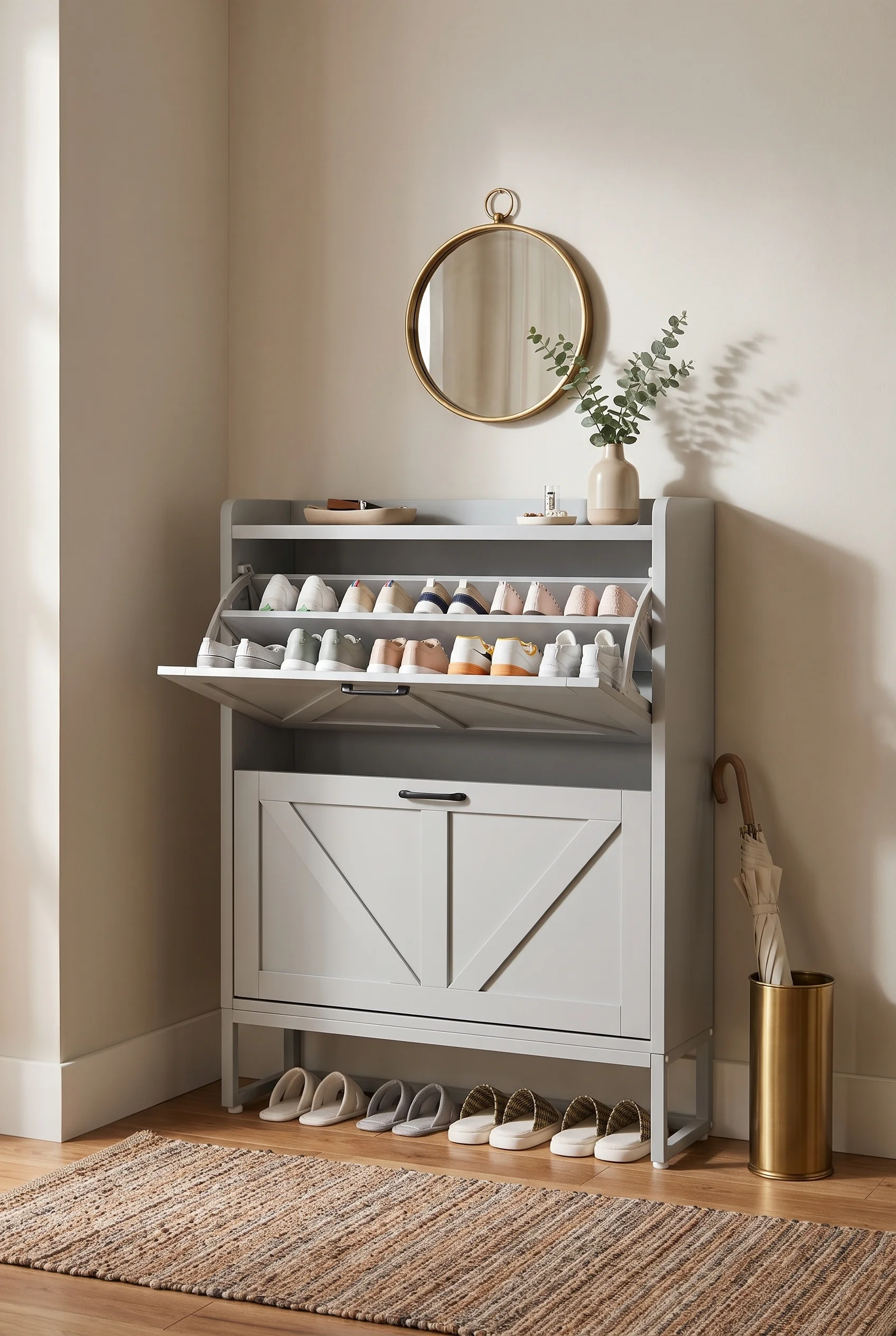
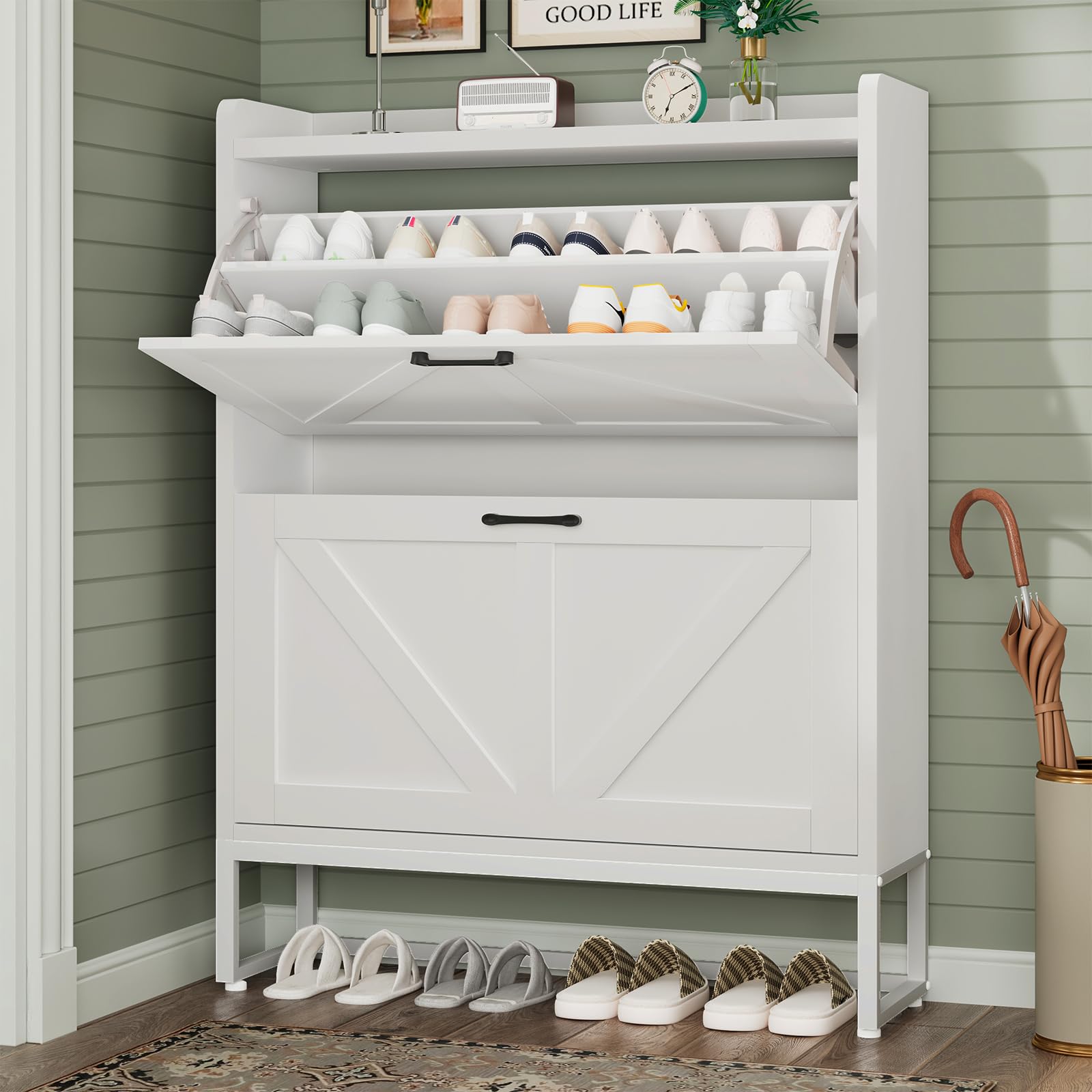
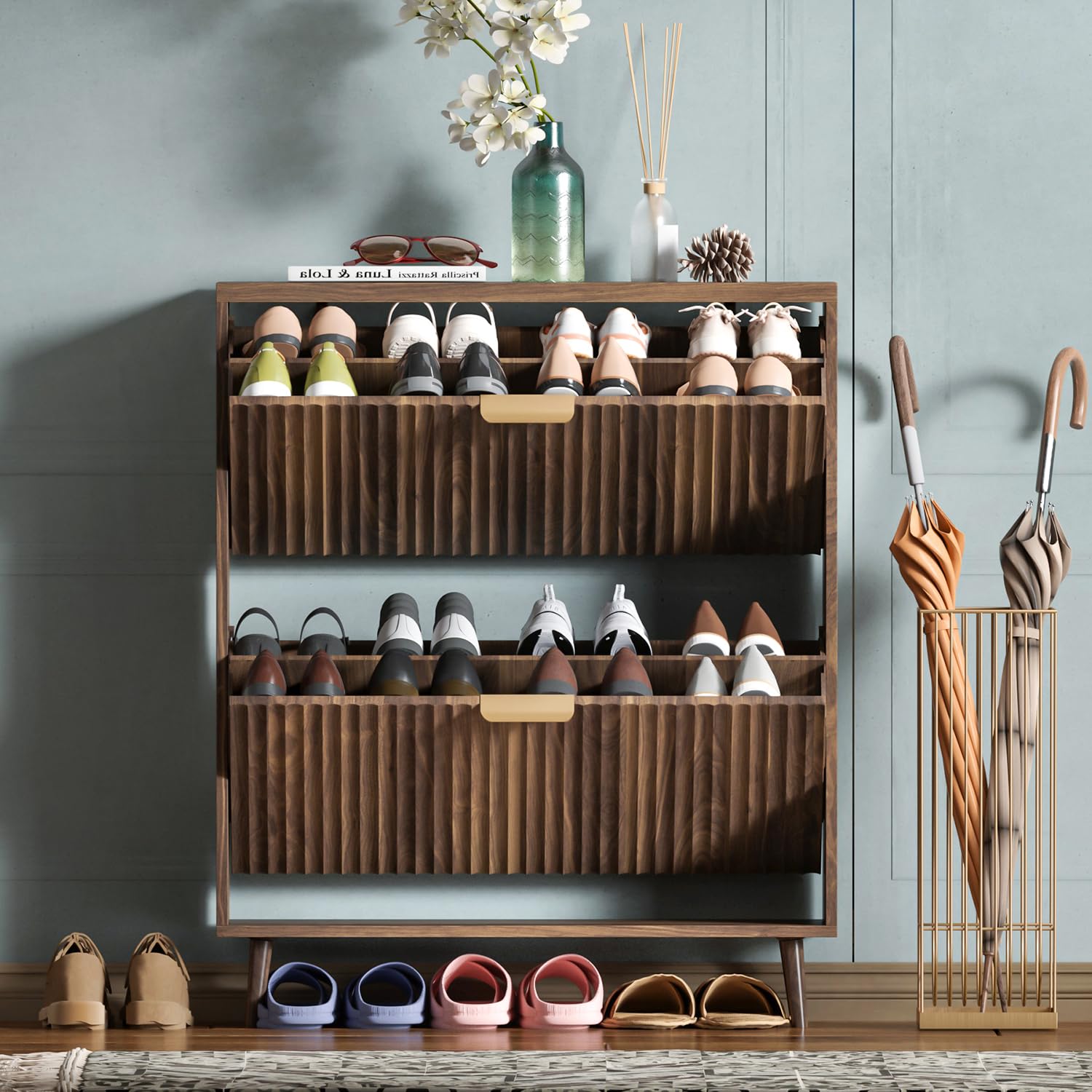
A flip-drawer cabinet stores shoes at an angle, holding a surprising number of pairs in a shallow depth and making for practical small entryway shoe storage. The top drawer tips open for the sneakers and flats you reach for daily, then closes flush.
The lower compartment is where this style really earns its keep. It fits what flip drawers can’t, like ankle boots, a spare umbrella, or a bag of reusable totes.
The flat top becomes a natural drop zone. A small tray for keys and a little greenery turn the cabinet into the entry’s focal point instead of a storage afterthought. Raised legs leave just enough room underneath for house slippers.
A Console That Keeps Shoes Hidden in Plain Sight
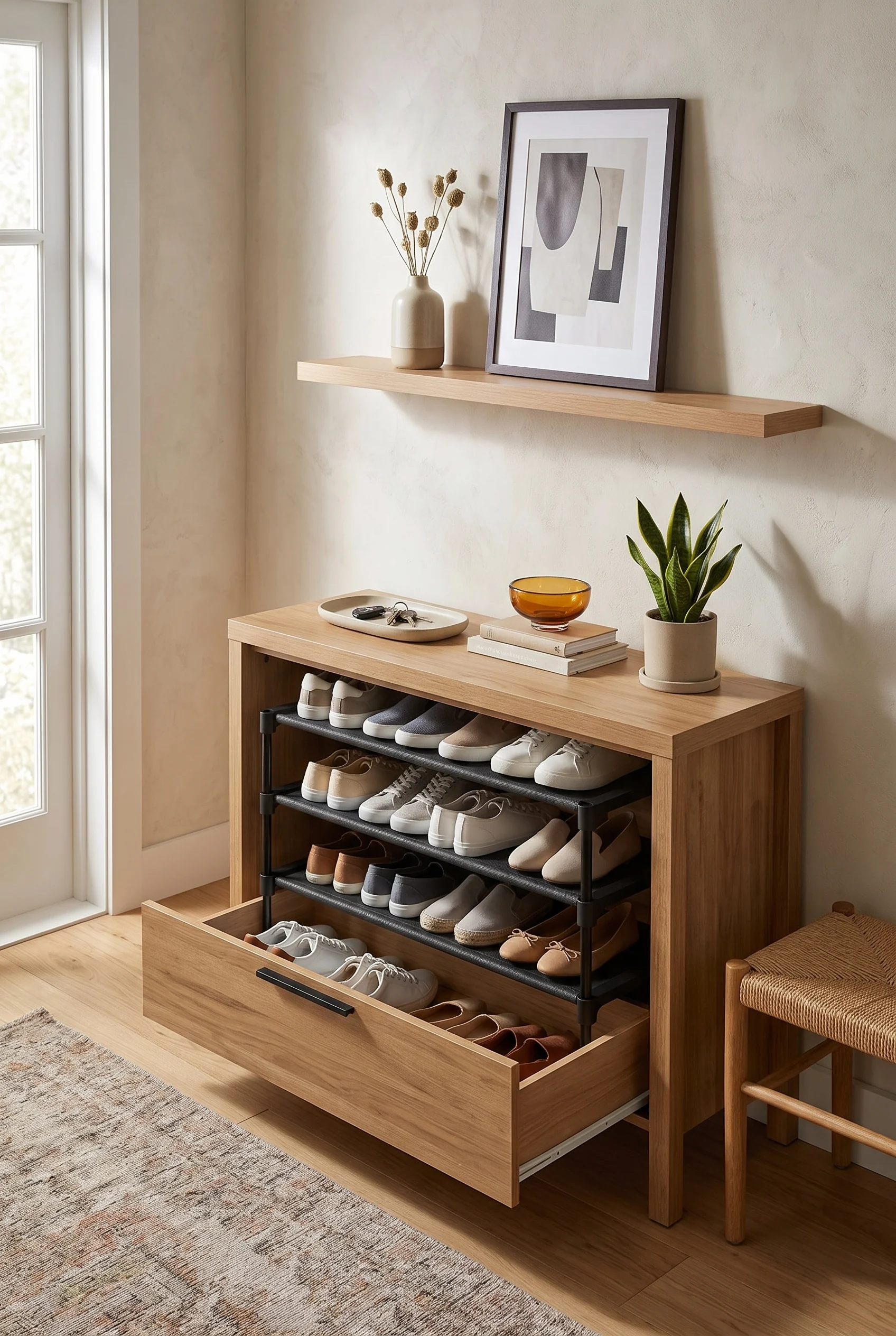
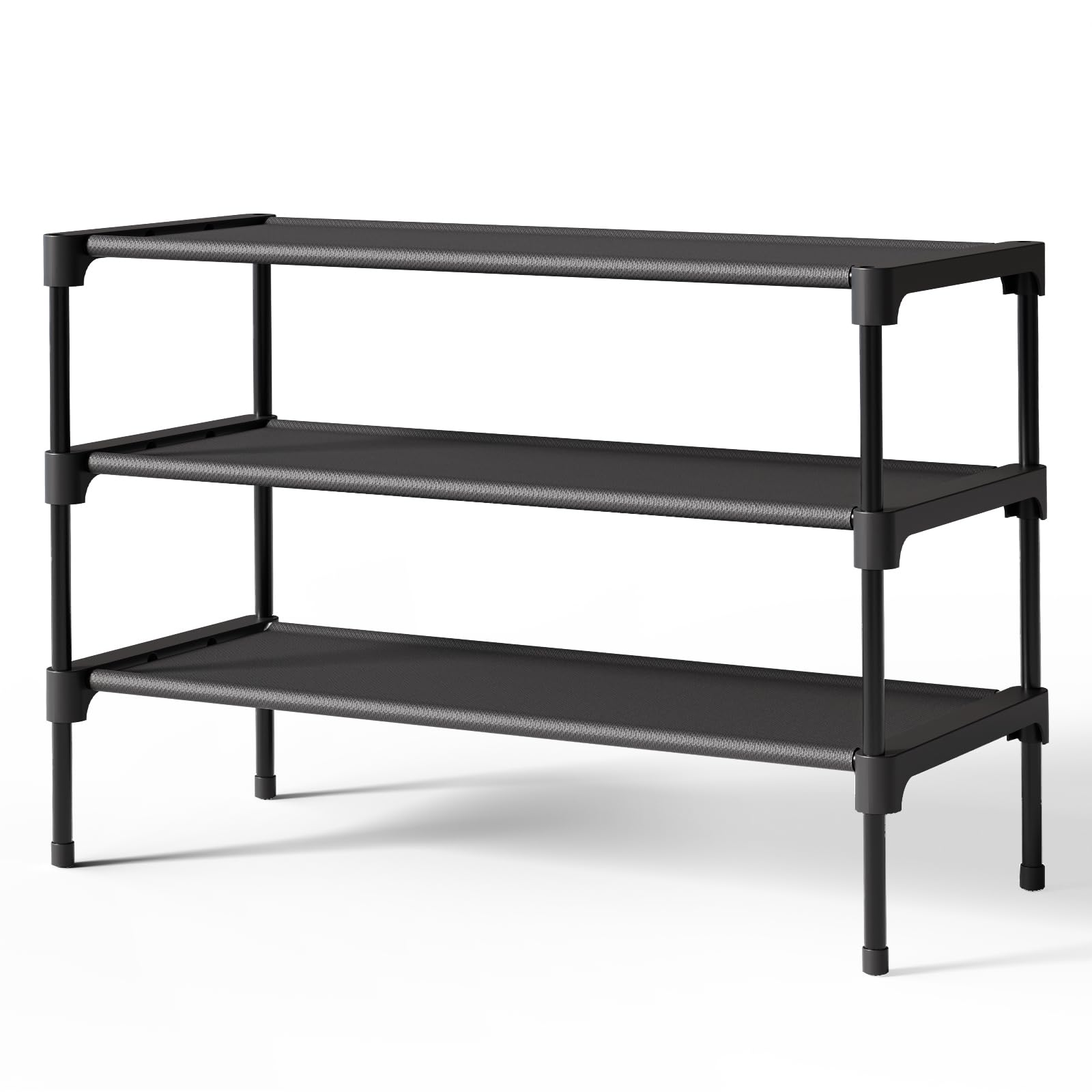
From the doorway, a console with a deep pull-out drawer looks like ordinary entry furniture. Inside, a simple tiered rack adds layers of storage, so one compact footprint holds a week’s worth of shoes for the whole family.
Drawers are especially forgiving for busy households. Nobody needs to line pairs up perfectly, because once the drawer slides shut, the evidence disappears.
Full-extension slides make a real difference here. The drawer opens all the way, so the shoes in the back are as easy to grab as the ones up front. The tabletop stays free for keys, a plant, or mail waiting to be sorted.
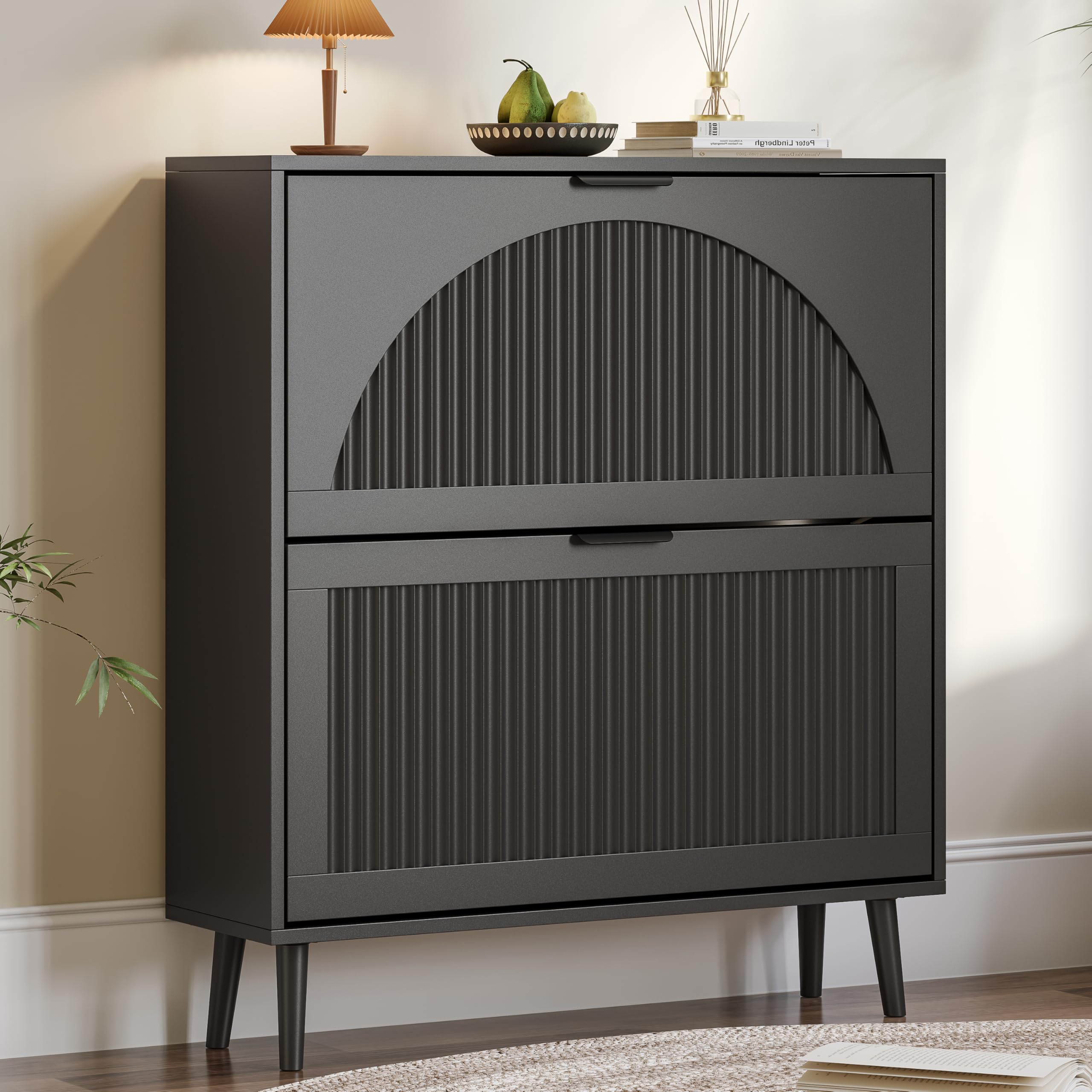
A Slim Tilt-Out Cabinet That Clears the Door Swing
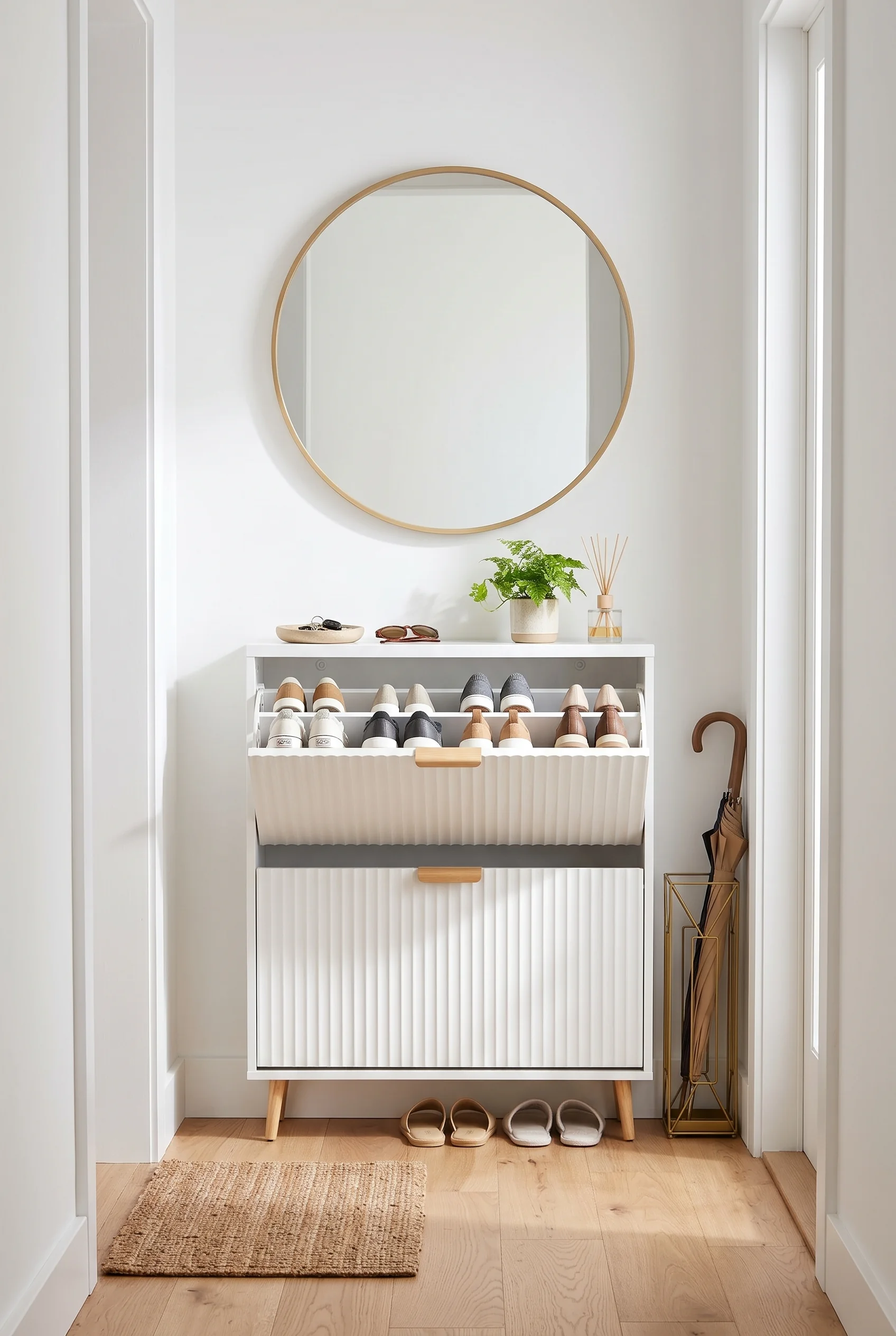
Depth is the measurement that matters most in a tight entry, and a tilt-out cabinet wins on it. Many models are under ten inches deep, which lets them slip between a door frame and a side wall where a standard cabinet would block the path.
Before buying, open your front door fully and measure what’s left. There should be room to walk past comfortably with grocery bags in hand. The cabinet should never be the thing you turn sideways to avoid.
Raised legs help it read like a proper piece of furniture. Showing a bit of floor beneath it also makes a narrow hallway feel wider.
Mirrored Doors That Double the Light
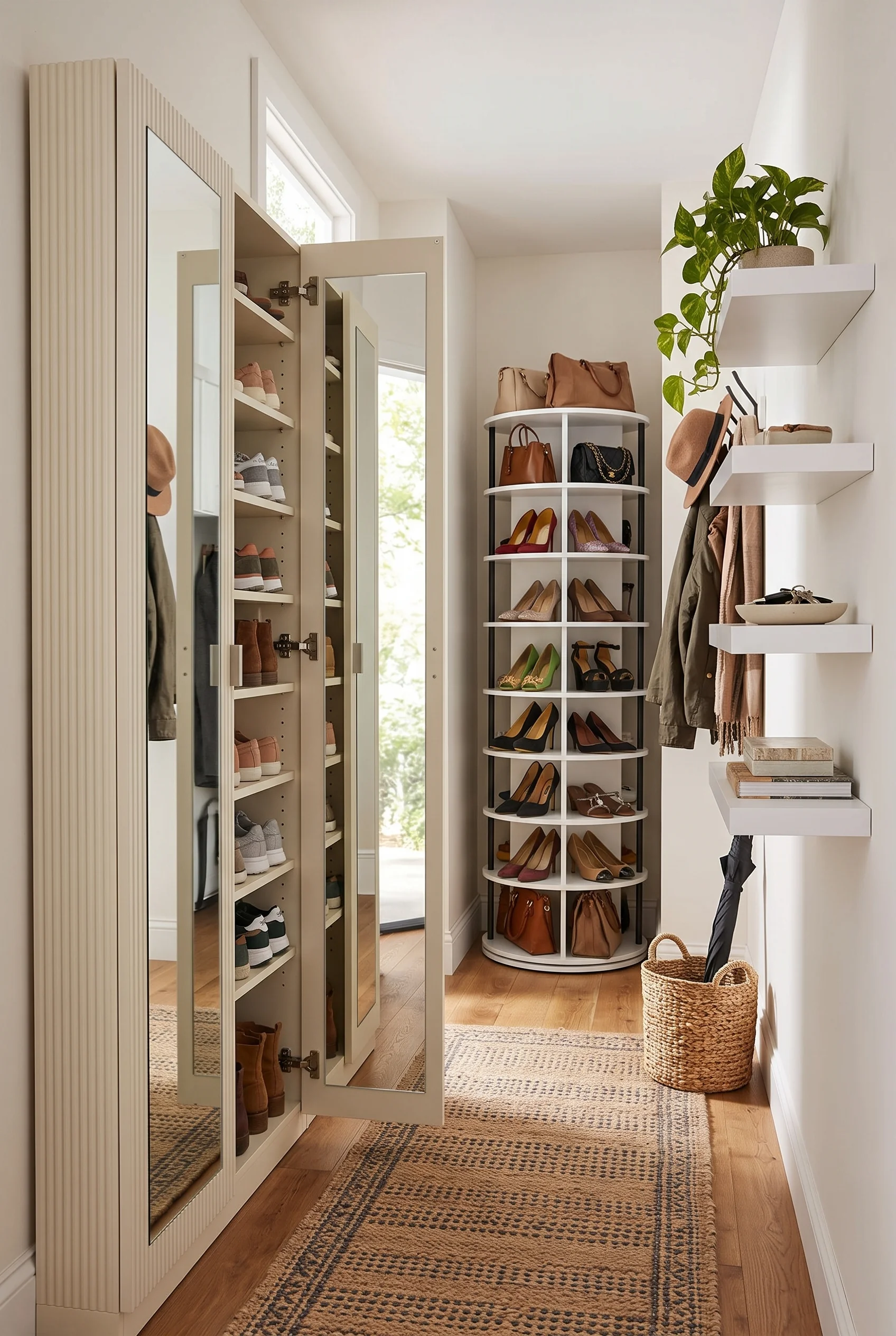
A tall mirrored cabinet solves two entryway problems at once. It stores dozens of pairs behind its doors, and it gives you a full-length mirror for that last outfit check before leaving the house.
Mirrors bounce daylight deeper into a narrow space, which matters in an entry with one small window or none at all. The hallway feels brighter and wider without a single extra lamp.
Adjustable shelves inside make room for flats and taller boots alike. Add a few wall shelves for bags and hats, and a slim hallway starts to feel like a tiny walk-in closet.
Slim Footprints for Tight Hallways
Narrow hallways need storage that grows up rather than out. A tall, lean unit can hold as many pairs as a wide cabinet while leaving the walkway open for strollers, backpacks, and the dog. These pieces take up roughly the floor space of a lamp and solve specific problems like growing heel collections or soggy rain boots.
A Spinning Tower That Fits Where Nothing Else Will
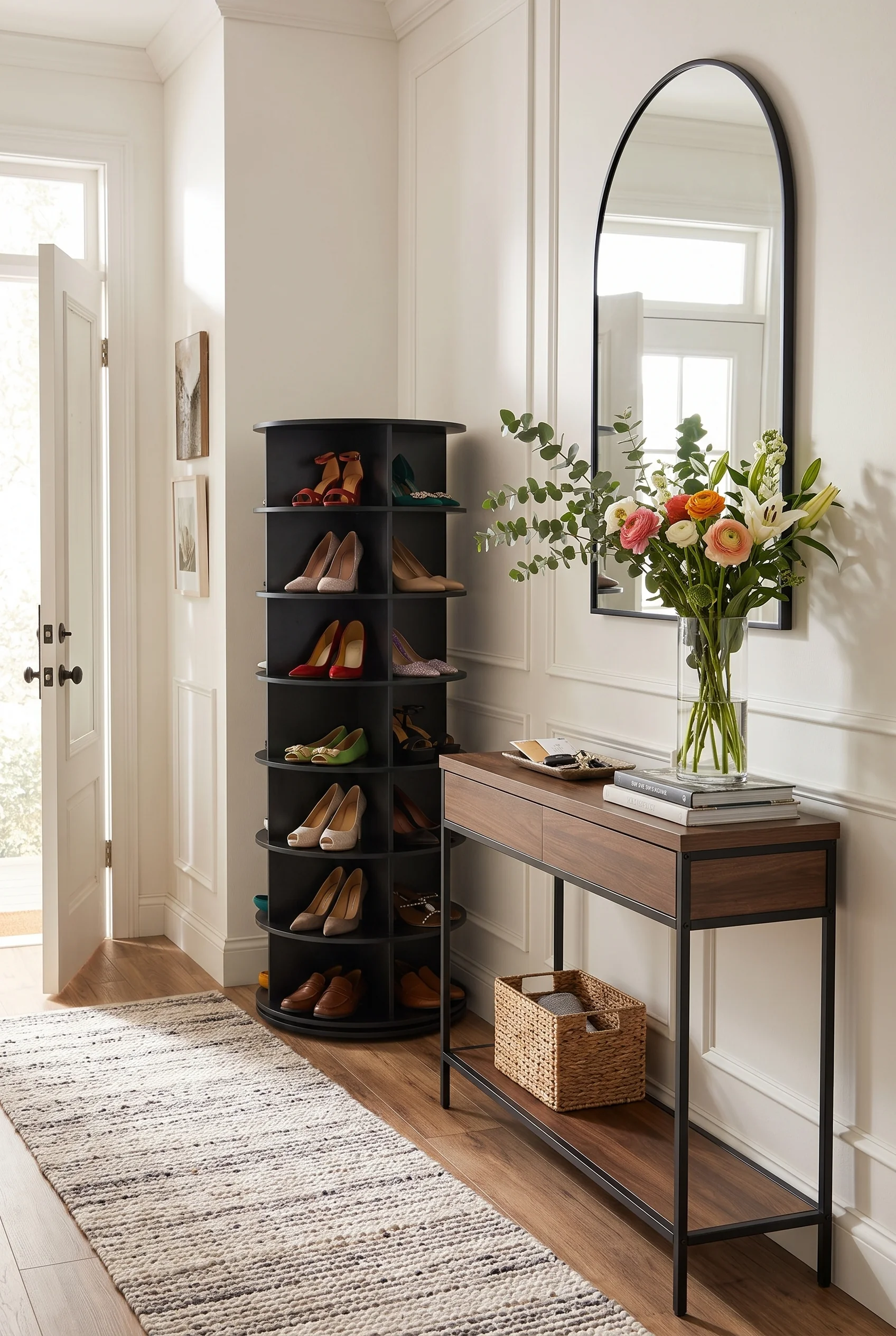
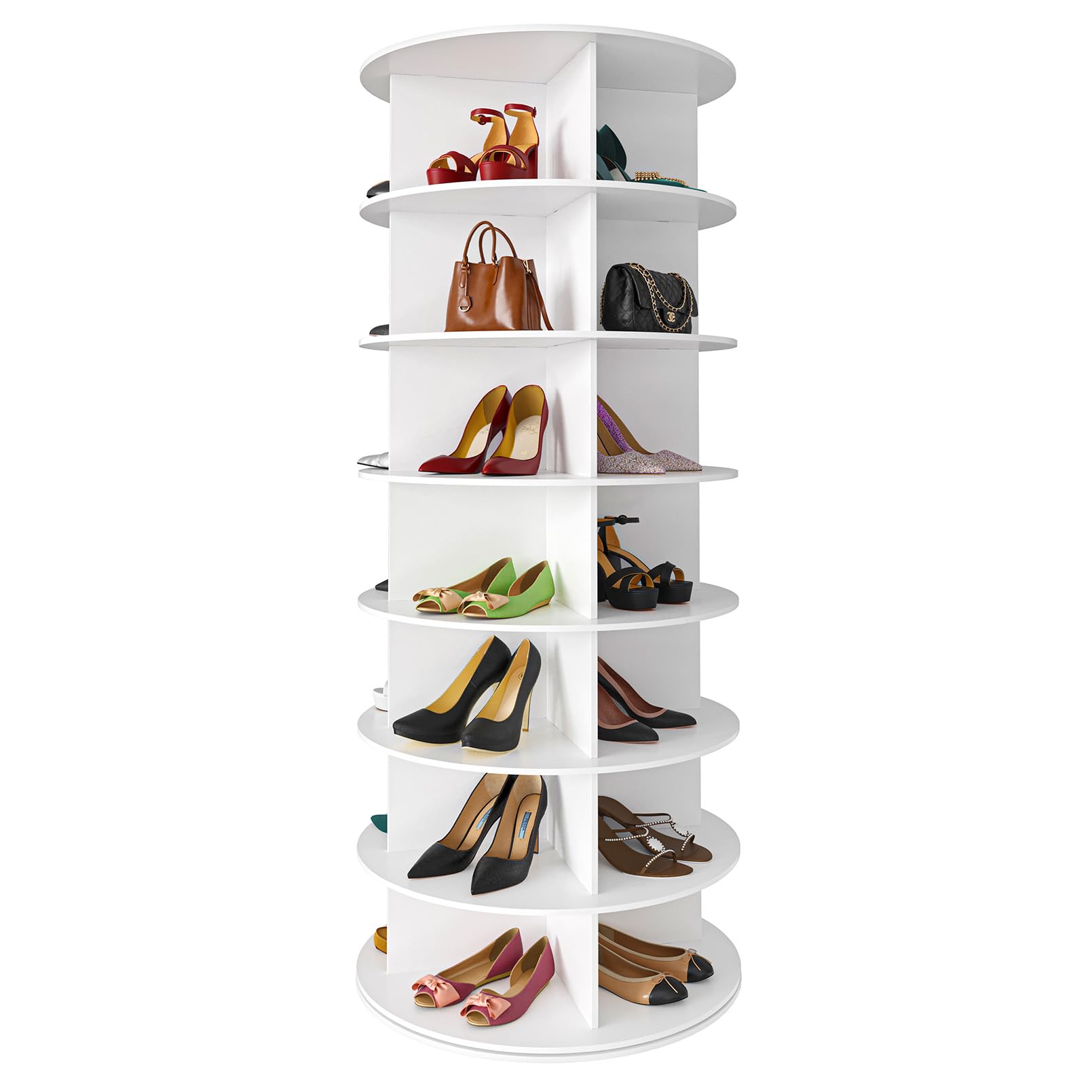
Round turns out to be the perfect shape for a tiny footprint. A rotating shoe tower stores pairs in a full circle, so you save every inch. Give it a spin and the pair you want comes to you instead of reaching into the back of a deep shelf.
Corners and the dead space beside a door work well for a shoe tower. A seven-tier tower holds a whole collection of heels and flats in less floor space than a laundry basket, making it smart small entryway shoe storage.
It’s calming to use, too. Every pair stays visible, and shoes you forgot you owned actually get worn.
Seven Tiers That Build Up, Not Out
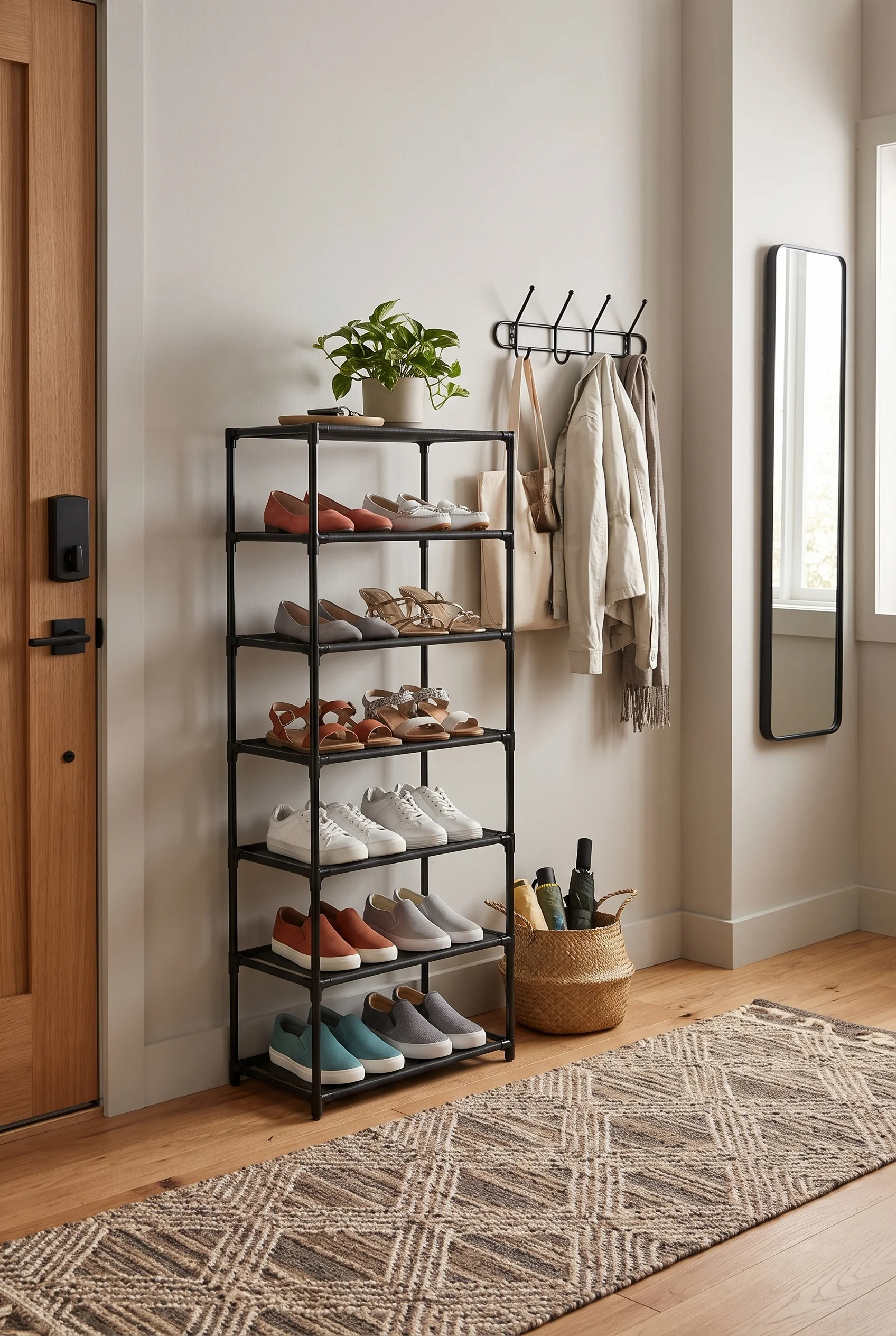
Tiered stands trade width for height, which is exactly the swap a small entryway needs. A unit just over a foot wide can stack seven or more shelves and hold up to twenty pairs beside the door.
Placement matters. Setting the stand on the hinge side of the door keeps it out of the swing and away from the main walkway. Everyday shoes go at hand height, with seasonal pairs on the lowest tiers.
A plant on top softens the frame and makes the stand feel intentional. Lightweight units can tip once loaded, so a small anti-tip strap screwed into the wall is cheap insurance in a house with climbers.

Rain Boots That Stay Upright and Drip in the Right Place
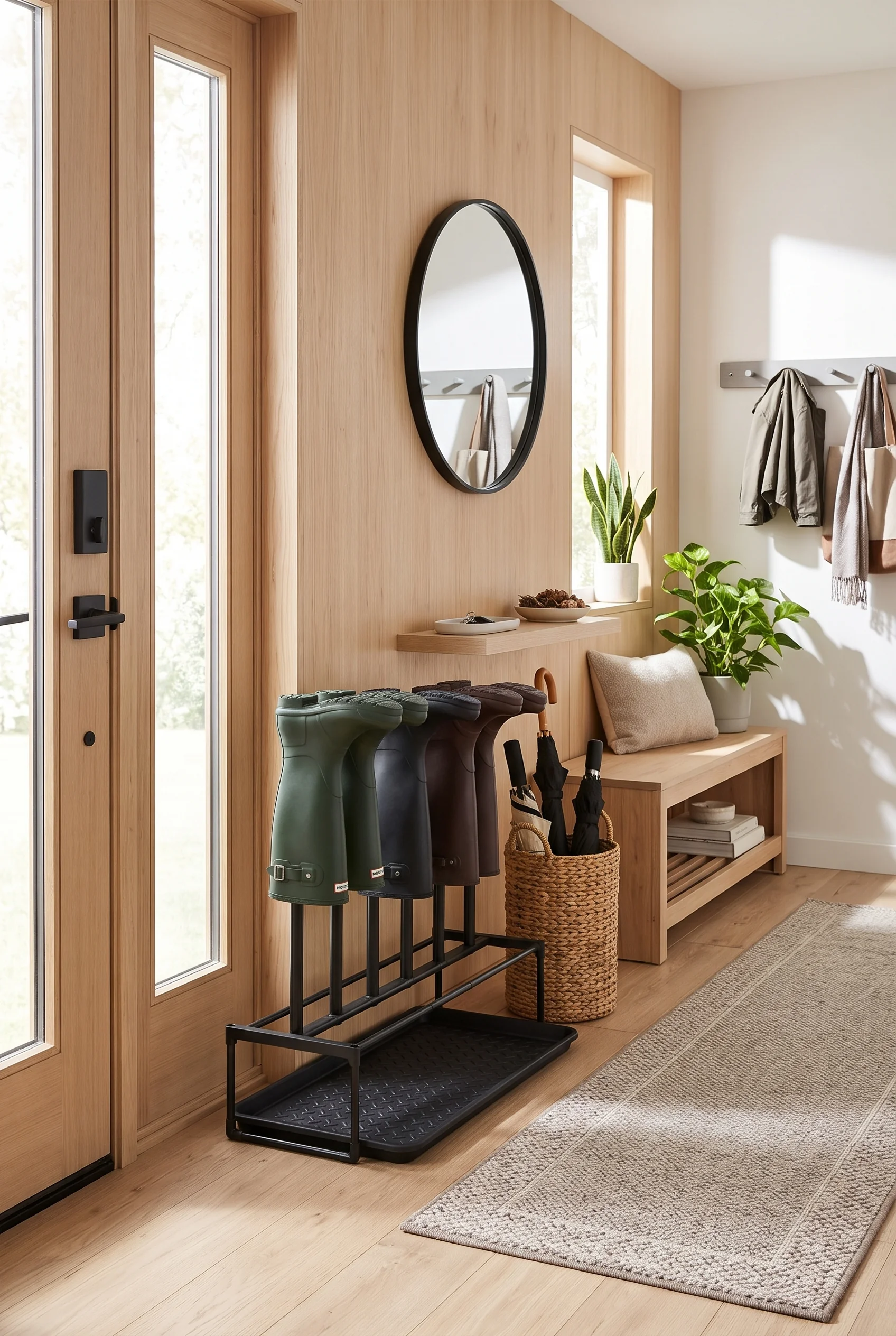
Tall boots flop over on a regular shelf, crease at the ankle, and leave puddles wherever they land. A dedicated boot rack holds them upside down on posts, so they keep their shape and dry between wears.
The drip tray underneath catches melted snow and muddy water before it reaches your floors, and it rinses clean in the tub.
In rainy or snowy climates, this drip tray prevents the most damage. A basket of umbrellas beside it creates a true wet-weather zone right by the door, keeping soggy gear from traveling deeper into the house.
Open Shelving Pretty Enough to Leave on Display
Open storage gets a reputation for looking chaotic, but the right shelves can display shoes like pieces you want to see. The secret is restraint: fewer pairs, generous spacing, and a few decorative pieces to break up rows of footwear. These ideas work for anyone who would rather show off a favorite pair than hide it away.
Floating Shelves That Turn Favorite Pairs Into Decor
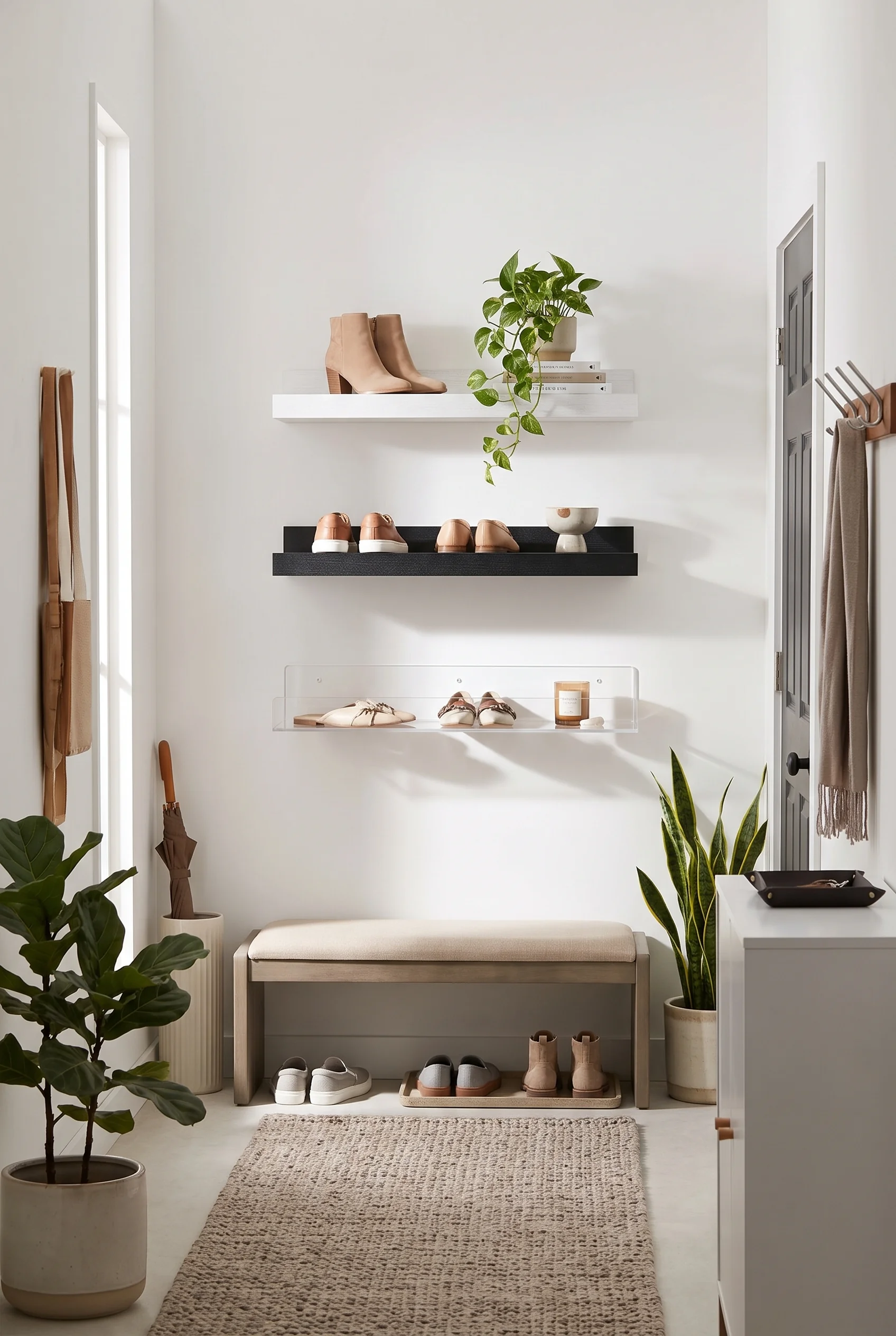
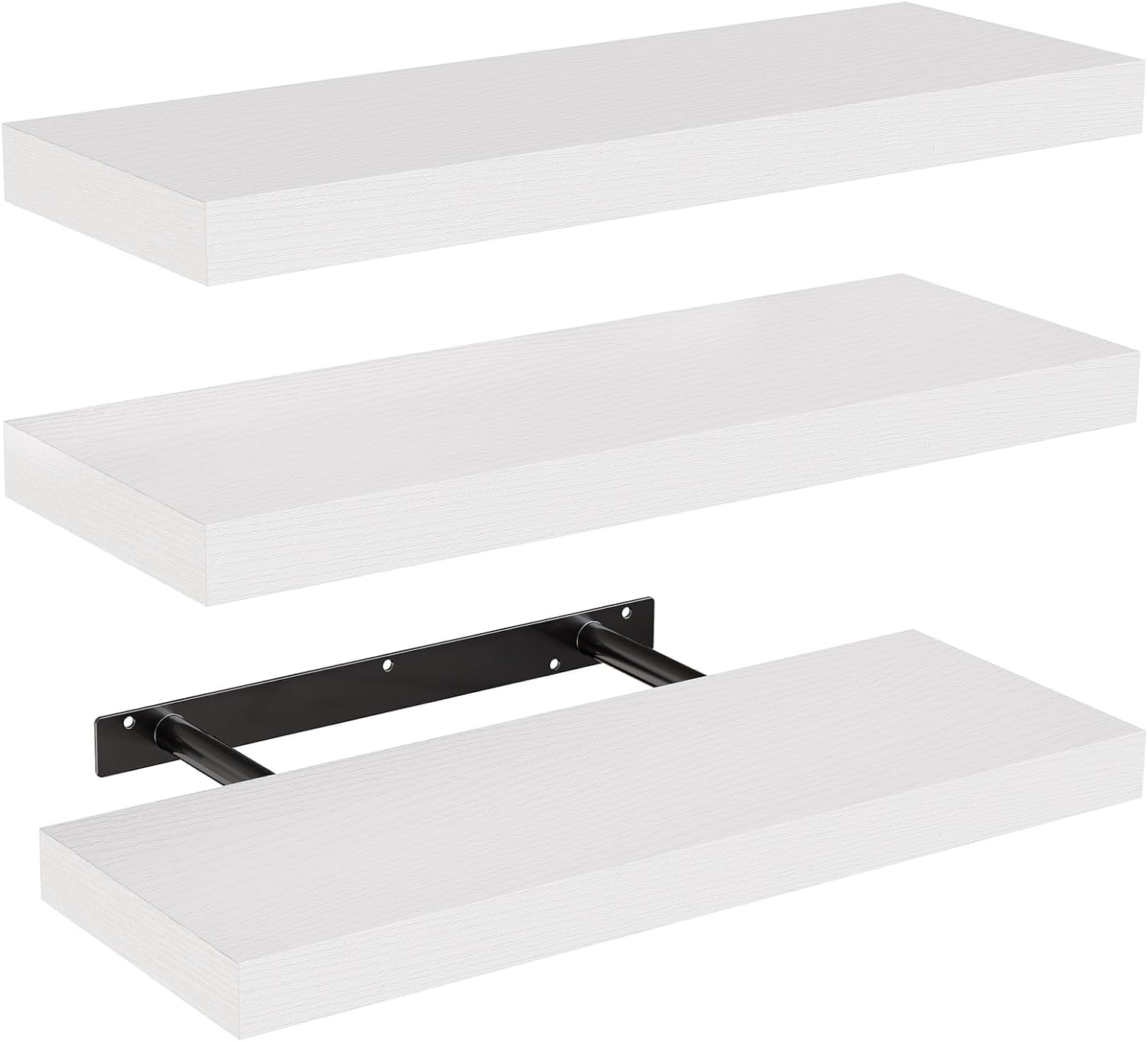
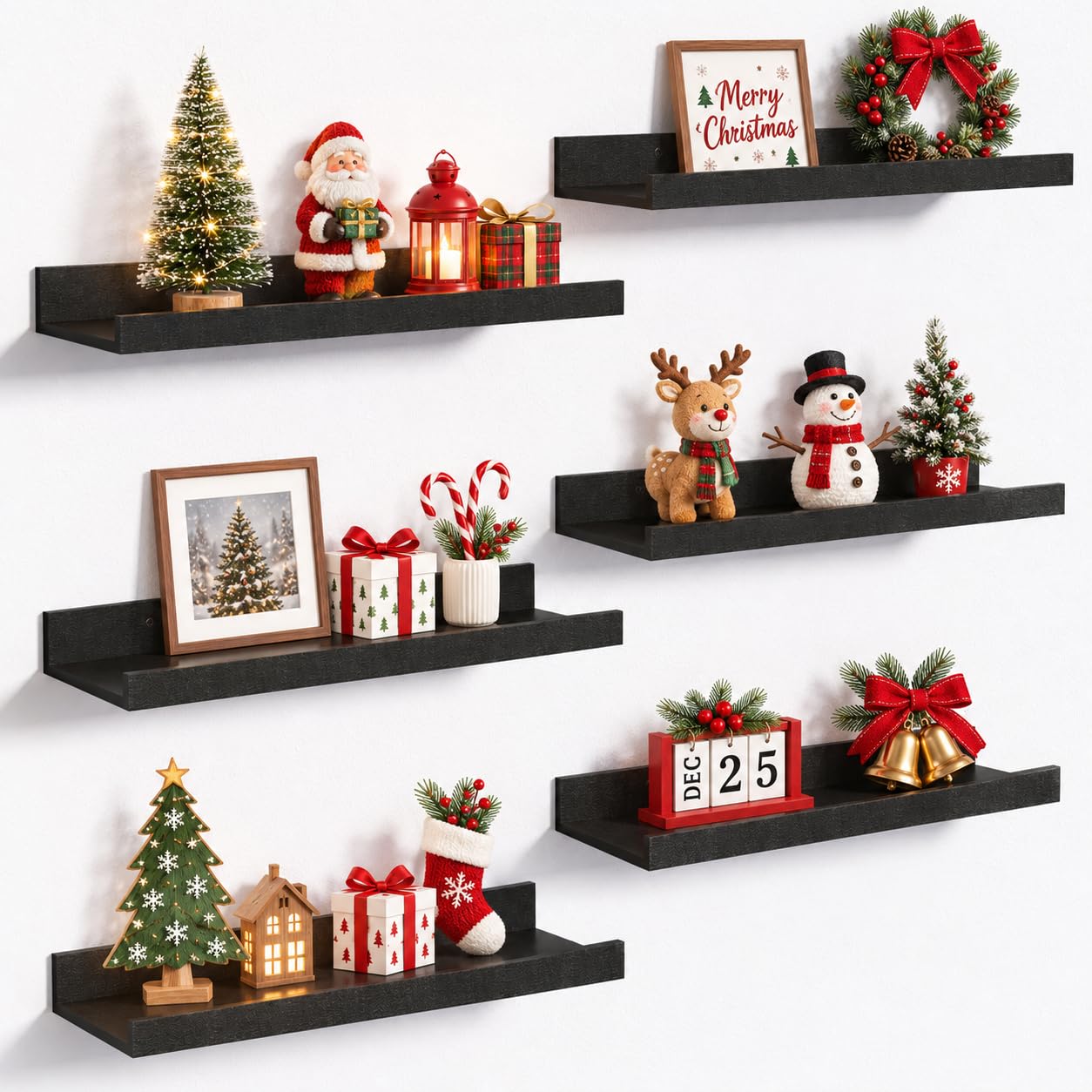
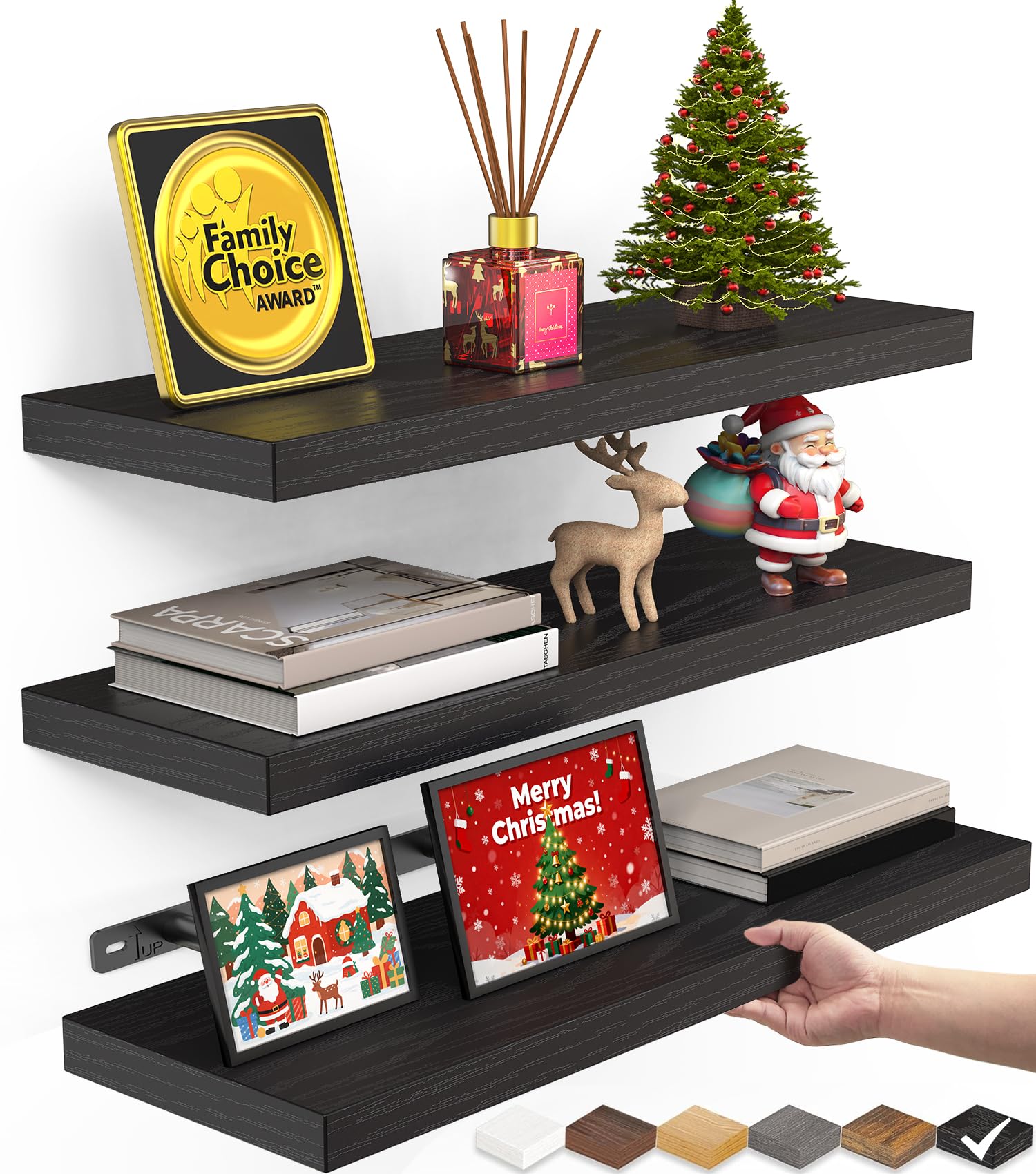
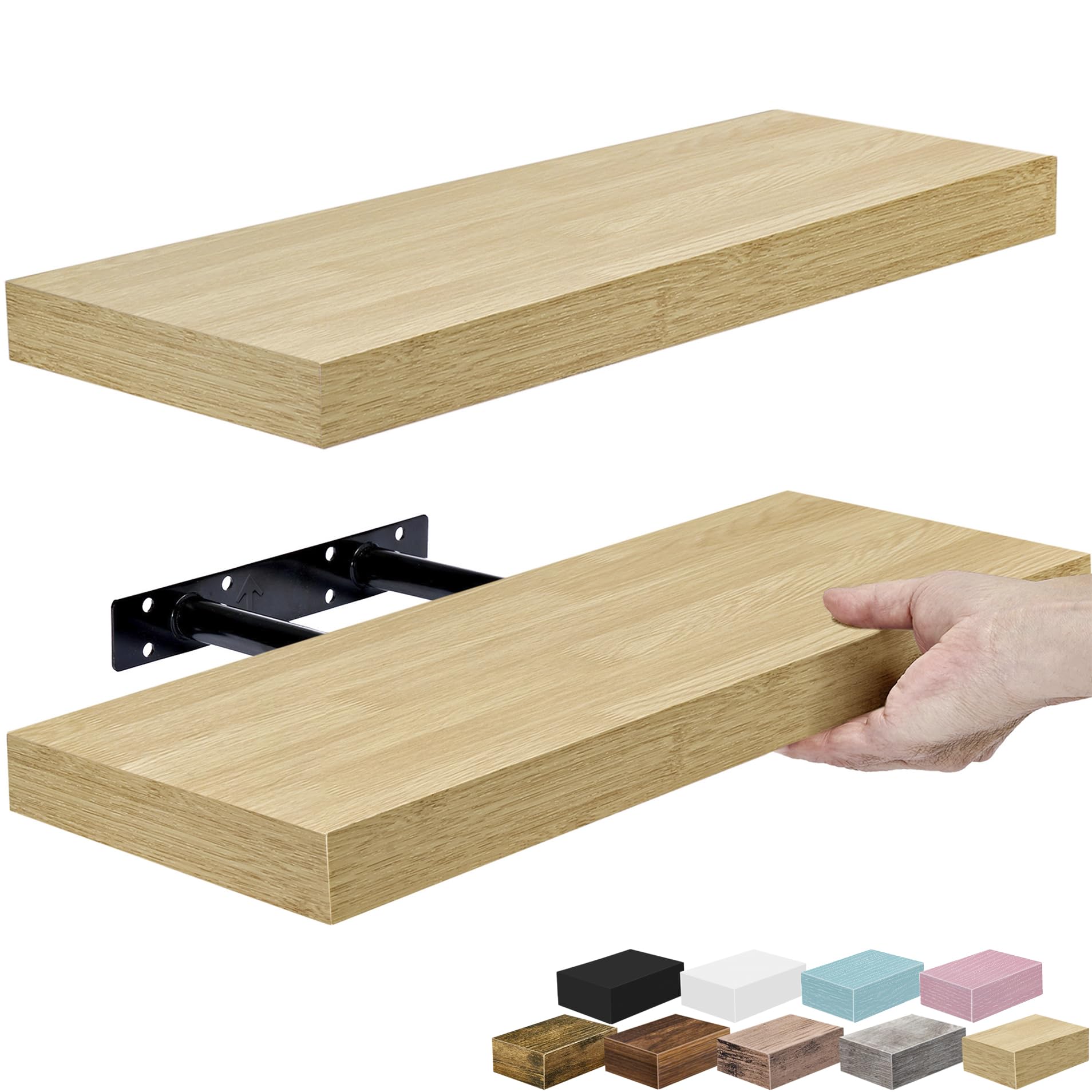
Floating shelves take shoes off the floor and display them like art. Staggered at different heights, they read as wall decor first, so a pair of ankle boots sits as comfortably as a vase or a trailing plant.
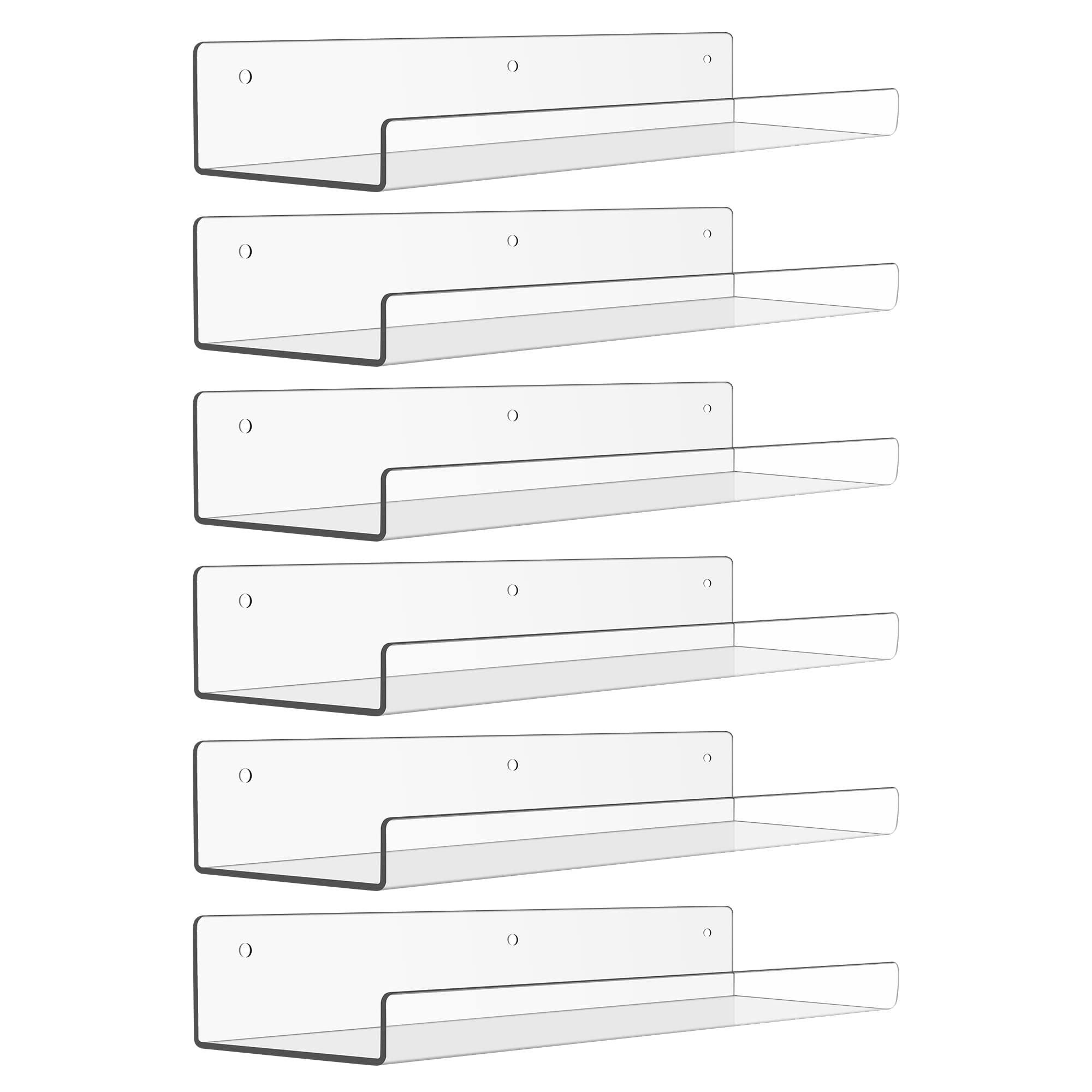
Mixing materials keeps a stack of shelves from feeling heavy. A clear acrylic shelf almost disappears, a useful trick for the lowest tier in a tight space.
Two or three pairs per shelf is plenty, with room to breathe between them. Everyday shoes can live on a tray under a bench, leaving the shelves for the pairs you’re proud of.
Low Open Shelving That Balances Show and Storage
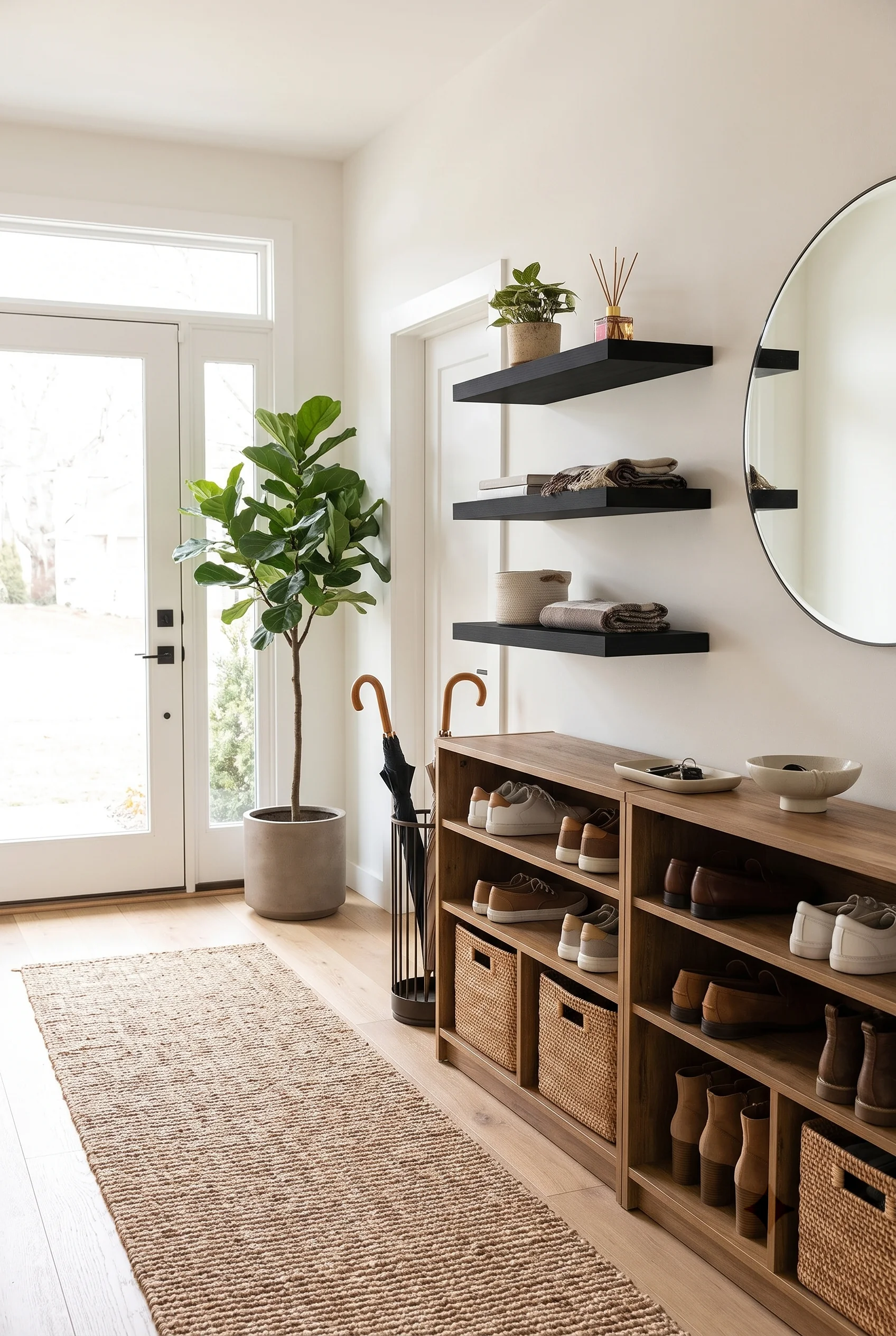
Open shelving at waist height gives a small entry the capacity of a closet with the warmth of a sideboard. The top works as a landing spot for keys and mail, while shoes line up below where everyone can grab them.
Mixing open cubbies with woven bins keeps it from looking busy. Bins hide the odds and ends like kids’ sandals and spare socks, and the open sections hold the pairs worn most often.
Solid wood shelving holds up well to a busy family, too. Scuffs blend in, and the piece can move to a playroom or laundry room later, which makes it one of the more flexible mudroom storage solutions around.
A Lit Niche Built Right Into the Wall
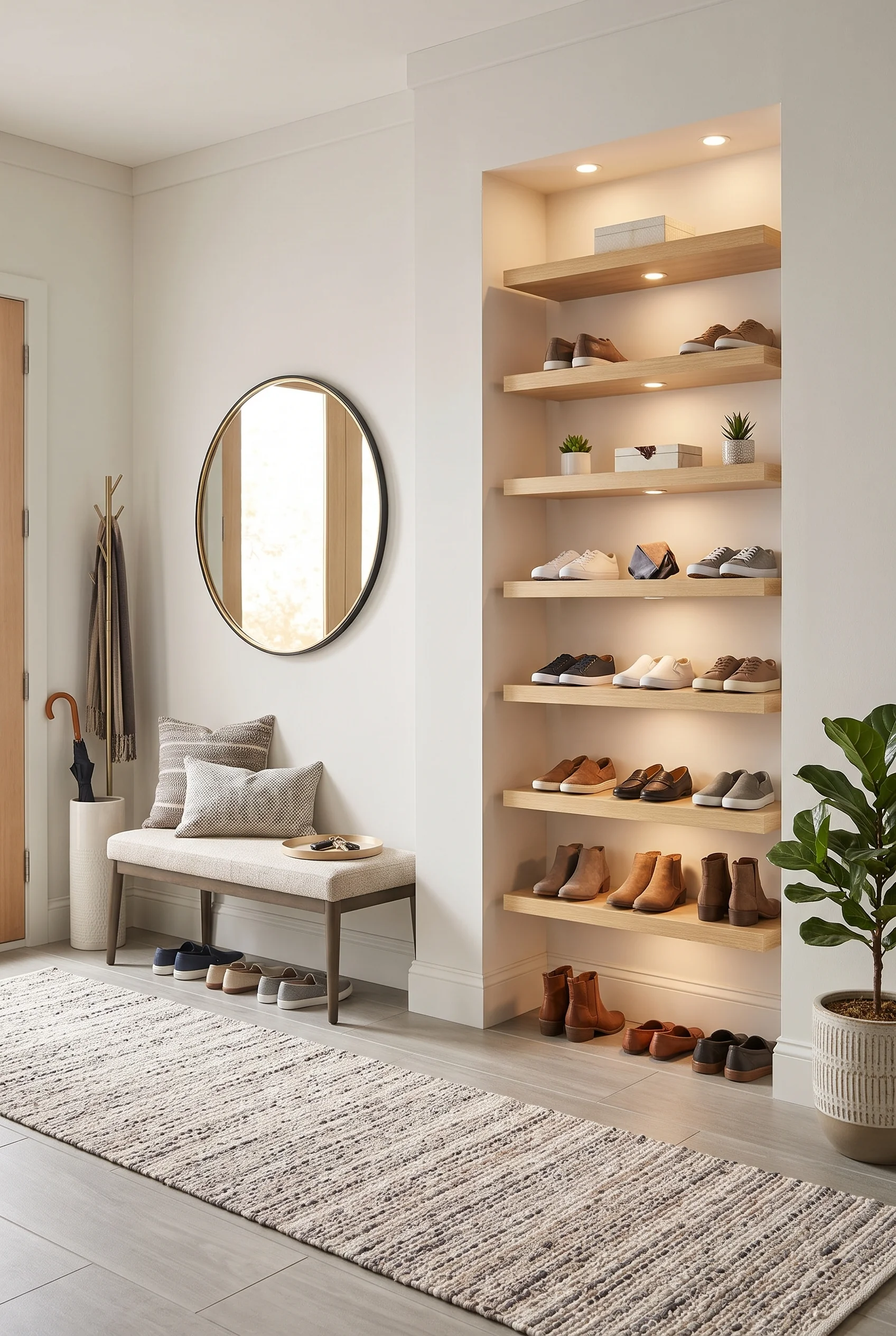
A recessed niche turns the hollow space inside a wall into storage that doesn’t protrude an inch into the room. For a small entry, that’s the ultimate space saver, and it gives shoes a custom, built-in look.
Lighting is what elevates it. Small puck lights or an LED strip under each shelf make the niche glow in the evening, doubling as a soft night-light when someone comes home late.
It’s a bigger project, usually best handled during a renovation or with a contractor who can check for wiring and plumbing first. Floating shelves inside a framed opening offer a similar look with far less demolition.
An Entry That Feels Like a Soft Landing
Every idea here comes back to one simple shift: shoes need a home that isn’t the floor. Once they have one, the entryway stops being where clutter collects and becomes the place where your day starts to soften. That first step inside sets the tone for everything after it.
There’s no need to try all nineteen. Start with whatever bothers you most.
When the floor is the problem, go vertical with a door organizer or wall racks. When the mess is mostly visual, a closed cabinet or a few baskets will quiet things down. And when everyone needs a place to sit, a storage bench or ottoman handles two jobs at once.
Small entryway shoe storage works best when it matches how your family actually lives.
Kids need low, obvious spots. Busy mornings need grab-and-go access. Rainy seasons need somewhere for wet boots to drip. Build around those habits, and the system mostly takes care of itself.
If this has you itching to reset more than the front door, these new year home refresh ideas carry the same calm, intentional approach through the rest of the house. Start with one corner, tackle it one weekend, and make one decision about where the shoes live. Your future self will notice the difference every time you walk in.