19 Small Kitchen Organization Without Pantry Ideas That Save Space
Kitchen organization without a pantry can feel like a daily puzzle. Cereal lives next to the mixing bowls, olive oil fights the cutting boards for counter space, and every cabinet holds a little of everything. The good news? A kitchen with no pantry can still feel calm, roomy, and easy to cook in.
As a mom, I know how fast a small kitchen fills up once snacks, school lunches and weeknight dinners move in. The walls, the backs of doors and the corners under the sink hold food, tools or supplies you reach for every day. Each of those spots can carry what you use most.
These 19 small kitchen storage ideas borrow from my kitchen organization ideas for a clutter-free kitchen, scaled down for tighter footprints. Some take ten minutes and a pack of hooks. Others, like a rolling cart or a compact island, give you a pantry’s worth of storage you can move.
Pick the ones that fit your space and your routine. For the cabinet under your sink, my guide to under kitchen sink organization ideas goes even deeper.
DISCLOSURE: Some of the links provided on this page are affiliate links. This means if you choose to make a purchase through these links, we may receive a small commission at no extra cost to you.
Walls That Hold More Than Cabinets Do
When floor and cabinet space run out, the walls are still waiting. Most small kitchens have more open wall than it seems, from the strip above the counter to the side of a cabinet run. Shelves, rails, and hooks turn those surfaces into storage you can see and reach in one motion, which matters most when there’s no pantry to fall back on. For keeping open shelves looking finished, my kitchen decor ideas are a good companion.
Kitchen Organization Without a Pantry Starts on the Wall
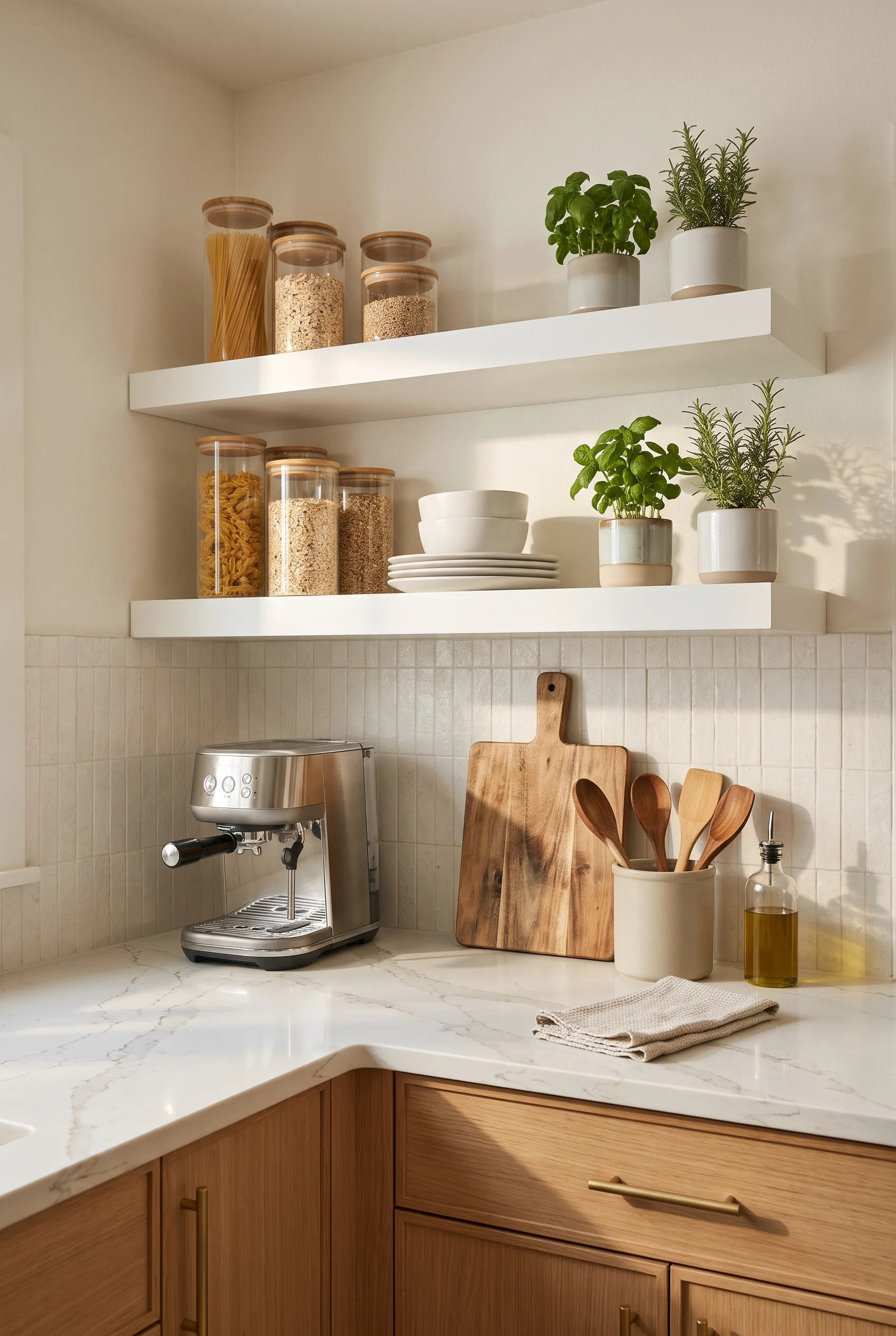
Floating shelves at two heights do the work of an upper cabinet without the bulk of doors. The higher shelf holds what you use weekly, like jars of oats or rice. The lower one, closer to the counter, takes the everyday plates and the coffee you grab before anyone else is awake.
Stagger the shelves instead of lining them up, and leave a little air at each end. A pot or two of herbs can live up there as well, which frees a windowsill or a corner of the counter.
Two shelves are usually enough. Add a third and a small wall starts to feel crowded rather than open.
Open Corners That Stop Wasting Space
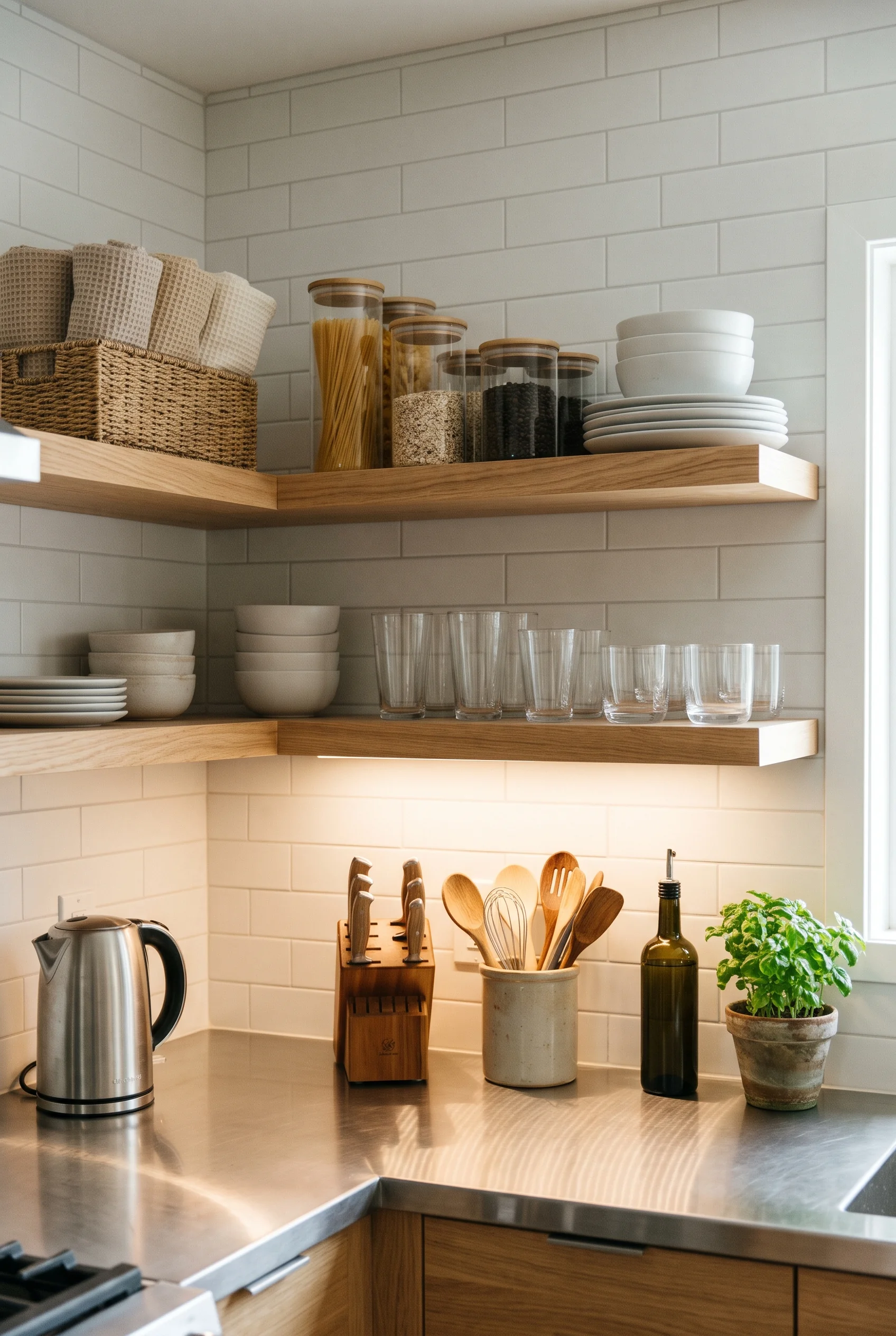
Corners are where small kitchens lose the most storage. A closed corner cabinet hides half its contents behind a hinge, while open L-shaped shelves let you use every inch and see it all at a glance.
Give the corner to things that look good in a stack, like everyday glasses and bowls. Heavier pieces belong on the lower shelf, where a full stack is easy to lift down.
Wrap-around shelves soften a tight room. Without a door swinging open at head height, the corner feels like part of the wall, and the whole kitchen feels a step wider.
A Rail and a Few Hooks in Place of a Utensil Drawer
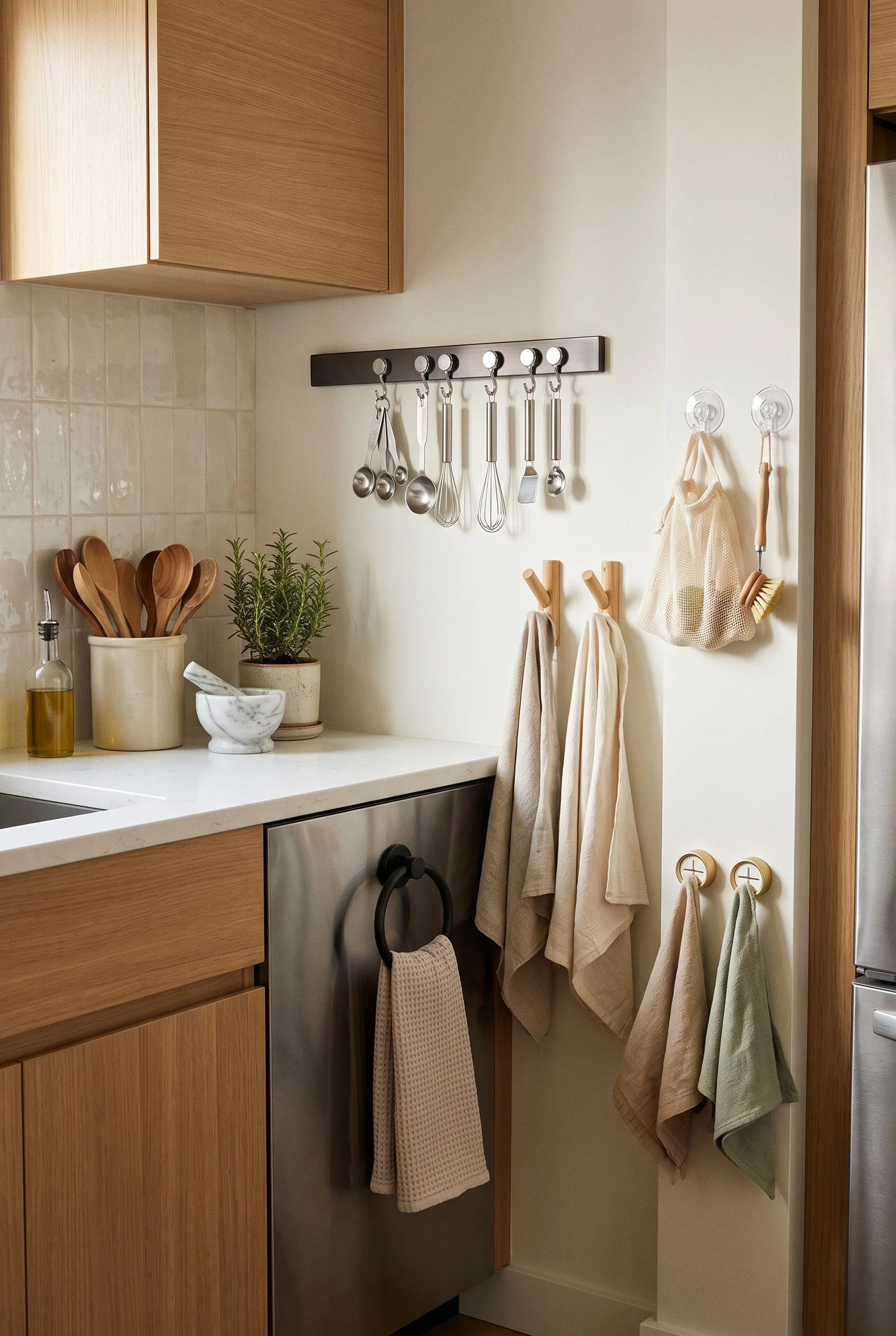
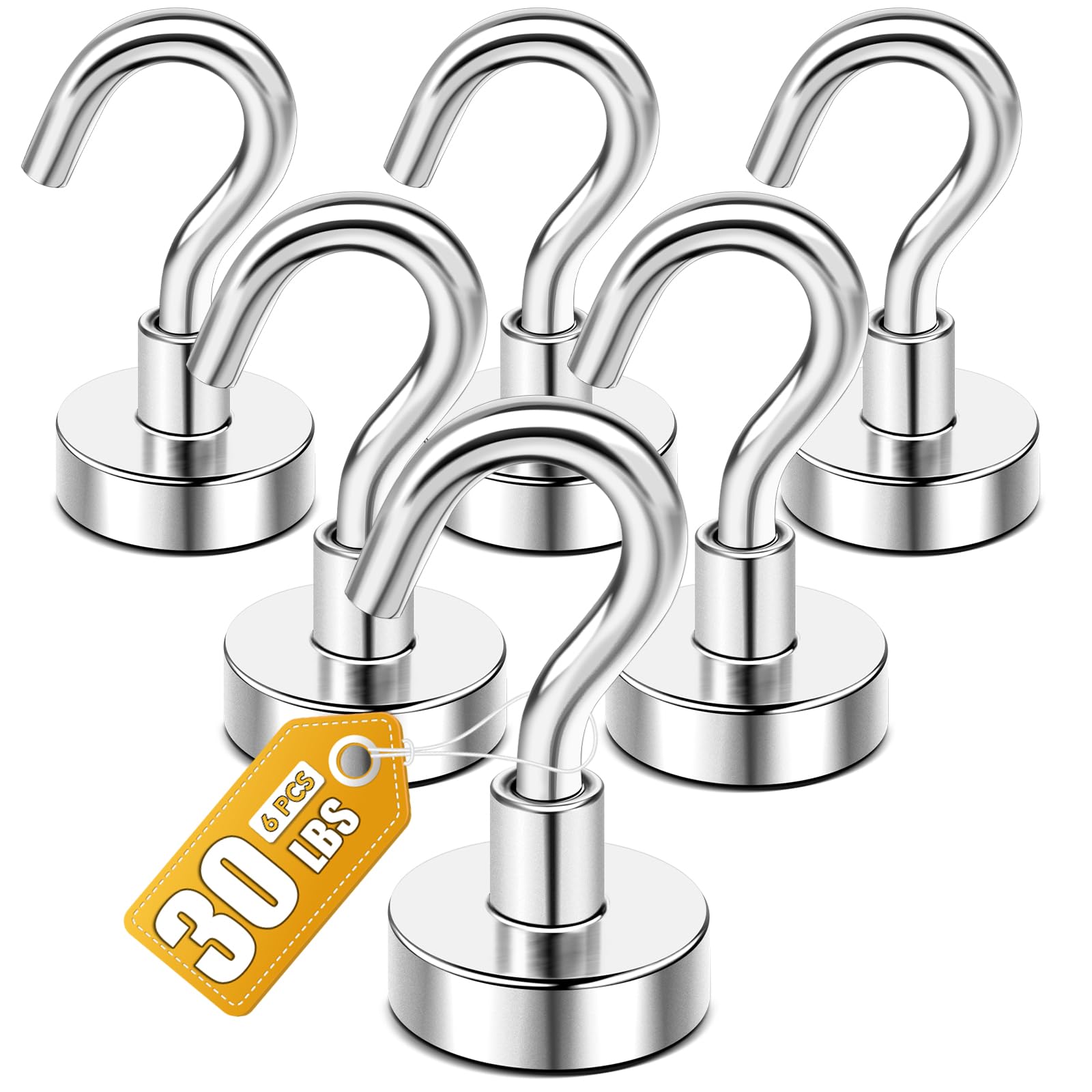
Hooks are the cheapest square footage in any kitchen. A single rail above the counter can carry ladles, a whisk and measuring spoons, which empties a drawer for the things that really need one.
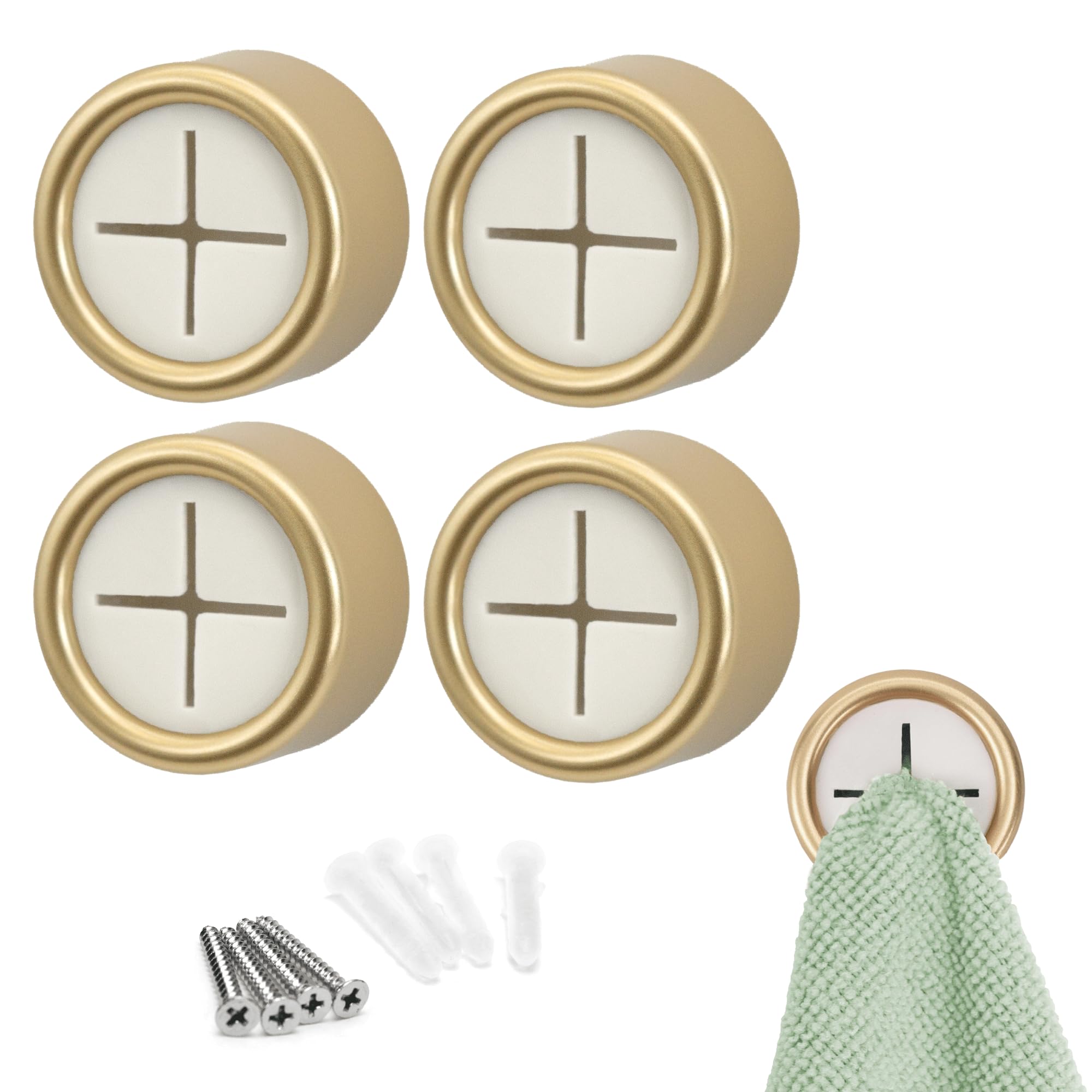
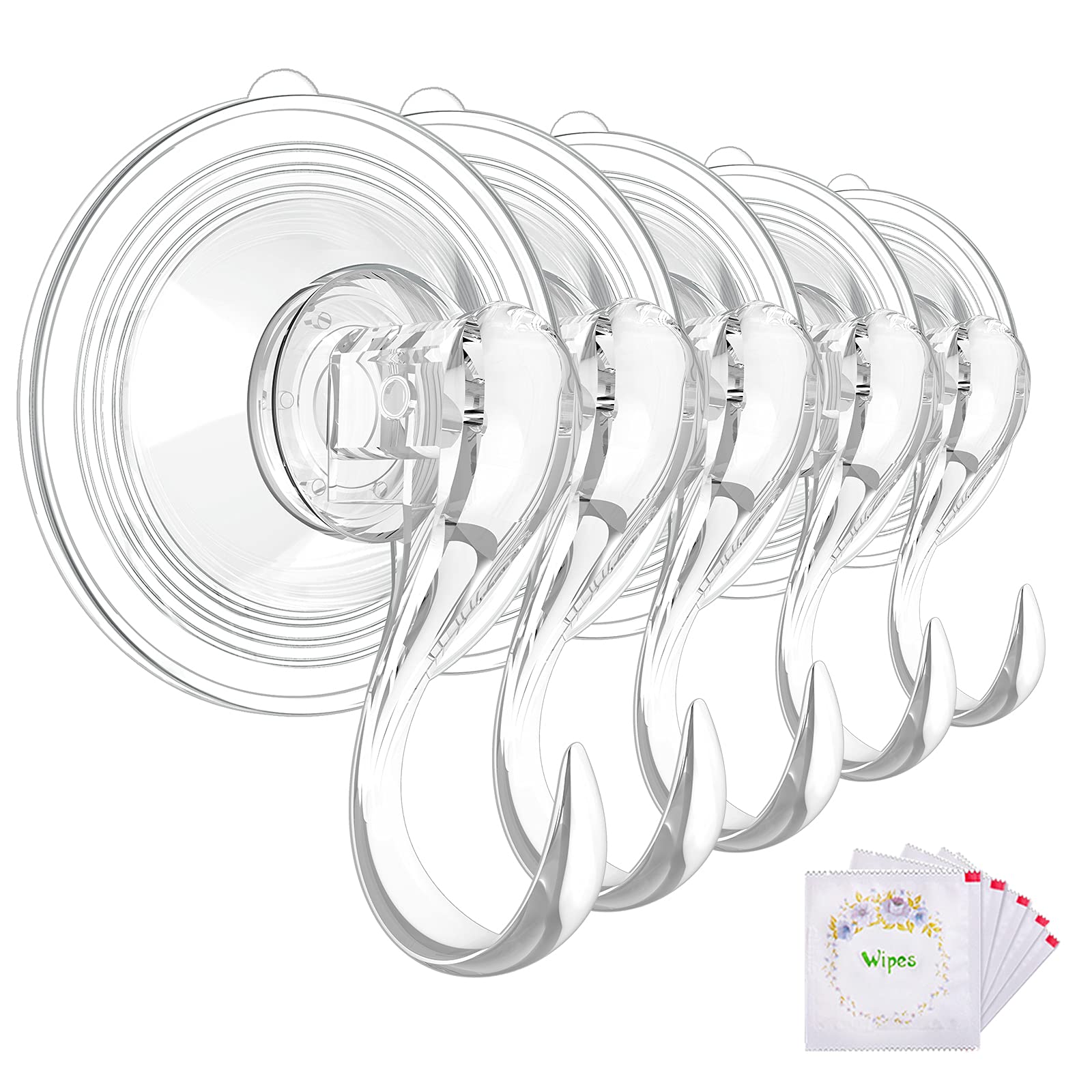
Adhesive and magnetic hooks fill the gaps a rail can’t reach. The side of a cabinet becomes a home for tea towels, and a strong magnetic hook on the range hood holds an oven mitt right where you need it.
Hang only what you use every week. A handful of tools on hooks looks intentional, while twenty starts to look like clutter that simply moved up a level.
Pegboard That Grows With Your Cooking
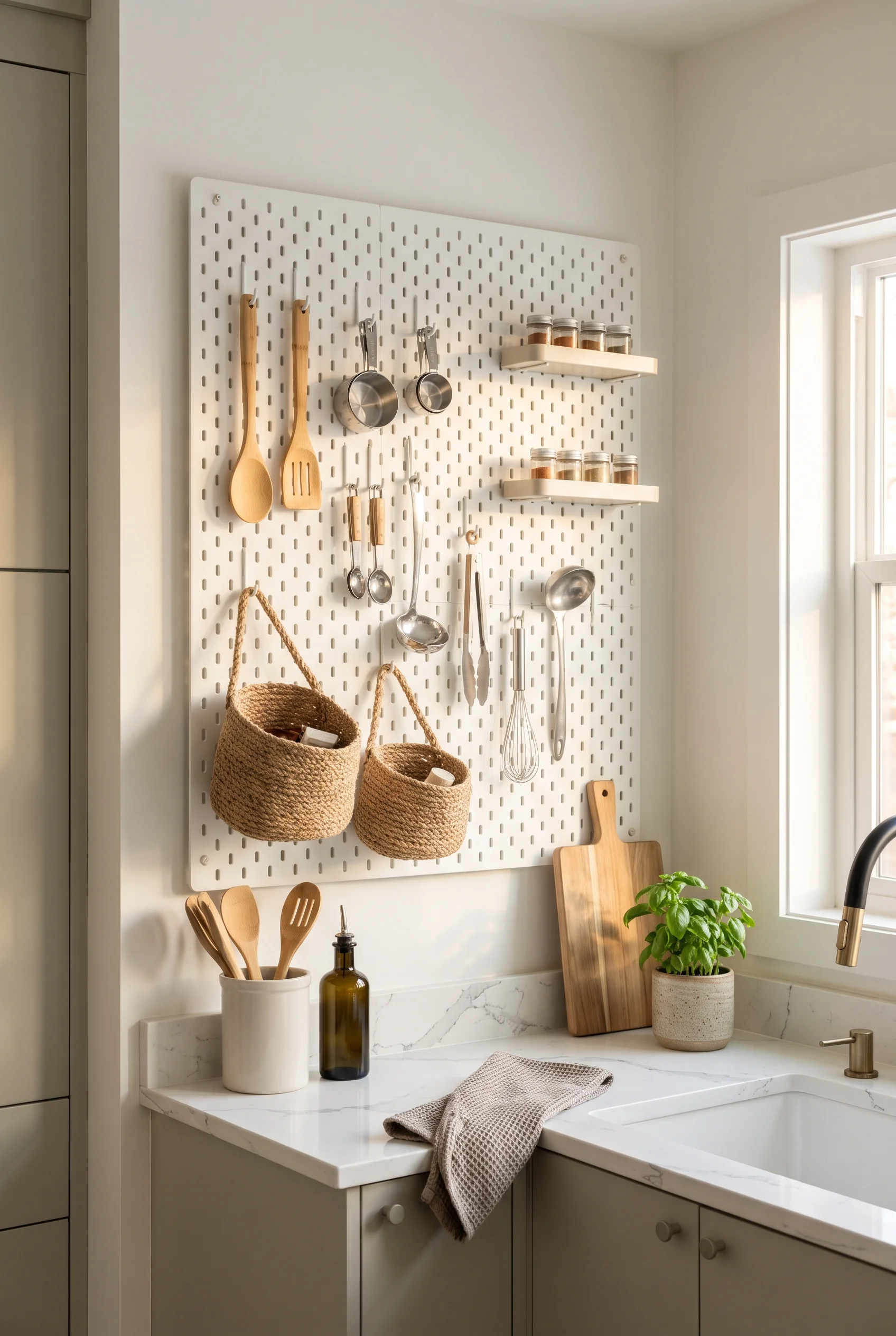
Pegboard solves the problem of tools that never fit a drawer, like long tongs or the strainer with the awkward handle. Each one gets its own peg, and moving a peg takes seconds when your routine changes.
Small add-ons make it more than a tool wall. A narrow shelf holds spice jars, and a hanging basket corrals garlic and onions that would otherwise sprawl across the counter.
Mount it near the stove or prep zone. A pegboard earns its place by saving steps, and that only happens when it sits where the cooking does.
Counter Space You Can Add, Move or Rethink
A kitchen without a pantry usually runs short on counter space too, since everything without a cabinet ends up on the worktop. These ideas add surface and storage at the same time.
Some pieces move, like a cart or an island on wheels, while others keep what sits out looking deliberate and easy to wipe down. Together they give overflow food a real home.
A Compact Island That Doubles as the Pantry
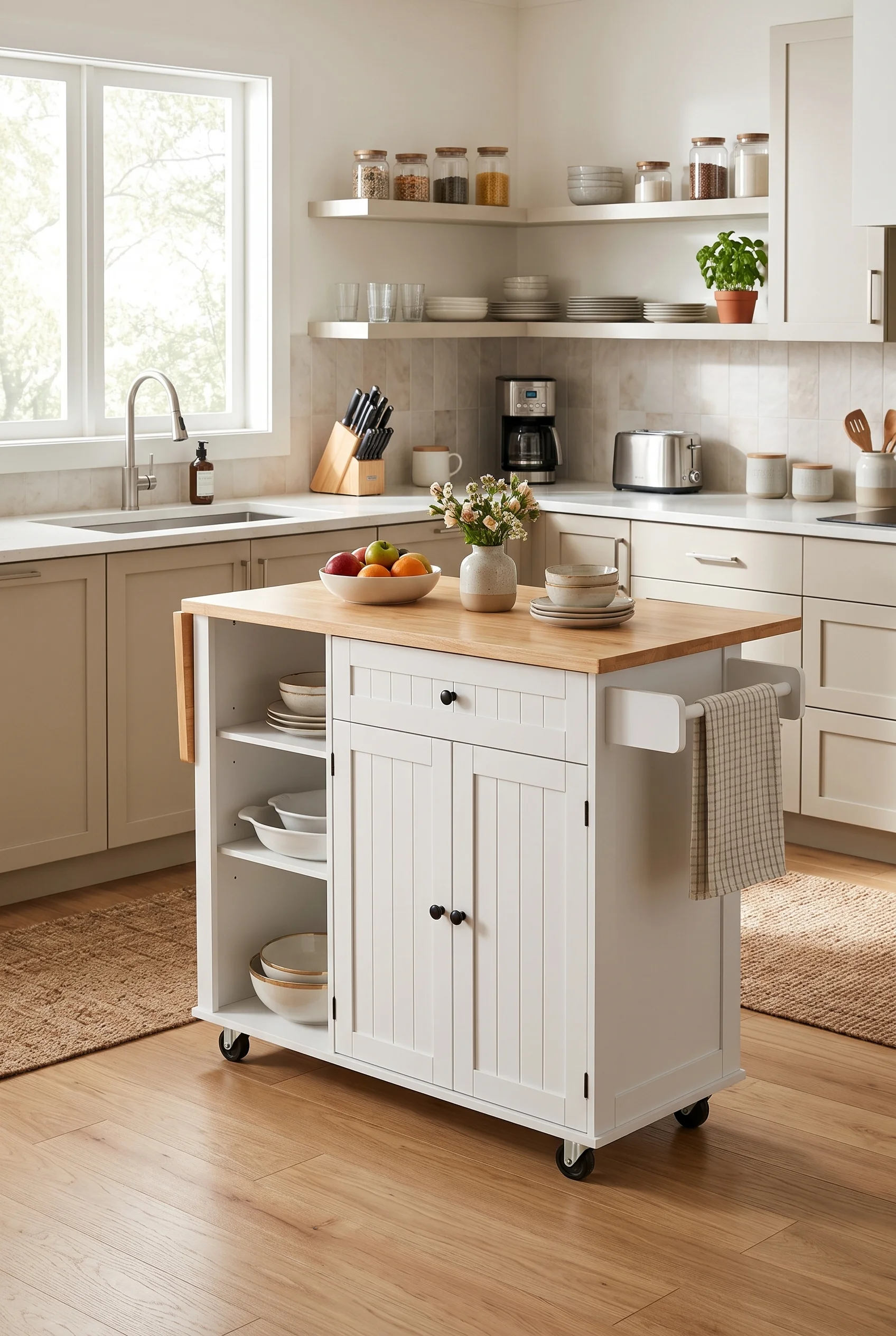
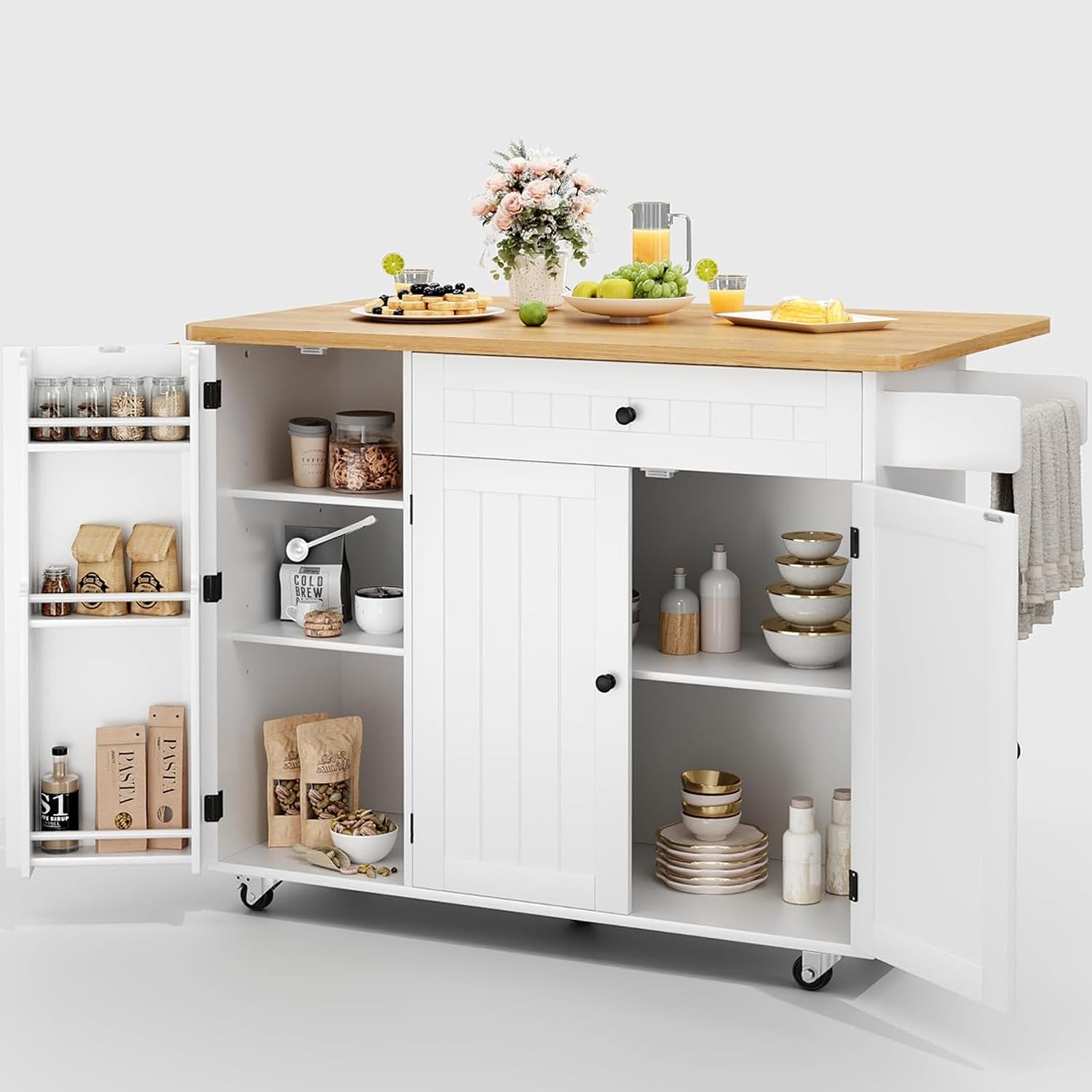
A small island with storage underneath is the closest thing to adding a pantry without building one. The top gives you a second prep surface, and the cabinet below holds the bulky things that never fit in an upper, like mixing bowls or a stand mixer.
Wheels matter in a tight room. Lock them while you cook, then roll the island toward a wall when you need the floor on a busy morning.
A towel bar on the side makes it even more useful. That one detail keeps a dish towel within reach of the sink without claiming any wall space.
A Rolling Cart for the Overflow Nobody Planned For
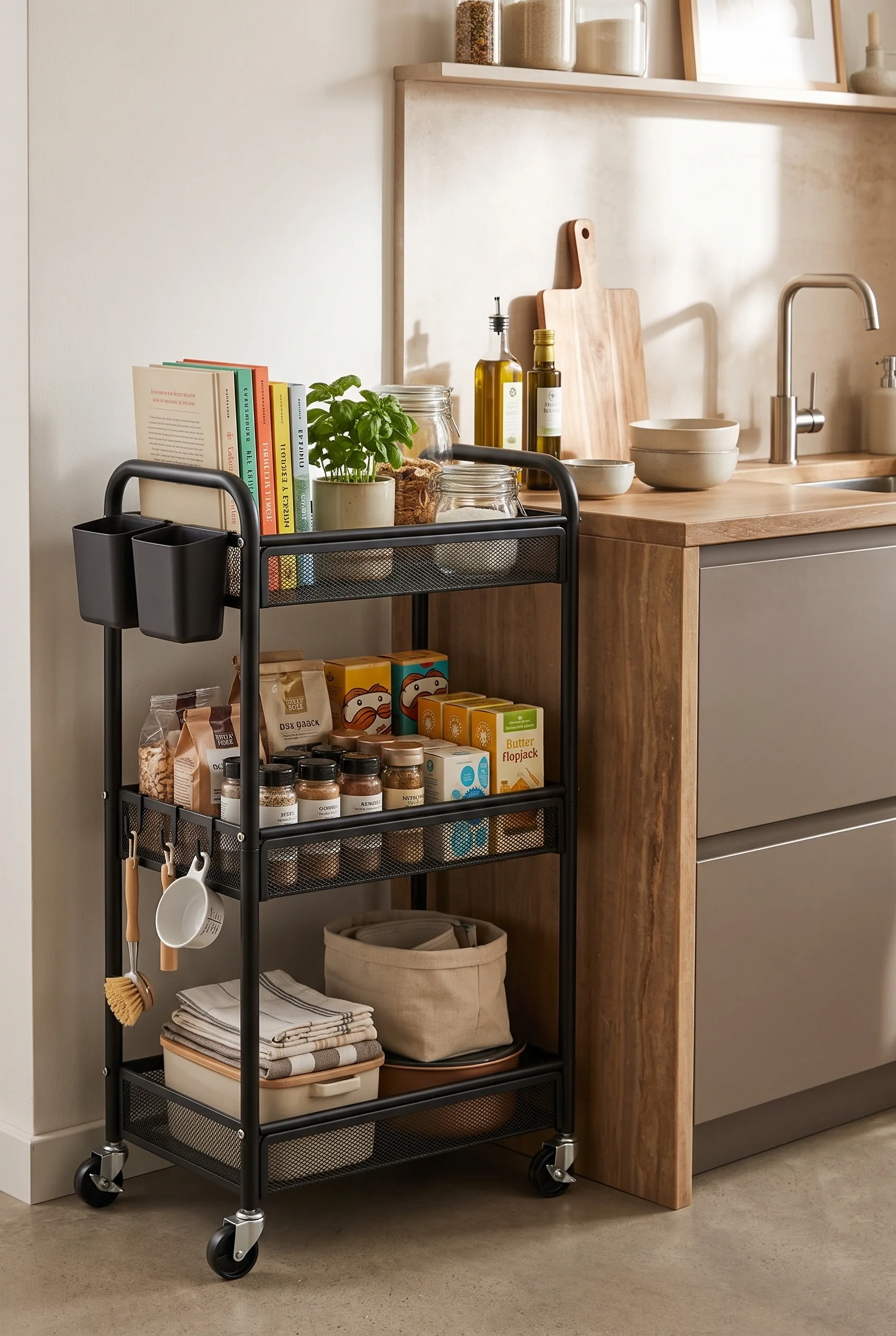
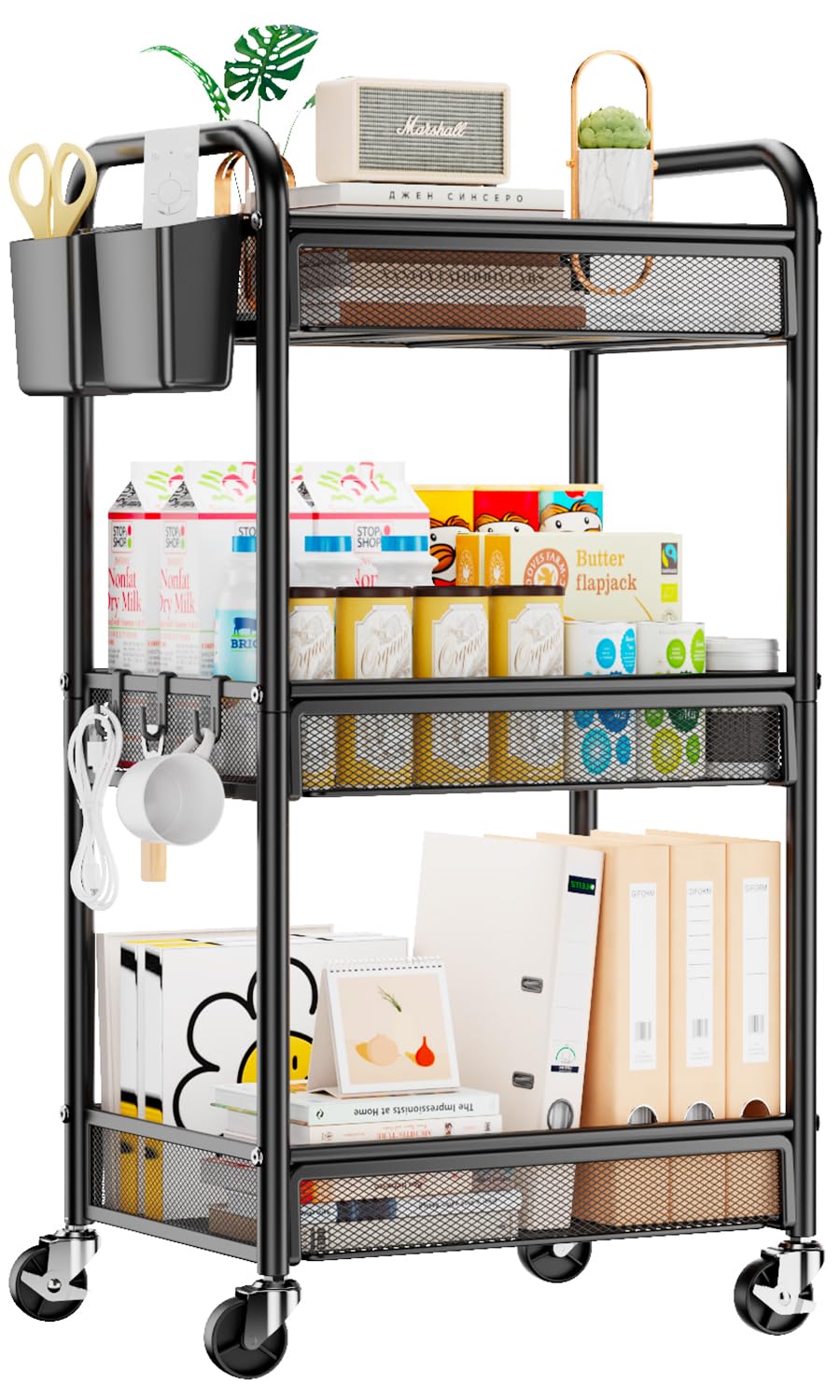
Every kitchen has items that never got a cabinet: snack bins, extra cans, bread bought on sale. A three-tier rolling cart gives that overflow a single address and slides into a gap beside the counter when it isn’t needed.
Assign each tier one job. Daily snacks go up top where kids can see them, with cans and jars in the middle and backstock on the bottom.
Keep part of the top tier clear. On a busy night, that cart doubles as a few extra inches of counter for a cutting board.
Dry Goods That Look Good Enough to Leave Out
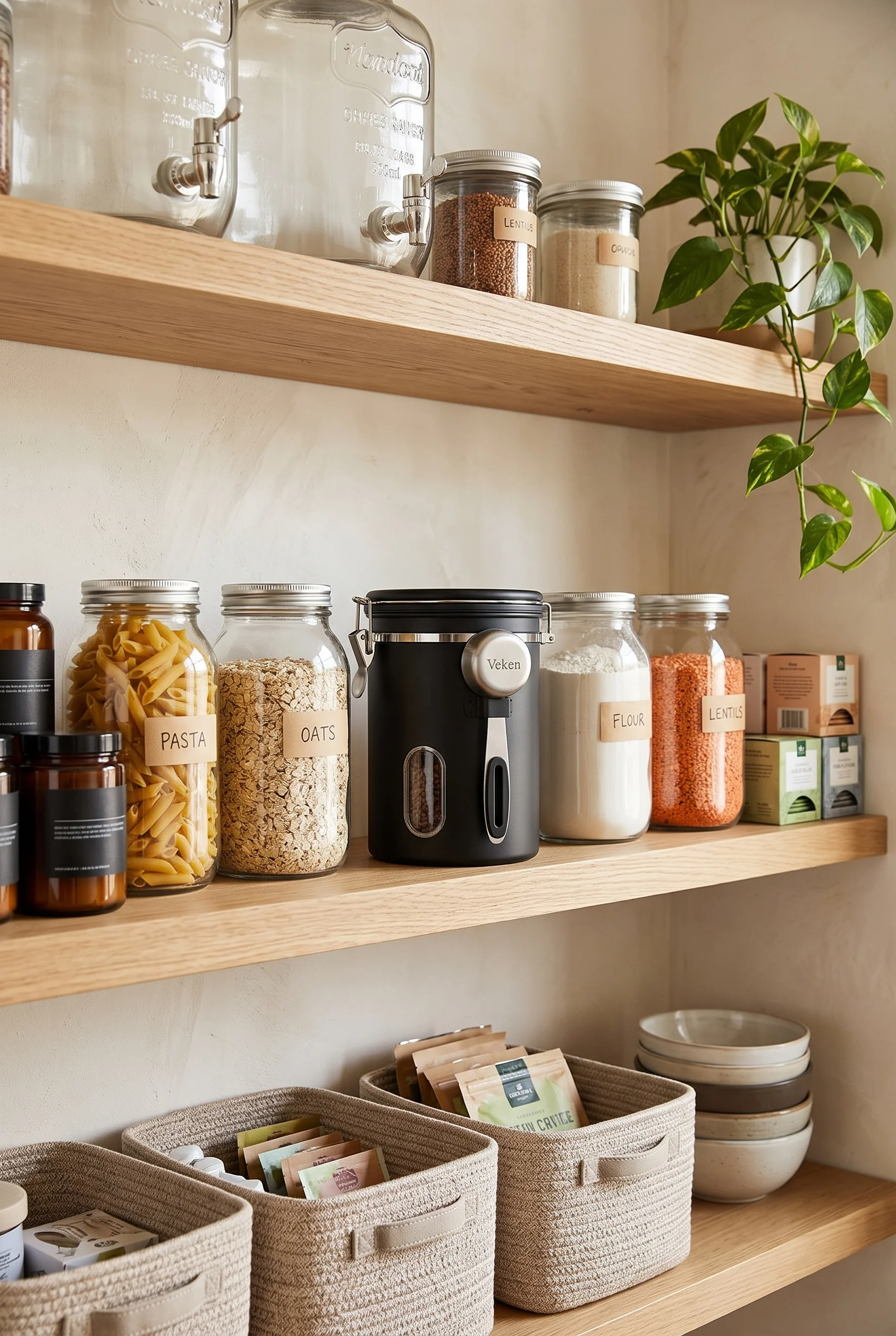
Glass jars turn the food you would normally hide into something worth displaying. Pasta, oats and flour all look tidy behind glass, and you can tell at a glance when one is running low.
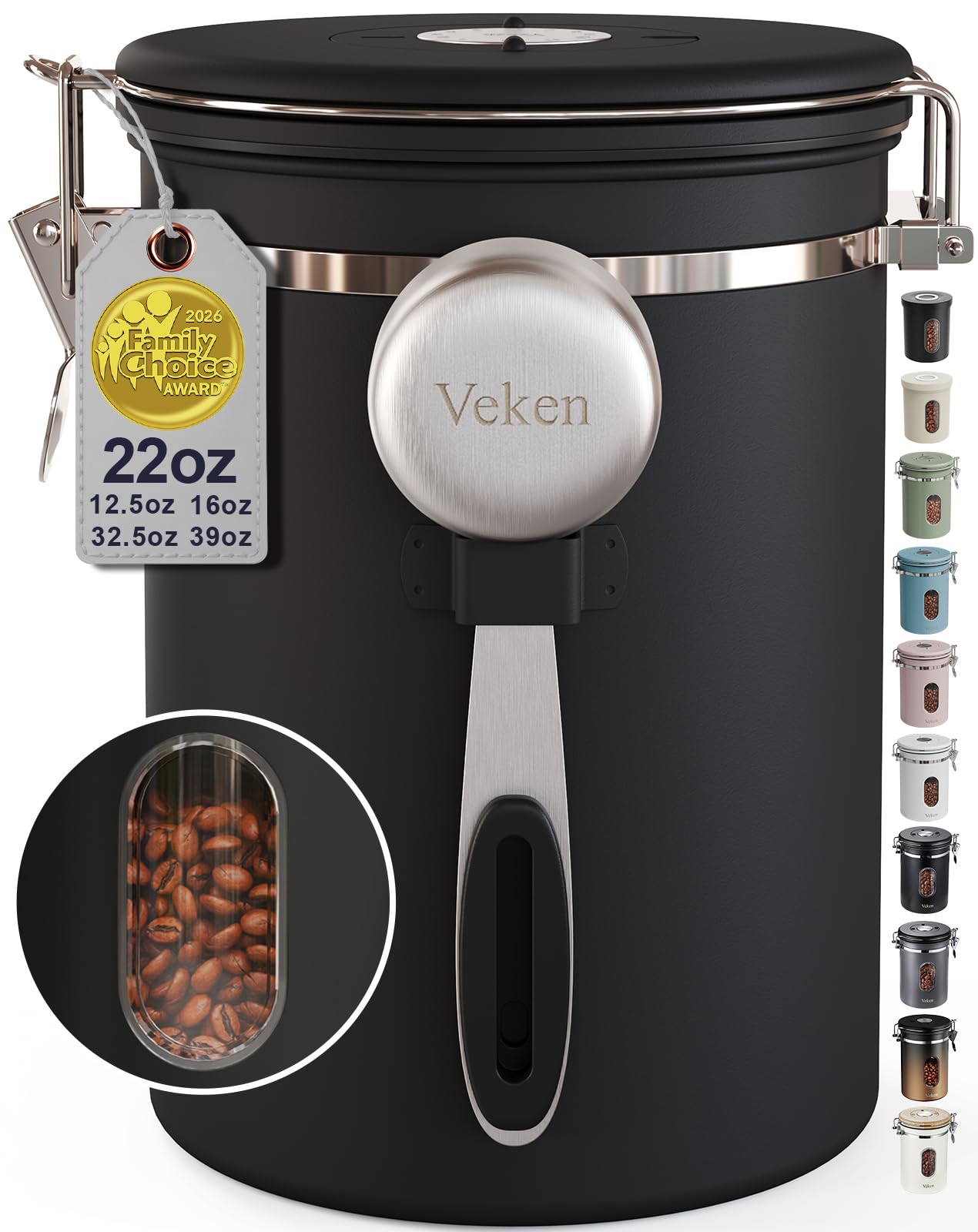
Choose jars in two or three sizes. A sealed coffee canister with a small window keeps beans fresh and shows you exactly how much is left.
Woven baskets below the jars hide the packaged things that never look good in glass, like granola bars and tea boxes. With glass up high and baskets underneath, the shelf stays pretty without much upkeep.
A Home for Every Kind of Food
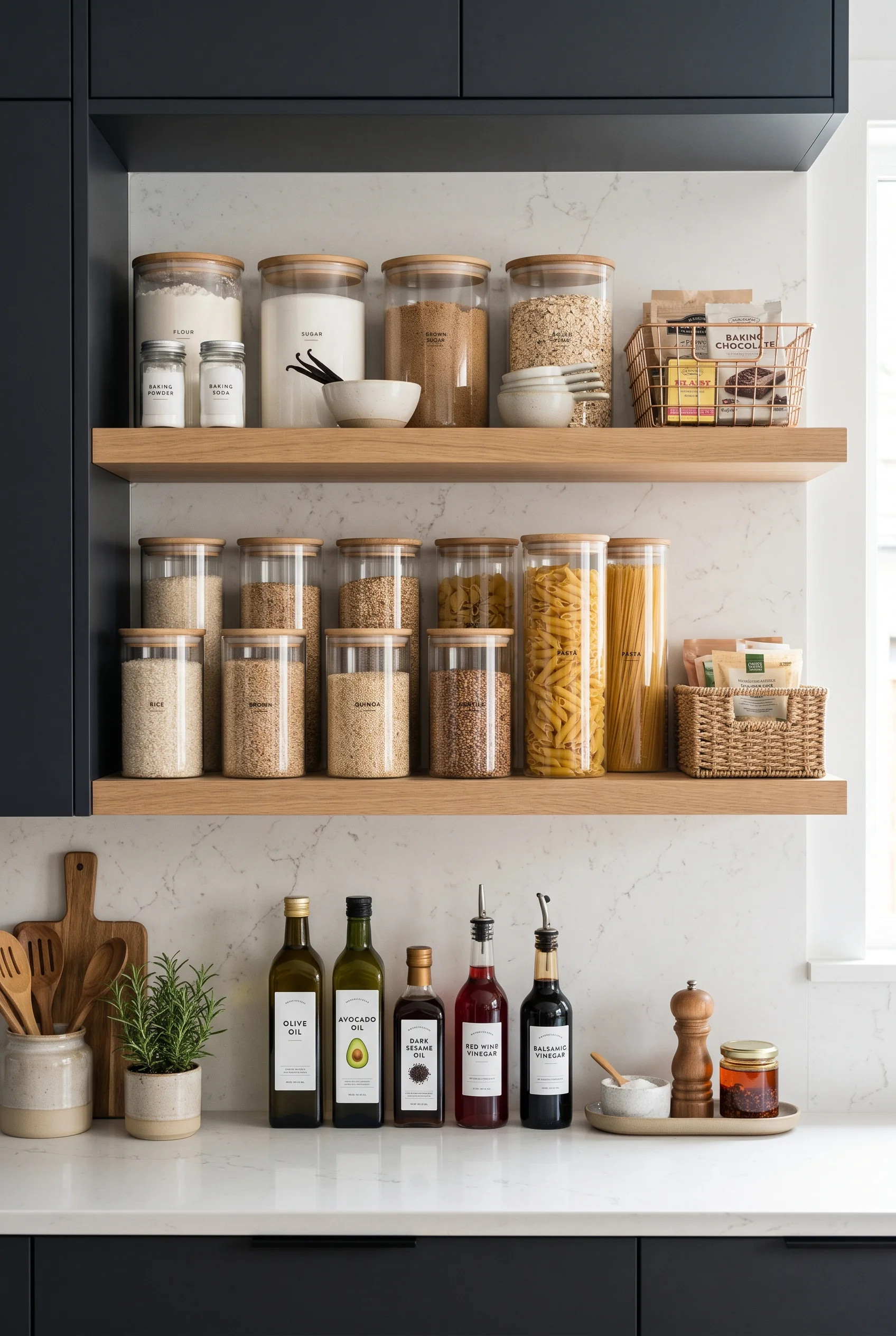
Zoning means deciding once where each type of food lives, then sticking to it. Baking staples share one shelf and grains another, while oils and vinegars stay near the stove where you actually pour them.
The payoff shows up at five o’clock. Nobody digs through three cabinets for the rice, and putting groceries away goes faster because every item already has a spot.
Matching containers inside each zone help the system hold. Once one zone sticks, usually breakfast or baking, the rest tend to follow.
Cabinets That Hold Twice What They Did
Without a pantry, regular cabinets have to carry food as well as dishes, and that is where most small kitchens fall apart. The fix is using the depth and height you already have. Dividers keep drawers from turning into piles. Stackable and clear containers fill the full height of a shelf, and turntables bring the back of a deep cabinet within reach.
Drawer Dividers That End the Utensil Shuffle
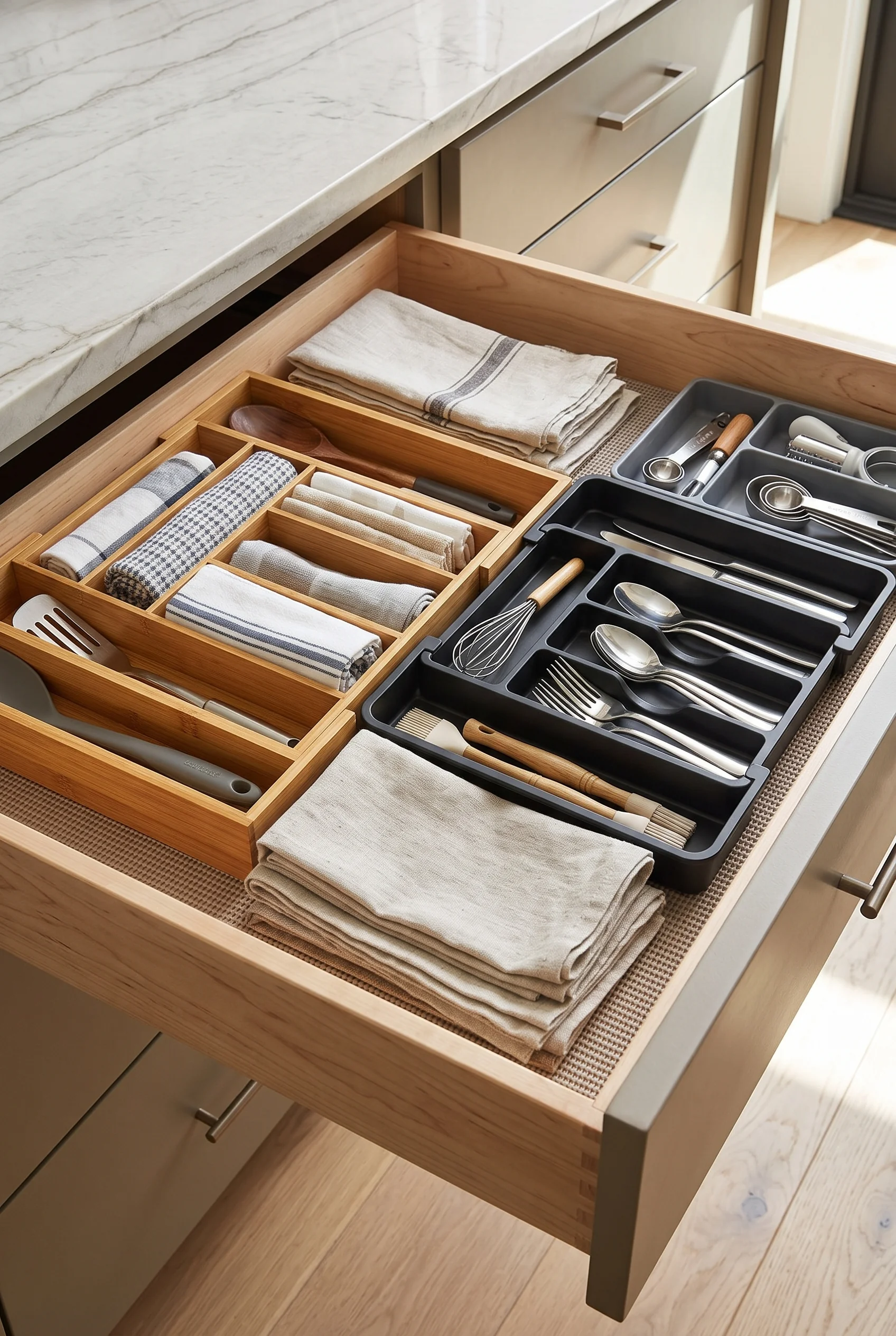
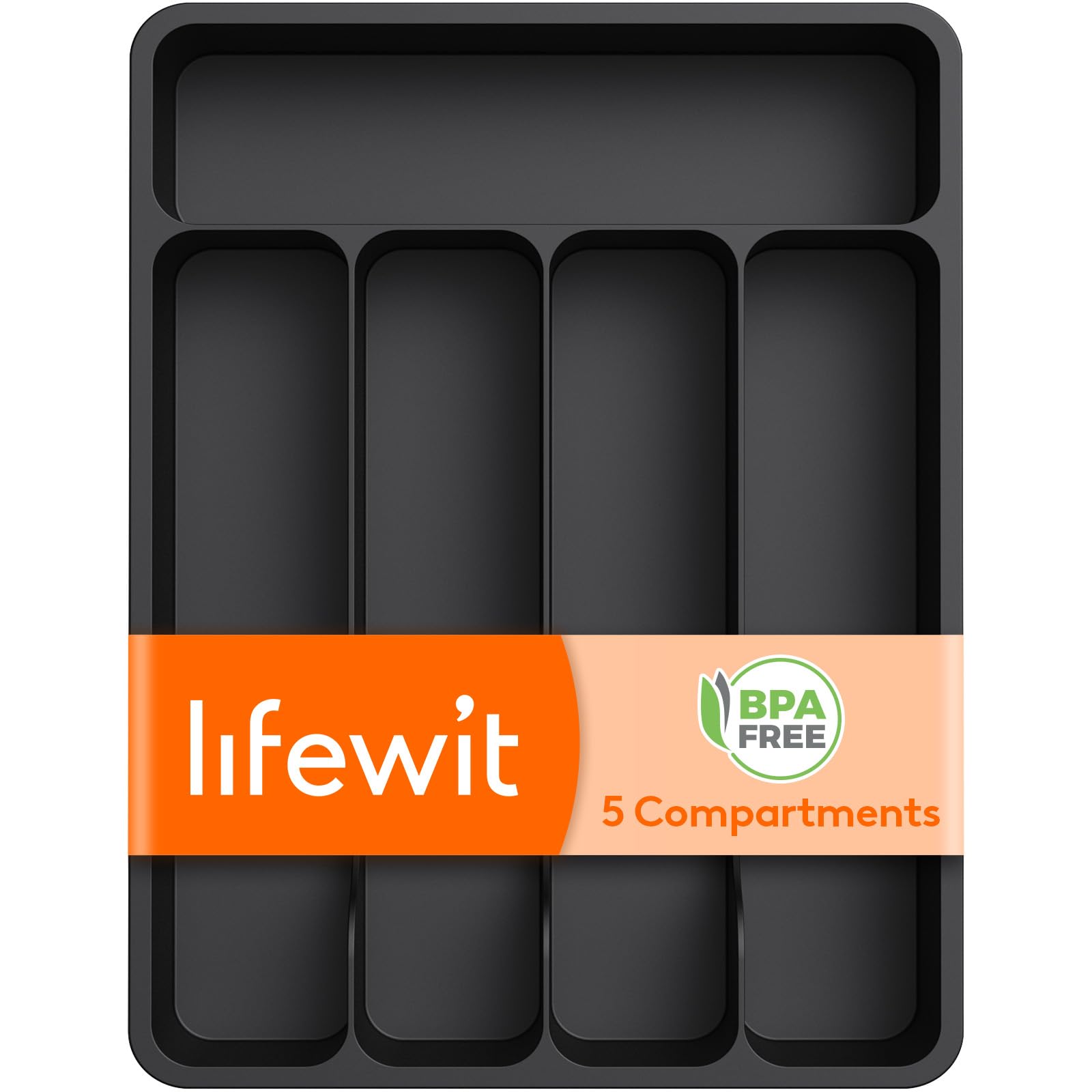
A drawer without dividers turns into a pile within a week. Expandable bamboo organizers stretch to the exact width of the drawer, so nothing slides when you pull it open and every peeler and spoon has its own lane.
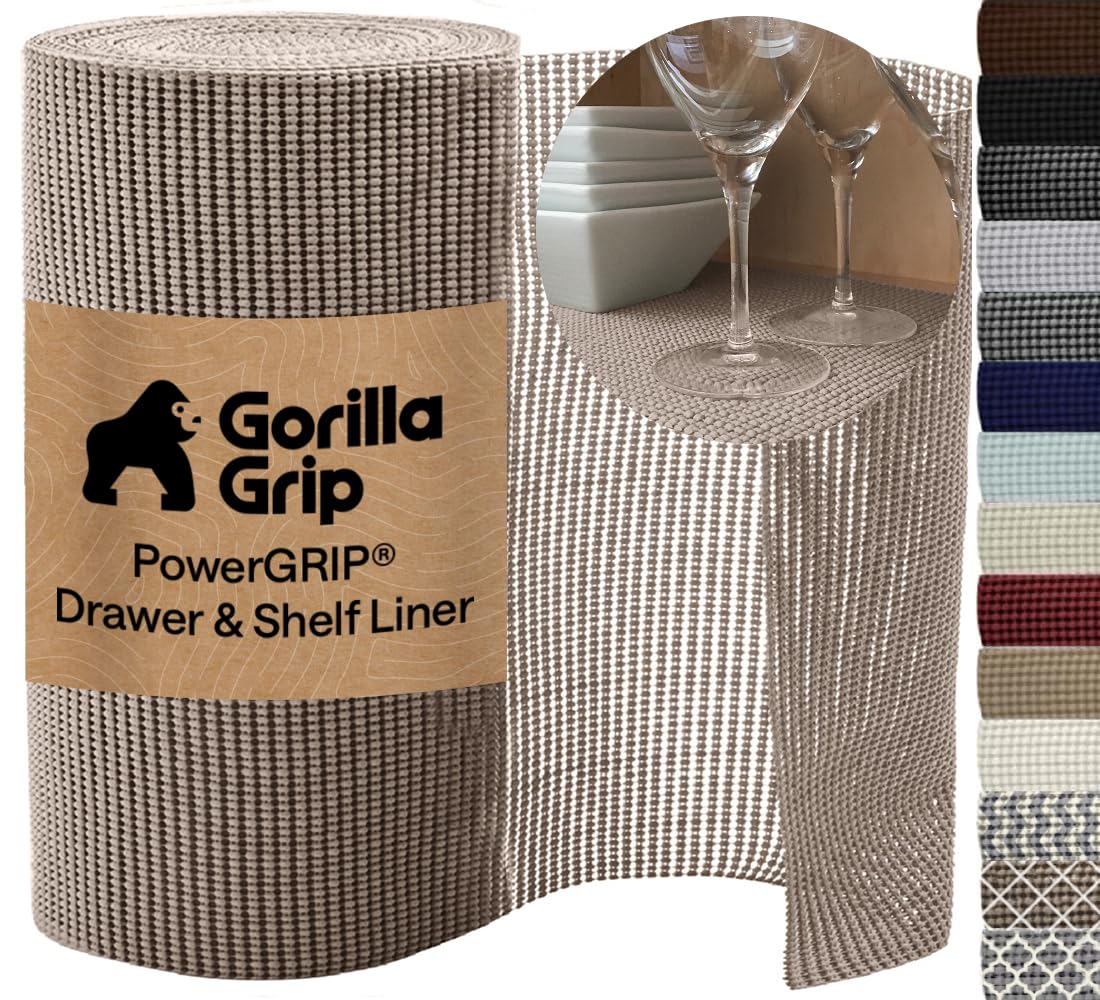
Give each drawer one category: cutlery in one, cooking tools in the next, folded linens in a third. A non-slip liner underneath stops the dividers from creeping and protects the drawer bottom.
For deeper drawers that hold pots or containers, my deep kitchen drawer organization ideas cover what works when the space goes down instead of across.


Every Staple in Plain Sight
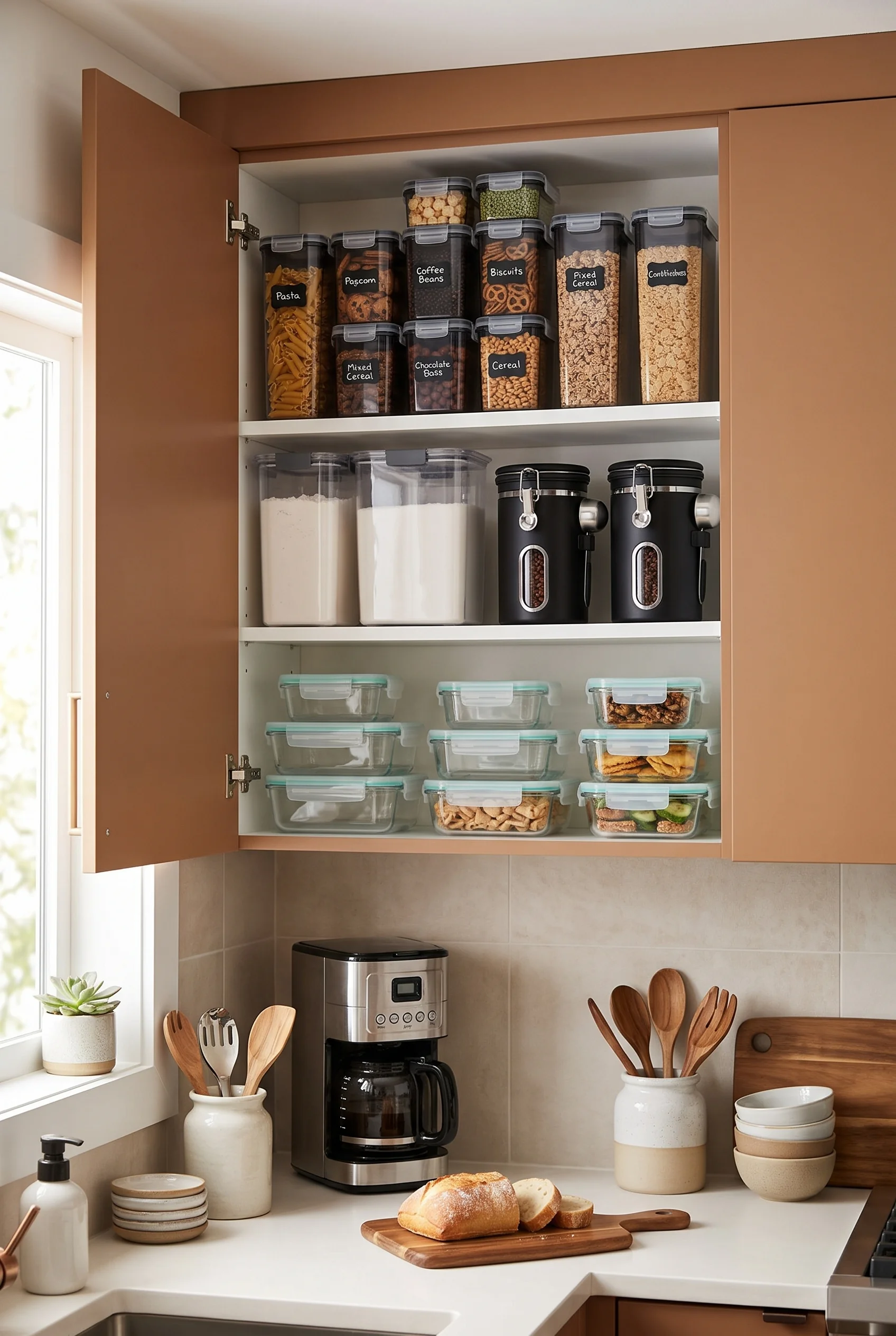
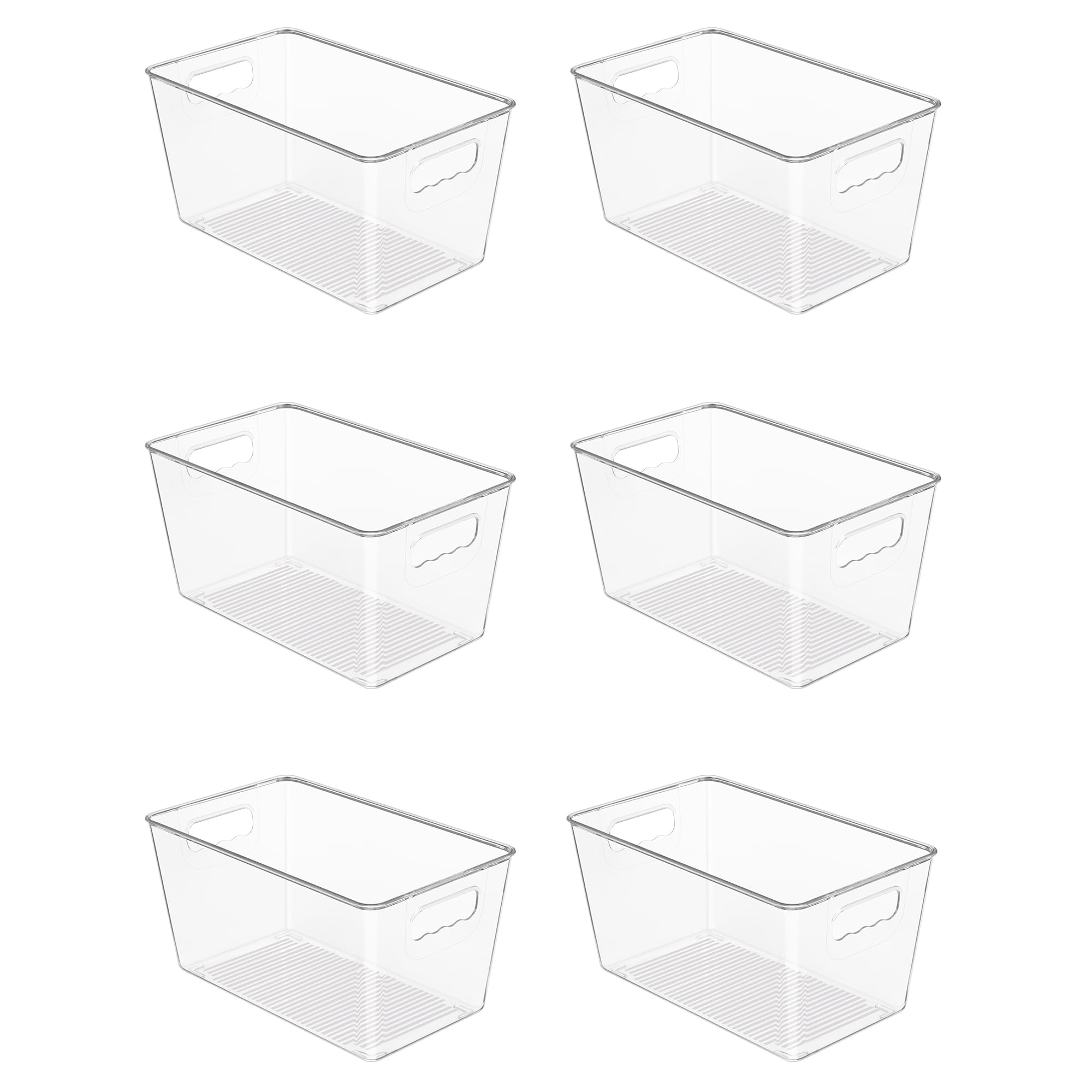
Clear containers solve the most common pantry-free problem: buying a third bag of rice because you couldn’t see the first two. Decant the staples, label the front and line them up on one cabinet shelf.
Square and rectangular shapes beat round ones in a small cabinet. They sit flush against each other with no wasted gaps, and an extra row often fits in the same depth.
Airtight lids keep cereal crisp and flour free of pests, which matters more when food lives in a regular cabinet instead of a cool pantry closet. Kids learn quickly where snacks belong once they can see them.

Twice the Food on the Same Shelf
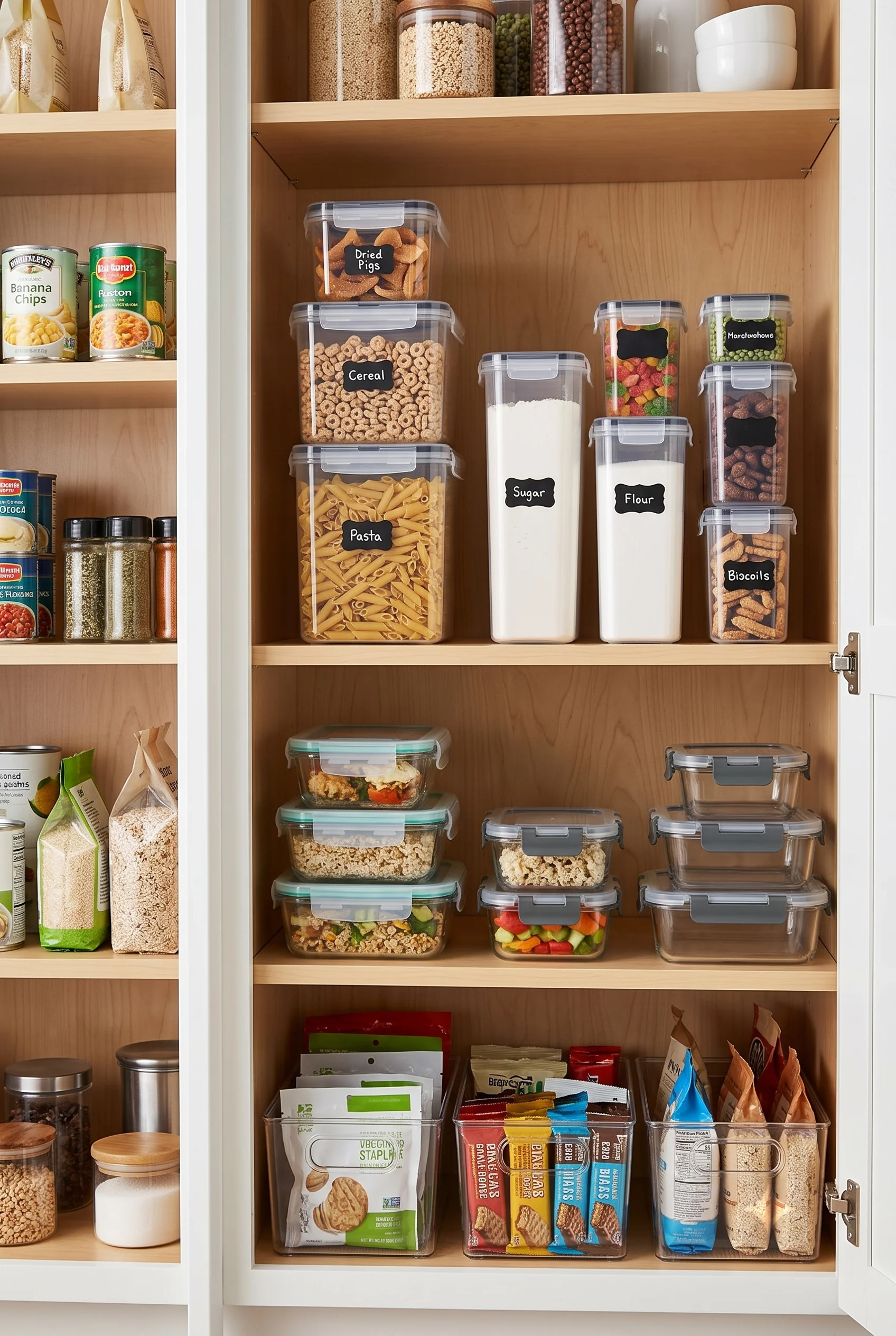
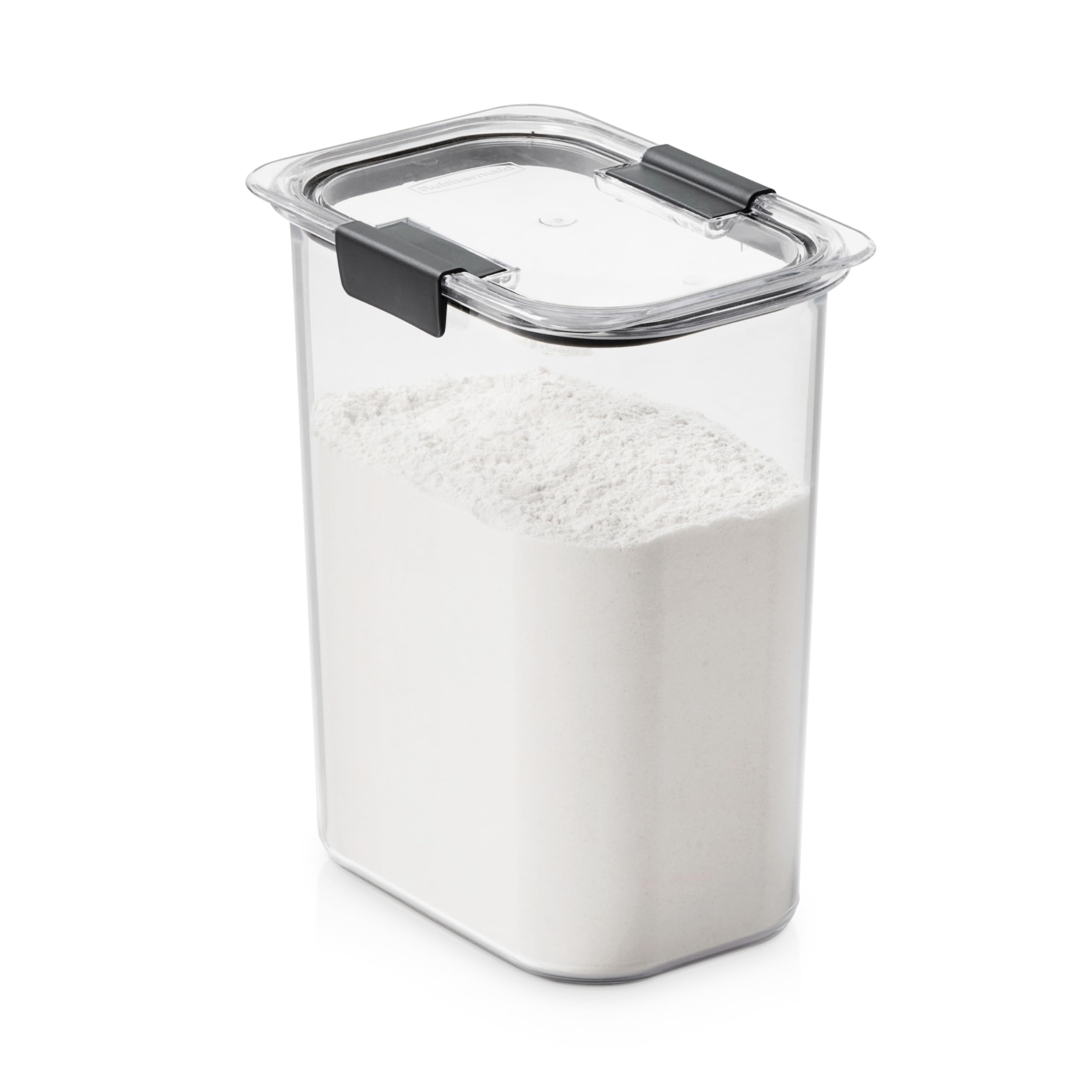
Stackable containers build upward, so one shelf holds two or three layers of food instead of a single row with empty air above it.
Glass containers with locking lids stack safely for leftovers and meal prep. Lightweight clear bins work better for dry goods you grab daily, and the heaviest layer always goes on the bottom.
Stick to one or two container brands so matching lids and footprints keep a stack steady and turn a crowded shelf into neat columns.


A Spice Corner That Spins Instead of Spills
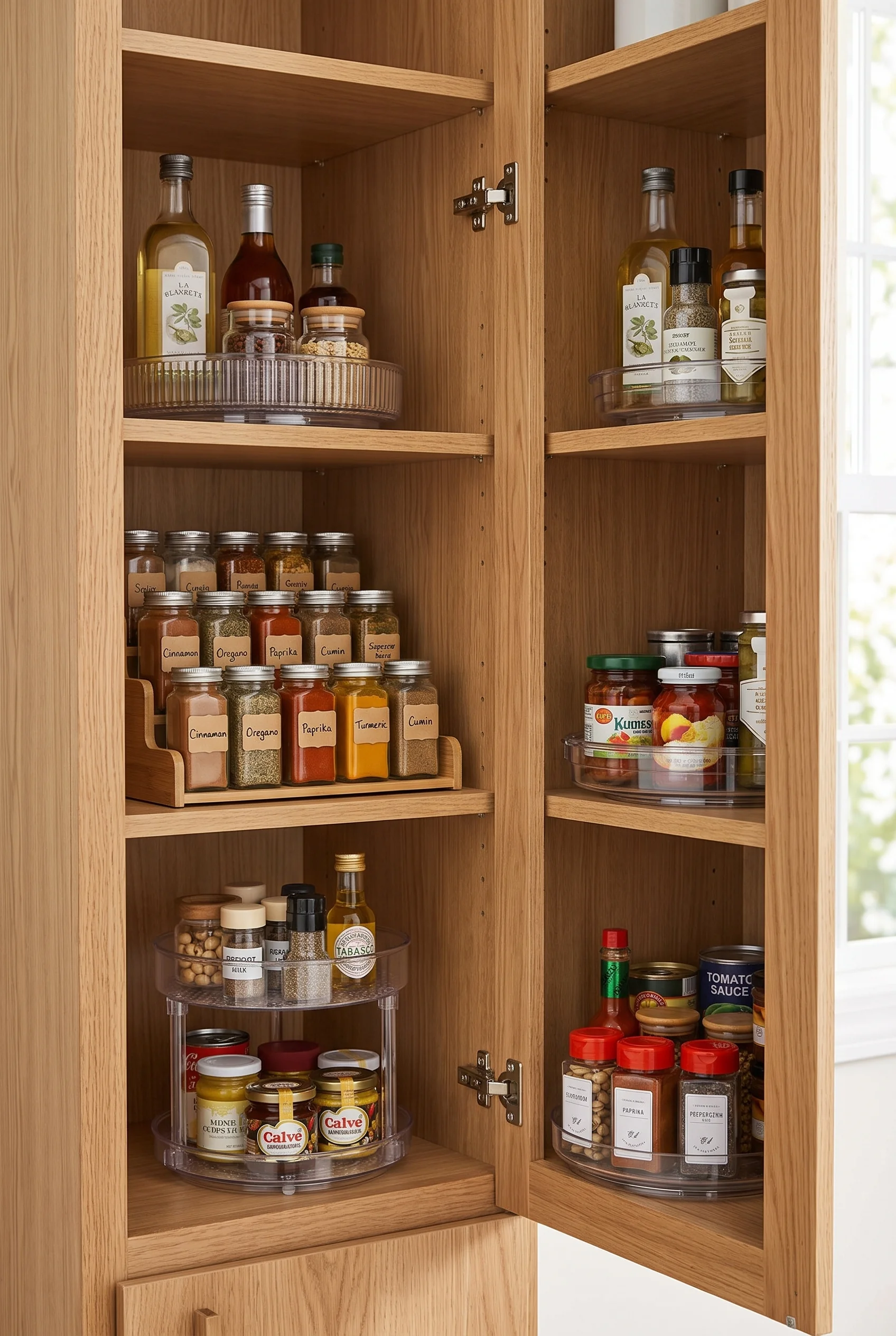
Spices are small and numerous, so a turntable in a corner cabinet holds dozens of jars where a quick spin brings the cumin forward without moving everything else.
Group them by how you cook. Baking spices share one tier, everyday savory blends take another, and the occasional specialty jar goes on top.
Giving a corner cabinet to spices turns that awkward wedge into the most organized spot in the room.
No More Lost Bottles in Deep Cabinets
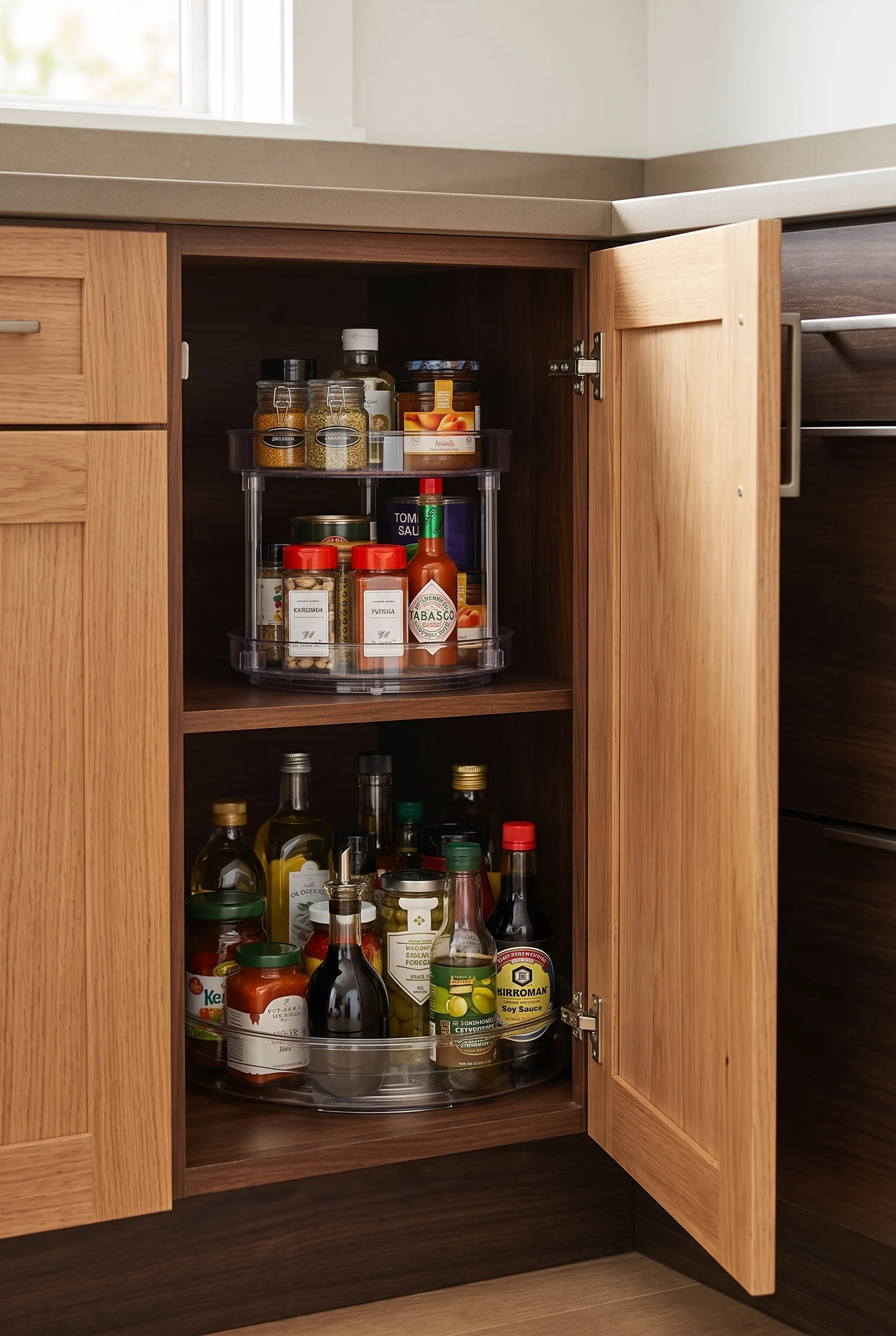
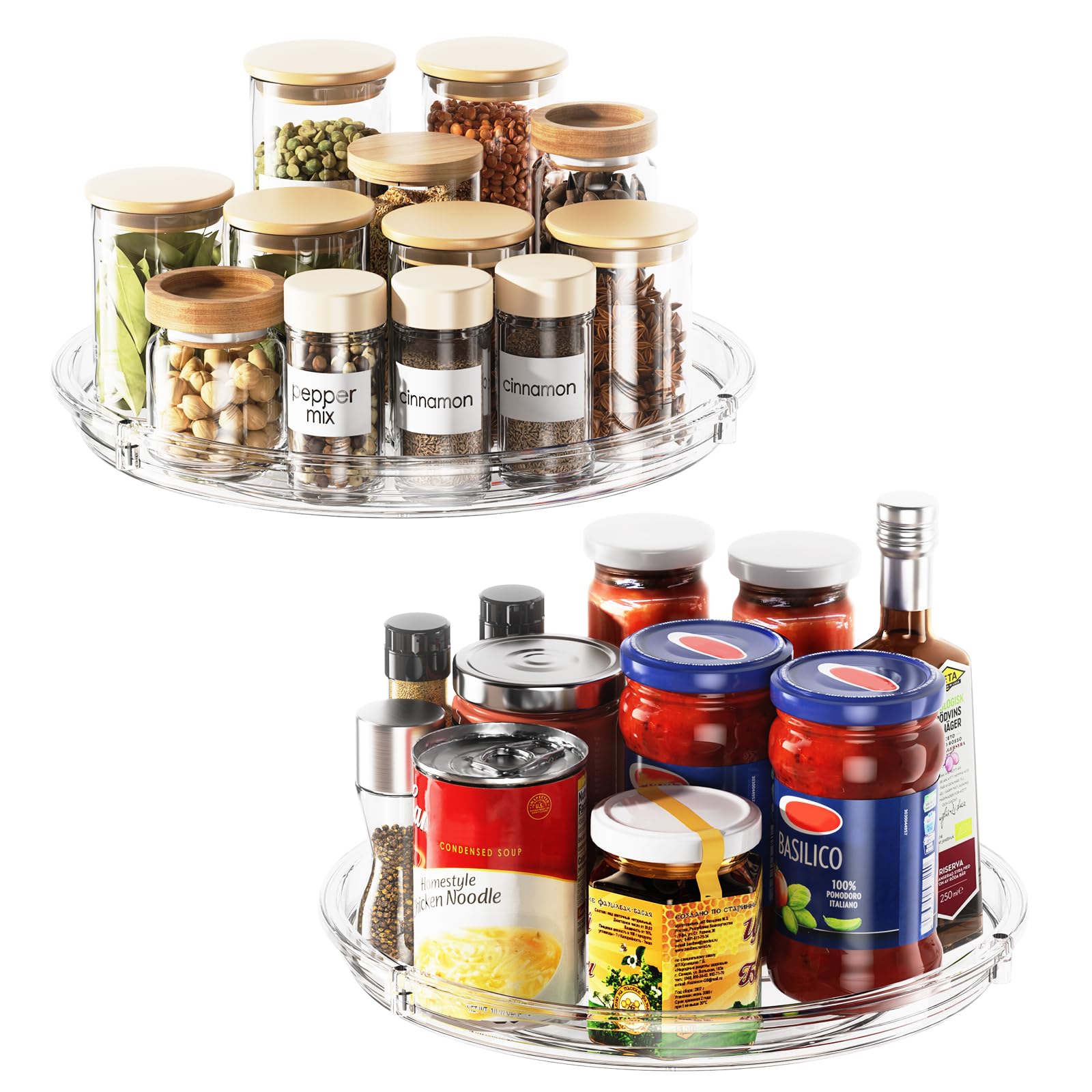
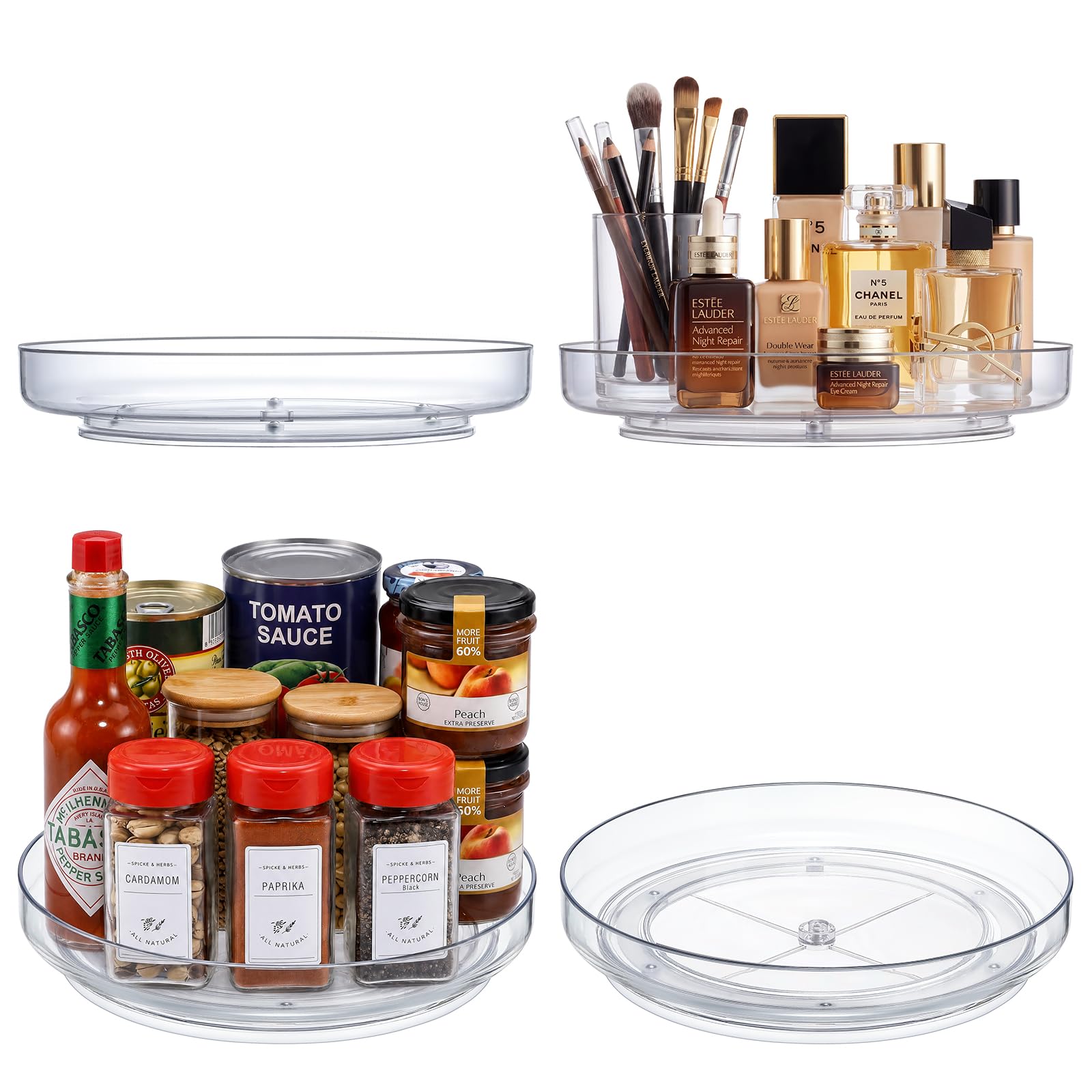
Deep base cabinets swallow bottles. Oils and sauces drift to the back, and the only way to reach them is to pull out everything in front. A lazy Susan turns the whole shelf into something you can rotate.
A two-tier turntable doubles the space for shorter jars, while a single wide one handles tall bottles. The ones you cook with weekly sit at the front of the spin, with backups behind.
Clear turntables make drips easy to spot before they turn sticky. One pulls out, gets a quick wipe and slides right back in.


The Overlooked Spots Every Small Kitchen Has
Some of the best storage in a kitchen without a pantry is hiding in plain sight. The inside of a cabinet door, the gap below the ceiling and a tall door that swings open every day can all hold something useful. These spots suit light, flat or occasional items, which frees prime cabinet space for the food you reach for most.
Cabinet Doors That Pull Their Own Weight
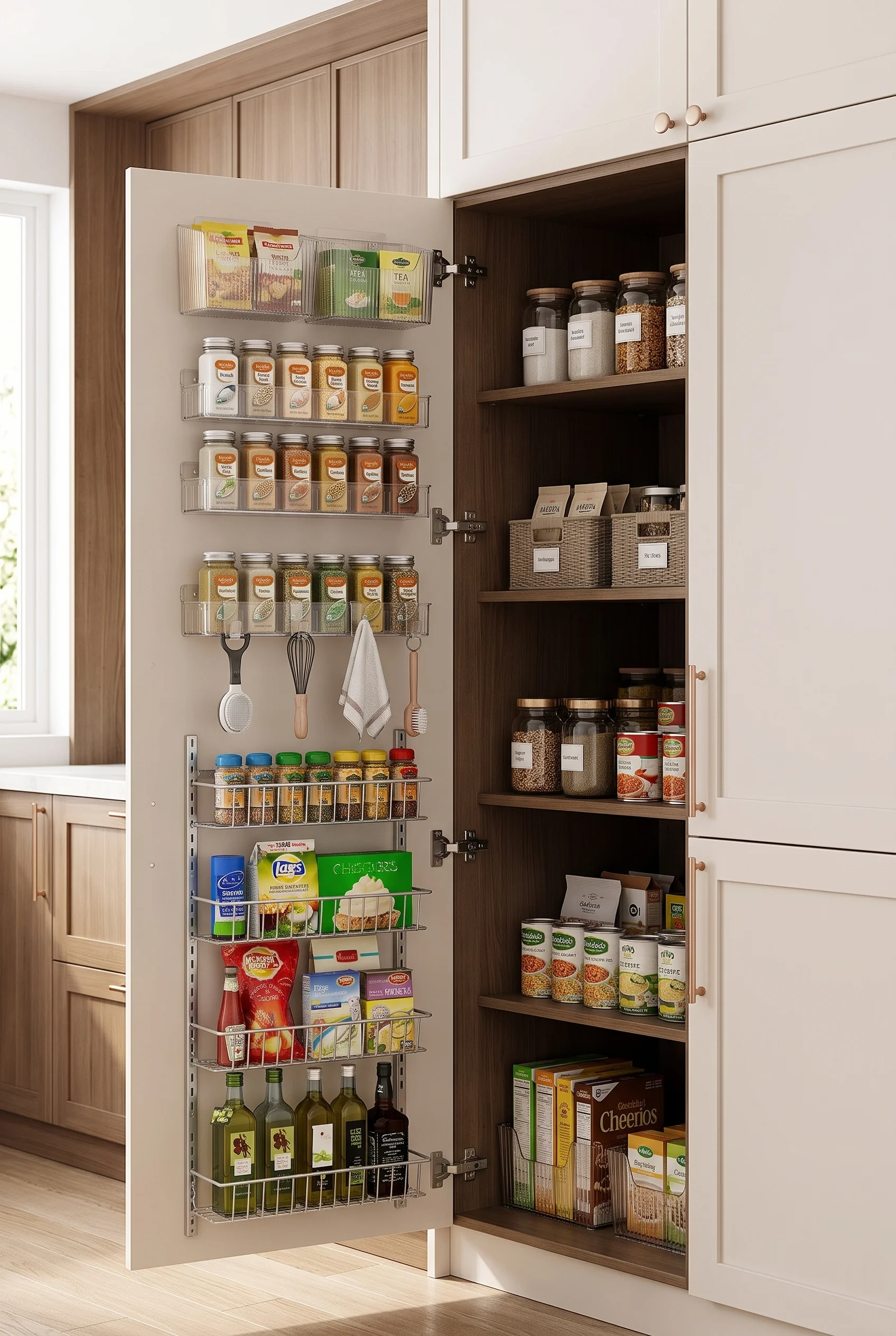
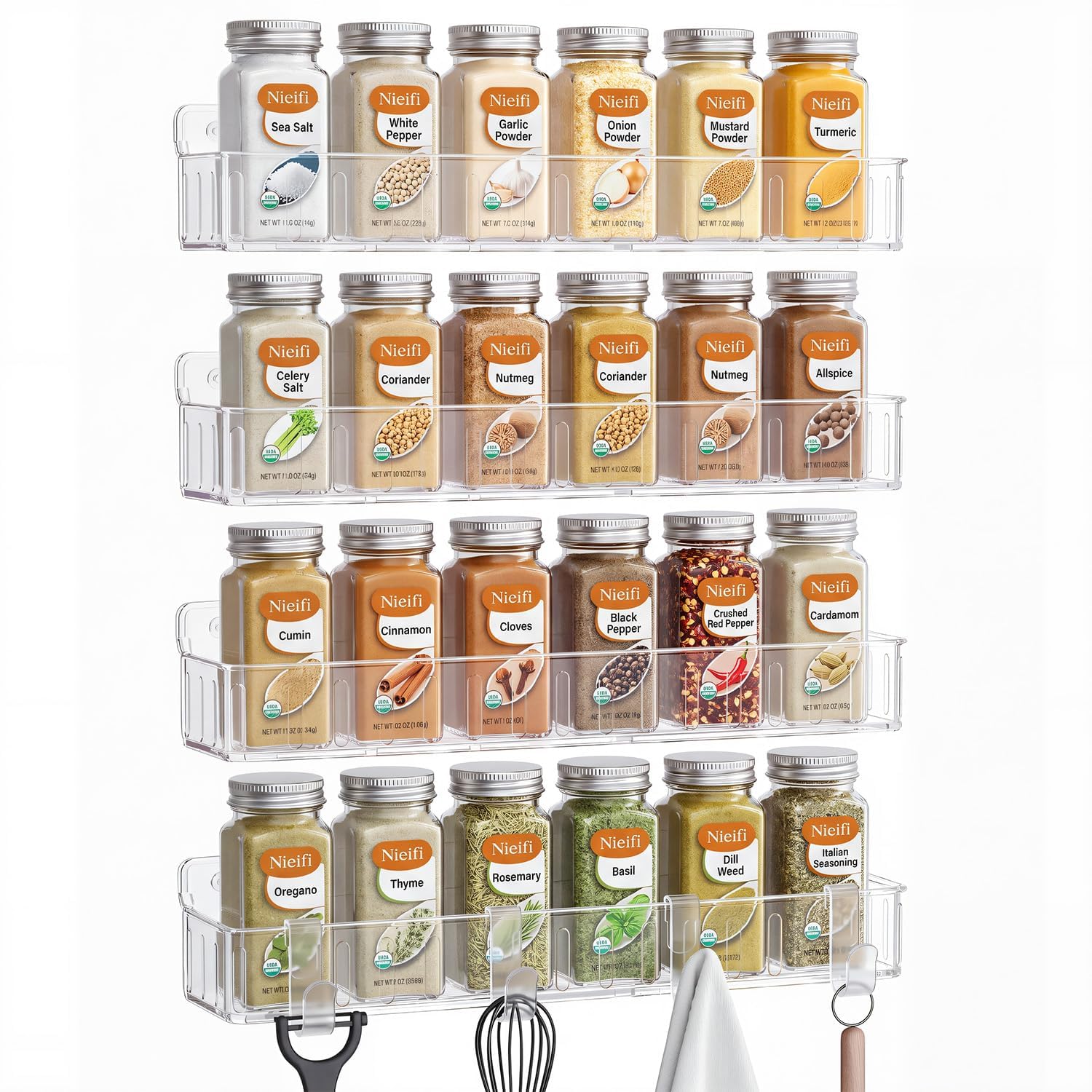
The back of a tall cabinet door is a full shelf you haven’t used yet. Slim wire racks mounted on the inside hold spice jars and small bottles in single rows, so nothing hides behind anything else.
Measure before you buy. Racks need to clear the shelves when the door closes, so shallow designs that sit close to the door are the safest bet.
Save the door for small, light things. Heavy jars strain the hinges, but seasoning packets and tea boxes ride along easily every time the door swings open.

The Space Above the Cabinets, Put to Work
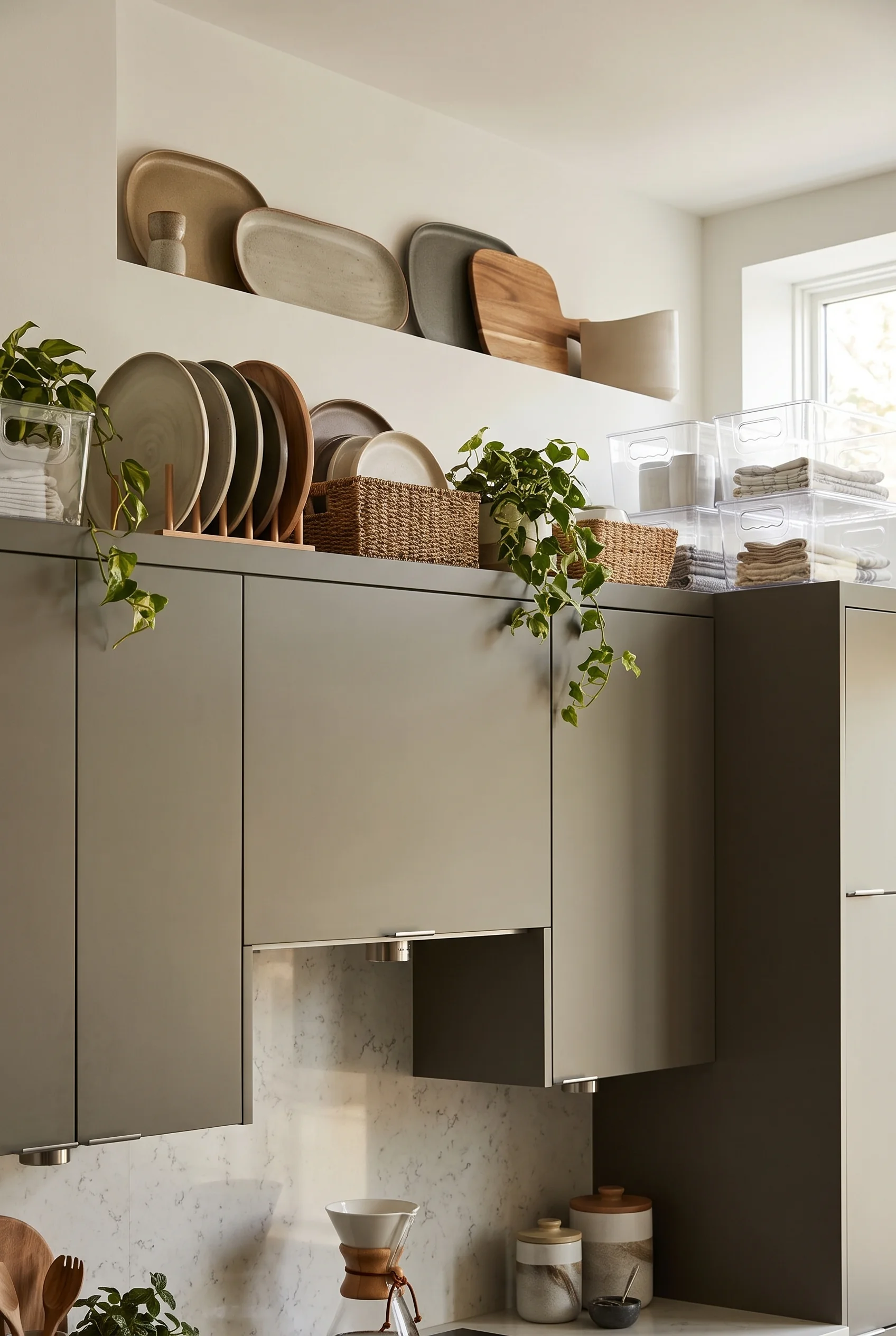
The gap between upper cabinets and the ceiling is storage most kitchens leave to collect dust. It suits the things you use a few times a year, like holiday platters or the big serving board.
Clear lidded bins keep those items clean and easy to identify from below. A few low baskets and a row of serving boards keep the look calm, so it reads as styled rather than stored.
A sturdy step stool nearby makes the whole system work. When reaching that shelf feels easy, it holds what you meant to keep there instead of slowly gathering clutter.
Door Organizers for All the Tiny Things
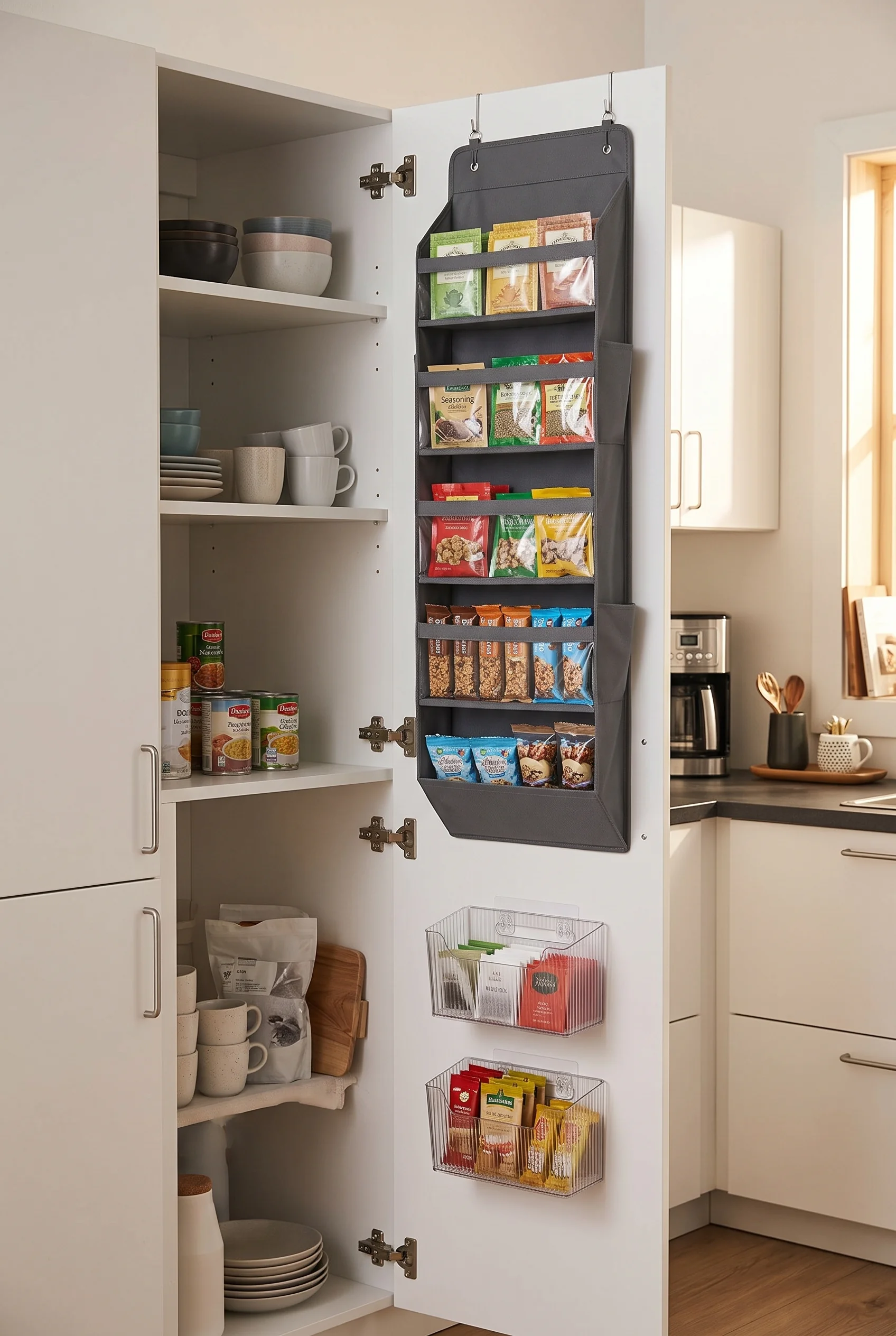
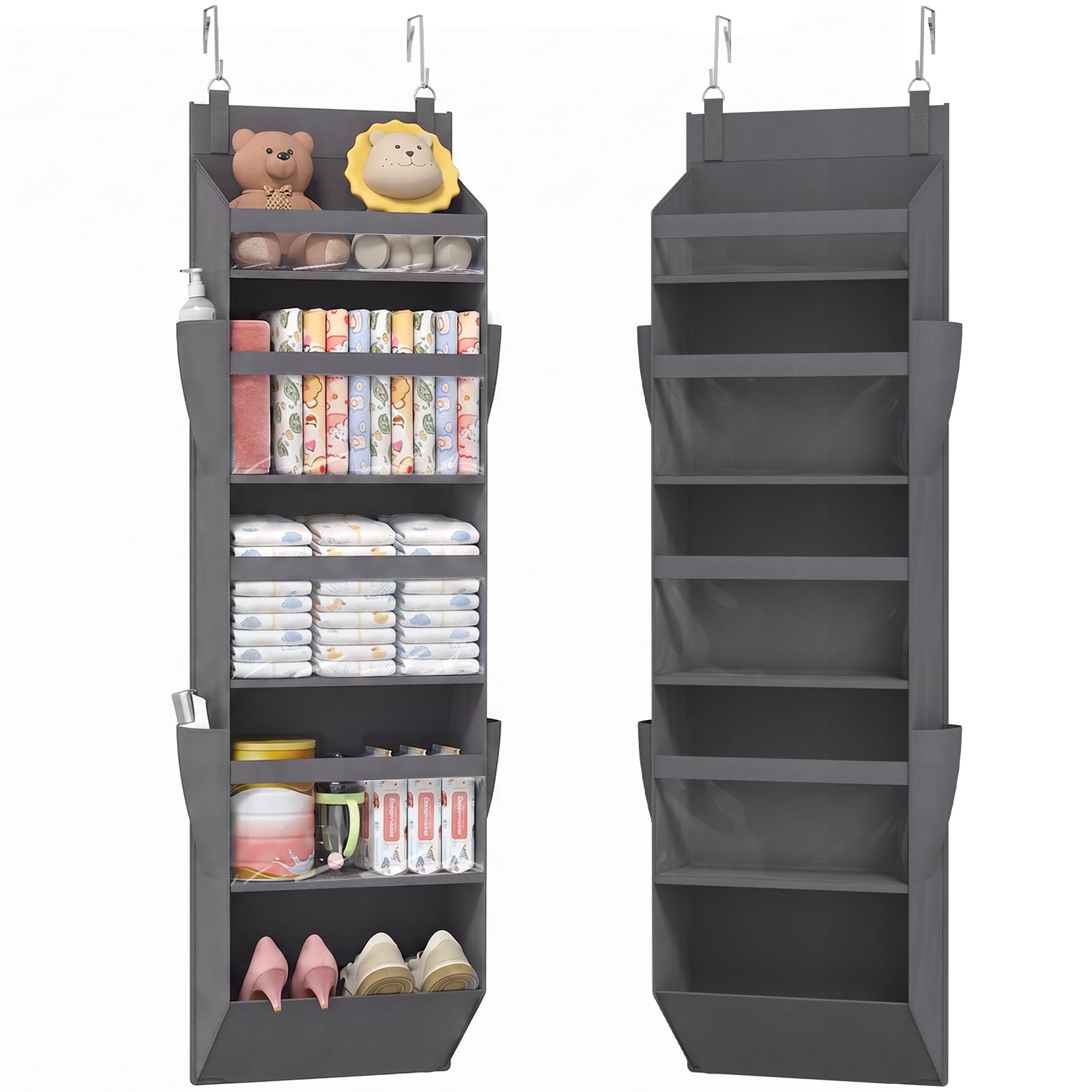
Tea bags, seasoning packets, and snack pouches are the hardest things to store in a kitchen without a pantry. They are too small for shelves and too many for a drawer. An over-the-door organizer gives each one a pocket at eye level.
Clear windows or mesh fronts make a big difference. You see the last packet of taco seasoning before it runs out, and kids can grab their own snack without opening every cabinet.
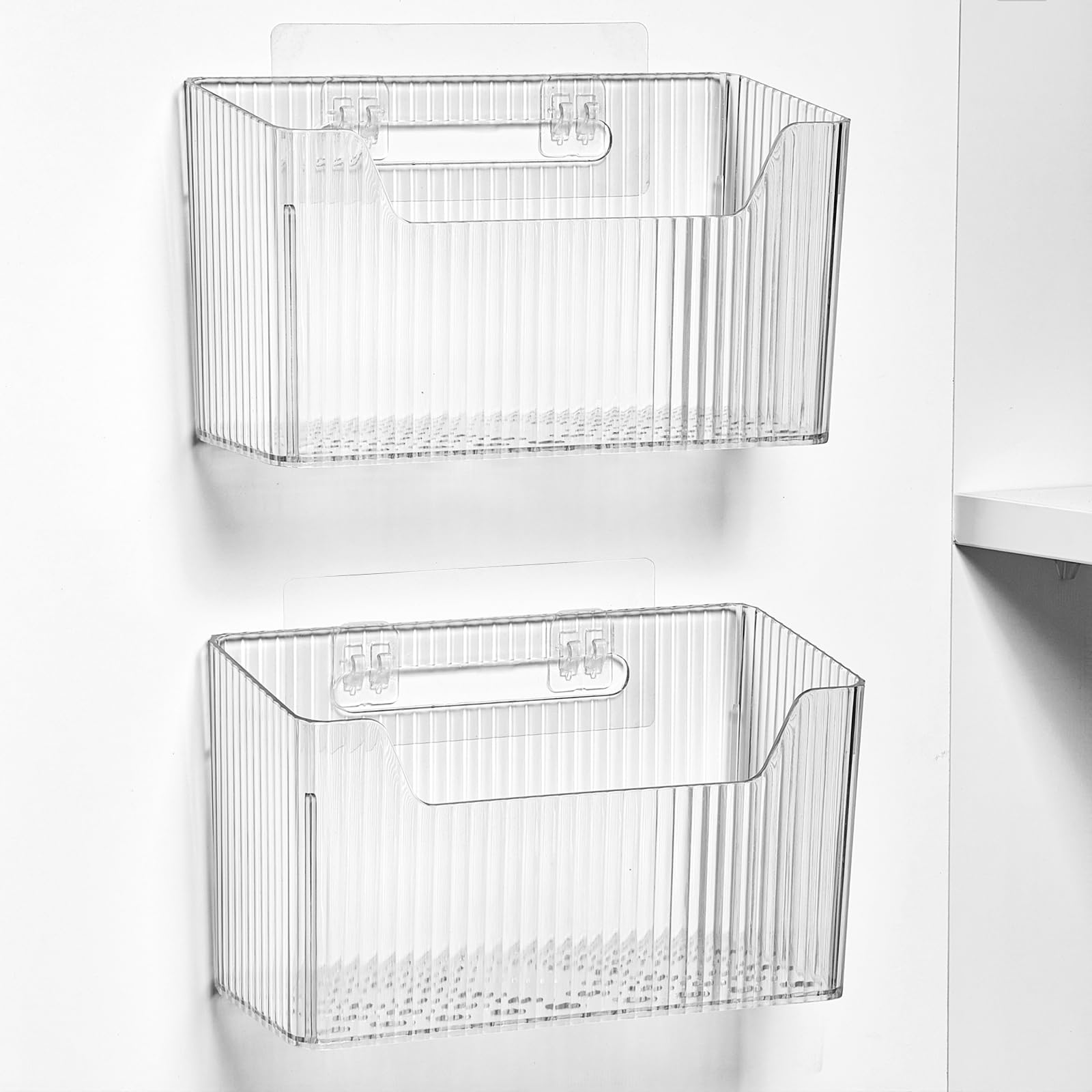
Adhesive bins below the organizer catch the odd shapes. One door holds what used to take up a full shelf.
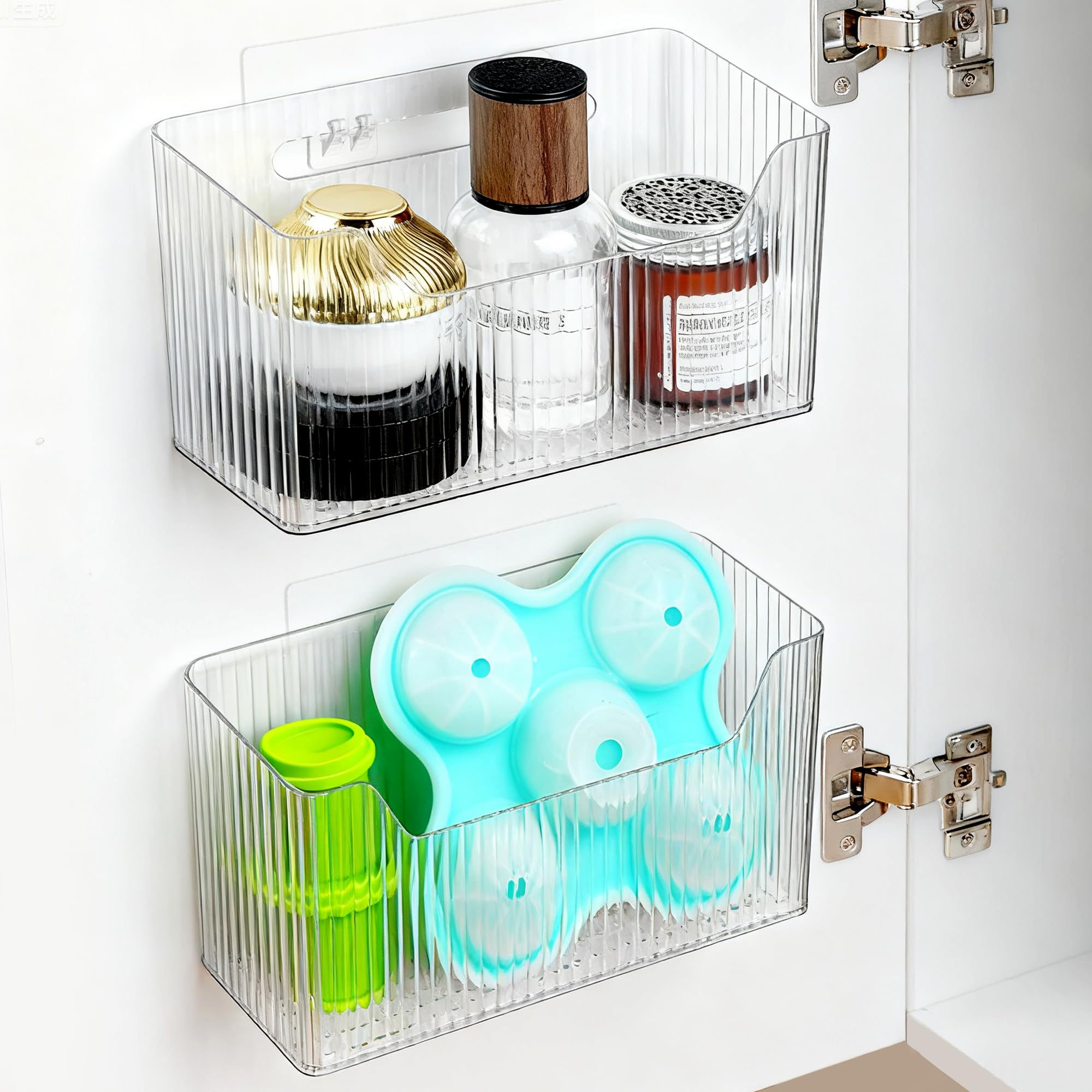
Under the Sink, Finally Sorted
The cabinet under the sink is often the messiest space in a small kitchen, and without a pantry it has to work extra hard for cleaning supplies. Plumbing gets in the way and bottles tip over. A few simple tools turn that awkward box into storage that stays organized, with cleaning products kept well away from food.
Pull-Out Shelves That Work Around the Pipes
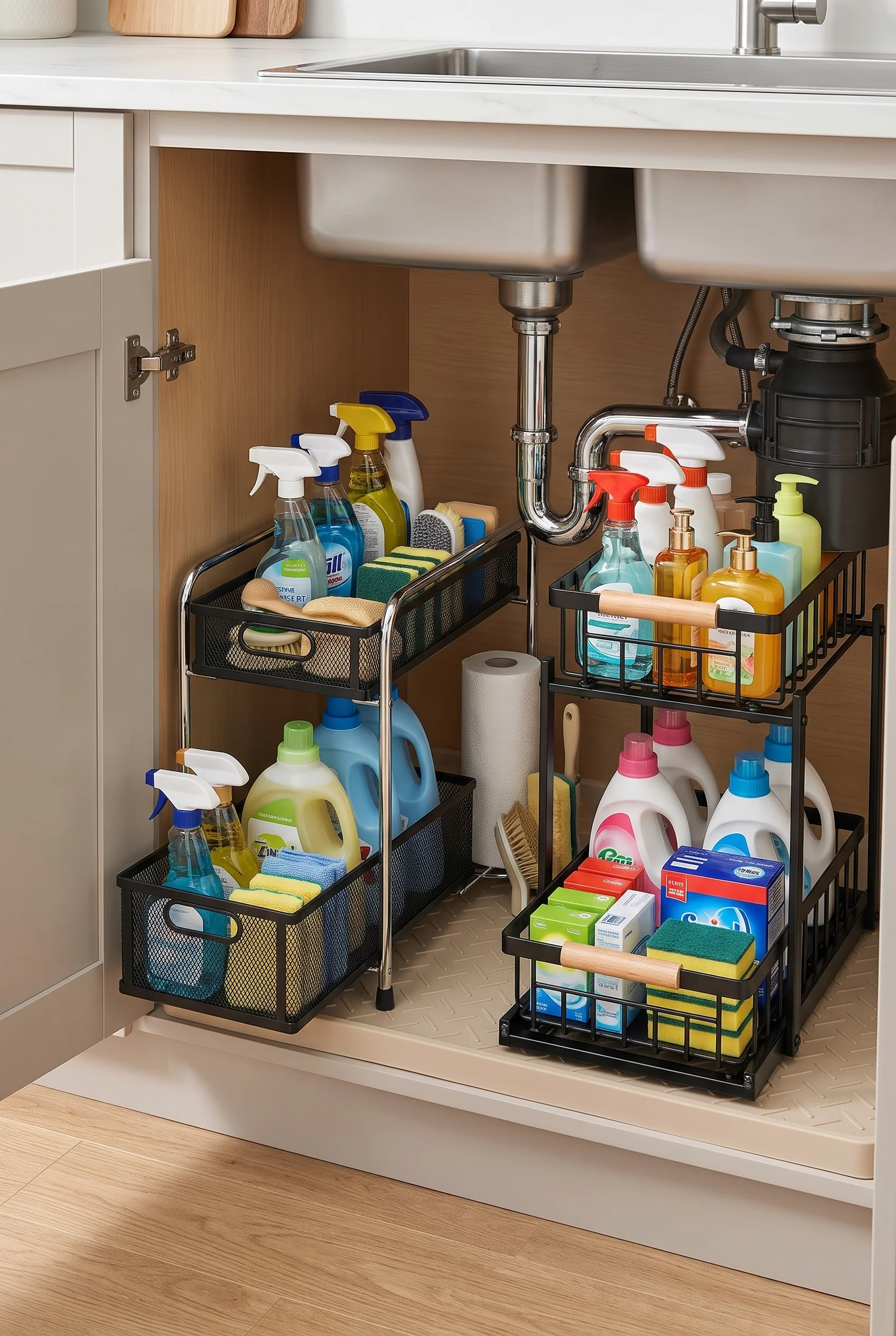
Pull-out organizers bring everything under the sink to you, so there’s no more kneeling on the floor for the dish soap hiding at the back. Two-tier sliding baskets fit on either side of the drain and use the full height of the cabinet.
Split them by task. Dish soap and sponges go on the side closest to the sink, with surface sprays and refills on the other.
Mesh baskets let air move, which helps damp sponges dry out. Everything slides out, gets wiped and slides back in a few seconds.
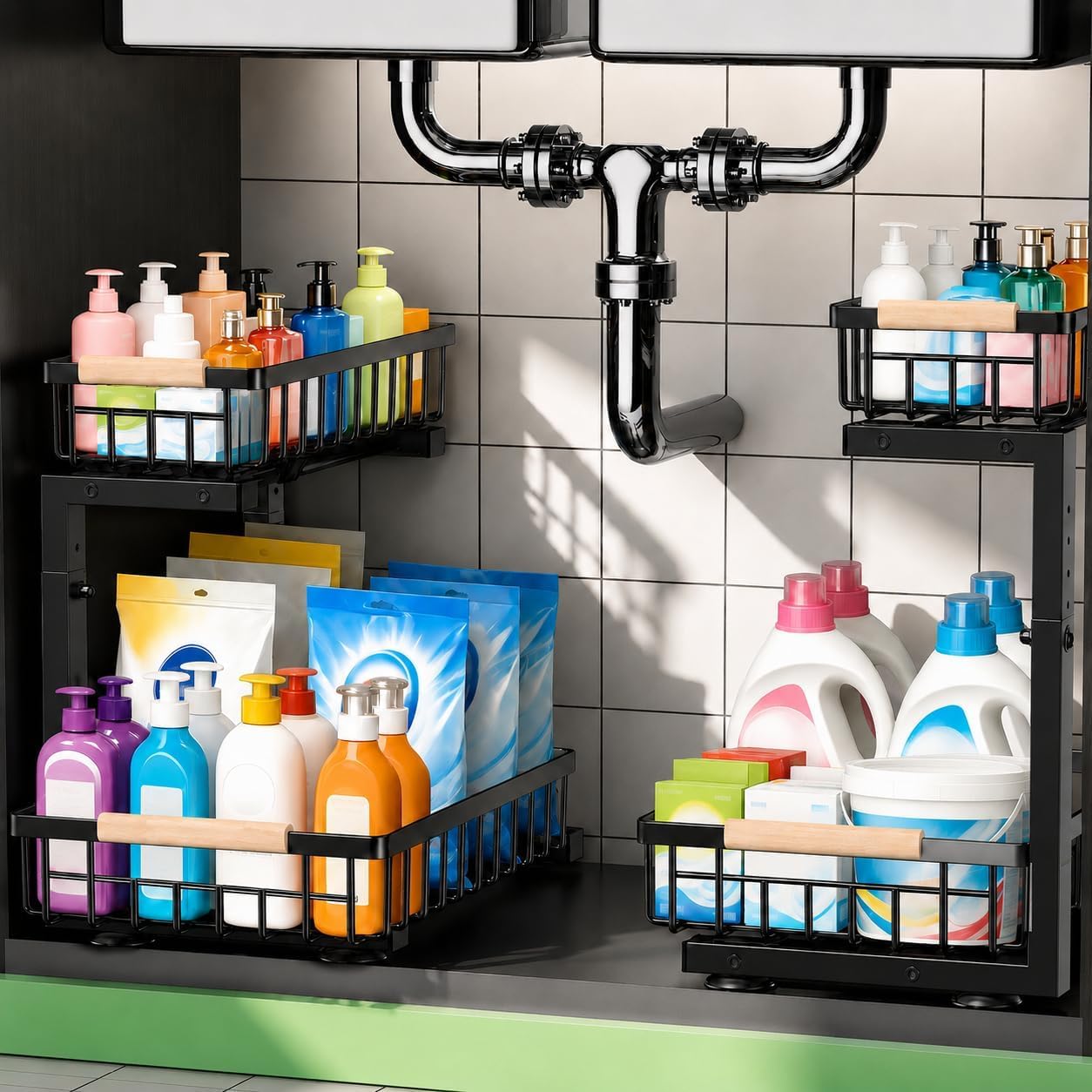

Cleaning Supplies, Grouped by Job
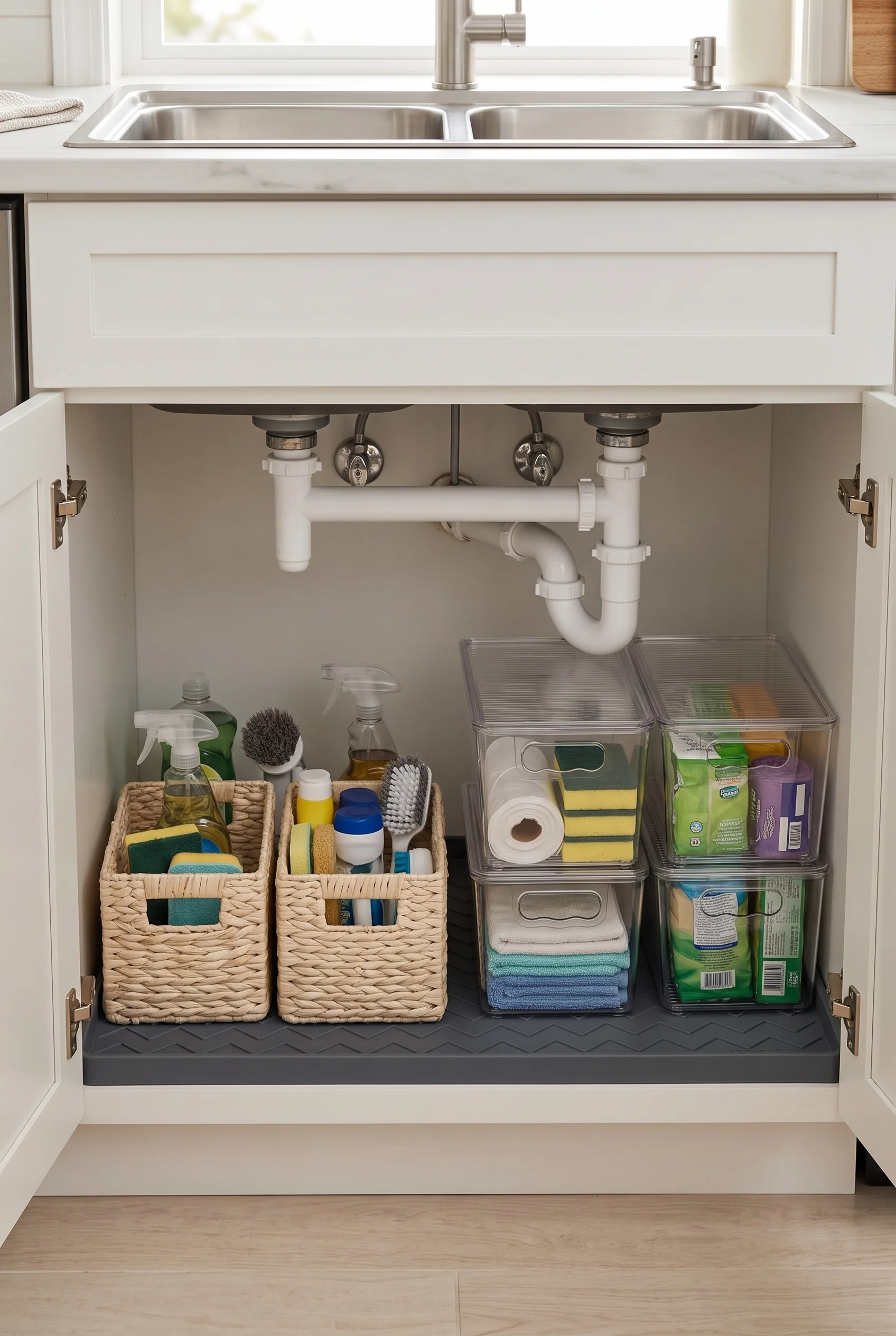
Woven baskets and clear bins turn a jumble of sprays and sponges into a few tidy groups. Pull one out and everything for a single job comes with it, like the kit for wiping counters.
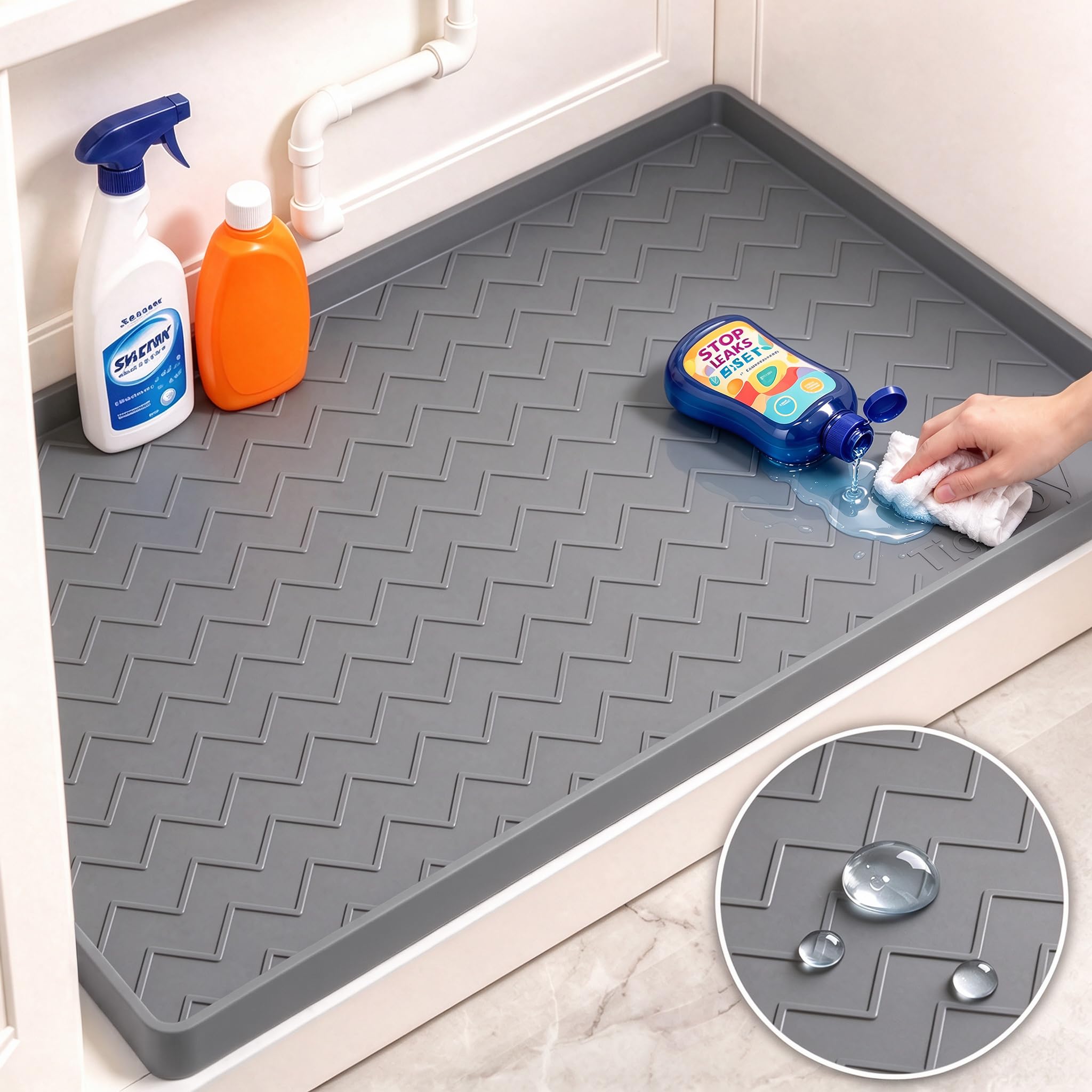
A waterproof mat on the cabinet floor catches drips from bottles and small leaks before they warp the wood.
Label the front of each bin, even when you think you’ll remember. Labels help everyone in the house put things back, and that habit is what keeps this cabinet tidy past the first week.

A Tension Rod That Doubles the Hanging Space
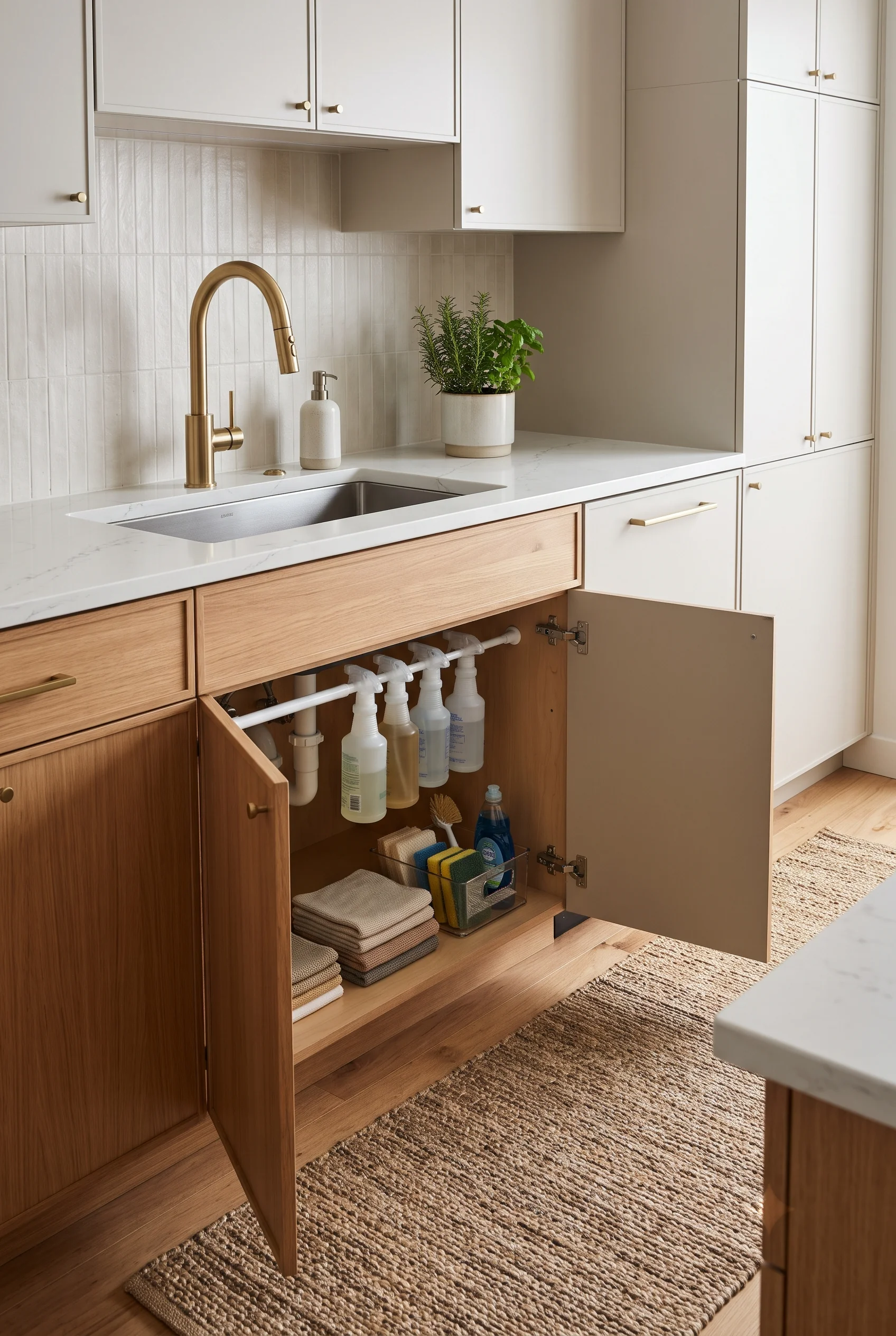
A simple tension rod turns the top of the under-sink cabinet into hanging storage. Spray bottles hook on by their triggers, which frees the cabinet floor for baskets and bins.
No drilling is needed, so it works in rentals too. Measure the inside width, twist the rod until it’s snug and hang only the bottles you use most.
The same trick works inside a tall cabinet. Two rods set a few inches apart create slots that keep cutting boards and baking sheets standing upright and easy to grab.
A Small Kitchen That Works Like It Has a Pantry
A pantry is really a promise that every food and supply has a place. You can keep that promise without one. Notice the surfaces and gaps your kitchen already has, then give each one a clear job.
Walls carry the tools and jars you reach for daily. Cabinets hold more once they have dividers, turntables, and stackable containers. Doors and the space above the cabinets take the small and occasional things that used to crowd everything else.
None of this has to happen in one weekend. Start with the spot that frustrates you most. For many families, that’s the snack shelf or the spice cabinet, and fixing one area makes the whole kitchen feel calmer.
Kitchen organization without a pantry comes down to deciding where things live. The same thinking carries into every room, which is why my home organization ideas follow the very same approach.
Once those decisions are made, groceries get put away faster, cooking feels less like a scavenger hunt, and a small kitchen starts to feel surprisingly roomy.