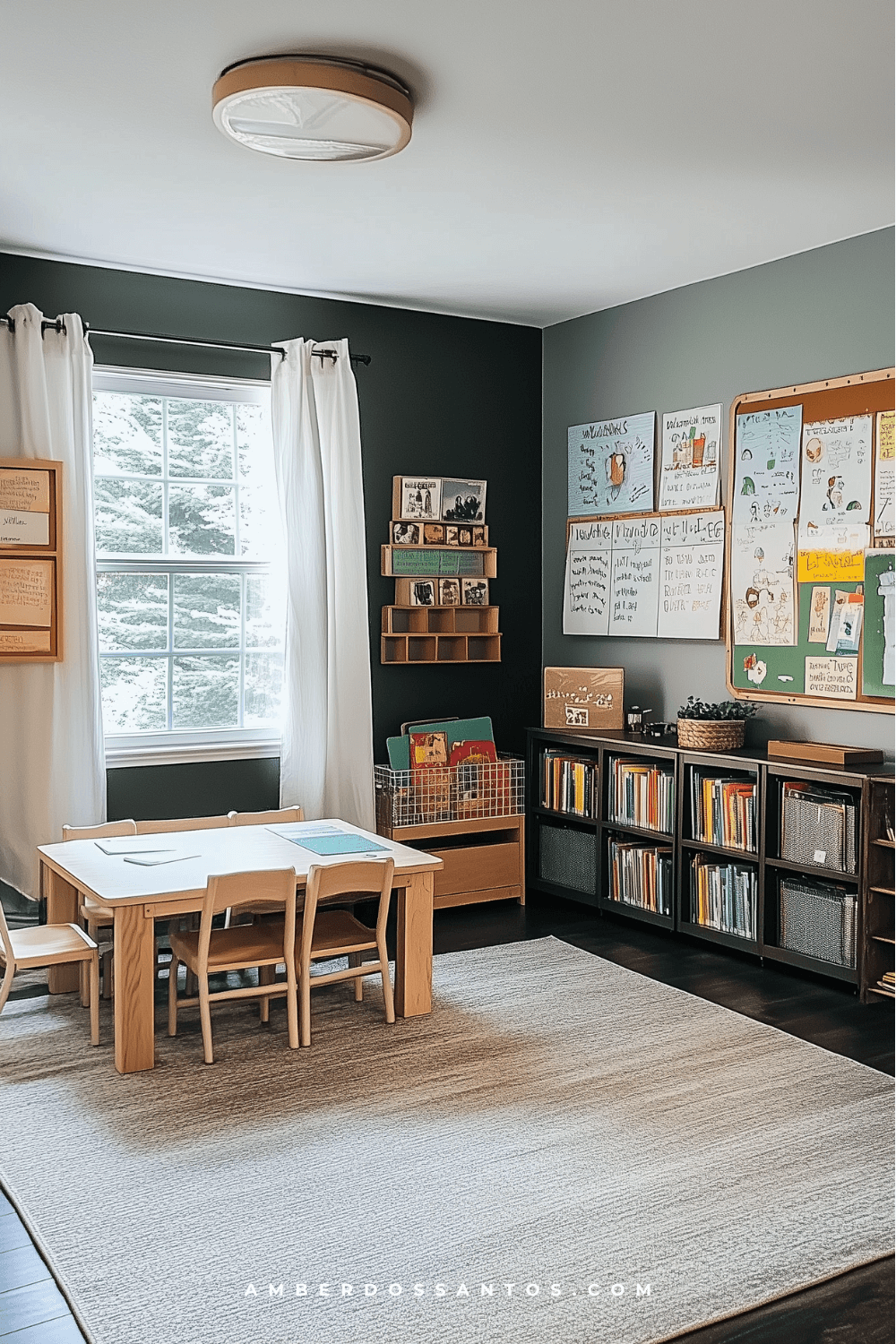
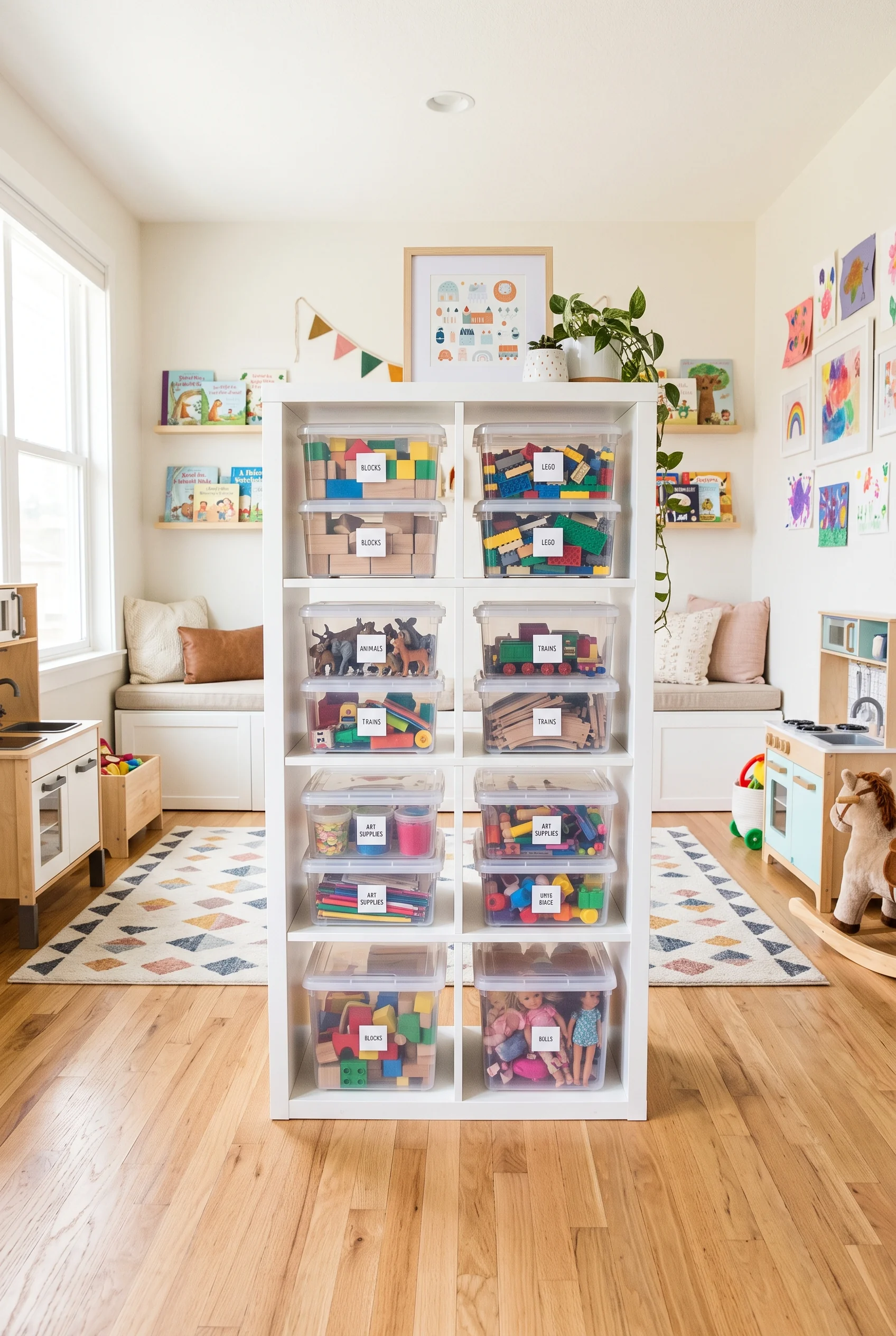
29 Montessori Kids Room Ideas That Encourage Independence
A child’s bedroom can either encourage independence or make them ask for help all day. When books are too high, clothes are difficult to reach, and toys are stored in complicated systems, even simple routines depend on an adult. Montessori design looks at those everyday frustrations differently. Instead of expecting children to adapt to a room designed for grown-ups, the room begins to adapt to them.
That doesn’t mean filling the bedroom with specialized furniture. Many of the smartest changes are surprisingly ordinary. A few of the same principles behind Montessori bedrooms for toddlers can work well beyond the toddler years, while Montessori room ideas for small spaces show how to preserve freedom of movement without needing a large bedroom. Even the way you arrange Montessori shelves can make choosing activities and putting things away feel more manageable for a child.
These Montessori kids room ideas focus on the small design decisions that give children more ownership of their daily routines. You’ll find approachable ways to arrange sleeping areas, clothing, books, and play materials so children can do more independently, without sacrificing the comfort and personality that make a bedroom feel like their own.
DISCLOSURE: Some of the links provided on this page are affiliate links. This means if you choose to make a purchase through these links, we may receive a small commission at no extra cost to you.
A Calm Foundation for Sleep, Movement, and Play
The earliest choices shape how easily a child can move through the room. A low sleeping surface, open pathways, and reachable destinations give the layout a quiet sense of order. Comfortable floor space matters just as much as furniture. Together, these details support rest and play without asking the room to feel overly structured.
A Montessori Floor Bed With Room to Grow
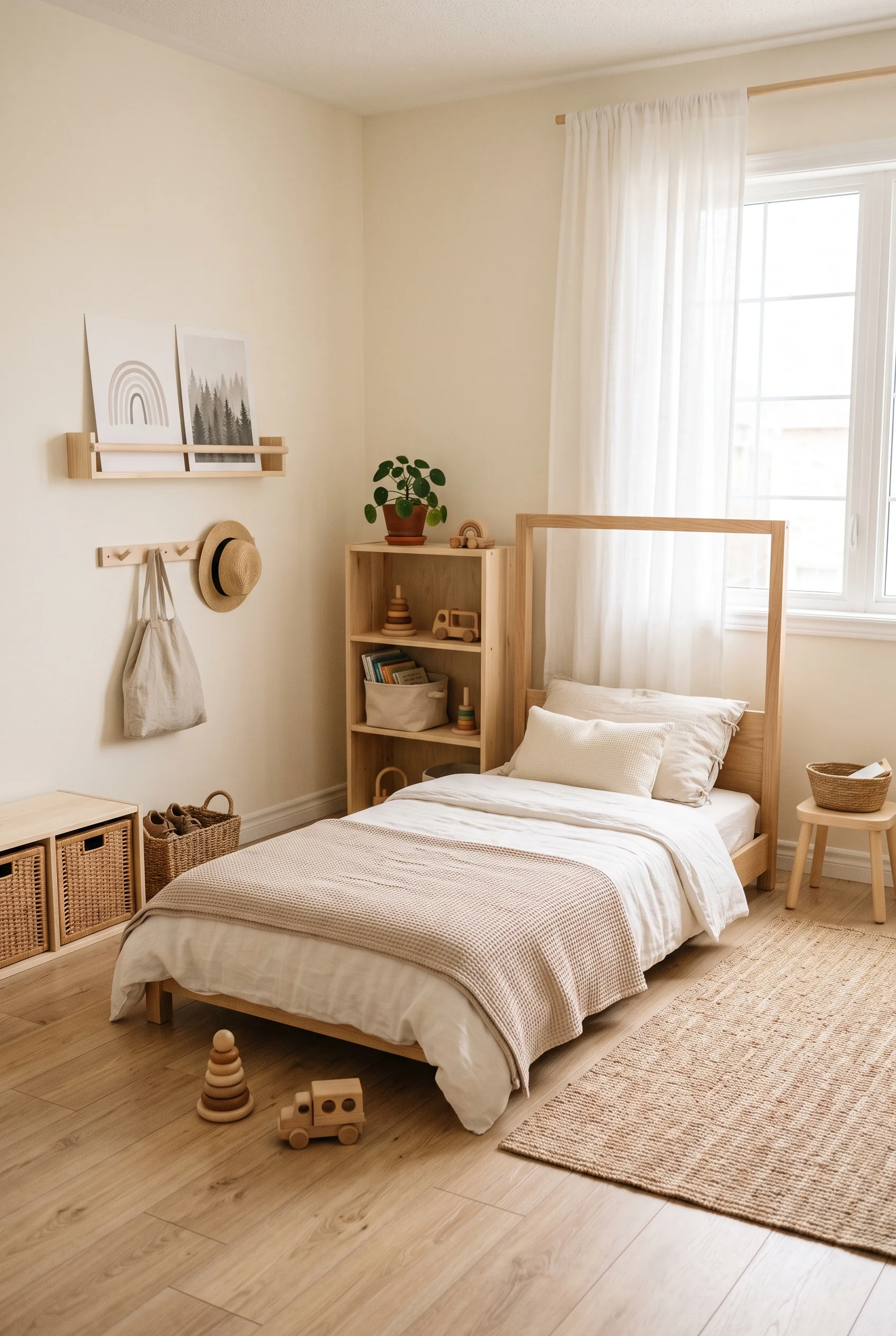
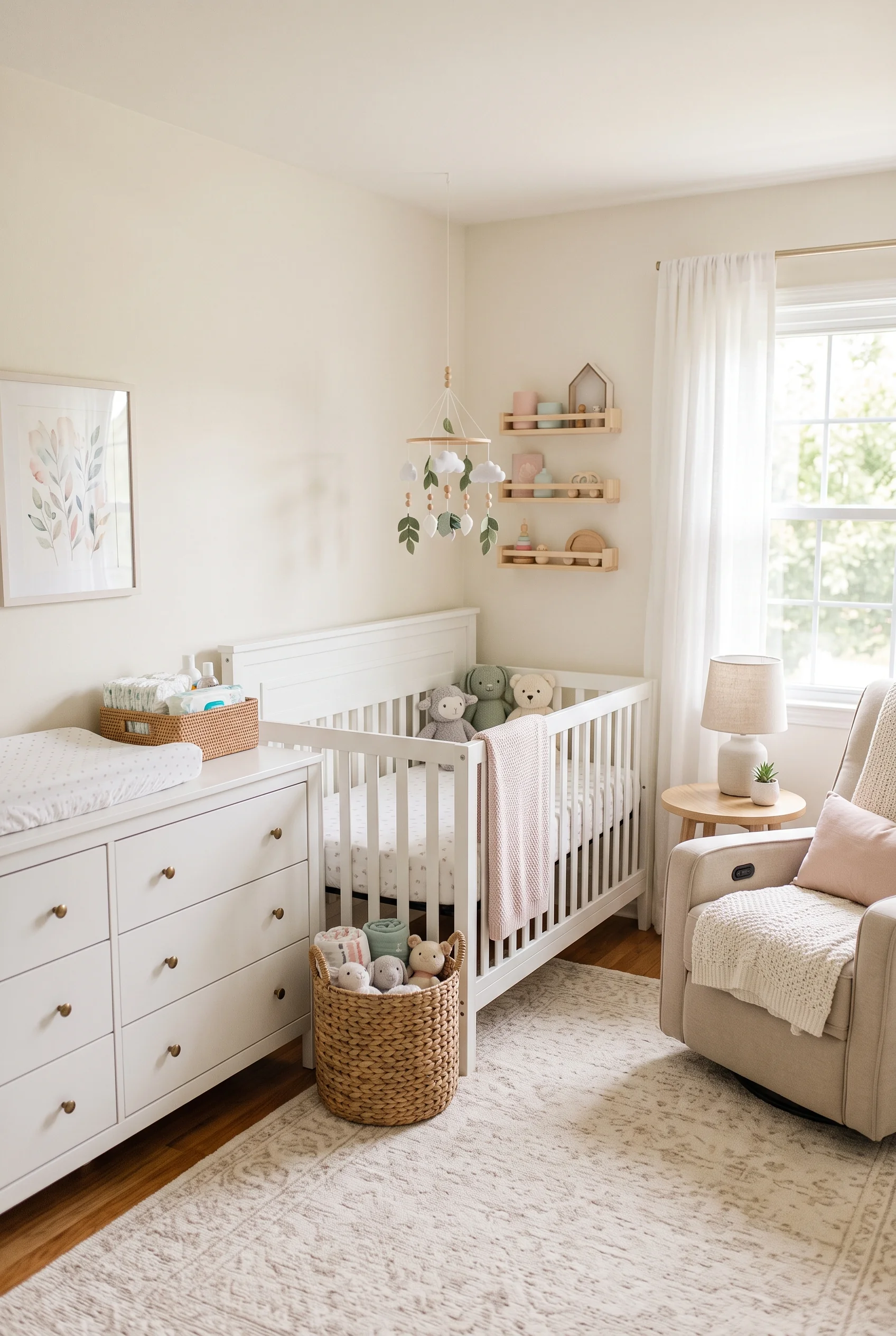
A Montessori floor bed lets a child enter and leave their sleeping area without waiting for an adult. A low frame with ventilation beneath the mattress offers airflow while maintaining the close-to-the-floor profile families often want.
The freedom of a low bed makes whole-room safety especially important. Anchor furniture, secure cords, cover outlets, and remove small objects before making the transition. Families with babies or young toddlers should also speak with their pediatrician and follow current safe-sleep guidance. The finished bed can remain simple, with breathable bedding and a clear area around it.
Shop this pick: Natural Wood Montessori Floor Bed Frame
Open Pathways for Easier Daily Routines
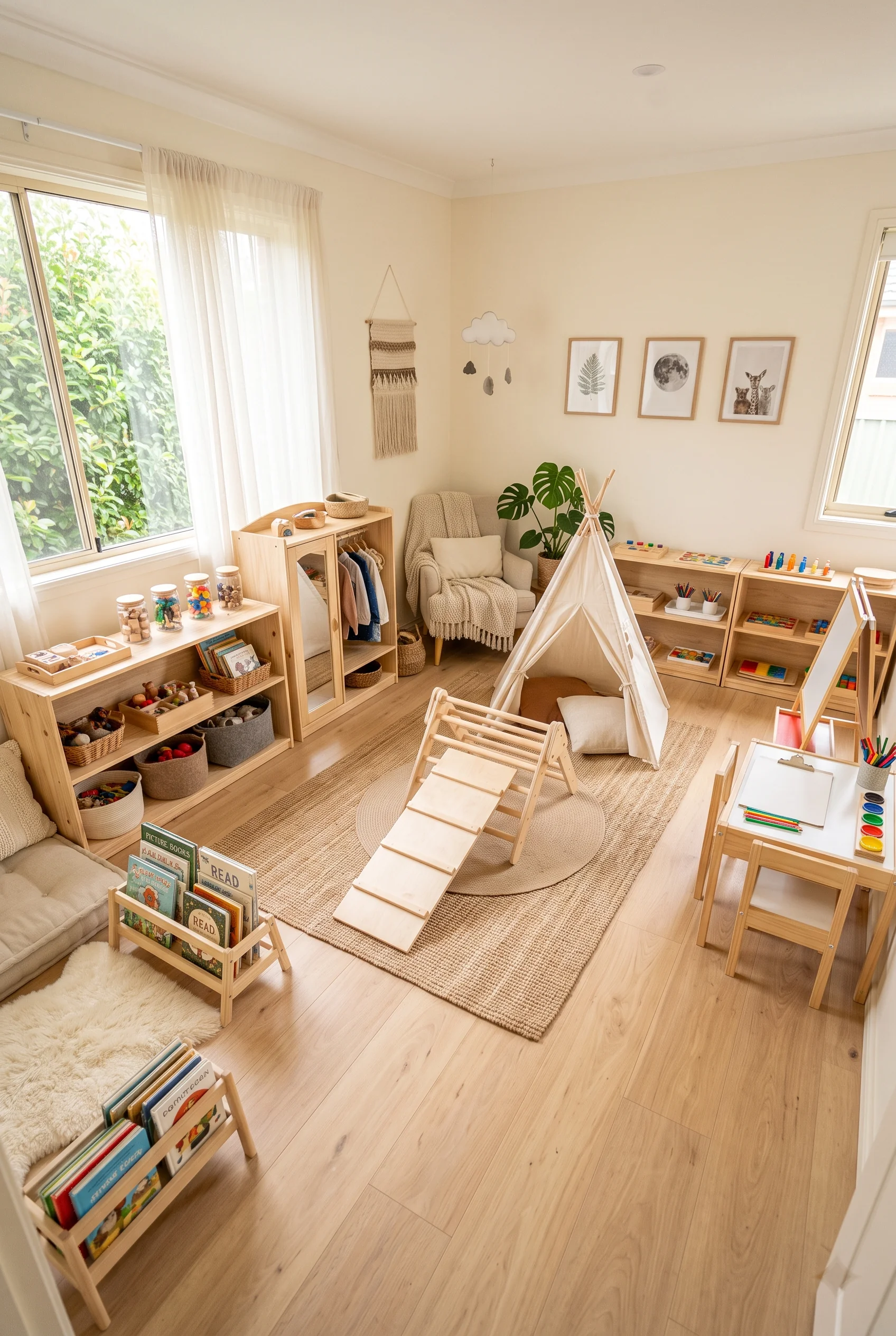
Furniture arranged along the perimeter leaves the center of a Montessori kids room available for movement and floor play. Clear paths between the bed, doorway, clothing area, and toy shelf also make familiar routines easier to navigate.
Empty space is useful here. It gives active bodies room to turn, carry a basket, or sit down without meeting another piece of furniture. View the layout from your child’s height before settling on it. Awkward corners and blocked supplies often become much more obvious from a lower perspective. A little breathing room keeps the arrangement calm.
A Reading Nook Made for Quiet Pauses
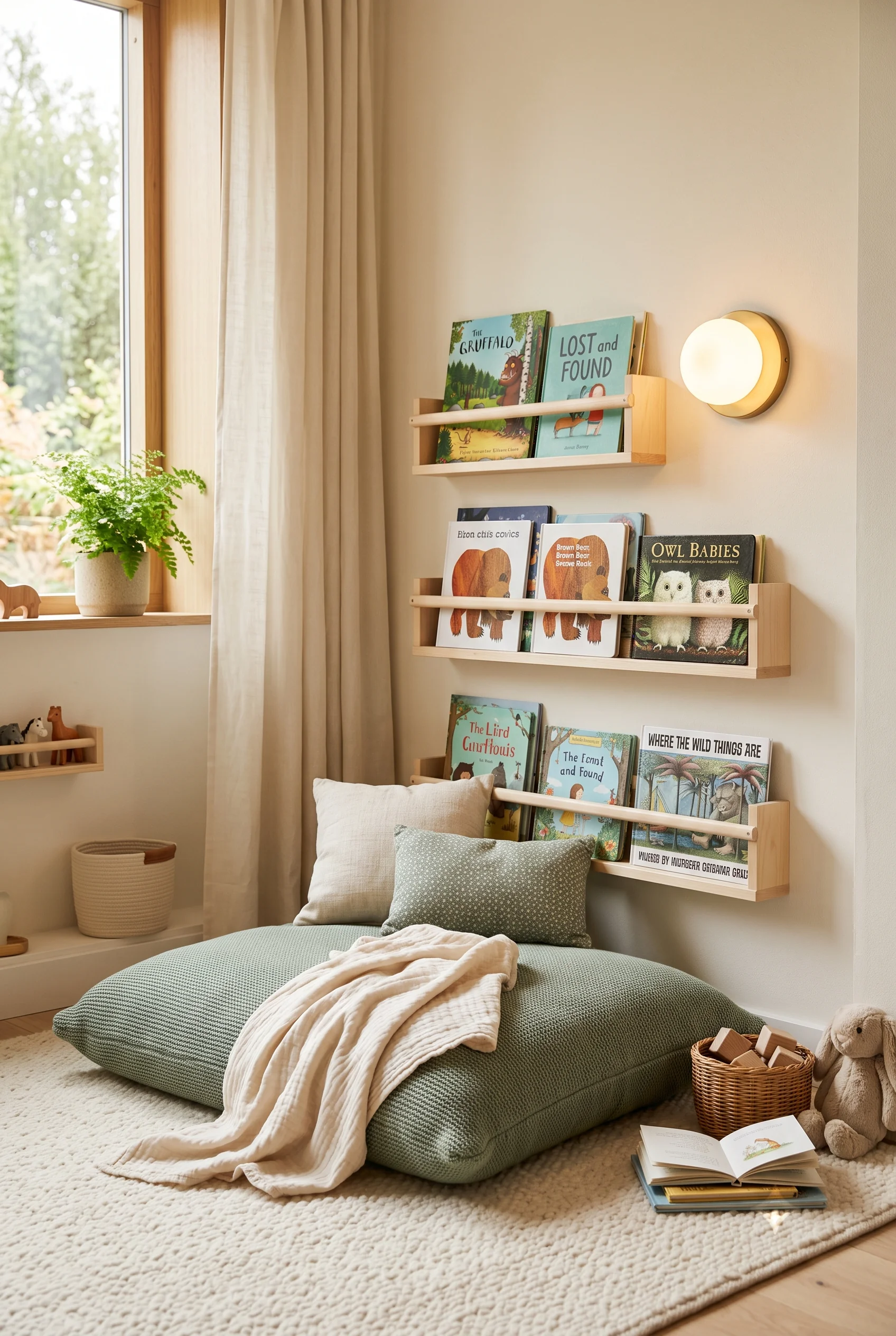
A peaceful corner can become a Montessori reading nook with little more than a washable floor cushion and a short row of books. A small chair also works when it supports the child’s feet and feels easy to move around.
Keep the selection limited enough that each cover remains visible. A soft blanket and gentle wall light bring comfort without turning the nook into another crowded display. When the layout allows, position it away from climbing equipment and busy toy storage. The slight separation gives reading its own slower rhythm, especially before naps or bedtime.
Book Covers Within Clear View
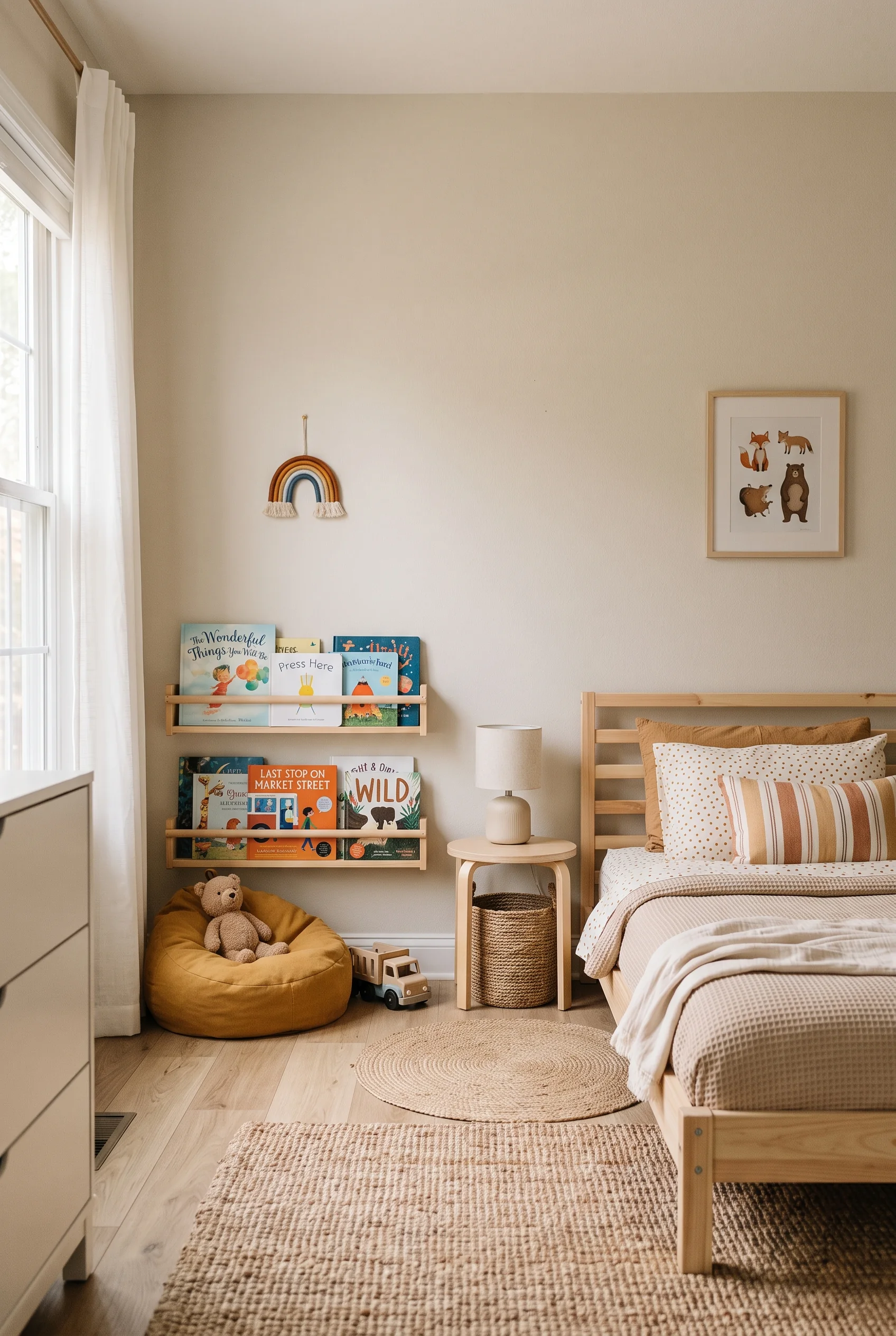
Front-facing shelves allow young children to recognize familiar book covers before they can read titles along a spine. Shallow picture ledges are especially useful because they take up very little floor space and keep the collection visually light.
Mount each shelf at a comfortable reaching height, with no need to climb. A small arrangement with space between books feels approachable and makes returning one much simpler. Seasonal stories and current interests can rotate in gradually while familiar favorites stay nearby. The display becomes part of the Montessori room decor without losing its practical purpose.
Low Shelves That Invite Independent Play
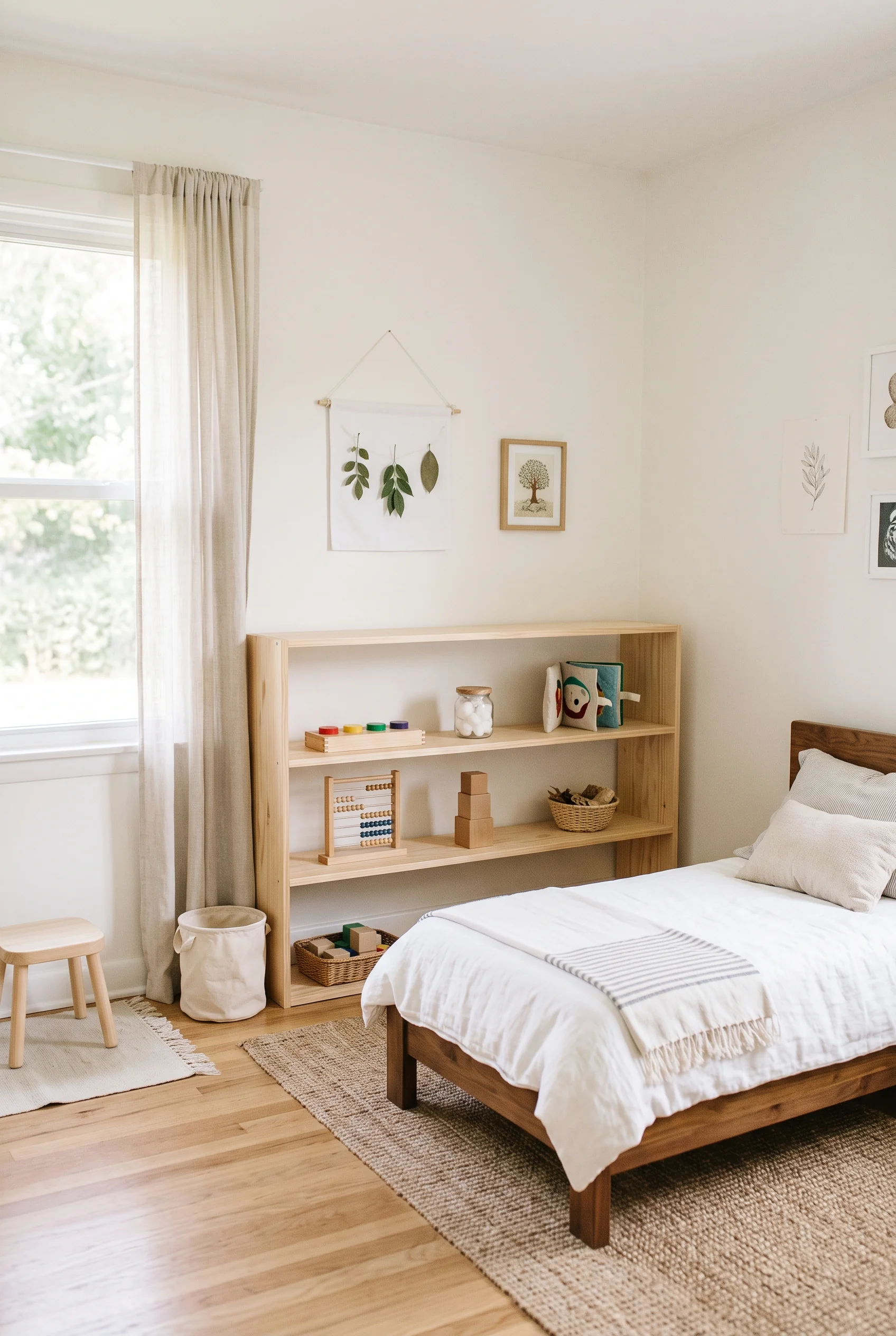
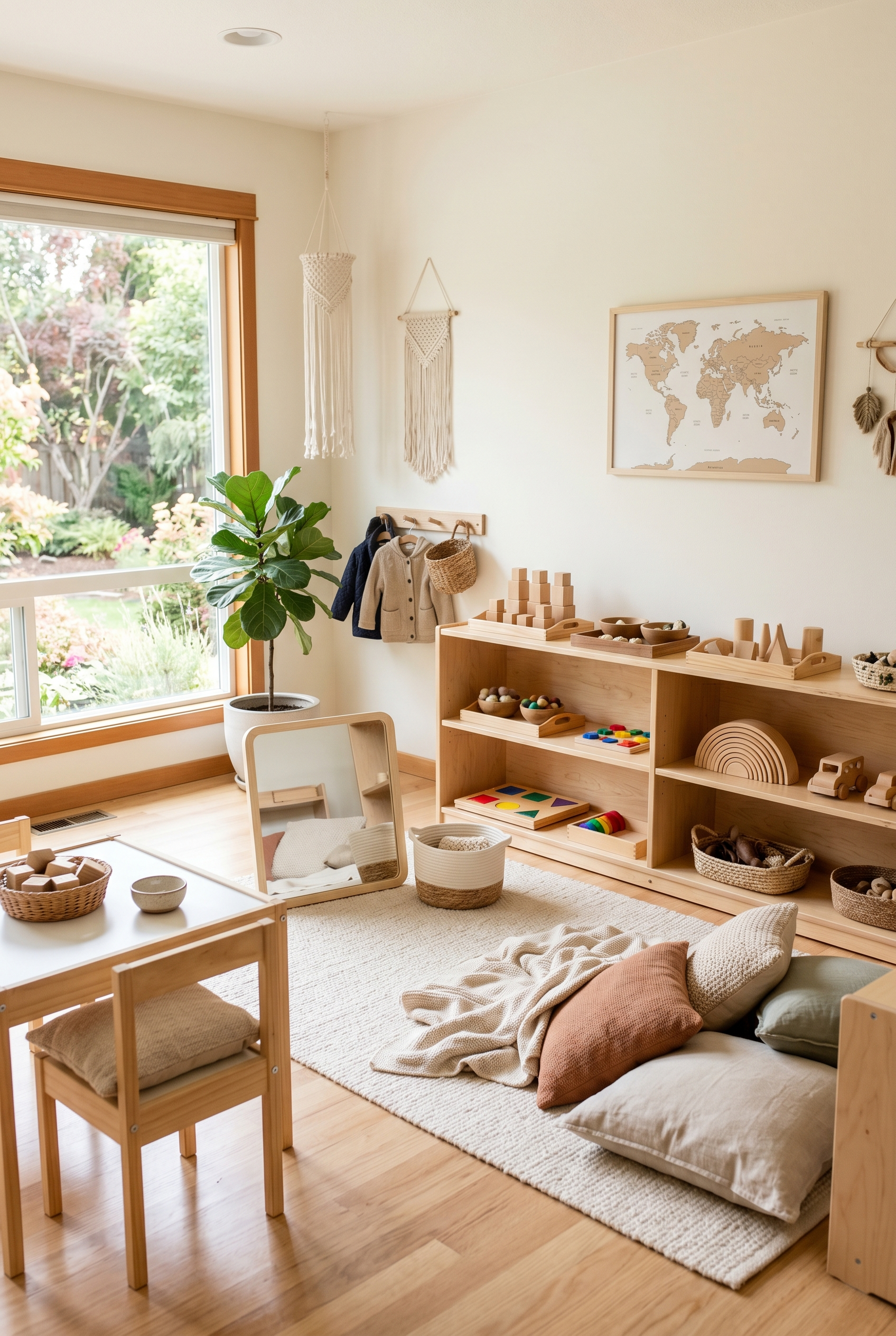
Sturdy open shelving lets children see their available activities without digging through a deep container. One material in each defined space gives puzzles, blocks, and practical-life activities a clear home while leaving the shelf easy to scan.
A few empty sections can be just as valuable as the filled ones. They soften the visual effect and leave room for a child to return an activity without squeezing it into place. Secure the unit to the wall, keep climbable objects away, and choose a height that feels naturally accessible. The shelf should feel calm even on an ordinary afternoon.
Shop this pick: Low Montessori Open Shelf, A sturdy child-height shelf anchors the play area and supports visible, independently accessible activities.
Child-Height Storage for Getting Ready
Morning and evening routines become gentler when familiar items have obvious, reachable homes. Child-height storage gives clothing, toys, and personal belongings a place that does not require constant adult help. The most useful arrangements are edited, not abundant. A few manageable choices give children room to participate without feeling overwhelmed.
Montessori Toy Storage Small Hands Can Manage
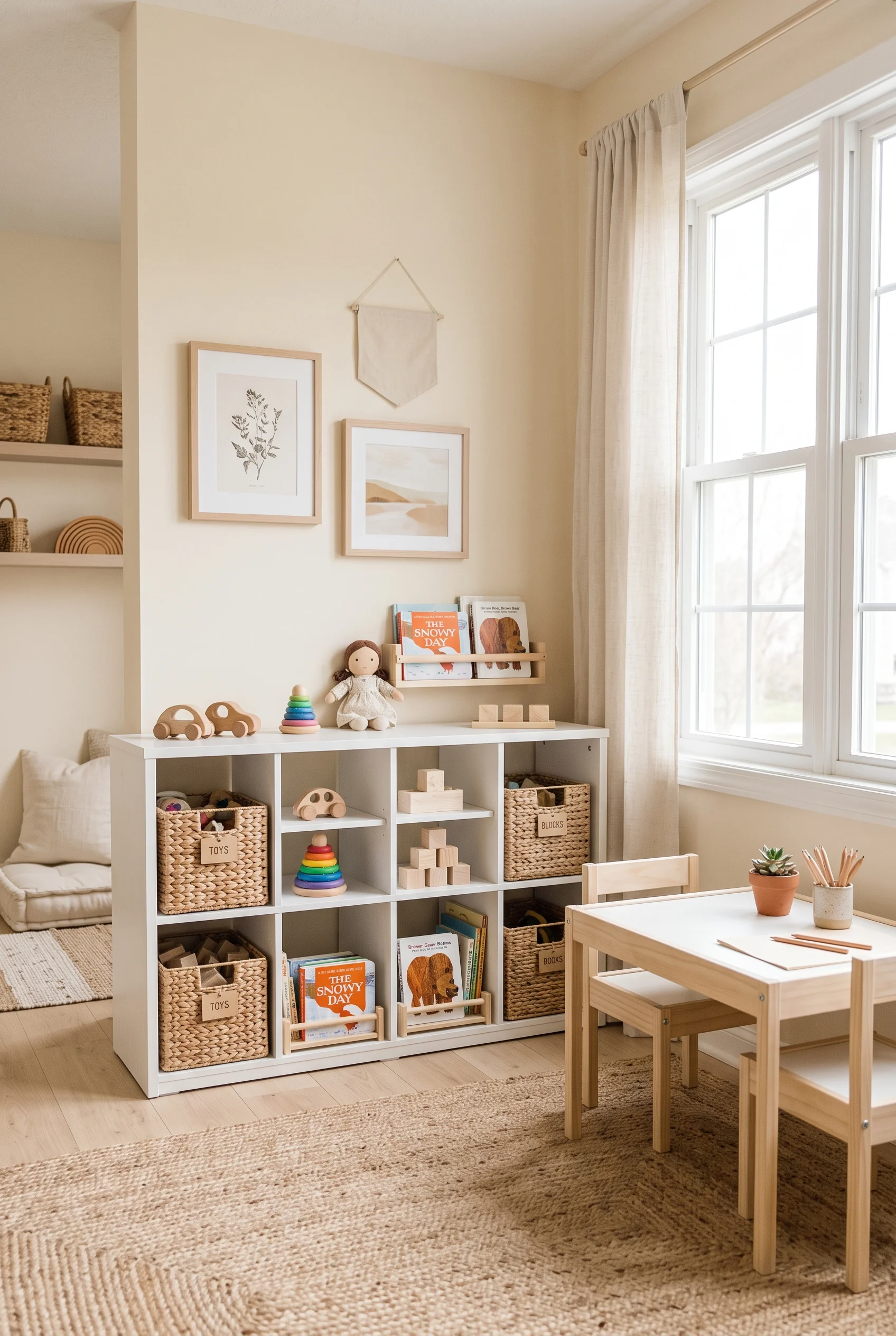
Low cubbies and lightweight bins make Montessori toy storage easier for a child to use from start to finish. Each toy category can have a consistent home, making cleanup a familiar sequence rather than a search for empty space.
Deep boxes tend to hide small pieces and encourage toys to collect at the bottom. Shallow containers keep contents visible and are easier to carry. Choose stable storage with rounded edges, then avoid bins with heavy lids or awkward handles. For more detailed kids bedroom storage ideas, begin by watching which containers your child can return independently.
A Dressing Zone With Manageable Choices
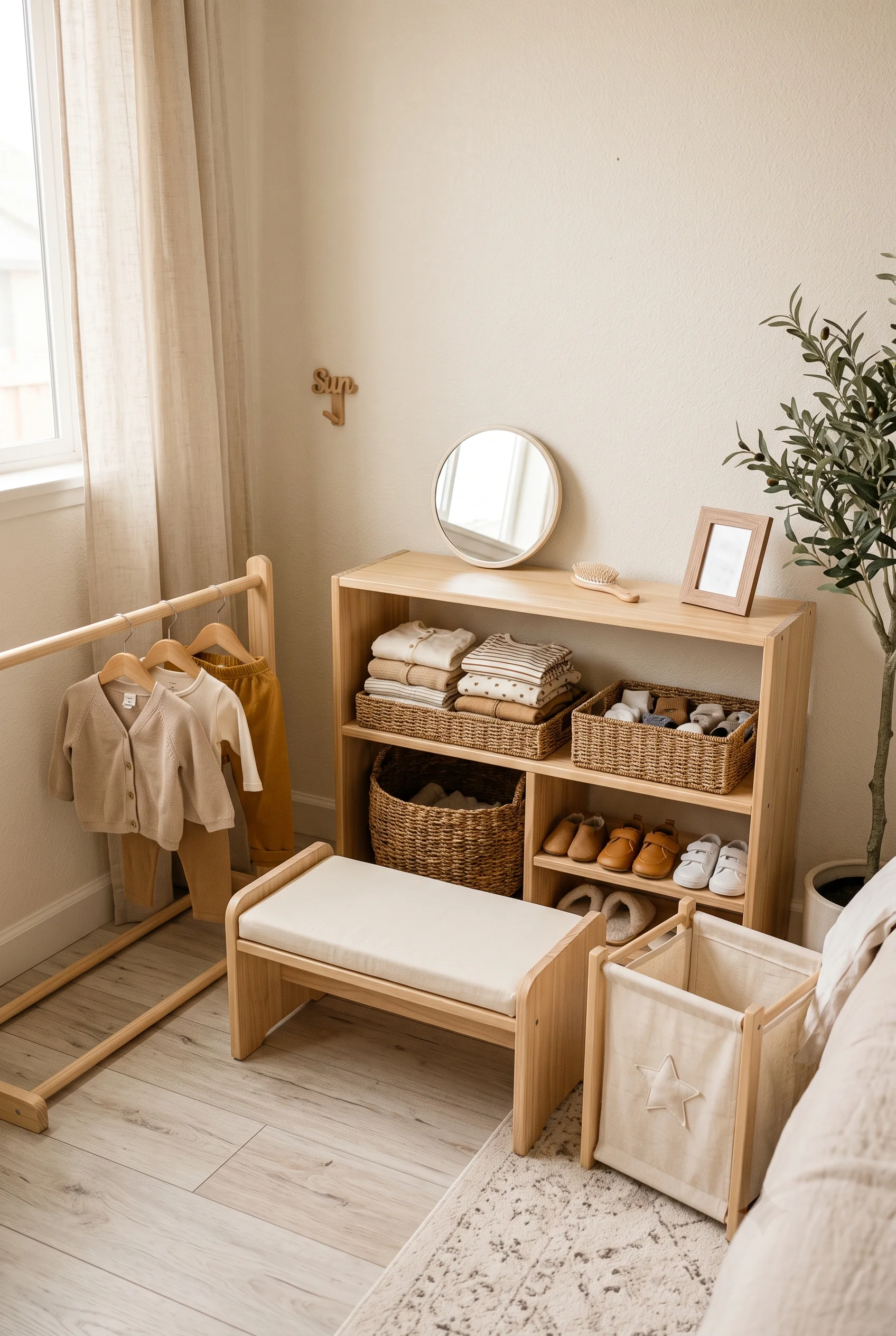
A compact dressing area can hold two or three weather-appropriate outfits, a small hamper, and a low seat. With fewer decisions in view, a child can get ready without sorting through an entire wardrobe.
Keep everyday clothes at child height, while special pieces and extras can stay in adult-managed storage. A stable bench makes socks and shoes easier to manage and offers a landing spot for folded pajamas. Keep the zone close to the closet or dresser when possible. The routine feels more intuitive when each step happens in one defined area.
A Clothing Rail With Just Enough Choice
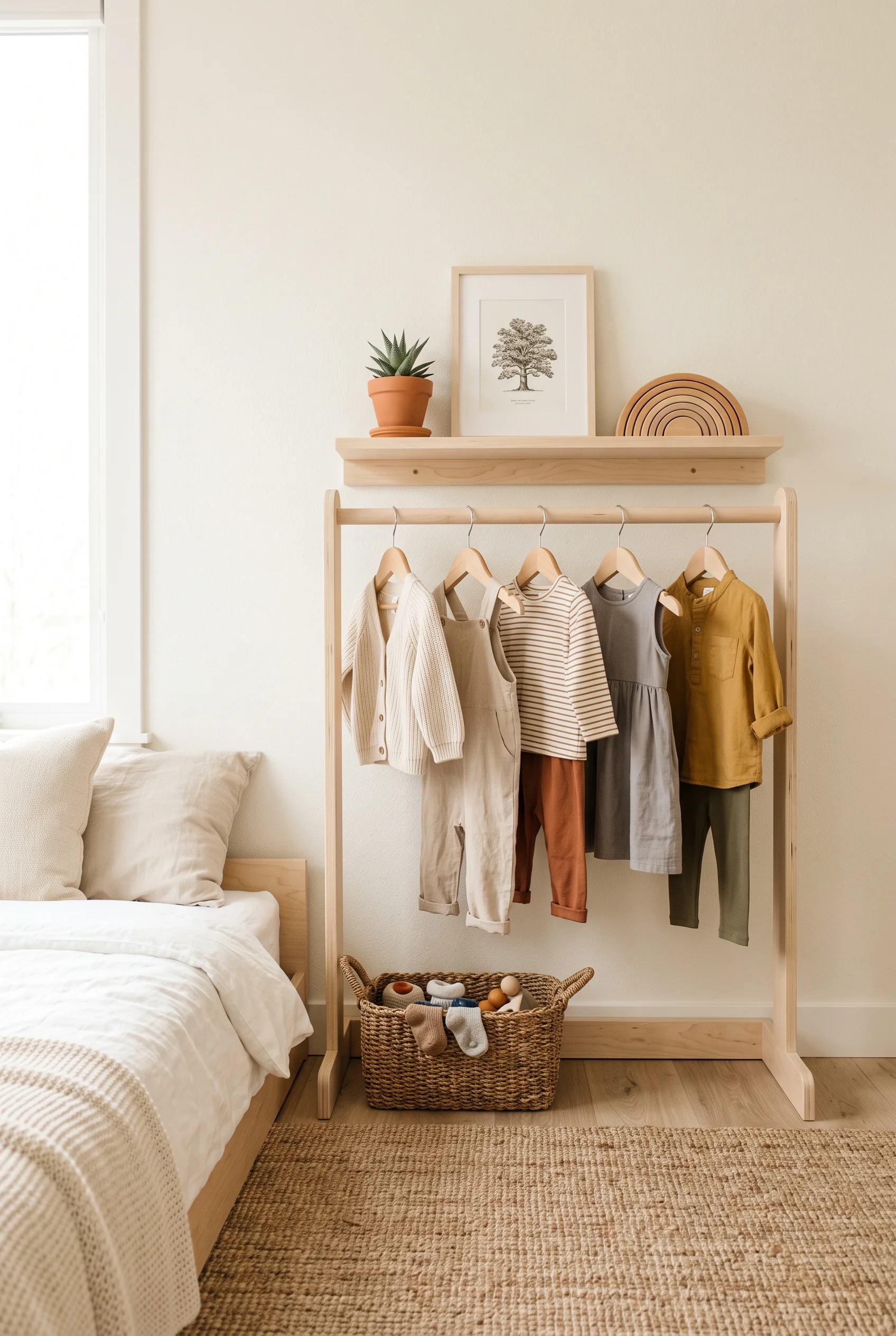
A secure low rail keeps a weekly selection of shirts, jackets, or dresses visible. Lightweight children’s hangers are easier for small hands to lift, turn, and return than full-size versions.
Resist filling the rail from end to end. A curated group of coordinated options is more functional and leaves room for each garment to move freely. Install wall-mounted rails with suitable hardware, and protect freestanding designs against tipping. Paired with a small basket for folded basics, the rail offers independence without placing the entire closet on display.
A Secure Mirror for Growing Self-Awareness
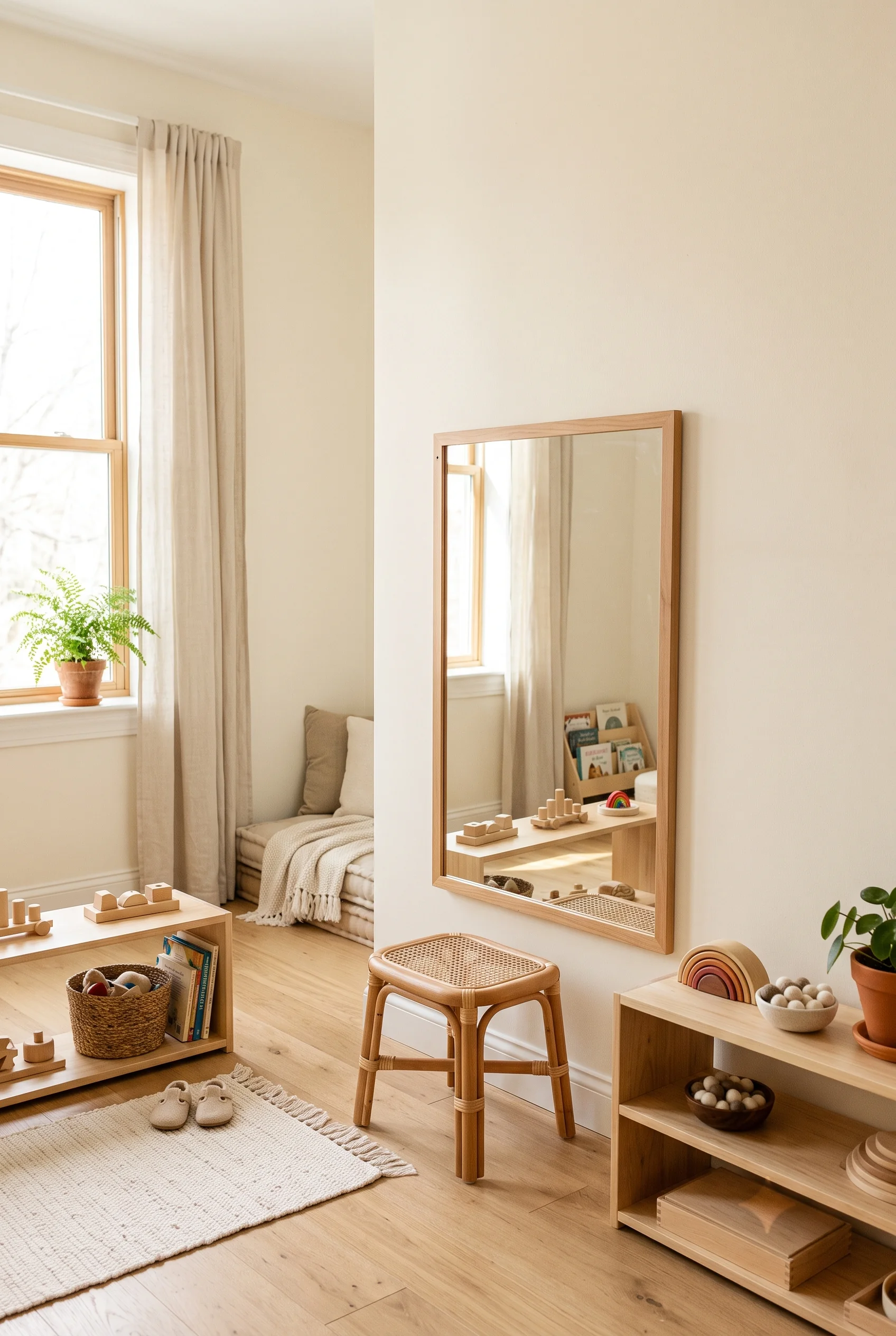
A child-height mirror supports dressing, movement, and the small grooming rituals children often want to practice themselves. Shatter-resistant acrylic is a practical choice, especially in a room designed for active use.
Mount it securely rather than resting it against the wall. Near the dressing area, the mirror becomes part of a natural sequence that may include choosing clothes, sitting on a stool, and checking an outfit. Leave enough open floor space for comfortable movement and keep surrounding decor restrained. Bright natural light makes the area particularly welcoming in the morning.
Purposeful Places for Work and Play
Children often settle more easily into an activity when its materials and boundaries are clear. A small table, organized baskets, and a thoughtfully edited toy selection can turn one corner into a useful workspace. A quiet palette around these zones keeps the activity the focus, while still leaving room for color through books and artwork.
A Creative Table Sized for Comfort
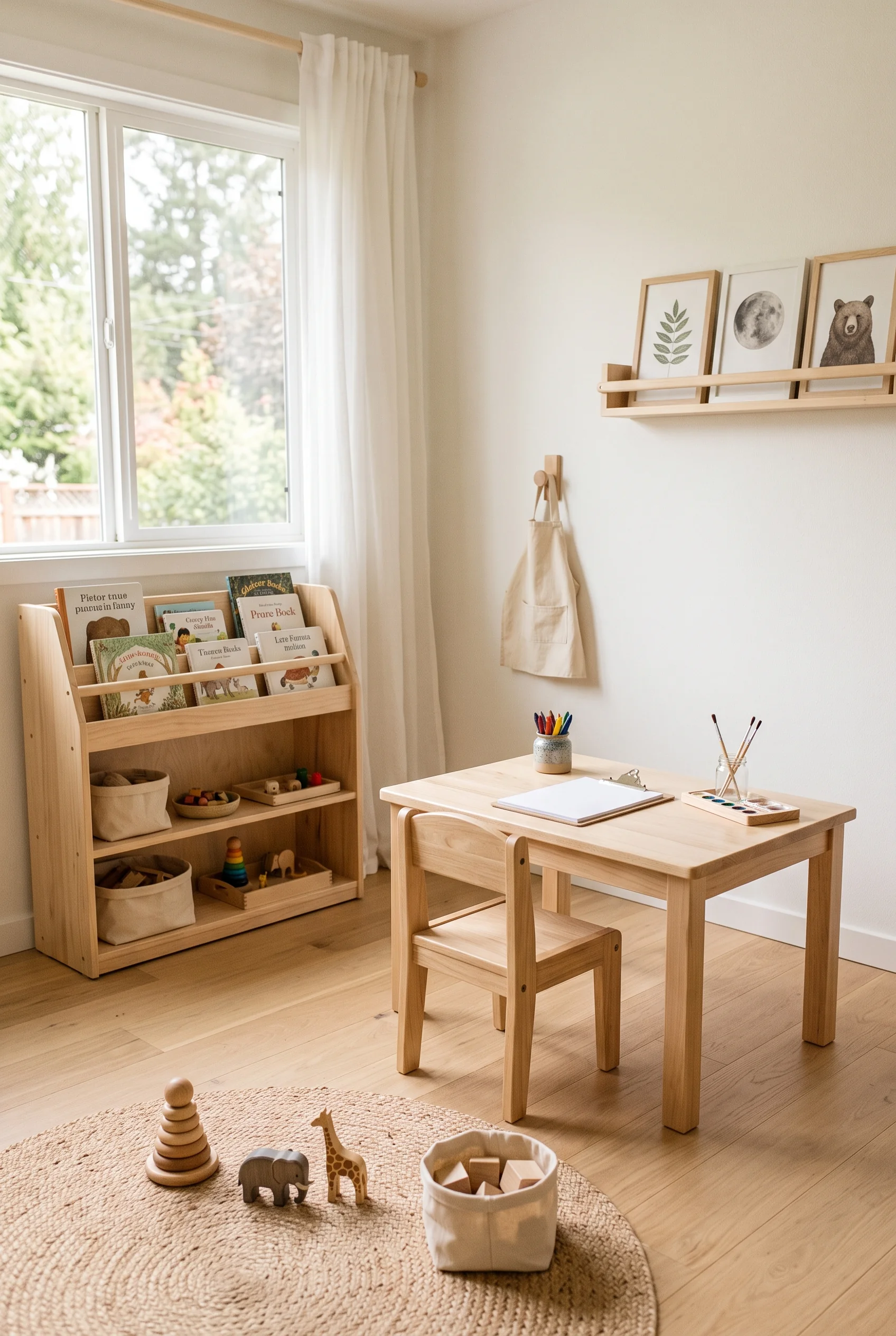
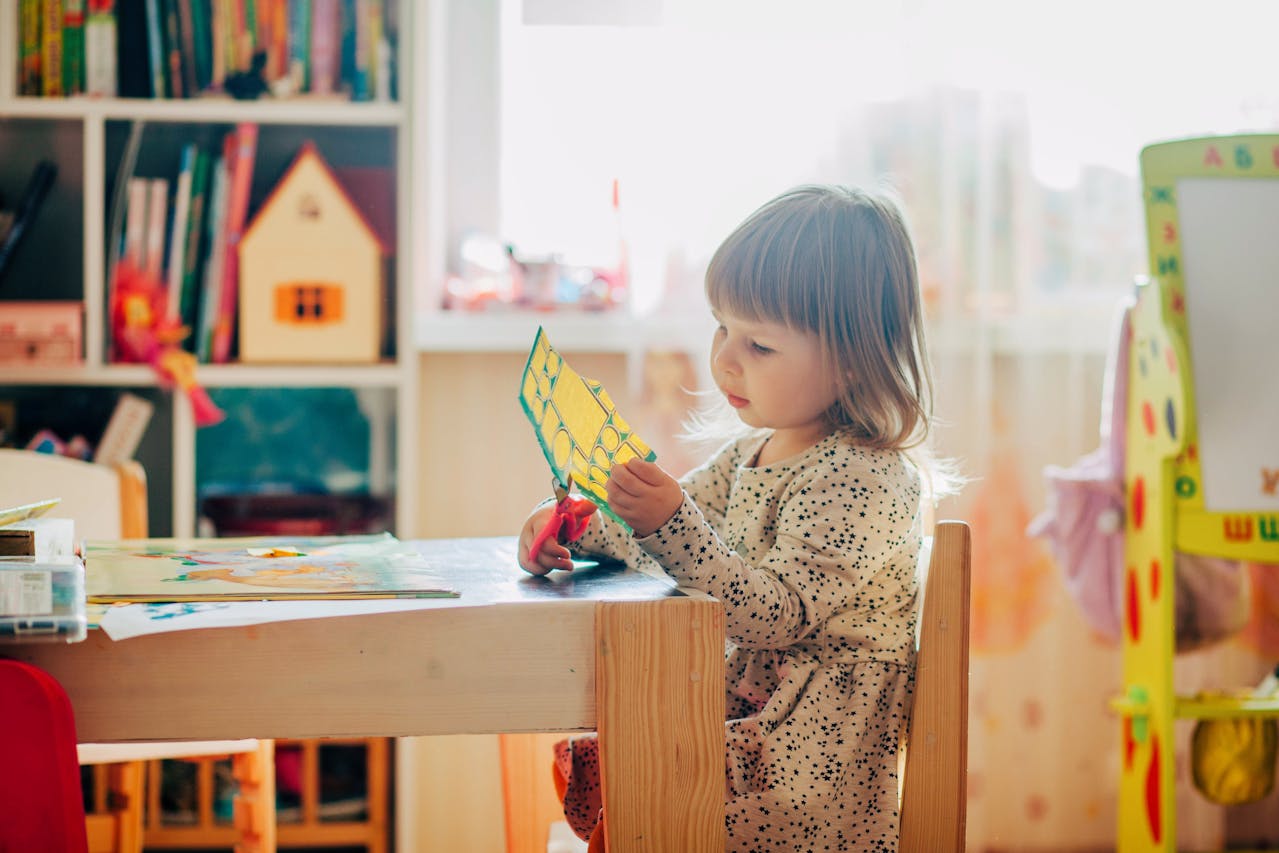
A child-sized table feels most comfortable when both feet can rest on the floor. That grounded posture supports drawing, puzzles, and simple practical-life activities without requiring a child to climb onto an adult chair.
Keep only one or two activities close by so the tabletop remains ready to use. A wipeable finish handles crayons and small spills with less fuss, while generous clearance behind the chair makes sitting down easier. In a compact Montessori bedroom, the table can also serve as a low nightstand after you put the materials away. Its scale brings purpose without adding visual weight.
Shop this pick: Child-Sized Wood Activity Table, The appropriately scaled table is the central piece for art, puzzles, and practical-life activities.
Shallow Baskets With a Clear Purpose
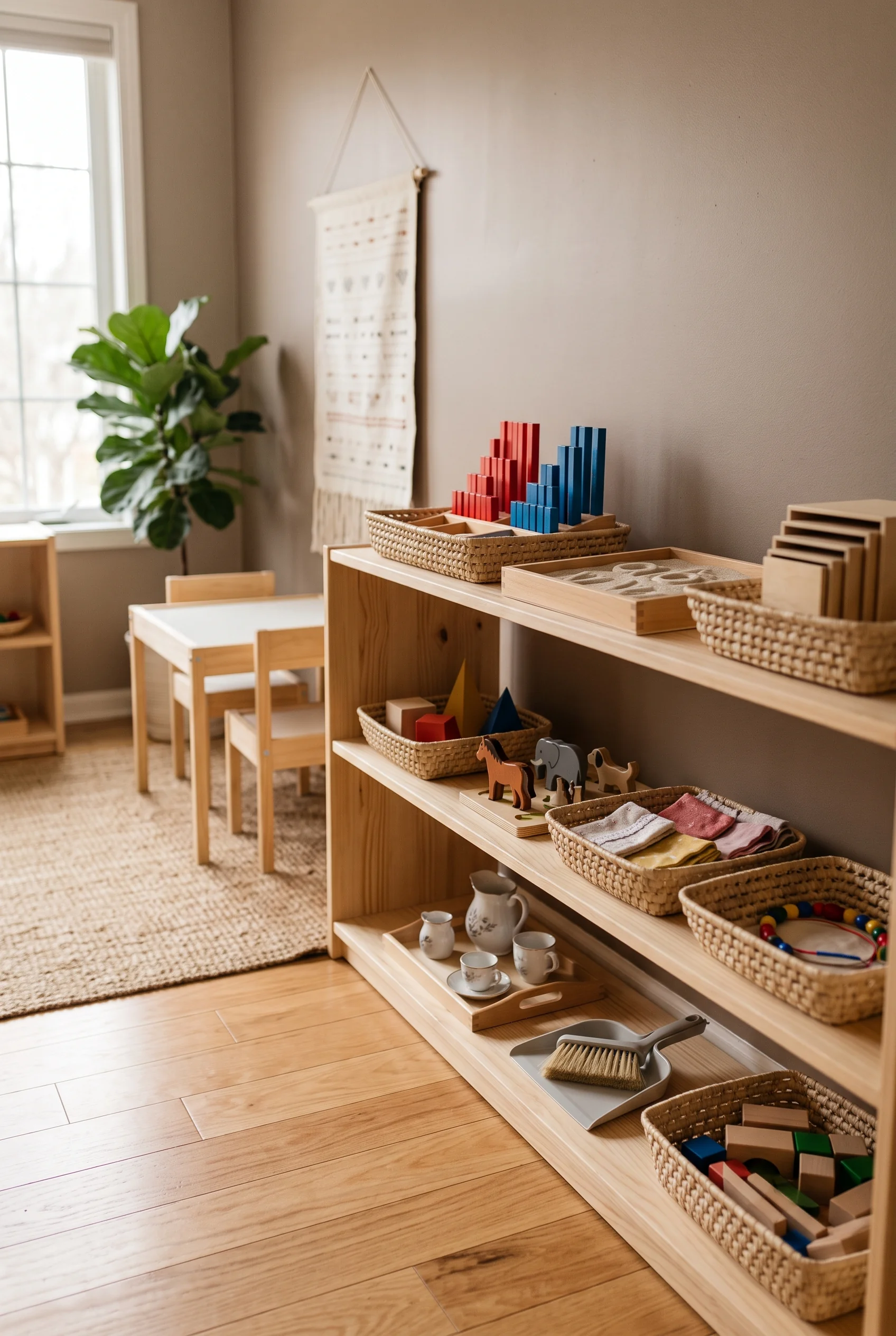
Shallow baskets keep the pieces for a single activity together, whether that means blocks, matching cards, or art materials. A child can carry the complete activity to a rug or table, then return everything in one trip.
Handles should feel comfortable, and the basket should fit its shelf without being wedged into place. Consistent sizing helps prevent awkward stacks, but not every container needs to match perfectly. A restrained mix of woven fibers and smooth wood brings tactile warmth to Montessori room organization ideas. The overall shelf still feels quiet and easy to understand.
A Toy Rotation Guided by Real Interest
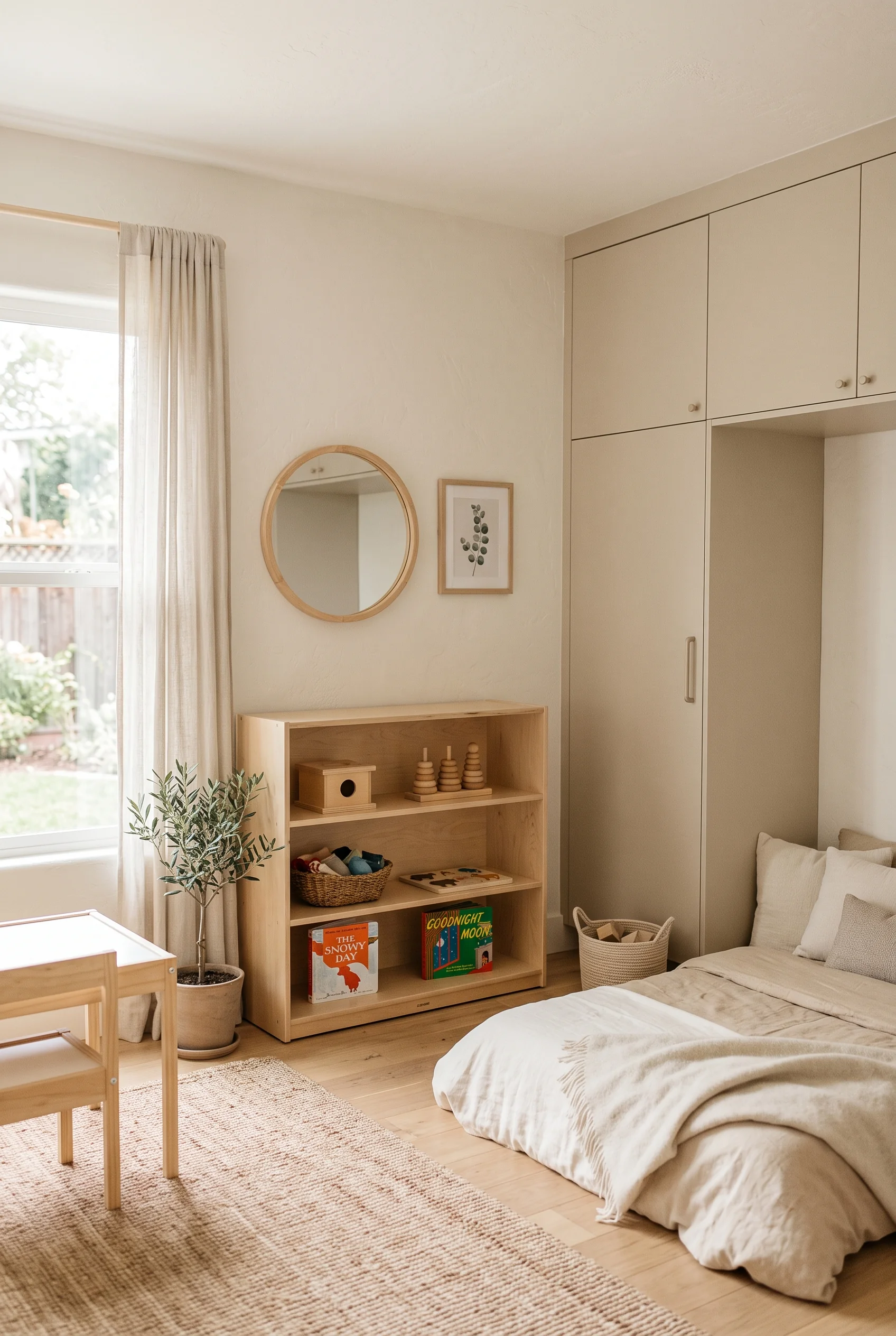
A lightly filled shelf gives each activity more presence and keeps small choices from competing for attention. Store the remaining toys in a closed cabinet or separate closet, leaving familiar favorites available alongside a few refreshed options.
The rotation does not need a rigid calendar. Watch for materials that sit untouched or activities your child has outgrown, then make a few thoughtful changes. Returning an old favorite after a break can renew interest without buying anything new. This measured approach also supports practical playroom organization ideas, especially in homes with limited storage space.
Calm Color Around Everyday Belongings
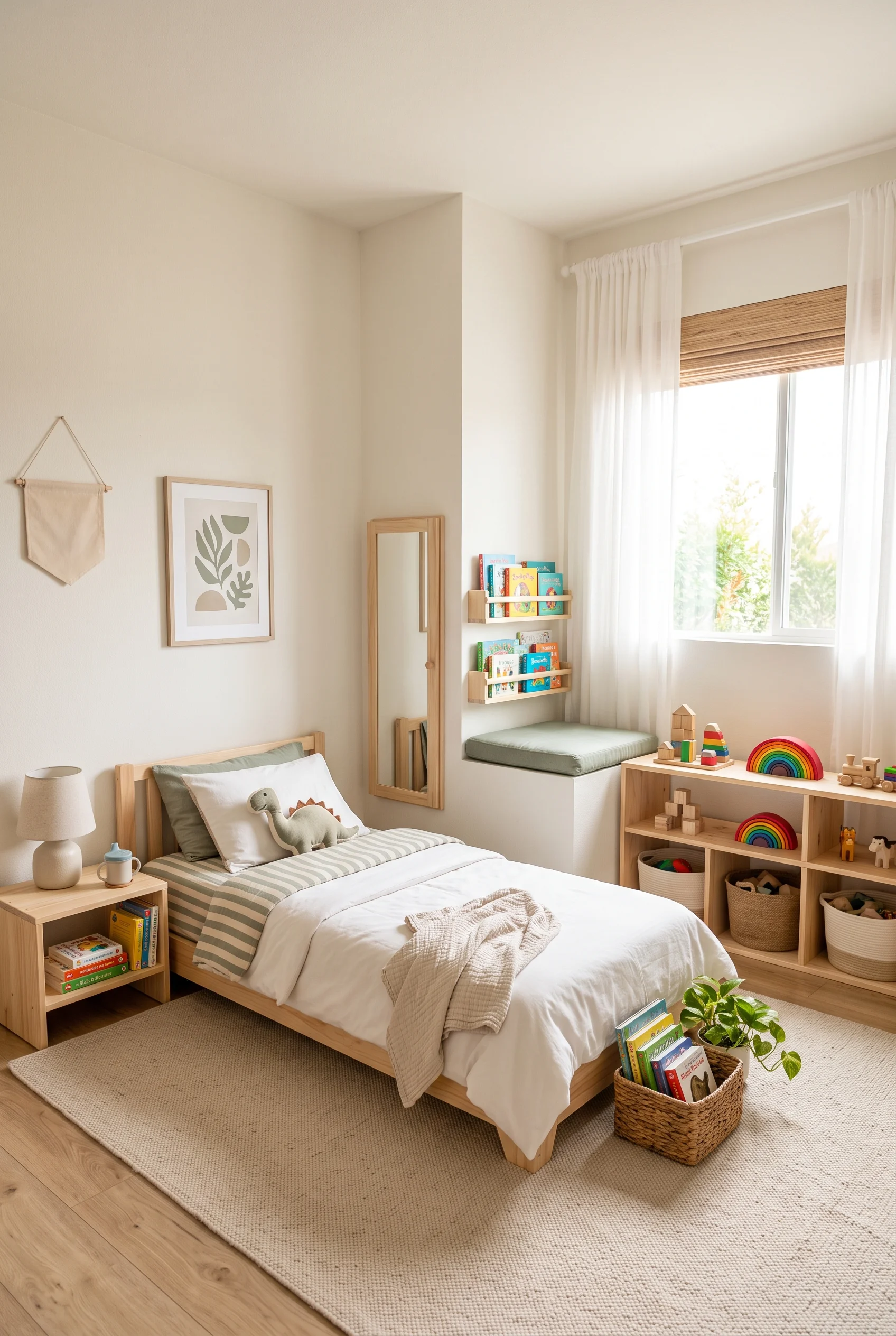
Warm white, light taupe, muted green, and gentle blue form a restful background for a Montessori bedroom. The quieter backdrop lets books, toys, and children’s artwork add personality without making every surface compete.
View paint samples throughout the day because natural light can shift a neutral from warm to cool. Color can then appear in smaller places, such as a blanket or book cover. Neutral kids room ideas feel most welcoming when they include texture and soft contrast rather than relying on a single flat shade. The mood stays calm but never clinical.
Natural Texture With a Lighter Visual Touch
Texture adds warmth without adding more objects. Natural wood, washable fabrics, and a few nature-inspired details can make Montessori room decor feel soft and grounded. The key is restraint. Smooth surfaces and open wall space let tactile materials stand out while keeping the bedroom easy to clean and maintain.
Natural Materials Made for Daily Life
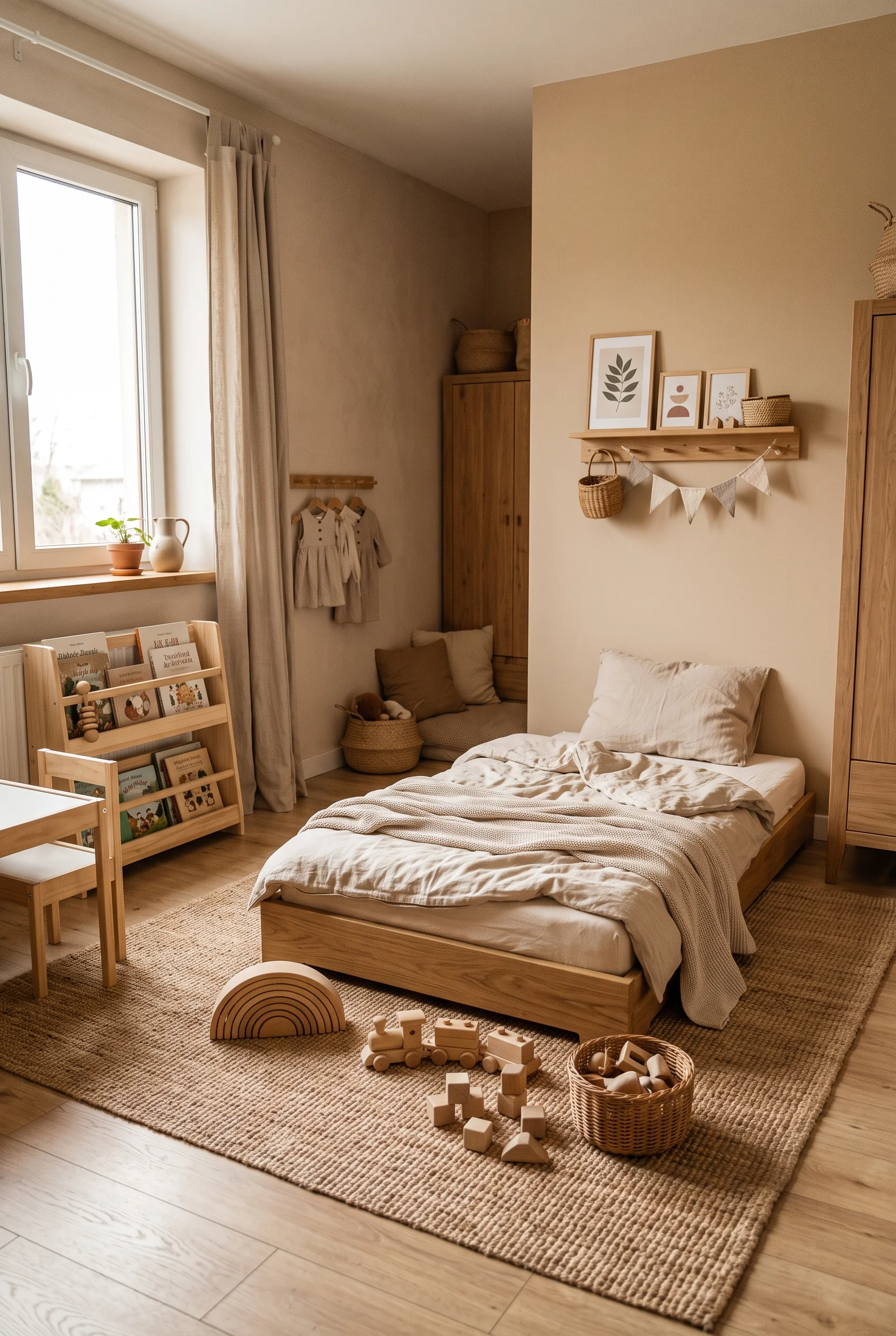
Natural wood, cotton, linen, and wool add tactile variety to a room built around simple forms. These materials feel warm beside pale walls and can age gracefully through years of daily play.
Durability matters more than including every material. Washable cotton bedding or a sturdy woven rug may be enough to soften an otherwise streamlined room. Balance textured pieces with smooth cabinetry so the setting remains visually quiet. Check fibers, finishes, loose threads, and small decorative details for age-appropriate safety before placing them within reach. Practical materials should feel comfortable in real family life.
Shop this pick: Natural Wood Montessori Dresser, A durable wood dresser provides a warm focal point while supporting accessible clothing storage.
Nature-Inspired Details at a Child’s Eye Level
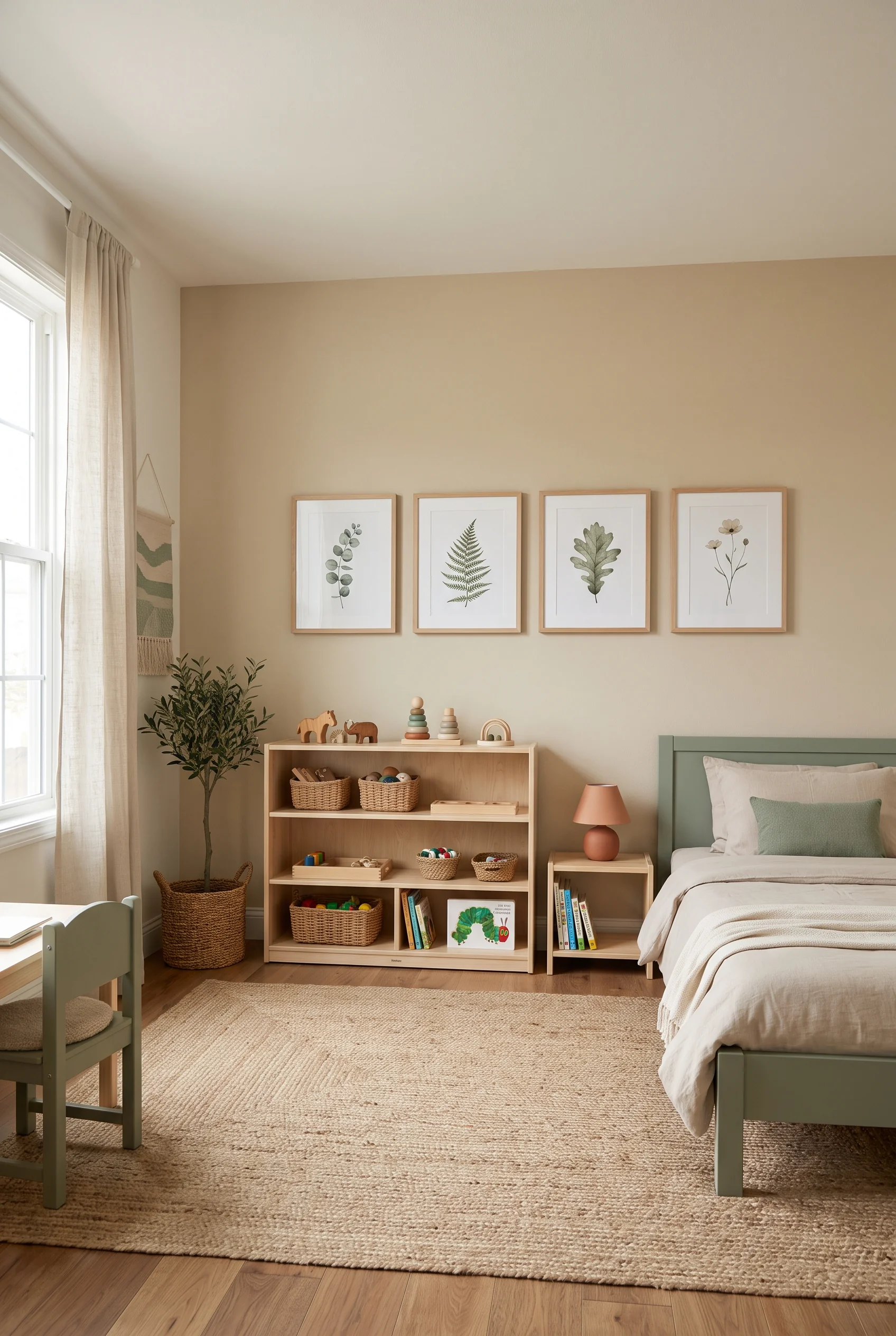
Botanical prints, animal illustrations, and simple leaf shapes can connect a Montessori kids’ room to the natural world. Hung at a child’s eye level, the artwork feels like part of their experience rather than decoration intended only for adults.
Give each piece breathing room instead of building a crowded gallery. Two coordinated prints may have more presence than an entire wall of small images. Secure any natural objects displayed in the room, keep them child-safe, and ensure they’re too large to become a hazard. Muted greens and sandy neutrals carry the theme softly through bedding or a single cushion.
An Art Station Ready for Small Ideas
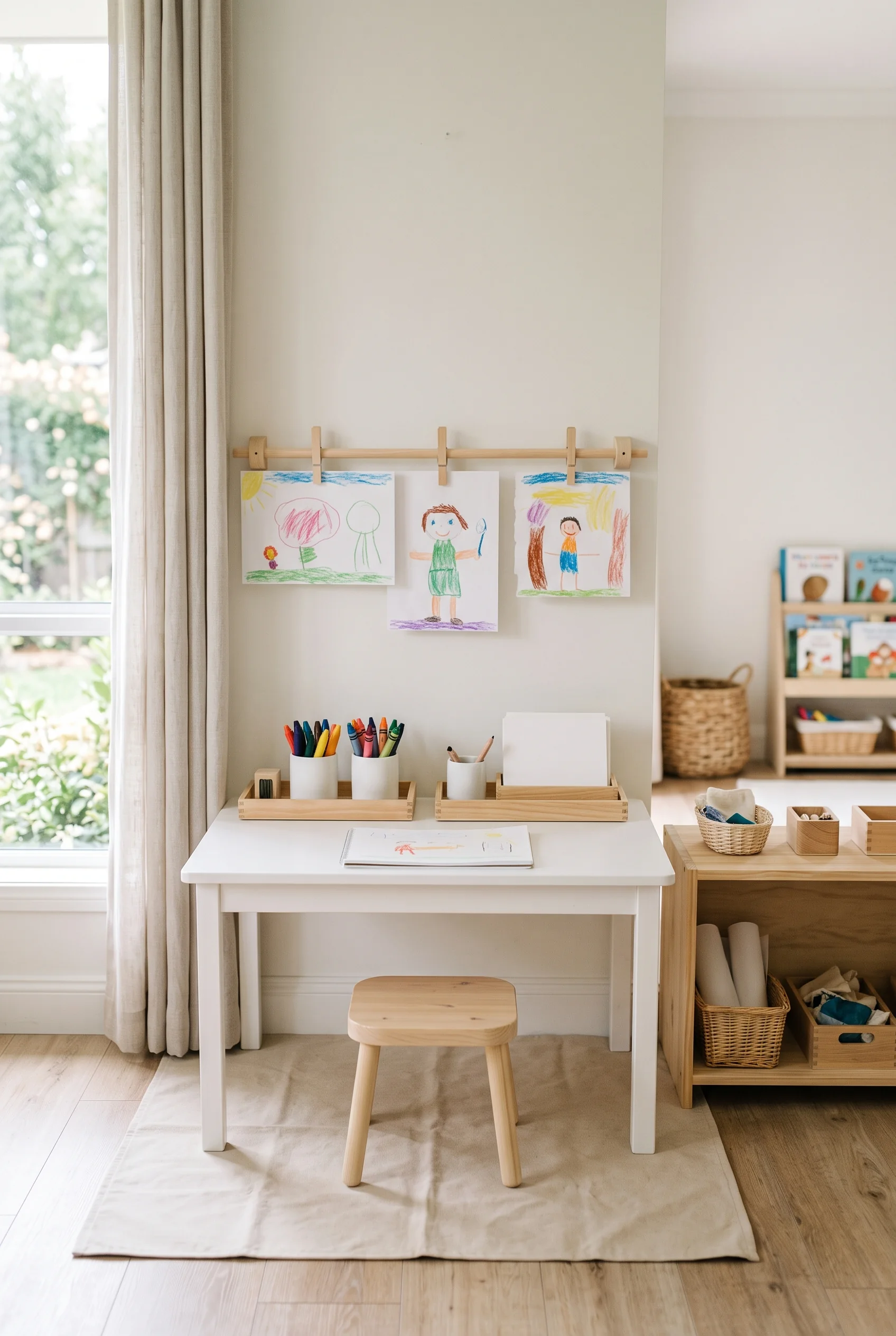
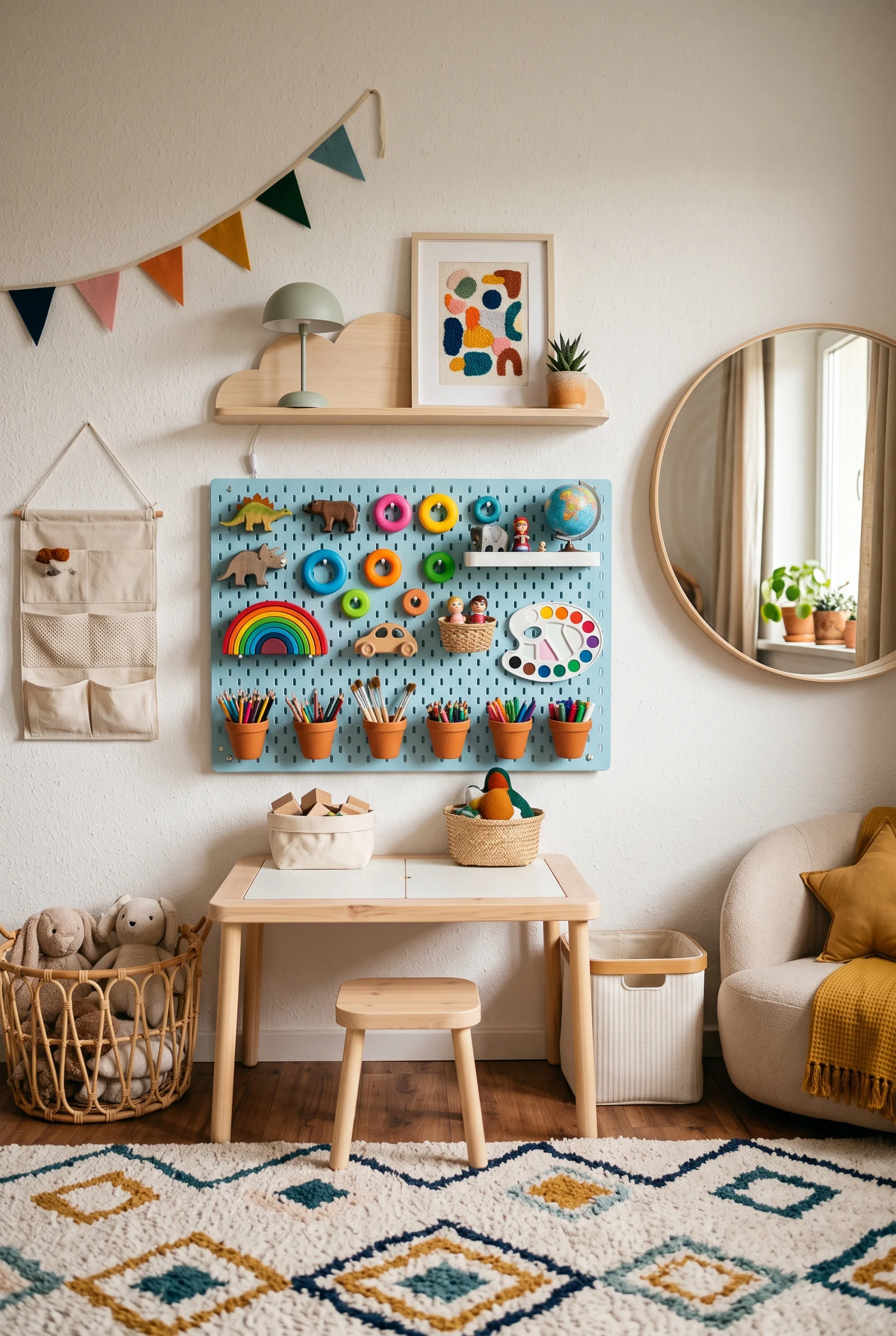
Reachable cups of washable crayons and a small stack of paper make creative time feel available without a complicated setup. Limit the selection to age-appropriate supplies, and store potentially risky materials for supervised use.
A washable mat protects the floor, while an easy-clean tabletop keeps everyday marks from becoming stressful. Finished pieces can hang from a low display rail or slide into a simple paper holder. The station works best when children can see where each supply belongs. Bright artwork then becomes the lively detail in an otherwise restrained corner.
Picture Labels That Make Cleanup Clear
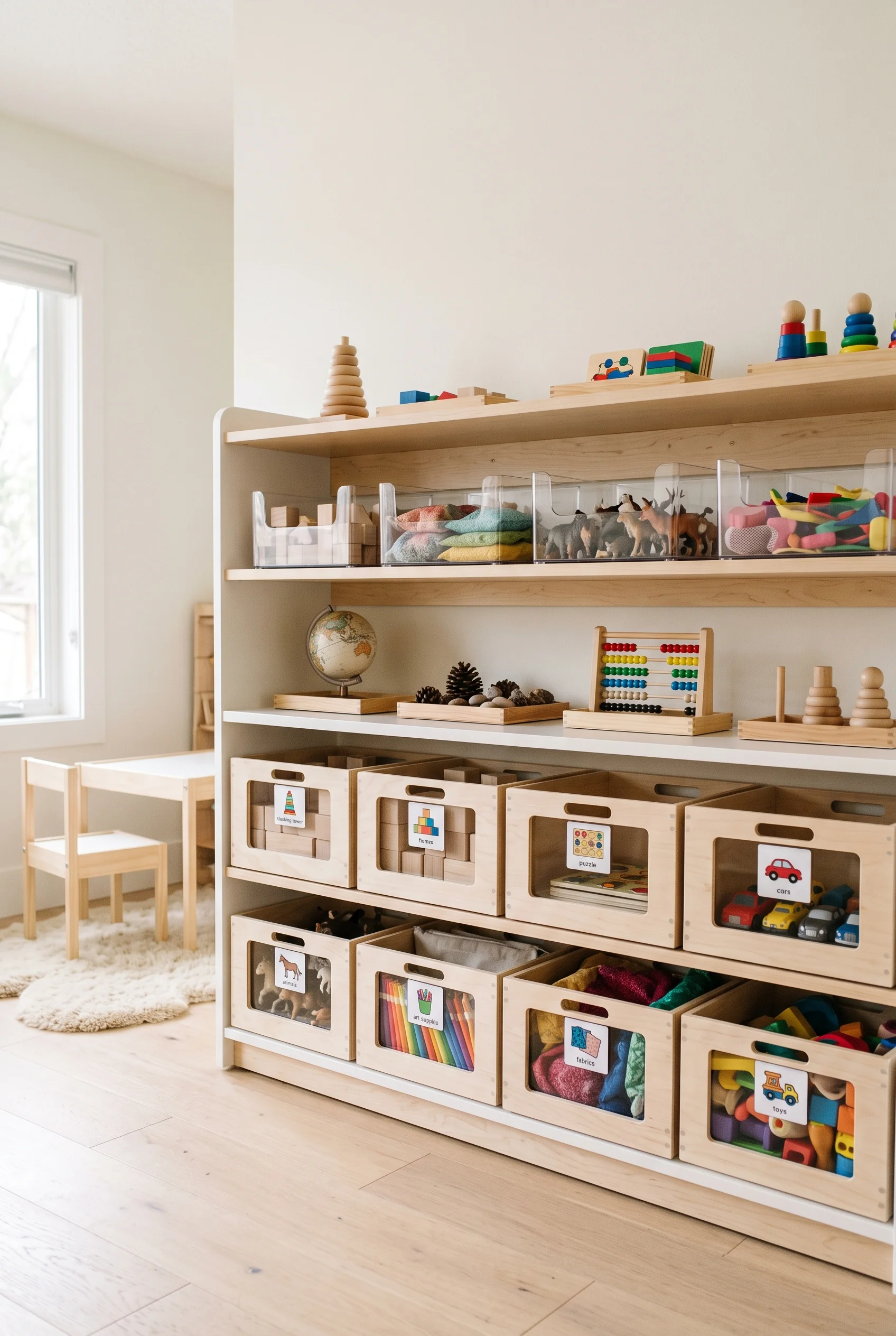
Picture labels help children identify where toys, clothes, and creative supplies belong before they know written words. A simple photo or illustration paired with a word can support recognition now and early reading later.
Place labels directly on drawers, bins, and shelf openings at the child’s eye level. Consistent imagery and an uncluttered typeface are easier to understand than highly decorative designs. The system should change as belongings and abilities change, so removable labels are particularly useful. Clear cues make resetting the room feel like a familiar routine rather than a complicated sorting task.
Gentle Support for Care, Rest, and Comfort
Independence also grows through small moments of personal care and emotional regulation. A mirror, soft rug, or quiet basket can support those routines without turning the bedroom into a collection of stations. These areas feel most natural when they are simple, welcoming, and placed near the moments in which a child will actually use them.
A Self-Care Station for Familiar Rituals
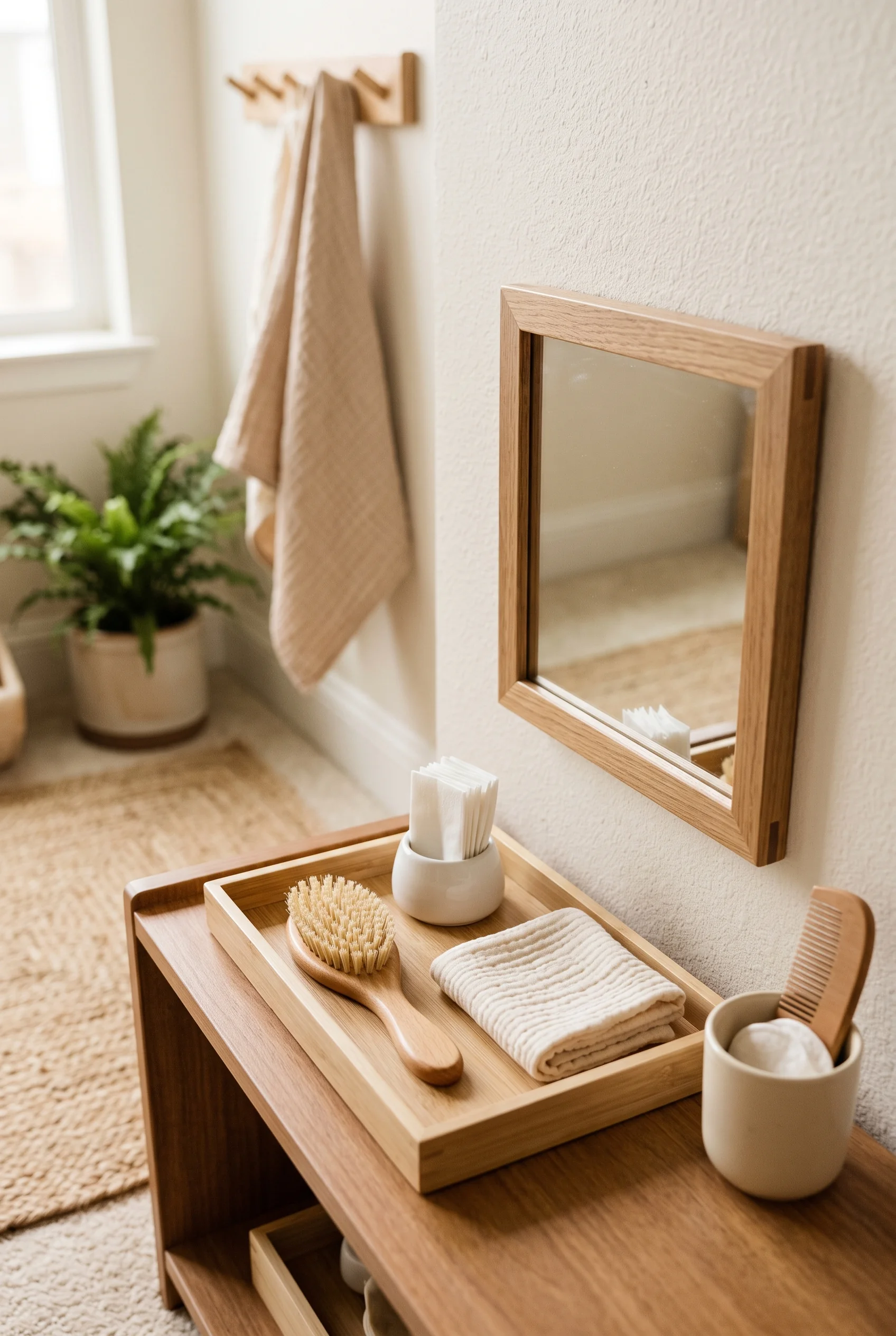
A small self-care area can support hair brushing, hand wiping, and other age-appropriate routines. A stable tray keeps a brush, tissues, and a soft cloth together, while products that require adult help remain stored elsewhere.
Pair the tray with a securely mounted low mirror and one hook or basket for personal belongings. The arrangement should be easy to reset, with enough open surface around each object to show where it belongs. Positioned near the dressing zone, it becomes part of a comfortable morning rhythm rather than an isolated feature.
A Soft Rug That Grounds Floor Play
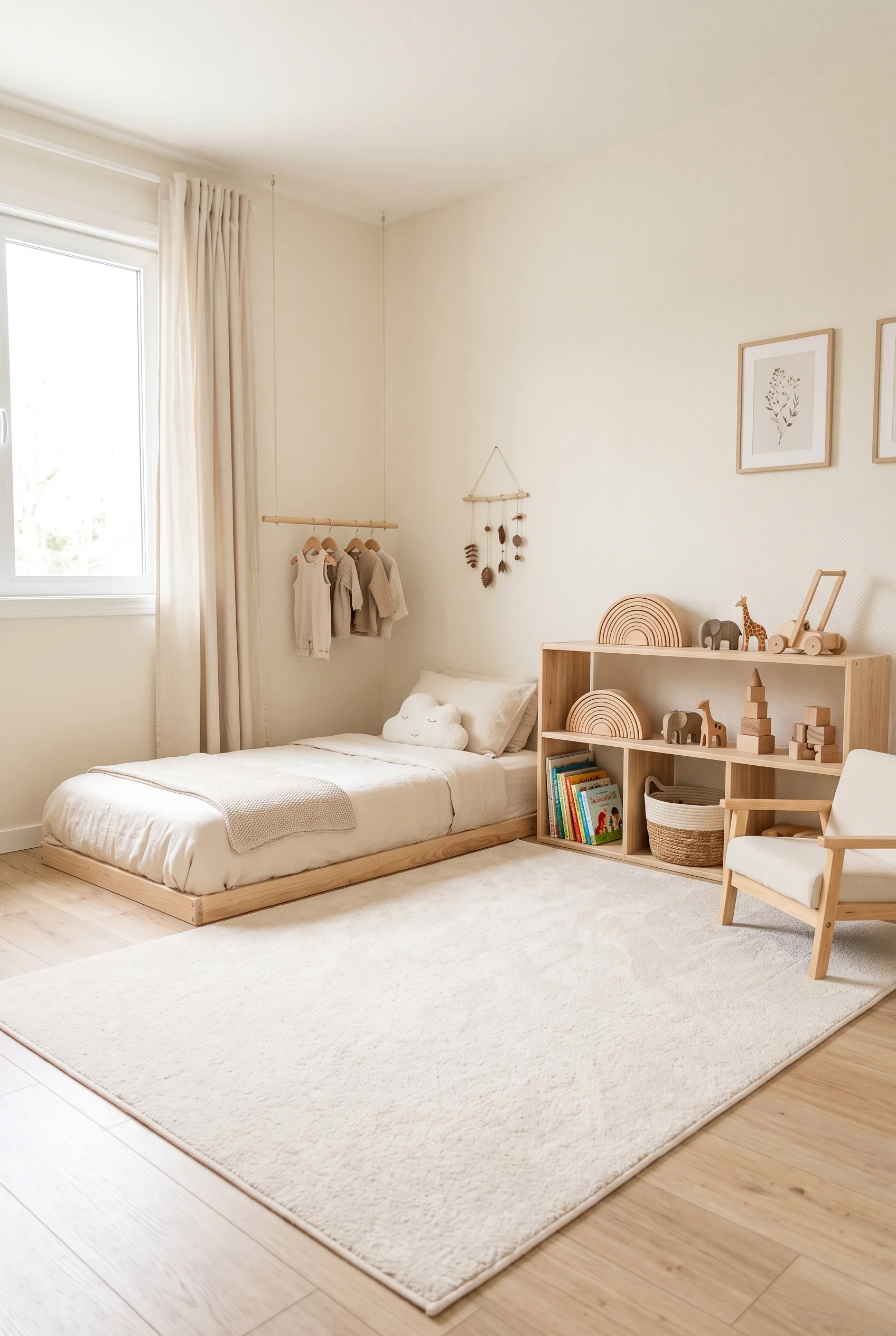
A low-pile rug defines the play area while keeping blocks and other materials steady. It also adds warmth for children who naturally spend much of their time sitting, stretching, and working close to the floor.
Washable or easy-clean fibers handle spills and creative projects with less worry. Add a non-slip pad, then check that every edge lies flat to reduce tripping. A subtle pattern or softly varied weave can hide everyday marks without introducing visual noise. Against pale wood and open shelving, a cream or light taupe rug gives the room’s center a comfortable anchor.
Shop this pick: Washable Low-Pile Kids Rug, A washable rug defines the floor-play zone and offers broad appeal for family bedrooms.
A Quiet Corner That Feels Welcoming
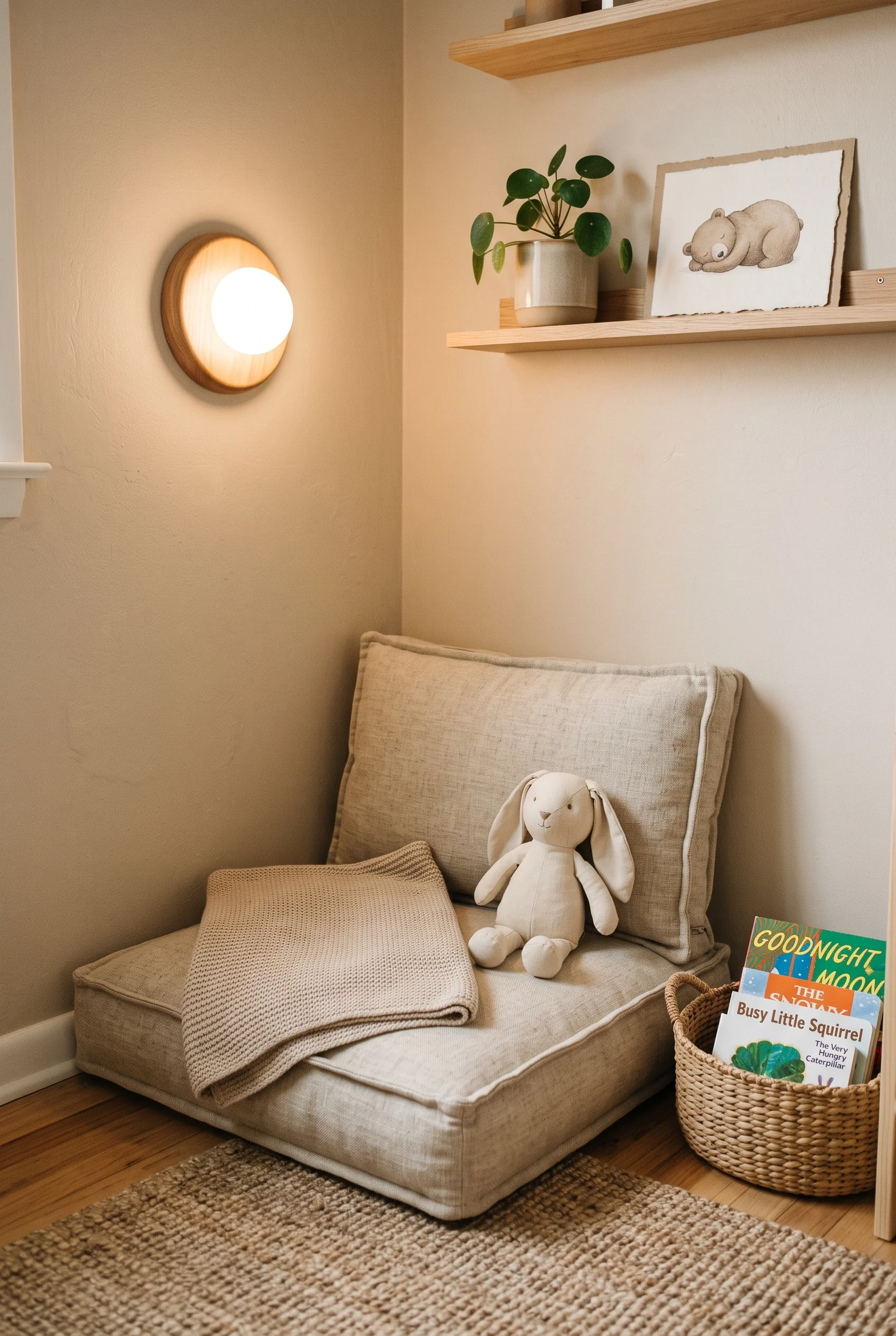
A quiet corner offers a comfortable place to pause, look at a book, or recover from a busy moment. A firm floor cushion, one soft toy, and a small book basket provide enough comfort without overwhelming the area.
Place the corner away from active storage or movement equipment when the room allows. Its purpose is comfort, not punishment, so it should remain available as a normal, positive choice. Warm neutrals and soft light can distinguish it gently from the rest of the room. The atmosphere should feel familiar, calm, and free from demands.
Favorite Belongings Right Where They Are Needed
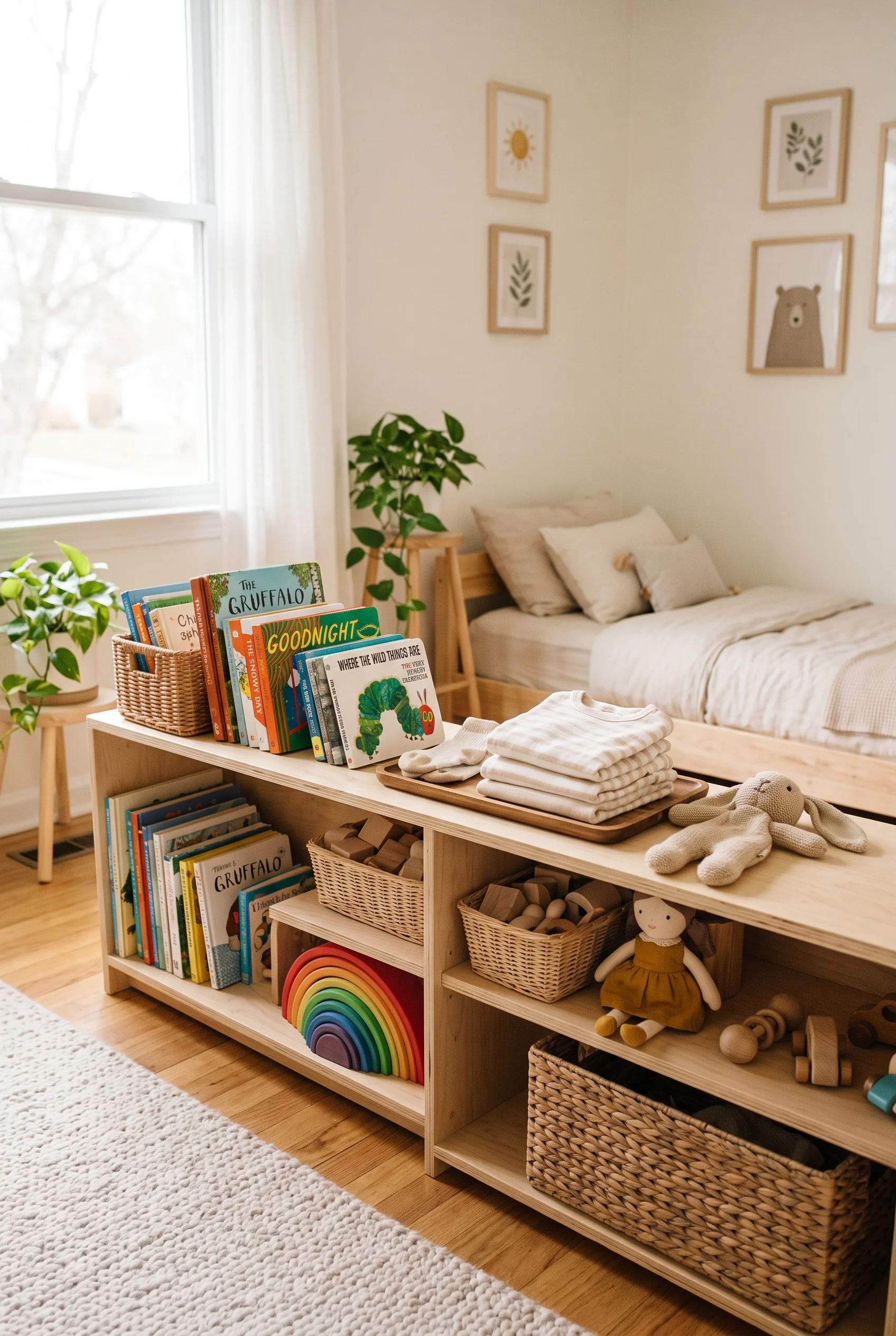
Keep frequently used books, pajamas, comfort objects, and toys where a child can reach them safely. Extra bedding and adult-managed supplies can go in higher storage, leaving lower shelves for everyday items.
Daily routines offer the clearest guide. Notice which objects repeatedly require adult help, then decide whether to move them lower or closer to where they are used. Shelf and hook heights will need occasional adjustments as your child grows. A Montessori bedroom remains supportive when its arrangement evolves alongside changing abilities rather than staying fixed.
Room to Move Without Losing the Calm
Movement belongs naturally in a child’s room, even when the overall mood is restful. Clear floor space and carefully selected equipment can support active bodies without taking over the layout. Secure installation and generous clearance matter throughout this group. Once the active pieces are stored, the room should still feel ready for sleep and quieter play.
Low Hooks for the Things Used Every Day
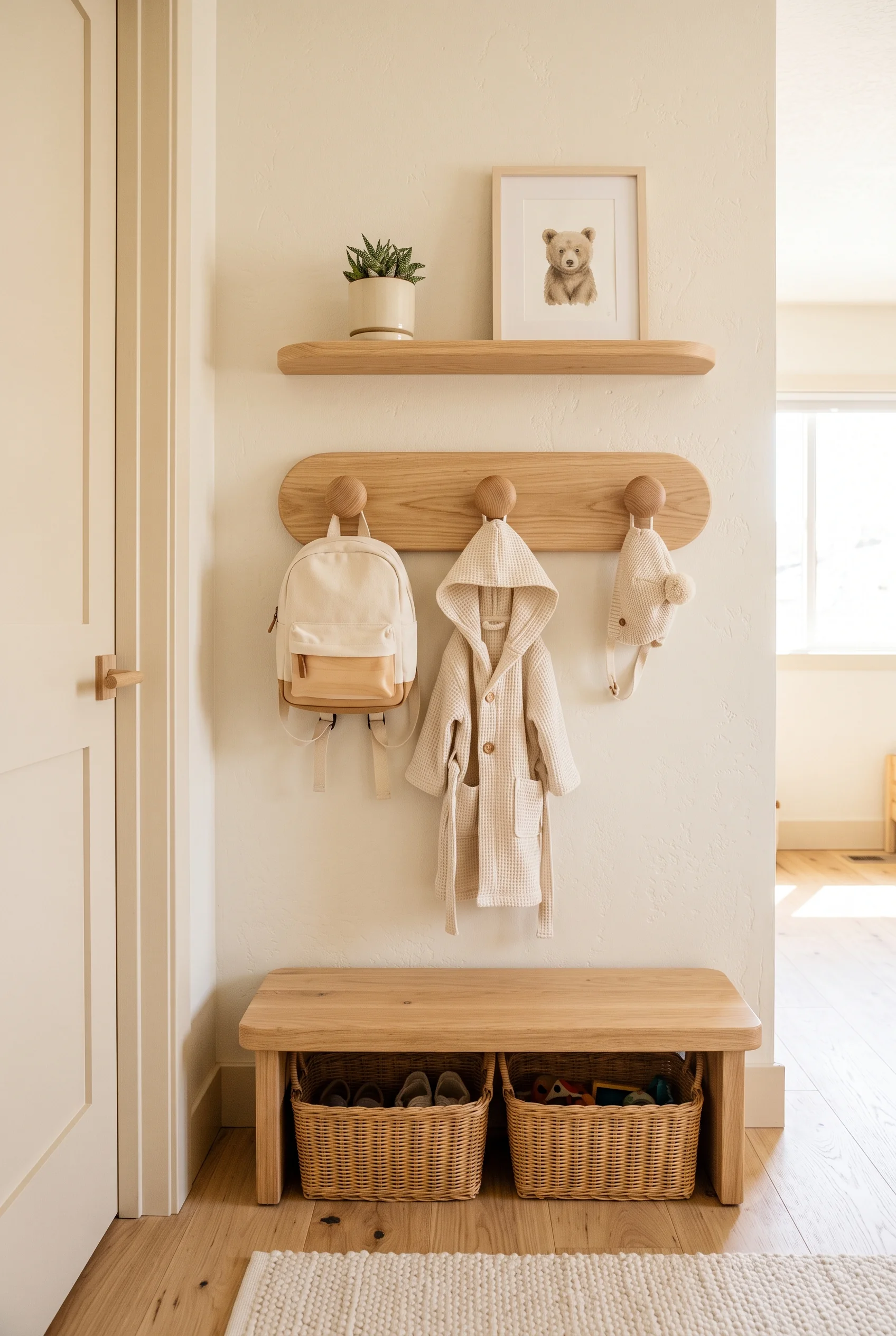
Rounded hooks at child height give a backpack, robe, hat, or small tote a clear place to land. Each item remains visible, making it easier to find in the morning and return later.
Secure every hook firmly with hardware suited to the wall. Leave enough space between them so hanging pieces do not overlap or hide one another. Three useful hooks often serve a child better than a long row crowded with belongings. Near the doorway or dressing zone, they add function without requiring another piece of floor furniture.
An Open Movement Zone for Active Bodies
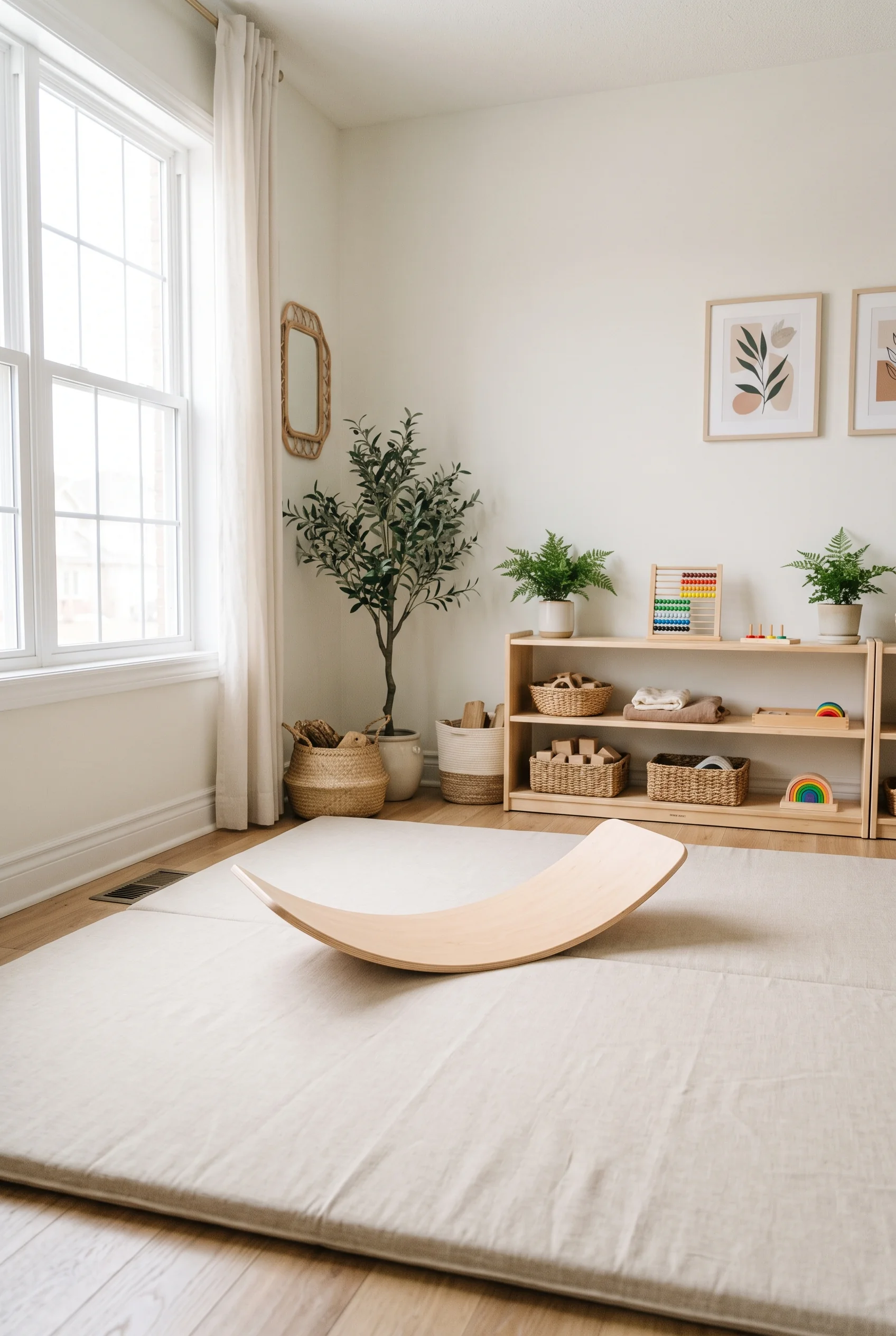
A clear section of floor gives children room to stretch, dance, balance, and move freely. Even a modest area can support gross-motor play when nearby furniture is pushed back and sharp edges are kept away.
A padded mat, stepping shapes, or an age-appropriate balance board can provide gentle structure. Keep only the equipment suited to your child’s current ability, with open clearance on every side. When movement time ends, store smaller tools in a basket or against the wall. The open floor then returns to everyday play without a major reset.
Indoor Climbing With Safety at the Center
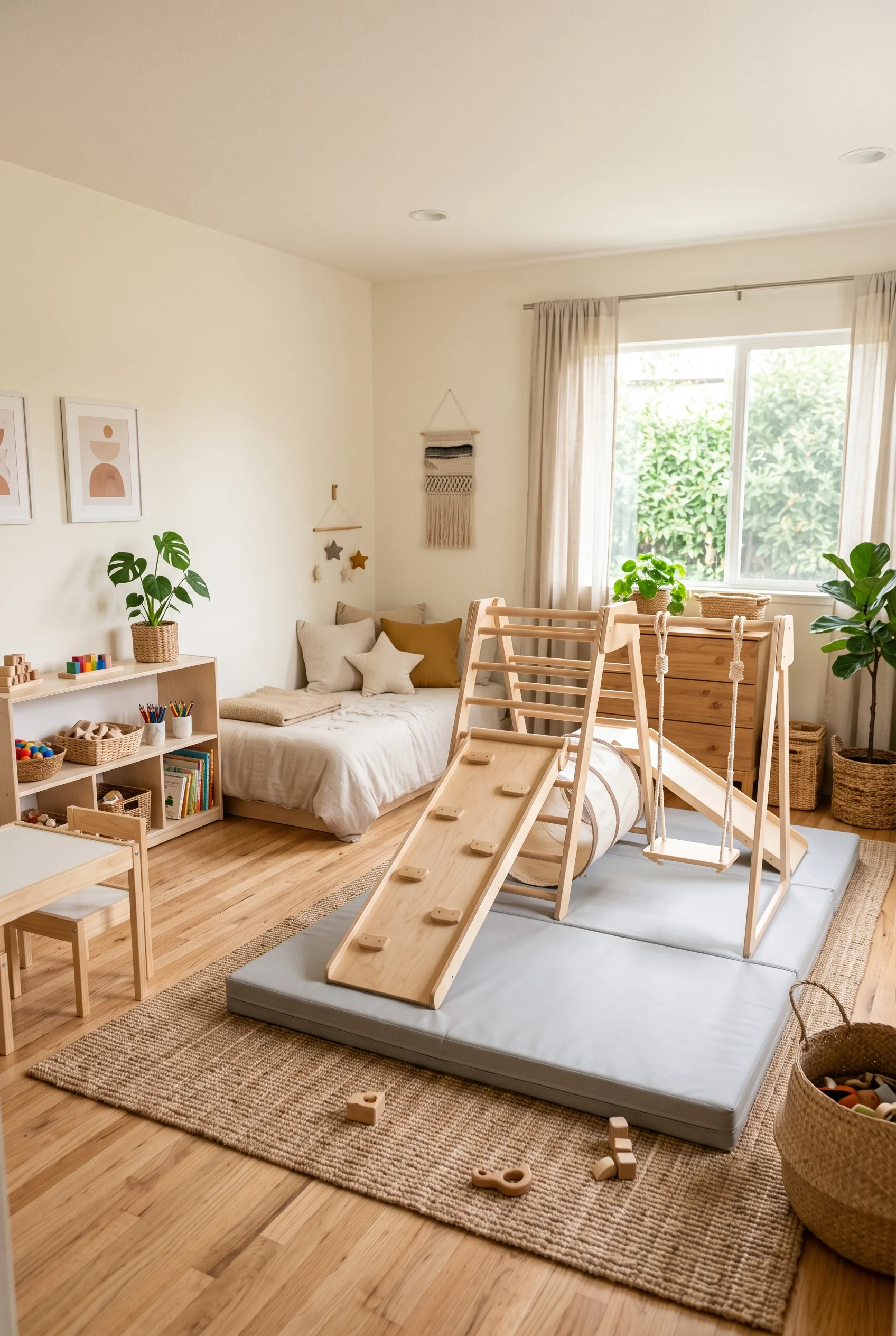
Compact indoor climbing equipment gives active children a safe place to practice coordination. Select equipment designed for children’s indoor use, follow the manufacturer’s age and weight limits, and maintain active supervision.
Protective mats should extend beneath the structure, with clear space around every side. Inspect connections, surfaces, and hardware regularly for movement or damage. The equipment should never block the doorway or sit close to hard furniture edges. In a calm, uncluttered setting, one well-chosen climbing piece can offer challenge without turning the entire bedroom into an activity room.
Shop this pick: Indoor Montessori Climbing Triangle, The climbing structure is the unmistakable hero product in an active movement area.
Soft Light for a More Restful Evening
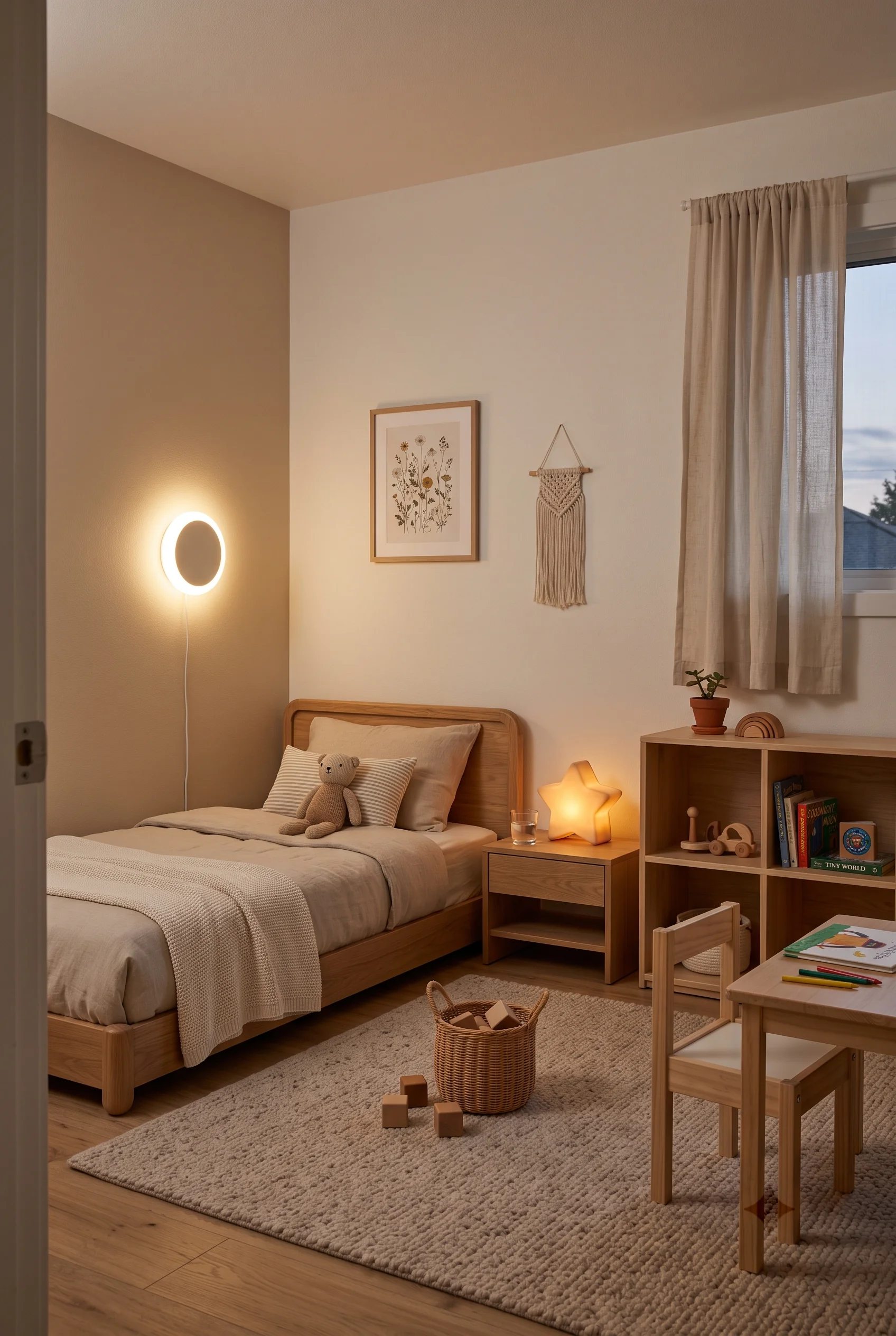
Warm, layered lighting helps a Montessori bedroom shift from daytime activity to rest. Natural daylight can carry the room through the morning, while a dimmable ceiling fixture or wall light softens the mood near bedtime.
Secure cords completely or avoid them with suitable cordless designs. A low-glow night-light can help an older child navigate the room after dark without flooding it with brightness. Keep the light warm rather than blue or stark white. Against beige bedding and natural wood, the evening glow makes the whole room feel quieter.
Adaptable Ideas for Real Homes and Budgets
Montessori principles can fit many homes, including compact rooms, shared bedrooms, and spaces assembled gradually. The most successful layouts respond to the children who use them rather than following a rigid formula. Editing decor, defining personal zones, and reworking existing furniture can create meaningful independence without a full room makeover.
Simple Decor With Space to Breathe
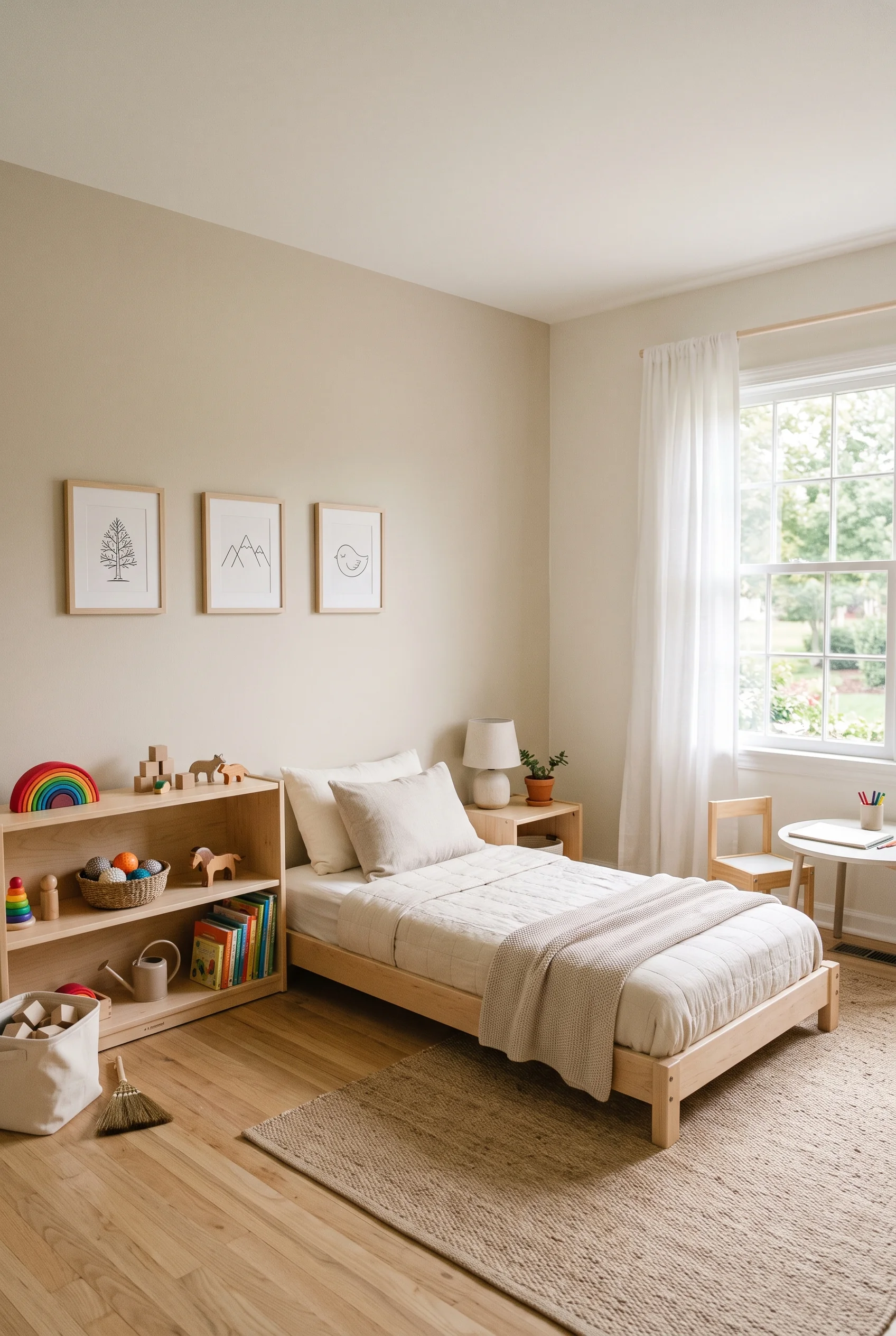
A few meaningful prints, photographs, or handmade pieces bring personality without filling every wall. Cohesive colors and restrained patterns leave more visual room for useful furniture, books, and the belongings a child handles each day.
Small groups of special objects can rotate when the bedroom needs a refresh. This keeps the display interesting without allowing decorative pieces to gather on every surface. Begin with accessible tools and purposeful furnishings, then notice what the room still needs. Often, the calmest wall is the one left partly open.
Small-Space Choices With More Than One Job
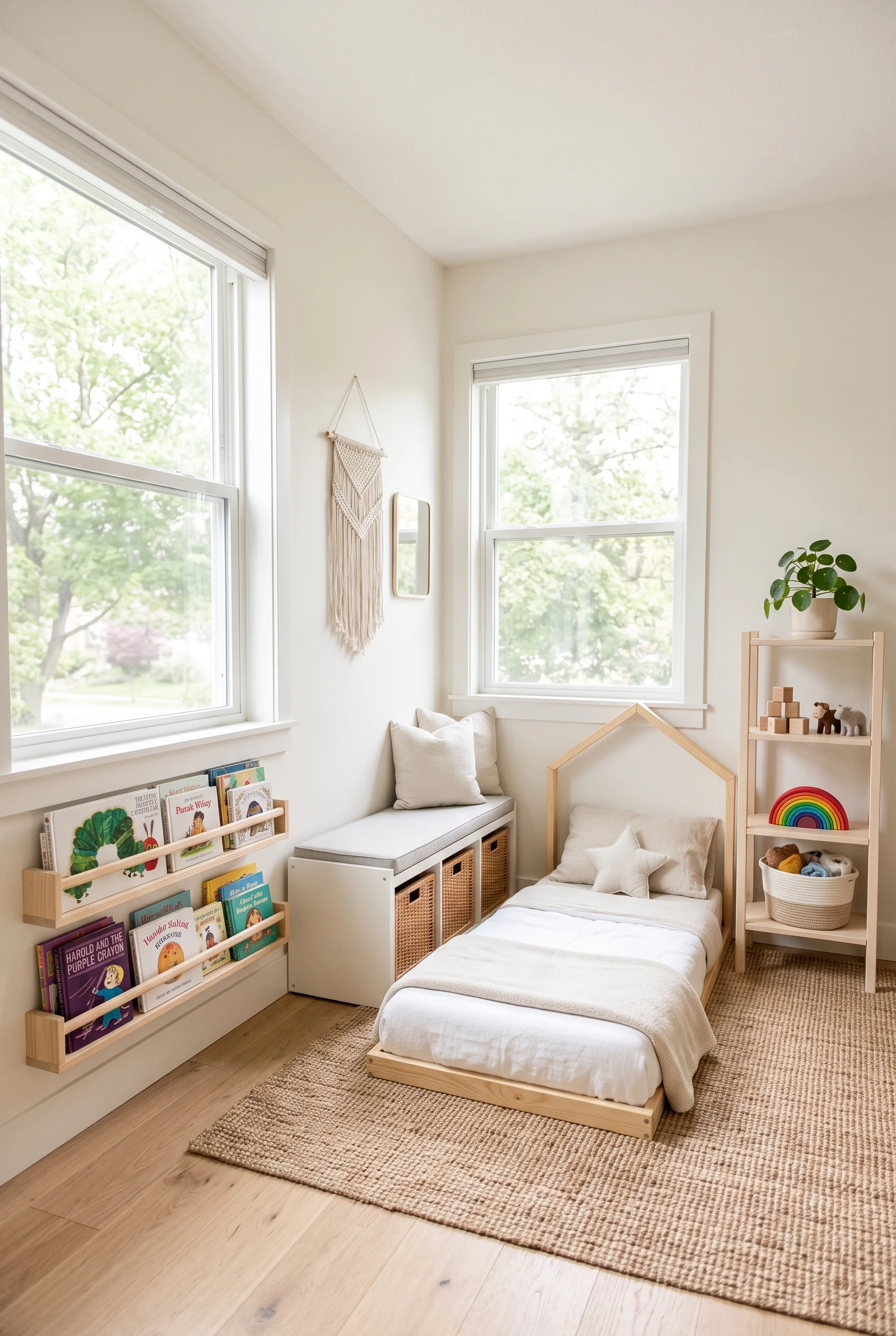
Montessori bedroom ideas for small spaces rely on slim furniture and carefully protected floor area. A compact low bed, narrow shelf, and wall-mounted book ledges can provide the essentials without narrowing the main pathway.
Multifunctional pieces earn their place here. A storage bench can hold dress-up clothes, while a small table can double as a nightstand. Higher closed cabinets work well for adult-managed items, keeping daily essentials low. Edit belongings regularly and preserve a clear route from the bed to the doorway. Even a tiny room feels calmer when circulation comes first.
Personal Zones Within a Shared Bedroom
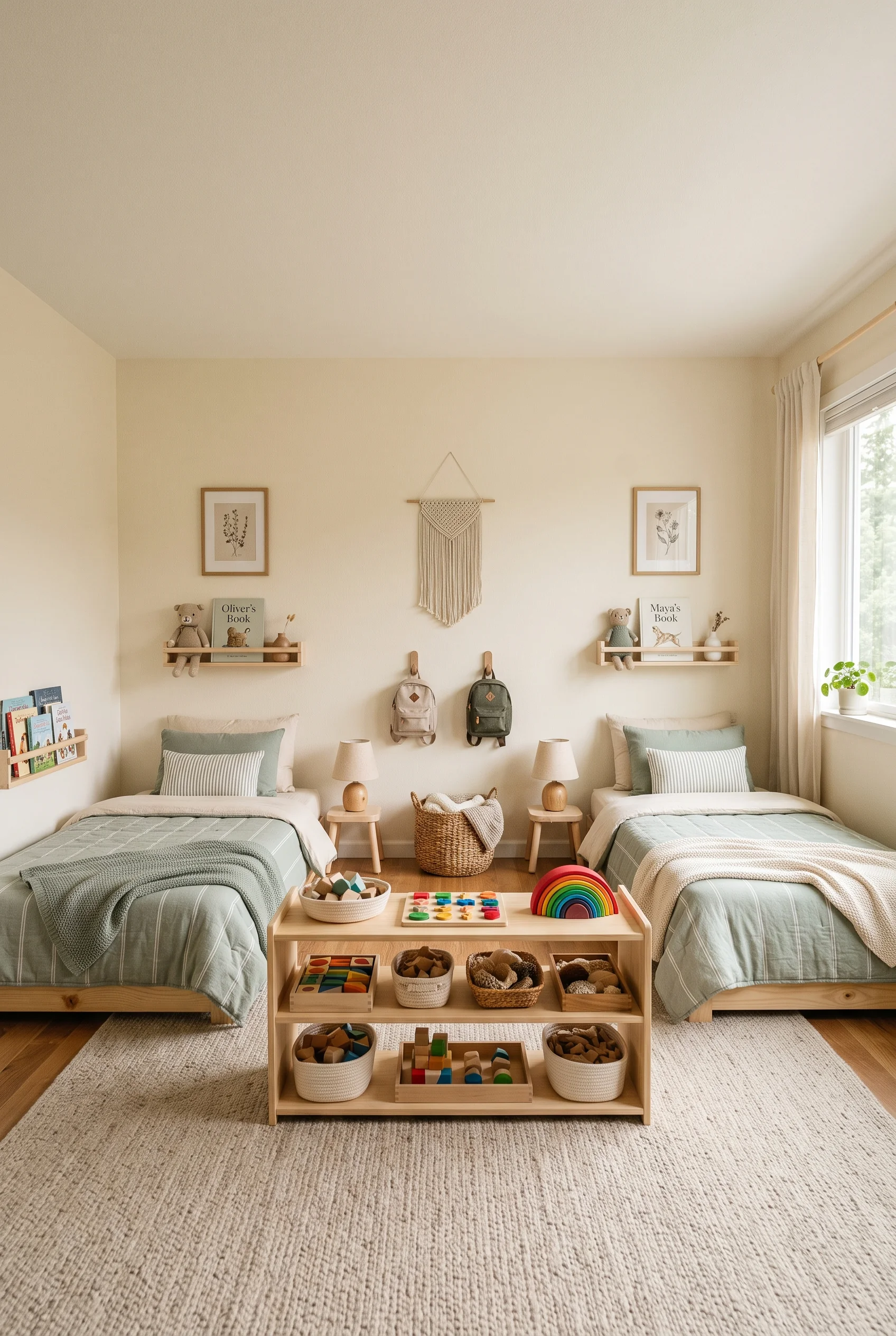
A shared Montessori kids room benefits from clearly defined sleeping and clothing zones for each child. Personal baskets or shelf sections provide a sense of ownership, while books and shared toys can occupy a central area both children can reach.
Coordinated furniture and bedding keep the room visually connected without erasing individual preferences. A different cushion or framed print can quietly mark each child’s area. Bed placement, climbing risks, and access to materials should reflect both children’s ages and abilities. Thoughtful shared kids bedroom ideas make room for togetherness while protecting a little personal space.
Shop this pick: Matching Montessori Low Bed Frames, Coordinated low beds establish the shared room layout and represent its strongest furniture purchase.
A Thoughtful Room Built in Stages
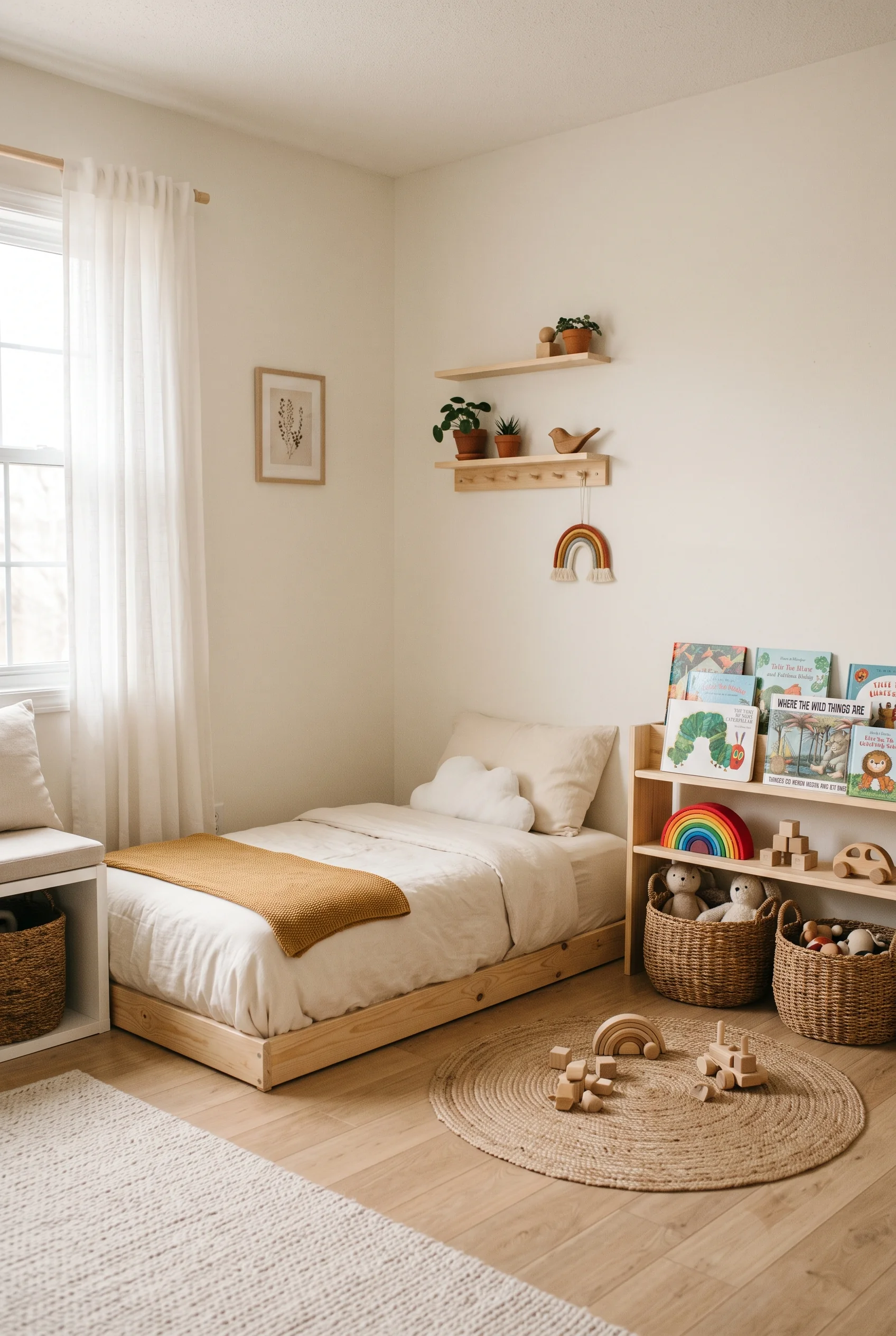
A budget-friendly Montessori bedroom can begin with furniture already in the room. Lower a safe shelf, reorganize a short bookcase, or repurpose sturdy baskets after checking that every piece is stable and appropriate for children.
Furniture anchors, comfortable bedding, accessible storage, and adequate lighting deserve priority over decorative extras. From there, observe which changes genuinely reduce requests for help before buying anything else. A hook may solve more than a new cabinet, and a smaller toy selection may work better than additional bins. Built gradually, the room reflects real routines instead of a shopping list.
A Room That Grows Alongside Their Independence
A child-centered bedroom does not need to look perfect or be completed in one weekend. Its value comes from making familiar choices safer and easier. A reachable book, an open path, and a clearly labeled basket may seem like small details, but they shape how confidently a child participates in everyday life.
Start with the moment that currently requires the most help. If getting dressed feels rushed, lower a few clothing options and add a stable seat. If toys spread across the room, edit the shelf before purchasing more storage. If bedtime feels unsettled, soften the lighting and simplify what surrounds the bed.
The most useful Montessori bedroom ideas respond to your child’s habits, abilities, and stage of development. Not every family needs a climbing structure, art station, or separate reading nook. Choose the ideas that fit your space and routines, then watch how your child uses them.
As independence grows, shelf heights, clothing choices, and favorite activities will change. Let the room change with them. A flexible Montessori kids’ room feels calm because nothing ever moves, but because every adjustment has a clear purpose. One thoughtful change is a meaningful place to begin.