19 Small Nursery Ideas That Maximize Every Inch
Small nursery ideas start to matter the moment you measure the room and realize the crib, dresser, and glider all want the same eight square feet. A tight footprint doesn’t have to mean cluttered or cramped. It just means every piece of furniture and every inch of wall space needs a job to do.
That’s the real challenge behind small nursery design: fitting in everything a newborn needs while keeping the room calm enough to actually relax in at 3 a.m. The nurseries that pull this off rarely rely on one clever trick. They layer vertical storage, multi-purpose furniture, and a restrained palette until the room feels roomier than its square footage suggests. If you’ve furnished a clutter-free kids’ room before, the same editing instinct applies here, just earlier and with smaller shoes involved.
This roundup walks through nineteen real small nurseries, organized by the design principle that makes each one work rather than by the furniture itself. You’ll find wall systems that hold more than they seem to, cribs and dressers built to multitask, and a few layout tricks that quietly free up floor space. Some ideas borrow from the same toy storage thinking that works in playrooms, while others lean on the organization habits that keep clutter from creeping back in. Pick the two or three that fit your space, not all nineteen.
DISCLOSURE: Some of the links provided on this page are affiliate links. This means if you choose to make a purchase through these links, we may receive a small commission at no extra cost to you.
Storage That Climbs the Walls
The fastest way to add storage to a small nursery is to stop looking at the floor and start looking up. Walls, corners, and the space just under the ceiling hold an enormous amount of capacity that never competes with a crib or glider for square footage. The four rooms below all lean on vertical real estate, but each one solves a slightly different problem, from sheer volume to quick-grab convenience.
One Wall Doing the Work of an Entire Closet
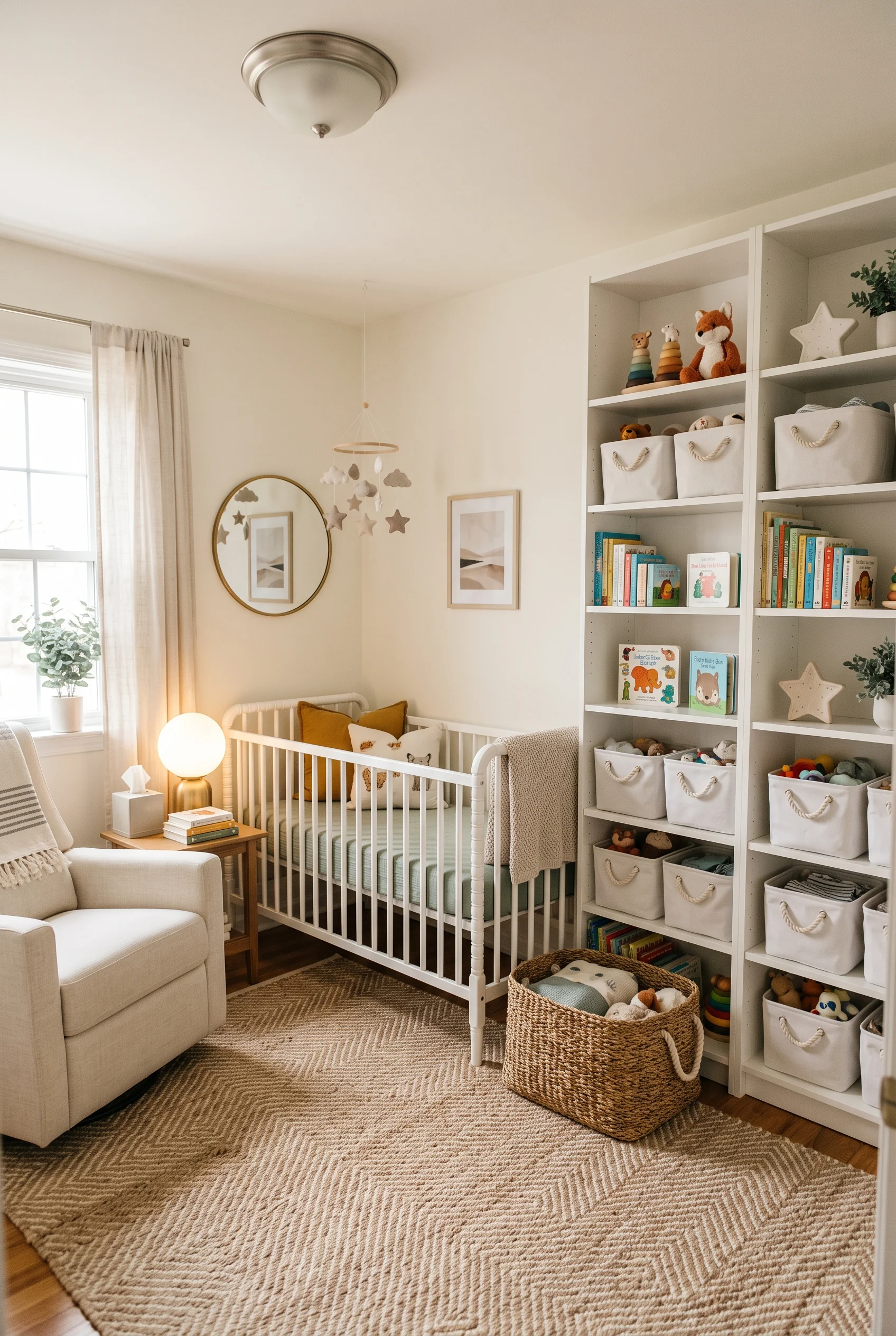
Floor-to-ceiling shelving turns a single wall into the nursery’s entire storage plan. Books, folded baskets, and stuffed animals each have an assigned shelf, so nothing ends up stacked on the floor or spilling out of a closet down the hall.
The open shelving also doubles as decor. Rotating a few toys and framed prints to the front keeps the wall from reading as purely functional, even though it’s holding almost everything the baby owns.
A single woven basket on the floor catches the overflow, the toys in daily rotation that don’t need a shelf assignment yet.
A Wall System That Rearranges Itself as Baby Grows
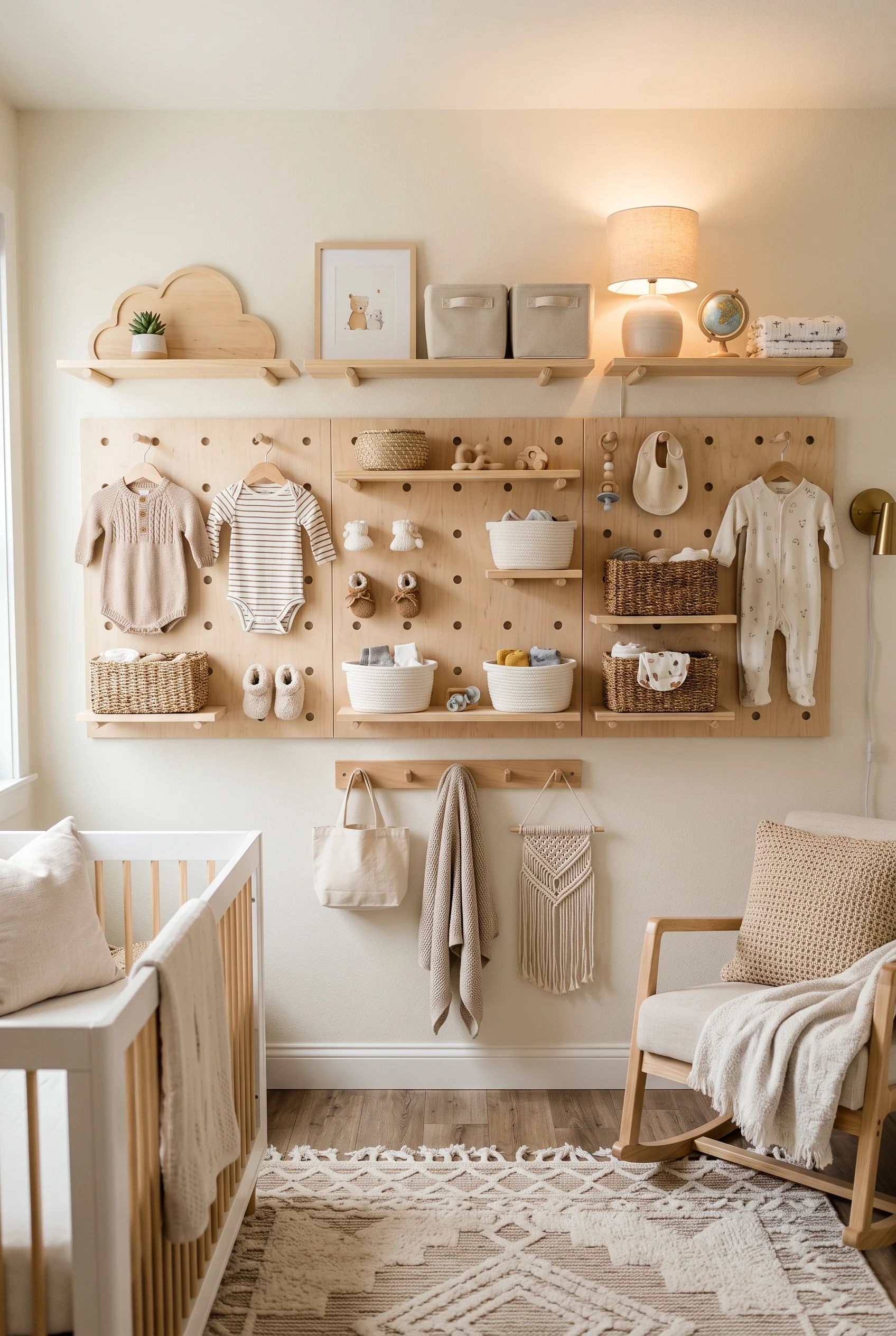
A pegboard wall works less like a fixed shelf, and more like a piece of furniture you get to redesign every few months. Hooks hold hanging outfits today; in a year they might hold hats, art supplies, or a toddler’s backpack.
Small ledges tucked between the pegs corral socks, burp cloths, and diaper cream without needing a single drawer. Woven baskets slot into the empty holes wherever the week’s laundry pile demands it.
This setup stays flexible as the room keeps changing.
Hooks Turn Everyday Grab-and-Go Items Into Wall Art
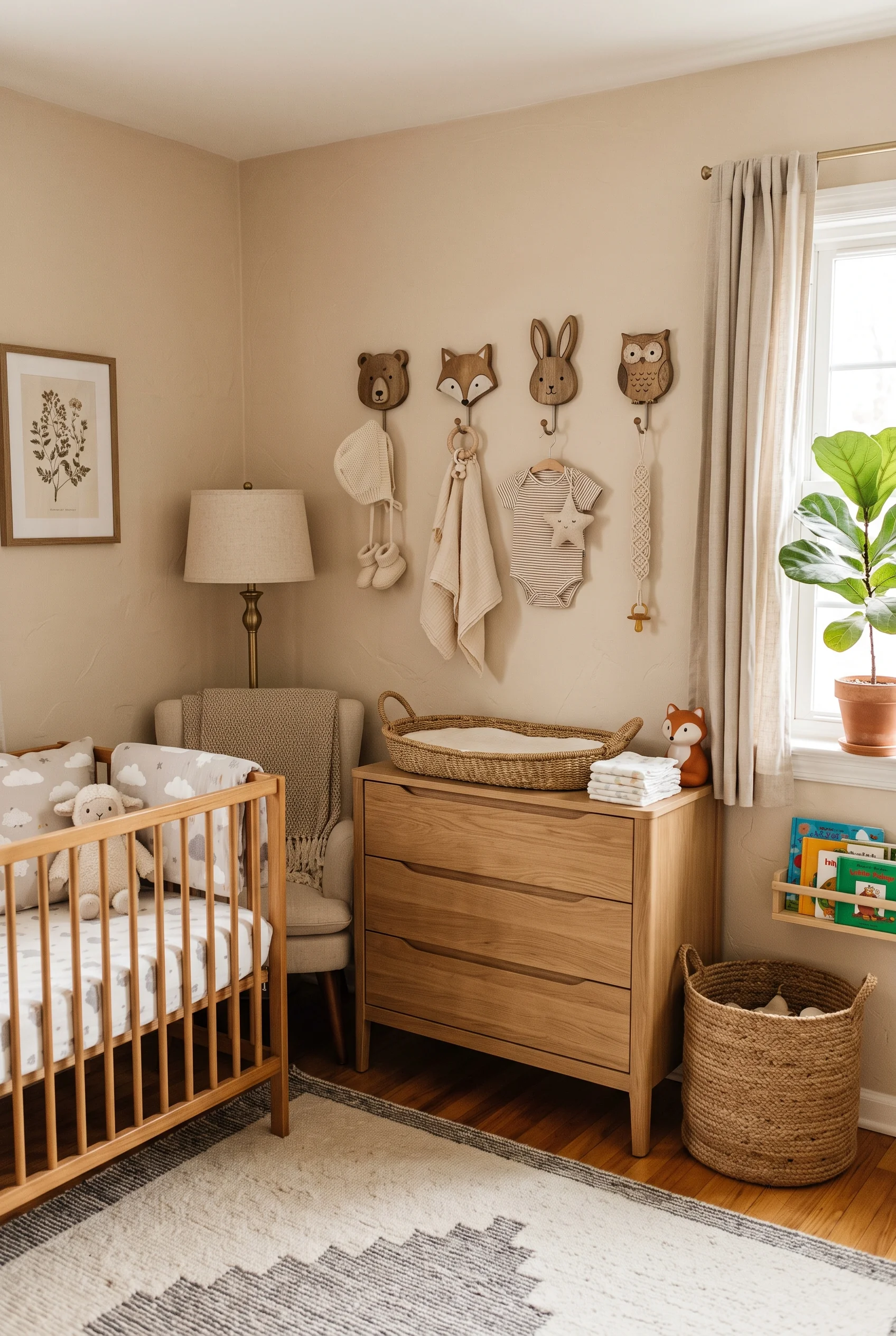
Grabbing a hat or blanket shouldn’t require opening a drawer, and this wall of carved animal hooks makes sure it never does. A bear, a fox, and an owl each hold a bonnet, a swaddle, or a striped onesie, the way a gallery wall holds art.
No one digs through a basket at 6 a.m. with a baby on one hip. The shapes add a playful note without a single plastic toy or novelty print in sight.
Setting the hooks at staggered heights keeps the display from feeling like a single row of hardware, and it leaves room to add one more hook later without starting over.
Warm Wood Climbs the Wall Without Ever Touching the Floor
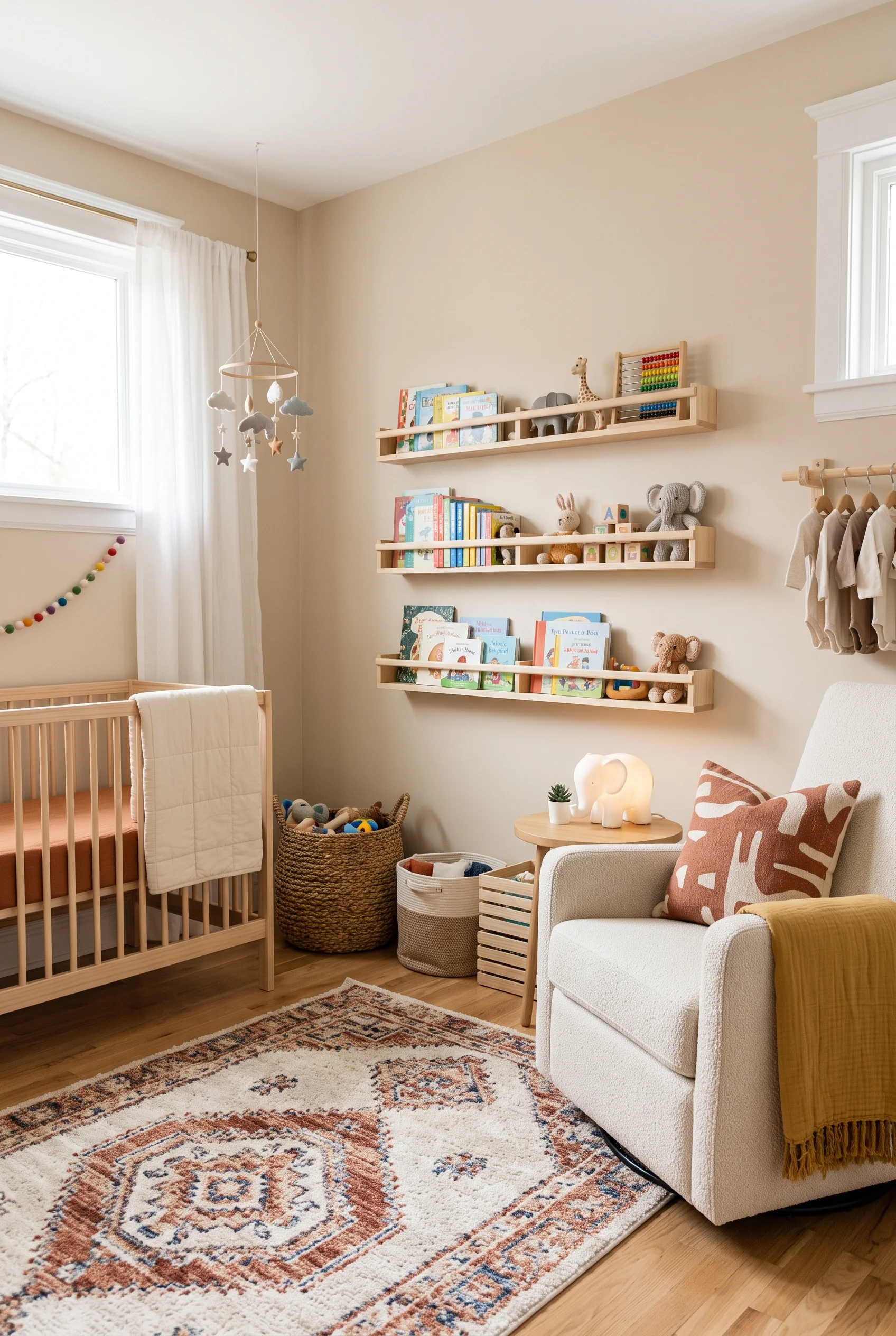
Warm wood tones climb the wall in a staggered row of floating shelves, holding books, a soft-glow elephant lamp, and a small wooden giraffe without a single leg touching the ground. That matters more than it sounds in a room where every square foot of floor is already spoken for.
The uneven heights keep the wall from feeling like a straight shot of storage. Books face out on one shelf, toys sit in a loose cluster on the next, and the eye never gets bored scanning across.
A slim book ledge beneath doubles as a bench-height display for whatever story gets read most that month.
Furniture That Refuses to Do Just One Job
Storage is only half the small-nursery equation. The other half is furniture and layout that multitask on purpose. A crib that sleeps a baby and hides a season of linens, a window nook that seats and stores, a changing table that vanishes into the wall when it’s not in use: each piece below earns its footprint twice over.
A Crib That Stores as Much as It Sleeps
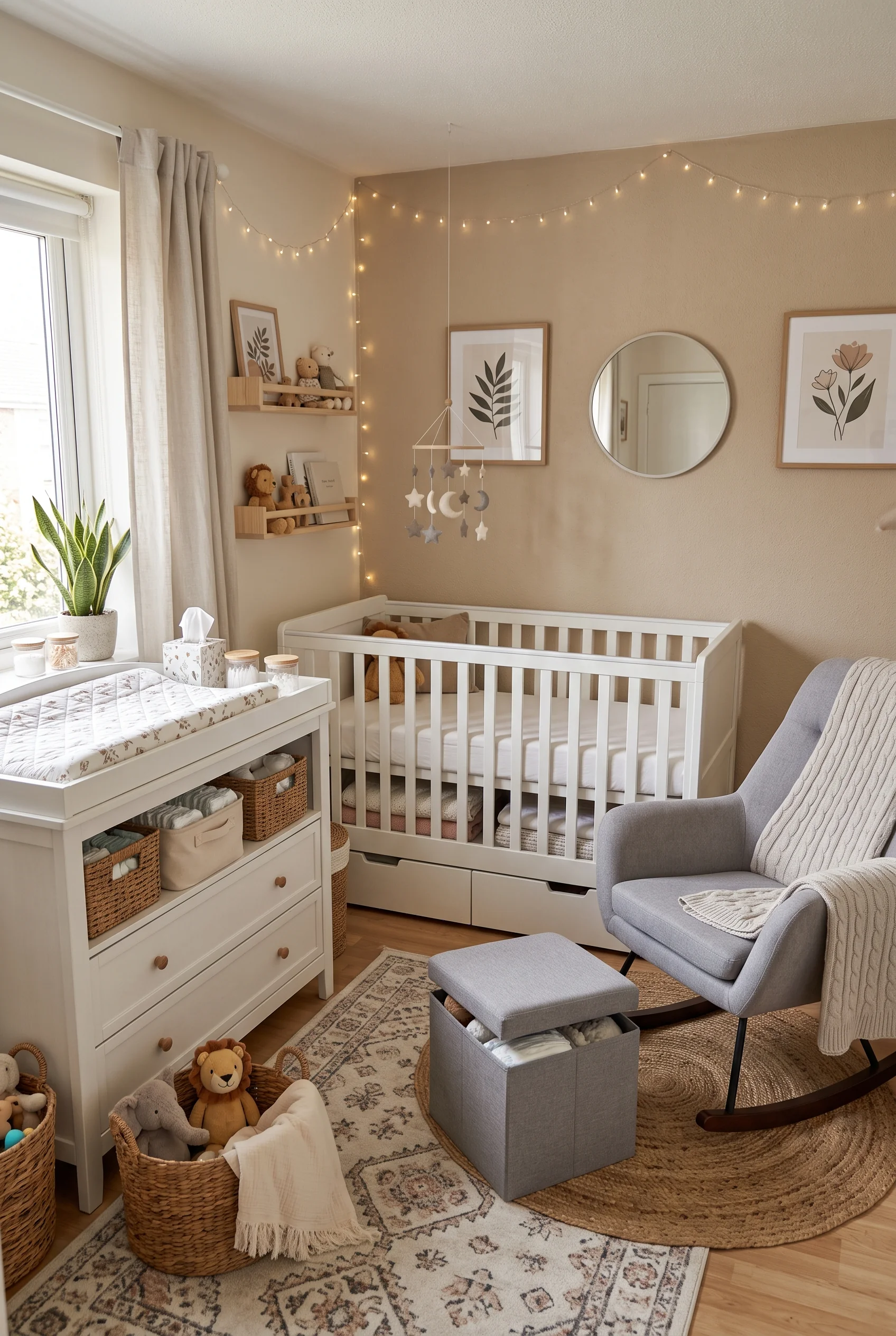
Two drawers built into the crib base hold folded blankets and out-of-season clothes exactly where they’d otherwise go unused. Nearby, a storage ottoman doing quiet duty as extra seating pops open to reveal diapers and wipes instead.
The dresser across the room handles diaper changes on top and holds baskets of onesies below.
Even the fairy lights strung along the corner feel like they’re pulling double weight, adding warmth without taking up an inch of surface space.
A Window Seat That Hides a Season’s Worth of Blankets
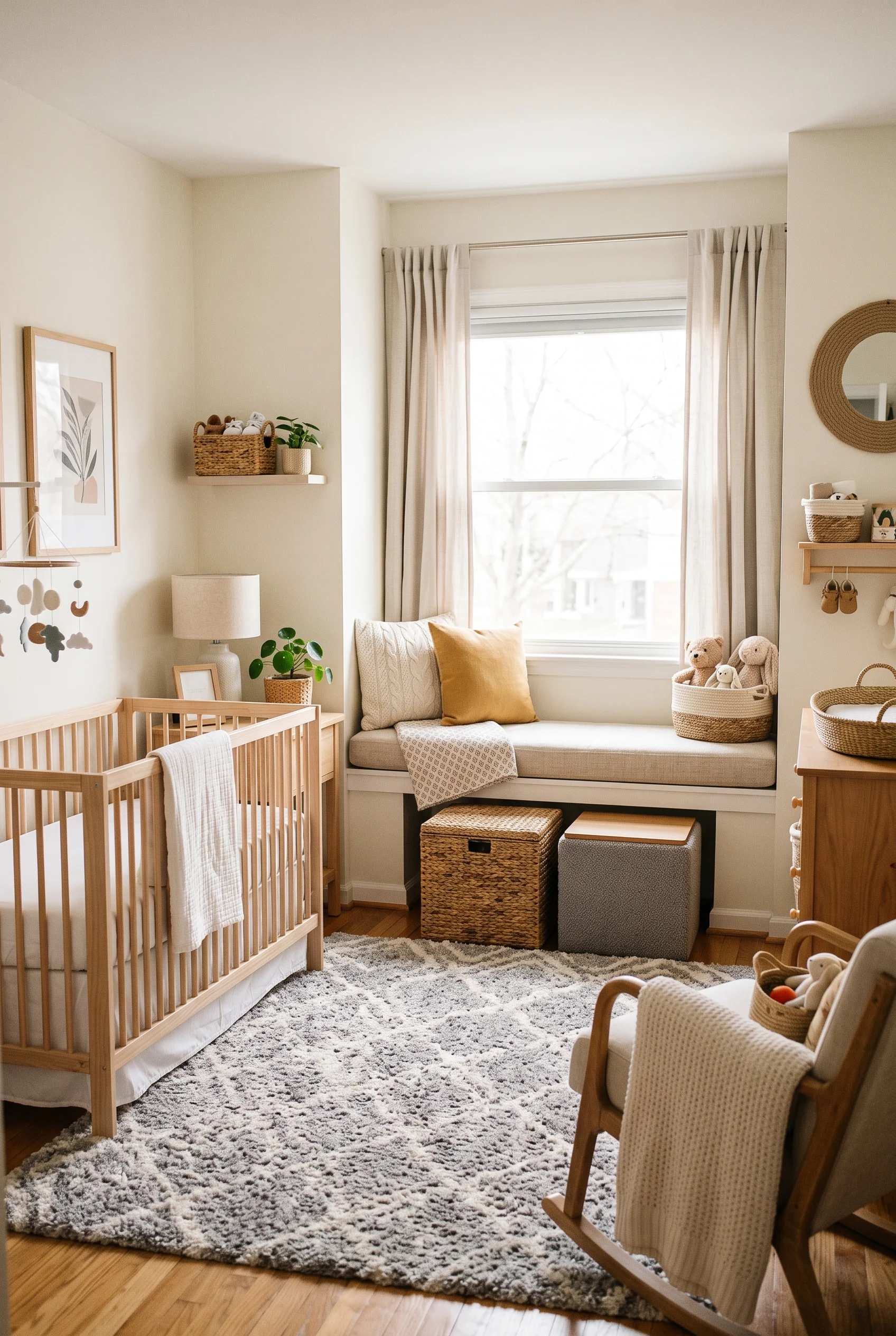
Built into the window nook, a cushioned bench looks like simple seating until the woven trunk and fabric ottoman underneath open up. Extra blankets, off-season swaddles, and a rotation of stuffed animals live there instead of crowding a closet.
The bench itself gives the room a second seat for nighttime feedings when the glider is already occupied, or a spot to fold laundry within arm’s reach of the crib.
Nothing about the storage announces itself. From across the room, it just looks like a cozy place to sit.
A Crib That Rolls Out of the Way When You Need the Floor Back
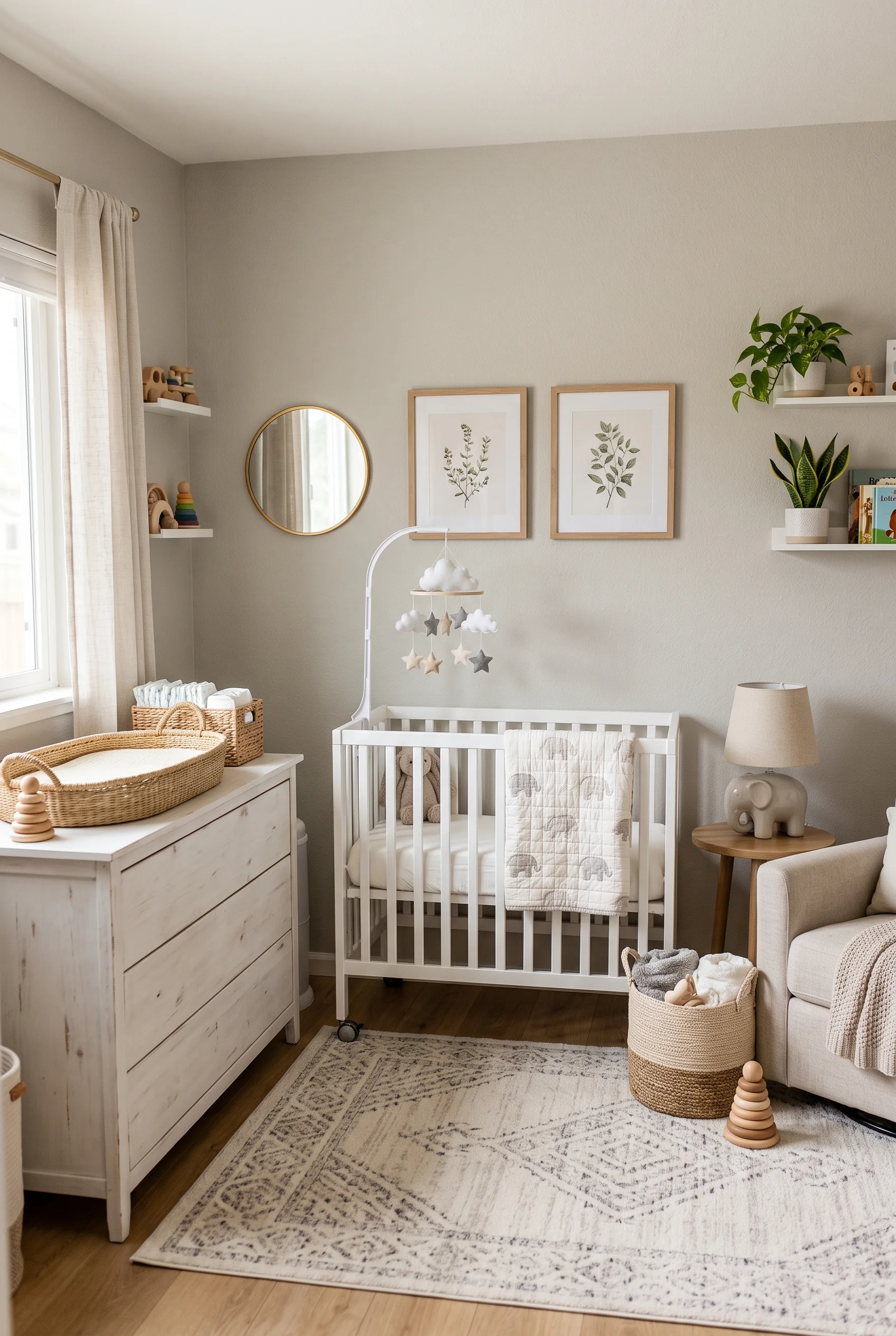
Locking casters on this mini crib mean the whole thing can slide toward the wall during tummy time or roll closer to the glider for late-night feedings. In a room this size, a few feet of flexibility changes what’s possible.
The compact frame already takes up less floor space than a standard crib, and the wheels mean it never has to stay locked into one configuration. Moving day, cleaning day, or just a fussy afternoon all become easier.
A neutral gray palette and a soft elephant lamp keep the practical choice from feeling clinical.
A Sliding Door Reclaims the Floor Space a Swinging One Would Waste
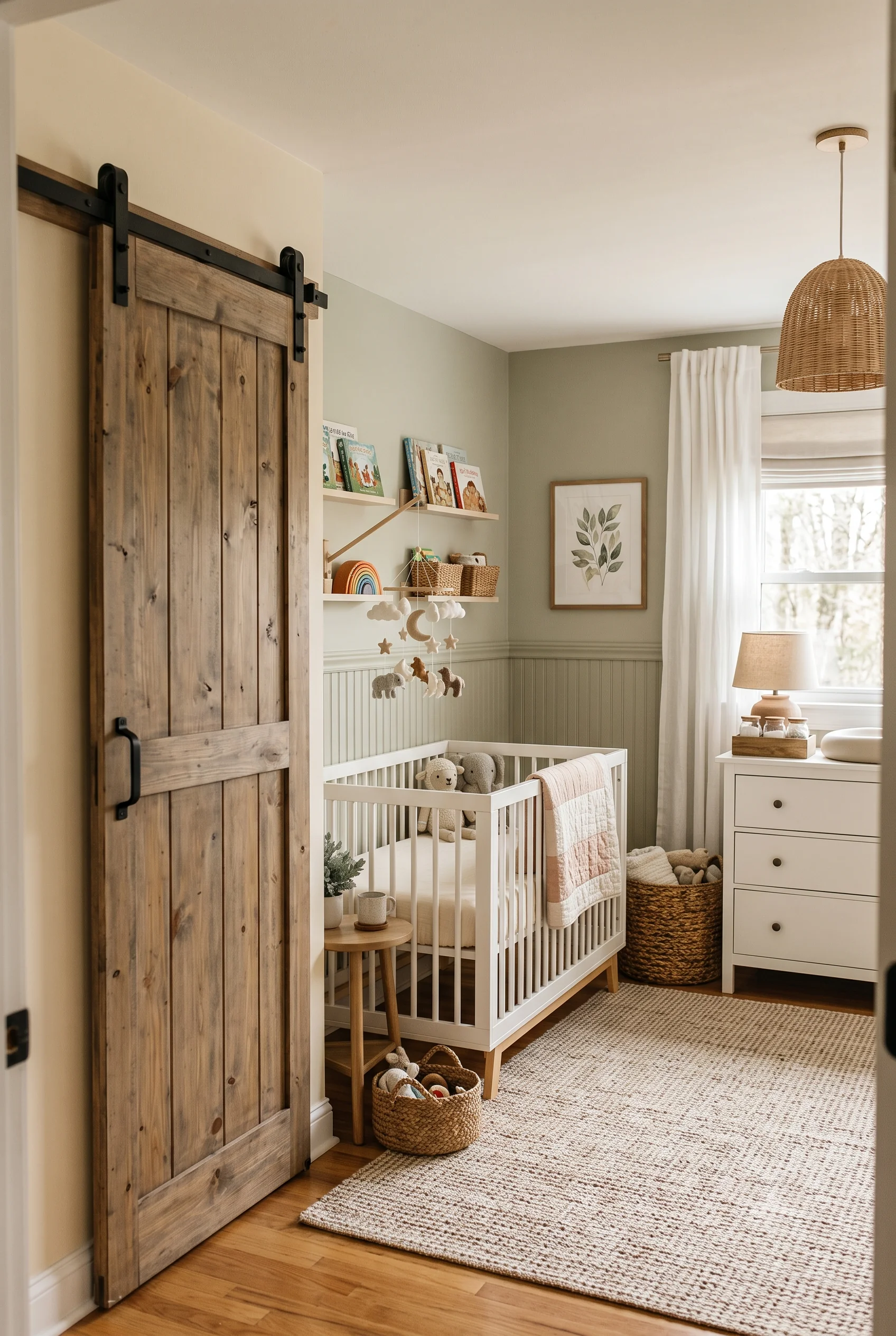
A rustic barn door slides flush against the wall instead of swinging into the room, which means furniture can sit closer to the doorway without ever blocking it. In a small nursery, that reclaimed arc of floor space is worth more than it looks.
The wood grain and black hardware add a rustic note that a flat white door never could, turning a purely practical swap into a design moment. A woven pendant light overhead keeps the material palette consistent from ceiling to door.
It’s a small architectural change, but it changes how the whole room reads.
Calm Palettes and Cozy Corners
Color and texture do quiet work in a small nursery. The right palette can make a cramped room feel airy, while the wrong one just draws attention to how little space there is. The five rooms in this group lean on restraint, softness, and a genuinely comfortable corner to read in, proving a small nursery can feel indulgent rather than deprived.
Negative Space Makes a Small Room Feel Twice Its Size
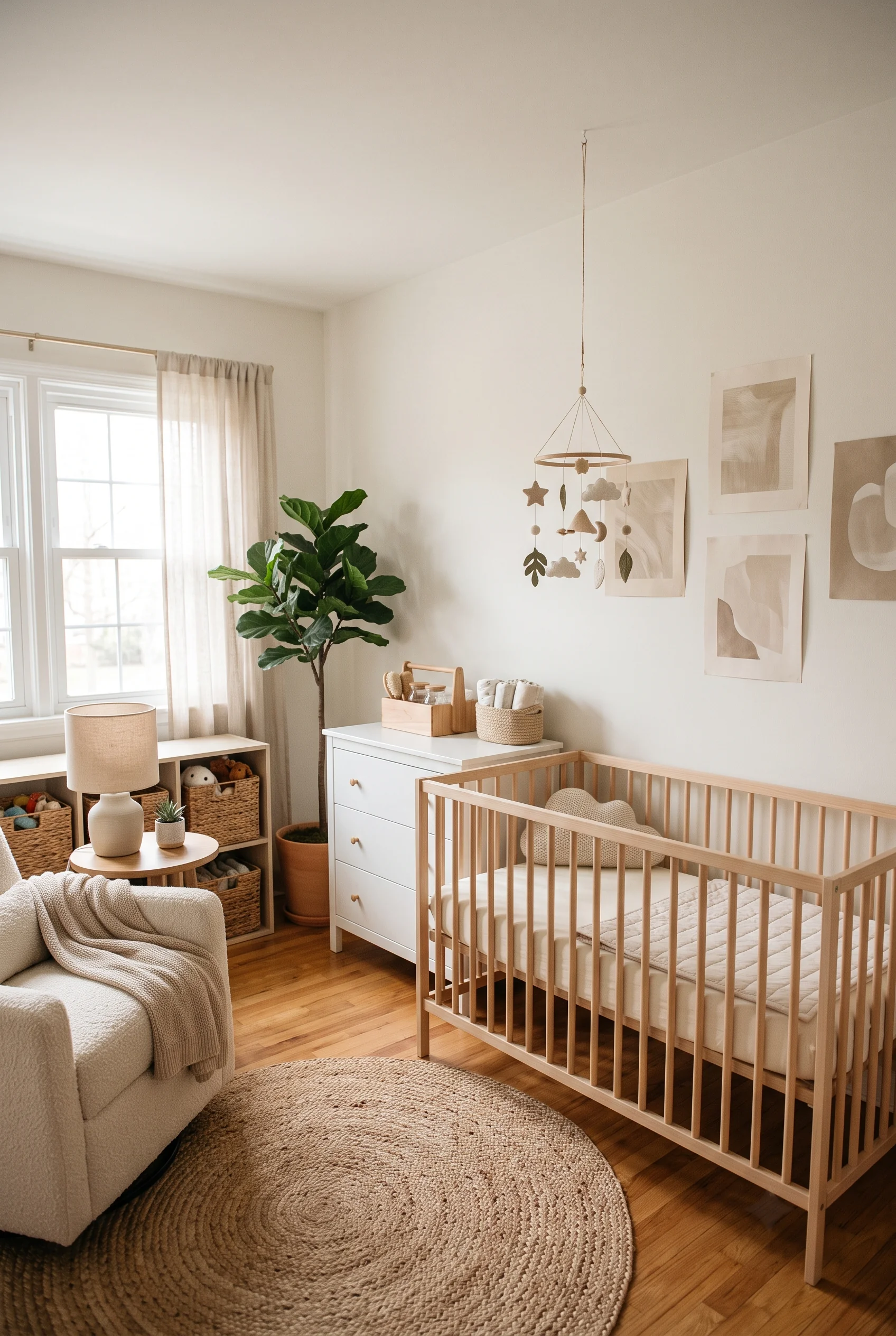
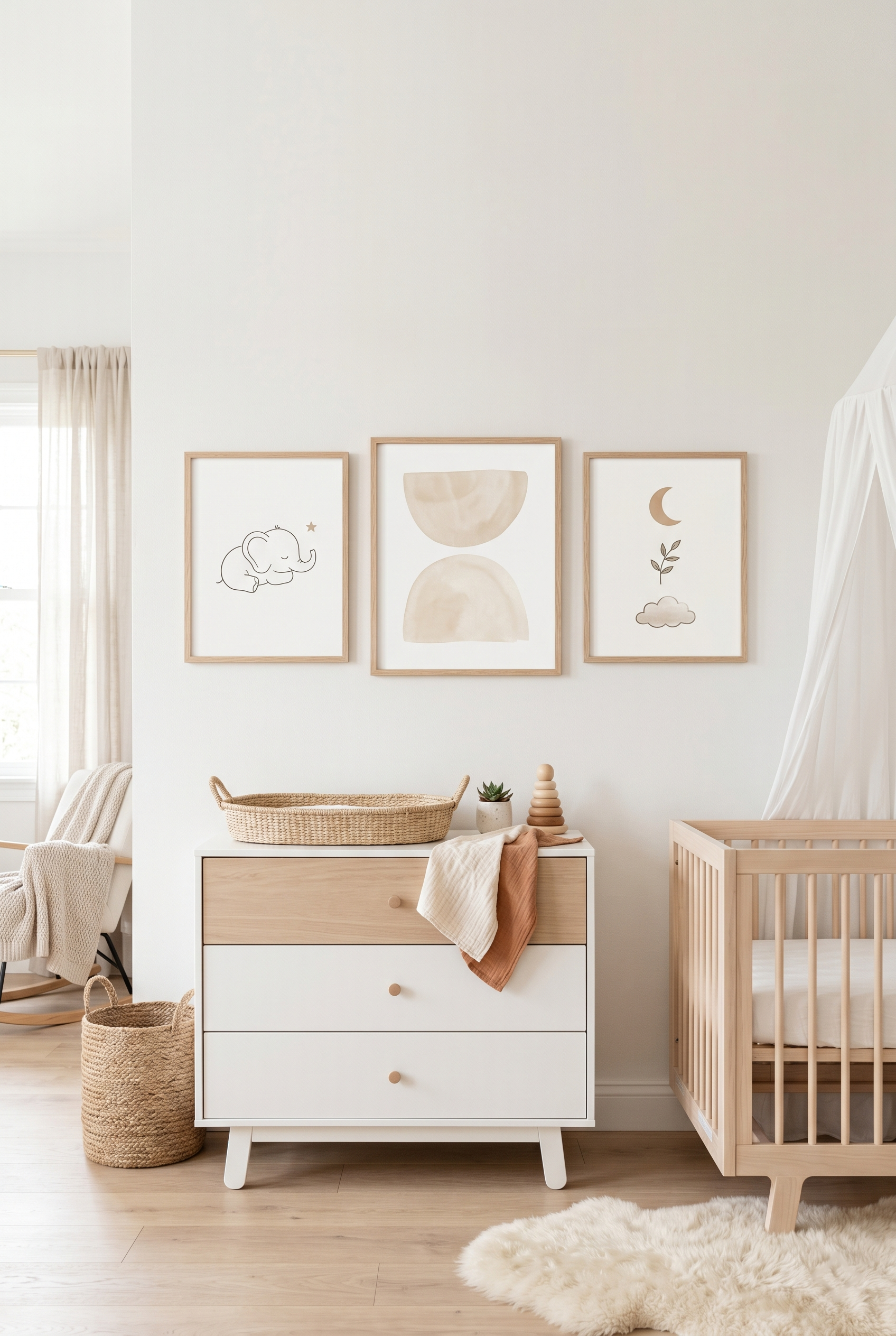
Negative space does a lot of quiet work in this nursery, where a handful of abstract prints, one plant, and a single dresser make up most of the decor. Every surface that isn’t holding something essential is left empty on purpose.
Light wood tones and a soft white palette keep the few pieces from feeling stark. Nothing competes for attention, so the eye settles rather than searches for a place to land.
This is the same editing instinct behind a well-planned neutral nursery palette: fewer choices, more calm.
Soft Blush and Warm Wood Keep a Small Room From Feeling Sterile
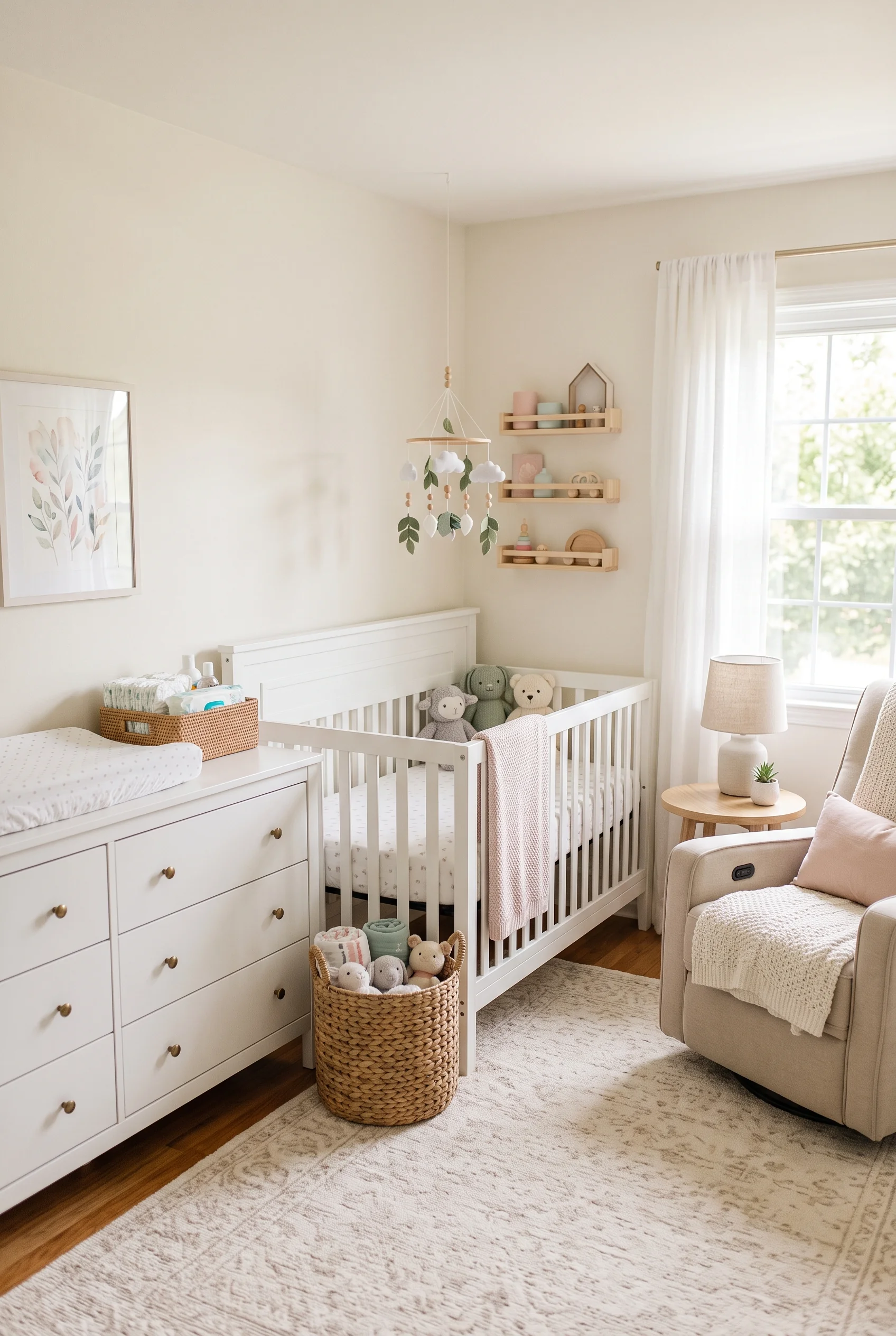
A single blush pillow and a scattering of pastel accessories give this all-white nursery its personality, without tipping into a room that reads as one specific gender or theme. The color does emotional work that a neutral room alone can’t.
Warm wood shelving and a matching dresser keep the pastel from feeling saccharine. String lights add a soft glow in the evening without requiring an extra lamp on an already crowded surface.
Light colors bounce whatever daylight comes through the window, which matters most in a room that can’t spare a bigger one.
Bedtime Stories Never Require Leaving the Chair
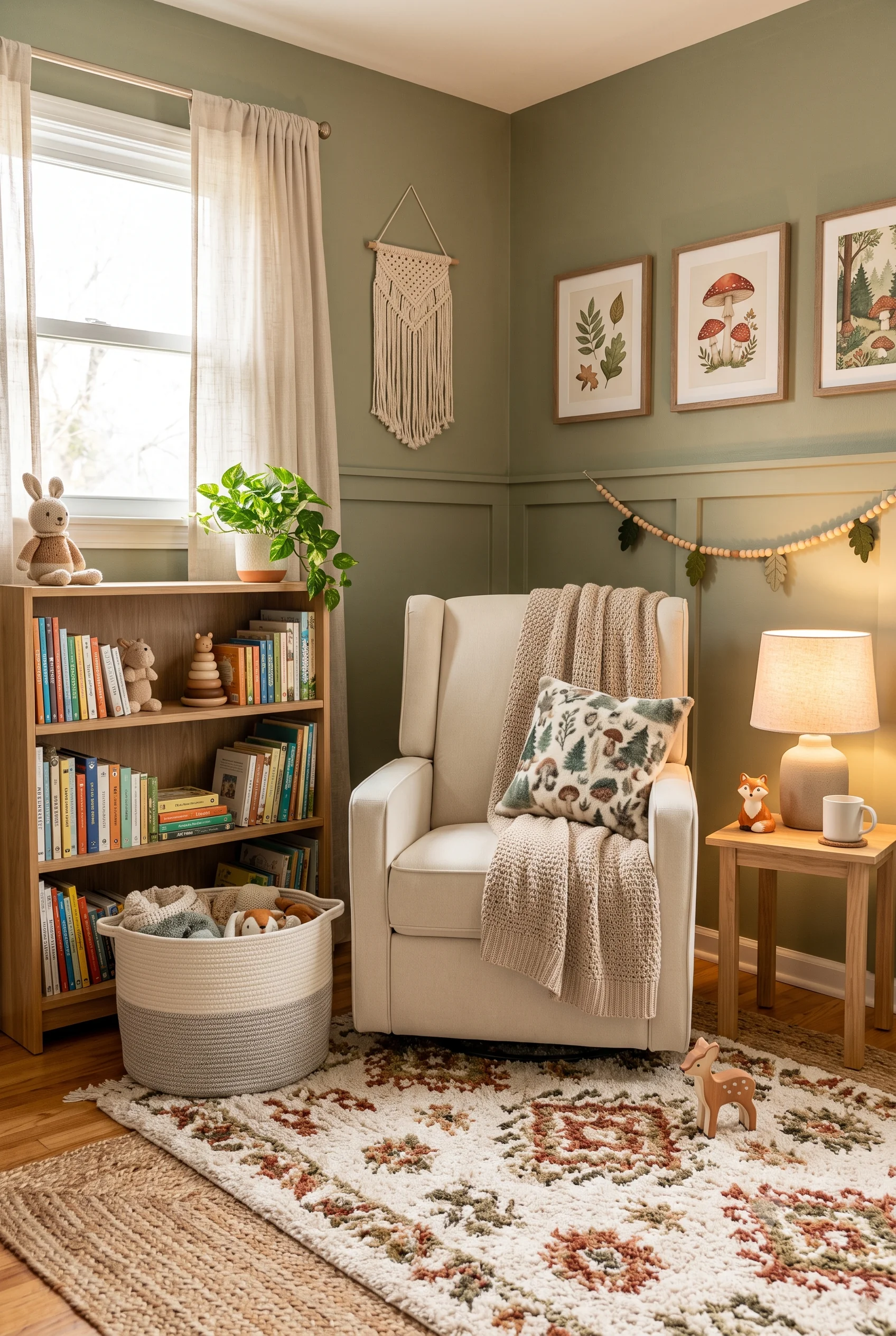
Bedtime stories don’t require leaving the chair here, since a full bookshelf sits within arm’s reach of the sage green glider tucked into the corner. Macrame on the wall and mushroom prints overhead give the spot its own mood.
The mushroom-print pillow and woven basket of stuffed animals keep the corner from feeling like an afterthought, the way a proper reading nook should.
A small side lamp means story time doesn’t need the overhead light on, which makes the whole ritual feel a little more like a secret.
A Slim Silhouette Lets a Rocking Chair Earn Its Spot in a Tight Corner
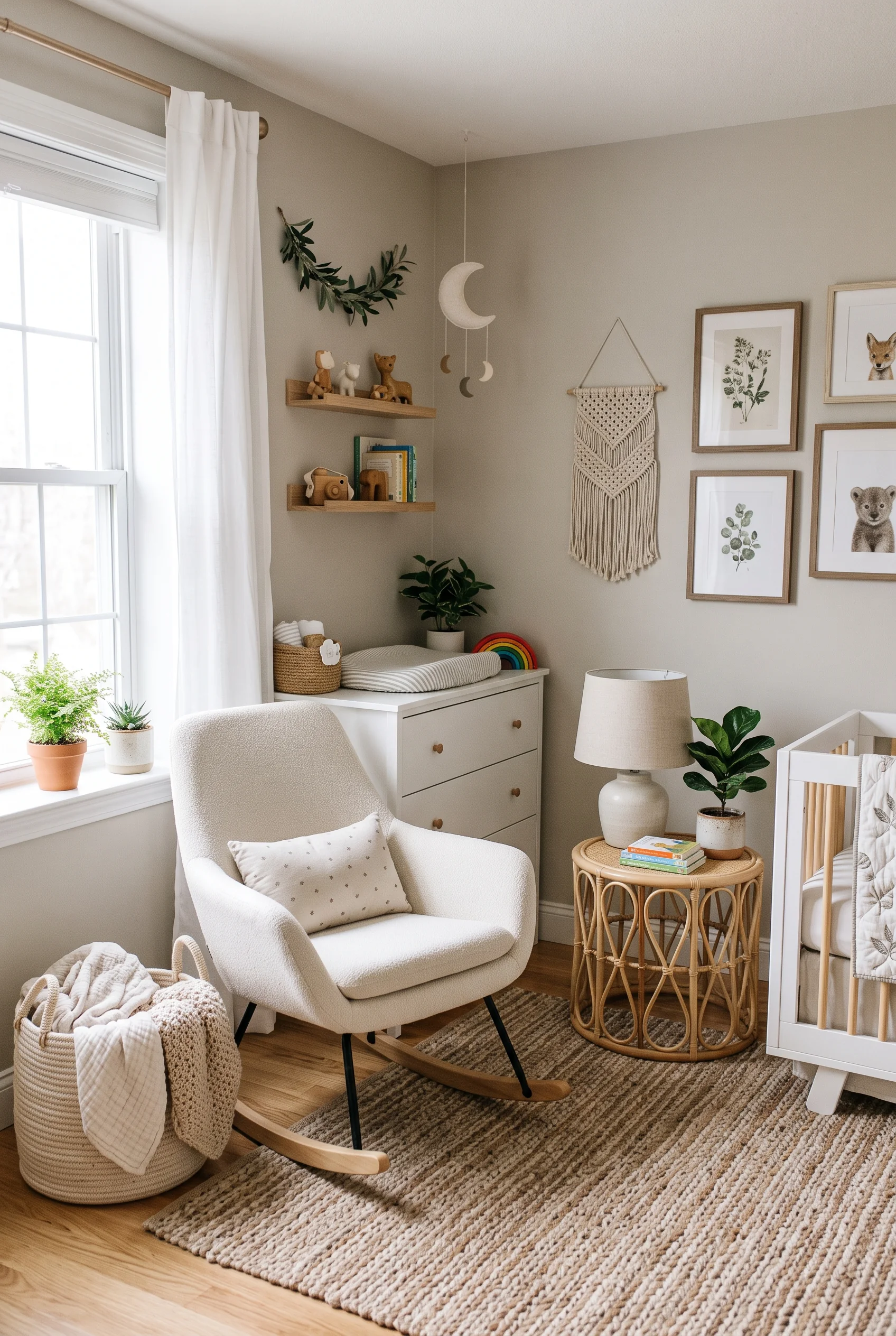
A cream boucle rocker with a narrow wood base takes up a fraction of the visual weight a traditional upholstered glider would. In a room where every chair competes with a crib and dresser for space, that slimness matters.
The rattan side table nearby continues the light, airy feel instead of adding another solid block of furniture. Neutral pillows and a single knit throw keep the chair feeling finished without adding bulk.
It still rocks exactly the way a bigger chair would. It just doesn’t ask for as much square footage to do it.
Warmth Comes From What’s Underfoot, Not From Extra Furniture
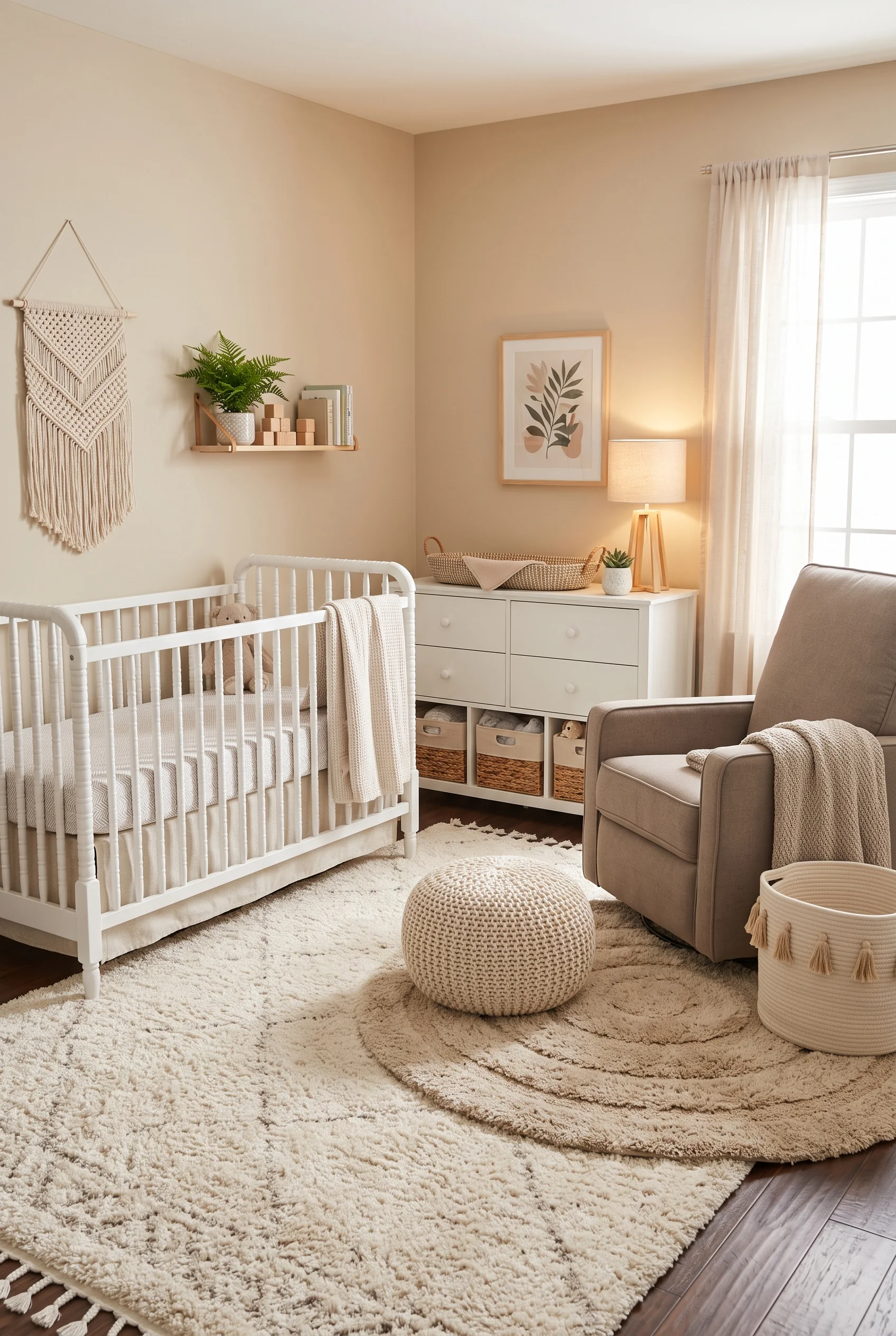
Warmth in this nursery comes from what’s underfoot, not from extra furniture. A plush shag rug, a knit pouf, and a tasseled storage basket layer texture into a room with little square footage to spare.
The rug alone does a lot of the work, softening a hardwood floor and giving a crawling baby somewhere safe to land. Layering a round pouf on top adds a second texture without adding a second piece of seating.
The whole corner stays quiet and soft. It just feels good to sit in.
Systems That Keep the Clutter From Ever Showing Up
A small nursery stays calm only as long as its systems keep working after the newness wears off. Labeled bins, built-in cabinetry, and a rotating toy rule all share the same goal: making it obvious where everything belongs, so tidying up takes minutes instead of an afternoon. These five rooms show what that looks like once the system is actually in place.
Clear Bins Turn a Closet Into a Map You Can Read at a Glance
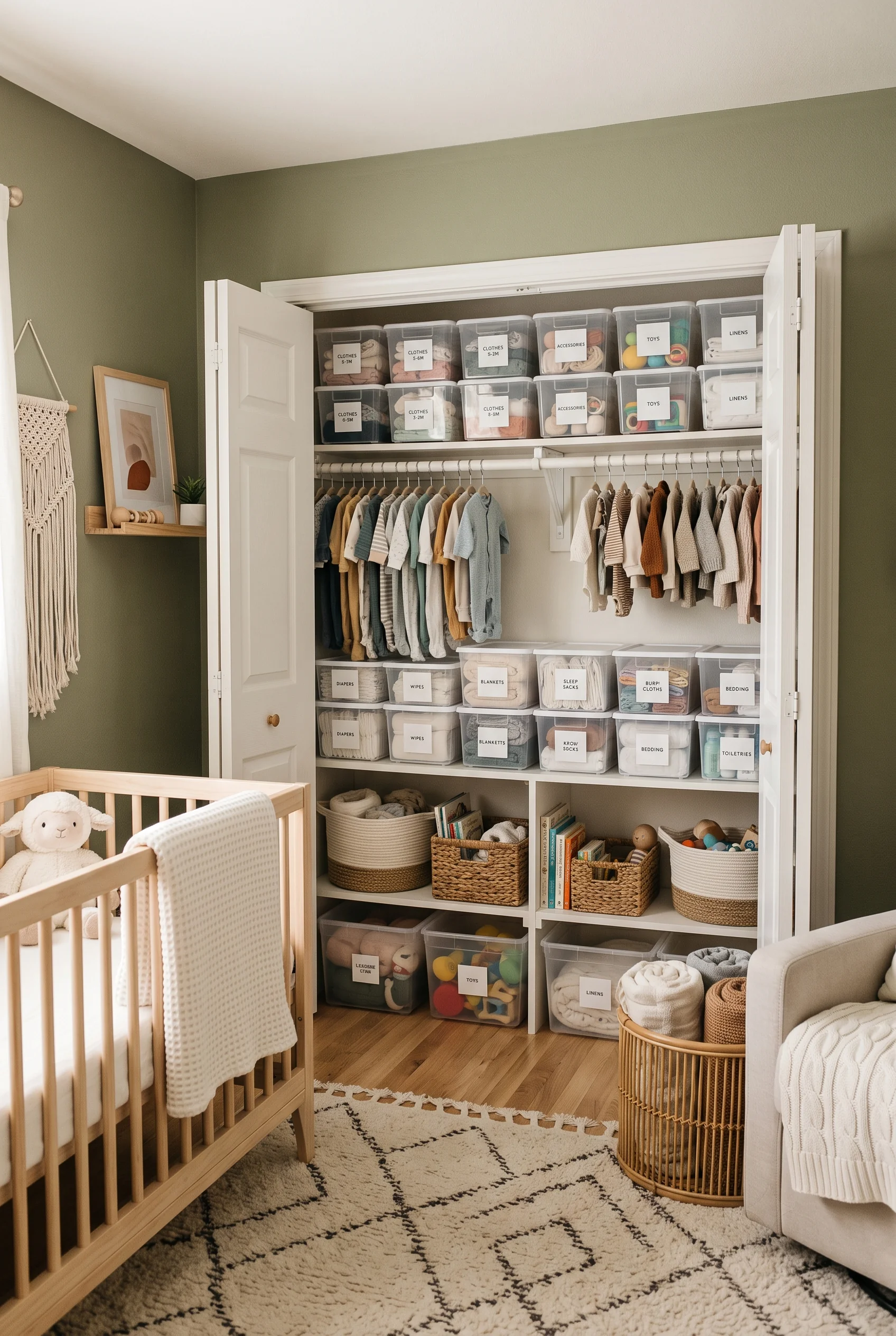
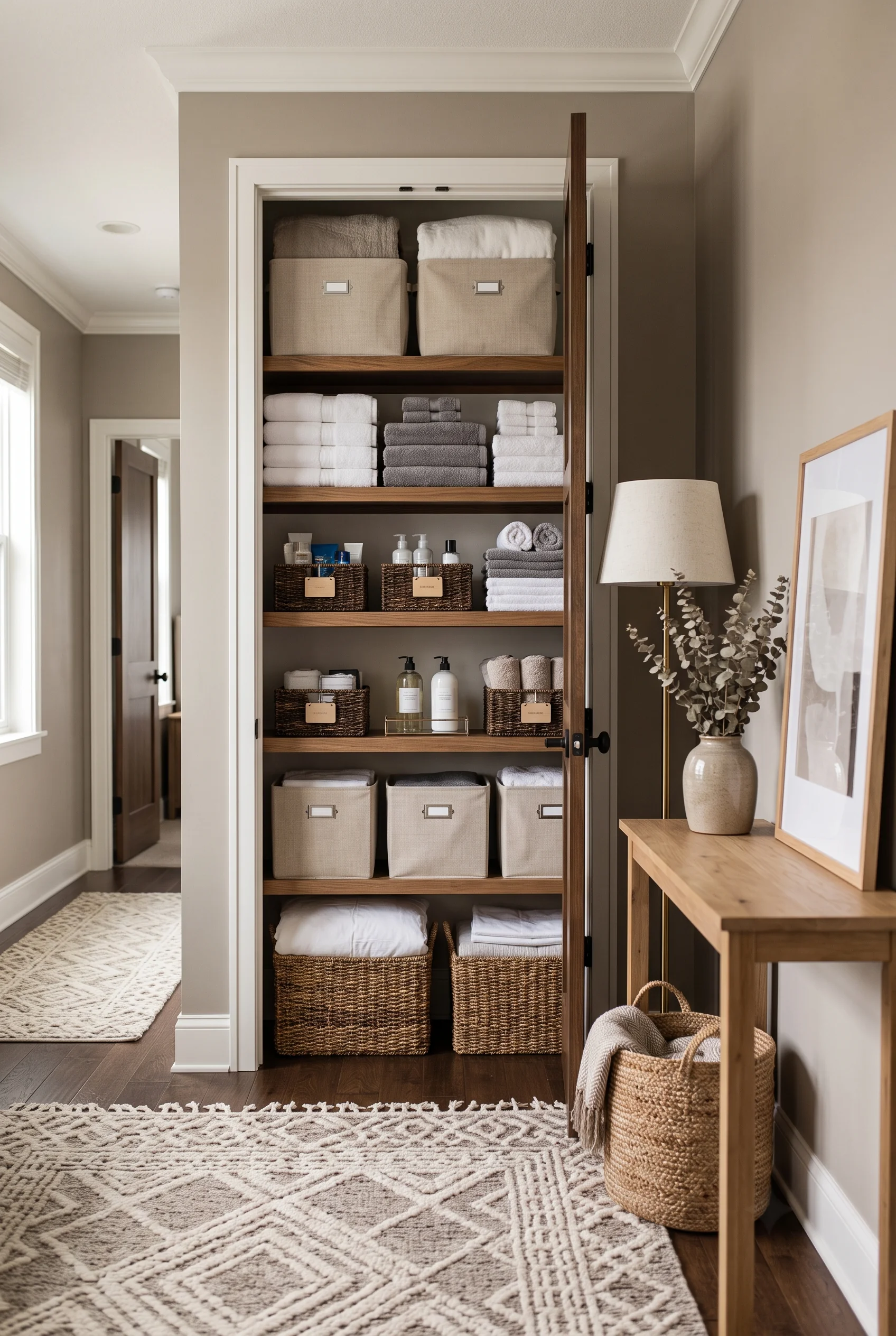
Every bin in this closet is labeled and see-through, which means finding size 3-6 month clothes or last week’s laundered burp cloths never requires opening more than one container. The system holds up because it’s honest about what’s actually inside.
Clothes are grouped by size on the hanging rod, while diapers, wipes, and linens each get their own labeled row below. Clear stackable bins like these make it easy to see when something is running low before it becomes a middle-of-the-night emergency.
A few woven baskets on the lower shelf hold toys and books, though not everything here needed a label to stay in order.
Built-Ins Make Storage Disappear Into the Architecture
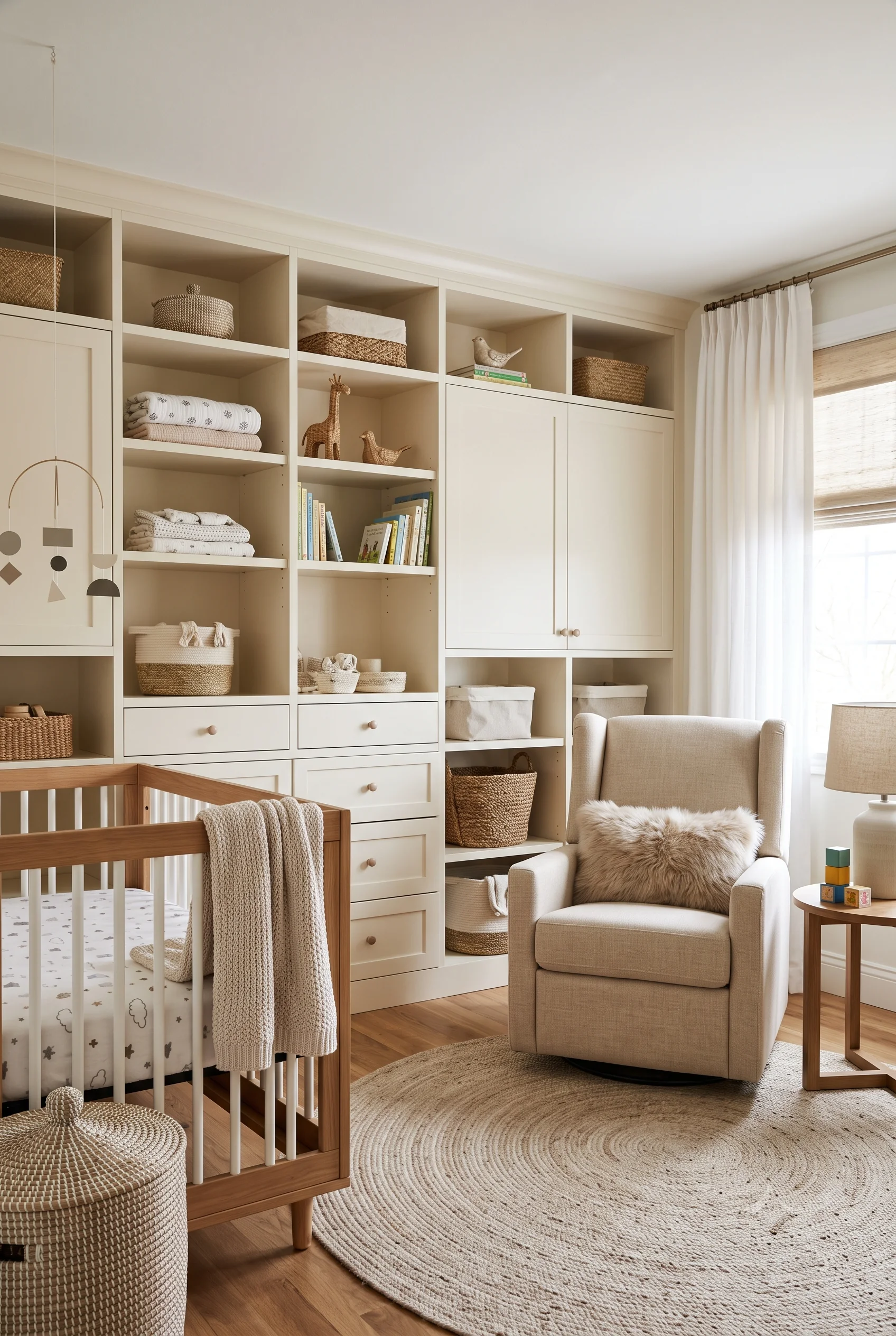
Nothing about this storage wall looks swappable, because it isn’t. Custom shelving and cabinetry line the space floor to ceiling, holding blankets, books, and toys behind doors and open cubbies built for this exact room.
Closed cabinets hide bulkier items like extra bedding, while open shelves display a curated few: a carved bird, a stack of board books, a woven basket. The mix keeps the wall from reading as one giant storage block.
A cream palette across every surface lets the storage recede into the walls rather than stand out as furniture.
Reaching for a Diaper at 2 a.m. Shouldn’t Require Crouching Into a Closet
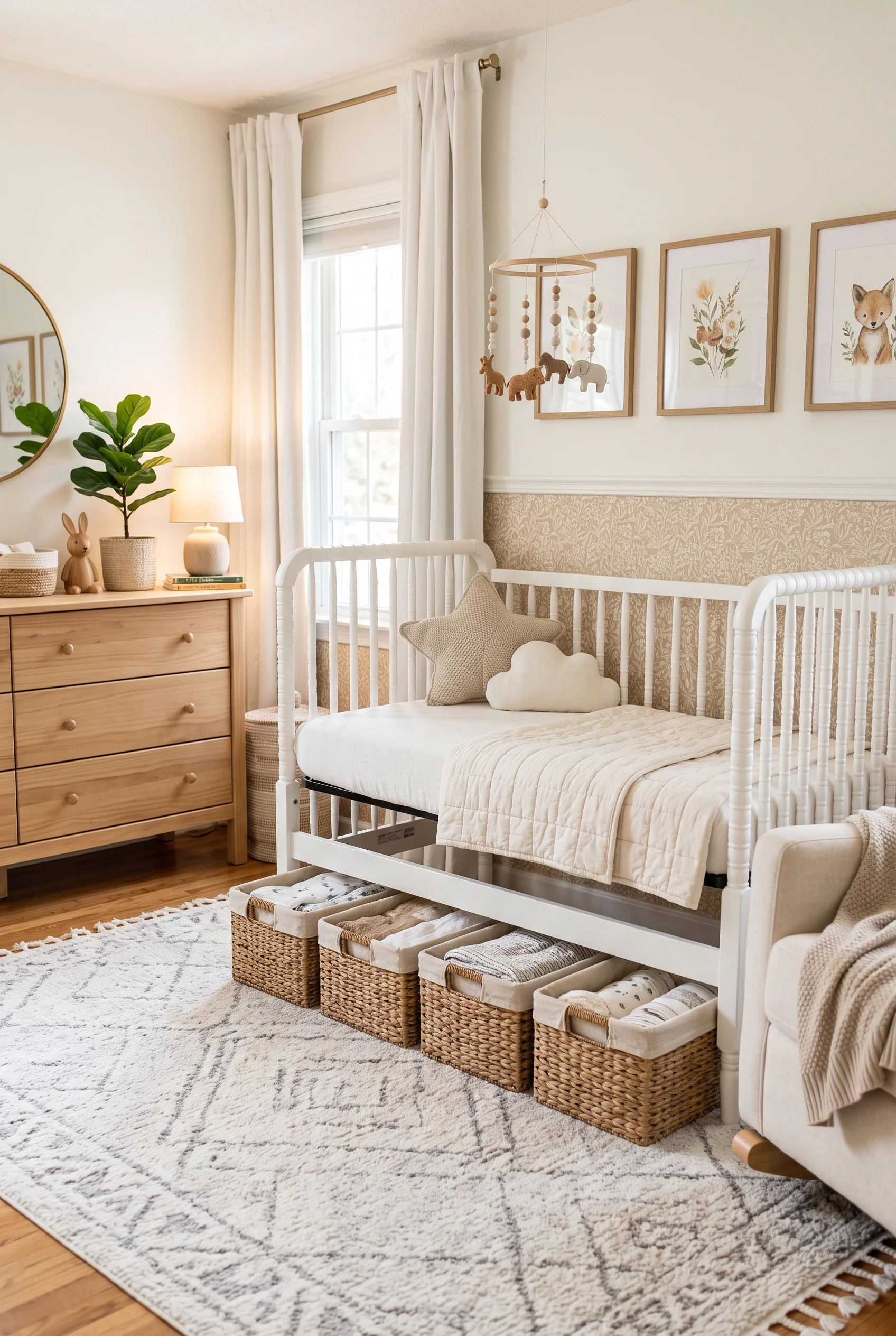
Reaching for a diaper at 2 a.m. shouldn’t require crouching into a closet, and this crib’s open frame holds four matching woven baskets exactly at grab height. It’s one of the few storage zones that never competes with floor space, because it was never usable floor space to begin with.
The daybed-style frame makes the baskets easy to reach without bending far, which counts for something during a middle-of-the-night change. A patterned wallpaper panel behind the mattress adds interest without requiring more furniture.
Every basket matches, so the under-crib storage reads as intentional rather than like overflow that had nowhere else to go.
A Contained Play Zone Keeps Toys From Colonizing the Rest of the Room
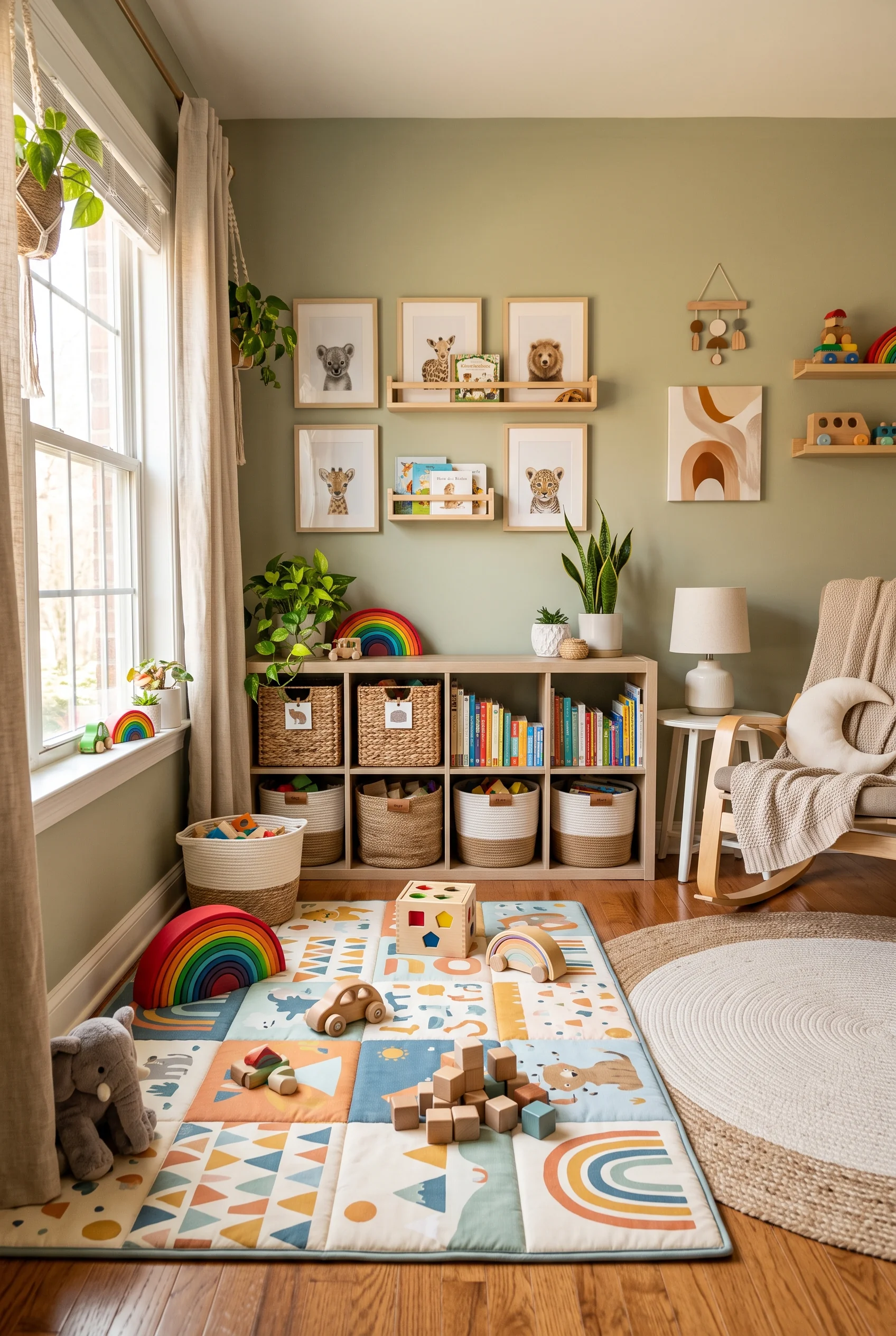
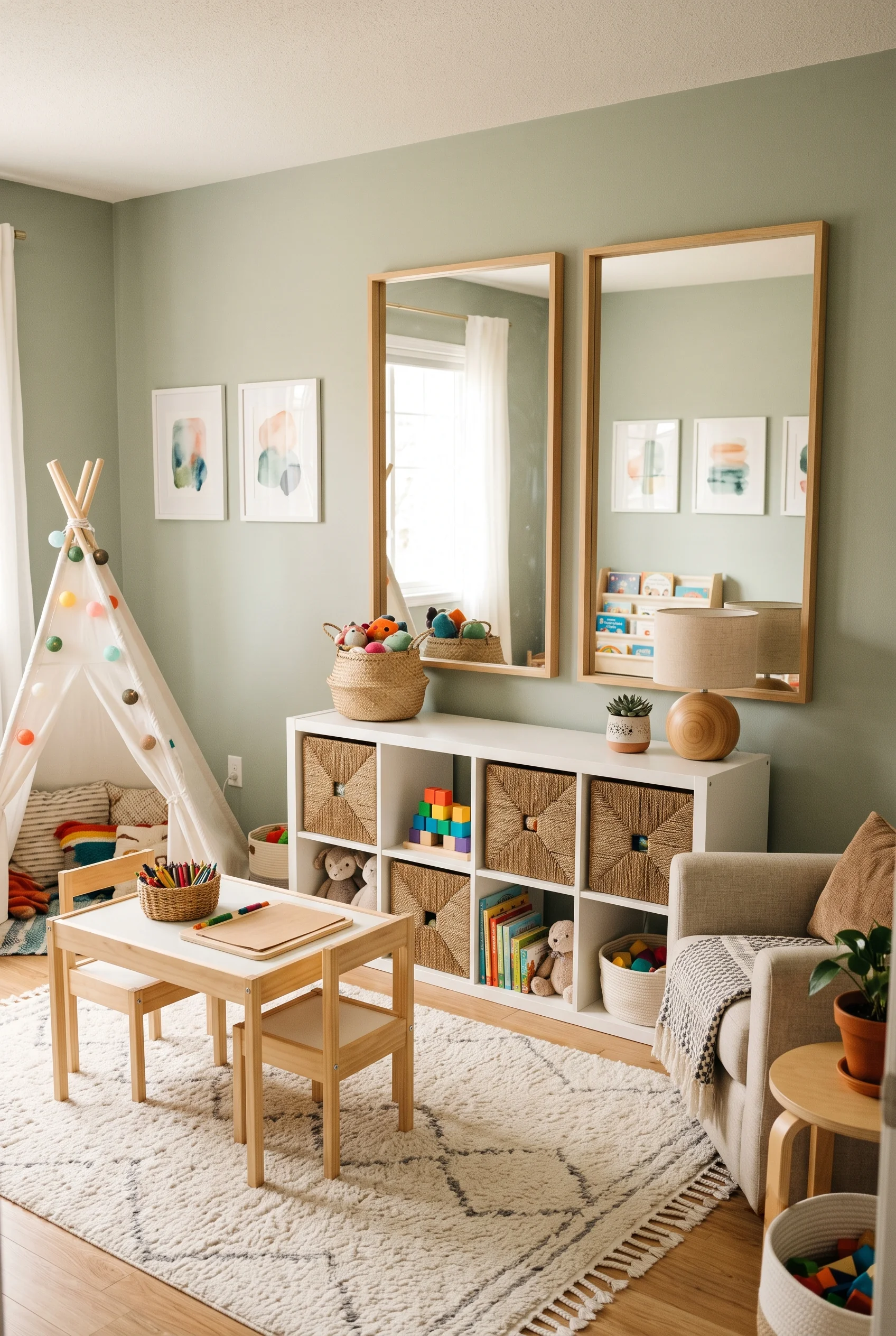
Toys stay contained to one corner here, thanks to a patchwork play mat that marks the boundary and low shelves close enough for a toddler to reach without help. Wooden blocks, a rainbow stacker, and a shape sorter all have a home just off the mat’s edge.
Keeping the play zone contained to one corner means the rest of the room, the crib, the glider, the reading corner, stays clear for actual rest. It’s the same logic behind a well-run Montessori-inspired play area, just scaled down for a smaller room and a smaller person.
Sage green walls and warm wood tie the corner back to the rest of the nursery, so it doesn’t feel like a separate room.
A Nursery That Works Harder Than Its Square Footage Suggests
None of these nineteen rooms solve small nursery ideas with a single trick. Each one stacks two or three strategies- vertical storage, multitasking furniture, a calmer palette- until the math of a small room stops feeling like a limitation.
That layering is really the whole philosophy. A tall shelf alone won’t fix a cramped nursery, and neither will a crib with built-in drawers. But combine a wall system that climbs to the ceiling with a changing table that folds away and a rug that adds warmth underfoot, and the room starts to feel considered rather than crowded.
Some of these fixes solve a storage problem outright, pulled straight from the wall-mounted ideas above. Others solve a mood problem instead, the kind that a calmer palette and a genuinely cozy corner tend to fix faster than another shelf ever could.
None of this has to happen all at once, and it definitely doesn’t have to happen with all nineteen ideas at once. Pick the two or three that solve your actual problem, whether that’s a crib squeezed into a closet-sized room or a toy collection that’s outgrown its basket. The same instinct that makes a small play area feel organized works just as well for the rest of the nursery, one corner at a time.