21 Under Kitchen Sink Organization Ideas to Maximize Every Inch
Under-the-kitchen-sink organization sounds simple until you open the doors and meet the pipes, the damp patch near the drain, and a spray bottle that’s tipped over for the third time this week. It’s the cabinet everyone uses, and nobody plans.
Groceries get a pantry. Dishes get drawers. The cleaning supplies get whatever corner the plumber left behind.
The good news? That awkward box is among the easiest spots in the kitchen to fix. A few sliding shelves, a door that finally earns its keep, and bins that show you what you own can change how every cleanup feels. If you’ve already tackled deep kitchen drawer organization, this is the natural next cabinet to claim.
Below you’ll find 21 ideas grouped by what they solve, from working around plumbing to using the door and protecting the cabinet itself. Each one is small enough to try on a weekend and pretty enough that you won’t mind opening the doors when guests help with dishes. They pair beautifully with the finishing touches in these kitchen decor ideas, because a calm kitchen should feel calm behind closed doors too.
This isn’t about a perfect cabinet. It’s about one that works on a busy Tuesday.
DISCLOSURE: Some of the links provided on this page are affiliate links. This means if you choose to make a purchase through these links, we may receive a small commission at no extra cost to you.
Shelving That Makes Peace With the Plumbing
Pipes are the reason most under-sink cabinets fall apart. They split the space into odd pockets, block the back wall, and leave a tall gap nobody knows how to use. The ideas in this group treat the plumbing as a fixed piece of furniture and build around it.
Sliding tiers and adjustable shelves claim the floor. A simple rod and a spinning tray handle the edges, so the cabinet finally works as one of your hardest-working kitchen storage solutions.
Under Kitchen Sink Organization That Slides Out to Meet You
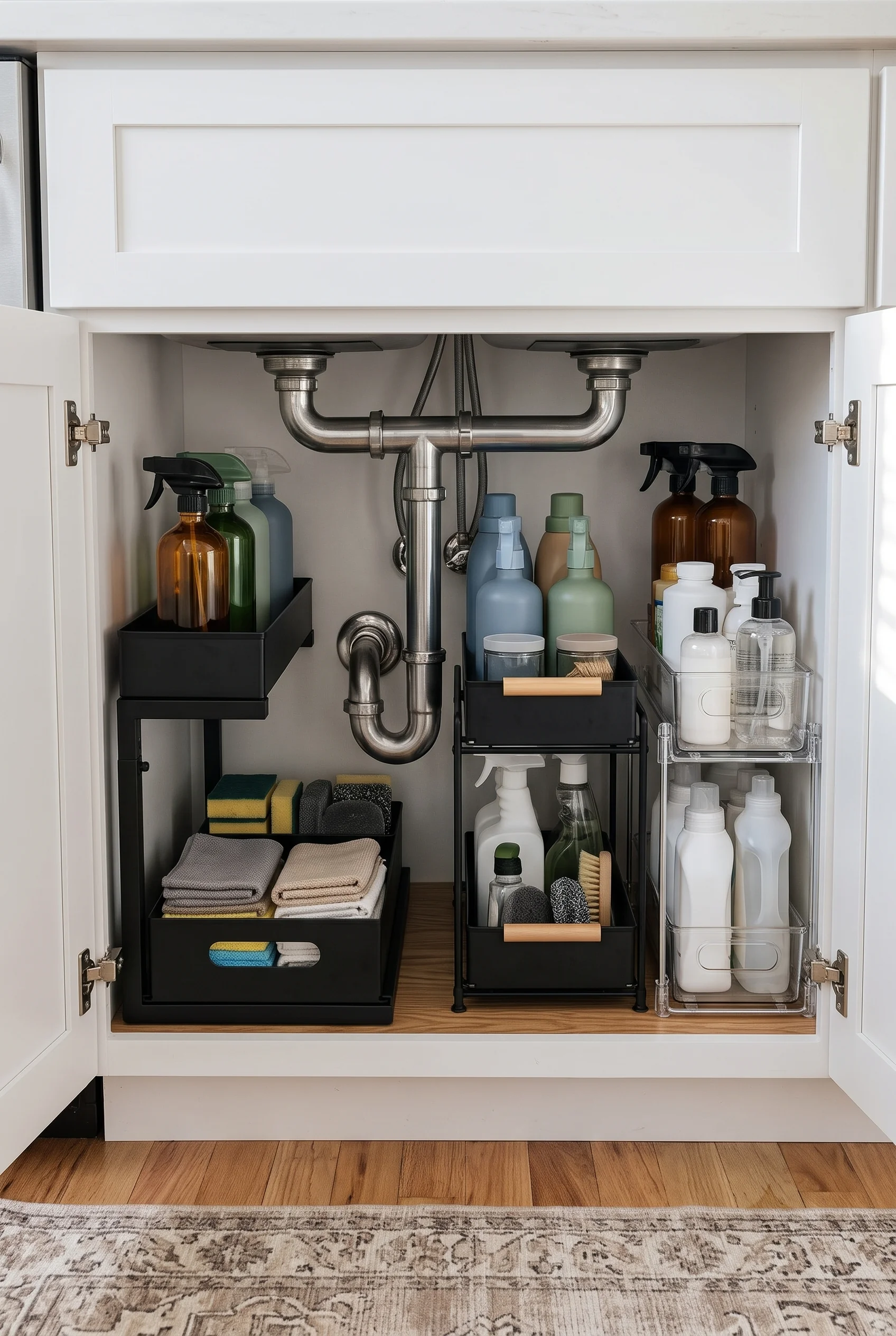
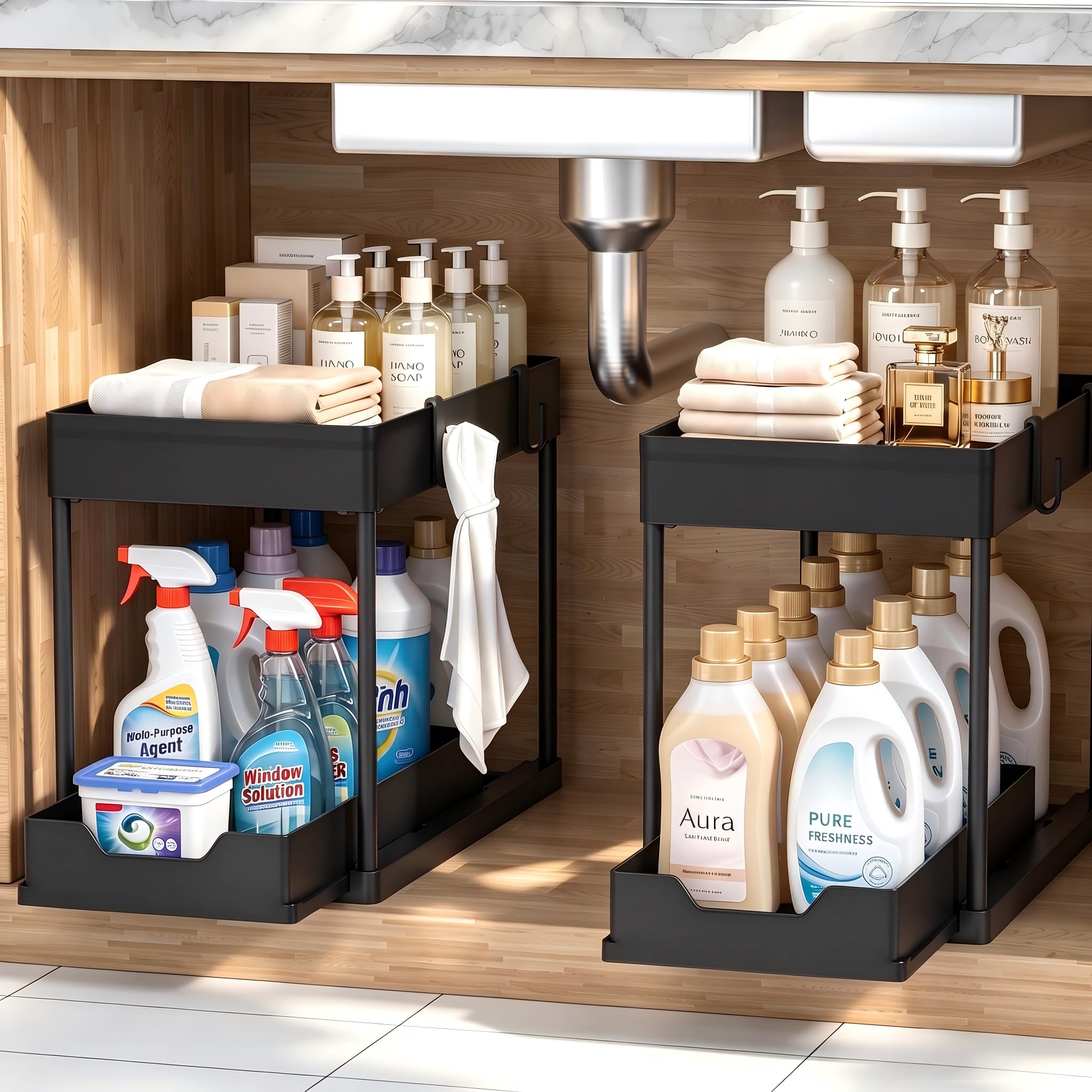
A two-tier pull-out organizer fits the gaps the P-trap leaves behind, so the awkward space on either side of the drain finally holds something useful. Sprays go on top, cloths and sponge refills underneath.
What changes everything is the motion. Instead of kneeling and reaching past three bottles to find the one in back, you pull the whole tier forward and everything is right there.
Measure the width on each side of the pipes before you buy. Narrow units on both sides usually beat one wide unit that collides with the drain.


Twice the Floor Space, Same Plumbing
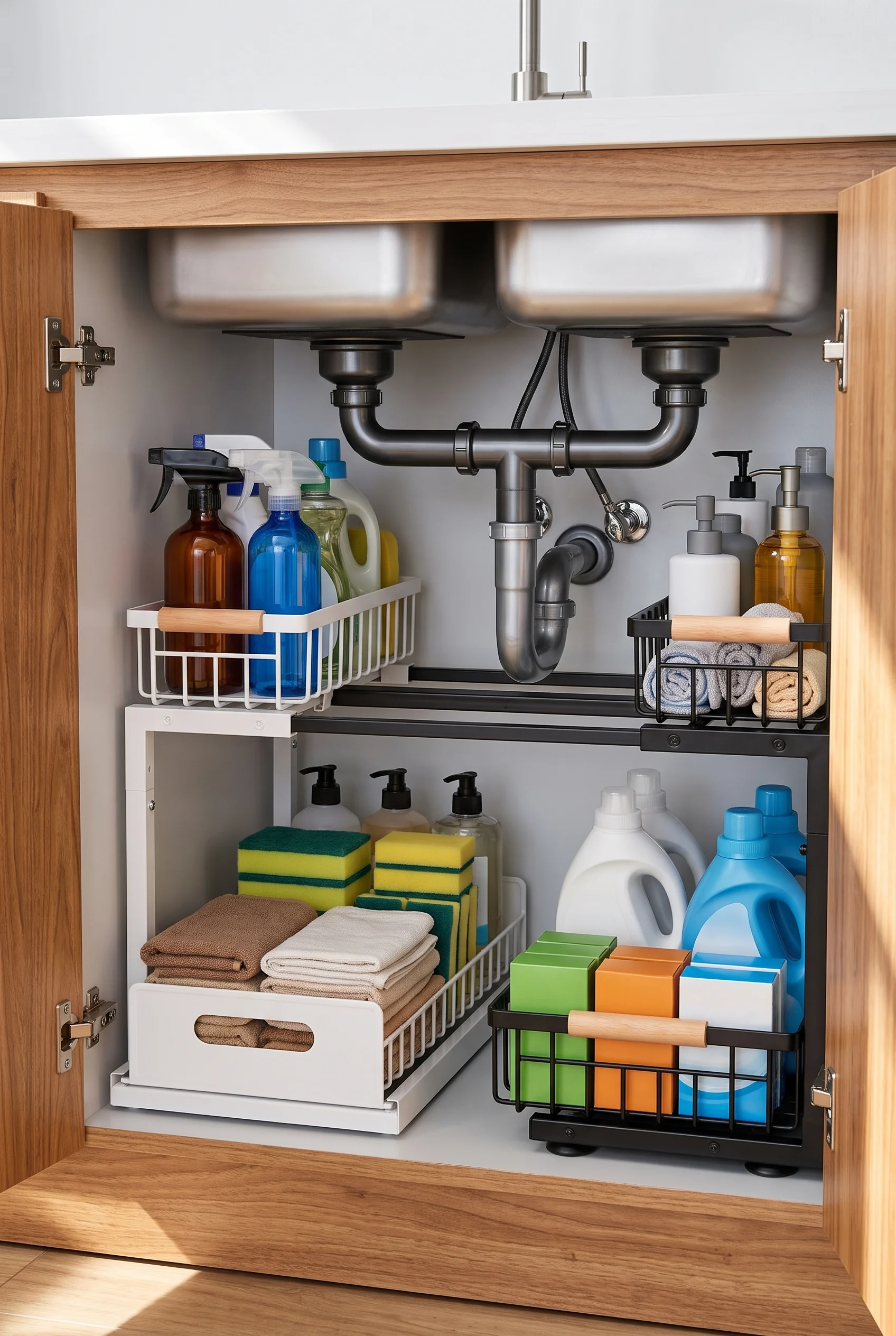
An expandable shelf adjusts its width and slides its legs around the plumbing, which turns one crowded cabinet floor into two usable levels. Colorful bottles stay, they just stop piling on each other.
Give each level a job. Tall sprays and refills on the bottom where there is height, lighter rags and sponges on top where you can see them.
Look for removable side panels or a gap in the middle shelf. That is what lets the frame sit right up against the drain line instead of fighting it.
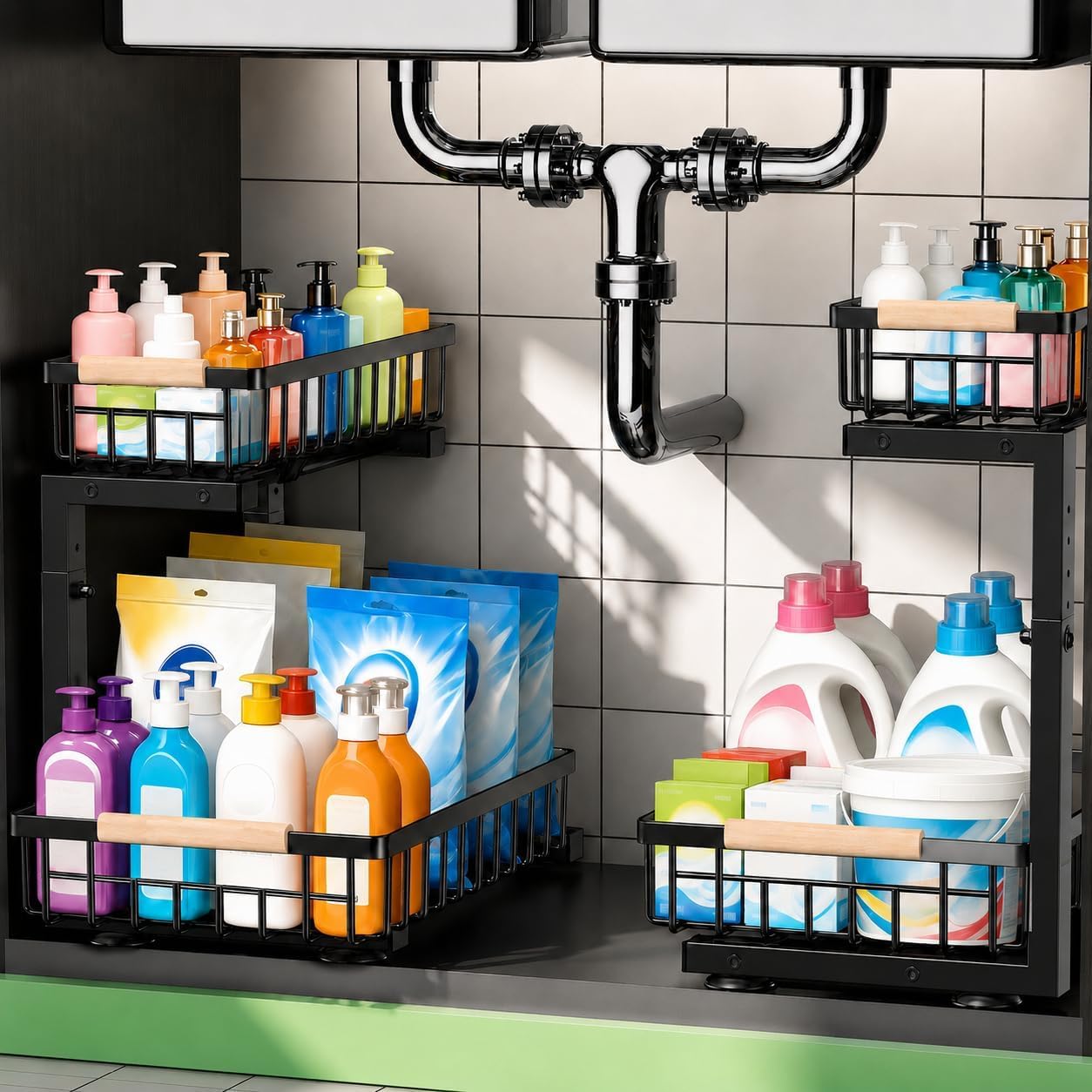
Spray Bottles That Hang Instead of Topple
The strip of height right under the sink basin usually sits empty. A tension rod across the top turns it into a row of spray bottles hanging by their triggers. No tipping, and the floor below stays clear for a sponge caddy and a bin of cloths.
A spring tension rod wedges between the side walls with no drilling, making it a favorite for renters and anyone nervous about cabinet screws.
Hang only sprays you use weekly. Four or five bottles is the sweet spot before the rod starts to bow.
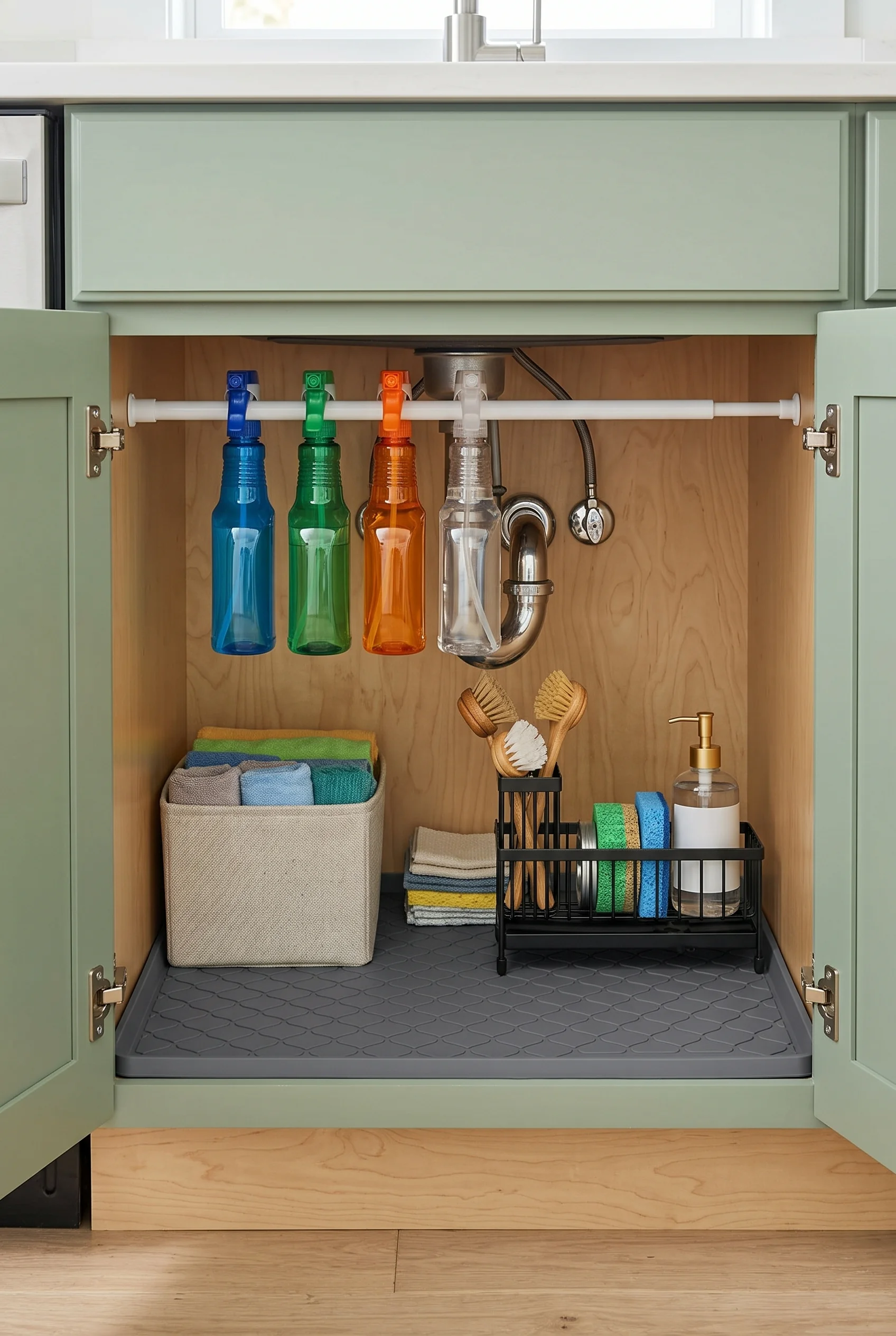
The Back Corner, Brought Within Reach
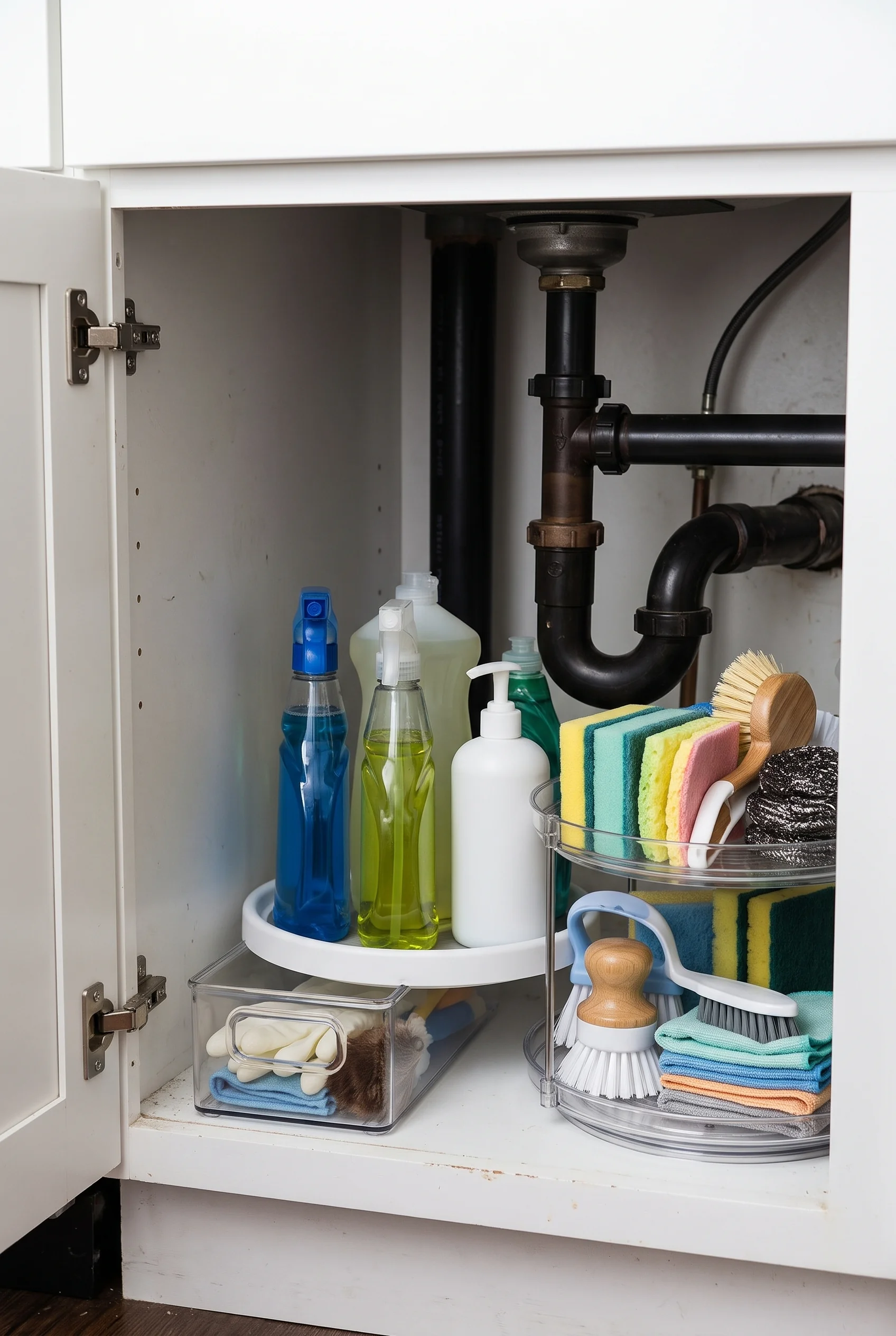
Corner sink cabinets are notorious. The back half disappears behind the pipes, and anything stored there might as well live in another room.
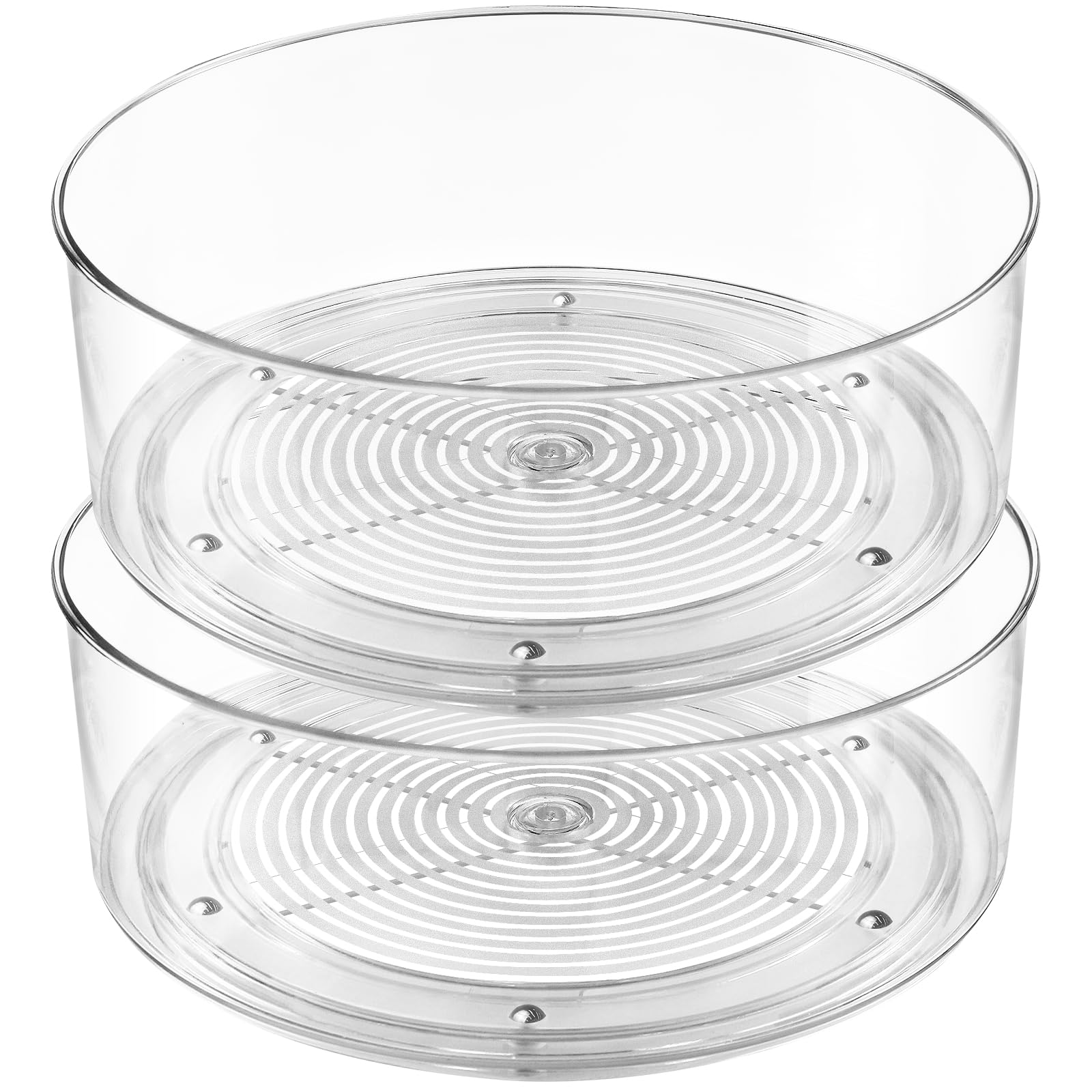
A turntable fixes that with one spin. Set it in the back corner with dish soap and sprays, and the bottle you need comes to the front instead of you crawling in after it. A second, smaller turntable near the door works well for sponges and brushes.
A raised lip matters. When the tray spins, nothing slides off the edge, and the whole corner becomes one easy turn of the wrist.


Everything in Sight, Everything in Its Place
Clutter under the sink rarely comes from owning too much. Often, it’s because you can’t see what’s there, so you buy a third bottle of dish soap and lose the sponges behind the trash bags. Clear bins, open baskets, and a grab-and-go caddy fix that by making every category visible.
Labels finish the job for everyone else in the house. These small kitchen organization habits are the foundation of a cabinet that stays tidy long after the first weekend.
One Handle, Every Cleaner You Reach for Daily
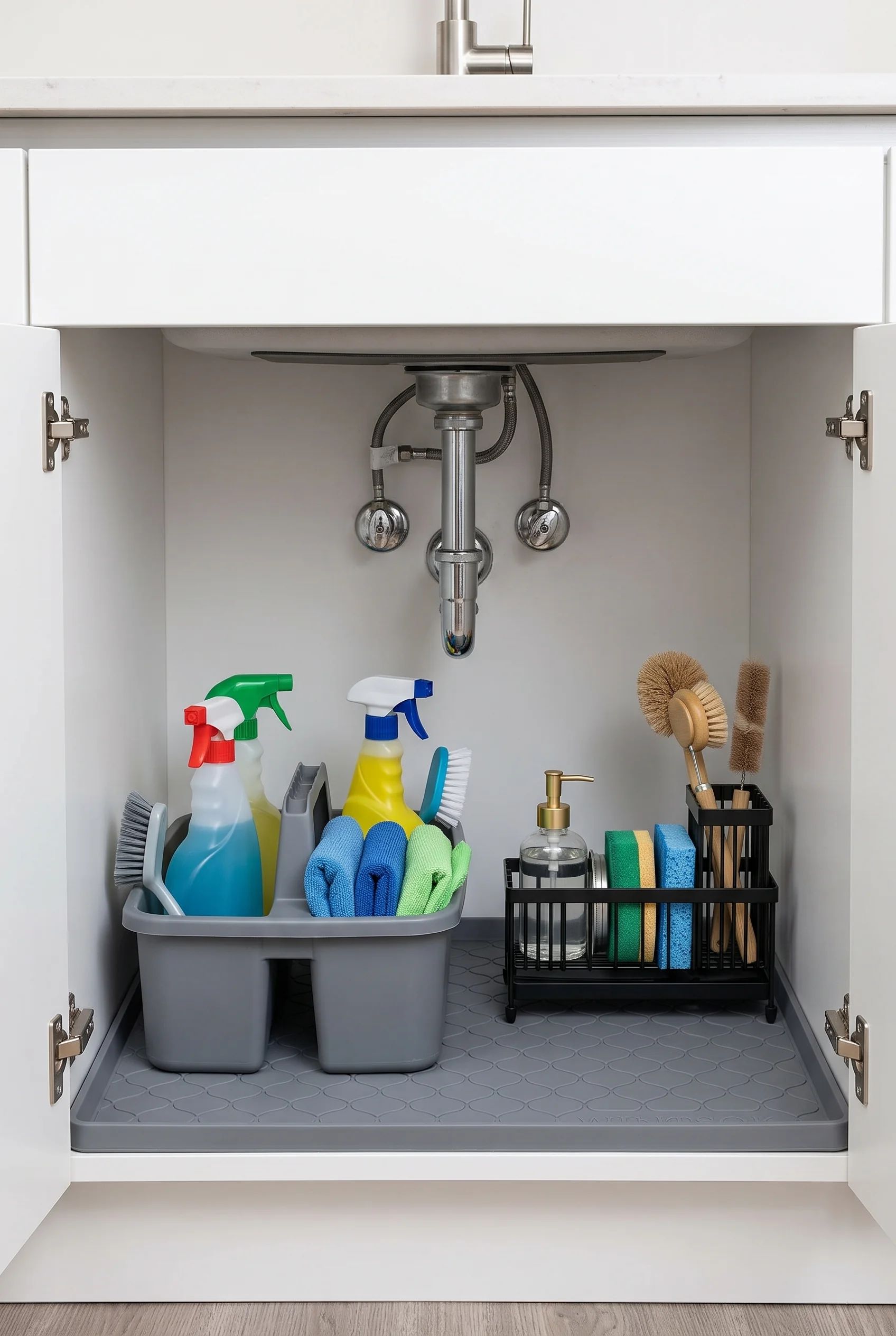
A cleaning caddy with a sturdy center handle is the hardest-working piece under the sink. It holds the daily rotation: a couple of sprays, a scrub brush, and a few cloths.
On cleaning day, it travels. Grab it for the bathroom, carry it to the counter, and set it back under the sink when you’re done. Nothing gets stranded in another room.
The trick is restraint. Five or six items keep it light enough to carry and easy to scan at a glance, with backup bottles stored separately behind it.

Clear Bins That Make Restocking Obvious
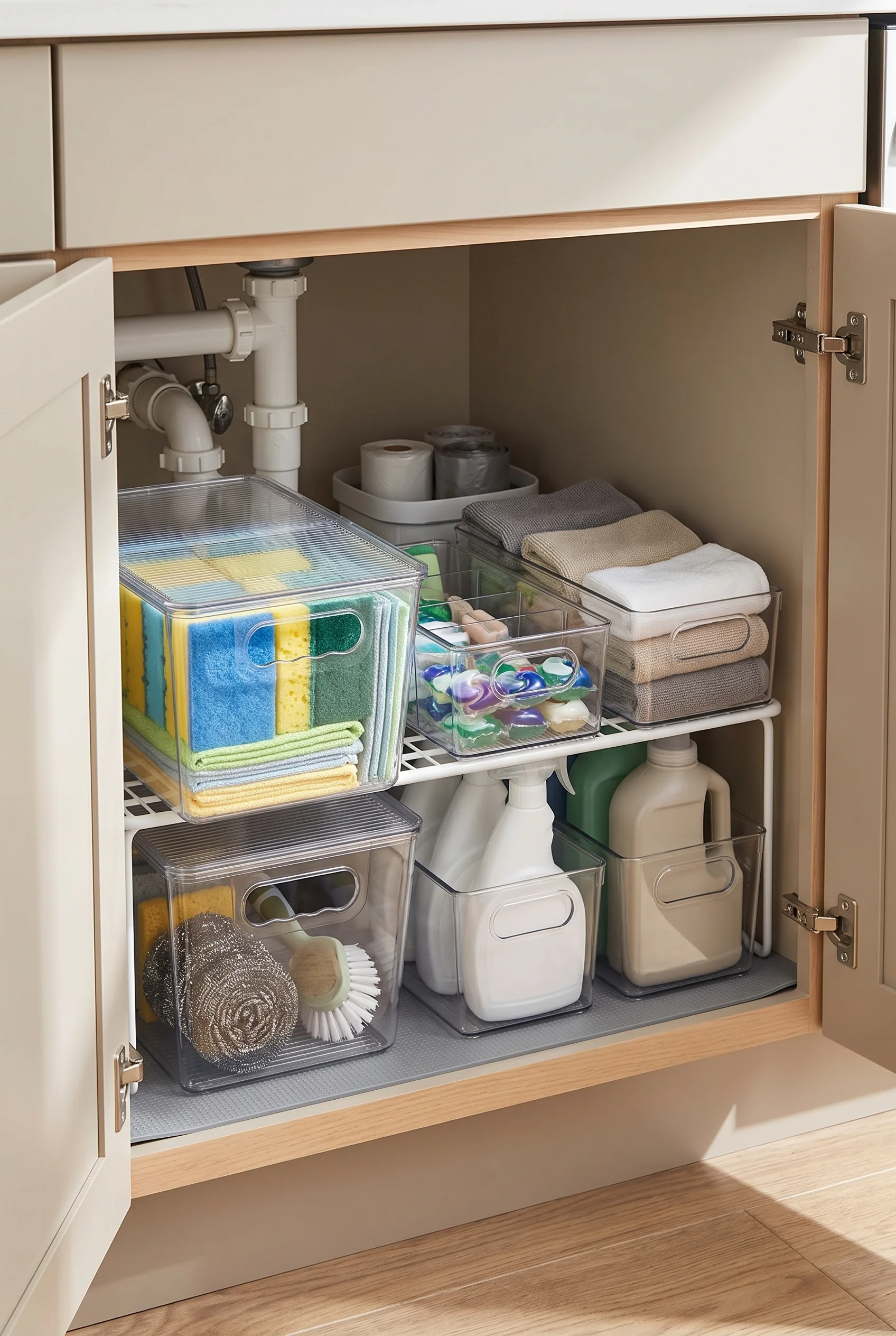
Clear bins put every sponge, pod and folded cloth on display, so you always know what you have.
Because nothing is hidden, the shopping list practically writes itself. When the pod bin looks low, you know before you run out mid-load. It’s the same approach people use to organize kitchen cabinets above the counter, brought down to the floor.
Stacking is where the space really opens up. Lidded bins sit two high without crushing what’s underneath, and a wire riser lifts lighter categories so detergent jugs and spray refills live below. Each bin holds one job, nothing more.

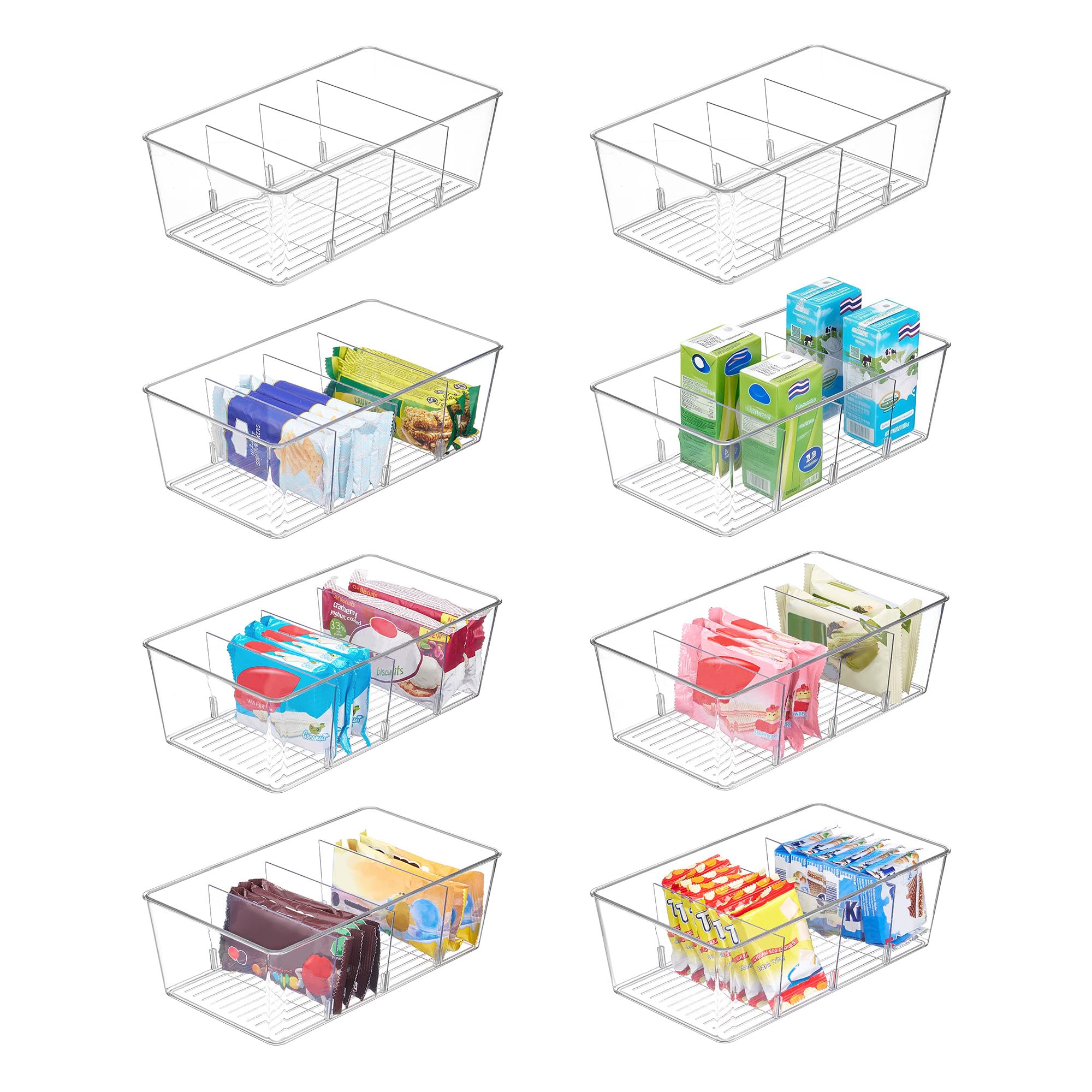
Open Weave for the Things That Never Quite Dry
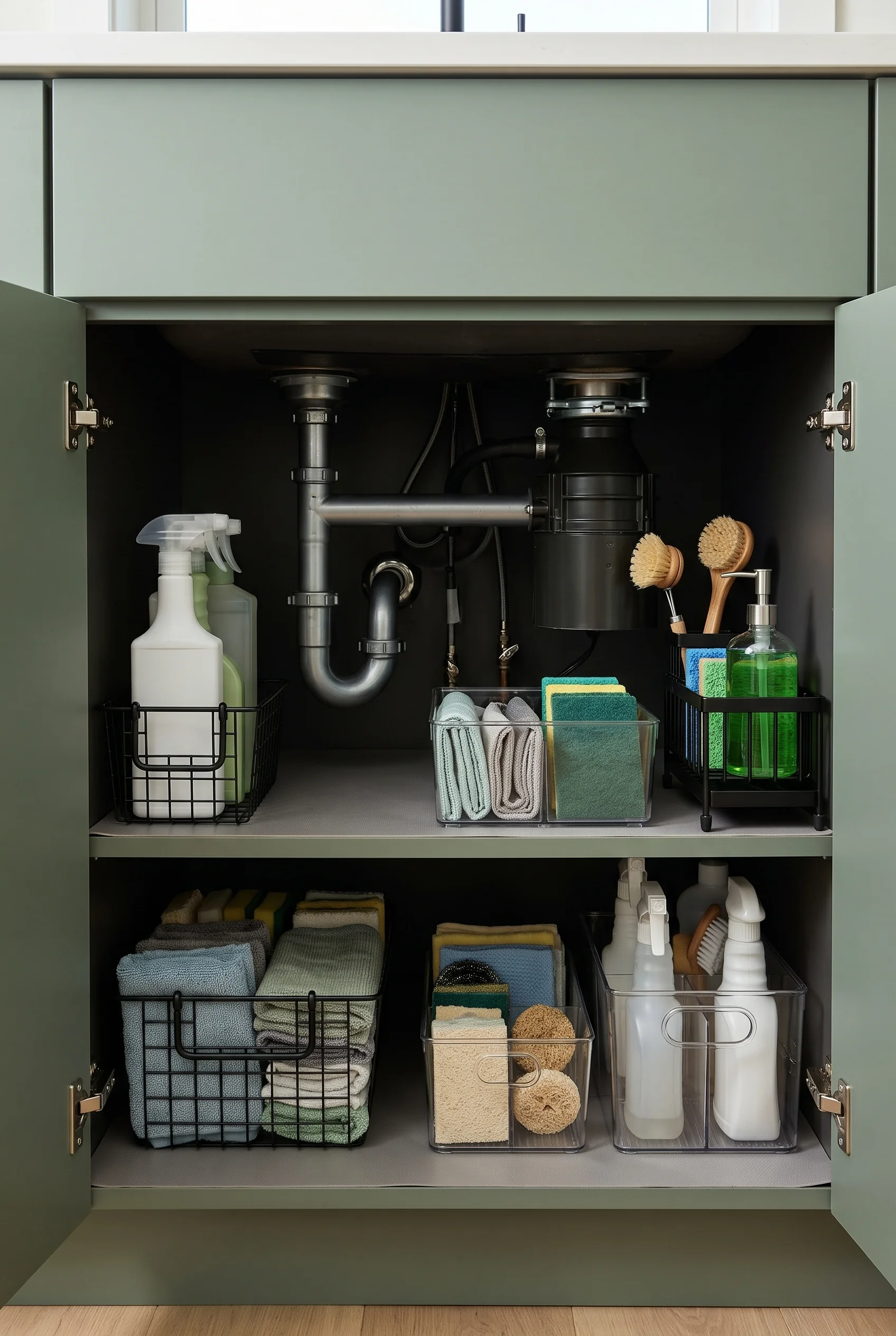
Damp sponges and used cloths need air more than they need a lid. Wire baskets let everything breathe, so dish towels and microfiber cloths dry between uses instead of turning musty in a closed bin.
Keep the wet things in wire and the dry goods in clear bins. Splitting them that way stops the musty smell from spreading to fresh refills.
Choose baskets with handles. Pulling one forward becomes a one-finger job, even from the back of the cabinet.

Labels the Whole Family Can Follow
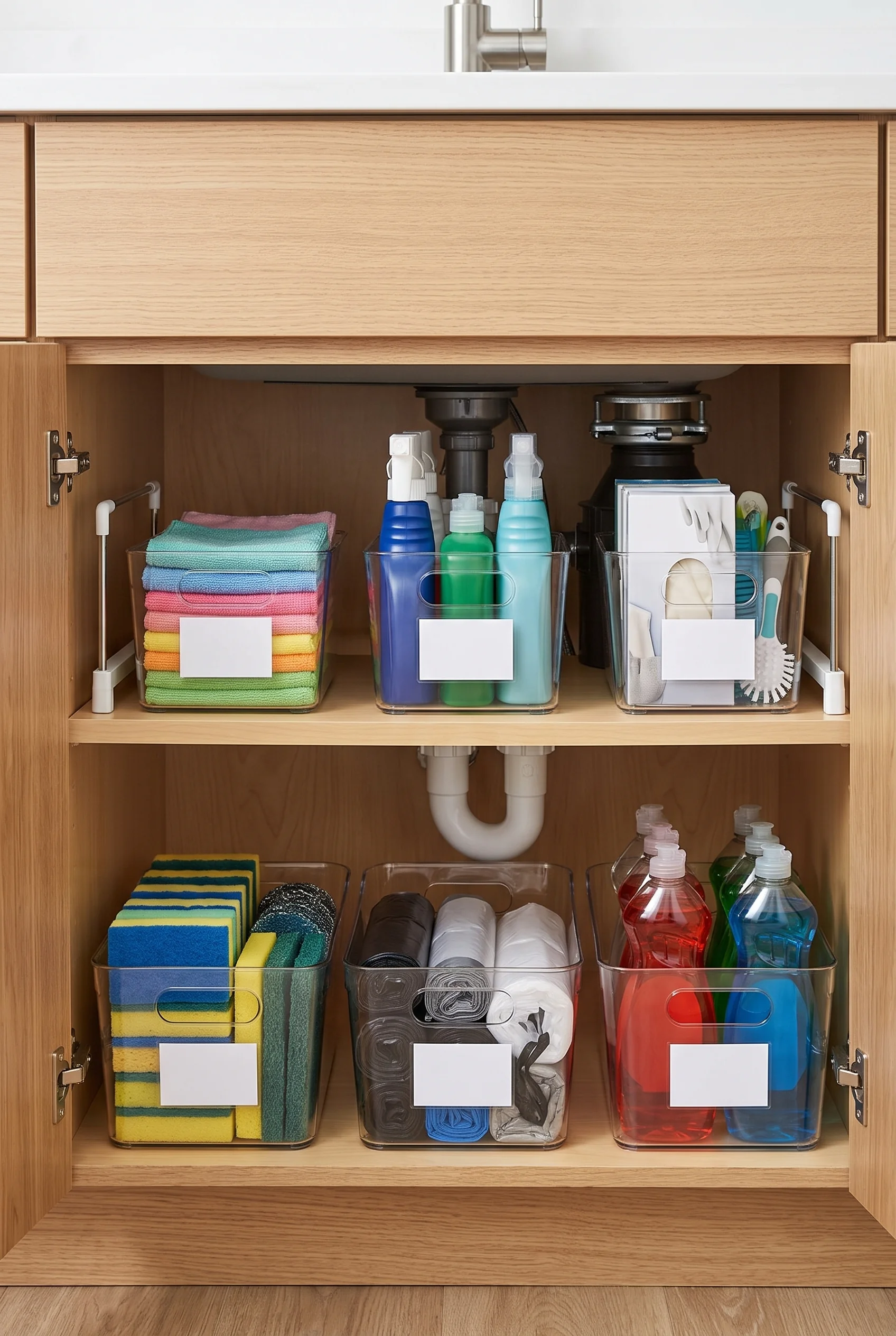
Trash bags, sponges, dish soap. When each clear bin wears a simple label, nobody has to ask where the refills go.
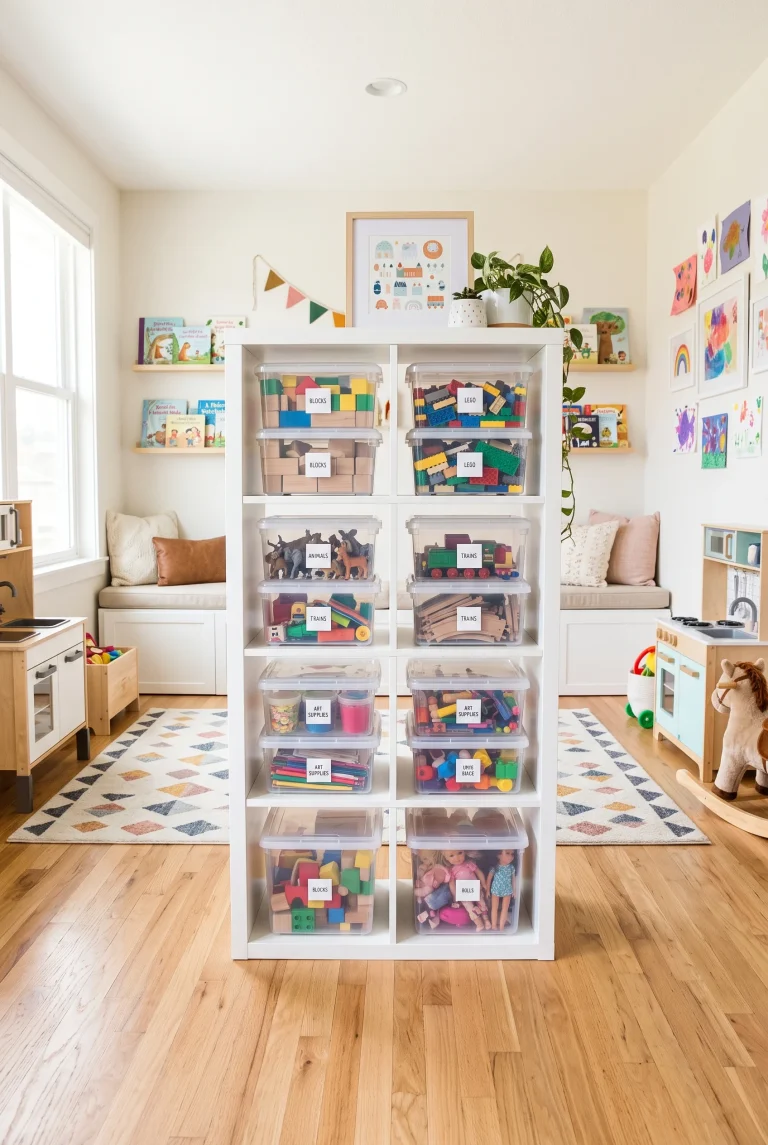
Labels do something baskets alone can’t. They hand the system to everyone else in the house, including the kids who unload groceries and the partner who swears the sponges were never there. Children catch on fast, the same way they learn to put toys back with labeled playroom storage.
Keep the categories broad on purpose. Sponges, not one brand of sponge. A label written by category easily survives every product swap.

The Cabinet Door, Finally Pulling Its Weight
The inside of a cabinet door is the most overlooked storage in the kitchen. It’s flat, it’s right at hand, and it swings toward you every time you open it. Adhesive bins, hook-on baskets, and a few small hooks turn that blank panel into a second wall of storage.
It’s an easy way to maximize kitchen space without adding a single shelf. Every piece below stays shallow enough to clear the sink when the door closes.
Sponge Refills Filed Flat on the Door
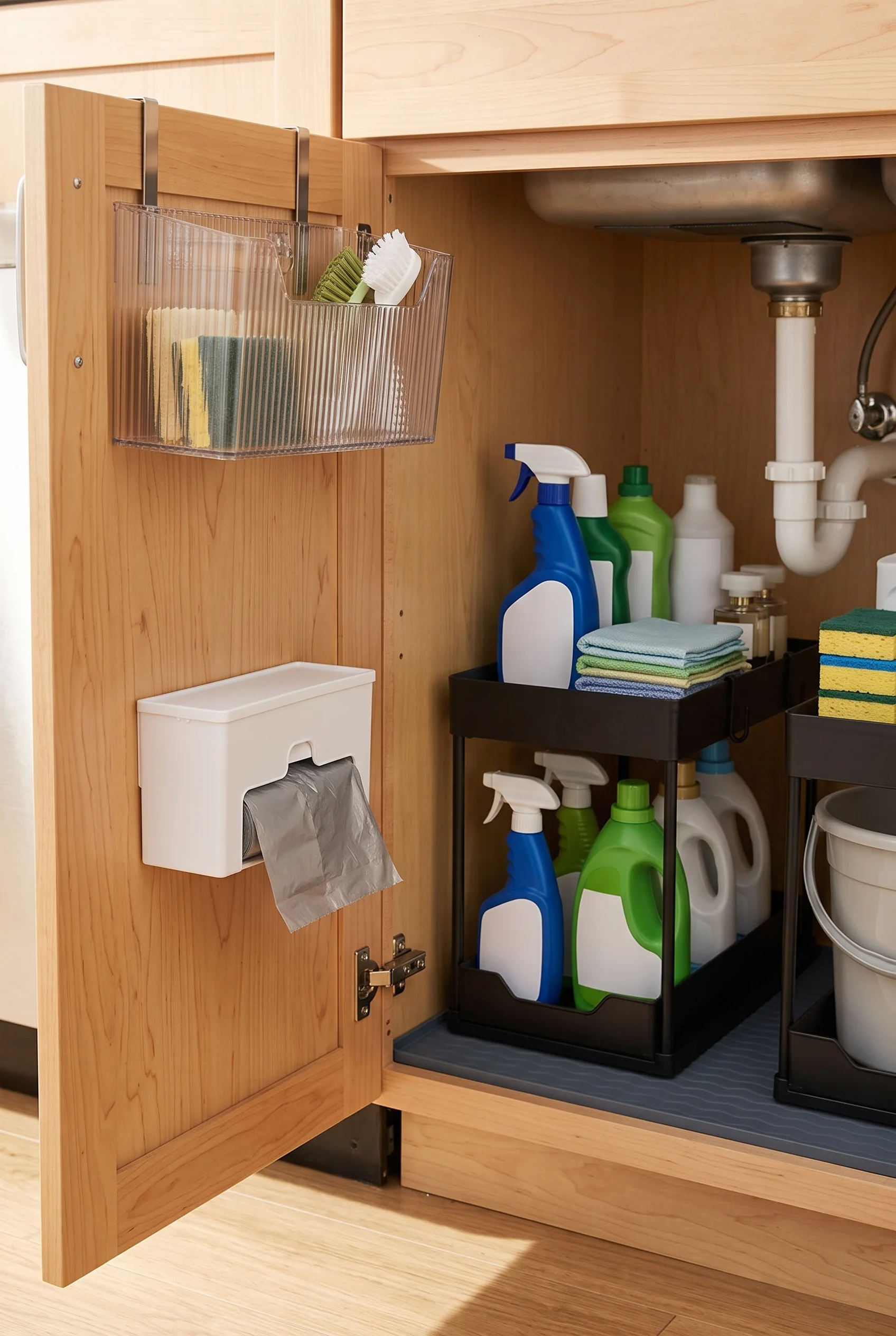
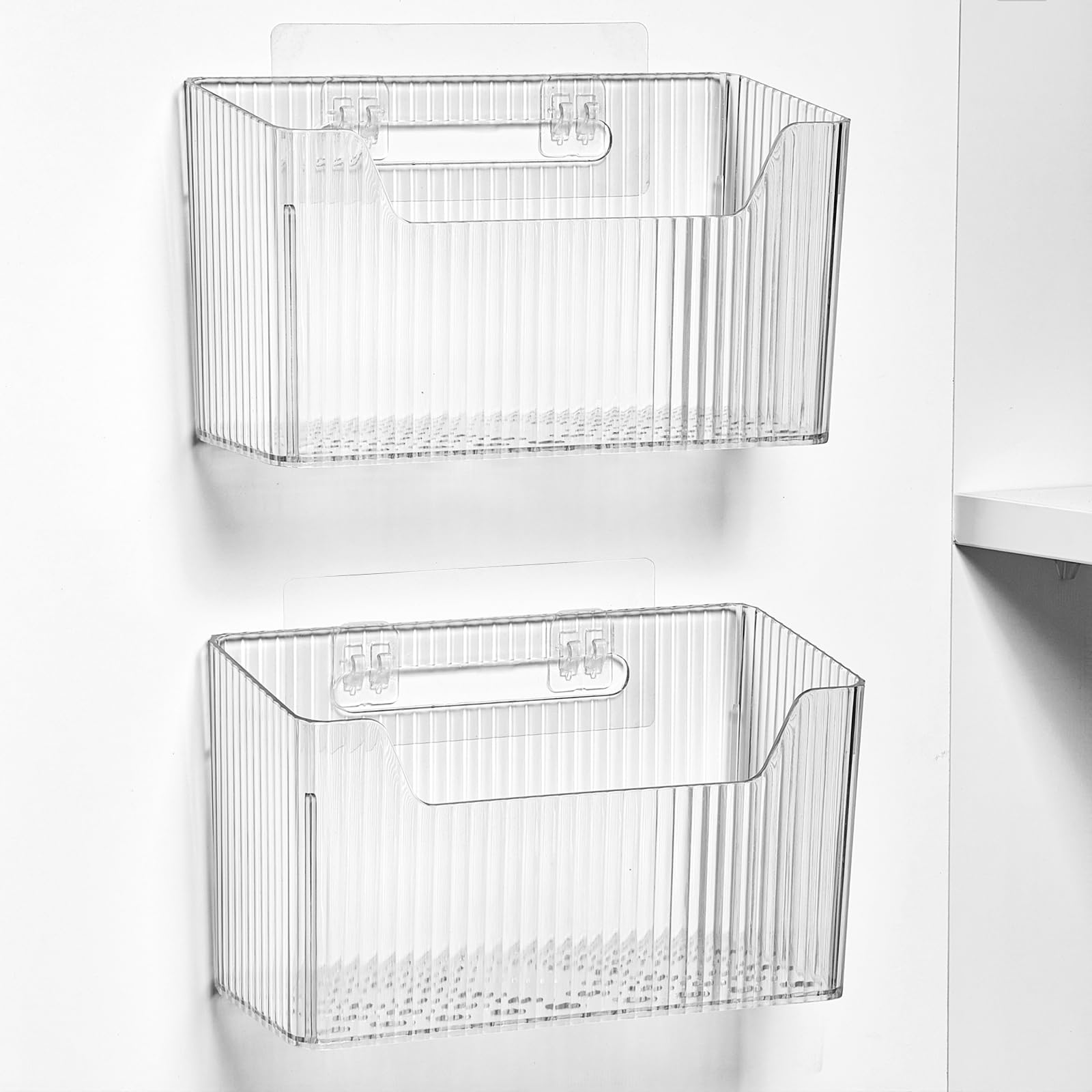
Trash bags tend to end up crushed behind a jug, with the box torn open and rolls unravelling. A dispenser mounted on the inside of the cabinet door keeps the roll in one place, and the next bag pulls out with one tug.
It also frees the cabinet floor. Once the door carries part of the load, the inside never looks packed, even with sprays and cloths on two tiers.
Check the clearance before mounting. Place the dispenser high enough that the door still closes past the sink basin and the pipes.

Over-the-Door Baskets That Hang Without Screws
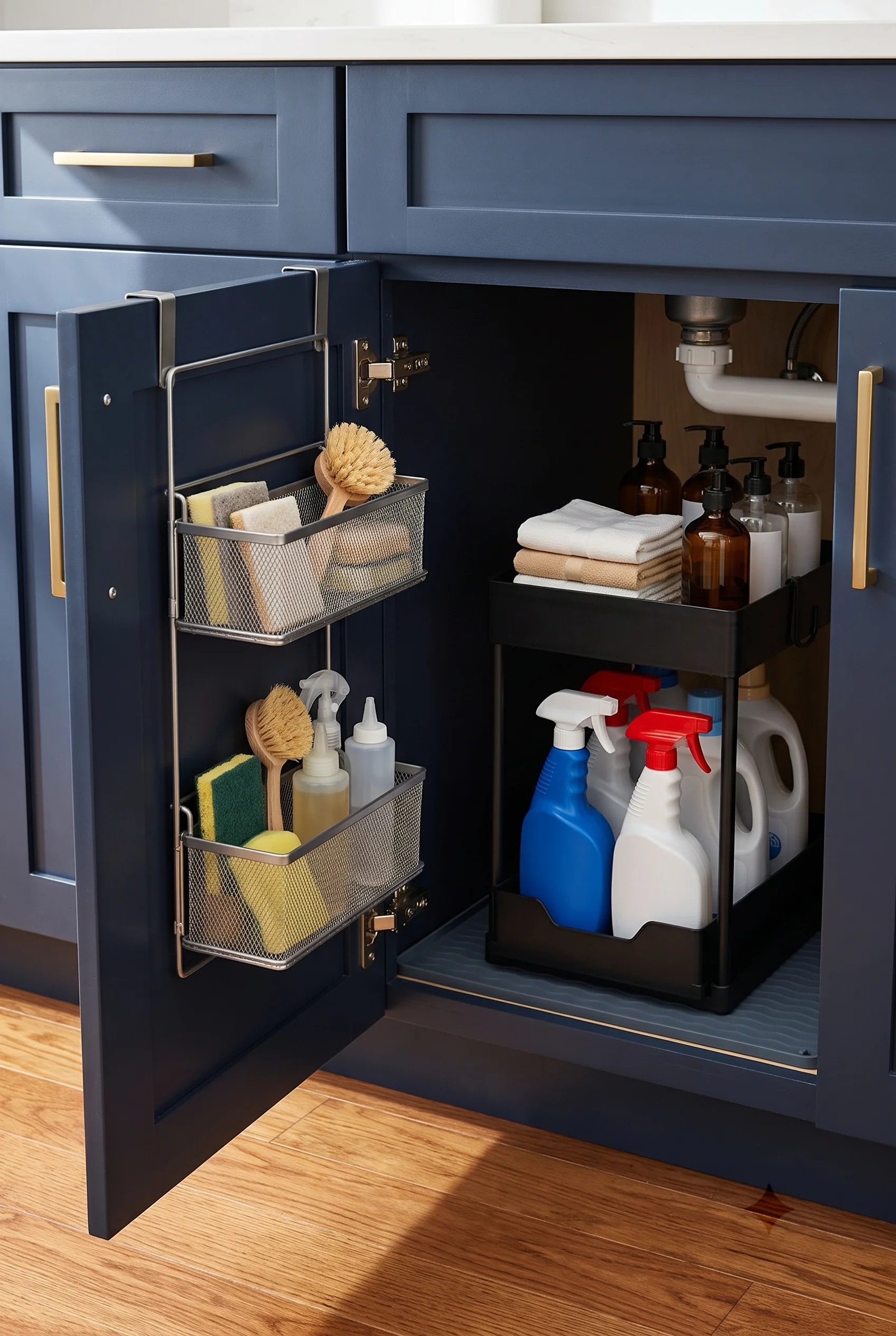
An over-the-door organizer hooks over the top edge of the cabinet door and holds scrub brushes, sponges and small squeeze bottles where you can see them.
No adhesive, no screws. The frame simply hangs from the door, so it lifts off whenever you want to wipe behind it or rearrange.
Pick baskets shallow enough for the door to close past the sink. Keep heavy detergent jugs on the cabinet floor and let the door hold only light, everyday items.
A Drying Spot for the Sponge Everyone Forgets
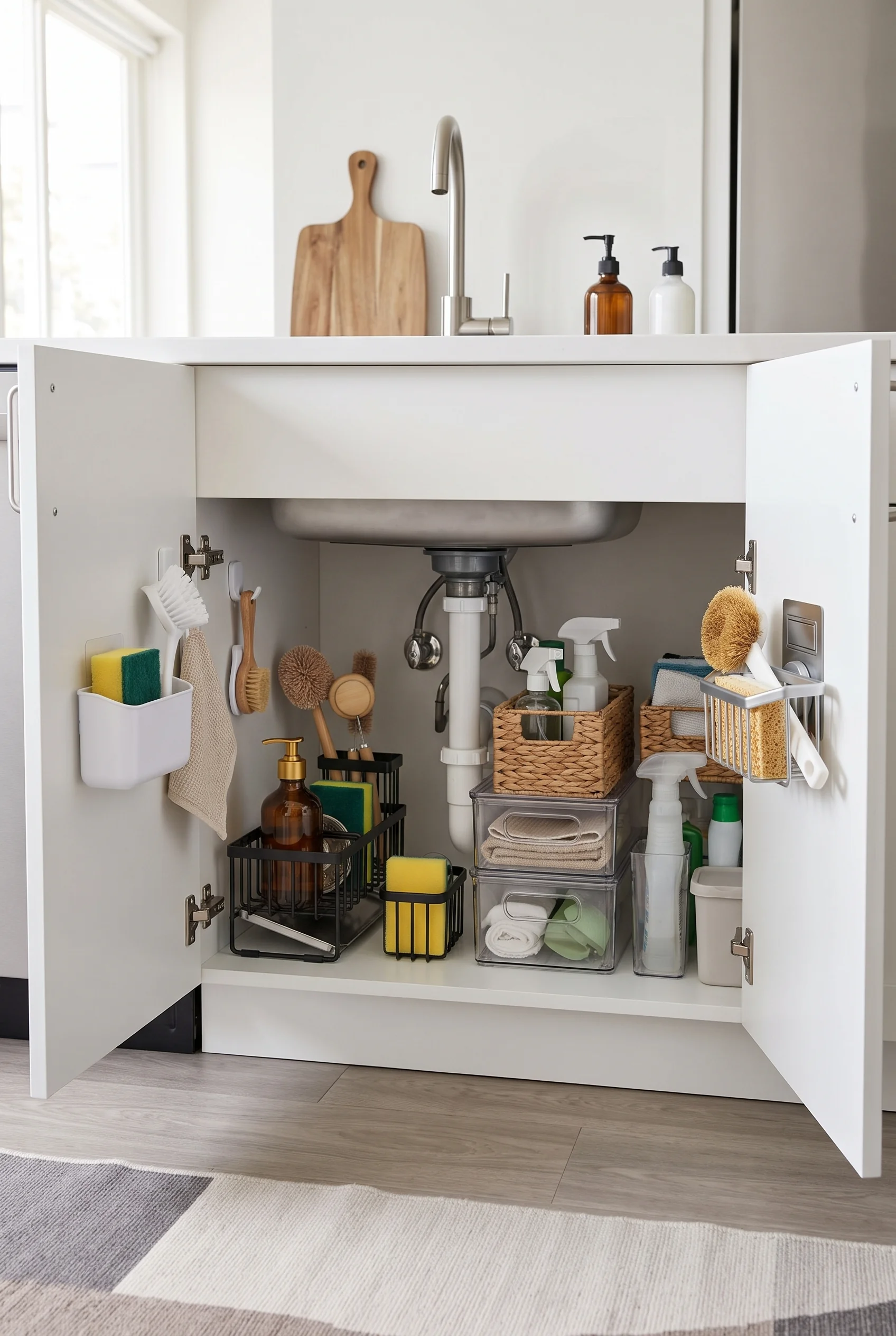
Wet sponges tossed onto the cabinet floor are the start of that musty under-sink smell. A small caddy stuck inside each door gives them somewhere to drip and dry instead.
Mount it high enough to stay out of the way when you reach for the bins below, and add a hook beside it for a dish brush.
Drainage holes keep water from pooling, and with the doors handling the damp things, everything stored inside stays perfectly dry.


Rubber Gloves Drying Cuff Down, Right Where You Need Them
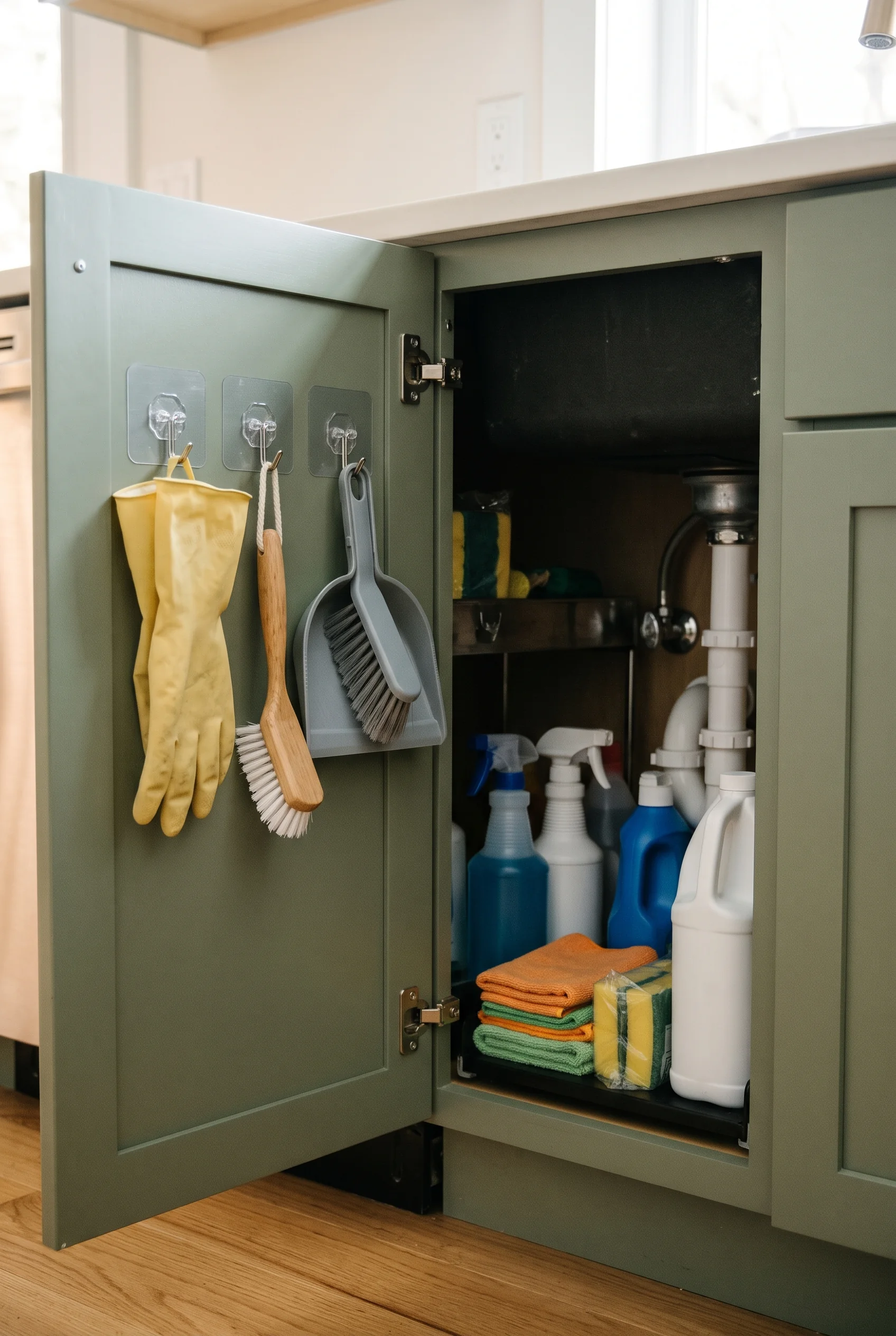
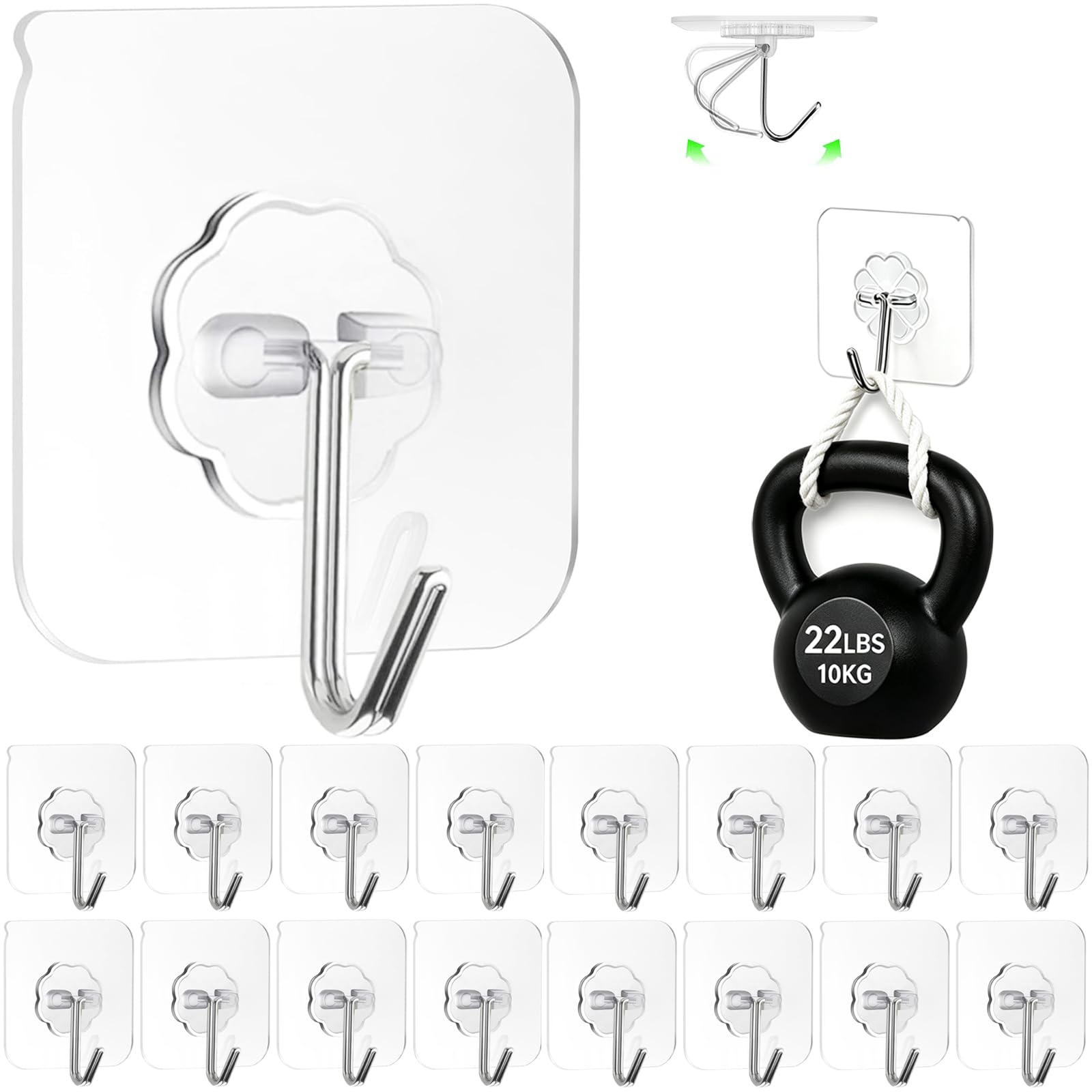
Three adhesive hooks on the inside of the door hold rubber gloves, a dish brush and a small dustpan, each with room to breathe.
Hanging gloves by the cuff lets water drain out of the fingers, so they’re dry and ready the next time someone tackles the roasting pan.
The hooks peel off cleanly, which matters in a rental or a kitchen you plan to refresh in a few years. Space them so the gloves don’t touch the brush.

A Spare Roll Waiting for the Next Spill
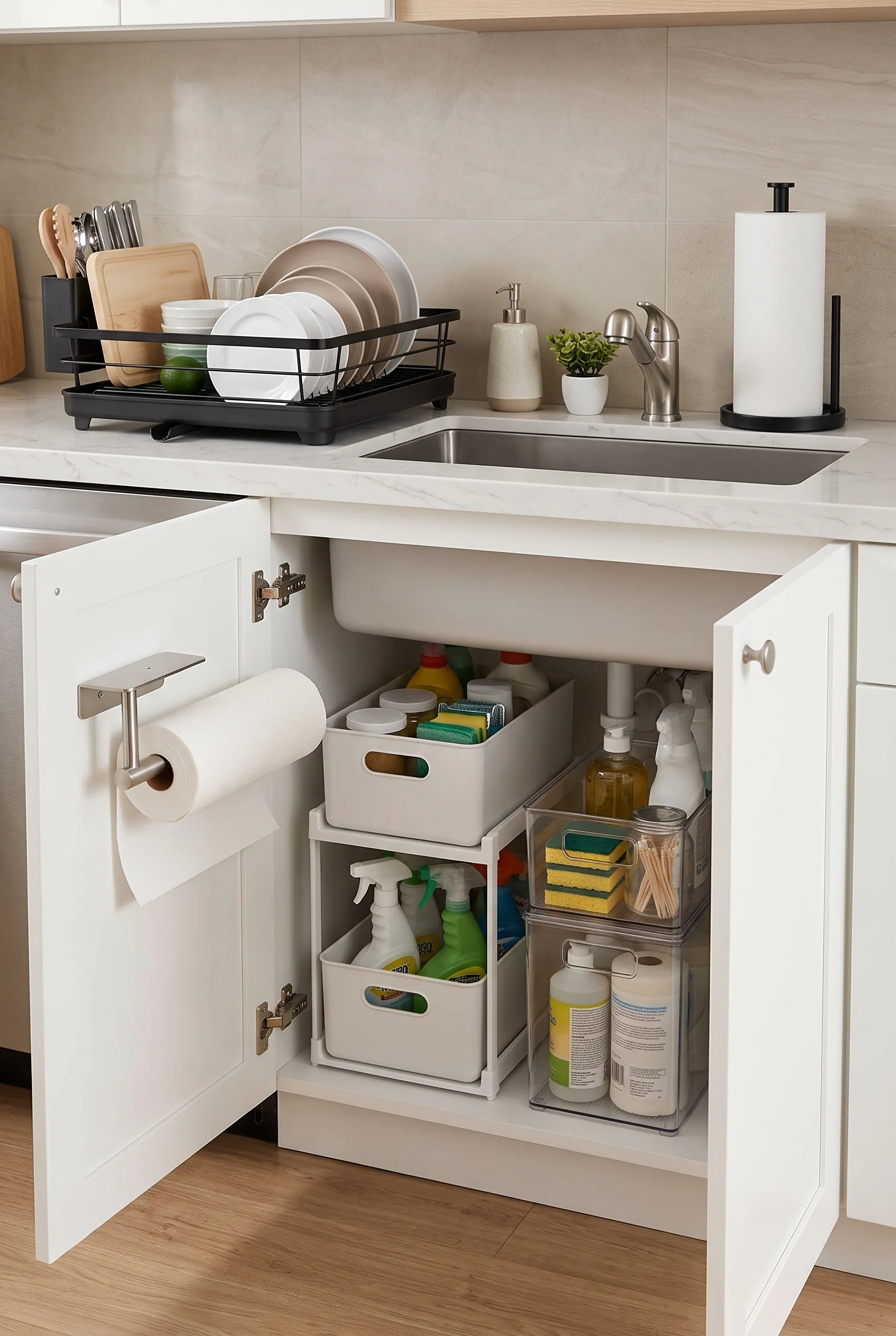
Spilled juice has a way of happening right after the last paper towel runs out. A holder mounted low inside the cabinet door keeps a backup roll exactly where the mess happens.
No running to the pantry, no dripping trail across the floor.
Keep one roll on the counter for everyday use and the spare behind the door. Two rolls, two jobs, and the spare stays clean until the moment it’s needed.


Daily Essentials Within Arm’s Reach
Some things under the sink get used several times a day. The trash, dish soap, and dishwasher pods all deserve front-row seats. Each has a dedicated home with an easy motion: a lid that lifts, a frame that glides, or a bottle that pours. These kitchen decluttering tips save the most steps, shaping the routines you repeat every day.
Trash Tucked Away but Never Far From the Cutting Board
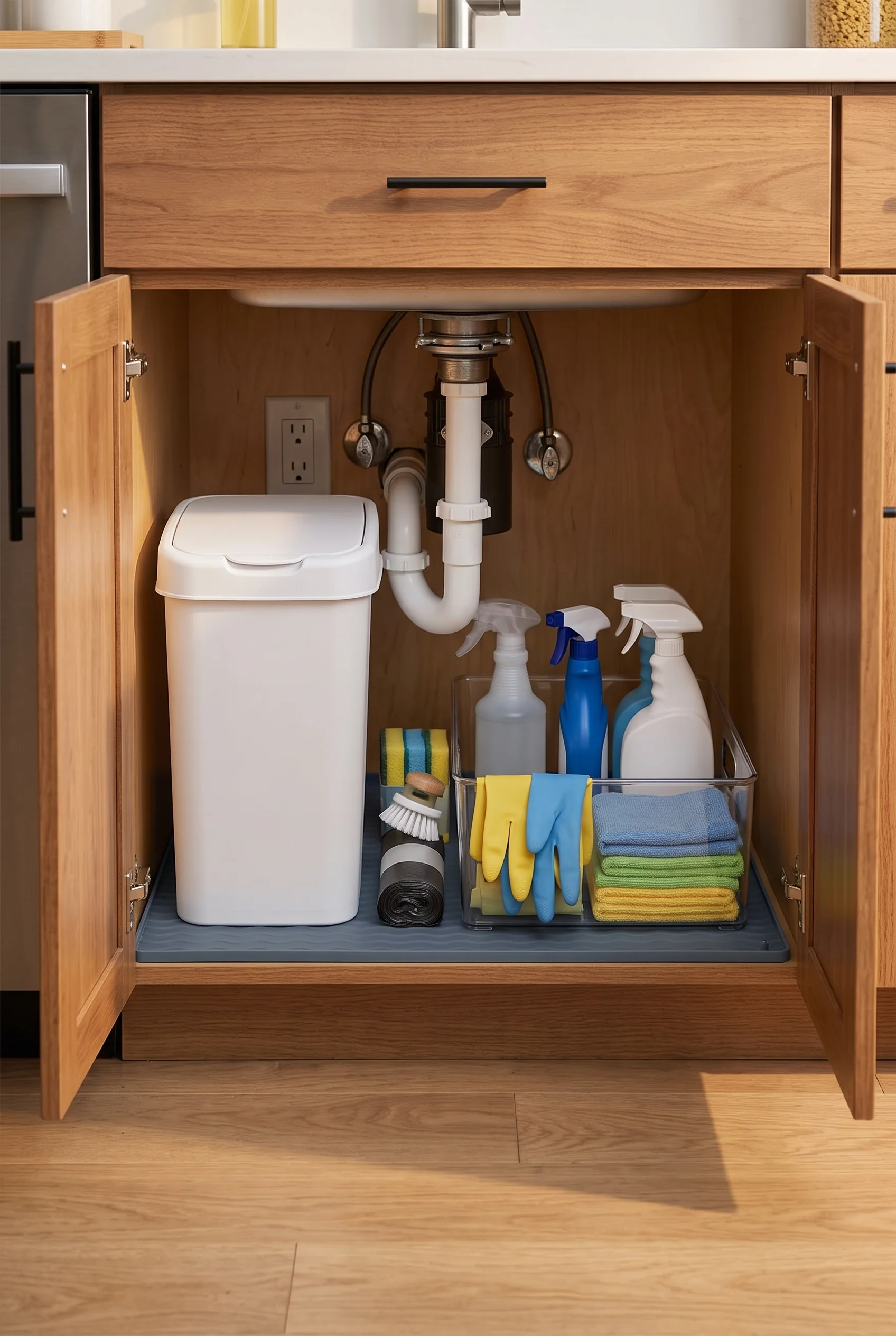
A slim lidded trash can under the sink keeps one of the kitchen’s least lovely necessities out of sight, yet close enough to sweep peelings straight off the counter.
Slim is the important word. A narrow can fits beside the plumbing and still leaves room for a bin of sprays and cloths on the other side. Pipes eat more depth than you’d expect, so a tape measure is your best friend before buying.
A waterproof mat underneath catches drips from the can and the pipes, so the cabinet floor stays dry.
A Trash Can That Glides Out on Its Own Track
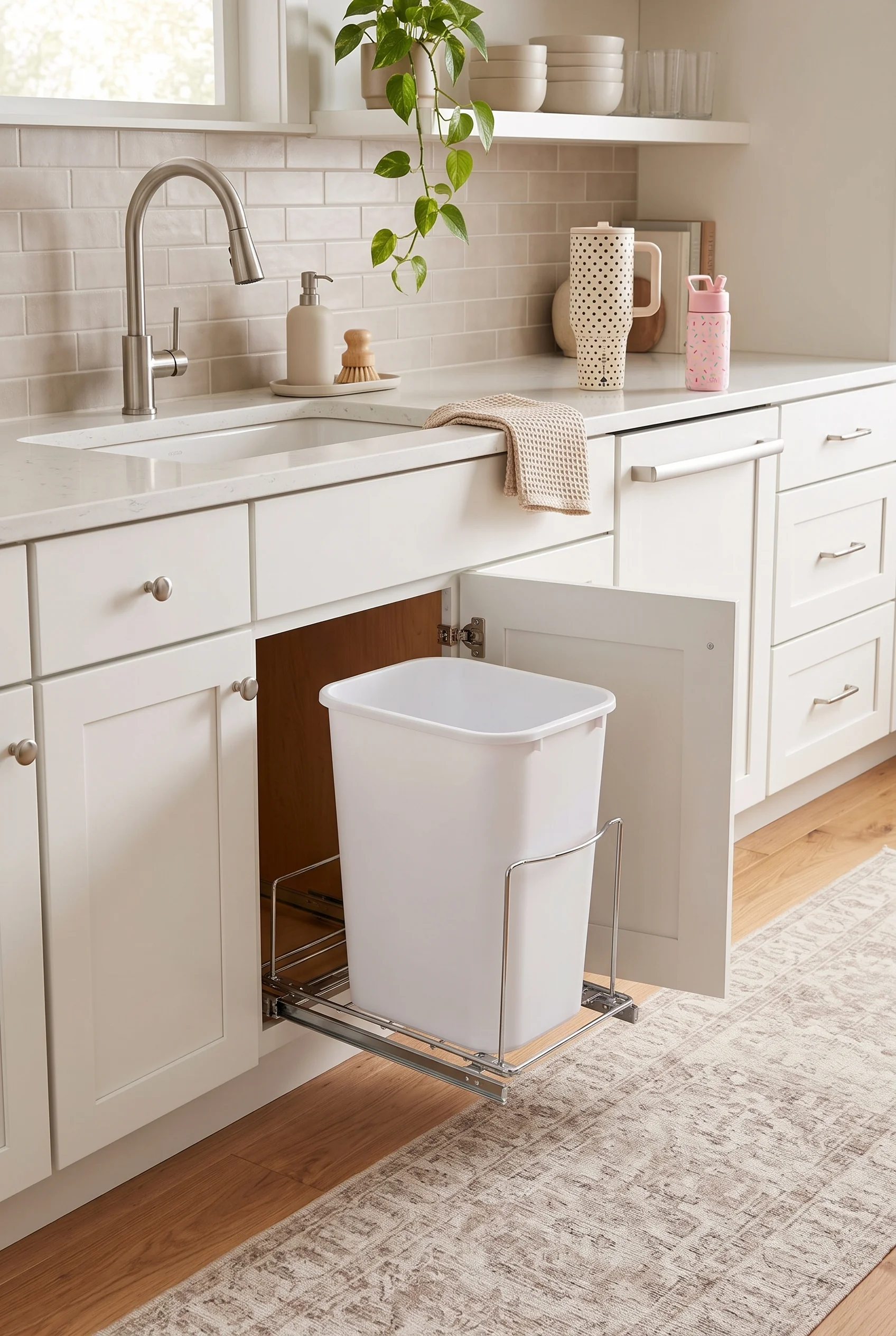
When the cabinet opens, the trash can slides out on its own frame, ready to catch scraps without anyone reaching inside.
That small glide changes the whole routine. Messy hands never touch the cabinet walls, and lifting out a full bag becomes one smooth pull.
The frame screws into the cabinet floor and carries the weight of a full bin without wobbling. Pushed back in, it disappears behind the door, and the kitchen goes right back to looking calm.

Amber Glass Bottles That Turn Refills Into a Ritual
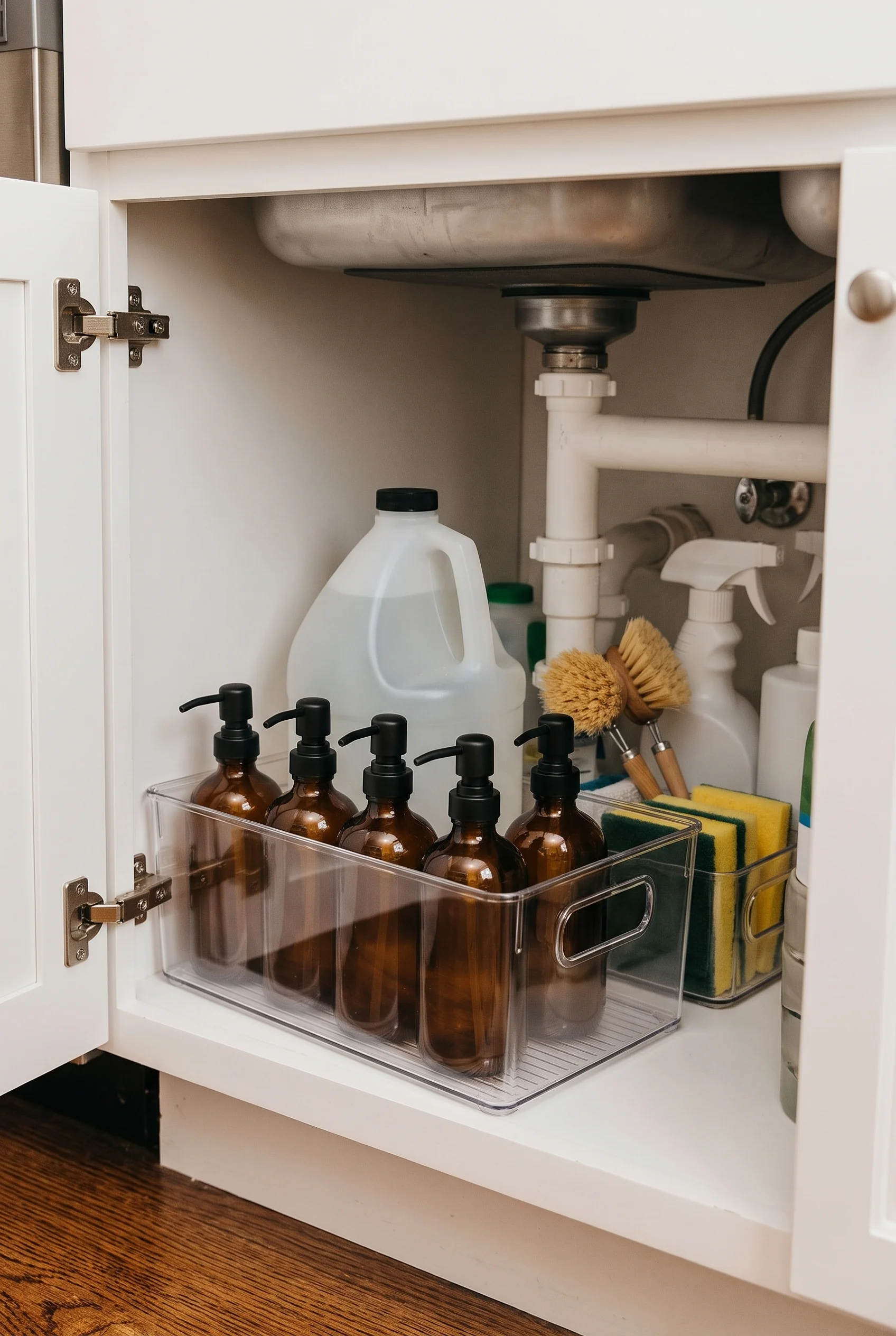
Matching soap bottles in a clear bin, with the big refill jug right behind them, make topping up a ten-second job.
Decanting pays off twice. The counter gets one handsome bottle instead of a bright plastic one, and the bulk jug stays out of sight. Amber glass sits naturally beside the earthy materials of modern organic decor, so the bottle by the faucet feels like part of the styling.
Keep the bin near the front of the cabinet. Refills happen more often than you think, and a bin you can lift out saves drips on the cabinet floor.

Dishwasher Pods Sealed Away From Damp and Curious Hands
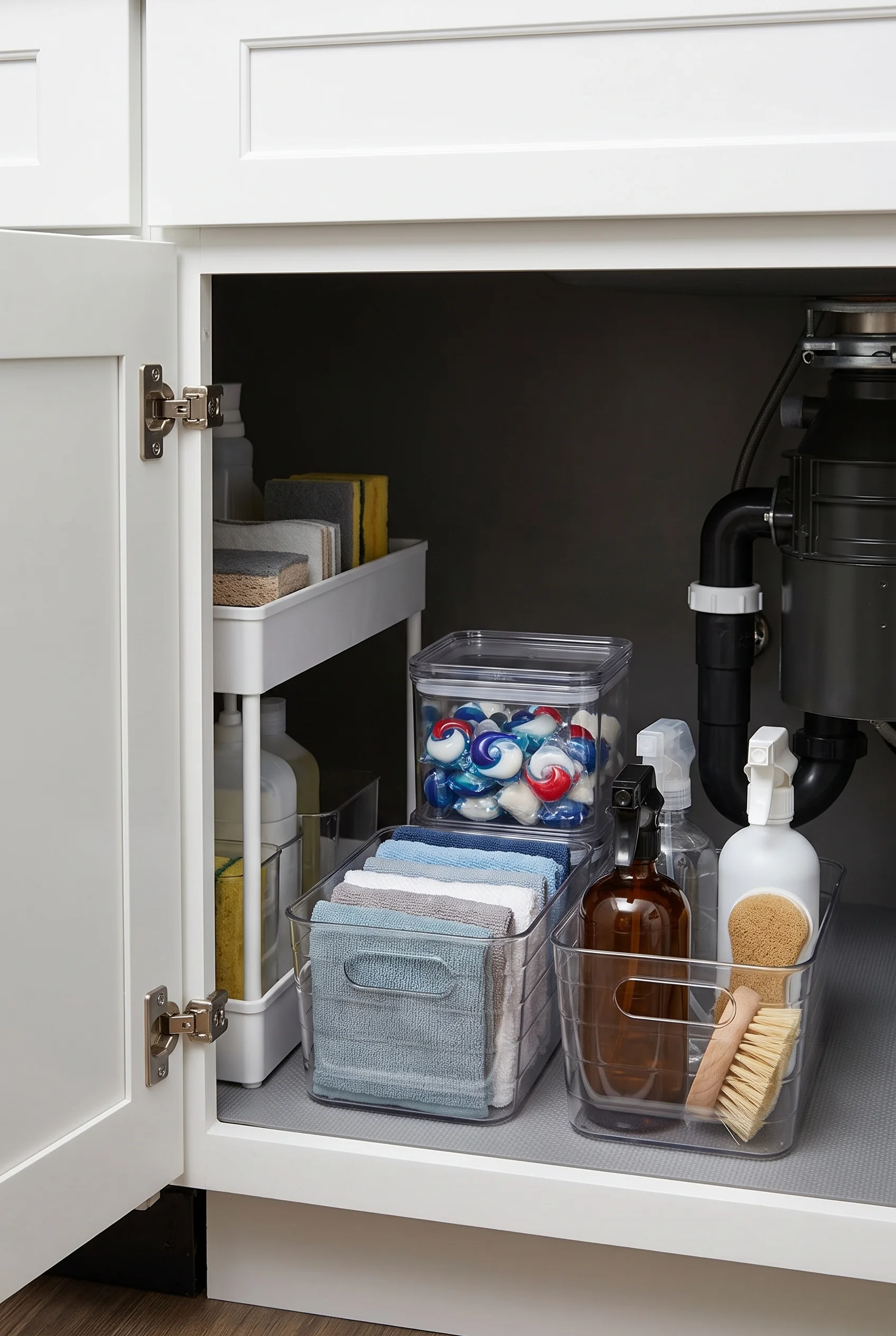
Dishwasher pods are easy to spill from a floppy bag. Moved into a clear lidded container, they stay dry and visible in one place.
The lid does the real work. Moisture from the pipes can turn pods sticky, and a snug seal keeps every one intact.
It adds a layer of safety too, since colorful pods look a lot like candy to a toddler. Keep the container beside the dish soap so grabbing one for the evening load is a single motion.
Quiet Safeguards for Leaks, Darkness, and Little Hands
A beautifully organized cabinet still sits under a sink full of water. The last group of ideas protects all that work. A waterproof floor and an early-warning sensor catch problems before they spread.
A small light ends the late-night fumbling, and a simple lock keeps curious toddlers away from the cleaners. None of these are glamorous, yet they’re the pieces that let you stop worrying about the cabinet entirely.
A Floor That Shrugs Off Drips and Spills
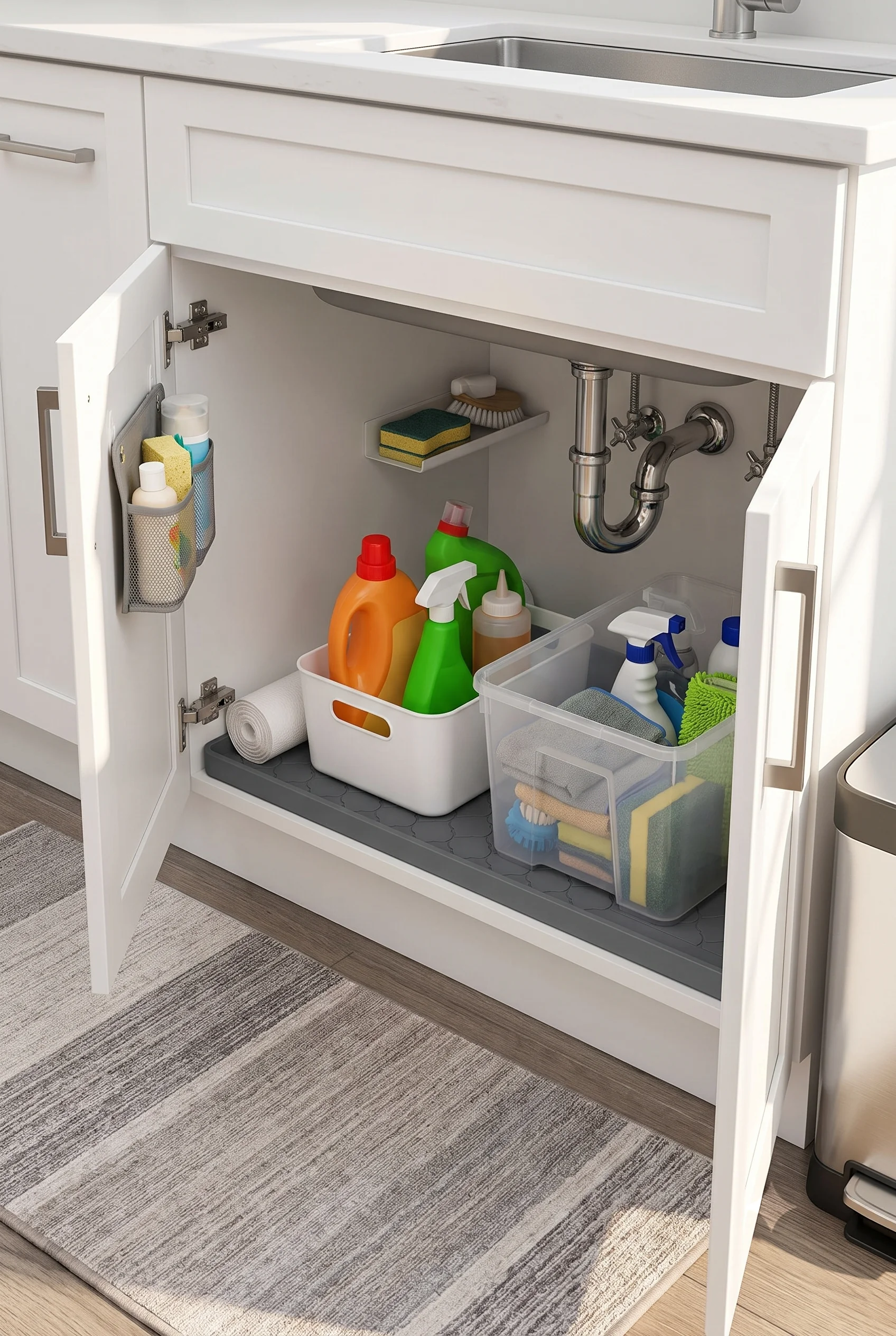
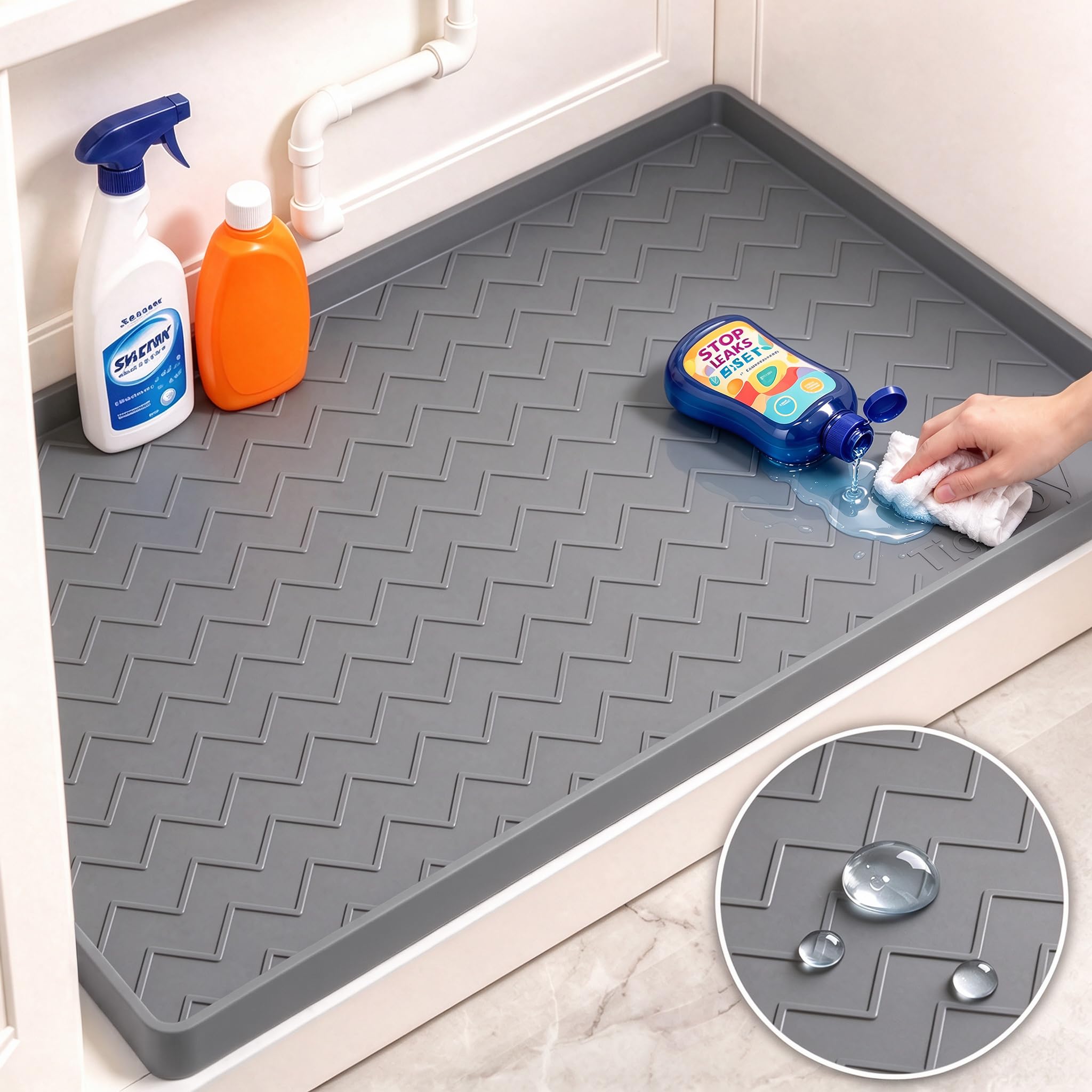
A silicone mat lines the cabinet floor edge to edge. Raised sides turn it into a shallow tray, so a slow drip or a tipped bottle of detergent stays contained instead of soaking into the cabinet base.
Cleanup is almost too easy. Pull out the bins, lift the mat, rinse it in the sink.
Measure the cabinet floor and the pipe cutouts first. Most mats trim with scissors, so a snug fit around the plumbing takes a minute.


An Early Warning Tucked Behind the Bins
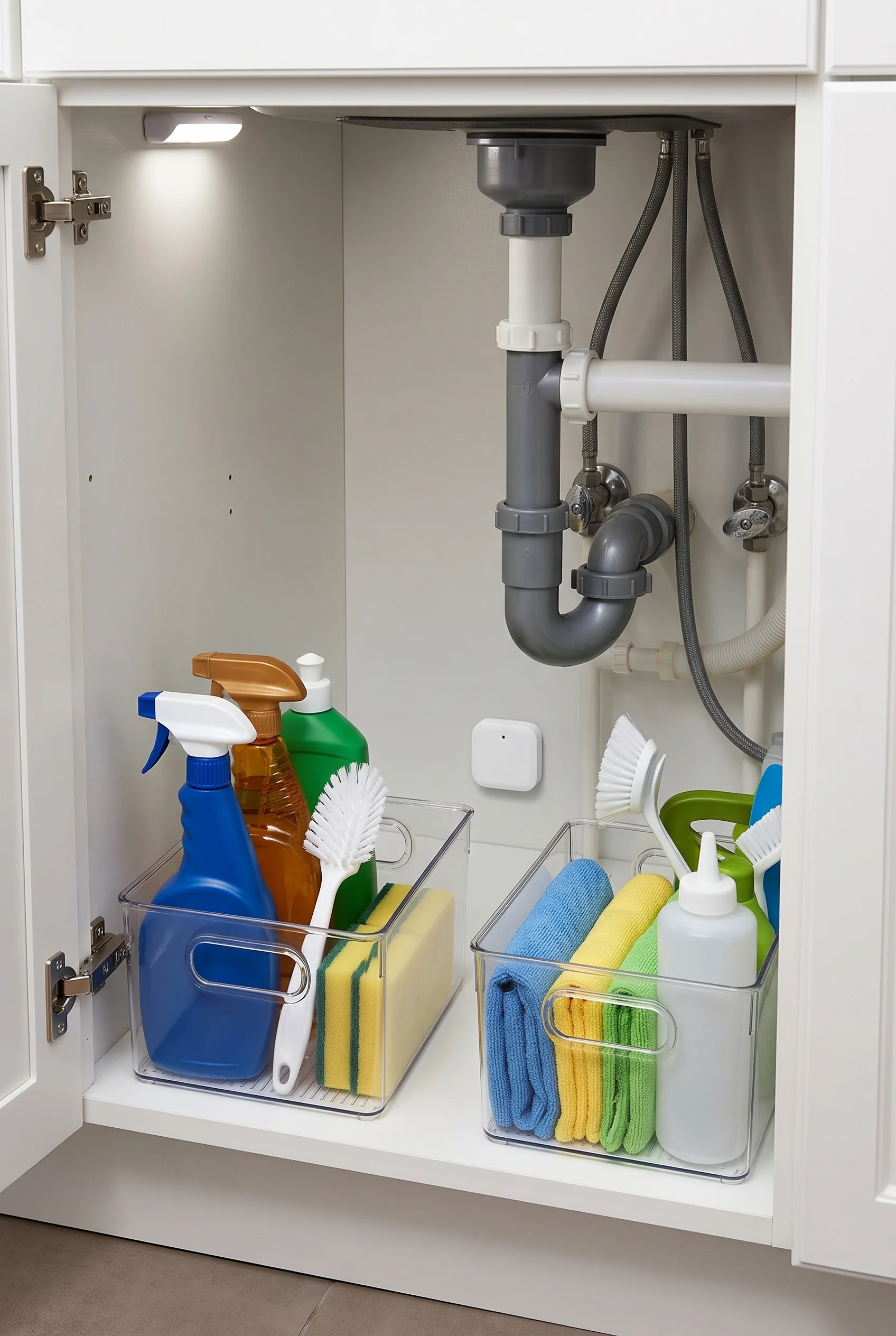
A water leak detector is small enough to hide just under the pipes, and it may be the quietest hero in the kitchen.
Placed on the cabinet floor below the drain and supply lines, it sounds an alarm at the first drop. That warning often comes long before a slow leak would warp the cabinet base or seep into the flooring.
Leave a gap in front of it so bins never cover the sensor, and test the battery twice a year. Peace of mind rarely takes up so little room.
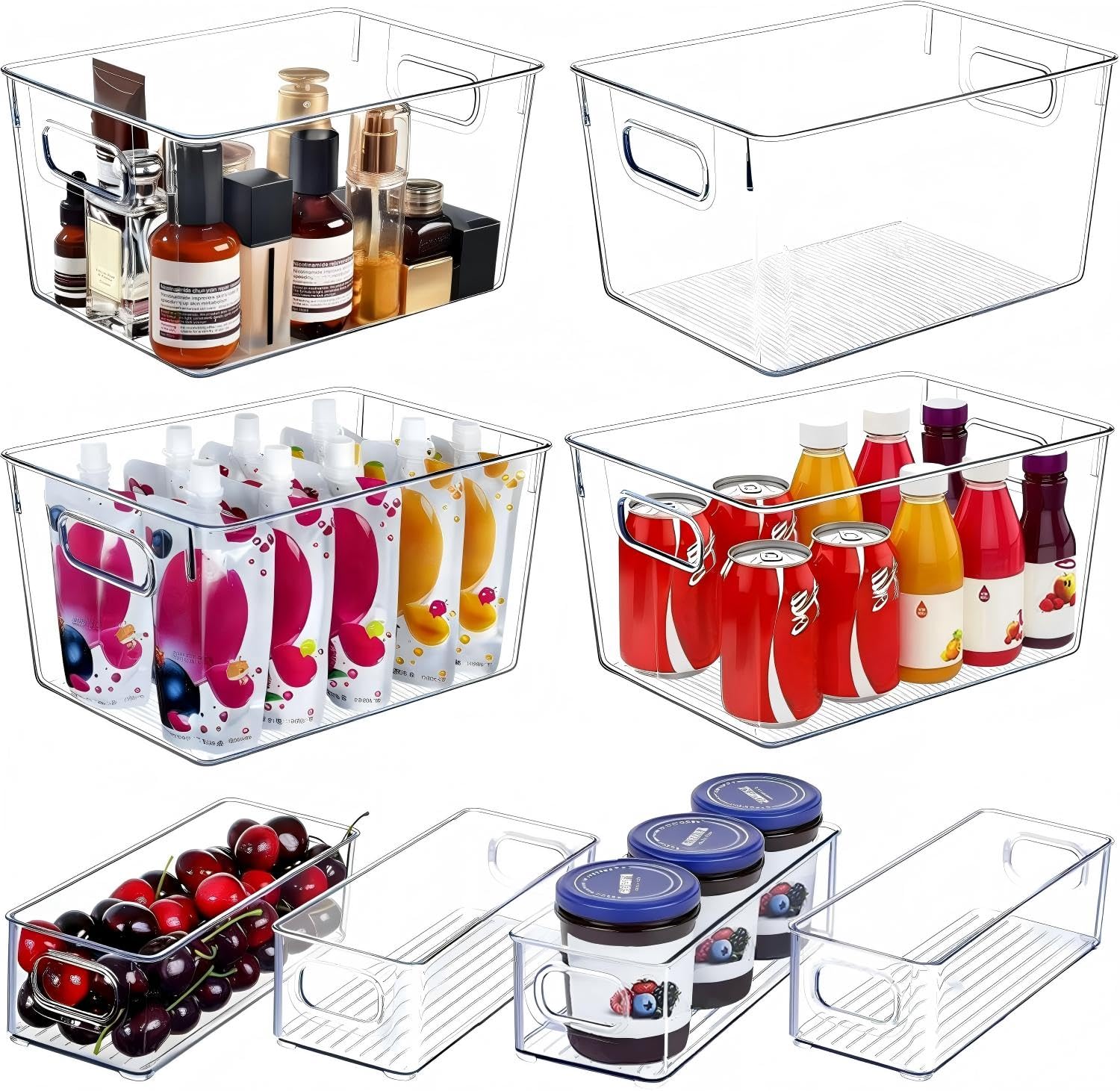
No More Phone Flashlights Under the Sink
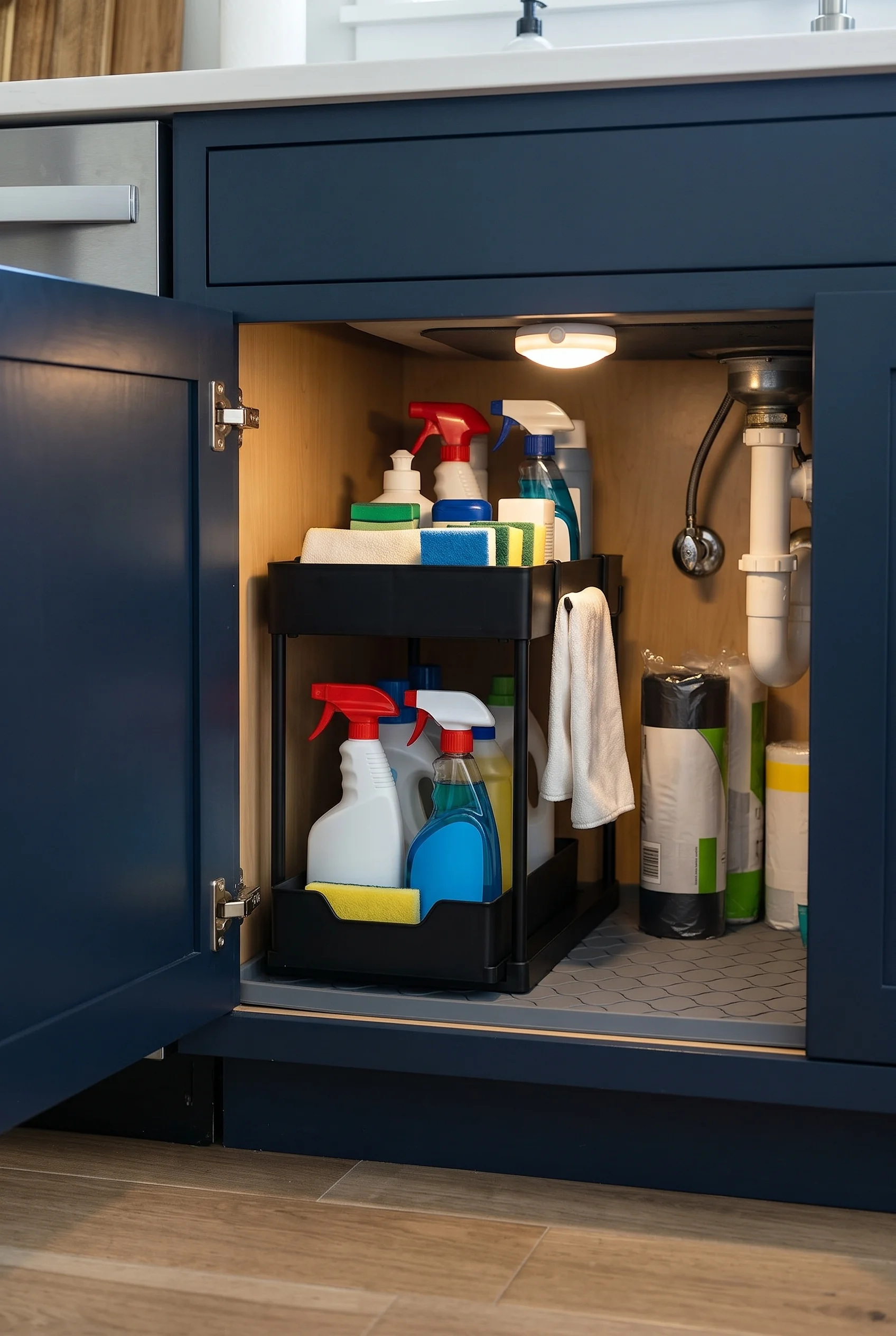
Under-sink cabinets are dark by design. The counter overhead blocks the room’s light, so finding the right bottle often means squinting or holding a phone flashlight in your teeth.
A battery-powered motion-sensor light changes that without any wiring. Stick it to the inside top of the cabinet and it turns on when the door opens, then shuts off on its own.
Rechargeable puck or bar lights are the easiest to live with. Mount them toward the front so the light falls on the bottles instead of the back wall.
Peace of Mind on the Cabinet Toddlers Love Most
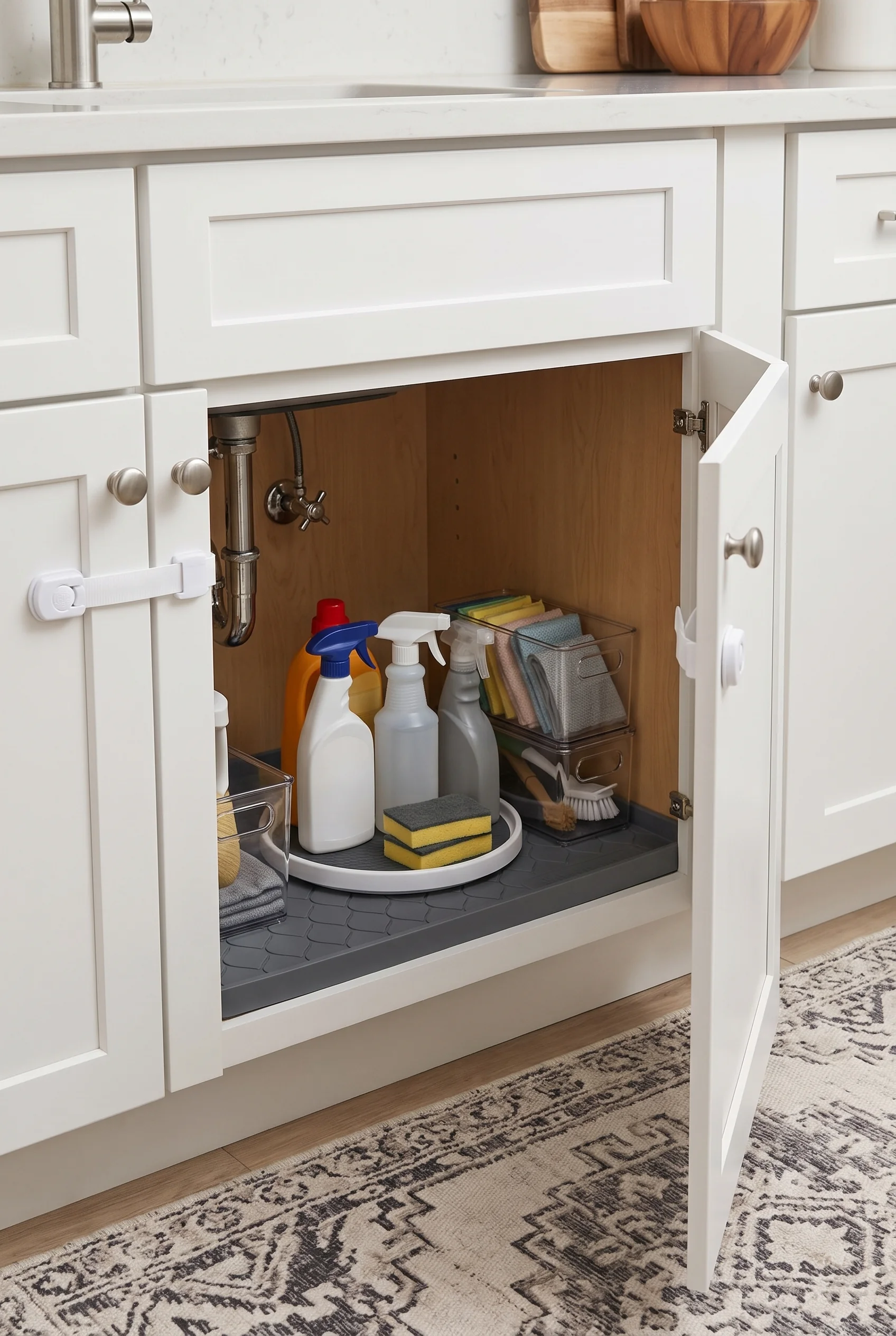
Cleaning bottles at toddler height are irresistible to a crawling baby. A simple latch across the door knobs keeps little hands out while still opening easily for grown-ups.
Adhesive locks need no drilling and come off cleanly once the kids are older. Magnetic versions hide inside the door entirely, which keeps the clean lines of the cabinets intact. Both slot easily into your nursery and baby-proofing plans.
Lock the cabinet even when it’s well organized. A turntable that spins sprays forward for you does the same for a curious toddler.

A Cabinet That Makes Every Cleanup a Little Easier
The space under the sink will never be the prettiest cabinet in the house, and it doesn’t need to be. It needs to open without an avalanche, keep cleaners away from small hands, and stand up to the occasional drip. Every idea above works toward that same quiet goal.
You don’t need all 21. Start with the one that solves your biggest frustration. For many families, that’s a pull-out organizer, so nobody has to kneel and dig.
For others, it’s a tension rod, a few door hooks, or simply a mat that protects the floor. Add the next piece once the first one has settled into your routine.
Good under-the-kitchen-sink organization isn’t about matching bins or a magazine-ready photo. It’s about a cabinet where everyone can find the sponges, put the soap refill back, and close the door without a second thought. That kind of calm spreads. Once one cabinet works, the next feels much easier to tackle.
For a little extra help building routines that stick around the house, my printable home guides are a gentle place to begin. Whichever idea you try first, notice how much faster the next cleanup goes. A cabinet that finally works has a way of making the whole kitchen feel lighter.